Kanemichi was originally from Yamato province(today’s Nara), famous for its famous Japanese sword style/tradition called YAMATO-DEN.
YAMATO-DEN is the oldest tradition among GOKADEN. ( five most prestigious Japanese sword tradition; BIZEN-DEN, SOSHU-DEN, YAMASHIRO-DEN, MINO-DEN, YAMATO-DEN) The places that created the GOKADEN tradition were prosperous in sword-forging throughout the Samurai period. (1185-1868)
During the KAN-BUN era(1661-1673), Kanemichi moved to Settsu province in Osaka prefecture. And, he worked for Mutsuno Kami Kaneyasu, a famous swordsmith in Osaka prefecture. kanemichi received the title of Iganokami. The imperial court only gave the title of kami(守) to the swordsmiths who did excellent work.
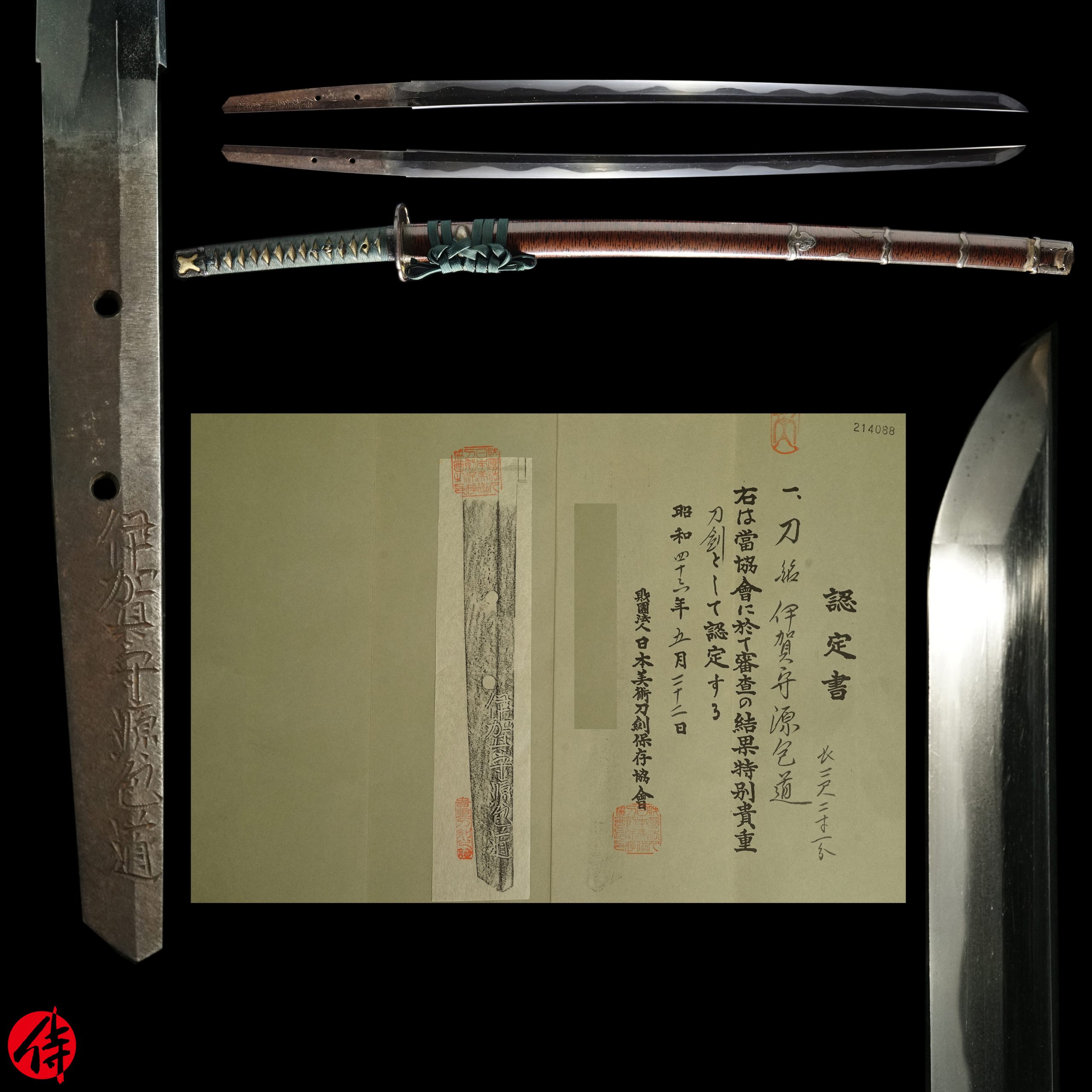
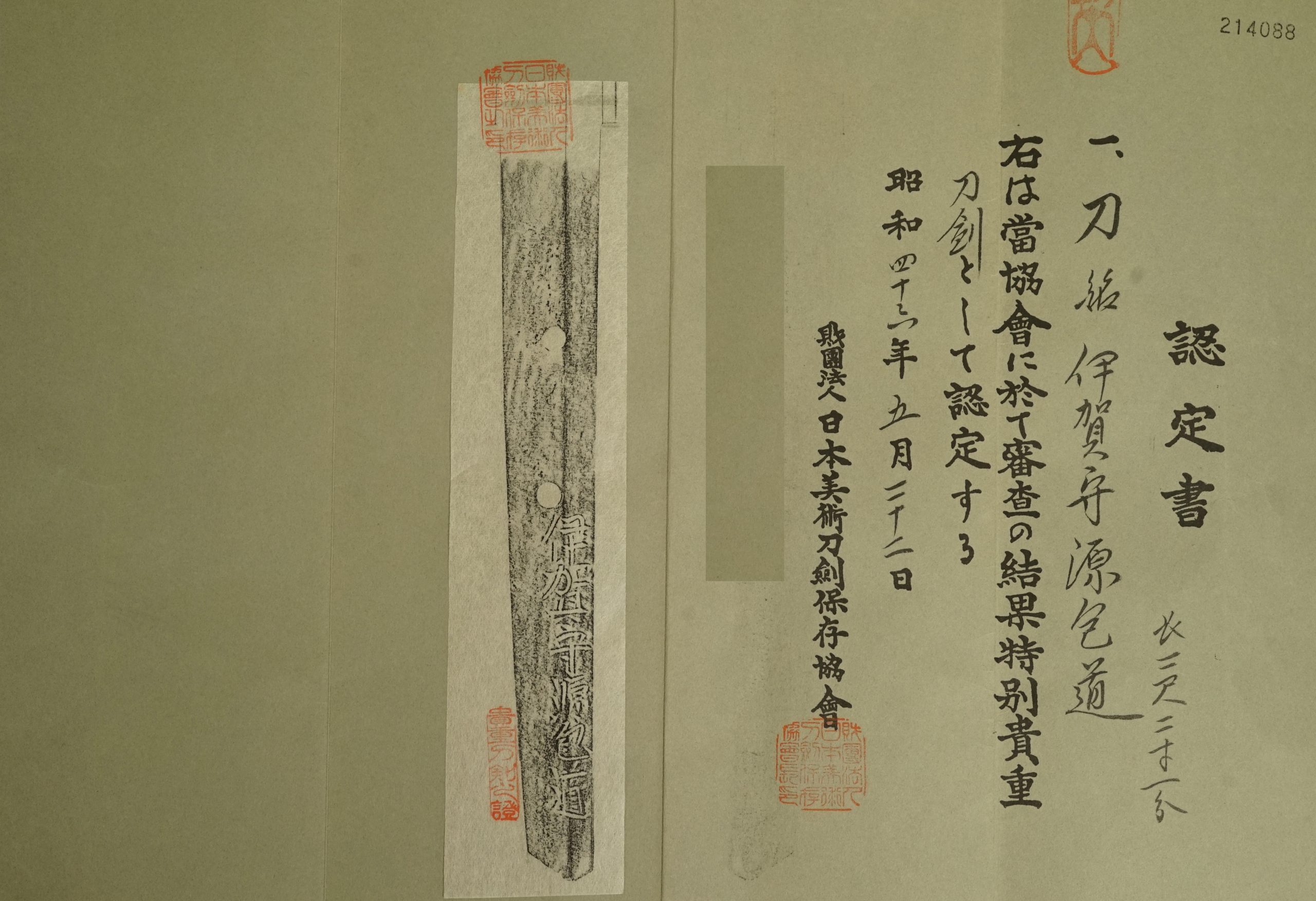
This blade has the Tokubetsu NBTHK Kicho certificate, which was issued during 1950-1982.
NBTHK is currently the most active organization for the authentication of Japanese swords. The foundation of NBTHK dates back to the post-WWII era, following the establishment of the current Japanese Government, when Japanese swords were on the verge of extinction.
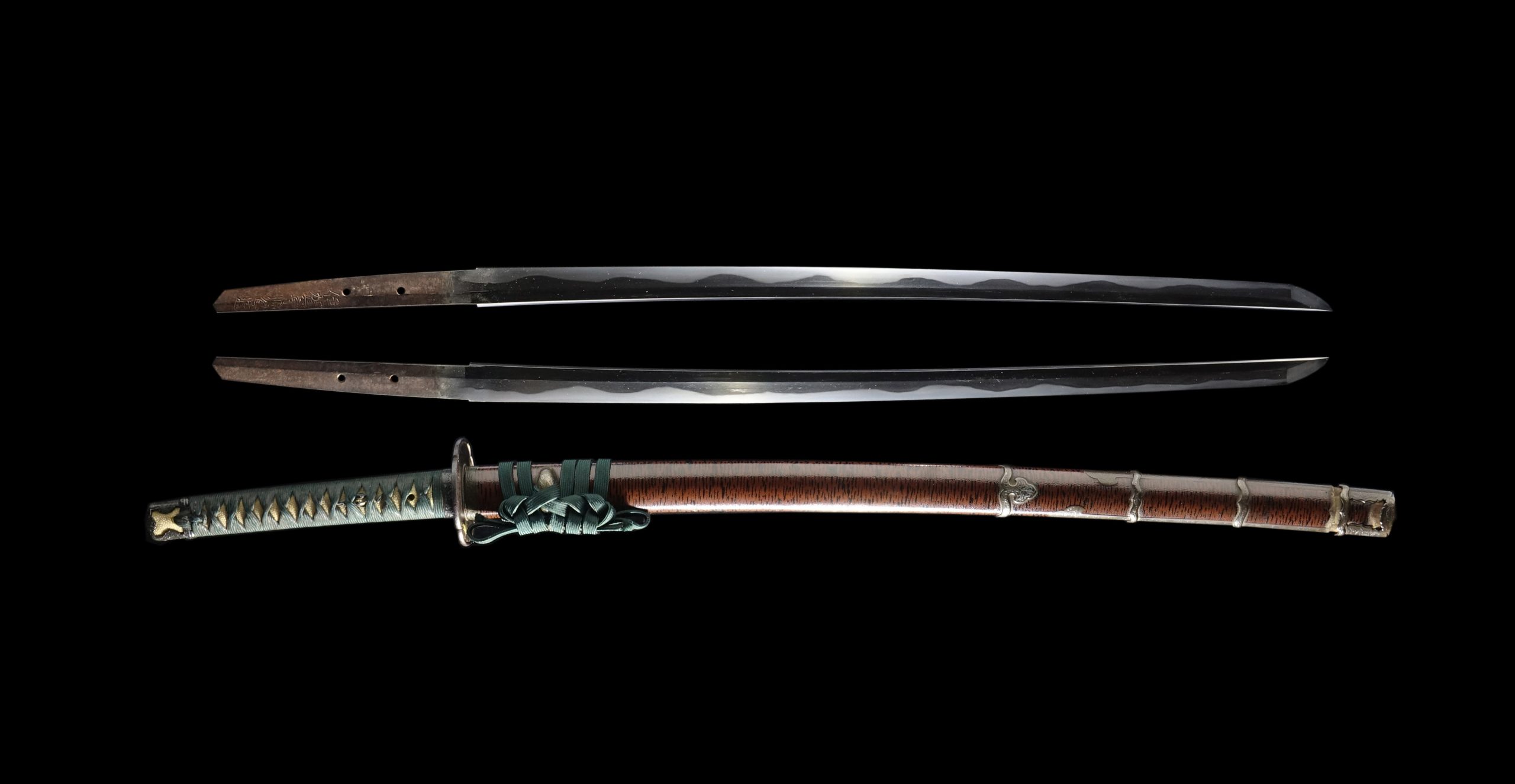
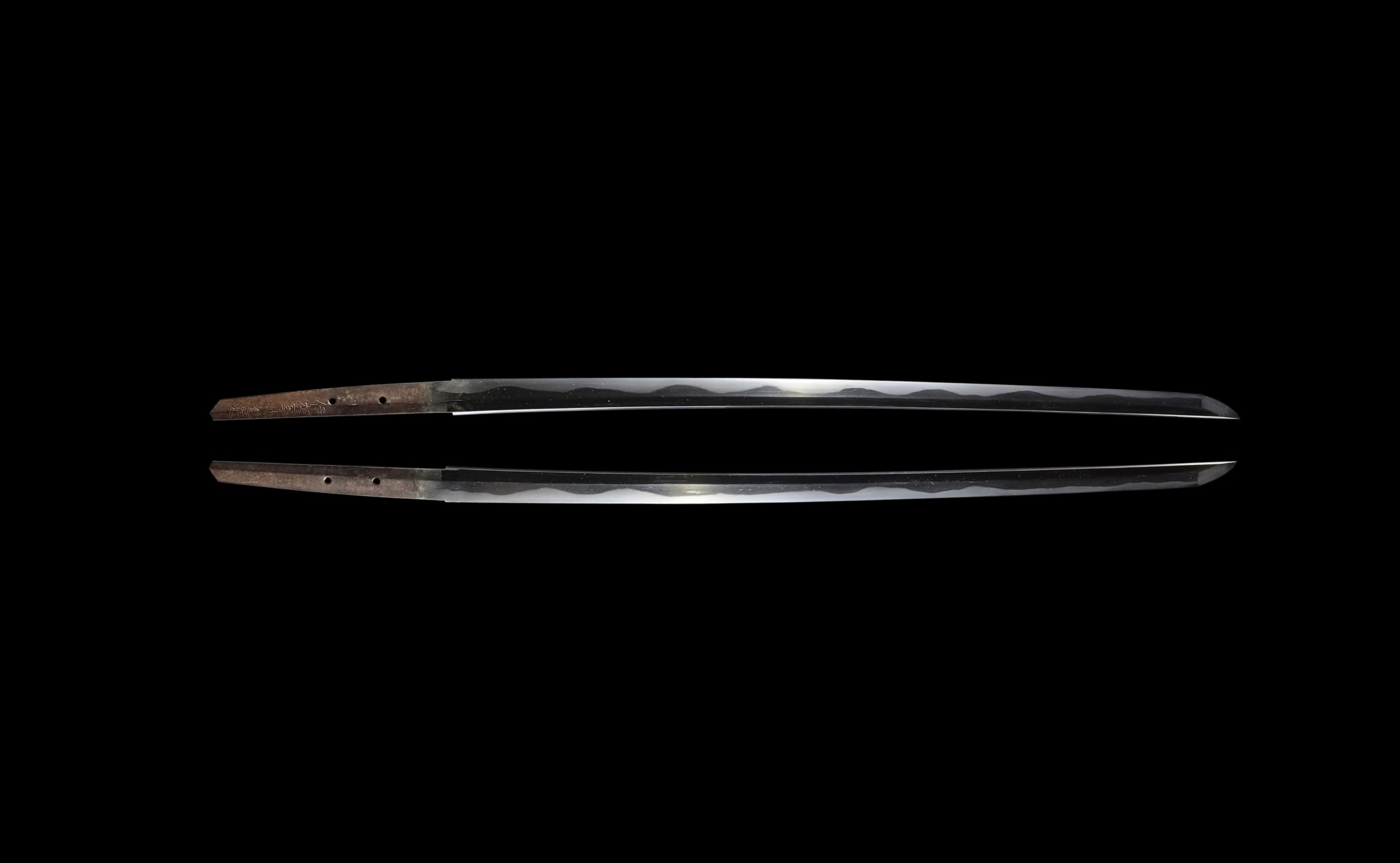
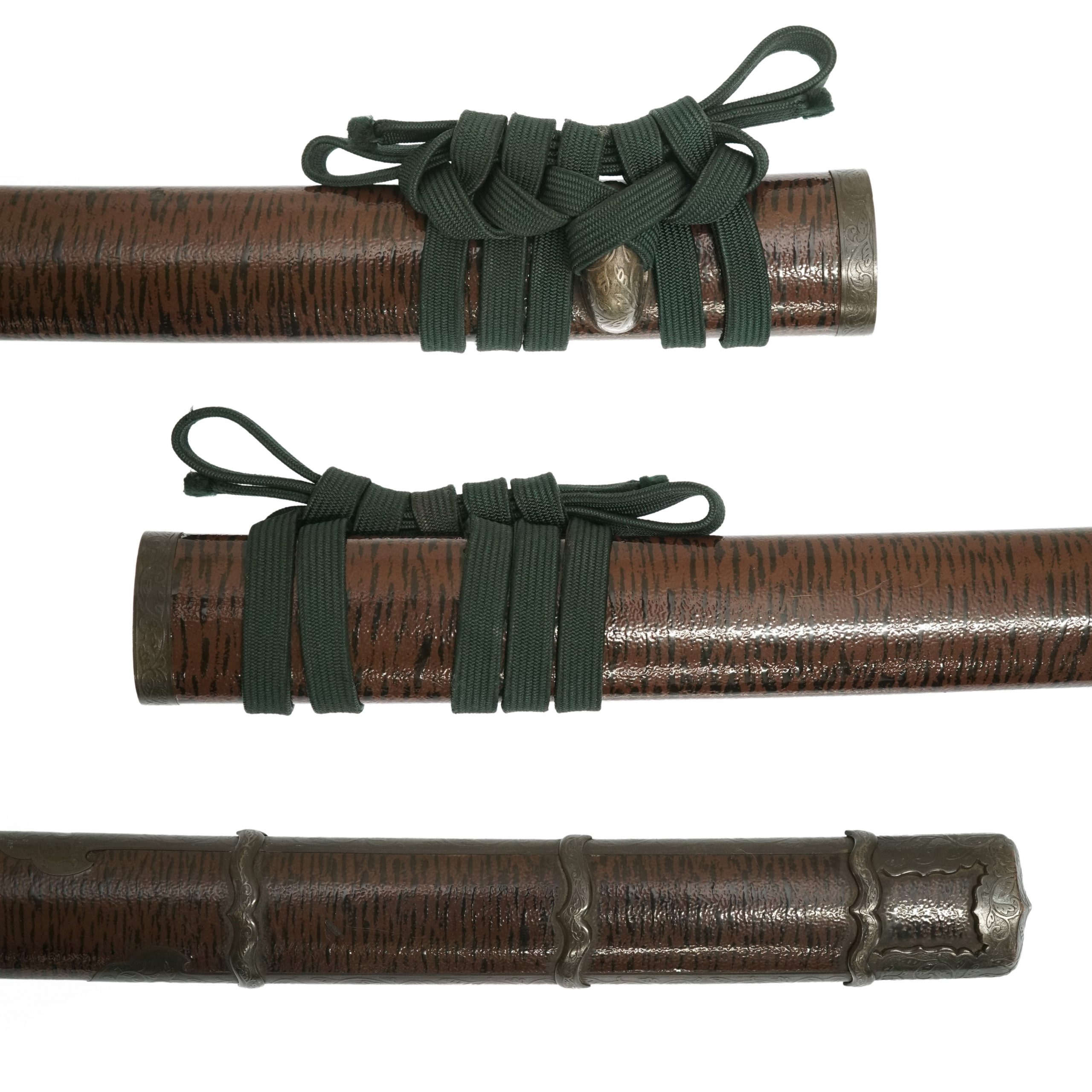
This blade is in excellent condition, and it comes with Handachi Koshirae.(Half-Tachi style sword mounting)
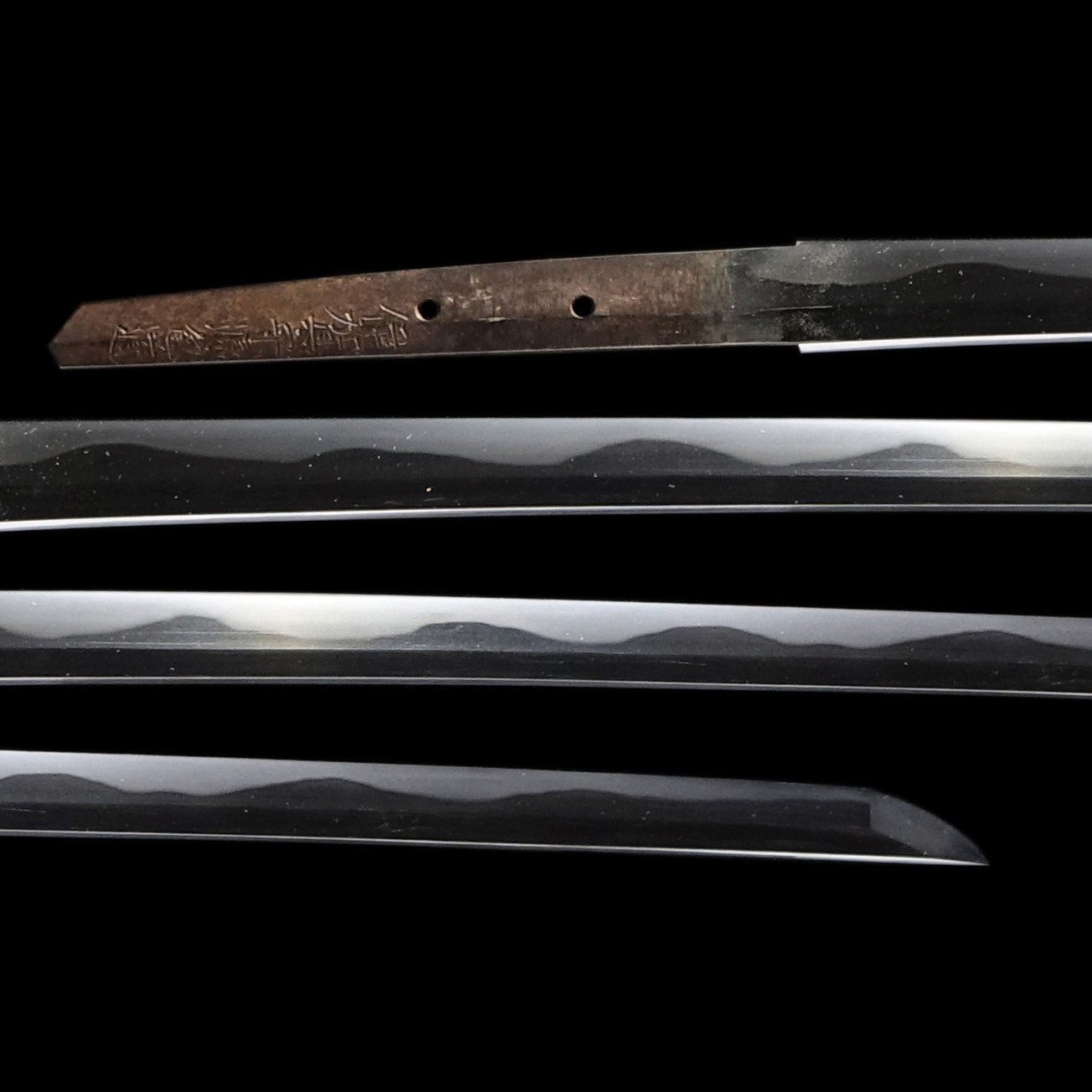
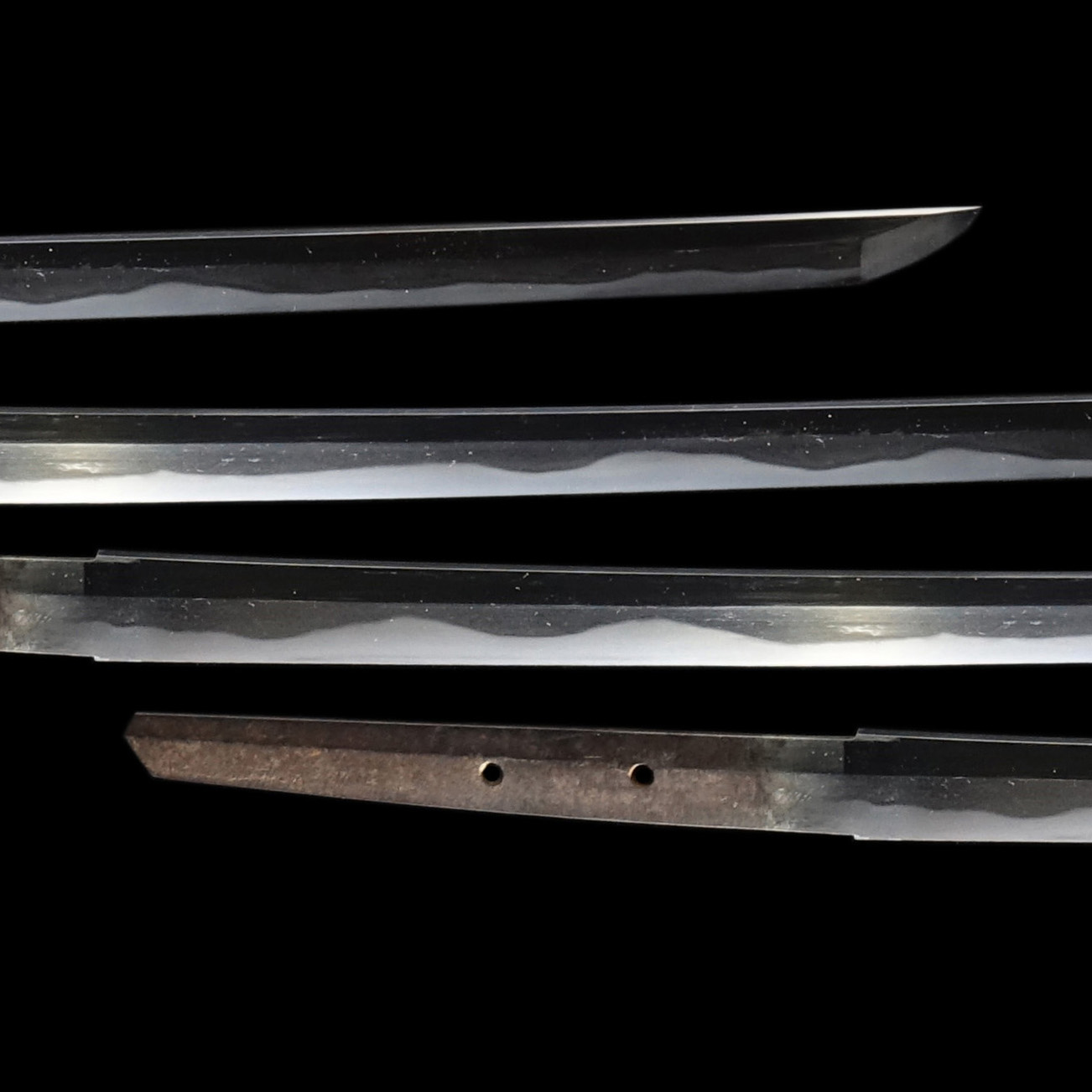
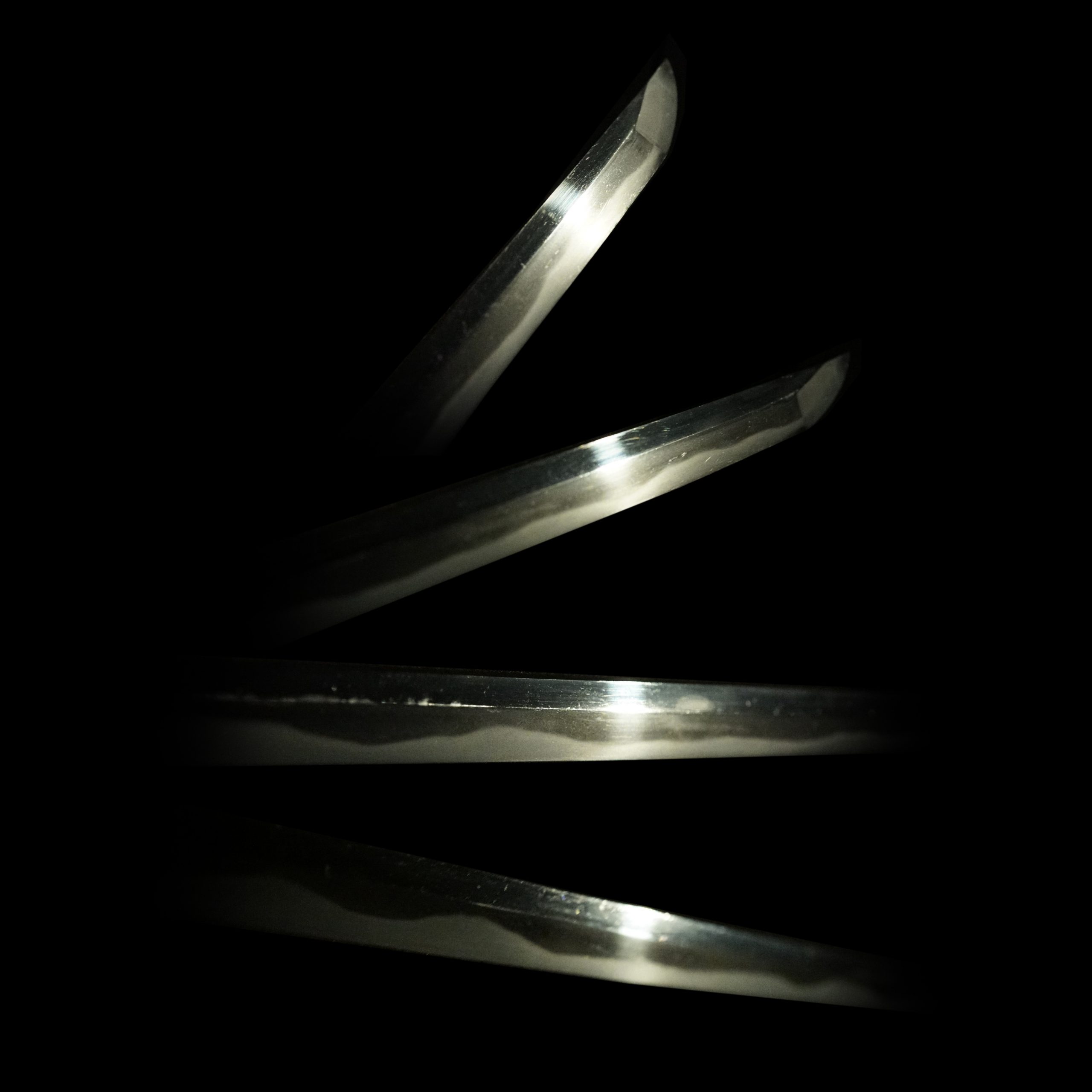
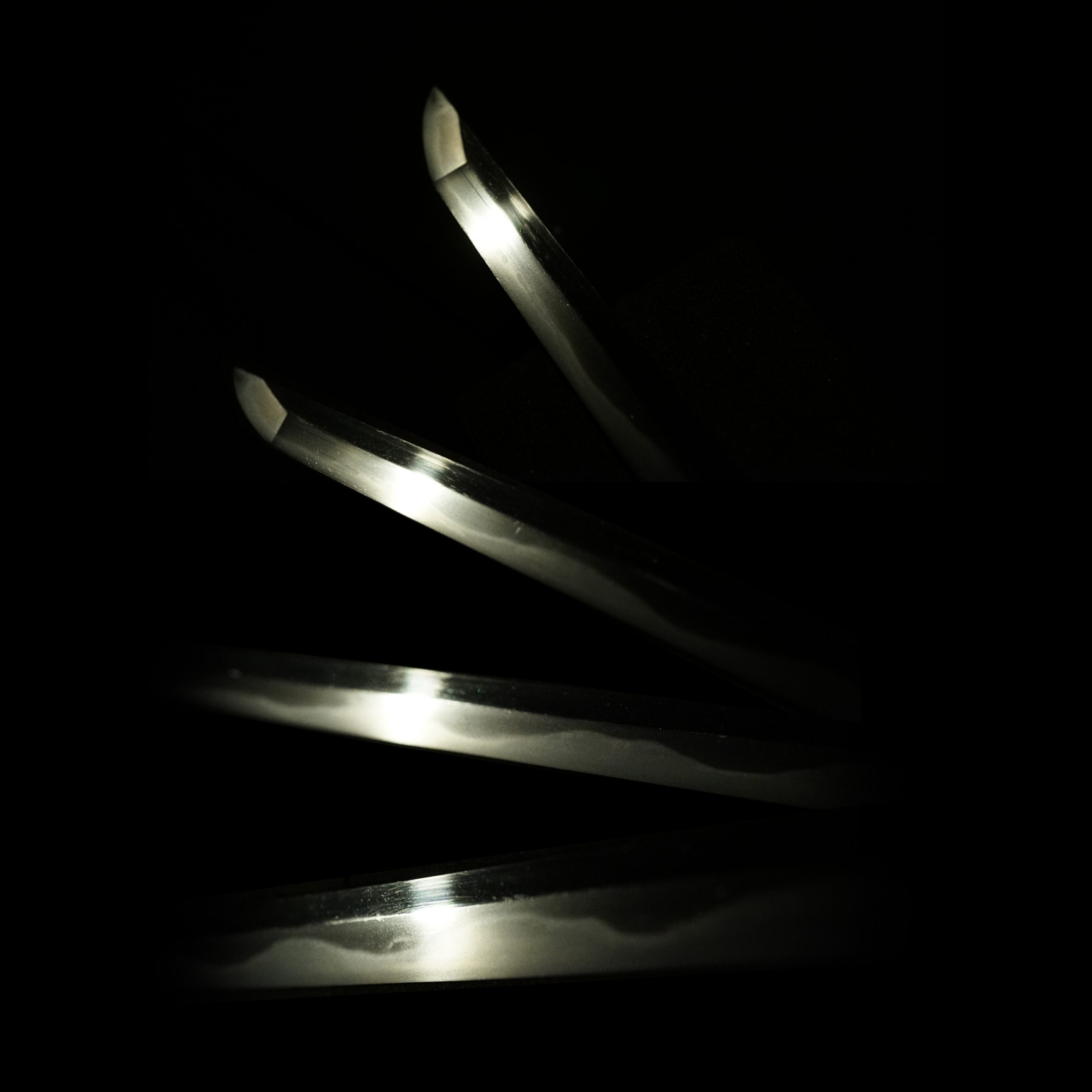
Hamon
The blade pattern created by the tempering process
Jimon
Visible surface pattern on the steel
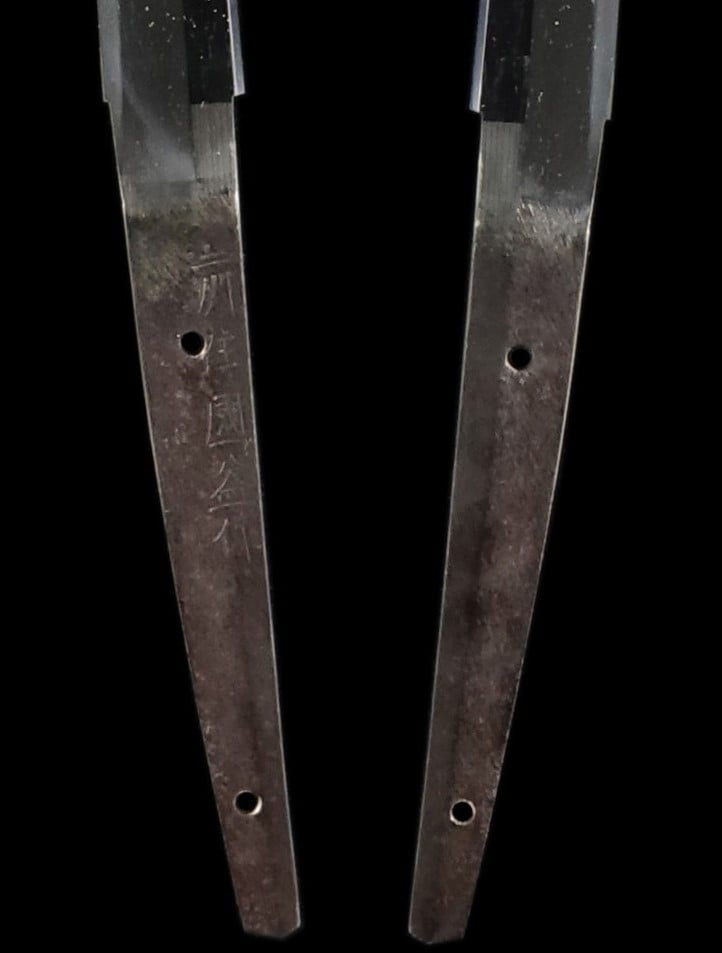
Nakago
It has the signature of Iganokami Minamoto Kanemichi.
Other Details
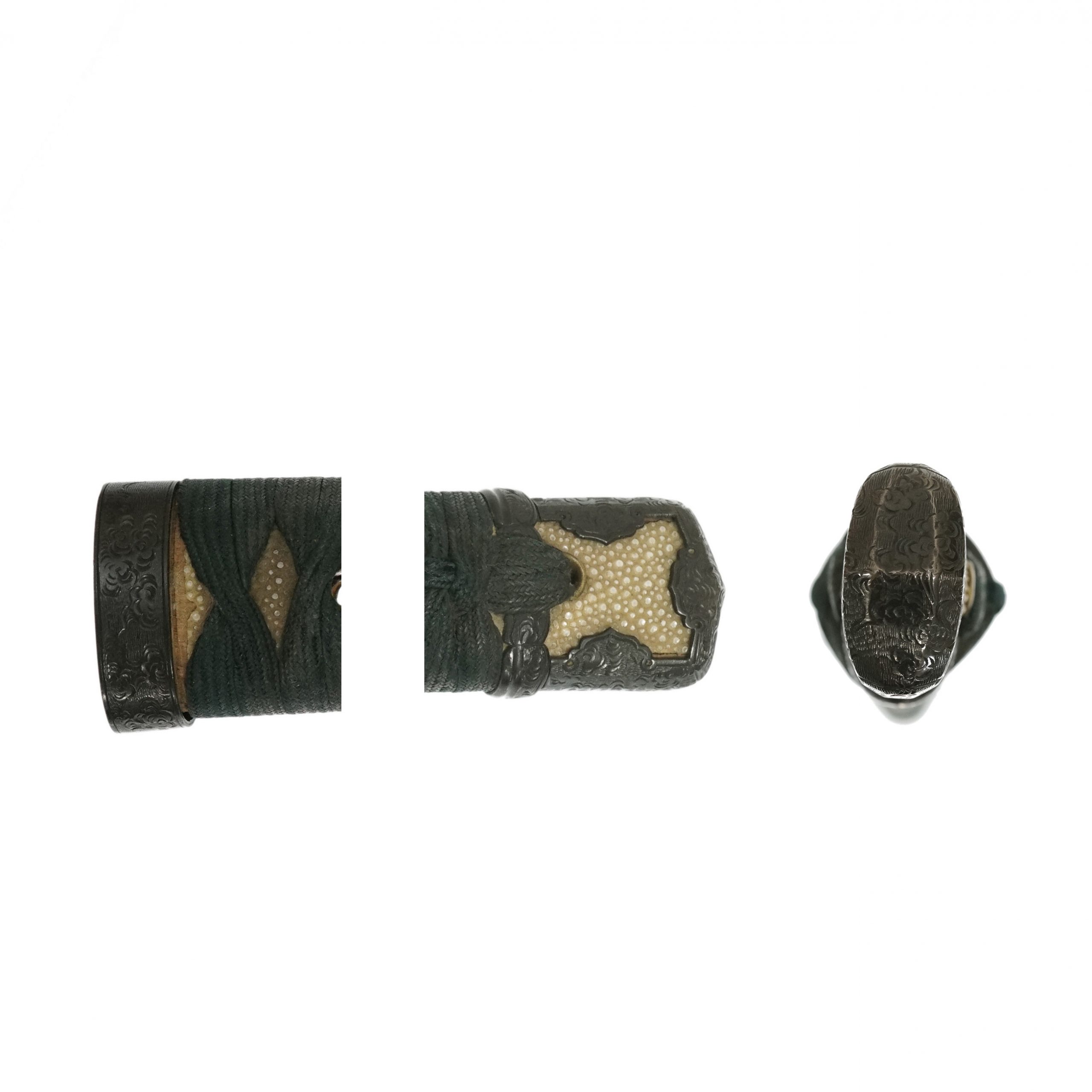
Fuchi-Kashira
The cloud pattern is designed for this Fuchi-Kashira. It is believed dragons and gods live in the clouds: therefore, clouds associated with extraordinary power, and people considered the clouds as precursors to good things happening. As it appears repeatedly, the cloud design also has been regarded as the symbol of reincarnation.
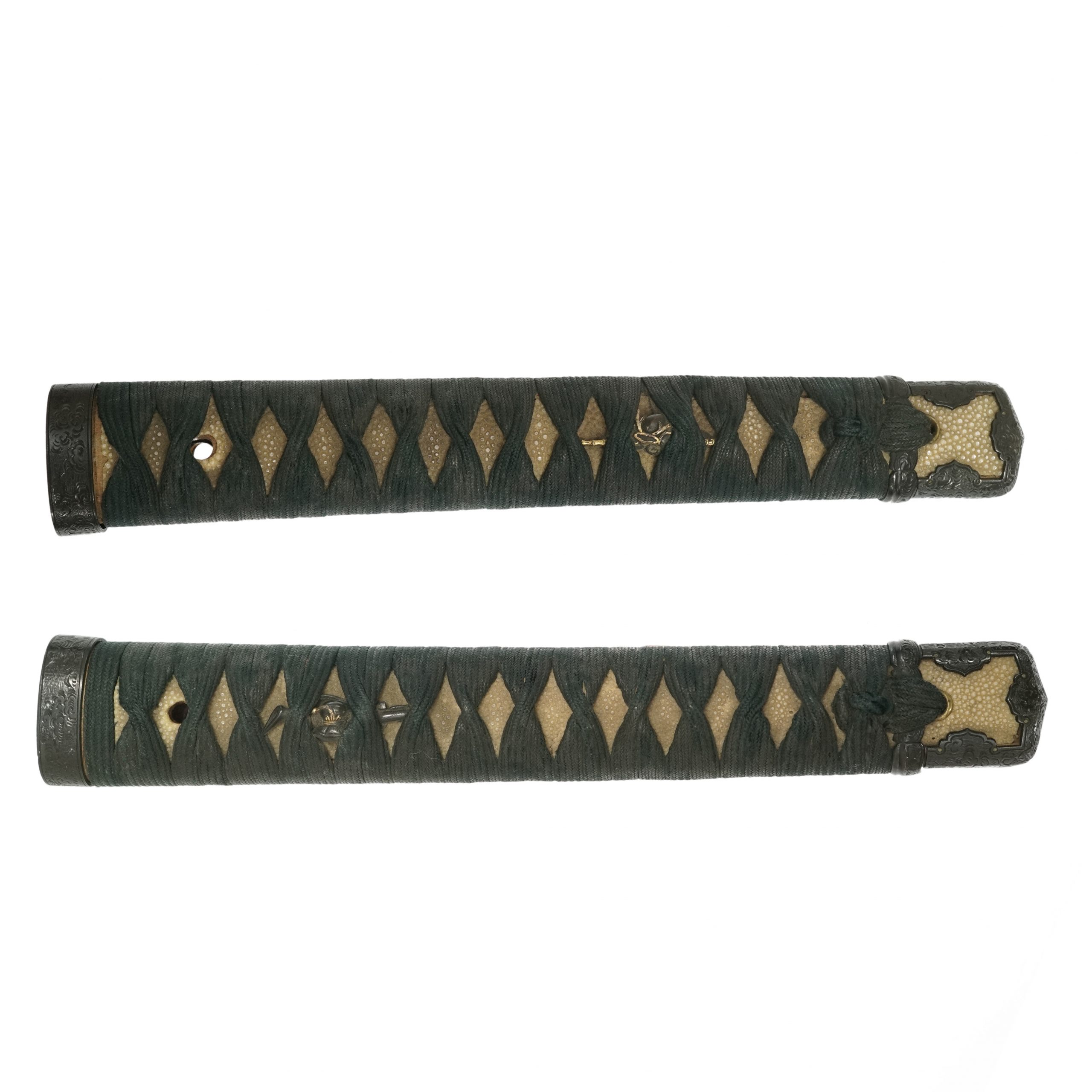
Tsuka and Menuki
This Tsuka is coiled with the black thread and decorated with the Hishimaki technique.
The complete figure cannot be seen, but this Menuki might be designed Samurai’s Kabuto (helmet) and a kind of arms or costume.
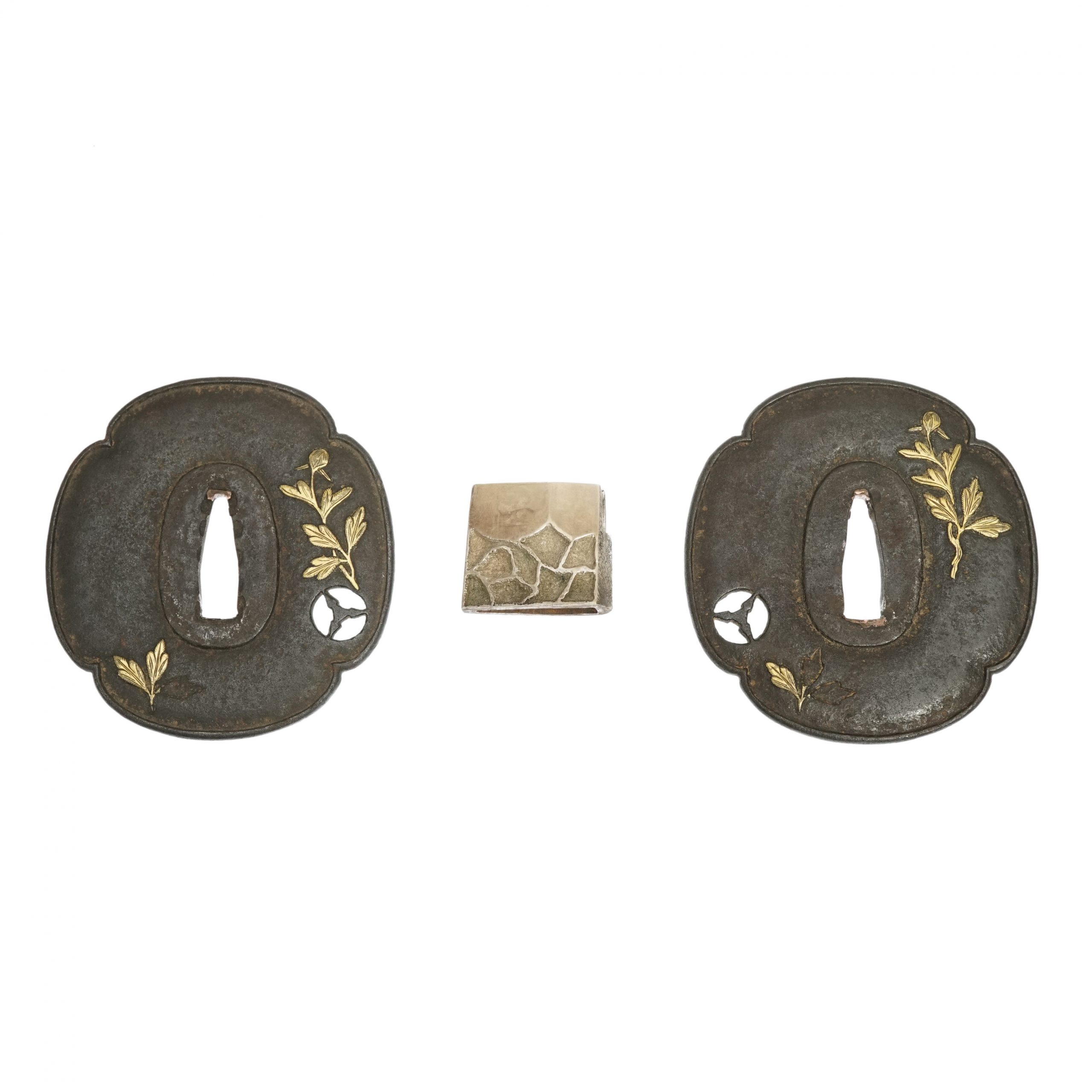
Tsuba and Habaki
Yotsu-Mokkou shape Tsuba made from iron. A circle-shaped symbol is carved on the right side. It might be a family crest. In Japan, each family has their symbol mark. This mark looks similar to the “Mitsu-Ougi (三つ扇)” pattern; it combines three fans. Since ancient times, some people thought gods exist in fans. They believed fans have protective meaning. Also, because of its “Suehiro (末広, wide shape),” this item has been prized as lucky charms.
Gold-colored leaves are engraved on both sides of this Tsuba. This plant might be a peony. Peony represents happiness, wealth, nobleness, and gorgeousness. Also, this flower pattern has been appreciated as a sign of a rich harvest. Peony is called “Botan (牡丹)” in Japanese. When we write this flower’s name in Kanji (one of the Japanese letters) character, its second letter has the meaning: medicine of mountain hermit that will give us the eternal youth. Based on this letter’s definition, the peony pattern symbolizes eternal youth and longevity.
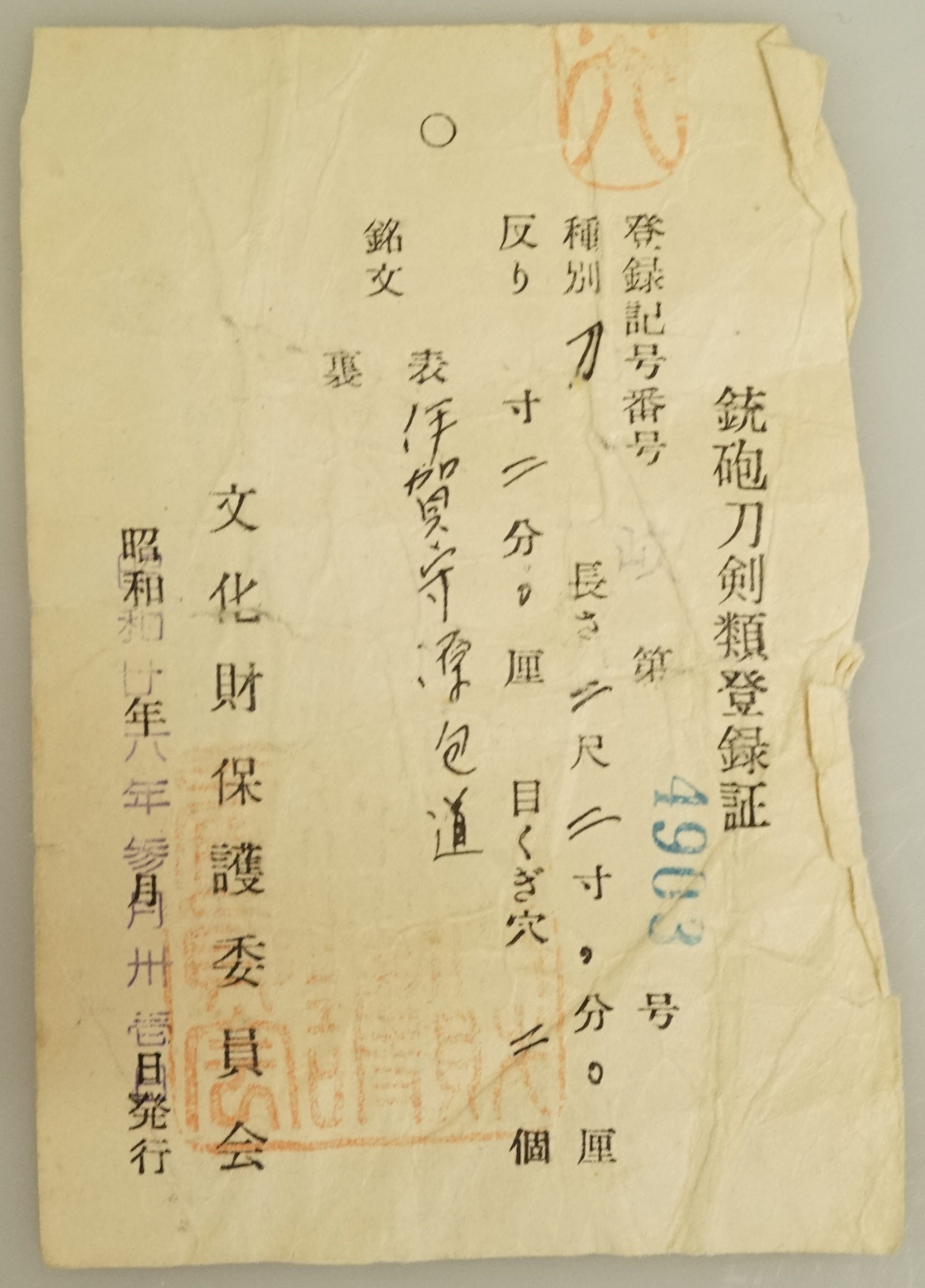
Authentication Paper
They authenticated the blade on May 22th in the 43th year of Showa(1968). They appraised it as Tokubetsu Kicho Touken.
 NihontoWatch