The Shintō era was largely invented in Kyōto: Umetada Myōju’s workshop trained the movement, Horikawa Kunihiro raised a generation, and the Hon’ami appraisers, who held no forge, governed the meaning of famous blades.
 NihontoWatchNihontoWatch
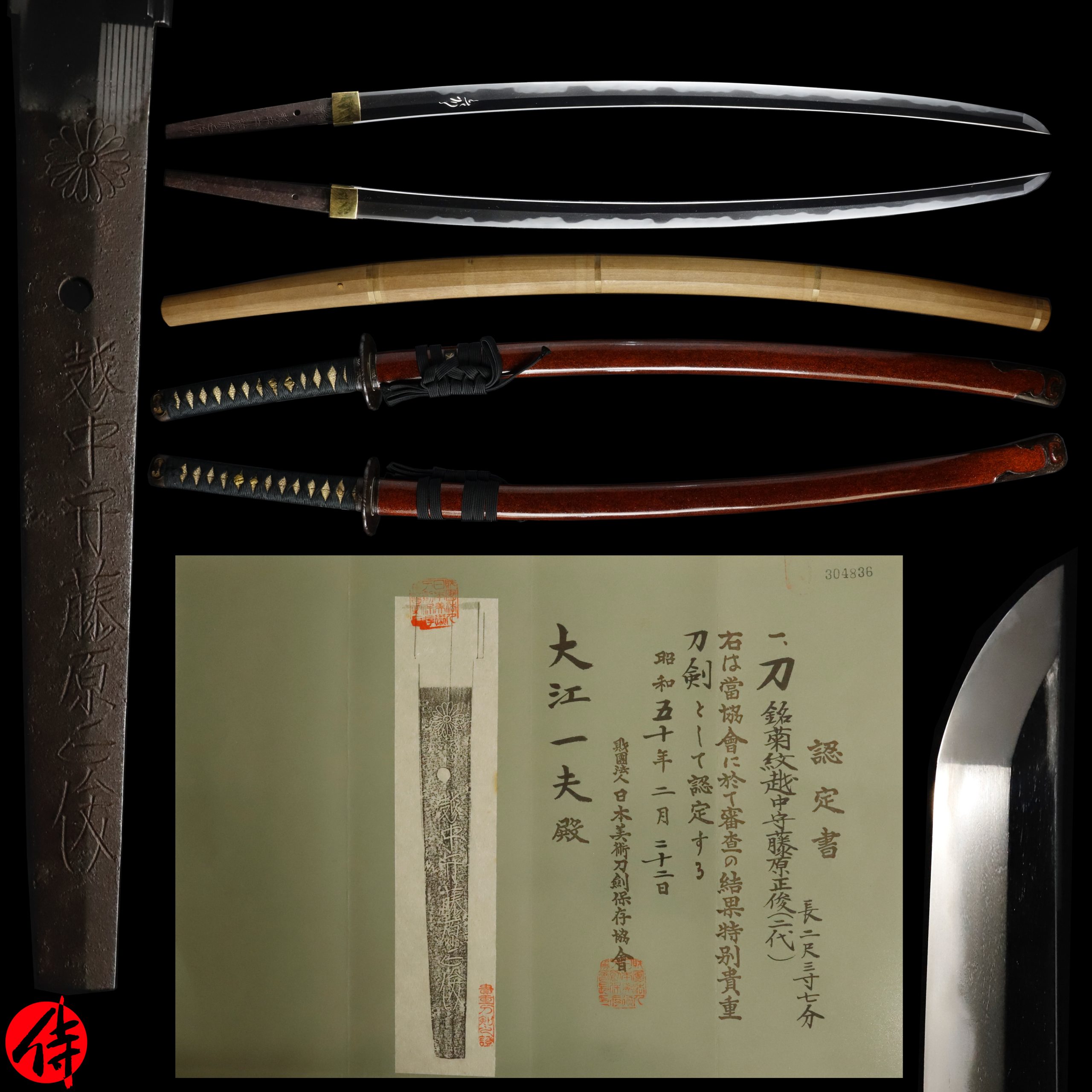
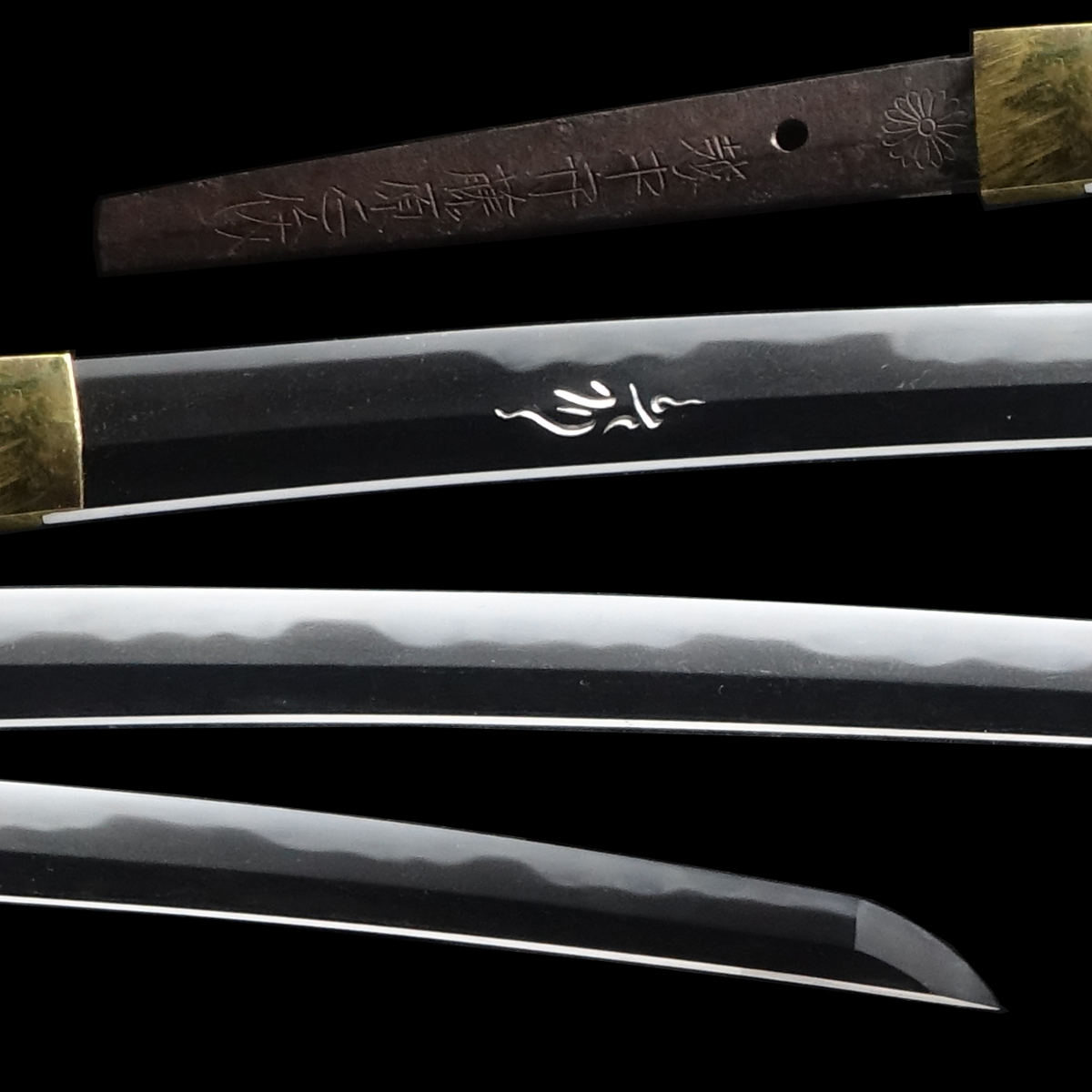
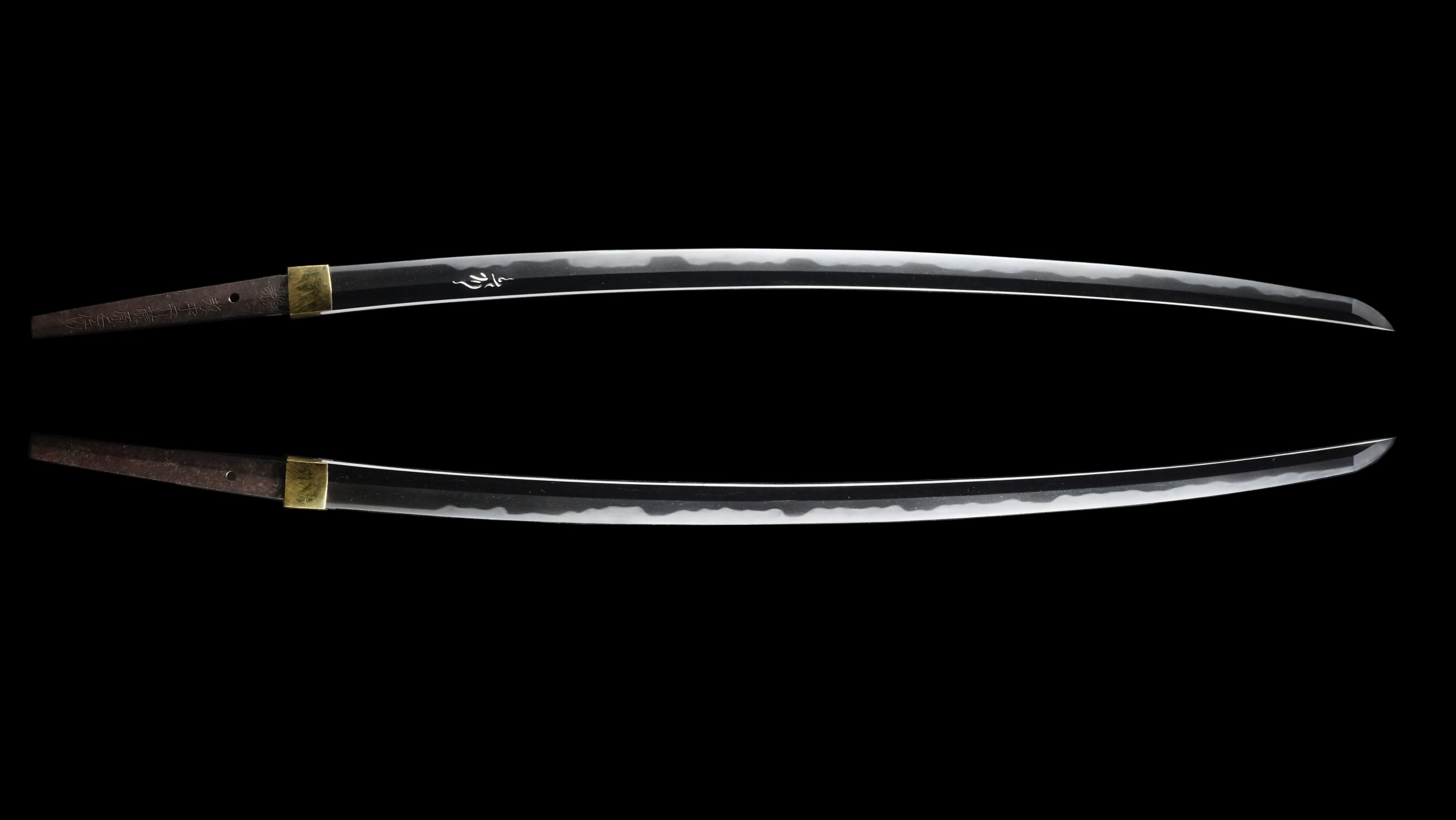
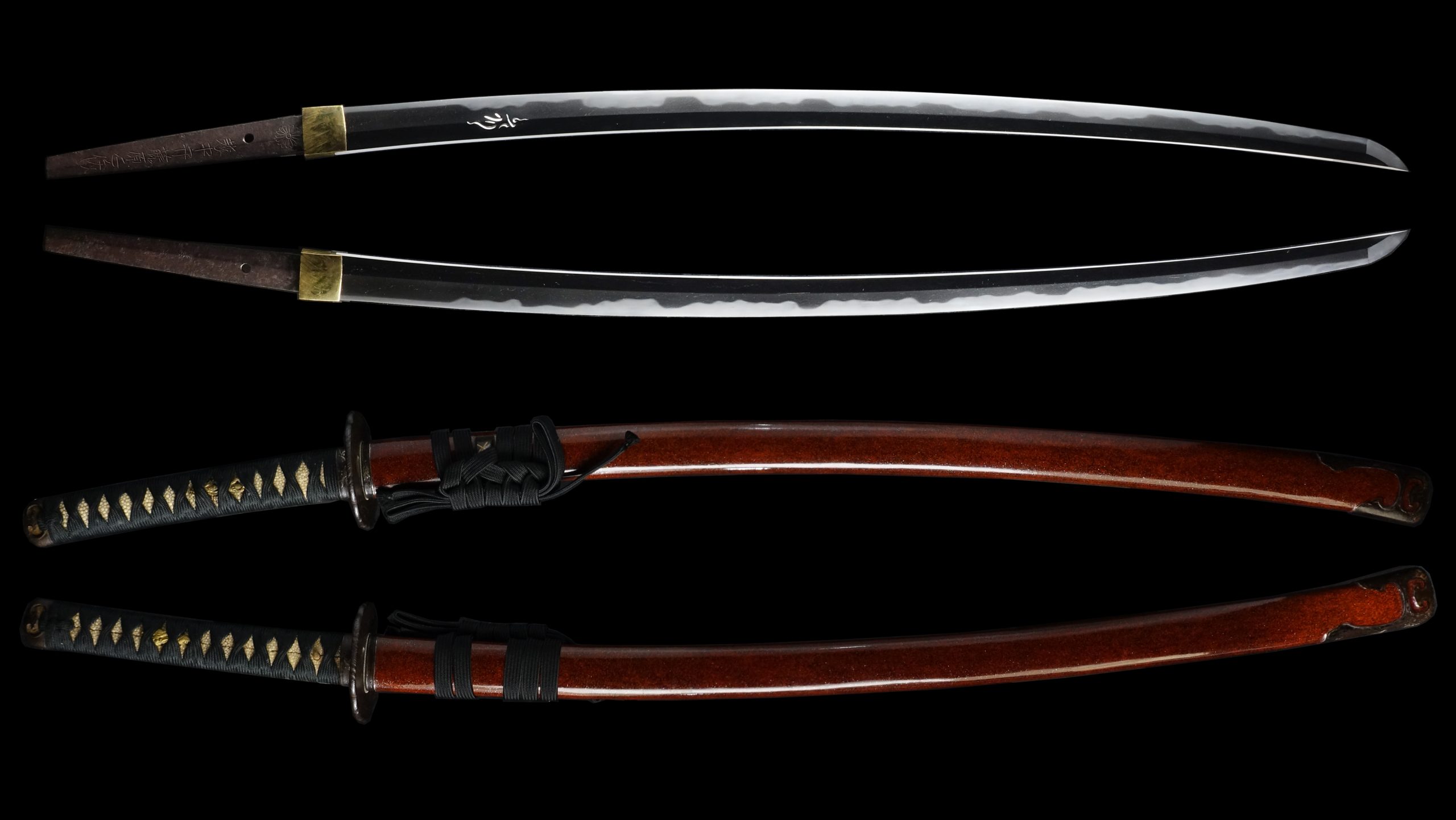
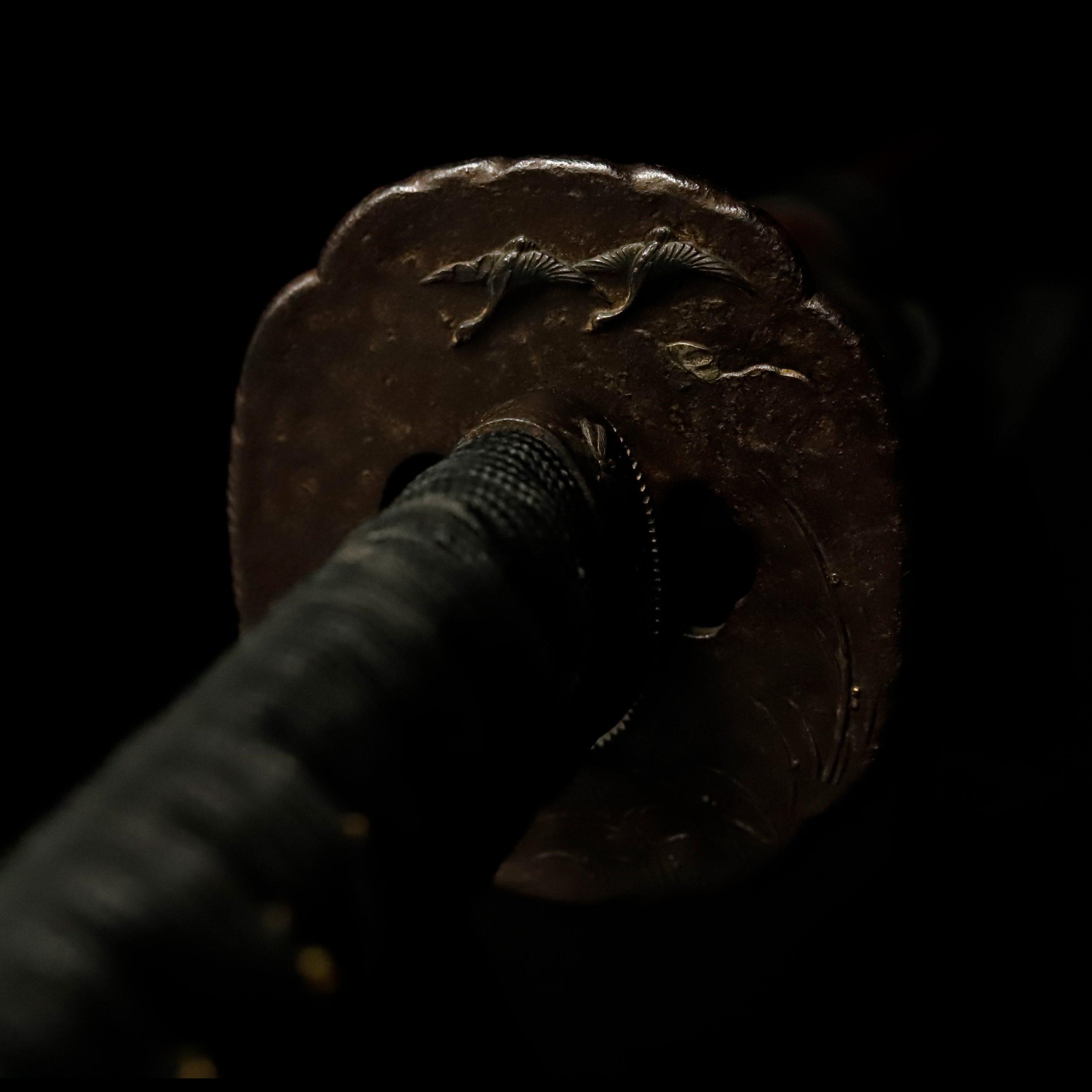
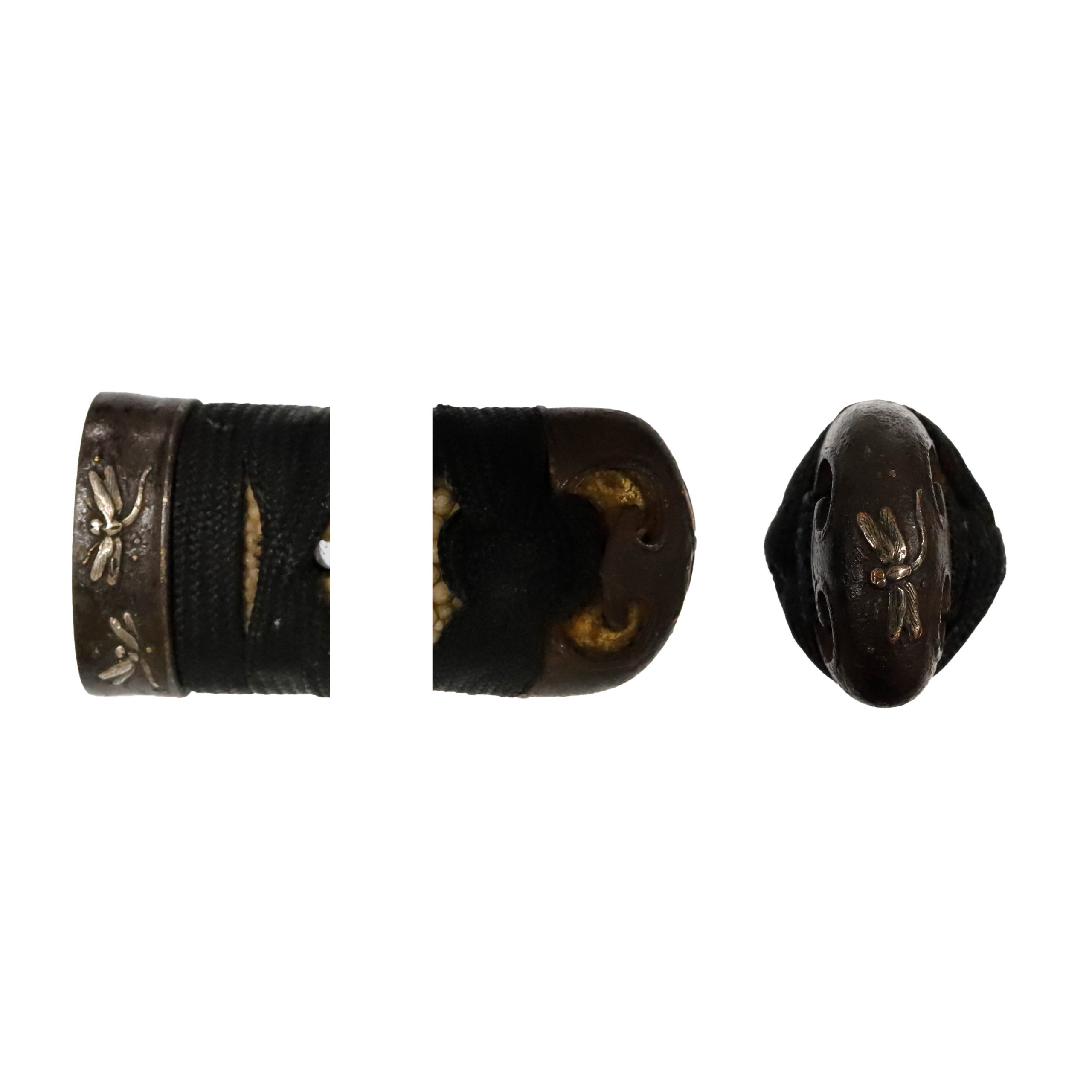
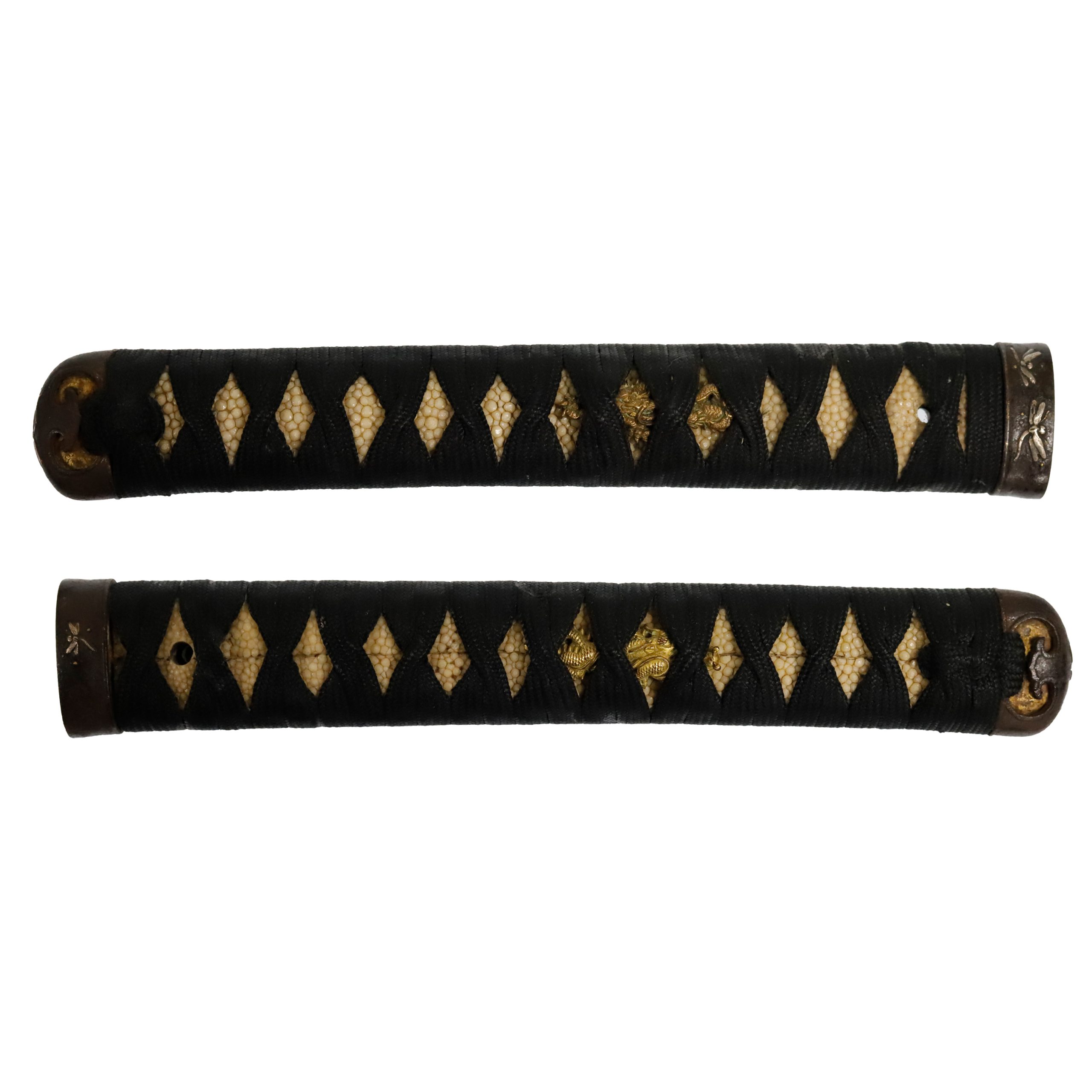
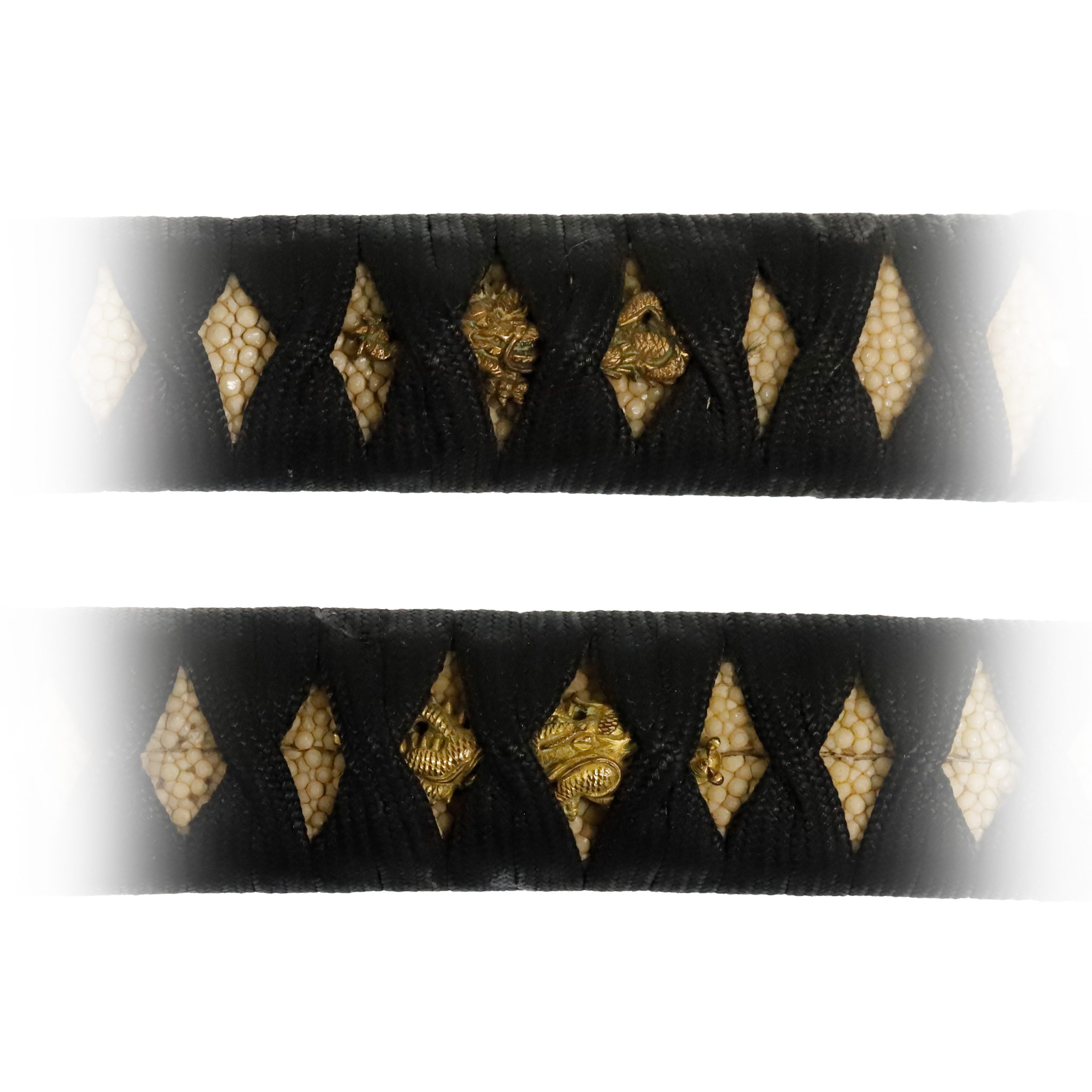
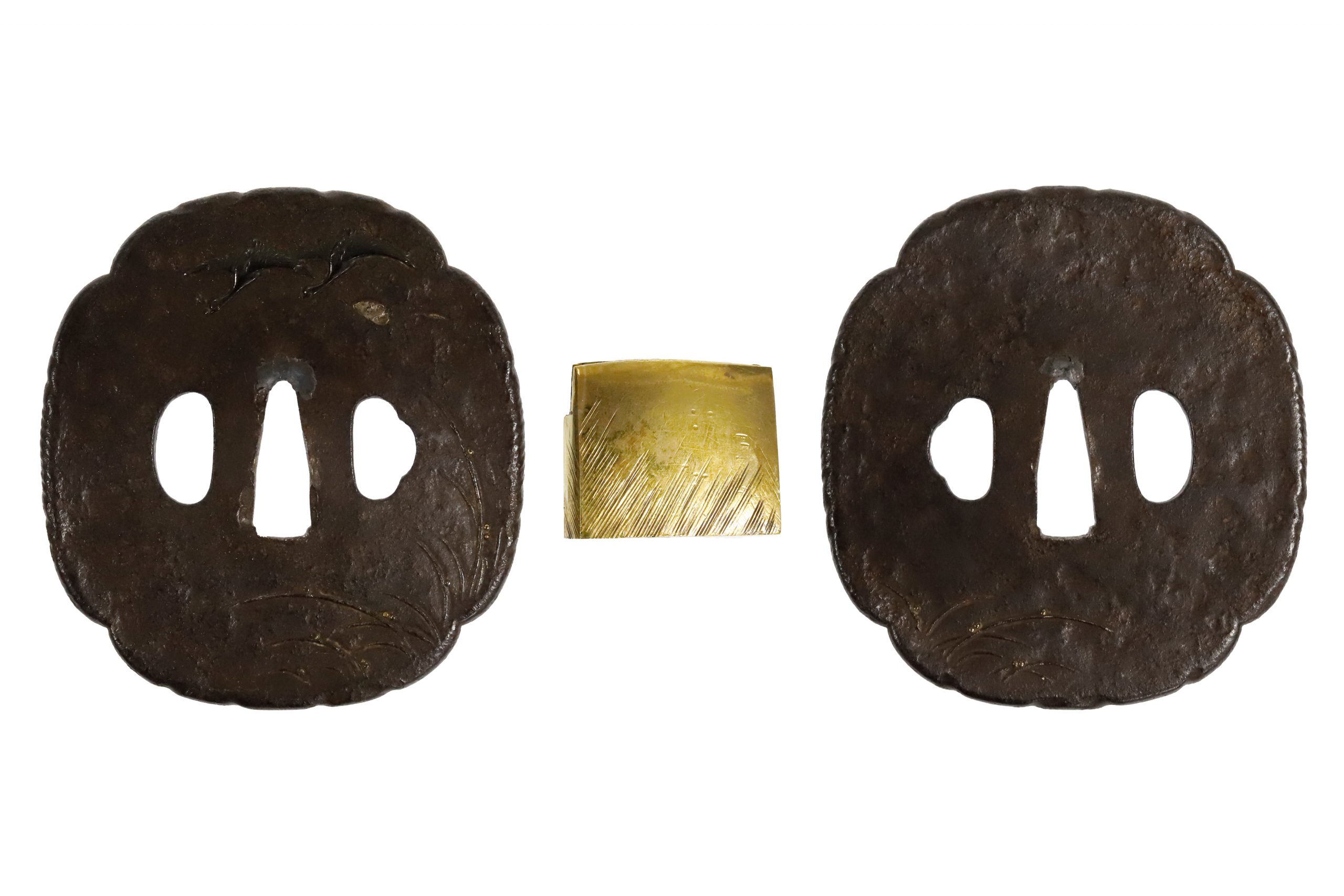
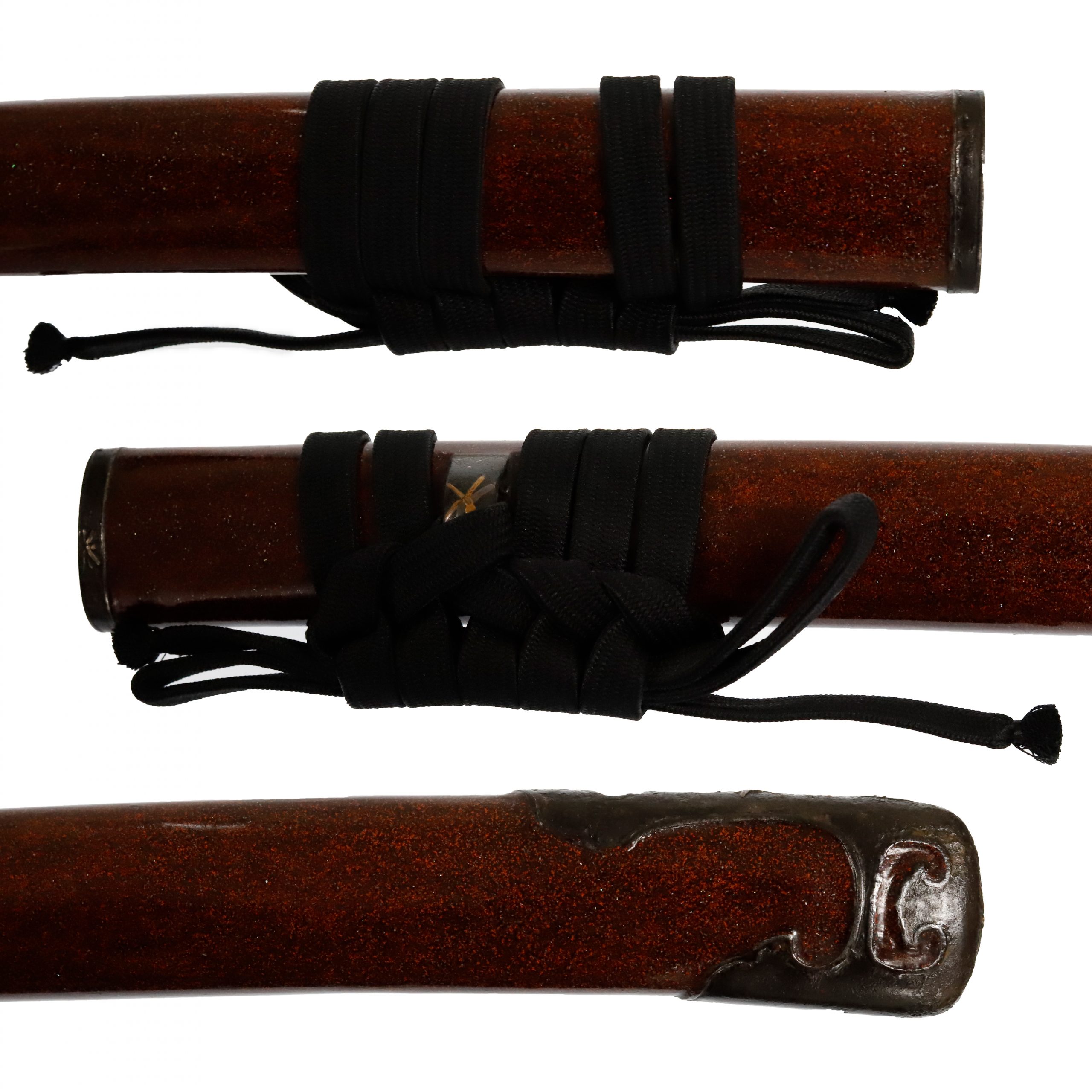
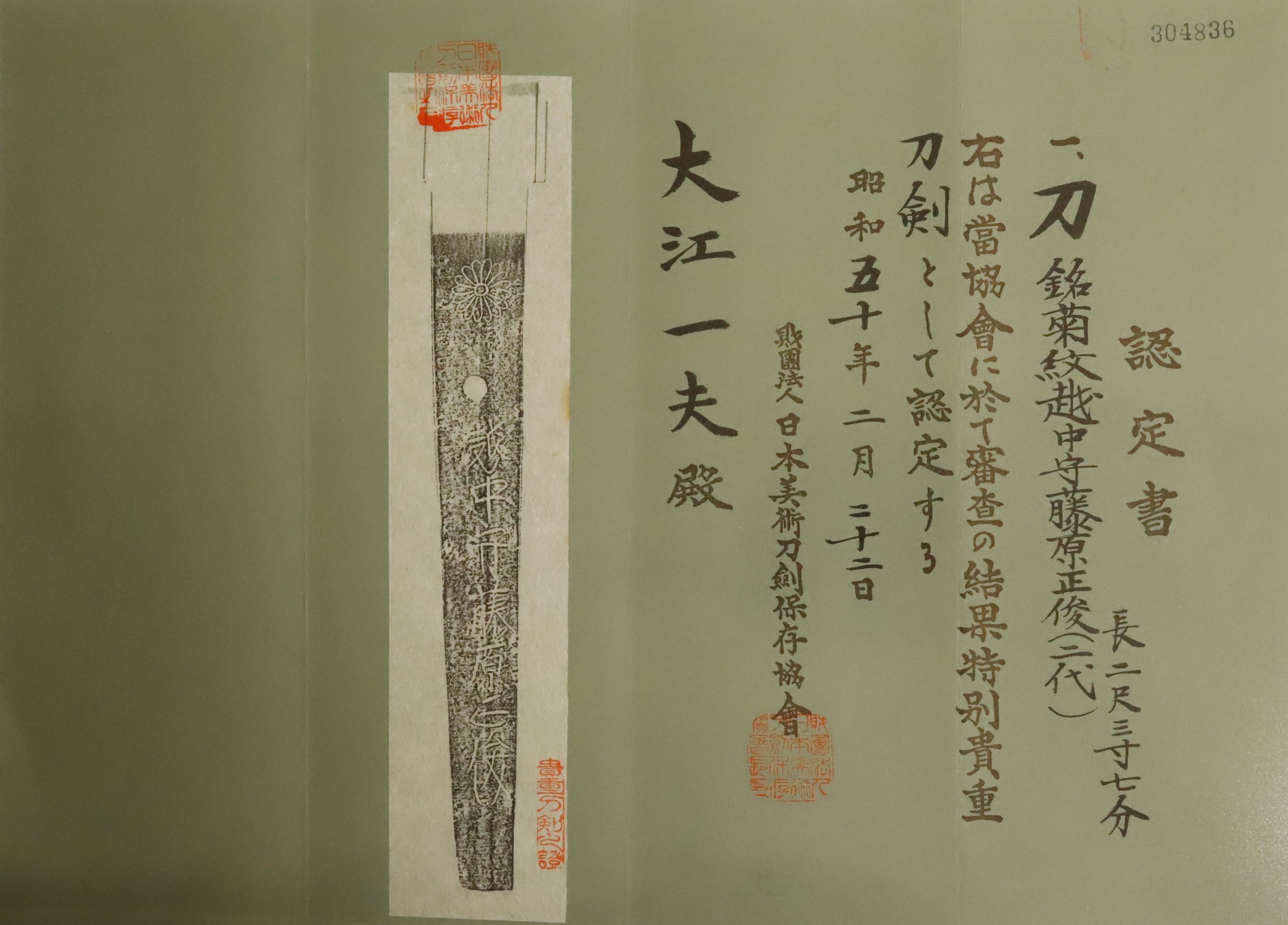
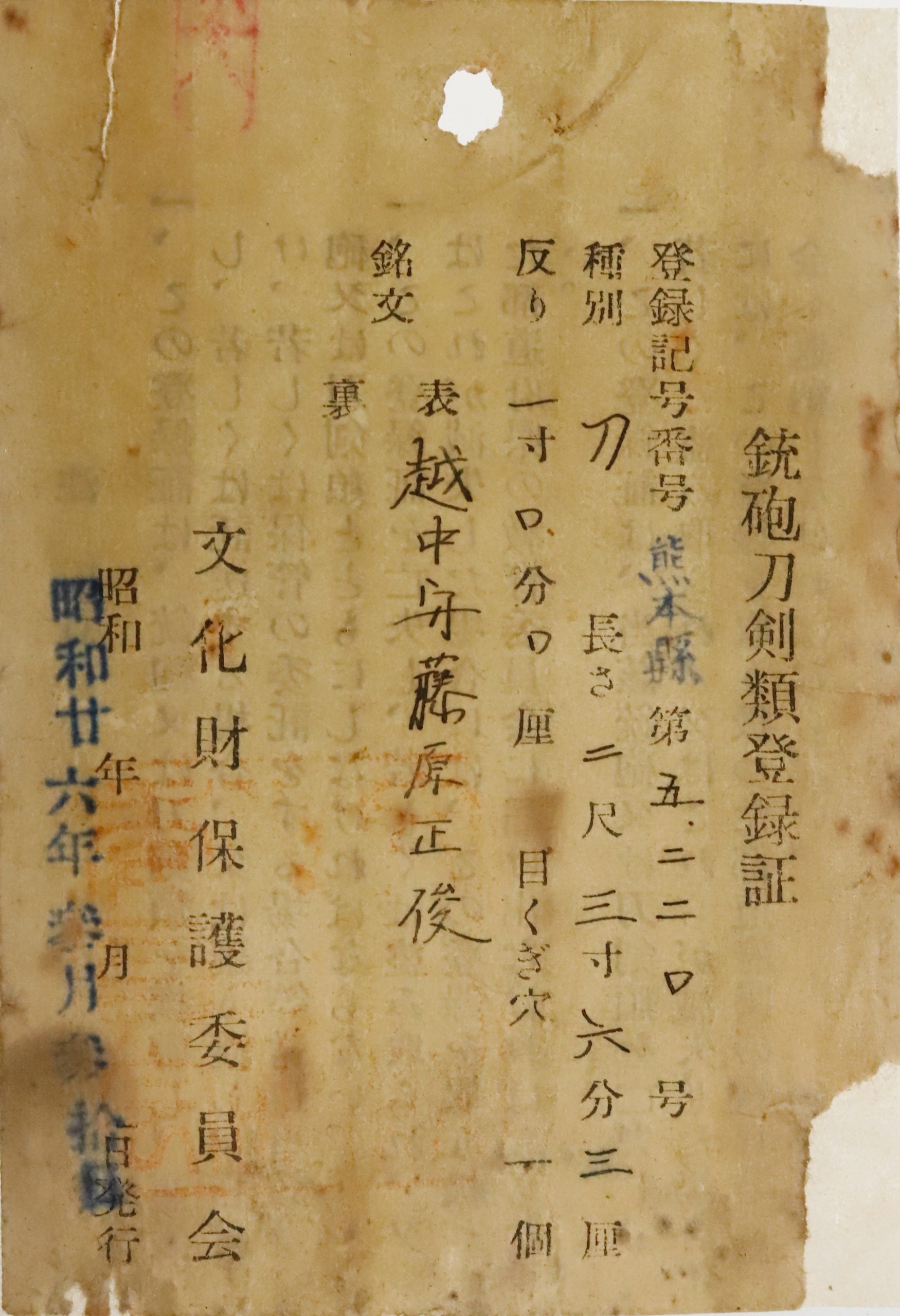
According to NBTHK’s appraisal, this blade was forged by the second-gen Etchu no Kami Masatoshi(二代越中守正俊). He also inscribed the chrysanthemum emblem along with his signature. According to historical records, he received Etchu no kami(the name of the honorable title) in the Kanei era(1624-1645). He started to sign the chrysanthemum emblem in Seiho era(1645-1648). His work has a very close resemblance to his master, the first-gen Masatoshi(his father). The second-gen Masatoshi was active in sword-forging in 1624-1648. We believe this blade was forged by him in his late-career when his craftmanship reached the highest level. The first-gen Masatoshi was the fourth son of Kanemichi(関兼道). Seki Kanemichi was originally from Mino province, exclusively forging blades for Shingen Takeda, a famous feudal lord. Later on, he moved to Kyoto in 1593 by bringing his four sons, Iga no Kami Kinmichi(伊賀守金道)、Izumi no Kami Rai Kinmichi(和泉守来金道), Tanba no Kami Yoshimichi(丹波守吉道) and Echu no kami Masatoshi(越中守正俊). Seki Kanemichi established Mishina school in Kyoto, one of the most prestigious schools in the early Edo period. The first-gen Etchu no Kami Masatoshi was known as Kyoto Gokaji(京都五鍛冶), five prestigious swordsmiths living in Kyoto in the early Edo period. He was allowed to inscribe a chrysanthemum emblem, which is the symbol of the Japanese emperor. His sword-forging technique was so great that the emperor licensed him to use this emblem, which was quite honorable for any swordsmiths. It is said that the first-gen Masatoshi was the most skilled one among other brothers, and his craftsmanship was passed down to his son, the second-gen Masatoshi. The second-gen Masatoshi was also allowed to sign his signature with chrysanthemum emblem, forging blades in Kyoto in the early Edo period(Mid-Late 17 century). The swordsmith name Masatoshi lasted forth generations until the mid-Edo period. It has a sculpture of Sanscrit on one side. The meaning is Fudo Myo-O(不動明王), which is a protective god in Buddhism, particularly Japanese Shingon Buddhism. This god was also known as a god of wars. Samurai believed in the power of this god, so they put decorations of this god on either armor or samurai sword. Horimono Horimono is an inscription or sculpture on Japanese swords. Fuchi-Kashira Dragonflies are designed for this Fuchi Kashira. The silvery metal is applied to them. Dragonfly has been inhabiting since a long time ago in Japan. As they bag preys quickly, its heroic figure was sometimes regarded as the object of belief. During the Warring States period, a dragonfly was called “Kachimushi (勝ち虫)” because of its fearless character; it moves only forward, not backward. Above all, the combination of the dragonfly pattern with the iris flower or the arrow was much appreciated. Allow was one of the Samurai’s primary weapons. Iris flower is called “Shoubu (菖蒲)” in Japanese, and there is the word “Shoubu (勝負),” which means battle. So, “Shoubu” (菖蒲, iris flower) and “Shoubu” (勝負, fight) those two wards have the same pronunciation; therefore, the iris flower pattern reminds Samurai battle. Same as this Menuki’s motif (for the Menuki, please check the explanation below), the popular motifs among Samurais were used. Tsuka and Menuki This Menuki’s motif is a dragon. Although some parts of gold-colored metal coating have already been flaked off due to aging, this Menuki still has a gorgeous look thanks to the elaborate carving skill of its maker. Initially, the dragon is an imaginary creature found in ancient traditions or myths. Furthermore, it is a symbolic beast of auspicious signs. Its body is likened to nine animals: antlers are deer, the head is a camel, eyes are demons, the neck is a snake, belly is Mizuchi (蛟, mythical animal in Japan which looks like a snake and have a horn and four legs), scales are fish, claws are falcons, palms are tigers, and ears are cows. It was thought that the dragon would reign at the top of all animals because of its odd-looking appearance. Also, in Japan, there is a belief that worships dragon as a water god and is called Ryujin Shinkou (竜神信仰). Since rice cultivation has been flourished in this country, water is always an essential resource. So that the dragon motif has been familiar with Japanese people since a long time ago, we would like to guess that it might be a reason why this beast pattern is often found even in sword mountings. Still today, many people appreciate this motif. Tsuba and Habaki Yotsu-Mokkou-shaped Tsuba that has Kozuka and Kougai holes. Mokkou (木瓜) shape, its origin is a shape of eggs that are rest in a nest. When a quince (it is written 木瓜 in Japanese) is cut into round slices, its cross-section looks similar to this shape; therefore, it was named Mokkougata Tsuba. Yotsu-Mokkougata (a combination of four Mokkou shapes) Tsuba is often seen as this work is categorized. Two birds are flying in the sky. As there are various types of bird motifs designed for sword mountings, it is a little challenging to judge what kind of bird it is. However, we would like to guess these birds are Kari (雁, wild goose). The wild goose is a migratory bird, and it represents fall. The wild goose pattern is also called “Karigane (雁金).” In Japan, some families use this motif for their family crests. This bird is engraved by not only a realistic figure but also a very simplified shape: Hiragana (ひらがな, a kind of Japanese letter) “he (へ)” shape that sometimes makes also wild goose. Since a plant (probably Japanese pampas grass) is engraved at the lower part of this Tsuba, this work might depict a natural autumn scene. Authentication Paper They authenticated the blade on Feb 25nd in the 50 year of Showa(1975). They appraised it as Tokubetsu Kicho Touken, an old form of the authentication paper .
Offered by Samurai Museum
This piece has sold
Get an email when a new Mishina Masatoshi piece hits the market.

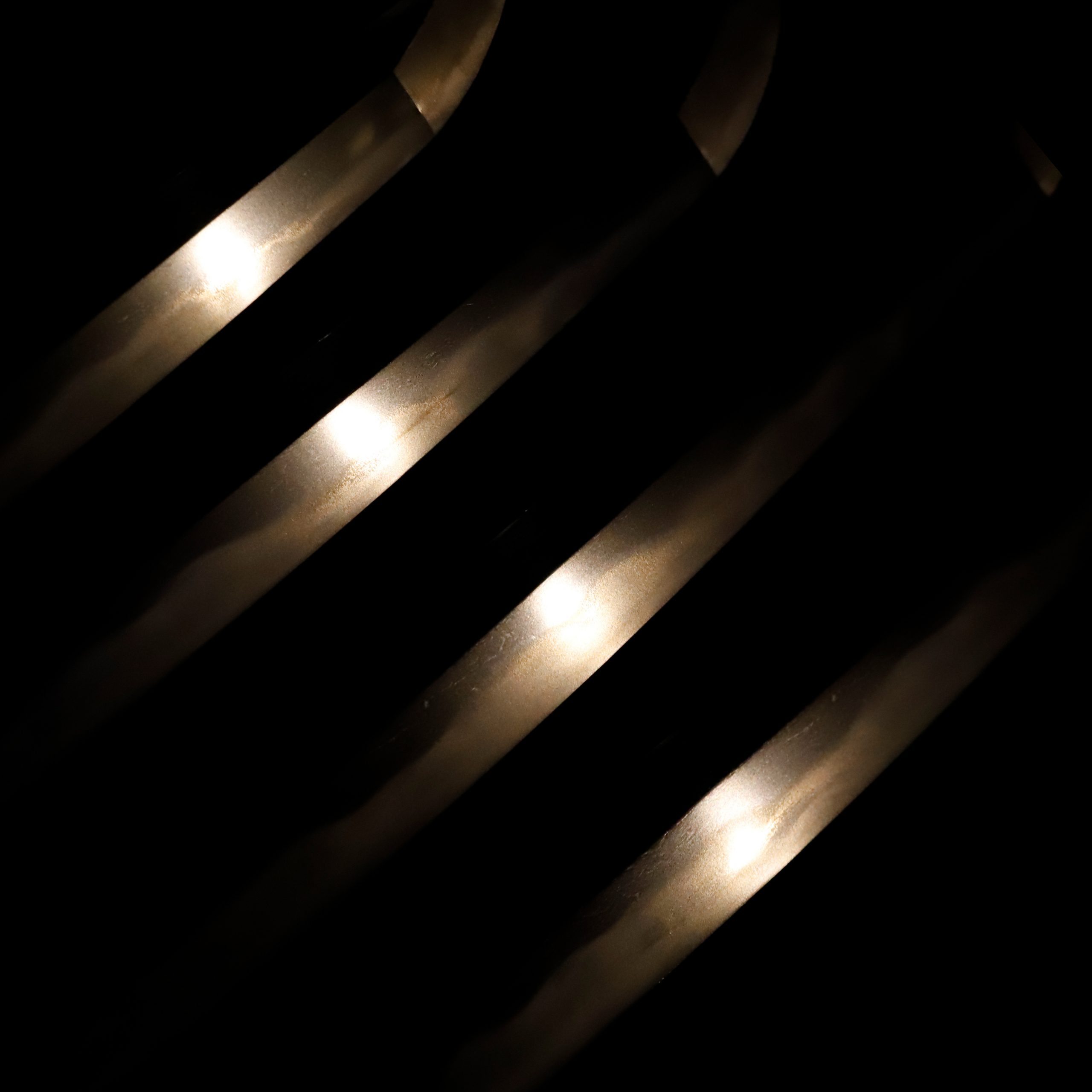
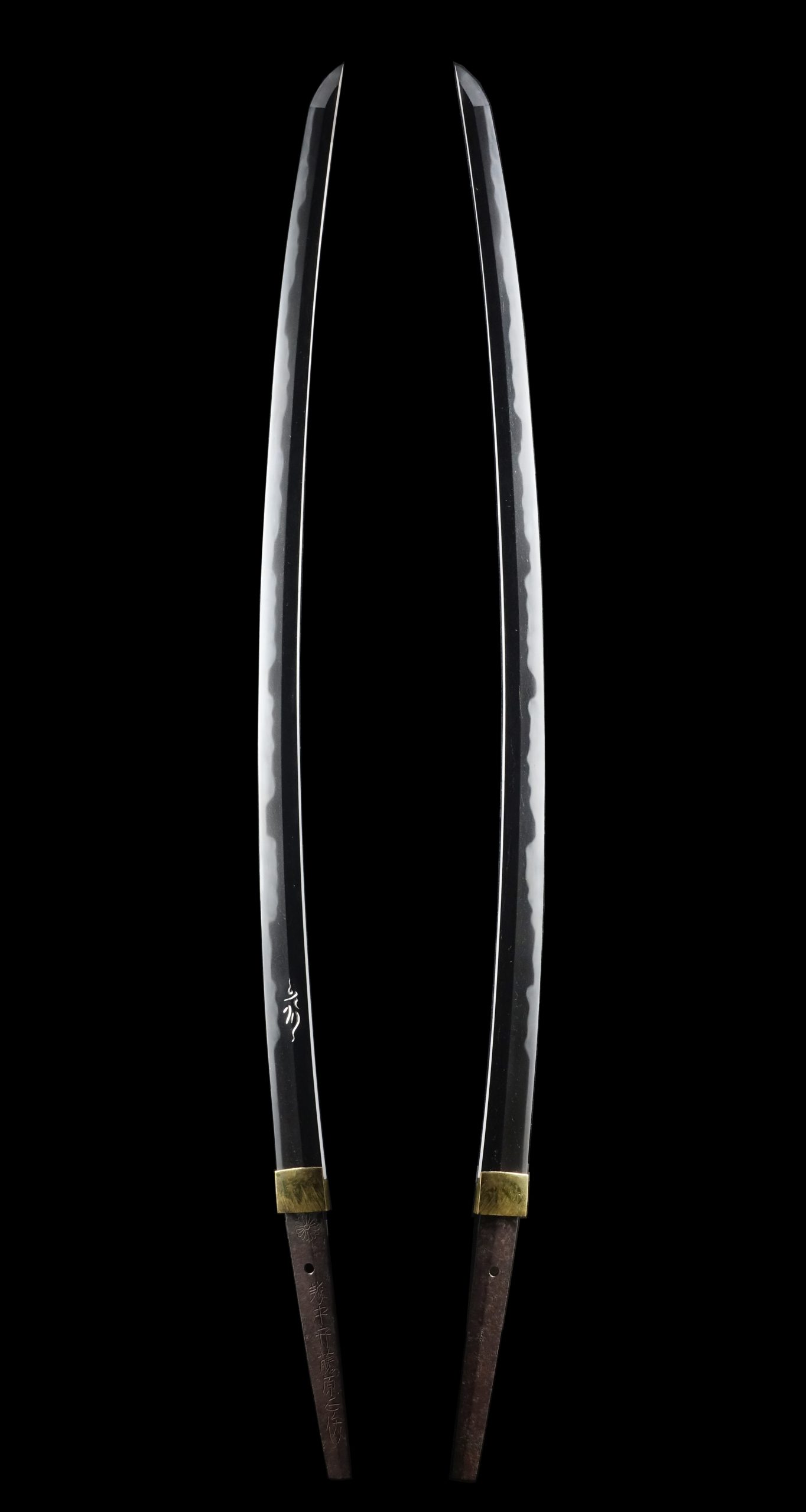
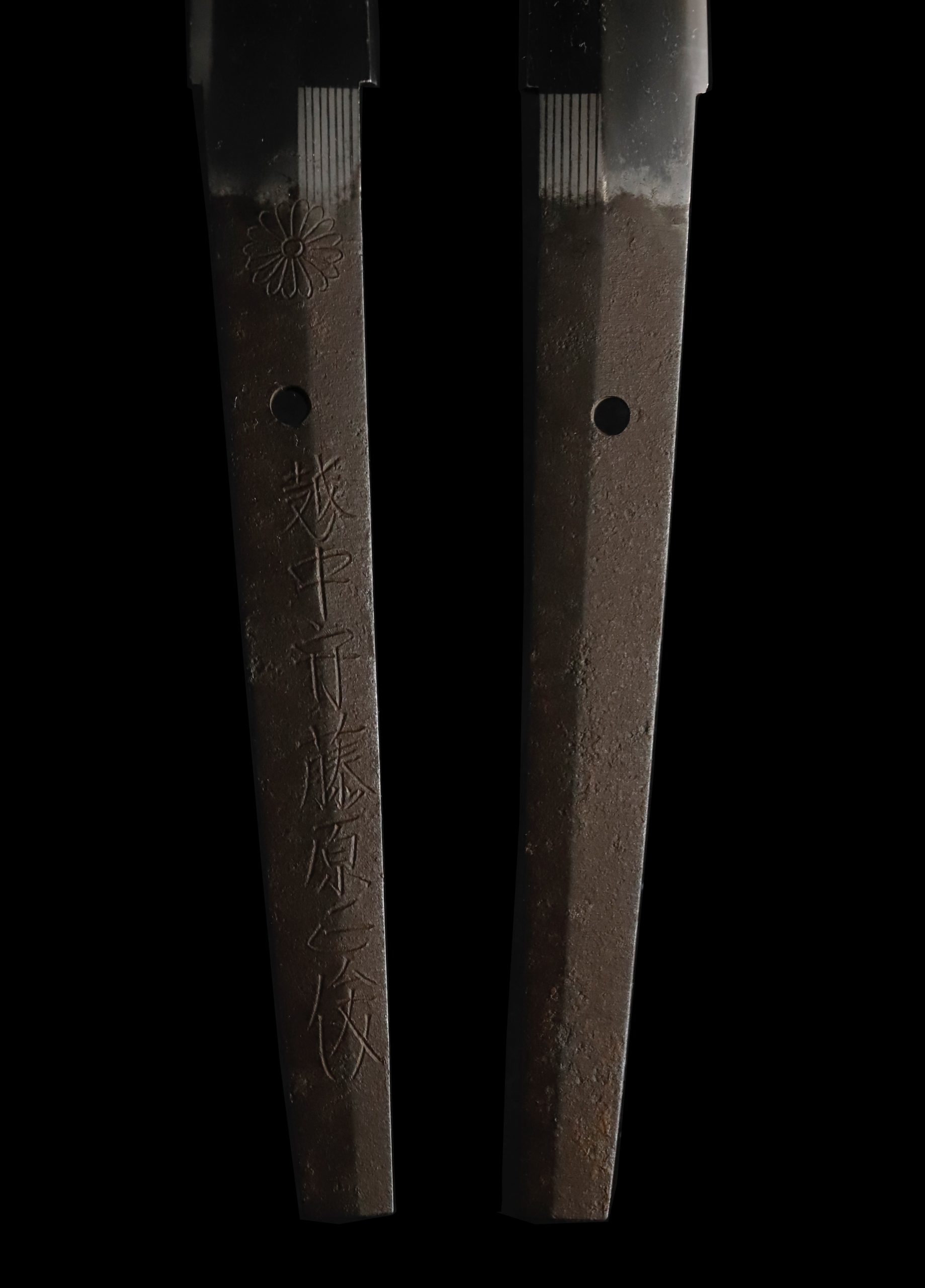
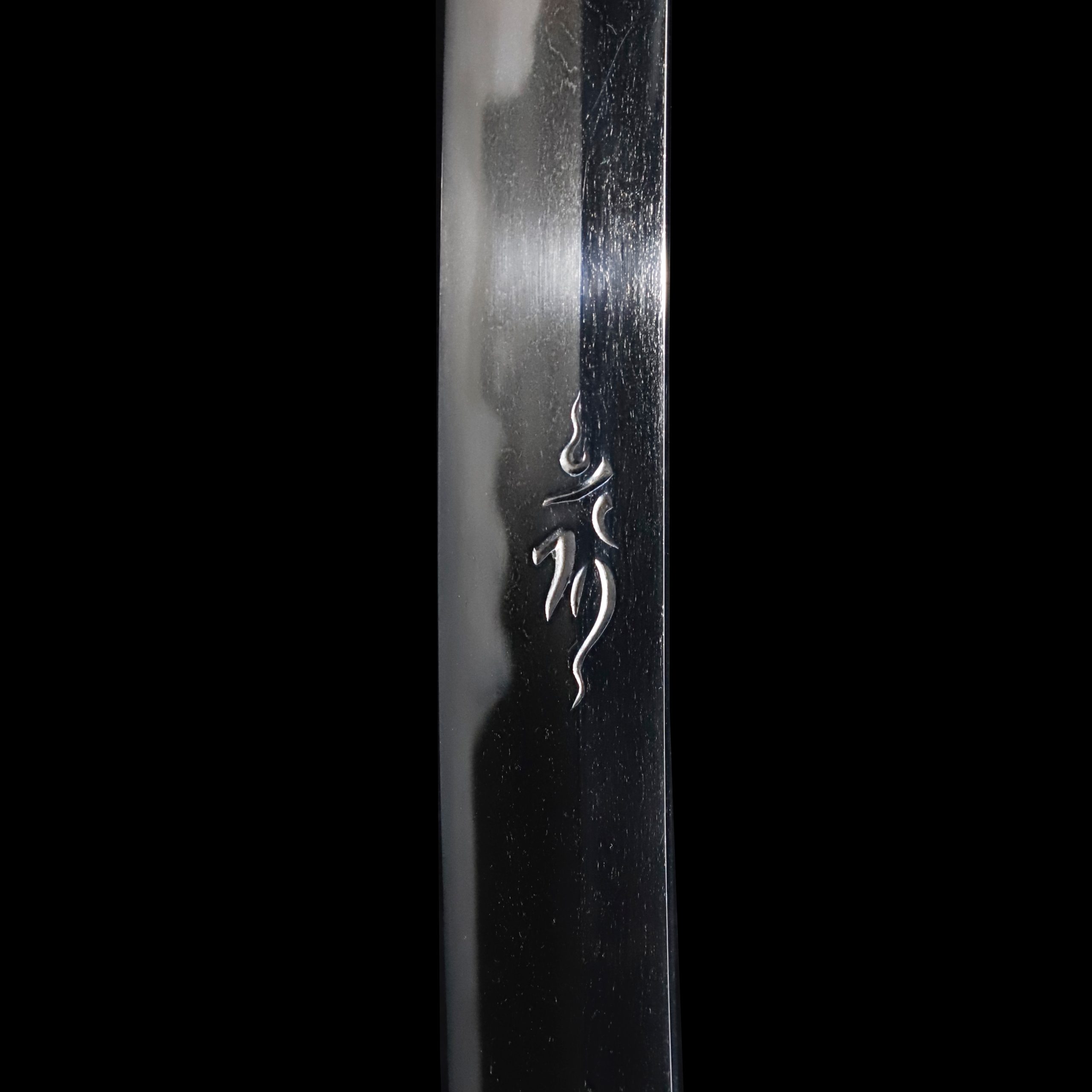
Shinto · Yamashiro · around 1624-1644
Fujishiro Jo saku · Tōken Taikan top 49%
1 piece on the market now
Etchu no Kami Fujiwara Masatoshi was the fourth son of Seki Kanemichi and younger brother to three distinguished smiths: Iga no Kami Kinmichi, Rai Kinmichi, and Tanba no Kami Yoshimichi. Active in the early Edo period, with dated works known from the Kan'ei era (1620s), Masatoshi belonged to the Mishina group, the celebrated lineage also known as the Sanpin line. The NBTHK consistently distinguishes him from his elder brothers as the most versatile member of the family, noting that he displayed "a remarkably broad range of styles" and that his technical ability was outstanding. He is regarded as one of the principal attractions of the group.
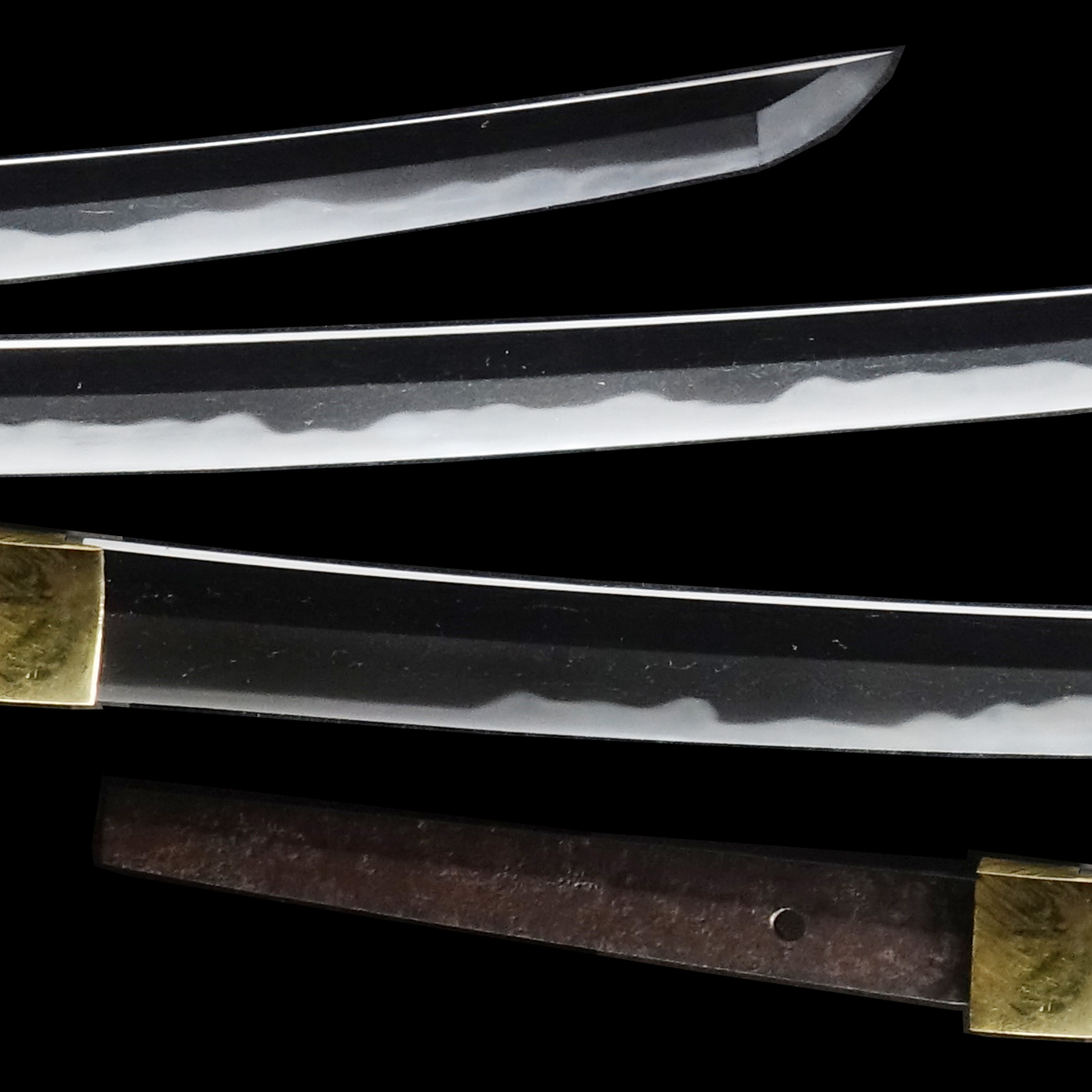
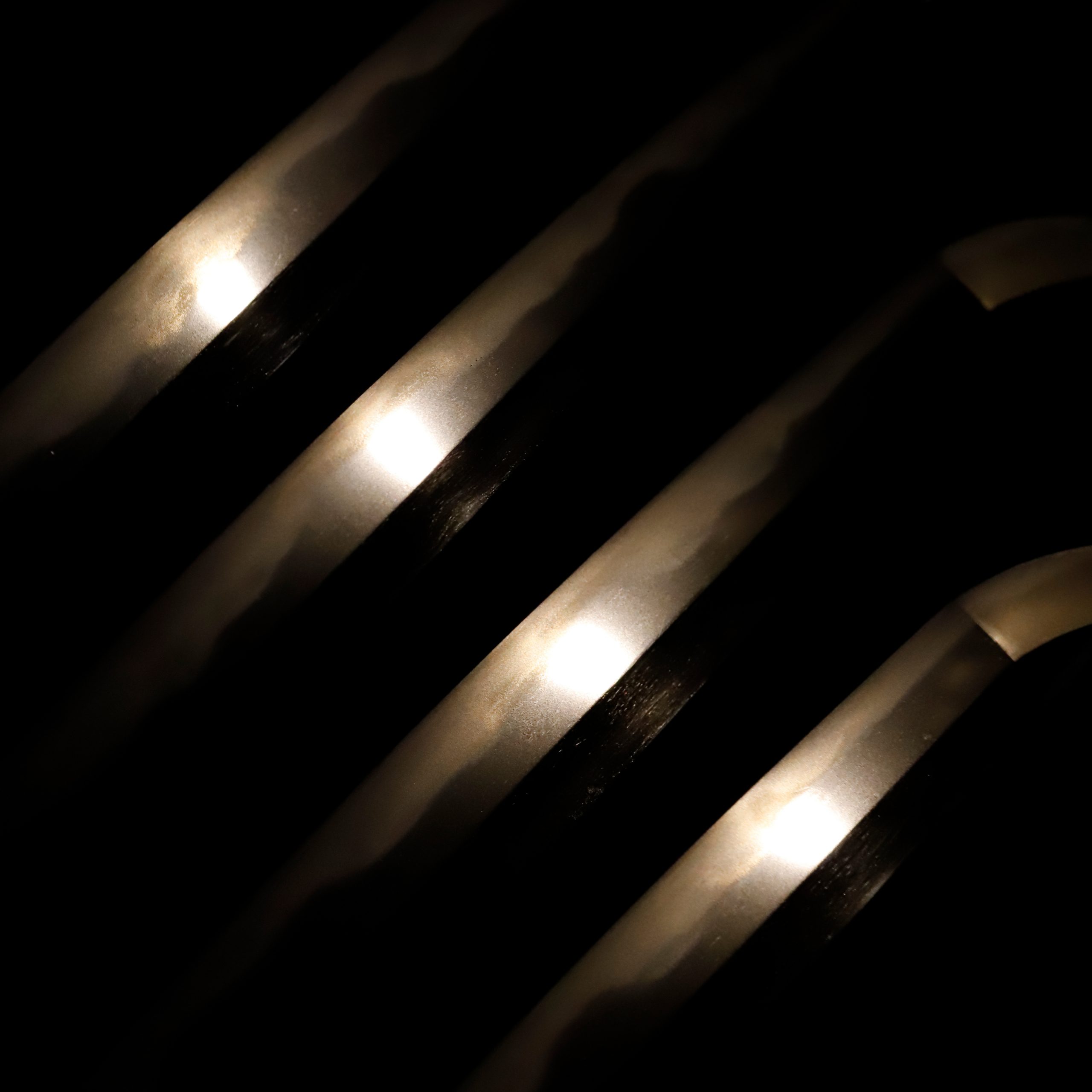
Masatoshi's forging is an itame-hada with a tendency to flow and areas where the grain stands out, showing abundant ji-nie and chikei[[c:1]]. His hamon demonstrates the breadth of workmanship for which he is celebrated: a gunome-midare base mixed with togariba, ko-notare, choji, and yahazu-like forms, with tobiyaki occurring frequently and vigorous sunagashi and kinsuji applied throughout[[c:2]]. The nie is strong and conspicuous. A hallmark of the Mishina lineage is the sanpin-boshi -- a boshi that enters in notare, becomes pointed at the tip, and turns back -- and the NBTHK observes that it is Masatoshi who expresses this feature "with particular clarity."[[c:3]] Where many works of this lineage tend toward a somewhat subdued nioiguchi, Masatoshi's examples are singled out for their bright and clear quality, described as saeru.
The Society's assessments return repeatedly to Masatoshi's individuality within the Mishina school. His boldly varied o-midare patterns convey "a spirited and assertive character," while the distinctive manner in which the lower portion of the blade forms a ko-notare base mixed with pointed gunome is identified as a feature particular to this smith alone. His range extended across katana, wakizashi, and the comparatively rare naginata form, in each case demonstrating the diversity and adroitness that set him apart. Within the Sanpin lineage, Masatoshi occupies the position of its most technically accomplished and stylistically independent master.
Where Masatoshi stands among comparable artisans: across all of nihontō, and within tradition, era, and period. The tiers (Foremost · Leading · Major · Notable) weigh official designations from the NBTHK and Japan's Agency for Cultural Affairs, together with historical honors of lasting repute such as the Sansaku and Meibutsu-chō.
Select a lens to see how it's measured.
Years he was demonstrably active, proven by signed-and-dated blades
Shinto · Yamashiro
55 pieces on the market now
The Mishina school (三品), one of the two dominant smithing groups of early Edo Kyoto beside the Horikawa, grew from the late-Mino workshop of Kanemichi of Seki, whose dated blades run through the Tenbun, Eiroku, and Tenshō eras. During the closing decades of the sixteenth century Kanemichi came up to the capital with his four sons and settled at Nishinotōin Ebisugawa, where the eldest, Iga no Kami Kinmichi, is recorded as having greatly raised the name of the line. The brothers, Kinmichi together with Izumi no Kami Rai Kinmichi, Tanba no Kami Yoshimichi, and Etchū no Kami Masatoshi, became known collectively as the Sanpin (三品) makers, and the published sources count Kinmichi head of the Kyō go-kaji, the five Kyoto smiths. From the second generation the house held a hereditary right to recommend smiths to the court for their titles and added that by-line to its signatures. The name continued under the same appellation to the end of the Tokugawa period, throwing off branches that included the Tango no Kami line working at Ōsaka into the Genroku years, though the published record consistently holds the founding generation the most outstanding of the line. Beneath every branch lies a shared vocabulary carried up from Mino-Seki. The jigane is the constant: an itame mixed with mokume that flows into nagare-hada and tends toward masame near the mune, the grain standing, with thick fine ji-nie and frequent chikei. Over it the Mino-derived gunome and togariba are refined toward a Kyoto manner, the nie strong and at times coarse, gathering unevenly, kinsuji and vigorous striped sunagashi running throughout. Two tells bind the house. The first is the Mishina bōshi, a notare or midare run-in pointed at the tip and swept with vigorous hakikake, the form Masatoshi shows at its clearest, described as if drawn from a picture. The second is sudareba, the bamboo-blind temper in which layered sunagashi and yubashiri stripe into parallel bands; Tanba no Kami Yoshimichi devised it, and the first-generation hand keeps it a free, semi-cursive disorder where his heirs would regularize it into a fixed lattice.
The lines diverge from that common ground. Kinmichi and his younger brother Masatoshi both excelled in a Shizu manner, the large midare of Mino grafted onto Sōshū nie, with Masatoshi the most versatile, ranging across Shizu, Mino sanbon-sugi, Yamato suguha, and Sōshū hitatsura. The later Ōsaka Tanba branch held to the sudareba alone, opening from a straight yakidashi, while the second Tango no Kami Kanemichi cast off the family chōji for a flamboyant tōran-style large gunome in alternating two-joined and three-joined groups, and a deep-nioi suguha read in the manner of Inoue Shinkai. To kantei Mishina is to read these two house marks first. The pointed, hakikake-swept bōshi and the striped sudareba, set over a standing itame that flows to masame, place a blade within the line before any signature is weighed; the sunagashi, far heavier than on a Bizen ji, is the very material from which the temper is built. Within the house the founding generation sets the standard. Fujishiro grades Kinmichi and Masatoshi Jō-jō saku, the Ōsaka Tanba shodai Jō-saku, and the second Tango no Kami Chū-jō saku, the sources judging the later Kyoto and Ōsaka generations markedly inferior to the founders as the manner thinned toward a single uniform pattern. Provenance on record runs through samurai and collector hands rather than great museums: a Kinmichi katana among the cherished swords of Tani Tateki, a Yoshimichi katana made for Naitō Kuroemon and another now in the Kyoto National Museum, Masatoshi blades passing through Oda Urakusai and the Imperial household, and a second Tango no Kami katana descending from the Aoyama wardens of Ōsaka castle. The brothers' blades are signed and knowable, dated examples rare, so the manner of the mei joins the workmanship in placing them; for the Ōsaka and Kyoto branches the cut of the character 守 separates one hand from the next. Most designated work is held rather than traded, so a signed founding-generation Mishina blade comes to light only from time to time, and with it the temper in which one of the most recognizable hamon of the Shintō era was first being worked out. Learn more →
| Smith | Era | Designated |
|---|---|---|
| Kinmichi金道 | 1596-1615 | 25 |
| Yoshimichi吉道 | 1596-1615 | 36 |
| Masatoshi正俊 | 1596-1615 | 29 |
| Kanemichi兼道 | 1681-1704 | 5 |
| Eisen来栄泉 | 1673-1688 | 3 |
Kyōto: the revival workshop
The Shintō era was largely invented in Kyōto: Umetada Myōju’s workshop trained the movement, Horikawa Kunihiro raised a generation, and the Hon’ami appraisers, who held no forge, governed the meaning of famous blades.
This work carries older NBTHK “Kichō”-era papers, which the NBTHK no longer issues and largely disavows today. To confirm the attribution, submission to an official Japanese examination body (such as the NBTHK or NTHK) for modern certification could be considered.
Returns/exchanges limited to defects caused by shipping (except willful misconduct or gross negligence by the company); customers must contact within 72 hours of receiving the product.