The monasteries that had sustained Yamato lost ground through the Muromachi period, and the schools thinned with them; Sue-Tegai kept the old masame manner alive in quantity. The burning of Tōdaiji’s Great Buddha hall in 1567 closed the temple age.
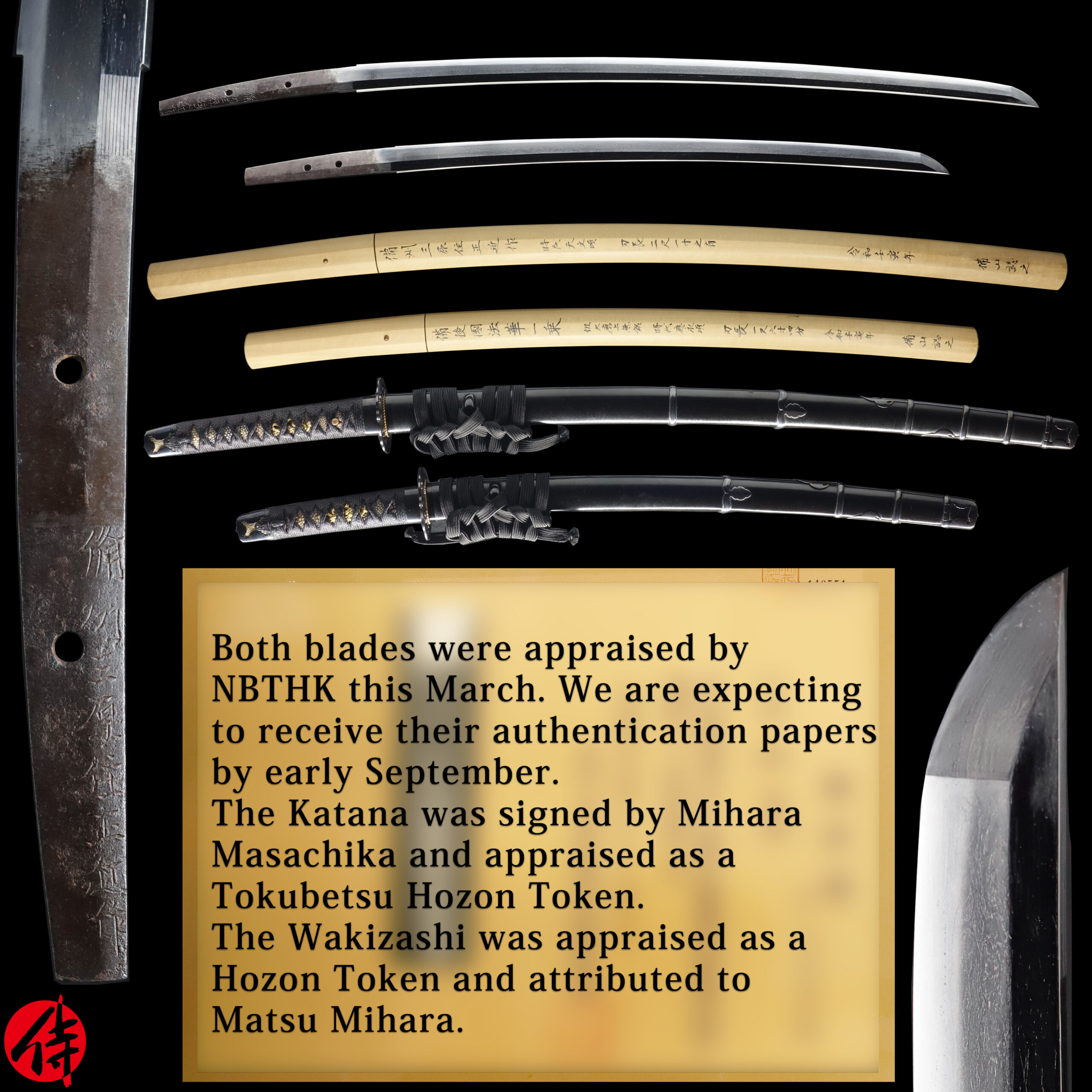
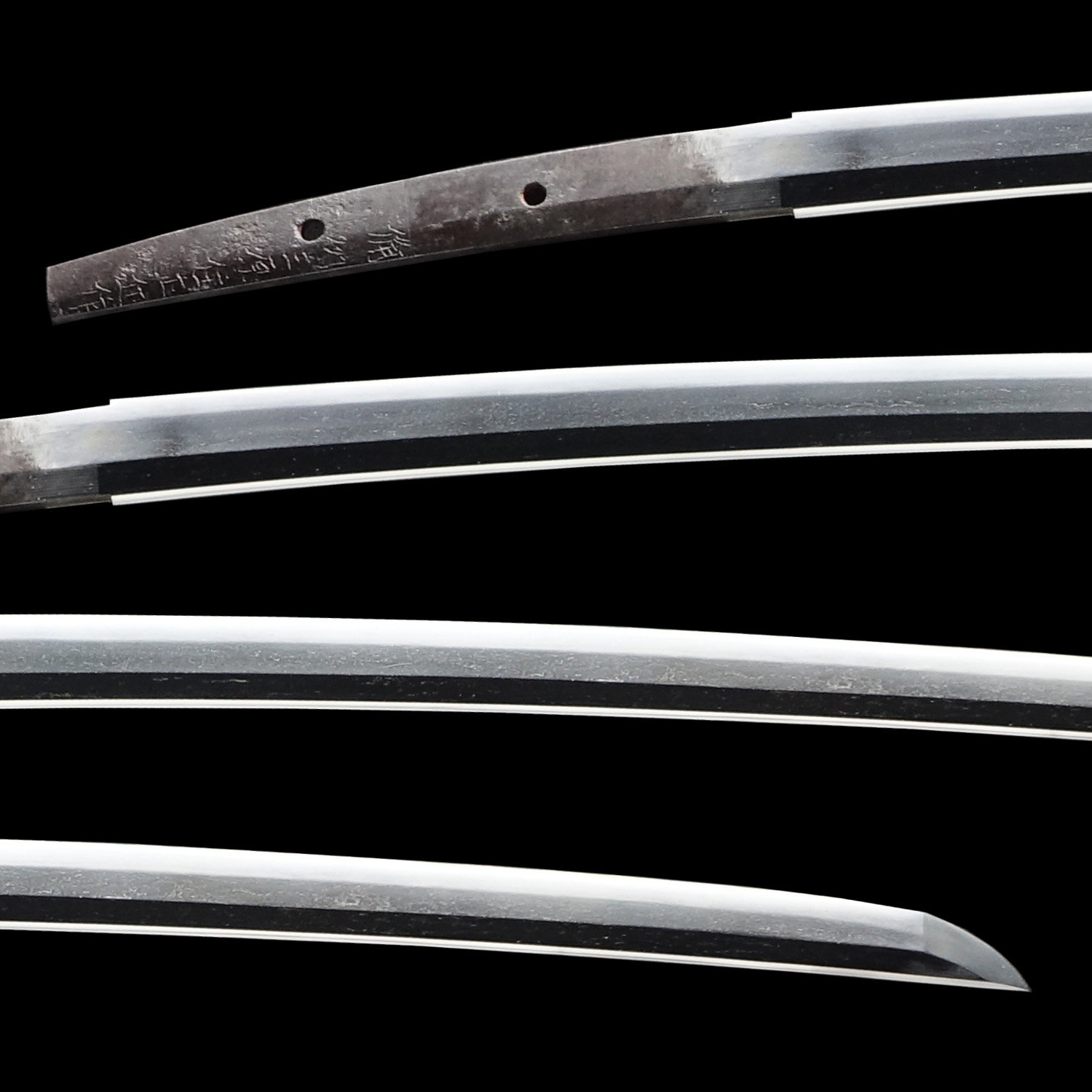
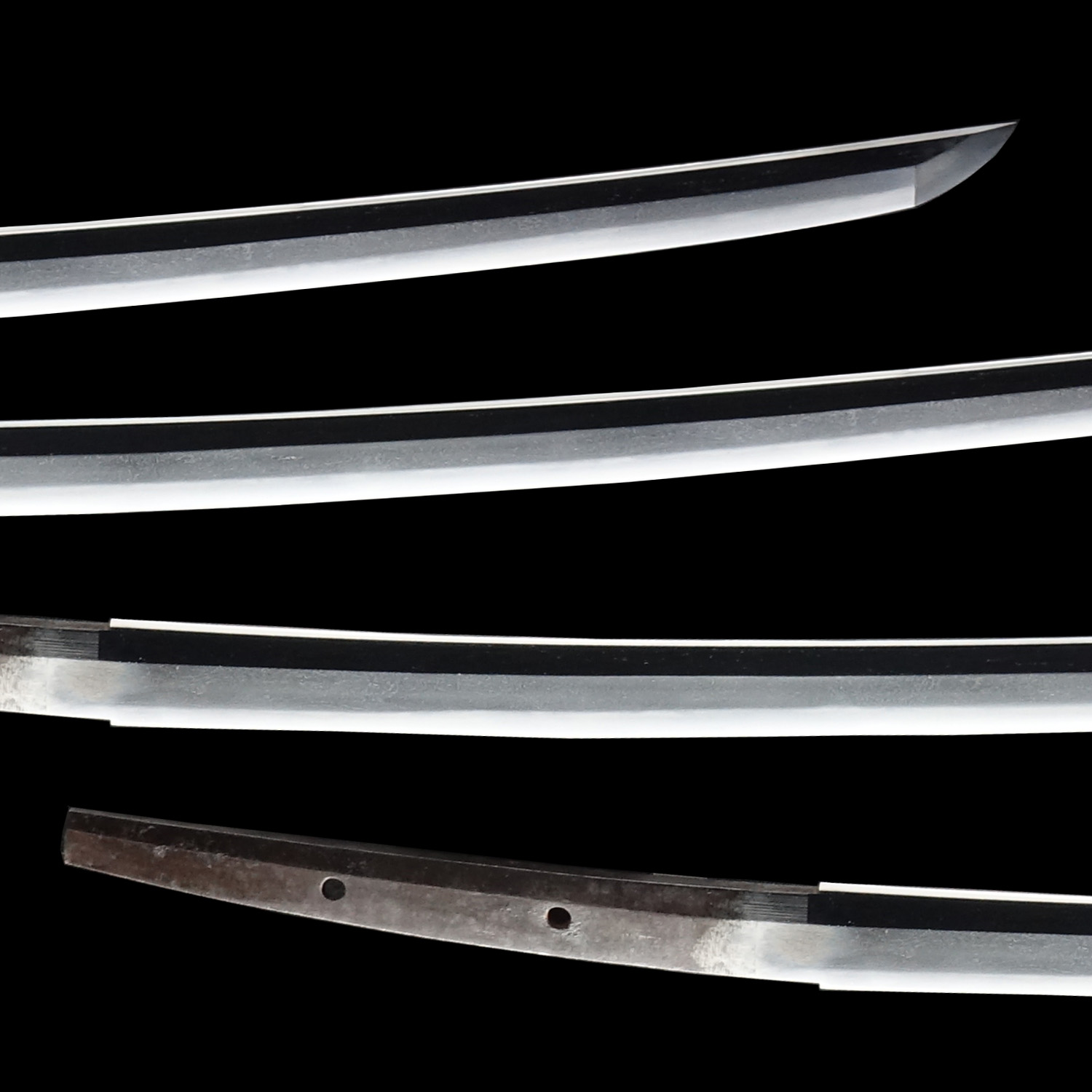
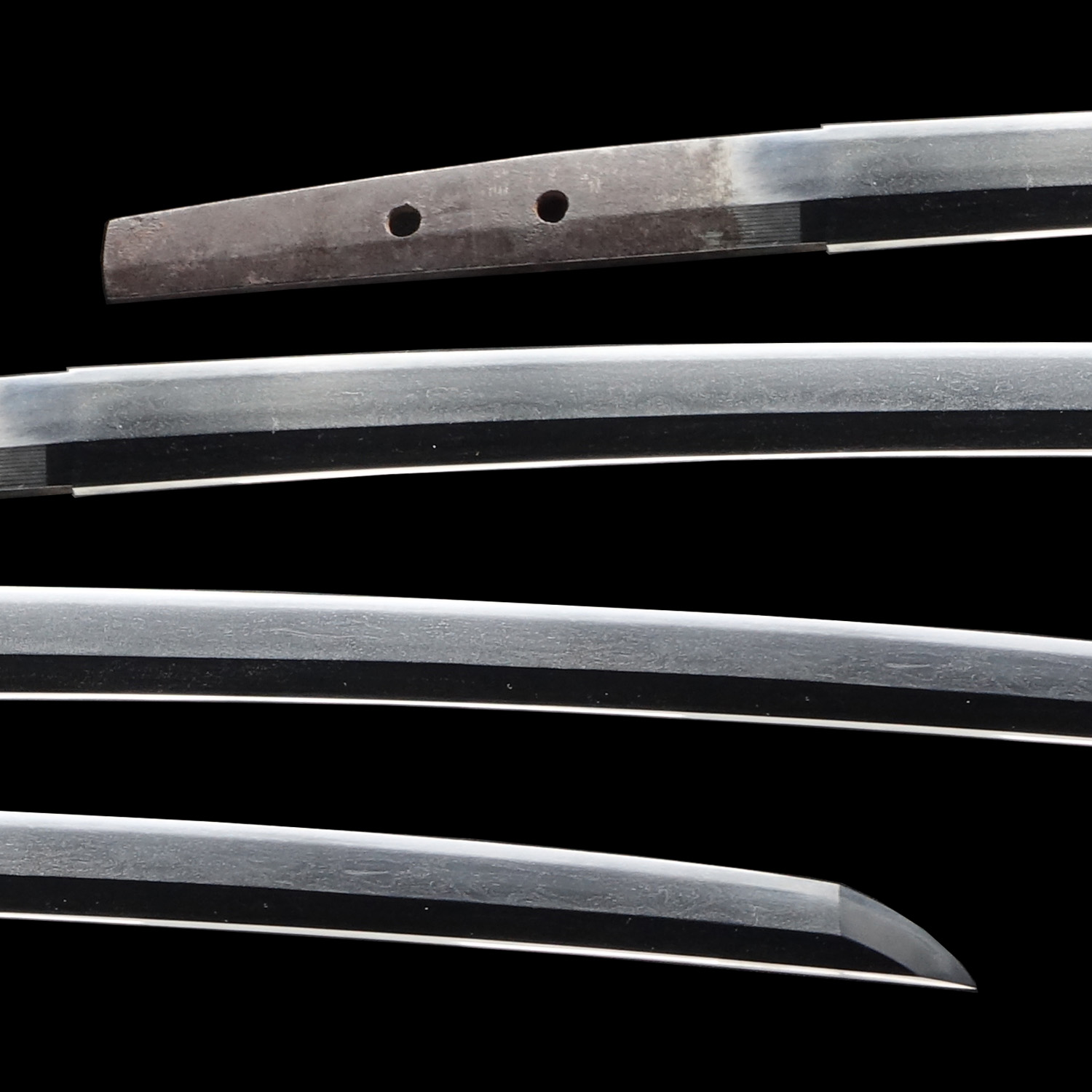
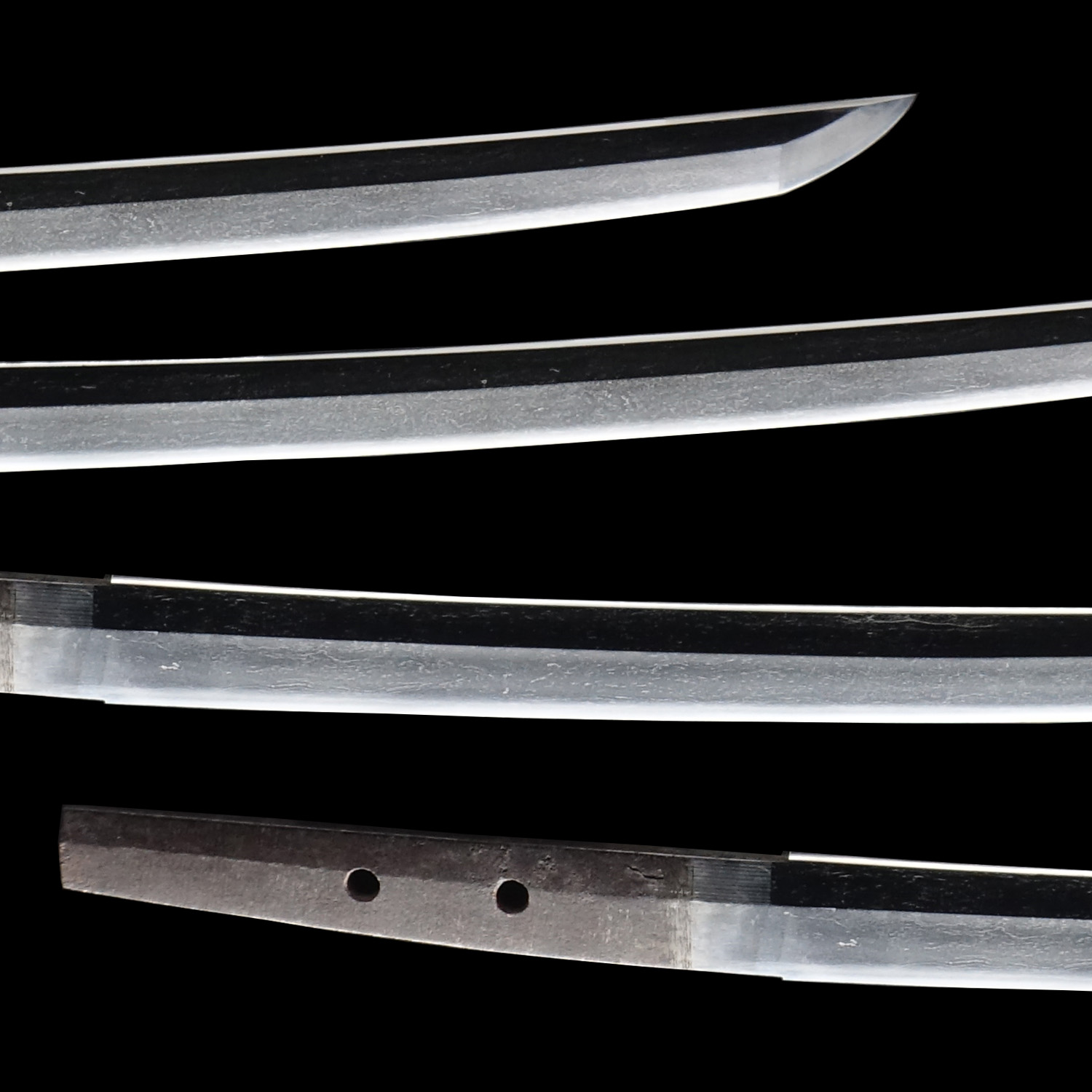
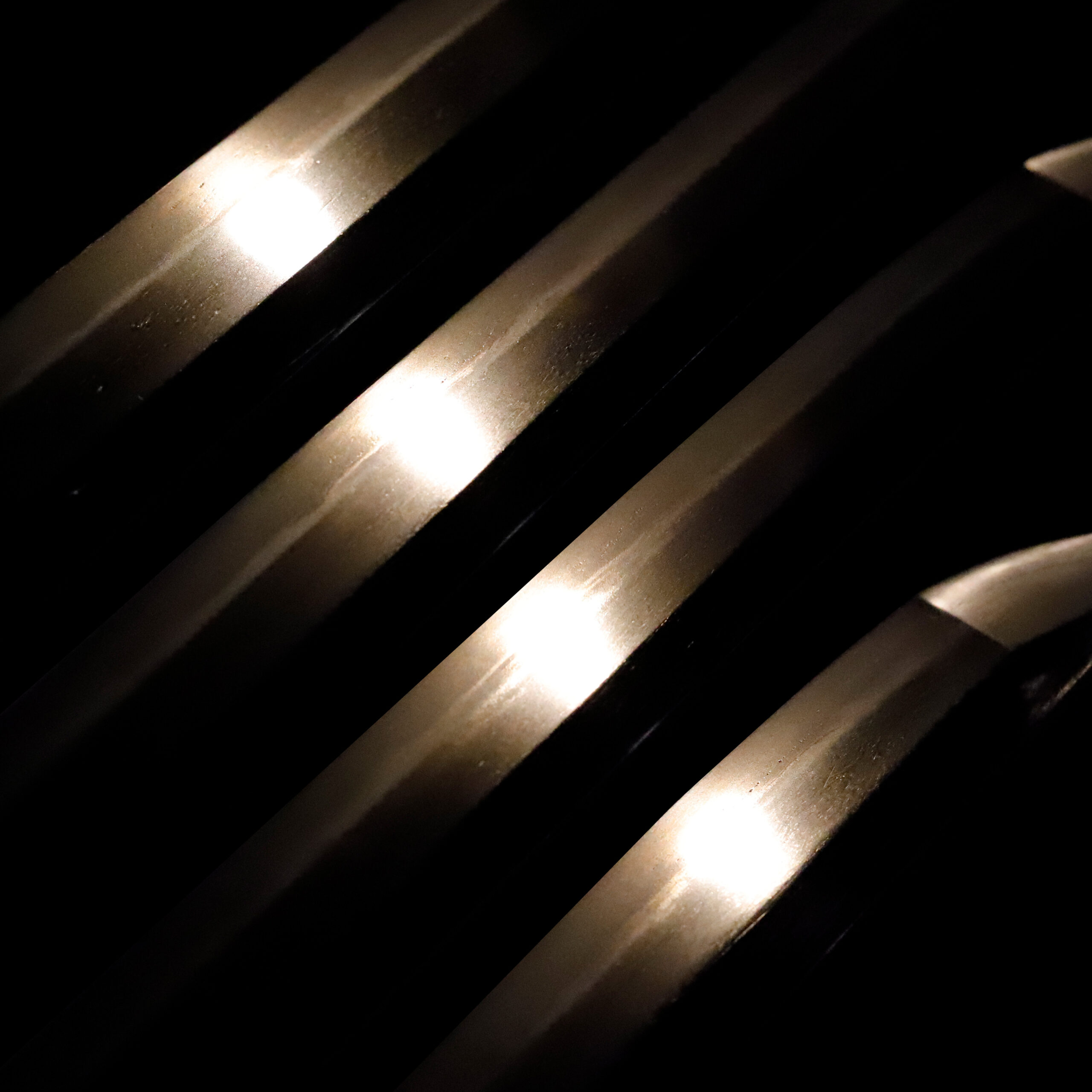
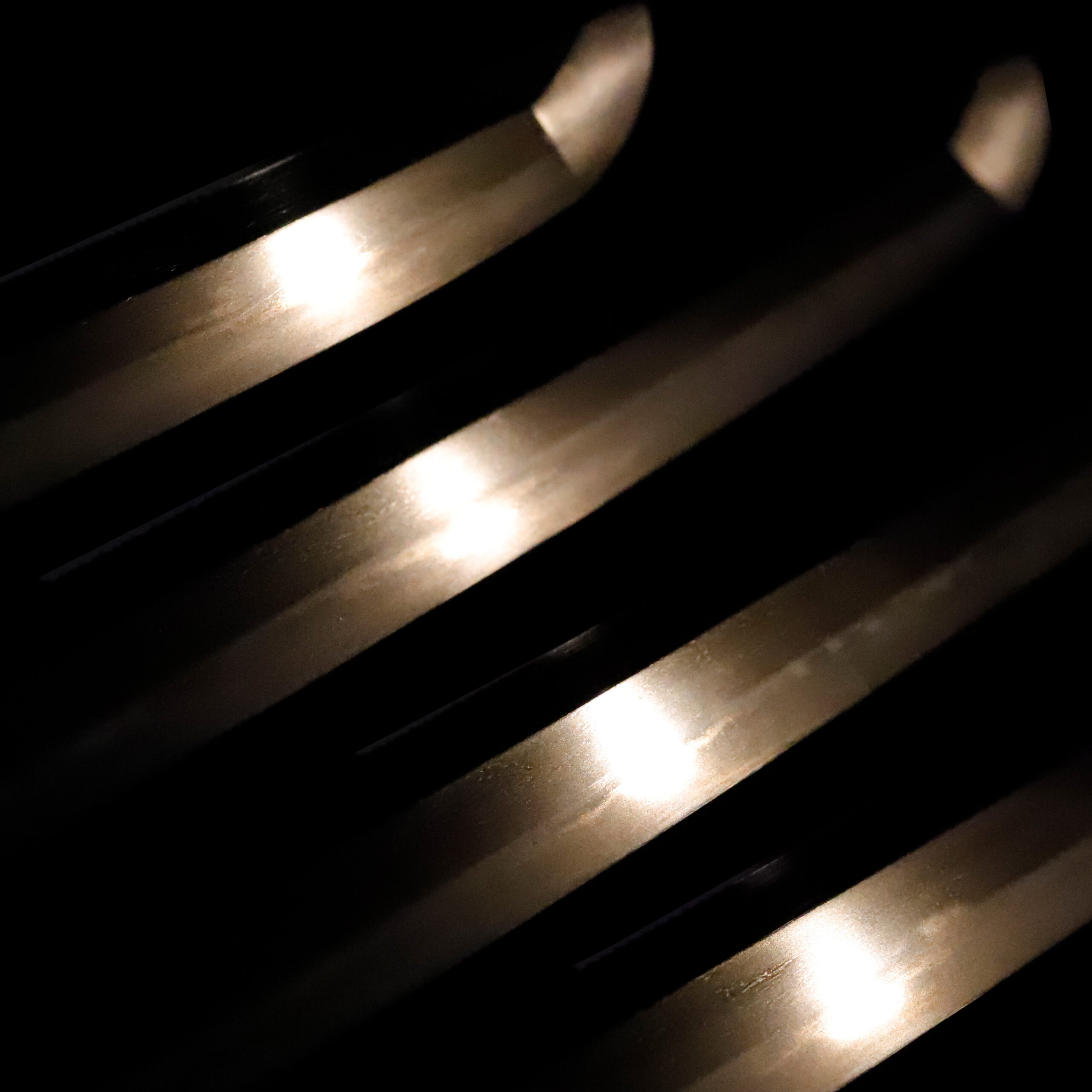
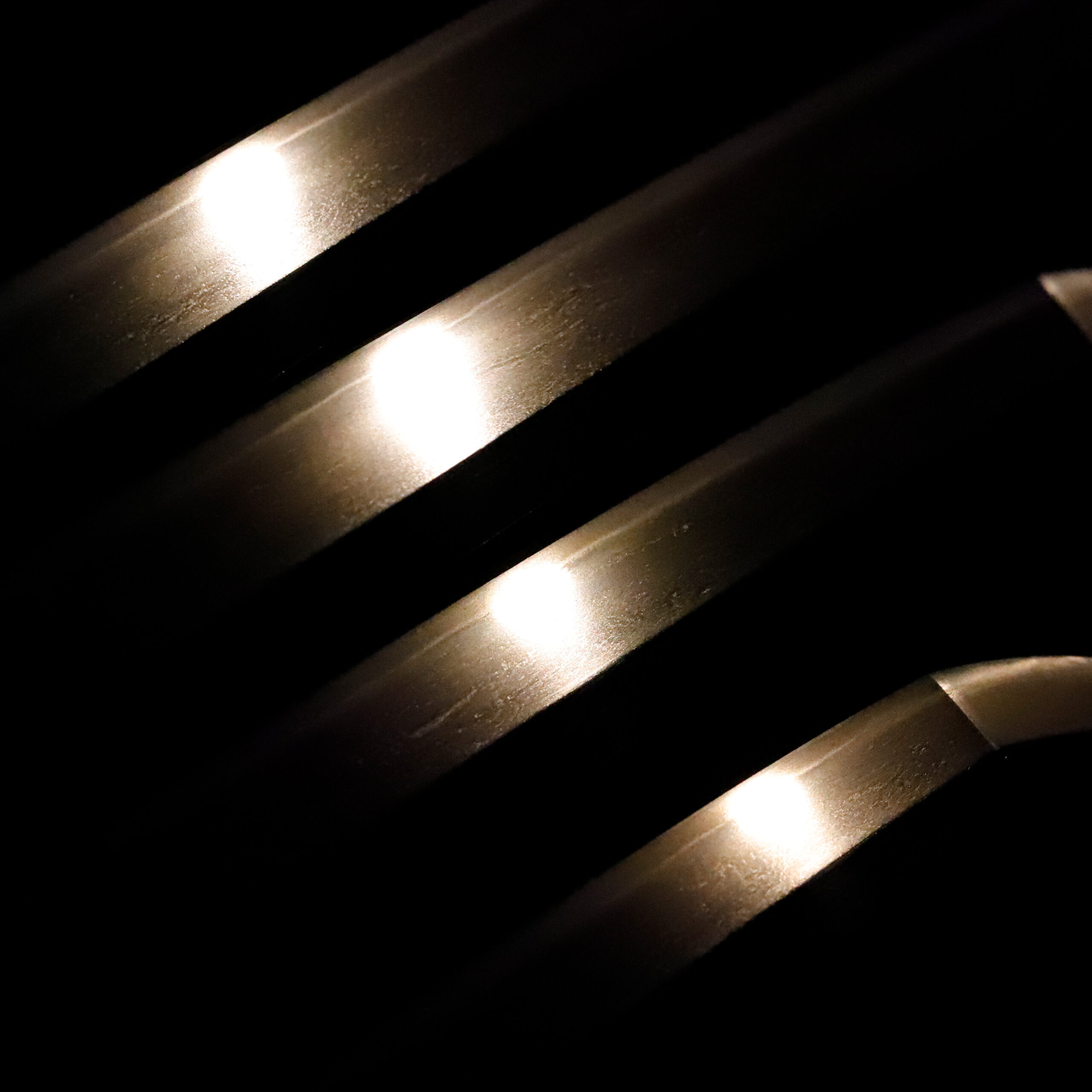
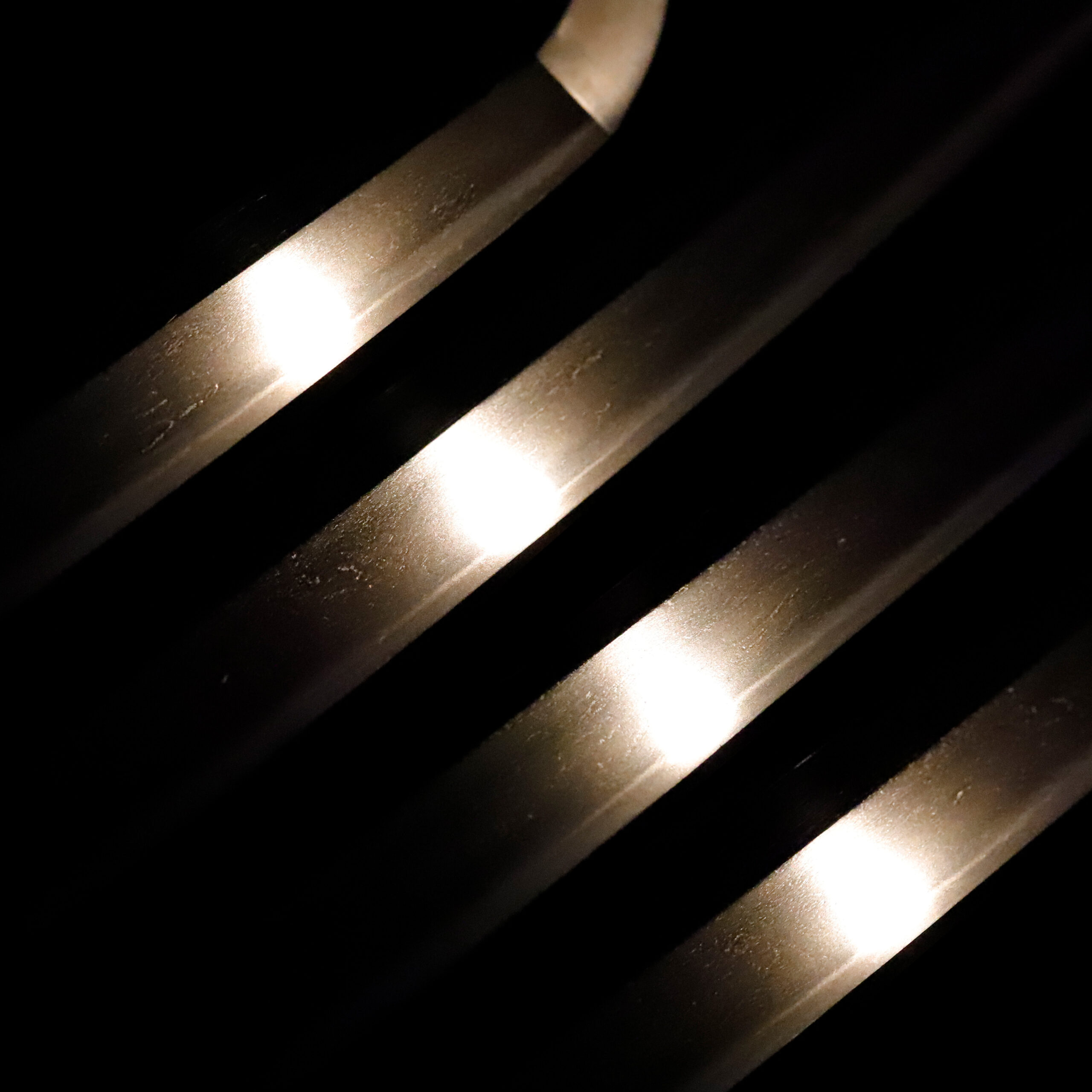
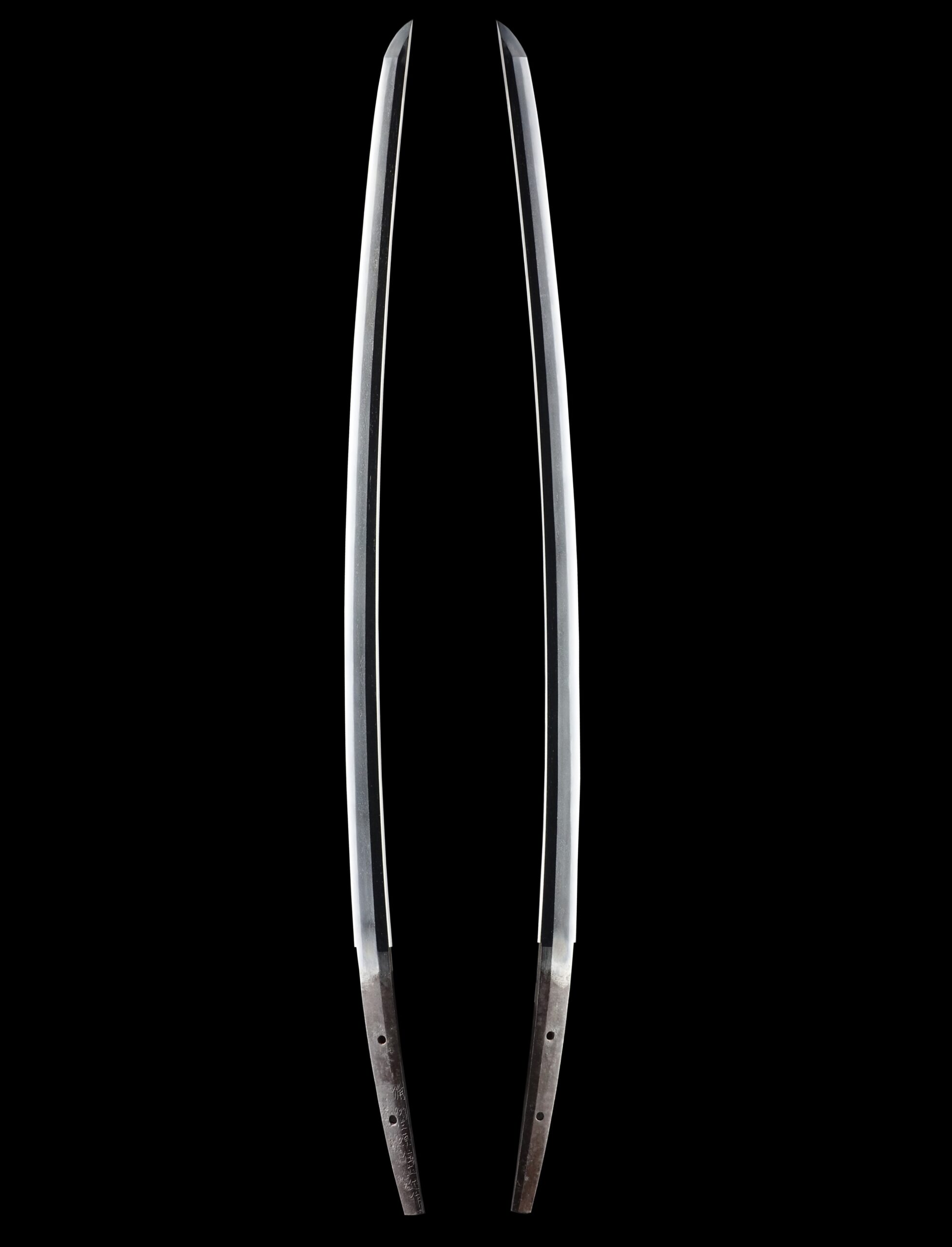
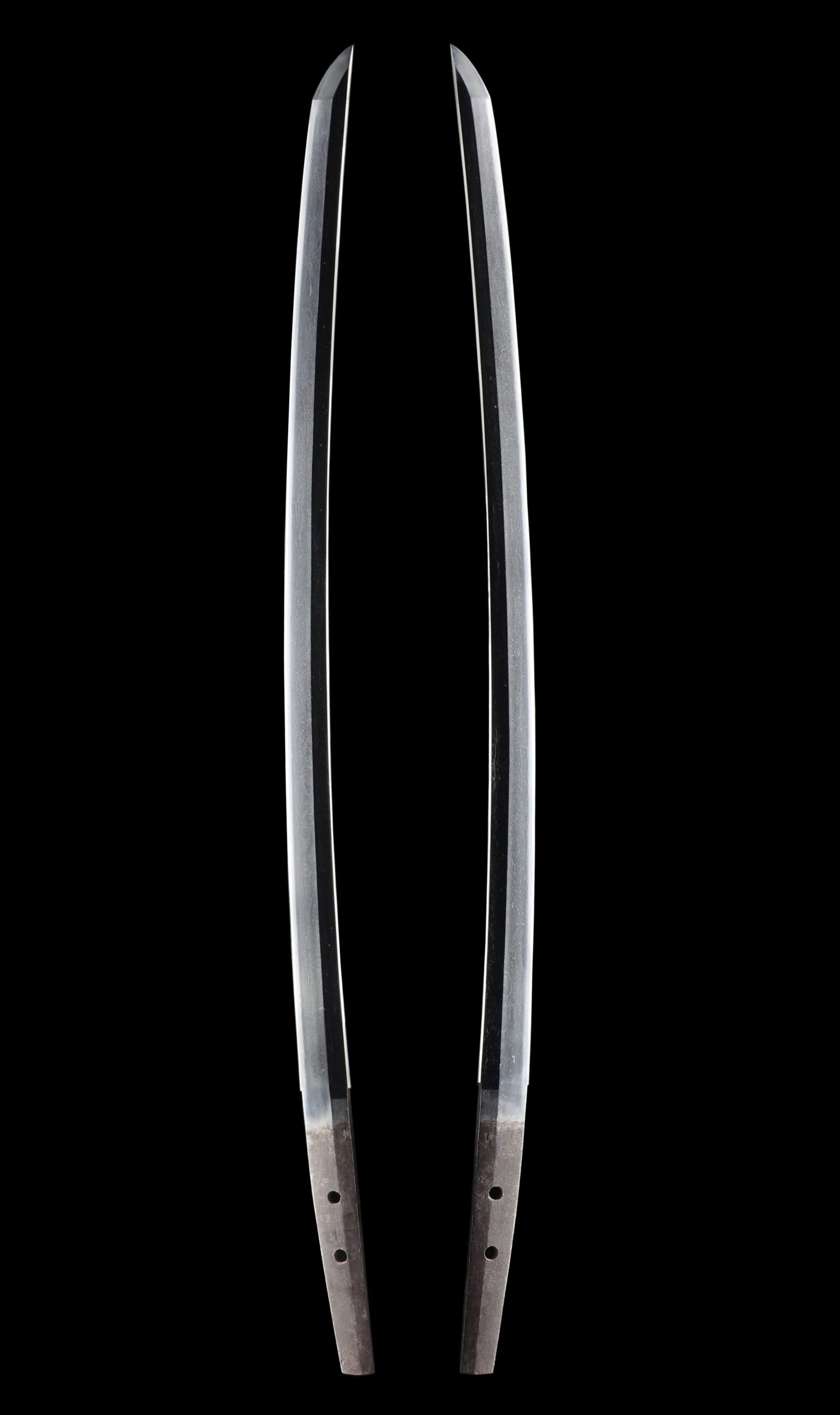
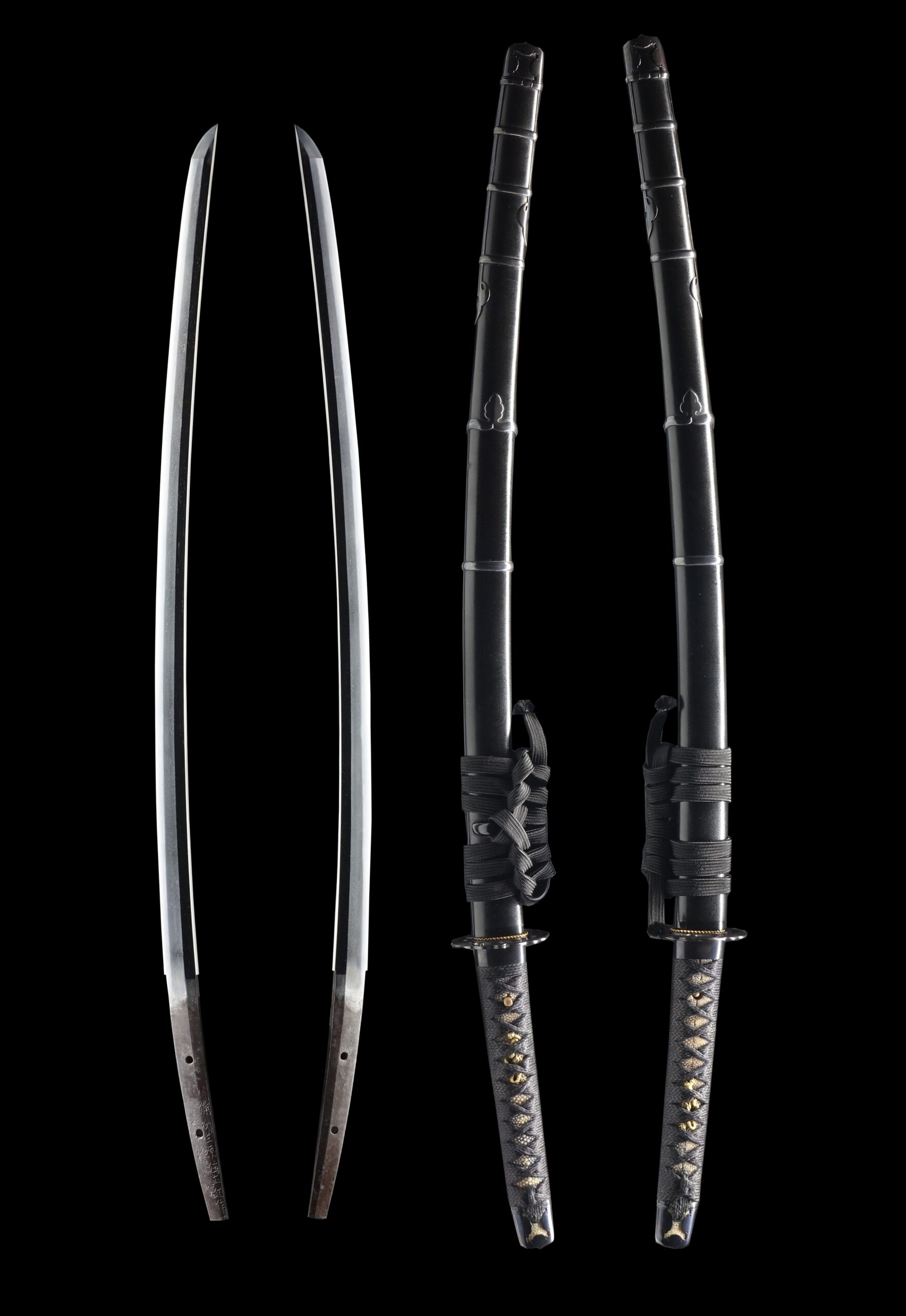
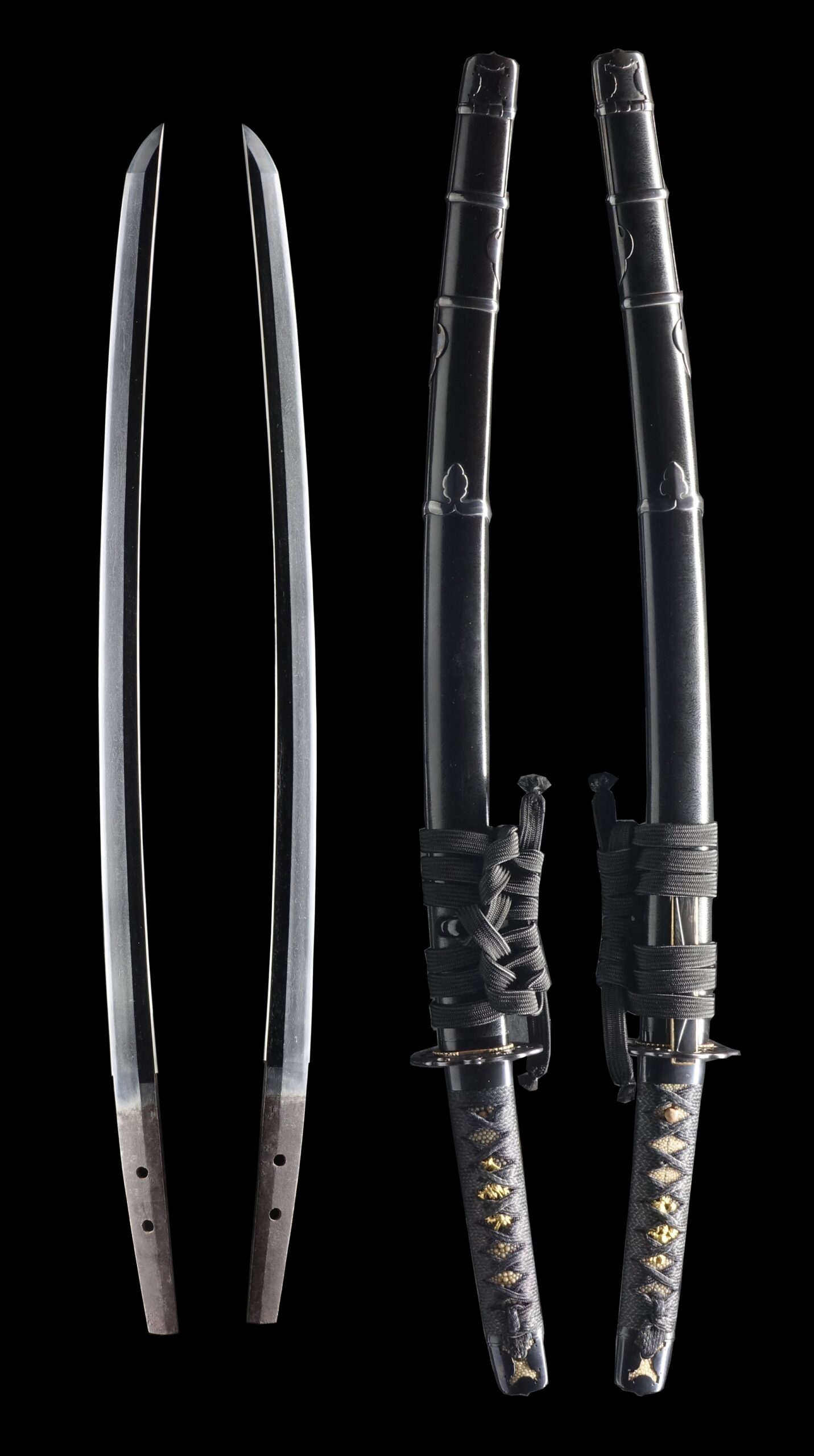
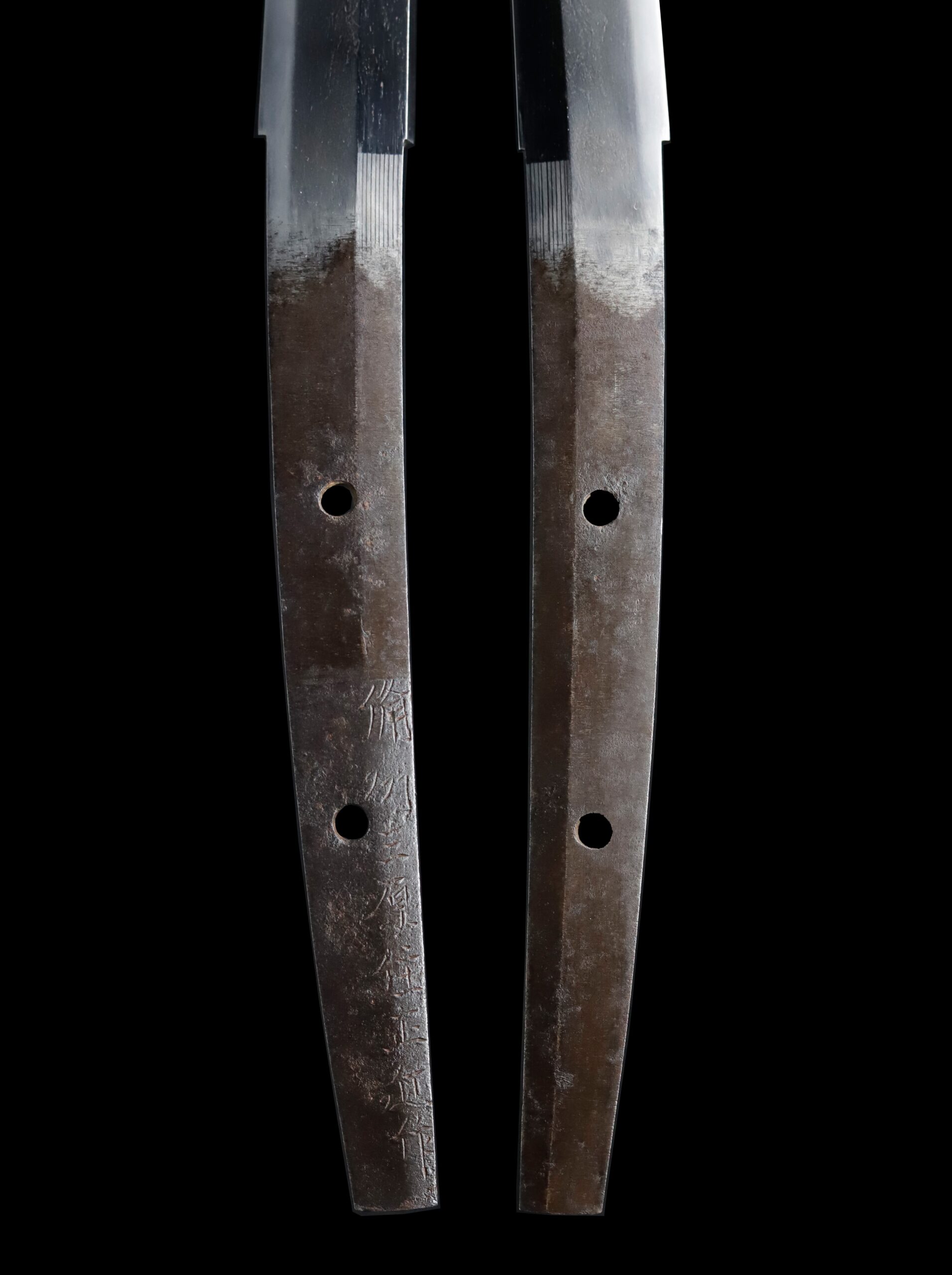
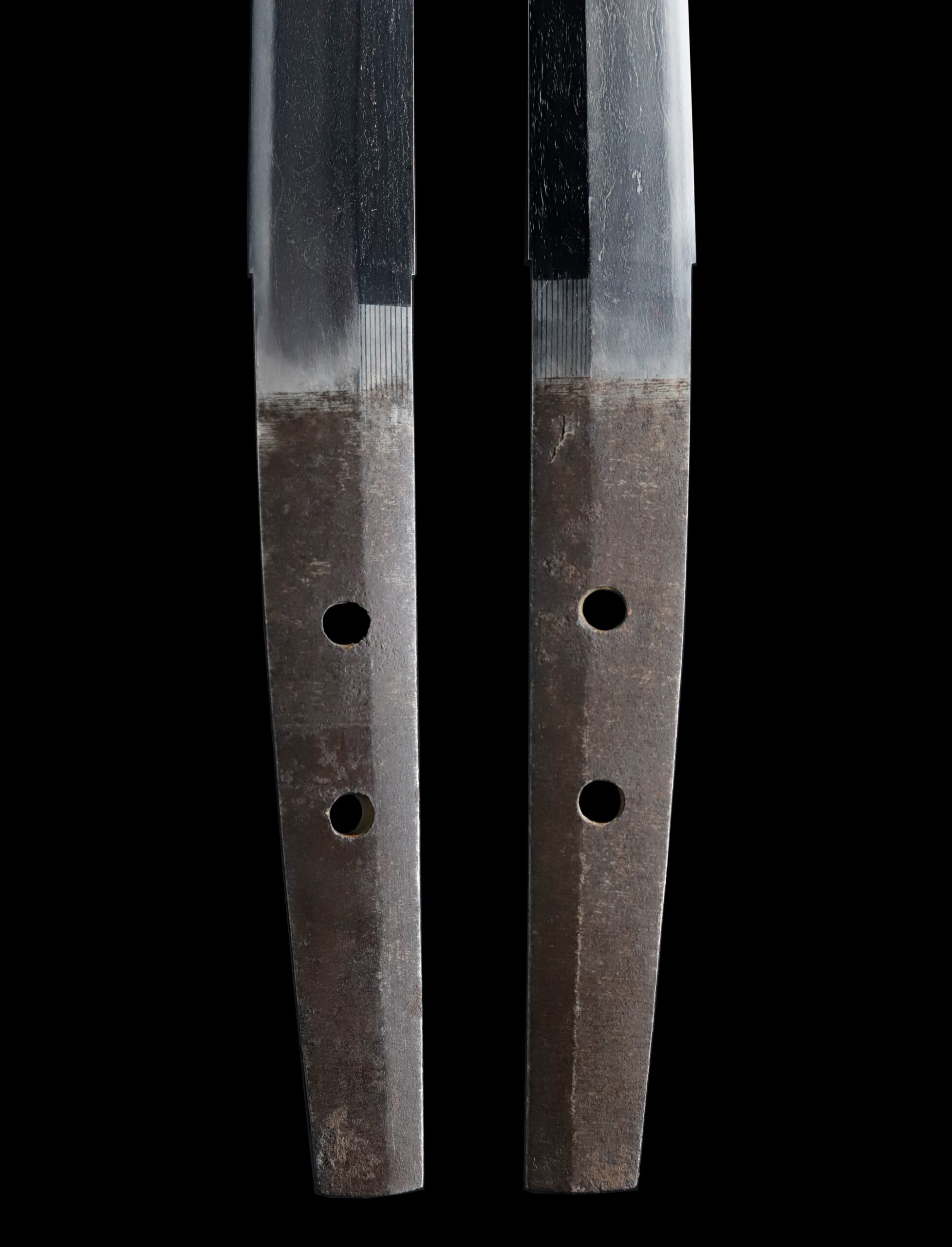
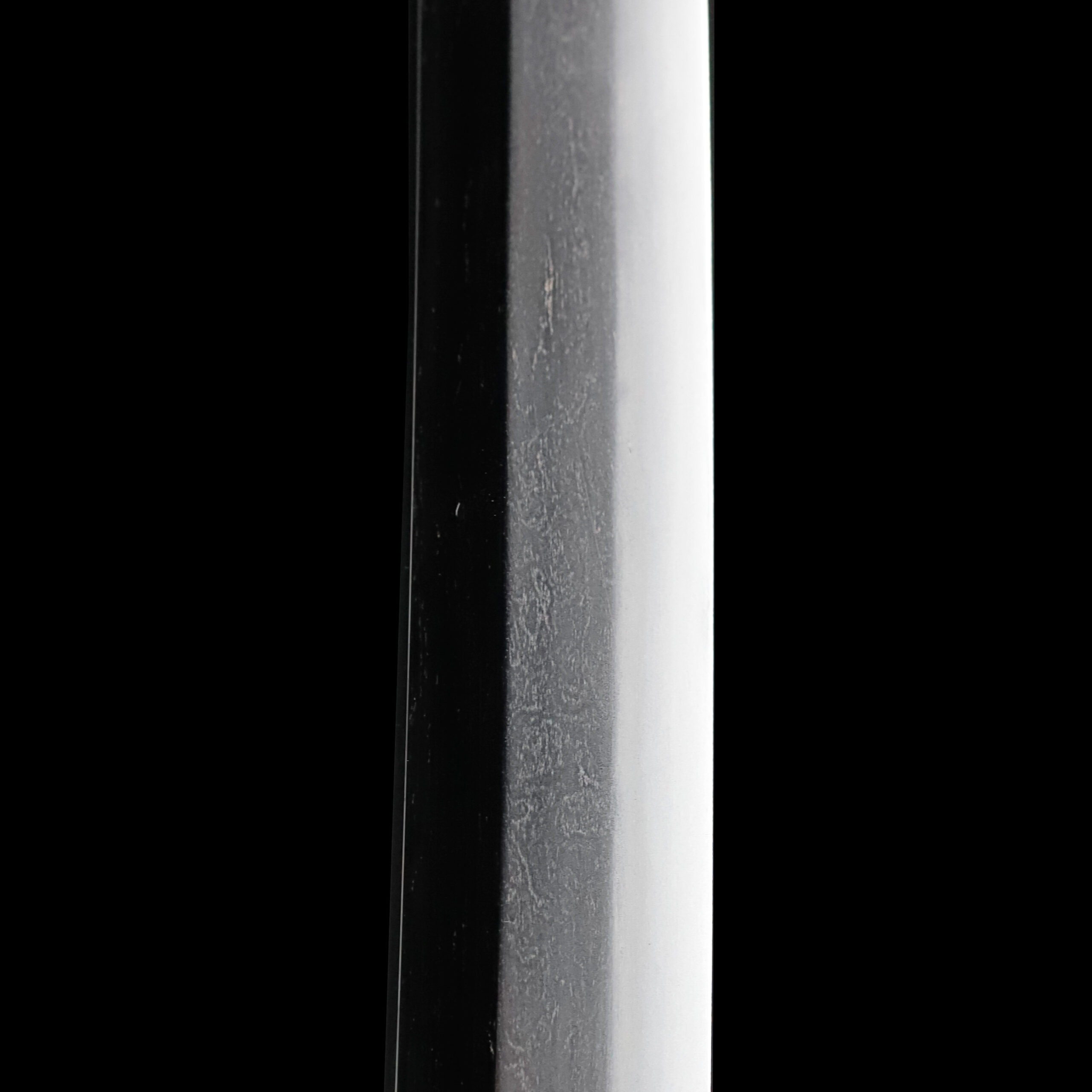
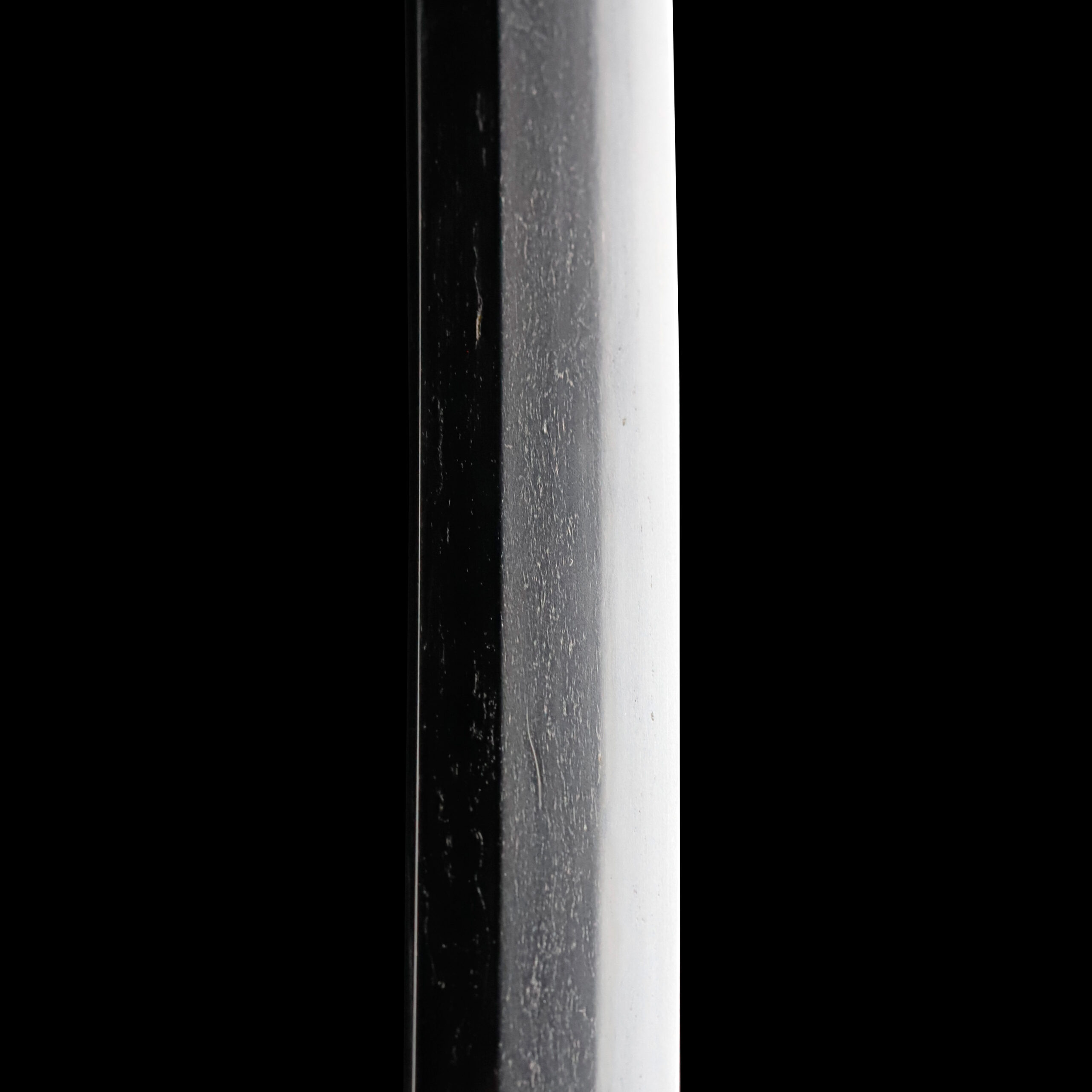
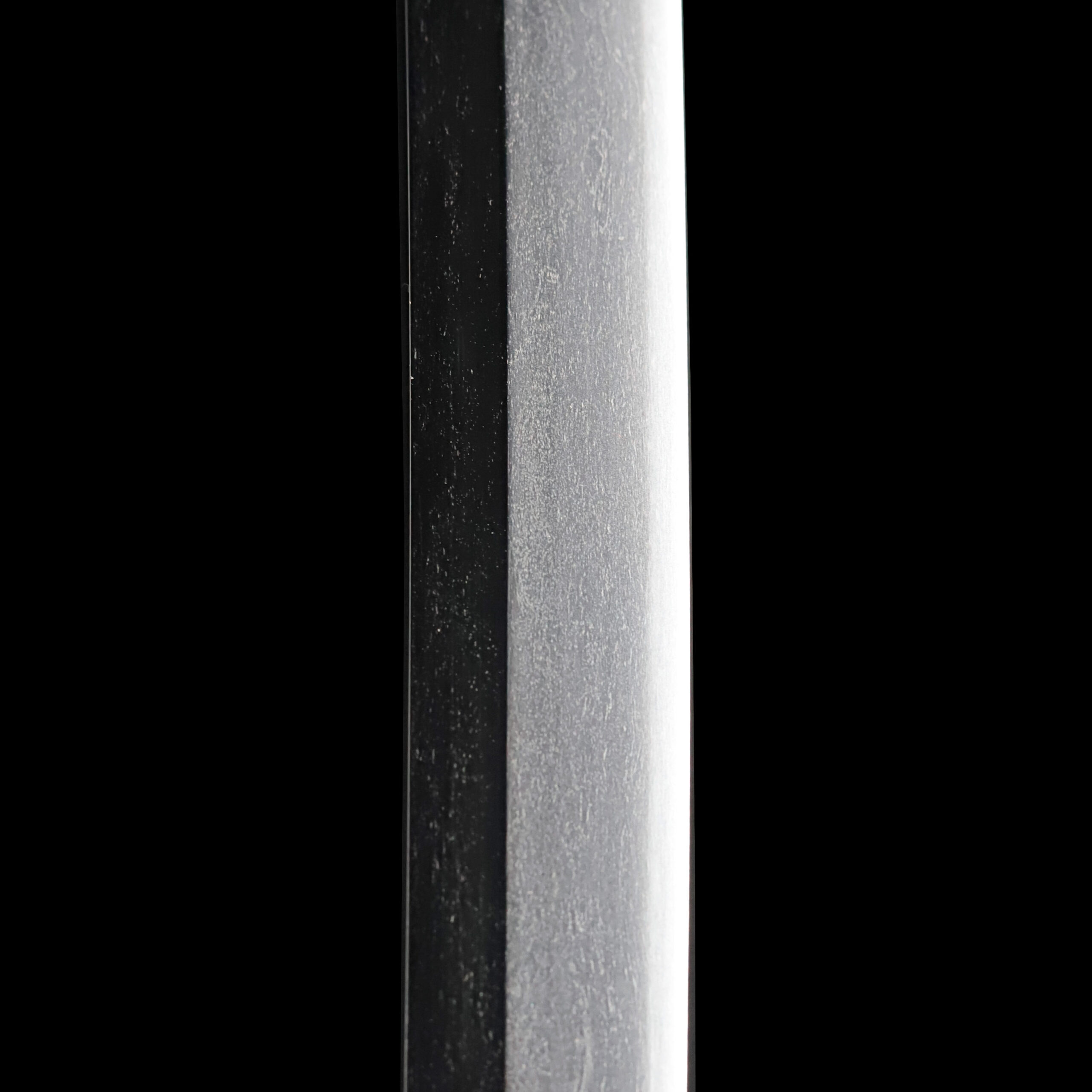
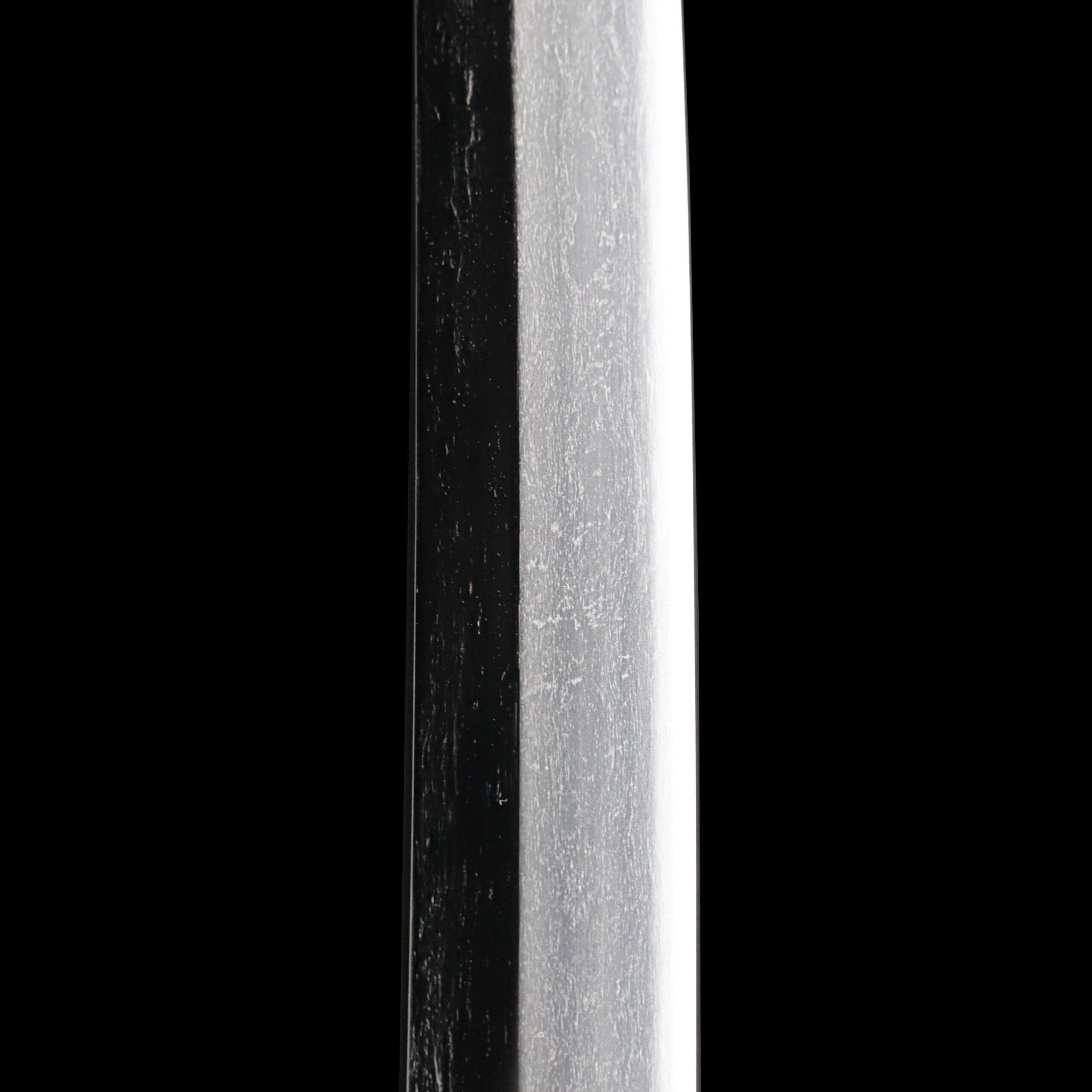
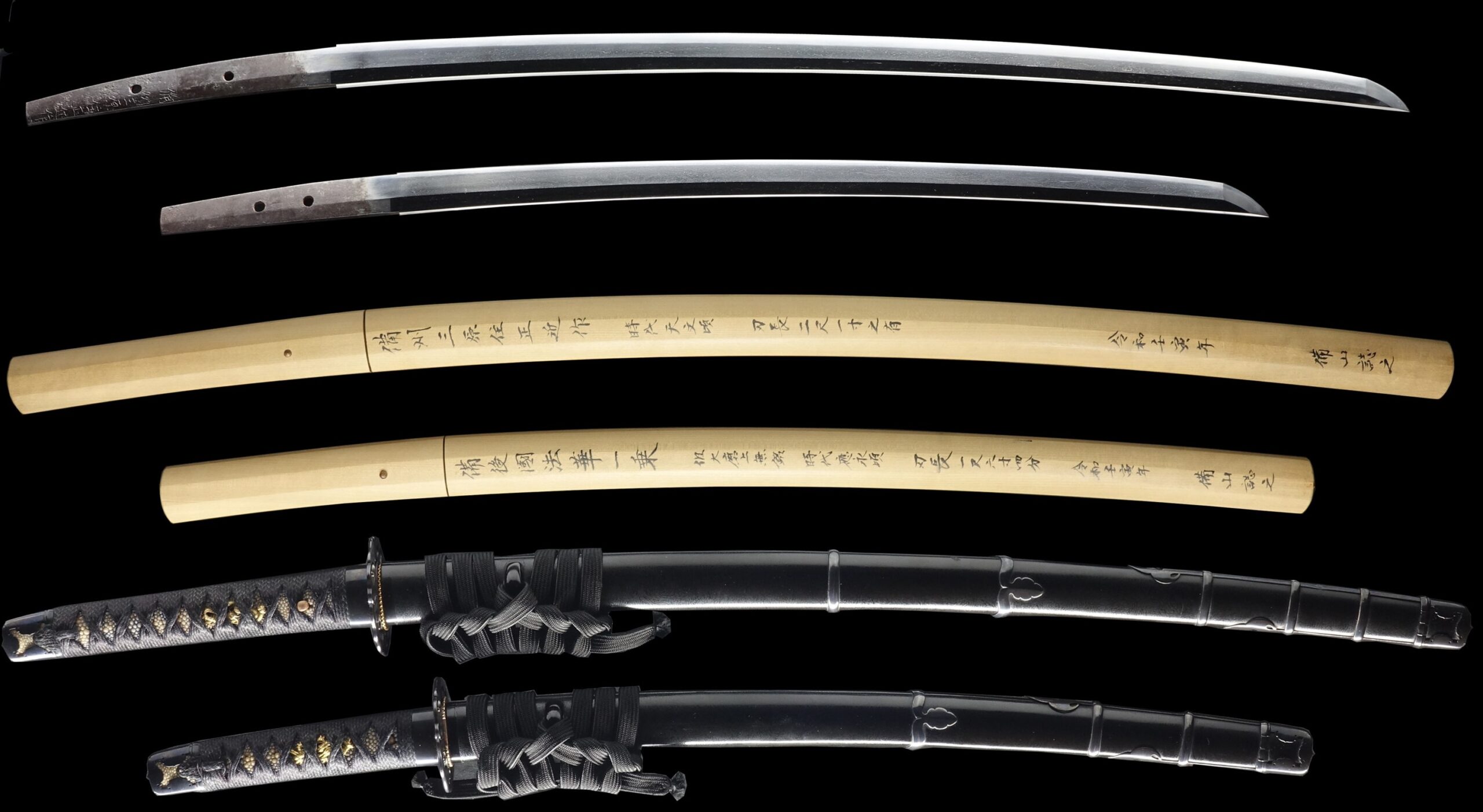
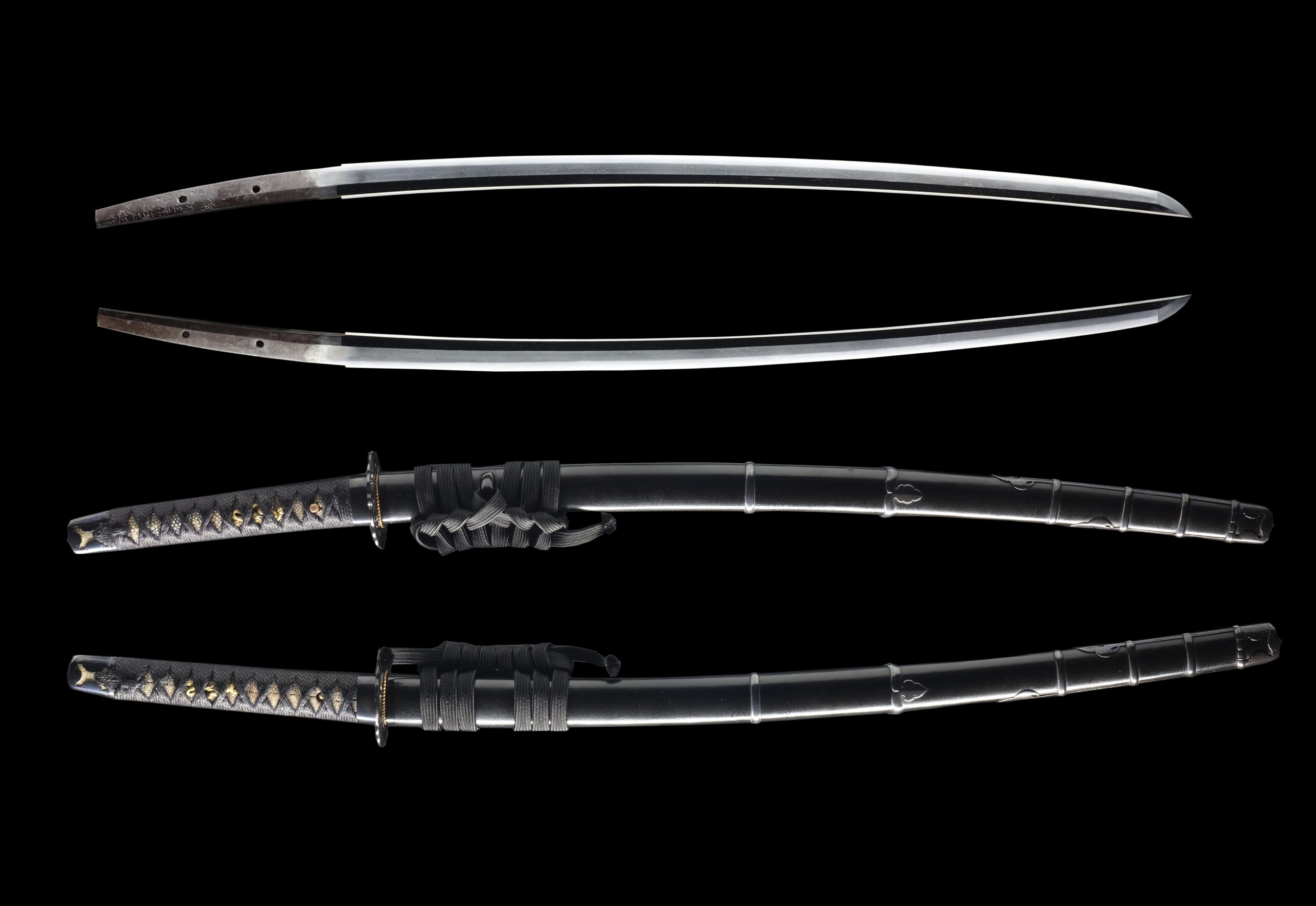
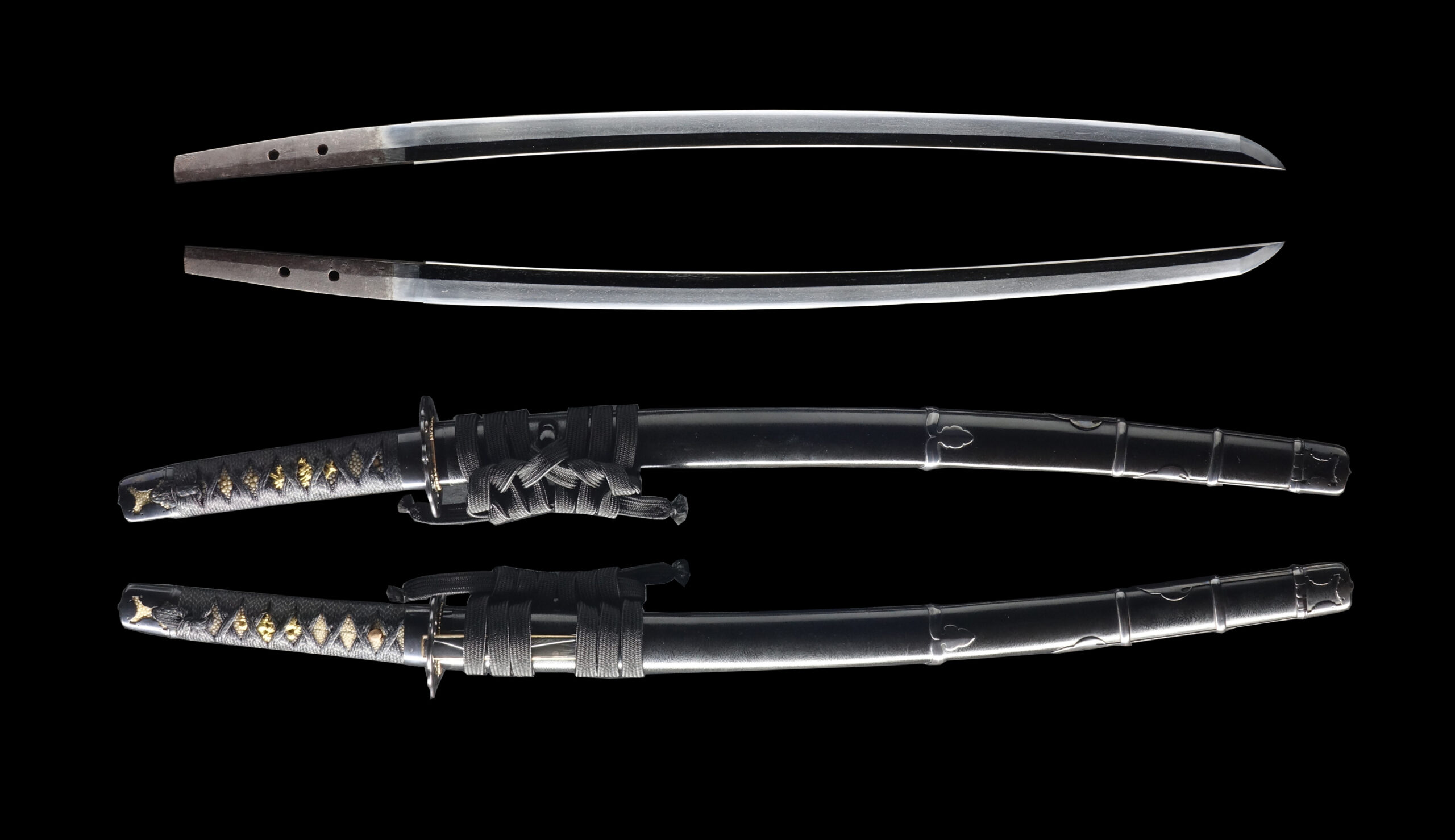
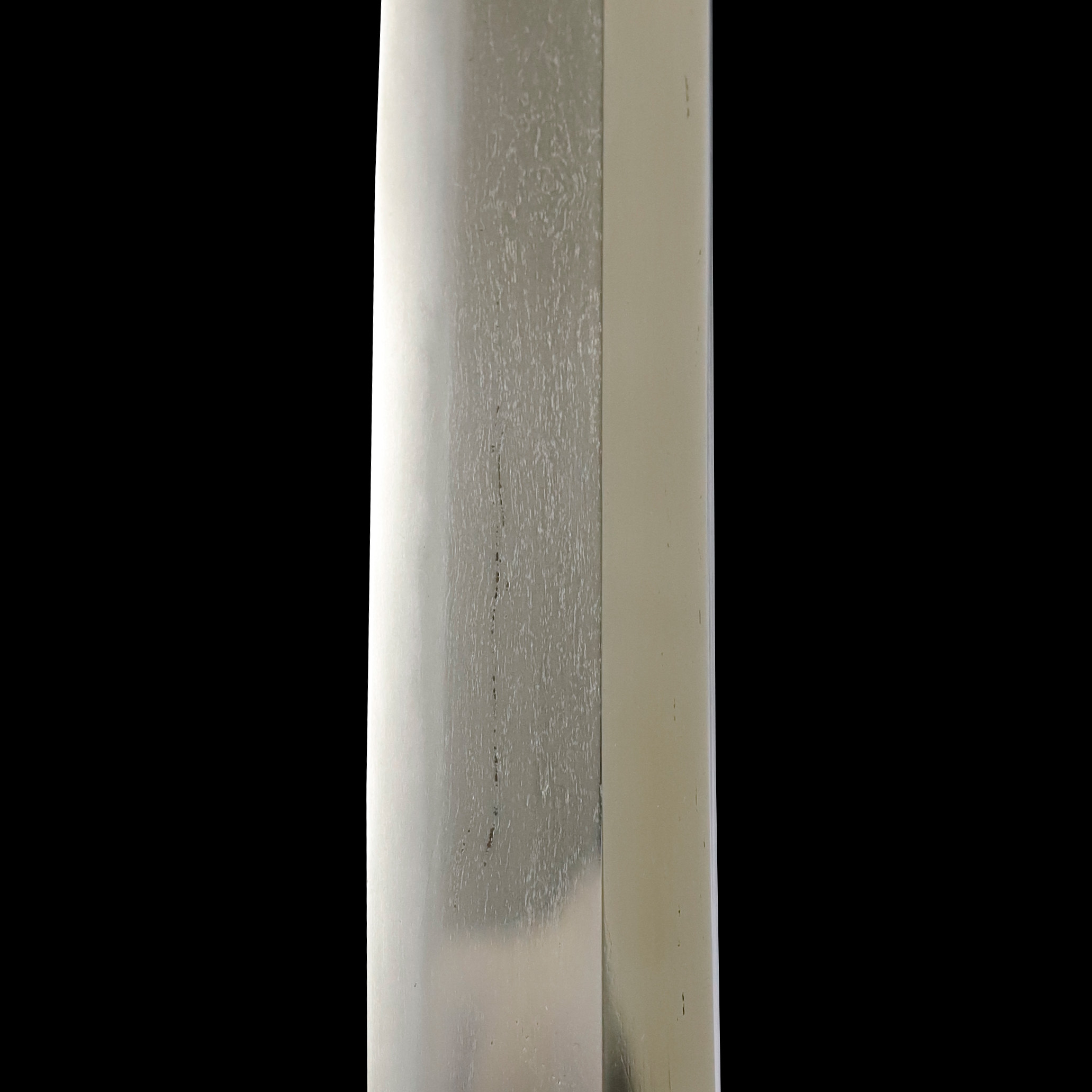
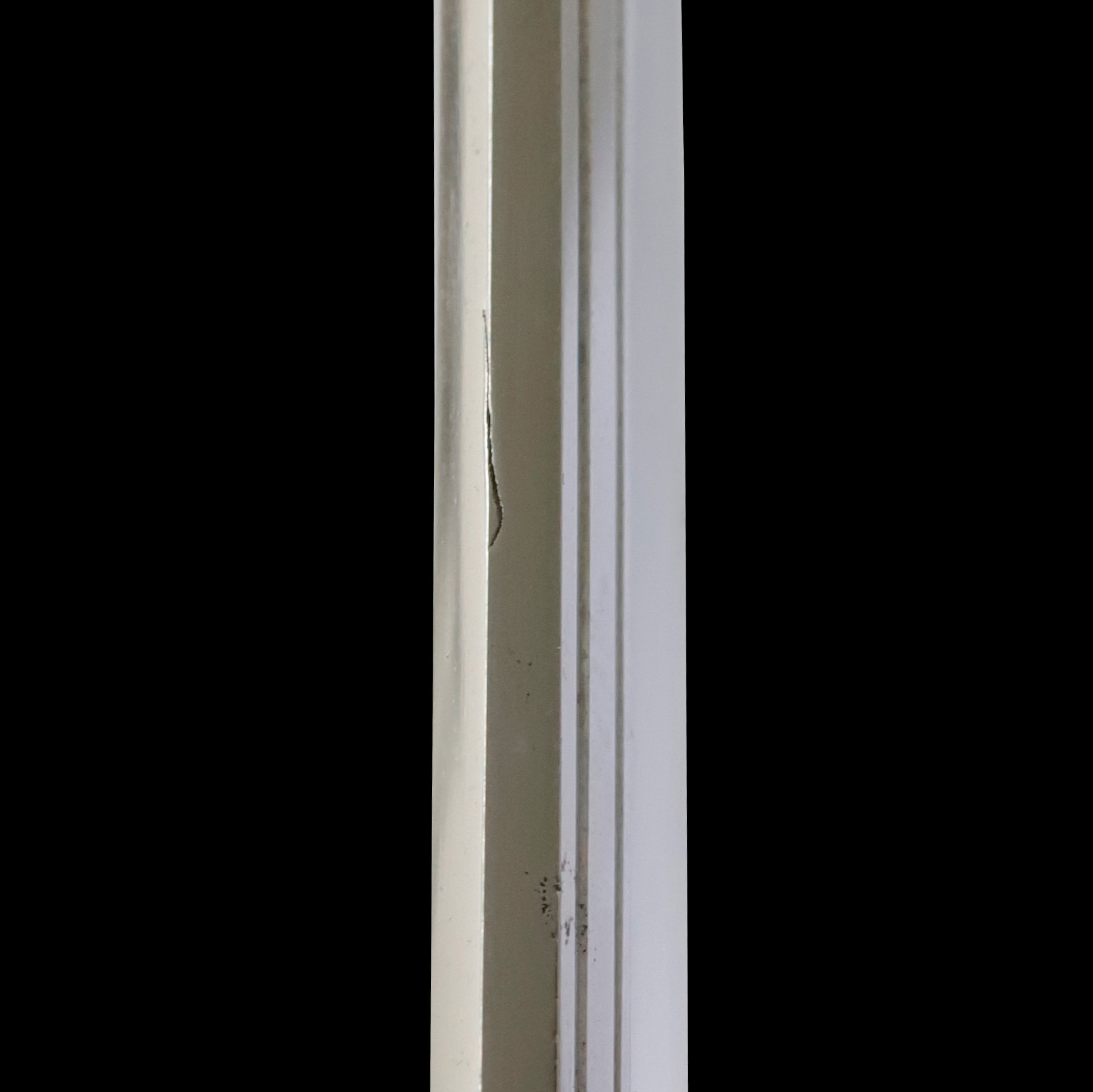
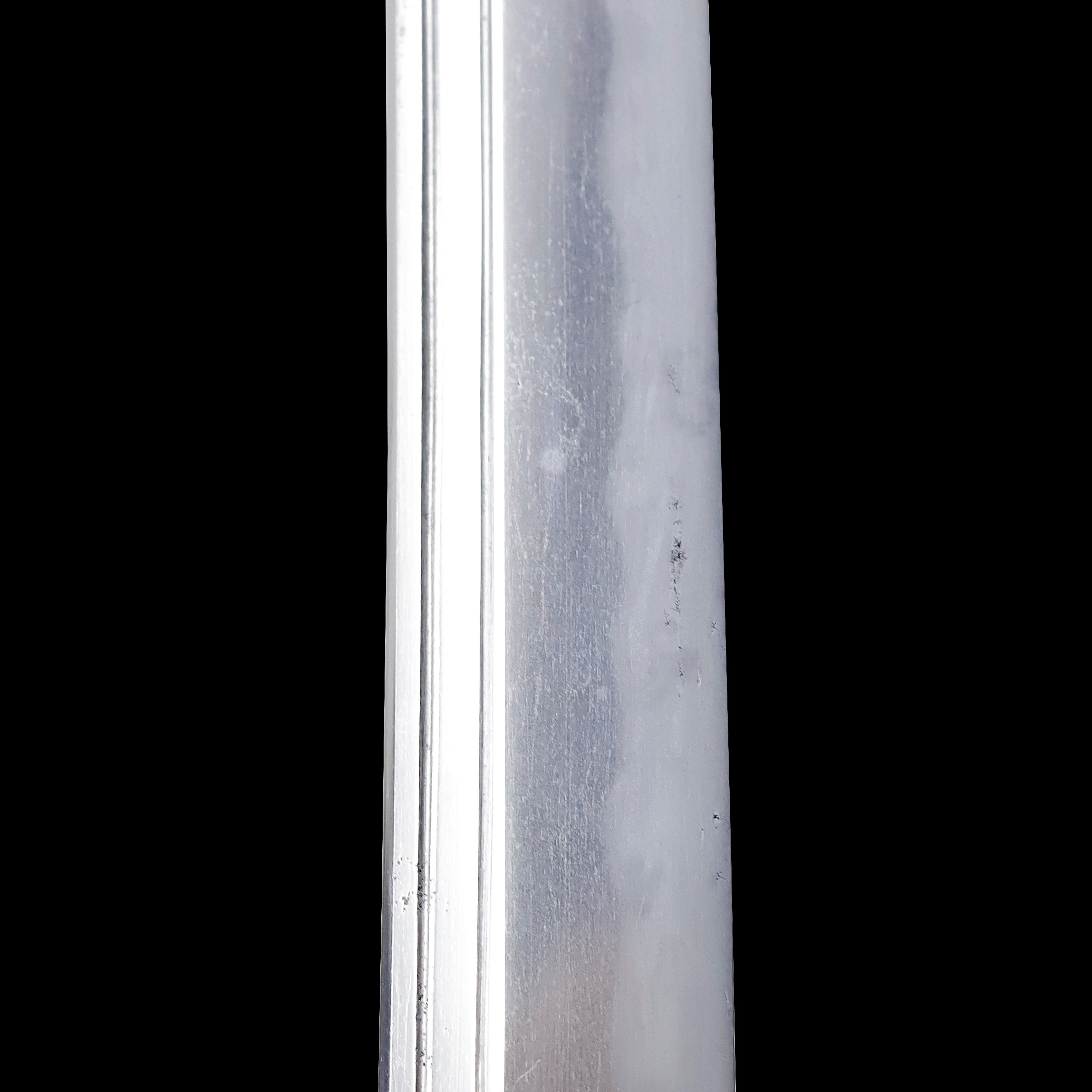
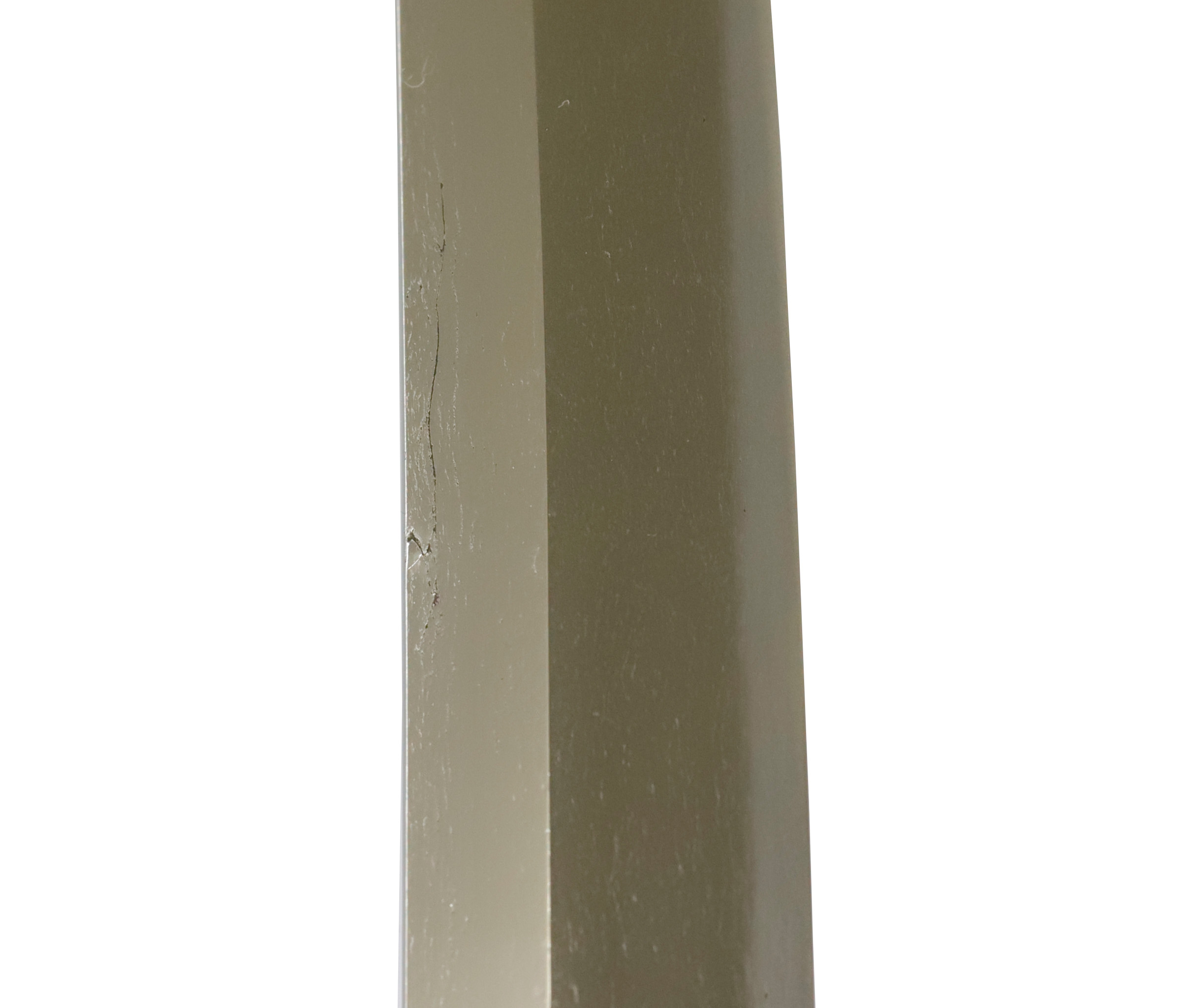
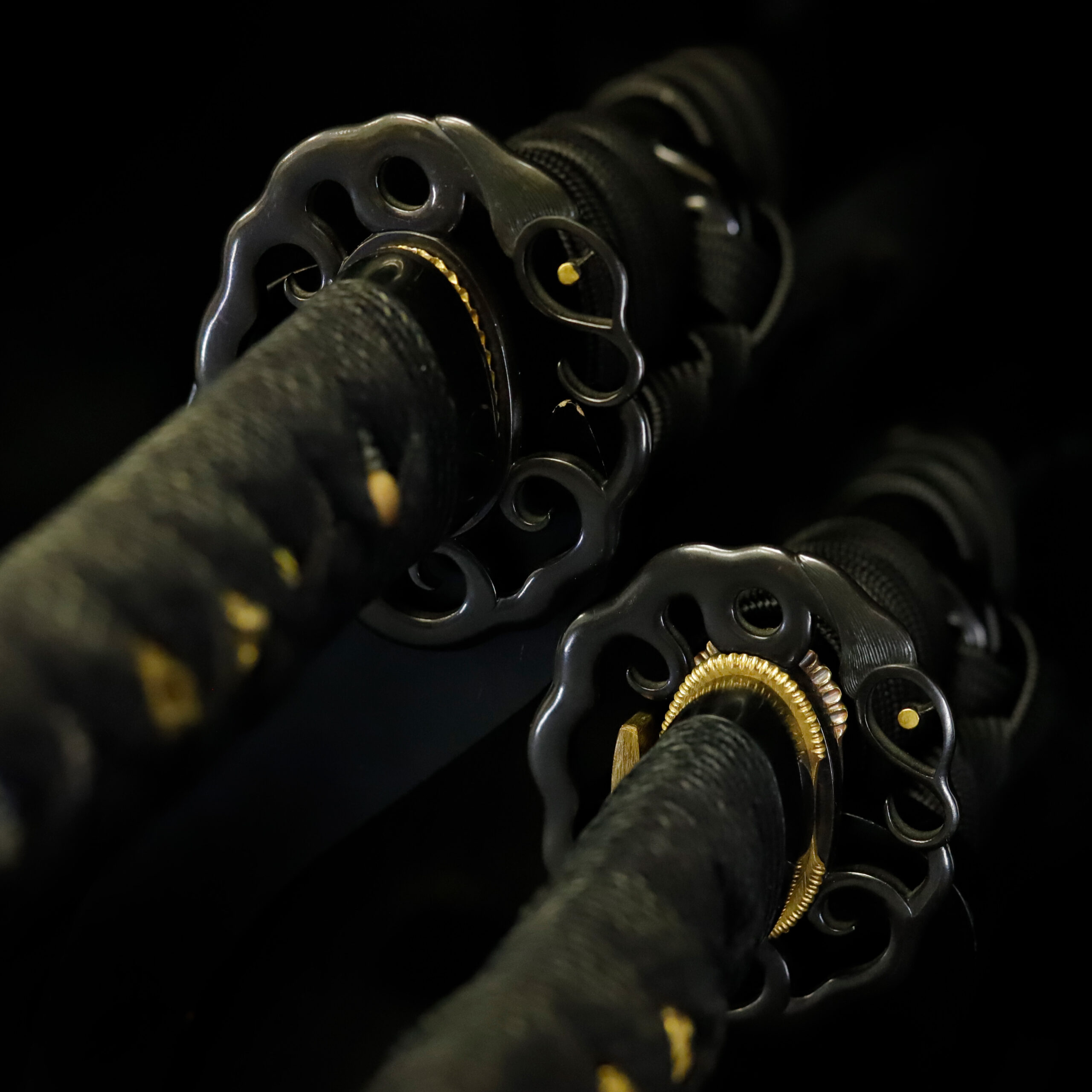
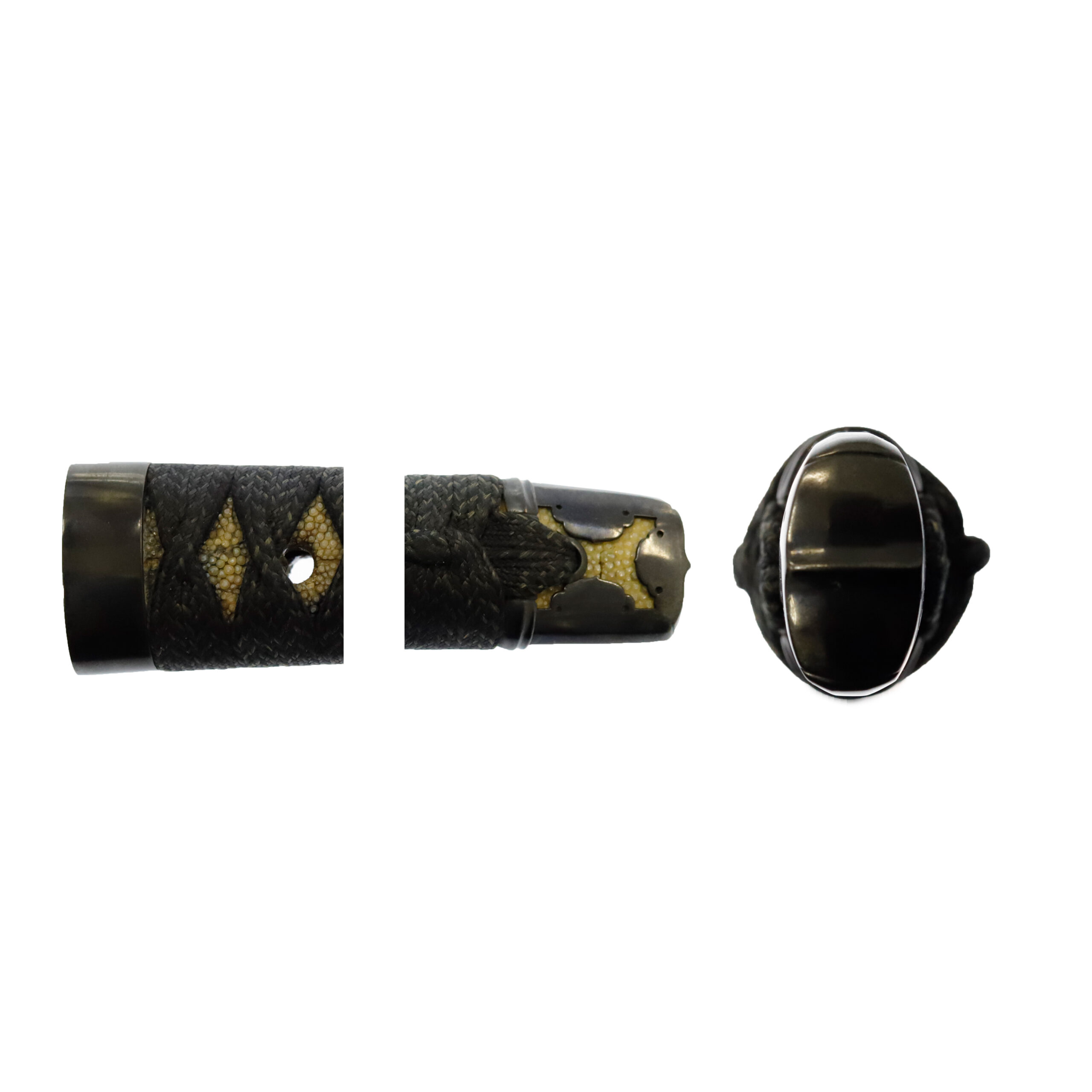
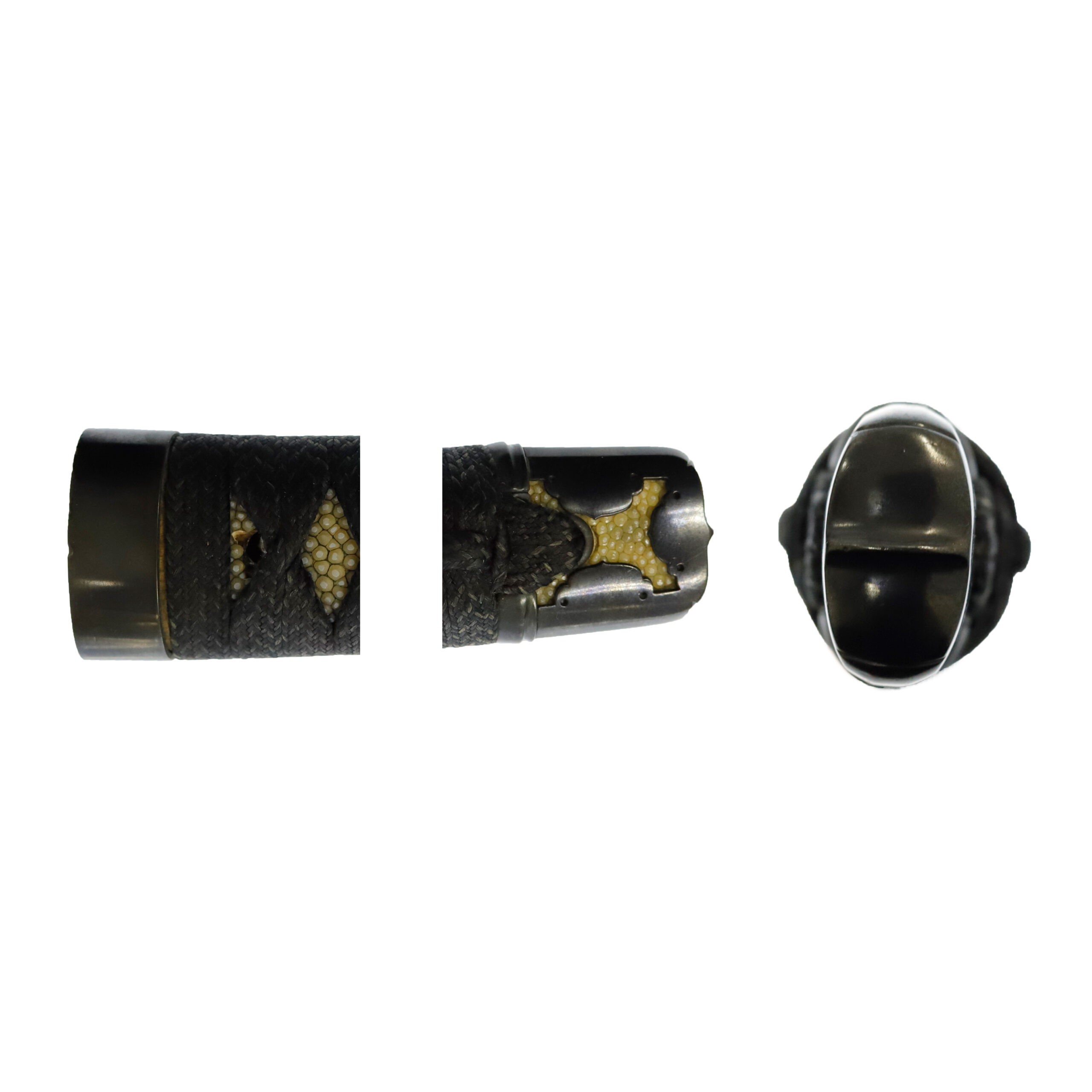
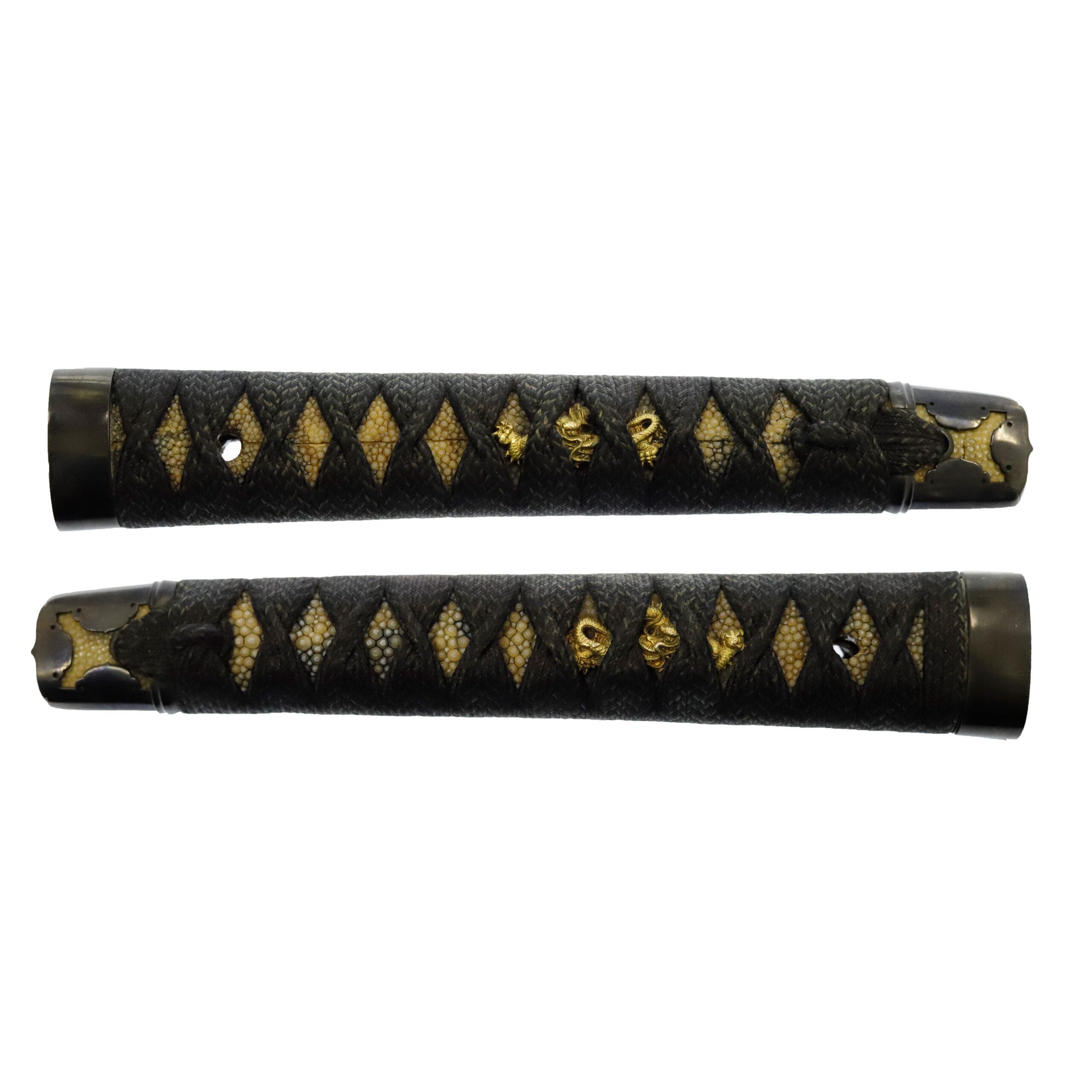
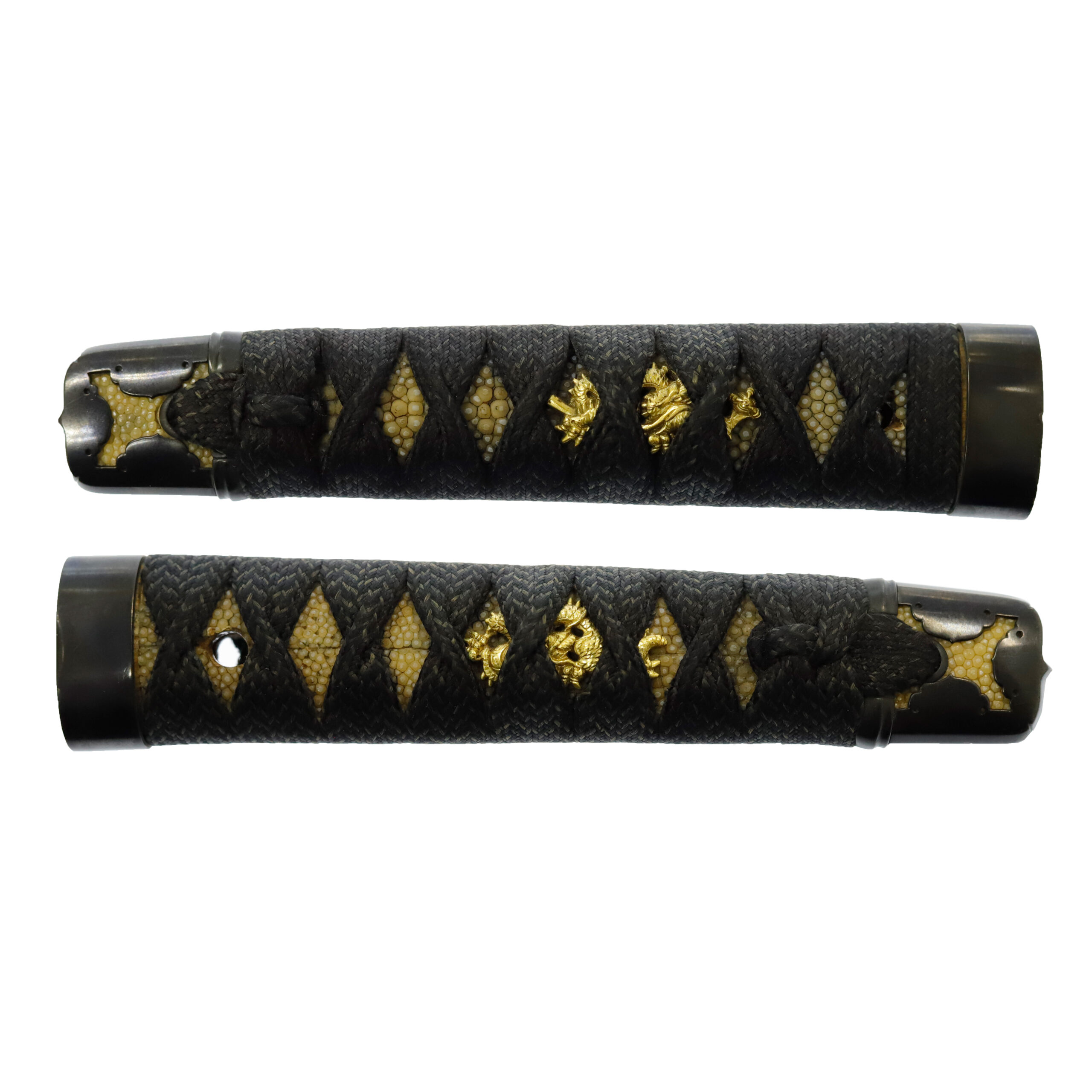
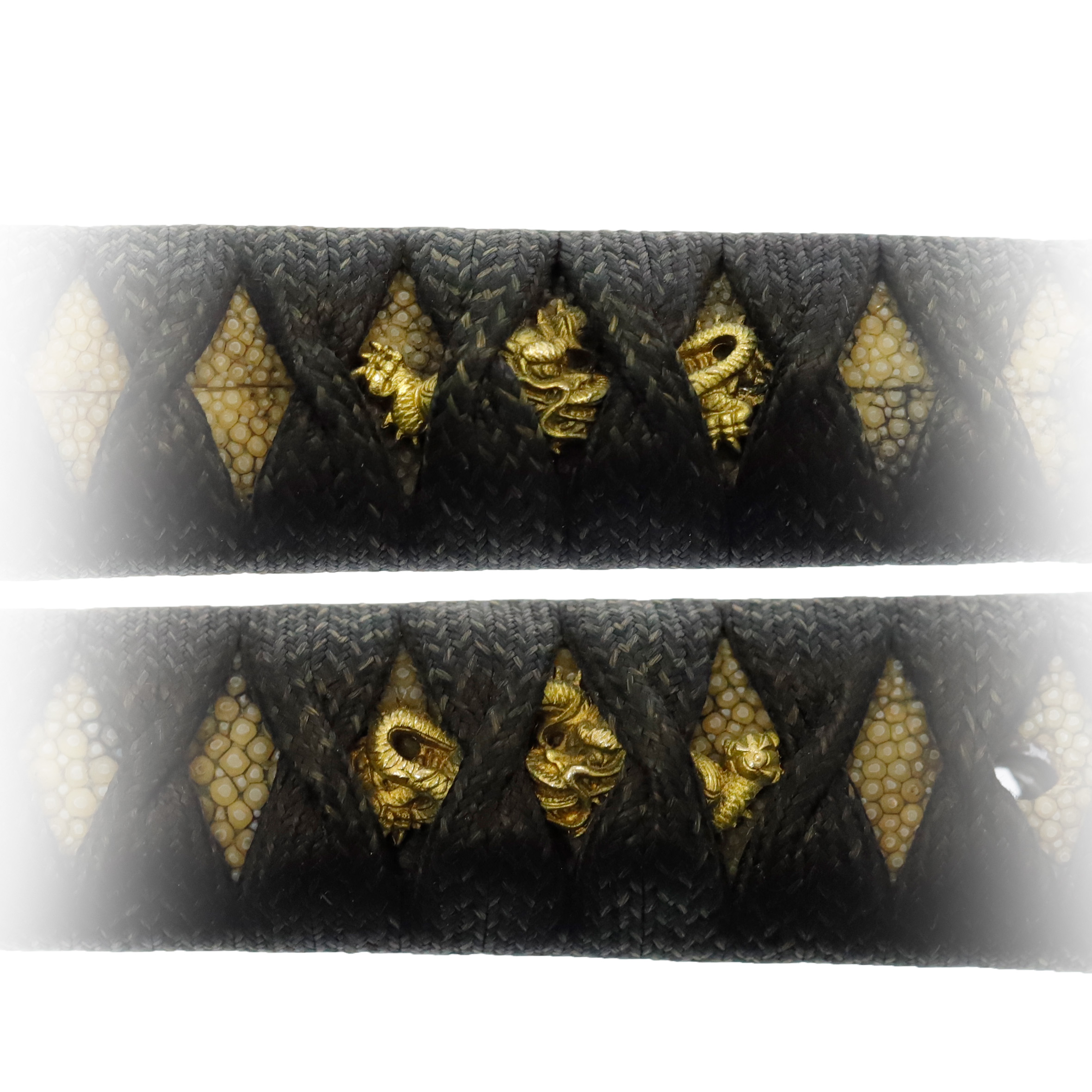
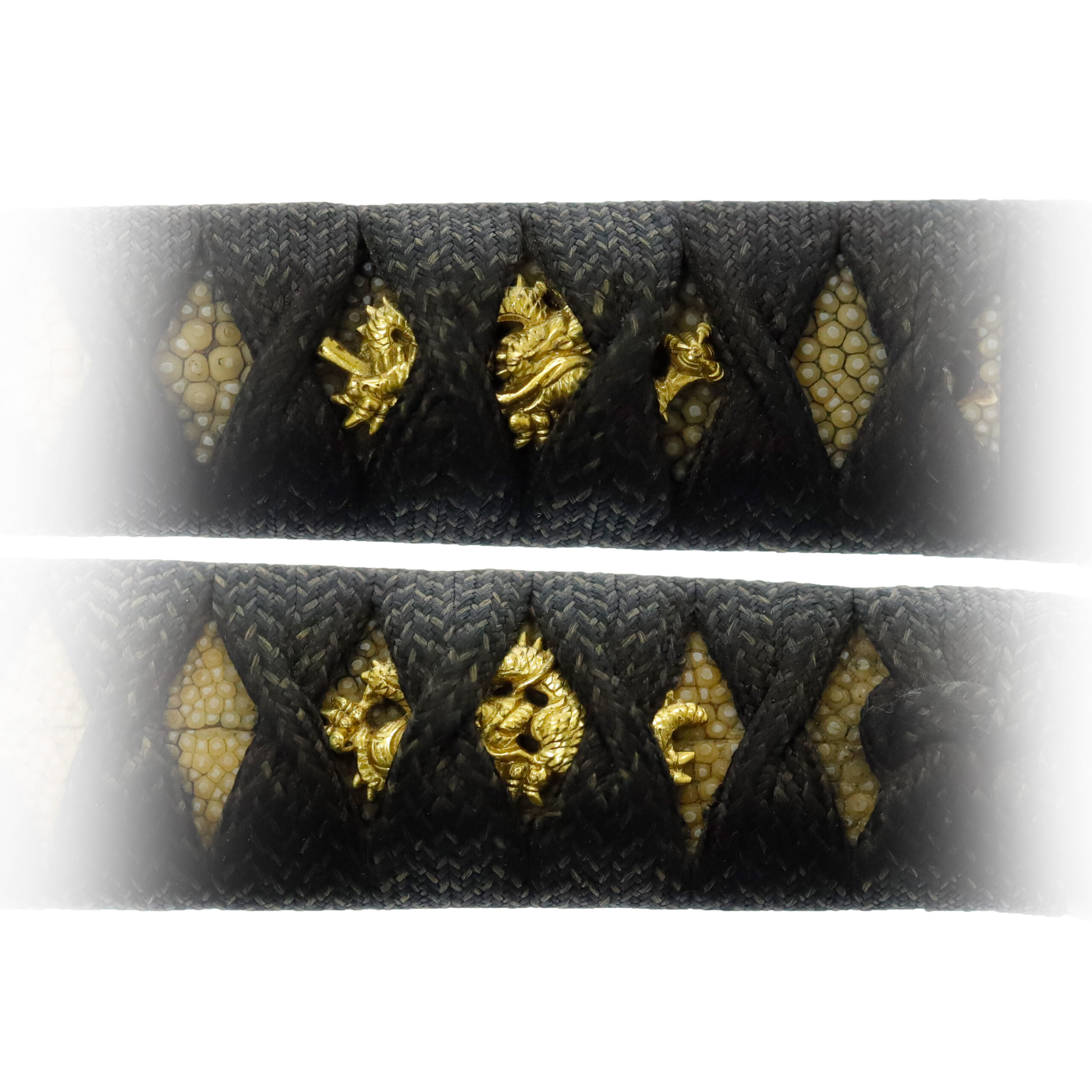
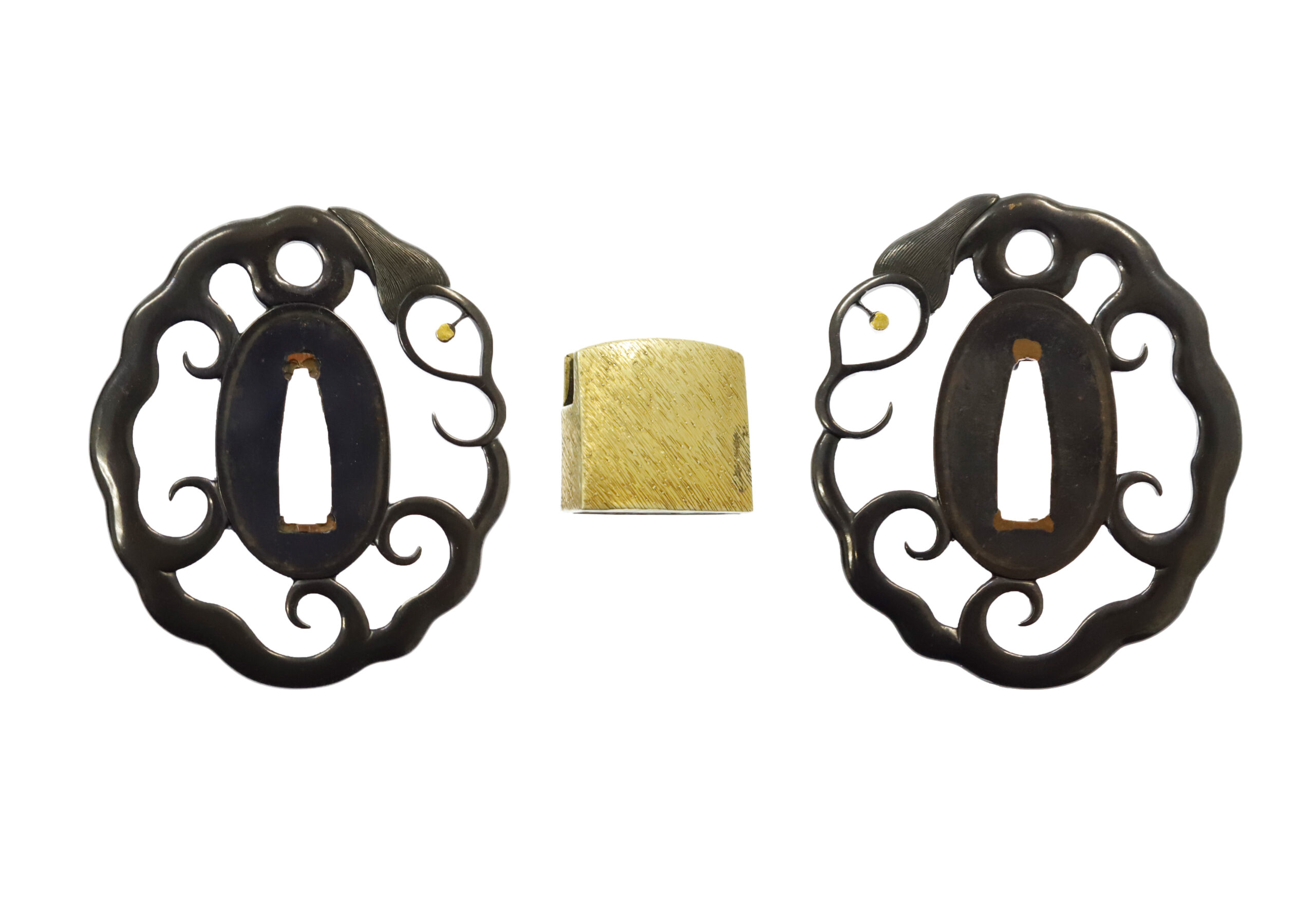
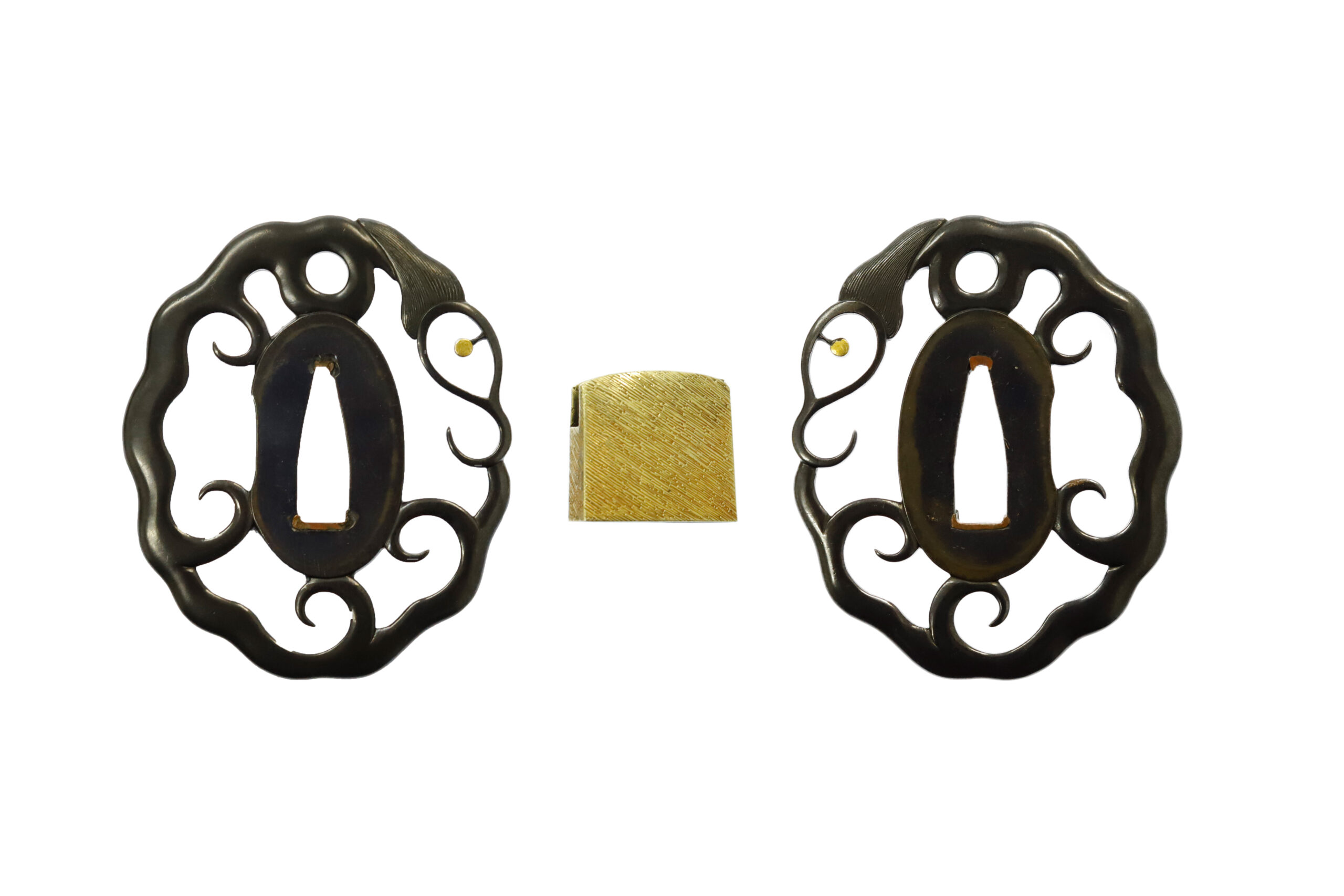
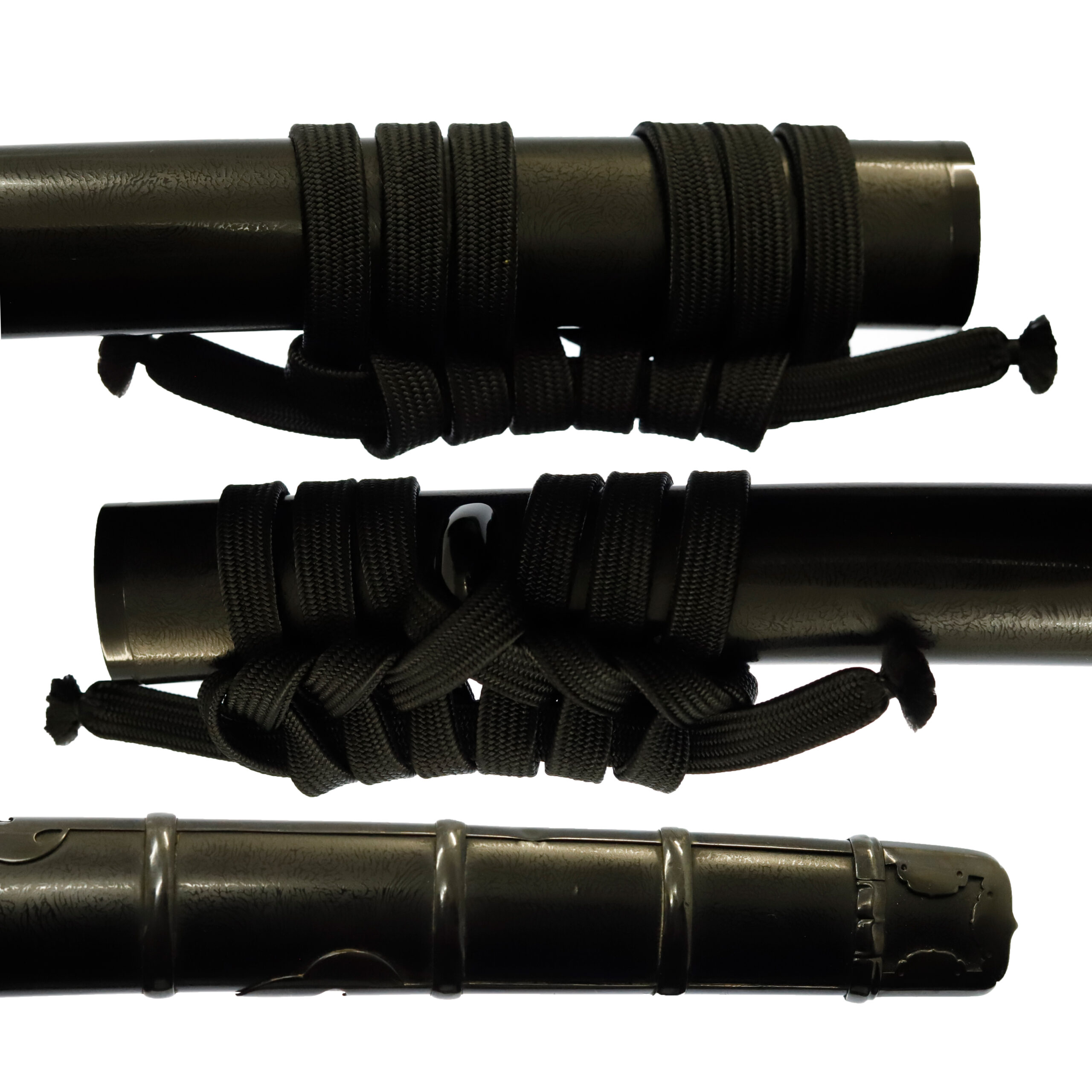
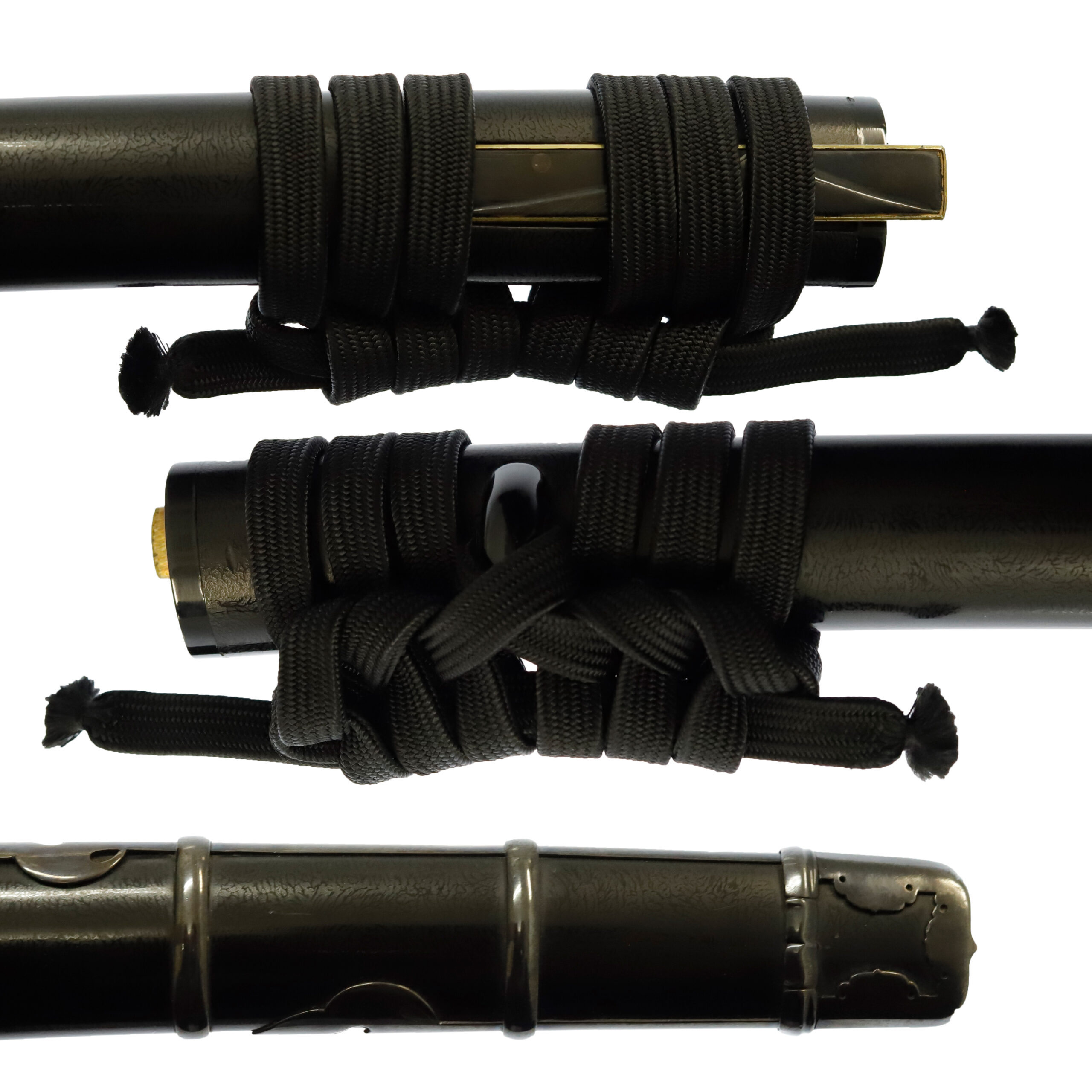
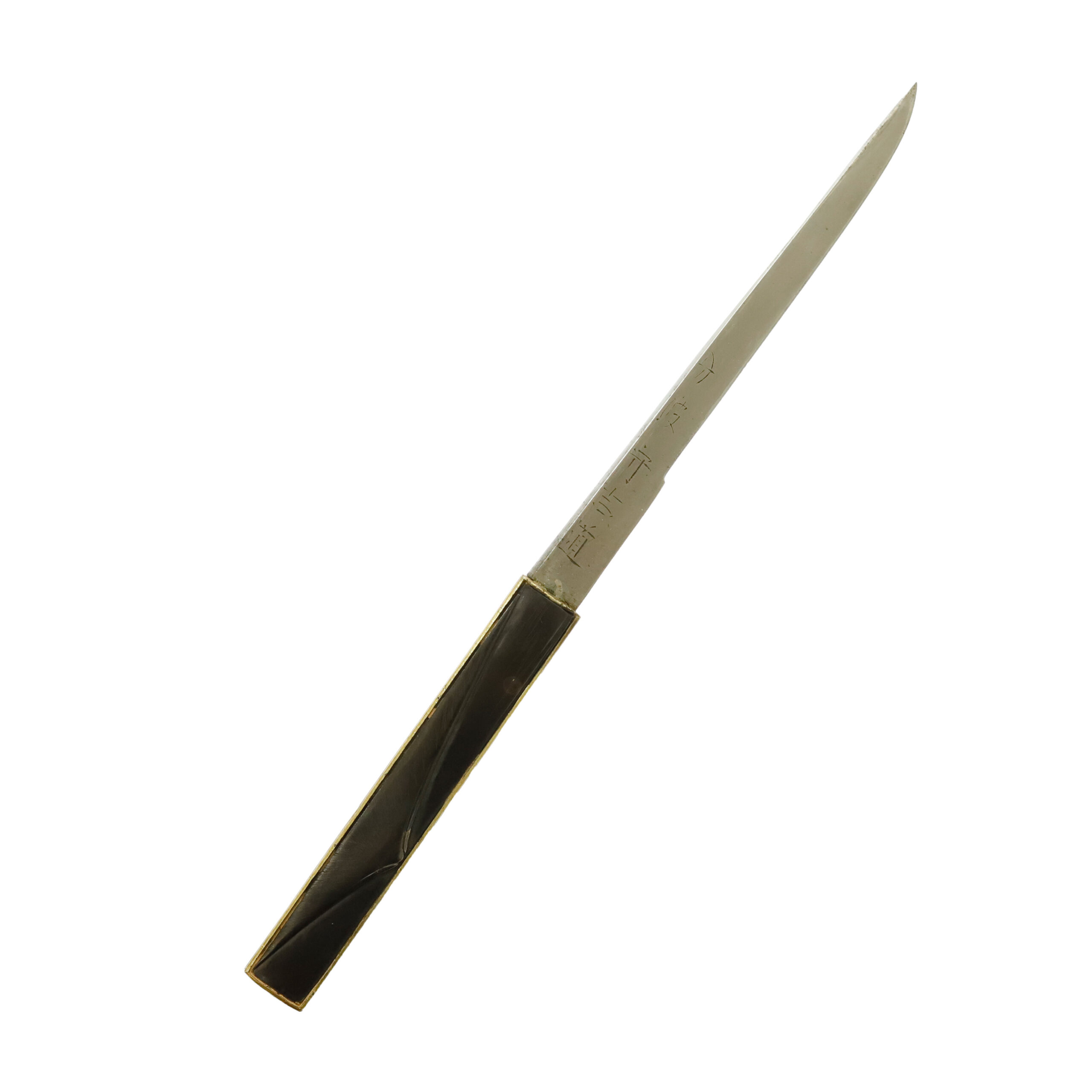
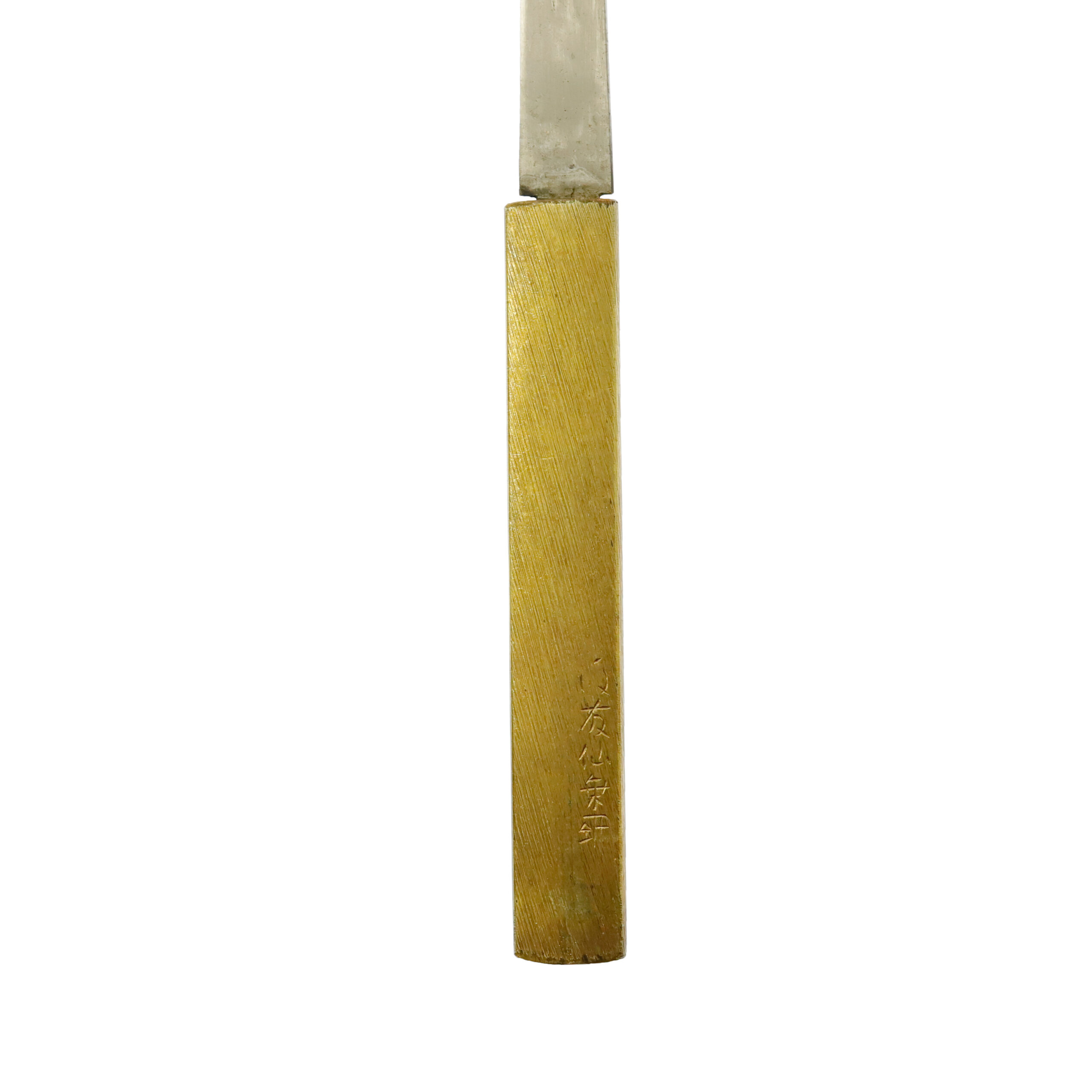
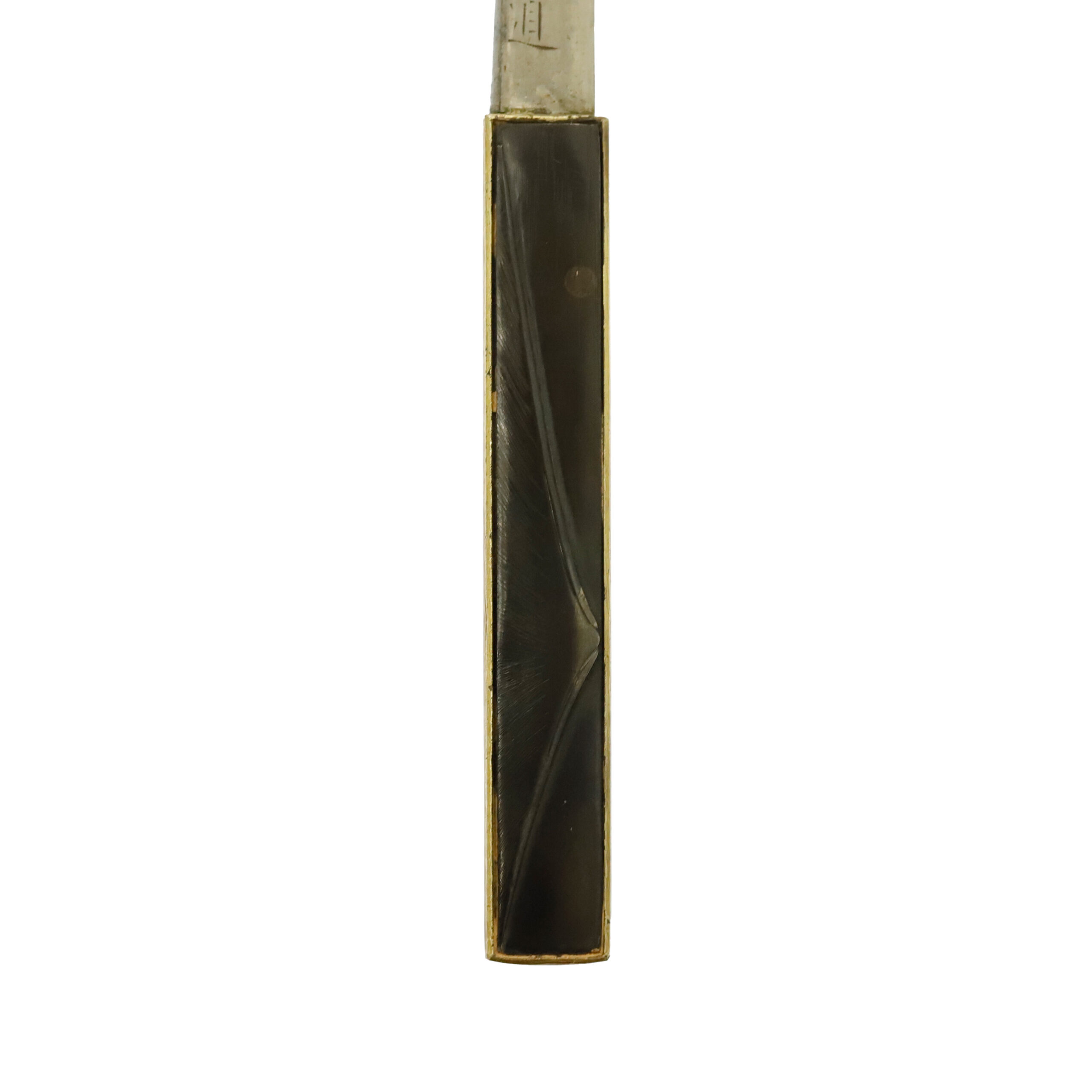
Katana& Wakizashi This Katana blade was signed by Bishu Mihara Jyu Masanori (備州三原住正近) , who was acitve during the end of the Muromachi period (early-mid 16th century). He belonged to Mihara school, one of the most prestigious schools during the late Muromachi period. Bishu(備州)is a larger area in today’s Okayama&Hiroshima prefecture. Bishu consists of Bizen(備前), Bitchu(備中) and Bingo (備後). Mihara school was located in Bingo province (today’s Hioshima prefecture). According to one theory, Mihara school was founded by Kokubunji Sukekuni in the late Kamakura period. Mihara school is divided into three categories depending on the period. When the blade is older than the Nanbokucho era (the 1300s), it is called Ko-Mihara (Old Mihara). And it is called Mihara for those forged in the early-Mid Muromachi period. Finally, Matsu-Mihara(End Mihara) is used for the late Muromachi period. Masachika is categorized as Matsu-Mihara. And the Wakizashi is attributed to Matsu-Mihara. That means these two blades were approximately forged in the same period, according to NBTHK’s appraisal. In Bingo province, many lands were owned by politically powerful temples of the Yamato region (today’s Nara prefecture) from ancient times. And it is said that the swordsmiths in the Yamato region strongly influenced how swords were forged in the Bingo province. The blades forged by the Mihara school had distinctive characteristics of Yamato DEN, one of the five Japanese sword traditions (Gokaden). The swordsmiths in the Bishu area, including Mihara school, produced many swords during the Muromachi period as it was in the middle of the Sengoku period(Warring state period). The demand for weapons increased among strong feudal lords. Bingo is located near the Chugoku Mountains, where iron sands, one of the essential materials for making Japanese swords, were abundant. This geological location contributed to the Mihara swordsmiths forging high-quality refined blades. We presume Bingo was quite active in sword-forging from ancient times. The swords forged in Yamato DEN tradition are famous for their beautiful Jigane, steel surface, and straight tempering line(Suguha). This blade has a beautiful Jigane with a Suguha tempering line, which shows an outstanding characteristic of the Yamato DEN sword. What is Daisho? Daisho is a pair of two Japanese swords Samurai carried. During the Edo period, having Daisho in public places was considered social status for Samurai. Furthermore, Samurai were required to wear them under the law back then. Daisho is written as 大=Big and 小=Small. Dai part means Katana, and Sho part means Wakizashi. We are confident you would like this pair of Daisho Koshirae. And based on the style of the sword mounting, they are categorized as HANDACHI KOSHIRAE (Half Tachi style Sword mountings), which has more ornamental looking than standard Katana style Koshirae. These blades were registered in Hiroshima and the registration numbers are consective. This indicates that the previous owner might have been descendants of Samurai who carried this Daisho for many years. Appraisal This Katana blade is appraised as a Tokubetsu Hozon Token(特別保存刀剣) and this Wakizashi is appraised as a Hozon Token (保存刀剣). They were issued by NBTHK(Nihon Bijutsu Touken Hozon Kyokai:日本美術刀剣保存協会). These authentication papers were only given to authentic Japanese swords well preserved and high quality with artistic value. *Please keep in mind that there are is a couple of tiny Kitae Kizu on the Katana and Wakizashi. -Katana Jimon(Jihada) -Katana -Wakizashi Fuchi-Kashira The sword mountings of this Daisho Koshirae have the same designs. These Fuchi Kashiras are relatively simple compared to other parts. However, you could enjoy the texture and color of the material directly. In addition, there are minor dents and scratches on their surface. These are the traces of their long history, so we hope you will enjoy them as antique textures. Tsuka and Menuki Dragons are the motifs of these Menukis. The dragons show powerful movements and facial expressions by twisting their elongated bodies. Golden paint is applied to each dragon, and this coloring adds decorativeness to this work. Initially, a dragon was an imaginary creature found in ancient foreign traditions or myths. Furthermore, it is regarded as a symbol of auspicious signs. Its body is likened to nine animals: antlers are deer, the head is a camel, eyes are demons, the neck is a snake, the belly is the Mizuchi (蛟, a mythical animal in Japan that looks like a snake and has a horn and four legs), scales are fish, claws are falcons, palms are tigers and ears are cows. It was thought that the dragon would reign at the top of all animals because of its odd-looking appearance. If you focus on dragons’ hands, you will find that some dragons bring a ball-shaped object in their hand. It is the Nyoi Houju (如意宝珠, Cintāmaṇi), a fantasy jewel that fulfills any desire and gives out treasure, clothes, food, and drinks. Moreover, it heals illness and suffering, removes evils, purifies muddy water, and prevents disasters. It is said this magical item is taken from the brain of the dragon king. Tsuba and Habaki We believe the designs of these Tsubas are related to the dragon motif. These Tsubas have indeterminate shapes that use curved lines, and opinions will differ depending on the viewer as to what the origin is. Here, we would like to propose our view just as a possibility. Firstly, it might be a dragon figure in an abstract design. If we focus on the part to which the golden sphere is attached represents the expression of a dragon, the part that seems to be a beard or mane represents the head, and the remaining part represents a long, slender dragon body. Another opinion is that this Tsuba expresses the movement of waves. In Japan, there is a belief that worships dragons as water gods. Since rice cultivation flourished in this country, water is always an essential resource. Therefore, the dragon motif has been familiar to Japanese people since long ago. Kozuka A Kogatana (小刀, small knife) is stored in the Kozuka. We believe a mountain designed on this Kozuka is Mt. Fuji. The Japanese name of Mt. Fuji is written as 富士山 (Fuji-San). It could be said that Mt. Fuji is a symbolic existence that represents the landscape of Japan. Its motif has also been appreciated as an auspicious design since ancient times. A theory says that its Japanese name 富士 was associated with 不死 (pronounced as Fushi, and means immortality); therefore, some people thought the Mt. Fuji design represents longevity. In another theory, it was also compared to another Japanese word, 無事 (pronounced as Buji, and means safe). In this idea, people used this motif to pray for good health and the family’s safety. Samurai warriors risked their lives on battlefields. This design might have been adopted to pray for the protection of those warriors. A full moon is also drawn next to Mt. Fuji, which makes it even more auspicious. Authentication Paper They authenticated these two blades this March in the 5th year of Reiwa(2023). They appraised Katana as a Tokubetsu Hozon Touken and Wakizashi as a Hozon Token, the blade worth preserving for Japanese society. We are expecting to receve these papers by early September. Registration Number The Board of Education in Hiroshima prefecture issued a registration paper for this Katana and Wakizashi blade .
Offered by Samurai Museum
This piece has sold
Get an email when a new Sue-Mihara Masachika piece hits the market.


Yamato-den · Bingo · around 1532-1555
Fujishiro Jo saku · Tōken Taikan top 60%
1 piece on the market now
Yamato-den · Bingo
Phase: Sue-Mihara末三原· 1394–1596
4 pieces on the market now
Where Ko-Mihara closes at the end of the Nanbokuchō period, Sue-Mihara takes up the Bingo tradition through the Muromachi era. The setsumei place the later production in the same Mihara orbit but spread across several named hands and affiliated branches: Kai Mihara Masamori, whose Muromachi katana often carry the long "Mihara-jū Kai _" signature; and the closely tied Hokke Ichijō line, whose founder Ichijō is traditionally called a son of Mihara Masaie and whose generations continued from the Ōei era into the late Muromachi. Within that affiliated group the corpus names Nobukane, Yoshitsugu, and the joint-signing Ichijō Morie and Ichijō Moriyuki, working at Kusado (Kusado Sengen) in Bingo. Several setsumei stress that the Hokke Ichijō reckoning is genealogically uncertain, said variously to branch from Mihara or from Kokubunji, which marks the looser, more diffuse character of the school in its later chapter. The later workmanship the setsumei describe keeps the Yamato base of the early school but states it in a coarser, more standing-grain register. The forging remains itame mixed with mokume and flowing grain (nagare), now repeatedly noted as hada-dachi (standing grain) and, in one tantō, "somewhat coarse" with the steel turning masame toward the mune. A whitish cast persists: shirake-utsuri is singled out in the Ōei Nobukane tantō, while other blades show only a faint or shadowy utsuri-like effect and a darkish, "metallic" steel color.
The tempering moves from the school's quiet suguha toward more open midare: a chū-suguha varied with small gunome, ko-gunome run together into continuous midare, gunome mixed with pointed (togari) elements, and edges showing hotsure, sunagashi, and a subdued (shizumi) nioiguchi. The sugata follows Muromachi form, with sakizori added to the curve and a chū-kissaki. Against the refined early Ko-Mihara, with its tighter nioiguchi and restrained finish, these later blades read as looser and plainer, the Yamato-den footing now worn shallower; the corpus is thin, so this contrast rests on the handful of traits the setsumei actually record rather than on a full stylistic survey. For kantei, the setsumei separate Sue-Mihara from Ko-Mihara chiefly by the loosening of the ground and the opening of the temper: standing, occasionally coarse itame; faint or merely shadowy utsuri rather than a clear cast; and gunome-laced midare in place of quiet suguha. Where the Hokke Ichijō hand is present, the setsumei note one consistent point of difference, that its nie in both ji and ha runs a step stronger than ordinary Mihara, with the bōshi becoming pointed and turning back deeply. Named smiths supply the anchors: Masamori for the two-character Kai Mihara rarity against his usual long signatures, and the Ichijō hands, including a mumei katana appraised den Ichijō under a Hon'ami Kōchū origami. The dated works, in the Ōei and Chōroku eras, carry the documentary weight here, fixing the later phase to Muromachi Bingo and to the Kusado smiths of Kusado Sengen. Learn more →
| Smith | Era | Designated |
|---|---|---|
| Masamune正宗 | 1469-1487 | 0 |
| Masaoki正興 | 1521-1528 | 0 |
| Nagashige長重 | 1487-1489 | 0 |
| Kaneyasu兼安 | 1469-1487 | 0 |
| Takakane高兼 | 1504-1521 | 0 |
Yamato in the Muromachi period
The monasteries that had sustained Yamato lost ground through the Muromachi period, and the schools thinned with them; Sue-Tegai kept the old masame manner alive in quantity. The burning of Tōdaiji’s Great Buddha hall in 1567 closed the temple age.
A Hozon-certified blade judged to show notably superior workmanship and a better state of preservation. The bar is higher: re-tempered blades and most unsigned Muromachi/Edo works are excluded.
The NBTHK (Nihon Bijutsu Tōken Hozon Kyōkai, the Society for the Preservation of Japanese Art Swords) is a public-interest incorporated foundation founded in 1948 and supervised by Japan’s Agency for Cultural Affairs (Bunkachō); it is based at the Japanese Sword Museum in Tokyo. Its expert panels physically examine each submitted work (shinsa) and issue a certificate (kanteishō) ranking it by artistic and historical merit. NBTHK papers are the most widely recognized standard of authentication for Japanese swords and fittings.
NBTHK official siteReturns/exchanges limited to defects caused by shipping (except willful misconduct or gross negligence by the company); customers must contact within 72 hours of receiving the product.