■Katana
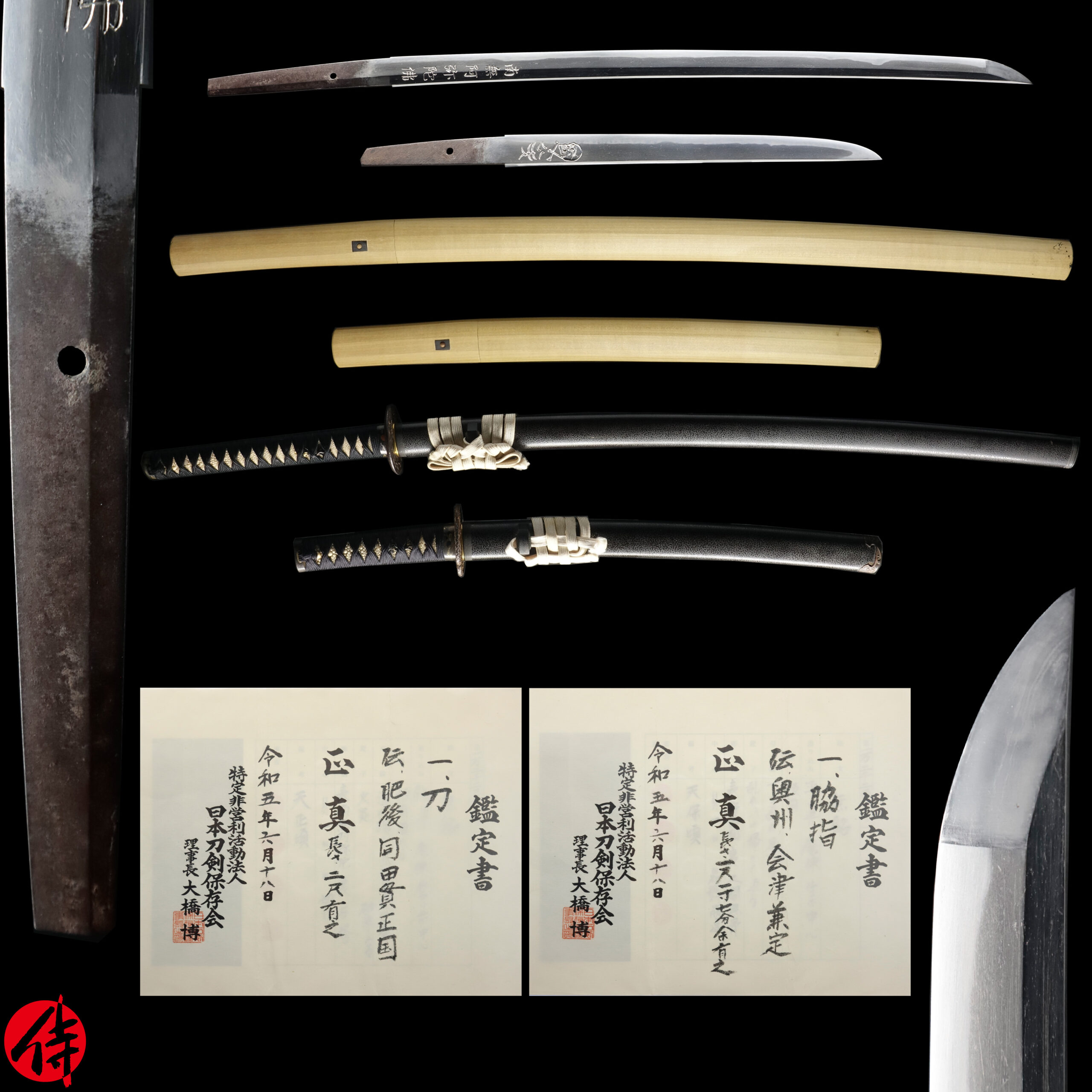
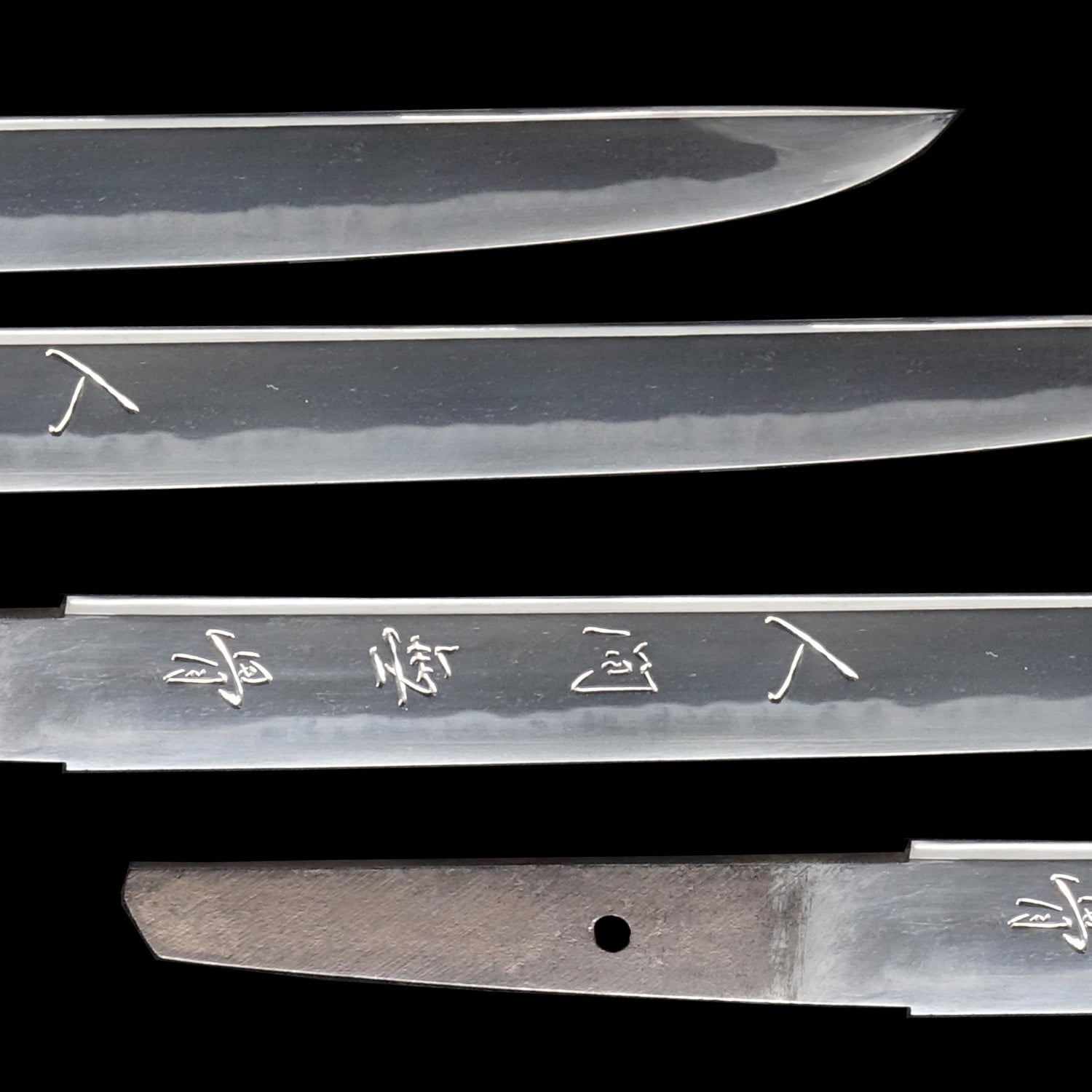
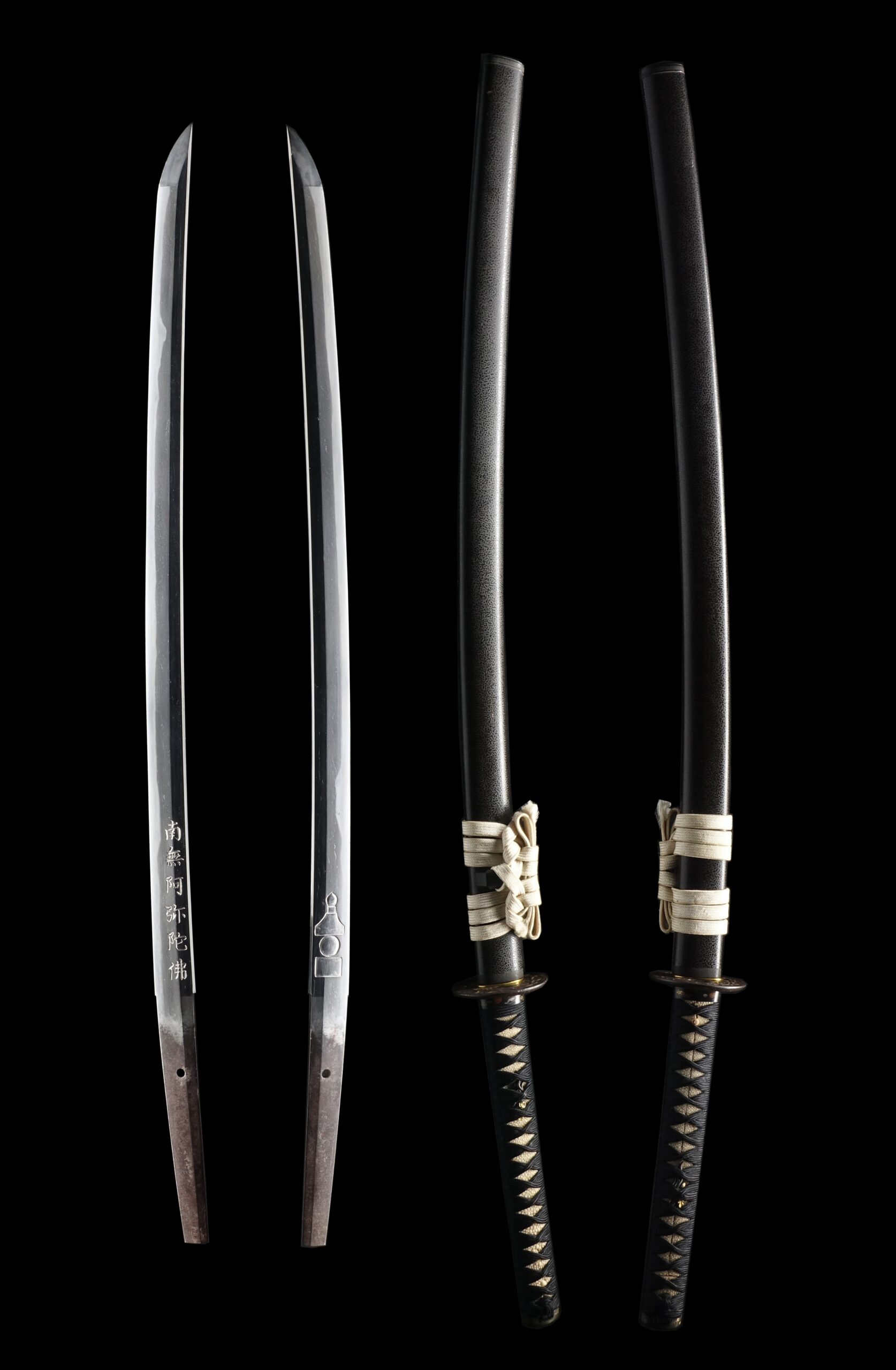
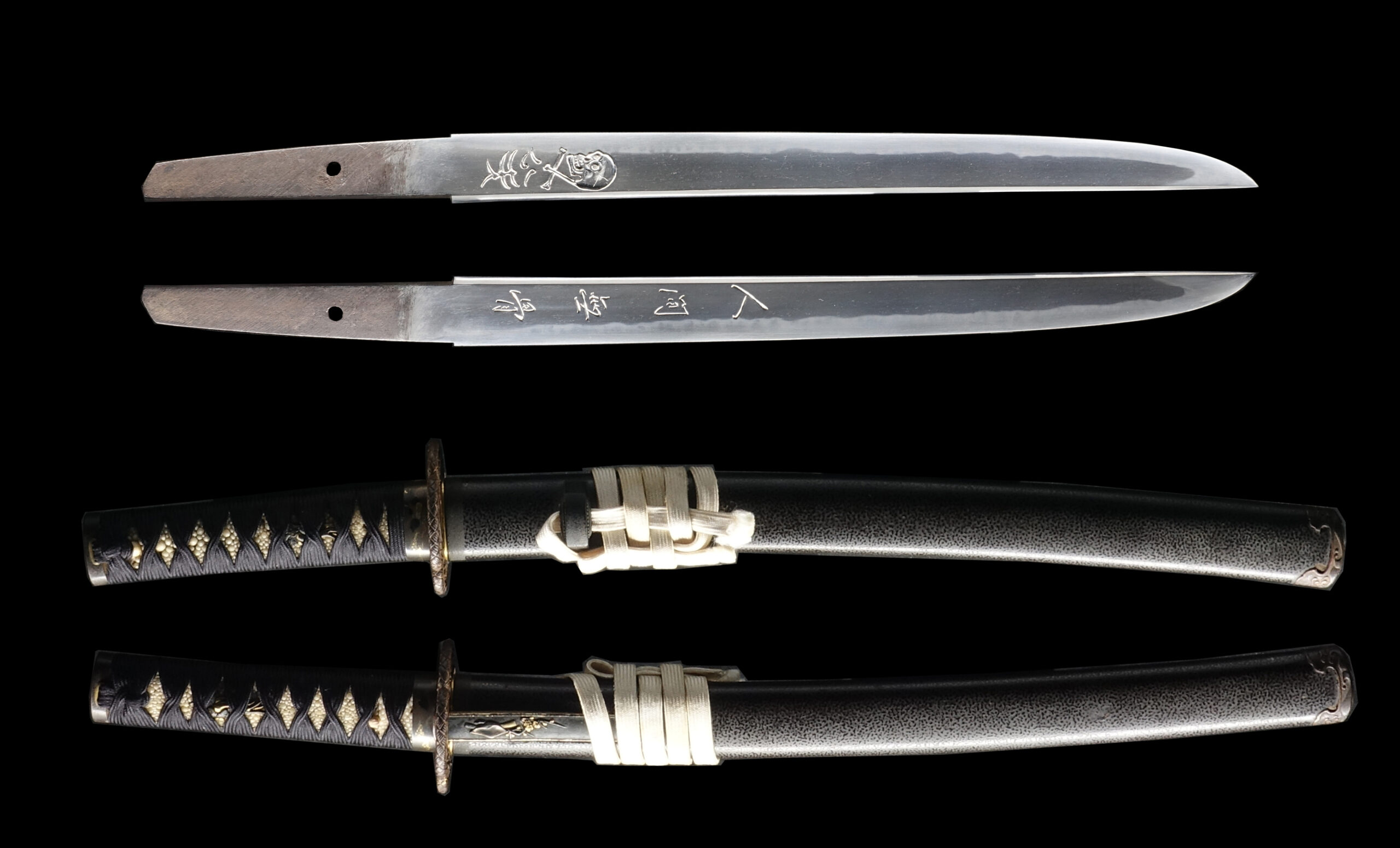
This blade is attributed to Dotanuki Masakuni (同田貫正国), who was active during the Tesho era (1573-1592: Azuchi Momoyama period) in Higo domain (Today’s Kumamoto prefecture). Dotanuki is a school founded by Masakuni. He served Kato Kiyomasa (加藤清正), who ruled Higo domain as a feudal lord.
It is said that Masakuni was a descendant of the Enjyu school that had forged blades for the Kikuchi family and flourished during the late Kamakura period-Nanbokucho period (Late 13th-Early 14th century). Kikuchi clan ruled the Higo domain for a long time, but the clan left the place at the end of the Muromachi period (late 15th-early 16th century). The influence of Enjyu school diminished. Eventually, the Fujiwara Kunikatsu and Nobuyoshi brothers, who belonged to a branch of the Enjyu school, revitalized the school by moving to a place called Dotanuki and forged blades. Their craftsmanship was acknowledged by Kato Kiyomasa, one of the most powerful feudal lords during the warring state period. They received one letter from their lord Kiyomasa (Kiyo and Masa). Nobuyoshi changed his name to Masakuni (正国), and his older brother changed his name to Kiyokuni (清国). Masakuni founded the Dotakuni school under the auspice of the Kato clan.
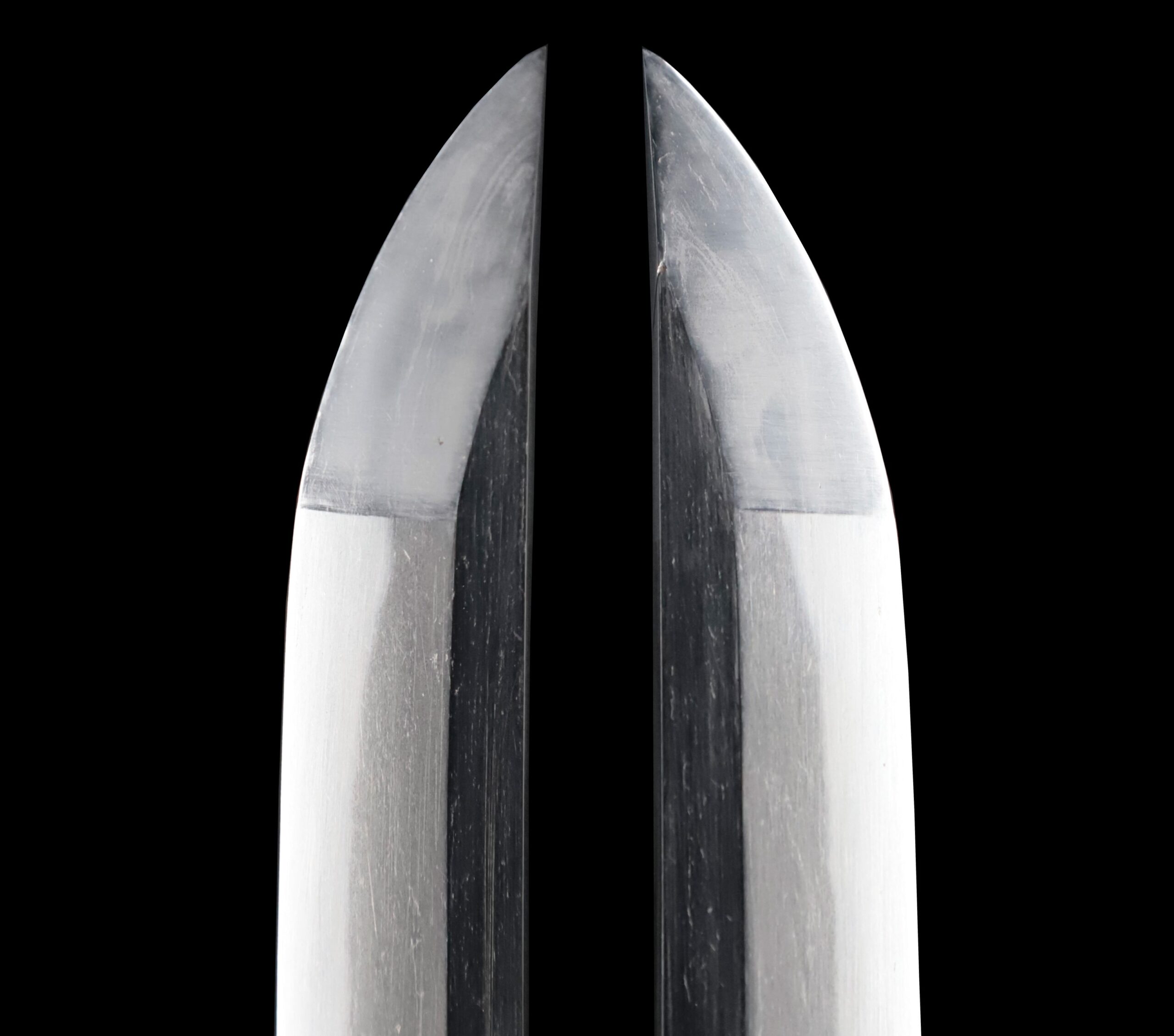
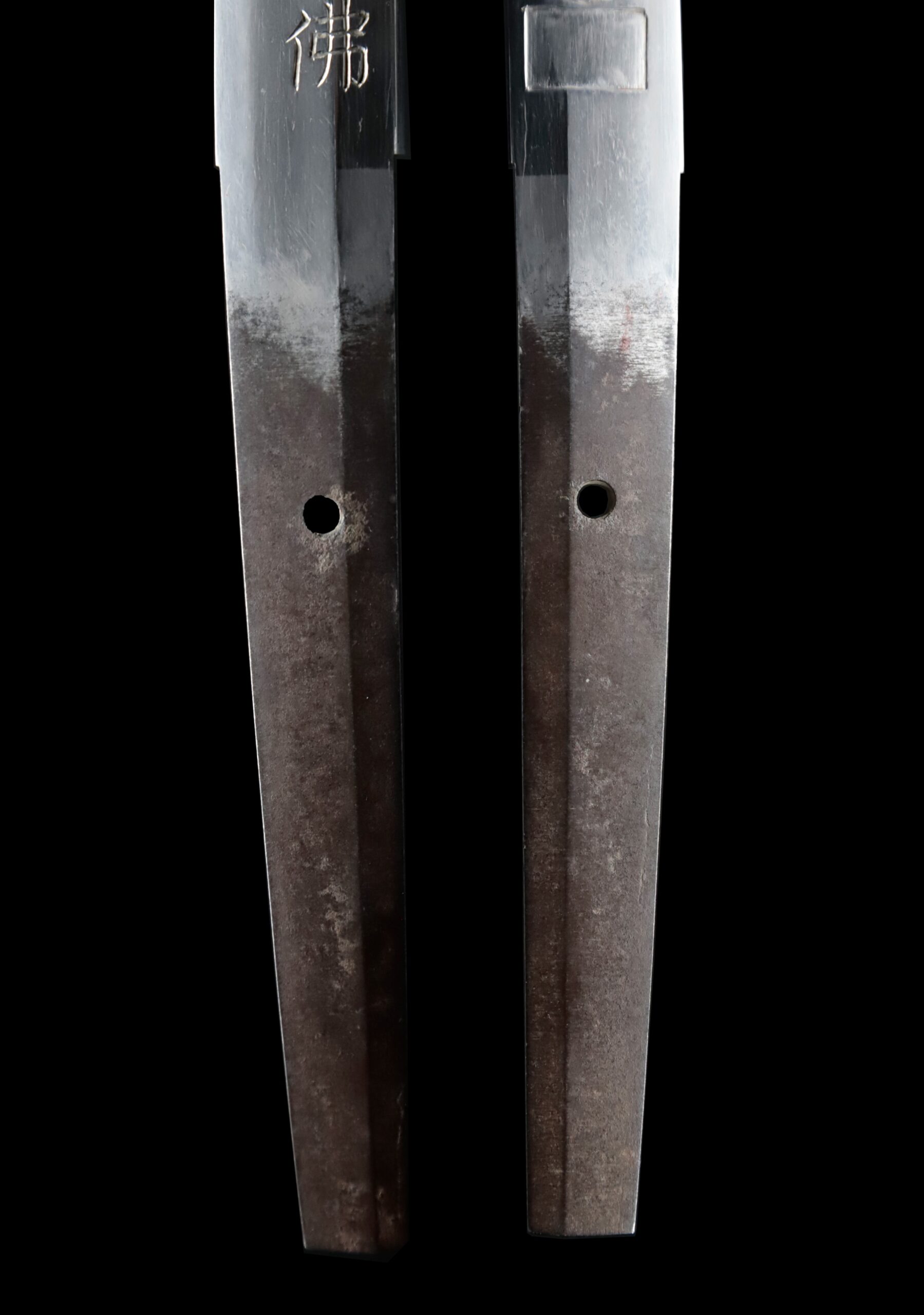
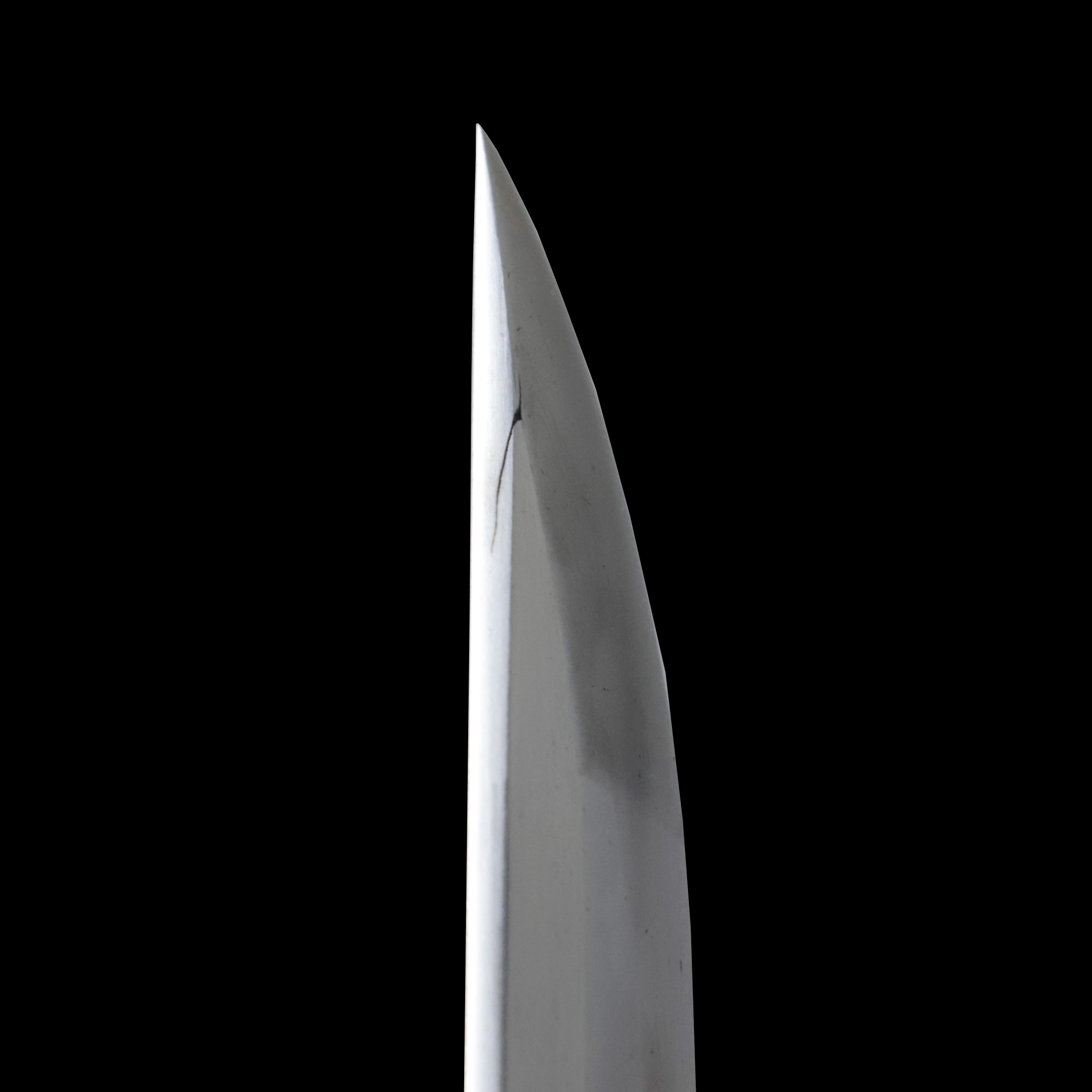
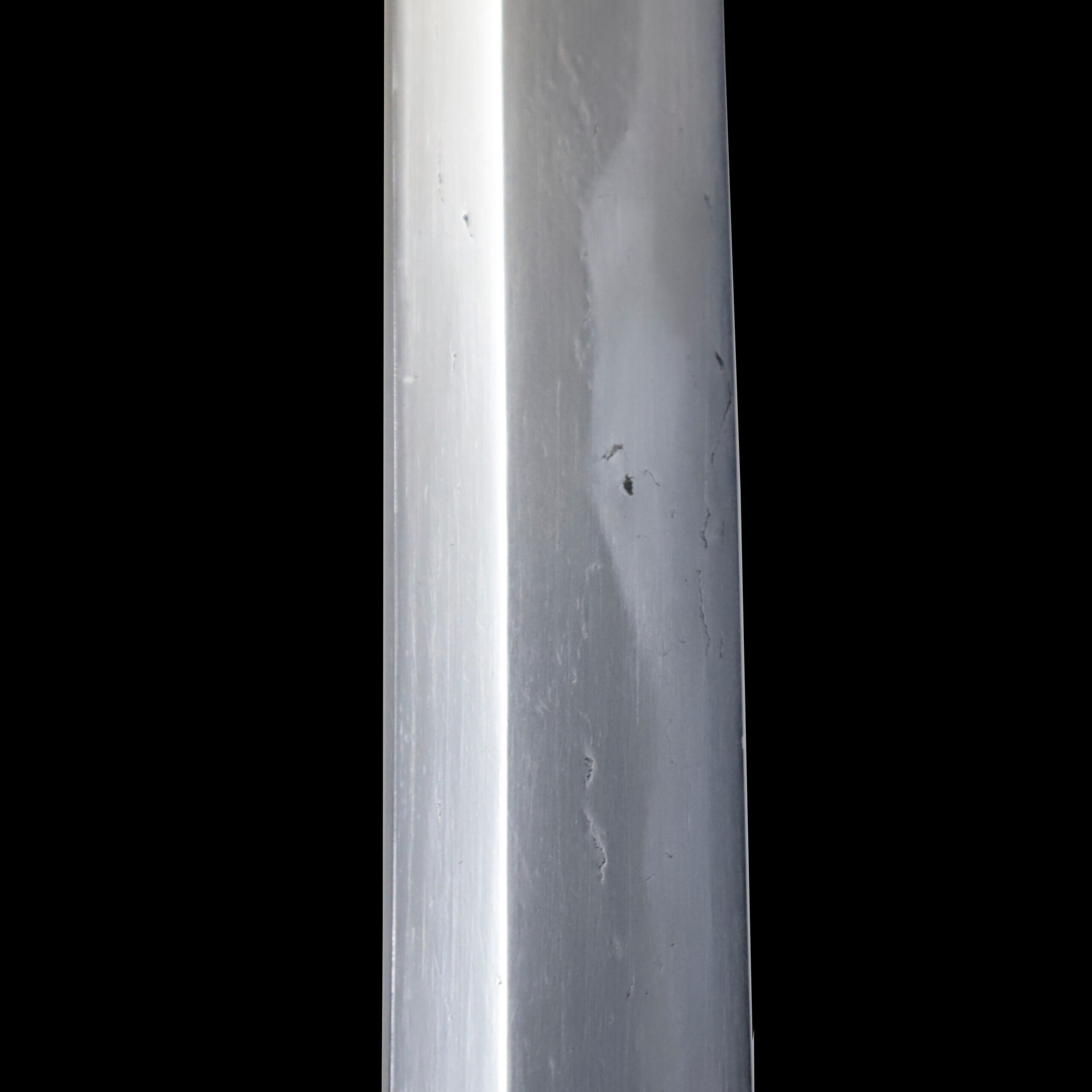
*Please keep in mind that there is noticeable Kizu on the Mune and Shinogiji part near the Kissaki (the tip area). We uploaded a photo of this area. If you like to see more detailed condition from different angles, we will take more photos and send them you if requested.
■Wakizashi
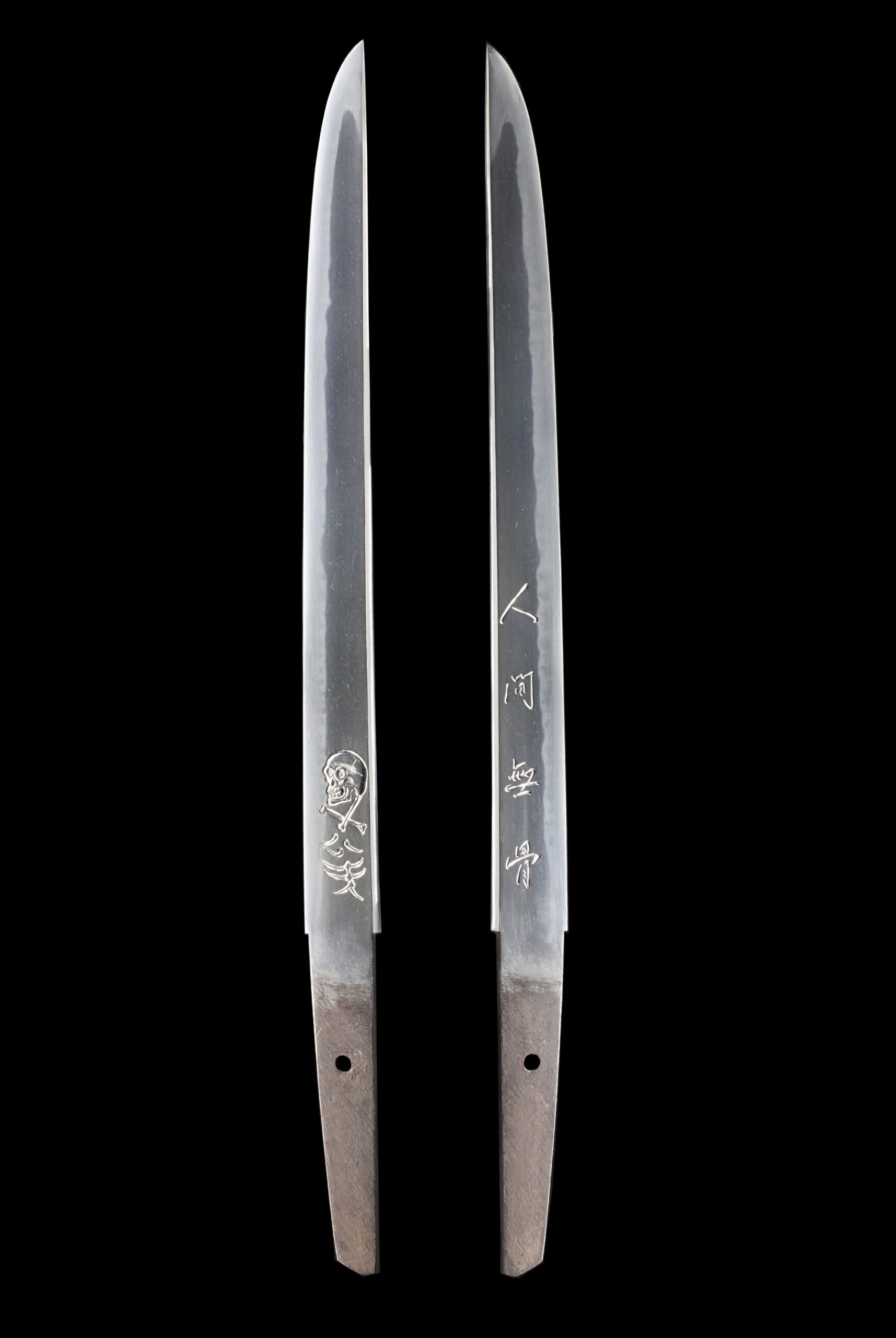
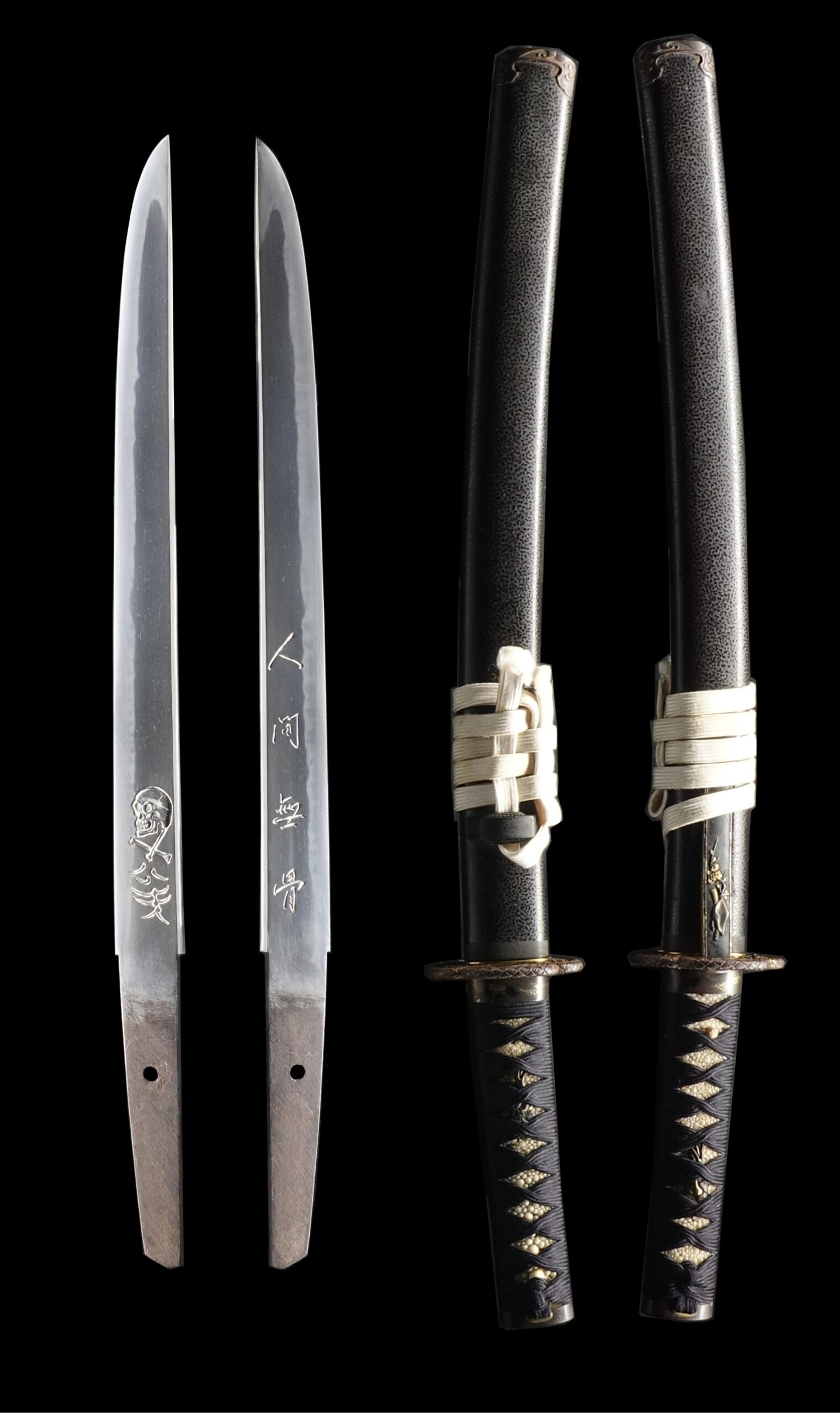
This blade is attributed to Oshu Aizu Kanesada (奥州会津兼定), who was active during the Tenpo era (1831-1845:Late Edo period) in Oshu province (today’s Fukushima prefecture). Based on its NTHK appraisal, we believe the attribution was given to the 10th-gen Aizu Kanesada. His son was Izumi no Kami Kanesada (和泉守兼定).
Aizu Kanesada school was founded by Kanesada, who had forged swords in Mino province (Today’s Gifu prefecture) until the Keicho era(1596-1615). This Kanesada was the grandson of Noshu Izumi no Kami Kanesada(濃州和泉守兼定), a renowned swordsmith in Mino province. Kanesada relocated to Aizu from Mino to serve Gamo Ujisato(蒲生氏郷), a powerful feudal lord who worked for Oda Nobunaga. And, Kanesada founded Aizu Kanesada school there. Aizu Kanesada school lasted 11th generation by the end of the Edo period. The generations of Kanesada forged swords for the Aizu domain in Fukushima Prefecture.
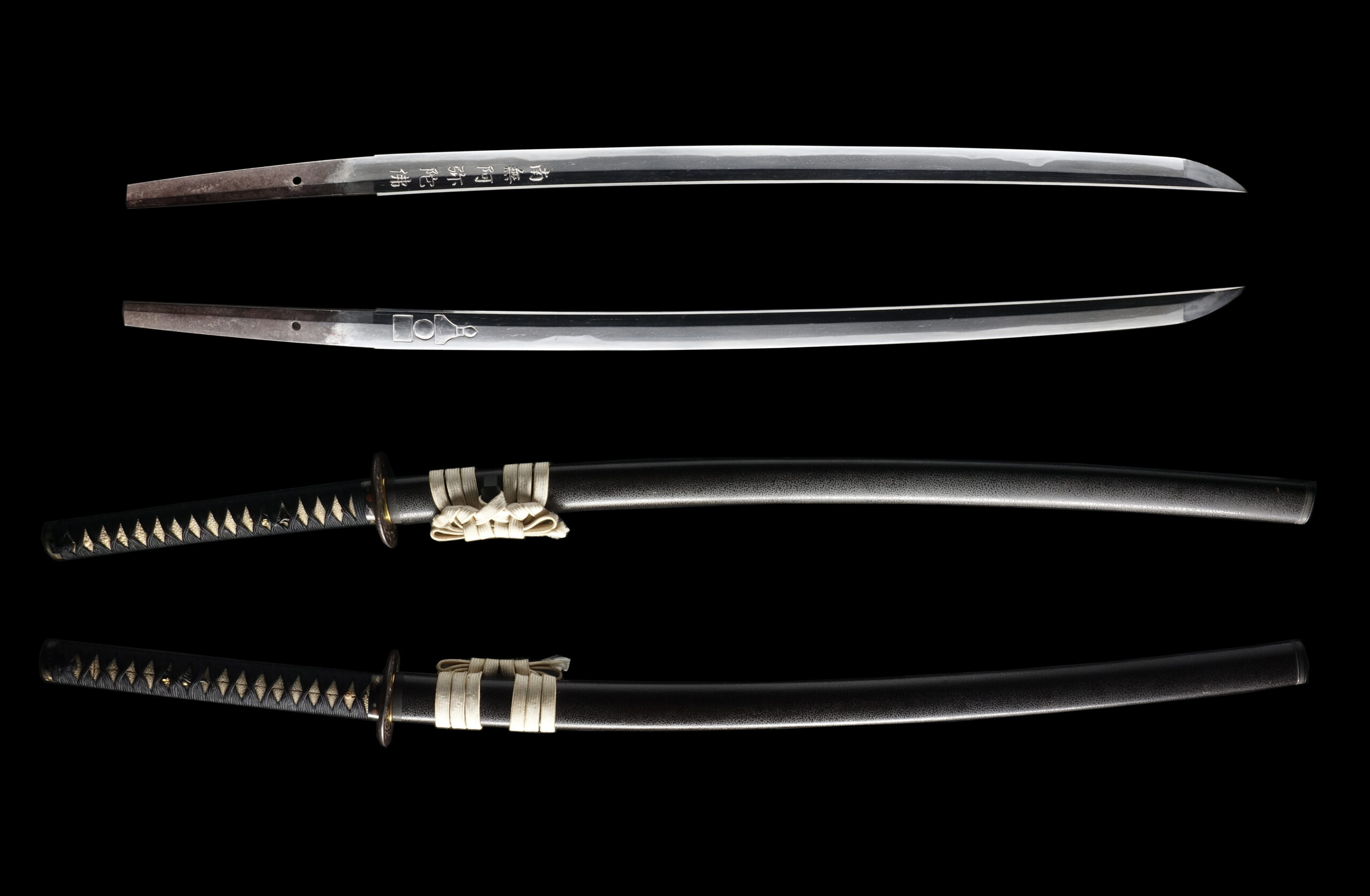
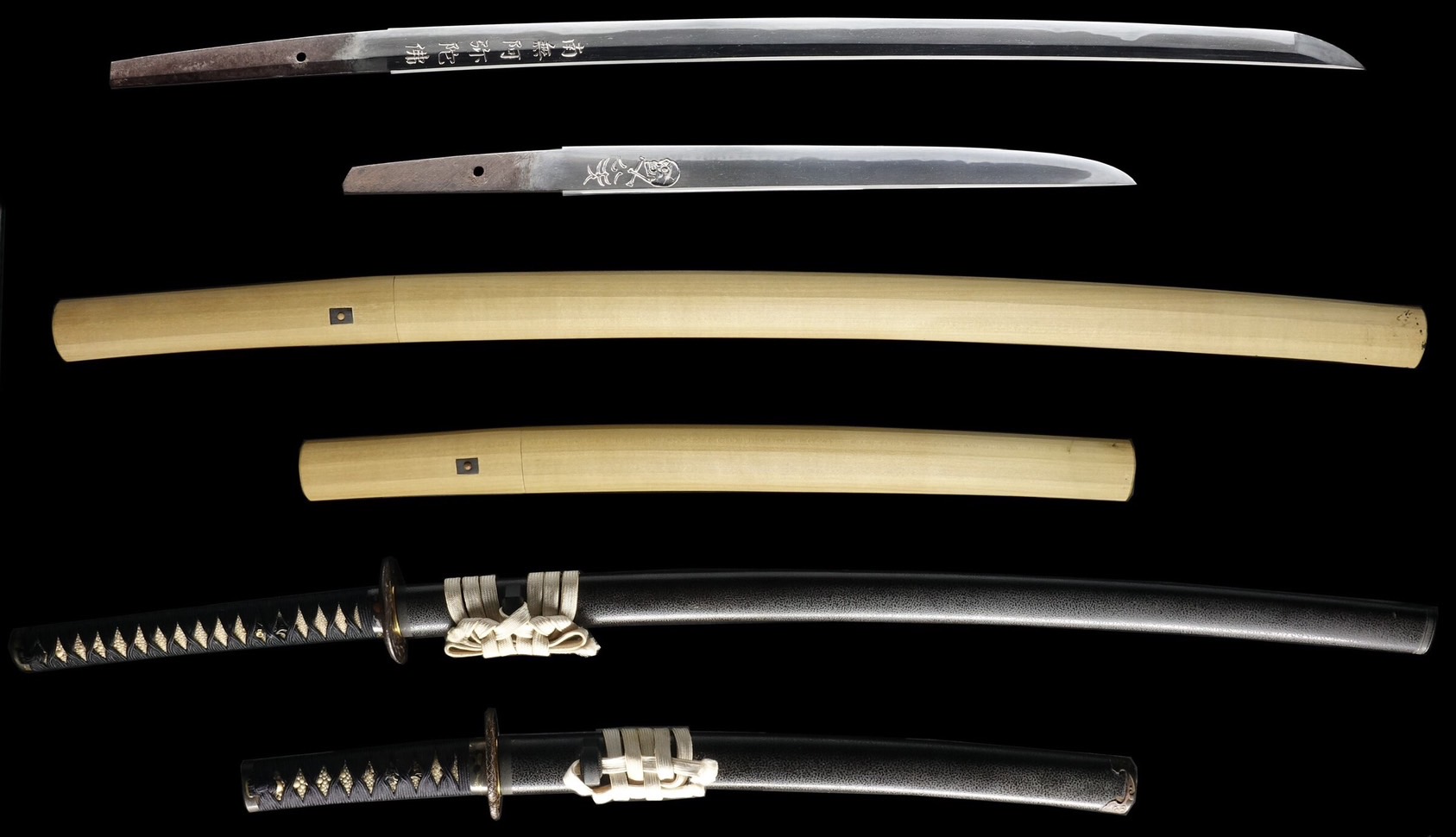
■What is Daisho?
Daisho is a pair of two Japanese swords Samurai carried. During the Edo period, having Daisho in public places was considered social status for Samurai. Furthermore, Samurai were required to wear them under the law back then. Daisho is written as 大=Big and 小=Small. Dai part means Katana, and Sho part means Wakizashi.
Horimono (Engraving)
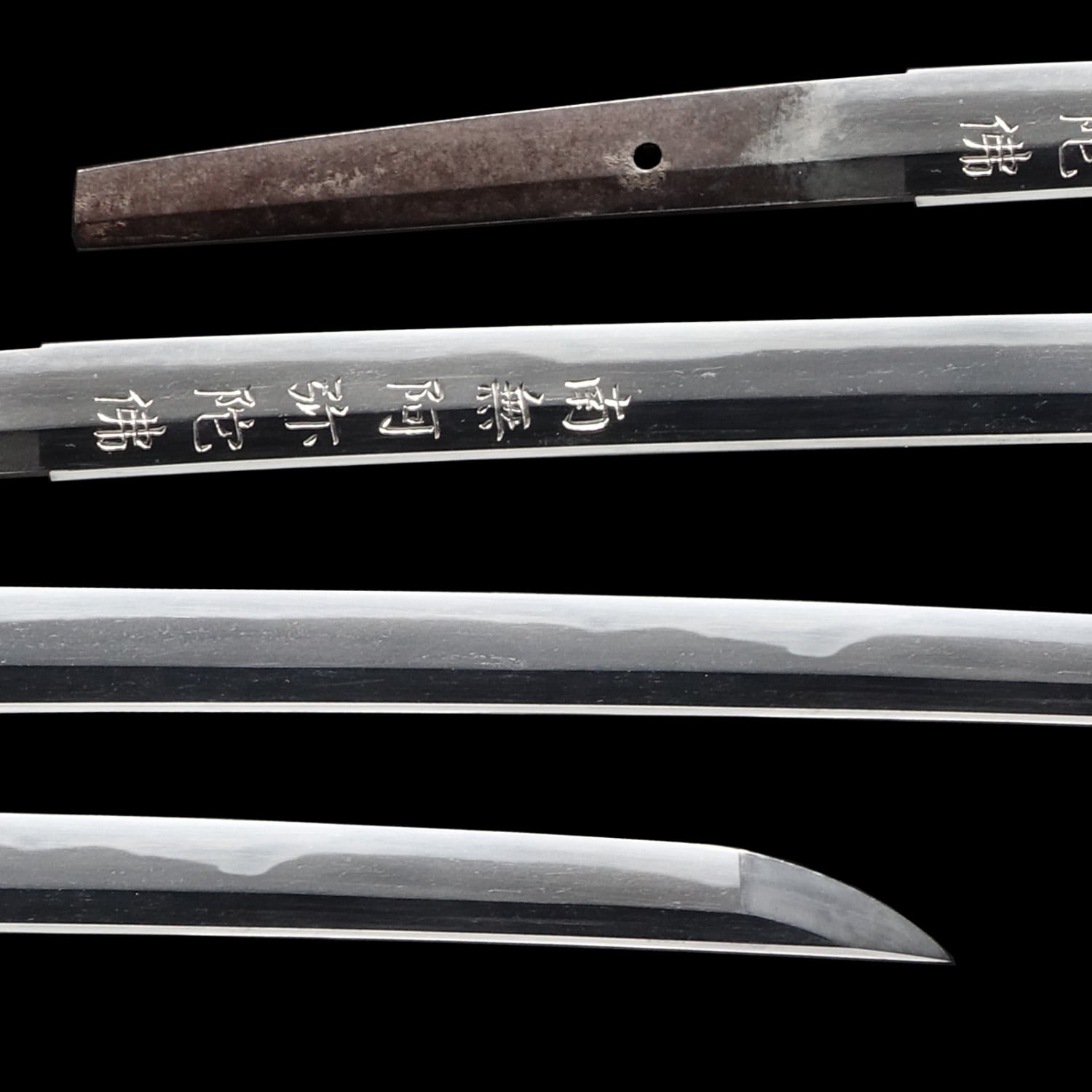
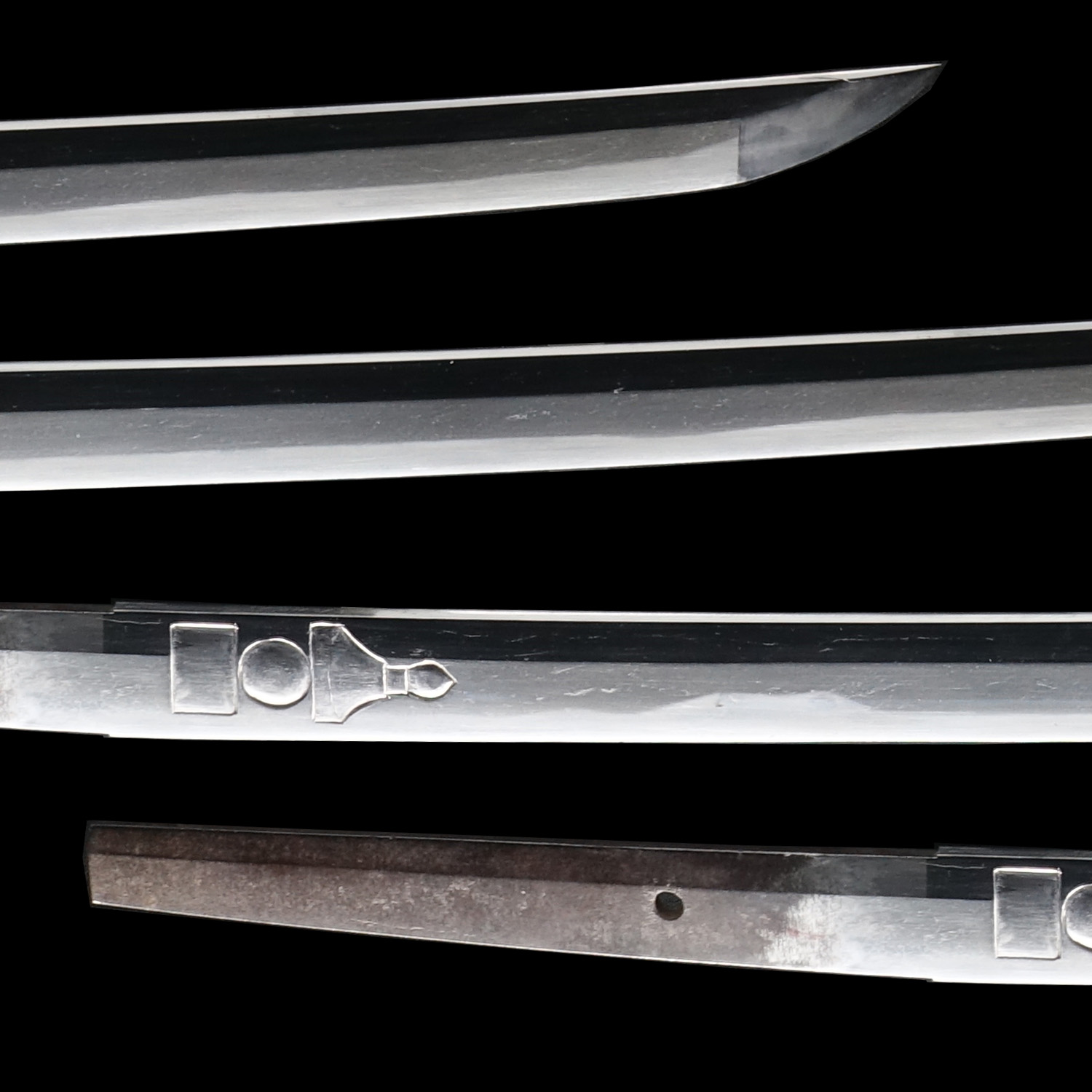
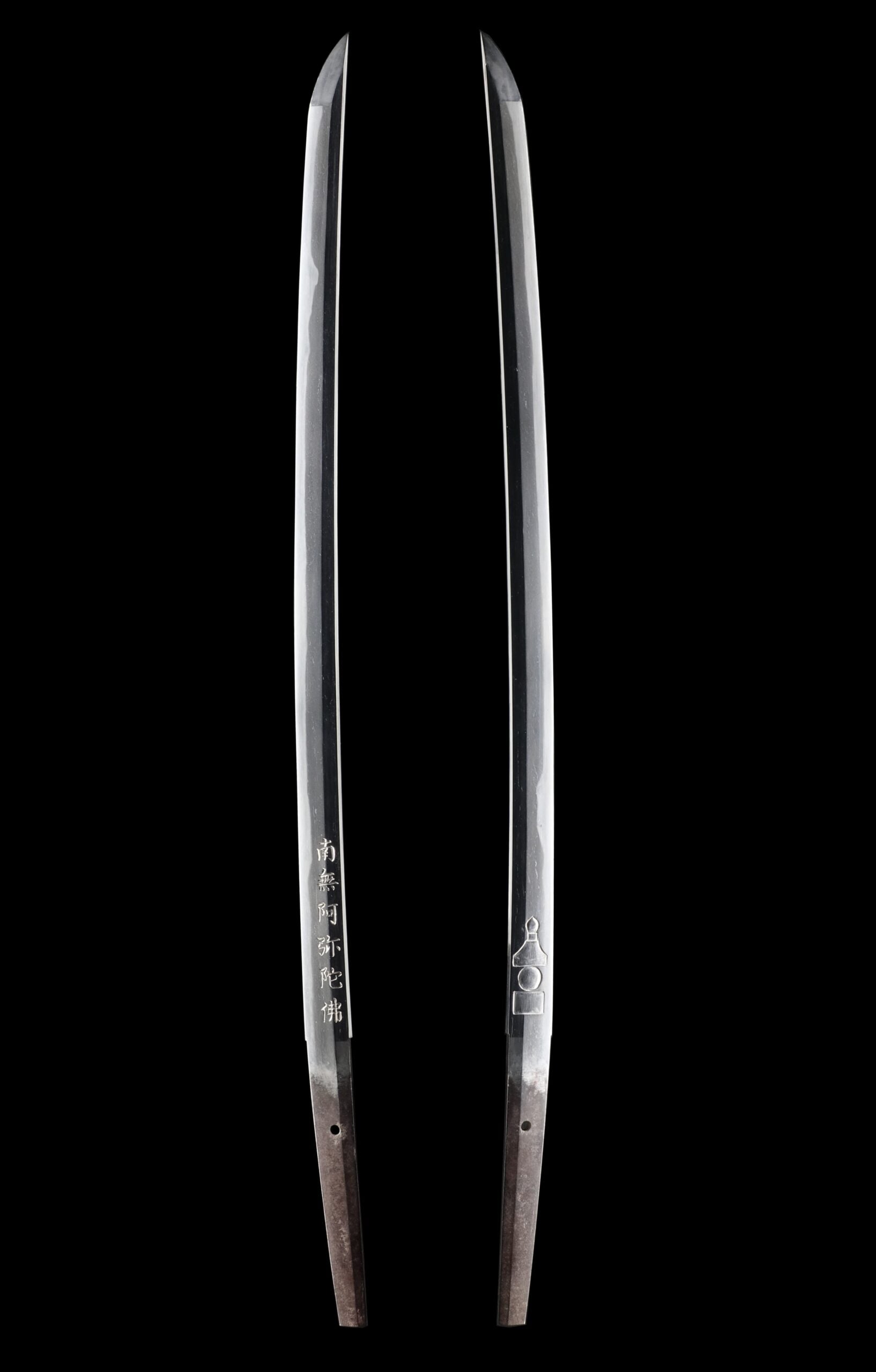
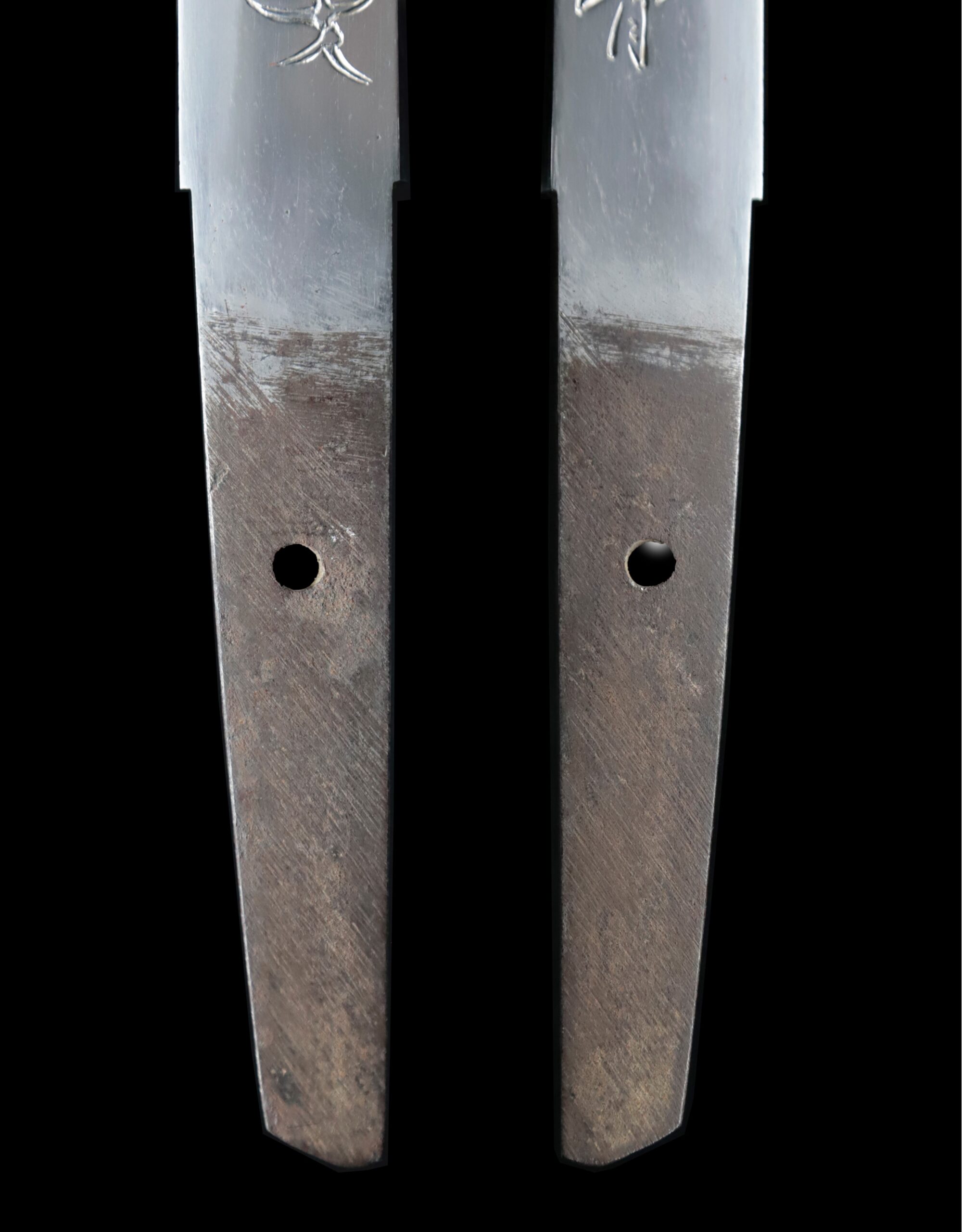
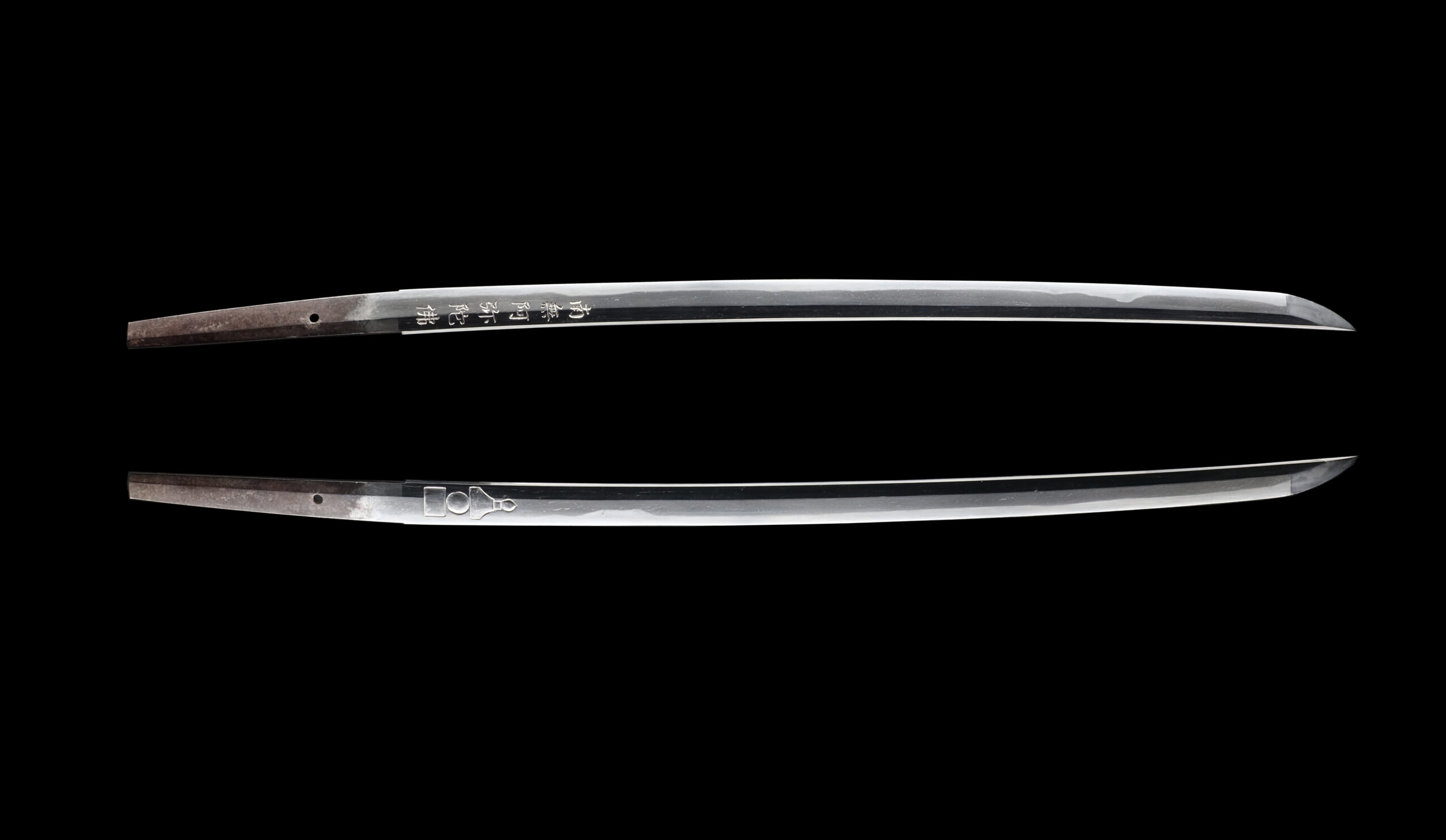
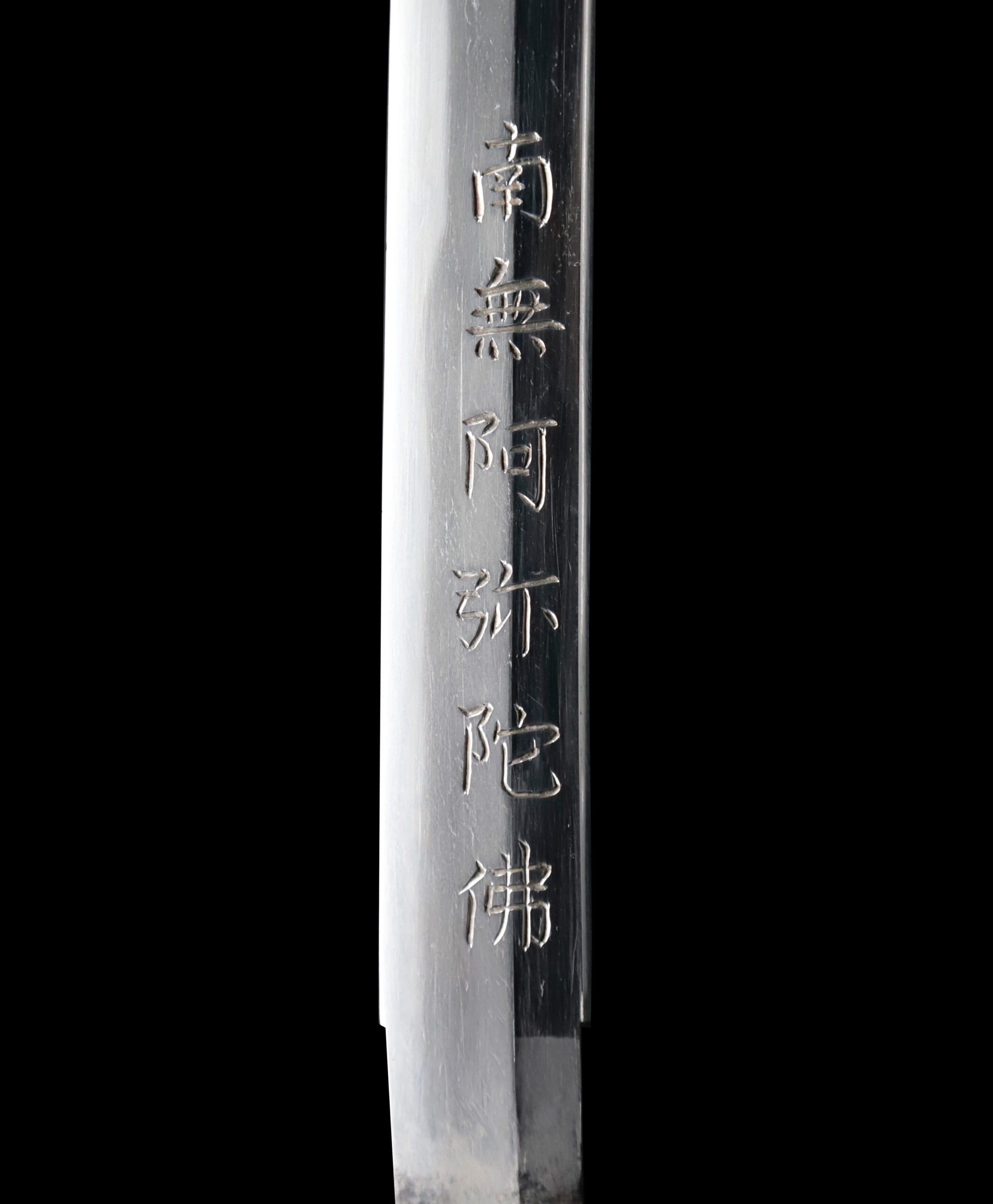
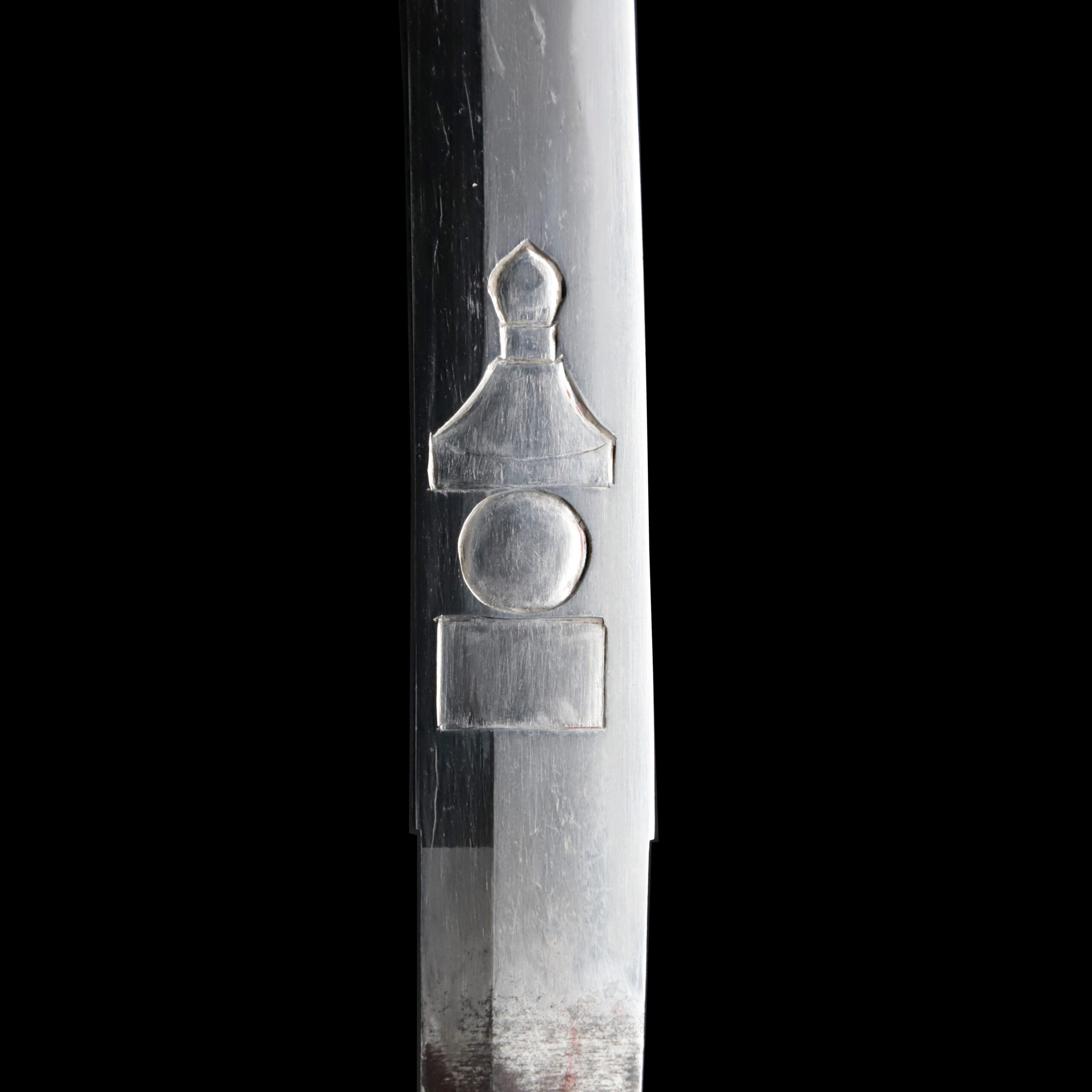
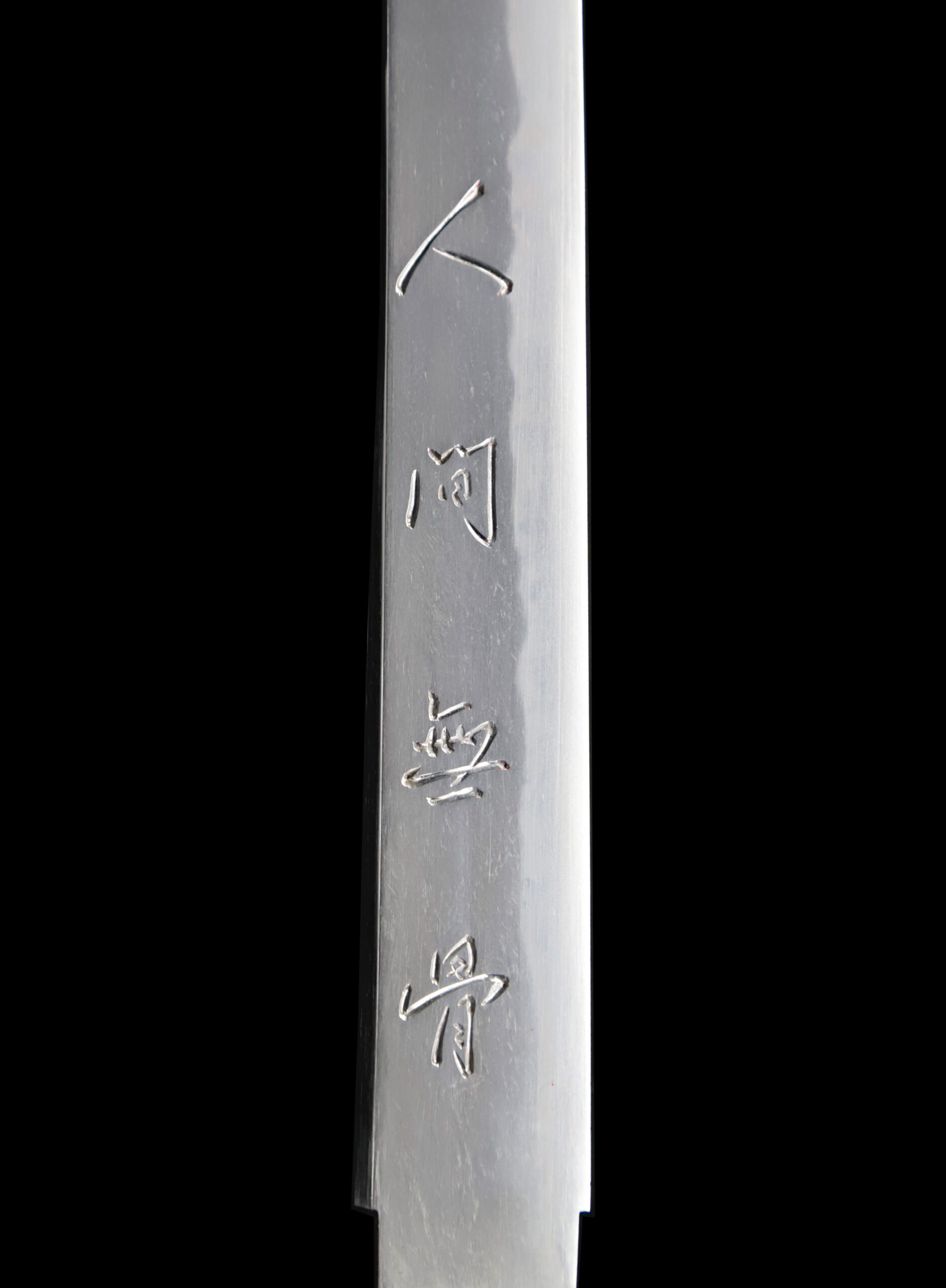
There is a Horimono on both Katana and Wakizashi. On one side of the Katana, you can see engraving of Namu Ami Dabutsu (南無阿弥陀仏). It is the prayer to the Buddha (仏陀). Followers wished to be born into the Pure Land of Perfect Bliss by saying a prayer to the Buddha. The former owner of this blade might have been a devout person.
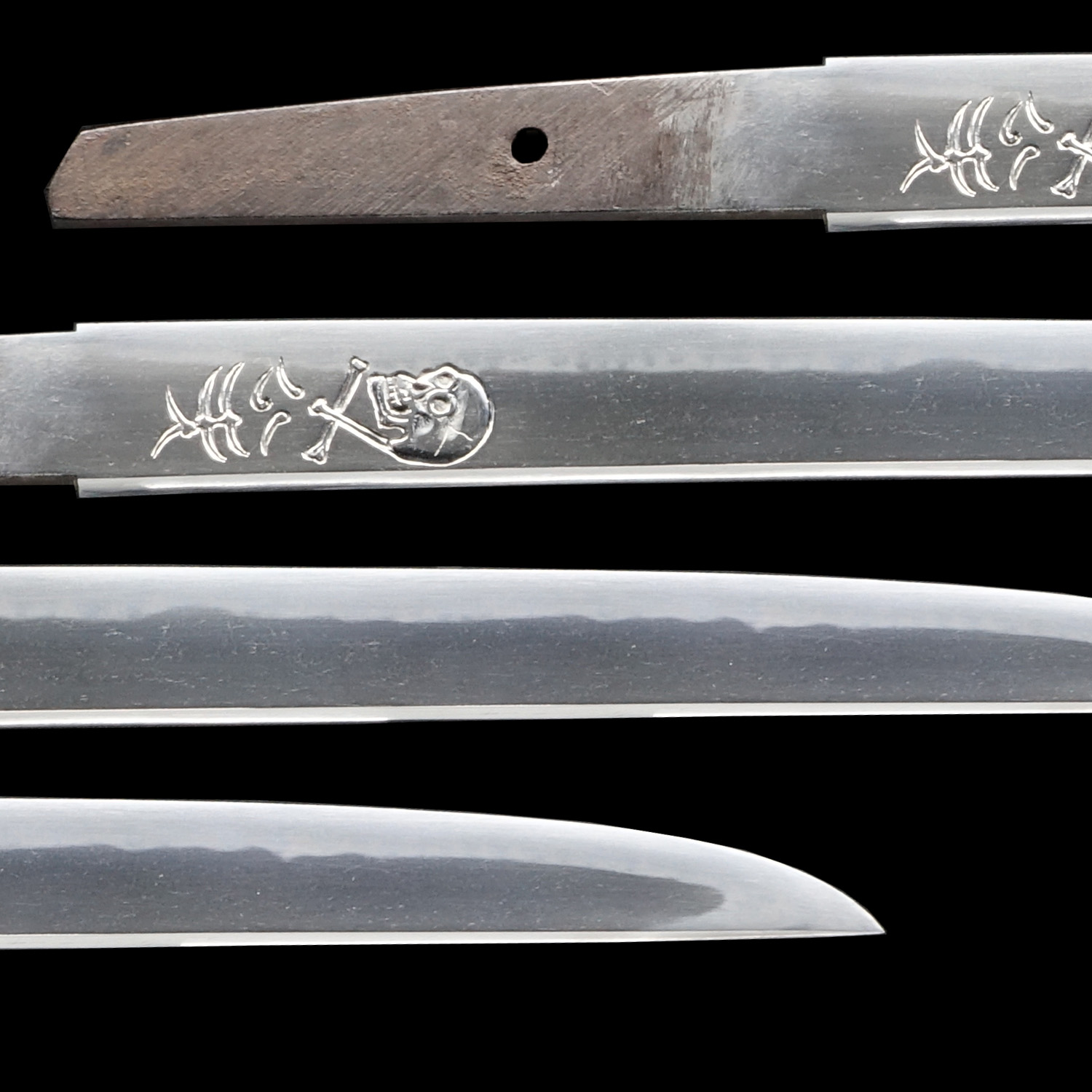
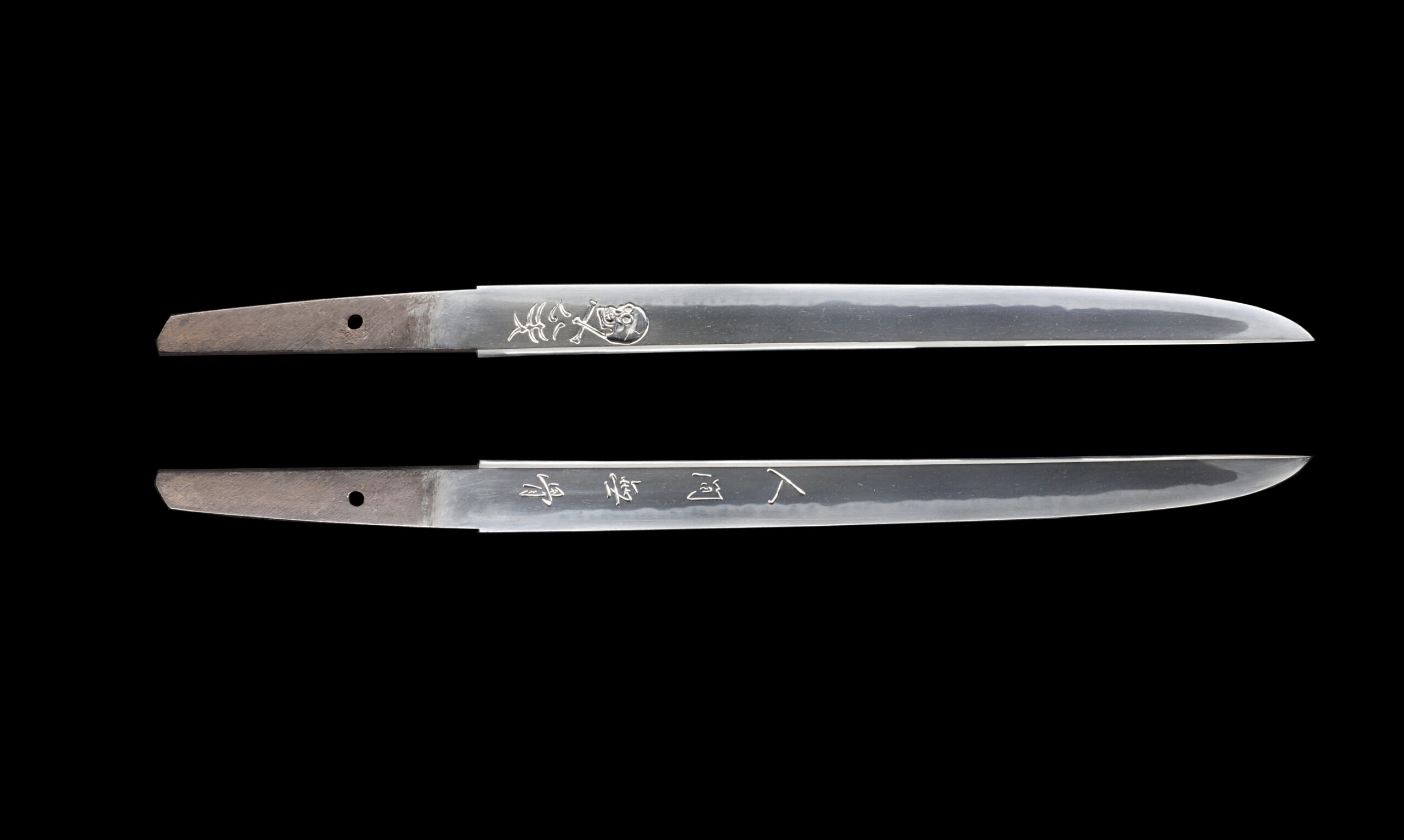
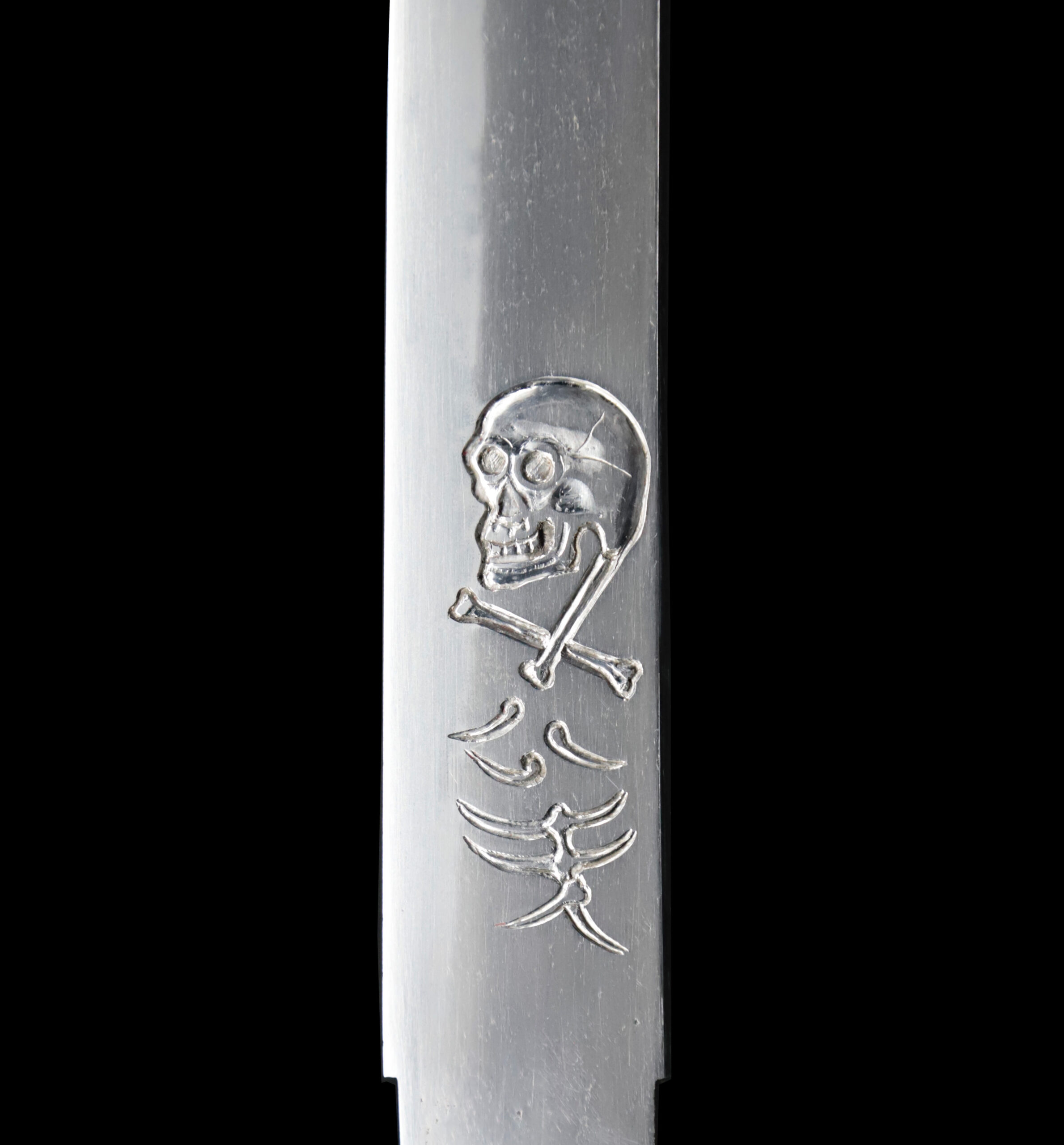
One side shows a skull of human. This kind of design is called Nozarashi (野晒し). It refers to human bones that have been exposed to winds and rain in the open air and turned into skeletons, and it often refers to skulls in particular. This Nozarashi theme has been favored since a long time ago. We could imagine that people in those days had to live in harsher conditions. In addition, Samurai warriors were always on the verge of life and death on the battlefields. We would say this theme reflects on these aspects of society at that time.
It is not just the famous warlords who left their names in history who ran through the world of warfare. Each warrior whose name was not even recorded has their own history. However, after they lost their lives, they were simply left on battlefields and returned to nature. We would say that the Nozarashi-Zu is a subject that makes us feel the transience of nameless and precious lives scattered on battlefields and the transient after wars.
If we write it like this, you might feel melancholy. However, same as other designs, we hope each viewer will enjoy their own interpretation. By incorporating this motif into the sword mountings, Samurai warriors might have roused themselves toward the battlefield or included the desire to spend time with the souls of their former comrades in arms who had already lost their lives.
At first glance, you might feel that the Nozarashi-Zu has a frightening atmosphere, but the fact is that it was incorporated as part of the decoration. And it was treated as one of the elements that boosted the aspect of Japanese swords as a work of art. We interpret that it makes us feel a sense of the high sensitivity of the people of the time. In addition, the finish of each sword mounting is excellent, and the skillful technique of the artisans could be seen everywhere. We hope you appreciate the details of the Koshirae as well as the blade.
-Katana
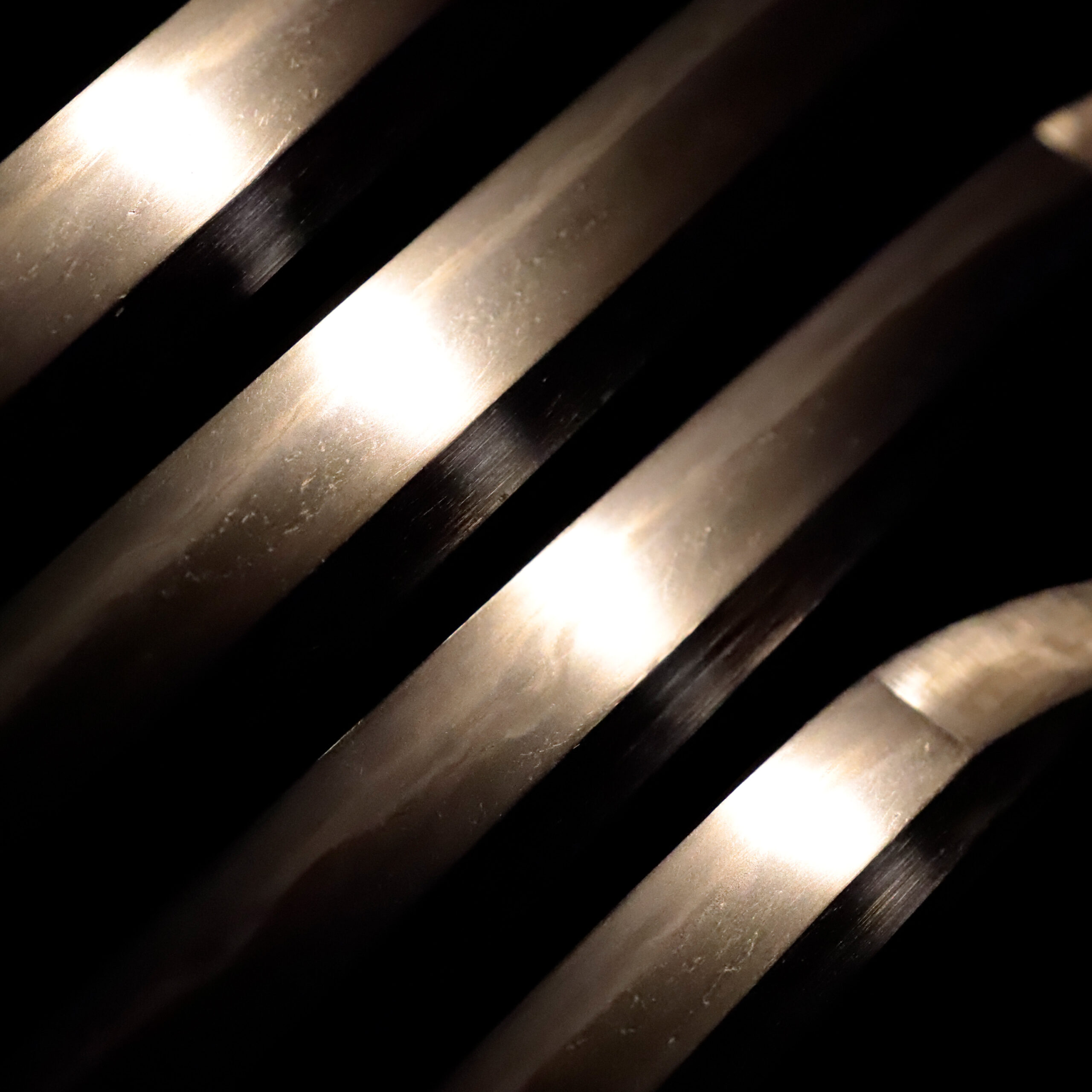
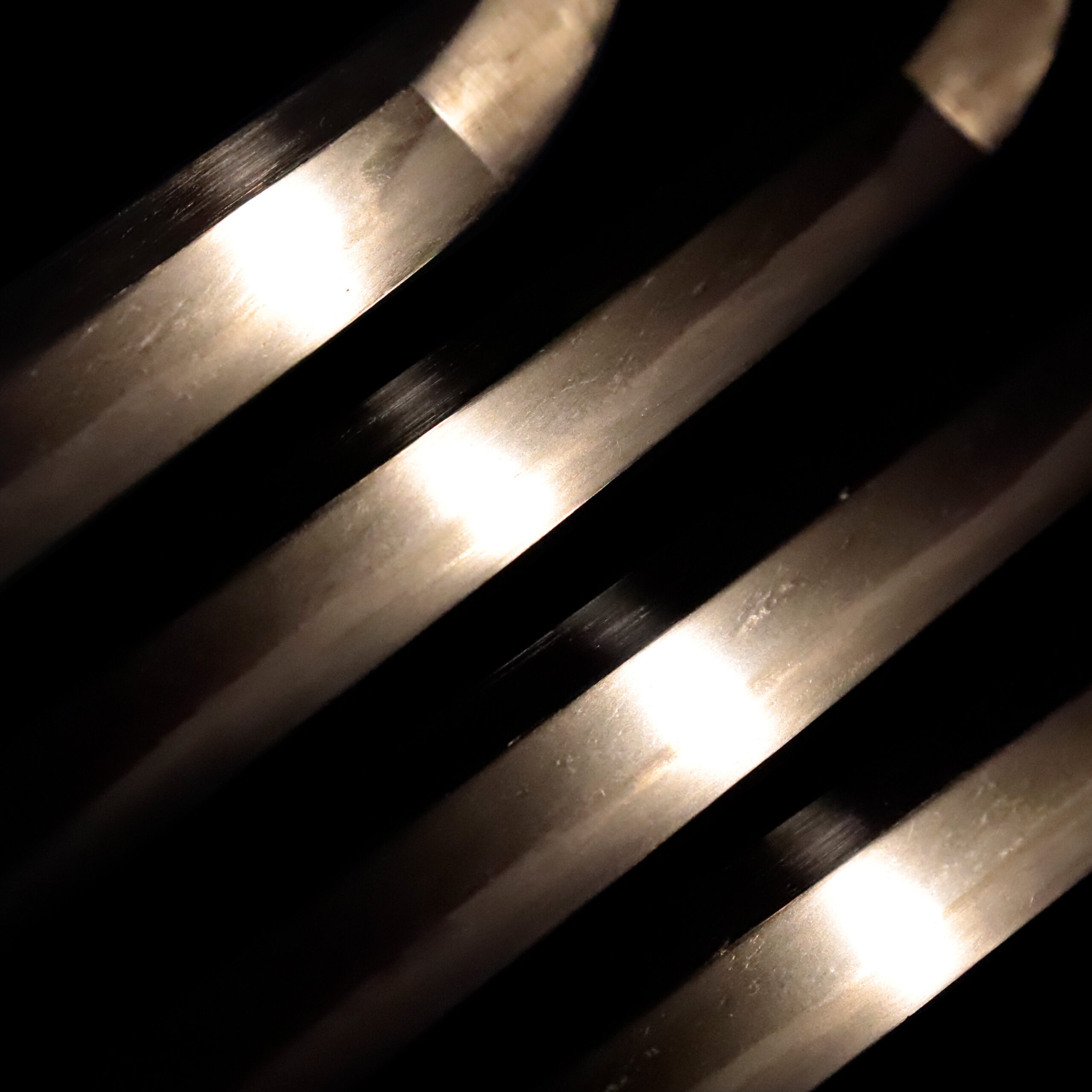
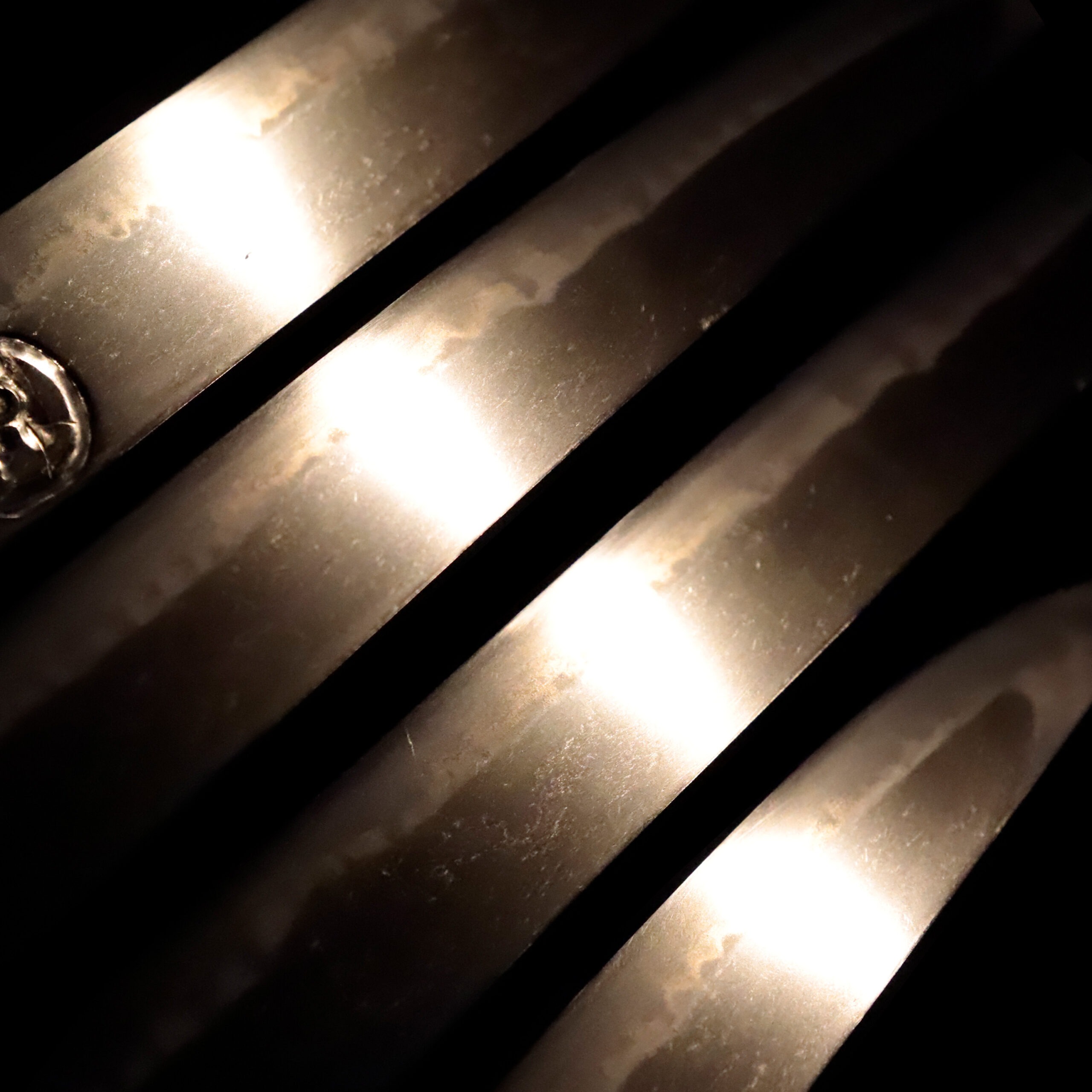
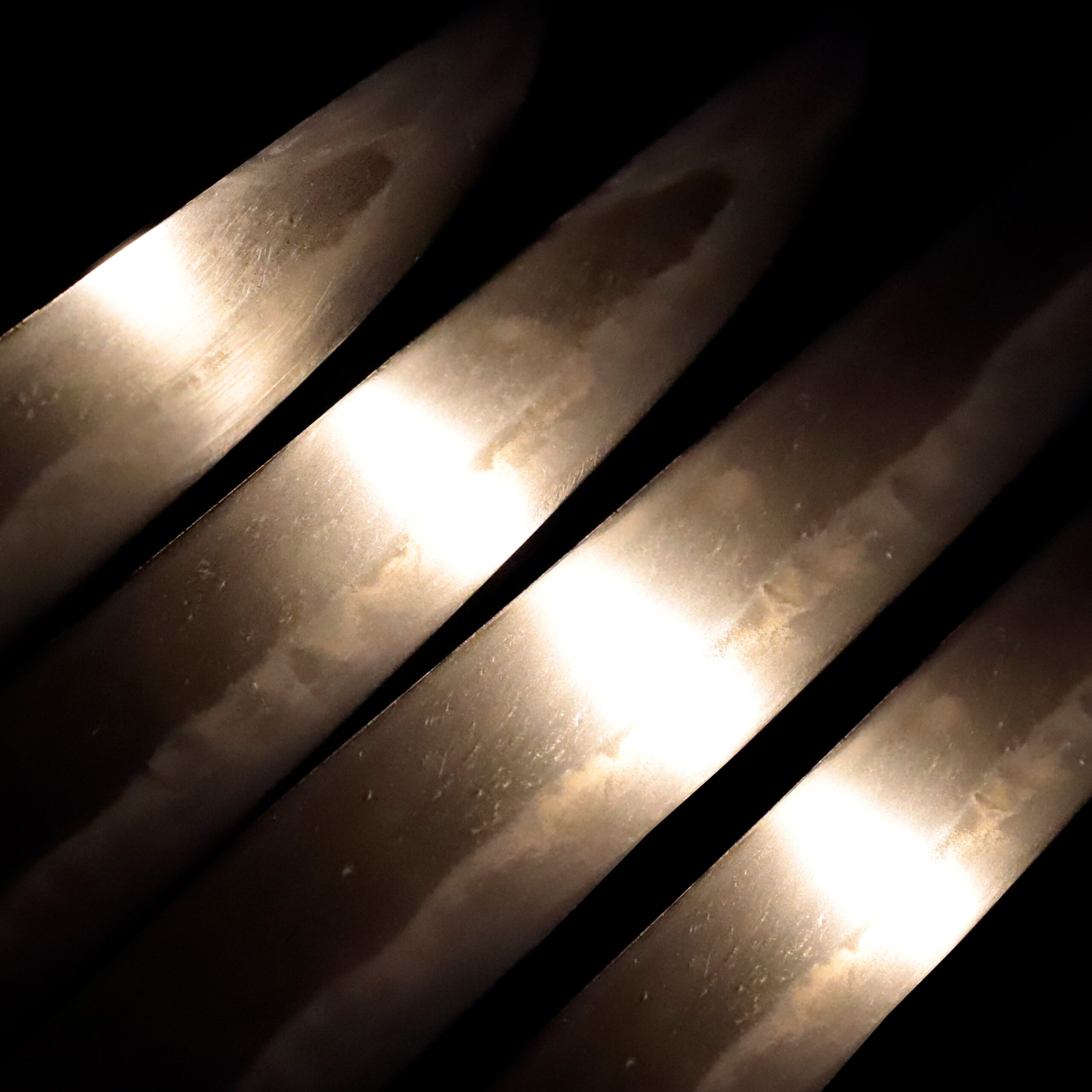
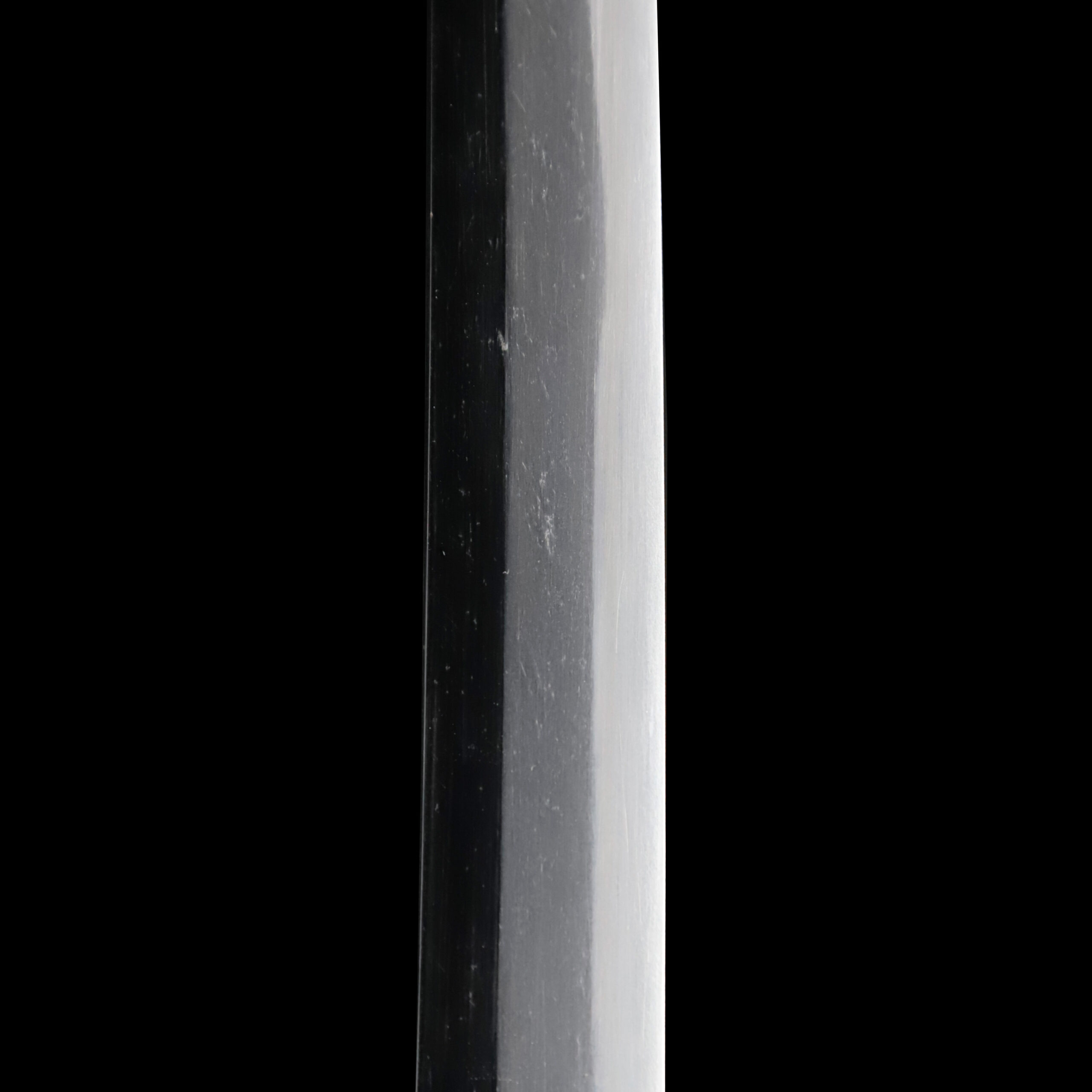
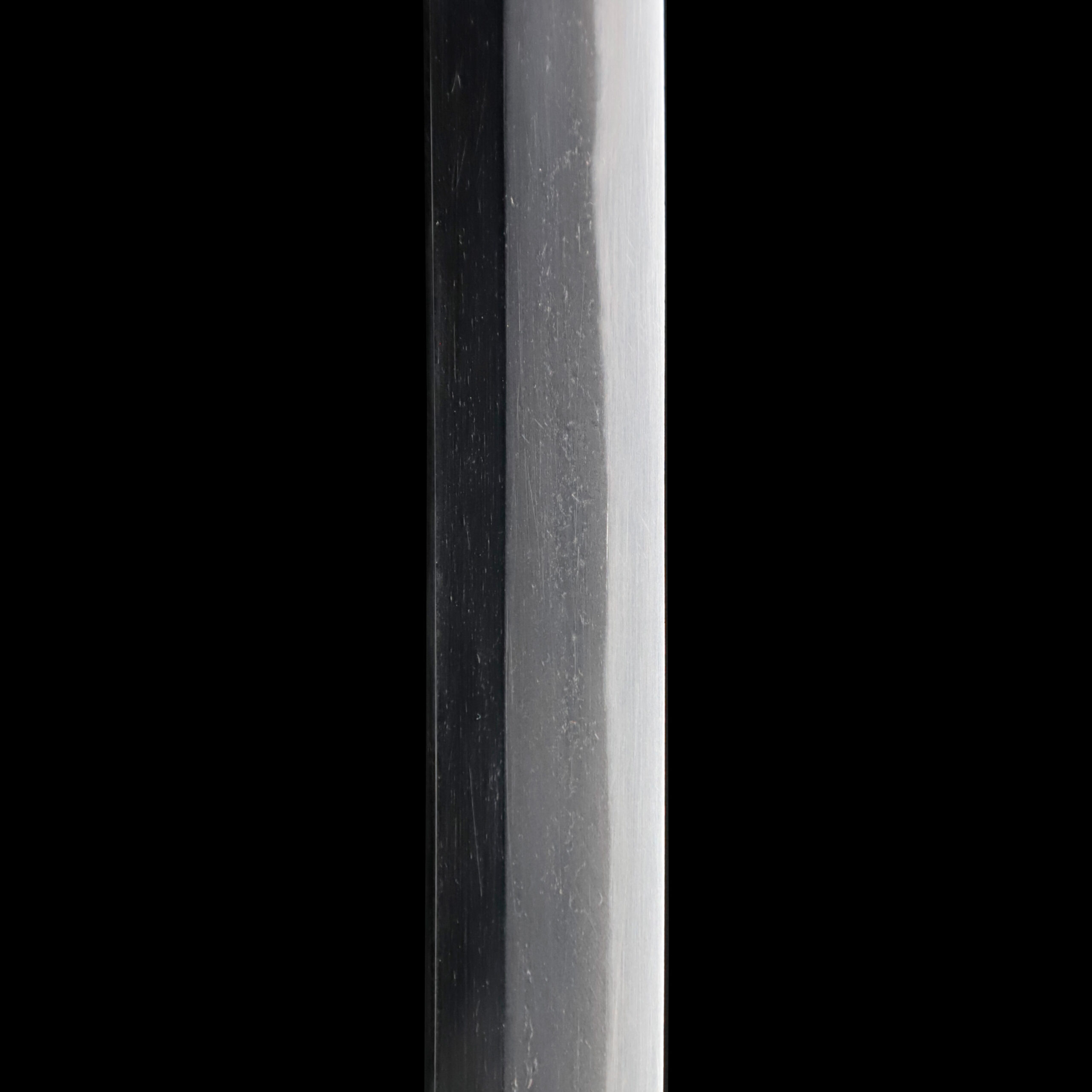
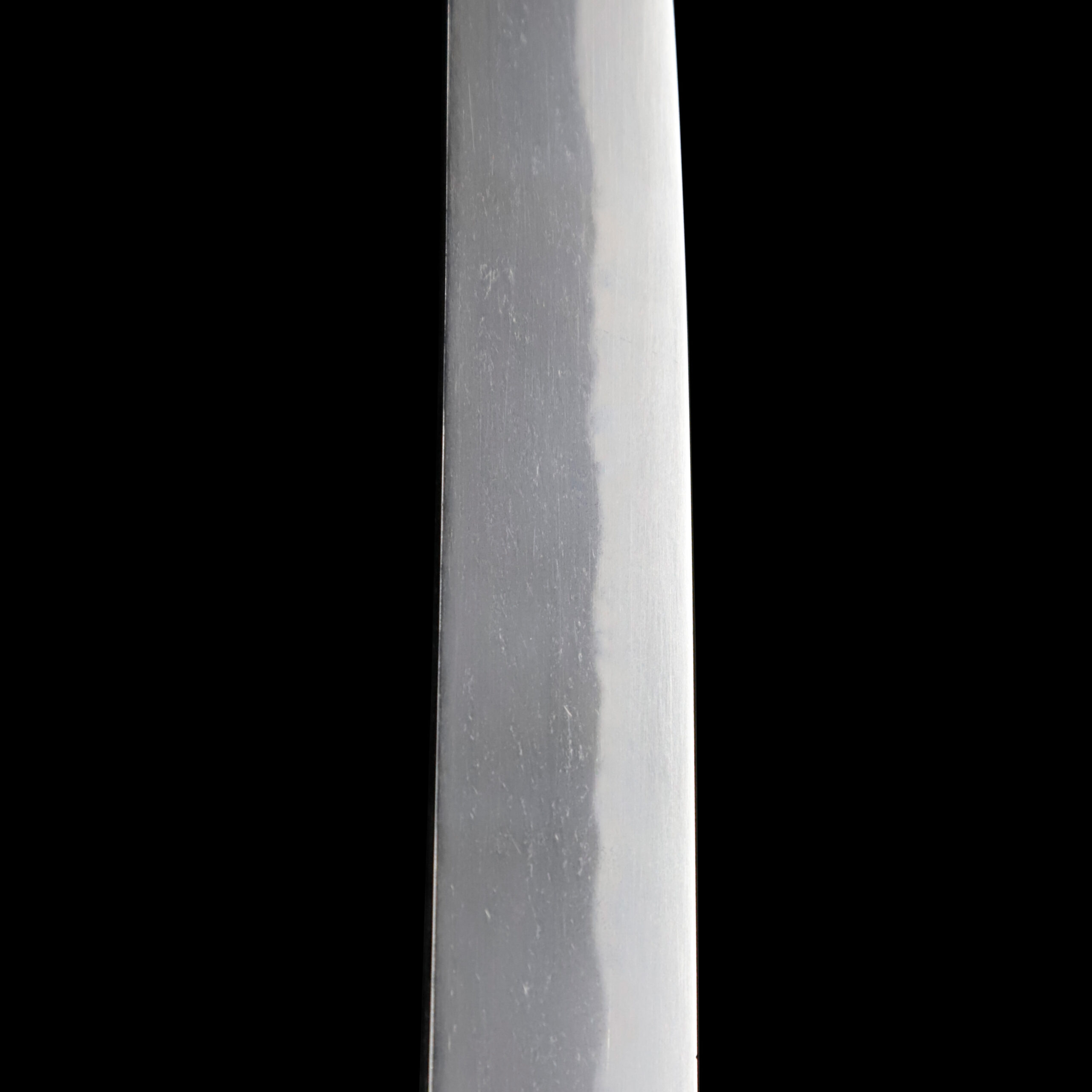
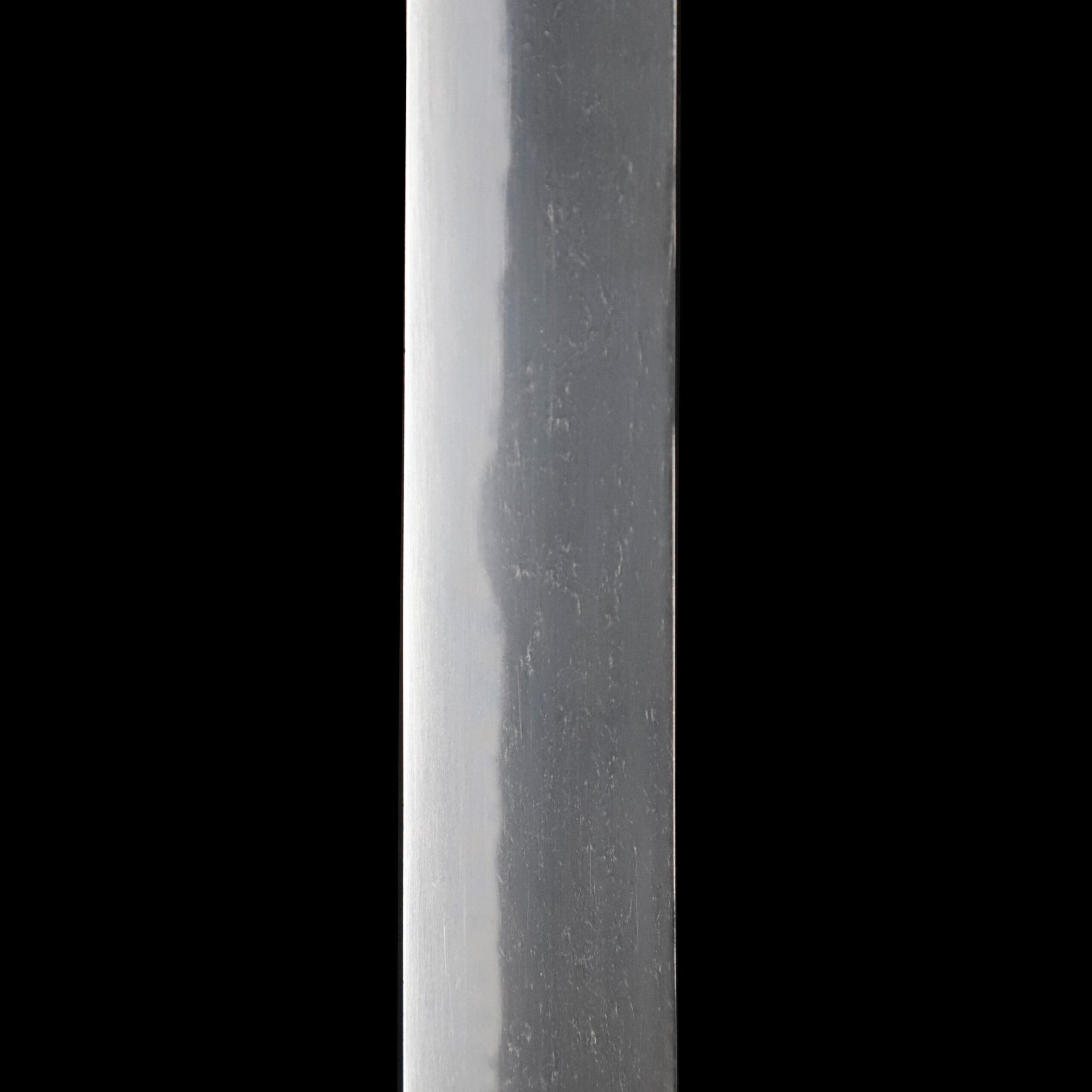
Jimon(Jihada)
-Katana
-Wakizashi
Fuchi-Kashira
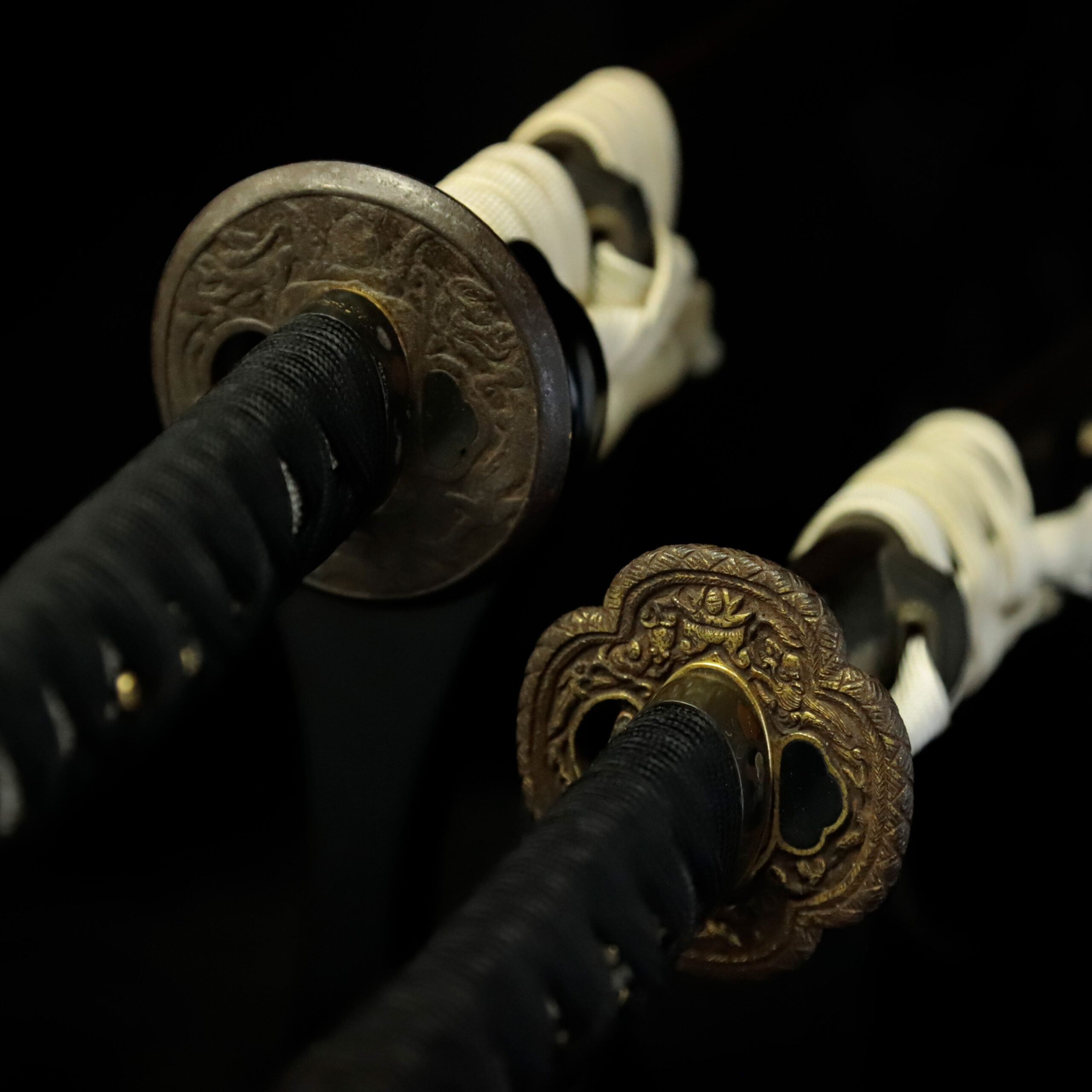
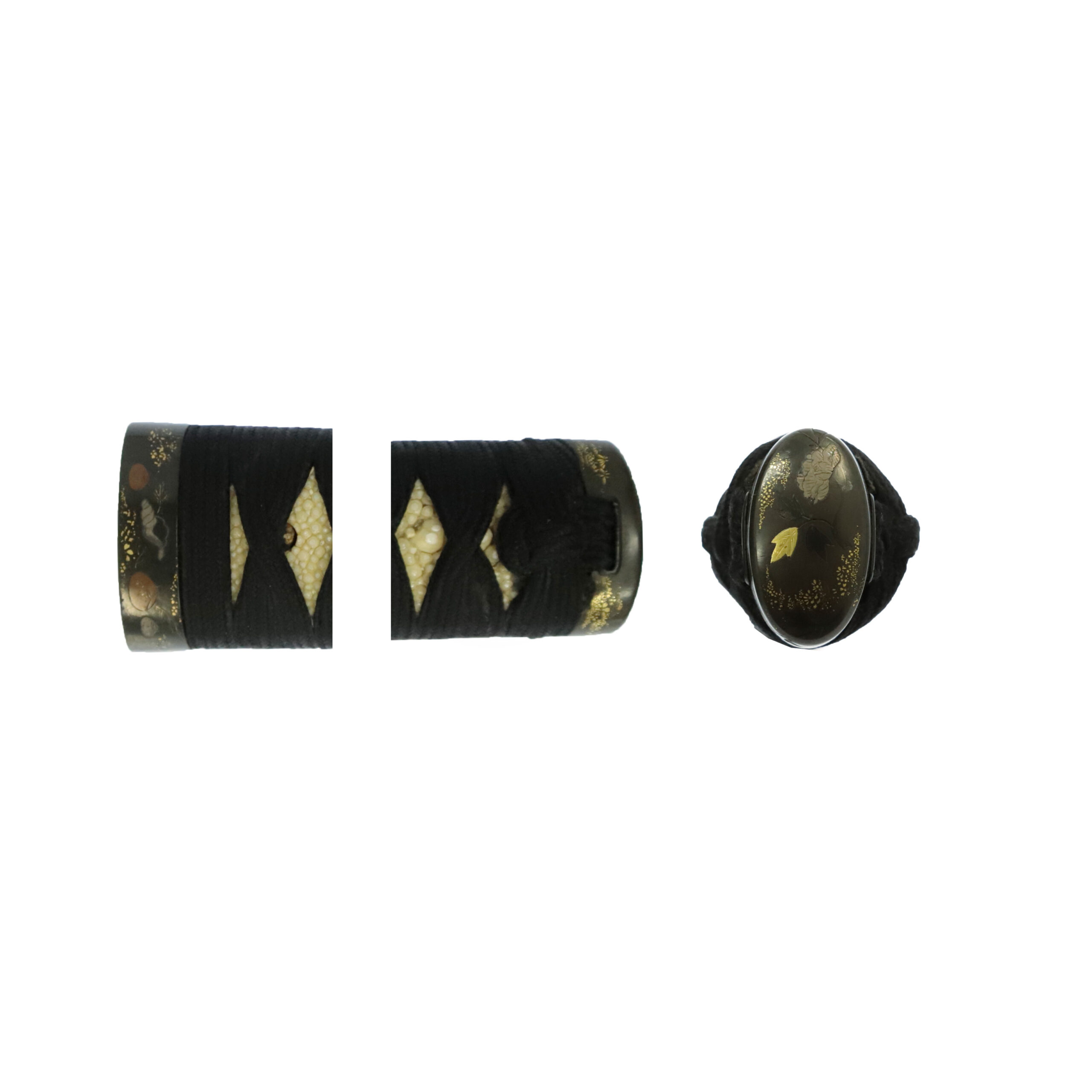
The Katana Koshirae’s Fuchi Kashira has a different design on each part. Its Kashira is decorated with a flower design. We believe this plant is a peony. Silvery coloring is applied to its petals. Peony represents happiness, wealth, nobleness, and gorgeousness. This flower pattern has been treated as a kind of good-omen motif; people regarded it as a plentiful harvest sign, and some believed it symbolized eternal youth and longevity.
On the other hand, seashells are depicted on the Fuchi part. You could find multiple types of shellfish, including snails and bivalves. This work is decorative thanks to gold, silver, and perhaps copper-colored reddish-brown paint. Similar to the Kashira part, this metal fitting’s design is also related to natural motifs. A seashell is called the Kai (貝) in Japanese. Because of its pronunciation, a seashell has another meaning. There is a Japanese word Yarigai (やりがい, worthwhile). As a part of this word has the same accent as Kai (貝 is read Gai in some cases), Japanese people found this meaning. Also, since seashells are hard and combine only with their pair, people thought it represented a robust defense. Due to these meanings that inspire warriors who go to the battlefields, Samurai warriors might have loved this motif.
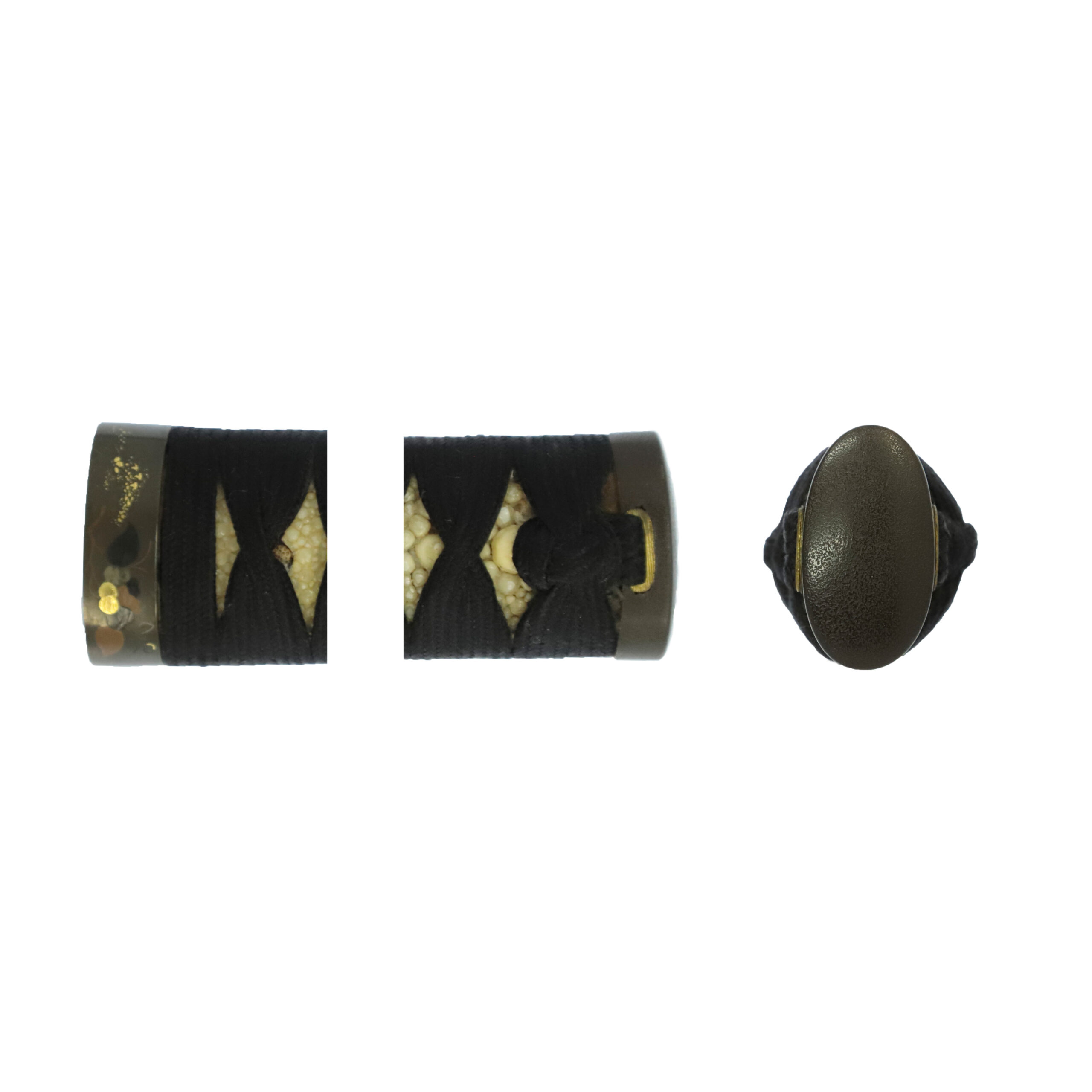
Now, please focus on Wakizashi’s Fuchi Kashira. Its Kashira part has a plain, simple look. However, the Fuchi part has a decorative appearance, and its design is similar to Katana Koshirae’s Fuchi. While the motifs depicted on each part are different, we estimate that these parts were possibly made by the same maker.
Tsuka and Menuki
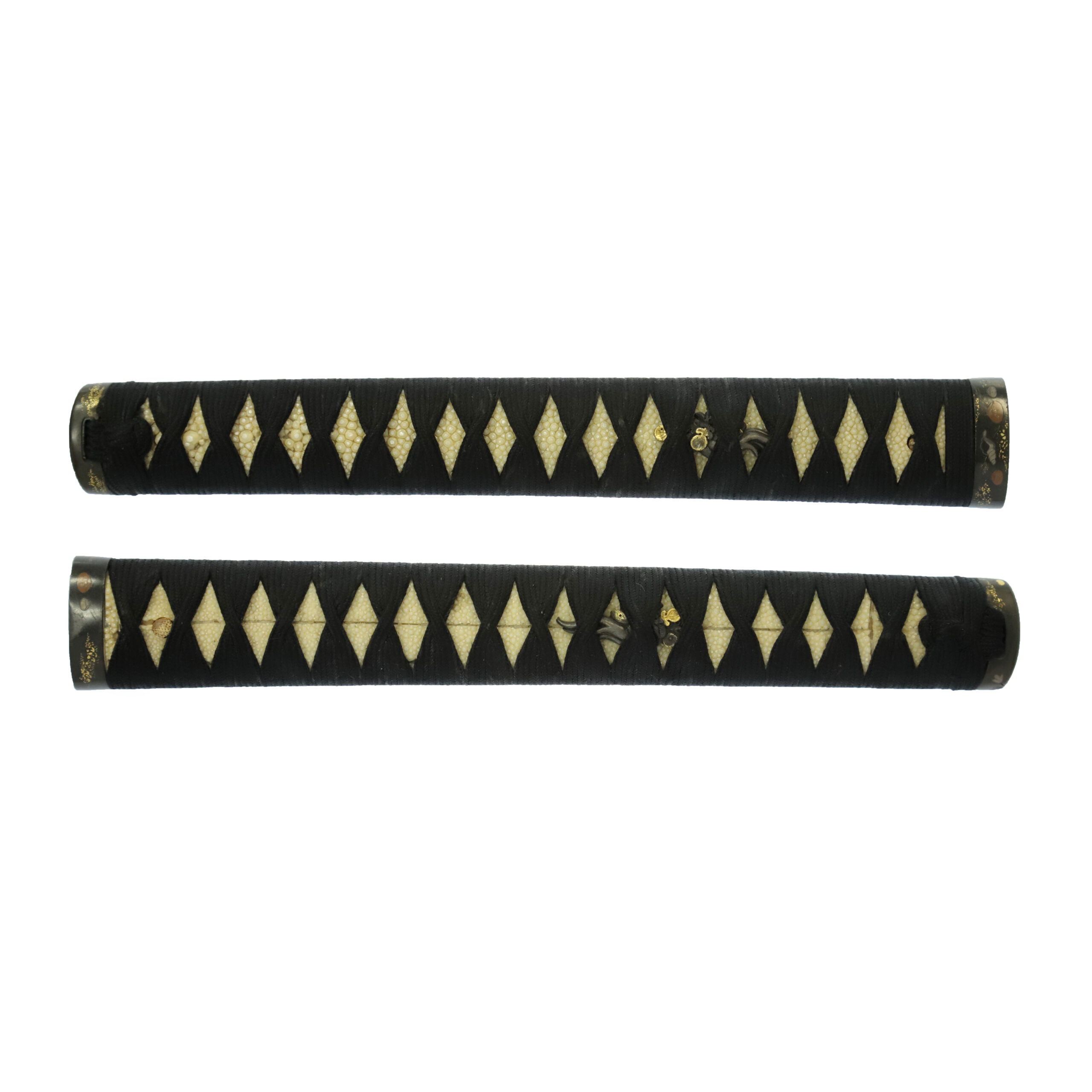
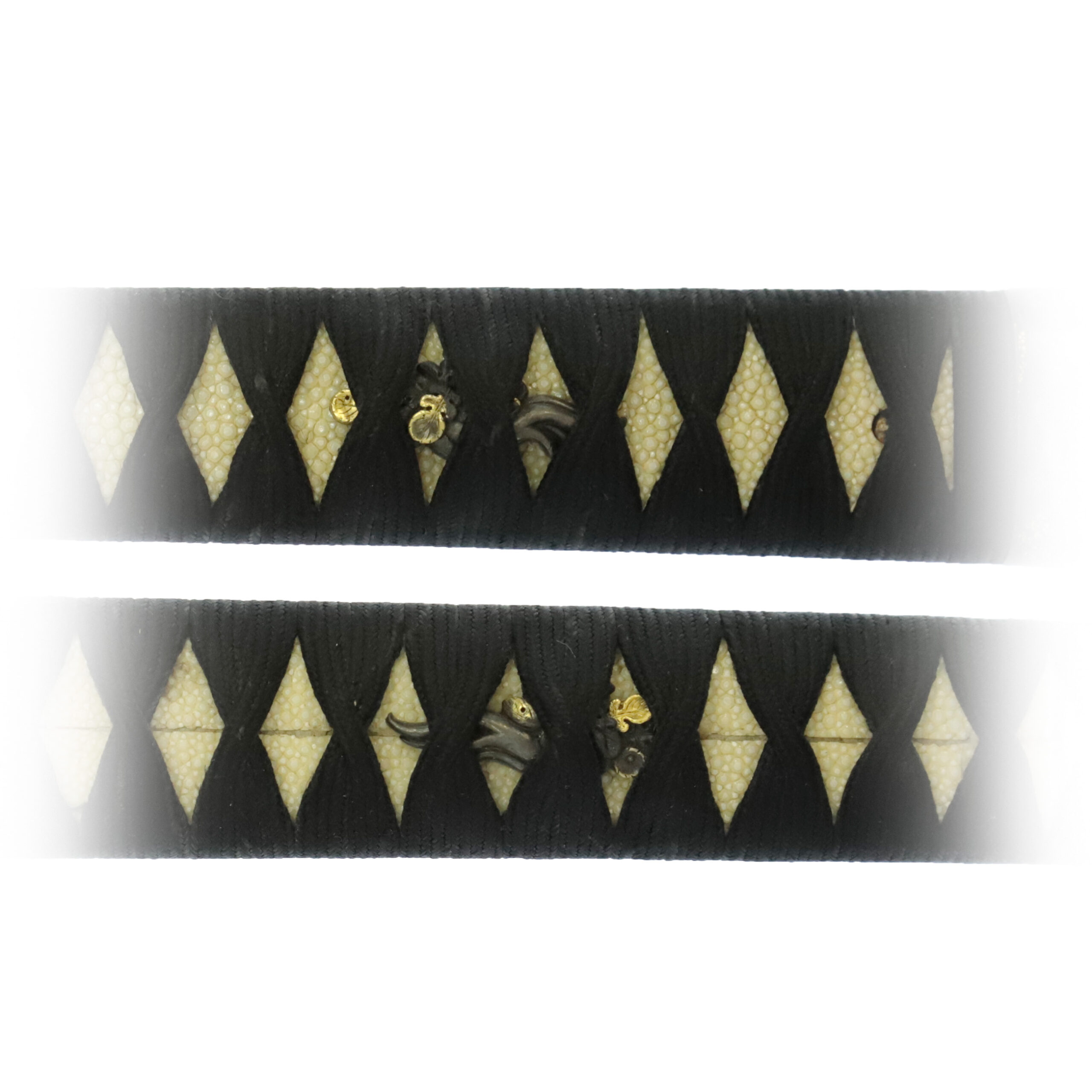
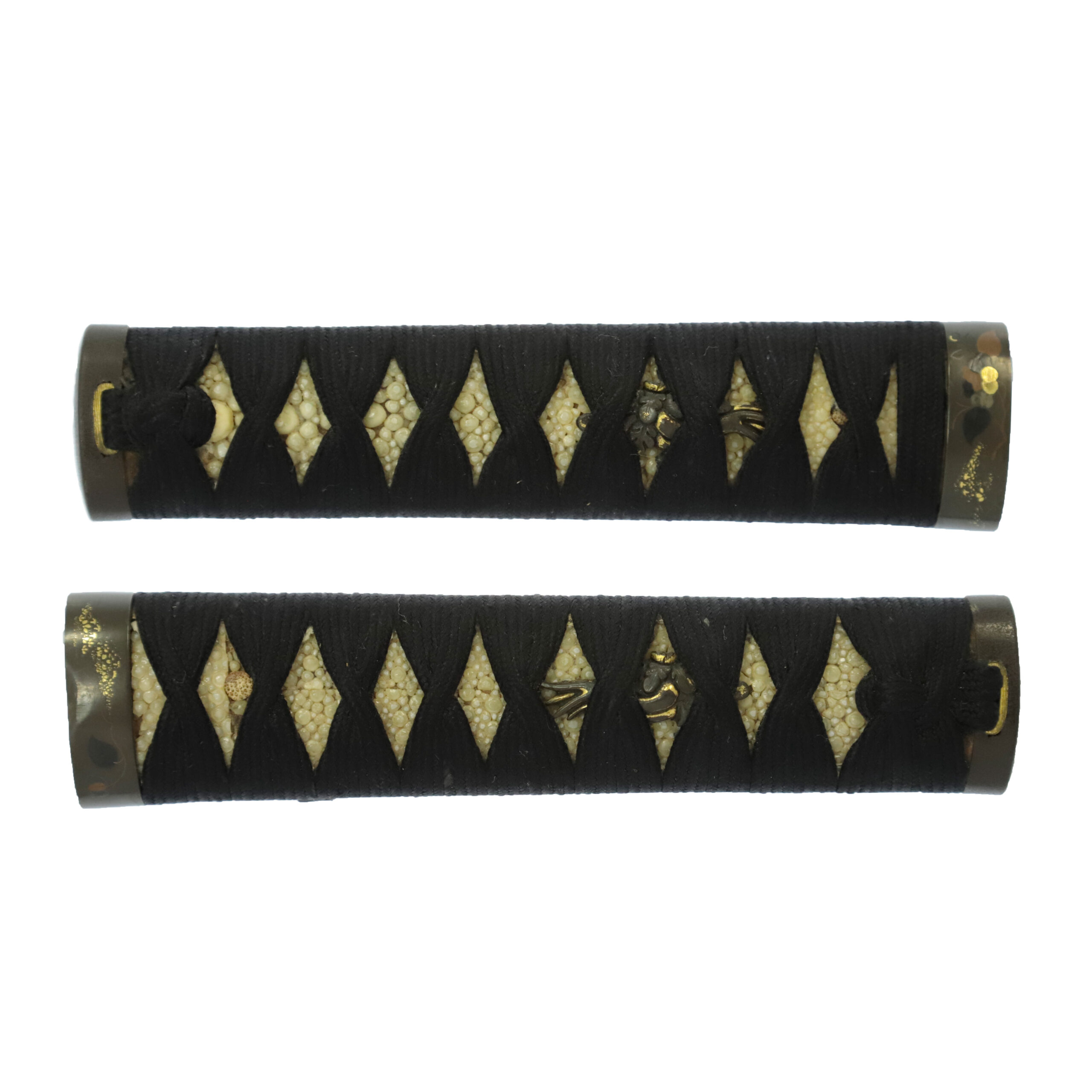
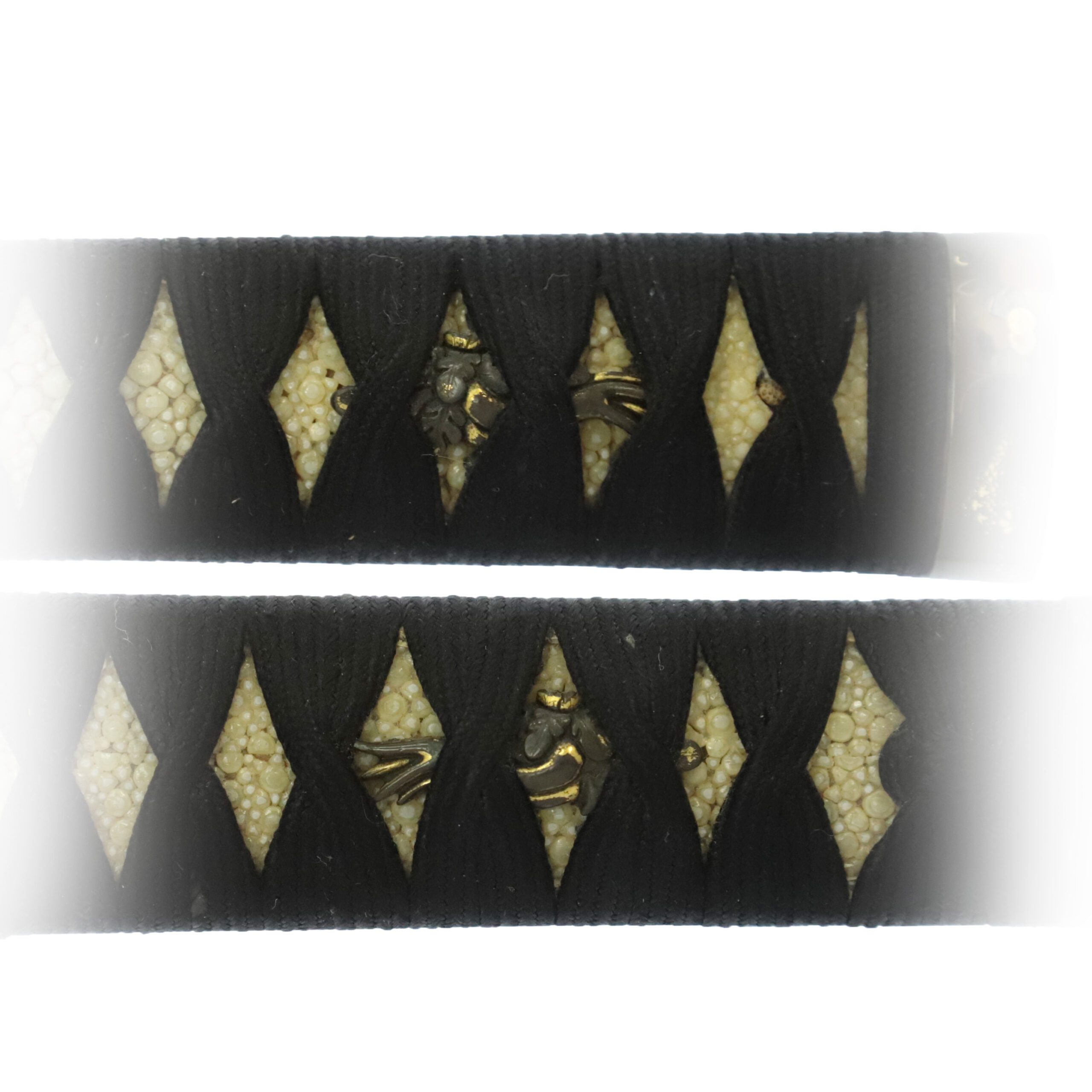
Since we cannot see the entire shape of each Menuki, it is challenging to judge the exact motif. However, it seems both Katana and Wakizashi have the same designed Menukis. Judging from what we could see through the gaps of the Tsukamaki threads, a plant is designed here. We assume this plant is a chrysanthemum based on the shape of the leaves and the shape of what looks probably a flower. Chrysanthemums symbolize fall, and people have greatly appreciated it since ancient times. As its petals form radially, a chrysanthemum has been likened to the sun. That is why this flower pattern is treated as the symbol of perpetual youth and longevity or good health.
Tsuba and Habaki
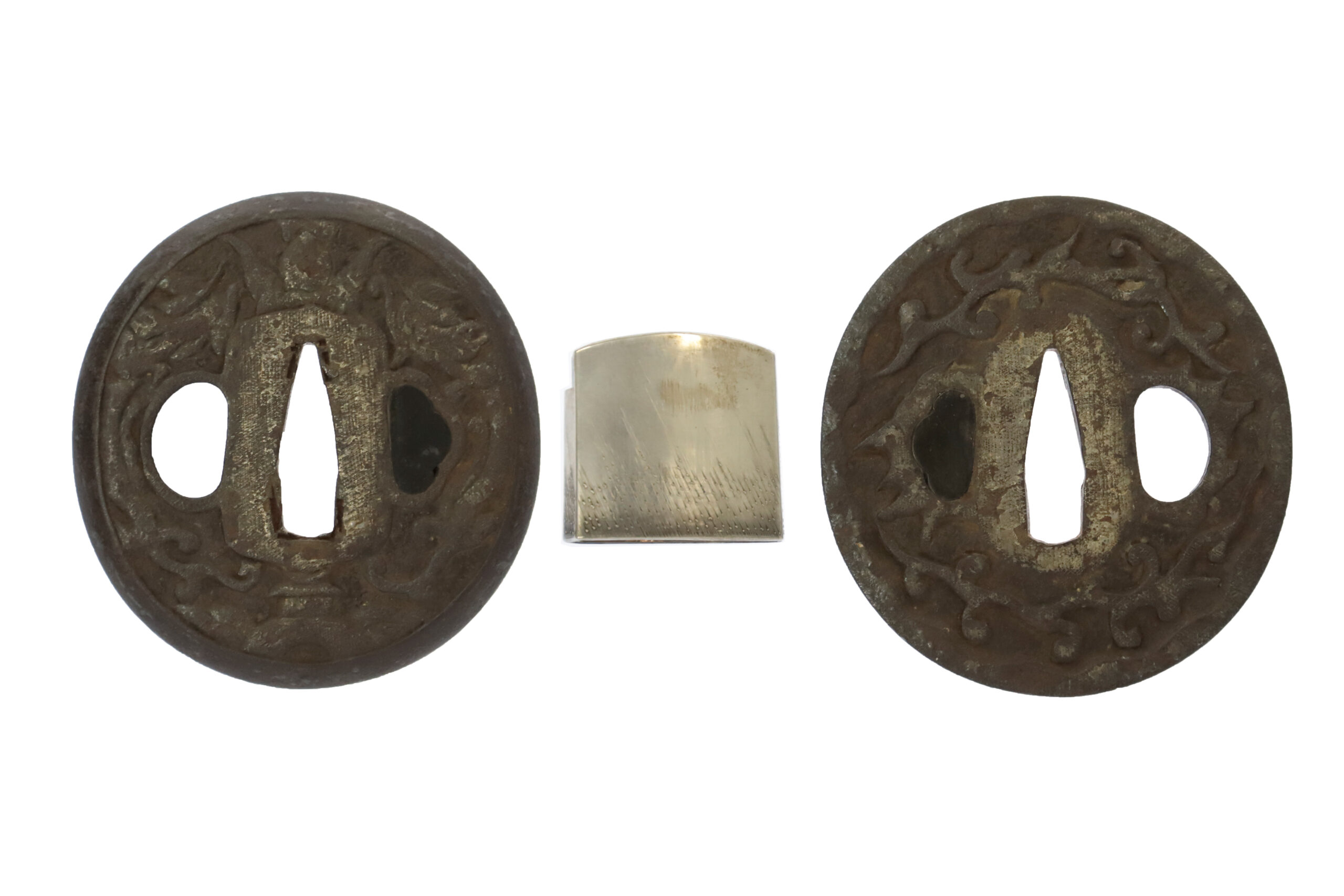
This Katana Koshirae has an oval-shaped iron Tsuba. Its surface has become worn, and the design is uneasy to make out due to aging. This Tsuba depicts a plant pattern, or dragons, in simplified figures. The Wakizashi Koshirae’s Tsuba has a clearer design than this work. The Wakizashi’s Tsuba has a Yotsu-Mokkou shape, and you could find a dragon on its front side. The dragon looked up and opened its mouth. In front of the dragon’s line of sight is a ball-like object on a pedestal, which we believe is a jewel. Based on our experience, there are a variety of dragon-designed sword mountings. Initially, dragons were imaginary creatures found in ancient foreign traditions and myths. Furthermore, it is regarded as a symbolic beast of auspicious signs. Its body is likened to nine animals: antlers are deer, the head is a camel, eyes are demons, the neck is a snake, the belly is the Mizuchi (蛟, a mythical animal in Japan that is similar to a snake and has a horn and four legs), scales are fish, claws are falcons, palms are tigers, and ears are cows. It was thought that the dragon would reign at the top of all animals because of its odd-looking appearance. We imagine many Samurai favored this sacred beast motif due to its dignified appearance and auspiciousness.
Kozuka
A Kogatana (小刀, small knife) is stored in the Kozuka. The surface of this Kozuka is decorated with the Nanako-Ji (魚子地) technique. This process makes a uniform minimal protrusions pattern by hitting the Nanako-Ji Tagane (魚子地鏨, a chisel for this technique) on a metal surface. This decorative technique is often seen on sword mountings. Also, the edge of Kozuka is colored with golden paint. Although most of this coloring has already faded due to aging, we could imagine it was initially decorated with this bright golden paint.
About the design, the Ume (梅, Japanese apricot blossom) is depicted on this work. Japanese apricot blossoms begin to bloom in winter when snow still covers their trees; people thought this flower tells the arrival of spring. The same as cherry blossom, it has been appreciated for a long time in Japan. People enjoy its adorable petal shape and scent and gracefully branched tree, and they have composed many poems about it. As it comes out in the cold season, it symbolizes the power of perseverance and vitality.
Authentication Paper
NTHK, also known as NPO Nihon Touken Hozon Kai, is the oldest organization for sword authentication of Japanese swords in modern times. It was established in 1910 during the post-Samurai era. They authenticated the Katana and Wakizashi blades on June 18th in the 5th year of Reiwa (2023).
Registration Number
The Board of Education in Tokyo prefecture issued a registration paper for the Katana and Wakizashi blade.

 NihontoWatch