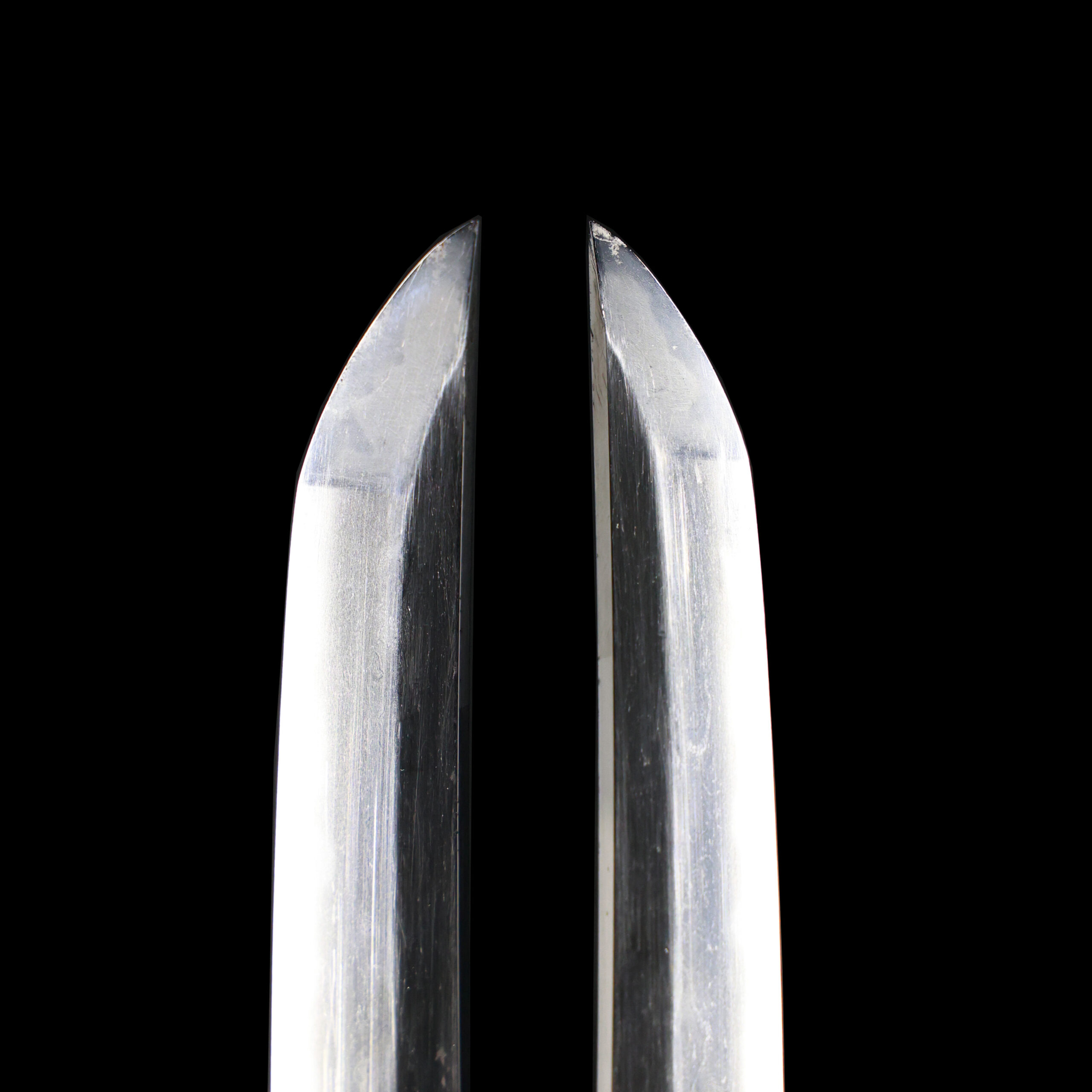
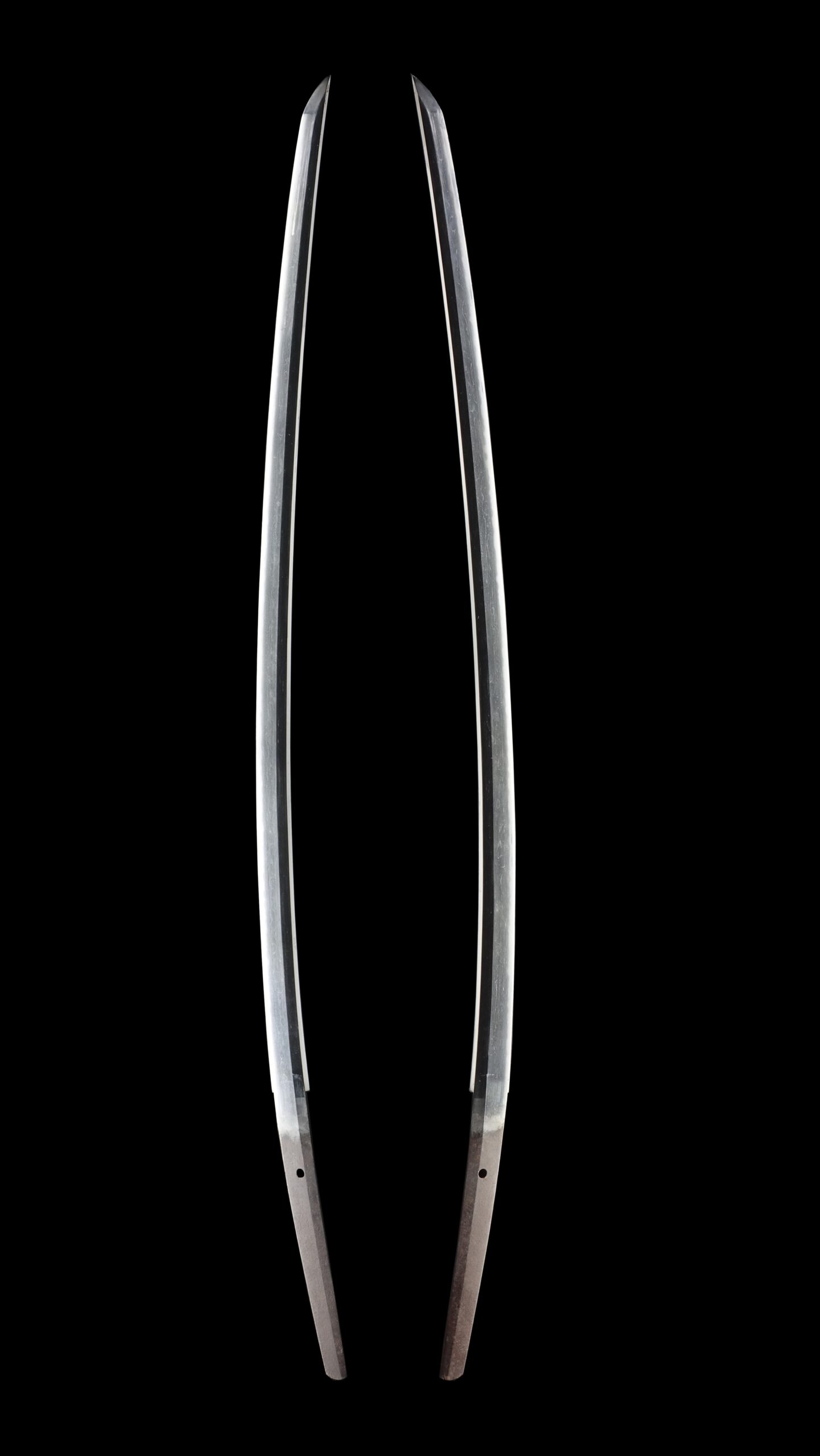
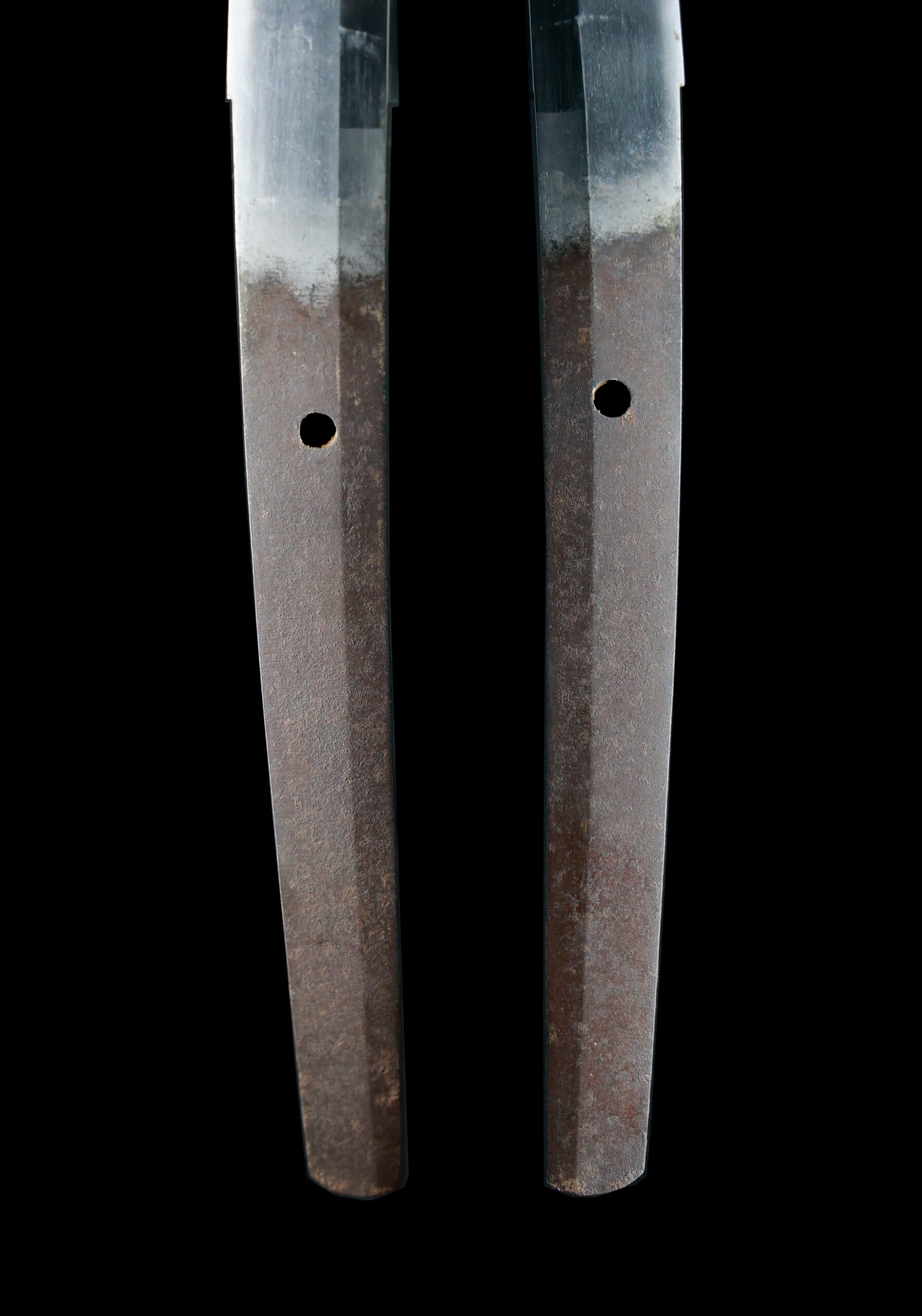
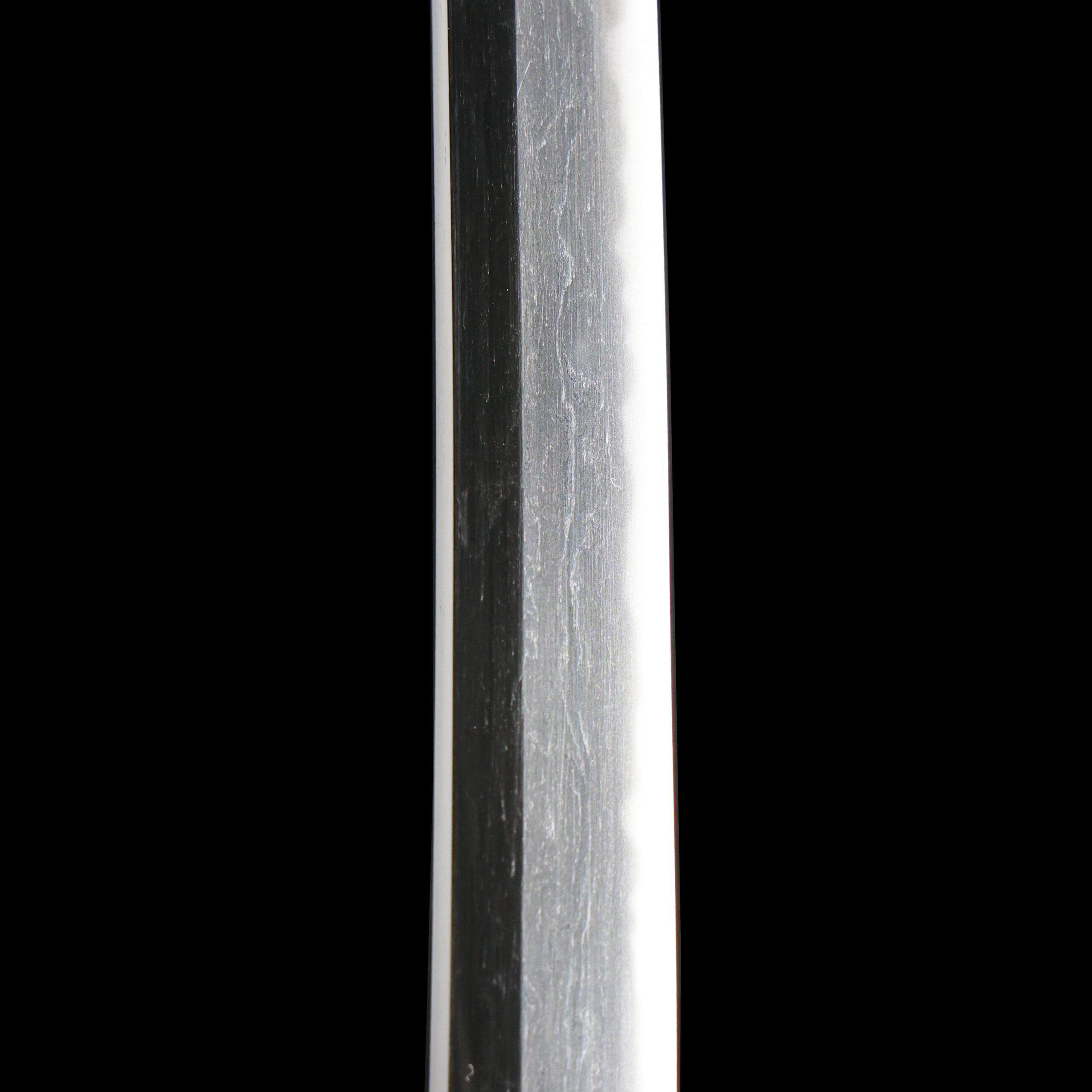
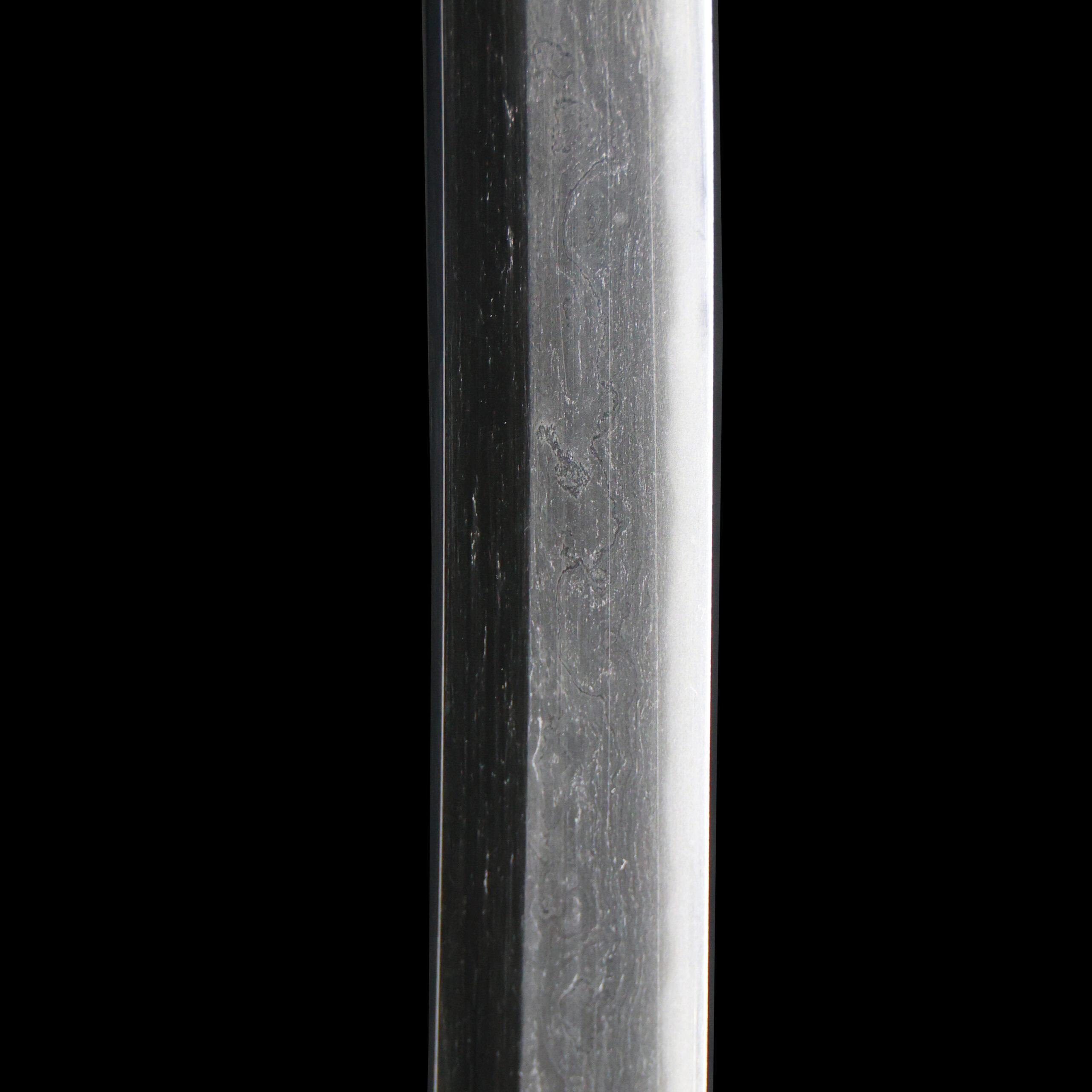
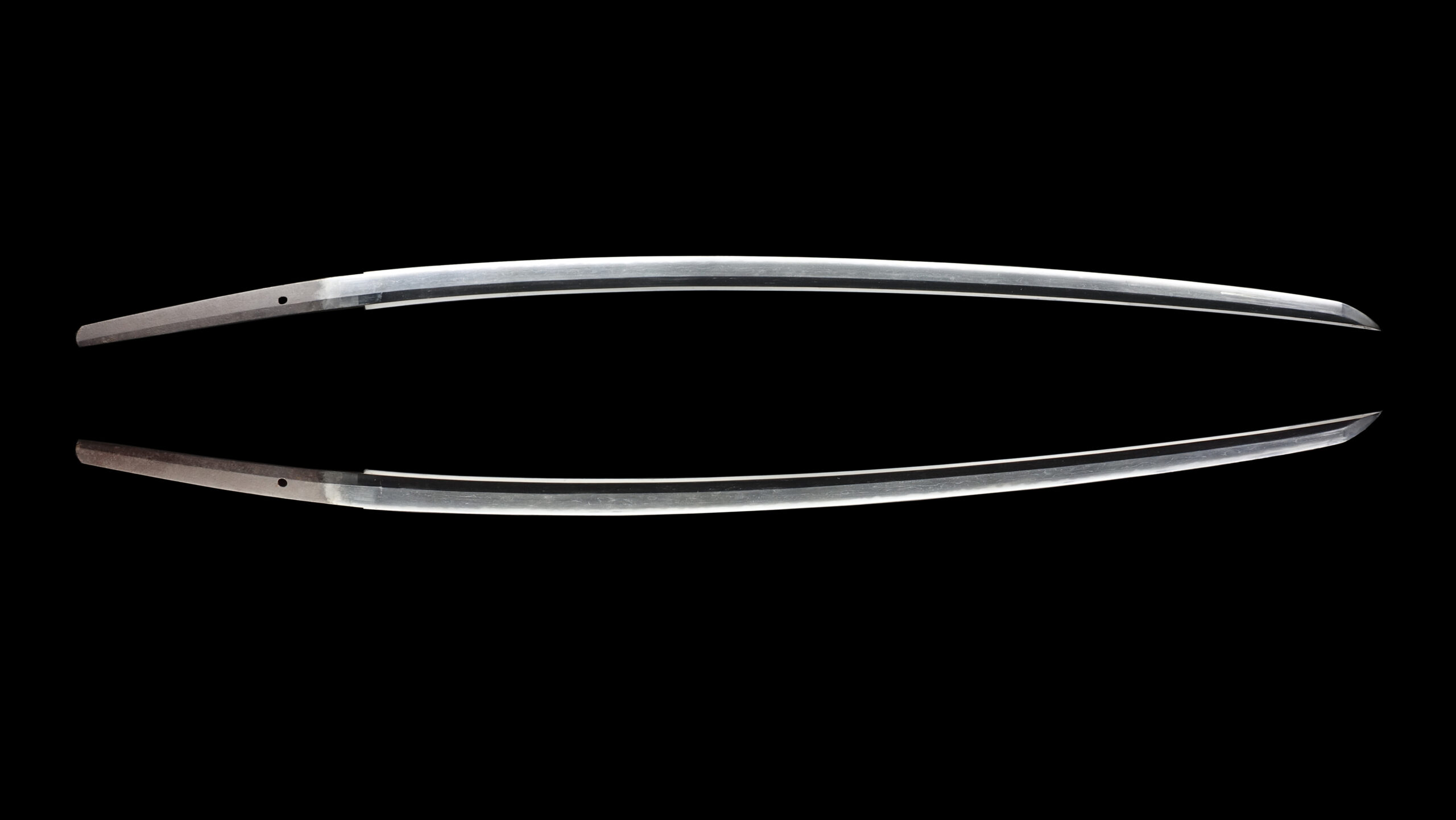
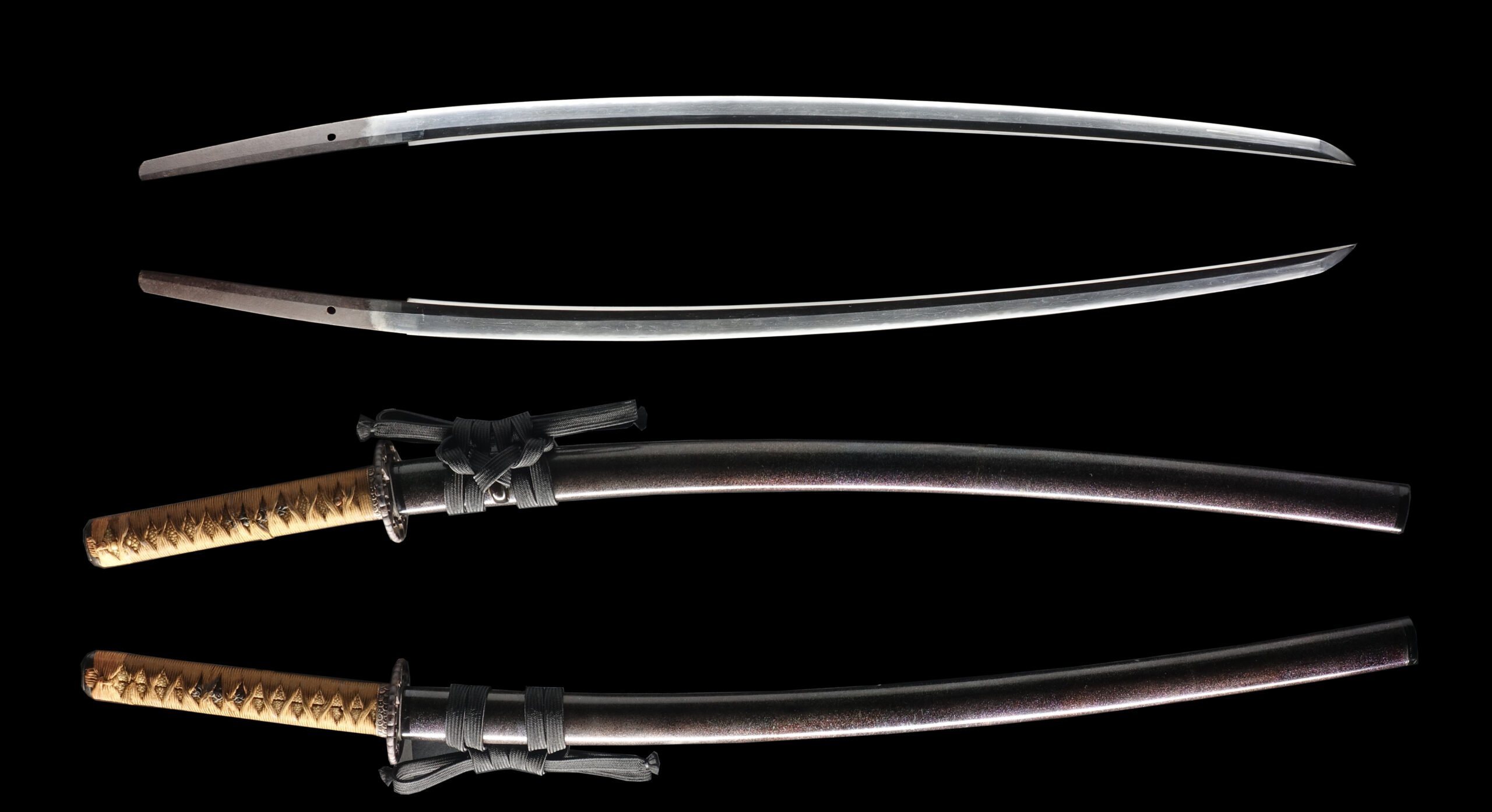
This blade is attributed to Nakayama Yoshimichi (中山義通), who was active around the Tenpo era (1830-1844: Late Edo period) in Ueno province (today’s Gunma prefecture). He was the adopted son of Ikkansai Yoshihiro (一貫斎義弘), originally named Suzuki Zenkichi, who was a renowned Japanese swordsmith active during the Bakumatsu (the final years of the Edo period when the Tokugawa Shogunate ended in the 19th century). Yoshihiro gained recognition as a distinguished and unique blacksmith of this era.
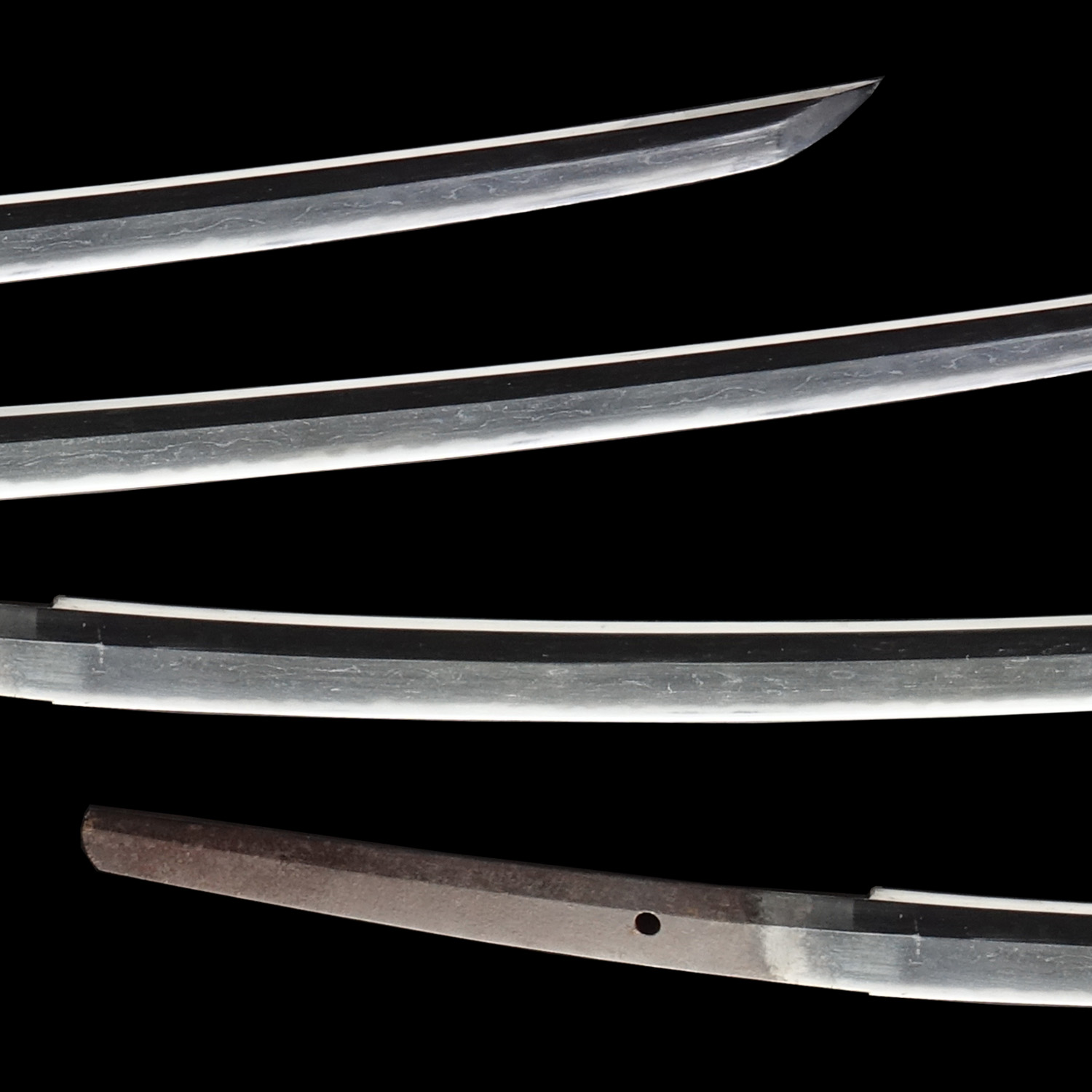
Ikkansai Yoshihiro was born in Nakayama, Suruga province, and became the Okakaekaji for Egawa Tarozaemon, a deputy of Izu Ninayama. This role meant that he exclusively forged swords for him. Later, Yoshihiro moved to Mito, where he learned forging techniques from Noritoshi Norishige IV, a descendant of Etchu Norishige. The Soshu master Yoshihiro Goh influenced his style, and Yoshihiro devoted himself to producing hada-mono, a style reminiscent of Soshu master artisans. Hada-mino is a Japanese sword terminology that describes blades whose steel surface is vivid and visible. His swords, crafted in the Soshu style—a revered Japanese sword-making technique—were highly esteemed for their craftsmanship.
From around 1833 to 1834, Yoshihiro worked for the Matsudaira family in Maebashi, though he frequently traveled to Edo (now Tokyo) as required. He passed away on July 12, 1865, at the age of 64 and was buried at the Sōzoku-an temple in Maebashi. Yoshihiro’s legacy endures through his family and students, continuing to influence swordsmithing and the appreciation of Japanese swords.
Nakayama Yoshimichi inherited the sword-forging techniques from his father, Yoshihiro, and took the name Ikkansai (一貫斎) like his father. It is said that he also made swords in Sagami province later.
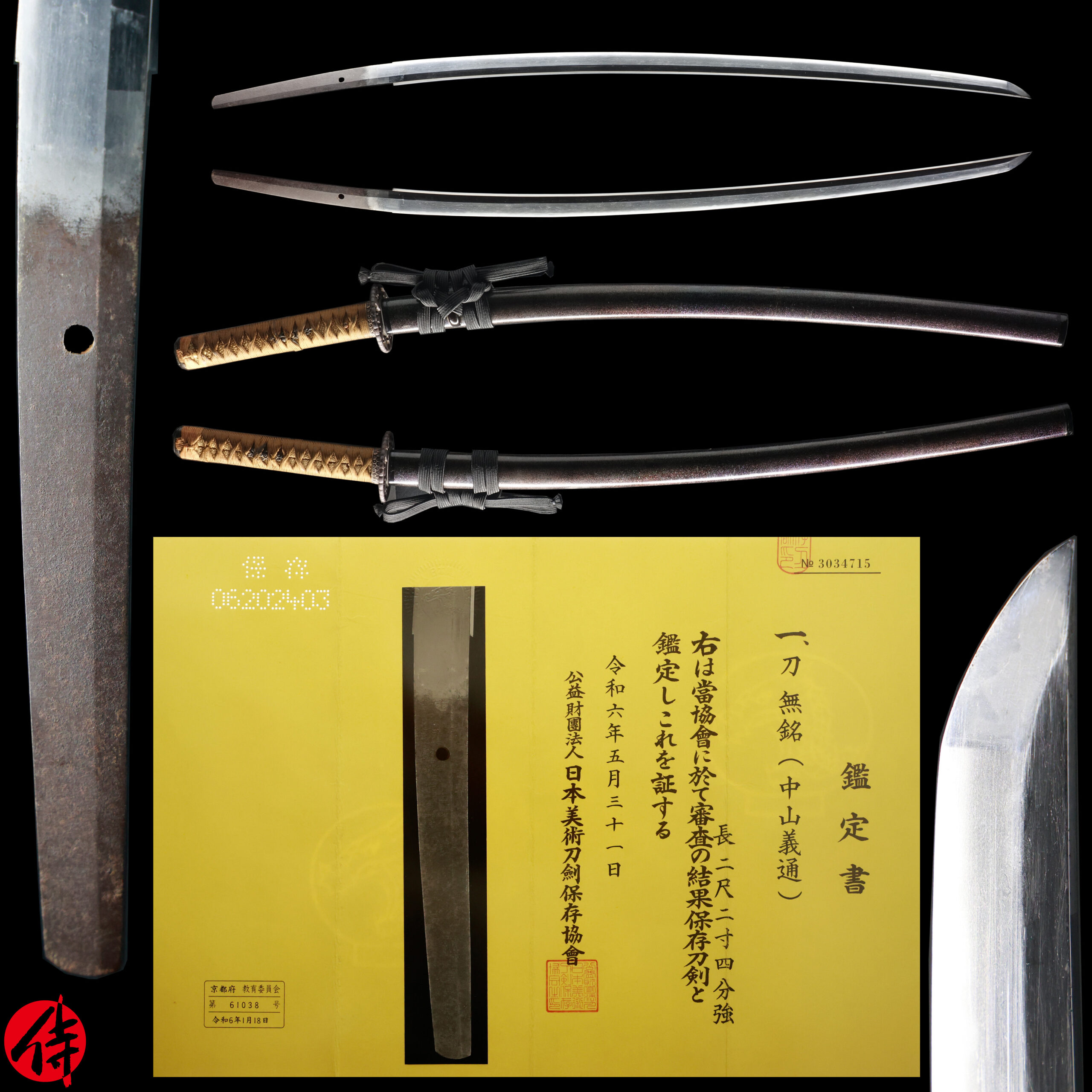
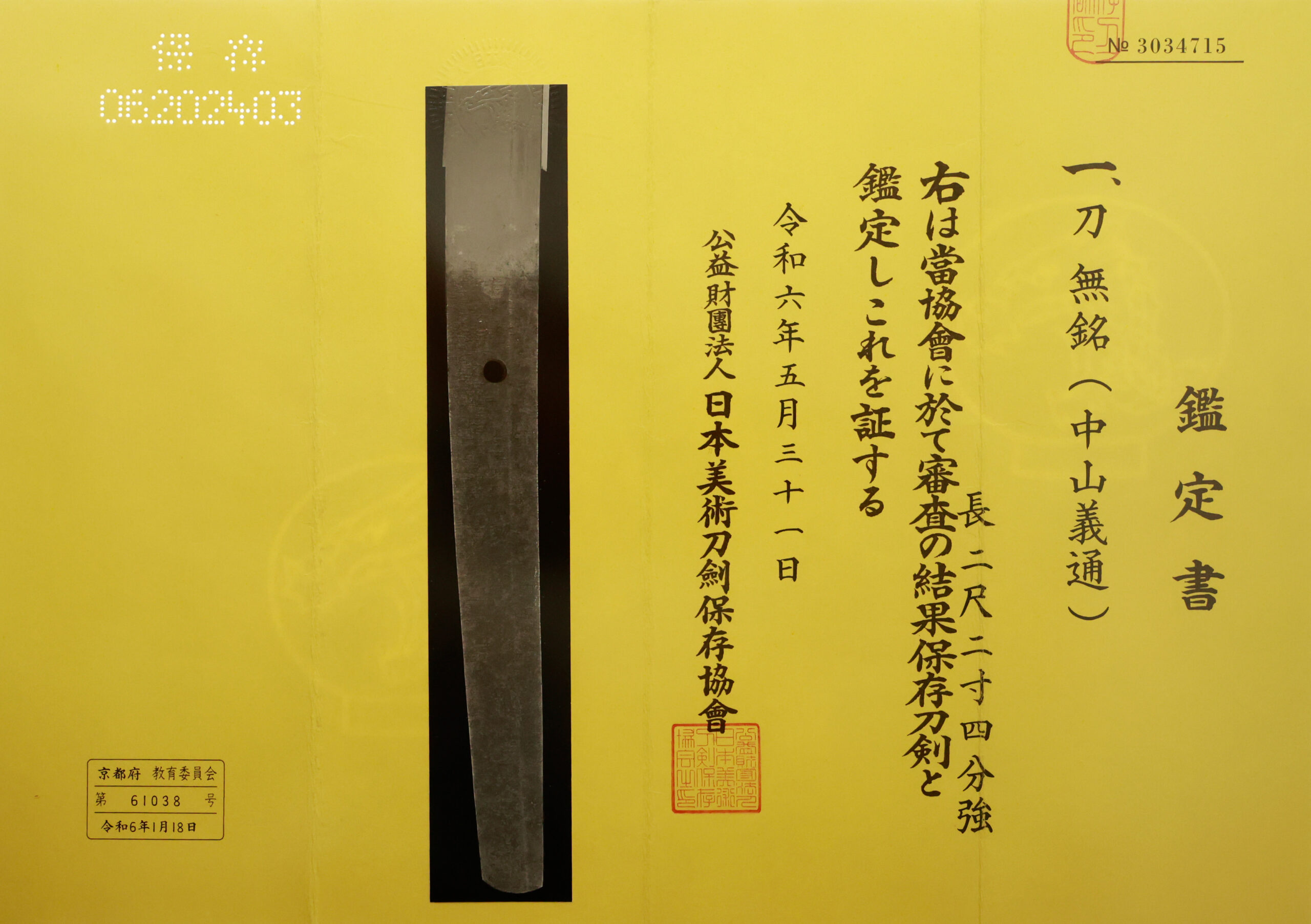
This blade is appraised as a Hozon Touken (保存刀剣) issued by NBTHK (Nihon Bijutsu Touken Hozon Kyokai: 日本美術刀剣保存協会).
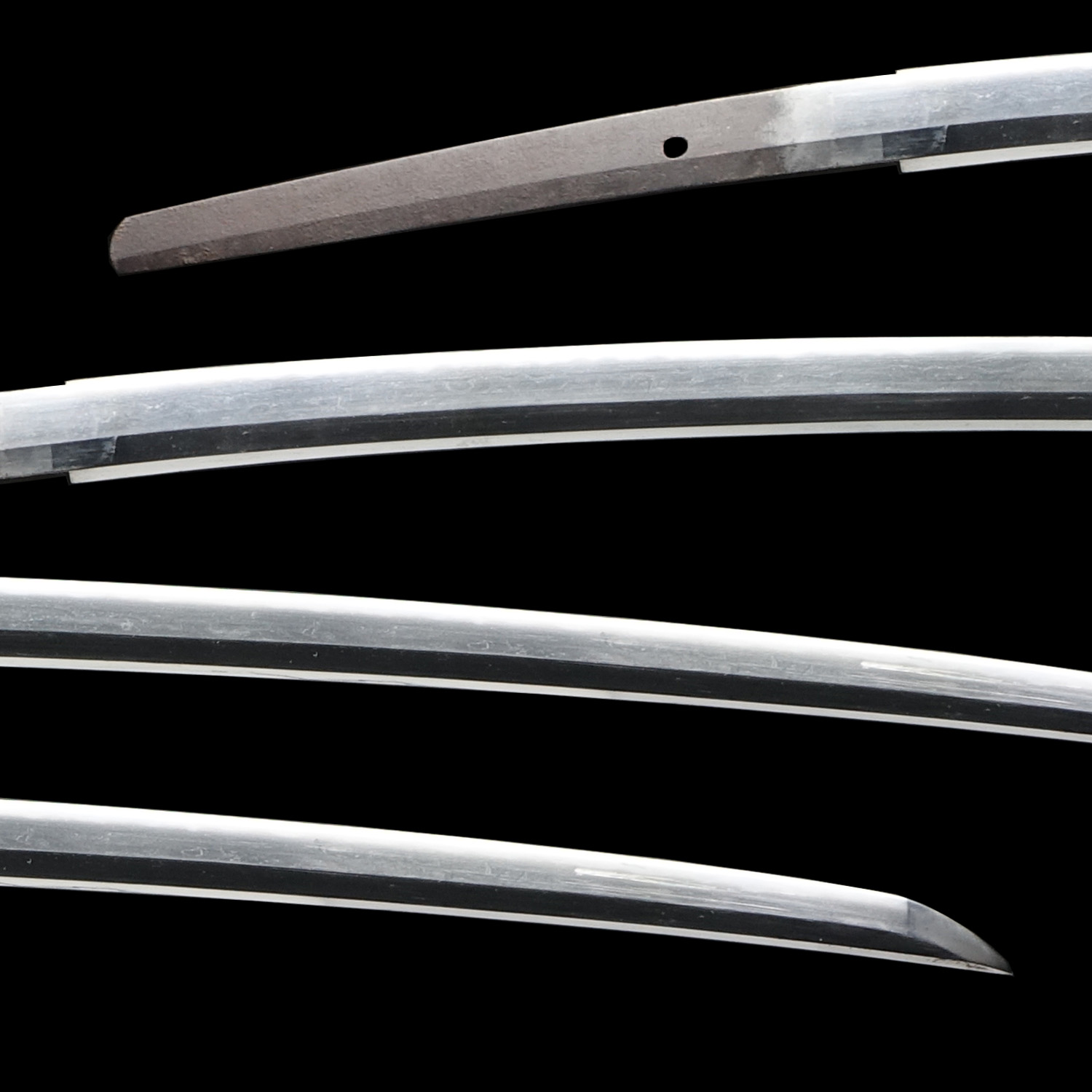
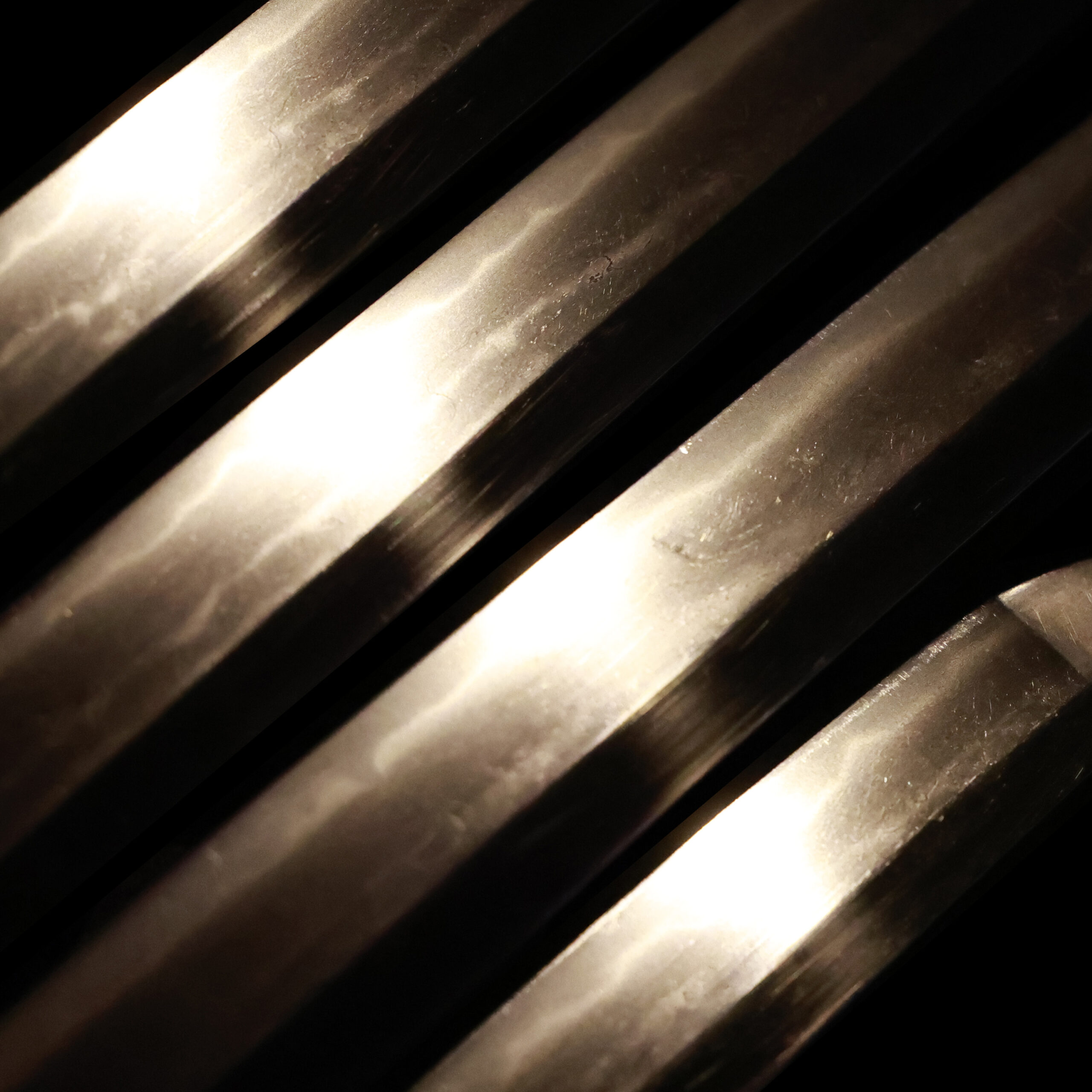
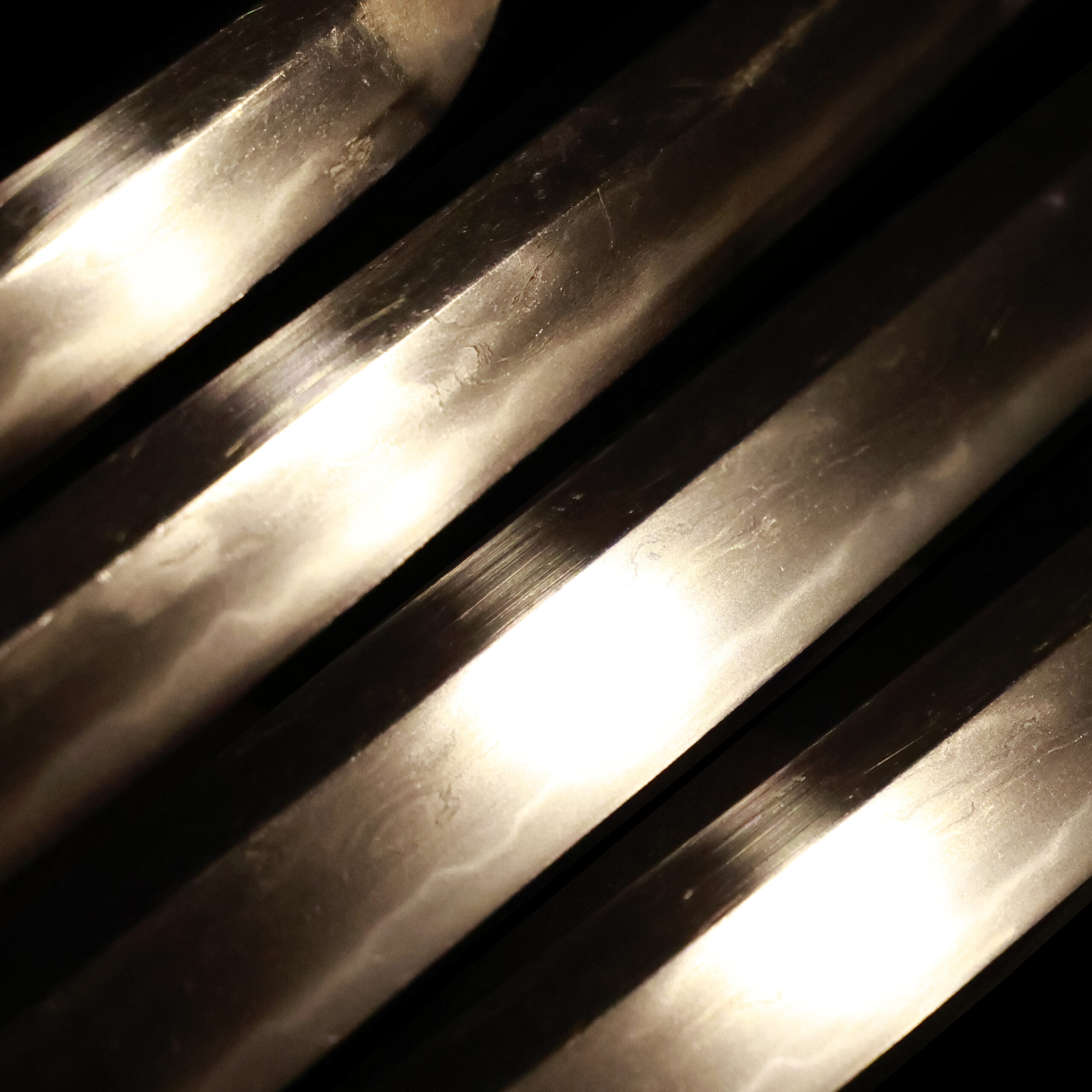
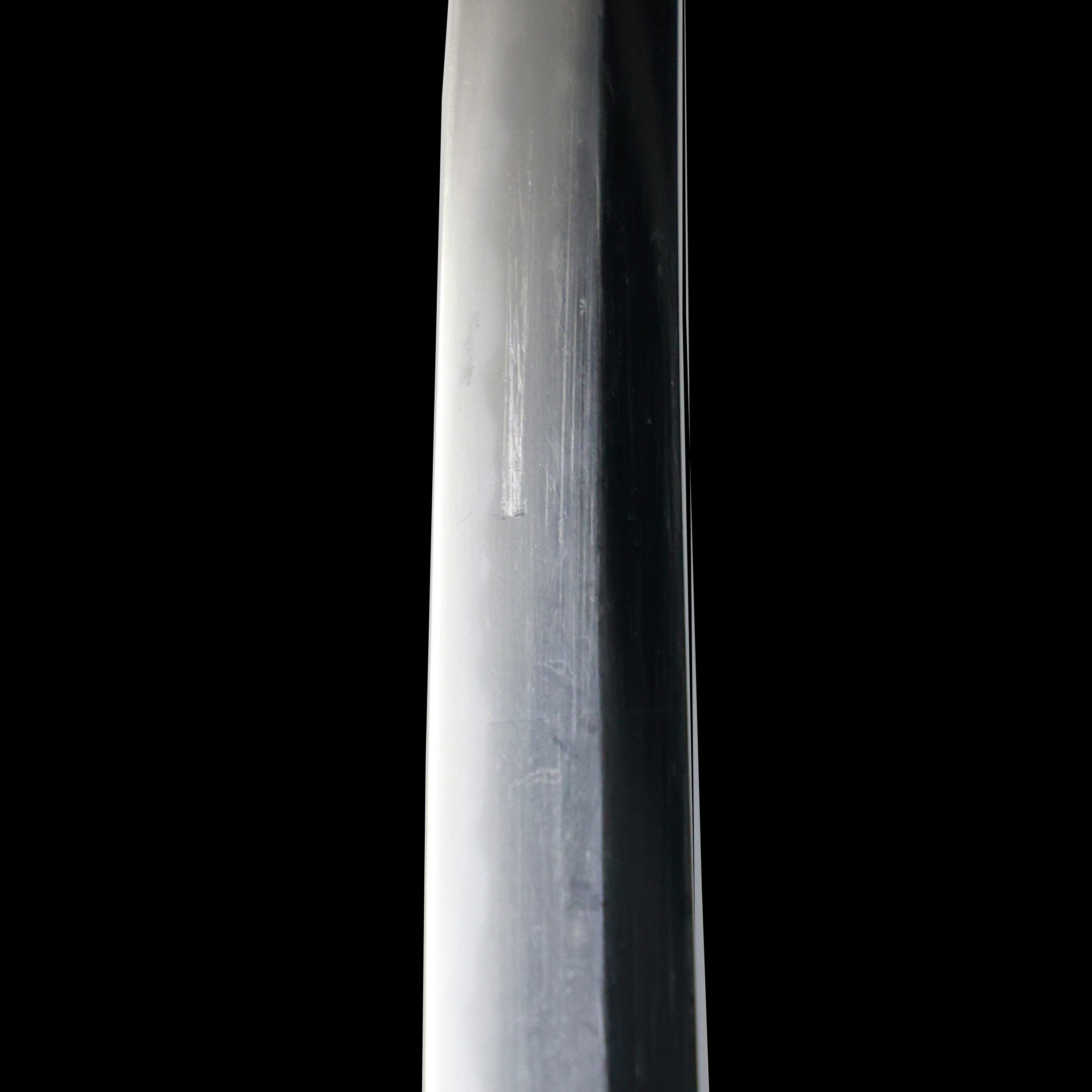
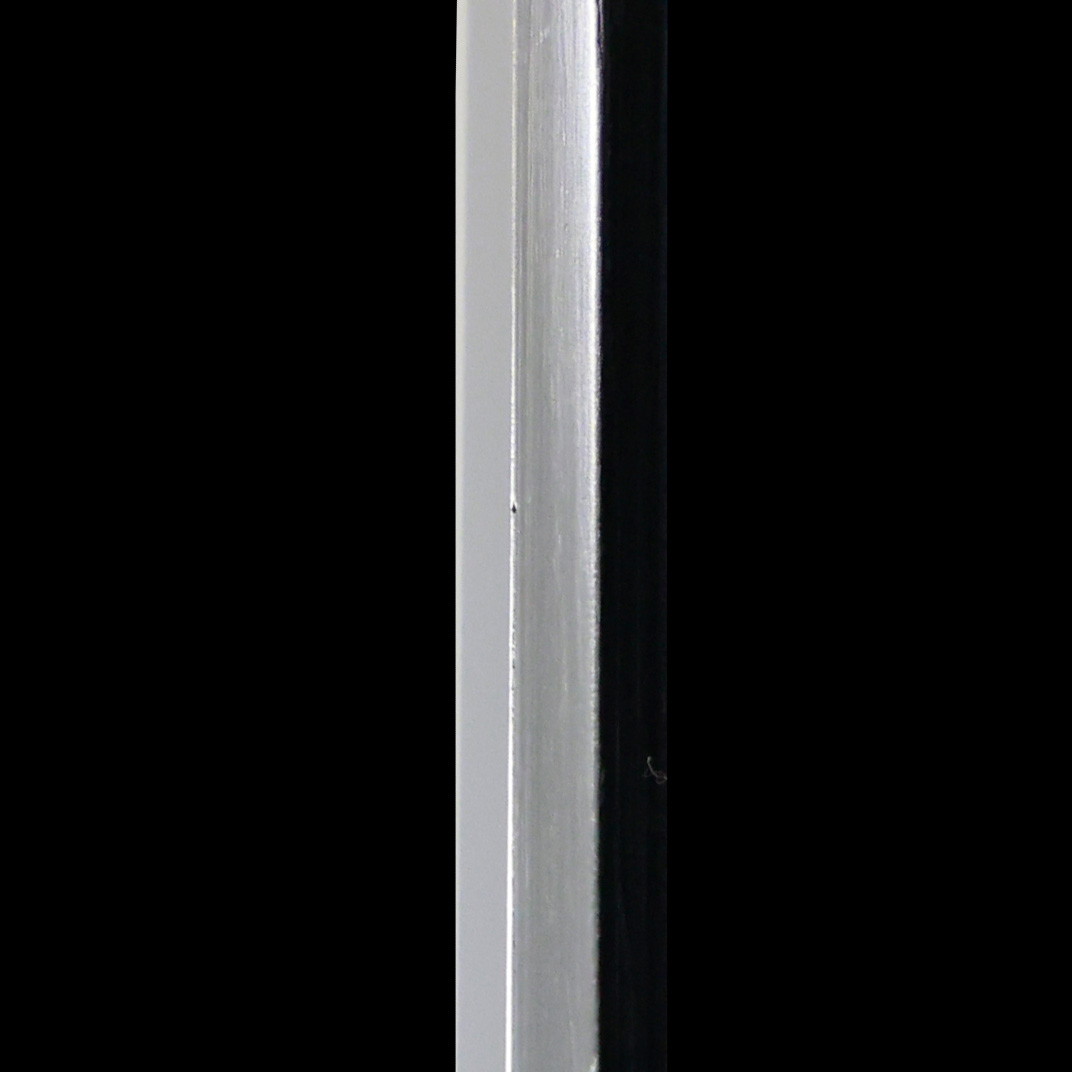
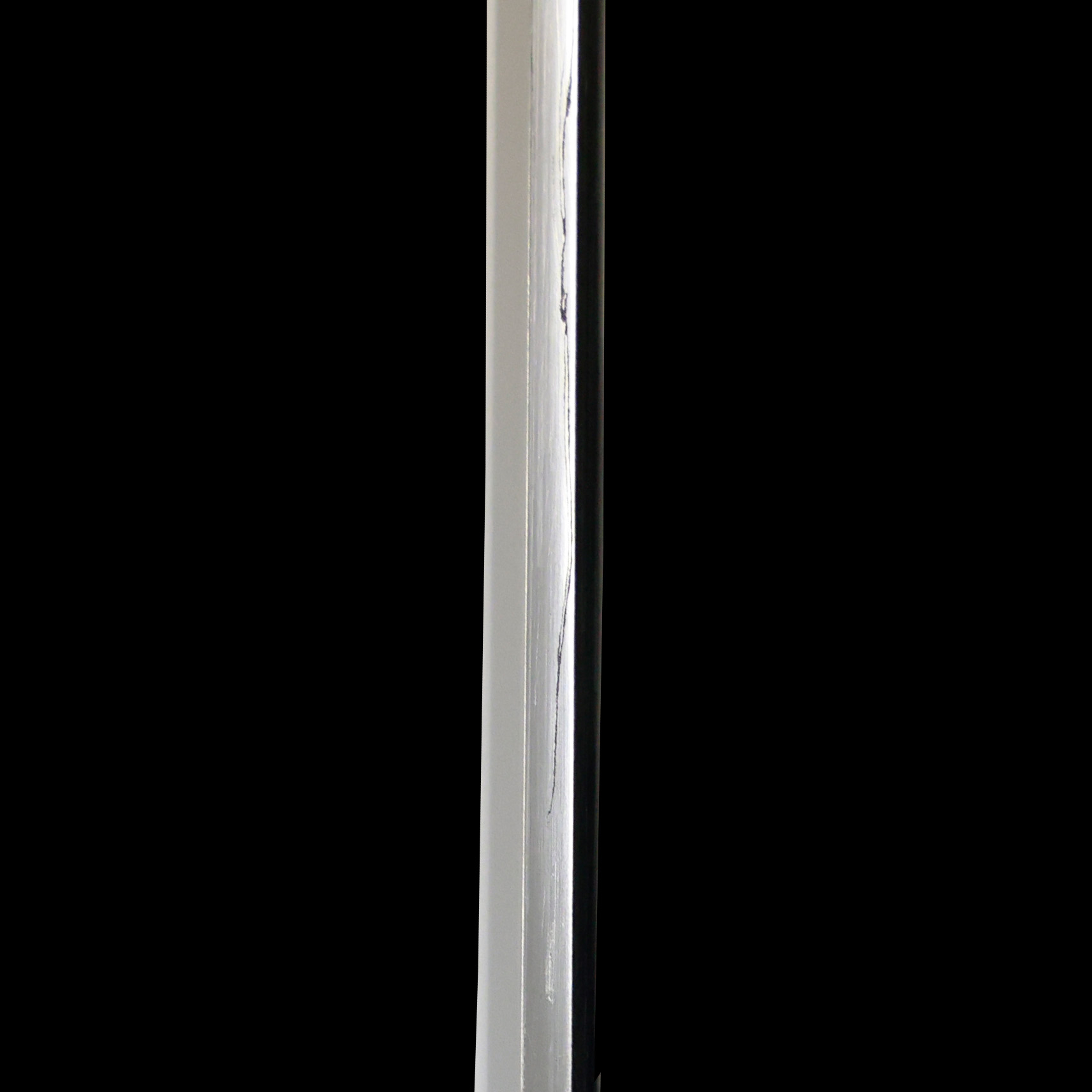
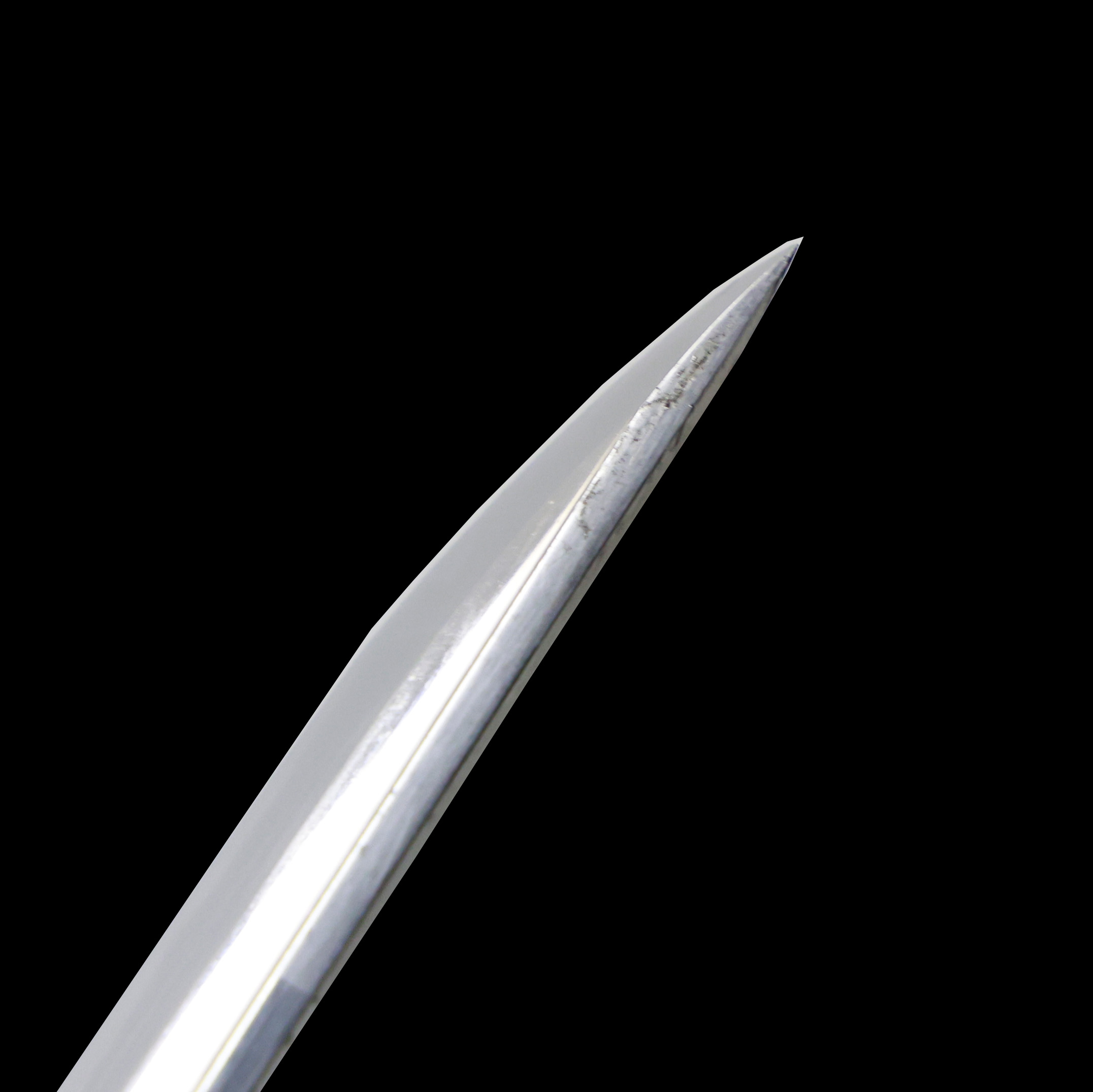
*Please keep in mind that there are a few Hike Kizu (scratches) and Kitae Kizu on the Mune (groove) on the blade.
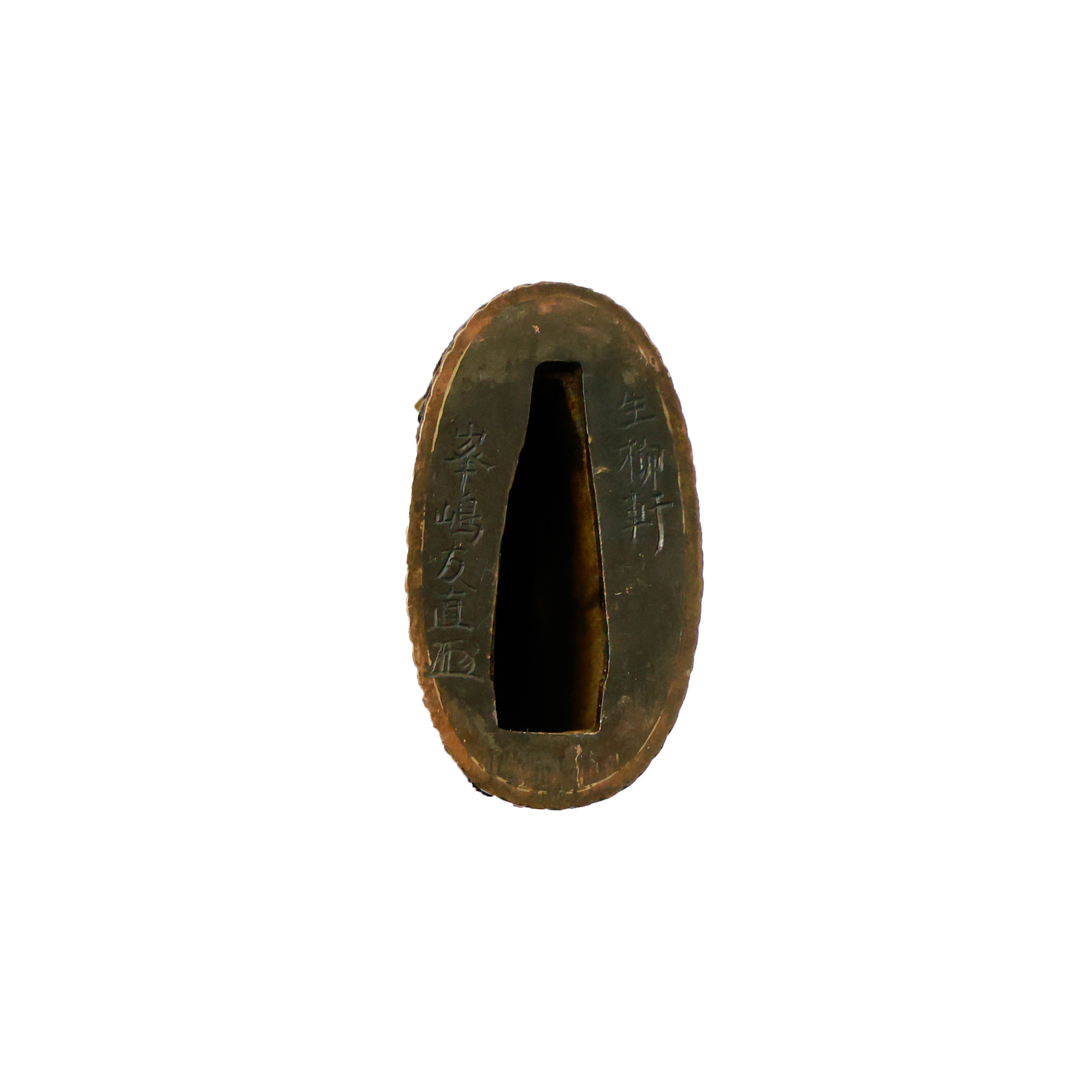
Fuchi-Kashira
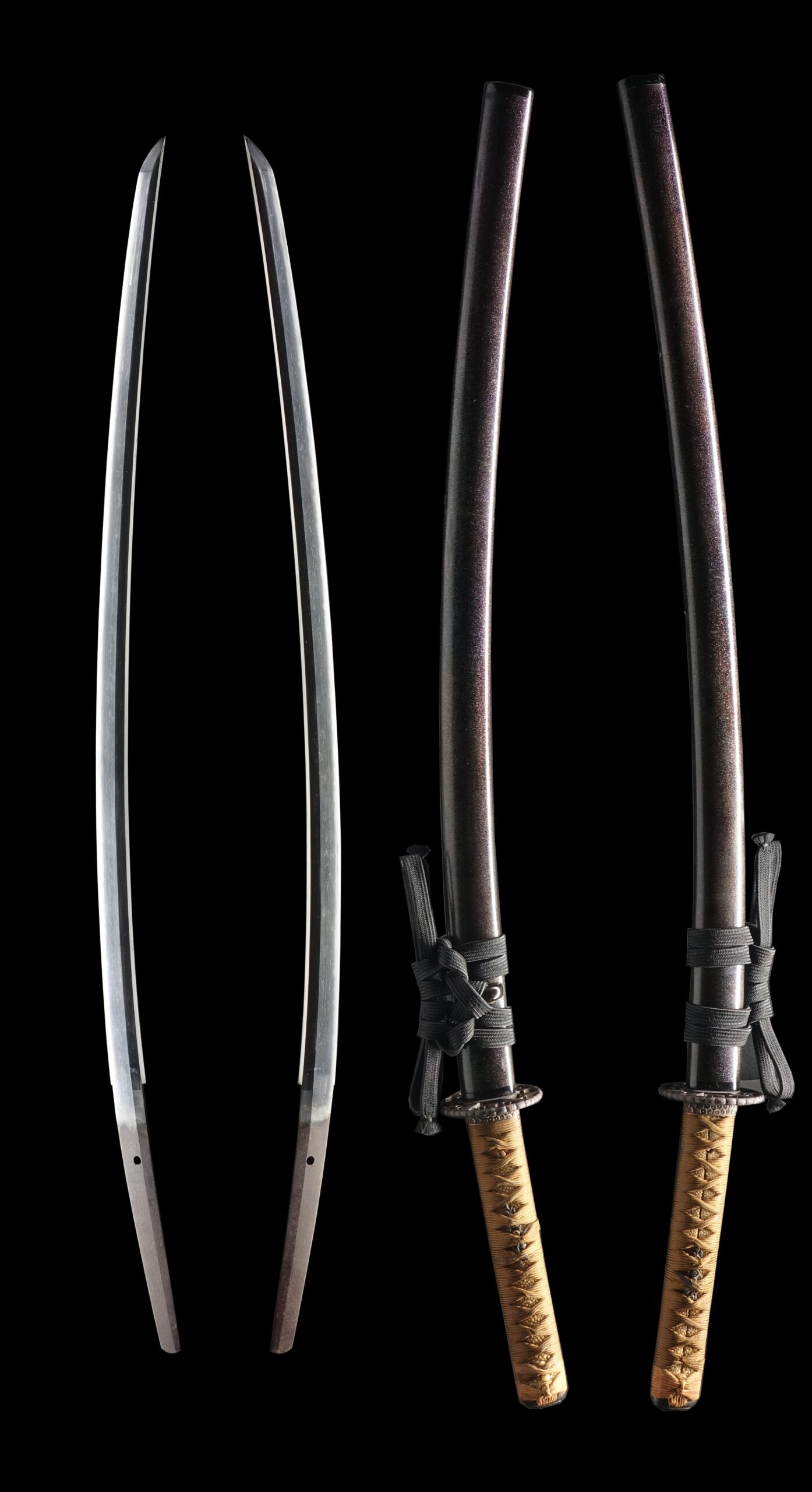
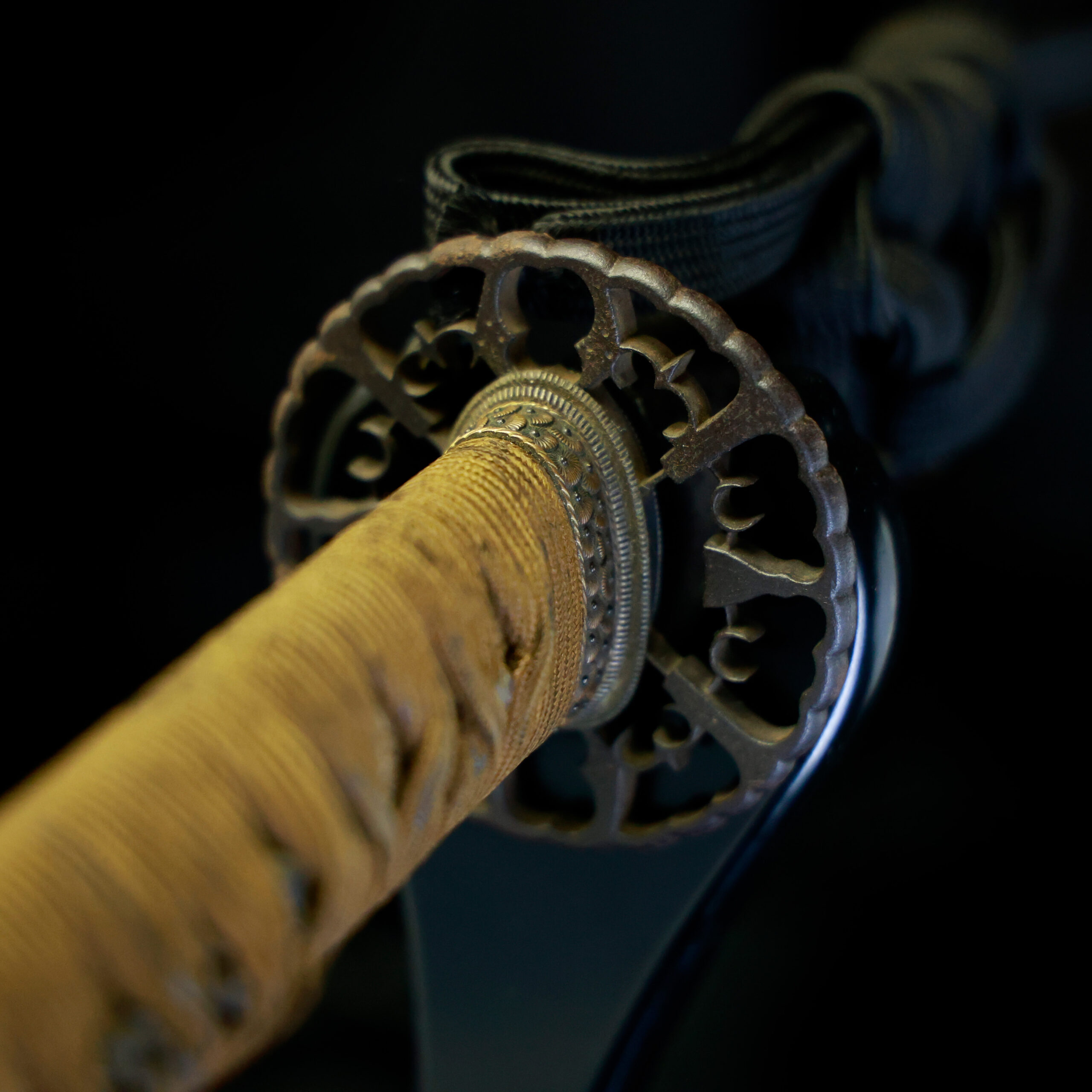
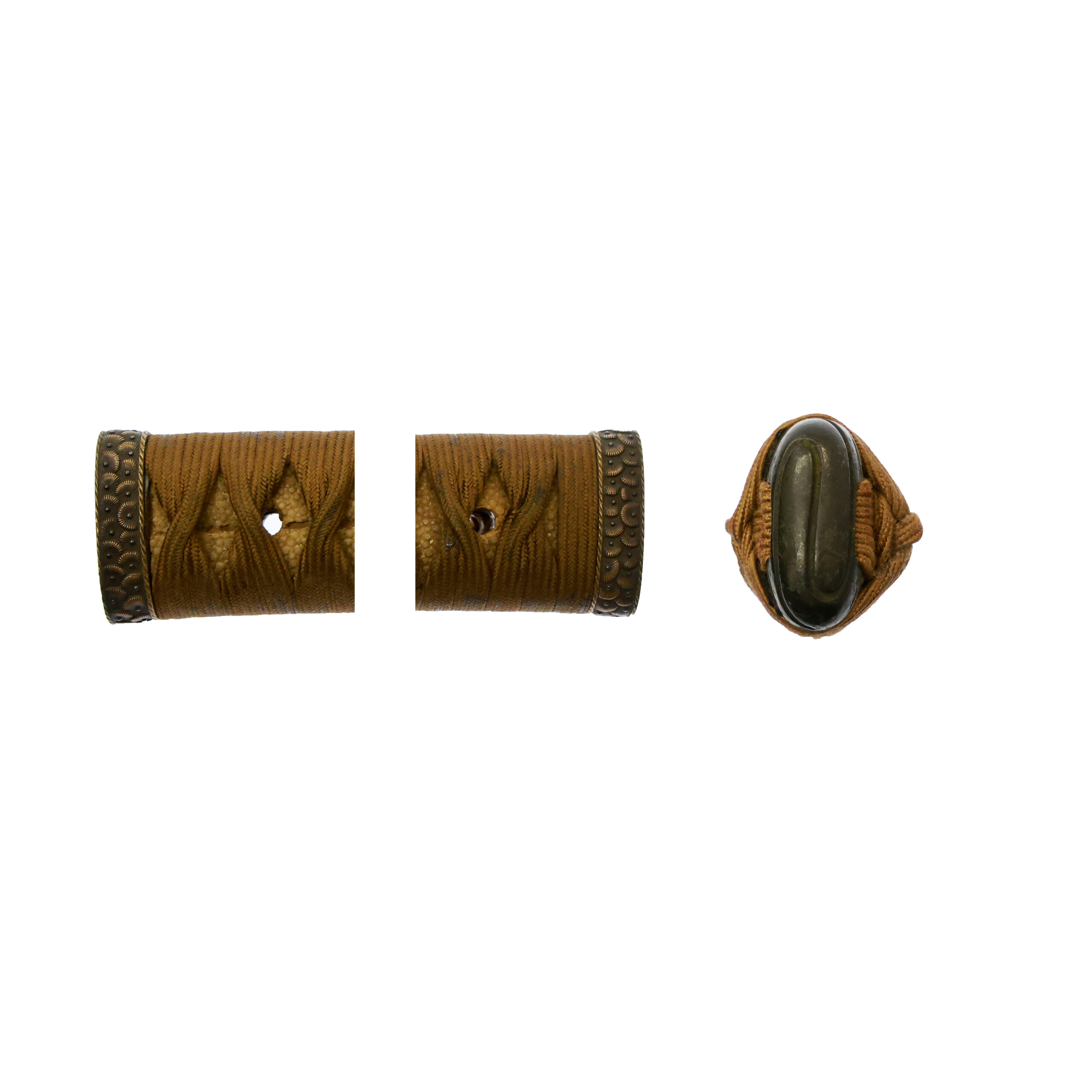
On the Fuchi part, you would find a pattern of Kiku (菊, chrysanthemum). A long time ago, the chrysanthemum was used as a medicine to obtain a long life in China, and it was brought to Japan with this thought in the Nara period (648-781). The chrysanthemum is one of the flowers that symbolize fall, and people have appreciated it very much since ancient times. As its petals form radially, the chrysanthemum has been likened to the sun. That is why this flower pattern is treated as the symbol of perpetual youth and longevity or good health. “Kiku no Gomon (菊の御紋)” is a kind of chrysanthemum pattern, and it has been used as the crest of the Emperor and the royal family in Japan, so it is well-known as a noble pattern.
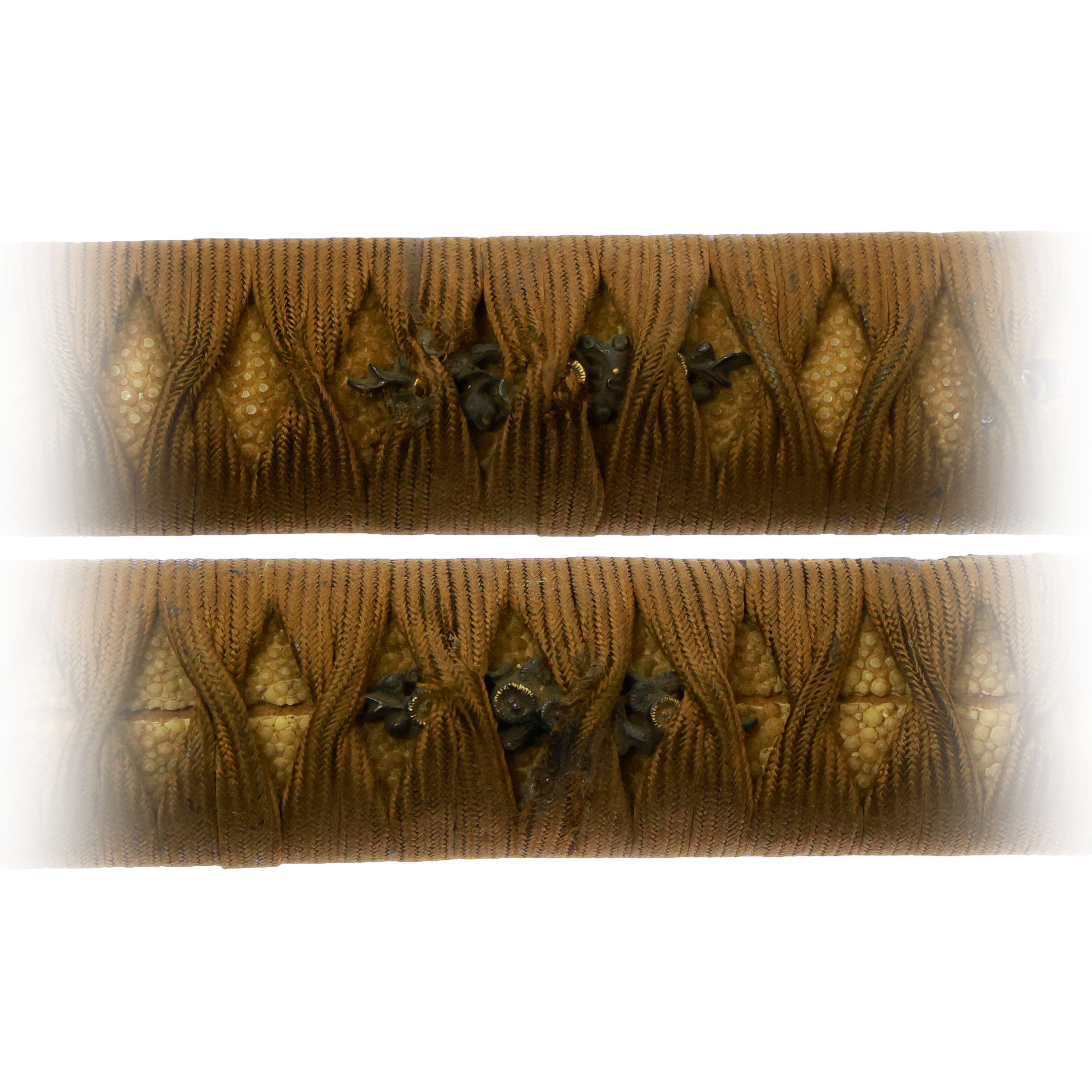
Tsuka and Menuki
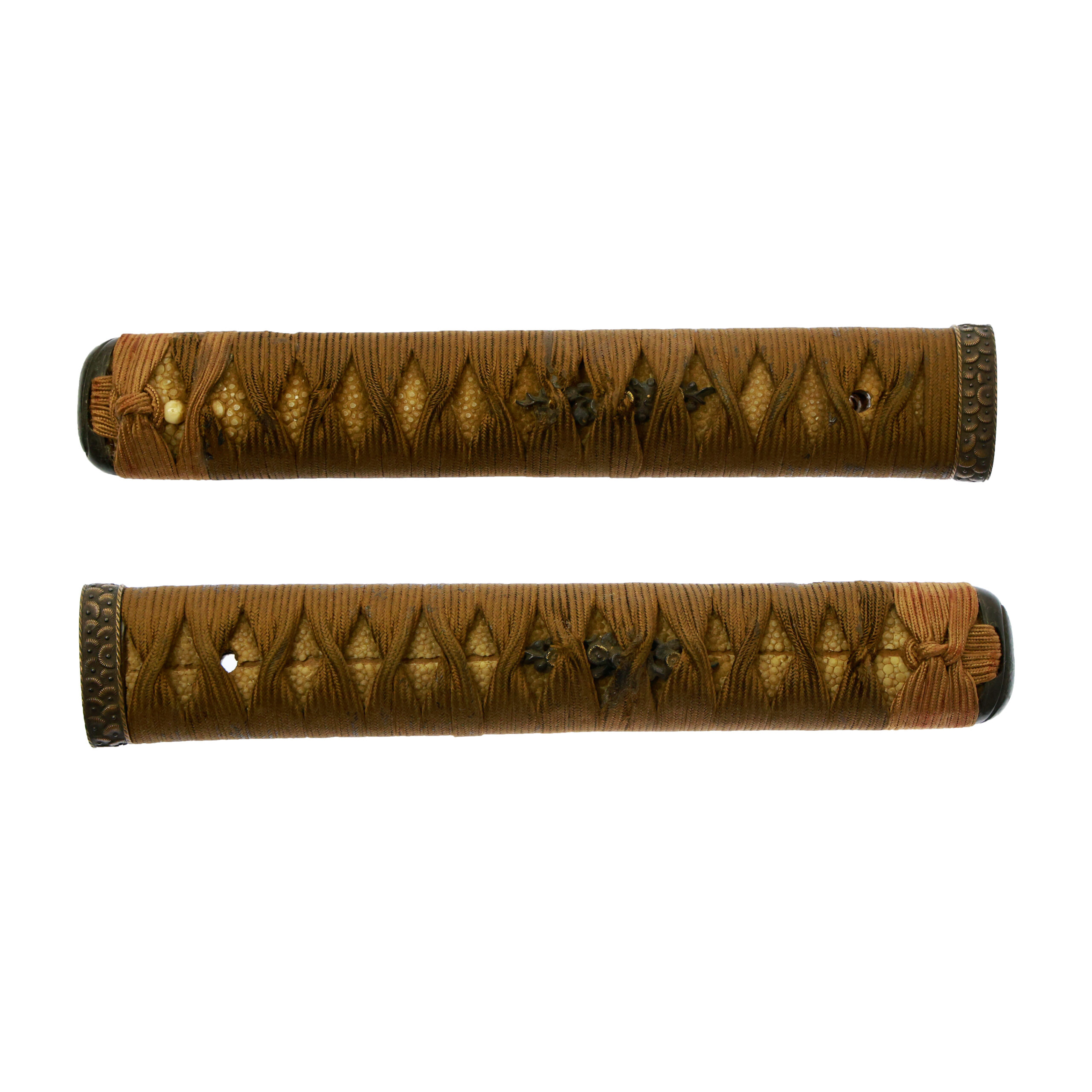
The motif of this Menuki also seems to be a branch of Kiku (菊, chrysanthemum). Please keep in mind that there is restoration on the Tsuka.
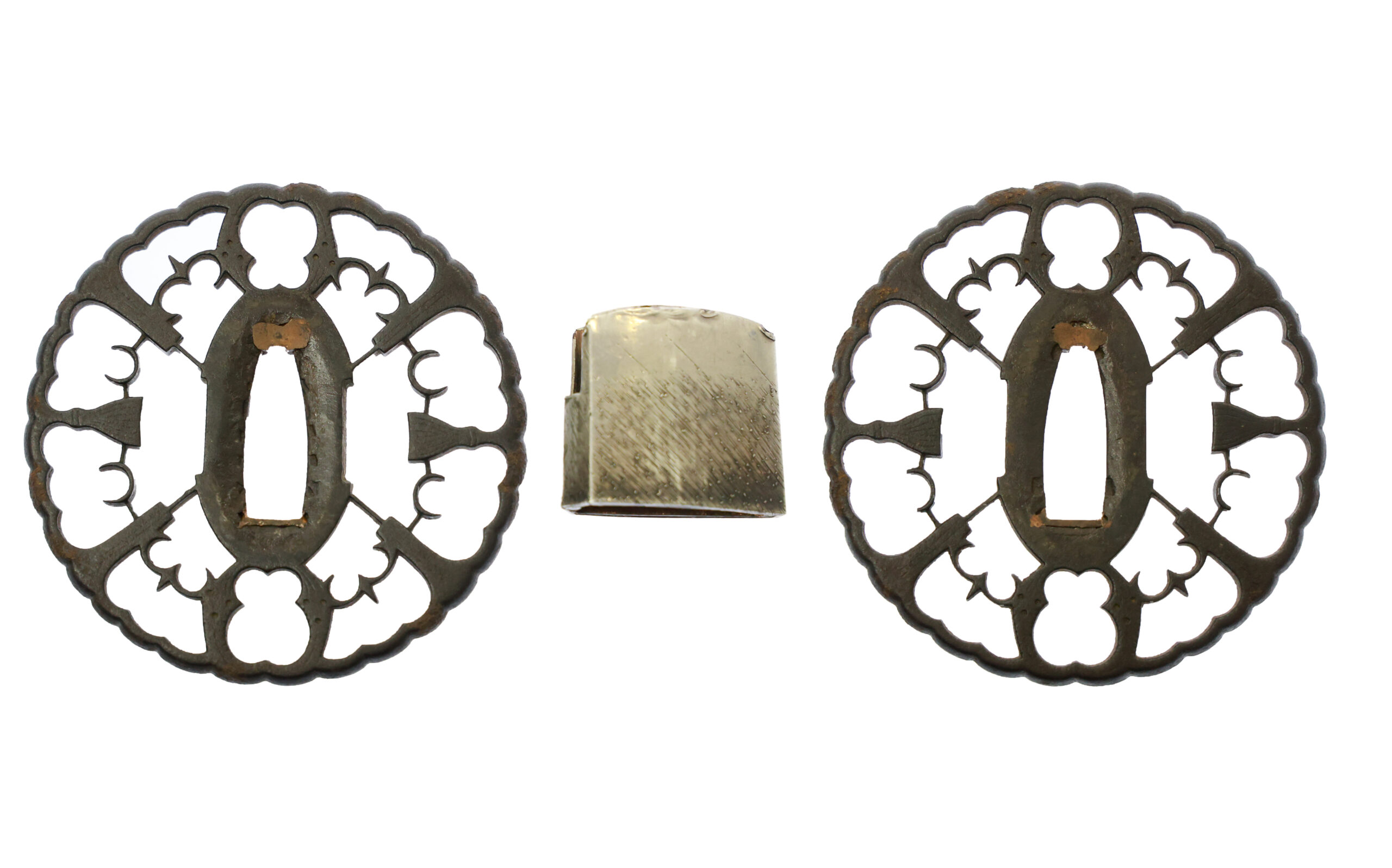
Tsuba and Habaki
This Tsuba appears to be a petal shape of some flower engraved with openwork.
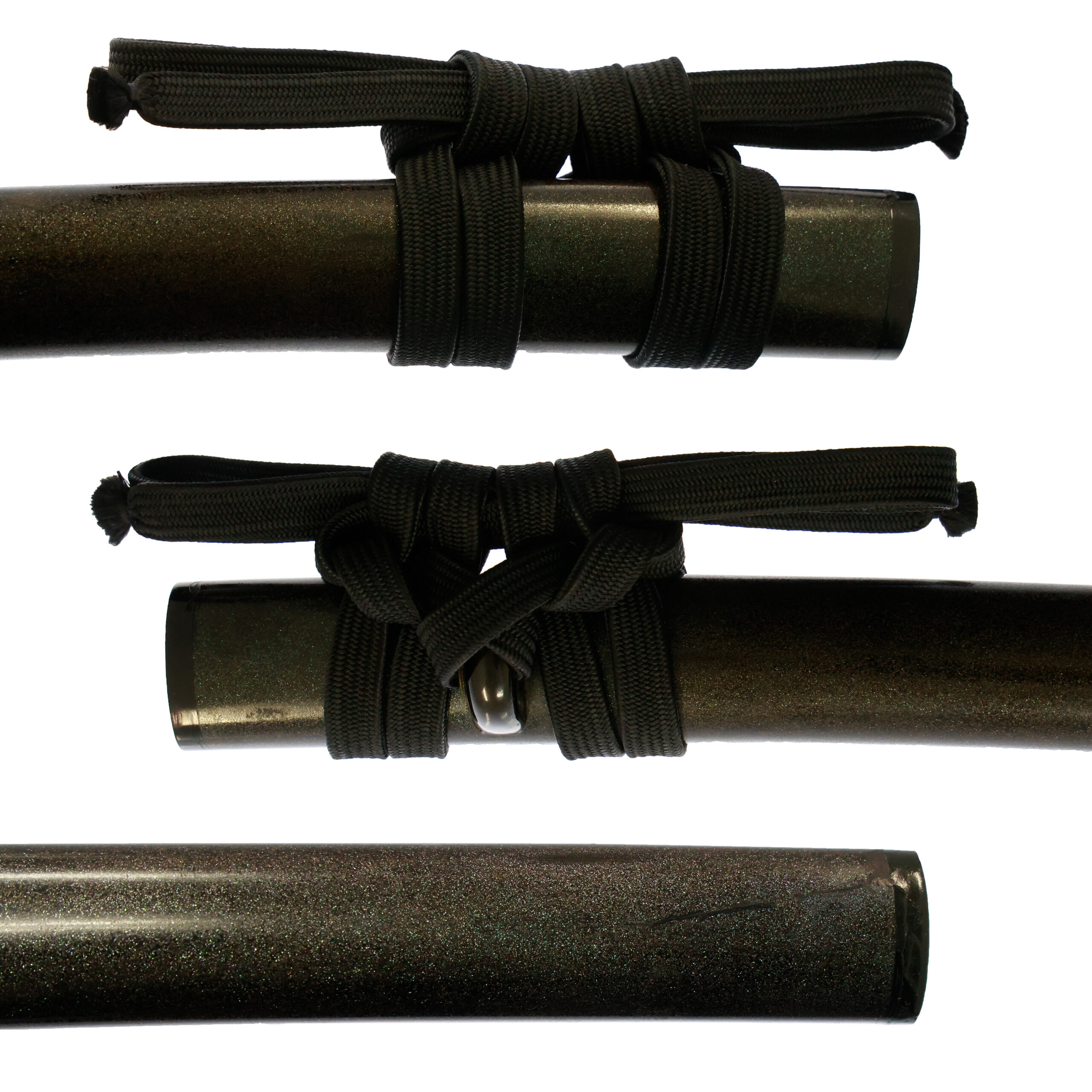
Saya
This scabbard is decorated with crushed seashells and covered with black lacquer. We think this ornamental scabbard painting is categorized as a type of the Aogai Mijin Nuri (青貝微塵塗). It uses the Aogai (青貝, a kind of seashell). Finely crushed shells are coated with lacquer. It emits a unique blue-green color with a rainbow-colored glow. This work’s delicate brilliance is scattered on the black lacquer ground, and it seems as if it depicts a starry sky. We hope you will appreciate its elegant and gorgeous look.
Due to its high waterproof effect, lacquer has been used since ancient times in Asia. The blade of a Japanese sword is made of iron, and moisture is the greatest enemy of iron. For the purpose of carrying the blade without degrading it, people devised a method of coating the scabbard with lacquer. To prevent not only moisture but also rain and snow from penetrating the inside of the scabbard, it was necessary to apply multiple layers of lacquer. The Nurushi (塗師, lacquerers) was born precisely because advanced techniques were required to handle the complicated processes.
Authentication Paper
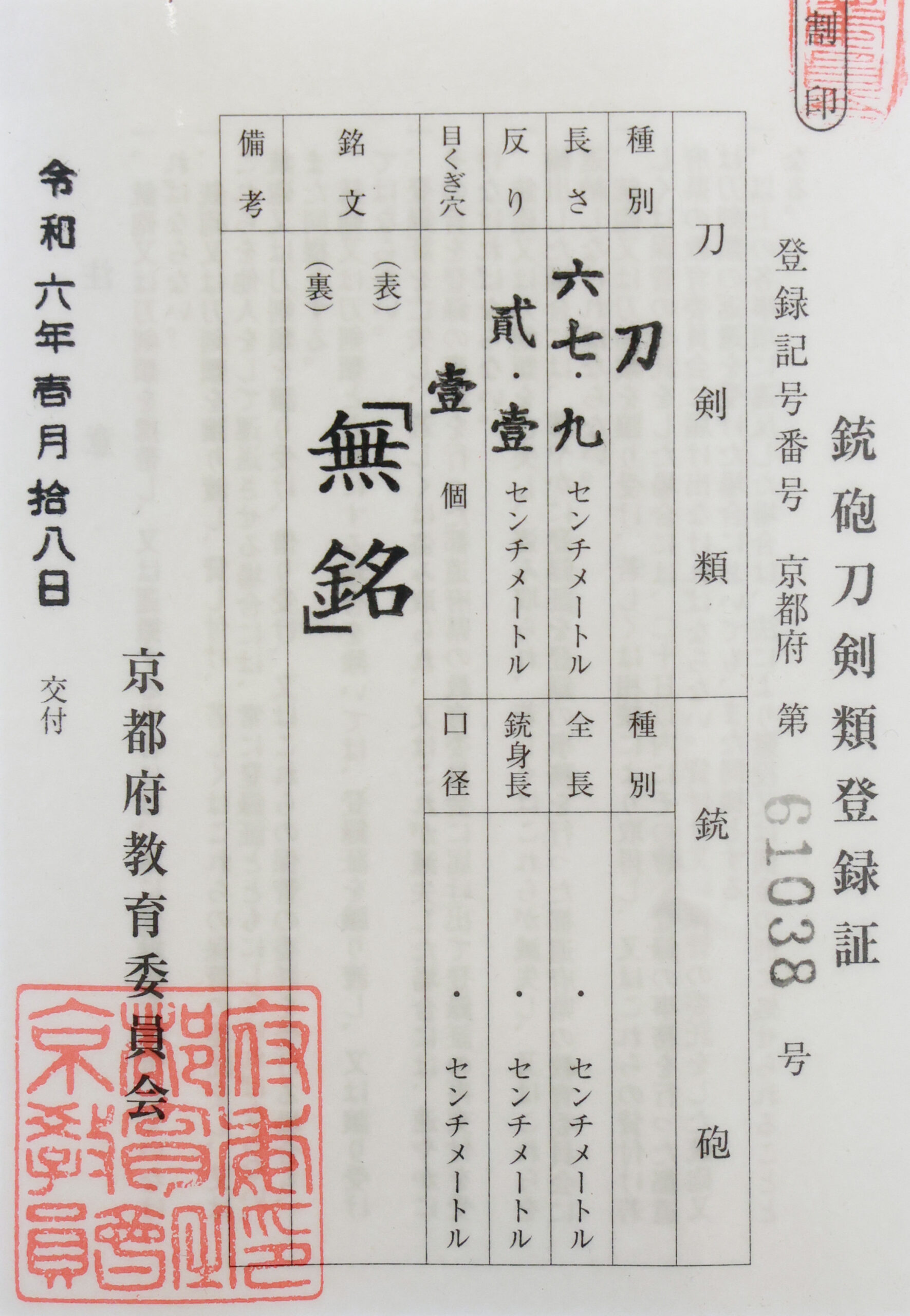
They authenticated the blade on May 31st in the 6th year of Reiwa (2024). They appraised it as Hozon Touken, the blade worth preserving for Japanese society.

 NihontoWatch