NihontoWatch MonNihontoWatch
Market
Encyclopedia
Kantei
NihontoWatch MonNihontoWatch
Market
Encyclopedia
Kantei

Description

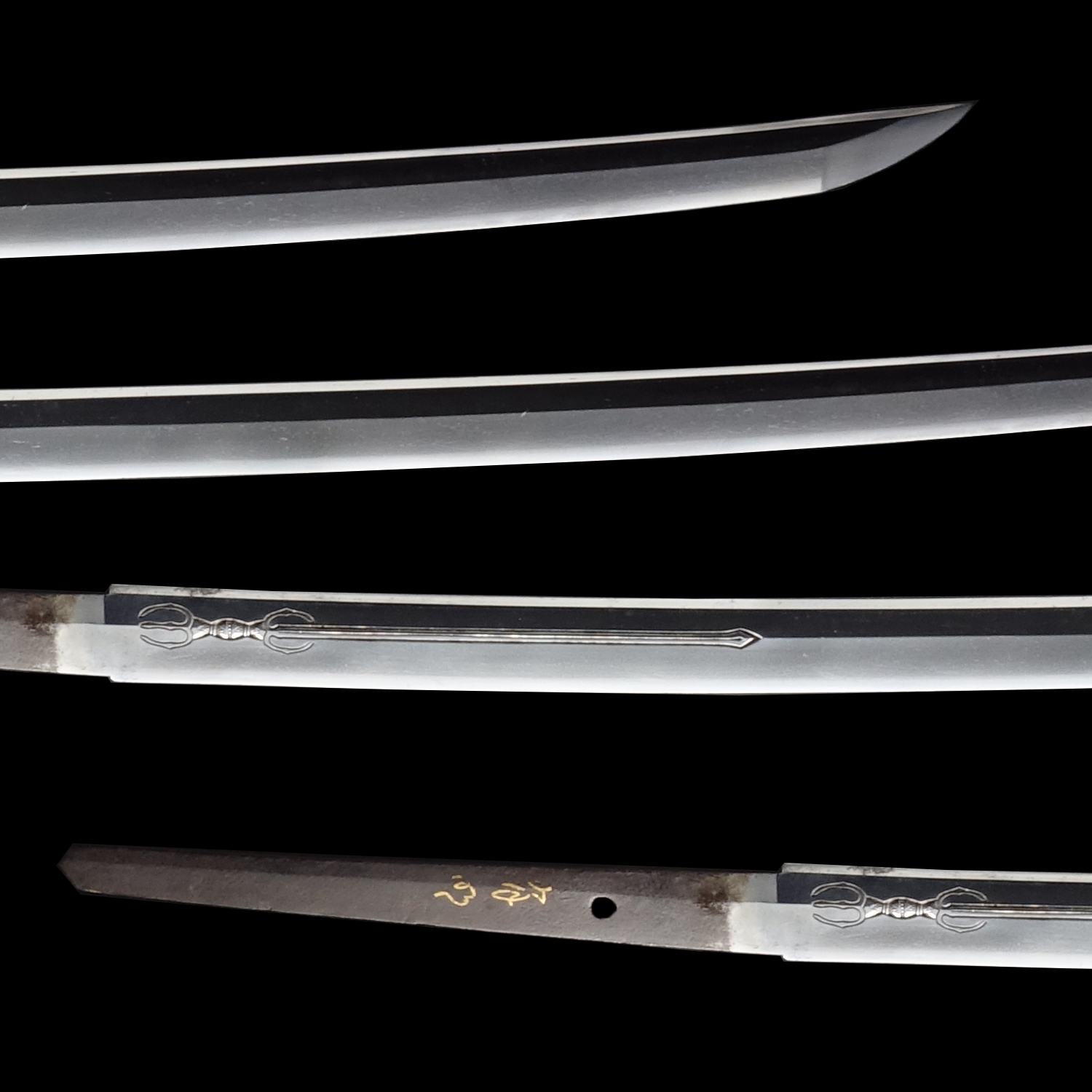
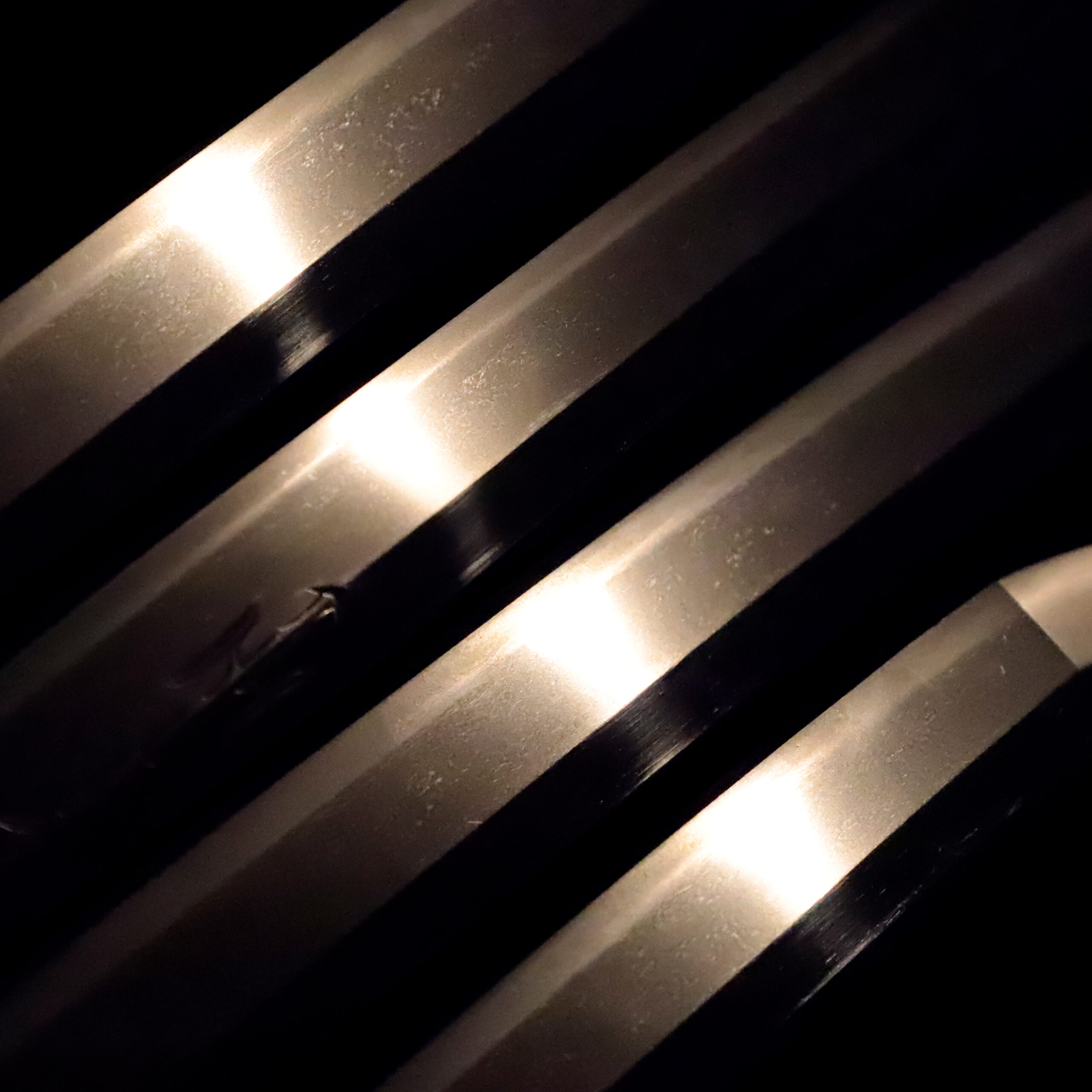
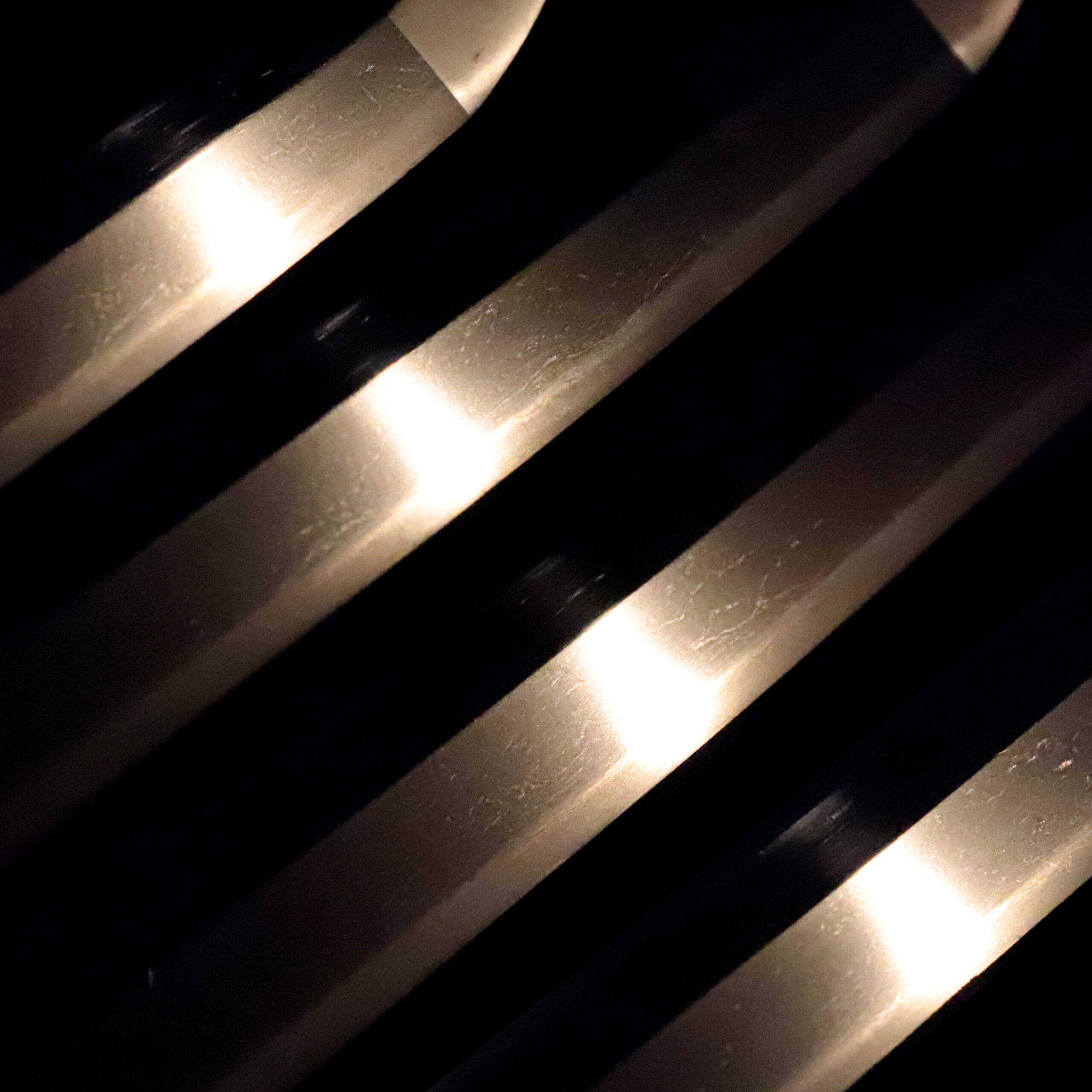
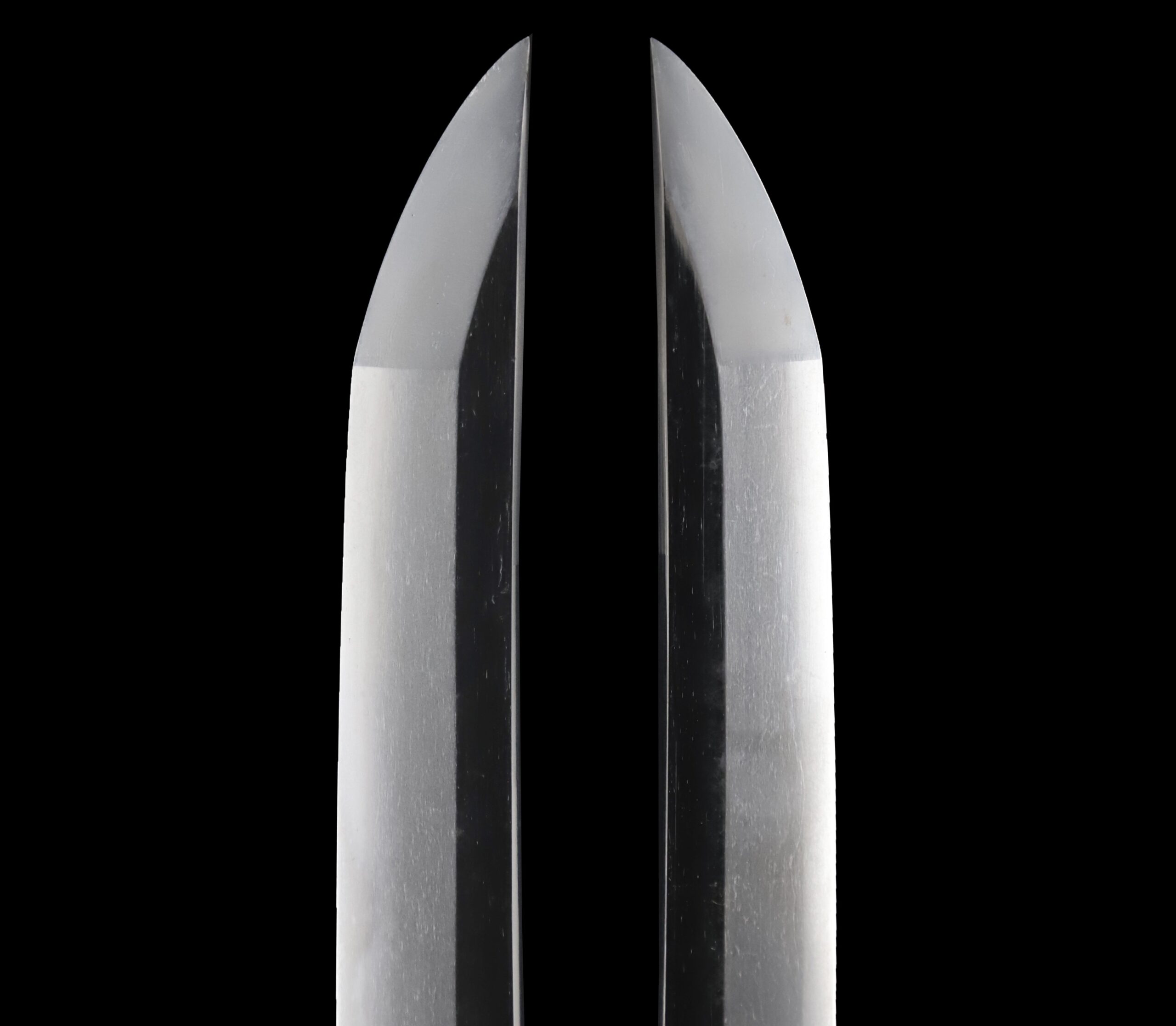
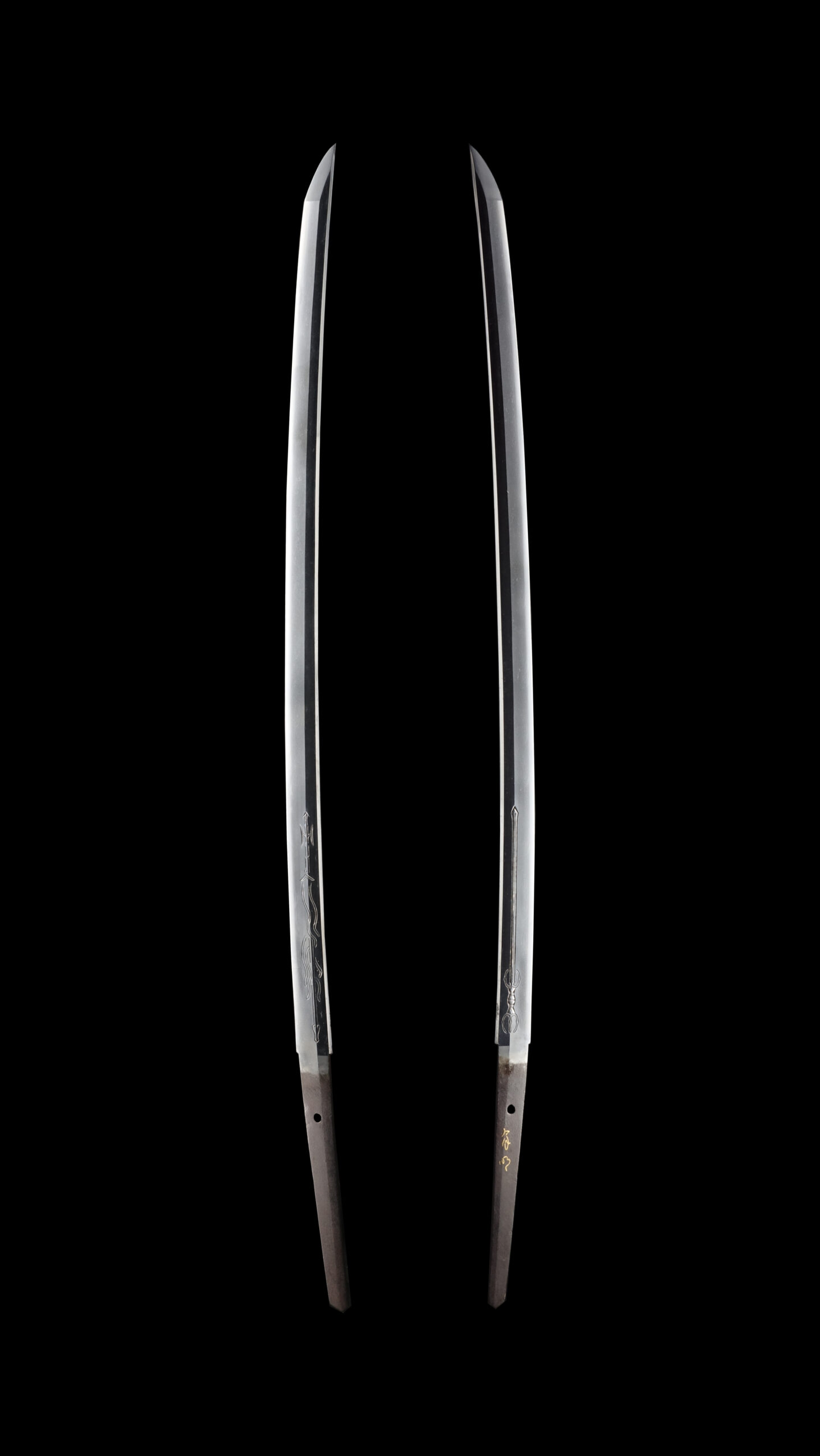
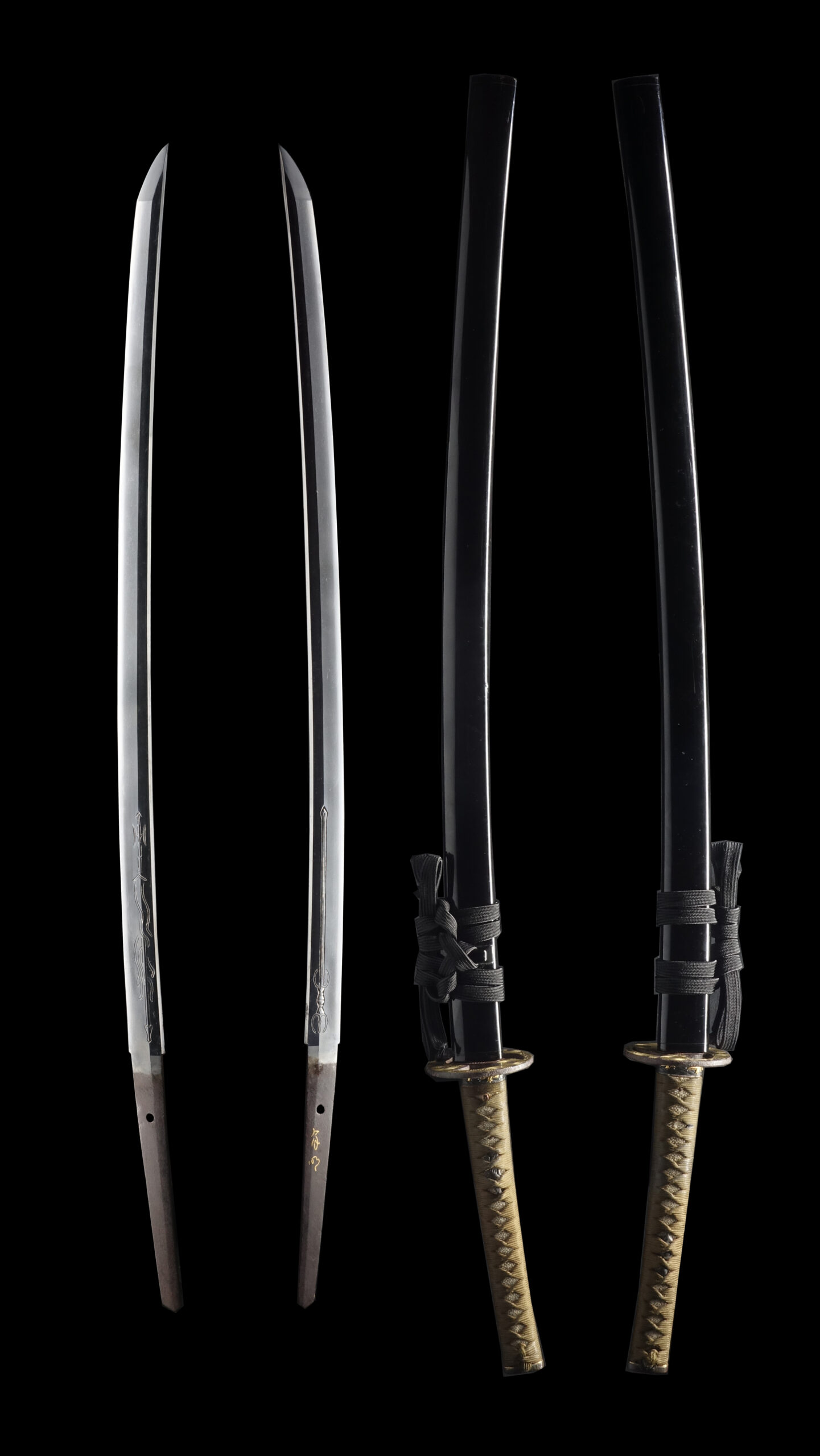
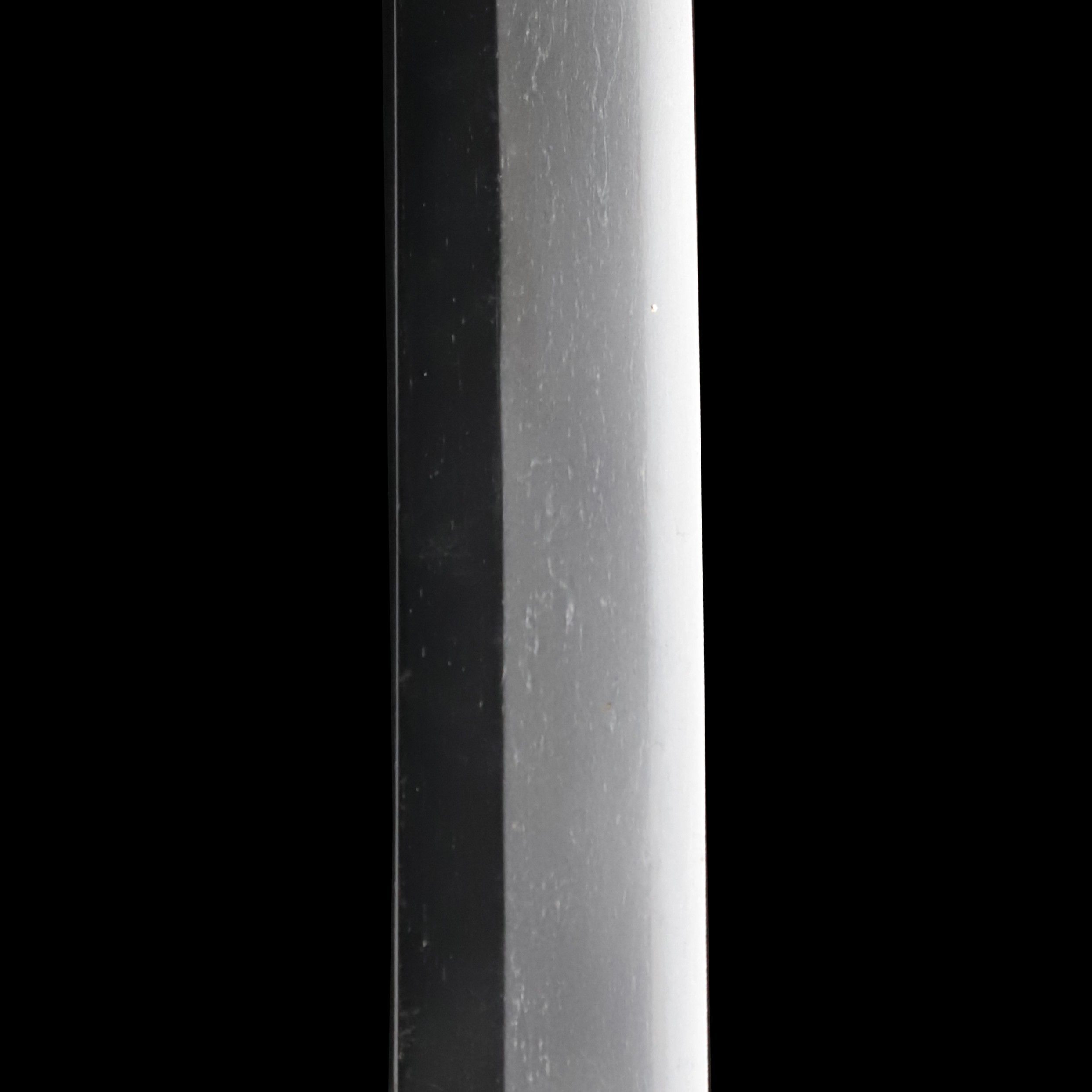
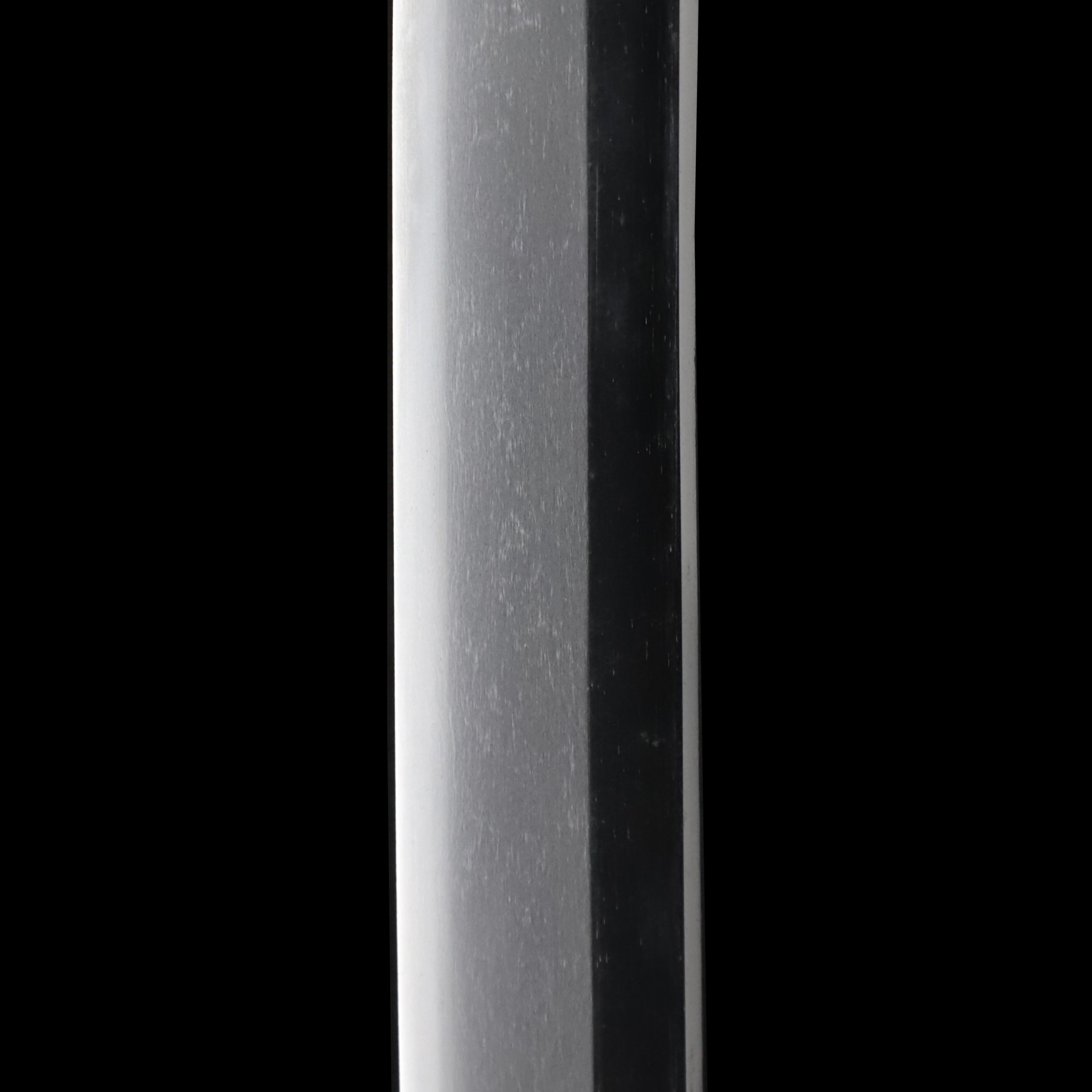
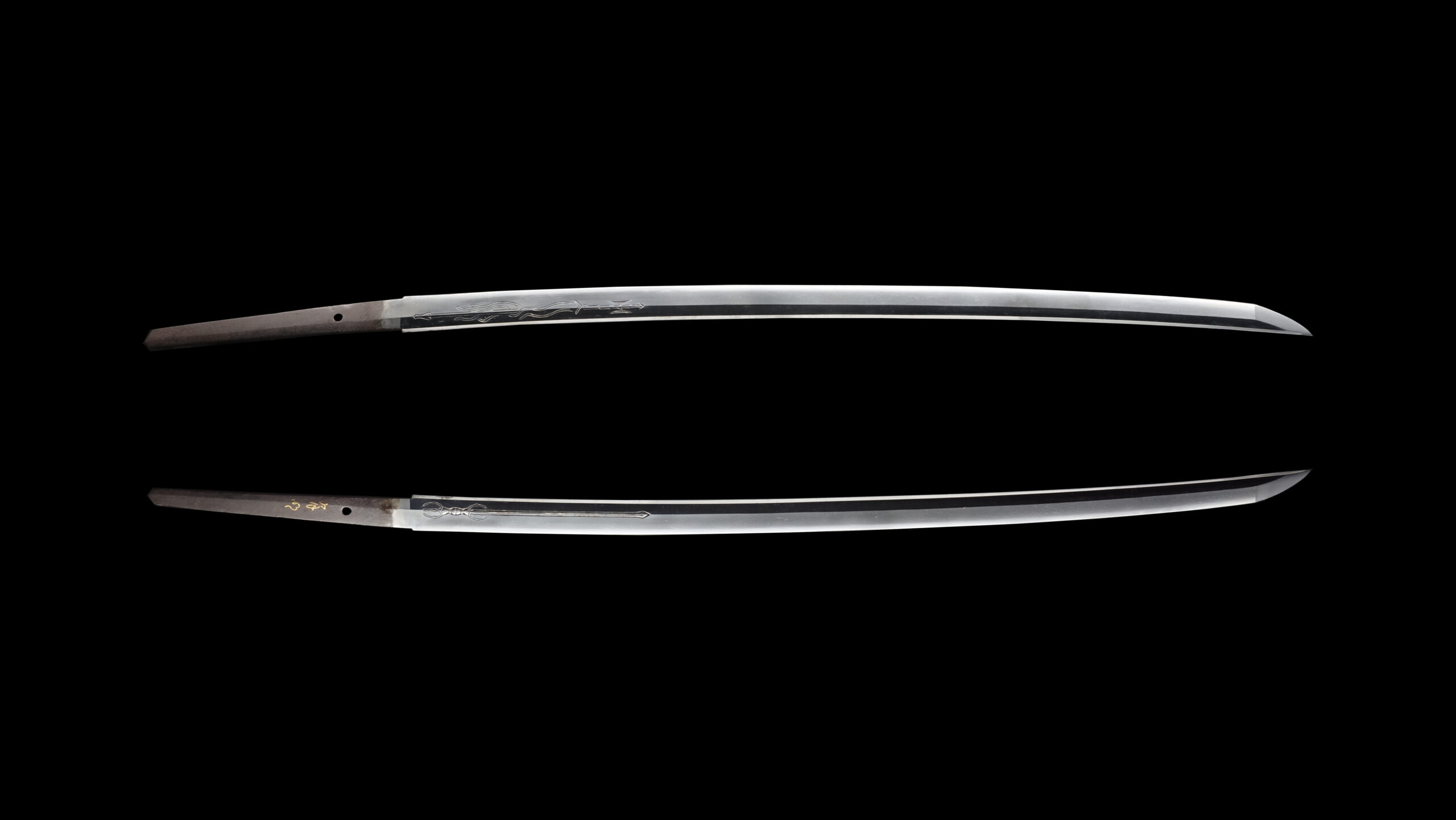
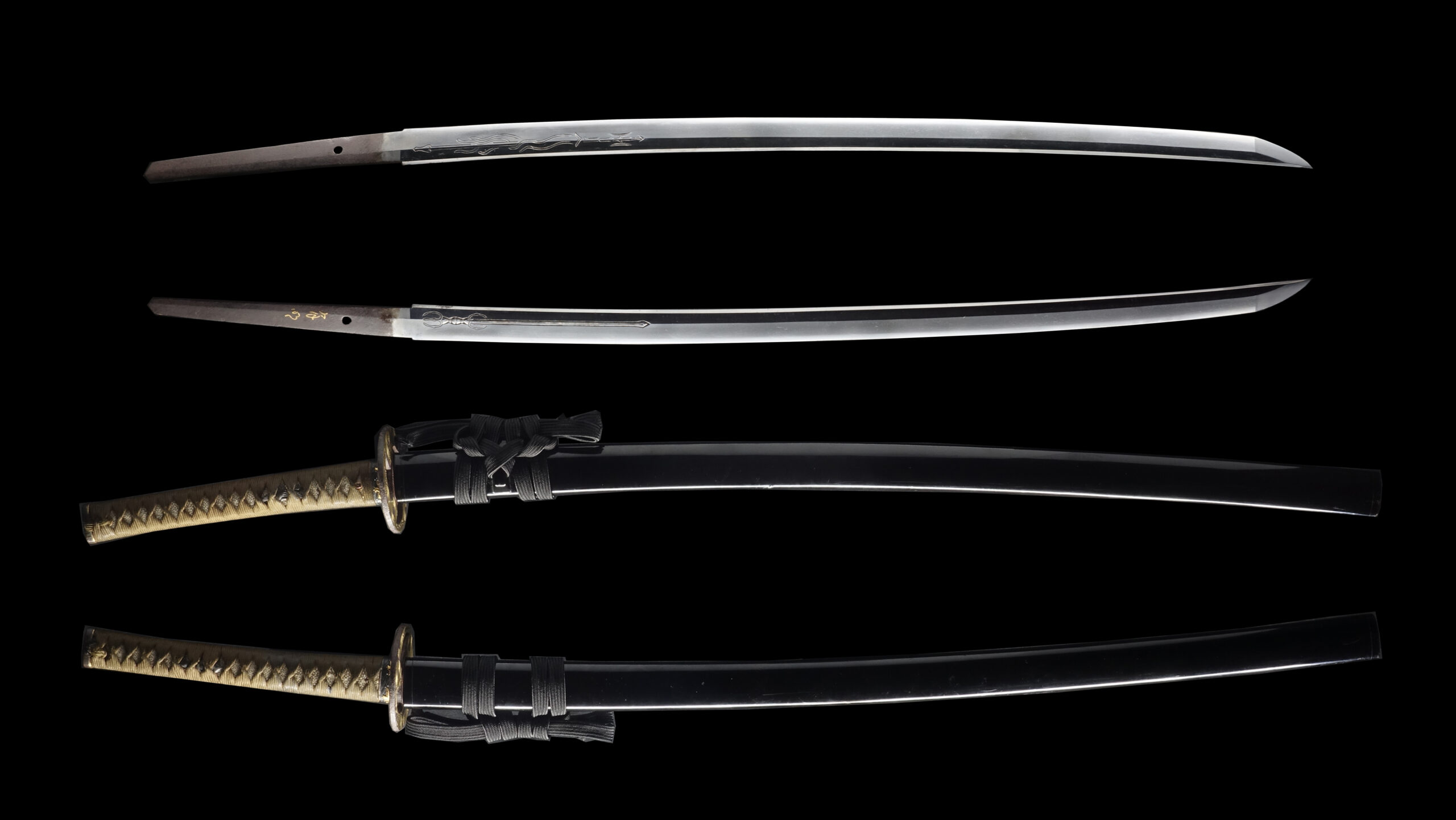
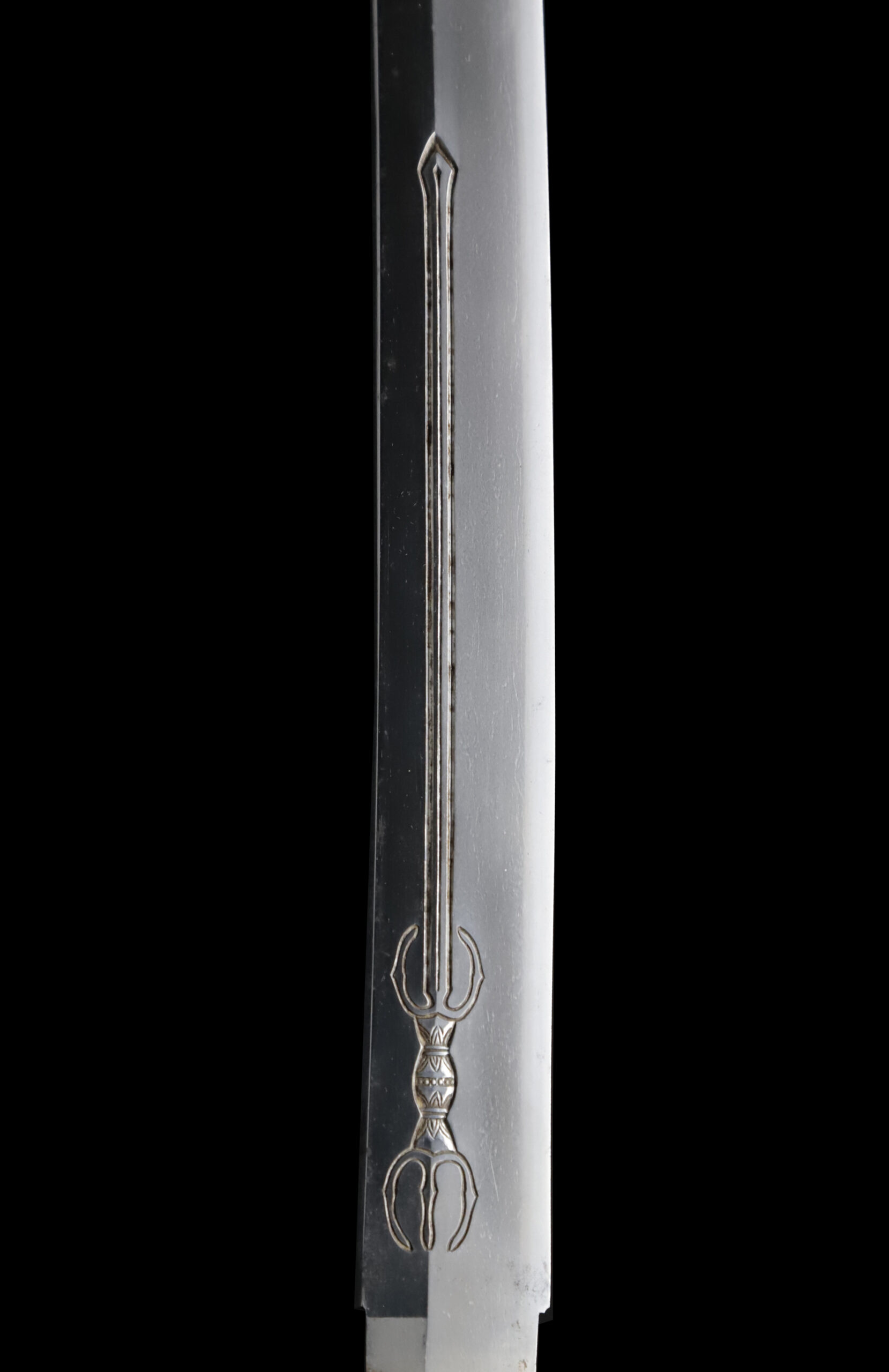
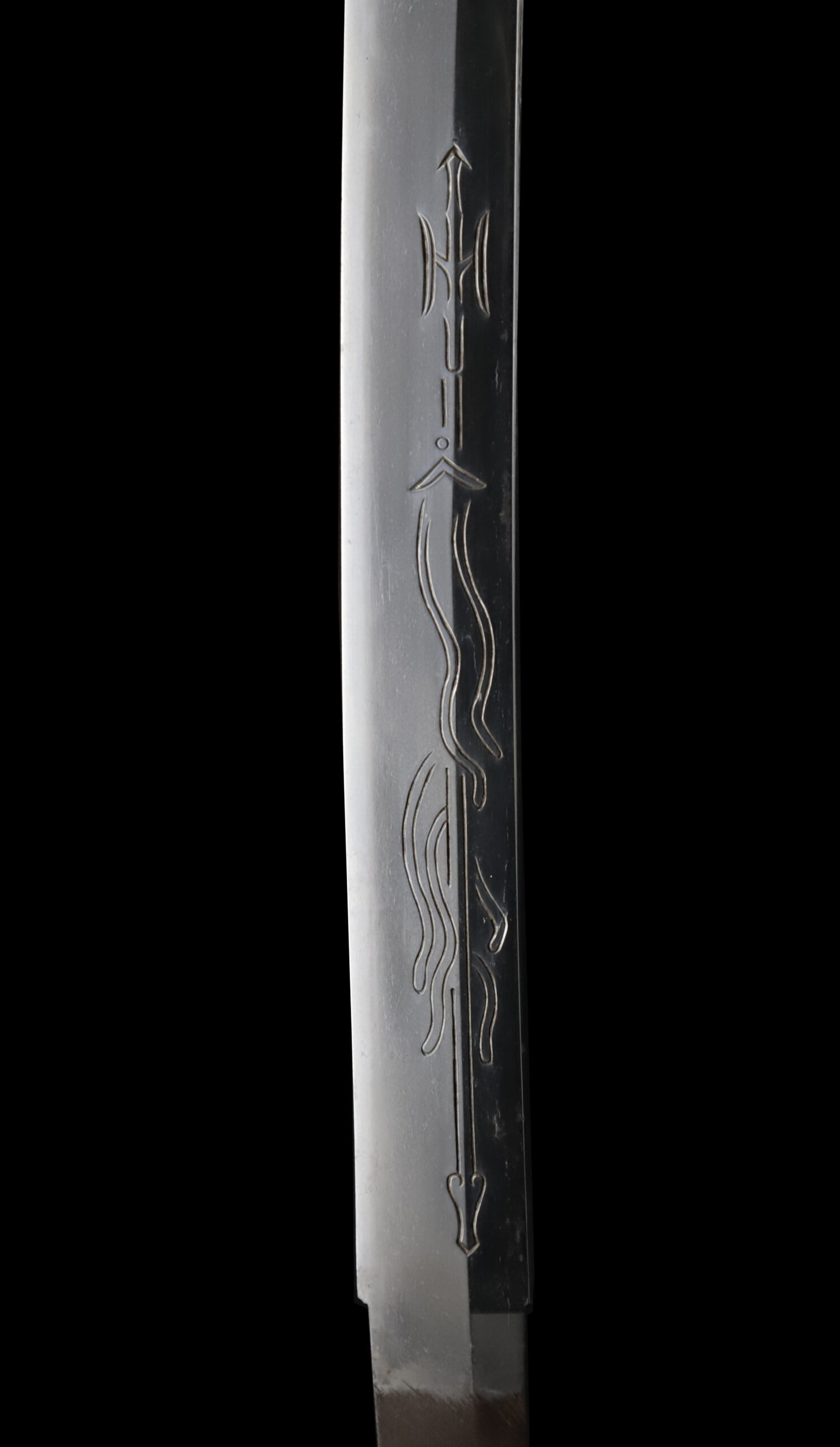
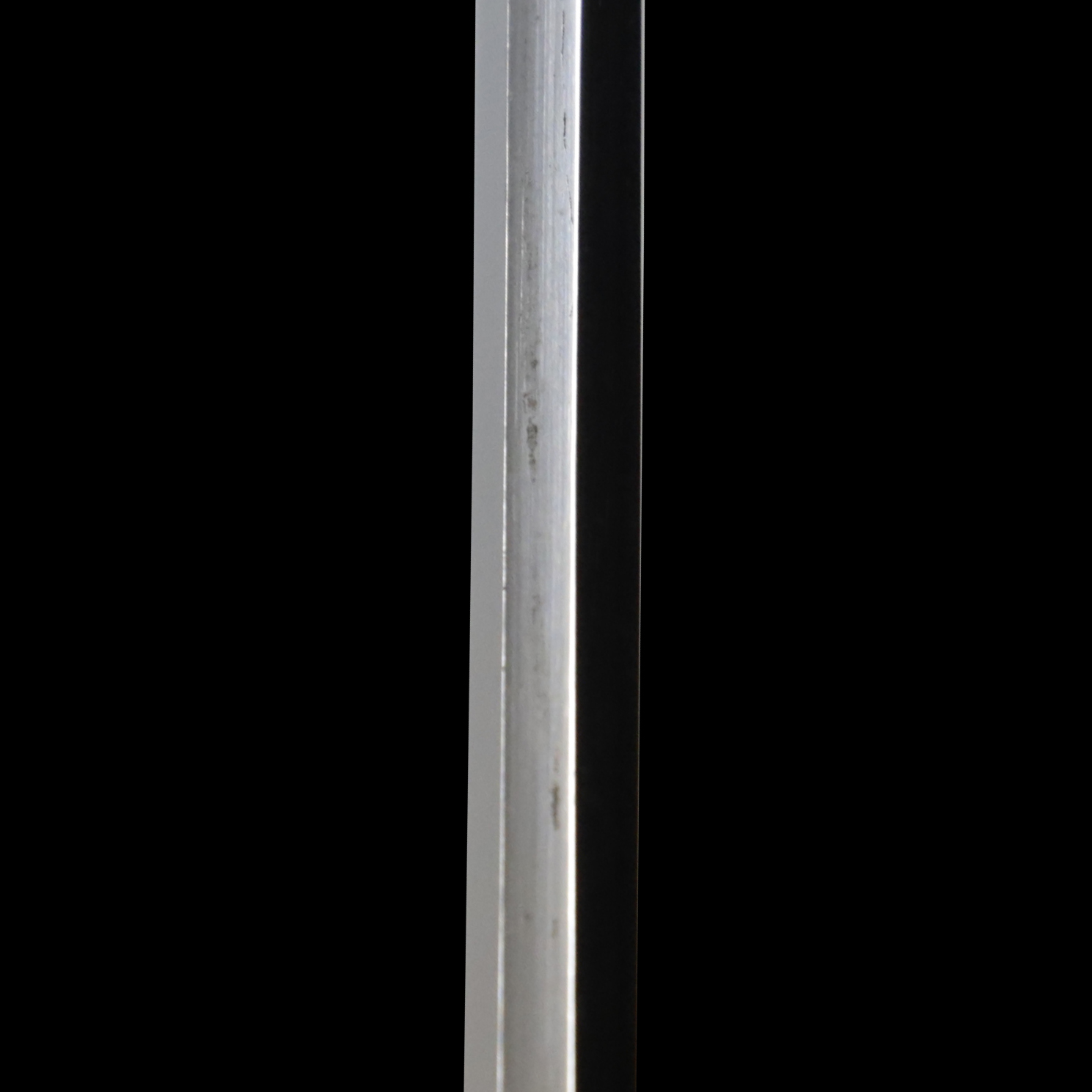
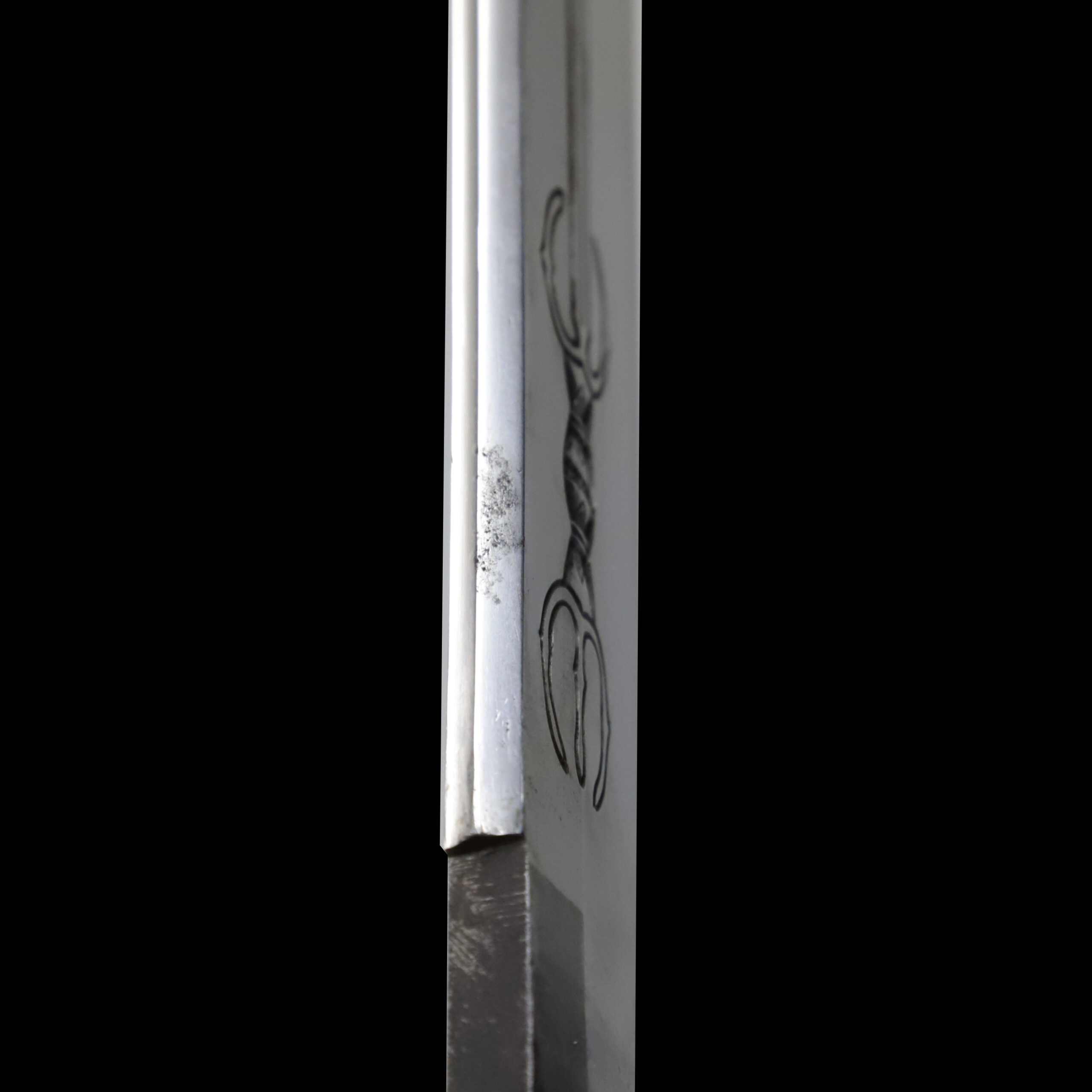
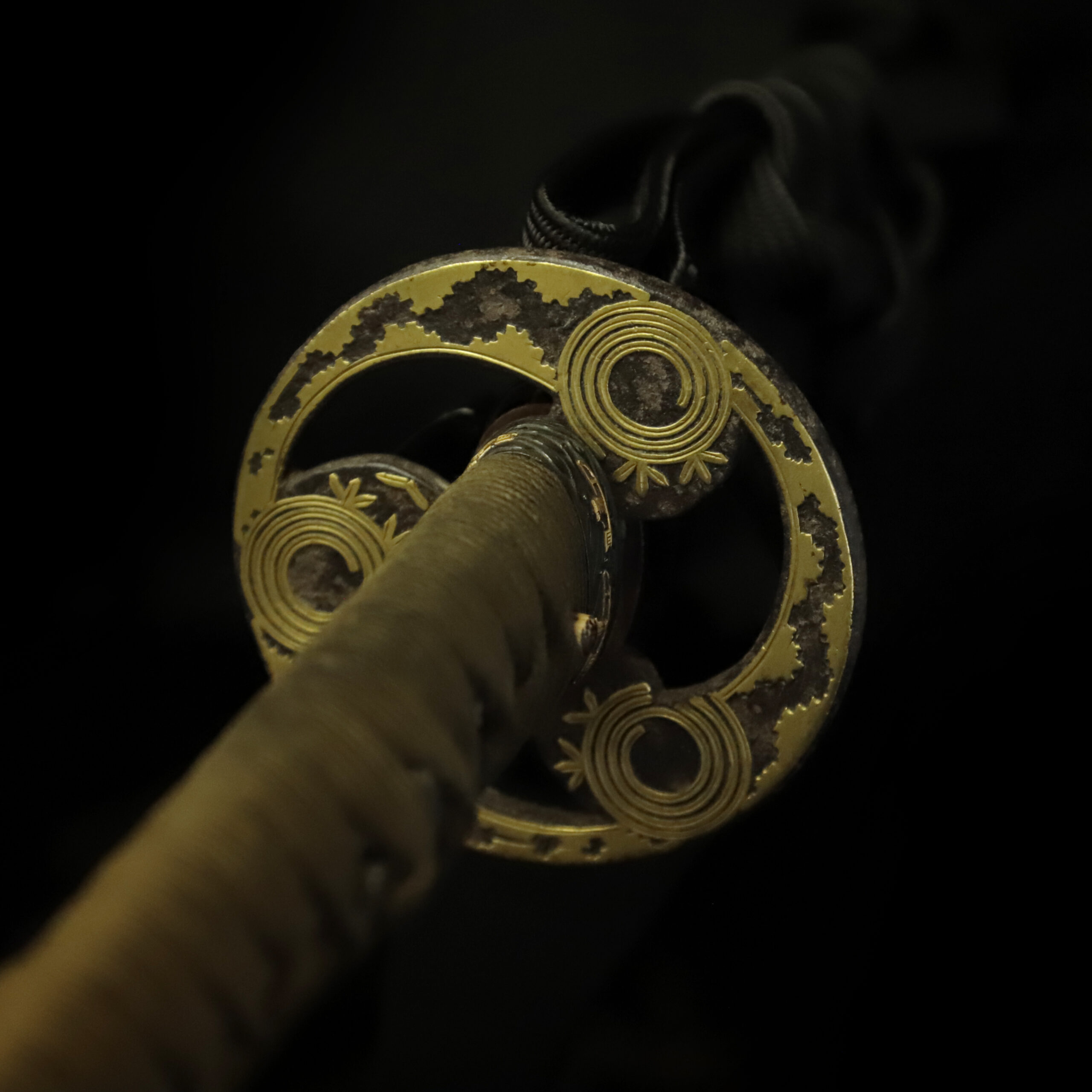
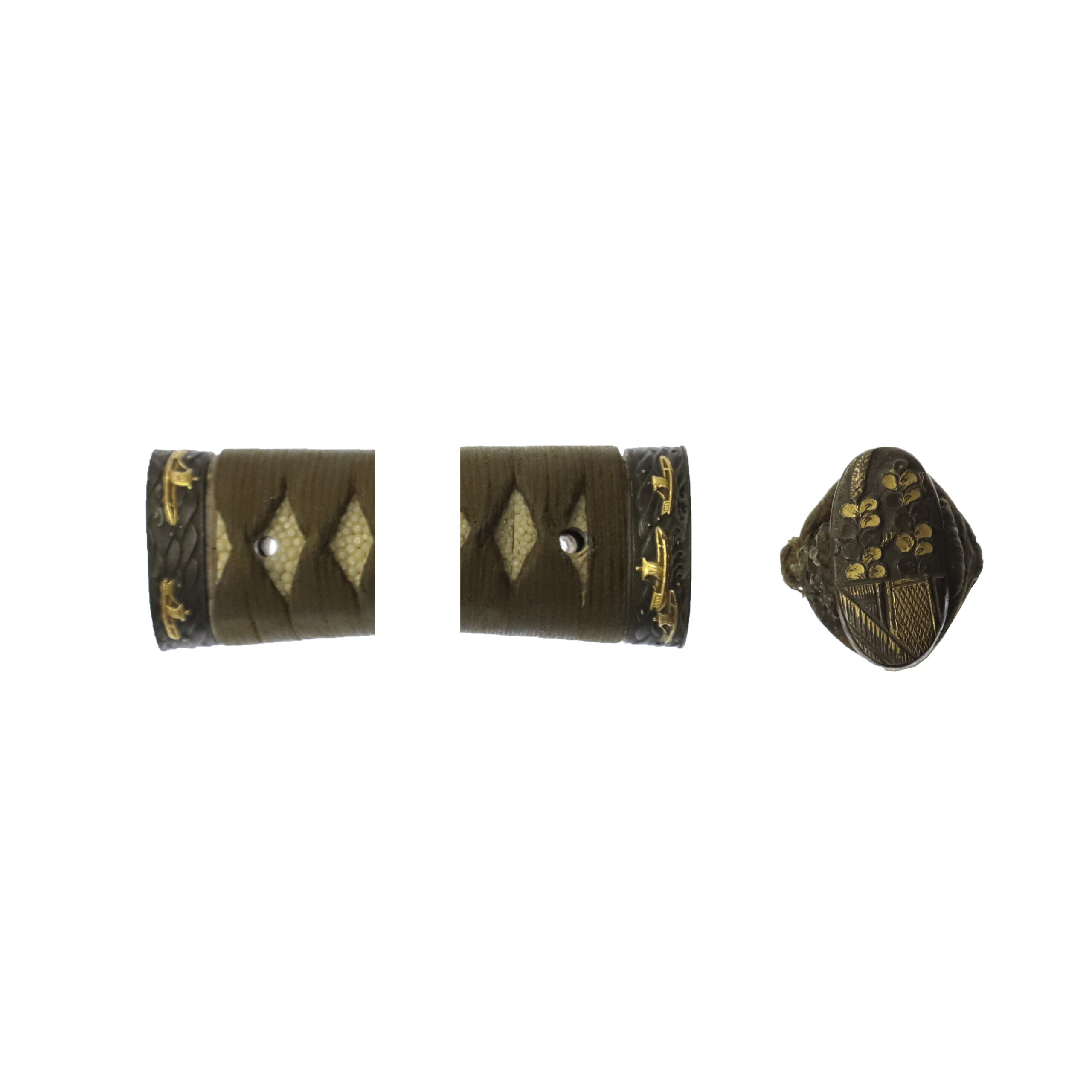
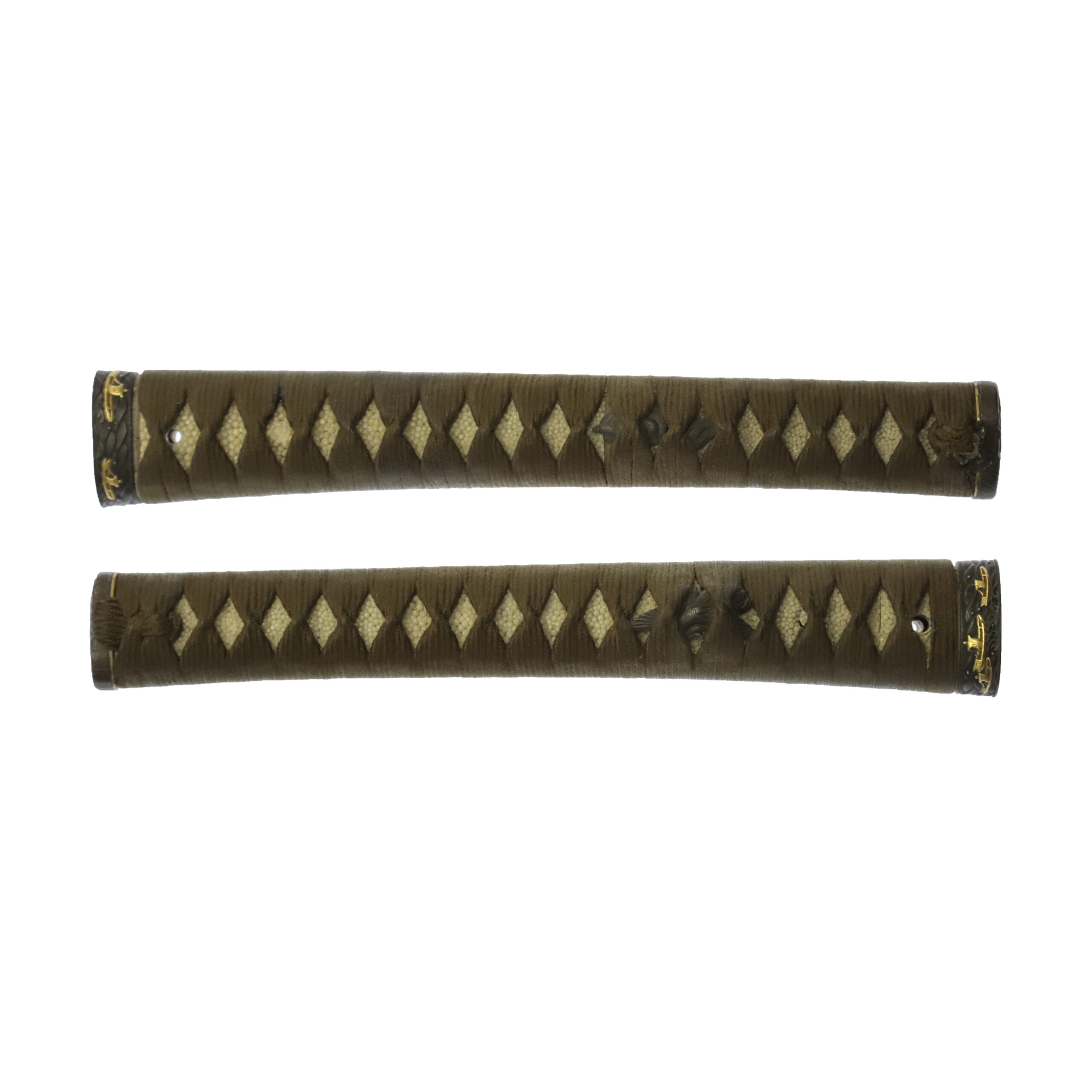
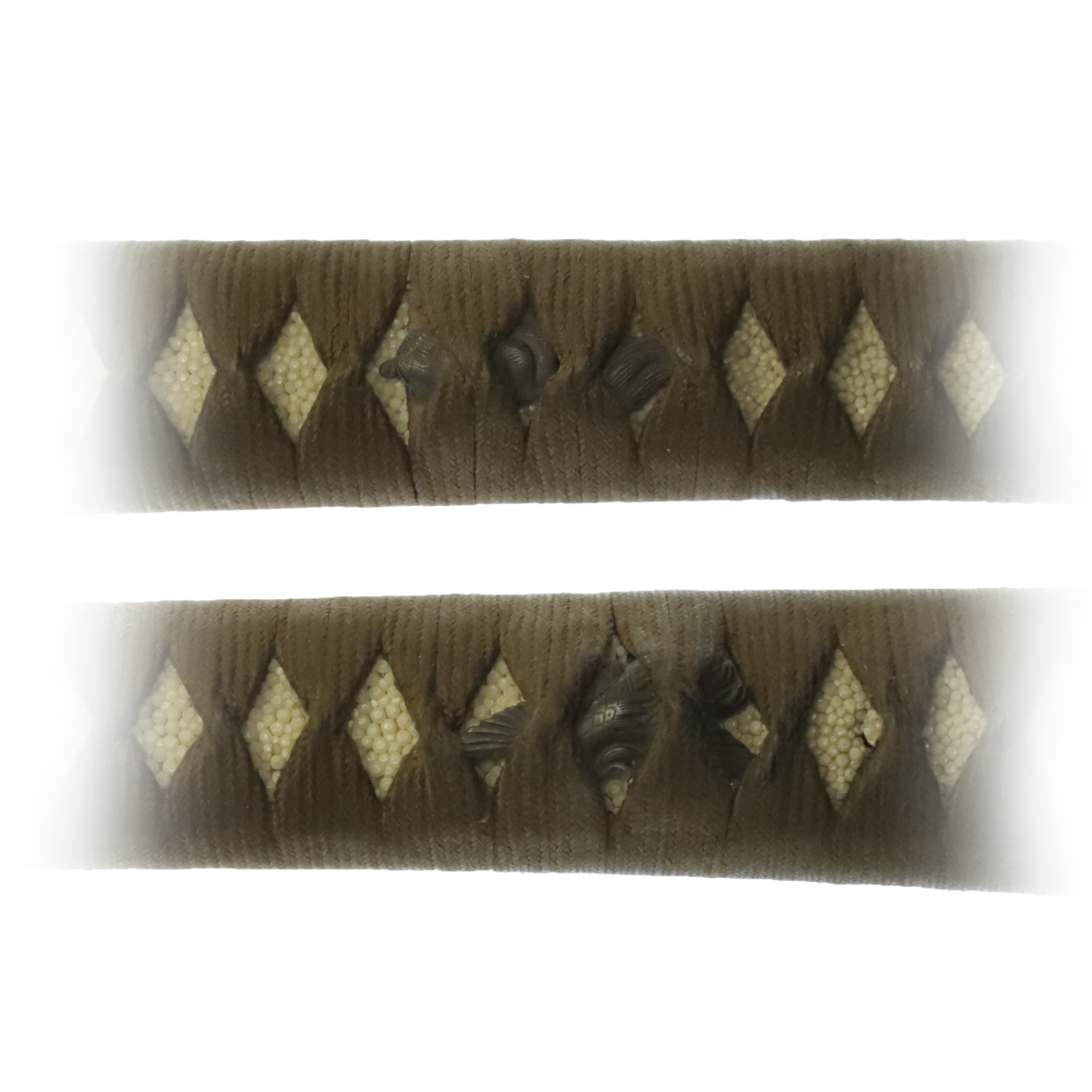
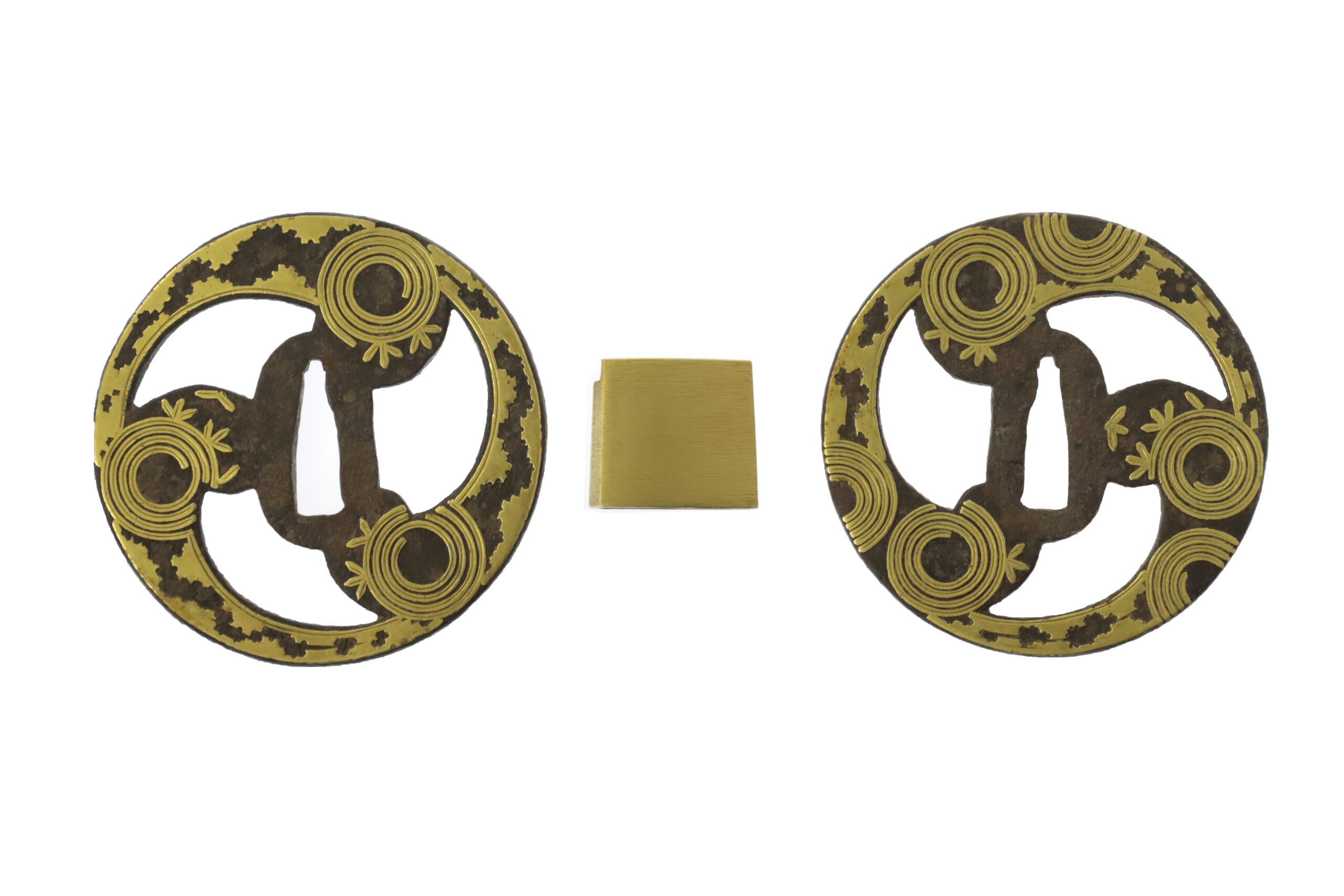
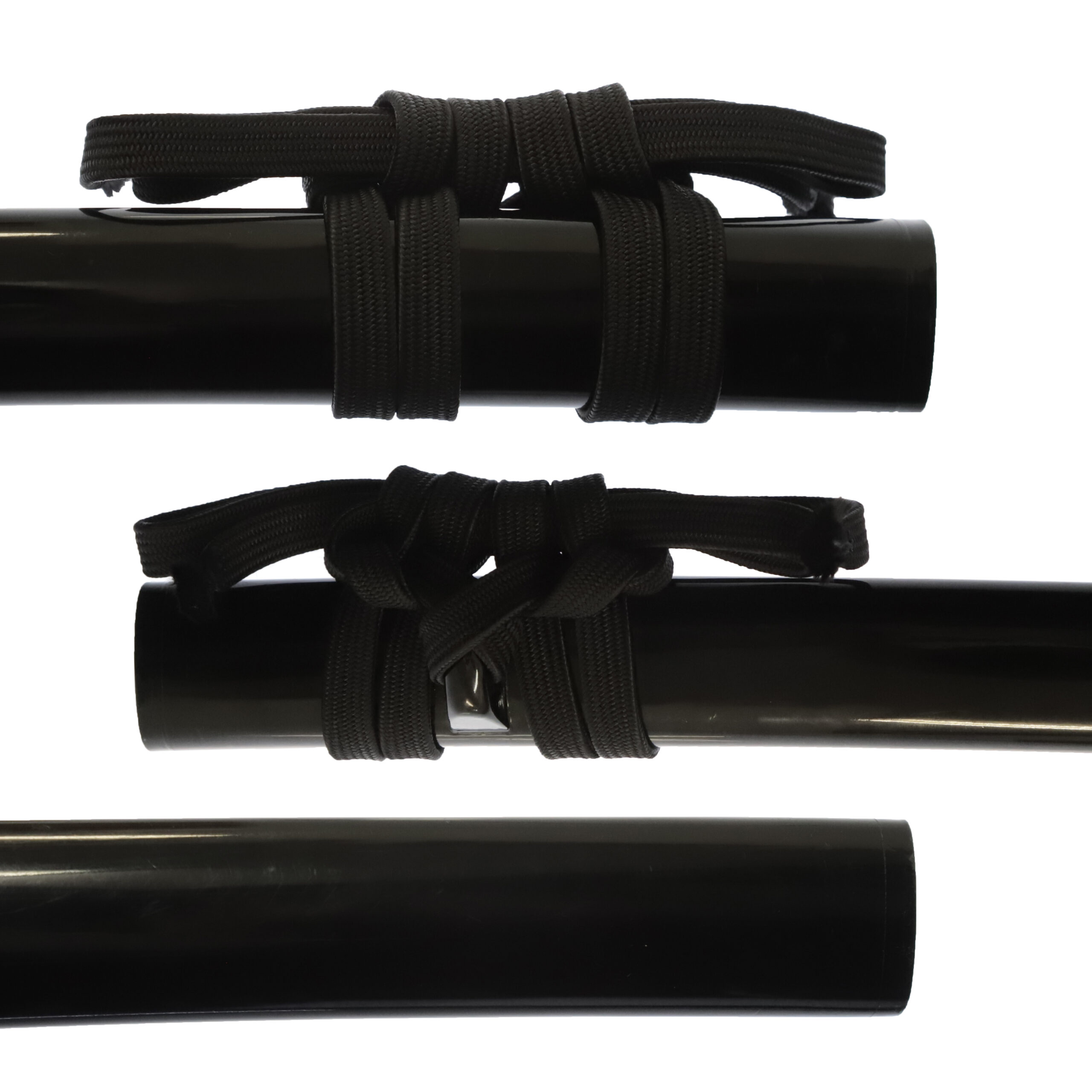
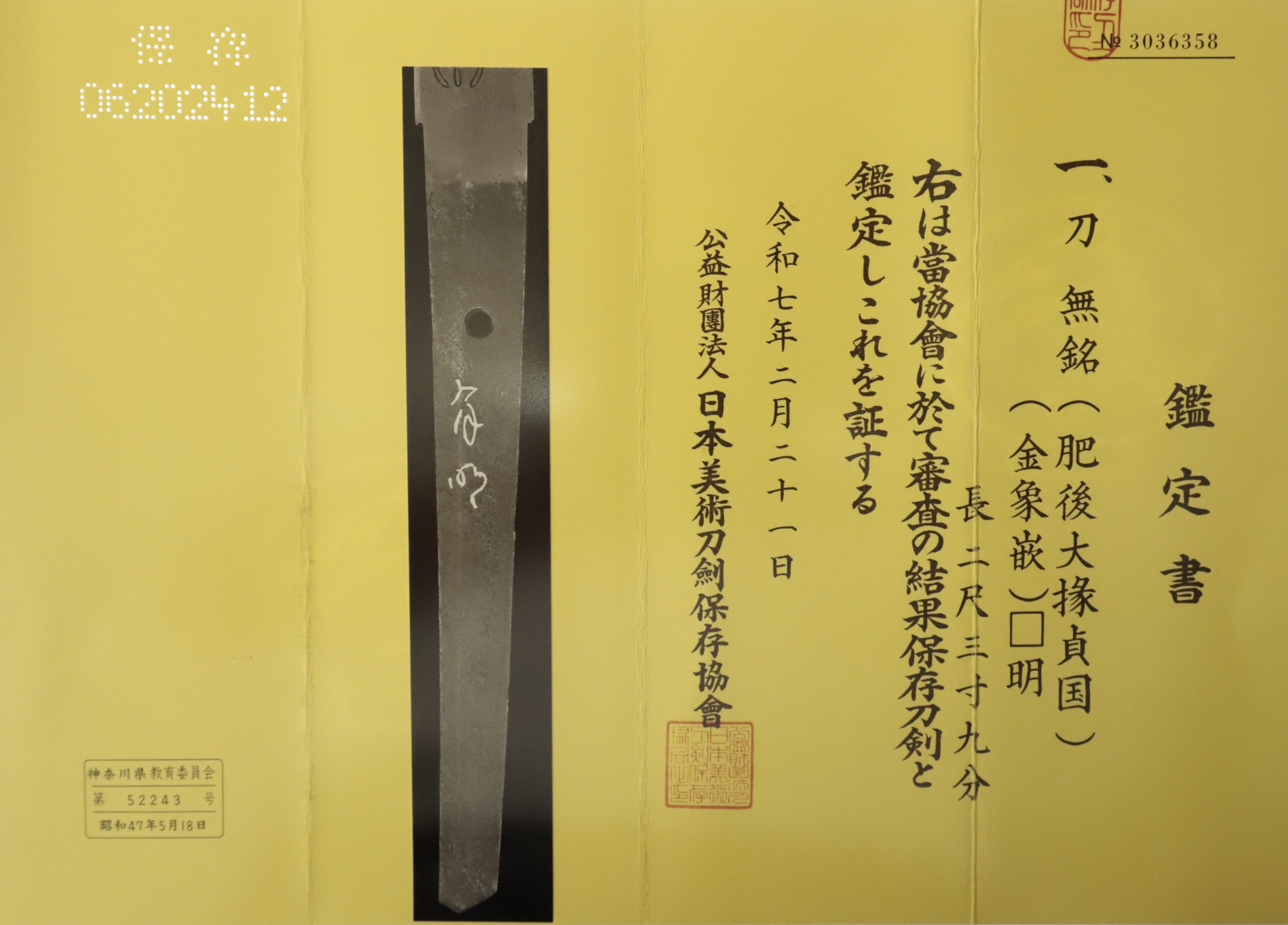
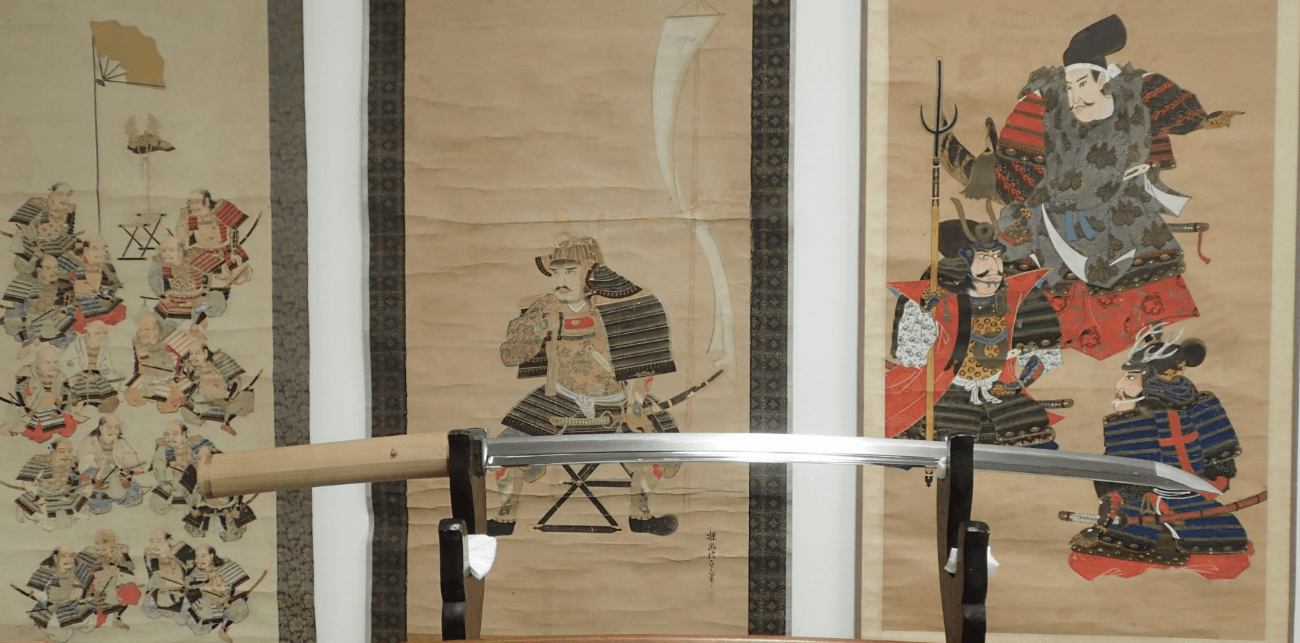
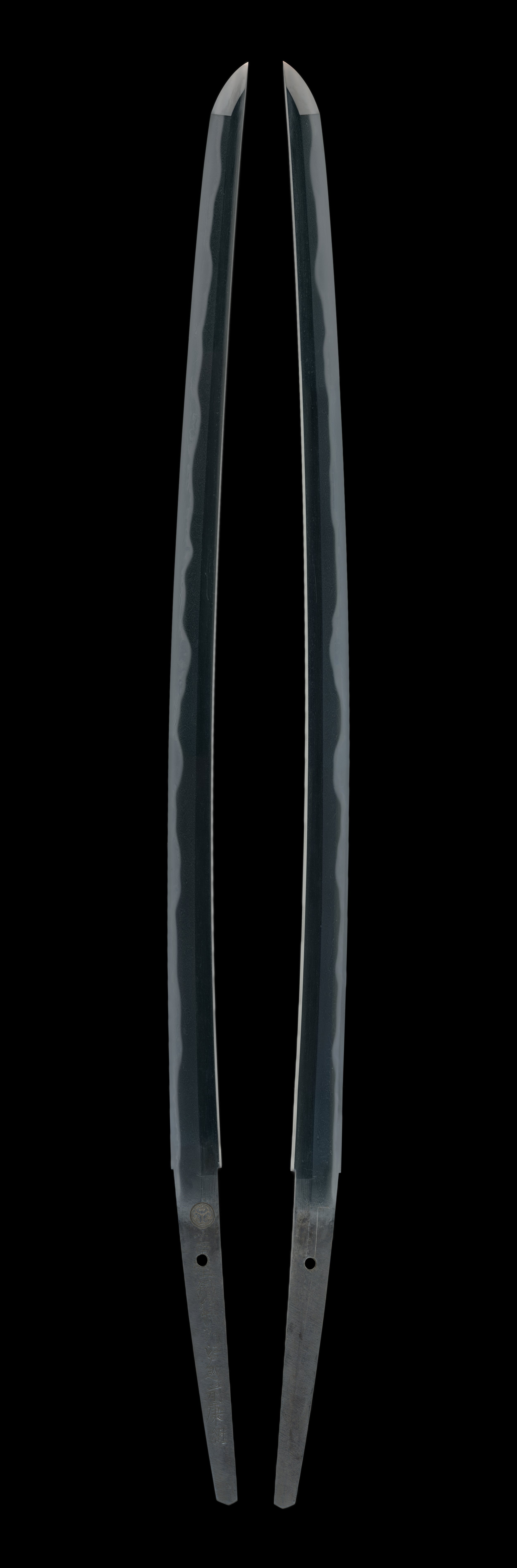
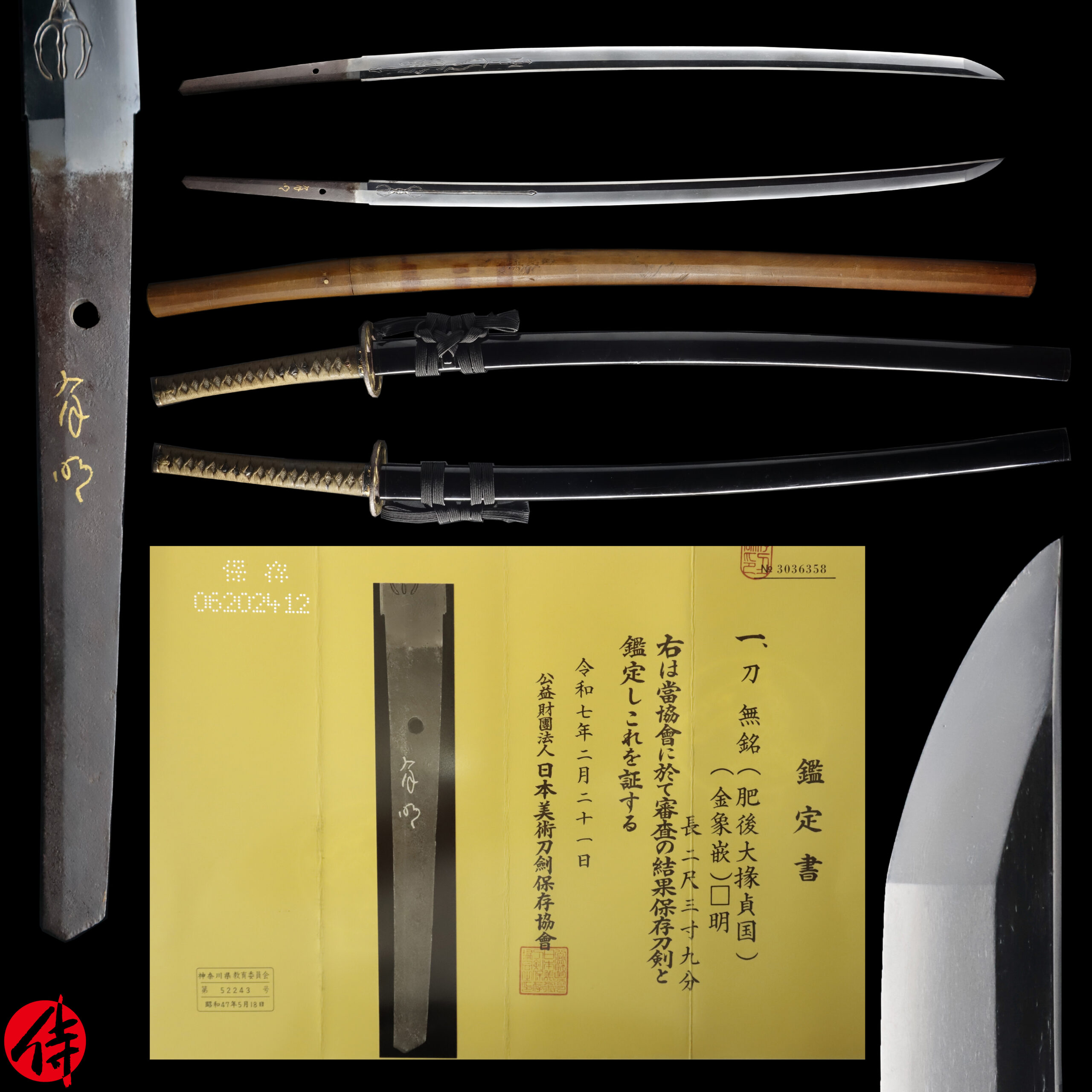
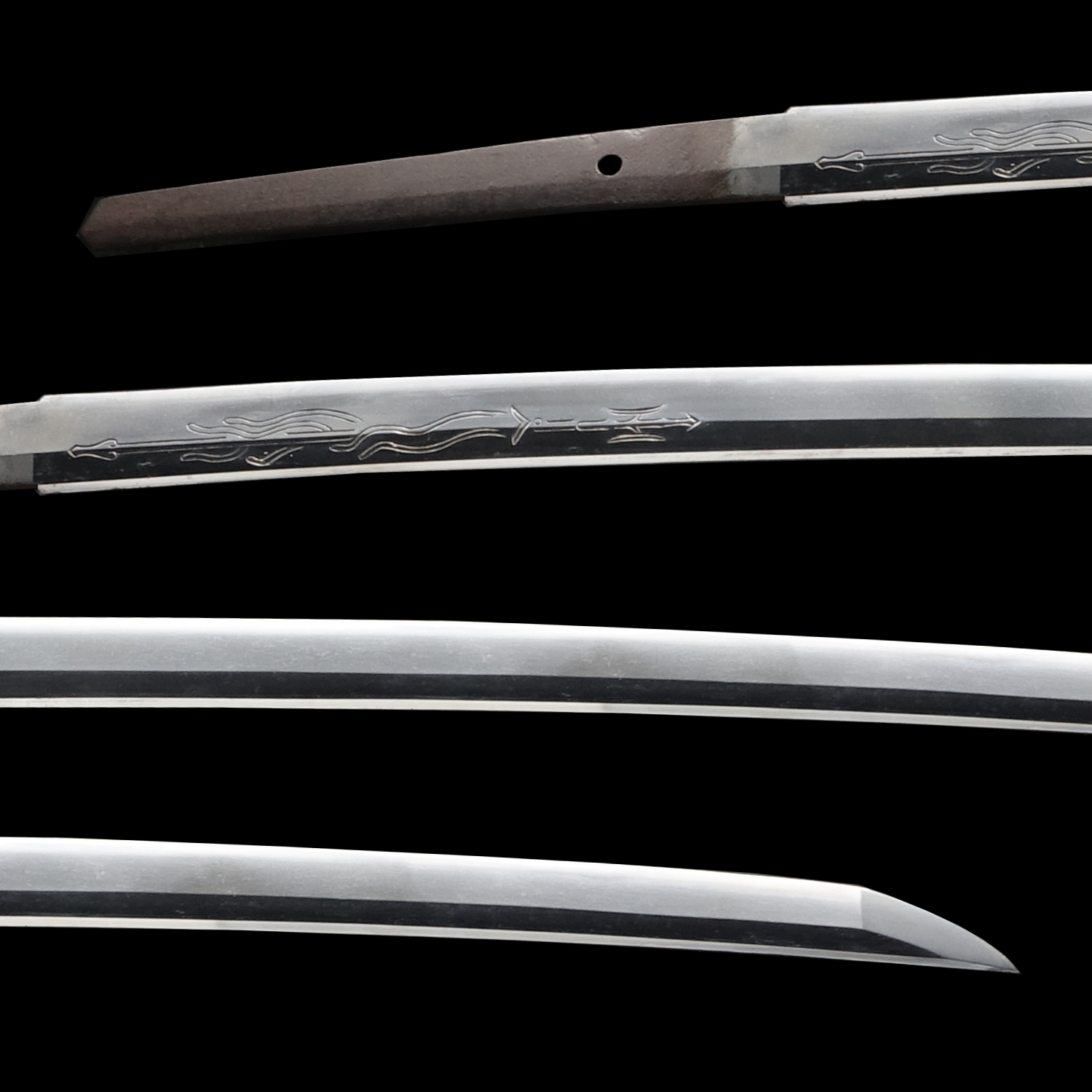
This katana is attributed to Higo Daijyo Sadakuni, a prominent smith of the Echizen Shimosaka School active during the Keicho era (1596-1615). The blade features intricate Horimono engravings of Bonji and Suken, symbolizing Buddhist deities and protection. It comes with an NBTHK Hozon Certificate, shirasaya, and koshirae.

NihontoWatch MonNihontoWatch
MarketEncyclopediaKantei
Swords›Shimosaka›Sadakuni›Katana: Attributed to Higo Daijyo Sadakuni - NBTHK Hozon Certificate
katanaHozon
Shimosaka Sadakuni

Katana: Attributed to Higo Daijyo Sadakuni - NBTHK Hozon Certificate

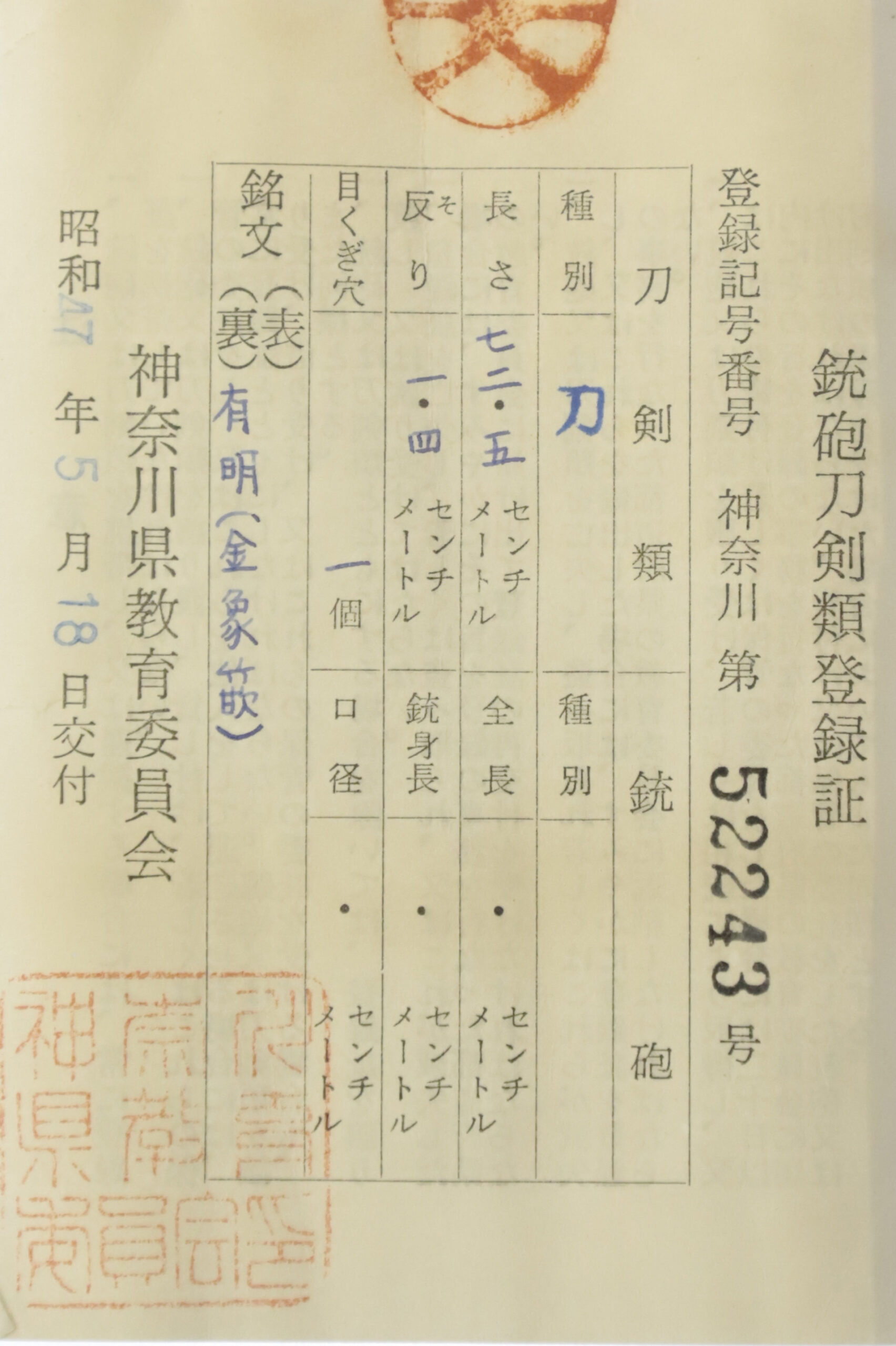
mumei · Echizen Shimosaka · Edo · nagasa 72.5cm · sori 1.4cm

SOLD
Shimosaka Sadakuni (貞國) · Echizen Shimosaka · Edo1 work for sale →
KatanaHozon
Could you name the smith from the blade alone? Today’s kantei →
Shimosaka Sadakuni — 1 of 24
Shimosaka Sadakuni — 2 of 24
Shimosaka Sadakuni — 3 of 24
Shimosaka Sadakuni — 4 of 24
Shimosaka Sadakuni — 5 of 24
Shimosaka Sadakuni — 6 of 24
Shimosaka Sadakuni — 7 of 24
Shimosaka Sadakuni — 8 of 24
Shimosaka Sadakuni — 9 of 24
Shimosaka Sadakuni — 10 of 24
Shimosaka Sadakuni — 11 of 24
Shimosaka Sadakuni — 12 of 24
Shimosaka Sadakuni — 13 of 24
Shimosaka Sadakuni — 14 of 24
Shimosaka Sadakuni — 15 of 24
Shimosaka Sadakuni — 16 of 24
Shimosaka Sadakuni — 17 of 24
Shimosaka Sadakuni — 18 of 24
Shimosaka Sadakuni — 19 of 24
Shimosaka Sadakuni — 20 of 24
Shimosaka Sadakuni — 21 of 24
Shimosaka Sadakuni — 22 of 24
Shimosaka Sadakuni — 23 of 24
Shimosaka Sadakuni — 24 of 24
1 / 24
1 / 24
Shimosaka Sadakuni — 1 of 24Shimosaka Sadakuni — 2 of 24Shimosaka Sadakuni — 3 of 24Shimosaka Sadakuni — 4 of 24Shimosaka Sadakuni — 5 of 24Shimosaka Sadakuni — 6 of 24Shimosaka Sadakuni — 7 of 24Shimosaka Sadakuni — 8 of 24Shimosaka Sadakuni — 9 of 24Shimosaka Sadakuni — 10 of 24Shimosaka Sadakuni — 11 of 24Shimosaka Sadakuni — 12 of 24Shimosaka Sadakuni — 13 of 24Shimosaka Sadakuni — 14 of 24Shimosaka Sadakuni — 15 of 24Shimosaka Sadakuni — 16 of 24Shimosaka Sadakuni — 17 of 24Shimosaka Sadakuni — 18 of 24Shimosaka Sadakuni — 19 of 24Shimosaka Sadakuni — 20 of 24Shimosaka Sadakuni — 21 of 24Shimosaka Sadakuni — 22 of 24Shimosaka Sadakuni — 23 of 24Shimosaka Sadakuni — 24 of 24
Shimosaka Sadakuni (貞國) · Echizen Shimosaka · Edo1 work for sale →
KatanaHozon
Could you name the smith from the blade alone? Today’s kantei →
Measurements & details
Smith
Shimosaka Sadakuni
Type
Katana
School
Shimosaka
Period
Around 1596–1615(Keicho)
Province
Echizen
Signature
Unsigned(91% of this smith's designated works are signed)
Measurements
Nagasa 72.5cmSori 1.4cm
Description

This katana is attributed to Higo Daijyo Sadakuni, a prominent smith of the Echizen Shimosaka School active during the Keicho era (1596-1615). The blade features intricate Horimono engravings of Bonji and Suken, symbolizing Buddhist deities and protection. It comes with an NBTHK Hozon Certificate, shirasaya, and koshirae.

About the maker

Sadakuni

貞國

Shimosaka (Echizen, Shinto) · Echizen · around 1596-1615

Fujishiro Jo saku · Tōken Taikan top 23%

1 piece on the market now

›

A single dated work fixes Higo Daijo Sadakuni in time: a tanto inscribed Keicho 14 (1609), the only year-dated blade of his that survives, from which his Keicho-shinto activity is read. He was a smith of the Echizen Shimosaka school, the workshop of Yasutsugu, and the published sources judge him the Shimosaka hand most intimately bound to Yasutsugu himself. The connection was once read too literally. Edo-period sword books and signature compendia scarcely record Sadakuni at all, and the few that do at times treat him as the same man as Yasutsugu, an identification helped by the fact that he too received the court title Higo Daijo. The modern verdict separates them while keeping them close: he is understood as a Shimosaka smith working alongside Yasutsugu, signing Higo Daijo Fujiwara Sadakuni with Echizen-ju on the reverse, his earliest pieces still carrying the Shimosaka family name in the form Echizen-no-kuni Shimosaka Sadakuni.

His hand is, before anything else, a suguha hand. The published sources state plainly that he 「直刃を得意として」, specialized in the straight temper[[c:1]], and that works in midareba are extremely rare. What he tempers is a calm suguha or suguha-toned line carrying only faint movement, a slight ko-notare and small ko-gunome mixed in, ashi entering and the habuchi breaking into a little hotsure. The nie is small and quiet and the nioiguchi sinks rather than glows, a shizumi tendency the sources note again and again across his blades, with thin sunagashi and the occasional kinsuji laid in. This is a restrained, almost austere temper, and it is the steadiest mark of his work. The boshi answers it: straight to a small ko-maru with hakikake at the point, sometimes drawn down long, now and then a touch pointed.

The jigane is the second mark, and the one the published sources use to set him apart from his master. His is an itame that runs and flows, mixed with mokume and a shinogi-ji that leans toward masame, the grain standing somewhat and ji-nie gathering over it. Against Yasutsugu the difference is stated as an absence and a refinement: there is little of the darkened moku-hada so often seen in Yasutsugu, and the forging is generally dense. As one of the published descriptions puts it, 「黒ずんだ杢肌などは少なく」 the blackish mokume is scarce[[c:2]], the steel tightly worked, and the nie of both ji and ha gives an overall gentle impression. On his best blades the sources go further, finding the ji tighter and more refined than ordinary Echizen work, a seibi forging they name as the principal point of interest in his hand.

Within that quiet rule, a few wakizashi show the breadth of his range, and the published sources treat them as exceptions worth remarking. One, a low and narrow ko-notare mixed with gunome over a dense, refined ji, is read as a work in which Sadakuni 「古作の貞宗や信国に範をとった」, took his models from the older Sadamune and Nobukuni[[c:3]], a blade of subdued, austere flavor that the sources call 「貞国会心の一口」, a piece of his full commitment. Another departs entirely from his norm: a broad choji-midare mixing gunome, round-headed gunome and pointed teeth, ashi long and frequent, nie thick with some coarse grains and muneyaki along the spine. The sources align this flamboyant manner with 「最も丁子の目立つ日向大掾貞次」, the first-generation Hyuga Daijo Sadatsugu[[c:4]], whose work is the most conspicuous for choji in the school, and they note how striking it is that a smith ordinarily given to the gentle suguha should fire so brilliant an irregular temper, calling the result 「同作中抜群の出来映え」, outstanding among his works[[c:5]] and evidence of the height of his skill. These are mostly wide-mihaba, sun-nobi wakizashi of nearly no curvature, the characteristic Keicho-shinto shape, and it is on that canvas that the showier hand appears.

Carving is the third strand of his identity, and possibly the original one. His blades carry full Echizen-bori: a Fudo Myo-o set in a recessed niche, a shin no kurikara, gomabashi and long bonji, plum and bamboo, deeply cut and powerful. The published sources call one such carving 「越前彫の典型であり」, a typical example of the Echizen style[[c:6]], and judge it likely the work of the smith himself. The reference texts go so far as to suggest that Sadakuni first supplied the carvings for the first-generation Yasutsugu's blades, and that the plum and bamboo motifs in which he specialized may stand at the source of the Echizen-bori tradition, before he remained in Echizen for the rest of his life. His teachers and pupils are not clearly recorded. What is recorded is the carving hand, and it sits on the blades as plainly as the temper.

The surviving designated record is small and almost entirely Important Swords, nine of them, with no National Treasure or Important Cultural Property among them, so a collector meets Sadakuni in the Juyo tier rather than in the locked register of national patrimony. Several of those blades carry the full long signature in fine chisel strokes, and the Keicho 14 dated tanto, his only year-dated work, holds the documentary weight of the group. A pair of his tanto are held in the Imperial Collection of the Imperial Household Agency, the most distinguished of his recorded whereabouts and a measure of how his quiet work was valued. Fujishiro rates him Jo saku, a solid upper grade rather than a summit, which suits him: he is not a famous name but a careful and individual one, the Shimosaka smith whose suguha and Echizen carving reward close looking. Blades by him come to market only from time to time, a tanto or wakizashi at Juyo level, and a signed and dated example is the one most worth waiting for.

Historical importance

Where Sadakuni stands among comparable artisans: across all of nihontō, and within tradition, era, and period. The tiers (Foremost · Leading · Major · Notable) weigh official designations from the NBTHK and Japan's Agency for Cultural Affairs, together with historical honors of lasting repute such as the Sansaku and Meibutsu-chō.

随一
Foremost
屈指
Leading
有数
Major
著名
Notable

Select a lens to see how it's measured.

Designation record
11 designated works
Gyobutsu (Imperial)
2
Jūyō
9
1 work by Sadakuni on the market→
Sadakuni — full profileShimosaka (Echizen, Shinto) school

Dated Works

Years he was demonstrably active, proven by signed-and-dated blades

Active period
1605Editorial estimate: 1596–1615
1 of 8 designated works carry a date

Study this maker →

About the school

Shimosaka

下坂

Shinto · Echizen

54 pieces on the market now

›

The Shimosaka name began not as a single hand but as a trademark shared by a band of Echizen smiths at the dawn of the shinto era, and the designated record gathers their work under that one signature rather than parsing it into individuals. The published sources read the early inscriptions, the generic Echizen no Kuni Shimosaka and the titled Higo Daijo Fujiwara Shimosaka, as the product of a group, of which the first-generation Yasutsugu served as the representative. Born in Shimosaka village of Sakata district in Omi, Yasutsugu moved to Echizen under the patronage of Yuki Hideyasu, signing in his early years Higo no Daijo Shimosaka before his Keicho 10 to 11 summons to Edo, where he forged before Ieyasu and Hidetada and received the character Yasu and the right to cut the Tokugawa hollyhock crest on his nakago. The titled signature was carried by several Echizen hands at once, and the texts list Yasutsugu, Sadakuni and Kanenori among the smiths whose chisel movement and brush intent are too alike to part on present evidence. From this band the Echizen Yasutsugu line descended, dividing after the second generation into the Edo and Echizen Shimosaka houses, and around it formed the deep relief carving the province made its own. The school is recognized first in its steel. The forging is itame mixed with mokume that stands and opens, often flowing into nagare, carrying thick ji-nie and fine chikei, the kane taking on the blackish cast the sources name outright as Echizen-gane; the same dark, standing jihada recurs from Yasutsugu through his son, through Sadatsugu, Shigetaka and the unnamed Shimosaka hands, and the commentary returns to it as the group's signature. Over it the hamon favors a suguha to chu-suguha or shallow notare into which linked gunome and ko-gunome mix, ko-ashi and yo entering, the nie thick and gathering unevenly into rough patches, kinsuji and sunagashi streaming through, the nioiguchi tending to a sinking shizumi.

The boshi is the steadiest tell, running to a ko-maru swept in hakikake and turning back long, with a Sanpin-flavored reminiscence of the Mishina and Echizen-Seki inheritance. Yet the house is not uniform: Sadakuni works an austere suguha over an unusually refined ji with little of the blackish mokume, Sadatsugu fires the brightest, most choji-laden midare of the circle, and the third generation cleans the forging and brightens the nioiguchi toward his Edo contemporaries. Binding the registers is the carving, the deep Echizen-bori and Kinai-bori of kurikara, Fudo Myoo, bonji and gomabashi set in relief within the hi, which Sadakuni may have first supplied to Yasutsugu's blades. For the collector the school rewards reading by register rather than by a single famous holding. Yasutsugu is its summit, rated Jo-jo saku, retained smith to the shogunal house, whose Sadamune and Toshiro copies (the Namazuo, the lost Oyako, the Shishi) show his own Echizen hand under the model, and whose best katana carry the possession inscriptions of his patron Honda Hida no Kami Narishige and provenance in the Echizen and Kishu Tokugawa houses. The second generation follows so faithfully that his finest blades part from the father chiefly by the form of the character tsugu; the Edo third generation continues the suguha and ko-notare manners with a straight yakidashi and a Hojoji affinity. Around them the specialists define the edges of the idiom: Sadakuni and his quiet suguha with a pair of tanto in the Imperial Collection, Sadatsugu with his Narishige-crested cutting-test blades, and Shigetaka, the most skilled of Yasutsugu's pupils, whose chestnut-tailed kurijiri nakago and Kinai carving (the Honebami and Hossho copies among his masterworks) name him at a glance and whose finest work approaches the master. A signed Shimosaka blade, whether a titled Yasutsugu beneath the aoi-mon, a named piece by one of the band, or a Higo Daijo pre-Yasutsugu register, comes to market only from time to time, valued as the wellspring from which the Echizen Yasutsugu line and its carving tradition arose. Learn more →

16 recorded smiths151 designated works
Leading smiths
SmithEraDesignated
Yasutsugu康繼1596-161573
Yasutsugu康繼1624-164427
Yasutsugu康繼1661-16738
Sadakuni貞國1596-161511
Shigetaka重高1596-16156
Explore the Shimosaka school →

Historical context

The Edo period (1615 to 1868)

›

Under the Tokugawa peace the daishō became a regulated uniform, and demand gathered in the castle towns, above all Edo itself. The craft split two ways: brilliant display work for connoisseurs, and tested blades whose cutting results were sometimes inlaid in gold.

The Edo period (1615 to 1868) →

NBTHK Certificate
Hozon Tōken保存刀剣
Sword Worthy of Preservation
›

Certifies a genuine blade worth preserving: a signature confirmed correct, or, if unsigned, an era, province, and school that the NBTHK can reliably identify.

About the NBTHK›

The NBTHK (Nihon Bijutsu Tōken Hozon Kyōkai, the Society for the Preservation of Japanese Art Swords) is a public-interest incorporated foundation founded in 1948 and supervised by Japan’s Agency for Cultural Affairs (Bunkachō); it is based at the Japanese Sword Museum in Tokyo. Its expert panels physically examine each submitted work (shinsa) and issue a certificate (kanteishō) ranking it by artistic and historical merit. NBTHK papers are the most widely recognized standard of authentication for Japanese swords and fittings.

NBTHK official site→
Seller
S
Samurai Museum
🇯🇵Ships from Japan
›
✓Verified dealersamuraimuseum.jp
✓Ships worldwide✓English supportPayPalCredit card
Return policy

Returns/exchanges limited to defects caused by shipping (except willful misconduct or gross negligence by the company); customers must contact within 72 hours of receiving the product.

View all of Samurai Museum’s listings→View this item on the dealer’s site→

More works by Shimosaka Sadakuni

View all →
Samurai Museum
Hozon
Wakizashi - Hozon - by Shimosaka Sadakuni - Attributed to Sadakuni - NBTHK Hozon CertificateWakizashi - Hozon - by Shimosaka Sadakuni - Attributed to Sadakuni - NBTHK Hozon Certificate

Wakizashi

ByShimosaka Sadakuni
¥550,000

Previously sold by Shimosaka Sadakuni

View all →
Samurai Nippon
Hozon
Tanto - Hozon - by Shimosaka Sadakuni - Sadakuni (Higodaijo) - Gold Inlay Inscription on Nakago MuneTanto - Hozon - by Shimosaka Sadakuni - Sadakuni (Higodaijo) - Gold Inlay Inscription on Nakago Mune
Sold

Tantō

ByShimosaka Sadakuni
SOLD
Choshuya
Wakizashi - by Shimosaka Sadakuni - Ubu-nakago Mumei Higo Daijo Fujiwara SadakuniWakizashi - by Shimosaka Sadakuni - Ubu-nakago Mumei Higo Daijo Fujiwara Sadakuni
Sold

Wakizashi

ByShimosaka Sadakuni
SOLD
Samurai Museum
Hozon
Wakizashi - Hozon - by Shimosaka Sadakuni - Attributed to Higo Daijyo Sadakuni - NBTHK Hozon CertificateWakizashi - Hozon - by Shimosaka Sadakuni - Attributed to Higo Daijyo Sadakuni - NBTHK Hozon Certificate
Sold

Wakizashi

ByShimosaka Sadakuni
SOLD
Samurai Museum
Hozon
Katana - Hozon - by Shimosaka Sadakuni - Attributed to Higo Daijyo Sadakuni - NBTHK Hozon CertificateKatana - Hozon - by Shimosaka Sadakuni - Attributed to Higo Daijyo Sadakuni - NBTHK Hozon Certificate
Sold

Katana

ByShimosaka Sadakuni
SOLD
Samurai Museum
Tokuho
Katana - Tokuho - by Shimosaka Sadakuni - Sadakuni - NBTHK Tokubetsu Hozon CertificateKatana - Tokuho - by Shimosaka Sadakuni - Sadakuni - NBTHK Tokubetsu Hozon Certificate
Sold

Katana

ByShimosaka Sadakuni
SOLD

More from the Shimosaka school

View all →
Token-Net
Jūyō
Katana - Jūyō - by Shimosaka Yasutsugu - Oite Busyu Edo Echizen Yasutsugu motte Nanban-tetsu (1st Gen.)Katana - Jūyō - by Shimosaka Yasutsugu - Oite Busyu Edo Echizen Yasutsugu motte Nanban-tetsu (1st Gen.)

Katana

ByShimosaka Yasutsugu
¥9,800,000
Eirakudo
Tokuho
Tanto - Tokuho - by Shimosaka Yasutsugu - 1st Generation YasutsuguTanto - Tokuho - by Shimosaka Yasutsugu - 1st Generation Yasutsugu

Tantō

ByShimosaka Yasutsugu
¥5,000,000
Nihonto Australia
Tokuho
Katana - Tokuho - by Shimosaka Yasutsugu - First Generation Echizen Yasutsugu Katana, Utsushi of Ataki Sadamune, with NBTHK CertificateKatana - Tokuho - by Shimosaka Yasutsugu - First Generation Echizen Yasutsugu Katana, Utsushi of Ataki Sadamune, with NBTHK Certificate

Katana

ByShimosaka Yasutsugu
Ask
Shoubudou
Tokuho
Wakizashi - Tokuho - by Shimosaka Yasutsugu - Oie Bushu Edo Echizen Yasutsugu (1st Generation)Wakizashi - Tokuho - by Shimosaka Yasutsugu - Oie Bushu Edo Echizen Yasutsugu (1st Generation)

Wakizashi

ByShimosaka Yasutsugu
¥2,500,000
Touken Hataya
Tokuho
Wakizashi - Tokuho - by Shimosaka Yasutsugu - Tokubetsu Hozon Wakizashi by Yasutsugu of Echizen with Aoi MonWakizashi - Tokuho - by Shimosaka Yasutsugu - Tokubetsu Hozon Wakizashi by Yasutsugu of Echizen with Aoi Mon

Wakizashi

ByShimosaka Yasutsugu
¥400,000
Toukentakarado
Jūyō
Katana - Jūyō - by Shimosaka Yasutsugu - (Aoi mon) Echizen Yasutsugu, resident of Bushū EdoKatana - Jūyō - by Shimosaka Yasutsugu - (Aoi mon) Echizen Yasutsugu, resident of Bushū Edo

Katana

ByShimosaka Yasutsugu
¥8,000,000
Aoi Art
Tokuho
Katana - Tokuho - by Shimosaka Yasutsugu - Echizen Yasutsugu (2nd generation)Katana - Tokuho - by Shimosaka Yasutsugu - Echizen Yasutsugu (2nd generation)

Katana

ByShimosaka Yasutsugu
¥1,650,000
Touken Sakata
Jūyō
Katana - Jūyō - by Shimosaka Yasutsugu - Yasutsugu Nyudo (2nd Gen.) made with Namban-tetsu in Bushu EdoKatana - Jūyō - by Shimosaka Yasutsugu - Yasutsugu Nyudo (2nd Gen.) made with Namban-tetsu in Bushu Edo

Katana

ByShimosaka Yasutsugu
¥6,700,000

Swords

  • Katana
  • Wakizashi
  • Tantō
  • Tachi
  • Naginata
  • Yari
  • Japanese Swords
  • Samurai Swords

Fittings

  • Tsuba
  • Fuchi-Kashira
  • Kozuka
  • Menuki
  • Sword Guards (Tsuba)

Armor

  • Kabuto
  • Samurai Armor
  • All Samurai Armor

By Certification

  • Tokujū
  • Jūyō
  • Tokuho
  • Hozon

Resources

  • Dealer Directory
  • Artist Directory
  • The Daily Kantei
  • Glossary
  • Browse All
Nihontowatch© 2026
TermsPrivacyCookiesAbout
Sold

Description

This katana is attributed to Higo Daijyo Sadakuni, a prominent smith of the Echizen Shimosaka School active during the Keicho era (1596-1615). The blade features intricate Horimono engravings of Bonji and Suken, symbolizing Buddhist deities and protection. It comes with an NBTHK Hozon Certificate, shirasaya, and koshirae.

NihontoWatch MonNihontoWatch
MarketEncyclopediaKantei
Swords›Shimosaka›Sadakuni›Katana: Attributed to Higo Daijyo Sadakuni - NBTHK Hozon Certificate
katanaHozon
Shimosaka Sadakuni

Katana: Attributed to Higo Daijyo Sadakuni - NBTHK Hozon Certificate

mumei · Echizen Shimosaka · Edo · nagasa 72.5cm · sori 1.4cm

SOLD
Shimosaka Sadakuni (貞國) · Echizen Shimosaka · Edo1 work for sale →
KatanaHozon
Could you name the smith from the blade alone? Today’s kantei →
Shimosaka Sadakuni — 1 of 24
Shimosaka Sadakuni — 2 of 24
Shimosaka Sadakuni — 3 of 24
Shimosaka Sadakuni — 4 of 24
Shimosaka Sadakuni — 5 of 24
Shimosaka Sadakuni — 6 of 24
Shimosaka Sadakuni — 7 of 24
Shimosaka Sadakuni — 8 of 24
Shimosaka Sadakuni — 9 of 24
Shimosaka Sadakuni — 10 of 24
Shimosaka Sadakuni — 11 of 24
Shimosaka Sadakuni — 12 of 24
Shimosaka Sadakuni — 13 of 24
Shimosaka Sadakuni — 14 of 24
Shimosaka Sadakuni — 15 of 24
Shimosaka Sadakuni — 16 of 24
Shimosaka Sadakuni — 17 of 24
Shimosaka Sadakuni — 18 of 24
Shimosaka Sadakuni — 19 of 24
Shimosaka Sadakuni — 20 of 24
Shimosaka Sadakuni — 21 of 24
Shimosaka Sadakuni — 22 of 24
Shimosaka Sadakuni — 23 of 24
Shimosaka Sadakuni — 24 of 24
1 / 24
1 / 24
Shimosaka Sadakuni — 1 of 24Shimosaka Sadakuni — 2 of 24Shimosaka Sadakuni — 3 of 24Shimosaka Sadakuni — 4 of 24Shimosaka Sadakuni — 5 of 24Shimosaka Sadakuni — 6 of 24Shimosaka Sadakuni — 7 of 24Shimosaka Sadakuni — 8 of 24Shimosaka Sadakuni — 9 of 24Shimosaka Sadakuni — 10 of 24Shimosaka Sadakuni — 11 of 24Shimosaka Sadakuni — 12 of 24Shimosaka Sadakuni — 13 of 24Shimosaka Sadakuni — 14 of 24Shimosaka Sadakuni — 15 of 24Shimosaka Sadakuni — 16 of 24Shimosaka Sadakuni — 17 of 24Shimosaka Sadakuni — 18 of 24Shimosaka Sadakuni — 19 of 24Shimosaka Sadakuni — 20 of 24Shimosaka Sadakuni — 21 of 24Shimosaka Sadakuni — 22 of 24Shimosaka Sadakuni — 23 of 24Shimosaka Sadakuni — 24 of 24
Shimosaka Sadakuni (貞國) · Echizen Shimosaka · Edo1 work for sale →
KatanaHozon
Could you name the smith from the blade alone? Today’s kantei →
Measurements & details
Smith
Shimosaka Sadakuni
Type
Katana
School
Shimosaka
Period
Around 1596–1615(Keicho)
Province
Echizen
Signature
Unsigned(91% of this smith's designated works are signed)
Measurements
Nagasa 72.5cmSori 1.4cm
Description

This katana is attributed to Higo Daijyo Sadakuni, a prominent smith of the Echizen Shimosaka School active during the Keicho era (1596-1615). The blade features intricate Horimono engravings of Bonji and Suken, symbolizing Buddhist deities and protection. It comes with an NBTHK Hozon Certificate, shirasaya, and koshirae.

About the maker

Sadakuni

貞國

Shimosaka (Echizen, Shinto) · Echizen · around 1596-1615

Fujishiro Jo saku · Tōken Taikan top 23%

1 piece on the market now

›

A single dated work fixes Higo Daijo Sadakuni in time: a tanto inscribed Keicho 14 (1609), the only year-dated blade of his that survives, from which his Keicho-shinto activity is read. He was a smith of the Echizen Shimosaka school, the workshop of Yasutsugu, and the published sources judge him the Shimosaka hand most intimately bound to Yasutsugu himself. The connection was once read too literally. Edo-period sword books and signature compendia scarcely record Sadakuni at all, and the few that do at times treat him as the same man as Yasutsugu, an identification helped by the fact that he too received the court title Higo Daijo. The modern verdict separates them while keeping them close: he is understood as a Shimosaka smith working alongside Yasutsugu, signing Higo Daijo Fujiwara Sadakuni with Echizen-ju on the reverse, his earliest pieces still carrying the Shimosaka family name in the form Echizen-no-kuni Shimosaka Sadakuni.

His hand is, before anything else, a suguha hand. The published sources state plainly that he 「直刃を得意として」, specialized in the straight temper[[c:1]], and that works in midareba are extremely rare. What he tempers is a calm suguha or suguha-toned line carrying only faint movement, a slight ko-notare and small ko-gunome mixed in, ashi entering and the habuchi breaking into a little hotsure. The nie is small and quiet and the nioiguchi sinks rather than glows, a shizumi tendency the sources note again and again across his blades, with thin sunagashi and the occasional kinsuji laid in. This is a restrained, almost austere temper, and it is the steadiest mark of his work. The boshi answers it: straight to a small ko-maru with hakikake at the point, sometimes drawn down long, now and then a touch pointed.

The jigane is the second mark, and the one the published sources use to set him apart from his master. His is an itame that runs and flows, mixed with mokume and a shinogi-ji that leans toward masame, the grain standing somewhat and ji-nie gathering over it. Against Yasutsugu the difference is stated as an absence and a refinement: there is little of the darkened moku-hada so often seen in Yasutsugu, and the forging is generally dense. As one of the published descriptions puts it, 「黒ずんだ杢肌などは少なく」 the blackish mokume is scarce[[c:2]], the steel tightly worked, and the nie of both ji and ha gives an overall gentle impression. On his best blades the sources go further, finding the ji tighter and more refined than ordinary Echizen work, a seibi forging they name as the principal point of interest in his hand.

Within that quiet rule, a few wakizashi show the breadth of his range, and the published sources treat them as exceptions worth remarking. One, a low and narrow ko-notare mixed with gunome over a dense, refined ji, is read as a work in which Sadakuni 「古作の貞宗や信国に範をとった」, took his models from the older Sadamune and Nobukuni[[c:3]], a blade of subdued, austere flavor that the sources call 「貞国会心の一口」, a piece of his full commitment. Another departs entirely from his norm: a broad choji-midare mixing gunome, round-headed gunome and pointed teeth, ashi long and frequent, nie thick with some coarse grains and muneyaki along the spine. The sources align this flamboyant manner with 「最も丁子の目立つ日向大掾貞次」, the first-generation Hyuga Daijo Sadatsugu[[c:4]], whose work is the most conspicuous for choji in the school, and they note how striking it is that a smith ordinarily given to the gentle suguha should fire so brilliant an irregular temper, calling the result 「同作中抜群の出来映え」, outstanding among his works[[c:5]] and evidence of the height of his skill. These are mostly wide-mihaba, sun-nobi wakizashi of nearly no curvature, the characteristic Keicho-shinto shape, and it is on that canvas that the showier hand appears.

Carving is the third strand of his identity, and possibly the original one. His blades carry full Echizen-bori: a Fudo Myo-o set in a recessed niche, a shin no kurikara, gomabashi and long bonji, plum and bamboo, deeply cut and powerful. The published sources call one such carving 「越前彫の典型であり」, a typical example of the Echizen style[[c:6]], and judge it likely the work of the smith himself. The reference texts go so far as to suggest that Sadakuni first supplied the carvings for the first-generation Yasutsugu's blades, and that the plum and bamboo motifs in which he specialized may stand at the source of the Echizen-bori tradition, before he remained in Echizen for the rest of his life. His teachers and pupils are not clearly recorded. What is recorded is the carving hand, and it sits on the blades as plainly as the temper.

The surviving designated record is small and almost entirely Important Swords, nine of them, with no National Treasure or Important Cultural Property among them, so a collector meets Sadakuni in the Juyo tier rather than in the locked register of national patrimony. Several of those blades carry the full long signature in fine chisel strokes, and the Keicho 14 dated tanto, his only year-dated work, holds the documentary weight of the group. A pair of his tanto are held in the Imperial Collection of the Imperial Household Agency, the most distinguished of his recorded whereabouts and a measure of how his quiet work was valued. Fujishiro rates him Jo saku, a solid upper grade rather than a summit, which suits him: he is not a famous name but a careful and individual one, the Shimosaka smith whose suguha and Echizen carving reward close looking. Blades by him come to market only from time to time, a tanto or wakizashi at Juyo level, and a signed and dated example is the one most worth waiting for.
Historical importance

Where Sadakuni stands among comparable artisans: across all of nihontō, and within tradition, era, and period. The tiers (Foremost · Leading · Major · Notable) weigh official designations from the NBTHK and Japan's Agency for Cultural Affairs, together with historical honors of lasting repute such as the Sansaku and Meibutsu-chō.

随一
Foremost
屈指
Leading
有数
Major
著名
Notable

Select a lens to see how it's measured.

Designation record
11 designated works
Gyobutsu (Imperial)
2
Jūyō
9
1 work by Sadakuni on the market→
Sadakuni — full profileShimosaka (Echizen, Shinto) school

Dated Works

Years he was demonstrably active, proven by signed-and-dated blades

Active period
1605Editorial estimate: 1596–1615
1 of 8 designated works carry a date

Study this maker →

About the school

Shimosaka

下坂

Shinto · Echizen

54 pieces on the market now

›

The Shimosaka name began not as a single hand but as a trademark shared by a band of Echizen smiths at the dawn of the shinto era, and the designated record gathers their work under that one signature rather than parsing it into individuals. The published sources read the early inscriptions, the generic Echizen no Kuni Shimosaka and the titled Higo Daijo Fujiwara Shimosaka, as the product of a group, of which the first-generation Yasutsugu served as the representative. Born in Shimosaka village of Sakata district in Omi, Yasutsugu moved to Echizen under the patronage of Yuki Hideyasu, signing in his early years Higo no Daijo Shimosaka before his Keicho 10 to 11 summons to Edo, where he forged before Ieyasu and Hidetada and received the character Yasu and the right to cut the Tokugawa hollyhock crest on his nakago. The titled signature was carried by several Echizen hands at once, and the texts list Yasutsugu, Sadakuni and Kanenori among the smiths whose chisel movement and brush intent are too alike to part on present evidence. From this band the Echizen Yasutsugu line descended, dividing after the second generation into the Edo and Echizen Shimosaka houses, and around it formed the deep relief carving the province made its own. The school is recognized first in its steel. The forging is itame mixed with mokume that stands and opens, often flowing into nagare, carrying thick ji-nie and fine chikei, the kane taking on the blackish cast the sources name outright as Echizen-gane; the same dark, standing jihada recurs from Yasutsugu through his son, through Sadatsugu, Shigetaka and the unnamed Shimosaka hands, and the commentary returns to it as the group's signature. Over it the hamon favors a suguha to chu-suguha or shallow notare into which linked gunome and ko-gunome mix, ko-ashi and yo entering, the nie thick and gathering unevenly into rough patches, kinsuji and sunagashi streaming through, the nioiguchi tending to a sinking shizumi.

The boshi is the steadiest tell, running to a ko-maru swept in hakikake and turning back long, with a Sanpin-flavored reminiscence of the Mishina and Echizen-Seki inheritance. Yet the house is not uniform: Sadakuni works an austere suguha over an unusually refined ji with little of the blackish mokume, Sadatsugu fires the brightest, most choji-laden midare of the circle, and the third generation cleans the forging and brightens the nioiguchi toward his Edo contemporaries. Binding the registers is the carving, the deep Echizen-bori and Kinai-bori of kurikara, Fudo Myoo, bonji and gomabashi set in relief within the hi, which Sadakuni may have first supplied to Yasutsugu's blades. For the collector the school rewards reading by register rather than by a single famous holding. Yasutsugu is its summit, rated Jo-jo saku, retained smith to the shogunal house, whose Sadamune and Toshiro copies (the Namazuo, the lost Oyako, the Shishi) show his own Echizen hand under the model, and whose best katana carry the possession inscriptions of his patron Honda Hida no Kami Narishige and provenance in the Echizen and Kishu Tokugawa houses. The second generation follows so faithfully that his finest blades part from the father chiefly by the form of the character tsugu; the Edo third generation continues the suguha and ko-notare manners with a straight yakidashi and a Hojoji affinity. Around them the specialists define the edges of the idiom: Sadakuni and his quiet suguha with a pair of tanto in the Imperial Collection, Sadatsugu with his Narishige-crested cutting-test blades, and Shigetaka, the most skilled of Yasutsugu's pupils, whose chestnut-tailed kurijiri nakago and Kinai carving (the Honebami and Hossho copies among his masterworks) name him at a glance and whose finest work approaches the master. A signed Shimosaka blade, whether a titled Yasutsugu beneath the aoi-mon, a named piece by one of the band, or a Higo Daijo pre-Yasutsugu register, comes to market only from time to time, valued as the wellspring from which the Echizen Yasutsugu line and its carving tradition arose. Learn more →

16 recorded smiths151 designated works
Leading smiths
SmithEraDesignated
Yasutsugu康繼1596-161573
Yasutsugu康繼1624-164427
Yasutsugu康繼1661-16738
Sadakuni貞國1596-161511
Shigetaka重高1596-16156
Explore the Shimosaka school →

Historical context

The Edo period (1615 to 1868)

›

Under the Tokugawa peace the daishō became a regulated uniform, and demand gathered in the castle towns, above all Edo itself. The craft split two ways: brilliant display work for connoisseurs, and tested blades whose cutting results were sometimes inlaid in gold.

The Edo period (1615 to 1868) →

NBTHK Certificate
Hozon Tōken保存刀剣
Sword Worthy of Preservation
›

Certifies a genuine blade worth preserving: a signature confirmed correct, or, if unsigned, an era, province, and school that the NBTHK can reliably identify.

About the NBTHK›

The NBTHK (Nihon Bijutsu Tōken Hozon Kyōkai, the Society for the Preservation of Japanese Art Swords) is a public-interest incorporated foundation founded in 1948 and supervised by Japan’s Agency for Cultural Affairs (Bunkachō); it is based at the Japanese Sword Museum in Tokyo. Its expert panels physically examine each submitted work (shinsa) and issue a certificate (kanteishō) ranking it by artistic and historical merit. NBTHK papers are the most widely recognized standard of authentication for Japanese swords and fittings.

NBTHK official site→
Seller
S
Samurai Museum
🇯🇵Ships from Japan
›
✓Verified dealersamuraimuseum.jp
✓Ships worldwide✓English supportPayPalCredit card
Return policy

Returns/exchanges limited to defects caused by shipping (except willful misconduct or gross negligence by the company); customers must contact within 72 hours of receiving the product.

View all of Samurai Museum’s listings→View this item on the dealer’s site→

More works by Shimosaka Sadakuni

View all →
Samurai Museum
Hozon
Wakizashi - Hozon - by Shimosaka Sadakuni - Attributed to Sadakuni - NBTHK Hozon CertificateWakizashi - Hozon - by Shimosaka Sadakuni - Attributed to Sadakuni - NBTHK Hozon Certificate

Wakizashi

ByShimosaka Sadakuni
¥550,000

Previously sold by Shimosaka Sadakuni

View all →
Samurai Nippon
Hozon
Tanto - Hozon - by Shimosaka Sadakuni - Sadakuni (Higodaijo) - Gold Inlay Inscription on Nakago MuneTanto - Hozon - by Shimosaka Sadakuni - Sadakuni (Higodaijo) - Gold Inlay Inscription on Nakago Mune
Sold

Tantō

ByShimosaka Sadakuni
SOLD
Choshuya
Wakizashi - by Shimosaka Sadakuni - Ubu-nakago Mumei Higo Daijo Fujiwara SadakuniWakizashi - by Shimosaka Sadakuni - Ubu-nakago Mumei Higo Daijo Fujiwara Sadakuni
Sold

Wakizashi

ByShimosaka Sadakuni
SOLD
Samurai Museum
Hozon
Wakizashi - Hozon - by Shimosaka Sadakuni - Attributed to Higo Daijyo Sadakuni - NBTHK Hozon CertificateWakizashi - Hozon - by Shimosaka Sadakuni - Attributed to Higo Daijyo Sadakuni - NBTHK Hozon Certificate
Sold

Wakizashi

ByShimosaka Sadakuni
SOLD
Samurai Museum
Hozon
Katana - Hozon - by Shimosaka Sadakuni - Attributed to Higo Daijyo Sadakuni - NBTHK Hozon CertificateKatana - Hozon - by Shimosaka Sadakuni - Attributed to Higo Daijyo Sadakuni - NBTHK Hozon Certificate
Sold

Katana

ByShimosaka Sadakuni
SOLD
Samurai Museum
Tokuho
Katana - Tokuho - by Shimosaka Sadakuni - Sadakuni - NBTHK Tokubetsu Hozon CertificateKatana - Tokuho - by Shimosaka Sadakuni - Sadakuni - NBTHK Tokubetsu Hozon Certificate
Sold

Katana

ByShimosaka Sadakuni
SOLD

More from the Shimosaka school

View all →
Token-Net
Jūyō
Katana - Jūyō - by Shimosaka Yasutsugu - Oite Busyu Edo Echizen Yasutsugu motte Nanban-tetsu (1st Gen.)Katana - Jūyō - by Shimosaka Yasutsugu - Oite Busyu Edo Echizen Yasutsugu motte Nanban-tetsu (1st Gen.)

Katana

ByShimosaka Yasutsugu
¥9,800,000
Eirakudo
Tokuho
Tanto - Tokuho - by Shimosaka Yasutsugu - 1st Generation YasutsuguTanto - Tokuho - by Shimosaka Yasutsugu - 1st Generation Yasutsugu

Tantō

ByShimosaka Yasutsugu
¥5,000,000
Nihonto Australia
Tokuho
Katana - Tokuho - by Shimosaka Yasutsugu - First Generation Echizen Yasutsugu Katana, Utsushi of Ataki Sadamune, with NBTHK CertificateKatana - Tokuho - by Shimosaka Yasutsugu - First Generation Echizen Yasutsugu Katana, Utsushi of Ataki Sadamune, with NBTHK Certificate

Katana

ByShimosaka Yasutsugu
Ask
Shoubudou
Tokuho
Wakizashi - Tokuho - by Shimosaka Yasutsugu - Oie Bushu Edo Echizen Yasutsugu (1st Generation)Wakizashi - Tokuho - by Shimosaka Yasutsugu - Oie Bushu Edo Echizen Yasutsugu (1st Generation)

Wakizashi

ByShimosaka Yasutsugu
¥2,500,000
Touken Hataya
Tokuho
Wakizashi - Tokuho - by Shimosaka Yasutsugu - Tokubetsu Hozon Wakizashi by Yasutsugu of Echizen with Aoi MonWakizashi - Tokuho - by Shimosaka Yasutsugu - Tokubetsu Hozon Wakizashi by Yasutsugu of Echizen with Aoi Mon

Wakizashi

ByShimosaka Yasutsugu
¥400,000
Toukentakarado
Jūyō
Katana - Jūyō - by Shimosaka Yasutsugu - (Aoi mon) Echizen Yasutsugu, resident of Bushū EdoKatana - Jūyō - by Shimosaka Yasutsugu - (Aoi mon) Echizen Yasutsugu, resident of Bushū Edo

Katana

ByShimosaka Yasutsugu
¥8,000,000
Aoi Art
Tokuho
Katana - Tokuho - by Shimosaka Yasutsugu - Echizen Yasutsugu (2nd generation)Katana - Tokuho - by Shimosaka Yasutsugu - Echizen Yasutsugu (2nd generation)

Katana

ByShimosaka Yasutsugu
¥1,650,000
Touken Sakata
Jūyō
Katana - Jūyō - by Shimosaka Yasutsugu - Yasutsugu Nyudo (2nd Gen.) made with Namban-tetsu in Bushu EdoKatana - Jūyō - by Shimosaka Yasutsugu - Yasutsugu Nyudo (2nd Gen.) made with Namban-tetsu in Bushu Edo

Katana

ByShimosaka Yasutsugu
¥6,700,000

Swords

  • Katana
  • Wakizashi
  • Tantō
  • Tachi
  • Naginata
  • Yari
  • Japanese Swords
  • Samurai Swords

Fittings

  • Tsuba
  • Fuchi-Kashira
  • Kozuka
  • Menuki
  • Sword Guards (Tsuba)

Armor

  • Kabuto
  • Samurai Armor
  • All Samurai Armor

By Certification

  • Tokujū
  • Jūyō
  • Tokuho
  • Hozon

Resources

  • Dealer Directory
  • Artist Directory
  • The Daily Kantei
  • Glossary
  • Browse All
Nihontowatch© 2026
TermsPrivacyCookiesAbout
Sold
NihontoWatch MonNihontoWatch
Market
Encyclopedia
Kantei
NihontoWatch MonNihontoWatch
Market
Encyclopedia
Kantei