Edo was the sword’s age of connoisseurship: the Hon’ami appraisers, the shogunal register of famous blades of 1719, and a thriving literature turned the sword into an object of study even as it ceased to be drawn in war.
This magnificent katana was forged by Shodai Ietada of Kaga province during the early to mid-1600s, known for his razor-sharp blades. The nakago features a rare gold-inlaid tameshigiri inscription recording a demanding cutting test, along with a hidden signature and kaô by Hon’ami Kôho. Mounted in an elegant Late Edo period handachi-koshirae, this is a museum-quality ensemble.
 NihontoWatch
mei · Kaga Darani · Genna (1615-1624) · nagasa 70.7cm · sori 1.5cm
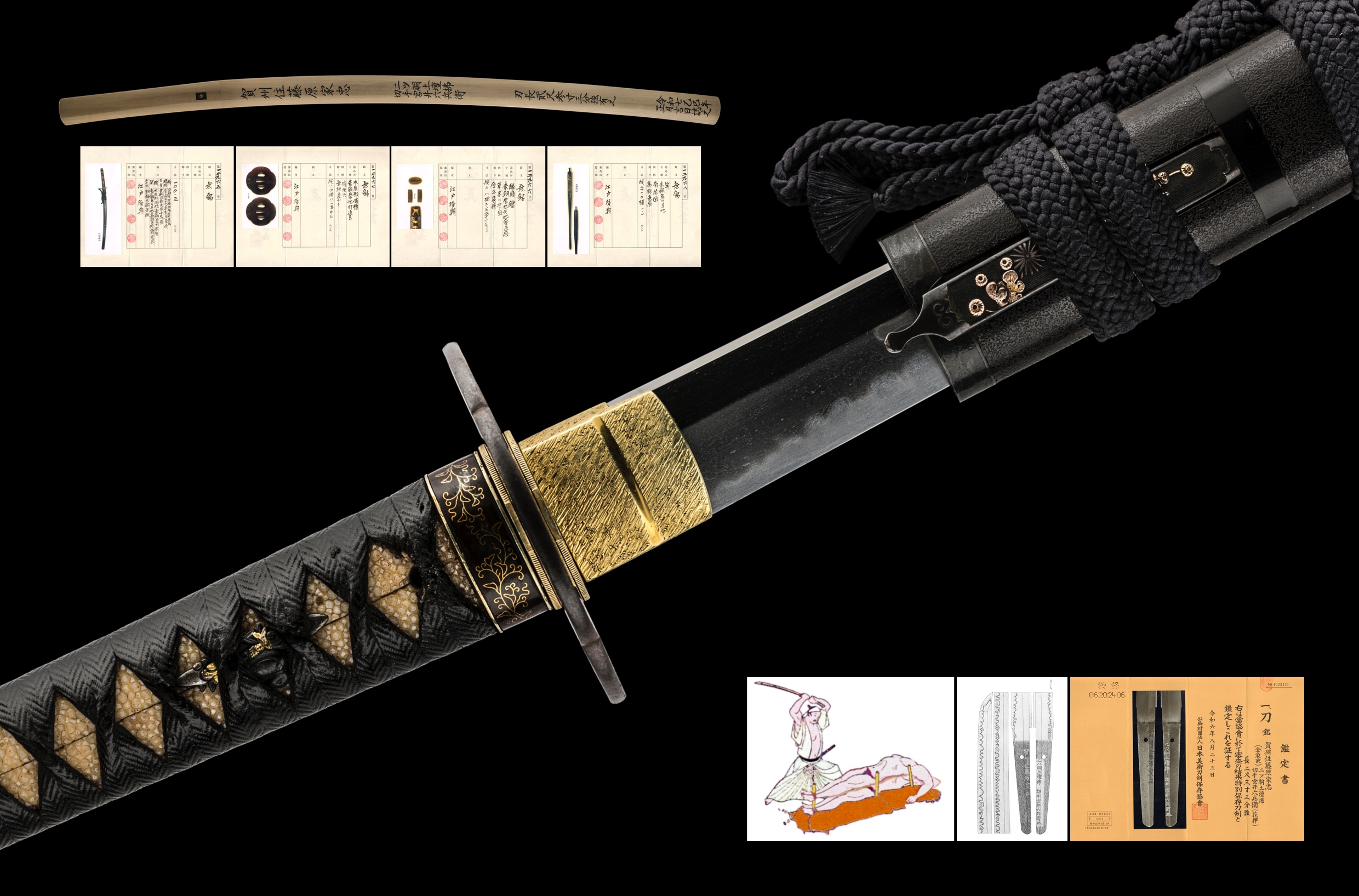
Kaga · around 1615-1624
Fujishiro Jo saku · Tōken Taikan top 60%
2 pieces on the market now
The Edo period (1615 to 1868)
Edo was the sword’s age of connoisseurship: the Hon’ami appraisers, the shogunal register of famous blades of 1719, and a thriving literature turned the sword into an object of study even as it ceased to be drawn in war.
A Hozon-certified blade judged to show notably superior workmanship and a better state of preservation. The bar is higher: re-tempered blades and most unsigned Muromachi/Edo works are excluded.
The NBTHK (Nihon Bijutsu Tōken Hozon Kyōkai, the Society for the Preservation of Japanese Art Swords) is a public-interest incorporated foundation founded in 1948 and supervised by Japan’s Agency for Cultural Affairs (Bunkachō); it is based at the Japanese Sword Museum in Tokyo. Its expert panels physically examine each submitted work (shinsa) and issue a certificate (kanteishō) ranking it by artistic and historical merit. NBTHK papers are the most widely recognized standard of authentication for Japanese swords and fittings.
NBTHK official siteAll swords come with a three-day inspection period beginning from the date of delivery. If not satisfied, the sword may be returned within this period for a full refund of the purchase price. Outside of this period, all sales are final. Swords purchased on a layaway payment plan are not eligible for the three-day inspection period.
This magnificent katana was forged by Shodai Ietada of Kaga province during the early to mid-1600s, known for his razor-sharp blades. The nakago features a rare gold-inlaid tameshigiri inscription recording a demanding cutting test, along with a hidden signature and kaô by Hon’ami Kôho. Mounted in an elegant Late Edo period handachi-koshirae, this is a museum-quality ensemble.
NihontoWatchmei · Kaga Darani · Genna (1615-1624) · nagasa 70.7cm · sori 1.5cm
Kaga · around 1615-1624
Fujishiro Jo saku · Tōken Taikan top 60%
2 pieces on the market now
The Edo period (1615 to 1868)
Edo was the sword’s age of connoisseurship: the Hon’ami appraisers, the shogunal register of famous blades of 1719, and a thriving literature turned the sword into an object of study even as it ceased to be drawn in war.
A Hozon-certified blade judged to show notably superior workmanship and a better state of preservation. The bar is higher: re-tempered blades and most unsigned Muromachi/Edo works are excluded.
The NBTHK (Nihon Bijutsu Tōken Hozon Kyōkai, the Society for the Preservation of Japanese Art Swords) is a public-interest incorporated foundation founded in 1948 and supervised by Japan’s Agency for Cultural Affairs (Bunkachō); it is based at the Japanese Sword Museum in Tokyo. Its expert panels physically examine each submitted work (shinsa) and issue a certificate (kanteishō) ranking it by artistic and historical merit. NBTHK papers are the most widely recognized standard of authentication for Japanese swords and fittings.
NBTHK official siteAll swords come with a three-day inspection period beginning from the date of delivery. If not satisfied, the sword may be returned within this period for a full refund of the purchase price. Outside of this period, all sales are final. Swords purchased on a layaway payment plan are not eligible for the three-day inspection period.


