The twentieth century nearly killed the craft twice: wartime distortion, then the occupation ban. The NBTHK’s founding in 1948 and licensed forging from 1953 rebuilt the sword as an art, crowned by Living National Treasures and the mukansa rank.
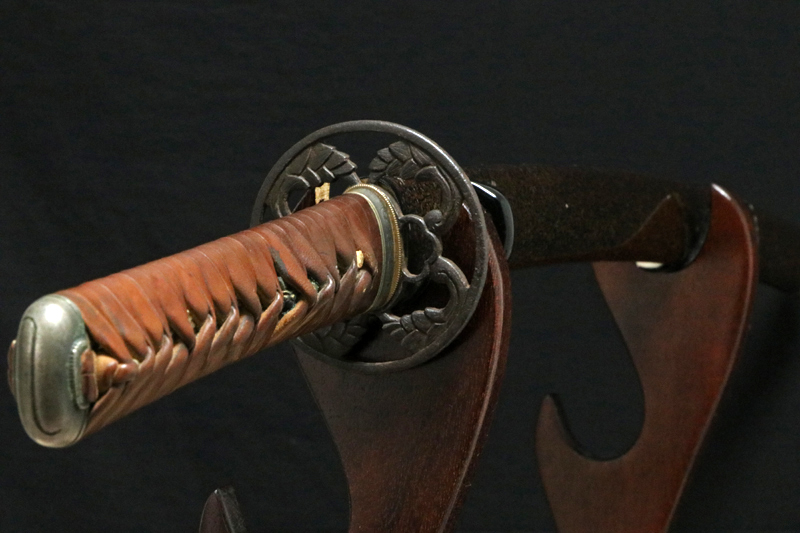
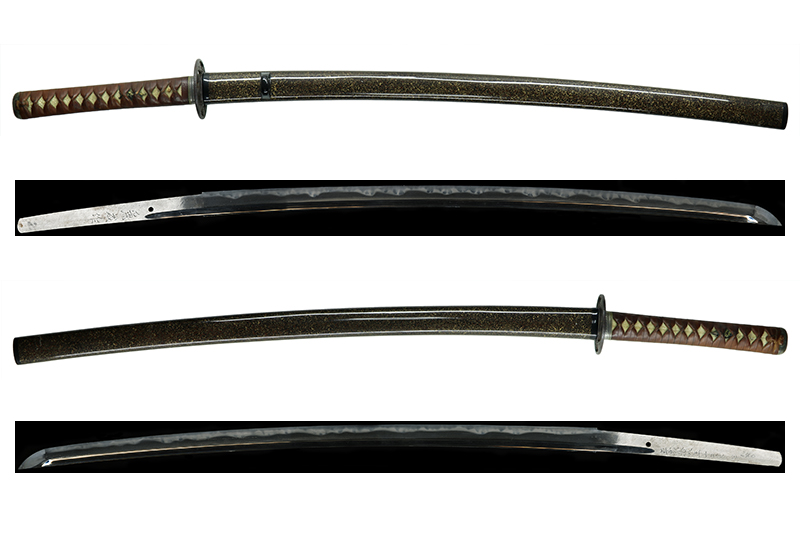
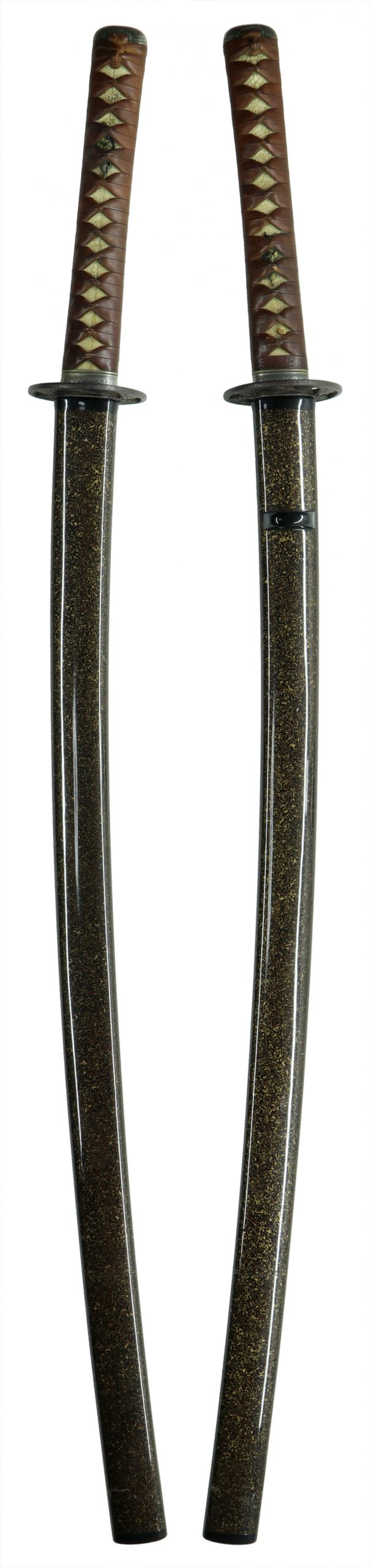
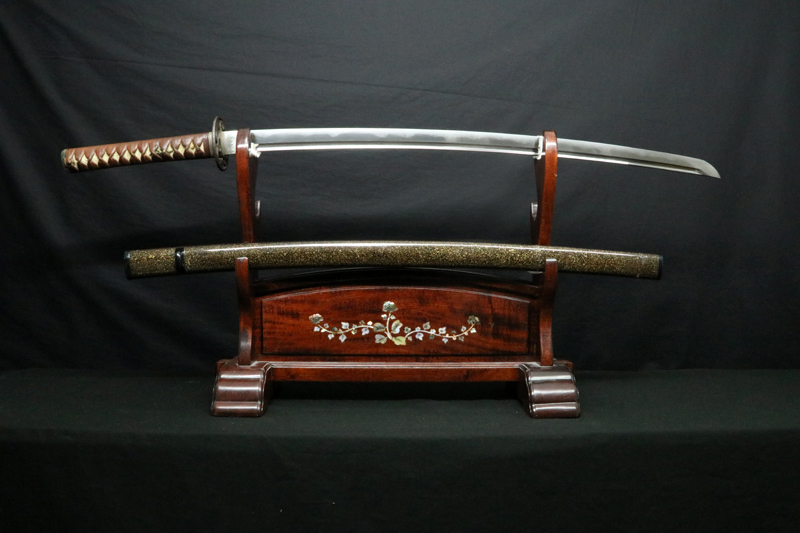
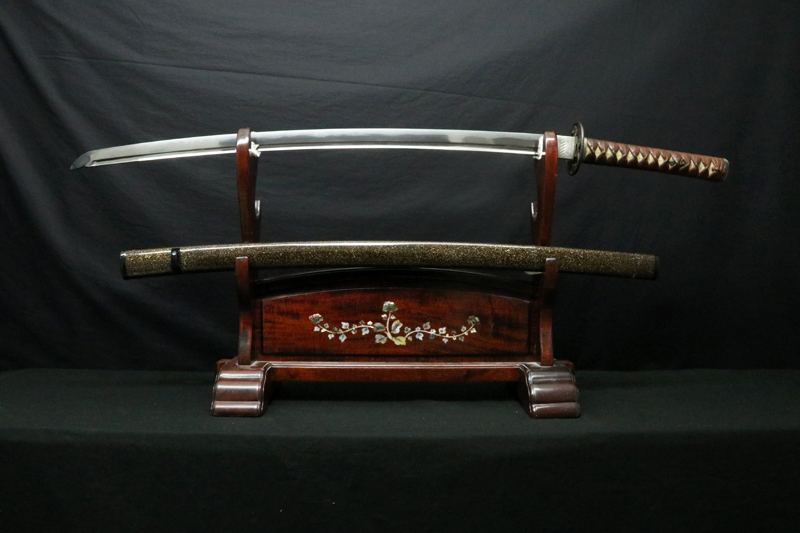
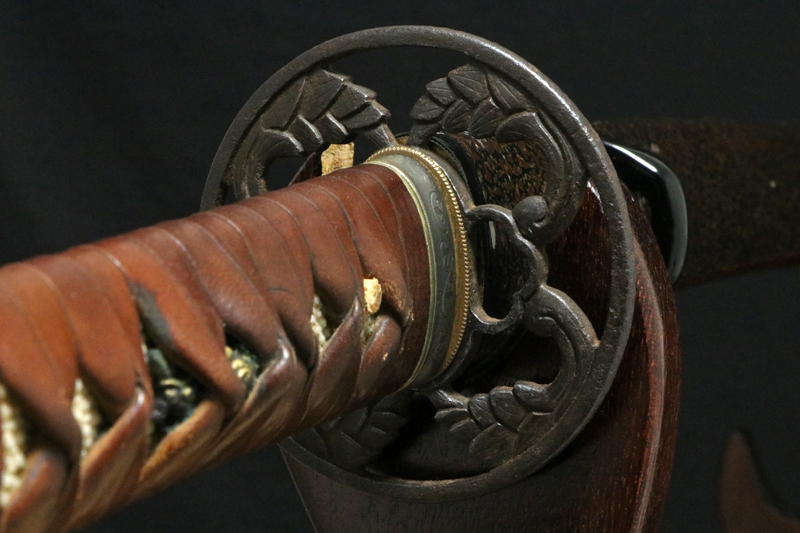
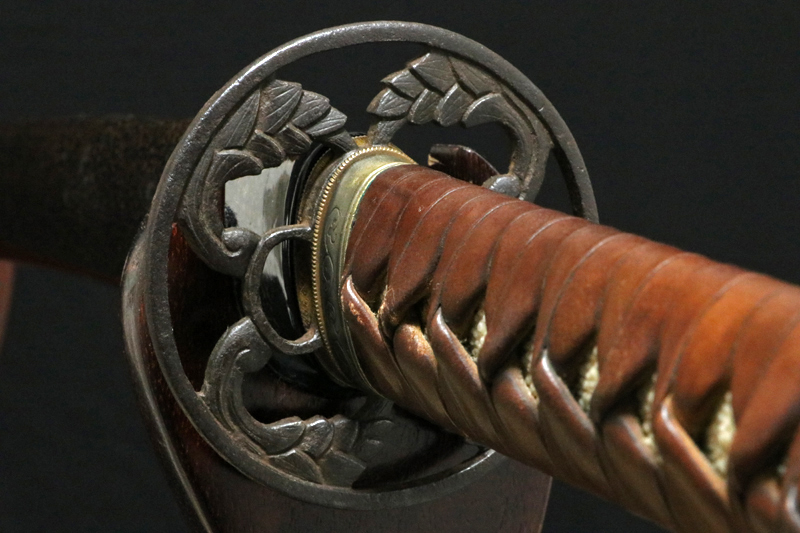
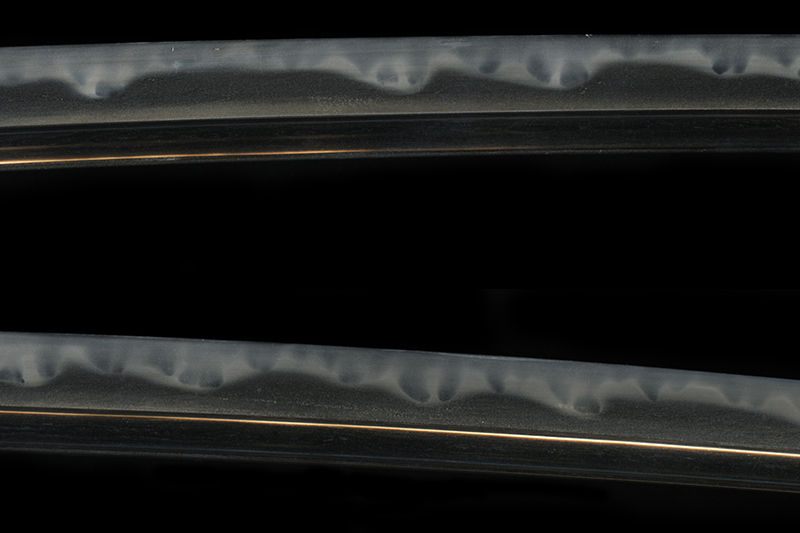
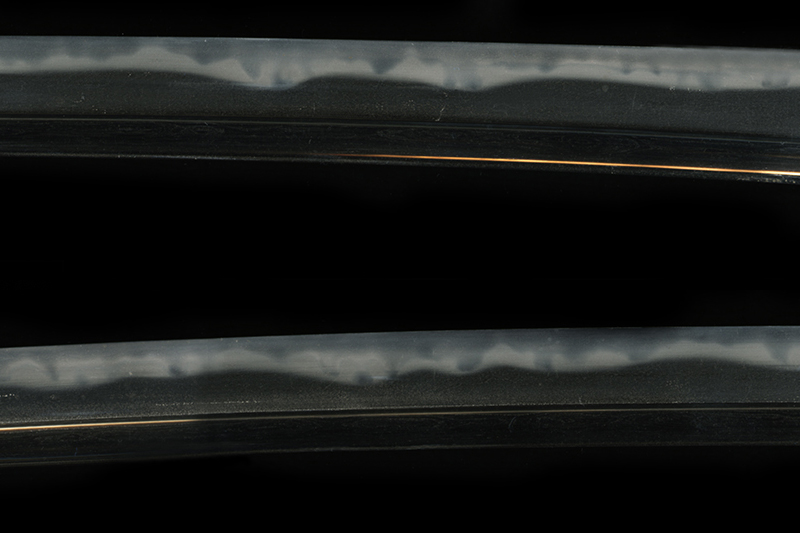
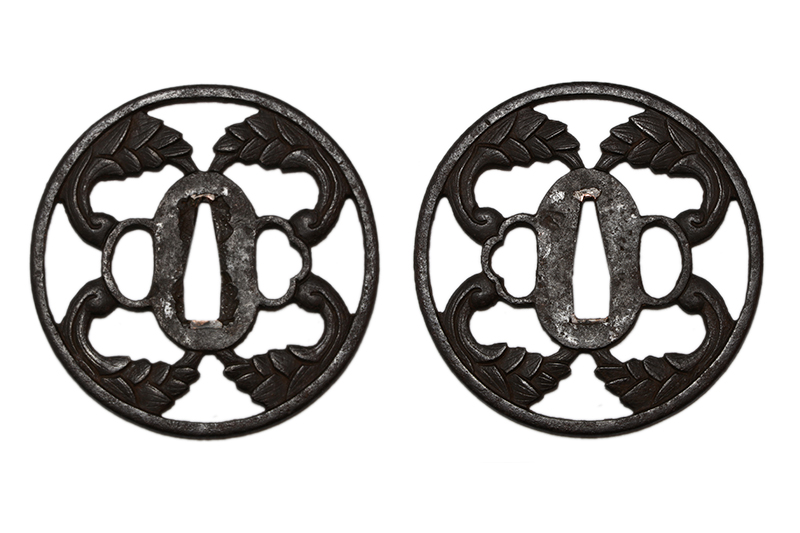
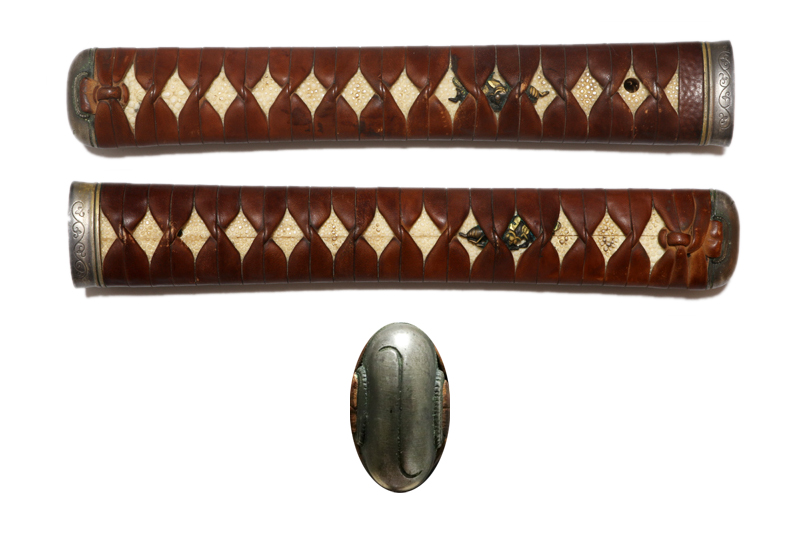
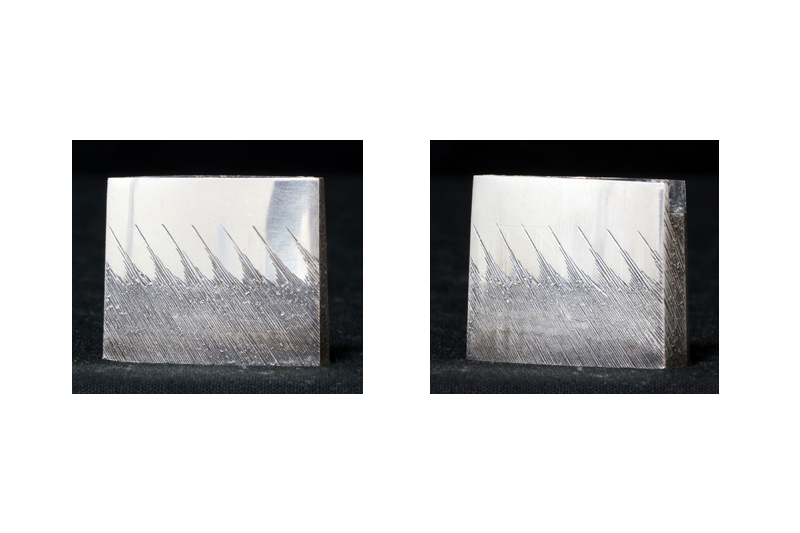
This is a Gendaito katana made by Kanenari, whose real name is Ryozo Goto, born in Taisho 15 (1926) and residing in Seki City, Gifu Prefecture. He was a student of Watanabe Kanenaga, a Living National Treasure of Gifu Prefecture. The blade features a torii-zori curvature, chu-kissaki, and a choji-hamon reminiscent of Sue-Bizen Sukesada. It comes with a complete uchigatana koshirae, including a silver habaki and a black-dyed ray skin tsuka with brown leather wrap.
 NihontoWatch
mei · Gendaito · nagasa 73.02cm

Mino · around 1926-1989
2 pieces on the market now
Shōwa to the present: destruction and revival
The twentieth century nearly killed the craft twice: wartime distortion, then the occupation ban. The NBTHK’s founding in 1948 and licensed forging from 1953 rebuilt the sword as an art, crowned by Living National Treasures and the mukansa rank.
We could not find an authenticity certificate on the seller’s listing. Japanese swords and fittings are normally papered by the NBTHK (or the NTHK). Without one, the attribution is the seller’s own assessment and has not been independently verified — treat it with caution and ask the dealer about certification before buying.
Three-day cooling-off period from receipt for refund or exchange. Return shipping and transfer fees are customer responsibility. Items showing use or condition changes are non-returnable.
This is a Gendaito katana made by Kanenari, whose real name is Ryozo Goto, born in Taisho 15 (1926) and residing in Seki City, Gifu Prefecture. He was a student of Watanabe Kanenaga, a Living National Treasure of Gifu Prefecture. The blade features a torii-zori curvature, chu-kissaki, and a choji-hamon reminiscent of Sue-Bizen Sukesada. It comes with a complete uchigatana koshirae, including a silver habaki and a black-dyed ray skin tsuka with brown leather wrap.
NihontoWatchmei · Gendaito · nagasa 73.02cm
Mino · around 1926-1989
2 pieces on the market now
Shōwa to the present: destruction and revival
The twentieth century nearly killed the craft twice: wartime distortion, then the occupation ban. The NBTHK’s founding in 1948 and licensed forging from 1953 rebuilt the sword as an art, crowned by Living National Treasures and the mukansa rank.
We could not find an authenticity certificate on the seller’s listing. Japanese swords and fittings are normally papered by the NBTHK (or the NTHK). Without one, the attribution is the seller’s own assessment and has not been independently verified — treat it with caution and ask the dealer about certification before buying.
Three-day cooling-off period from receipt for refund or exchange. Return shipping and transfer fees are customer responsibility. Items showing use or condition changes are non-returnable.


