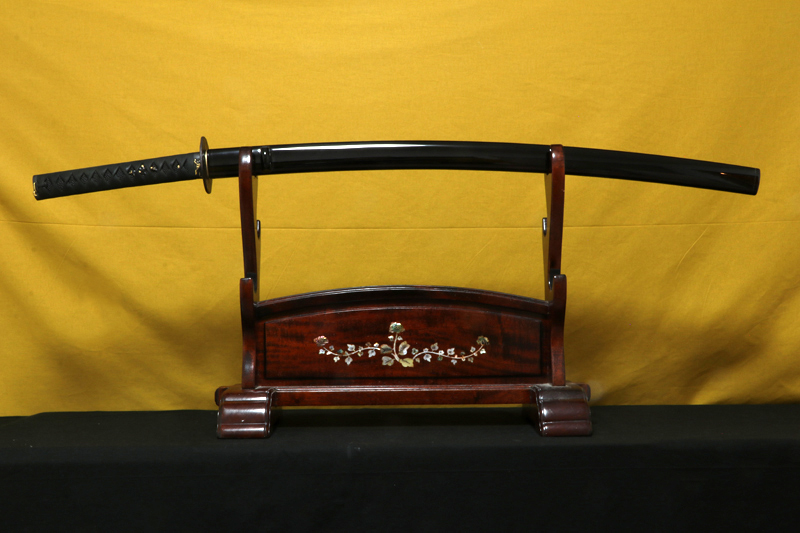
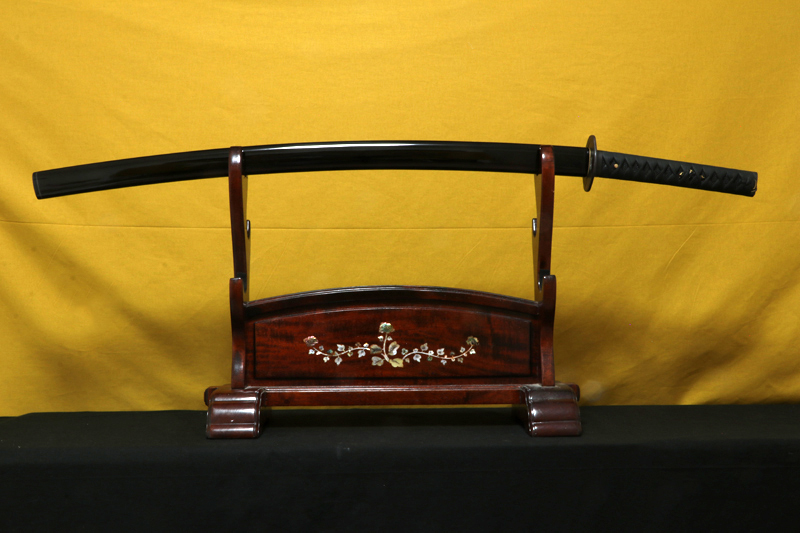
Modern sword Hizen Karatsu ju Masayoshi saku with Koshirae.
This is a work by the master smith Masayoshi of Karatsu City, Saga Prefecture.
The blade has just been polished, and the tsukamaki and saya are brand new.
This work has thin hira-niku and is an ideal sword for shizan.
This is a piece crafted by Masayoshi, a renowned artisan from Karatsu City, Saga Prefecture.
The blade has been freshly polished, and the tsuka-maki (handle wrapping) and saya (scabbard) are brand new.
This sword features a thin hira-niku (blade profile), making it ideal for tameshigiri (test cutting).
"Sword figure"
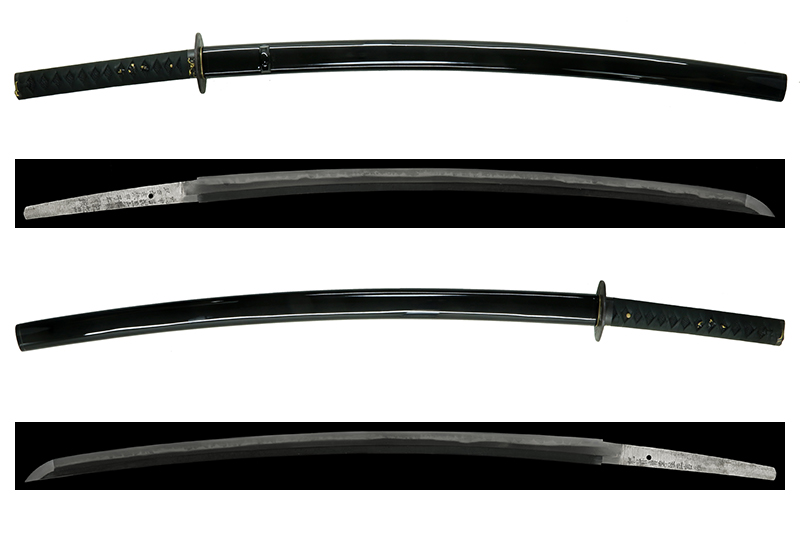
Shinogi-zukuri, iori-mune, wide mihaba and standard kasane, torii-sori with somewhat deep sori and chu-kissaki. The nakago is ubu with kiri yasurime, and the nakago-jiri is kuri-jiri.
"Jigane"
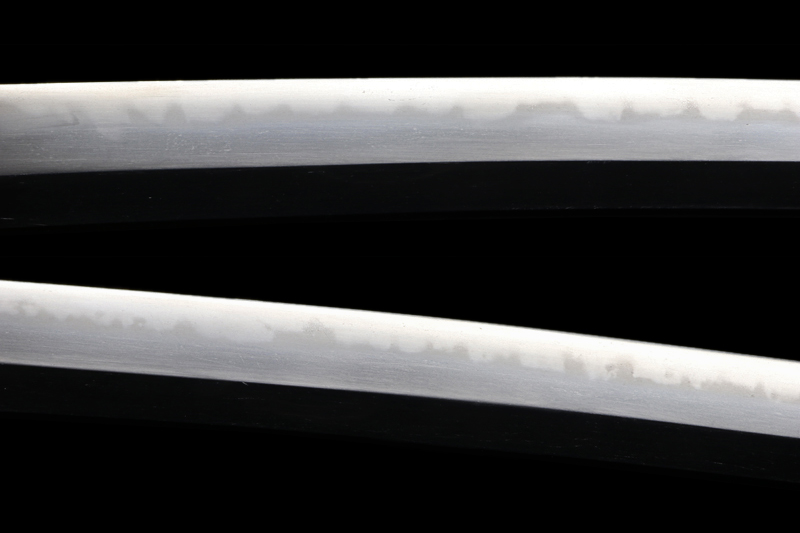
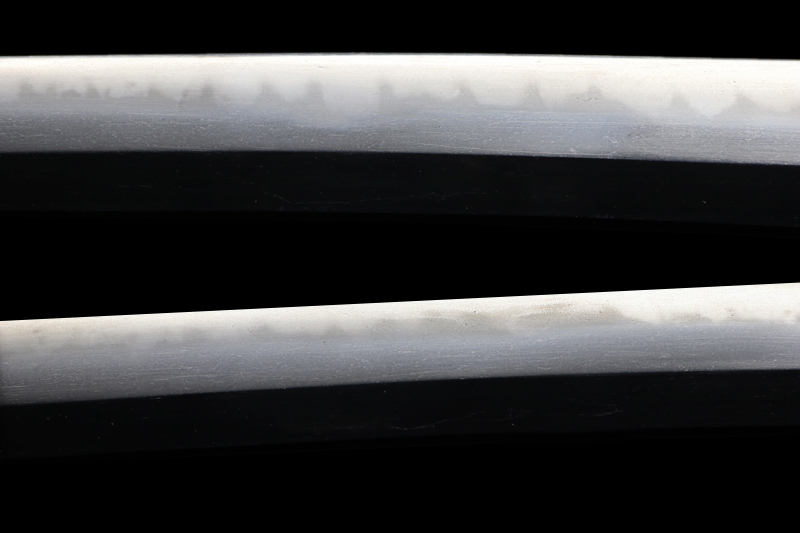
The jigane is itame-hada flowing with a masame-kokoro, and jinie attaches.
"Hamon"
The hamon is gunome choji, ashi enters well and sunagashi is applied, within the ha there are yo and kinsuji. The boshi is midare-komi returning in komaru.
"Detailed"
Hizen Karatsu ju Masayoshi, real name Taguchi Shoichi, residing in Karatsu City, Saga Prefecture, his teacher was his father Taguchi Shoji. A member of the All Japan Swordsmith Association. He is a master smith with many selections and prizes.
In this work, the blade has just been polished; also the hira-niku is thin, making it an ideal sword for shizan.
This blade was crafted by Hizen Karatsu ju Masayoshi, whose real name is Shoichi Taguchi. Residing in Karatsu City, Saga Prefecture, he trained under his father, Shoji Taguchi. A member of the All Japan Swordsmith Association, Masayoshi is a distinguished swordsmith with numerous awards and accolades to his name.
This particular piece has been freshly polished, featuring a thin hira-niku (blade profile), making it an ideal sword for tameshigiri (test cutting).
"Koshirae"
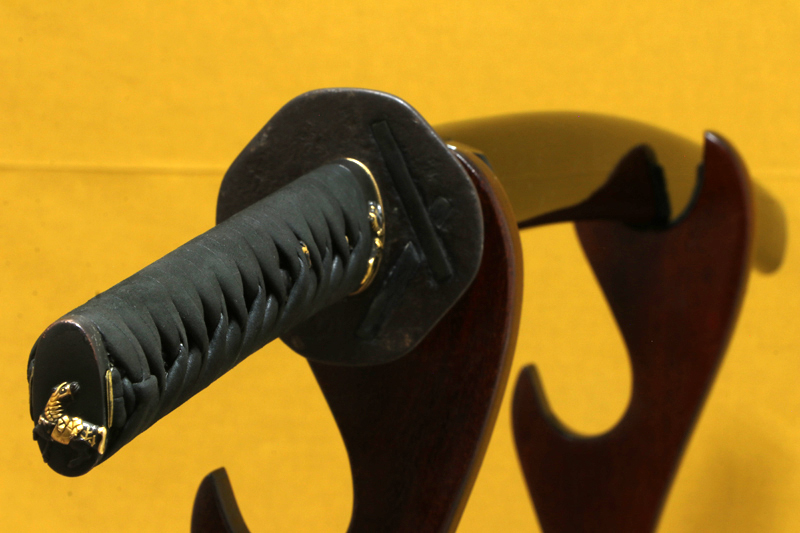
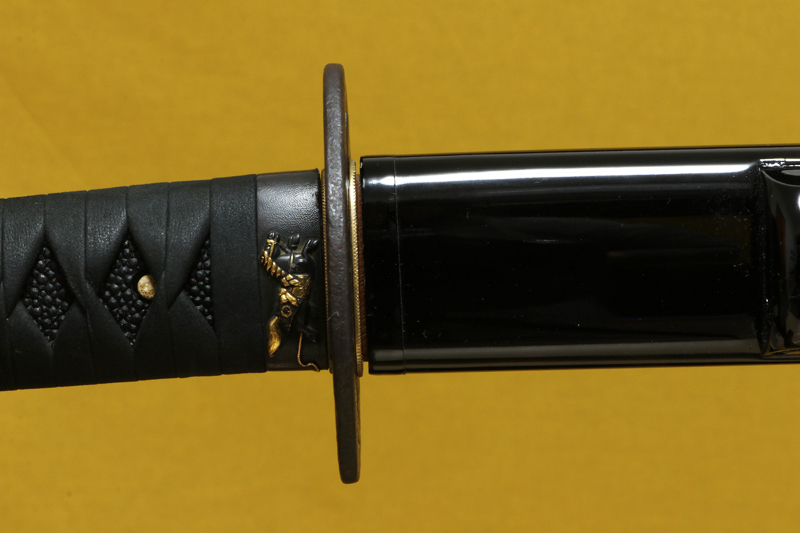
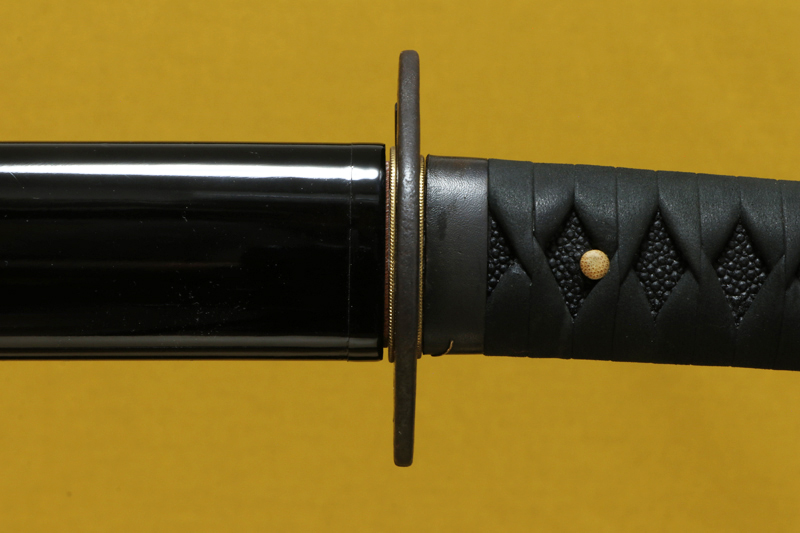
The tsukamaki and saya are brand new.
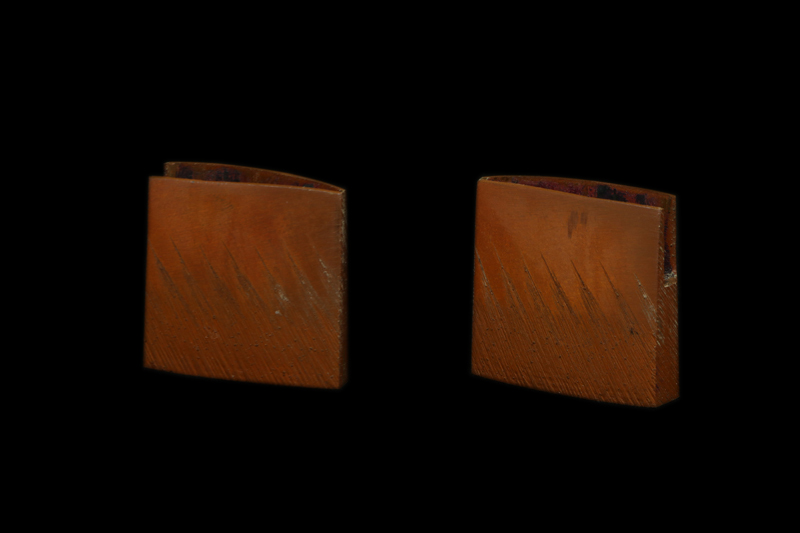
Habaki: Su-akagane-ji ichiju Koshi-yujo.
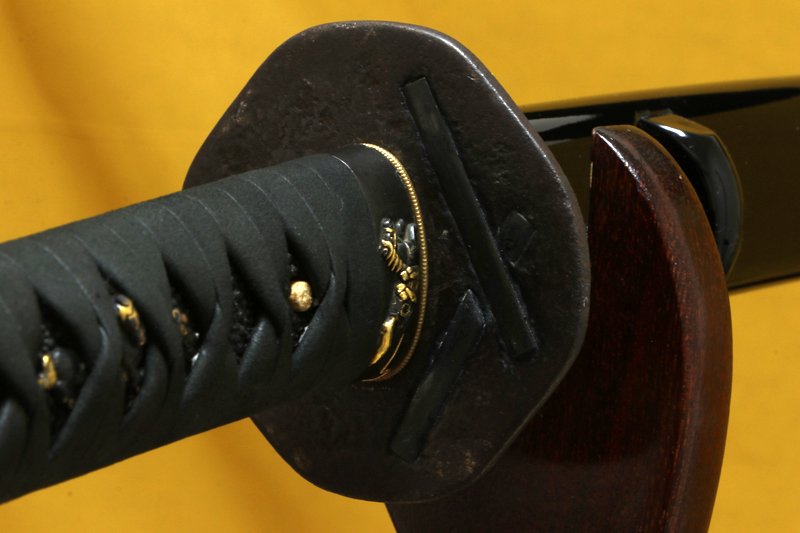
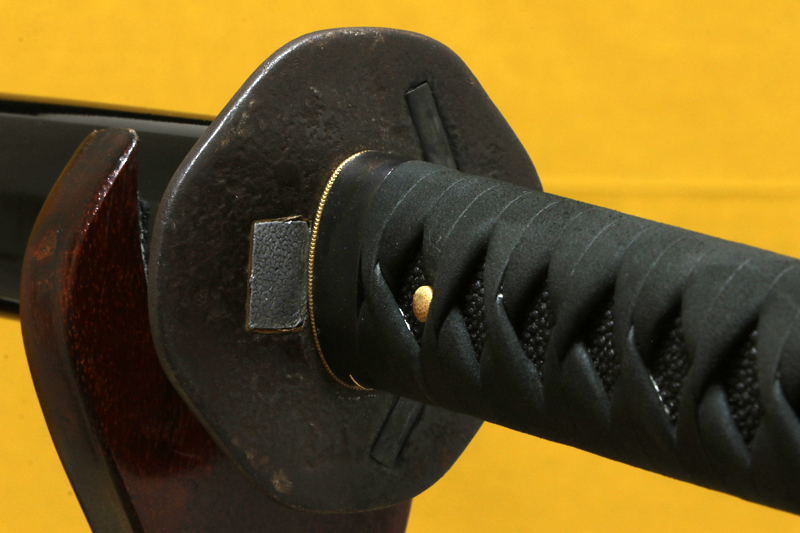
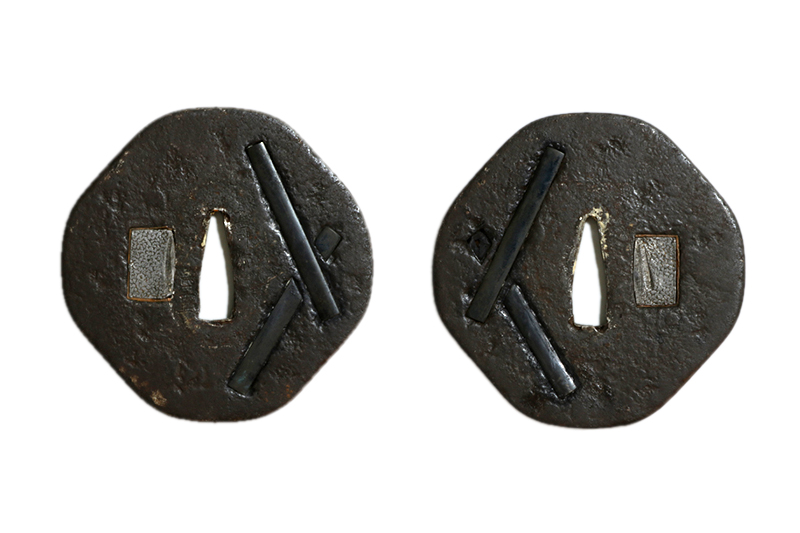
Tsuba: Tetsu-ji kawari mokko-gata matsu sumi no zu.
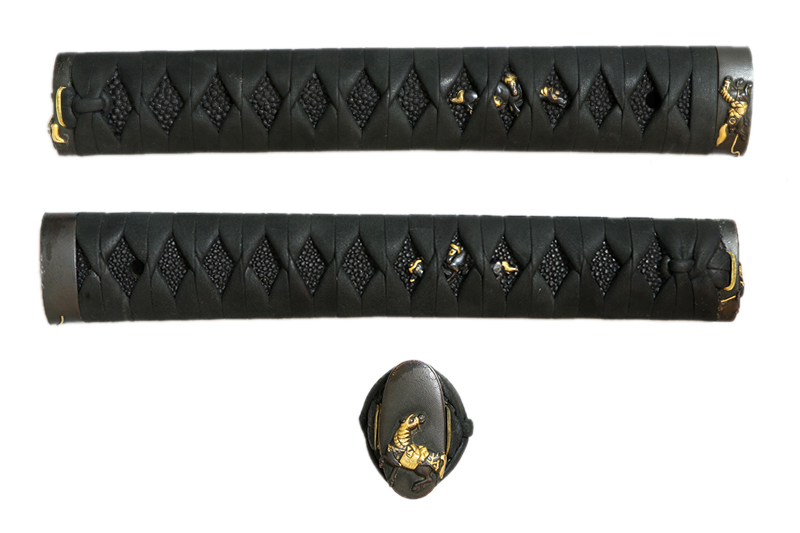
FuchiKashira: Shakudo ishime-ji uma no zu.
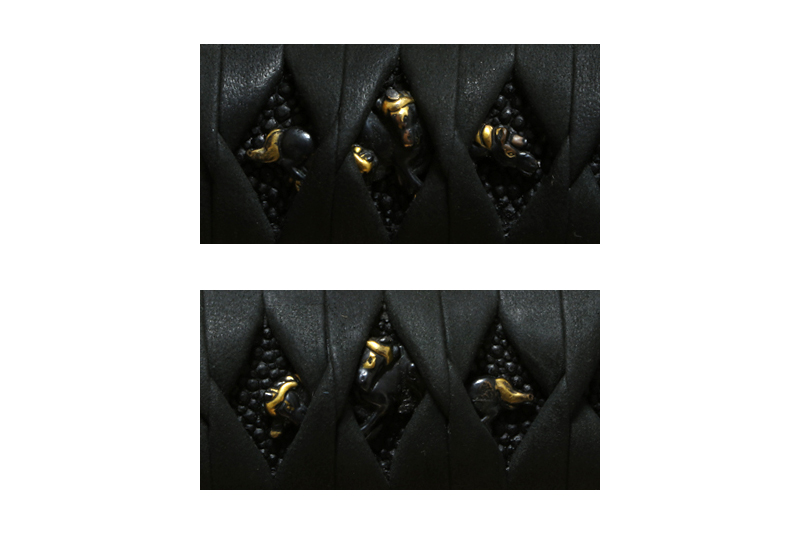
Menuki: Shakudo-ji uma no zu.
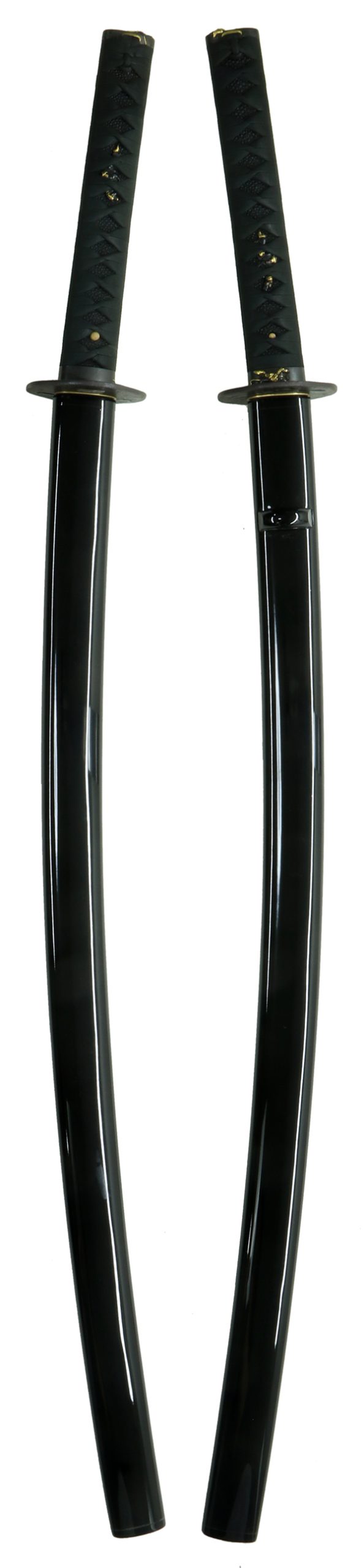
Tsuka: Same is kuro-zome, tsukamaki is moro-tsumami-maki of pigskin omote-kawa. (Brand new)
Saya: Kuro-ro (Brand new)
"Condition of blade"
Polishing: It has just been polished.
Flaws: There are no flaws that would be considered defects.
Machine translation from the shop's Japanese · may contain errors ·
Modern sword Hizen Karatsu ju Masayoshi saku with Koshirae.
This is a work by the master smith Masayoshi of Karatsu City, Saga Prefecture.
The blade has just been polished, and the tsukamaki and saya are brand new.
This work has thin hira-niku and is an ideal sword for shizan.
This is a piece crafted by Masayoshi, a renowned artisan from Karatsu City, Saga Prefecture.
The blade has been freshly polished, and the tsuka-maki (handle wrapping) and saya (scabbard) are brand new.
This sword features a thin hira-niku (blade profile), making it ideal for tameshigiri (test cutting).
"Sword figure"
Shinogi-zukuri, iori-mune, wide mihaba and standard kasane, torii-sori with somewhat deep sori and chu-kissaki. The nakago is ubu with kiri yasurime, and the nakago-jiri is kuri-jiri.
"Jigane"
The jigane is itame-hada flowing with a masame-kokoro, and jinie attaches.
"Hamon"
The hamon is gunome choji, ashi enters well and sunagashi is applied, within the ha there are yo and kinsuji. The boshi is midare-komi returning in komaru.
"Detailed"
Hizen Karatsu ju Masayoshi, real name Taguchi Shoichi, residing in Karatsu City, Saga Prefecture, his teacher was his father Taguchi Shoji. A member of the All Japan Swordsmith Association. He is a master smith with many selections and prizes.
In this work, the blade has just been polished; also the hira-niku is thin, making it an ideal sword for shizan.
This blade was crafted by Hizen Karatsu ju Masayoshi, whose real name is Shoichi Taguchi. Residing in Karatsu City, Saga Prefecture, he trained under his father, Shoji Taguchi. A member of the All Japan Swordsmith Association, Masayoshi is a distinguished swordsmith with numerous awards and accolades to his name.
This particular piece has been freshly polished, featuring a thin hira-niku (blade profile), making it an ideal sword for tameshigiri (test cutting).
"Koshirae"
The tsukamaki and saya are brand new.
Habaki: Su-akagane-ji ichiju Koshi-yujo.
Tsuba: Tetsu-ji kawari mokko-gata matsu sumi no zu.
FuchiKashira: Shakudo ishime-ji uma no zu.
Menuki: Shakudo-ji uma no zu.
Tsuka: Same is kuro-zome, tsukamaki is moro-tsumami-maki of pigskin omote-kawa. (Brand new)
Saya: Kuro-ro (Brand new)
"Condition of blade"
Polishing: It has just been polished.
Flaws: There are no flaws that would be considered defects.
The twentieth century nearly killed the craft twice: wartime distortion, then the occupation ban. The NBTHK’s founding in 1948 and licensed forging from 1953 rebuilt the sword as an art, crowned by Living National Treasures and the mukansa rank.
Within 3 days of the item's arrival, we offer a refund or an exchange. Return shipping and the bank transfer fee for the refund are at the customer's expense.


 NihontoWatch