Edo was the sword’s age of connoisseurship: the Hon’ami appraisers, the shogunal register of famous blades of 1719, and a thriving literature turned the sword into an object of study even as it ceased to be drawn in war.
 NihontoWatchNihontoWatch
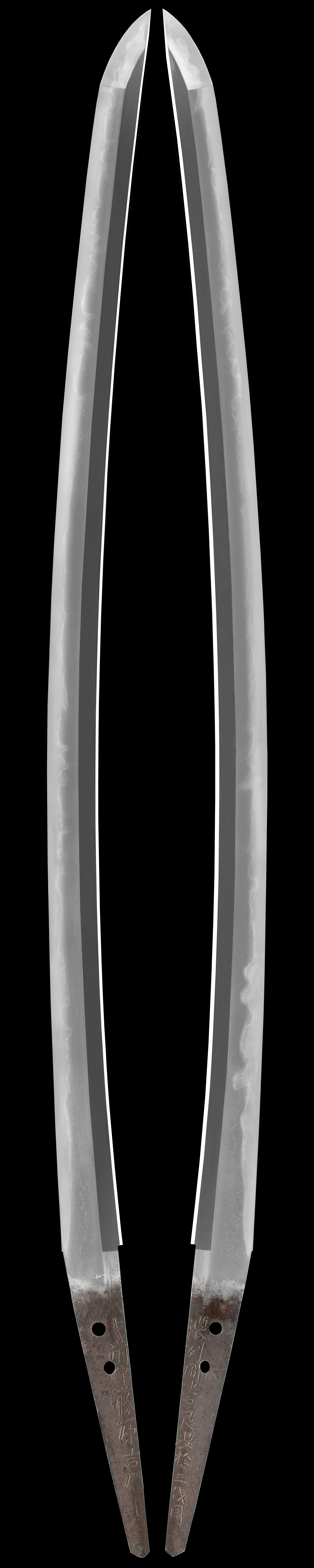
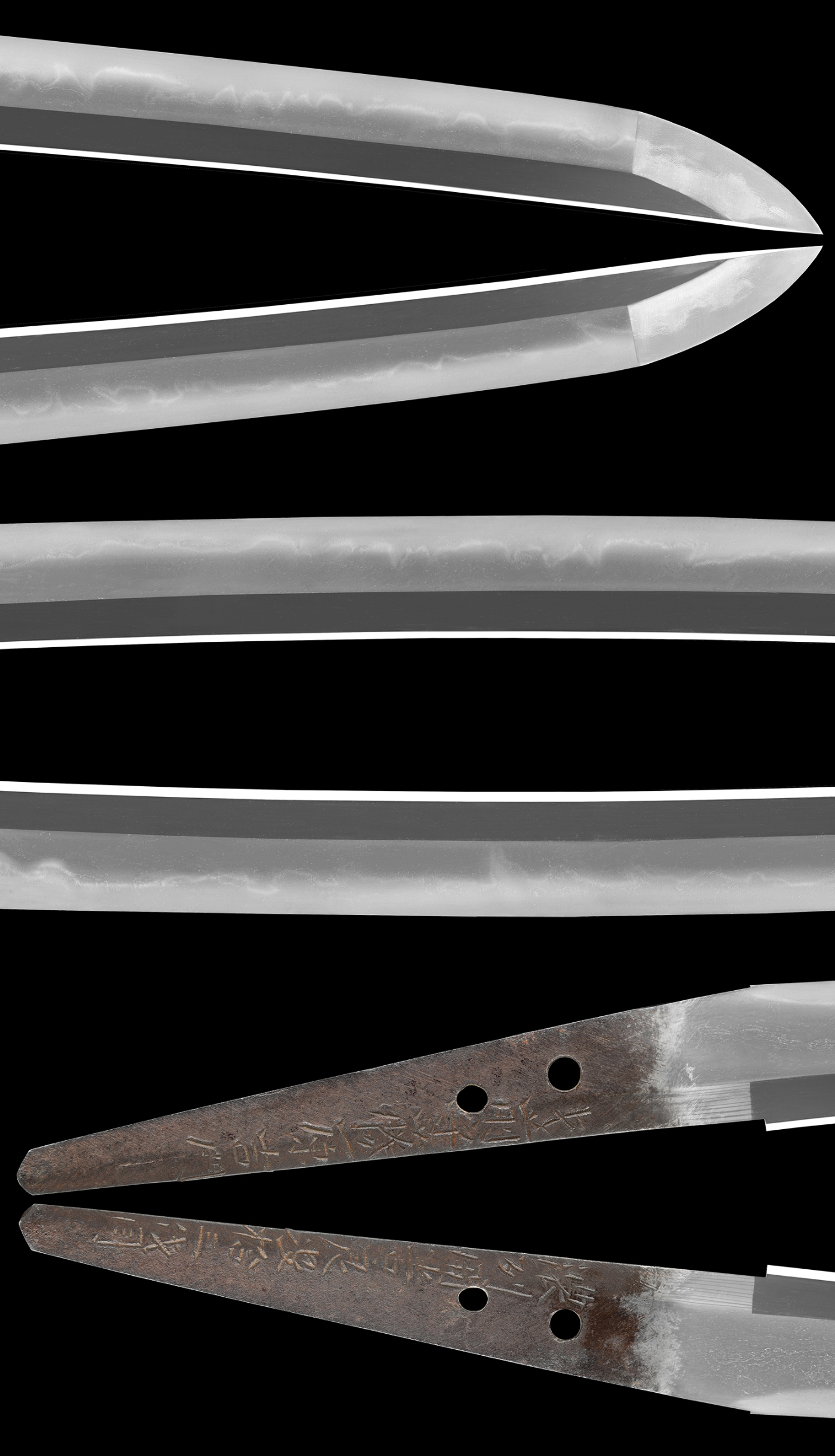
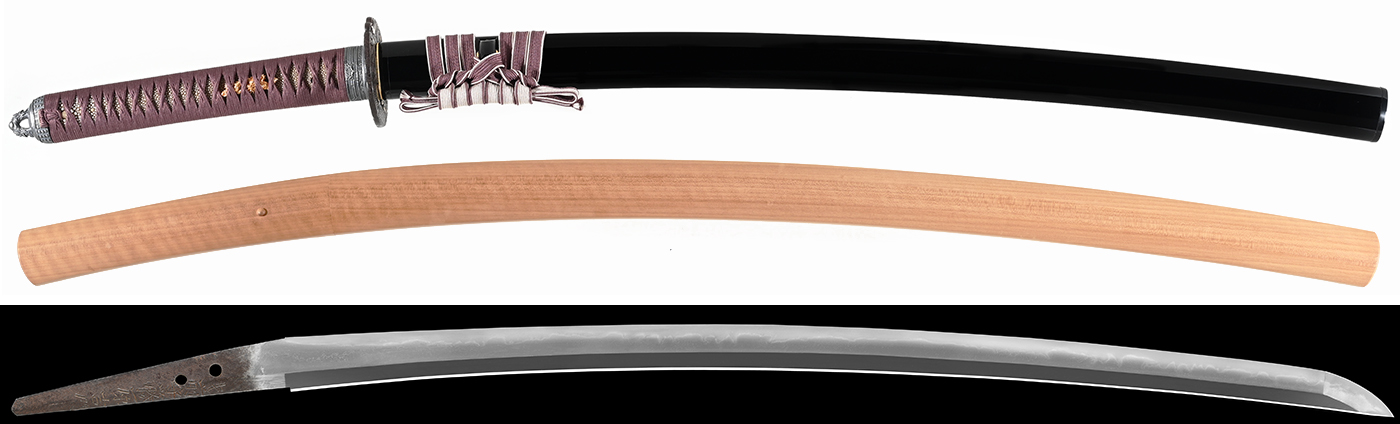
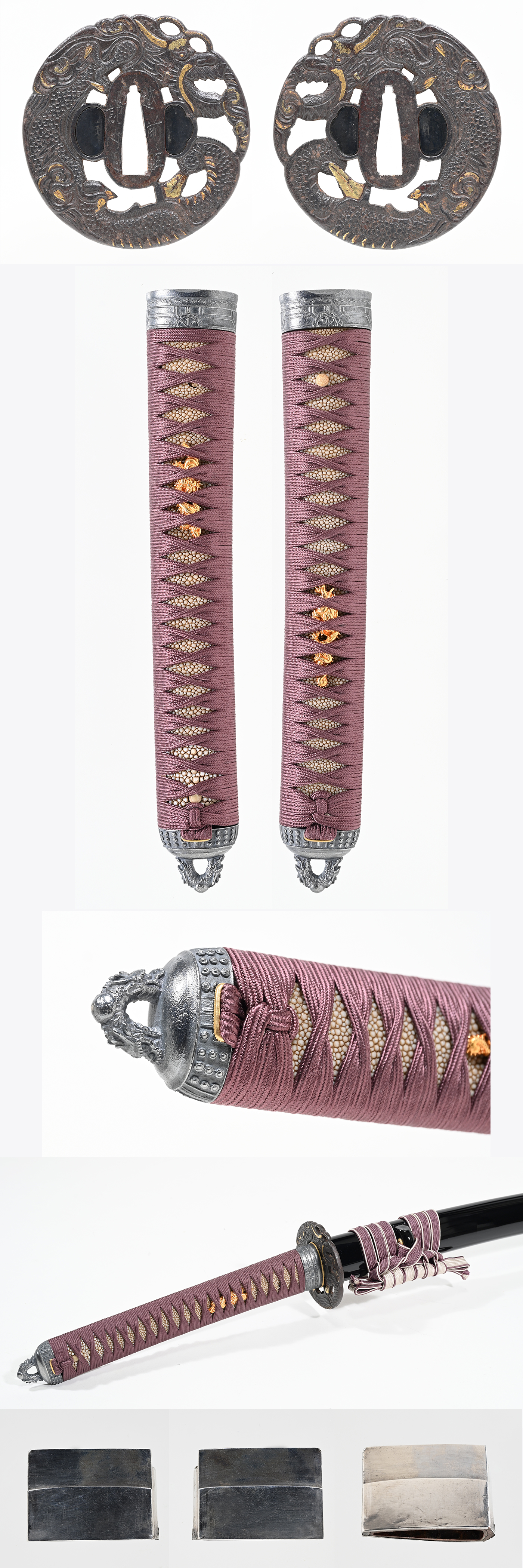
Characteristics: Regarding Echizen no Kami Fujiwara Yoshikado, there is the eldest brother Echizen no Kami Yoshikado and the younger brother Musashi no Kami Yoshikado; the Echizen no Kami Yoshikado (first generation) of this work was named Kawamura Ichirozaemon and began forging swords around the first years of Kanei (1624-), received the title of Echizen no Kami around the end of Kanei, and around the first years of Shoho (1644-) went to the capital to forge swords together with his younger brother Musashi no Kami Yoshikado, and on Kanbun 12 February 27 (1672), both brothers became retained smiths for the Mito Domain with a seven-person stipend, and as domain smiths, they set up a forge at Mito Daimachi 3-chome.
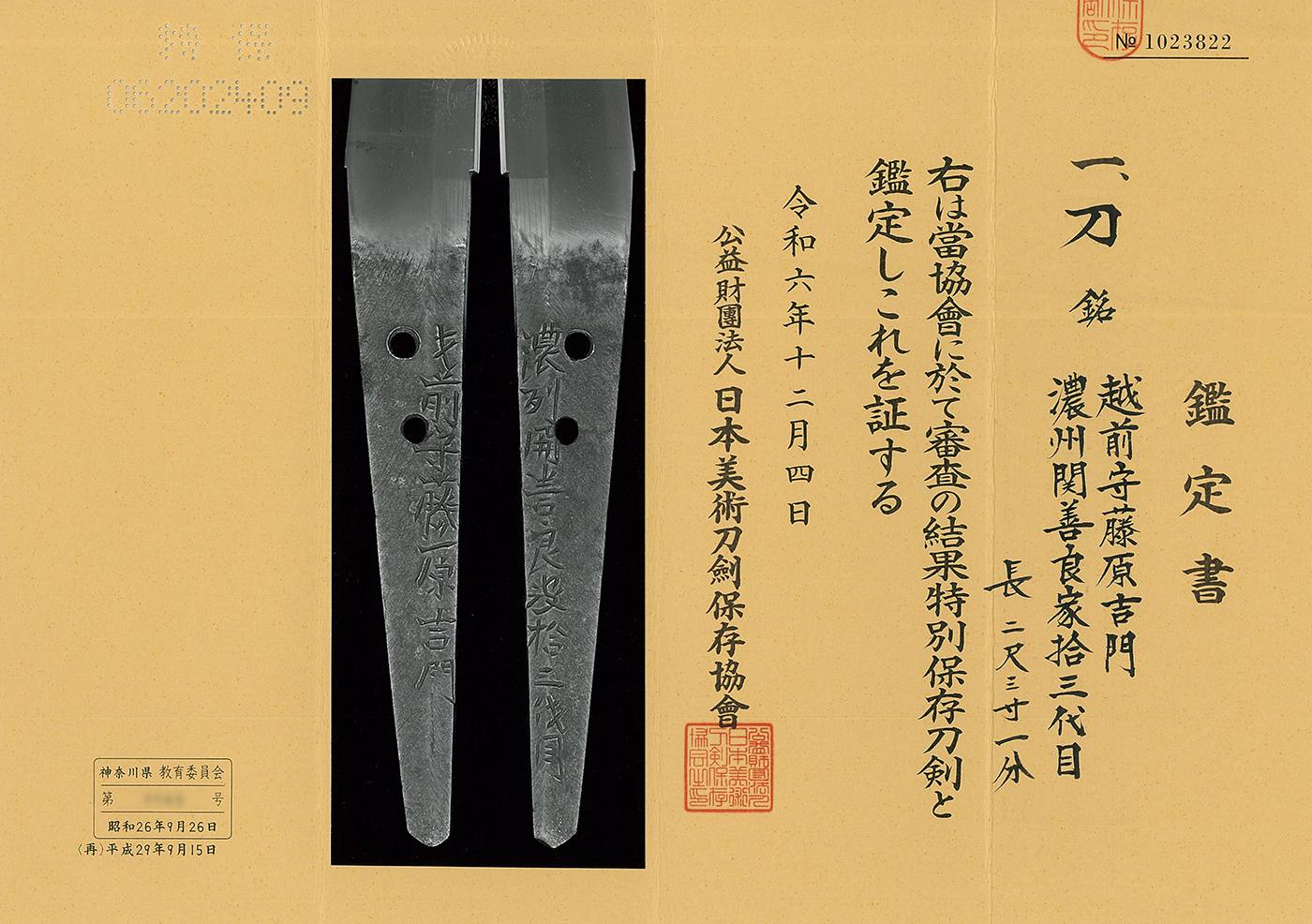
Certificate reading — 銘 越前守藤原吉門 濃州関善良家拾三代目
NihontoWatchOffered by Samurai Shokai
3 on the market

Machine translation from the shop's Japanese · may contain errors ·
Mino-den · Mino · around 1624-1644
Tōken Taikan top 49%
1 piece on the market now
Mino-den · Mino
3 pieces on the market now
| Smith | Era | Designated |
|---|---|---|
| Kaneshige兼重 | 1429-1441 | 1 |
| Kaneshige兼重 | 1504-1521 | 0 |
| Kaneyoshi兼吉 | 1854-1860 | 0 |
| Kanekado兼門 | 1428-1429 | 0 |
| Chikanori近則 | 1818-1864 | 0 |
The Edo period (1615 to 1868)
Edo was the sword’s age of connoisseurship: the Hon’ami appraisers, the shogunal register of famous blades of 1719, and a thriving literature turned the sword into an object of study even as it ceased to be drawn in war.
A Hozon-certified blade judged to show notably superior workmanship and a better state of preservation. The bar is higher: re-tempered blades and most unsigned Muromachi/Edo works are excluded.
The NBTHK (Nihon Bijutsu Tōken Hozon Kyōkai, the Society for the Preservation of Japanese Art Swords) is a public-interest incorporated foundation founded in 1948 and supervised by Japan’s Agency for Cultural Affairs (Bunkachō); it is based at the Japanese Sword Museum in Tokyo. Its expert panels physically examine each submitted work (shinsa) and issue a certificate (kanteishō) ranking it by artistic and historical merit. NBTHK papers are the most widely recognized standard of authentication for Japanese swords and fittings.
NBTHK official siteReturns are possible within 3 days of the item's arrival; however, cooling-off may not apply if any of the notes below applies. Notes: - The item's condition differs from the time of sale - 3 or more days have passed since the item's arrival - A trade-in item was part of the purchase - Items delivered overseas cannot be returned - The item was purchased in our shop - Return shipping and the bank transfer fee for the refund are at the customer's expense Please also note that bank transfer fees, credit card fees and cash-on-delivery fees cannot be refunded. (Refunds for credit card, cash-on-delivery and similar payments are made after the payment has reached us.)
¥1,050,000