Sengoku Seki was an industry: smiths organized under their tutelary Kasuga shrine, arming the war bands of central Japan. Magoroku Kanemoto’s sanbonsugi and the finest Kanesada work prove quality survived inside mass production.
 NihontoWatchNihontoWatch
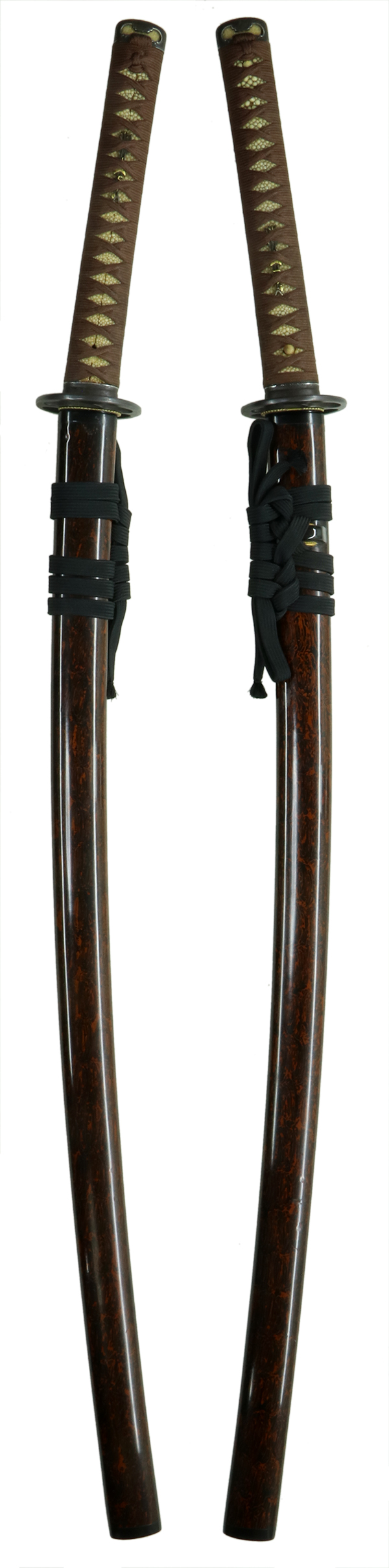
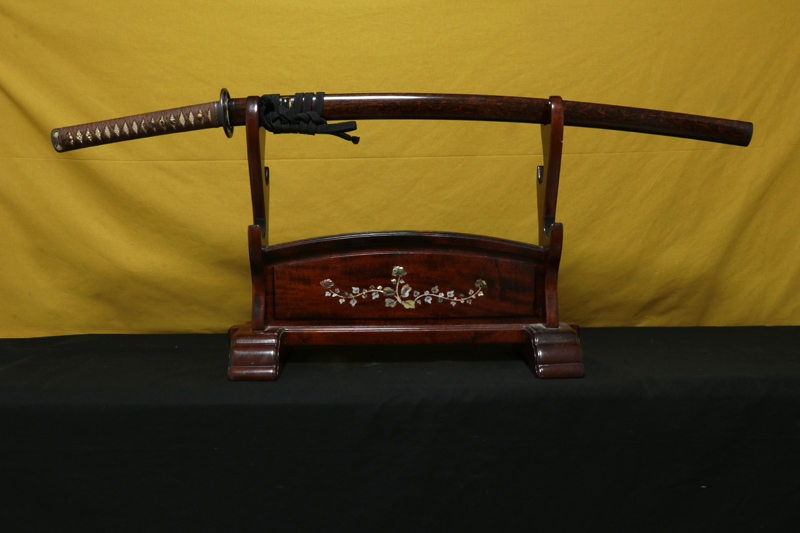
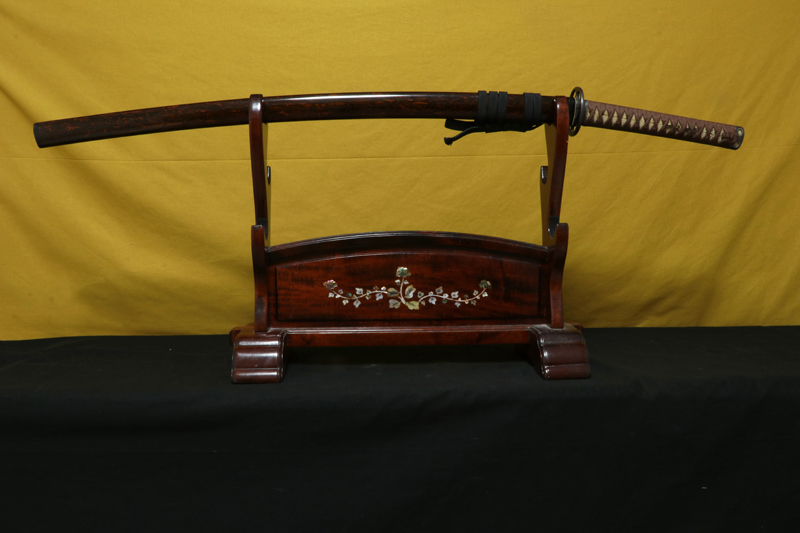
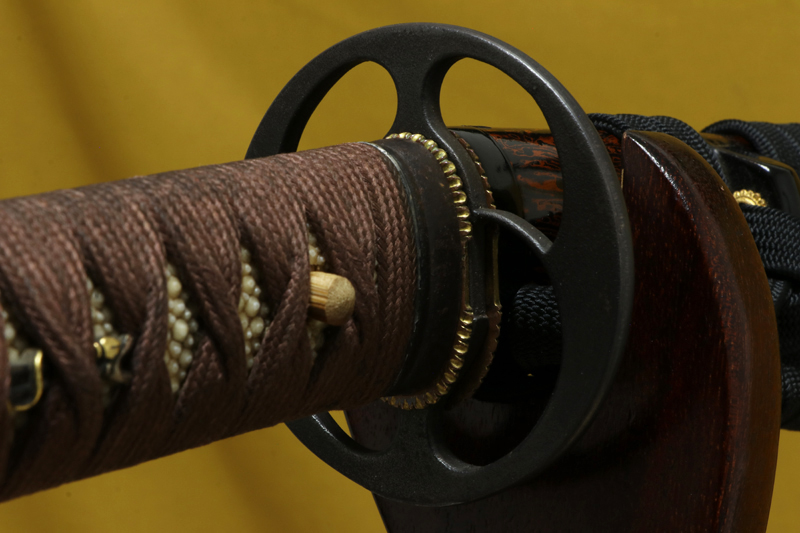
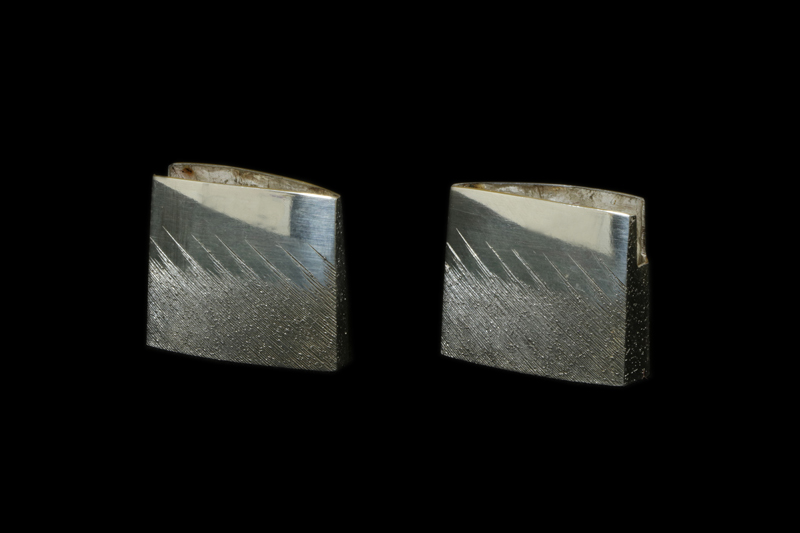
Hozon token Kinimitsu(province unknown) with Koshirae. 本作は、室町時代後期の、名工・孫六兼元と同系統である赤坂千手院一門の國光の作品です。 白気映りの立つ美しい板目肌に、典型的な三本杉の刃文を焼いた逸品です。 手持ちが軽くバランスにも優れており、鑑賞用としてだけでなく、居合にもお使いいただけます。 This is a work by Kunimitsu of the Akasaka Senjuin lineage, the same tradition as the famed Magoroku Kanemoto, dating to the late Muromachi period. The blade displays a fine itame-hada with prominent shirake-utsuri, complemented by a classic sanbonsugi hamon. Light in hand and well balanced, it is suitable not only for appreciation but also for iaidō practice. 「刀姿 sword figure」 鎬造り庵棟、身幅重尋常、鳥居反り中鋒。茎は生ですが区は少し送られ筋違い鑢がかかる、茎尻は栗尻。 「地鉄 jigane」 地鉄は板目肌に小板目が交じり、白気映りが立つ。 「刃紋 hamon」 刃紋は尖り互の目で初代孫六のような、未完成の三本杉を焼く、刃縁砂流しかかり、刃中は葉が入り稲妻が働く。釯子は乱れ込み小丸に返る。 「特徴 detailed」 國光、保存刀剣では「國光(國不明)と成っていますが、地鉄刃紋から見ると室町後期・永禄頃の赤坂千手院の國光だと思われます。 本作、孫六兼元と同じ赤坂千手院系の鍛冶だけ有って、同じ様な三本杉を焼いています。茎は少し区が送られていますが、そのぶん茎が長くなり手持ちのバランスが良くなっています。刀身の状態は良好で、拵は比較的近年に製作されたもののためコンディションも良好です。鑑賞用としてだけでなく、居合での使用にも適した一振りです。 This sword is signed Kunimitsu. Although it is designated simply as “Kunimitsu, province unknown” on the Hozon certificate, judging from the jihada and hamon it is thought to be the work of Kunimitsu of the Akasaka Senjuin school, dating to around the Eiroku era of the late Muromachi period. As a smith of the Akasaka Senjuin lineage—the same tradition as Magoroku Kanemoto—this blade displays a similar sanbonsugi hamon. The nakago has had the machi slightly moved, but as a result the tang is longer, giving the sword very good balance in hand. The blade is in good condition, and the koshirae, being of relatively recent manufacture, is also in excellent condition. It is suitable not only for appreciation but also for iaidō practice. 「拵 Koshirae」 拵は江戸時代の縁頭・目貫を使い、比較的最近作られた物です。 ハバキ(habaki) :銀無垢一重の腰祐乗。 鍔(tsuba) :鉄地繭透かし。 縁頭(fhchikashira):鉄地講武所拵用縁頭。 目貫(menuki) :赤銅地矢の図。 柄(tsuka) :鮫は親粒が付き巻鮫。柄巻は正絹薄茶色の諸撮み巻。 鞘(saya) :黒に焦げ茶の変わり塗り。 「刀剣の状態 condition of blade」 研:概ね良好です。 傷:欠点に成るような傷は有りません。
NihontoWatchOffered by Giheiya
This piece has sold
6 on the market
Get an email when a new Senjuin Kunimitsu piece hits the market.

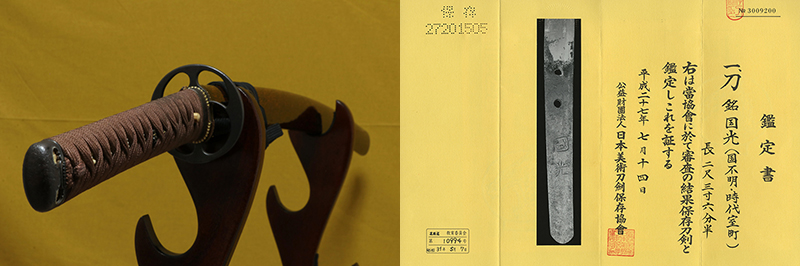
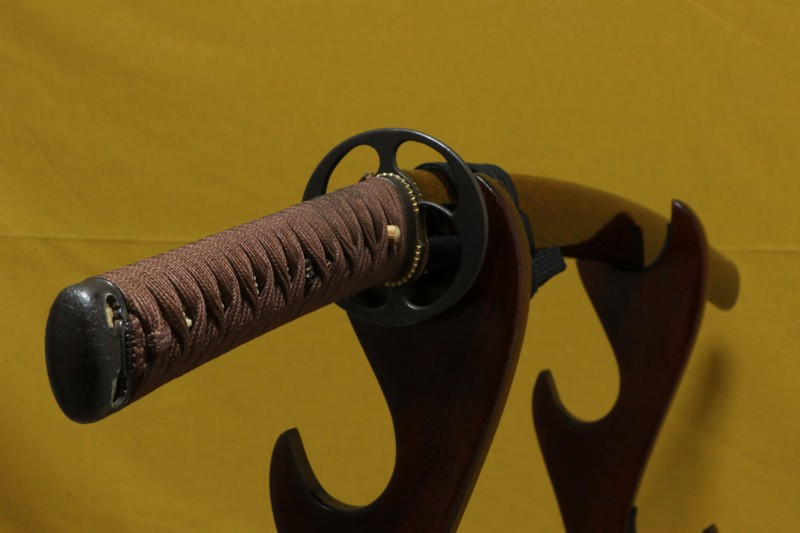
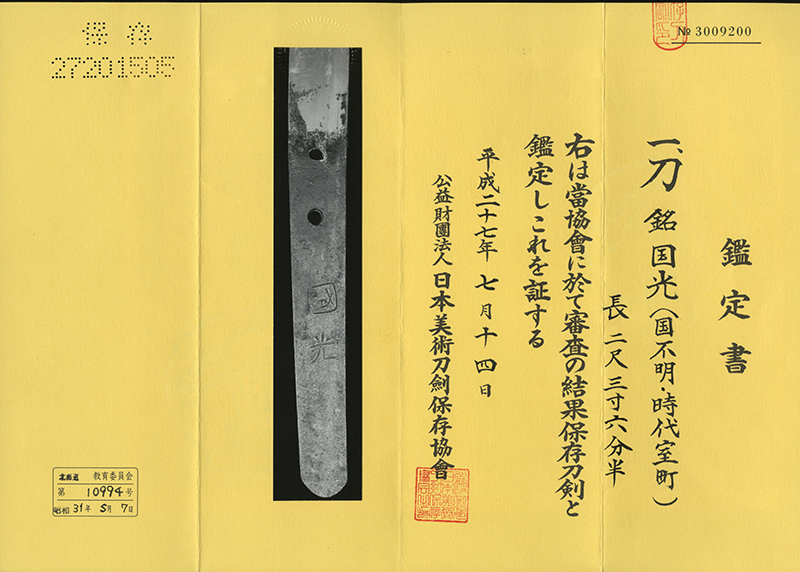
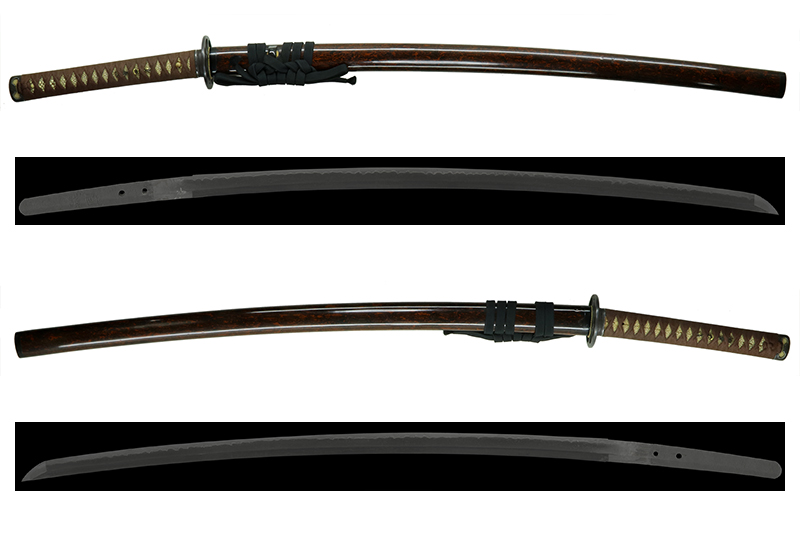

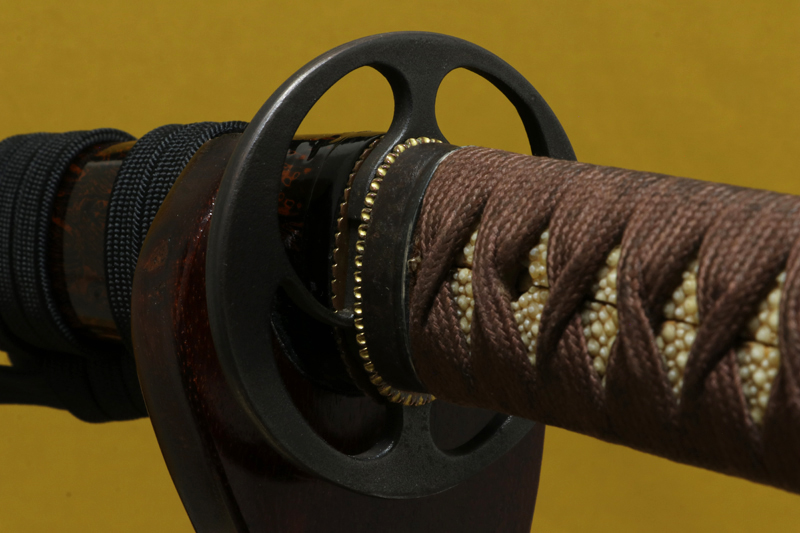
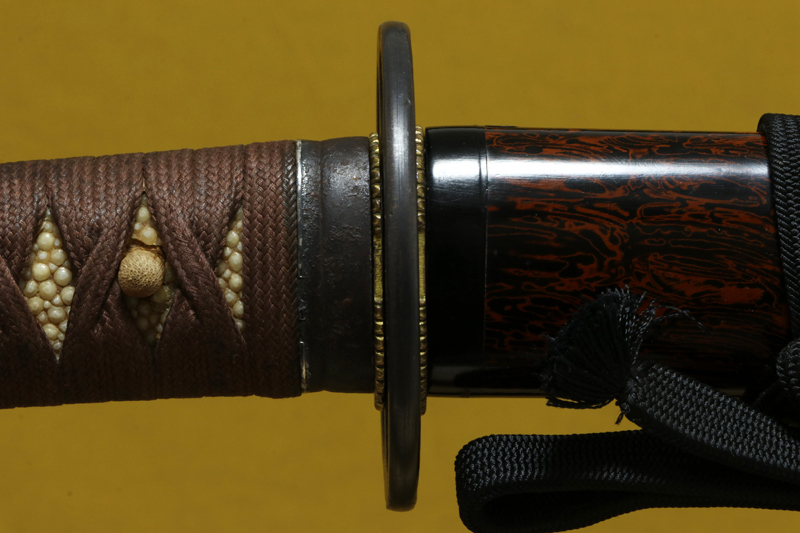
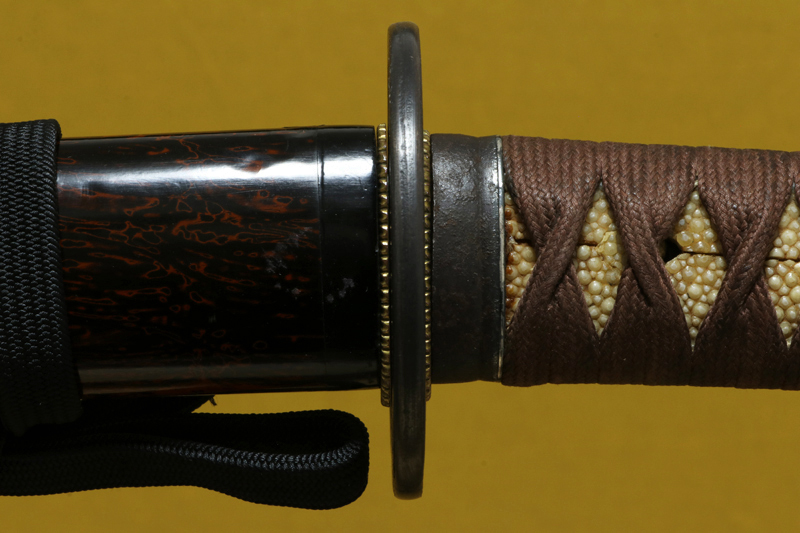
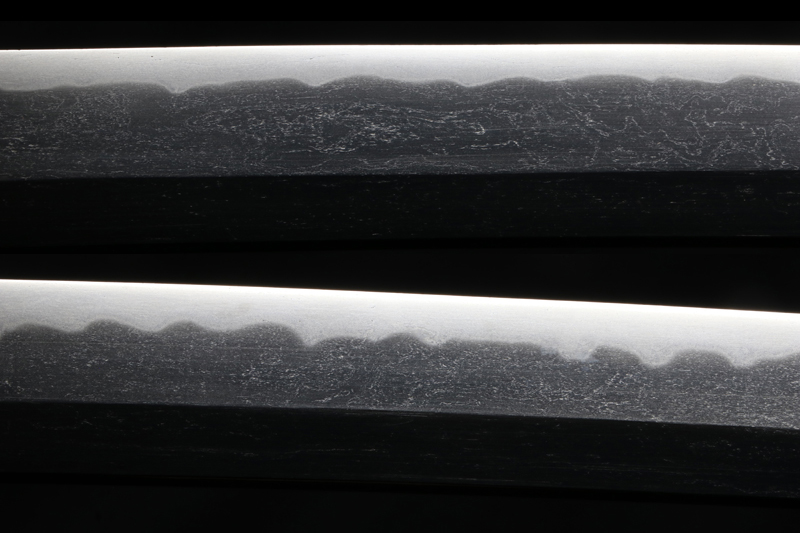
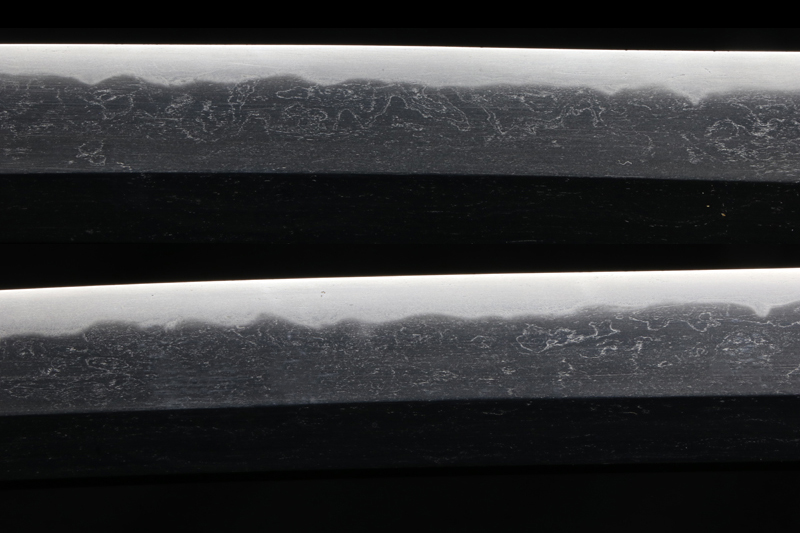
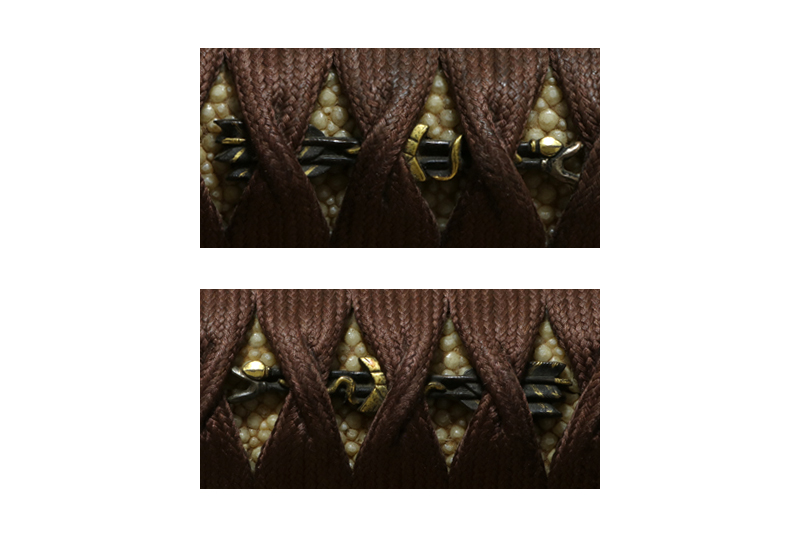
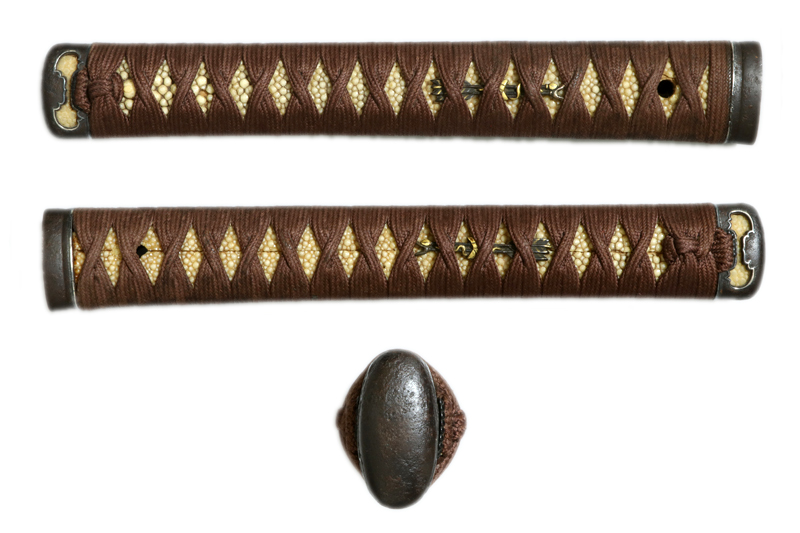
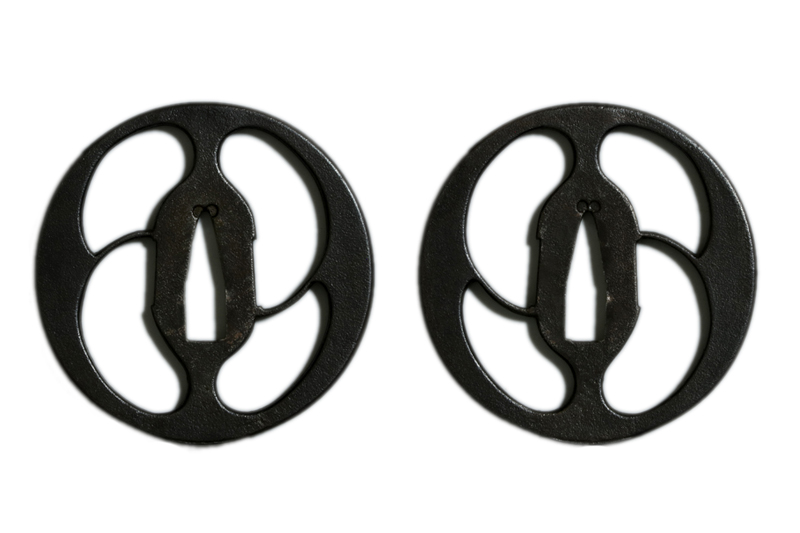
As written by the shop
Mino-den · Mino · around 1558-1570
Tōken Taikan top 91%
Mino-den · Mino
6 pieces on the market now
Akasaka in Mino Province was the seat of a group the NBTHK setsumei records under two names, Mino Senjuin and Akasaka Senjuin, and the documents are consistent on its descent: the line traces to the Yamato Senjuin tradition, whose craftsmen relocated north into Mino. The setsumei place that migration around the end of the Nanbokuchō period, with the group then flourishing into the Muromachi. According to the Kōsei Kotō Meikan as cited, the founder was Kuninaga, set around the Jōji years, with the line carrying the Kuninaga name onward to the Meiō era; Kunishige is placed near Kenmu and is represented by surviving work. The smiths the setsumei name span this arc: Kuninaga, Kunishige, and Kuniyuki of the Nanbokuchō; the joint spear-makers Hironaga and Hiroshige and the ancient smith Tōga of the Muromachi; and later hands signing Dōei, Dōin, Yasumichi, or simply Senjuin. The documents also chart a parallel current, the Echizen smith Kuniyuki of Tsuruga (signing Esshū or Etsushū) who entered Mino between Ōan 6 and 7, alongside Kaneshige and Tametsugu who likewise moved from Echizen. The shared vocabulary of these blades begins in the forging: itame mixed with mokume that flows toward masame, with grain that stands out (hada-dachi), ji-nie, chikei, and a whitish cast (shirake-gokoro) the setsumei return to repeatedly. The temper divides along two lines the documents describe as habitual. " The other runs hotter: notare mixed with gunome, abundant nie, yubashiri, tobiyaki, and muneyaki building toward hitatsura, the manner that marks the Echizen Kuniyuki current.
The bōshi tends to midare-komi with hakikake and a pointed return. To recognize the hand, the setsumei direct attention to the masame-bearing, whitish ji carrying Yamato traits of hotsure and kuichigai-ba, set against a gunome base that leans toward emerging Mino-den character. For kantei the documents are explicit that this line "consistently displays a stronger Yamato character" than the Seki-mono otherwise encountered, and that its hamon "stands at a considerable remove from typical Mino workmanship," though the jigane keeps it within that milieu. Signed pieces carrying an individual maker's name are noted as scarce, which raises the documentary weight of the dated and signed examples the setsumei single out: the Kuninaga tantō dated Ōan gannen, the signed Kunishige and Kuniyuki tachi, and the Esshū Kuniyuki wakizashi dated Sadaji and Ōan whose signatures incorporate Fujiwara. Among named works the setsumei cite the ōmi-yari signed Senjuin with its vermilion-lacquered long-shaft mounting, the joint spear of Hironaga and Hiroshige, and the wakizashi by Tōga held to copy the Genji treasure Higekiri. Provenance is recorded for the Tōga piece, formerly of Tanzan Shrine in Yamato, donated to the Imperial Household and recorded in Honma's inventory of the Imperial collection, with two further Tanzan blades assigned to the Nanbokuchō. The documents place these works across the Tokubetsu-Jūyō and Jūyō registers and Honma's inventory of the Imperial collection, reading the group as a Yamato offshoot that carried its masame-grounded manner into Mino while the gunome base turned toward Mino-den. Learn more →
| Smith | Era | Designated |
|---|---|---|
| Kuniyuki國行 | 1362-1368 | 8 |
| Doin道印 | 1469-1487 | 0 |
| Yasumichi康道 | 1504-1521 | 0 |
| Kaneuji兼氏 | 1492-1501 | 0 |
| Yasutsugu康繼 | 1532-1555 | 0 |
Mino in the Muromachi period
Sengoku Seki was an industry: smiths organized under their tutelary Kasuga shrine, arming the war bands of central Japan. Magoroku Kanemoto’s sanbonsugi and the finest Kanesada work prove quality survived inside mass production.
Within 3 days of the item's arrival, we offer a refund or an exchange. Return shipping and the bank transfer fee for the refund are at the customer's expense.