 NihontoWatchNihontoWatch
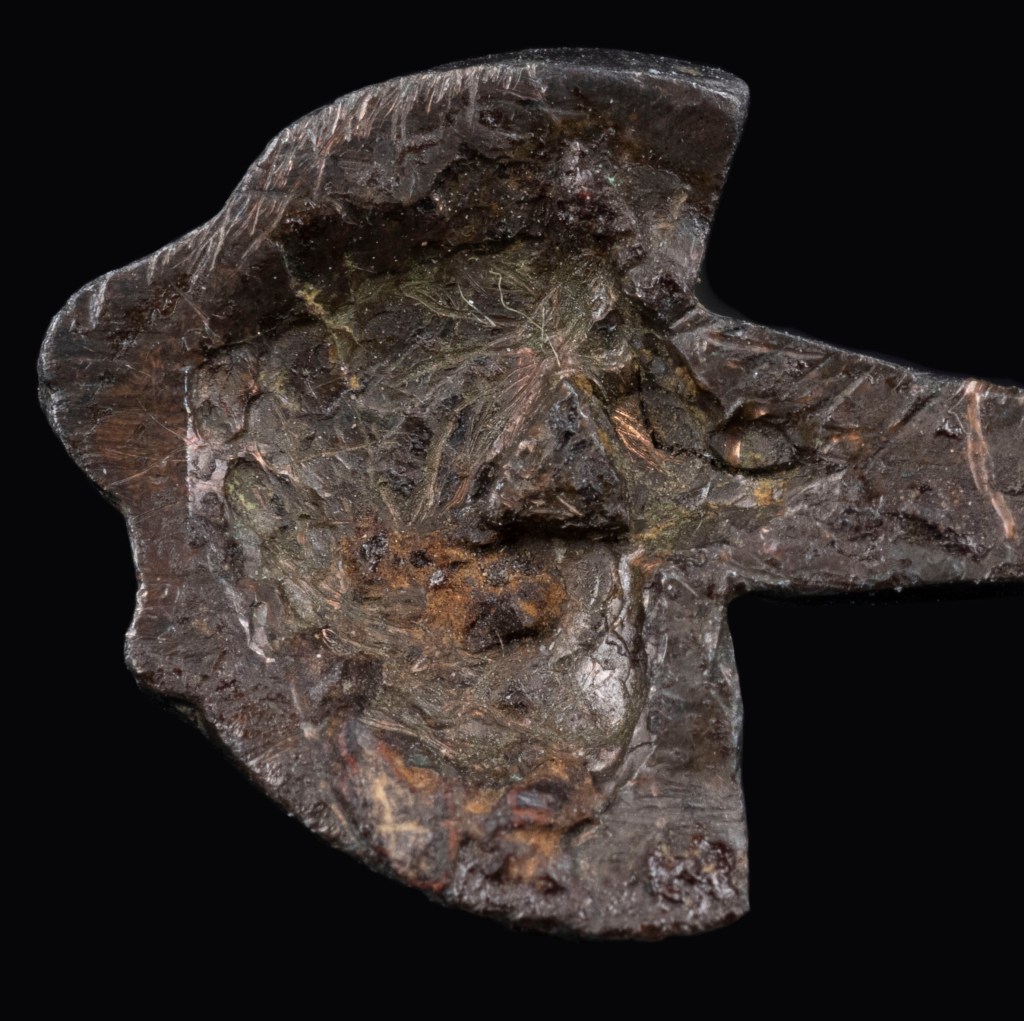
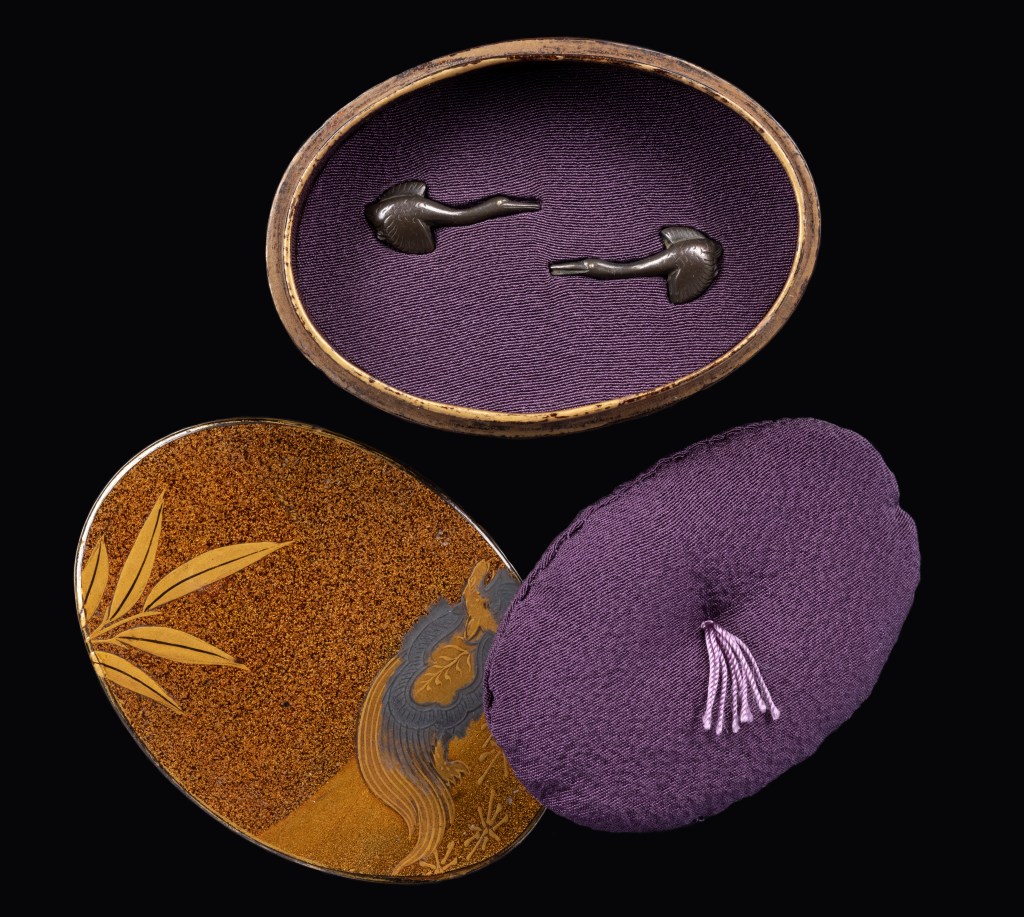
Misumi Masaharu (aka: Koji) is a bit of an enigmatic character. Not a great deal of information exists about him, his background, or his lineage. What is known is that the Misumi family was not associated with the Hosokawa Daimyo of Higo, but rather are shown as a retainers of the Matsui clan who where the head of chief retainers for the Hosokawa. Higo Province was ruled by the Hosokawa Clan in Kumamoto, and while the Shogunate had imposed a policy of “One castle per domain” ruling, the Hosokawa were allowed maintain two as part of a defensive strategy. The Shogunate perceived the Shimazu in Satsuma, foreign visitors, and religious (Christian) figures which both typically entered Japan through Kyushu, as threats significant enough to bless the Hosokawa with an allowance of two castles. The Hosokawa were also exceedingly powerful in terms of economic power and wealth, as Higo was one of the top producers of rice for the nation, which influenced the Shogunate to mollify and better to keep them as allies rather than opposition. With this two castle policy, the Hosokawa also ruled their second castle, originally called Mugishima, through the Kato family. When Mugishima castle was destroyed in an earthquake in 1619, it was rebuilt as Yatsushiro (also nicknamed Shirasagi or “White Heron” for it’s white limestone walls), and control of it granted to the Matsui family. It was here that records show the Misumi family as retainers of the Matsui clan. It is surmised that all extant Misumi works originated from the Matsui possessions, and this would make them effectively the private “in-house” makers of sword fittings for their Matsui lords. Examples of Misumi works are exceedingly rare, but varied examples of fuchigashira, menuki, and tsuba exist. All examples of Misumi works are attributed to Masaharu (aka: Koji) although records show other individuals from the Misumi family name Kojun and Denzo. Since there is so little information about the Misumi lineage, and the only conventional signature found in Misumi works is simply “Misumi”, it is difficult to categorically attribute works to separate individuals. The set displays the the characteristic simplistic elegance of the Higo style in dark patinated copper base metal and sculpted in a soft form that to look worn by time. Higo koshirae also often display tsukamaki in leather or linen that has been lacquered to resemble leather or other textures, and their samegawa are also frequently lacquered in black or brown. As such, tosogu such as these are created to harmonize with the other elements and details of the koshirae. At a glance one might first interpret the subject for cranes in flight. However their form is a bit unique among bird themes and these are described as “Gan” or “wild geese” on the NBTHK certificate. Geese hold an important reference to the influence of classic Chinese painting, and were a theme introduced to Japan from China in the 12th or 13th century. The message of the southward migration of geese in the autumn months and their return in the eighth lunar month known as “Kanaraigetsu”. Another yet more poignant interpretation is the story of military victories that were enabled by flocks of geese breaking ranks thus signaling an ambush. While goose themes can indeed be seen on other tosogu, they are not a perception among the more conventional Higo subjects, adding to the unique character of these menuki. A personal observation; the depiction of these birds shows a much longer beak and wing style than I would associate more with Herons, or perhaps even Cormorants. Since the Matsui were the keepers of Shirasagi Castle (White Heron), and were the singular patrons of Misumi Masaharu, I do wonder if they are not actually Herons for the symbolic importance they would have for the Matsui clan. An interesting element of Misumi works, and a kantei point to him as maker is his usage of a triangular neashi (post) on menuki, or the incision of a triangle inside items like kojiri. The literal translation of the kanji in “Misumi” is “triangle”, thus the usage of a triangular post would seem to be a tongue-in-cheek signature element. Yet another point of interest is that the triangular posts are not soldered in place as is the convention with menuki. Instead the backs have been carved away from the solid metal base revealing the posts in place and keeping them as part of the original base plate. Misumi clearly had no issue with doing things his own way. This is petite in size, but their impact is no less impressive. The quality and detail have been condensed in tandem and do not disappoint. Omote: 2.5 cm x 1.05 cm Ura: 2.5 cm x 1.1 cm This set is on a custom formed otoshi to hold them in place inside a beautiful ovate box lacquered with a Minogame (stylized turtle), in turn which is held in a fabric bag with drawstrings. Also included is a Palownia wood box to contain and protect the entire ensemble. This set has been certified by the NBTHK as Tokubetsu Hozon. An image of the certificate will be added to this listing soon. This is a extraordinary opportunity to own a rare example of iconic Misumi Masaharu works, and would be a remarkable contribution and special place in any tosogu collection. On Consignment
NihontoWatchOffered by Legacy Swords
This piece has sold
Get an email when a new Kinko Misumi Masaharu piece hits the market.

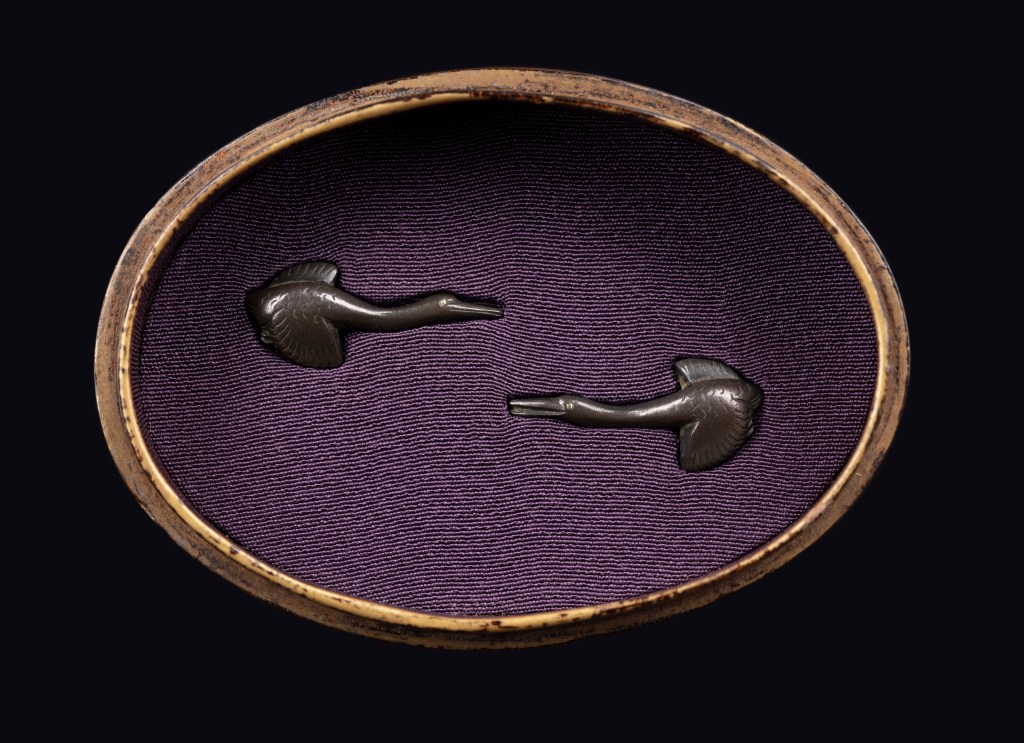
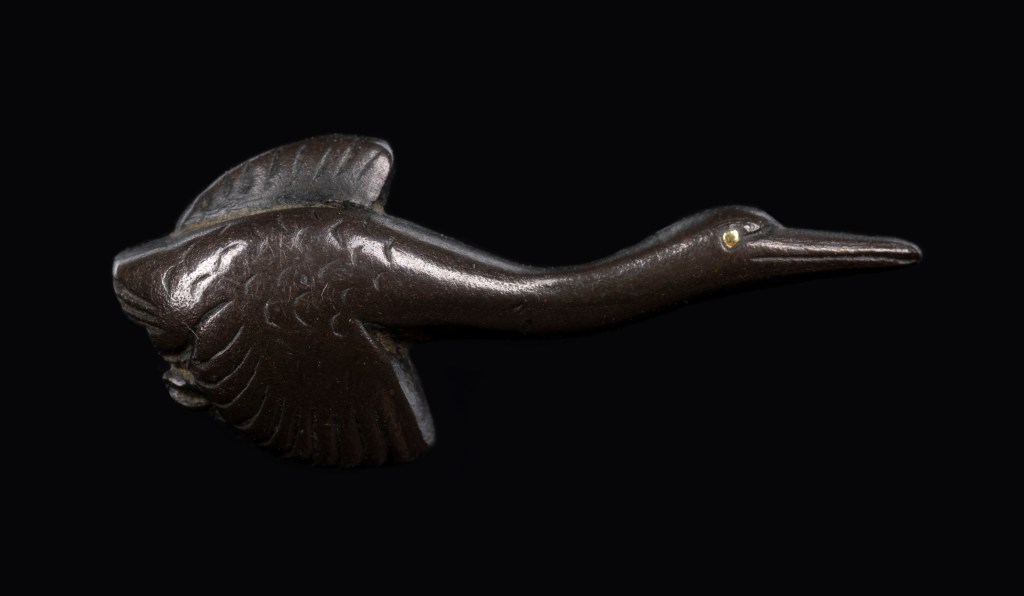
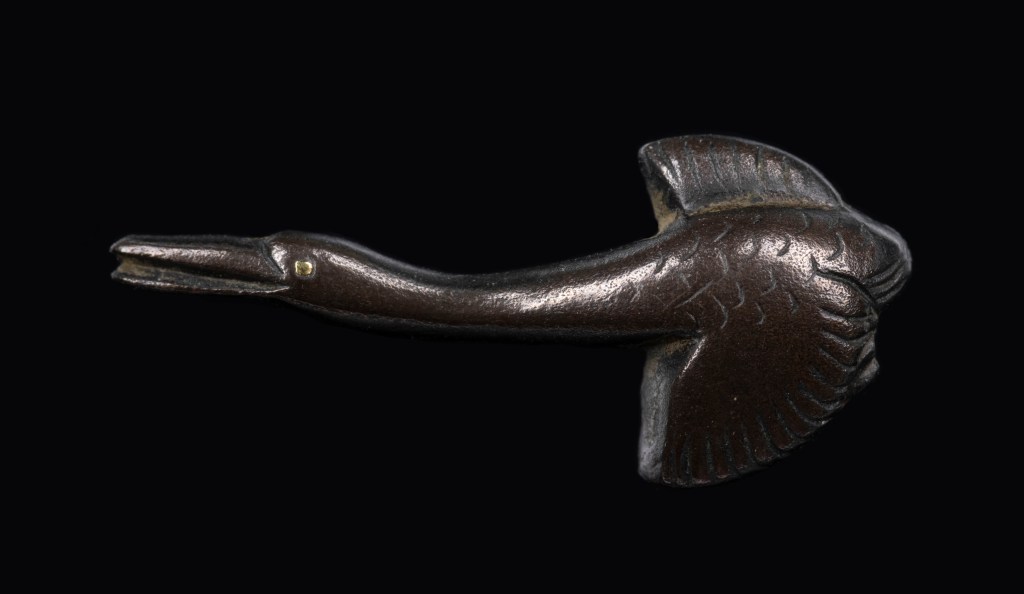
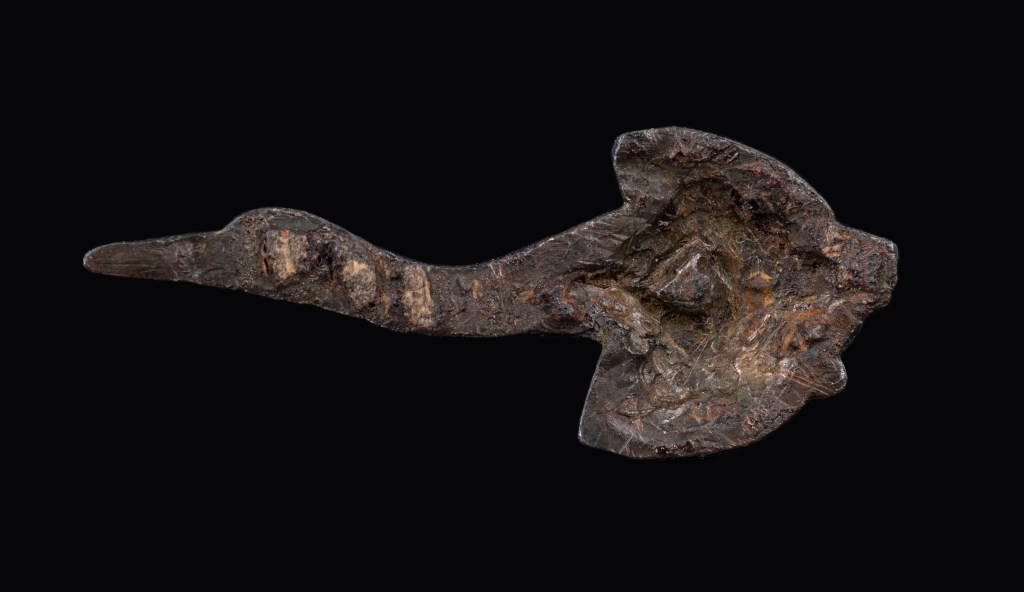
Kinko Misumi Masaharu
Edo
Higo
Signed
Tokuho
Higo · Higo (Kumamoto)
Higo · Higo
128 pieces on the market now
The Higo kinkō (肥後金工) tradition comprises the metalworkers who flourished in Higo province (modern Kumamoto) under the patronage of the Hosokawa daimyō house, from the Momoyama period into the late Edo period. Four families — Hayashi, Hirata, Nishigaki, and Shimizu — are regarded as representing the main line, and the first-generation masters of each were all retained by Hosokawa Sansai (Tadaoki), famed as a great commander and an accomplished master of the tea ceremony, and received his guidance. After the Katō family was dispossessed in Kan'ei 9 (1632) and Sansai's son Tadatoshi was enfeoffed with Kumamoto at 540,000 koku, Sansai entered retirement, choosing Yatsushiro Castle as his place of seclusion. Hirata Hikozō, founder of the Hirata school and descended from the Shōami line, had served Sansai in Kyoto and followed the Hosokawa through Tango and Buzen down to Higo, dying there in Kan'ei 12 (1635); from among his followers emerged Shimizu Jingō (his nephew) and Nishigaki Kanshirō, who together with Hayashi Matashichi of Owari lineage formed the four major schools of Higo metalwork. Matashichi (1613–1699), born in Kumamoto to a family of gunsmiths who had served Katō Kiyomasa before entering Hosokawa service, is regarded as the founder of the Hayashi line. The broader tradition also embraces avocational works by warriors, including tsuba by Sansai himself and by Miyamoto Musashi, who served Hosokawa Tadatoshi from Kan'ei 17 (1640). Shaped by Sansai's direction, the school as a whole is characterized by its combination of outstanding practical function suited to the warrior's taste and a dignified, elevated artistic quality. The Hayashi manner centers on well-forged, lustrous iron — often likened to the deep tone of yōkan — worked in ground openwork (ji-sukashi) with fine kebori engraving and gold nunome-zōgan; Matashichi's tsuba "never give the slightest impression of flatness," conveying an exquisite sense of hiraniku, and his son Shigemitsu's work displays the beautiful purplish patina (murasabi) characteristic of Higo Hayashi-school tsuba.
The Hirata artisans inherited much of the Shōami tradition: while iron grounds are known, they favored irogane such as yamagane, suaka, brass, and shakudō — admired as "Hirata-gane" and "Hikozō-gane" — adding elegant decorative effect through file treatments such as Amida-yasuri and okina-yasuri, on rare occasions employing cloisonné inlay (shippō-zōgan); Hikozō also originated the distinctive rim mounting known as the Odawara fukurin. Shimizu Jingō displays the most intense individuality among Higo metalworkers, boldly placing birds of prey, owls, and rain dragons in brass suemon-zōgan upon hammered, fire-finished iron, while intentionally reserving broad open space on the reverse to deepen the feeling of sabi. The Nishigaki line continued under Nagahisa, who trained in the Gotō Kenjō house before serving the Hosokawa as a retained craftsman. Cherry blossoms and warabite are motifs frequently adopted for Higo tsuba, with Matashichi regarded as the pioneer. Grounded in the aesthetic of the Hosokawa school of tea while inheriting the bold, vigorous spirit of Momoyama, Higo metalwork occupies a singular position in the tosogu canon, extending from tsuba to complete daishō mountings furnished with shakudō fittings bearing the Hosokawa kuyō crest. Matashichi's iron has been "praised without cease" since early times, and his authority was such that other craftsmen were said to "keep their distance by three sha"; because most masters worked unsigned, the few extant signed examples are treasured as precious documents of each hand. Many celebrated works remained in the Hosokawa family itself, passing to the Eisei Bunko collection — testimony to a tradition, later continued by the Kamiyoshi line, whose quiet dignity and refined sabi elegance remain the very embodiment of the warrior aesthetic. Learn more →
| Smith | Era | Designated |
|---|---|---|
| Misumi Masaharu三角正治 | — | 0 |
| Suwa Ikuhei諏訪幾平 | 1832-1903 | 0 |
| Hosokawa Sansai細川三斎 | 1563-1646 | 1 |
| Tsuge Yoshikatsu柘植吉勝 | — | 1 |
| Kobayashi Takatada小林隆忠 | — | 0 |
A Hozon-certified fitting of notably superior craftsmanship and condition, often with signature or workmanship of high reference value.
The NBTHK (Nihon Bijutsu Tōken Hozon Kyōkai, the Society for the Preservation of Japanese Art Swords) is a public-interest incorporated foundation founded in 1948 and supervised by Japan’s Agency for Cultural Affairs (Bunkachō); it is based at the Japanese Sword Museum in Tokyo. Its expert panels physically examine each submitted work (shinsa) and issue a certificate (kanteishō) ranking it by artistic and historical merit. NBTHK papers are the most widely recognized standard of authentication for Japanese swords and fittings.
NBTHK official site