 NihontoWatchNihontoWatch
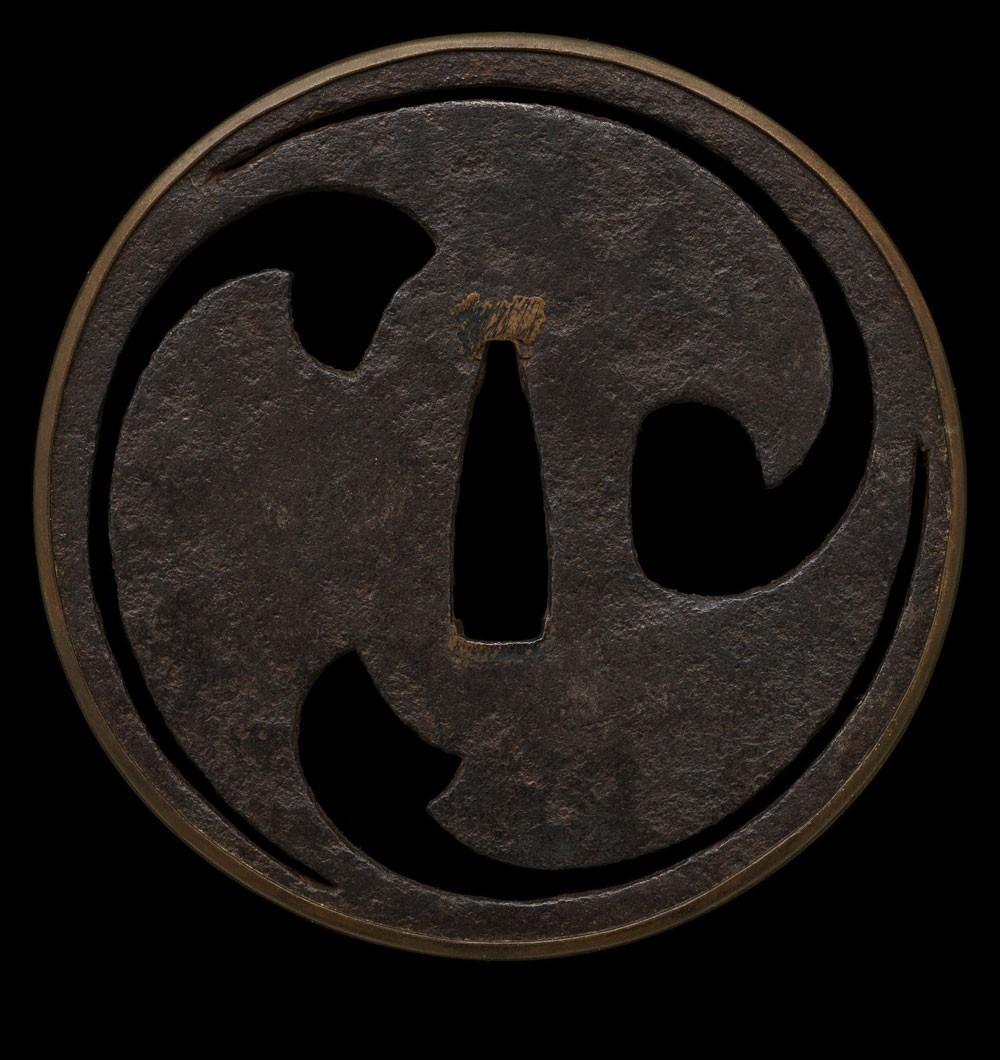
The width is slightly wider than the height by about 0.5 mm, but considering the margin of error in the thickness of the fukurin, it can be said to have an almost perfectly circular sugata. This fukurin is brass and is undoubtedly a later addition. The kitae is a tsuchime-ji where the unevenness of the hirachi in various places creates a sense of rustic simplicity, as if the scene of a cluttered forge has been woven into it. That coarseness is clearly revealed in the kage-sukashi of the mitsudomoe, and the cut-out sides clearly retain the marks of the tagane and yasuri. Finishing was the last thing on their mind; it is a sukashi that was simply shaped in a casual manner—honestly, it is crude. But isn't this fine in its own way... it feels as though it is showing the essence of a tsuba, or rather, its practicality. The tsukuri is slightly thick around the seppa-dai, and while one would not go so far as to call it goishi-gata, it is somewhat nakago. I do not know if the kozuka-hitsu-ana is ubu, having been opened from the start, or if it is a later addition. What catches the eye is the tsuchime kitae, where faint yasuri-me can be confirmed across the entire hirachi. The direction of those yasuri-me is applied in the same direction on both the omote and ura. While it was likely smoothed to some extent by tsuchime kitae at first, it was not carefully smoothed to the end, and the overall finish seems to have been adjusted with a yasuri. The kiwame given to this tsuba is Katchushi... I speculate the period to be around the middle of the Edo period. Just because it is Katchushi does not mean it is old. After all, it does not have the word "Ko" attached to it. That said, I have one doubt. I have never seen an example of a tsuba with a mei that was attributed as Katchushi. Once we enter the Edo period, armor with a mei appears, but did they not put a mei on tsuba? I imagine that even a skilled Katchushi would not have thought, "I wouldn't put a mei on something like a tsuba." As expected, it seems safest to think that tsuba in the Katchushi category are not necessarily made by armorers, but are tsuba with that kind of atmosphere or sakuiki. If interpreted that way, are Tosho tsuba the same sort of thing... well, to this shop, both look like the same sakuiki and are difficult to distinguish, leaving me to feel my lack of study... it is quite embarrassing.
NihontoWatchOffered by Asahi Token

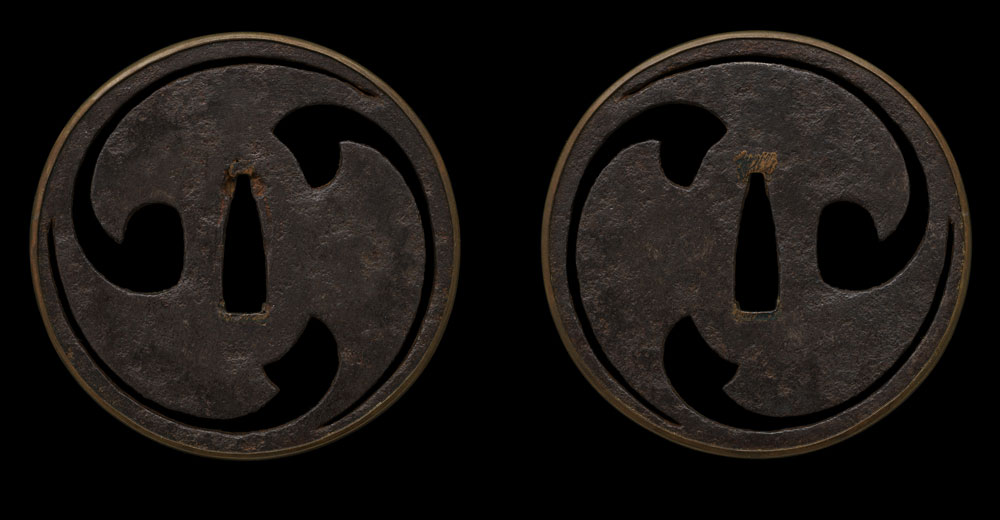
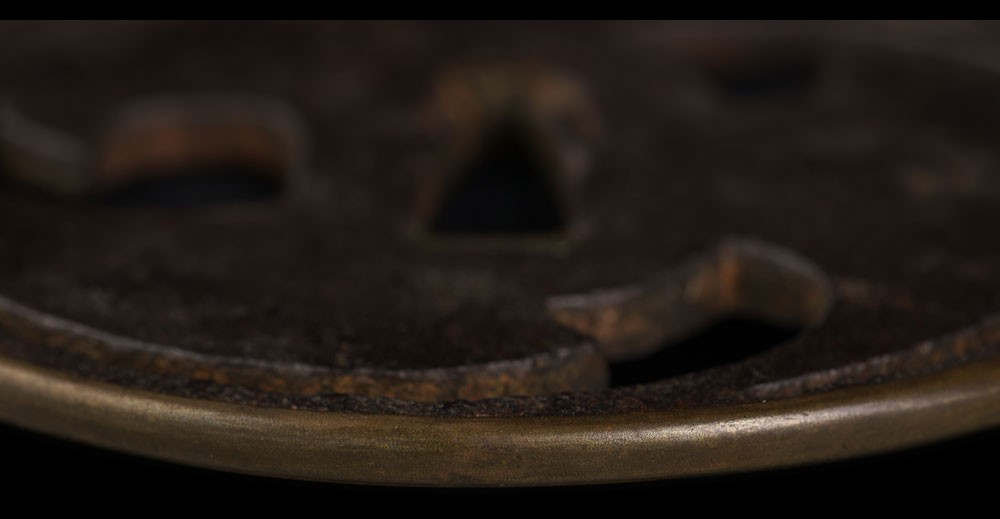
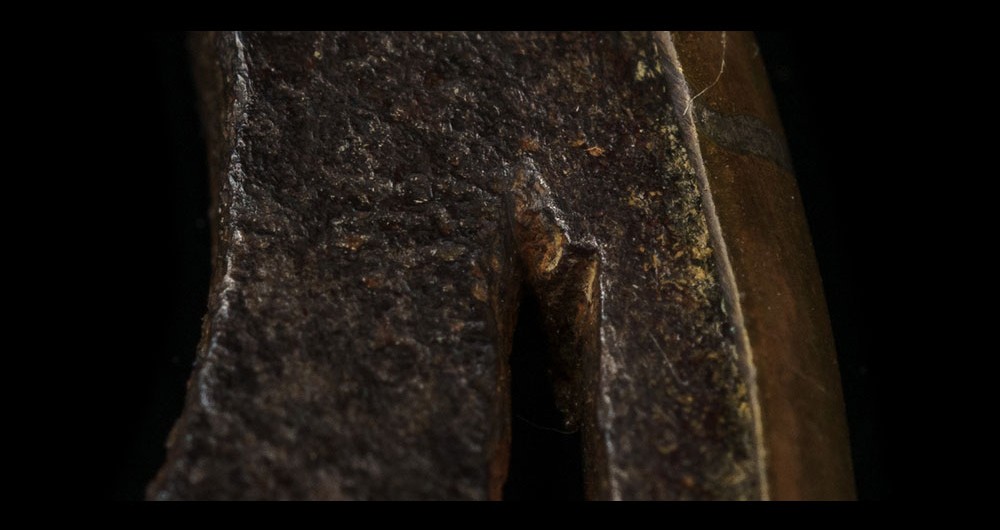
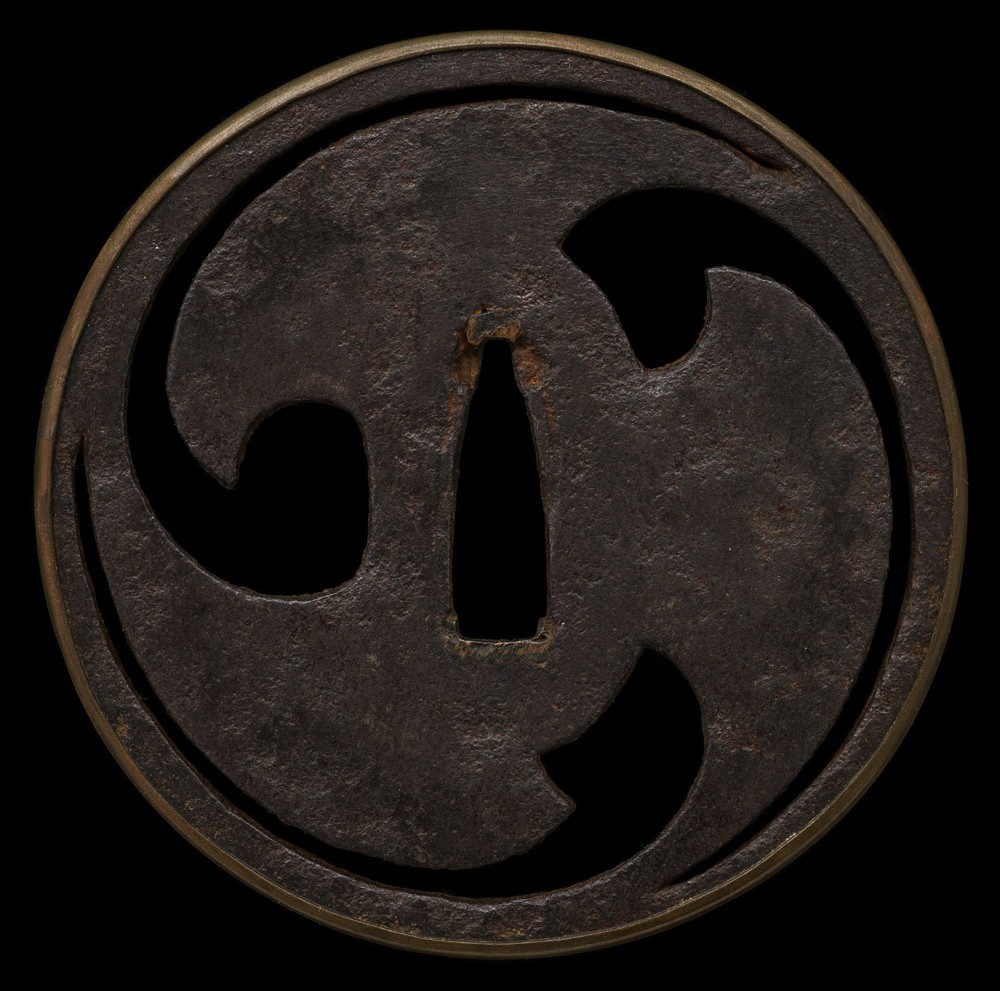
As written by the shop
Machine translation from the shop's Japanese · may contain errors ·
Certifies a genuine fitting worth preserving: a correct signature, or, if unsigned, an identifiable era and school, with recognized artistic and craft value.
The NBTHK (Nihon Bijutsu Tōken Hozon Kyōkai, the Society for the Preservation of Japanese Art Swords) is a public-interest incorporated foundation founded in 1948 and supervised by Japan’s Agency for Cultural Affairs (Bunkachō); it is based at the Japanese Sword Museum in Tokyo. Its expert panels physically examine each submitted work (shinsa) and issue a certificate (kanteishō) ranking it by artistic and historical merit. NBTHK papers are the most widely recognized standard of authentication for Japanese swords and fittings.
NBTHK official siteReturns are accepted within 7 days of the item's arrival, provided its condition has not changed since the time of sale. Once the return is confirmed, the payment is promptly refunded to your designated account.
¥70,000