After the Ōnin War broke the Ashikaga order, a century of Sengoku warfare armed nearly every province in Japan. The era rewards a discriminating eye: routine work exists in quantity, and beside it stand custom blades of the first rank.
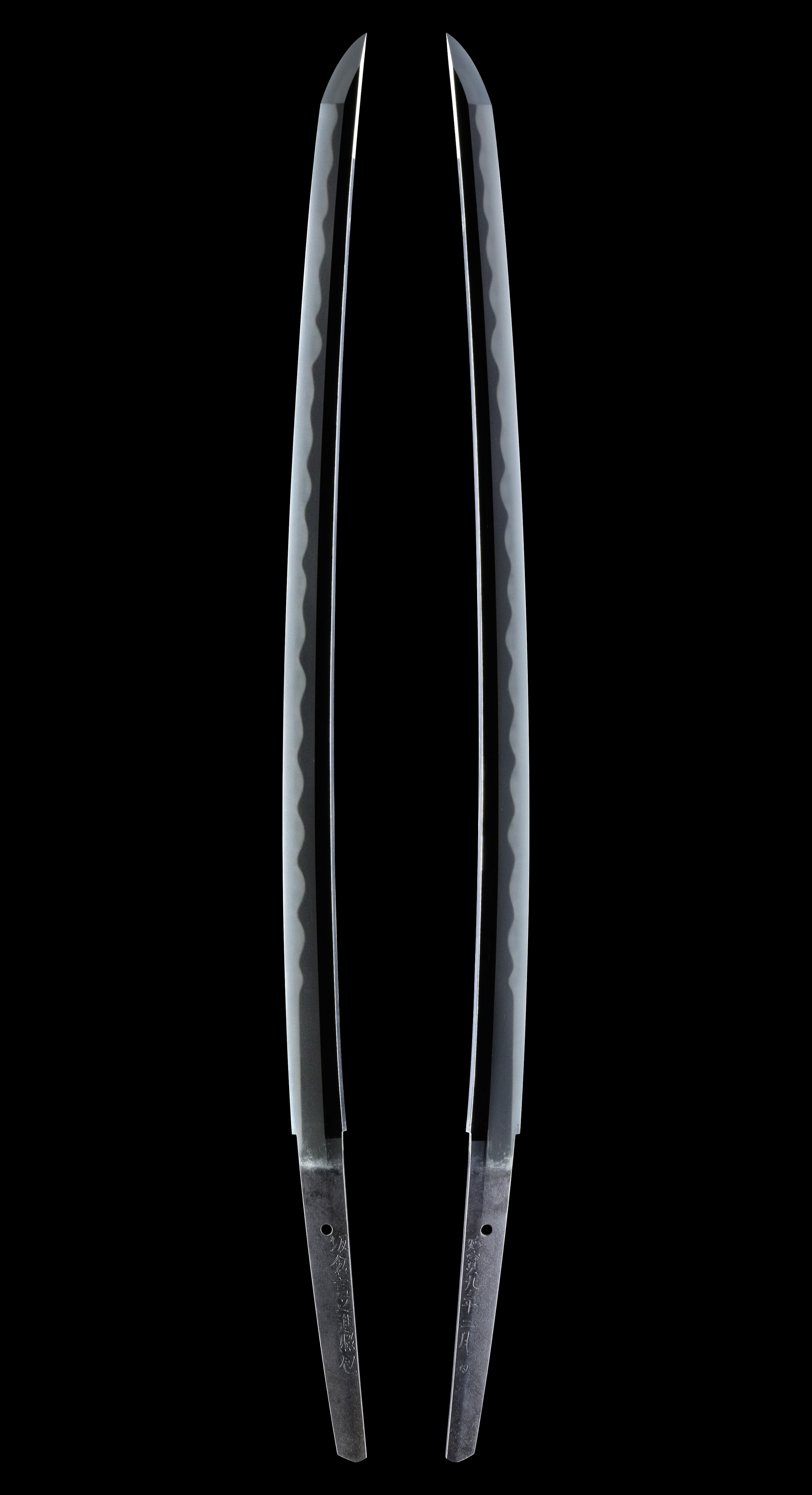
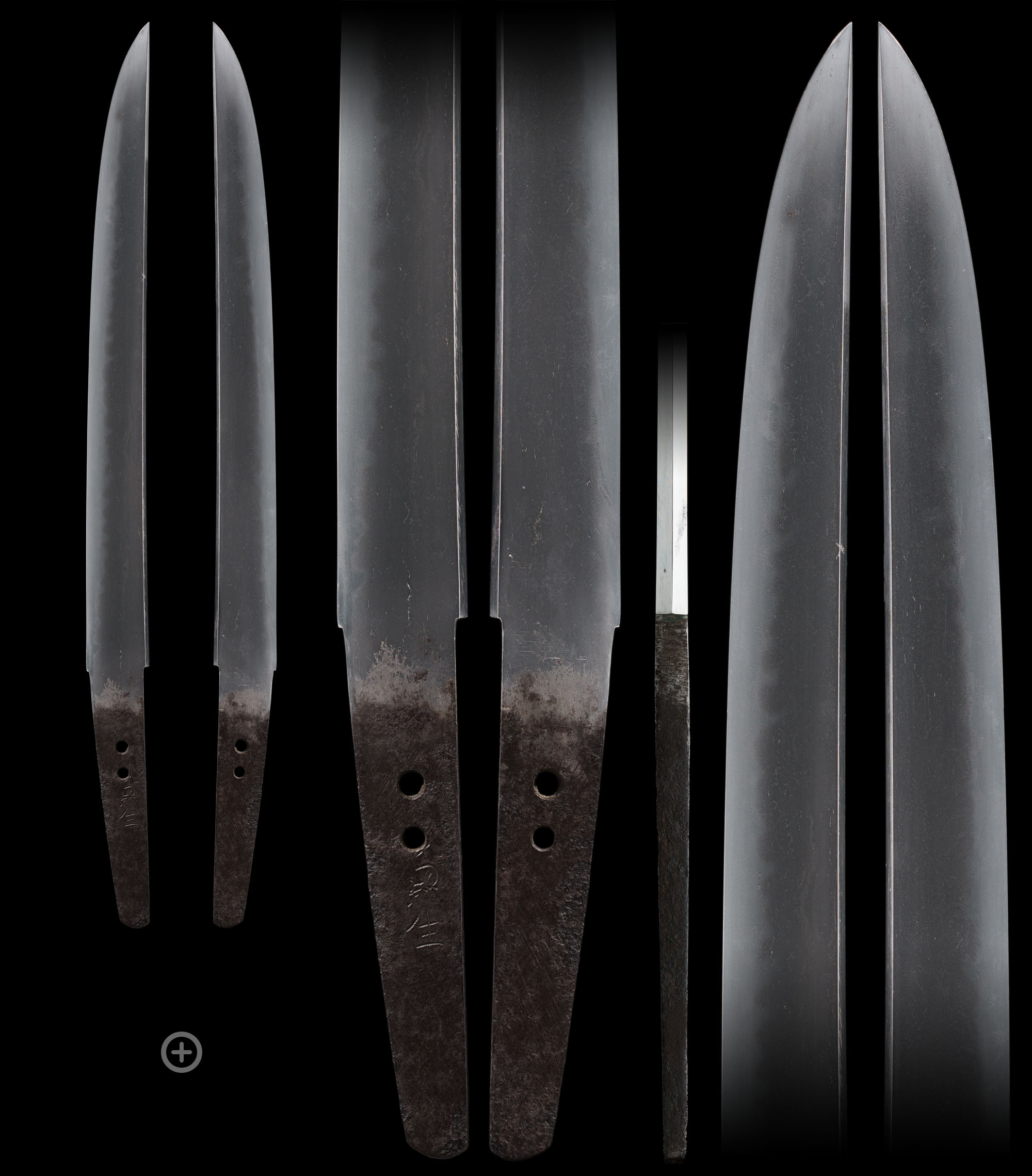
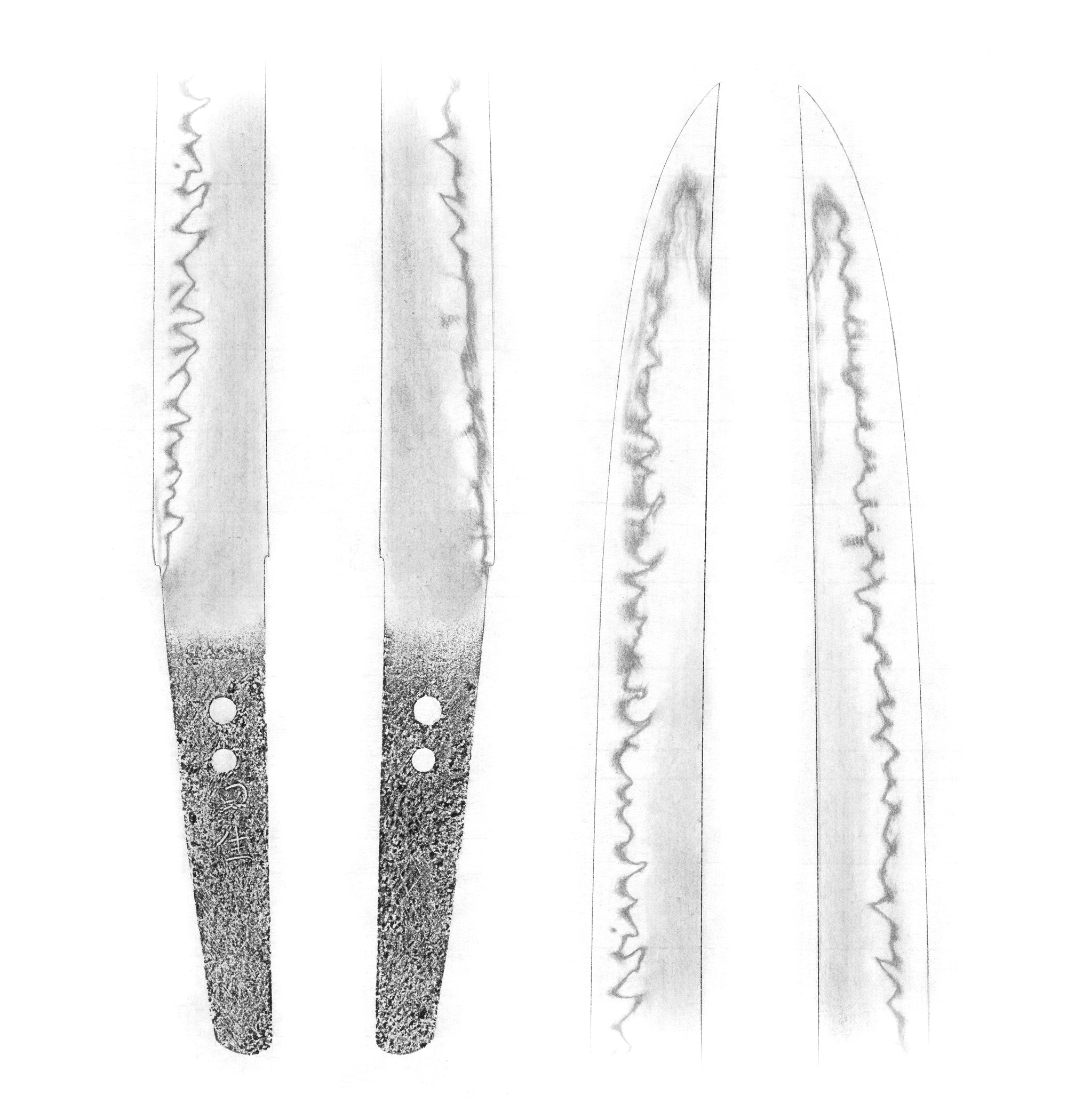
This is a tanto by Kanenari from the late Muromachi period, attributed to the Mino school. It features a distinctive hitataki-style jihada with shirake-utsuri and a small gunome-midare hamon with ko-nie. The blade comes with NBTHK Tokubetsu Hozon certification and is housed in a shirasaya.
 NihontoWatch
mei · Mino · Taiei (1521-1528) · nagasa 27.3cm · sori 1cm
Mino · around 1521-1528
1 piece on the market now
The Muromachi period (1392 to 1573)
After the Ōnin War broke the Ashikaga order, a century of Sengoku warfare armed nearly every province in Japan. The era rewards a discriminating eye: routine work exists in quantity, and beside it stand custom blades of the first rank.
A Hozon-certified blade judged to show notably superior workmanship and a better state of preservation. The bar is higher: re-tempered blades and most unsigned Muromachi/Edo works are excluded.
The NBTHK (Nihon Bijutsu Tōken Hozon Kyōkai, the Society for the Preservation of Japanese Art Swords) is a public-interest incorporated foundation founded in 1948 and supervised by Japan’s Agency for Cultural Affairs (Bunkachō); it is based at the Japanese Sword Museum in Tokyo. Its expert panels physically examine each submitted work (shinsa) and issue a certificate (kanteishō) ranking it by artistic and historical merit. NBTHK papers are the most widely recognized standard of authentication for Japanese swords and fittings.
NBTHK official siteReturns accepted within 7 days of arrival if item is unchanged from condition at time of sale; customer bears return shipping for personal-reason returns, company covers errors/shipping damage.

¥385,000
This is a tanto by Kanenari from the late Muromachi period, attributed to the Mino school. It features a distinctive hitataki-style jihada with shirake-utsuri and a small gunome-midare hamon with ko-nie. The blade comes with NBTHK Tokubetsu Hozon certification and is housed in a shirasaya.
NihontoWatchmei · Mino · Taiei (1521-1528) · nagasa 27.3cm · sori 1cm
Mino · around 1521-1528
1 piece on the market now
The Muromachi period (1392 to 1573)
After the Ōnin War broke the Ashikaga order, a century of Sengoku warfare armed nearly every province in Japan. The era rewards a discriminating eye: routine work exists in quantity, and beside it stand custom blades of the first rank.
A Hozon-certified blade judged to show notably superior workmanship and a better state of preservation. The bar is higher: re-tempered blades and most unsigned Muromachi/Edo works are excluded.
The NBTHK (Nihon Bijutsu Tōken Hozon Kyōkai, the Society for the Preservation of Japanese Art Swords) is a public-interest incorporated foundation founded in 1948 and supervised by Japan’s Agency for Cultural Affairs (Bunkachō); it is based at the Japanese Sword Museum in Tokyo. Its expert panels physically examine each submitted work (shinsa) and issue a certificate (kanteishō) ranking it by artistic and historical merit. NBTHK papers are the most widely recognized standard of authentication for Japanese swords and fittings.
NBTHK official siteReturns accepted within 7 days of arrival if item is unchanged from condition at time of sale; customer bears return shipping for personal-reason returns, company covers errors/shipping damage.
¥385,000