The twentieth century nearly killed the craft twice: wartime distortion, then the occupation ban. The NBTHK’s founding in 1948 and licensed forging from 1953 rebuilt the sword as an art, crowned by Living National Treasures and the mukansa rank.
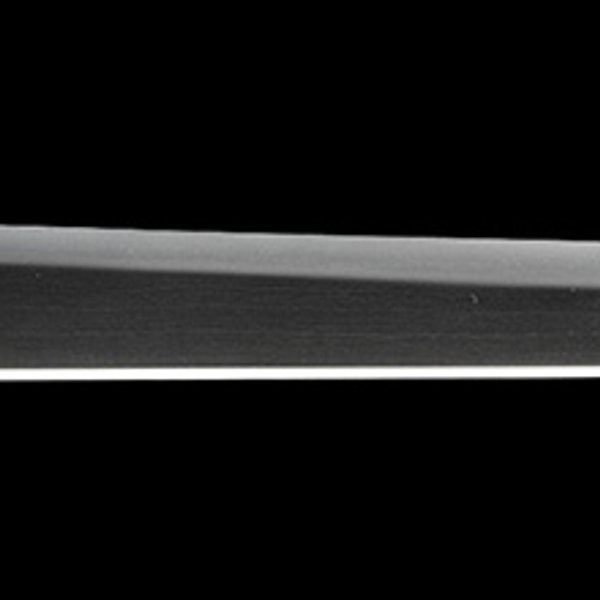
The eighth generation swordsmith Hokke Saburo Nobufusa pursued the creation of jitetsu with beautifully uniform masame kitae in the style of old Yamato mono, particularly the Hosho den. Furthermore, together with his son Nobutsugu, who would later succeed as the ninth generation Nobufusa, he achieved significant results in research on sword making using meteoric iron (meteorites with high iron content) that fell from outer space. In Showa 41, he was designated a Miyagi Prefecture Important Intangible Cultural Property, won numerous Excellence Awards at the Exhibition of New Masterpiece Swords, and was certified as Mukansa in Showa 56.
Offered by Choshuya
5 on the market

As written by the shop
Machine translation from the shop's Japanese · may contain errors ·
Rikuzen · around 1926-1989
5 pieces on the market now
Shōwa to the present: destruction and revival
The twentieth century nearly killed the craft twice: wartime distortion, then the occupation ban. The NBTHK’s founding in 1948 and licensed forging from 1953 rebuilt the sword as an art, crowned by Living National Treasures and the mukansa rank.
We could not find an authenticity certificate on the seller’s listing. Japanese swords and fittings are normally papered by the NBTHK (or the NTHK). Without one, the attribution is the seller’s own assessment and has not been independently verified — treat it with caution and ask the dealer about certification before buying.
If, due to our fault, the item differs significantly from its proper condition, the item may be returned. Cooling-off is within one week of the item's arrival.
Price on request