Perry’s arrival in 1853 unraveled the Tokugawa peace and created the first mass demand for working swords in two centuries. Kiyomaro, called the Masamune of Yotsuya, died on its eve; Munetsugu and Yukihide carried the boom to the end.
 NihontoWatchNihontoWatch
Koyama Munetsugu was born in Oshu Shirakawa in Kyowa 3. His common name was Sobei (also written as Sobei), and his elder brothers were Munehira and Munetoshi. He was initially a retained smith of the Shirakawa Matsudaira family, but later went to the capital to become a pupil of Kato Tsunahide and forged swords as a smith for the Kuwana clan in Edo at Azabu Nagasaka and Yotsuya Samoncho. He also used the go Seiryosai and Issensai. He received the title of Bizen no Suke in Koka 2 and lived until around Meiji 5. From Ansei 7, he changed his nakago yasurime to kiri. His style consistently specialized in the Bizen-den, and he is a very popular tosho. This work also features a refined kitae with a well-tightened itame hada, and is finished with a magnificent hamon where the gunome forms sanbonsugi, with the hamon on the omote and ura being symmetrical and carefully hardened. The boshi is sugu, returning in saki komaru. The nakago is ubu with kesho sujikai yasurime, and the mei is crisp and sharp, being the very picture of kenzen. It is a flawless tanto. The koshirae is also a fine koshirae worthy of the toshin. It has suaka issaku kanagu and the saya nuri is of high quality. The tsuka-ito is also not the wrapping of an ordinary person, and one is struck with admiration by how solid it is in every corner. It is a recommended blade complete in both interior and exterior. Kin-kise niju habaki. Tokubetsu Hozon Token.
NihontoWatchOffered by World Seiyudo
This piece has sold
20 on the market
Get an email when new Koyama Munetsugu School work hits the market.

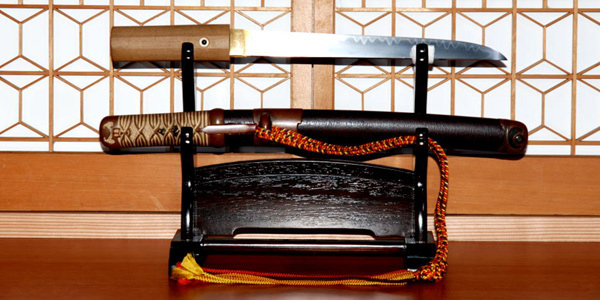

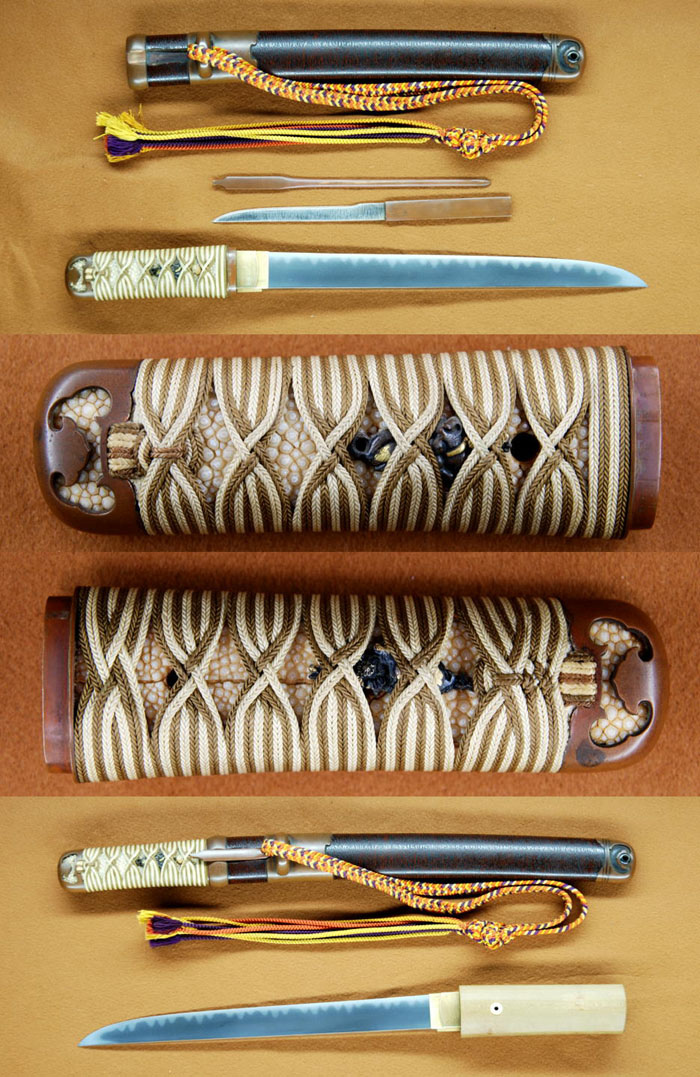
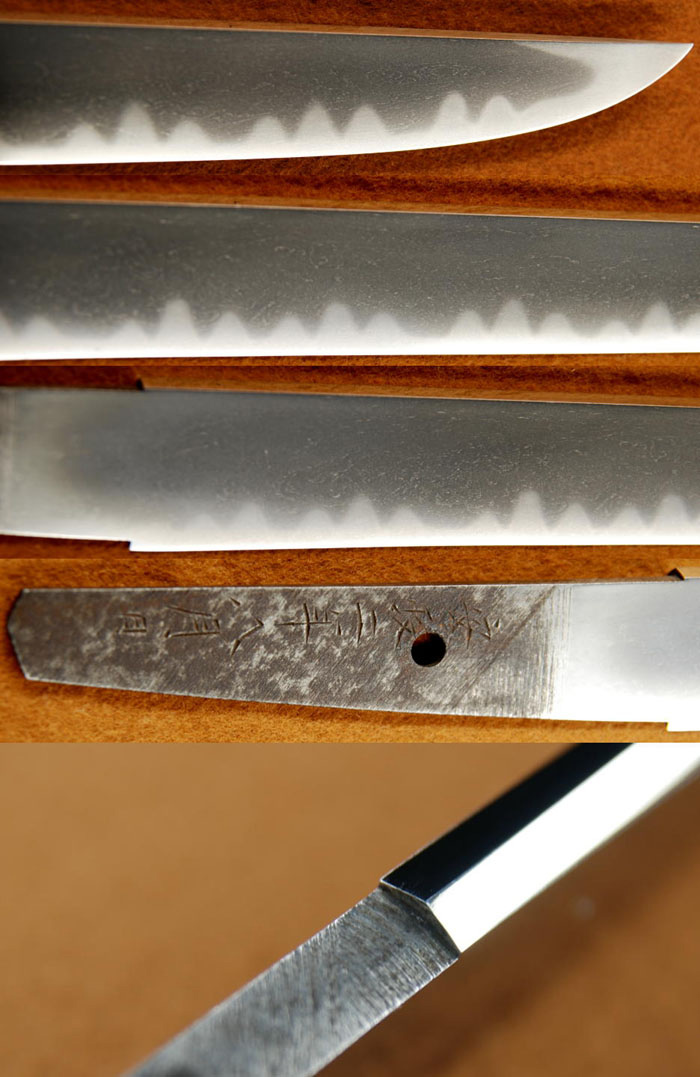
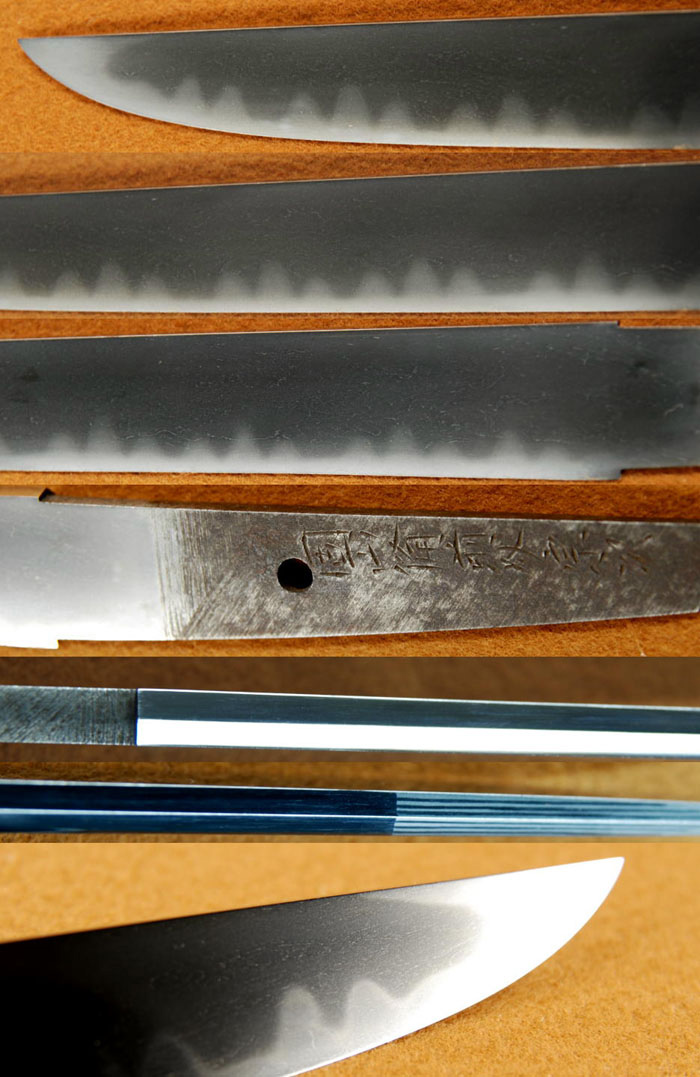
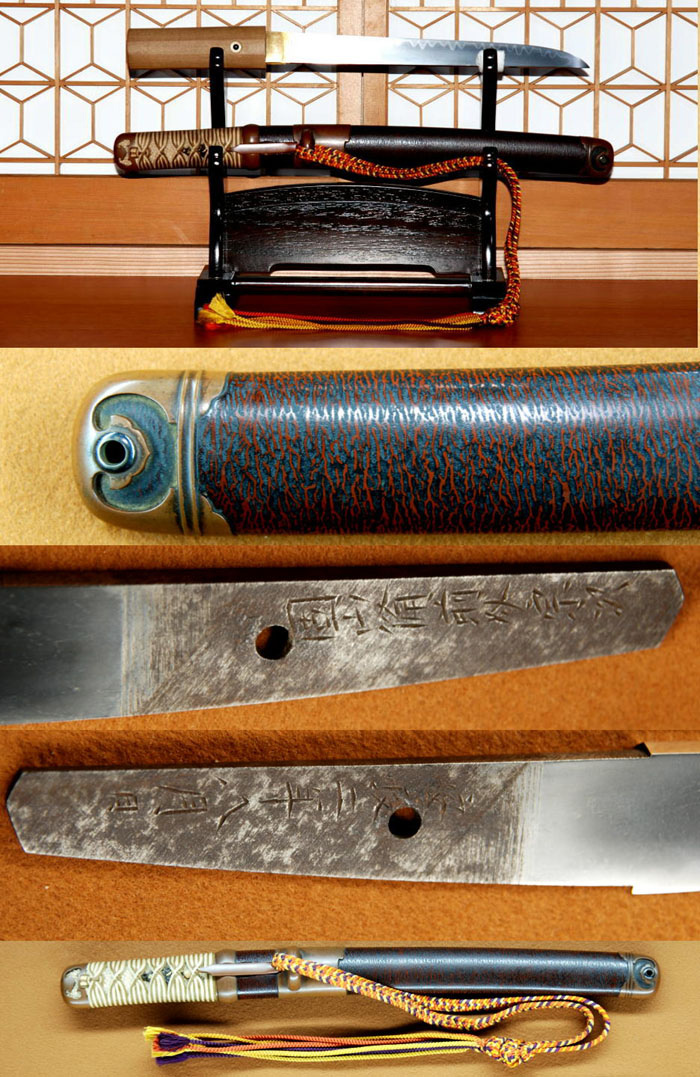
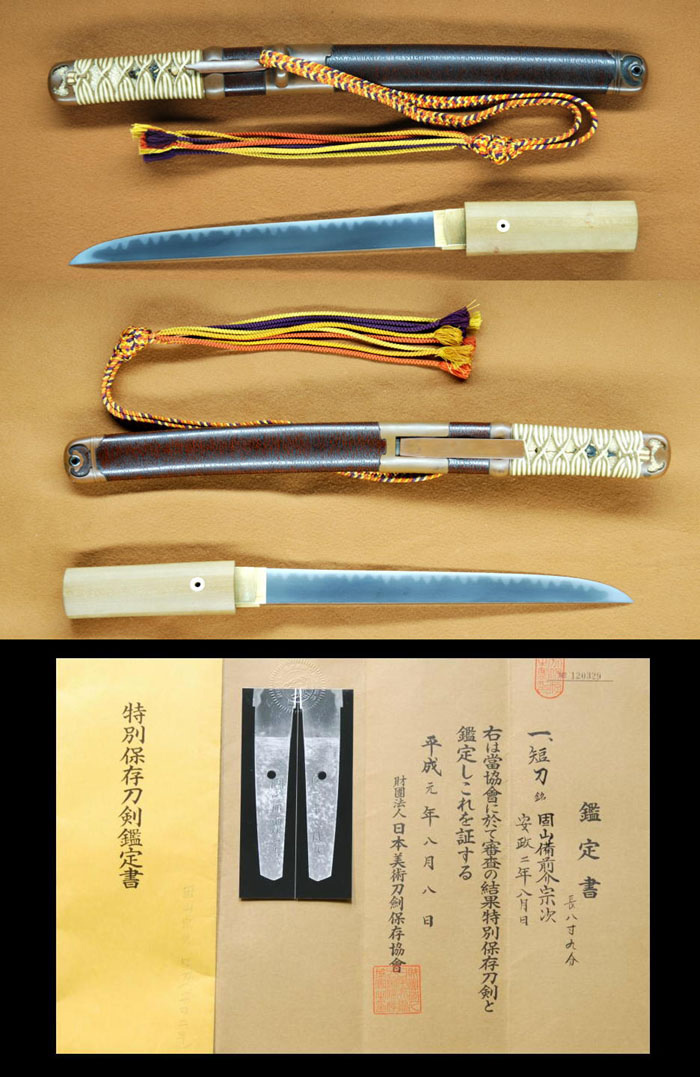
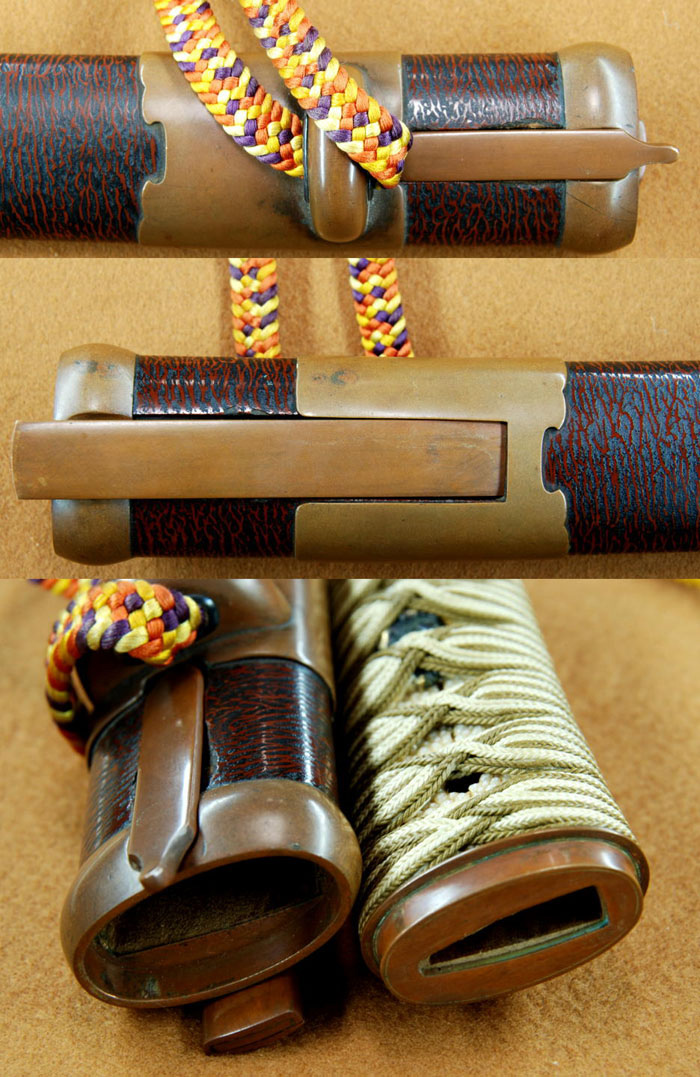
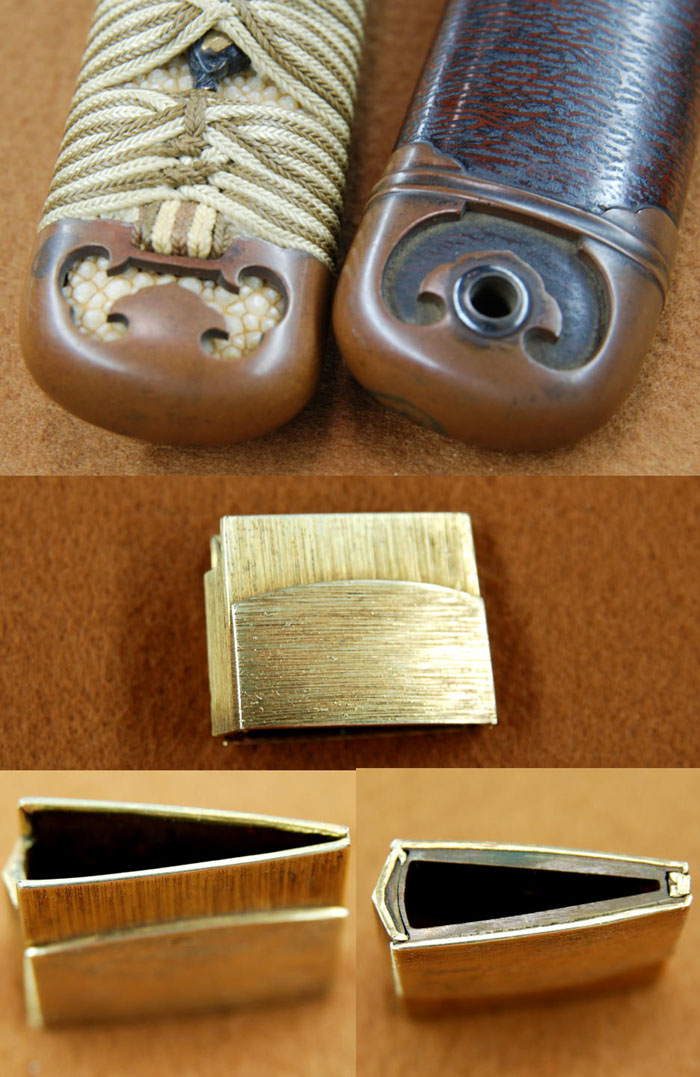
Machine translation from the shop's Japanese · may contain errors ·
Shinshinto · Musashi
20 pieces on the market now
Born in Kyōwa 3 (1803) at Shirakawa in Ōshū, Koyama Munetsugu (固山宗次) carried a smith's name read variously in the setsumei as Munobei or Sōbei, working under the art-names Issensai and Seiryōsai. He came up alongside elder brothers Munehira and Munetoshi, and although his teacher is traditionally given as Katō Tsunahide, the NBTHK readers repeatedly note that the hand of Katō Tsunatoshi shows through his work more plainly. He first served the Matsudaira house of Shirakawa as a retained smith; when that domain was transferred to Kuwana in Ise, he settled in Edo at Azabu Nagasaka and forged as a Kuwana domain smith. In Kōka 2 (1845) he received the court title Bizen no Suke, the signature Bizen no Suke Fujiwara Munetsugu recurring on the dated katana from that point. His production runs from the latter half of Bunsei into the early Meiji years, and the program it serves is the Bakumatsu fukko revival of Bizen-den: a deliberate return, from an Edo workshop, to the chōji tempering of the old Bizen masters. The shared idiom is consistent across the line. Construction tends to a wide mihaba, thick kasane, shallow sori and an extended chū-kissaki or ō-kissaki, giving the heavy-in-hand shinshintō bearing the readers call taihai. The ground is a tightly packed ko-itame, sometimes flowing toward nagare or masame, carrying extremely fine mijin-grade ji-nie and frequent chikei; faint utsuri rises on a number of blades.
The temper is the heart of the recognition: a nioi-dominant chōji-midare or gunome-chōji, with ko-chōji, togariba and angular heads mixed in, long ashi and yō entering, fine sunagashi and kinsuji, and a bright, clear nioiguchi. To read his hand, the setsumei flag particular chōji shapes (the kawazuko tadpole-head and the kobushi fist-shaped chōji clustered near Keiō-dated work), a midare-komi bōshi turning in ko-maru with hakikake, and the bold, thick-chiseled signatures with prominent chisel-pillows. Cutting-test inscriptions are common, several tied to the connoisseur Iga Norishige, who is recorded learning swordmaking from Munetsugu. His pupils carry the same vocabulary: Tairyūsai Sōkan (宗寛, also Munekane), son of Ōno Heizō and later a Koga/Furukawa domain smith, whose blades add a faint midare-utsuri and a smaller-pattern late temper; and the likely student Kongōsai Munehiro, who copied the same shrine original his master did. For kantei, the discriminating points are the orderly yet varied chōji arrayed shoulder-to-shoulder, the nie-laden Tenpō-era pieces whose habuchi has not yet settled, and a deliberate allusion to the second-generation Kunisuke when kobushi-like chōji appear. The named works root the line in documented copying: an utsushi of the National Treasure Koryū Kagemitsu, reconstructed to its original ubu state with kurikara and bonji carved by Sōkan; and a Tenpō 11 (1840) wakizashi copying the hōchō-shaped Masamune of Egara Tenmangū in Kamakura, carved by Tōryūsai Seiju and dedicated by Nomura Toshikatsu, a rare pairing of two Edo masters. Provenance inscriptions name patrons such as Miyake Takuma and the Furukawa domain on the Sōkan side. Across the NBTHK register, the work stands as a disciplined Edo restatement of the Bizen chōji tradition, prized for the brightness of its nioiguchi and for the documentary value of its dated, commissioned and trial-cut tangs. Learn more →
| Smith | Era | Designated |
|---|---|---|
| Munetsugu宗次 | 1830-1870 | 52 |
| Sokan宗寛 | 1850-1868 | 5 |
Bakumatsu: the last war market
Perry’s arrival in 1853 unraveled the Tokugawa peace and created the first mass demand for working swords in two centuries. Kiyomaro, called the Masamune of Yotsuya, died on its eve; Munetsugu and Yukihide carried the boom to the end.
A Hozon-certified blade judged to show notably superior workmanship and a better state of preservation. The bar is higher: re-tempered blades and most unsigned Muromachi/Edo works are excluded.
The NBTHK (Nihon Bijutsu Tōken Hozon Kyōkai, the Society for the Preservation of Japanese Art Swords) is a public-interest incorporated foundation founded in 1948 and supervised by Japan’s Agency for Cultural Affairs (Bunkachō); it is based at the Japanese Sword Museum in Tokyo. Its expert panels physically examine each submitted work (shinsa) and issue a certificate (kanteishō) ranking it by artistic and historical merit. NBTHK papers are the most widely recognized standard of authentication for Japanese swords and fittings.
NBTHK official siteNo cooling-off period or returns; refund only if the purchased sword is proven fake, capped at purchase price (excludes commission sales, accessories, auction items).