Sagami no Kami Fujiwara Yasuyuki was the son of Noto no Kami Fujiwara Yasuyuki, and his home province was Mino. Having passed through the Sengoku period, Mino swords became known to the world for their superior sharpness and robustness, and from then through the Edo period, many Mino smiths were invited by various domains and migrated to different regions. The first generation Noto no Kami also moved to Minami-nagashima-cho in the Nagoya castle town following the opening of Nagoya Castle in Keicho 15, February. The style of the first generation often features hamon similar to Yasutsugu. Furthermore, works by the first generation are characterized by deep mei chiseling and nakago yasurigi; while the nakago-jiri of the first generation is ha-agari kurijiri, the nakago-jiri of the second generation is ken-gyo. This work is a production by the second generation Sagami no Kami Fujiwara Yasuyuki. It differs in flavor from the first generation. The second generation Yasuyuki was named "Shinbei," and lived and made swords in Nagashima-cho in the Nagoya castle town along with the first generation. Extant works with nenki-mei from Kanbun 5, 7, 8, and 10 remain. Because Mino Province was adjacent to Owari, it is thought there was much coming and going of swordsmiths, and a new style called Owari-Seki was created. Among Mino swordsmiths of this period, besides Yasuyuki of this work, Masatsune, Ujifusa, and Nobutaka are famous smiths. It is said that the works of Sagami no Kami Fujiwara Yasuyuki, which differ somewhat in flavor from the Mino homeland, have been popular among connoisseurs since long ago.
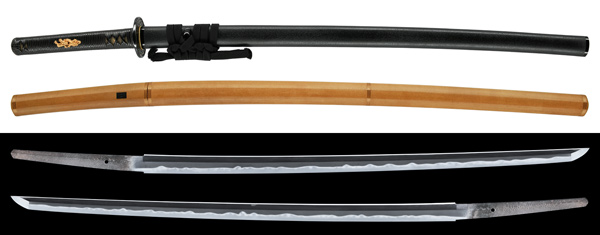
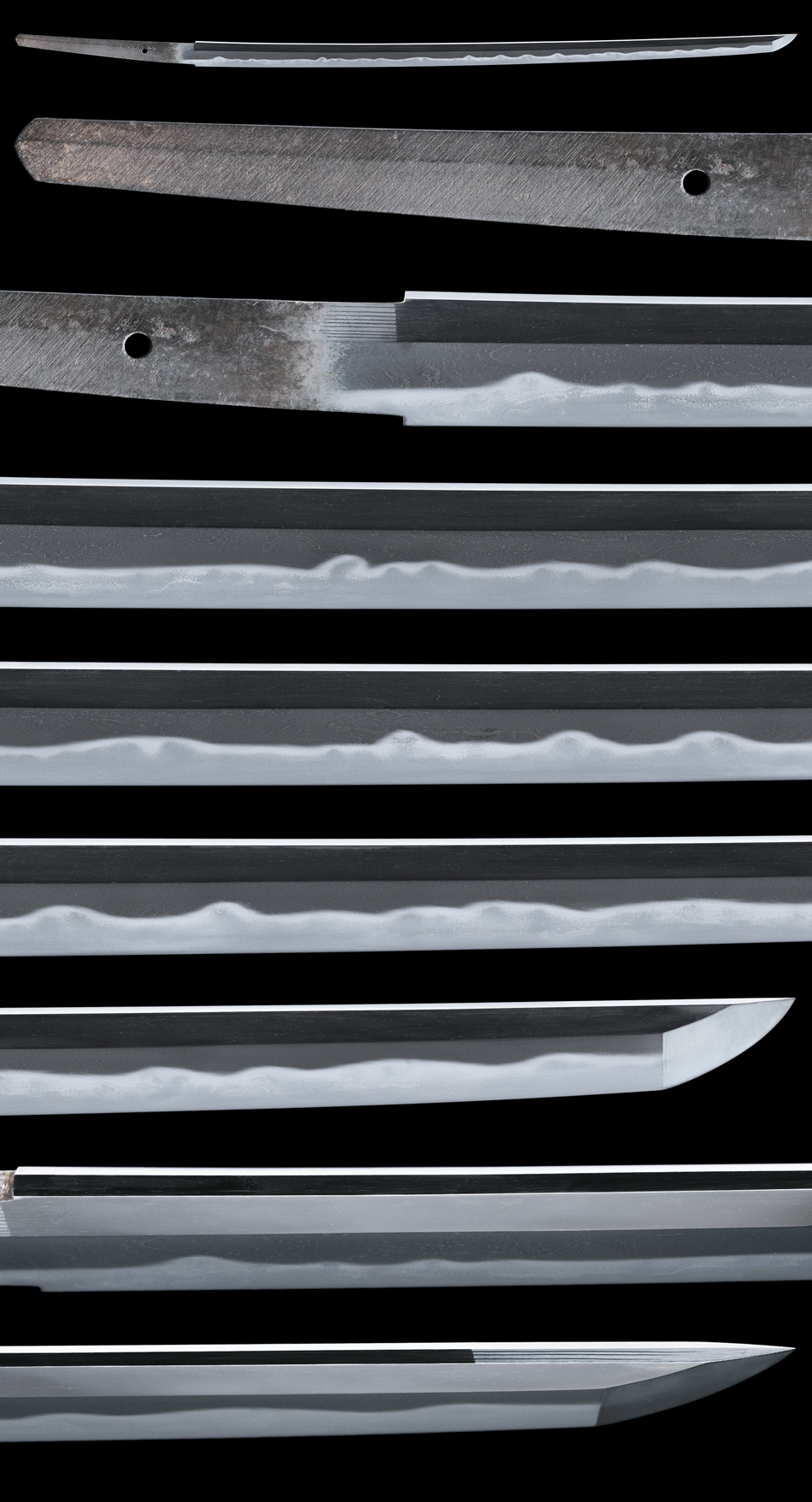
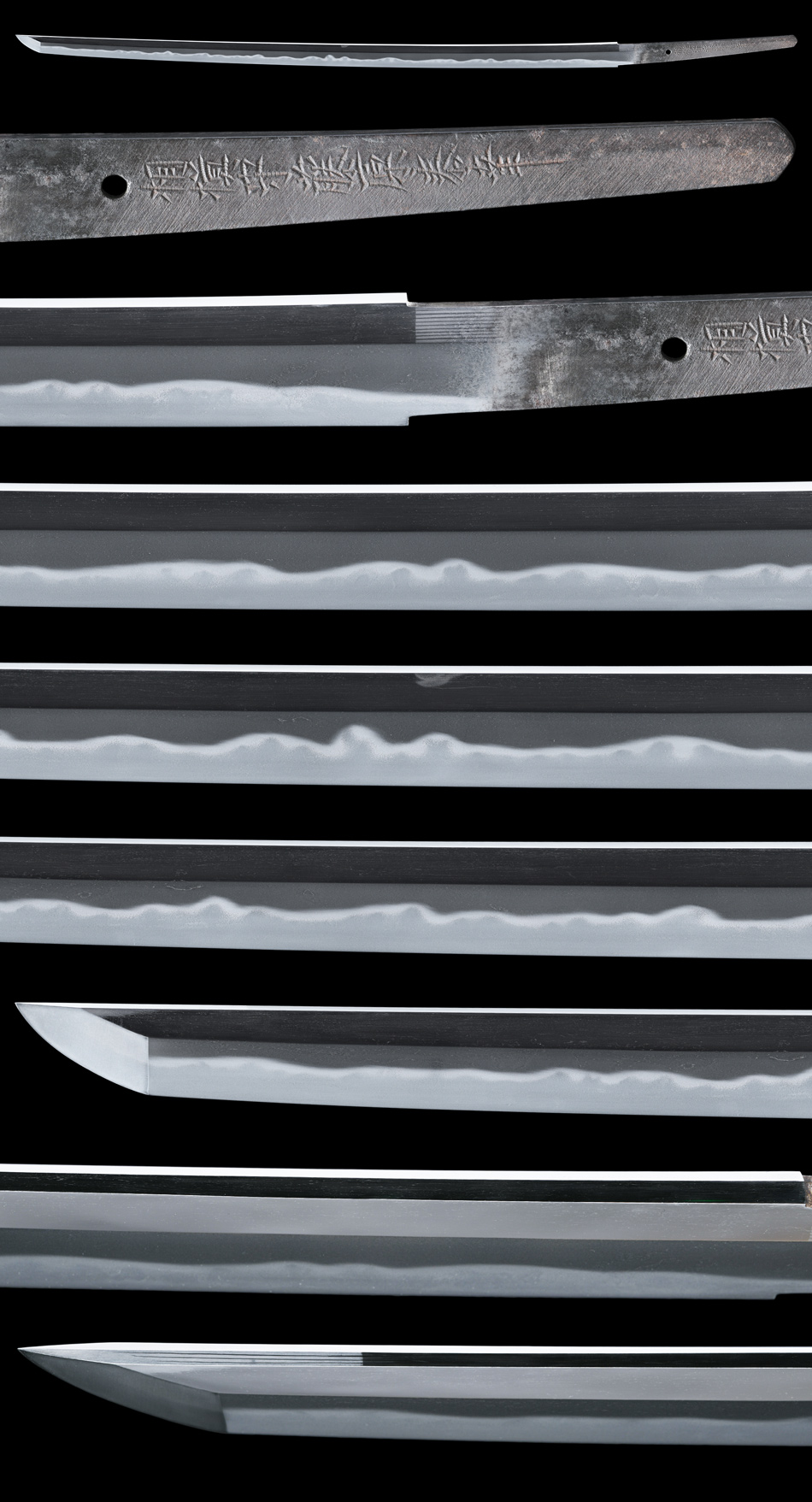
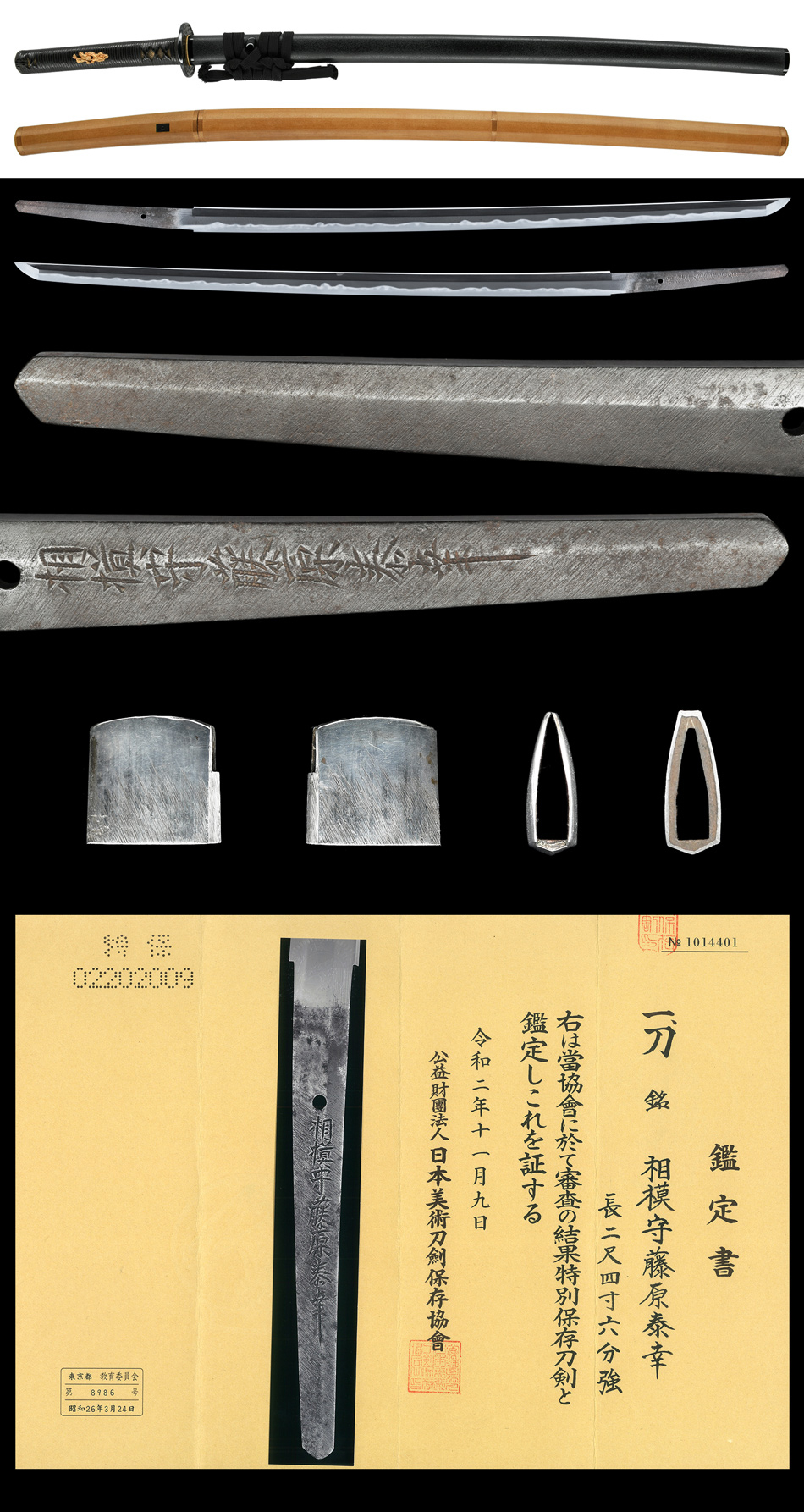
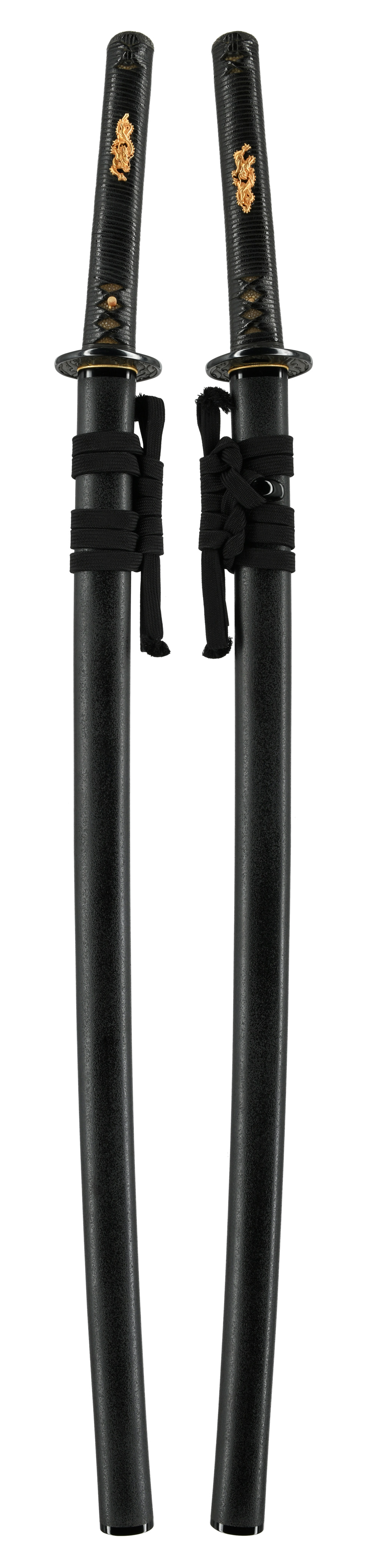
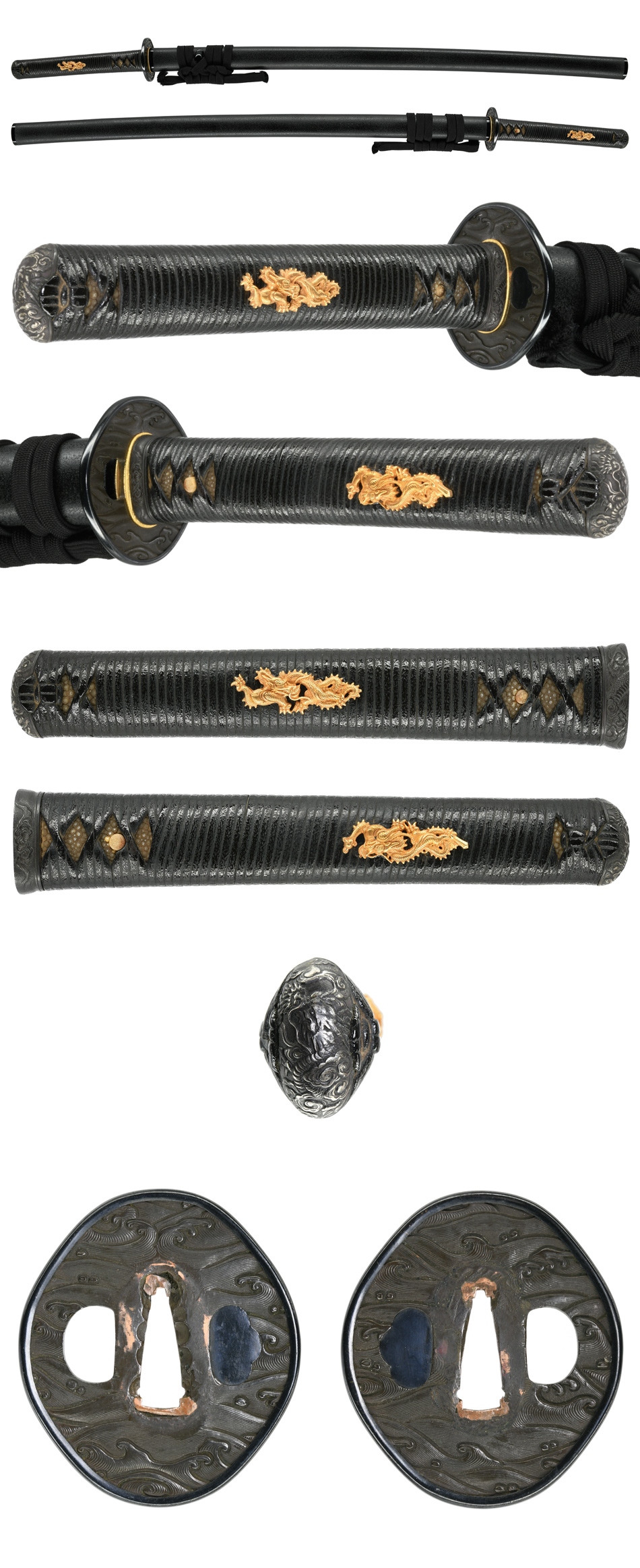
This work is a sword that demonstrates shitsujitsu-goken with a magnificent nagasa of over 2 shaku 4 sun 6 bu, a mihaba that is firm at the moto and saki, and a thick kasane. The jigane is a well-kneaded, tight, strong and clear itame-hada kitae with ji-nie, and movement can be felt in the hadame. The hamon is a gunome-midare rich in variations of height. The nioiguchi is deep with ashi, and sunagashi works like drifting clouds. The boshi is notare and returns in komaru at the tip. On the nakago with good sabi-aji, the meiji are carved deeply with a thick tagane. This sword is a piece that overflows with the dignity of an Owari samurai, presenting the majestic and tough body of Sagami no Kami Fujiwara Yasuyuki. The accompanying koshirae is a high-quality item with a chic feel that suits the toshin. Shirasaya, Tokubetsu Hozon Token Kanteisho, silver-clad jidai habaki.
Machine translation from the shop's Japanese · may contain errors ·
Sagami no Kami Fujiwara Yasuyuki was the son of Noto no Kami Fujiwara Yasuyuki, and his home province was Mino. Having passed through the Sengoku period, Mino swords became known to the world for their superior sharpness and robustness, and from then through the Edo period, many Mino smiths were invited by various domains and migrated to different regions. The first generation Noto no Kami also moved to Minami-nagashima-cho in the Nagoya castle town following the opening of Nagoya Castle in Keicho 15, February. The style of the first generation often features hamon similar to Yasutsugu. Furthermore, works by the first generation are characterized by deep mei chiseling and nakago yasurigi; while the nakago-jiri of the first generation is ha-agari kurijiri, the nakago-jiri of the second generation is ken-gyo. This work is a production by the second generation Sagami no Kami Fujiwara Yasuyuki. It differs in flavor from the first generation. The second generation Yasuyuki was named "Shinbei," and lived and made swords in Nagashima-cho in the Nagoya castle town along with the first generation. Extant works with nenki-mei from Kanbun 5, 7, 8, and 10 remain. Because Mino Province was adjacent to Owari, it is thought there was much coming and going of swordsmiths, and a new style called Owari-Seki was created. Among Mino swordsmiths of this period, besides Yasuyuki of this work, Masatsune, Ujifusa, and Nobutaka are famous smiths. It is said that the works of Sagami no Kami Fujiwara Yasuyuki, which differ somewhat in flavor from the Mino homeland, have been popular among connoisseurs since long ago.
This work is a sword that demonstrates shitsujitsu-goken with a magnificent nagasa of over 2 shaku 4 sun 6 bu, a mihaba that is firm at the moto and saki, and a thick kasane. The jigane is a well-kneaded, tight, strong and clear itame-hada kitae with ji-nie, and movement can be felt in the hadame. The hamon is a gunome-midare rich in variations of height. The nioiguchi is deep with ashi, and sunagashi works like drifting clouds. The boshi is notare and returns in komaru at the tip. On the nakago with good sabi-aji, the meiji are carved deeply with a thick tagane. This sword is a piece that overflows with the dignity of an Owari samurai, presenting the majestic and tough body of Sagami no Kami Fujiwara Yasuyuki. The accompanying koshirae is a high-quality item with a chic feel that suits the toshin. Shirasaya, Tokubetsu Hozon Token Kanteisho, silver-clad jidai habaki.
For two and a half centuries of peace the sword was the warrior’s legal badge rather than his weapon. Each great city developed its own manner, Edo’s tested strength against Ōsaka’s polished brilliance, until demand thinned in the era’s last decades.
A Hozon-certified blade judged to show notably superior workmanship and a better state of preservation. The bar is higher: re-tempered blades and most unsigned Muromachi/Edo works are excluded.
About the NBTHK›
The NBTHK (Nihon Bijutsu Tōken Hozon Kyōkai, the Society for the Preservation of Japanese Art Swords) is a public-interest incorporated foundation founded in 1948 and supervised by Japan’s Agency for Cultural Affairs (Bunkachō); it is based at the Japanese Sword Museum in Tokyo. Its expert panels physically examine each submitted work (shinsa) and issue a certificate (kanteishō) ranking it by artistic and historical merit. NBTHK papers are the most widely recognized standard of authentication for Japanese swords and fittings.
No cooling-off period or returns; refund only if the purchased sword is proven fake, capped at purchase price (excludes commission sales, accessories, auction items).


 NihontoWatch