Edo was the sword’s age of connoisseurship: the Hon’ami appraisers, the shogunal register of famous blades of 1719, and a thriving literature turned the sword into an object of study even as it ceased to be drawn in war.
 NihontoWatchNihontoWatch
来国治。中島来の末葉「田中弐五郎来国善」の門人。美濃関、上有知の生まれ。尾張国犬山に移住した得印派の刀工で広辰の子です。初銘は秀辰。はじめ相模守政常の門人。山城守を受領後は大阪に住し、後年尾張(名古屋袋町)に帰郷し、名を来国治と改名し鍛刀します。晩年は江戸でも作刀したと伝えられています。作品は特に切れ味に定評があり、御深井(おふけ)国治と呼ばれ、業物として有名です。 本刀の体配は、二尺四寸九分と長寸で、反りは浅く、身幅と重ねは共に確りとした豪壮な姿を呈した一振あります。 地鉄は板目肌がよく練れて詰み地沸が付く強靭な鍛です。刃文は小沸出来で焼きが高い丁子乱れ。乱れて焼き出し、焼頭は華やかに変化をみせ、華麗で覇気があります。茎は生ぶで、尾張刀の特徴でもある肉を削いだ剣形。鑢目、錆味、刻銘と文句なしの状態です。帽子は、直調となり先やや掃きかけて小丸へ返ります。本作は、日刀保の特別保存刀剣、日本刀剣保存会の優秀刀に指定された、出来の良い同工の傑作刀です。
NihontoWatchOffered by World Seiyudo
This piece has sold
Get an email when a new Kuniharu piece hits the market.

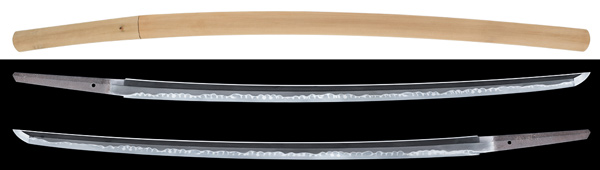

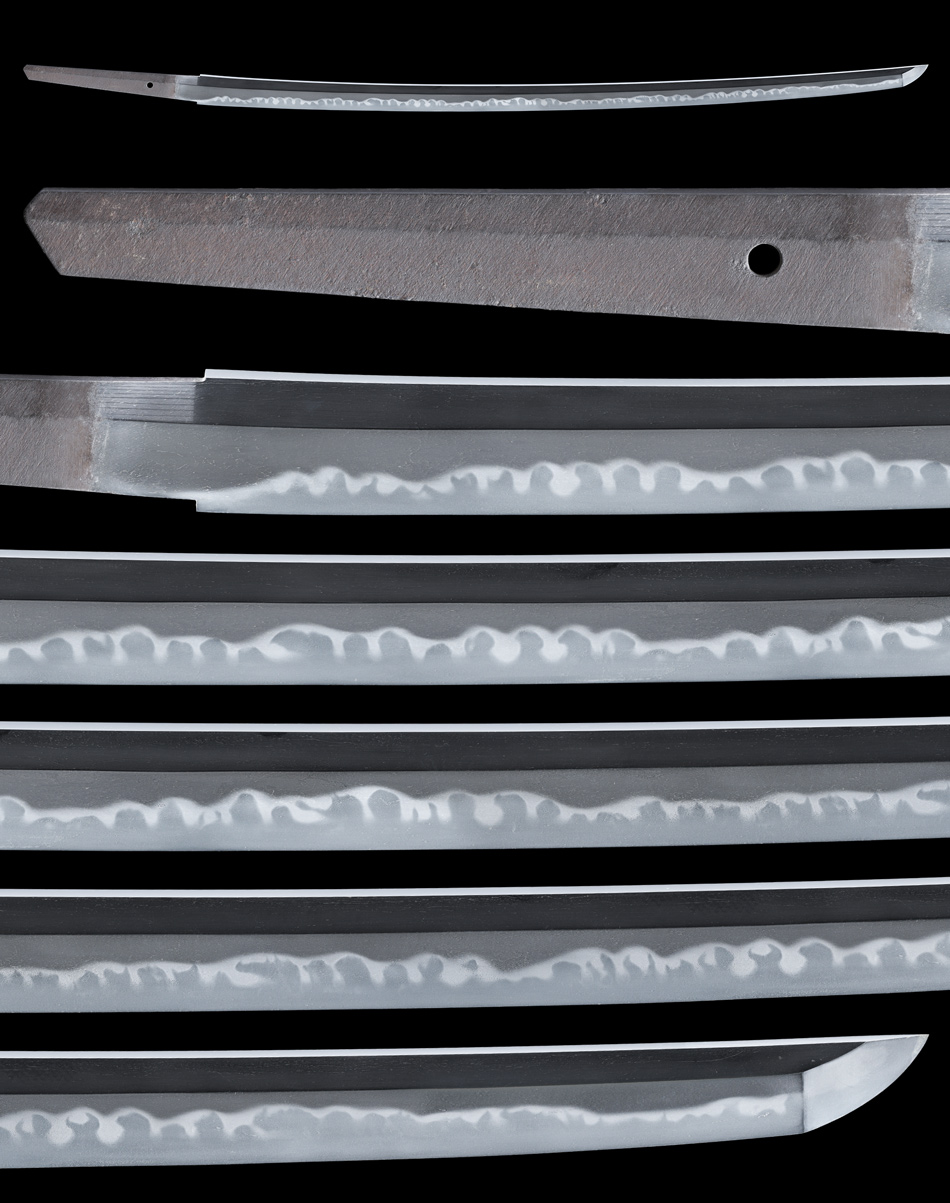
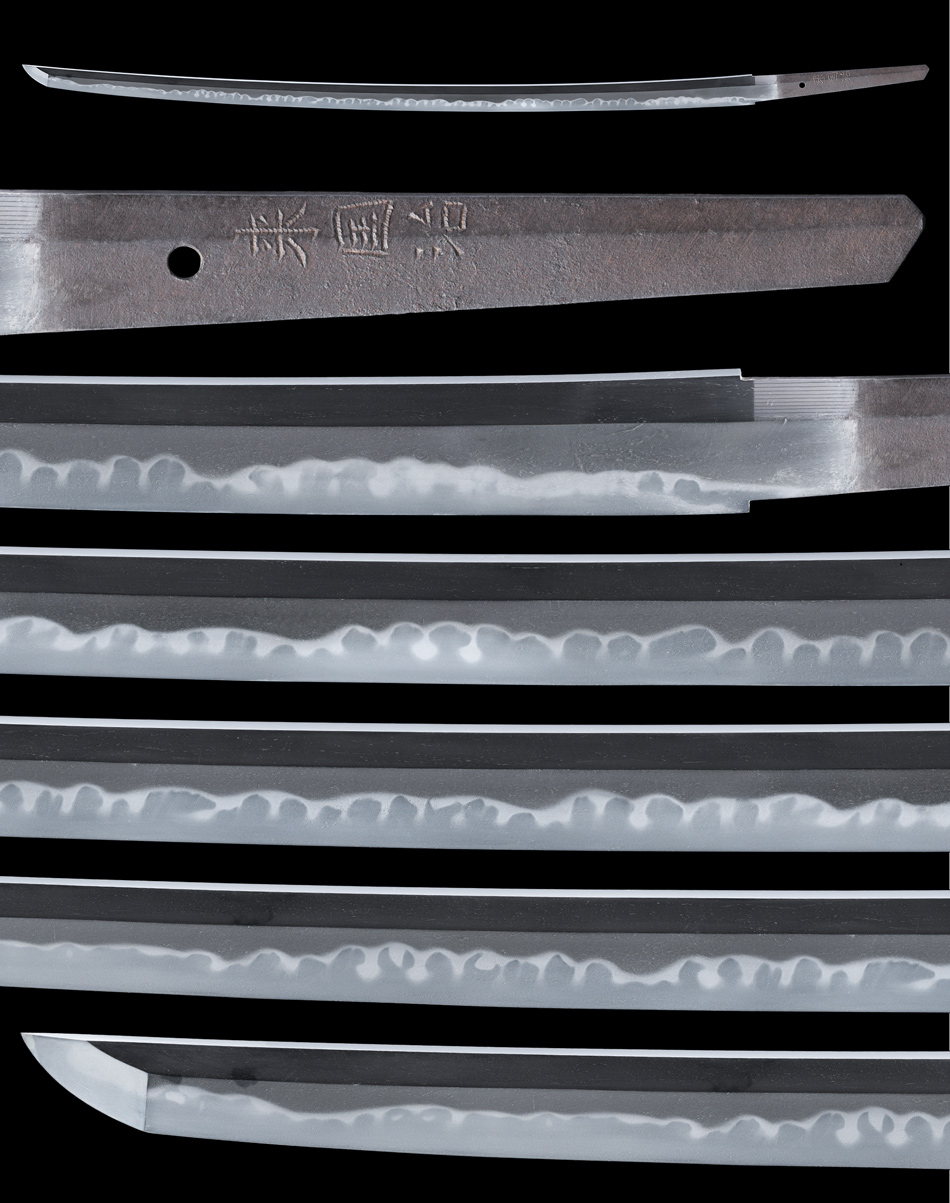
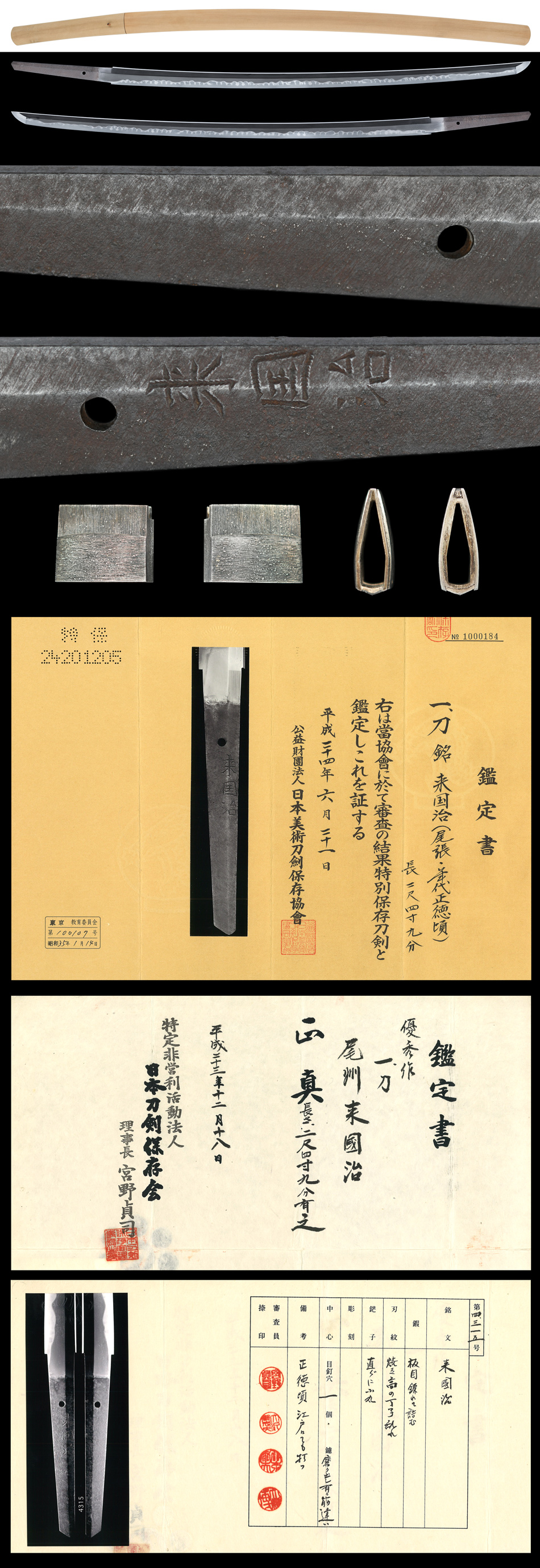
Owari · around 1711-1716
1 piece on the market now
The Edo period (1615 to 1868)
Edo was the sword’s age of connoisseurship: the Hon’ami appraisers, the shogunal register of famous blades of 1719, and a thriving literature turned the sword into an object of study even as it ceased to be drawn in war.
A Hozon-certified blade judged to show notably superior workmanship and a better state of preservation. The bar is higher: re-tempered blades and most unsigned Muromachi/Edo works are excluded.
The NBTHK (Nihon Bijutsu Tōken Hozon Kyōkai, the Society for the Preservation of Japanese Art Swords) is a public-interest incorporated foundation founded in 1948 and supervised by Japan’s Agency for Cultural Affairs (Bunkachō); it is based at the Japanese Sword Museum in Tokyo. Its expert panels physically examine each submitted work (shinsa) and issue a certificate (kanteishō) ranking it by artistic and historical merit. NBTHK papers are the most widely recognized standard of authentication for Japanese swords and fittings.
NBTHK official siteNo cooling-off period or returns; refund only if the purchased sword is proven fake, capped at purchase price (excludes commission sales, accessories, auction items).