Edo was the sword’s age of connoisseurship: the Hon’ami appraisers, the shogunal register of famous blades of 1719, and a thriving literature turned the sword into an object of study even as it ceased to be drawn in war.
 NihontoWatchNihontoWatch
Fujiwara Naganobu was a samurai of the Unshu domain. He was born in Sanbuichi Village, Izumo District in Bunka 14. Known as Takahashi Rihei, he became a pupil of the 15th generation Jakushu Fuyuhiro, Konosuke Fuyuhiro, and later succeeded to the 17th generation lineage of the same house, being employed by the Matsudaira family of the Matsue domain. After his master's death, he went to Edo and studied under Chounsai Tsunatoshi, a master of shinshinto and a domain smith for the Uesugi family of Yonezawa. His style resembles that of his master, and he was also skilled at horimono such as kenmaki-ryu. In the gloomy and turbulent social conditions of the late Bakumatsu period, the demand for swords increased, and it is said that this smith returned to Matsue to devote himself to forging swords. Furthermore, he received a certain (kazusada) level of evaluation from the Yamada family, who served as sword testers, and works with saidan-mei also remain. In response to the high level of Naganobu's skill and his devoted service to the domain, he was granted the rank of shibun, as seen in the mei of this work. He died in May of Meiji 12 at the age of 63.
NihontoWatchOffered by World Seiyudo
This piece has sold
Get an email when a new Unshu Naganobu piece hits the market.

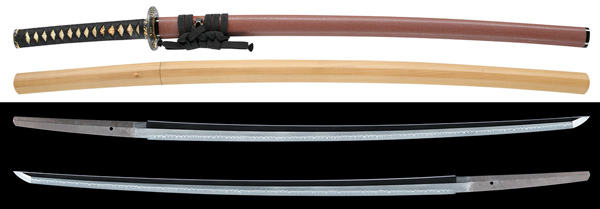

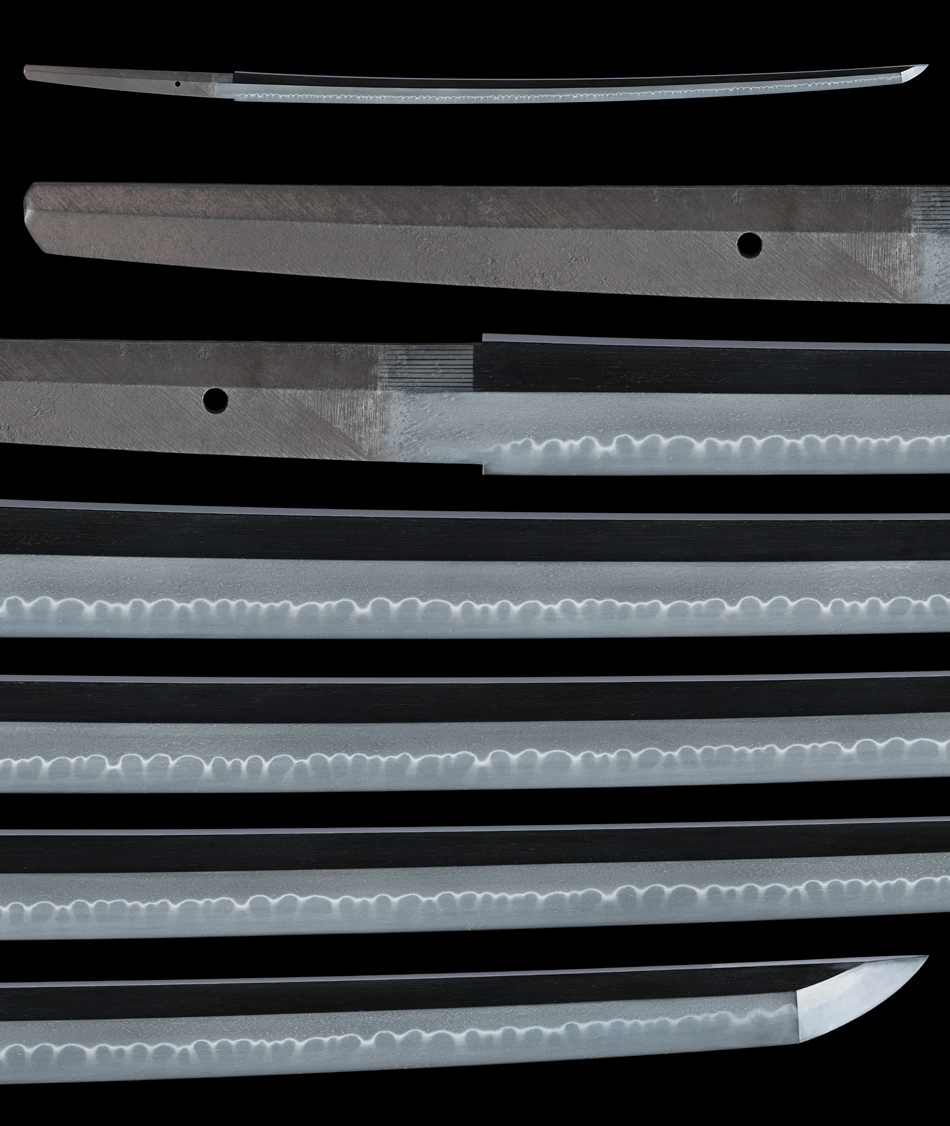
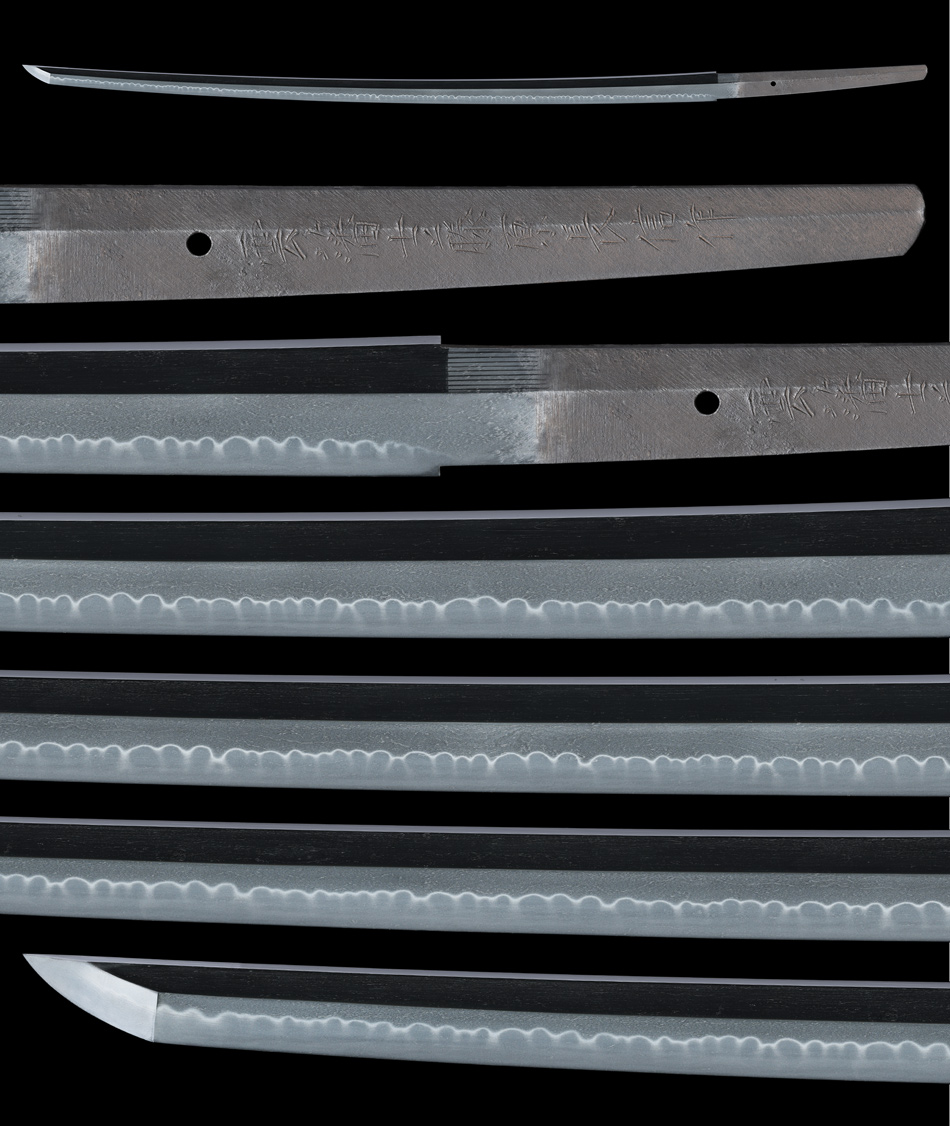
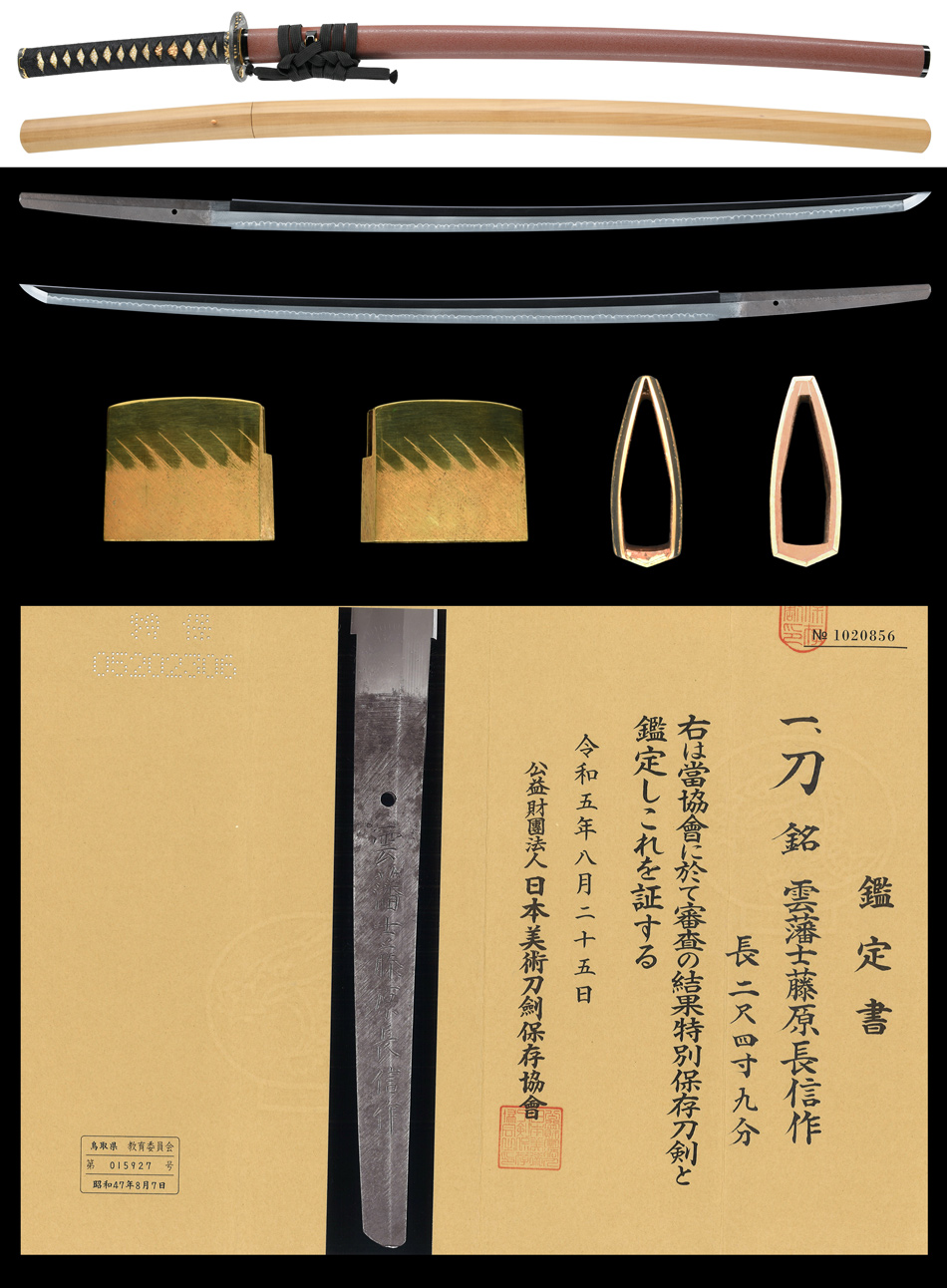
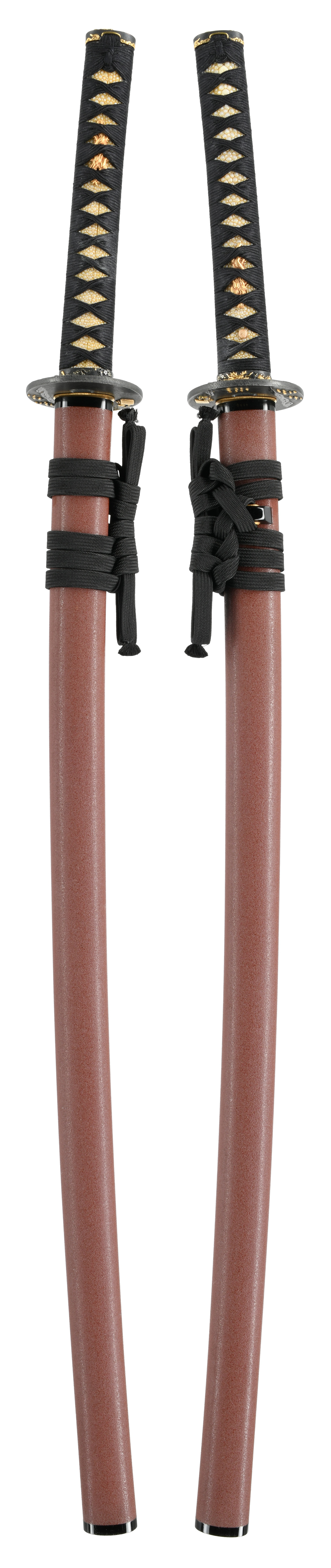
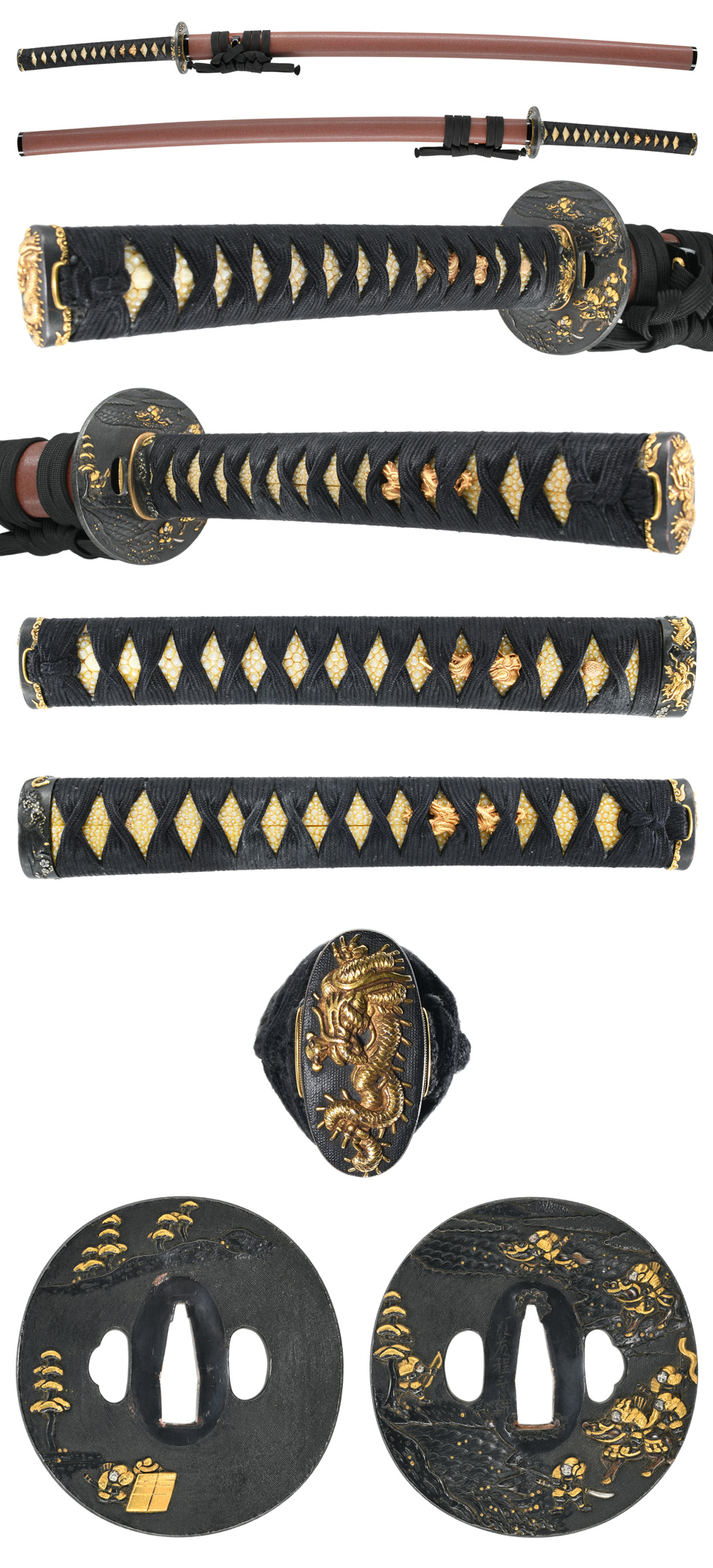
Machine translation from the shop's Japanese · may contain errors ·
Wakimono · Izumo · around 1830-1860
Fujishiro Jo saku · Tōken Taikan top 31%
1 piece on the market now
Where Naganobu stands among comparable artisans: across all of nihontō, and within tradition, era, and period. The tiers (Foremost · Leading · Major · Notable) weigh official designations from the NBTHK and Japan's Agency for Cultural Affairs, together with historical honors of lasting repute such as the Sansaku and Meibutsu-chō.
Select a lens to see how it's measured.
Years he was demonstrably active, proven by signed-and-dated blades
Wakimono · Izumo
1 piece on the market now
The Unshū grouping gathers smiths of Izumo province (Unshū), and the blades carrying this attribution do not form one continuous lineage so much as two widely separated moments in the province's work. The earlier is Unshū Tadazane, a signed katana placed around the Eishō era (1504 to 1521) in the late Muromachi period. The later is Takahashi Naganobu, also recorded as Unshū Naganobu and Takahashi Rihei, a late-Edo smith dated by his own inscriptions to Ansei 3 (1856) and Man'en 1 (1860). Naganobu styled himself the seventeenth-generation successor of Wakasa Fuyuhiro; around the close of the Tenpō era he went to Edo and studied under Chōunsai Tsunatoshi, and after gaining recognition he served as a retained smith (kakae-kō) of the Matsudaira house of Matsue in Unshū until his death in Meiji 12 (1879). Because the two hands belong to different centuries and different stylistic worlds, the group reads as a provincial wakimono gathering rather than a school of fixed transmission. Across these blades the shared ground is a tightly forged ko-itame-hada with ji-nie adhering, after which the two hands diverge. Tadazane's ko-itame packs closely and flows toward the edge with masame mixed in, carrying a wide suguha mingled with small gunome, ashi and yō entering well, ko-nie and sunagashi, and a subdued (shizumi) nioiguchi; his bōshi runs straight to ko-maru with a long kaeri, and the overall effect was read by the NBTHK as sharing features with the Bizen smiths Kiyomitsu and Tadamitsu.
Naganobu instead builds bold, long sugata of wide mihaba with little taper, his ko-itame often taking on an almost plain (muji) look with abundant chikei. His preferred temper is neatly aligned chōji mixed with gunome in nioi-deki, though one of his katana hardens a flamboyant gunome-midare of round heads with a deep, bright nioiguchi and yubashiri. The most reliable signpost to his hand lies in the nakago: reverse ō-sujikai filemarks with keshō, named in the setsumei as a characteristic feature. For kantei the group resolves to its named smiths rather than a collective signature. Tadazane is recognized by his Bizen-leaning suguha-gunome and subdued nioiguchi, his example preserved with a Higo-style shuhen-nuri handachi koshirae. Naganobu is identified through his reverse ō-sujikai tang finishing, his Tsunatoshi-derived chōji, and on occasion a vigorous midare whose assertive spirit the setsumei likens to superior works of the Yamaura lineage; his commissioned blade names Tomono Shigenari of the Matsujō domain and records its making at Kōji Street in the eastern capital. The standing of the group rests on these two distinct workmanships, each documented within the records of its own province. Learn more →
| Smith | Era | Designated |
|---|---|---|
| Naganobu長信 | 1830-1860 | 2 |
| Tadasada忠貞 | 1492-1501 | 1 |
The Edo period (1615 to 1868)
Edo was the sword’s age of connoisseurship: the Hon’ami appraisers, the shogunal register of famous blades of 1719, and a thriving literature turned the sword into an object of study even as it ceased to be drawn in war.
A Hozon-certified blade judged to show notably superior workmanship and a better state of preservation. The bar is higher: re-tempered blades and most unsigned Muromachi/Edo works are excluded.
The NBTHK (Nihon Bijutsu Tōken Hozon Kyōkai, the Society for the Preservation of Japanese Art Swords) is a public-interest incorporated foundation founded in 1948 and supervised by Japan’s Agency for Cultural Affairs (Bunkachō); it is based at the Japanese Sword Museum in Tokyo. Its expert panels physically examine each submitted work (shinsa) and issue a certificate (kanteishō) ranking it by artistic and historical merit. NBTHK papers are the most widely recognized standard of authentication for Japanese swords and fittings.
NBTHK official siteNo cooling-off period or returns; refund only if the purchased sword is proven fake, capped at purchase price (excludes commission sales, accessories, auction items).