The Shintō era was largely invented in Kyōto: Umetada Myōju’s workshop trained the movement, Horikawa Kunihiro raised a generation, and the Hon’ami appraisers, who held no forge, governed the meaning of famous blades.
 NihontoWatchNihontoWatch
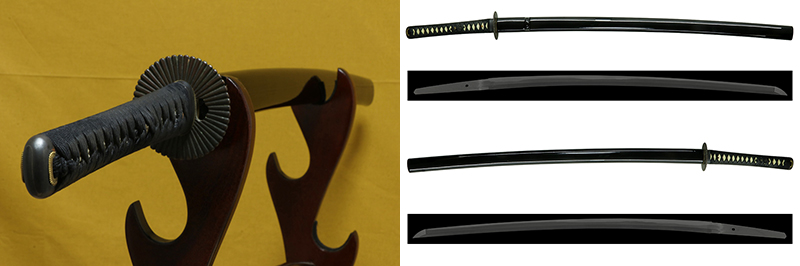
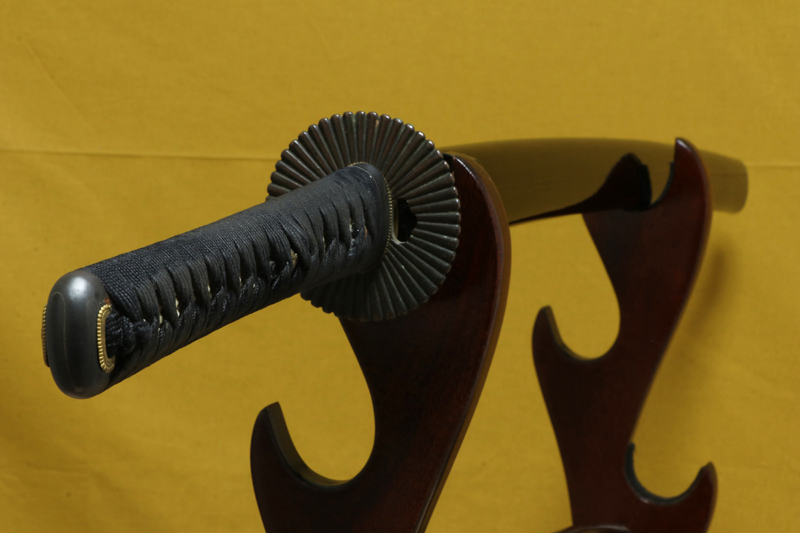
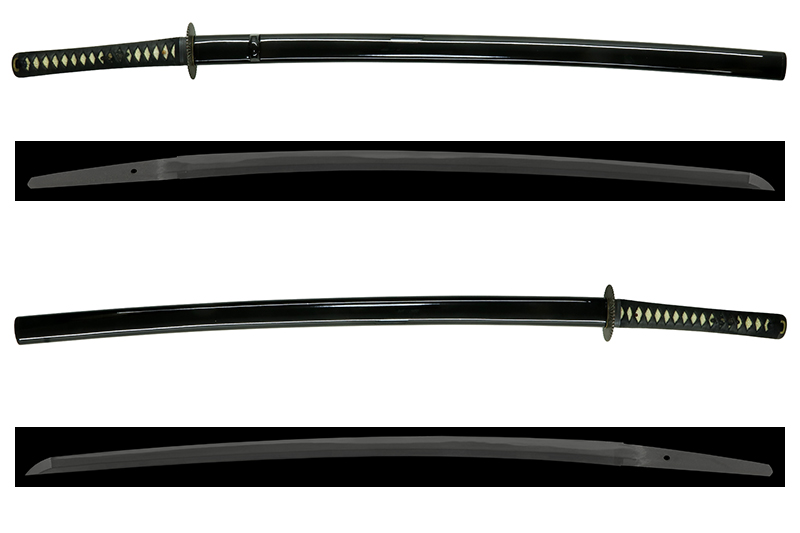
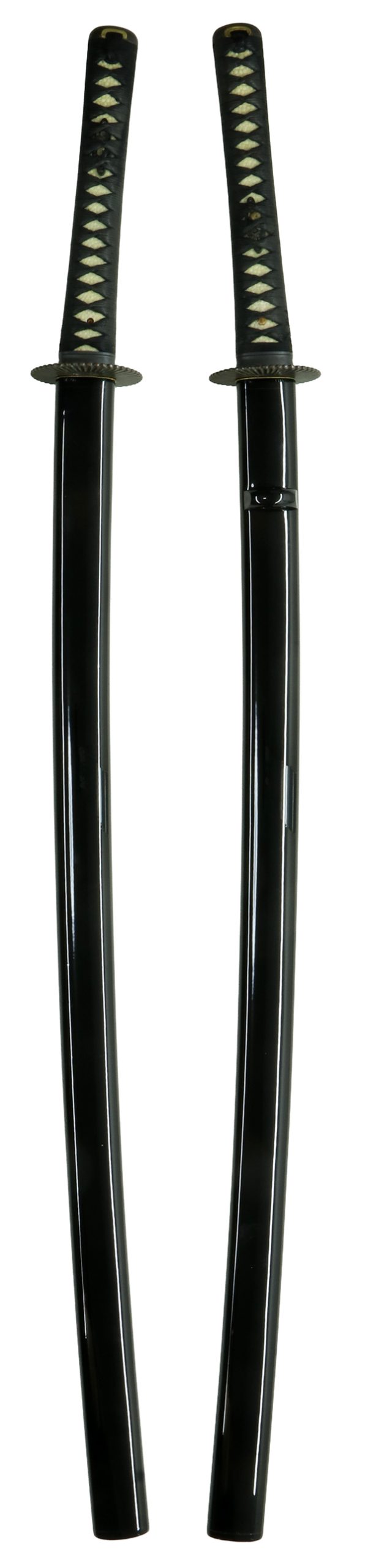
Shinto Tanbanokami Yoshimichi with Koshirae and Shirosaya. 本作、二代大坂丹波守吉道を思わせる銘を切っていますが、真偽については不明です。そのため無銘刀の価格で販売します。 しかしながら、刀身・拵ともにコンディションは良好で、刀身は74.5cmと長寸ながら、抜身重量925gと軽量、さらにバランスにも優れているため、居合にも最適な一振りです。 This piece bears a signature reminiscent of the second-generation Osaka Tanba no Kami Yoshimichi, though its authenticity remains uncertain. For that reason, it is being offered at the price of an unsigned sword. Nevertheless, both the blade and the koshirae are in good condition. Although the blade is a substantial 74.5 cm in length, it is relatively light at 925 g unsheathed, and its excellent balance makes it an ideal sword for iai practice. 「刀姿 sword figure」 鎬造り庵棟、身幅重尋常、鳥居反り中鋒、茎は生で鑢目は筋違い、栗尻は入山形。 Shinogi-zukuri construction with an iori-mune. The blade has standard width and thickness. It shows a torii-zori curvature and a medium-sized kissaki. The nakago is ubu (unaltered/original tang), with sujikai yasurime file marks. The nakagojiri is finished in iriyamagata shape. 「地鉄 jigane」 地鉄は板目肌が流れ柾心と成り詰み、地沸付く。 The jigane is a flowing itame-hada with a tendency toward masame, tightly forged, and covered with ji-nie. 「刃紋 hamon」 刃紋は互の目乱れ、刃縁砂流しかかり、釯子は乱れ込み小丸に返る。 The hamon is gunome-midare. Sunagashi appears along the habuchi. The boshi enters in midare-komi style and turns back in ko-maru. 「特徴 detailed」 丹波守吉道(大坂初代)は、京初代丹波守吉道の子で、正保年間に丹波守を受領したのち大坂へ移住して鍛刀し、世にいう「大坂丹波」の礎を築いた刀工です。和泉守国貞や河内守国助とともに、大坂新刀の基を築いた名匠として知られています。 また、寛文7年(1667年)、70歳の作が現存していることから、長命であったこともうかがえます。 本作は、大坂二代を思わせる銘が切られていますが、真偽については判然としないため、無銘刀の価格にて販売いたします。 刀身のコンディションは、古研ぎのためやや曇りが見られるものの、錆はなく、地刃は良く見えます。 拵は、柄にやや使用感があります。鞘は新品です。白鞘も付属しますが、つなぎはありません。 刀身は74.5cmと長寸ながら、抜身重量925gと軽量で、さらにバランスにも優れており、居合にも最適な一振りです。 Tanba no Kami Yoshimichi (the first generation of Osaka) was the son of the first-generation Kyoto Tanba no Kami Yoshimichi. After receiving the title of Tanba no Kami during the Shoho era, he moved to Osaka, where he forged swords and laid the foundation for what came to be known as “Osaka Tanba.” He is recognized as a master swordsmith who, together with Izumi no Kami Kunisada and Kawachi no Kami Kunisuke, helped establish the Osaka Shinto tradition. Moreover, since a dated work from Kanbun 7 (1667) made at the age of 70 still survives, it may be inferred that he enjoyed a long life. This piece bears a signature reminiscent of the second-generation Osaka line, but as its authenticity cannot be determined with certainty, it is being offered at the price of an unsigned sword. As for the condition of the blade, it shows some cloudiness due to an old polish, but there is no rust, and the jihada and hamon can still be clearly appreciated. As for the koshirae, the tsuka shows slight signs of use. The saya is new. A shirasaya is also included, though there is no tsunagi. Although the blade is a long 74.5 cm, it is light at 925 g without the scabbard, and is also well balanced, making it an excellent sword for iai. 「拵 Koshirae」 鎺(habaki) :素銅地一重の腰祐乗。 鍔(tsuba) :鉄地菊花の図。 縁頭(futikasira):素銅地黒色揚げ肥後山道。 目貫(menuki) :菊花の図。 柄(tsuka) :鮫は親粒が付く、柄巻は正絹黒の諸撮み巻。 鞘(saya) :黒呂。 「刀剣の状態 condition of blade」 研:古研ぎのためやや曇りが見られるものの、錆はなく、地刃は良く見えます。 傷:欠点に成るような傷は有りません。
Offered by Giheiya
This piece has sold
Get an email when a new Mishina Yoshimichi piece hits the market.


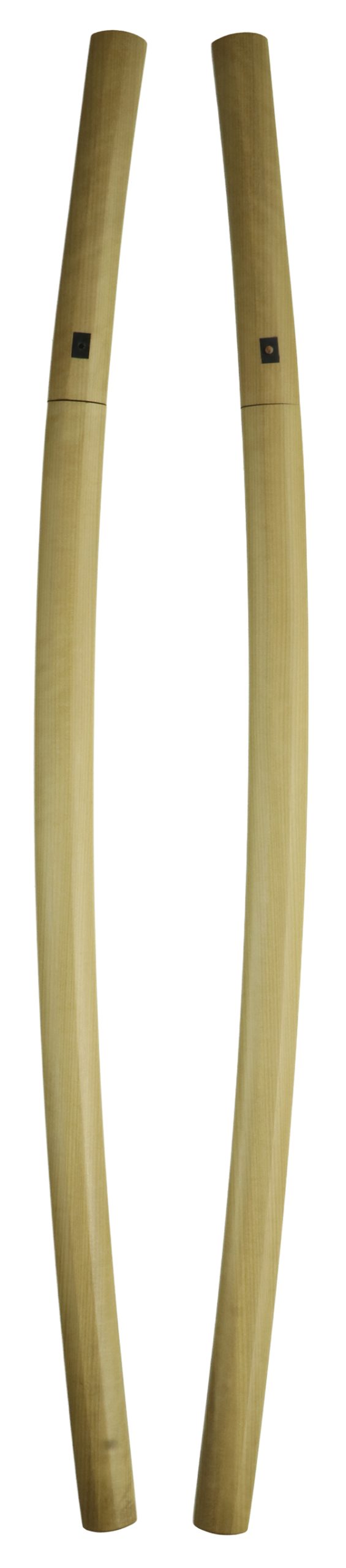
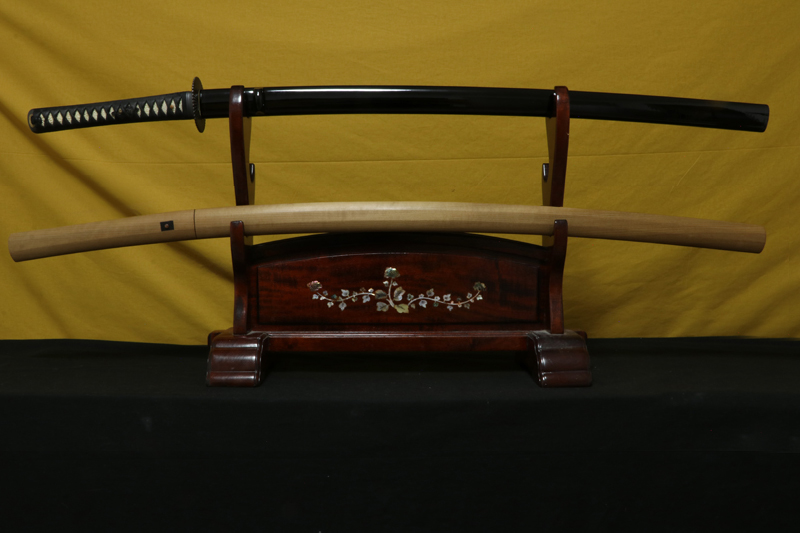
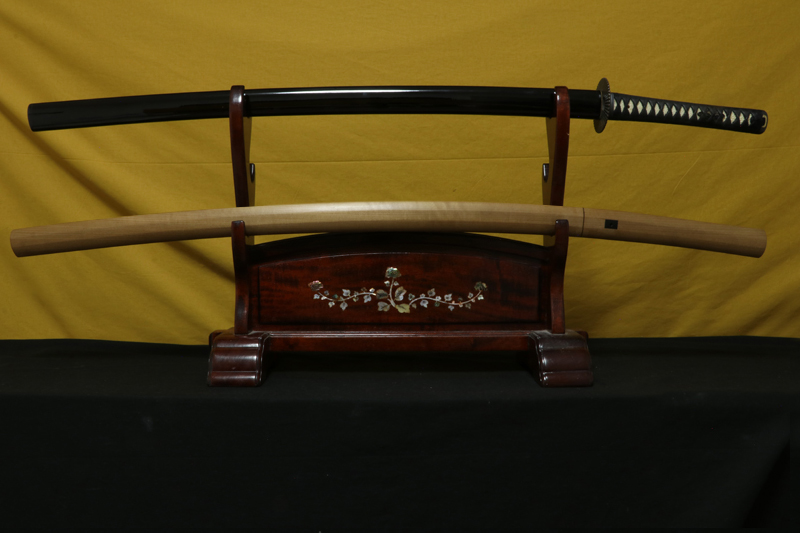
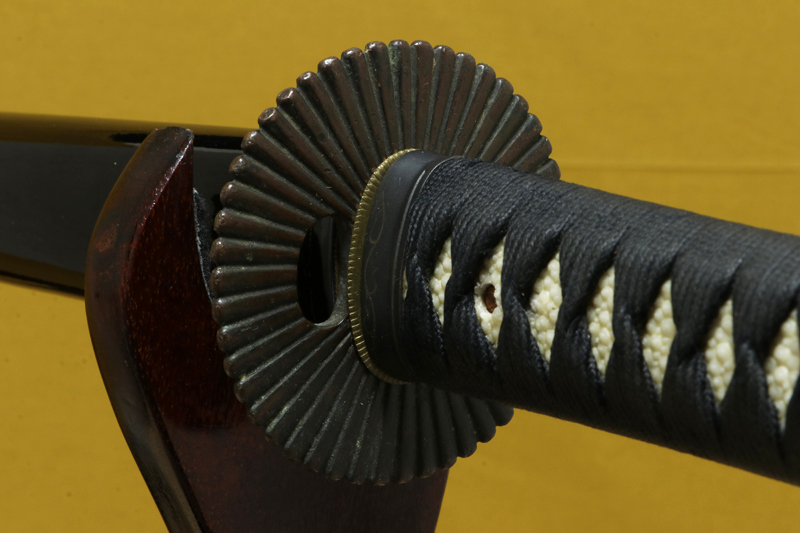
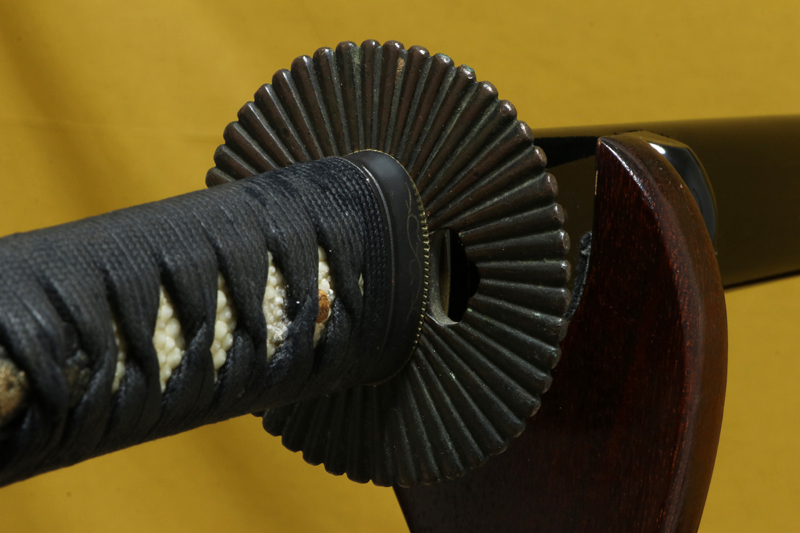
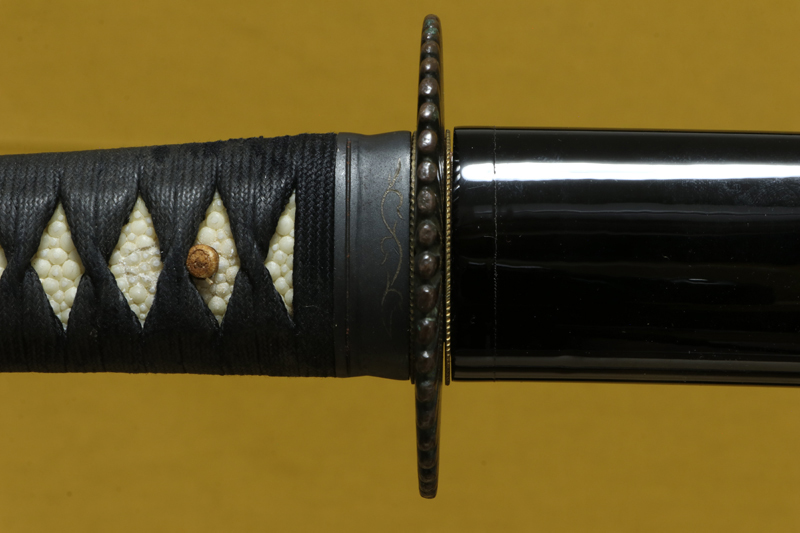
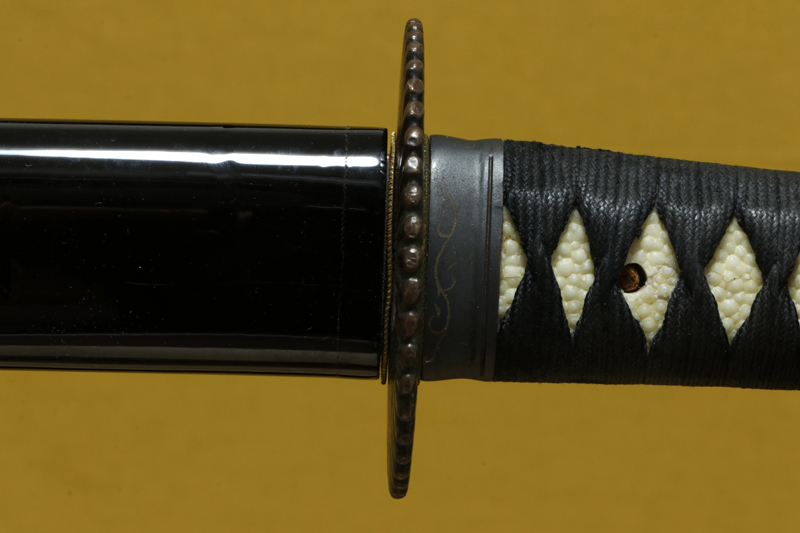
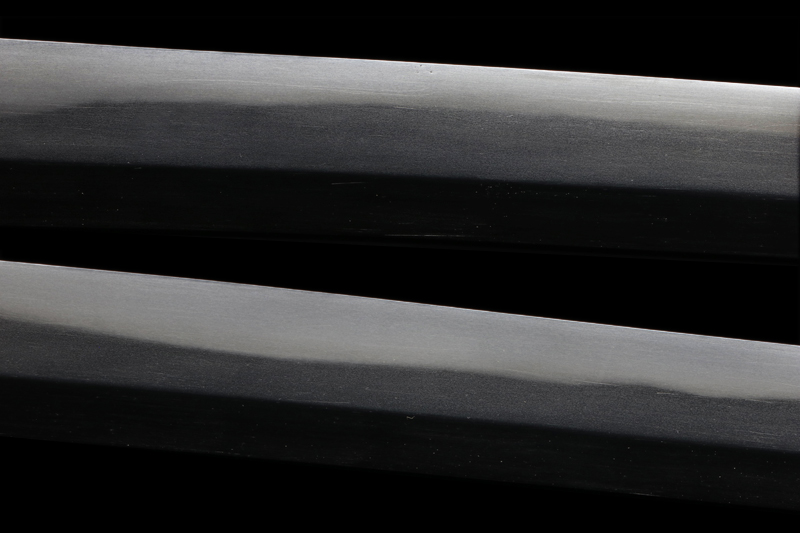
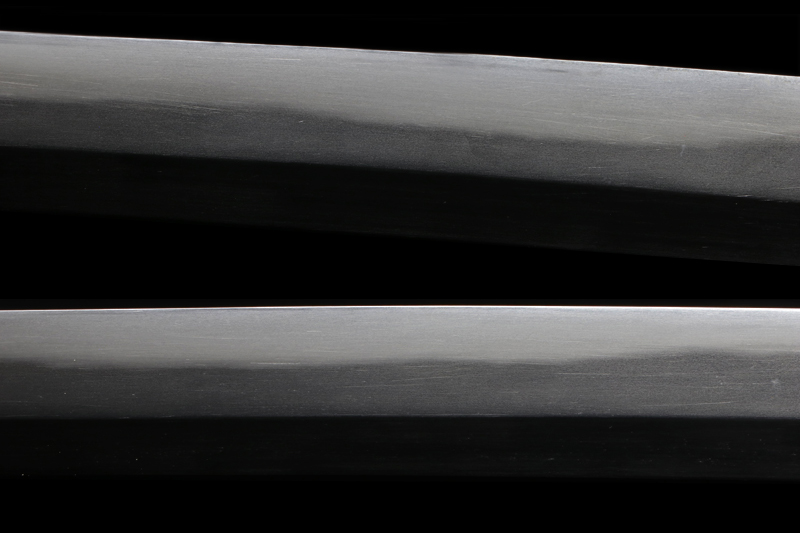
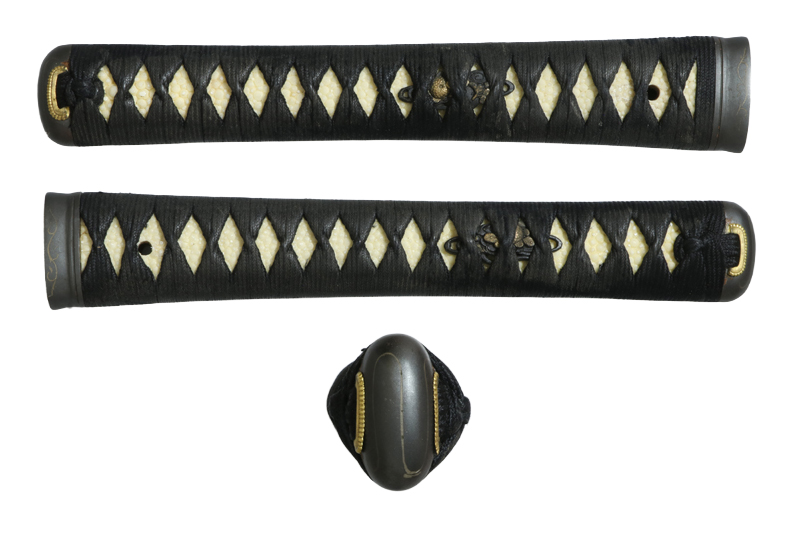
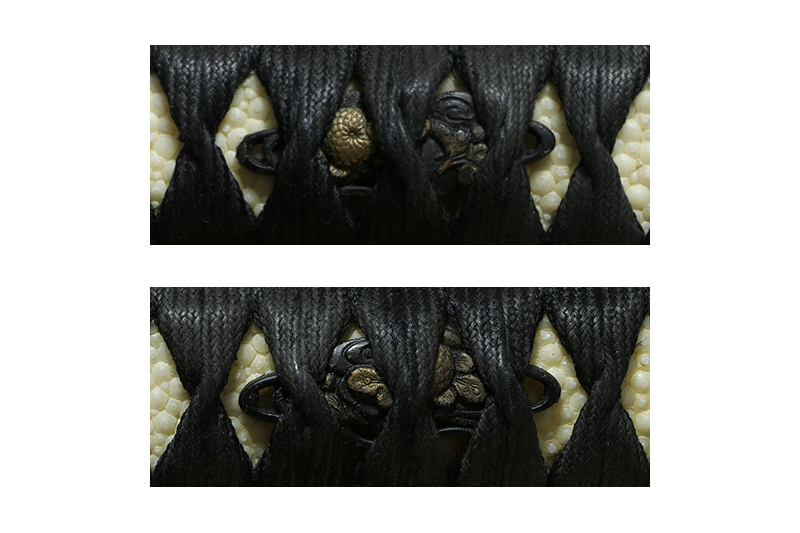
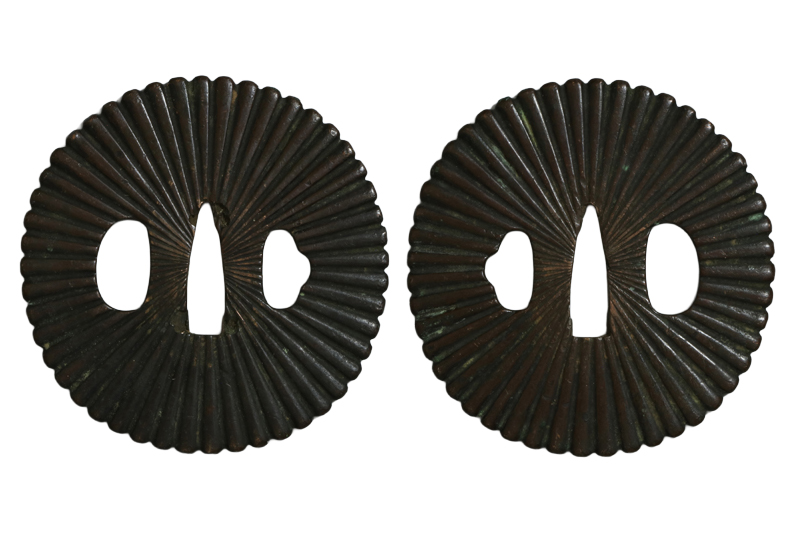
As written by the shop
Shinto · Yamashiro · around 1751-1764
Tōken Taikan top 87%
1 piece on the market now
Shinto · Yamashiro
55 pieces on the market now
The Mishina school (三品), one of the two dominant smithing groups of early Edo Kyoto beside the Horikawa, grew from the late-Mino workshop of Kanemichi of Seki, whose dated blades run through the Tenbun, Eiroku, and Tenshō eras. During the closing decades of the sixteenth century Kanemichi came up to the capital with his four sons and settled at Nishinotōin Ebisugawa, where the eldest, Iga no Kami Kinmichi, is recorded as having greatly raised the name of the line. The brothers, Kinmichi together with Izumi no Kami Rai Kinmichi, Tanba no Kami Yoshimichi, and Etchū no Kami Masatoshi, became known collectively as the Sanpin (三品) makers, and the published sources count Kinmichi head of the Kyō go-kaji, the five Kyoto smiths. From the second generation the house held a hereditary right to recommend smiths to the court for their titles and added that by-line to its signatures. The name continued under the same appellation to the end of the Tokugawa period, throwing off branches that included the Tango no Kami line working at Ōsaka into the Genroku years, though the published record consistently holds the founding generation the most outstanding of the line. Beneath every branch lies a shared vocabulary carried up from Mino-Seki. The jigane is the constant: an itame mixed with mokume that flows into nagare-hada and tends toward masame near the mune, the grain standing, with thick fine ji-nie and frequent chikei. Over it the Mino-derived gunome and togariba are refined toward a Kyoto manner, the nie strong and at times coarse, gathering unevenly, kinsuji and vigorous striped sunagashi running throughout. Two tells bind the house. The first is the Mishina bōshi, a notare or midare run-in pointed at the tip and swept with vigorous hakikake, the form Masatoshi shows at its clearest, described as if drawn from a picture. The second is sudareba, the bamboo-blind temper in which layered sunagashi and yubashiri stripe into parallel bands; Tanba no Kami Yoshimichi devised it, and the first-generation hand keeps it a free, semi-cursive disorder where his heirs would regularize it into a fixed lattice.
The lines diverge from that common ground. Kinmichi and his younger brother Masatoshi both excelled in a Shizu manner, the large midare of Mino grafted onto Sōshū nie, with Masatoshi the most versatile, ranging across Shizu, Mino sanbon-sugi, Yamato suguha, and Sōshū hitatsura. The later Ōsaka Tanba branch held to the sudareba alone, opening from a straight yakidashi, while the second Tango no Kami Kanemichi cast off the family chōji for a flamboyant tōran-style large gunome in alternating two-joined and three-joined groups, and a deep-nioi suguha read in the manner of Inoue Shinkai. To kantei Mishina is to read these two house marks first. The pointed, hakikake-swept bōshi and the striped sudareba, set over a standing itame that flows to masame, place a blade within the line before any signature is weighed; the sunagashi, far heavier than on a Bizen ji, is the very material from which the temper is built. Within the house the founding generation sets the standard. Fujishiro grades Kinmichi and Masatoshi Jō-jō saku, the Ōsaka Tanba shodai Jō-saku, and the second Tango no Kami Chū-jō saku, the sources judging the later Kyoto and Ōsaka generations markedly inferior to the founders as the manner thinned toward a single uniform pattern. Provenance on record runs through samurai and collector hands rather than great museums: a Kinmichi katana among the cherished swords of Tani Tateki, a Yoshimichi katana made for Naitō Kuroemon and another now in the Kyoto National Museum, Masatoshi blades passing through Oda Urakusai and the Imperial household, and a second Tango no Kami katana descending from the Aoyama wardens of Ōsaka castle. The brothers' blades are signed and knowable, dated examples rare, so the manner of the mei joins the workmanship in placing them; for the Ōsaka and Kyoto branches the cut of the character 守 separates one hand from the next. Most designated work is held rather than traded, so a signed founding-generation Mishina blade comes to light only from time to time, and with it the temper in which one of the most recognizable hamon of the Shintō era was first being worked out. Learn more →
| Smith | Era | Designated |
|---|---|---|
| Kinmichi金道 | 1596-1615 | 25 |
| Yoshimichi吉道 | 1596-1615 | 36 |
| Masatoshi正俊 | 1596-1615 | 29 |
| Kanemichi兼道 | 1681-1704 | 5 |
| Eisen来栄泉 | 1673-1688 | 3 |
Kyōto: the revival workshop
The Shintō era was largely invented in Kyōto: Umetada Myōju’s workshop trained the movement, Horikawa Kunihiro raised a generation, and the Hon’ami appraisers, who held no forge, governed the meaning of famous blades.
Within 3 days of the item's arrival, we offer a refund or an exchange. Return shipping and the bank transfer fee for the refund are at the customer's expense.