Sessyu ju Shigenori tsukuru kore with Koshirae
兵庫県の名工、摂州住成典の作品です。
本作は、「肌物」と呼ばれる特徴的な地鉄に湾れ刃を焼いた逸品です。
茎が長く、バランスにも優れ、刃先の鈍りもないため、試斬にも適した一振りです。
This is a work by Sesshu-ju Narinori, a renowned swordsmith from Hyogo Prefecture.
This blade is an exceptional piece, forged with the distinctive jihada known as “hadamono” and tempered in a graceful notare hamon.
With its long tang, excellent balance, and edge free from dulling, it is also a blade well suited for tameshigiri.
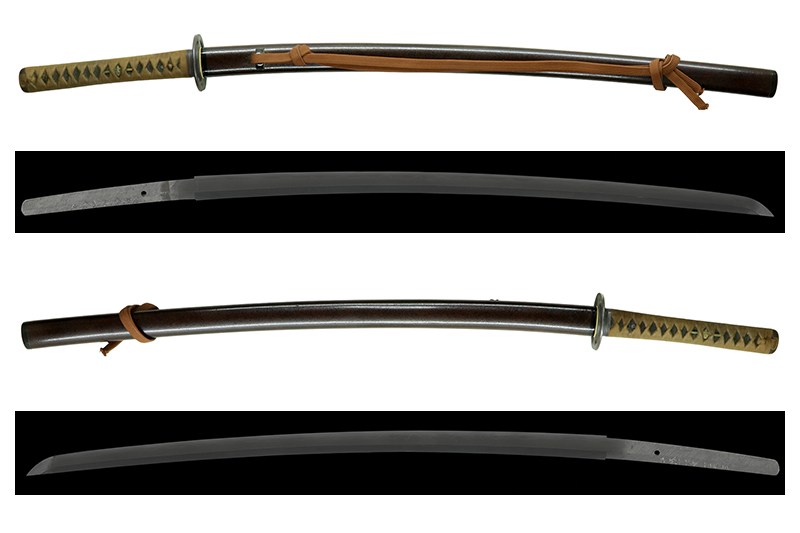
「刀姿 sword figre」
鎬造り庵棟、身幅尋常、鳥居反り中鋒。茎尻は生で化粧鑢がかかる。茎尻は栗尻。
Shinogi-zukuri construction with an iori-mune back, of standard width, with torii-zori curvature and a chū-kissaki point.
The nakago is left ubu (unaltered) and finished with kesho-yasuri file marks.
The nakago-jiri is kurijiri in shape.
「地鉄 jigane」
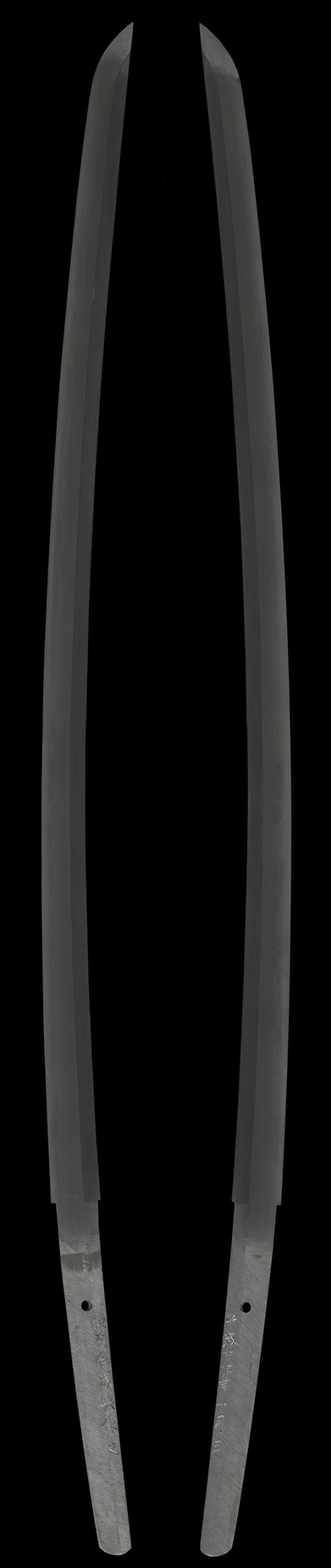
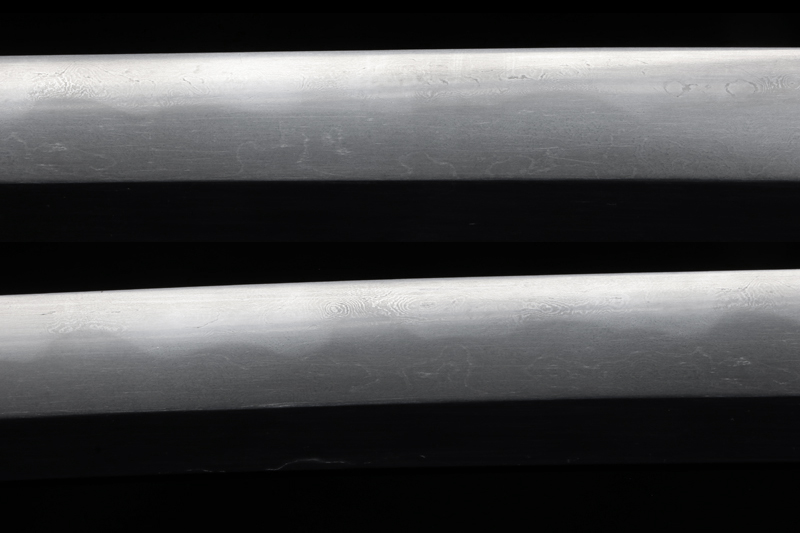
地鉄は異鉄を混ぜて鍛えた板目肌に小板目が交り、刃寄柾心と成り地沸付く。
The jihada is an itame grain forged from a mixture of different steels, interspersed with ko-itame; toward the edge, it becomes masame-like, and is covered with ji-nie.
「刃紋 hamon」
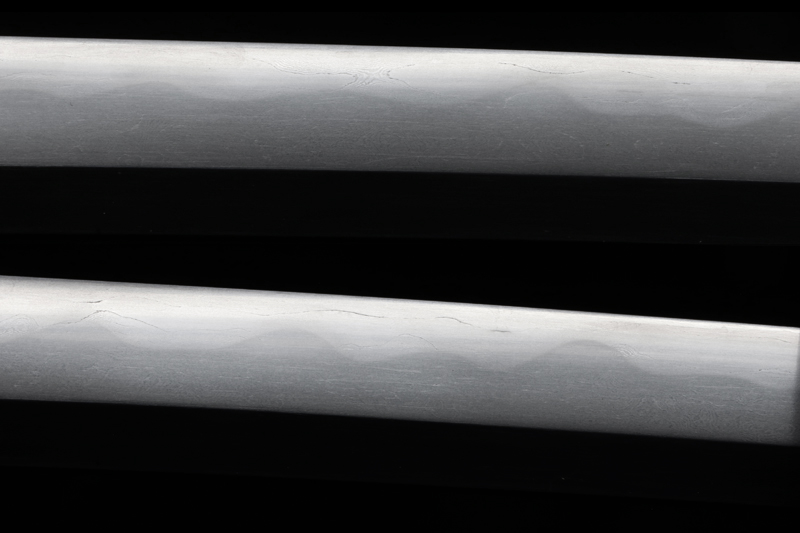
刃紋は湾れ互の目、刃縁小沸付き、砂流しかかり、刃中は金筋が働く。釯子は乱れ込み小丸に返る。
The hamon is a notare-gunome pattern, with ko-nie along the habuchi, accompanied by sunagashi, while kinsuji are active within the tempered area.
The boshi enters into midare and turns back in a ko-maru form.
「特徴 detailed」
摂州住成典。本名は宇高時雄。昭和2年生まれで、兵庫県加西市および兵庫県芦屋市にて鍛刀していました。
刀身は、いわゆる「肌物」と呼ばれる地鉄で、異なる鉄を交えて鍛錬されており、鍛え肌が際立っています。刃紋は小沸出来ののたれ刃で、鍛え肌に沿って現れる金筋が美しく映えています。
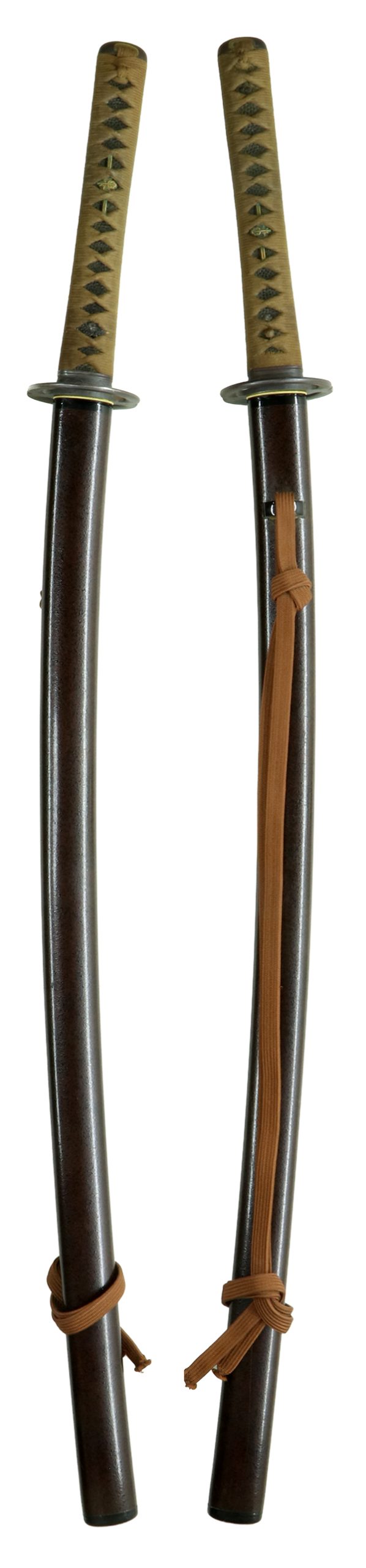
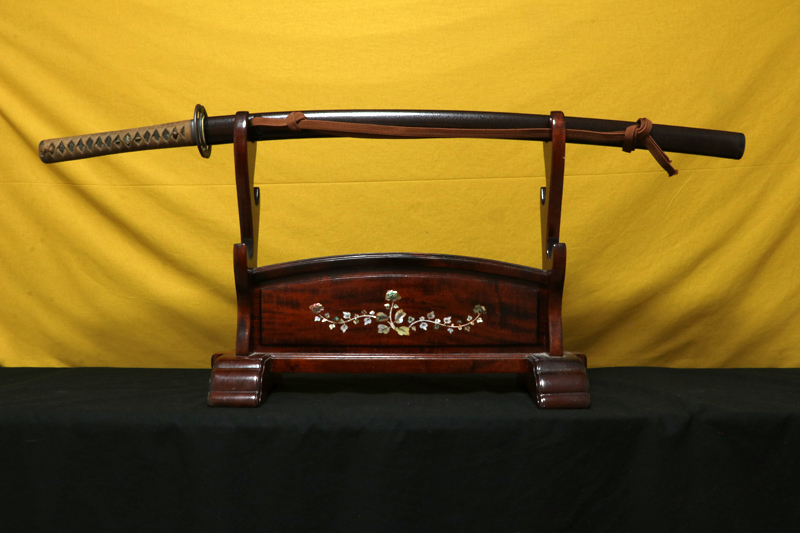
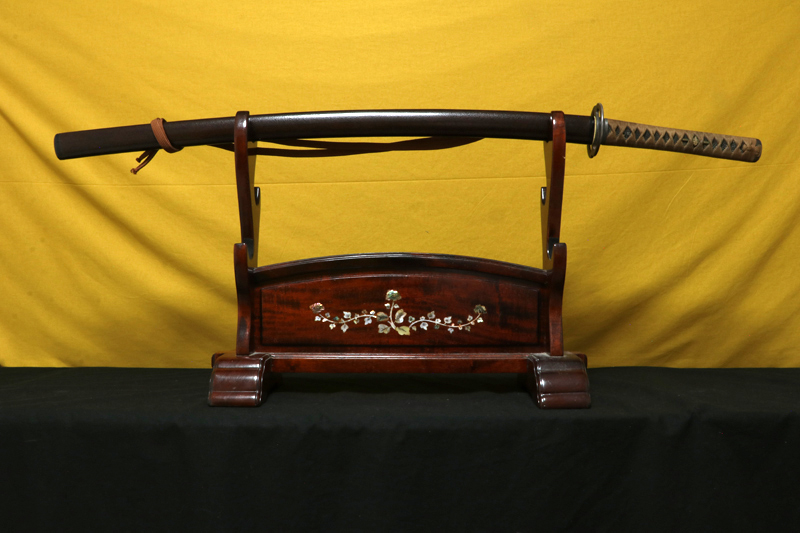
刀身は古研ぎのため、ややヒケが見られ、全体に曇りがありますが、地刃の働きは十分に鑑賞できます。拵えの状態も良好で、鞘に割れなどはありません。
本作は居合での使用歴はありますが、試斬によるヒケは見られないことから、試斬には未使用と考えられます。茎が長く、手持ちのバランスにも優れ、刃先の鈍りもないため、試斬にも適した一振りです。
Sesshu-ju Narinori, whose real name was Tokio Udaka, was born in 1927 (Shōwa 2) and worked as a swordsmith in Kasai City and Ashiya City, Hyogo Prefecture.
The blade is forged in what is known as “hadamono” style steel, made by combining different types of iron in the forging process, resulting in a prominently visible grain pattern. The hamon is a notare pattern in ko-nie-deki, and the kinsuji appearing along the forged grain stand out beautifully.
As the blade is in an old polish, there are some light surface marks and an overall haziness; however, the activities in the jihada and hamon can still be appreciated clearly. The koshirae is also in good condition, and there are no cracks or other damage to the scabbard.
This sword has been used for iaidō, but as there are no marks associated with tameshigiri use, it is considered unused for test-cutting. With its long tang, excellent handling balance, and no dulling at the edge, it is a blade well suited to tameshigiri as well.
「拵 Koshirae」
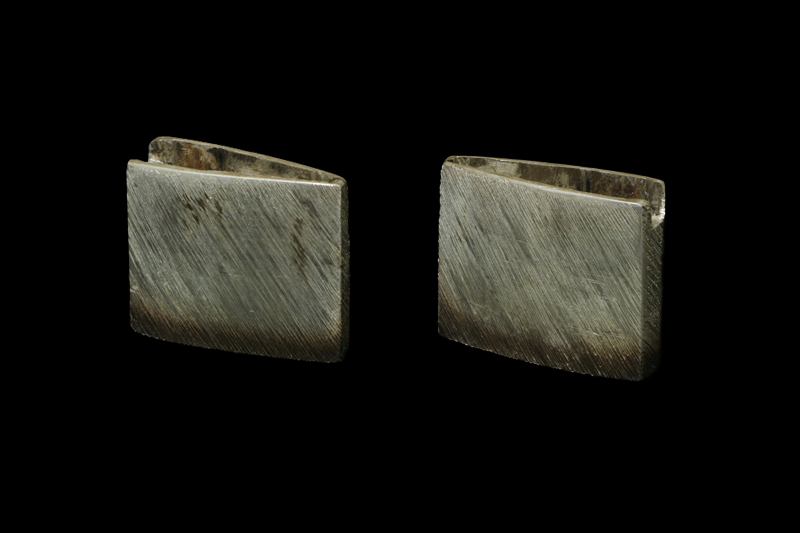
ハバキ(habaki) :銀無垢一重の腰祐乗。
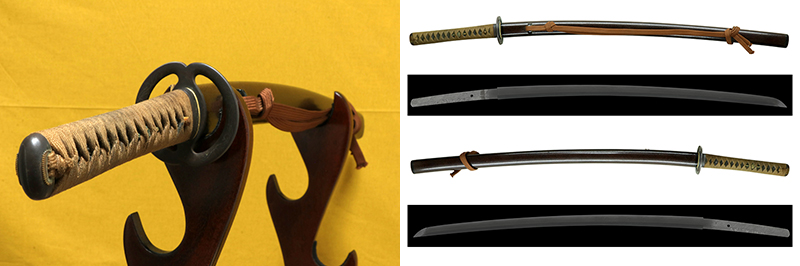
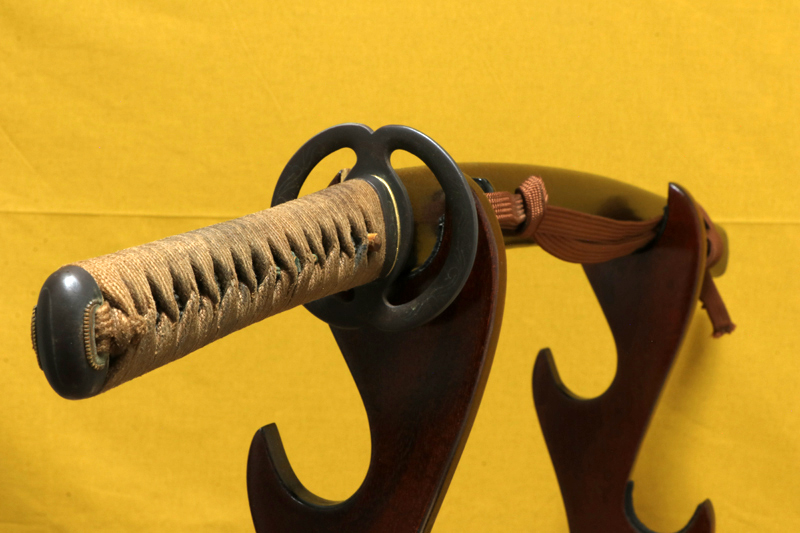
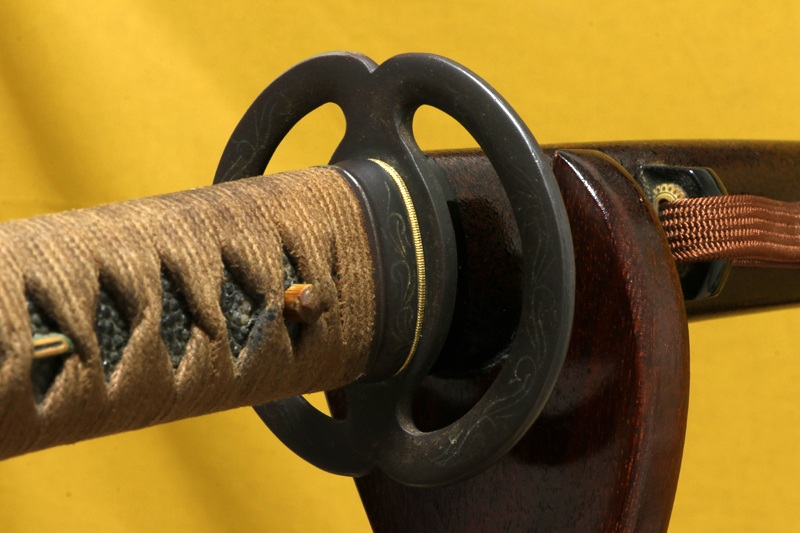
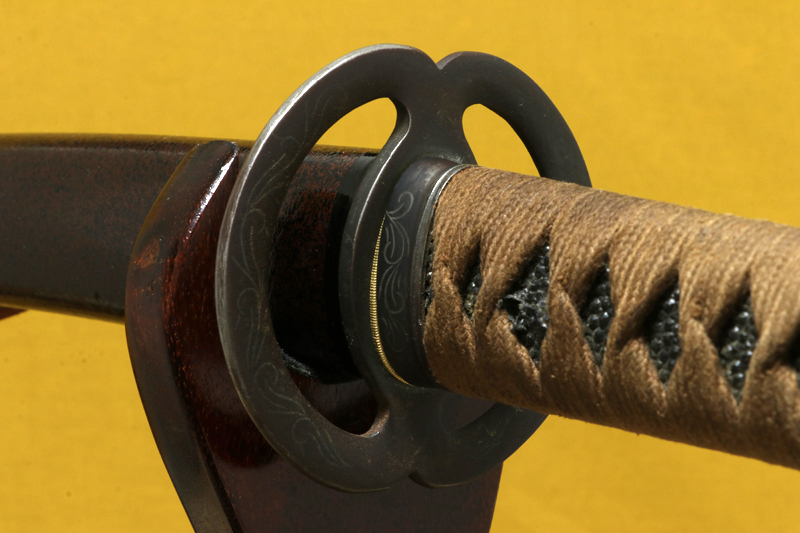
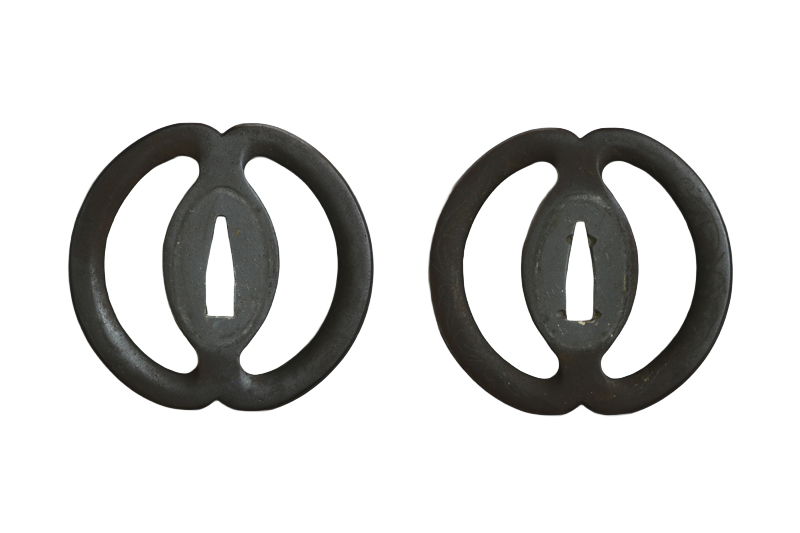
鍔(tsuba) :鉄地肥後海鼠透かしの図
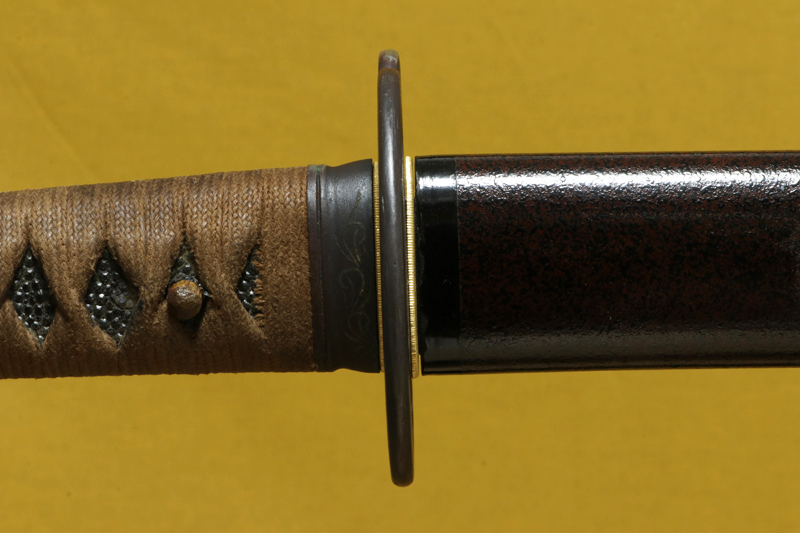
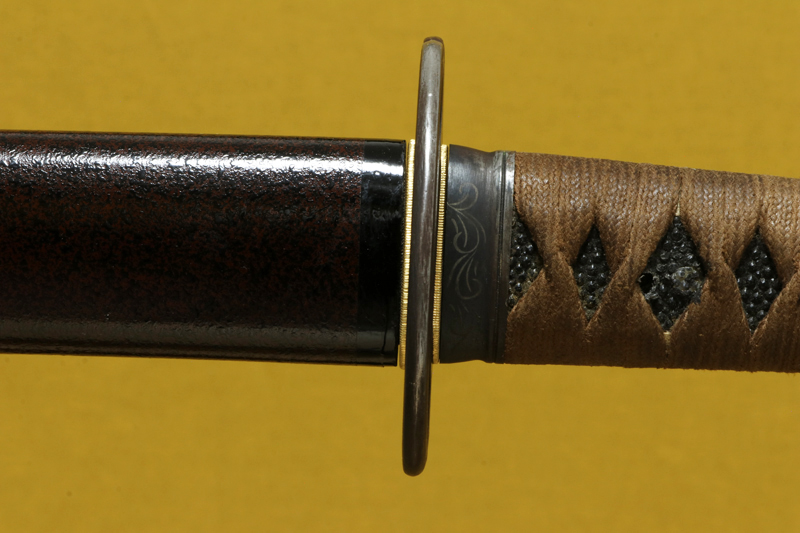
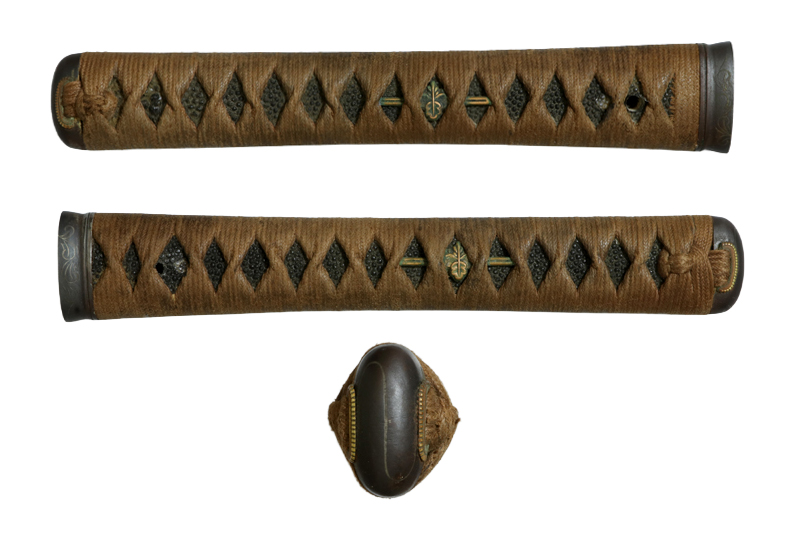
縁頭(futikasira):鉄地肥後山道唐草金象嵌。
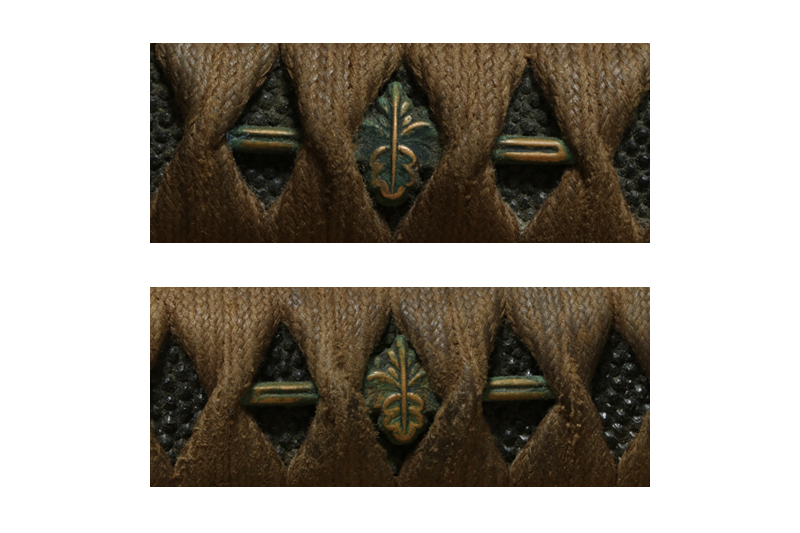
目貫(menuki) :桐の図。
柄(tsuka) :鮫は黒染、柄巻は正絹焦げ茶色の諸捻り巻。
鞘(saya) : 黒石目艶。
「刀剣の状態 condition of blade」
研:古研ぎのため曇っていますが、地刃は見えます。
傷:欠点に成るような傷は有りません。

 NihontoWatch