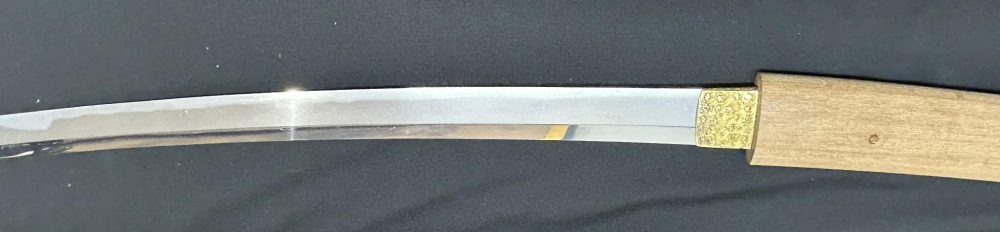
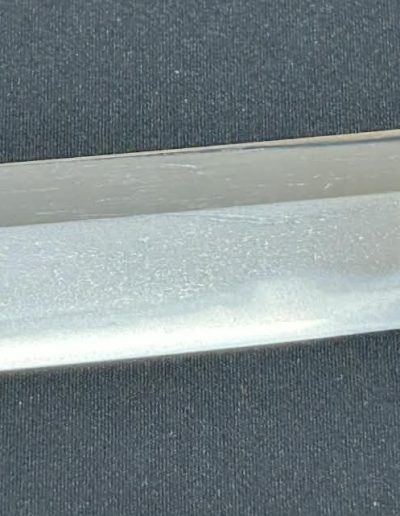
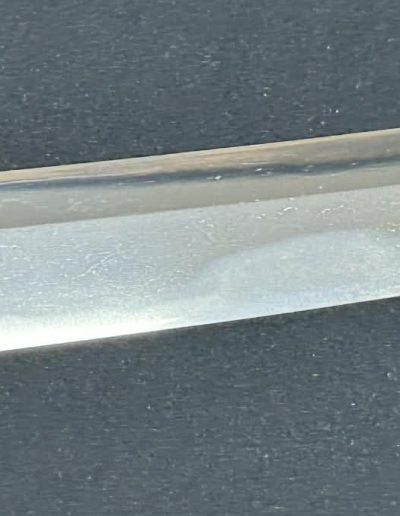
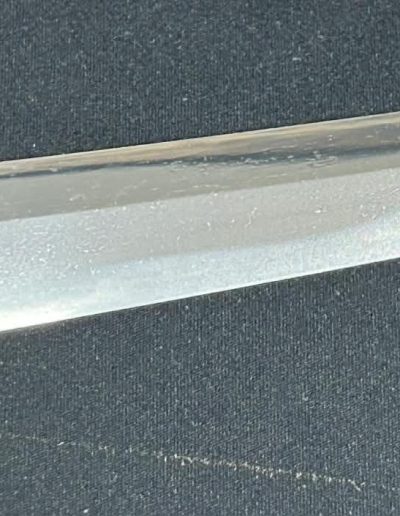
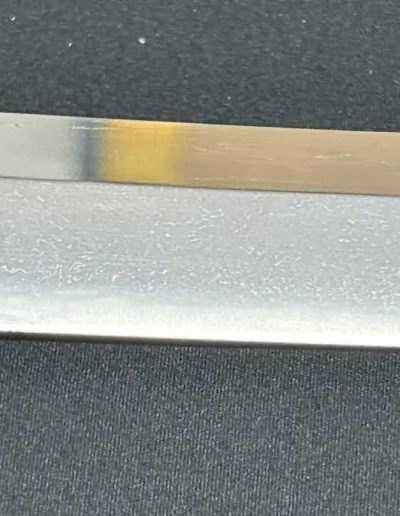
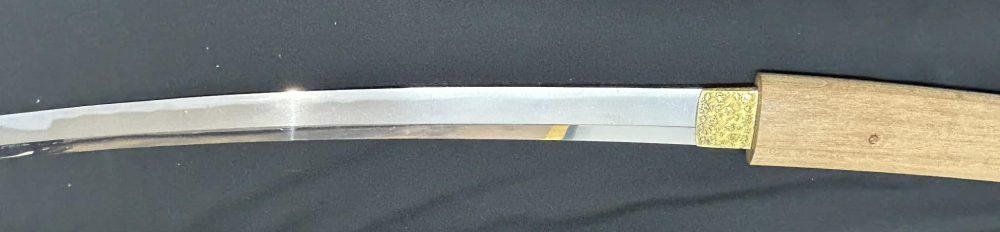
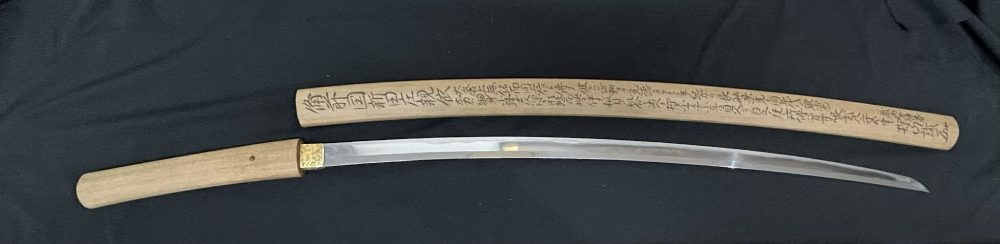
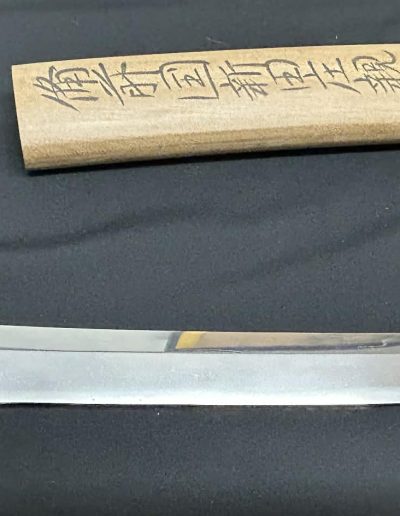
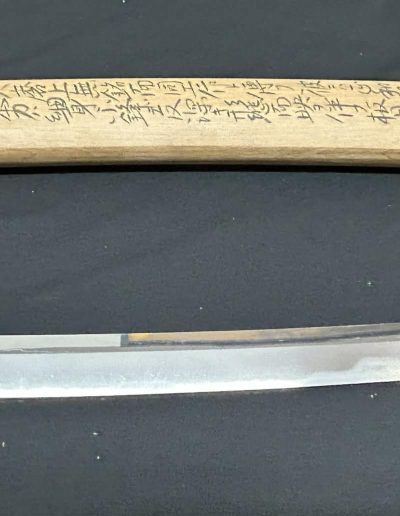
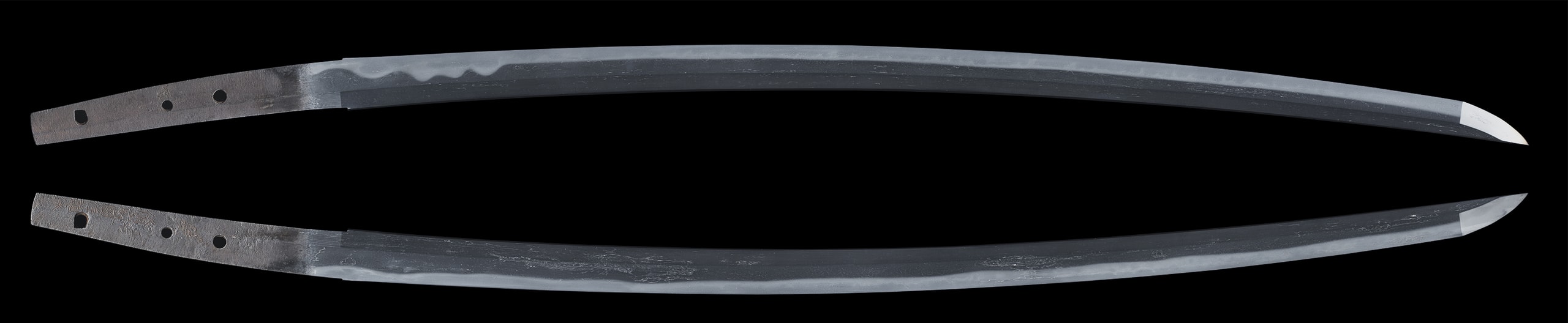
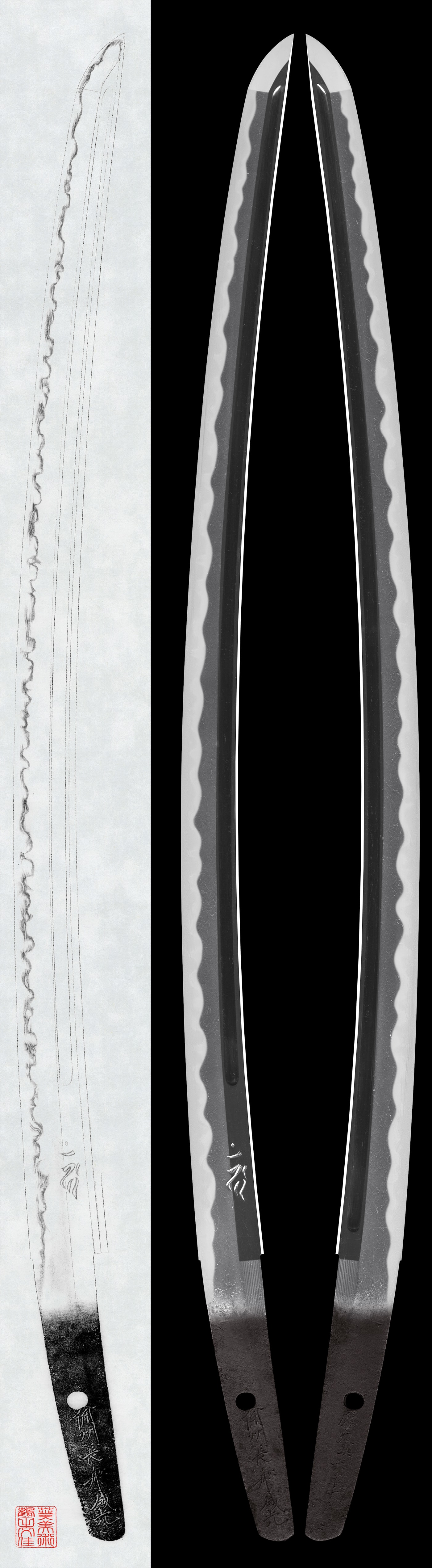
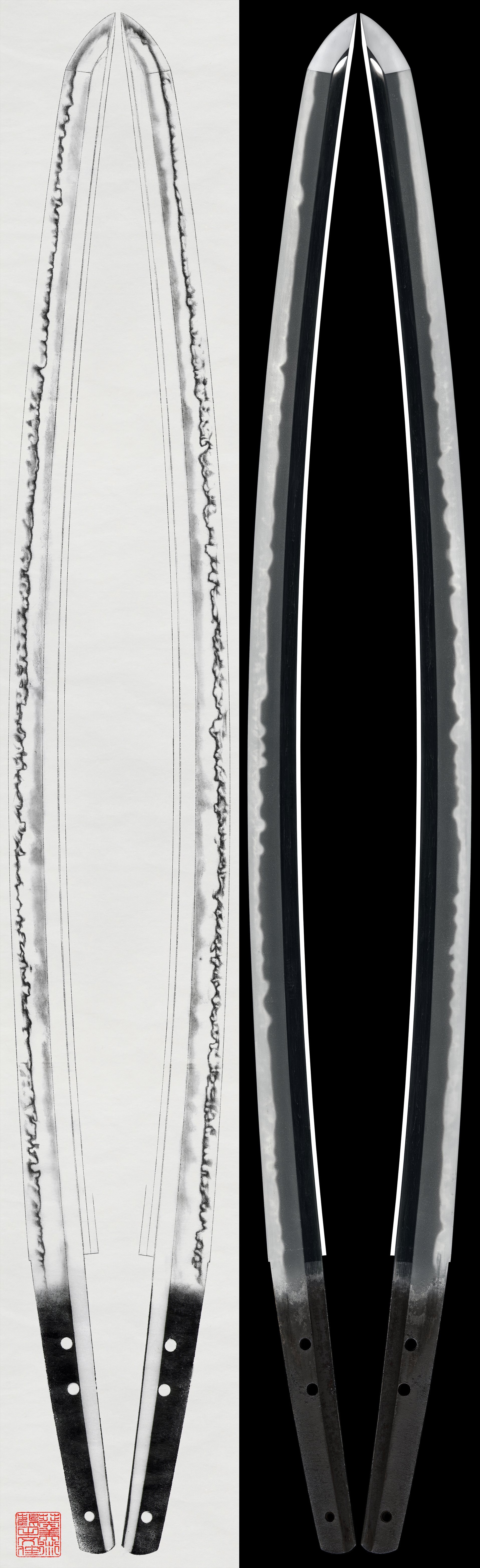
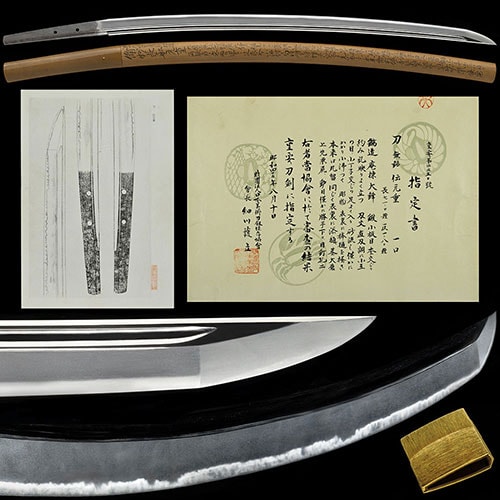
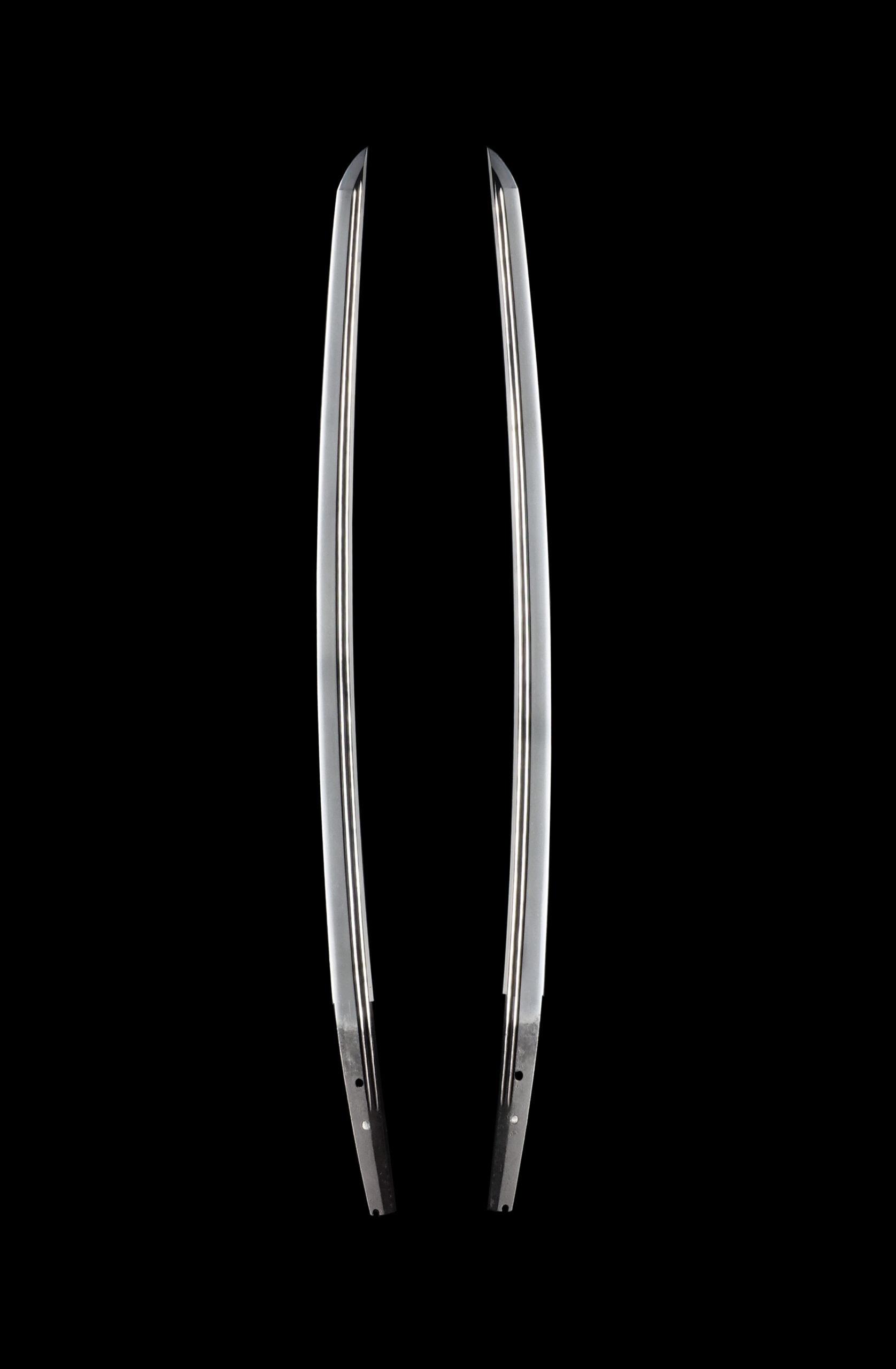
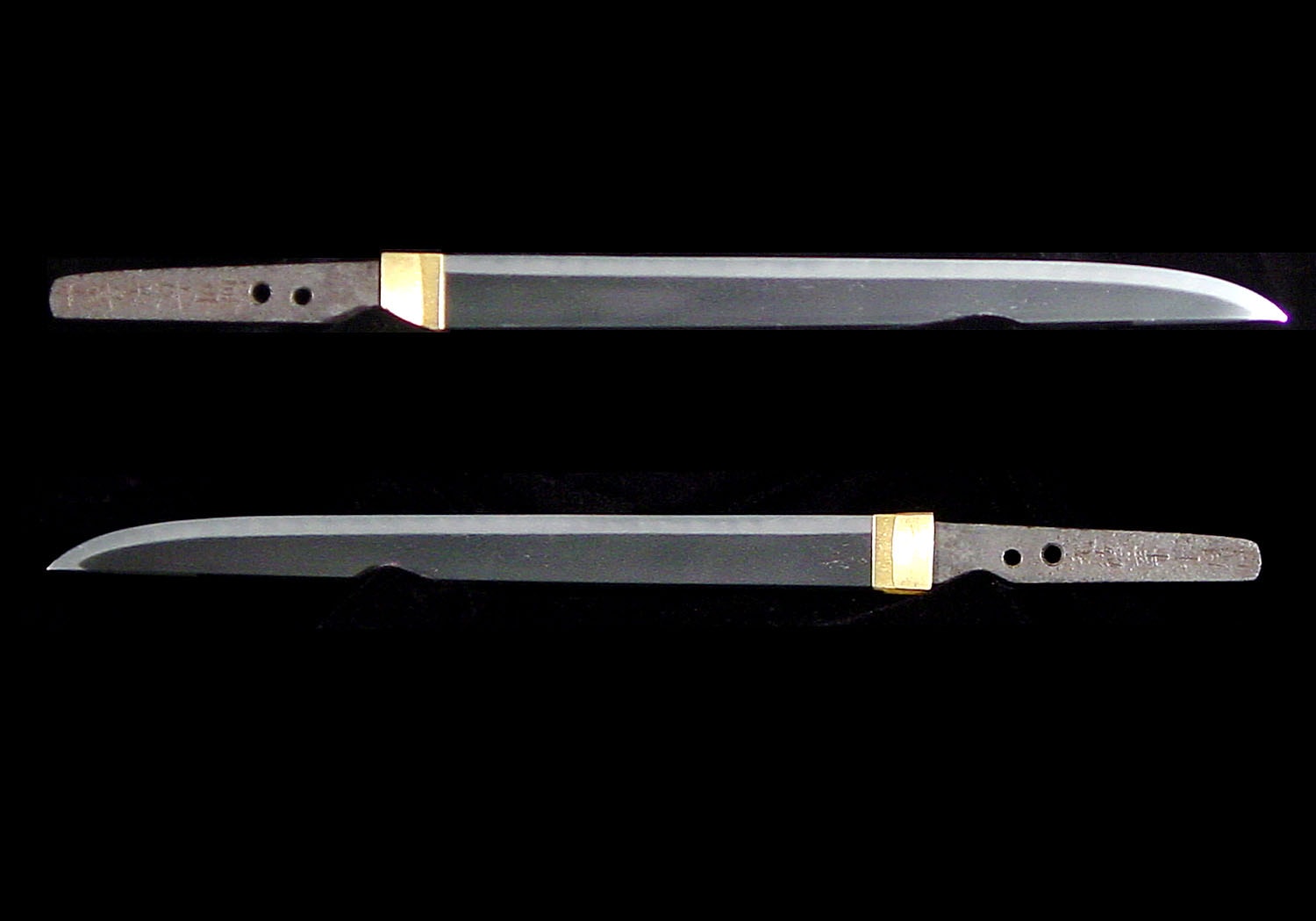
The smiths gathered under the Nitta-shō (新田庄) name were Bizen-den makers who resided in the Nitta estate of Bizen Province across the late Kamakura period and into the Nanbokuchō era. The setsumei document a small circle of signed hands rather than a single descent line. Chikayori (親依) is the most frequently encountered, with dated work spanning Bunpō, Gen'ō, Karyaku, and Gentoku, his Gen'ō 2 (1320) tachi headed by the title Uemon no Jō; Ujiyori (氏依), styled Saemon no Jō and Sahebei no Jō, carries a Kagen 3 (1305) date and is placed in reference compilations within the Chikata-shō (Oyada-shō) line of Chikayori; Noritsugu (則次) reaches a Bunna 3 (1354) date in the Nanbokuchō period; and Yasunori (保則) appears in meikan as teacher under the Noriyoshi entry. The setsumei measure this group directly against Osafune of the same period and judge it somewhat below that workshop in skill, while one notice groups the makers alongside the Karakawa and Haji circles and another likens Noritsugu's later work to the Bizen Unrui and Unshō sphere. A shared idiom runs through the blades. The form is the slender late-Kamakura tachi, with koshizori, funbari, and a small or extended chū-kissaki. The jigane is ko-itame or itame, at times tending to hada-dachi or carrying mokume and patches of larger flowing grain, with ji-nie adhering and utsuri (often midare-utsuri) appearing as a defining trait.
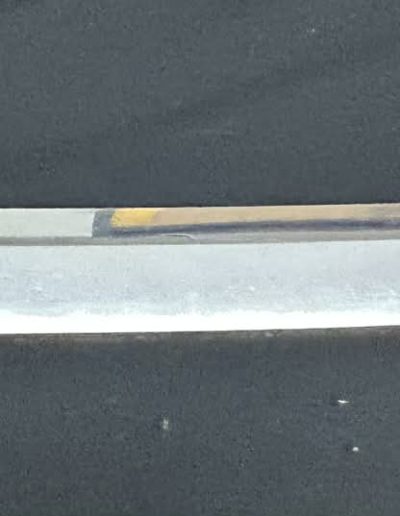
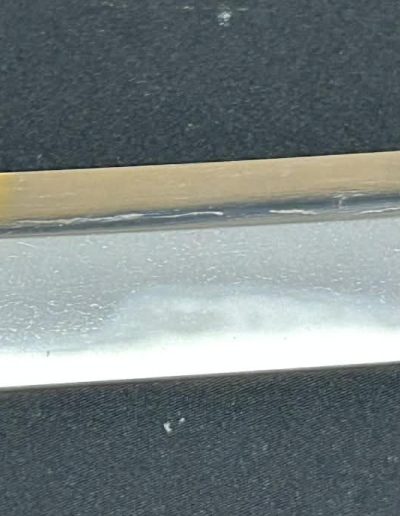
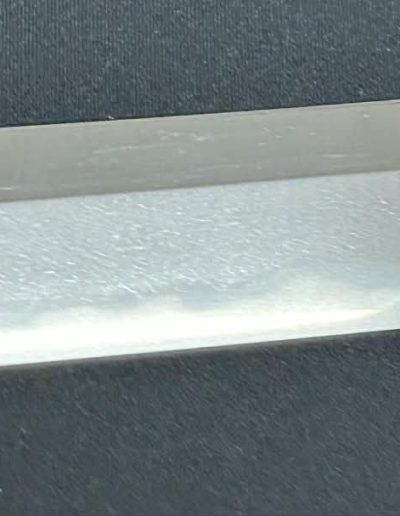
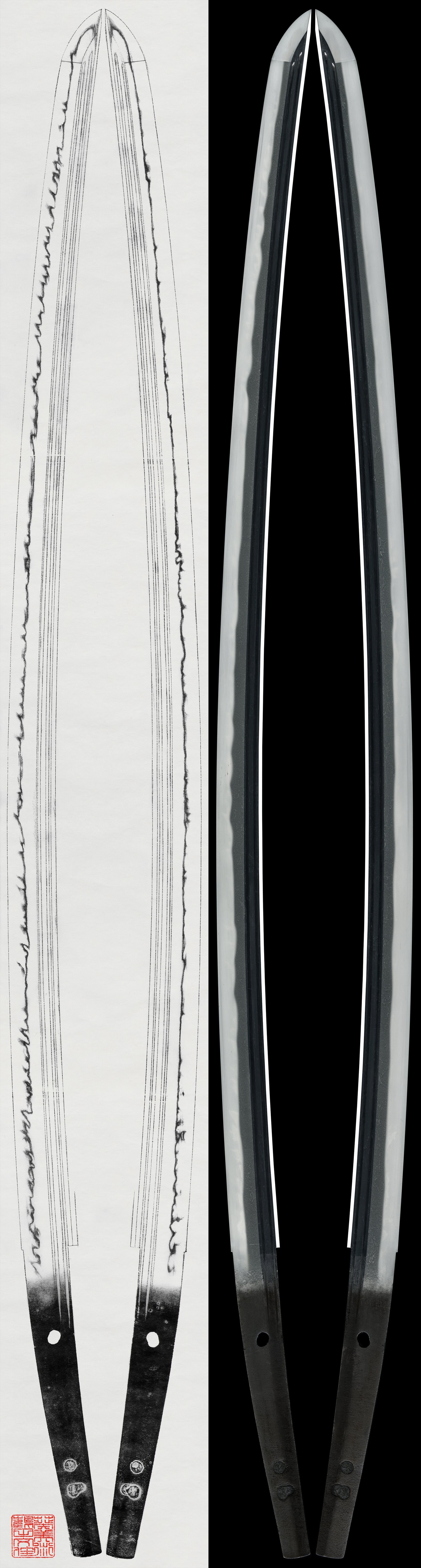
The temper rests on a low, narrow suguha worked in nioi-deki with ko-nie, into which ko-ashi and yō enter; ko-gunome and ko-chōji mingle in places, and the nioiguchi often tightens toward a subdued (shizumi) or faintly urumi character, with kinsuji and sunagashi faint where present. The bōshi commonly turns in ko-maru. Within this vocabulary the setsumei record real divergence: Chikayori's Robert Benson tachi runs to a more flamboyant deki, mixing gunome into chōji with koshiba on the ura, while Ujiyori's signed tachi shows the most meticulous forging of the group, broad in mihaba with thick kasane. For the kantei eye these are the working points, the slender shape, the utsuri-bearing Bizen ground, and the quiet low suguha read against the showier Osafune output and the Un lineage that the notices invoke for comparison. Named and provenanced works anchor the record: Chikayori's Gentoku 4 (1332) tachi at Hie Shrine is cited as the one other remembered example beside his Gen'ō piece, a den Noritsugu tachi descends from the Unshū Matsudaira family, an Ujiyori tachi survives with its black-lacquer leather-wrapped tachi koshirae, and the den Yasunori blade carries a two-character signature read against the group's manner. The setsumei treat extant work by every one of these hands as rare, valuing the signed and dated survivals as documentary anchors that fix the production span of the Nitta-shō smiths and let their restrained corner of the Bizen tradition be understood at all. Learn more →