Edo was the sword’s age of connoisseurship: the Hon’ami appraisers, the shogunal register of famous blades of 1719, and a thriving literature turned the sword into an object of study even as it ceased to be drawn in war.
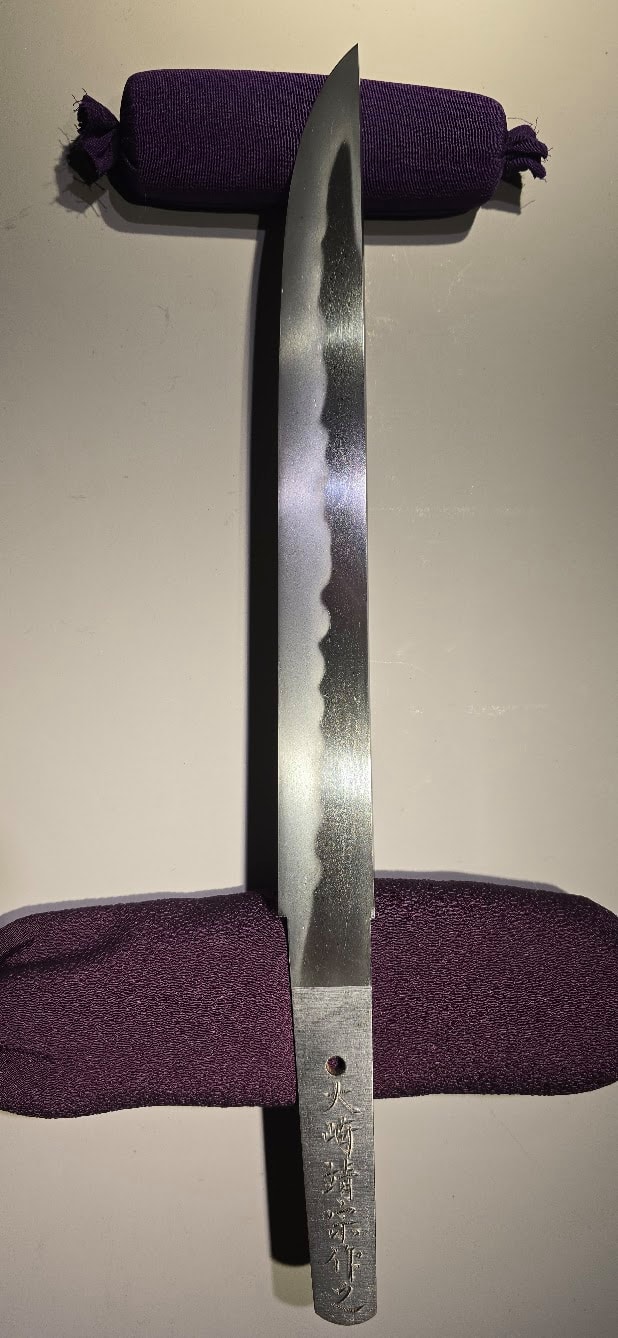
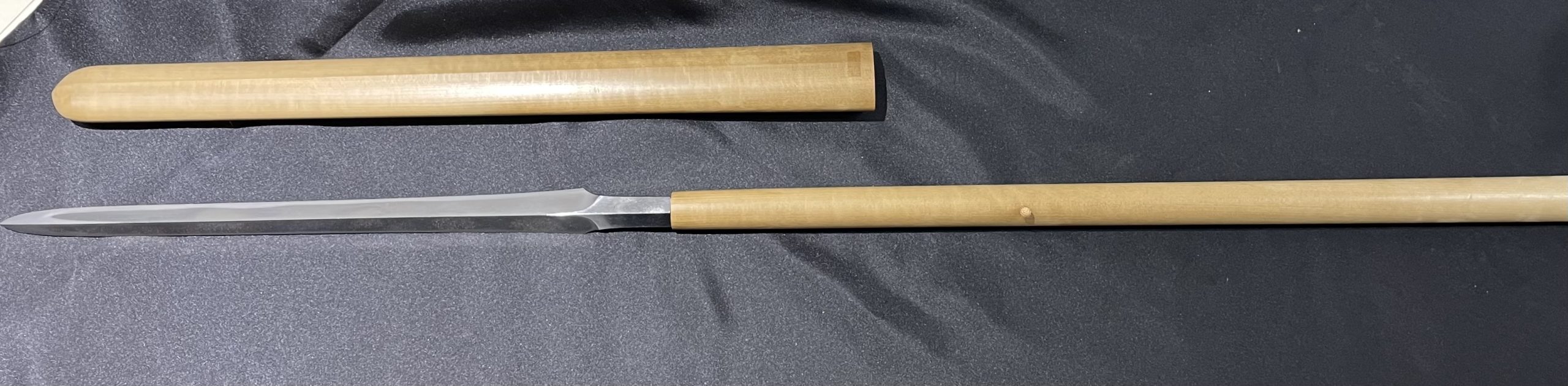
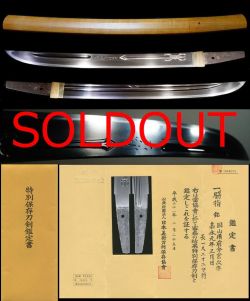
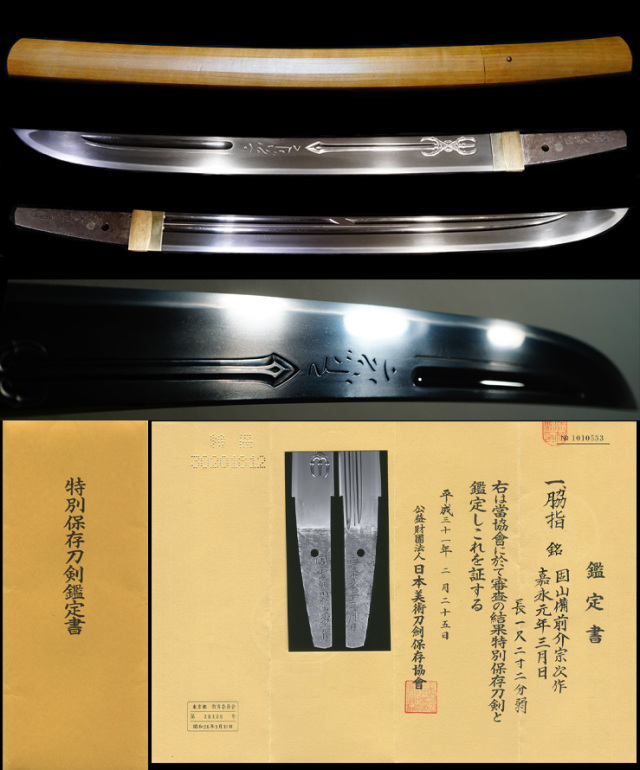
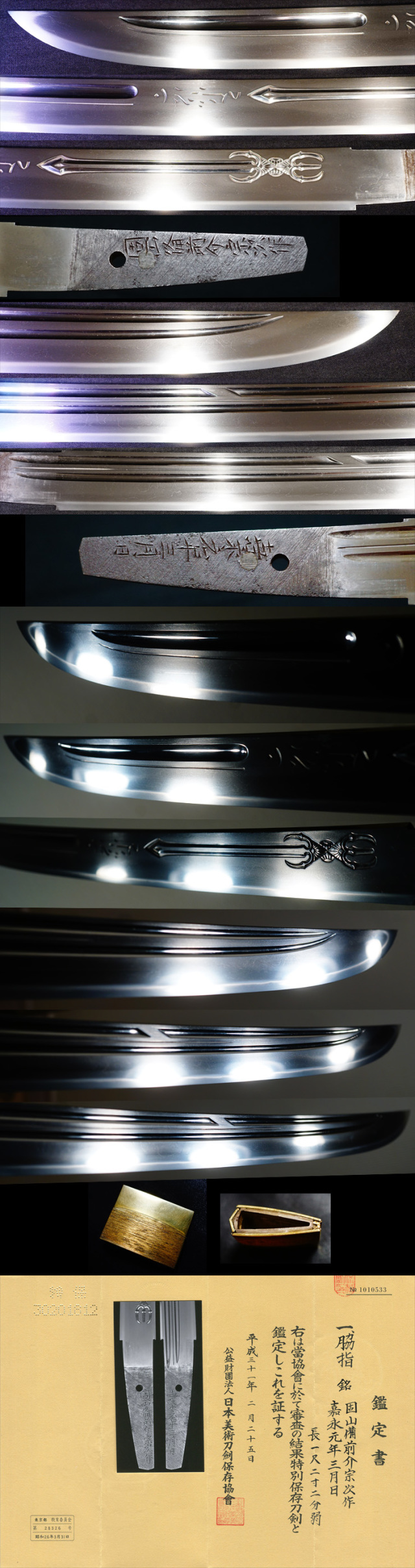
Meibun: "Koyama Bizen no Suke Munetsugu Saku" "Kaei Gannen Sangatsu Hi" Type: Wakizashi Nagasa: 1 shaku 2 sun 1 bun 5 rin Sori: 2 bun Motohaba: 32 mm Motokasane: 7.5 mm Toshin weight: 345 grams (All measurements are approximate) Tokyo Metropolitan Board of Education, Showa 26 Daimyo Registration The workmanship is reminiscent of Rai Kunitoshi and includes horimono. This is a supreme treasure of a blade showing the highest level of kitae with a unique character; the quality is tremendous. Utsuri stands out on the hiraji, konie is thickly attached, sunagashi and kinsuji appear, and it is a magnificent achievement that seems to see the pinnacle of the Rai school, reproducing archaic hataraki. Munetsugu was a tokō of the Edo period. His common name was Koyama Sōbe. He was born in Mutsu Shirakawa in Kyowa 3. He was a pupil of Kato Tsunahide, and Chounsai Tsunatoshi was his fellow student. He was an okakae smith for the Matsudaira family; around the Bunsei era, he moved to Kuwana following the Matsudaira family's transfer to Ise, and later relocated to Edo. Around the Koka era, he received the title of Bizen no Suke. He also used the go Isensai and Seiryosai. He appears to have passed away in the early Meiji period. His son, Soichiro, succeeded as the second generation. His older brother was the fellow tokō Koyama Munehira, and his disciples included Tairyusai Mokan and others. 0 Yen (Tax included)
 NihontoWatch
Bizen · Edo
The Edo period (1615 to 1868)
Edo was the sword’s age of connoisseurship: the Hon’ami appraisers, the shogunal register of famous blades of 1719, and a thriving literature turned the sword into an object of study even as it ceased to be drawn in war.
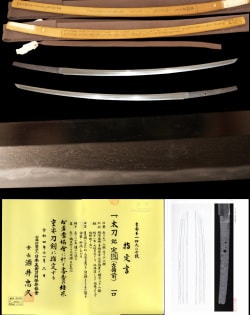
A Hozon-certified blade judged to show notably superior workmanship and a better state of preservation. The bar is higher: re-tempered blades and most unsigned Muromachi/Edo works are excluded.
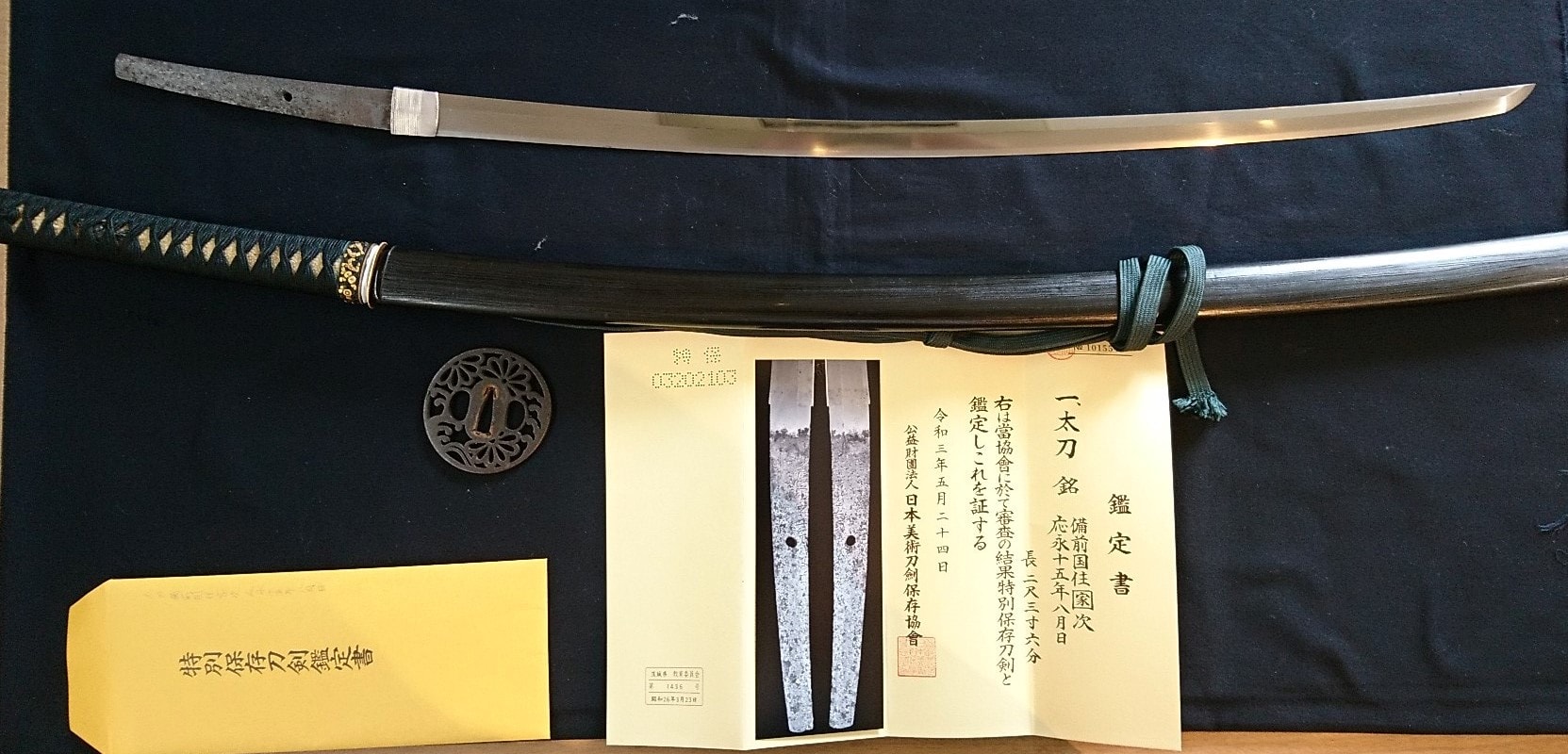
The NBTHK (Nihon Bijutsu Tōken Hozon Kyōkai, the Society for the Preservation of Japanese Art Swords) is a public-interest incorporated foundation founded in 1948 and supervised by Japan’s Agency for Cultural Affairs (Bunkachō); it is based at the Japanese Sword Museum in Tokyo. Its expert panels physically examine each submitted work (shinsa) and issue a certificate (kanteishō) ranking it by artistic and historical merit. NBTHK papers are the most widely recognized standard of authentication for Japanese swords and fittings.
NBTHK official sitePlease notify us of your intention to return, by email or fax, no later than the day after the item's arrival. Return shipping, insurance, and refund transfer fees are the customer's responsibility.


Meibun: "Koyama Bizen no Suke Munetsugu Saku" "Kaei Gannen Sangatsu Hi" Type: Wakizashi Nagasa: 1 shaku 2 sun 1 bun 5 rin Sori: 2 bun Motohaba: 32 mm Motokasane: 7.5 mm Toshin weight: 345 grams (All measurements are approximate) Tokyo Metropolitan Board of Education, Showa 26 Daimyo Registration The workmanship is reminiscent of Rai Kunitoshi and includes horimono. This is a supreme treasure of a blade showing the highest level of kitae with a unique character; the quality is tremendous. Utsuri stands out on the hiraji, konie is thickly attached, sunagashi and kinsuji appear, and it is a magnificent achievement that seems to see the pinnacle of the Rai school, reproducing archaic hataraki. Munetsugu was a tokō of the Edo period. His common name was Koyama Sōbe. He was born in Mutsu Shirakawa in Kyowa 3. He was a pupil of Kato Tsunahide, and Chounsai Tsunatoshi was his fellow student. He was an okakae smith for the Matsudaira family; around the Bunsei era, he moved to Kuwana following the Matsudaira family's transfer to Ise, and later relocated to Edo. Around the Koka era, he received the title of Bizen no Suke. He also used the go Isensai and Seiryosai. He appears to have passed away in the early Meiji period. His son, Soichiro, succeeded as the second generation. His older brother was the fellow tokō Koyama Munehira, and his disciples included Tairyusai Mokan and others. 0 Yen (Tax included)
NihontoWatchBizen · Edo
The Edo period (1615 to 1868)
Edo was the sword’s age of connoisseurship: the Hon’ami appraisers, the shogunal register of famous blades of 1719, and a thriving literature turned the sword into an object of study even as it ceased to be drawn in war.
A Hozon-certified blade judged to show notably superior workmanship and a better state of preservation. The bar is higher: re-tempered blades and most unsigned Muromachi/Edo works are excluded.
The NBTHK (Nihon Bijutsu Tōken Hozon Kyōkai, the Society for the Preservation of Japanese Art Swords) is a public-interest incorporated foundation founded in 1948 and supervised by Japan’s Agency for Cultural Affairs (Bunkachō); it is based at the Japanese Sword Museum in Tokyo. Its expert panels physically examine each submitted work (shinsa) and issue a certificate (kanteishō) ranking it by artistic and historical merit. NBTHK papers are the most widely recognized standard of authentication for Japanese swords and fittings.
NBTHK official sitePlease notify us of your intention to return, by email or fax, no later than the day after the item's arrival. Return shipping, insurance, and refund transfer fees are the customer's responsibility.