The Yamato schools grew up in the shadow of Nara’s great monasteries: Tegai took its name from a gate of Tōdaiji. Their austere masame and quiet suguha are a temple aesthetic, prized ever since for exactly that restraint.
 NihontoWatchNihontoWatch
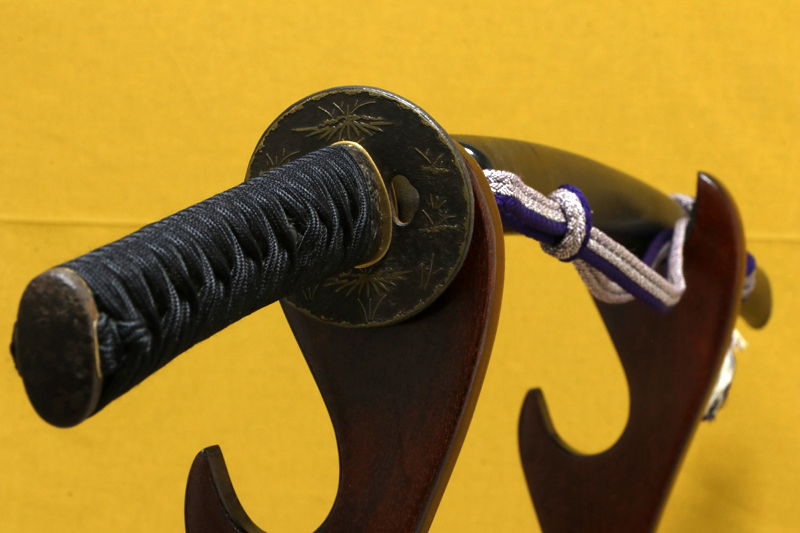
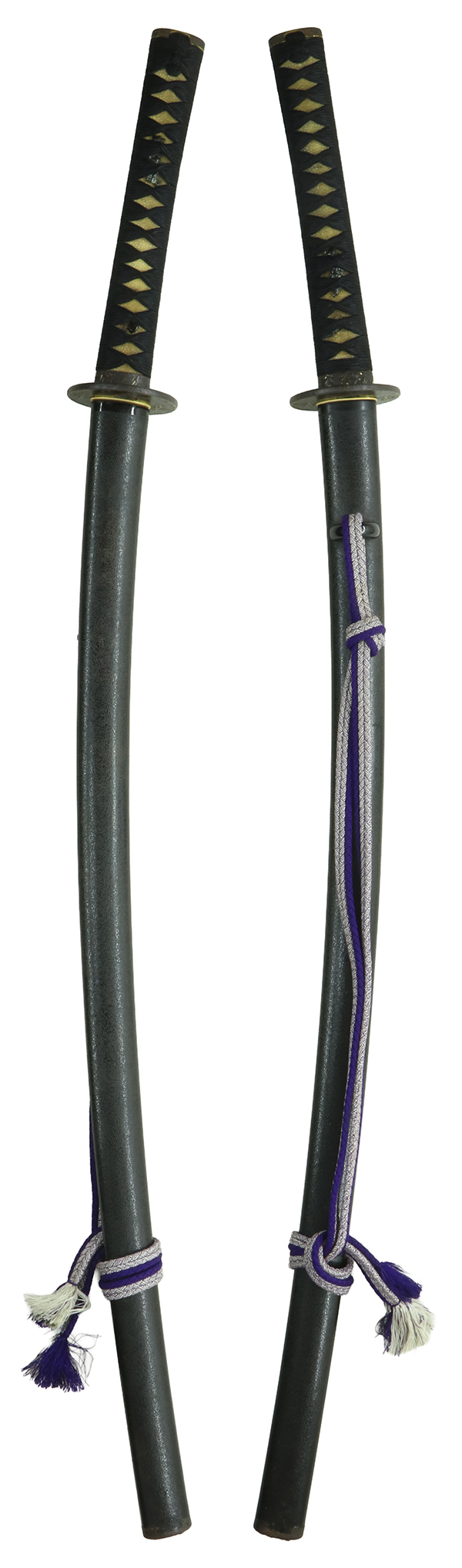
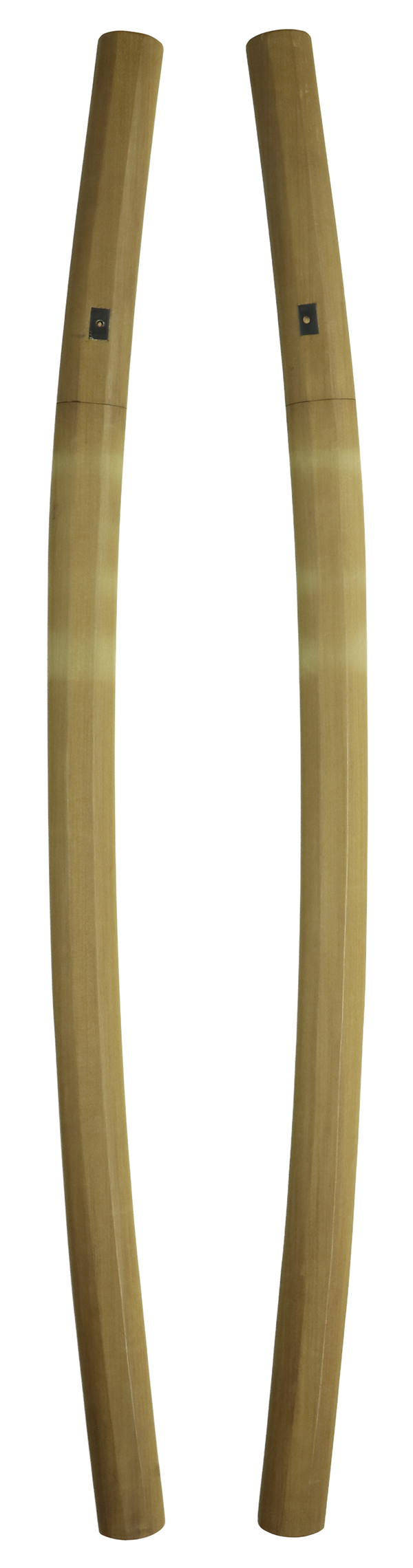
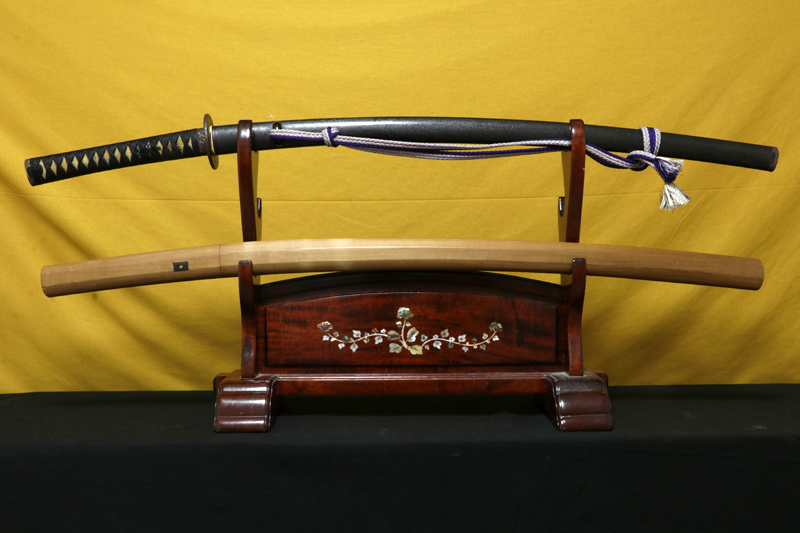
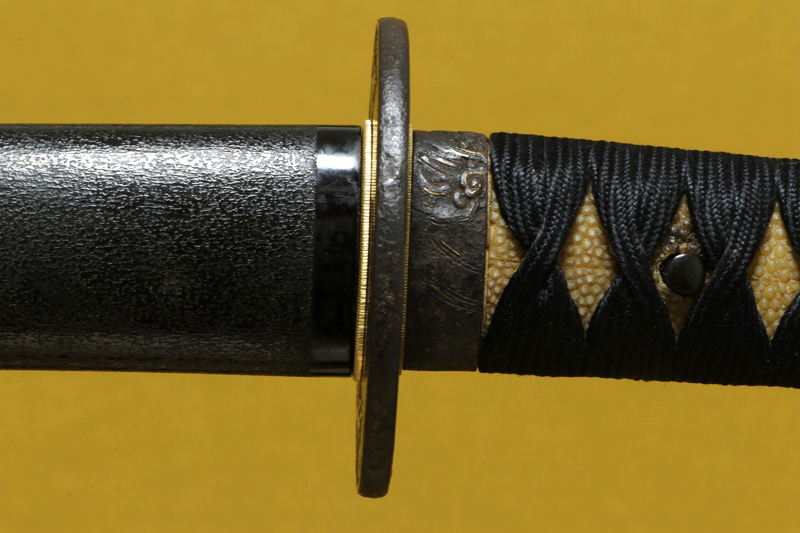
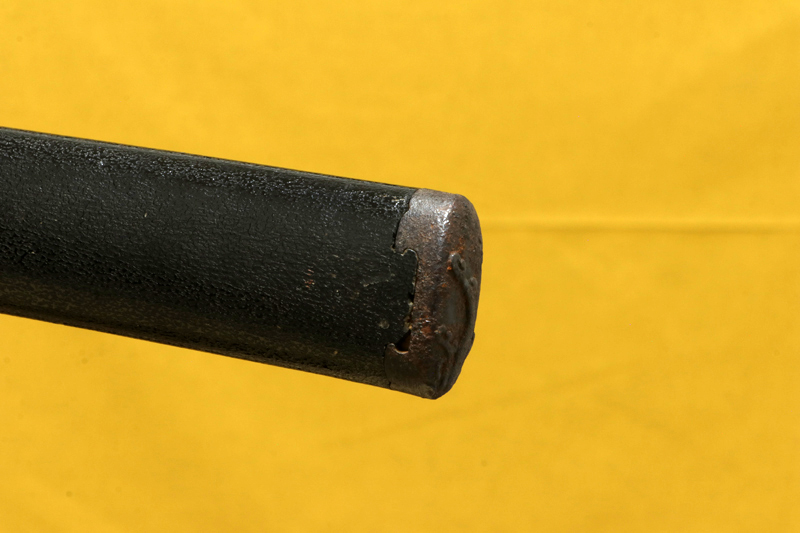
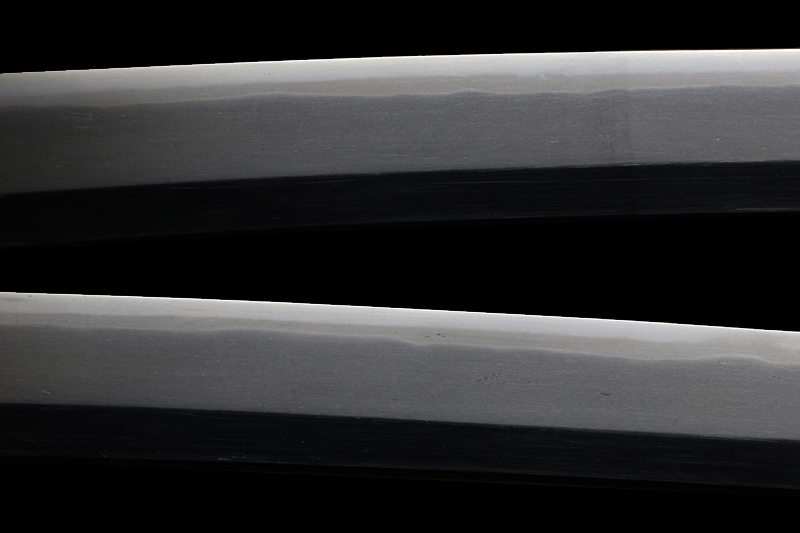
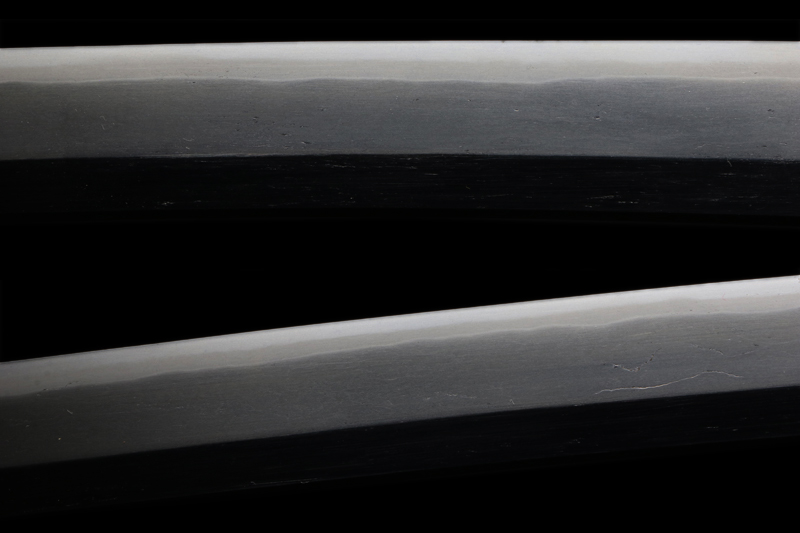
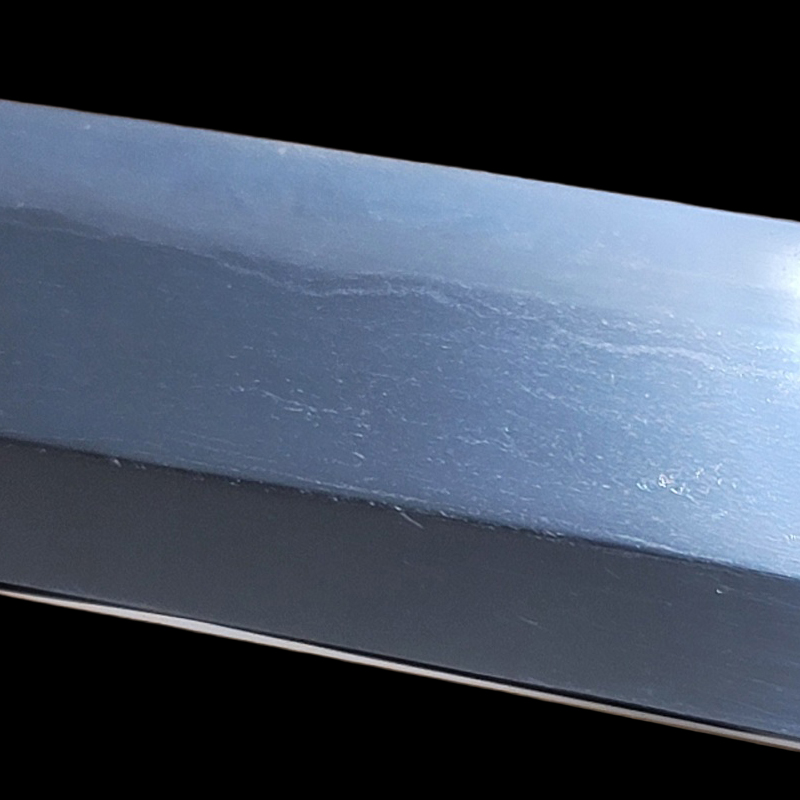
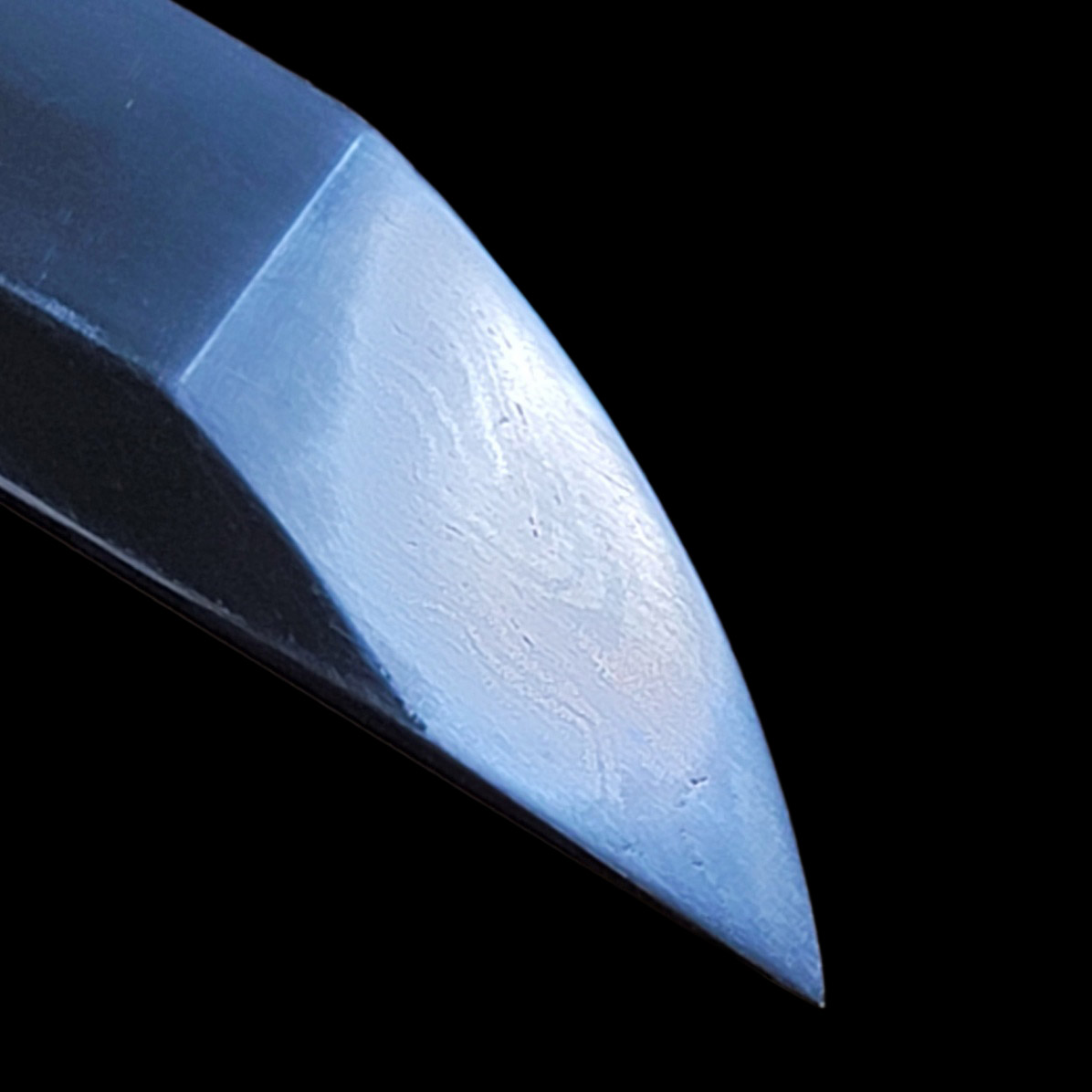
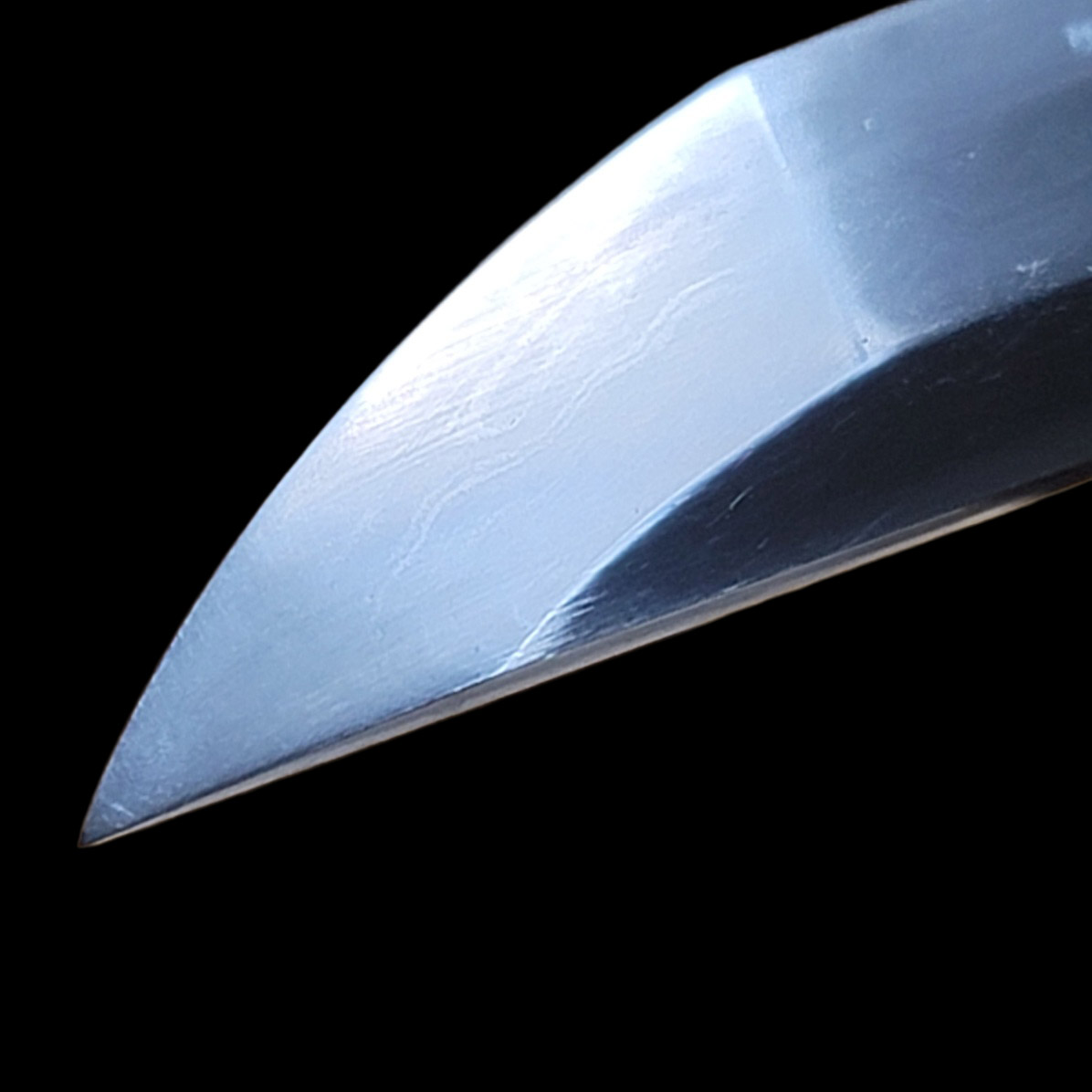
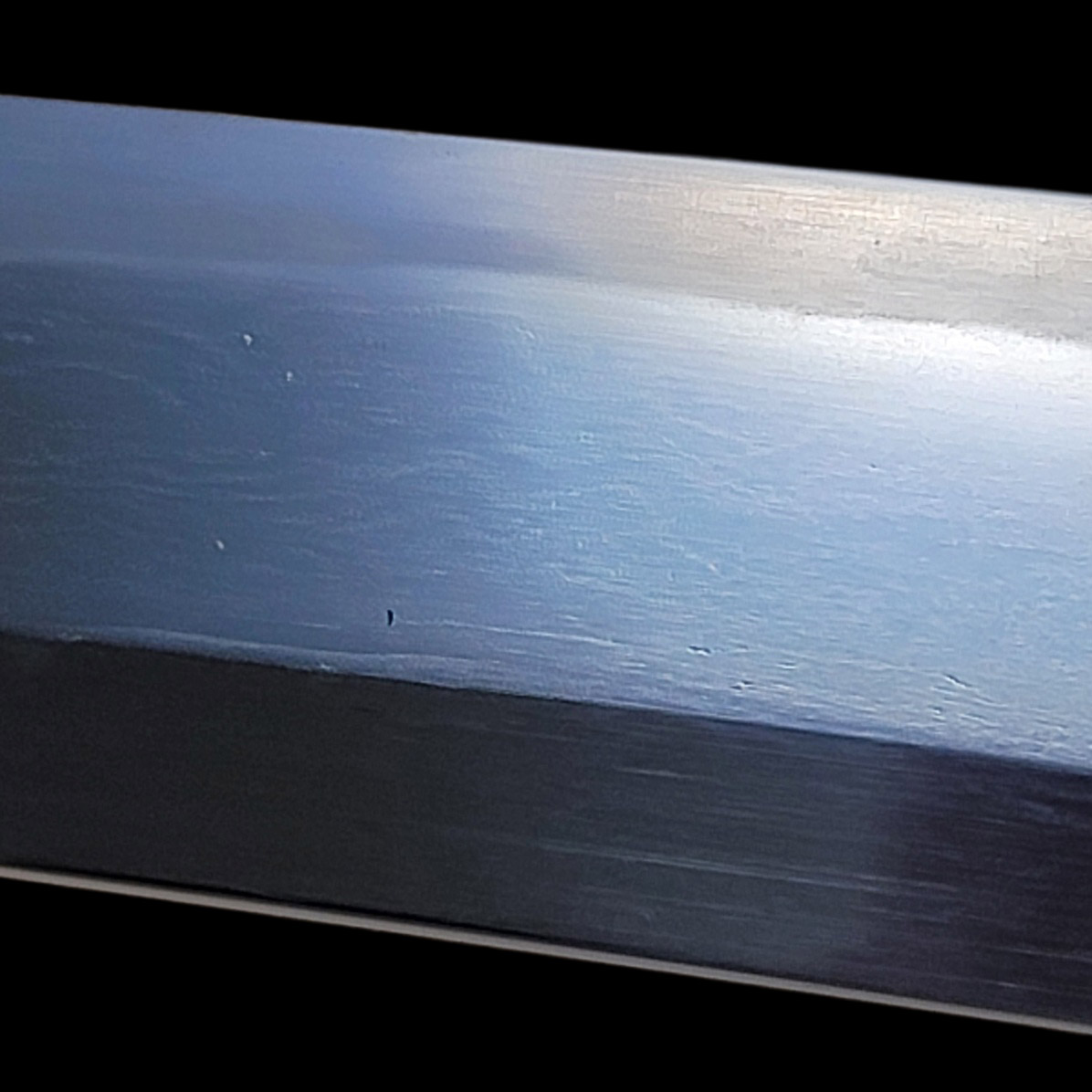
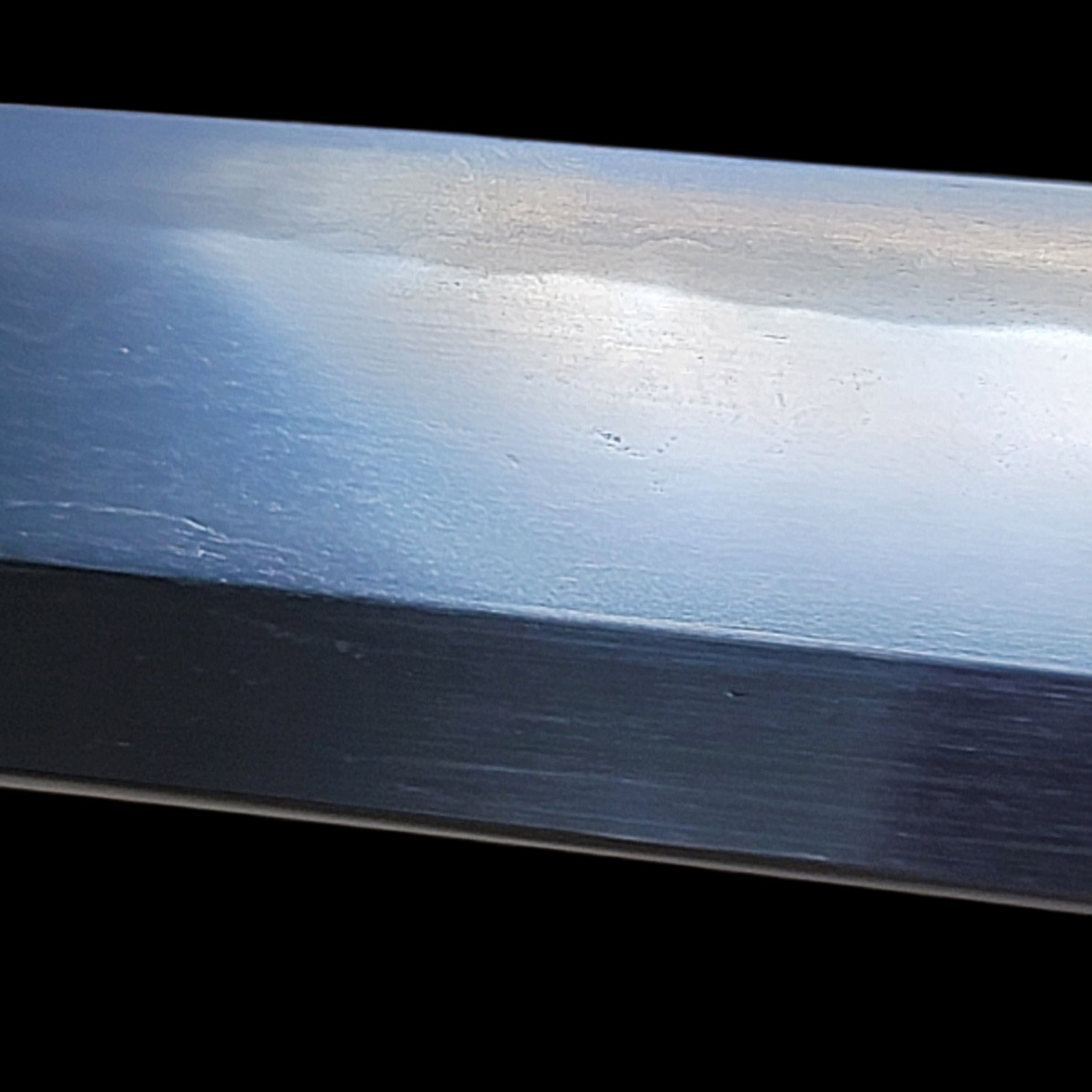
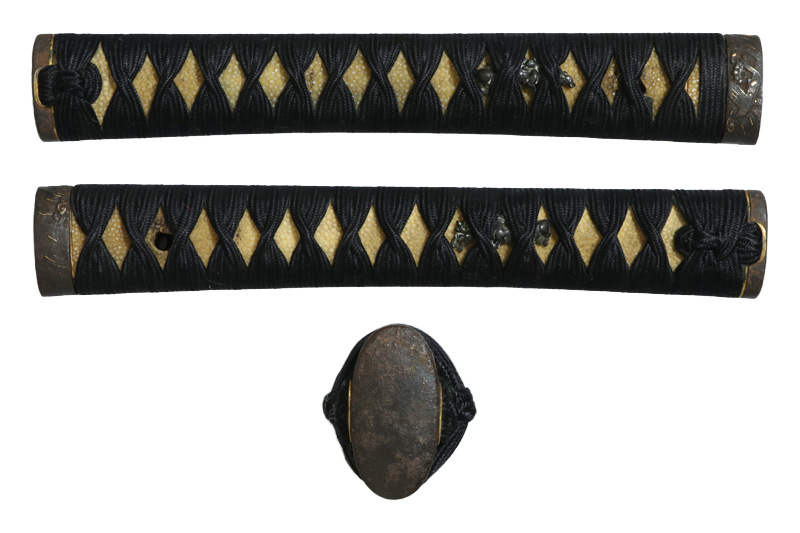
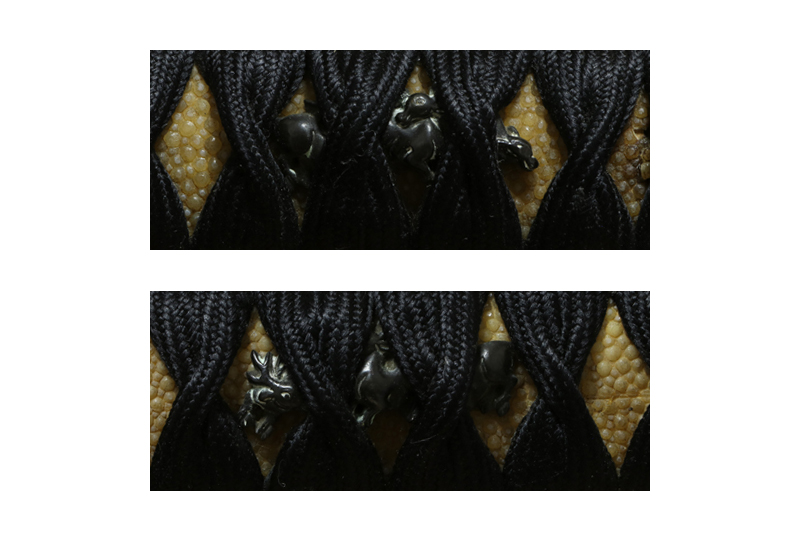
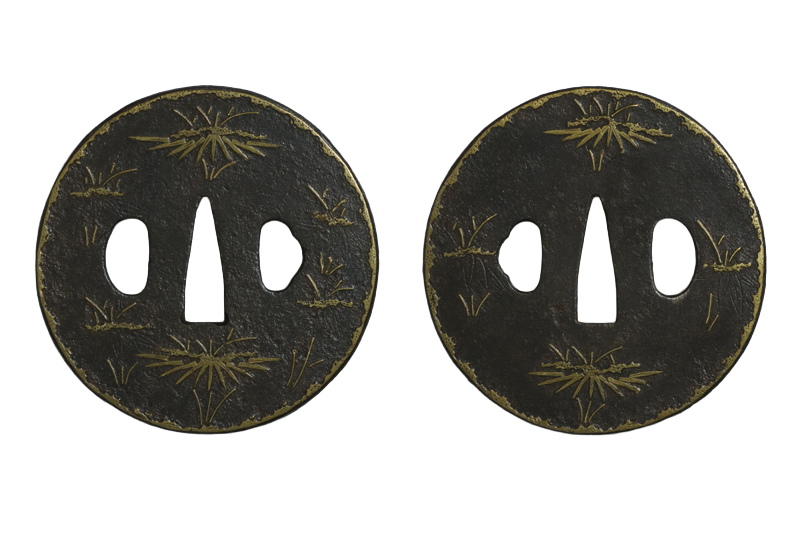
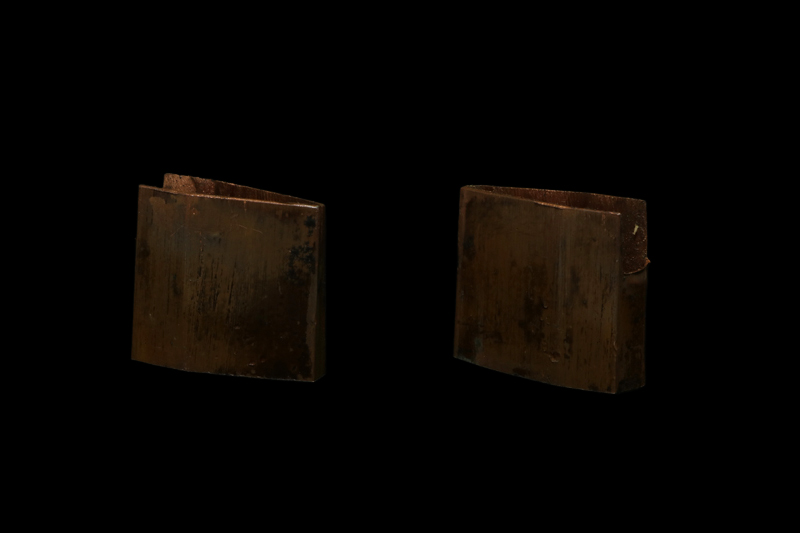
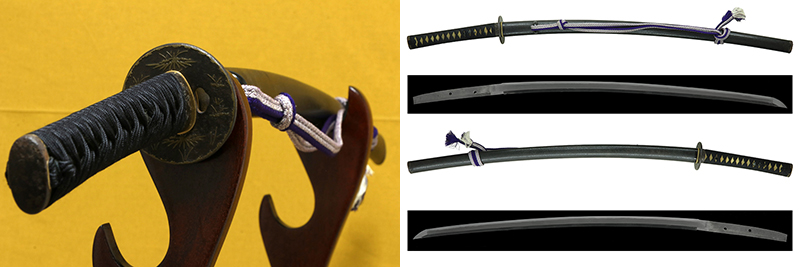
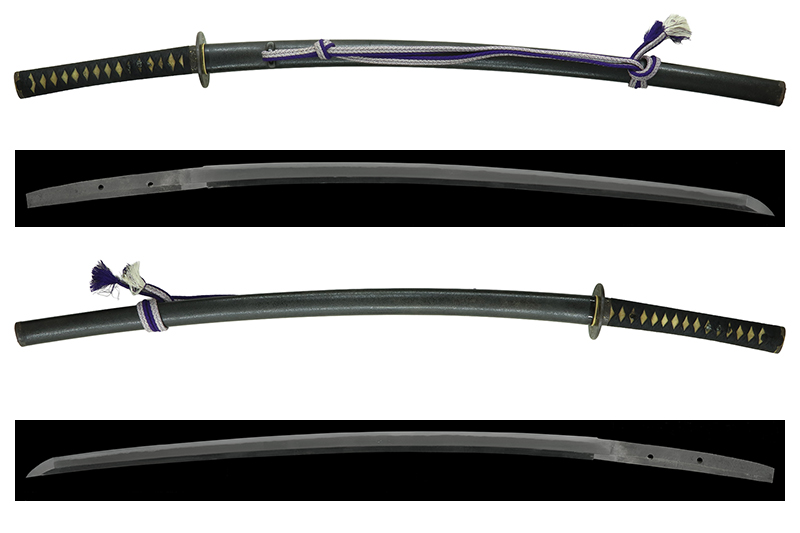
Koto Mumei(Den Taima) with Koshirae and Shirosaya. 本作は大磨り上げ無銘の刀で、流れ柾がかった板目肌に直刃調の乱れ刃を焼いた、大和五派・当麻派の特徴をよく備えた優品です。 古研ぎながら地刃はよく見え、江戸時代の拵も状態良好。 当麻派への極めが期待される、ぜひ鑑定に出していただきたい夢のある一振りです。 This ō-suriage mumei katana features flowing itame-hada tending toward masame and a suguha-based midare hamon, displaying strong characteristics of the Taima school, one of the Five Yamato Schools. Despite its old polish, the jihada and hamon remain clearly visible, and the Edo-period koshirae is in good condition. A fascinating sword with the potential for attribution to the prestigious Taima school. We highly recommend submitting it for professional appraisal. 「刀姿 sugata」 鎬造り庵棟、身幅やや細く重尋常、鎬やや高く鳥居反り中鋒。茎は大磨り上で筋違い鑢がかかり、茎尻は一文字に切られる。 Shinogi-zukuri, iori-mune, slightly narrow mihaba, standard kasane, slightly high shinogi, torii-zori, and chū-kissaki. The nakago is ō-suriage, with sujikai yasuri and an ichimonji (straight-cut) nakago-jiri. 「地鉄 jigane」 地鉄は板目肌が流れ柾かかり、地沸付き地景入り、淡く映り立つ。 The jigane is flowing itame-hada tending toward masame, with ji-nie, chikei, and faint utsuri. 「刃紋 hamon」 刃紋は直の乱れ刃、刃縁小沸付き砂流し栄んにかかり、刃中は金筋が働く。釯子は掃き掛けて尖り僅かに返る。 The hamon is suguha-based midare, with ko-nie along the habuchi, prominent sunagashi, and kinsuji within the ha. The bōshi shows hakikake, forming a pointed tip with a slight return. 「特徴 detailed」 本作は大磨り上げ無銘の刀です。鎬がやや高く、流れ柾がかった板目肌の地鉄に直刃調の乱れ刃を焼き、帽子は掃き掛けて尖り、わずかに返るなど、大和五派の一つである当麻派の特徴をよく備えた一振りです。 当麻派は、鎌倉時代後期から南北朝時代にかけて、大和国当麻(現・奈良県葛城市)を拠点に活動した刀工集団です。大和五派の一つに数えられ、当麻寺の周辺に居住し、同寺に仕えていたと伝えられています。 始祖は正応年間(1288~1293年)頃に活躍した国行とされ、その在銘作は極めて少なく、太刀一口が国宝に指定されています。当麻派は在銘作が非常に少なく、現存作の多くは無銘で「当麻」と極められたものです。 当麻派は大和五派の中でも独自の作風を持ち、「当麻肌」と呼ばれる特徴的な地鉄、しっかりとした太刀姿、さらに大和伝でありながら相州伝の気質を帯びた沸の強い刃文を特色としています。『享保名物帳』にも当麻派の名物が四口記載されています。 刀身は古研ぎのため多少の曇りやヒケがありますが、地刃はよく鑑賞できます。柾目が緩んだ箇所が二か所見られますが、再研磨によって目立たなくなる可能性があります。 拵は江戸時代の作で、柄糸は巻き替え済みです。鞘に割れなどの目立つ傷みはなく、全体的に良好な状態を保っています。 本作は、大和伝・当麻派の特徴を色濃く備えた、魅力的な大磨り上げ無銘刀です。ぜひお客様ご自身の手で鑑定にお出しいただきたい一振りです。当麻の極めを得られる可能性に期待が膨らむ、まさに夢のある刀です。 The Taima school was active from the late Kamakura to the Nanbokuchō period, based in Taima, Yamato Province (present-day Katsuragi City, Nara Prefecture). The school is traditionally associated with Taima-dera Temple, where its swordsmiths are believed to have lived and worked. The school was founded by Kuniyuki, who is believed to have been active around the Shōō era (1288–1293). His signed works are extremely rare, and one signed tachi is designated a National Treasure. Signed works of the Taima school are exceptionally scarce, with most surviving examples being unsigned blades attributed to the school. Among the Five Yamato Schools, Taima is distinguished by its unique forging pattern known as Taima-hada, robust tachi sugata, and strong nie-based hamon showing influences of the Sōshū tradition despite its Yamato origins. Four famous Taima blades are recorded in the Kyōhō Meibutsuchō. The blade has an old polish with some cloudiness and minor surface scratches, but the jihada and hamon remain clearly visible. There are two areas of slightly loose masame grain, which may become less noticeable with repolishing. The Edo-period koshirae is in generally good condition. The tsuka-ito has been rewrapped, and the saya shows no cracks or significant damage. This fascinating ō-suriage mumei katana displays strong characteristics of the Yamato Taima school. We highly recommend submitting it for professional appraisal. The possibility of receiving an attribution to the prestigious Taima school makes this a truly exciting sword, full of potential and historical appeal. 「拵 Koshirae」 ハバキ(habaki) :素銅地一重の磨き地。 鍔(tsuba) :鉄地菊の図真鍮象嵌。 縁頭(futikasira):鉄地地松に帆掛け船の図。 目貫(menuki) :赤銅地馬の図。 柄(tsuka) :柄巻は正絹黒の諸撮み巻。 鐺(kojiri) : 鉄地。 鞘(saya) : 黒石目。 「刀剣の状態 condition of blade」 研:古研ぎのため多少の曇りやヒケがありますが、地刃はよく鑑賞できます。 傷:2か所柾目肌に少し緩んだ所が有りますが、研ぎの時、緩みを締めてくれるでしょう。
Taima School当麻派
Offered by Giheiya
This piece has sold
7 on the market
Get an email when new Taima School work hits the market.


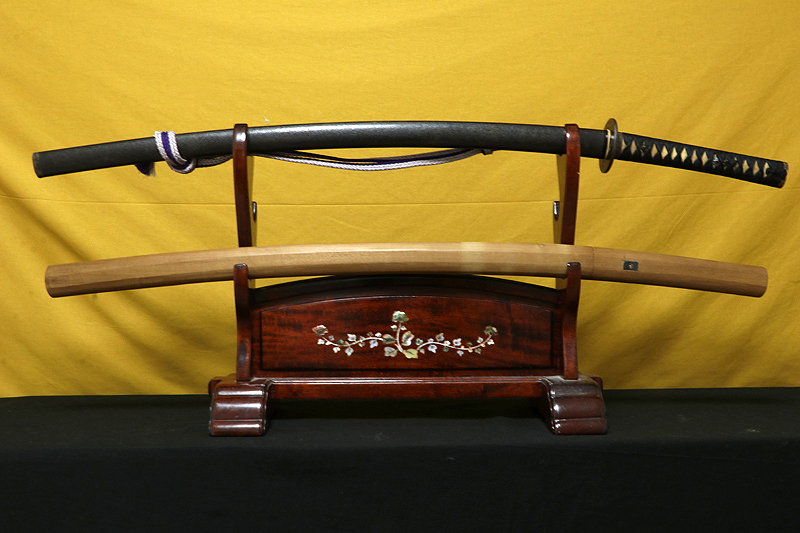
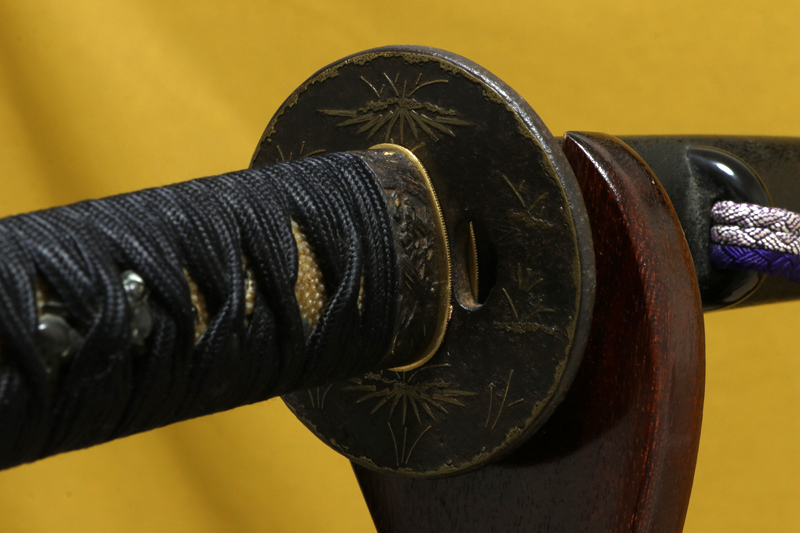
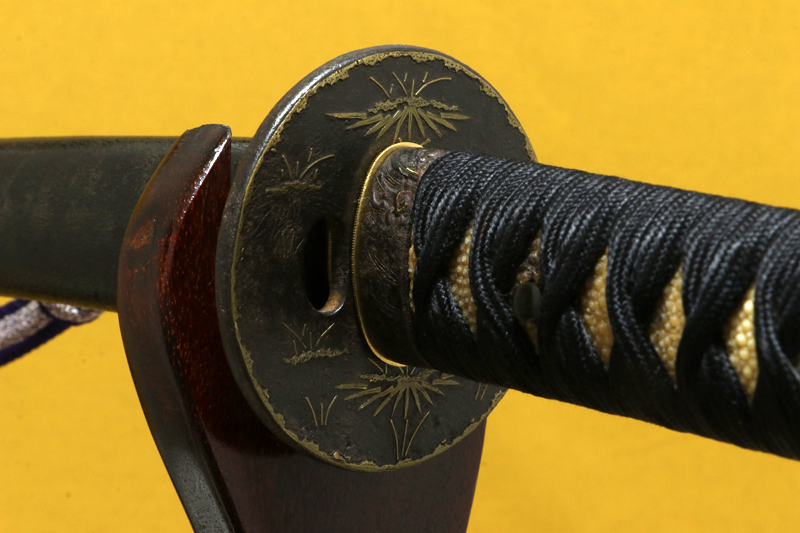
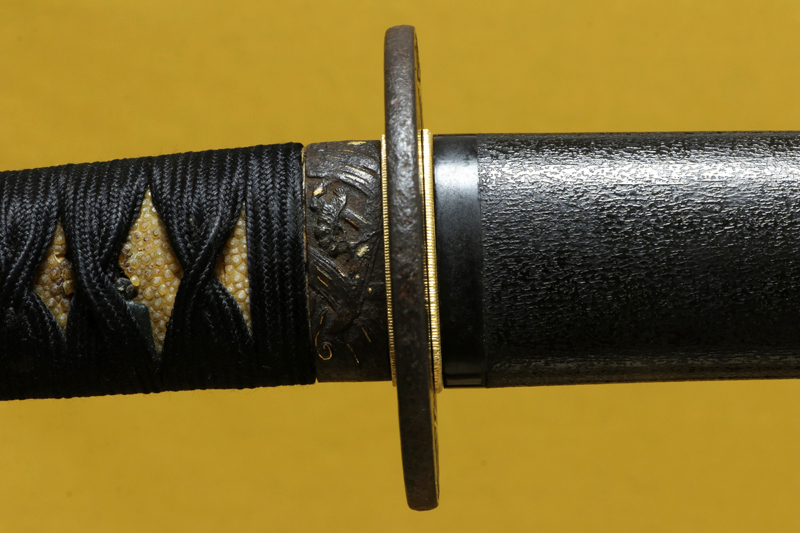

As written by the shop
(Translation unavailable)
Yamato-den · Yamato
7 pieces on the market now
At Taima-dera in Yamato Province, the temple from which the school takes its name, a body of swordsmiths gathered in the late Kamakura period under Kuniyuki, who is transmitted as the founder of the line. The Taima group is counted among the five schools of the Yamato-den, the others being Tegai, Senjuin, Shikkake, and Hosho, and like its siblings it grew out of a monastic milieu in which the smiths worked in dependence upon the temple. That dependent standing is itself a fact of the record, for the published sources tie the scarcity of signed Taima work directly to it; the smiths, attached to the temple, naturally left few signatures, so that the line comes down largely as unsigned pieces fixed by appraisal. Only a small number of signed blades survive, chiefly by Kuniyuki and by Aritoshi, whose dated tachi of Einin 6 (1298) fixes the antiquity of the line and places its production at the close of the Kamakura age. The school continued through the Nanbokucho era and on into the Muromachi period, a northern branch removing to Asako in Echizen under the collective title Asako Taima. The Taima smiths share the full Yamato-den vocabulary, worked in a register that leans further toward nie activity than that of its Yamato siblings. The jigane is a flowing itame that gathers toward the edge into masame, the steel standing somewhat open, with thick ji-nie laid over it and chikei entering the grain frequently; on the finest blades a nie-utsuri rises in the ji, a reflection that on these smiths is a product of nie rather than of the Bizen midare-utsuri. Over this foundation the temper is built on a quiet line, a suguha or suguha-cho waved shallowly into notare and mixed with ko-gunome, small ko-choji, and at times ko-midare, the disorder always slight and worked over the straight base rather than displacing it.
The habuchi frays into hotsure, breaks into kuichigai-ba, doubles into nijuba, and lifts into uchinoke, while within the tempered area the ha-nie lies thick and bright, ashi and yo entering, and kinsuji and sunagashi flashing through repeatedly. Above it the boshi runs straight and is then swept with hakikake, most often finishing in yakizume without a turnback or turning in a small ko-maru. The recurring traits cohere into a recognizable hand: the masame-rich itame, the abundant glittering nie, and the brushed point are the marks by which the school is read, and the school leans toward nie where Tegai and the others keep a tighter, calmer key. Individual smiths inflect the manner: Aritoshi is set apart by a near-constant nijuba unusual even within Yamato, while the Echizen Nobunaga carries an angular gunome-midare and a darkened steel into Hokuriku. Kantei of a Taima blade proceeds from this cluster of Yamato evidence, the masame-leaning itame, the hotsure and nijuba along the habuchi, and the swept hakikake boshi, laid over a suguha base; against the other Yamato schools the appraisers look for the heavier nie activity and the conspicuous ashi and yo within a bright edge that separate Taima from the plainer suguha of Tegai and Senjuin, the togariba tendency of Shikkake, and the dense masame of Hosho. Kuniyuki stands as the progenitor and defining voice of the line, his signed tachi prized as documentary anchors against which the rest is measured; below him Aritoshi, Toshinaga, Tomoyuki, and Tomokiyo are read each by his own grounded traits, their few signed survivals valued first as reference material because so little of the school was ever signed. The greater part of the record is o-suriage mumei, wide-bodied Nanbokucho katana cut greatly down, their attribution argued from the markedly elongated chu-kissaki and from the Taima activity at its strongest, the texts candid that on such a shortened blade no individuality singling out one smith can be discerned even while the piece is held a fine work of the school. Provenance is mostly thin, running through private hands rather than the daimyo houses, with a few institutional holdings and the occasional notable mounting, so that an unsigned Taima blade is the usual encounter and a signed one a landmark of Yamato-den work. Learn more →
| Smith | Era | Designated |
|---|---|---|
| Aritoshi有俊 | 1264-1275 | 41 |
| Nobunaga信長 | 1394-1428 | 6 |
| Tomokiyo友清 | 1319-1321 | 5 |
| Tomoyuki友行 | 1278-1288 | 5 |
| Tomoyuki友行 | 1247-1249 | 4 |
Yamato in the Kamakura period
The Yamato schools grew up in the shadow of Nara’s great monasteries: Tegai took its name from a gate of Tōdaiji. Their austere masame and quiet suguha are a temple aesthetic, prized ever since for exactly that restraint.
Within 3 days of the item's arrival, we offer a refund or an exchange. Return shipping and the bank transfer fee for the refund are at the customer's expense.