After the Ōnin War broke the Ashikaga order, a century of Sengoku warfare armed nearly every province in Japan. The era rewards a discriminating eye: routine work exists in quantity, and beside it stand custom blades of the first rank.
 NihontoWatchNihontoWatch
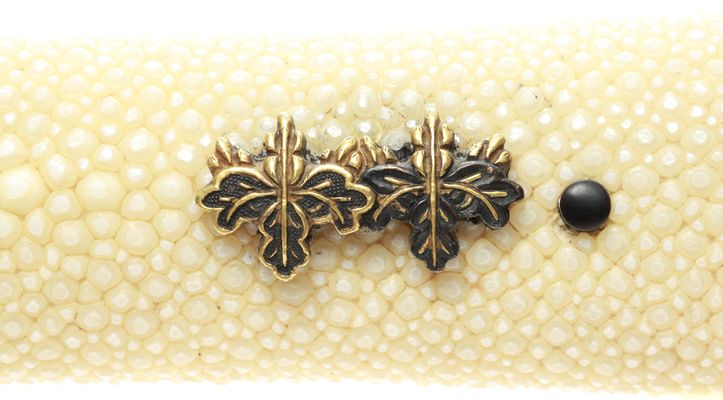
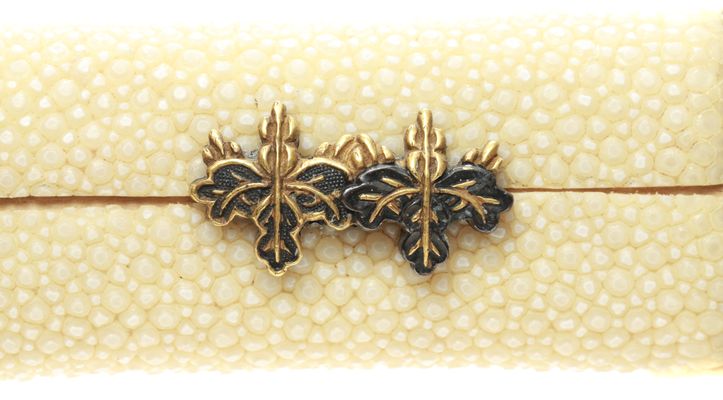
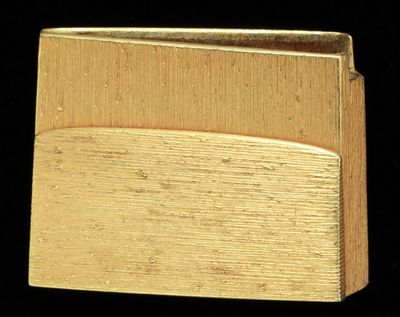
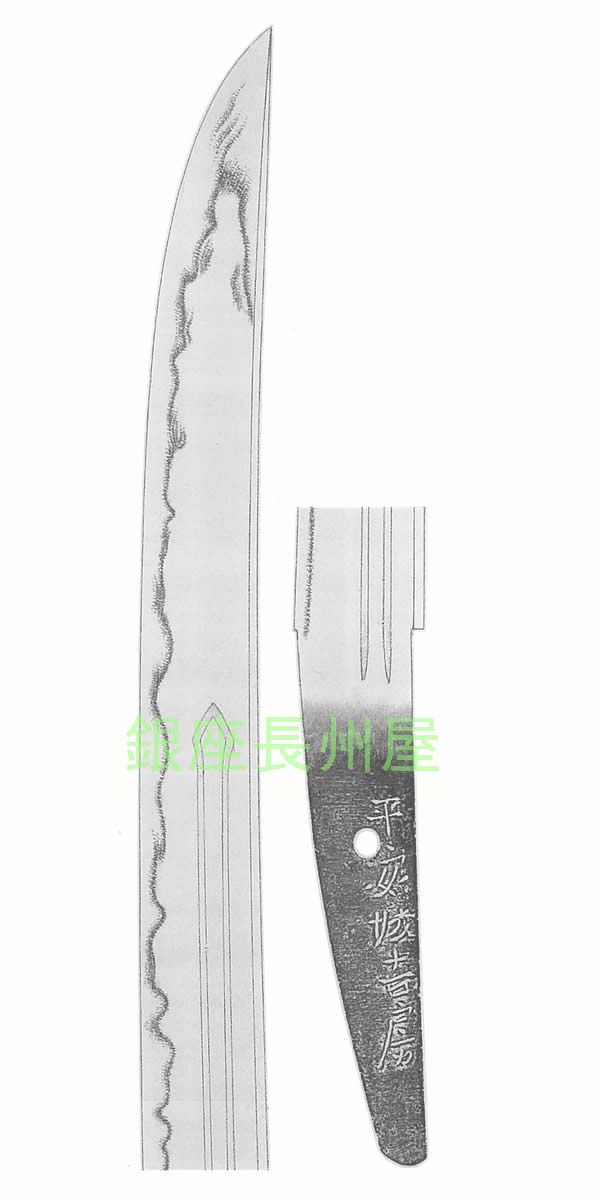
平安城吉房は室町中期の京都三条の住人。平安城長吉、吉則などの一族である(注1)。長吉に三河、吉則に和泉や越前での作があり、山城国内のみならず、地方の武将の要請で作刀したことも明らか(注2)。また、長吉の作中に村正の茎形に似た魚の鱮の腹を想わせる例が、吉房に村正門の正重と合作刀(注3)があること、そして村正一門に洗練味ある刀身彫刻があることが、両者の交流を物語っている。 この短刀は、刃先鋭く寸法がやや延びてわずかに反りの付いた鋭利な姿。しかも素剣と梵字の彫が美しく映えた作。鉄色(かないろ)の明るい地鉄は板目に杢を交えて肌目起ち、小粒の地沸が付いて淡く沸映りが立つ。浅い湾れに尖りごころの互の目、箱がかった刃を交えた刃文は表裏が揃い気味で、純白の小沸で刃縁明るく、小形の金線、砂流しが掛かり、小粒の沸が立ち込めて刃中も明るい。焼を深く残した帽子にも沸の粒子が充満して長めに返る。茎形は中程が張って先が細くなる辺りは村正の茎を想わせ、鑚当たりの強い銘字が平安城長吉に酷似。戦国期の都鄙の交流を伝える優品となっている。 桐紋金具で装われた、朱漆鞘の合口拵が付されている。 注1...『日本刀工辞典』には「平安城長吉の一族、作風長吉のごとく、特に短刀が多い」とある。 注2...信國派や了戒派の刀工の中に九州へ移住し、筑紫信國、筑紫了戒が興っている。 注3...『日本刀工辞典』参照。
NihontoWatchOffered by Choshuya
This piece has sold
1 on the market
Get an email when new Sanjo School work hits the market.









Yamashiro-den · Yamashiro
1 piece on the market now
At the turn of the late Heian period, in the imperial capital and around the Sanjo district that gives the school its name, the curved shinogi-zukuri blade we now recognize as the Japanese sword was first settling into its mature form, and it was here that the Sanjo school took shape as the earliest stratum of Kyoto forging and the headwater of the whole Yamashiro-den. Its founder, Sanjo Munechika, worked around the Eien era and is counted among the very first smiths whose names survive, known in popular lore as Sanjo no Kokaji, the Little Smith of Sanjo; from his hand descend the Ko-Kyo-mono and, in time, the perfected Awataguchi and Rai lines that follow. The old registers gather the founding generation around him: Yoshiie, transmitted variously as his son or pupil and read by the published sources as a somewhat later hand of the same school; Chikamura, transmitted as a son; and a second house, the Gojo group, formed when Kanenaga and Kuninaga, drawn from the Munechika line, settled in the Gojo district of the city. Of these later smiths only a handful (Kanenaga, Kuninaga, Yoshiie, Chikamura) leave reliably signed work, the corpus thin and the scholarship around it candid. A shared vocabulary binds the school across these hands. The build is the old Kyoto tachi-sugata: slender in mihaba, the koshizori high and deep with funbari standing at the base of the ubu examples, the width narrowing markedly toward a small ko-kissaki. The steel is a refined ko-itame, tightly knit on the best pieces yet inclined to stand here and there into a flowing, open o-hada, carrying fine ji-nie laid as a mist, chikei within it, and a faint utsuri (read as a soft nie-utsuri or jifu-toned midare-utsuri) that reads the work as Kyoto rather than Yamato. Over this classical stance the temper is laid low and archaic: a suguha base into which ko-midare and ko-choji enter, ko-ashi and yo running in, nie sitting strongly with kinsuji and sunagashi sweeping through a bright nioiguchi.
Within this single manner the hands diverge. Munechika fires the quietest line, a narrow suguha-toned ko-midare with uchinoke, yubashiri, and a doubling and trebling into nijuba and sanjuba around the monouchi; Yoshiie carries that doubled feeling forward, his small midare taking on tobiyaki and turning nijuba above the monouchi, a trait the NBTHK names a viewing point of the school itself; Kanenaga and the Gojo work hold to a suguha-cho laced with ko-choji, judged more orderly than the founder, the ko-choji surviving in the suguha where the later Yamashiro runs plainer. To kantei a Sanjo blade is to read its antiquity and its refinement together: the slender, deeply koshizori archaic form, the nie-laden Kyoto ji with standing grain and faint utsuri, the low ko-midare over a bright nioiguchi, and the doubled temper lines that thread back to the Shosoin-associated early works. The standing problem is the homonym, for both Yoshiie and Chikamura share their names with smiths of the Ko-Bizen and Ichimonji lines; the adjudication rests on the strong, archaic nie and the manner of signing, the Ichimonji namesakes tending instead to a flamboyant choji-midare. Munechika holds the summit of the school and of early Japanese forging, graded Sai-jo saku by Fujishiro, his patrimony including the National Treasure Mikazuki Munechika, counted among the Tenka-Goken; Kanenaga and Yoshiie are graded Jo-jo saku. The provenance roll belongs to old Kyoto and the great houses: the Mikazuki in the Tokyo National Museum, Munechika's signed tachi carried by Atago Shrine and threaded through Hideyoshi and the Tokugawa; Yoshiie blades in the Kajiki Shimazu, Ikeda, and Owari Tokugawa houses, with the Hachiman-carved katana in the Tokugawa Art Museum; Kanenaga's work transmitted through the Owari Tokugawa and the Satake. These are heritage pieces held in trust far more often than traded; a tachi of the early Sanjo school comes to open hands only rarely, and a signed founding-generation blade, of which the published sources accept so few, almost never. Learn more →
| Smith | Era | Designated |
|---|---|---|
| Yoshiie吉家 | 1004-1012 | 18 |
| Munechika宗近 | 987-989 | 5 |
| Chikamura近村 | 1040-1044 | 5 |
| Norimori則守 | 1278-1288 | 0 |
| Munenaga宗永 | 1069-1074 | 0 |
The Muromachi period (1392 to 1573)
After the Ōnin War broke the Ashikaga order, a century of Sengoku warfare armed nearly every province in Japan. The era rewards a discriminating eye: routine work exists in quantity, and beside it stand custom blades of the first rank.
A Hozon-certified blade judged to show notably superior workmanship and a better state of preservation. The bar is higher: re-tempered blades and most unsigned Muromachi/Edo works are excluded.
The NBTHK (Nihon Bijutsu Tōken Hozon Kyōkai, the Society for the Preservation of Japanese Art Swords) is a public-interest incorporated foundation founded in 1948 and supervised by Japan’s Agency for Cultural Affairs (Bunkachō); it is based at the Japanese Sword Museum in Tokyo. Its expert panels physically examine each submitted work (shinsa) and issue a certificate (kanteishō) ranking it by artistic and historical merit. NBTHK papers are the most widely recognized standard of authentication for Japanese swords and fittings.
NBTHK official siteIf, due to our fault, the item differs significantly from its proper condition, the item may be returned. Cooling-off is within one week of the item's arrival.