The Shintō era was largely invented in Kyōto: Umetada Myōju’s workshop trained the movement, Horikawa Kunihiro raised a generation, and the Hon’ami appraisers, who held no forge, governed the meaning of famous blades.
 NihontoWatchNihontoWatch
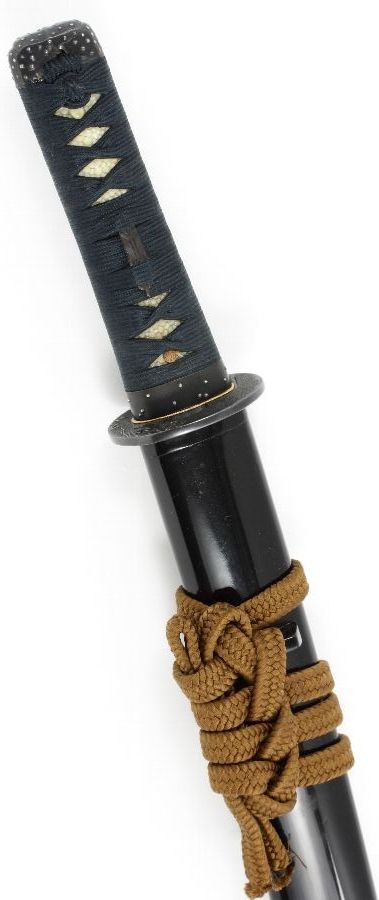
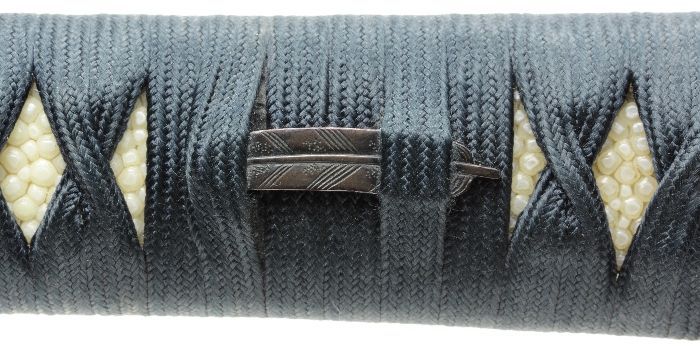
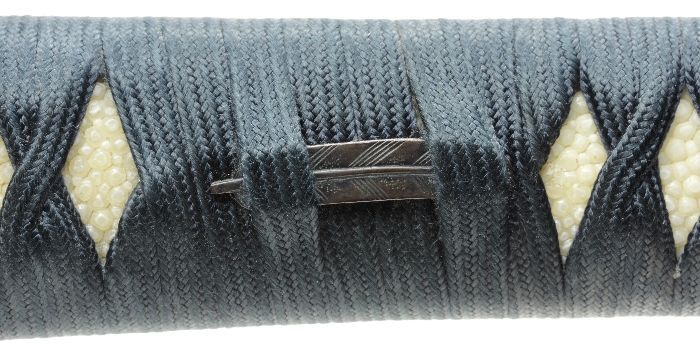
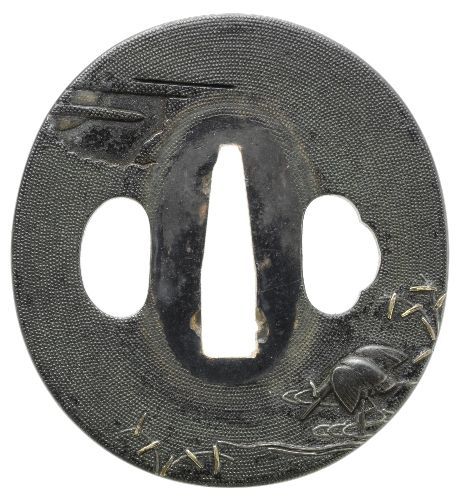
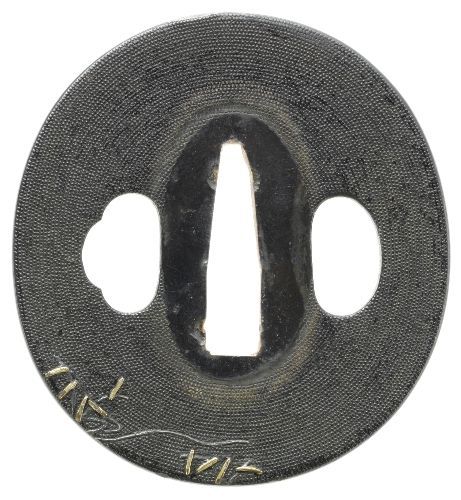
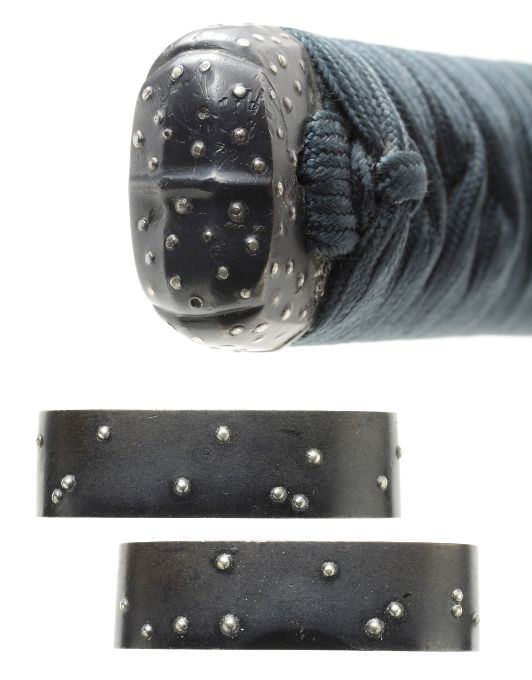
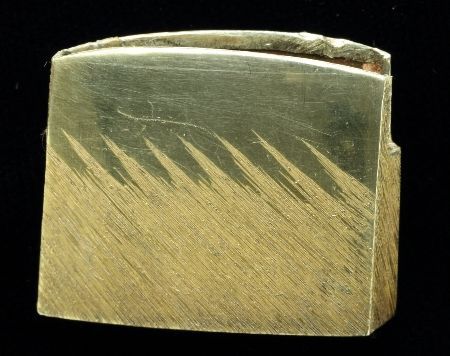
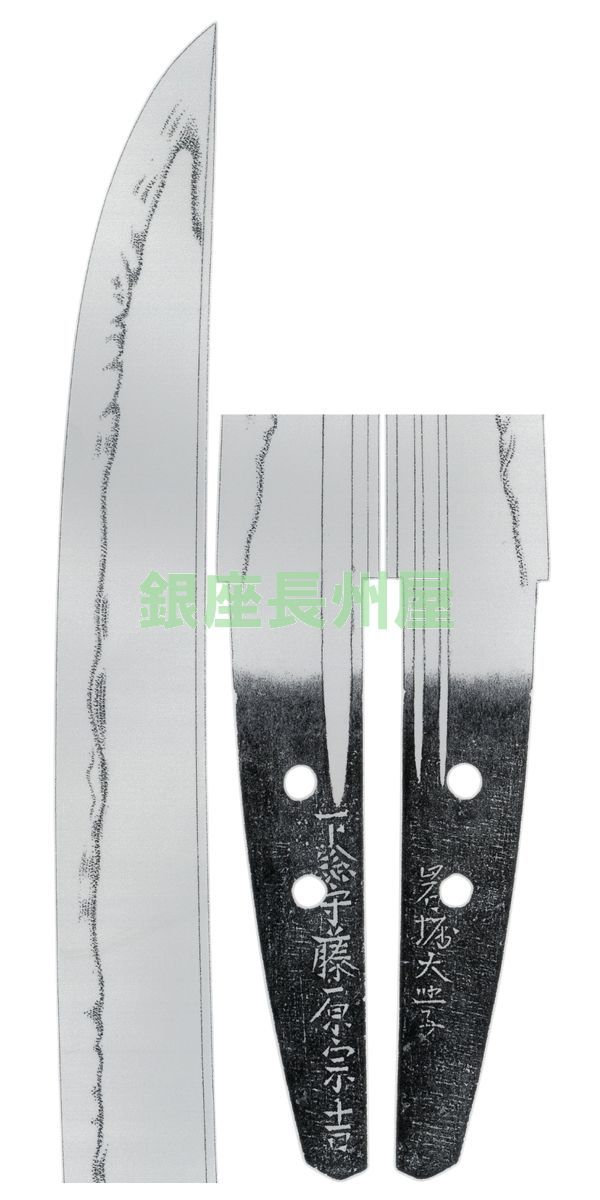
「岩堀大學(注)」の所持銘がある、慶長頃の越前国敦賀の刀工下総守宗吉の脇差。岩堀大學は江戸時代初期の出羽秋田藩士。惣山奉行梅津政景(後に家老)の配下で、檜山郡鶴形(能代市)で山方の業務を担当した。船や城の資材として重宝された秋田杉の回漕先は敦賀であり、また梅津が経営した院内銀山の開発者村山惣兵衛の出身も敦賀。北前船の寄港地という地理的な意味合いだけでなく、敦賀刀工宗吉と秋田の武士岩堀大學の浅からぬ交流が想像されよう。 表題の脇差は、重ね控えめに身幅広く、先反りが付いて腰樋と護摩箸が刻された、南北朝期の大平造脇差を想わせる慶長元和頃の典型的な体配。板目に杢、流れごころの肌を交えた地鉄は、厚く付いた地沸を分けるように地景が躍動し、地肌ザングリとして肌立つ。刃文は浅い湾れに小互の目を交え、帽子は強く沸付き、乱れ込んで、やや突き上げて小丸に長めに返る。焼刃は沸で明るく、刃境に湯走り、金線、ほつれが掛かり、良く沸付いた刃中には細かな沸筋が層をなして流れ、小足、葉が盛んに入るなど、複雑で奔放な、激しい出来となっている。 附されている黒漆塗鞘脇差拵は、鞘の下半に散らされた青貝が風に舞う桜花を想わせる洒落た意匠。鐔は叢雲から漏れる月光の下で獲物を探す白鷺図で、簡素ながら風情がある。 注...『大日本古記録 梅津政景日記』の元和三年十二月十一日条に、「靏形諸材木、小野崎左近・岩堀大學御算用あり」とある。岩堀家は三河額田郡岩堀村より興り、佐竹氏が常陸にあった頃からの家臣(『姓氏家系大辞典』)。
NihontoWatchOffered by Choshuya
This piece has sold
Get an email when a new Umetada Muneyoshi piece hits the market.







Shinto · Echizen · around 1596-1615
Fujishiro Chu-jo saku · Tōken Taikan top 60%
1 piece on the market now
Where Muneyoshi stands among comparable artisans: across all of nihontō, and within tradition, era, and period. The tiers (Foremost · Leading · Major · Notable) weigh official designations from the NBTHK and Japan's Agency for Cultural Affairs, together with historical honors of lasting repute such as the Sansaku and Meibutsu-chō.
Select a lens to see how it's measured.
Years he was demonstrably active, proven by signed-and-dated blades
Shinto · Kyoto
45 pieces on the market now
The Umetada school is one of the most distinguished metalworking lineages of the Momoyama period, rooted in Nishijin, Kyoto, and claiming descent from the legendary Sanjo Munechika. The house served the Ashikaga shogunal family over successive generations, establishing deep foundations in the full range of sword-related arts -- swordmaking, blade carving (toshin-bori), the production of steel and fittings, the shortening of blades, the insertion of inlaid signature attributions (zogan-mei), and the making of mountings. " Myoju taught both Hizen Tadayoshi and Higo no Kami Teruhiro, and accepted commissions from the Toyotomi and Tokugawa houses as well as many daimyo families. An earlier stratum of production, appraised as Ko-Umetada, dates from the close of the Muromachi period and demonstrates that the group's technical foundations were firmly established before Myoju's maturity. The near-contemporary Mitsutada, though absent from formal genealogies, is conjectured to have been of senior standing within the circle; his works, executed on brass with an archaic dekoboko-ji ground, display "an even more classically archaic elegance" than Myoju's. Shigeyoshi, active from the Kan'ei through Genroku eras, carried the tradition forward into the mid-Edo period. The Umetada school's collective technical identity divides into two principal modes: iron works and soft-metal (irogane) works. In the iron mode, Myoju expressed geometric patterns -- sayagata, raimon, kasumi-kaminari-mon, and rinzu-mon -- by means of gold nunome-zogan, complemented by celebrated openwork including wheel and double-tomoe sukashi tsuba.
The nejikaeshi-mimi (twisted turned-back rim) and gold rim inlay are techniques "at which he particularly excelled," while the iron itself is invariably "carefully selected" and displays excellent quality. In the irogane mode -- employing shakudo, suaka, brass, and other alloys as ground material -- the school developed a distinctive form of hira-zogan (flat inlay) that retains only slight relief, deploying colored metals in novel combinations. " Ground textures including hammered tsuchime-ji, polished migaki-ji, and file-finished surfaces are deployed with meticulous care to heighten the pictorial effect. Mitsutada's work on brass with its uneven, raised-and-recessed ground and enrichment through gold and silver nunome-zogan represents a more archaic variant of this aesthetic. Shigeyoshi synthesized the inherited hira-zogan tradition with textile-derived designs of linked shippo, karakusa arabesque, and sayagata patterns -- reflecting his Nishijin milieu, the heart of Kyoto's silk-weaving district -- while deploying suemon-zogan, sukidashi-bori, and kin-iroe across shakudo grounds in both polished and stone-textured finishes. The Umetada school's historical significance is singular: the pictorial manner of design, the hira-zogan technique, and the use of non-iron metals as the ground material "all find their earliest beginning with Myoju" -- he stands as the originator of an entire aesthetic vocabulary in kinko. The NBTHK consistently describes Myoju's work as possessing "the vitality that preserves the very momentum of brushwork," with a "strong connection with Hon'ami Koetsu and Tawaraya Sotatsu" that places him among the foremost artistic figures of the Momoyama age. " Solid-gold tsuba, frequently melted down during periods of upheaval, are recognized as extremely rare survivals of exceptional documentary and artistic value. Learn more →
| Smith | Era | Designated |
|---|---|---|
| Myoju明寿 | 1590-1631 | 45 |
| Muneyoshi宗吉 | 1596-1615 | 4 |
| Naritsugu就次 | — | 0 |
| Umetada Mitsushige光重 | 1700-1750 | 0 |
| Kaji’emon加治右衛門 | — | 0 |
Kyōto: the revival workshop
The Shintō era was largely invented in Kyōto: Umetada Myōju’s workshop trained the movement, Horikawa Kunihiro raised a generation, and the Hon’ami appraisers, who held no forge, governed the meaning of famous blades.
Certifies a genuine blade worth preserving: a signature confirmed correct, or, if unsigned, an era, province, and school that the NBTHK can reliably identify.
The NBTHK (Nihon Bijutsu Tōken Hozon Kyōkai, the Society for the Preservation of Japanese Art Swords) is a public-interest incorporated foundation founded in 1948 and supervised by Japan’s Agency for Cultural Affairs (Bunkachō); it is based at the Japanese Sword Museum in Tokyo. Its expert panels physically examine each submitted work (shinsa) and issue a certificate (kanteishō) ranking it by artistic and historical merit. NBTHK papers are the most widely recognized standard of authentication for Japanese swords and fittings.
NBTHK official siteIf, due to our fault, the item differs significantly from its proper condition, the item may be returned. Cooling-off is within one week of the item's arrival.