Edo was the sword’s age of connoisseurship: the Hon’ami appraisers, the shogunal register of famous blades of 1719, and a thriving literature turned the sword into an object of study even as it ceased to be drawn in war.
 NihontoWatchNihontoWatch
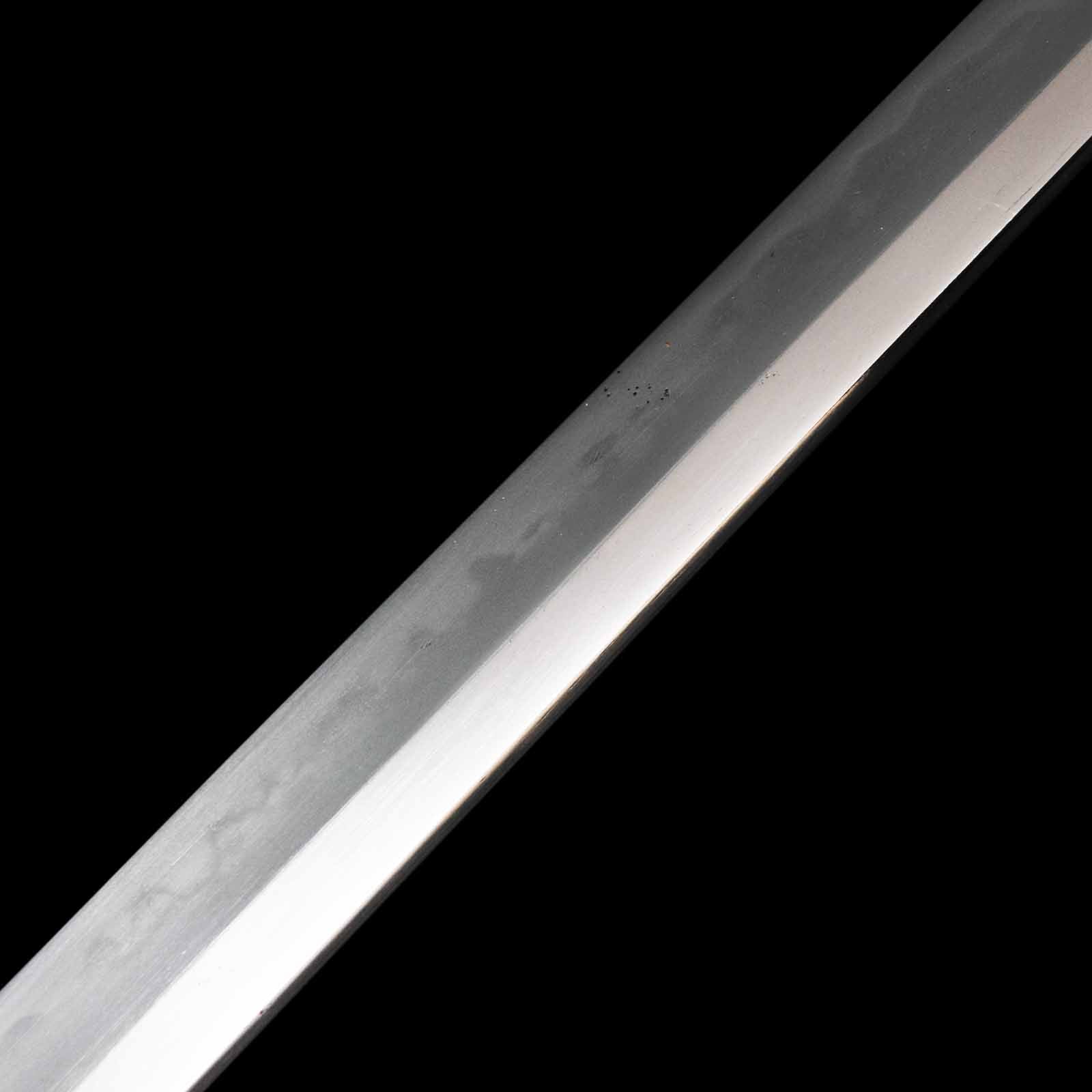
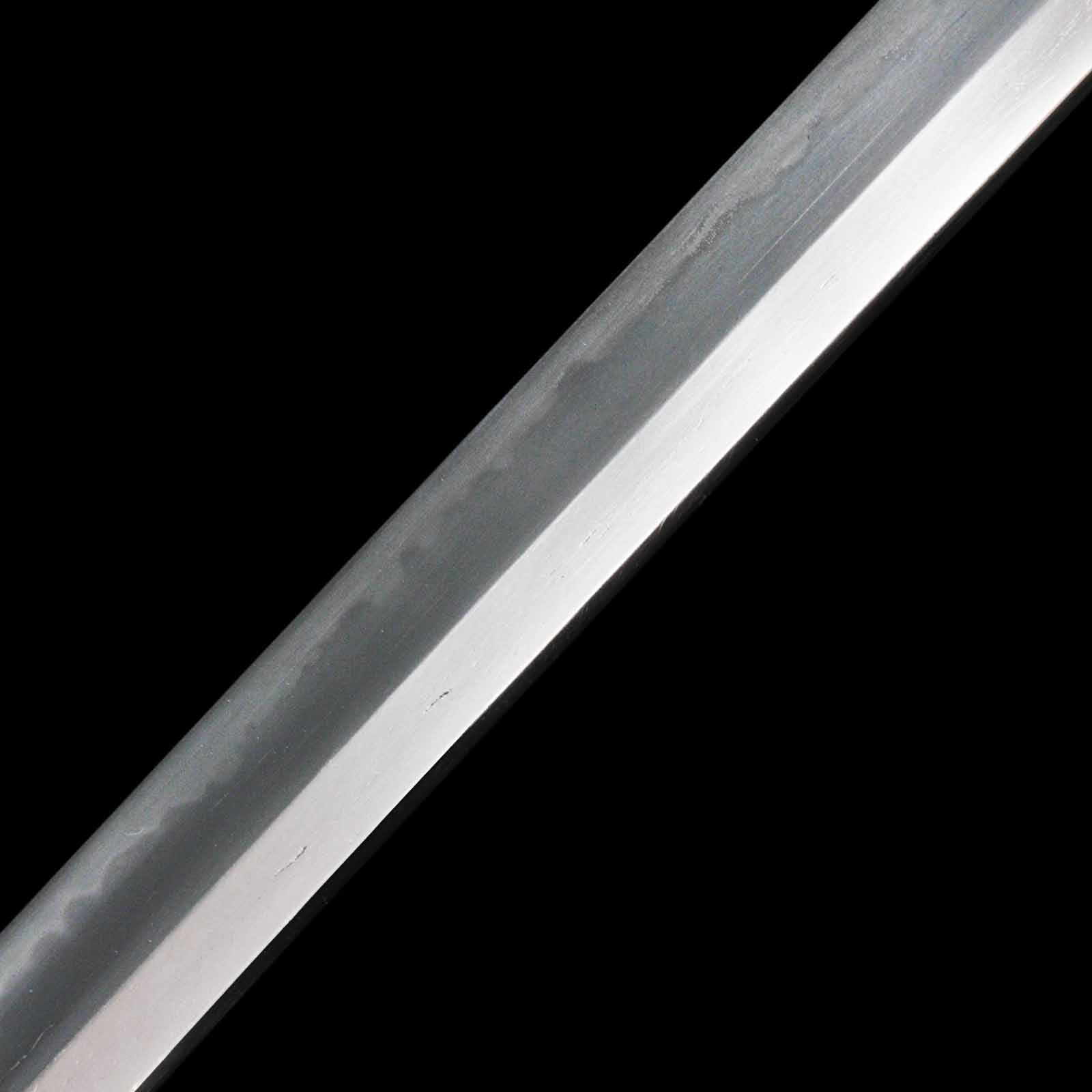
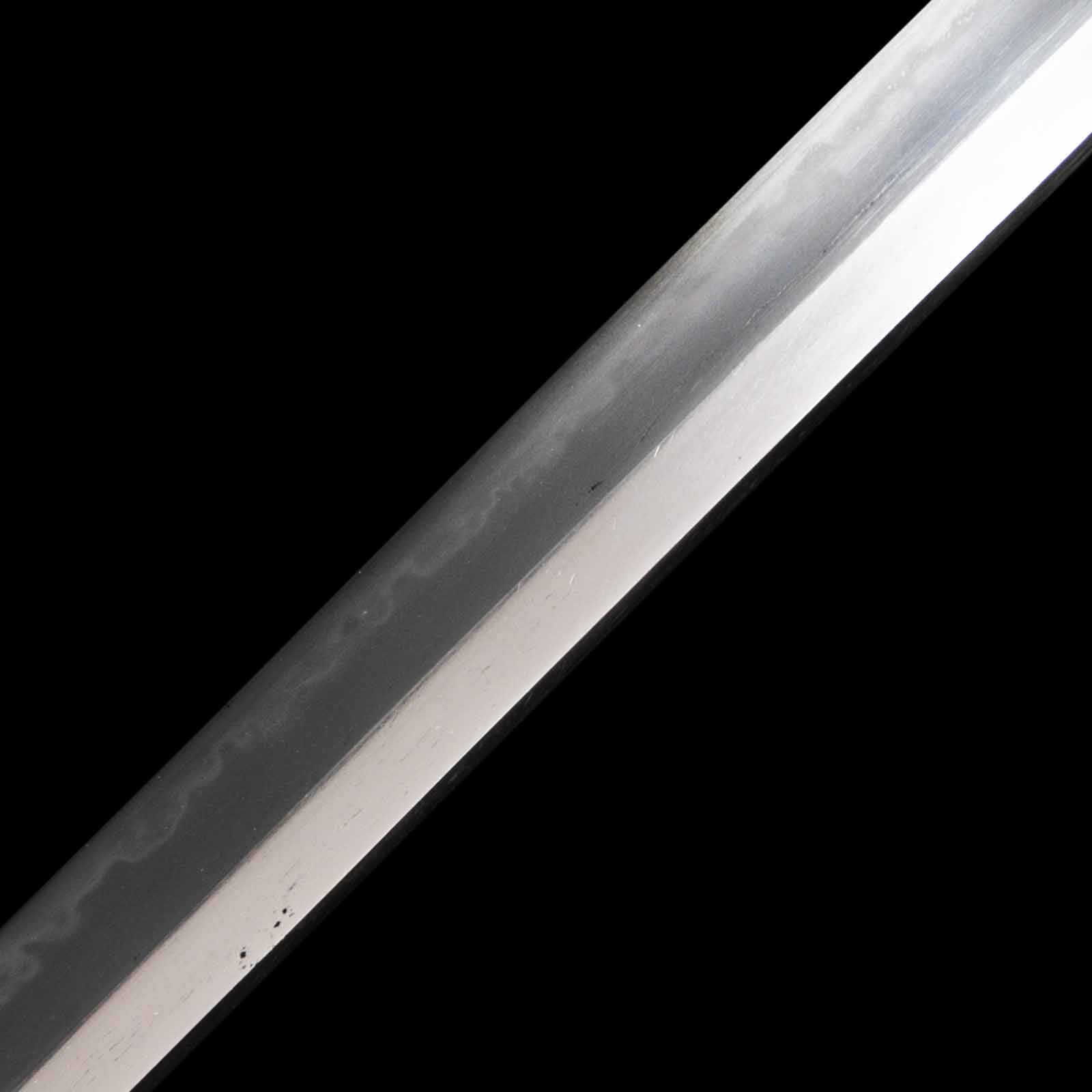
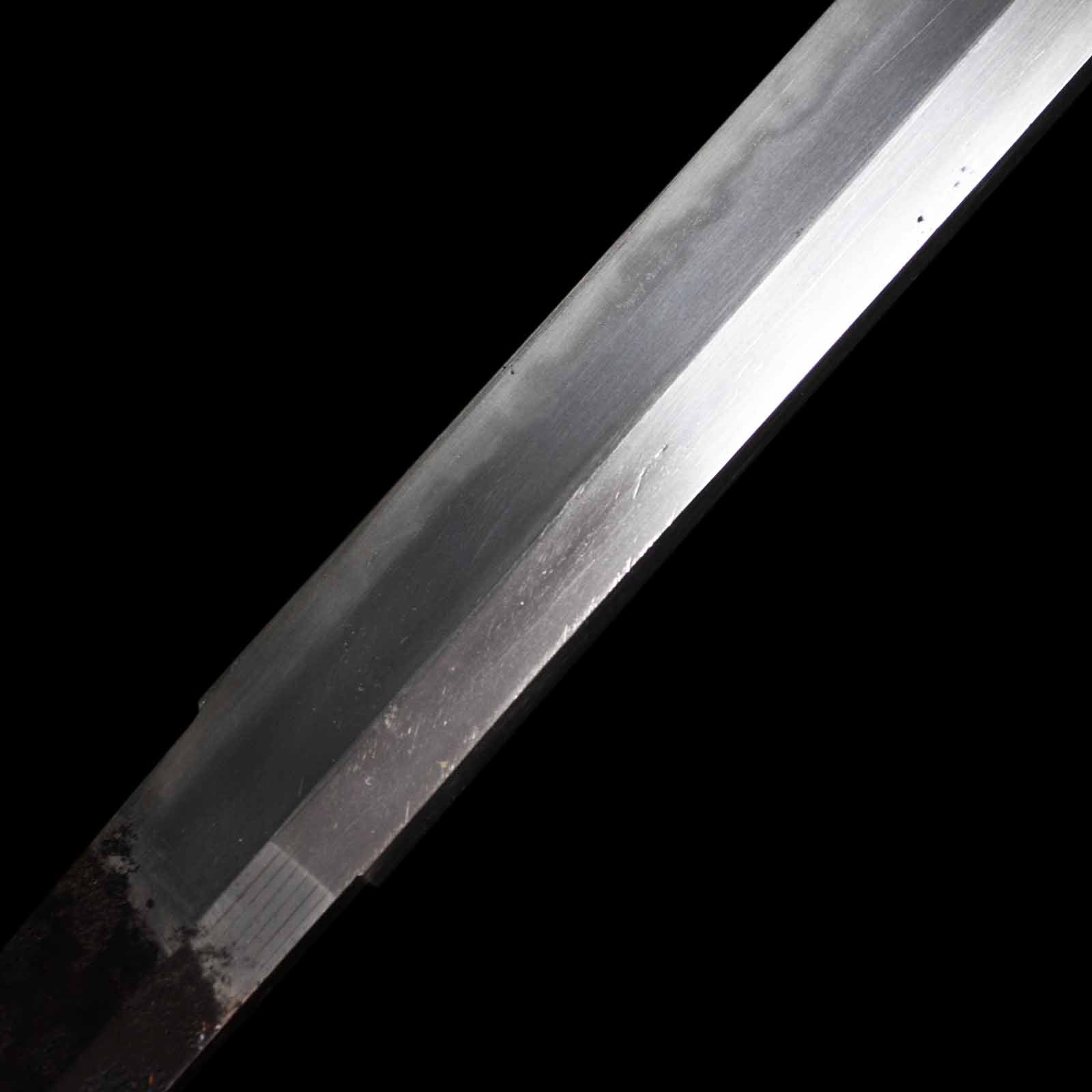
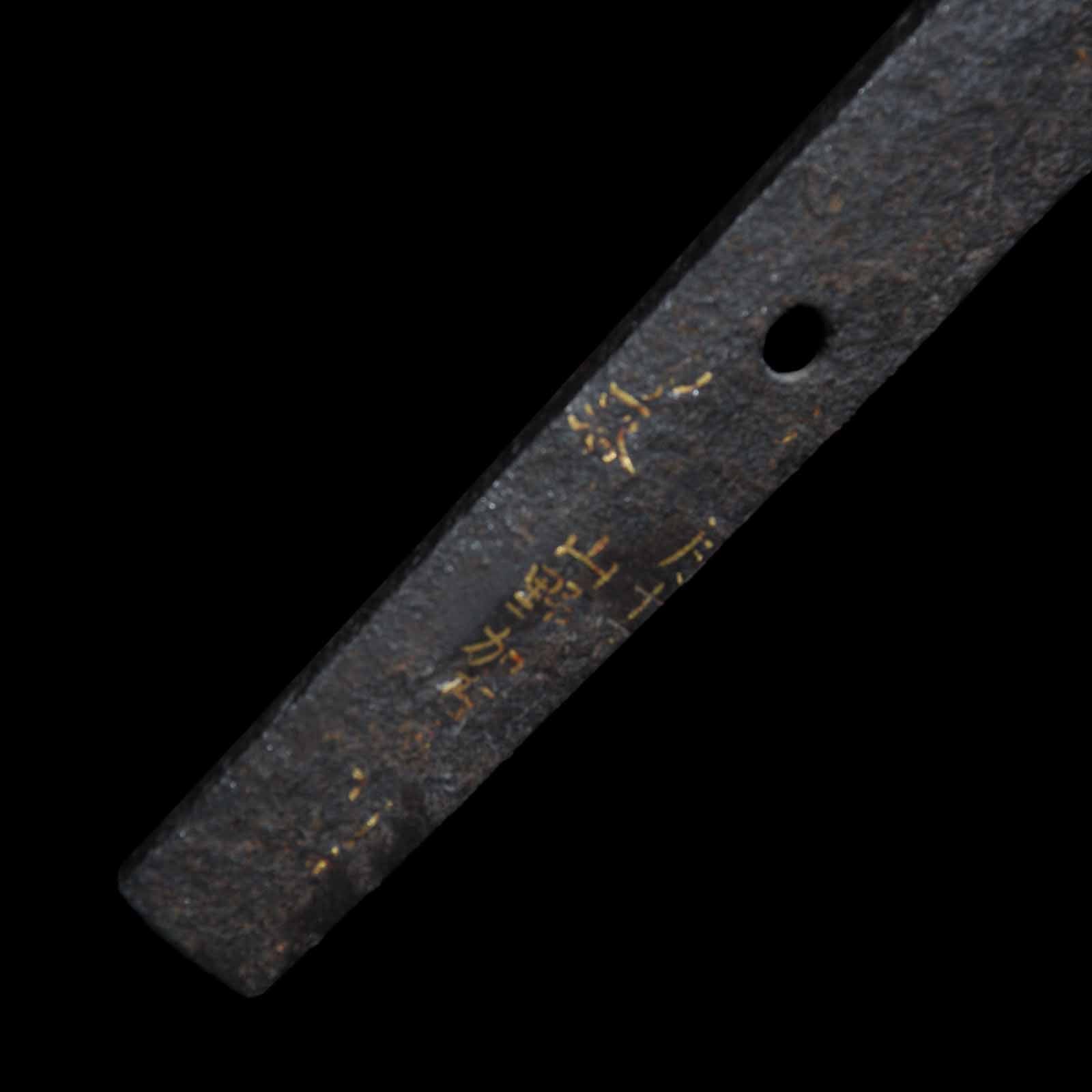
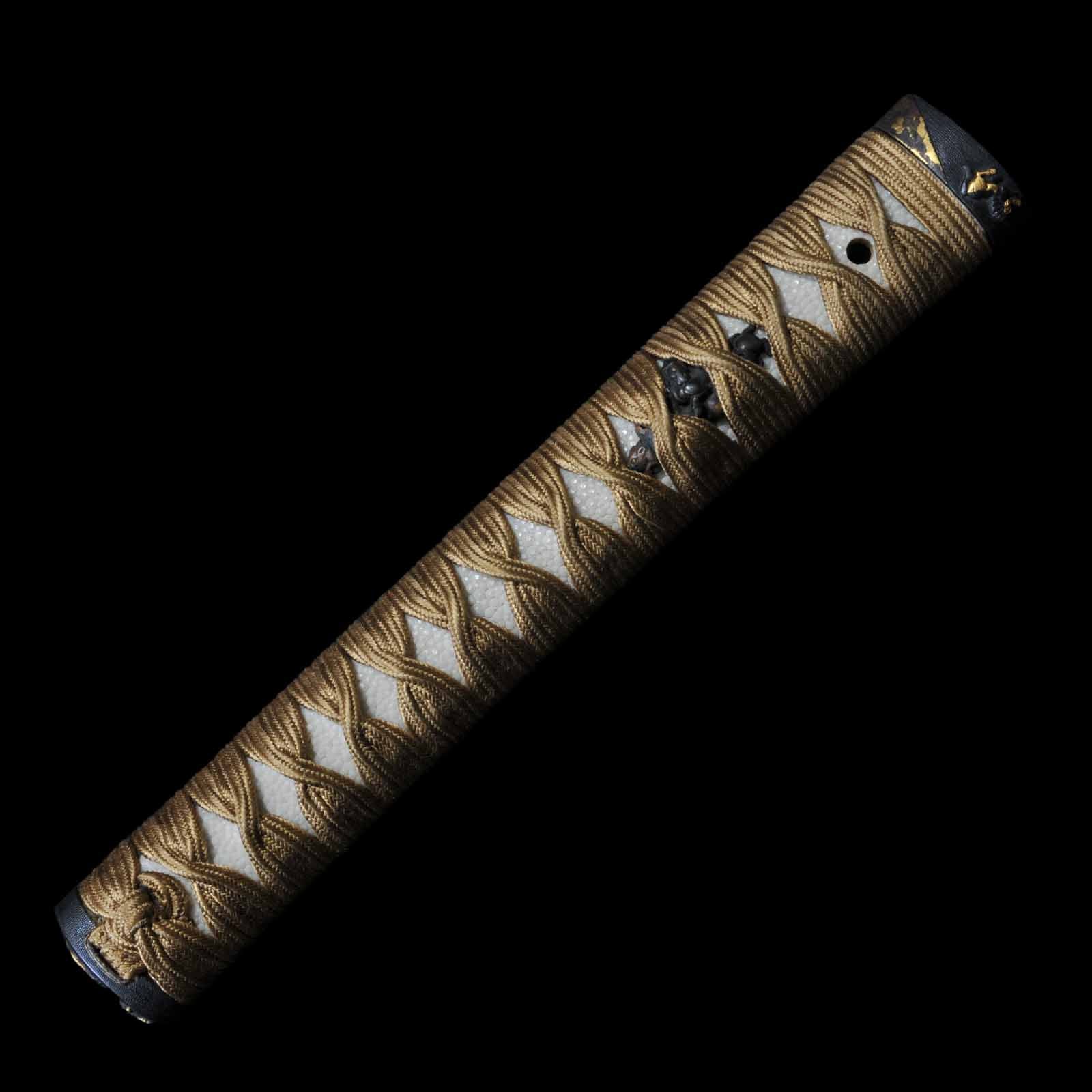
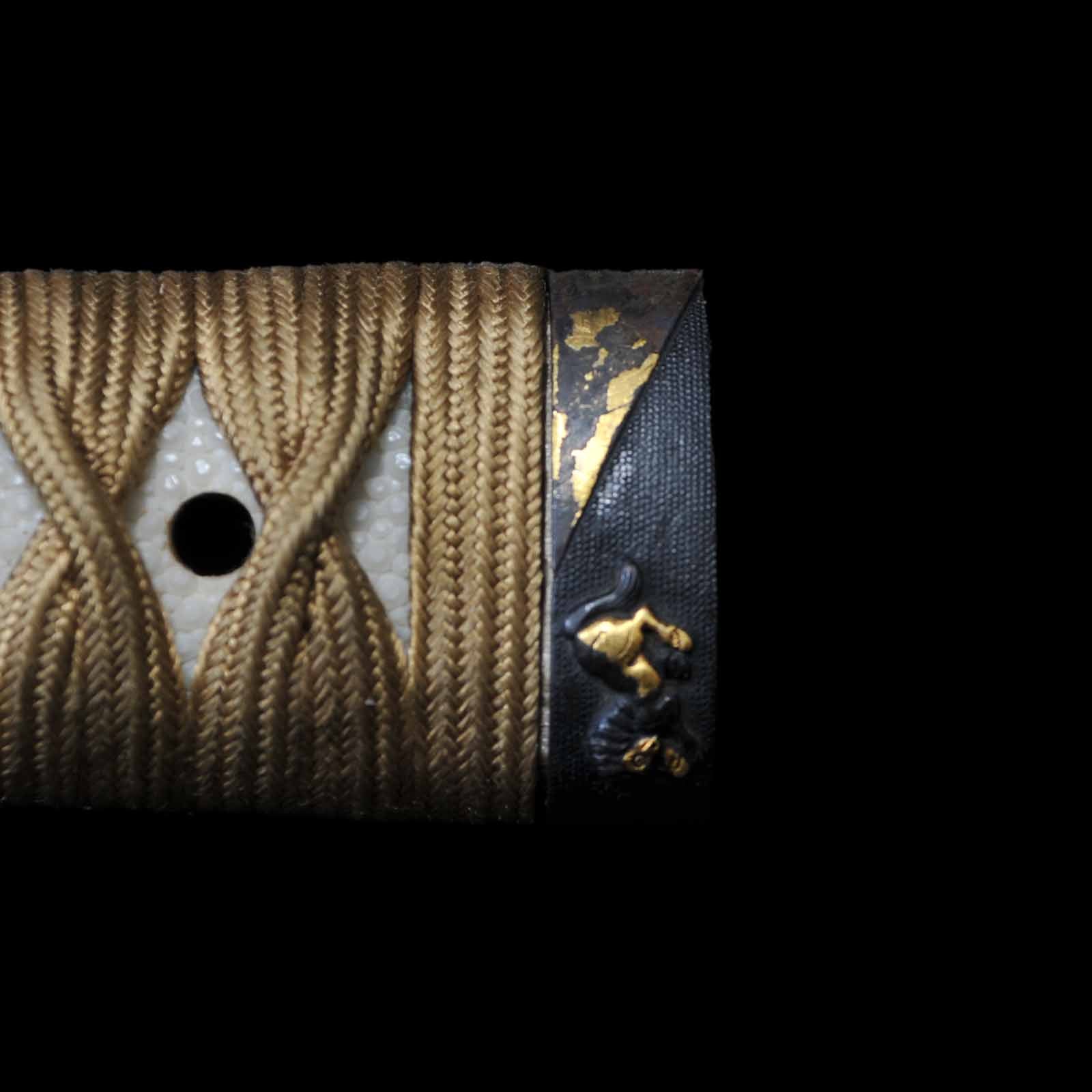
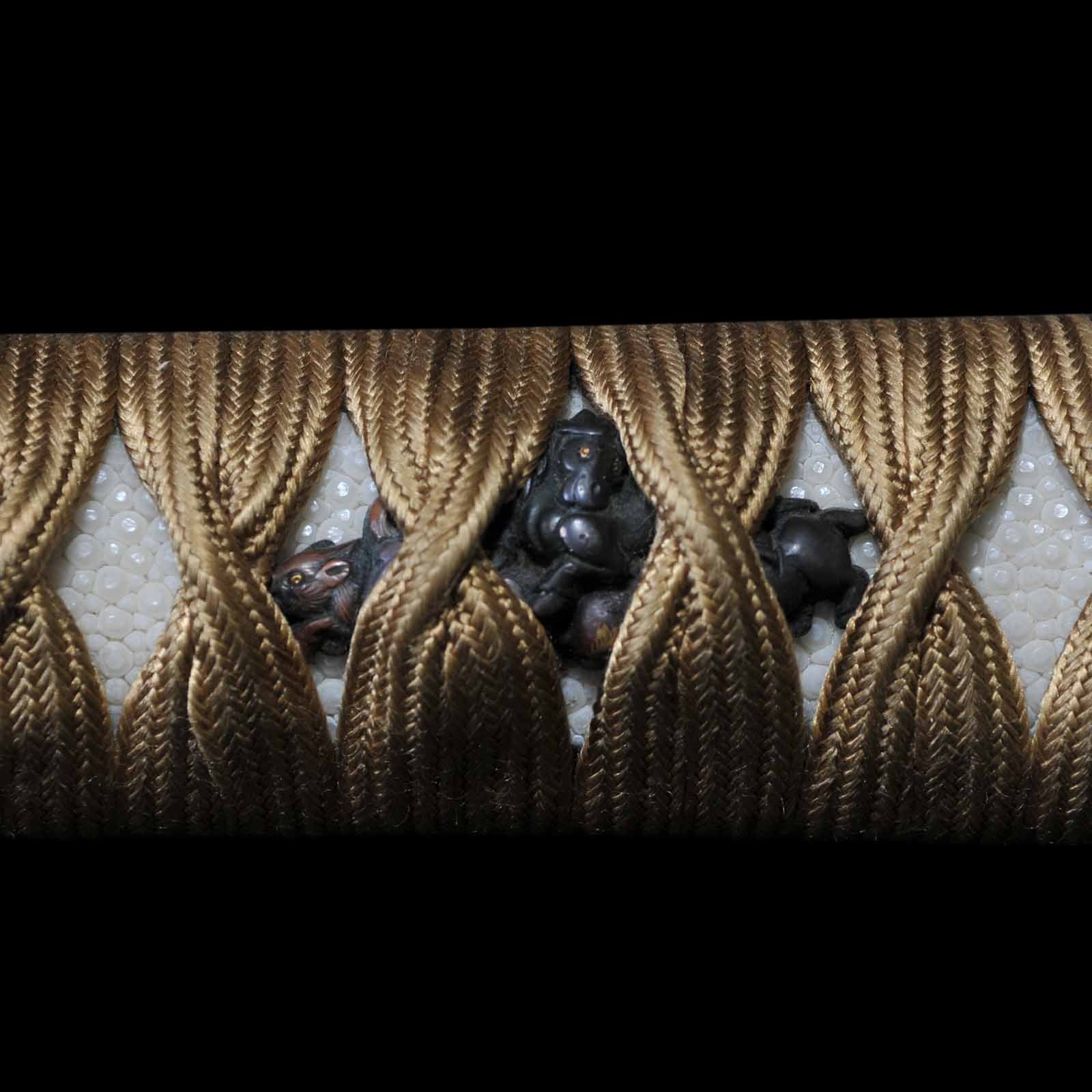
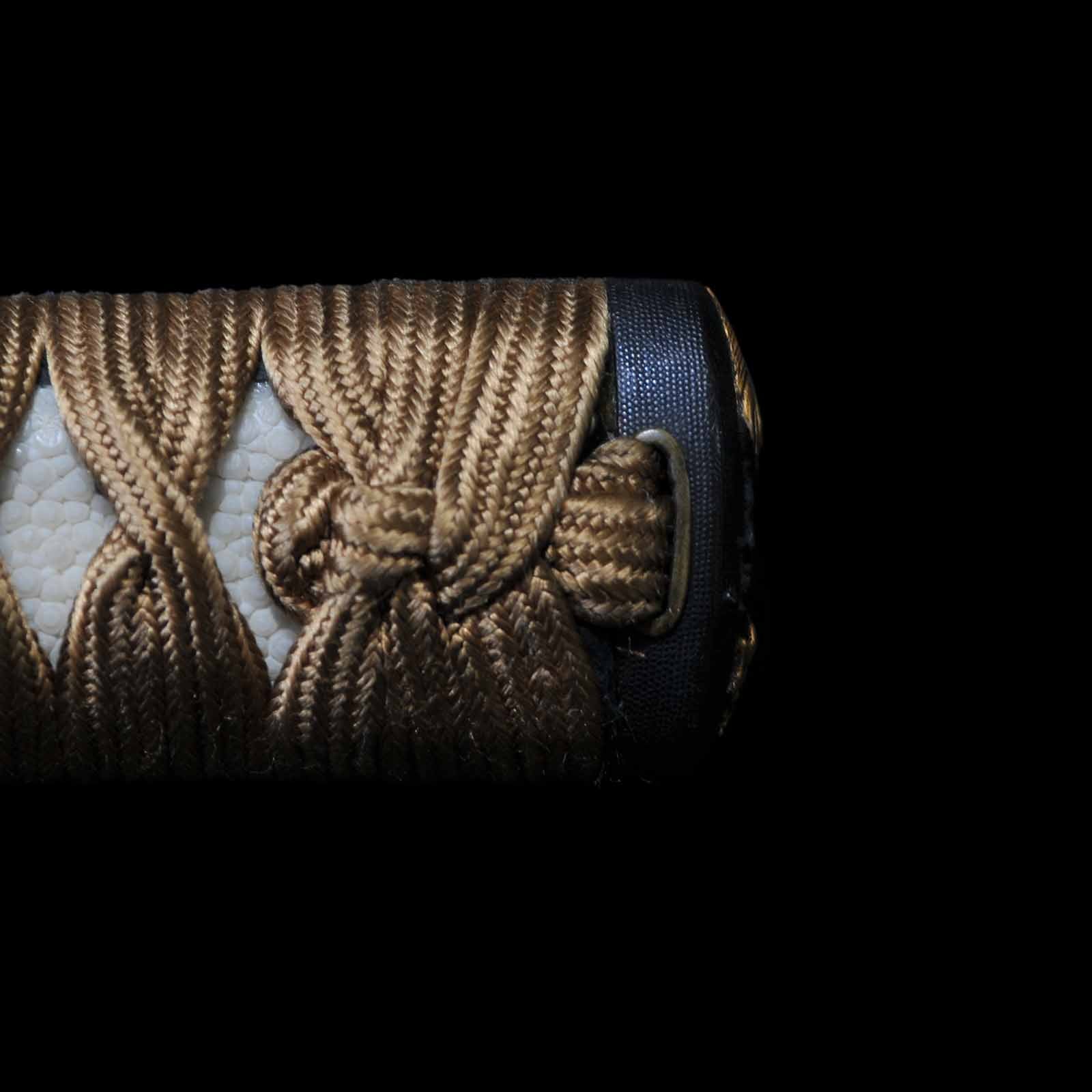
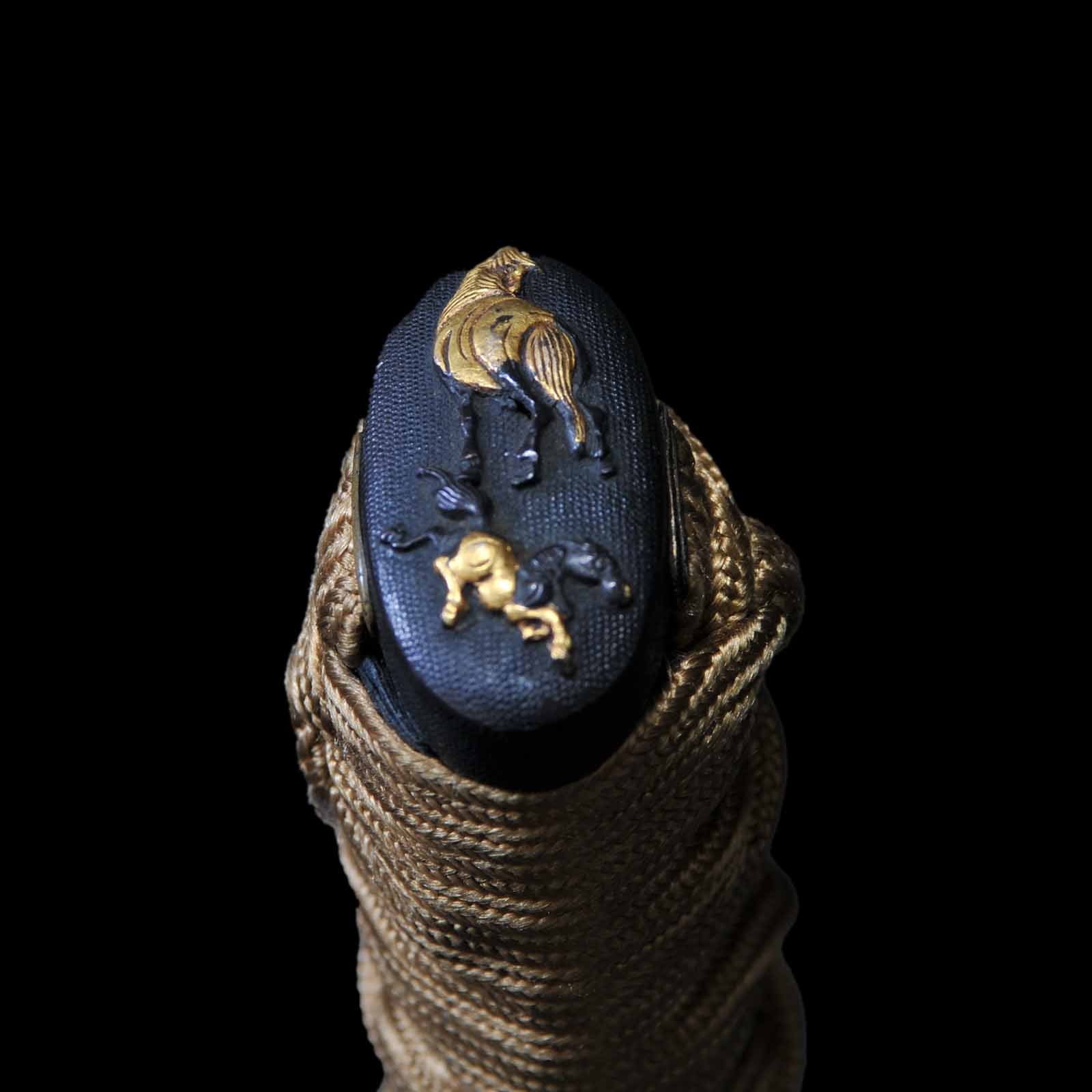
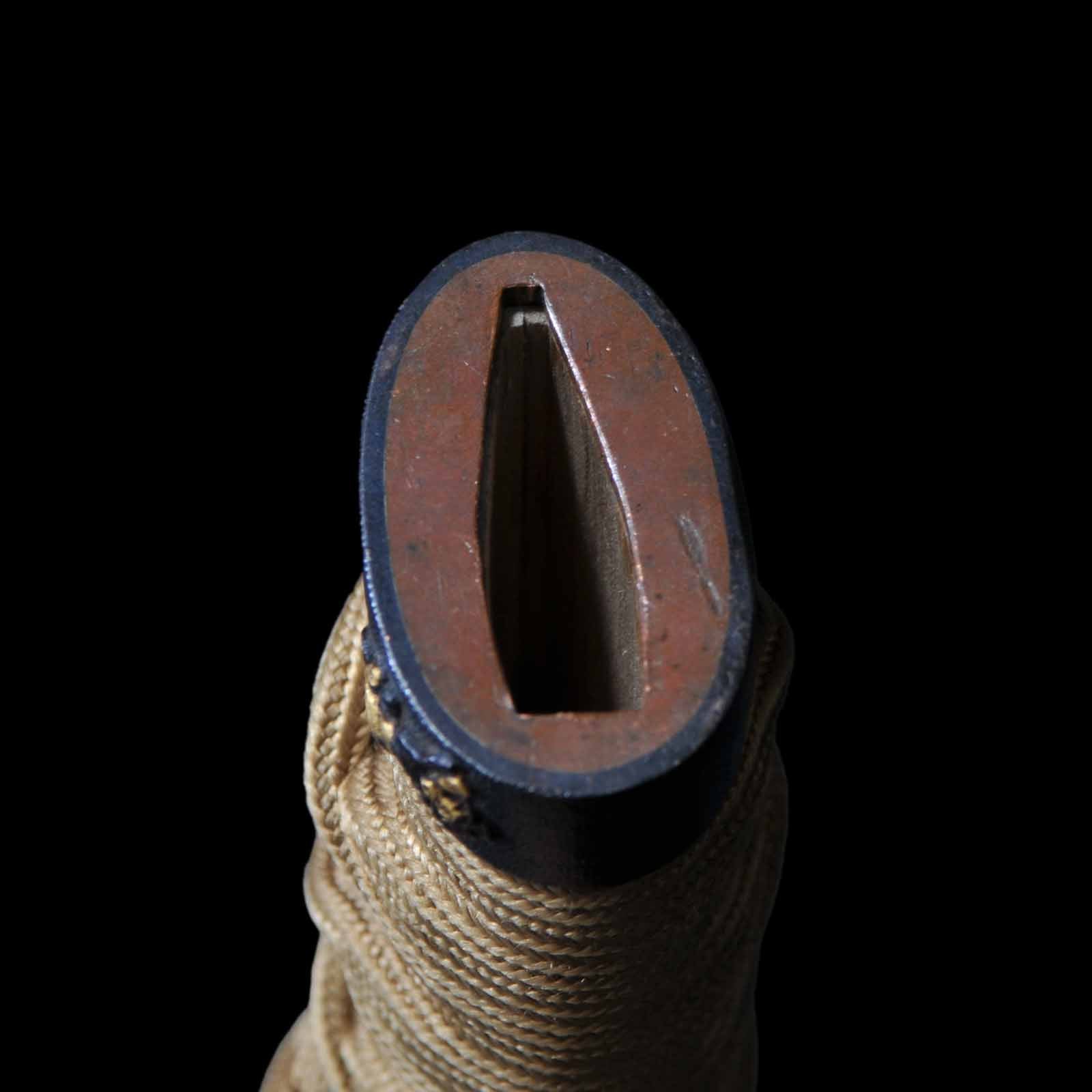
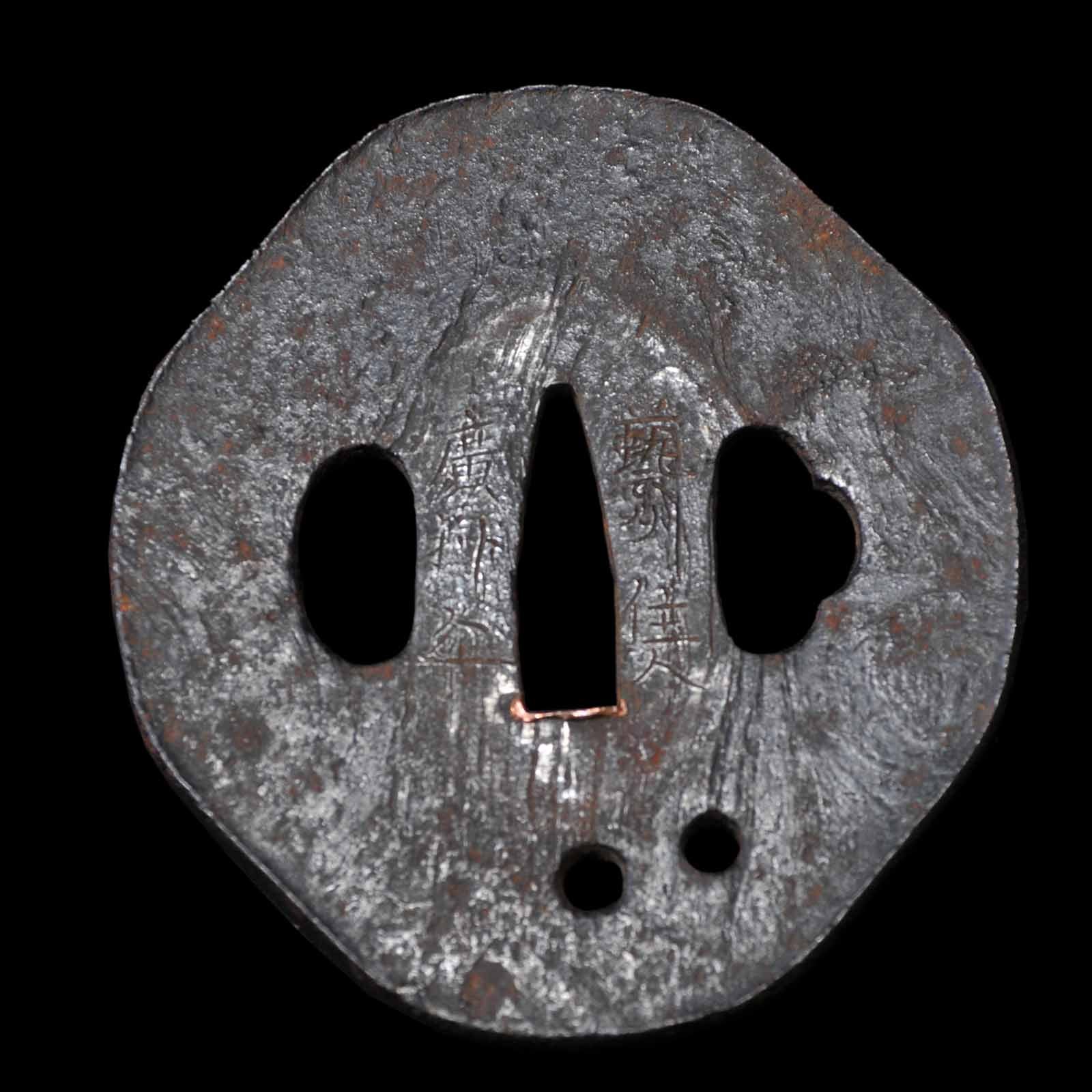
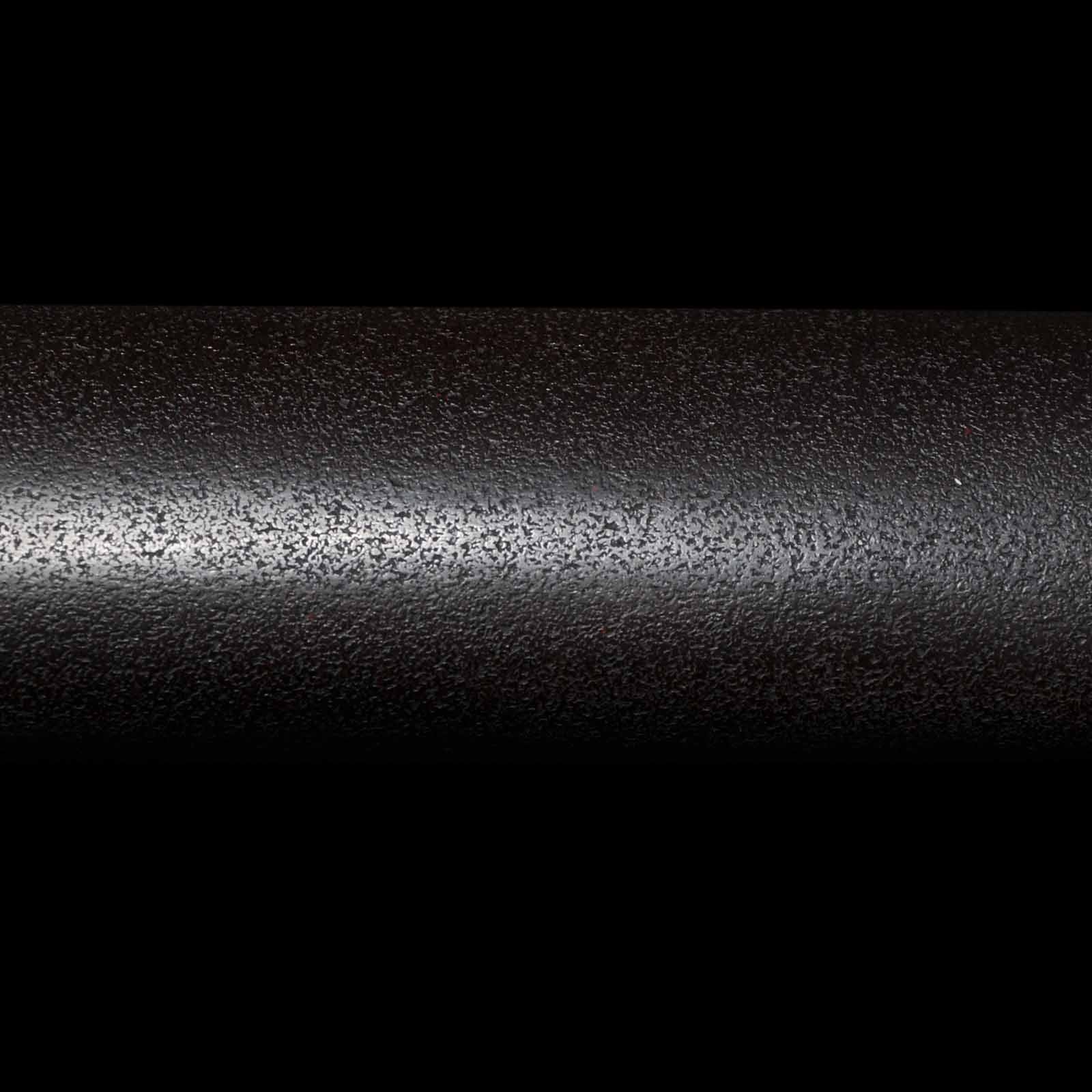
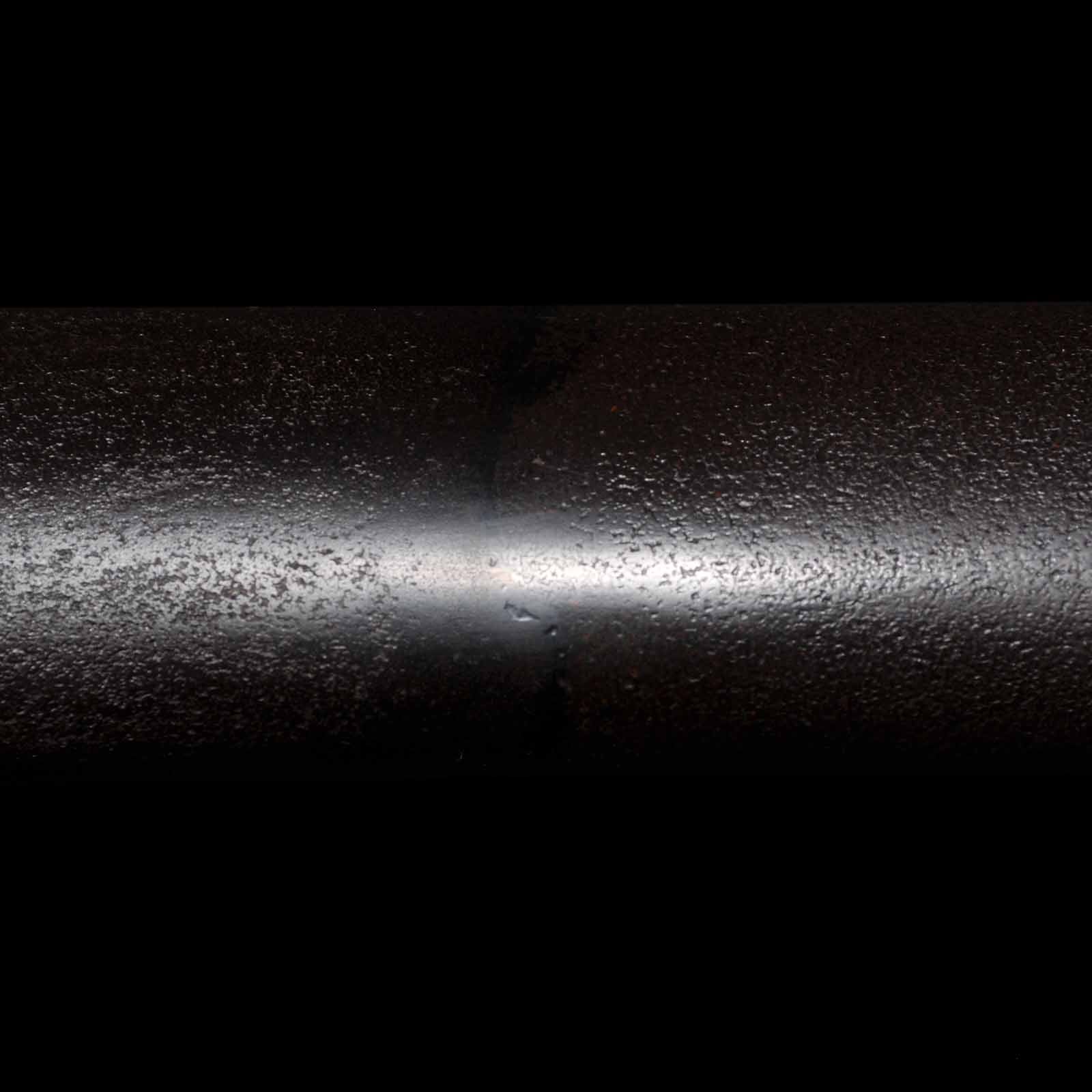
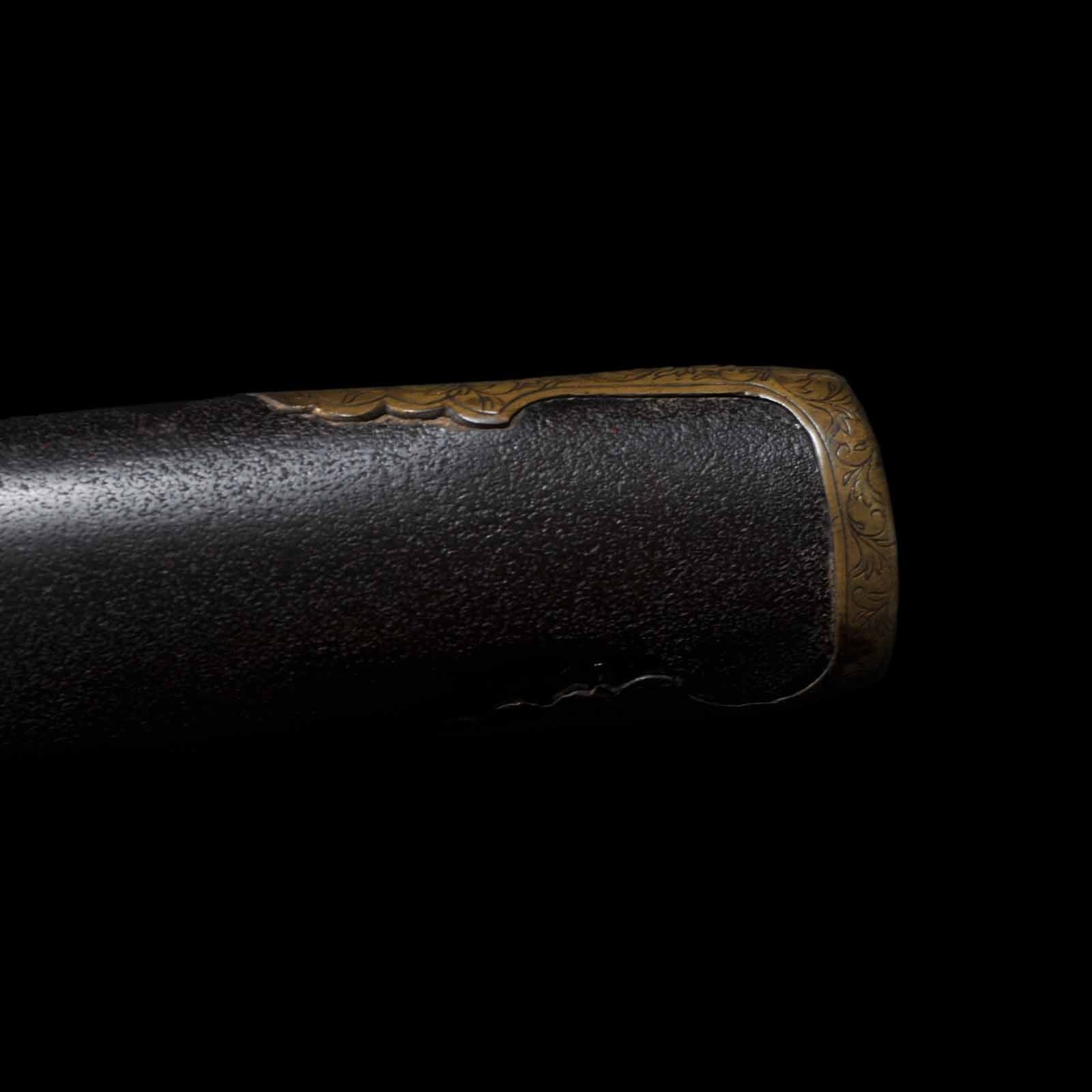
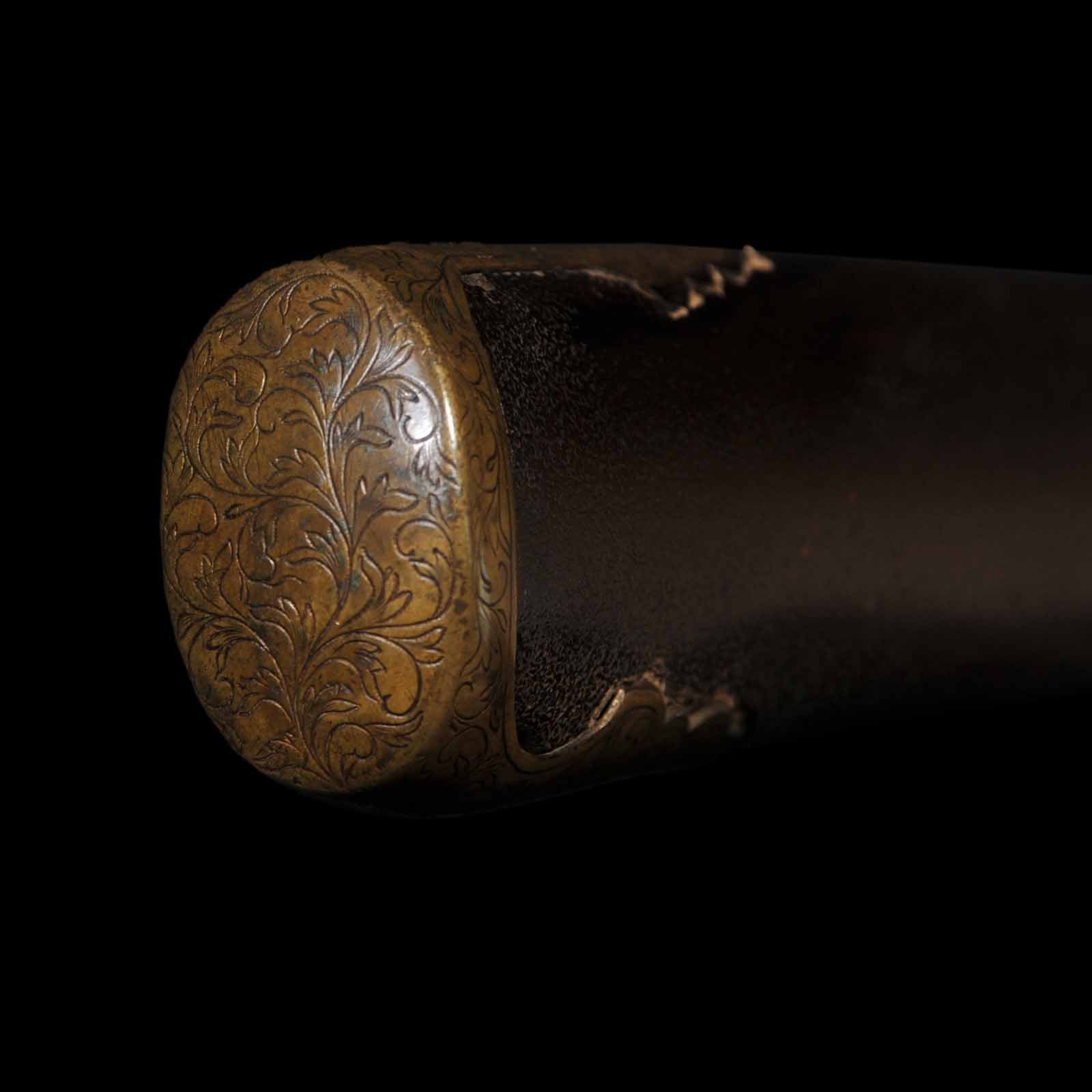
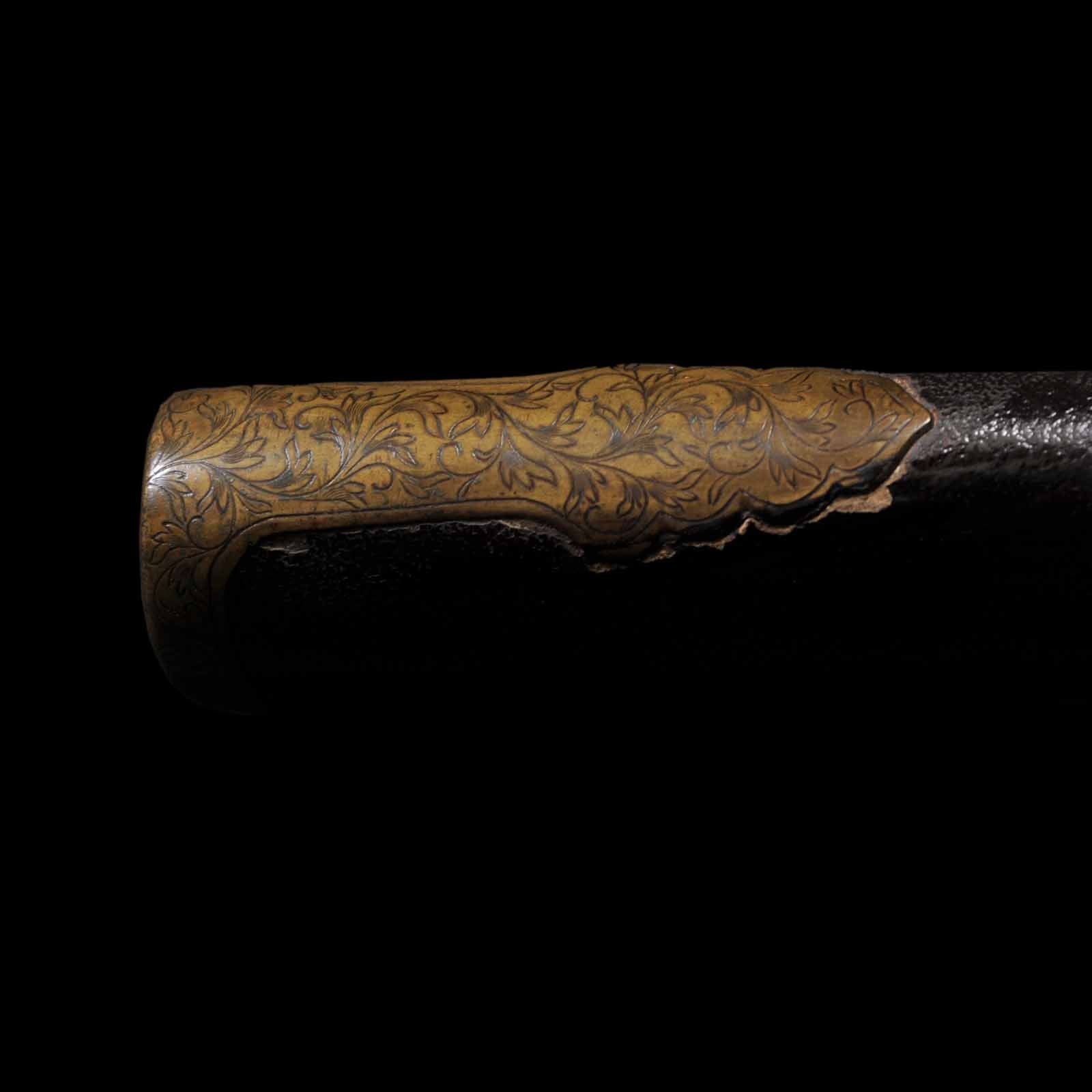
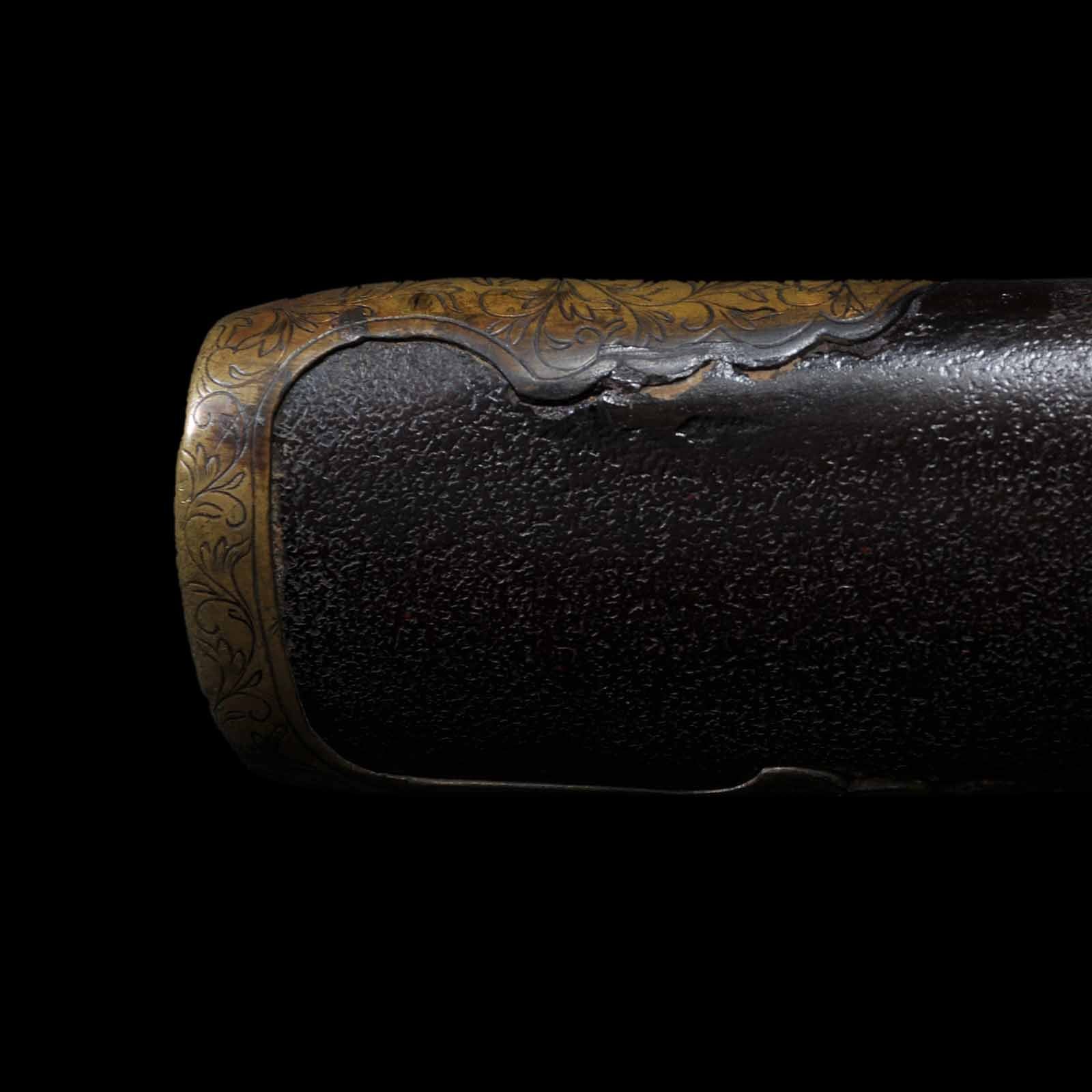
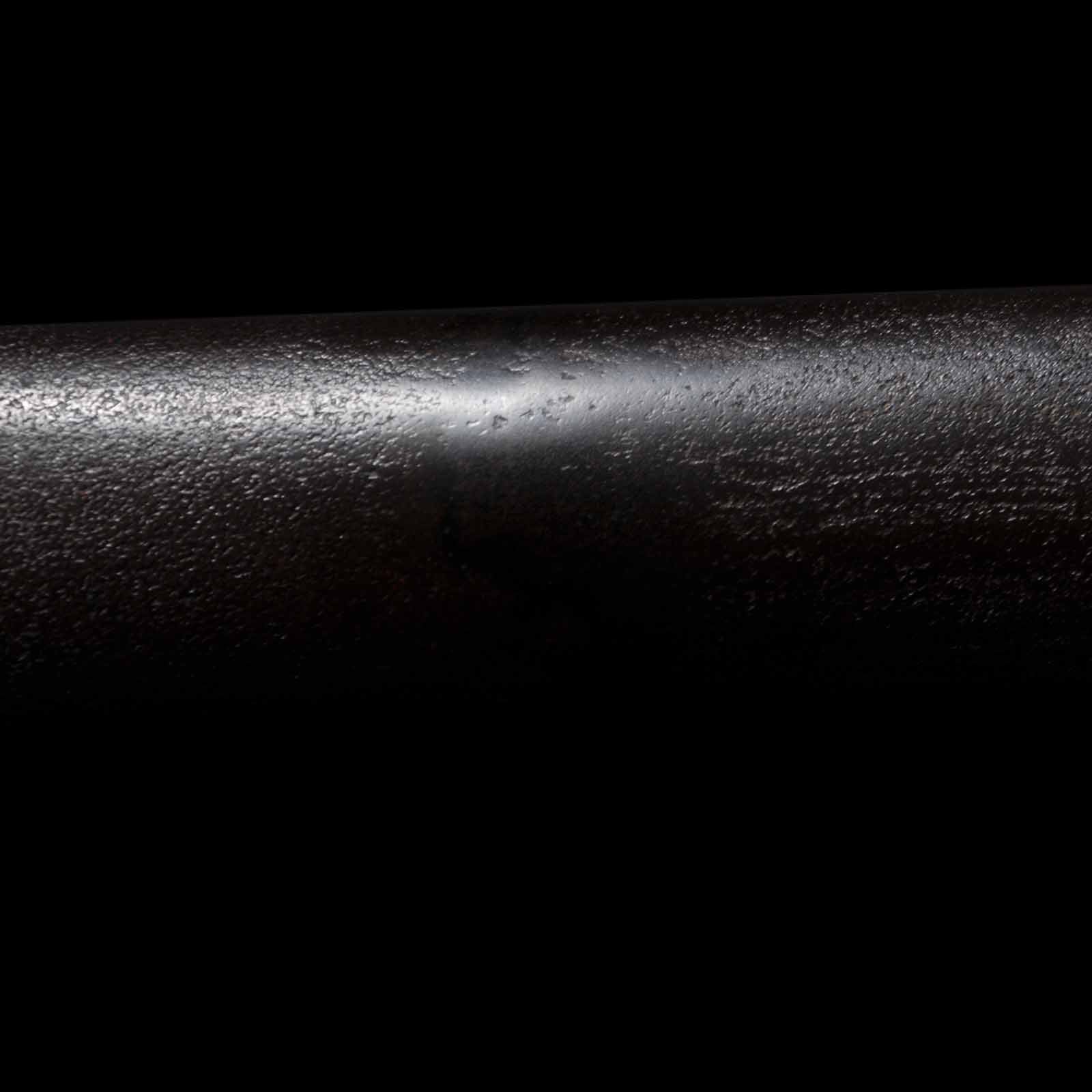
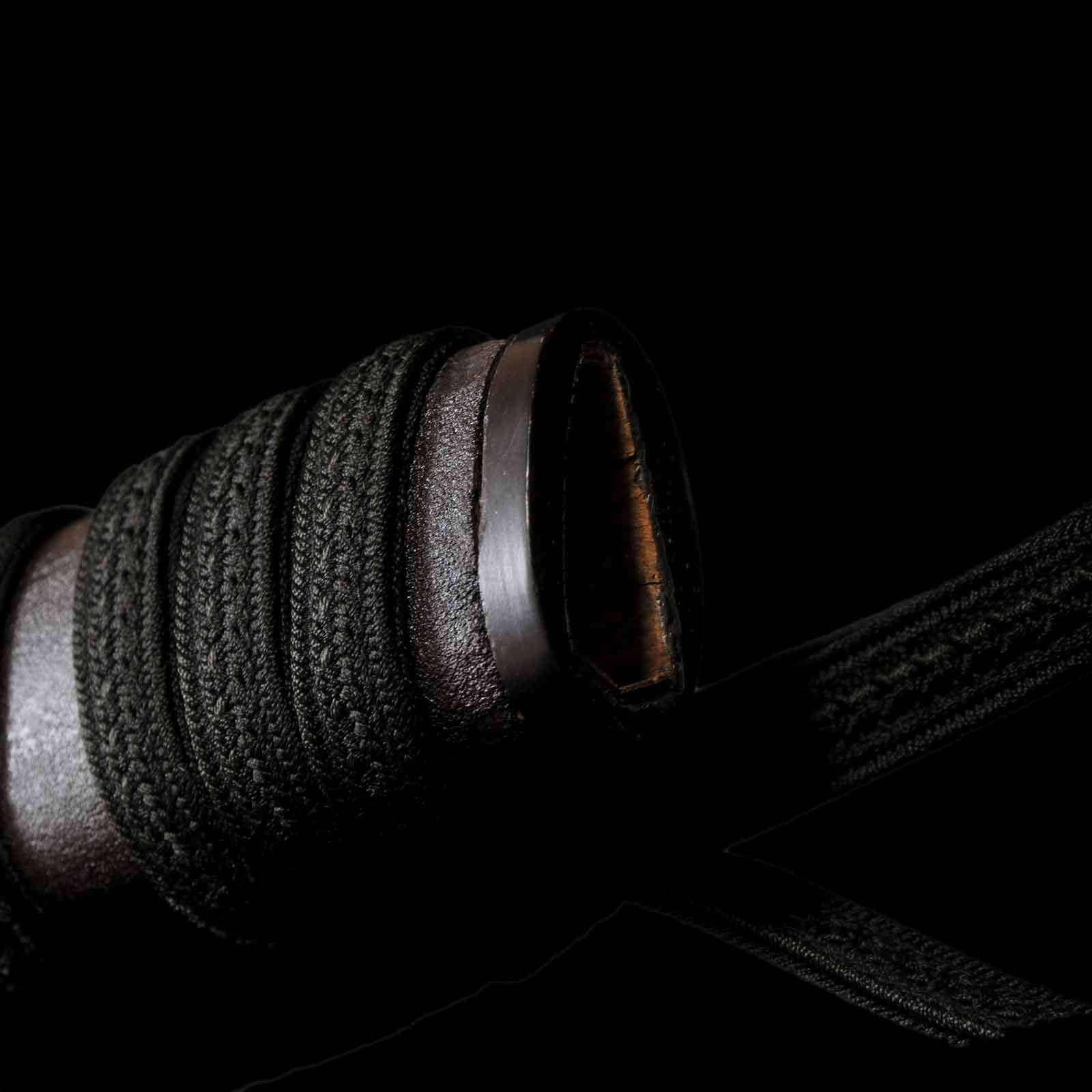
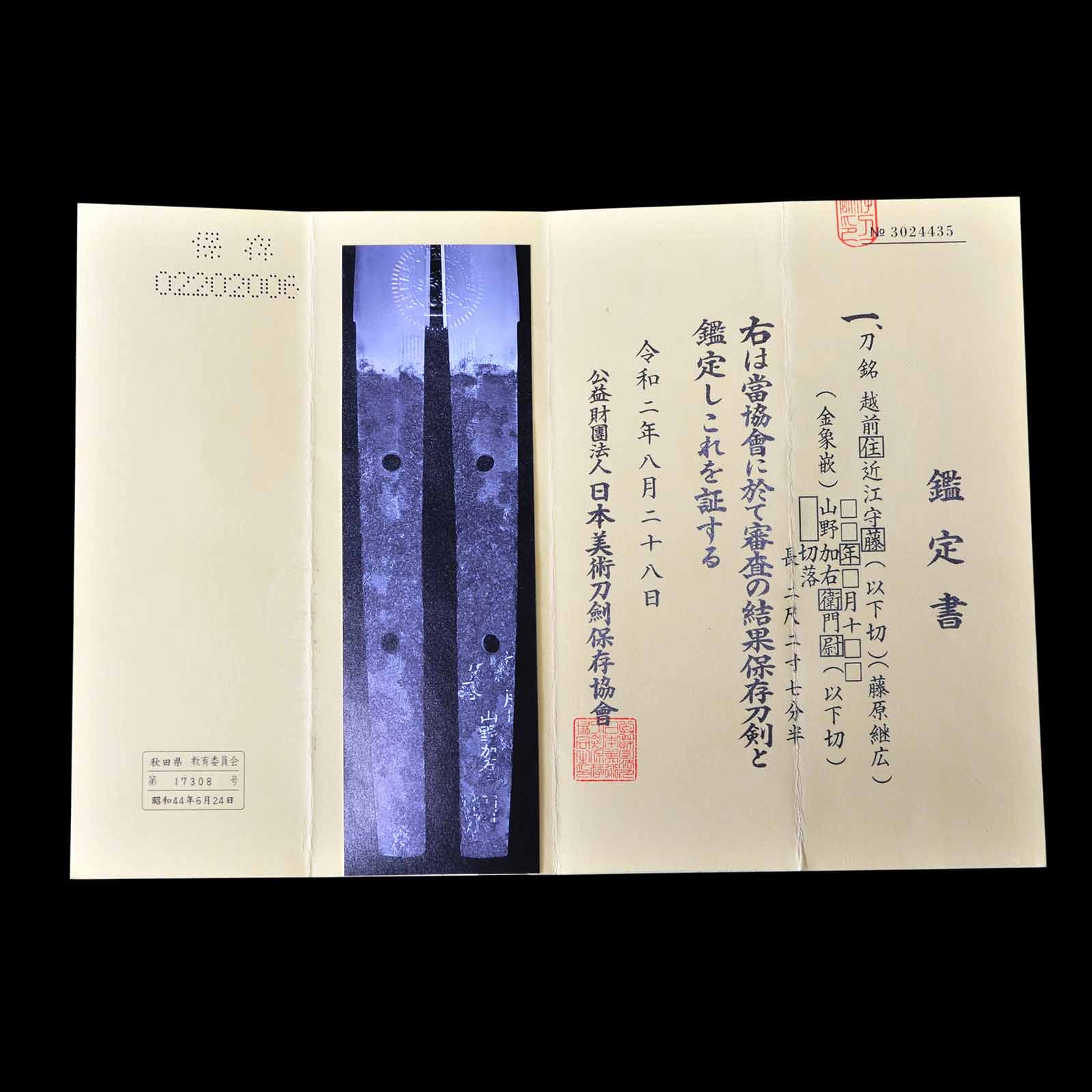
This katana with a shallow curvature is the work of Tsuguhiro, and the reverse side of the nakago also bears the inscription of Yamano Kaemon, a well-known test cutter. The Society for Preservation of Japanese Art Swords has recognized the authenticity of this katana and issued a certificate of authenticity. Tsuguhiro was a leading swordsmith in the Echizen region (present-day Fukui Prefecture) during the Shinto period and was a pupil of the third Yasutsugu. He was first in Echizen, then moved to Zeze in Omi (present-day Shiga Prefecture), and finally to Edo (present-day Tokyo). Echizen shinto katanas were used by samurai as very practical swords with excellent cutting ability, and were very popular during the Edo period when the Tokugawa family ruled. This katana bears evidence of having been measured for sharpness and strength by Yamano Kaemon Nagahisa, and his name is engraved on the Nakago. Yamano was the founder of the Yamano school of test swordsmanship, which was active from the Kan'ei to Kan'bun periods. Originally, the sword was inscribed with gold inlays, but some of the inlays have peeled off due to age. Also, the name of Tsuguhiro has been cut off in the middle of the blade due to the shortened length of the sword. This sword blade is itame hada with jinie. The hamon is a gnome in konye style, with a high and low gnome. In addition, within the ha, you can also enjoy seeing hataraki such as chojiashi and sunagashi. And the boshi are returned to nakamaru in midare style. The condition of the sword is relatively good, but there are some flaws in places. There are a few small spots of rust about 10 cm from the munemachi on the sashiomote side. There are also some small dots of rust about 18 cm from the cutting edge. There is a small dent about 18 cm from the hamachi on the sashiura side. And there is a forging flaw at a point about 20 cm away. The koshirae is made of metal fittings of the period, but only the menuki on the sashiomote seems to have been repla
NihontoWatchOffered by Tozando
This piece has sold
Get an email when a new Tsuguhiro piece hits the market.
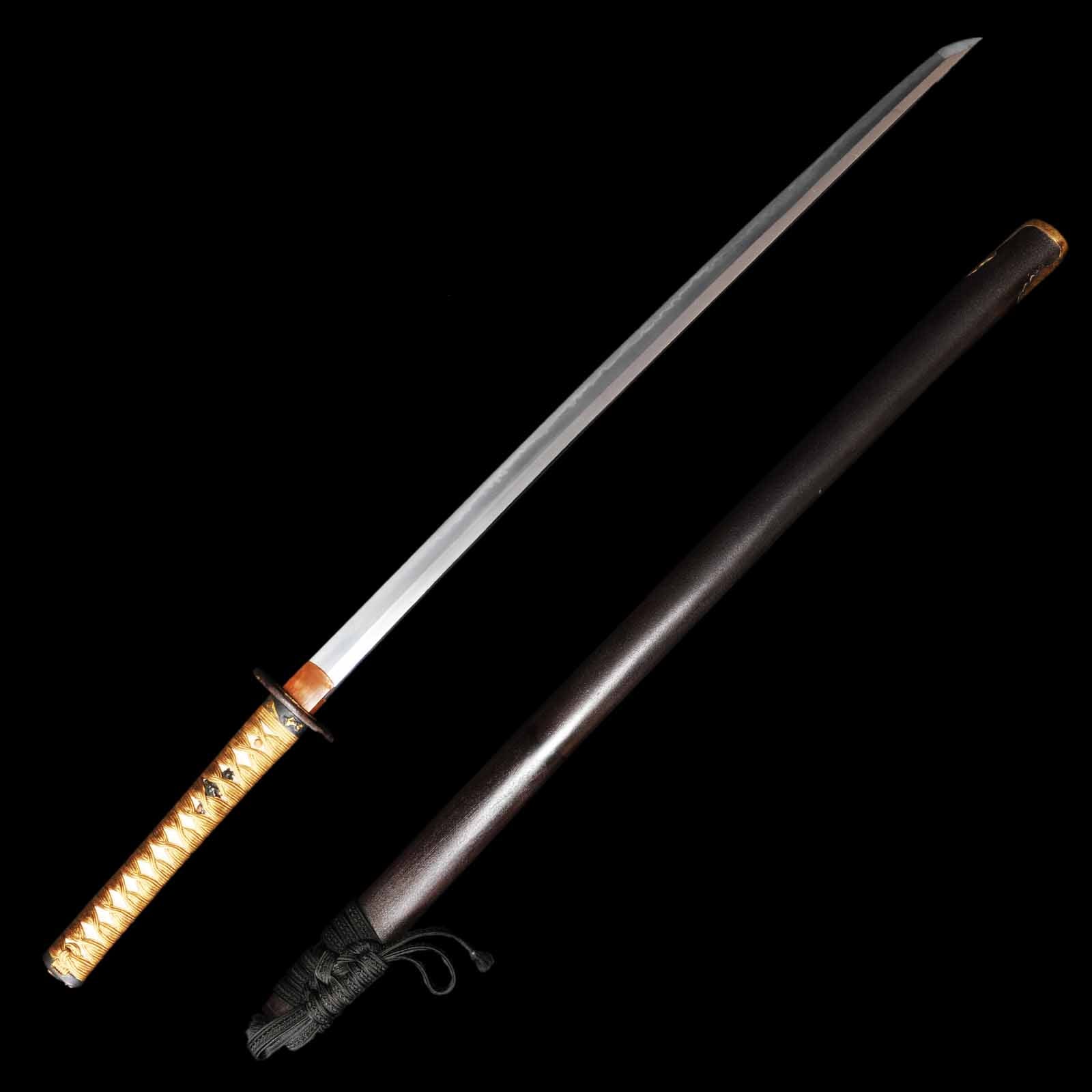
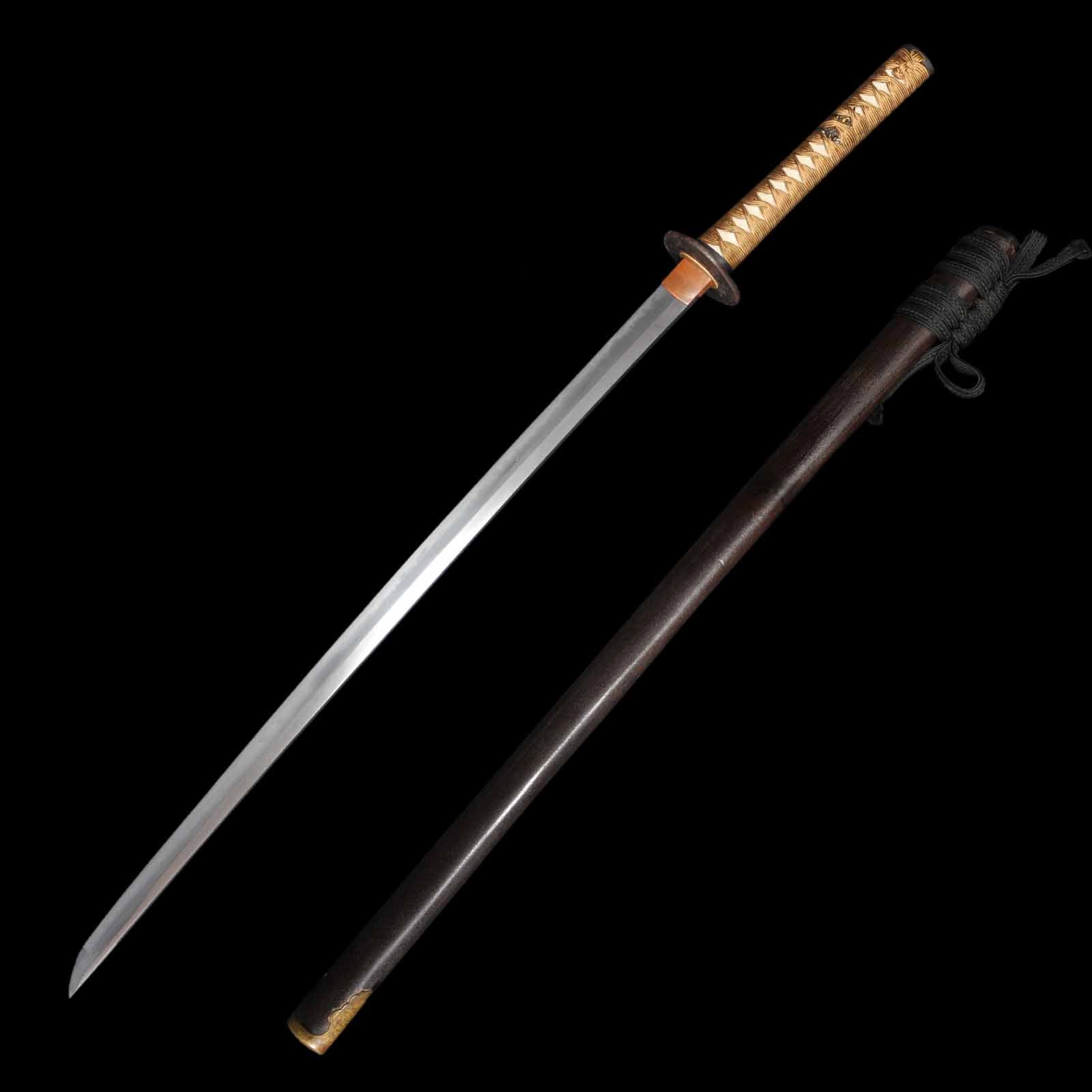
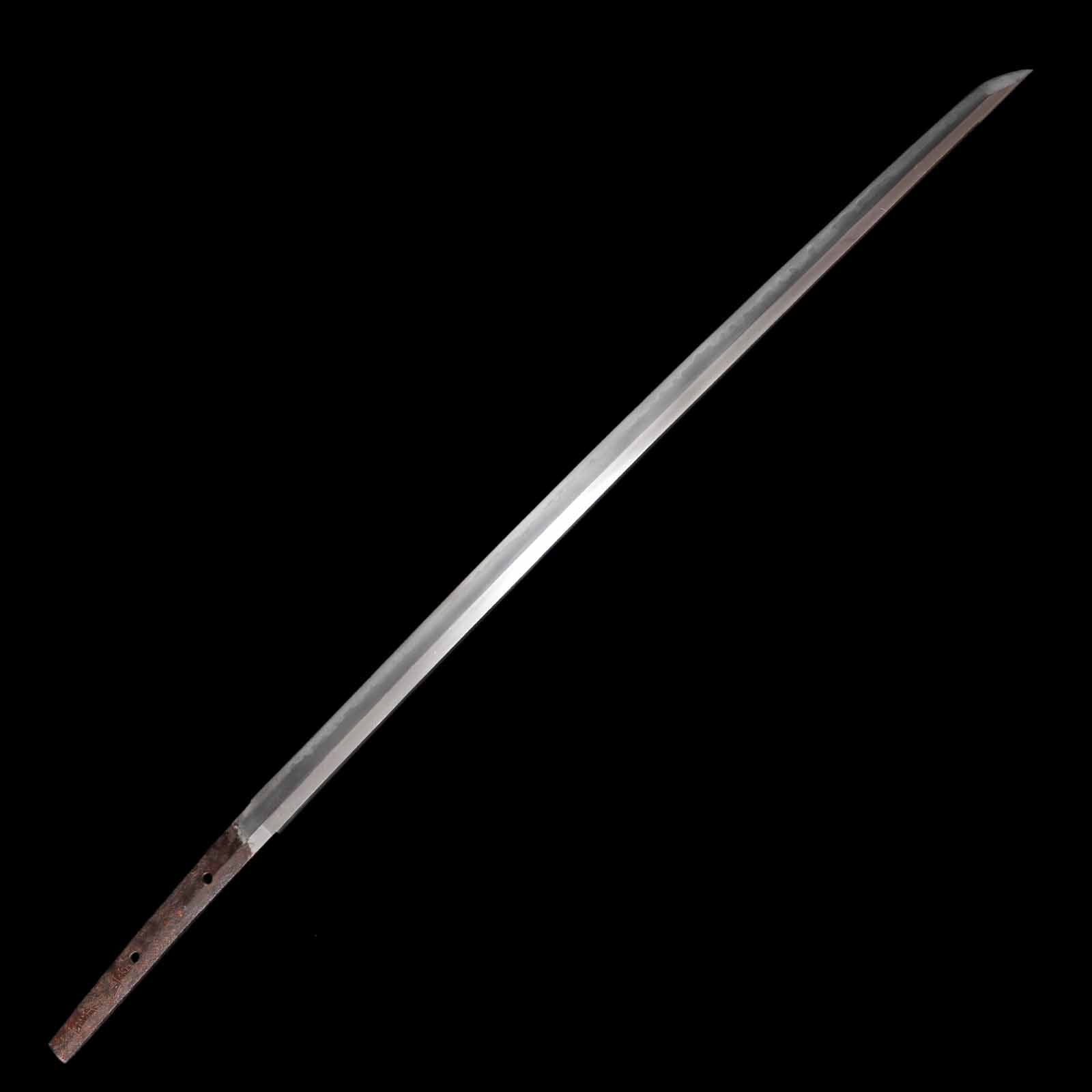
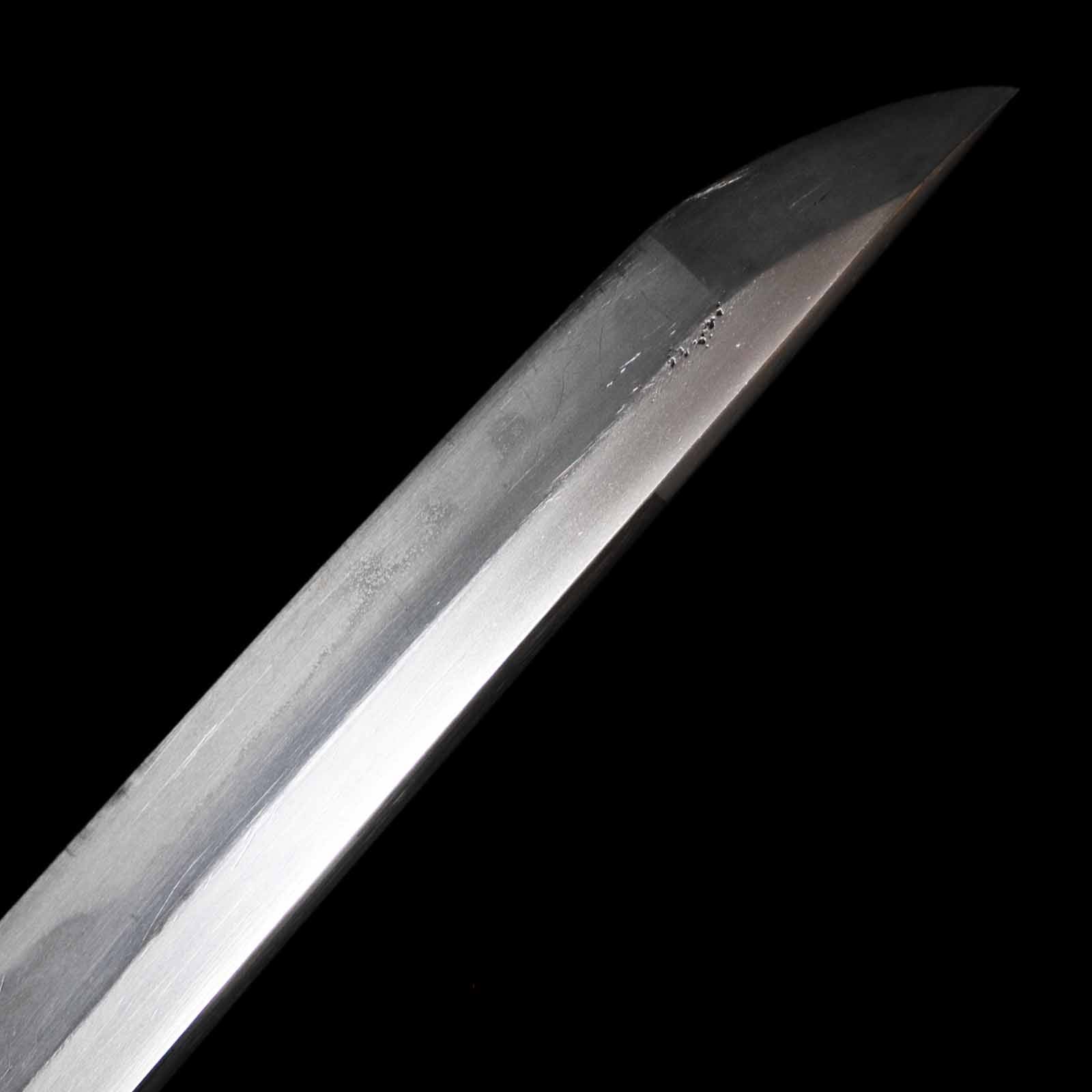
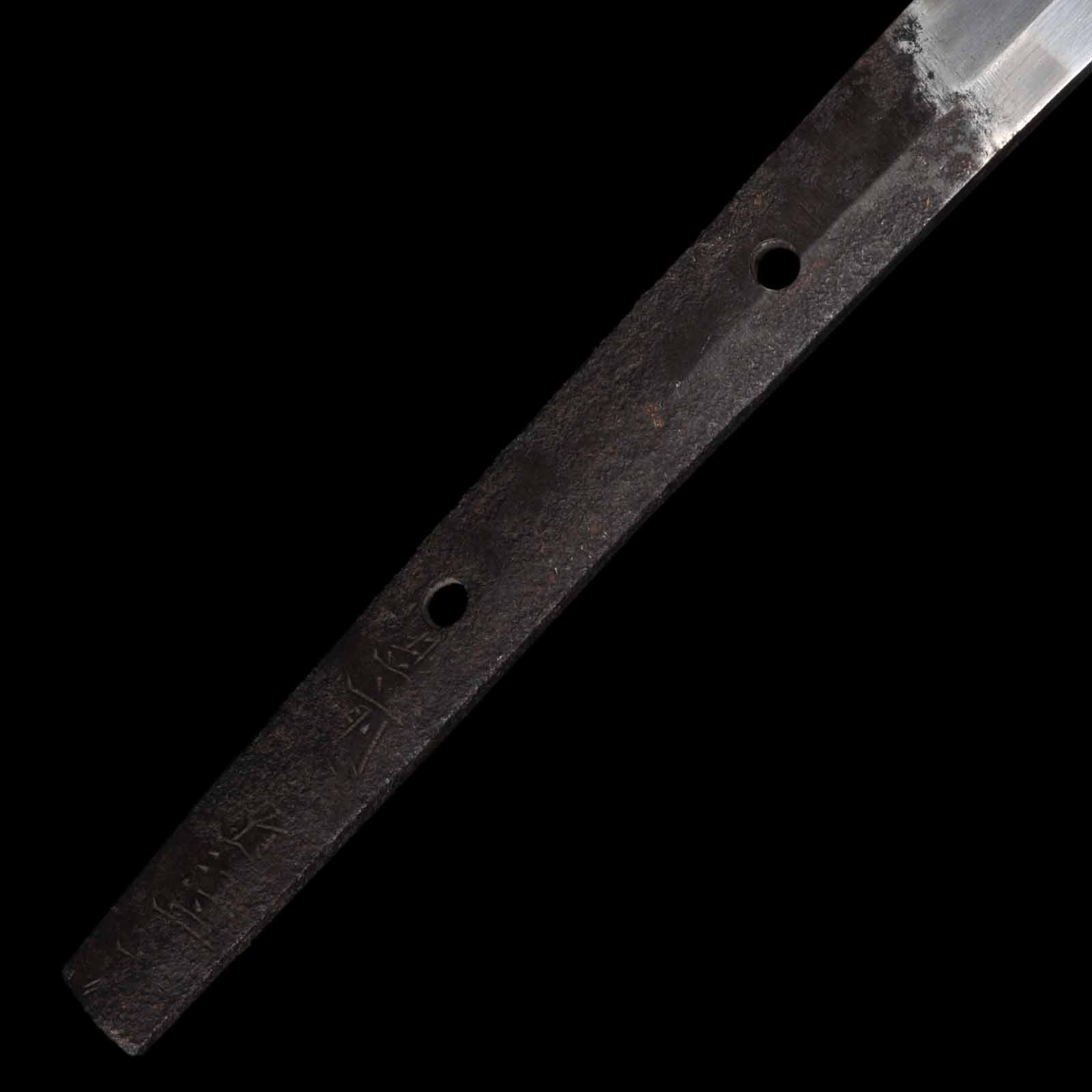
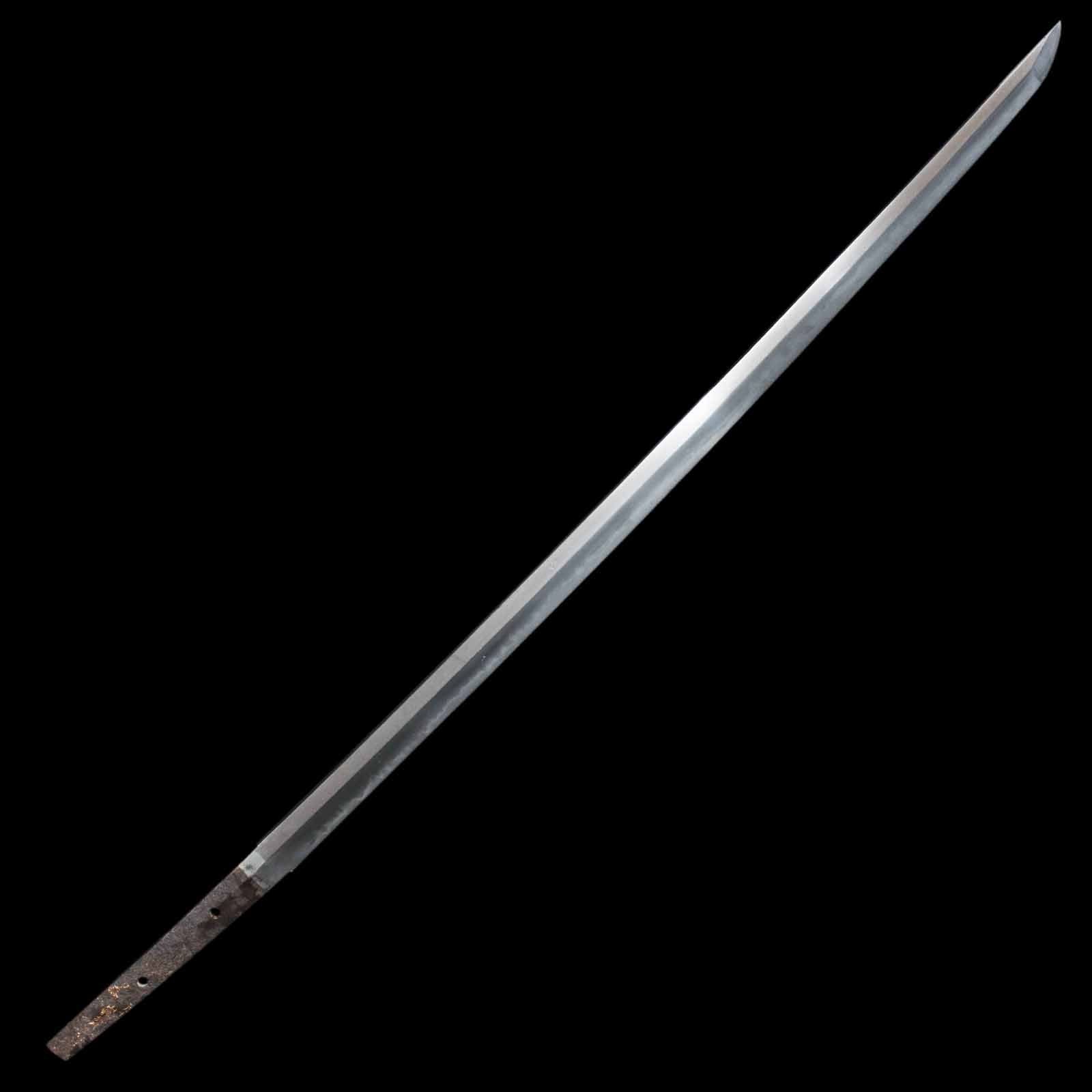
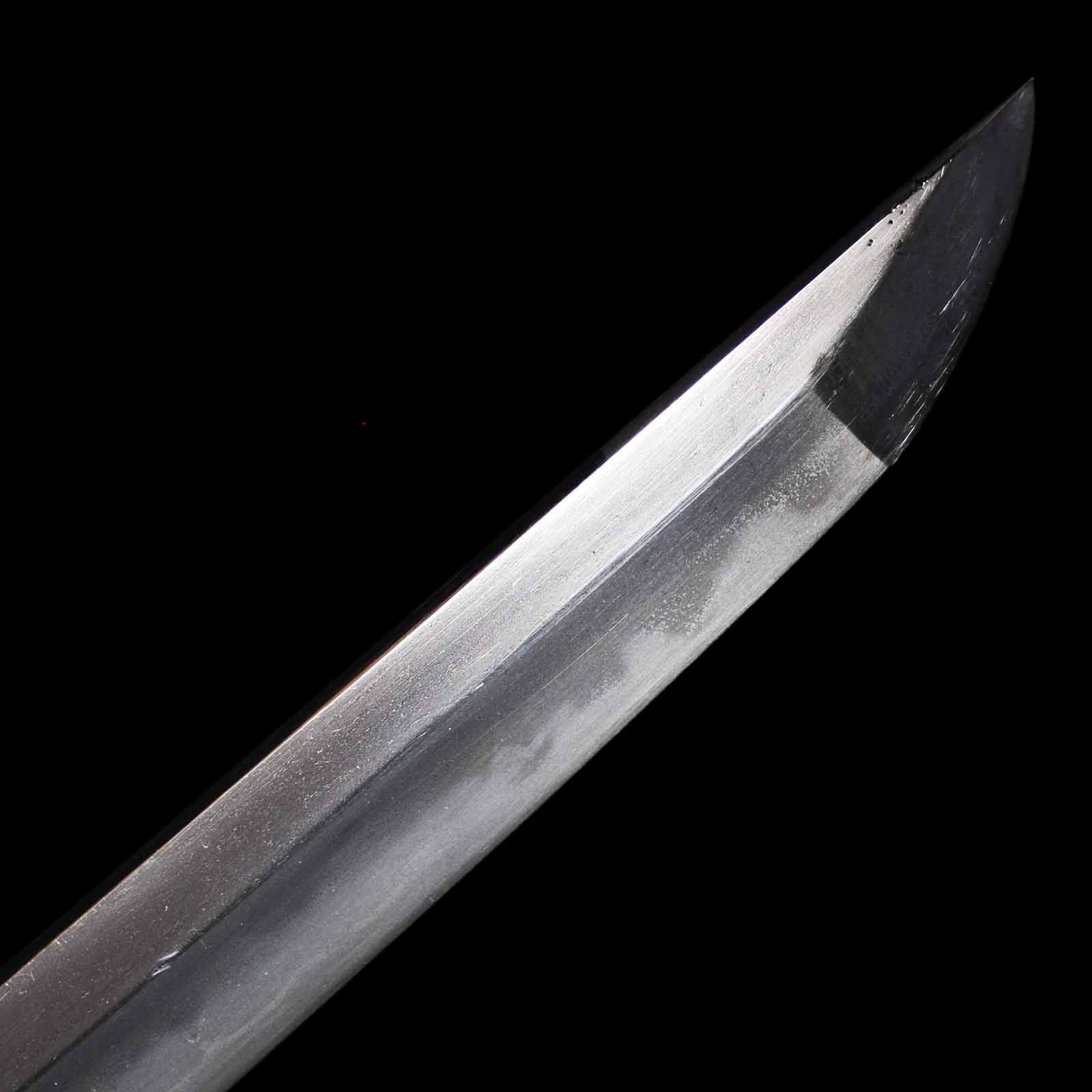
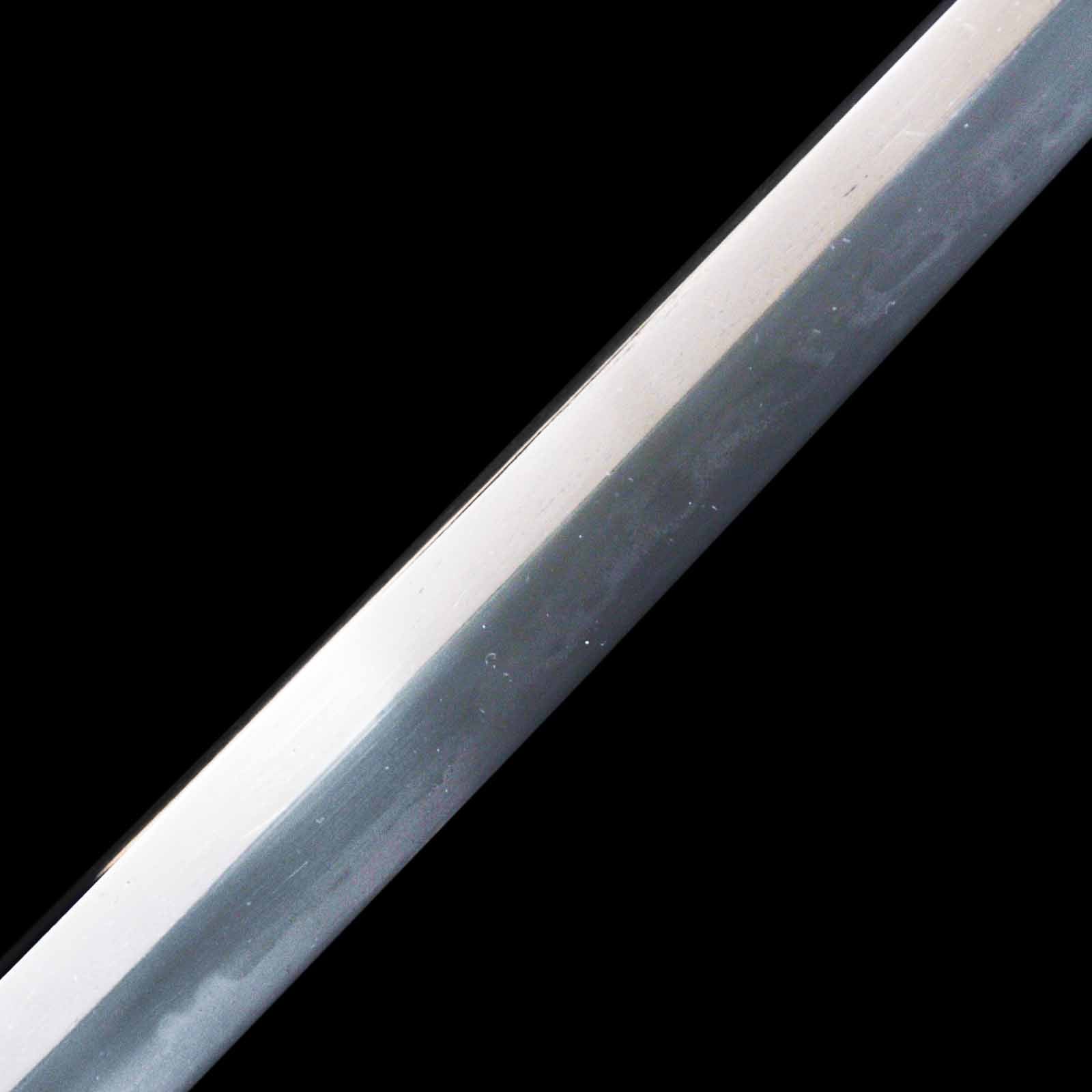
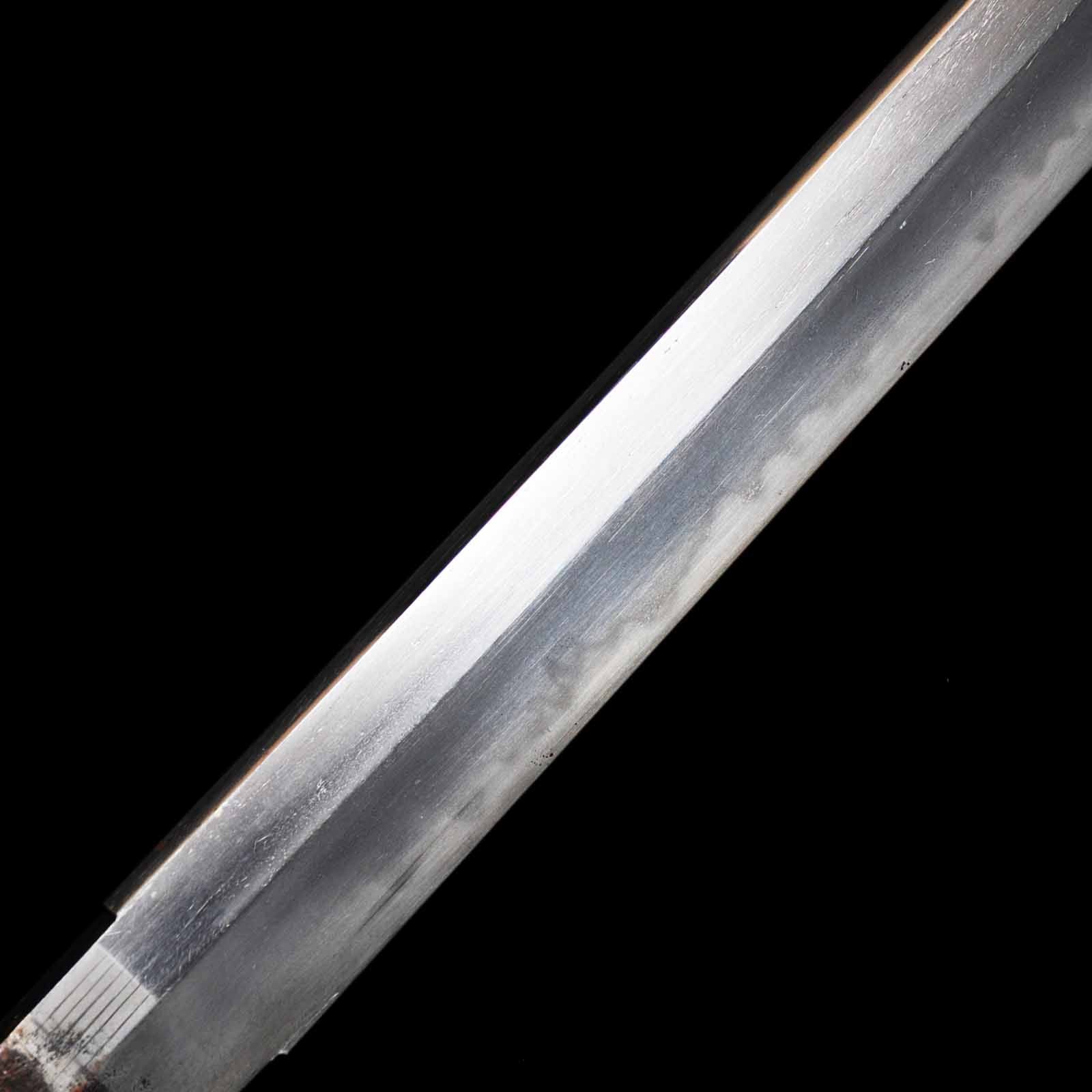
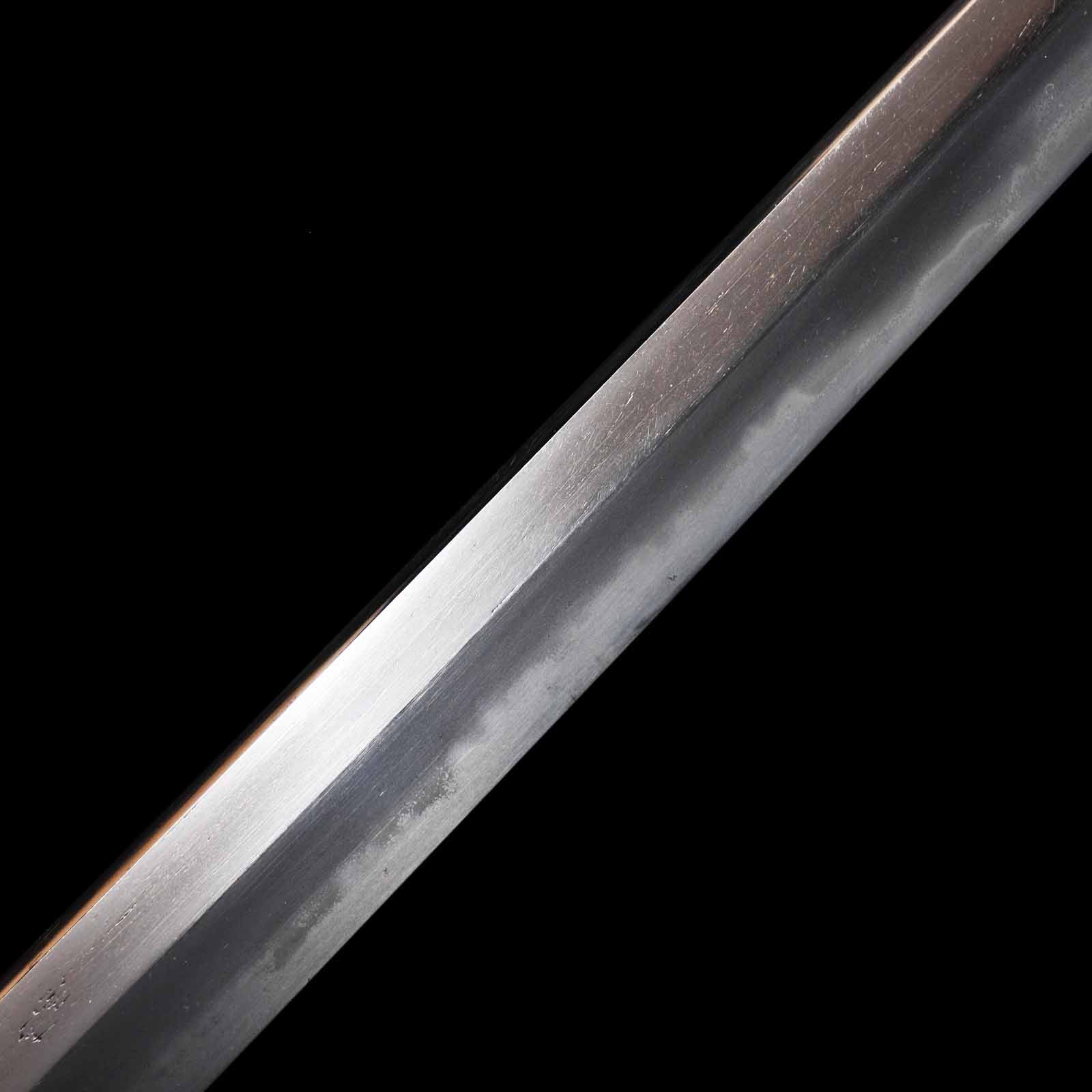
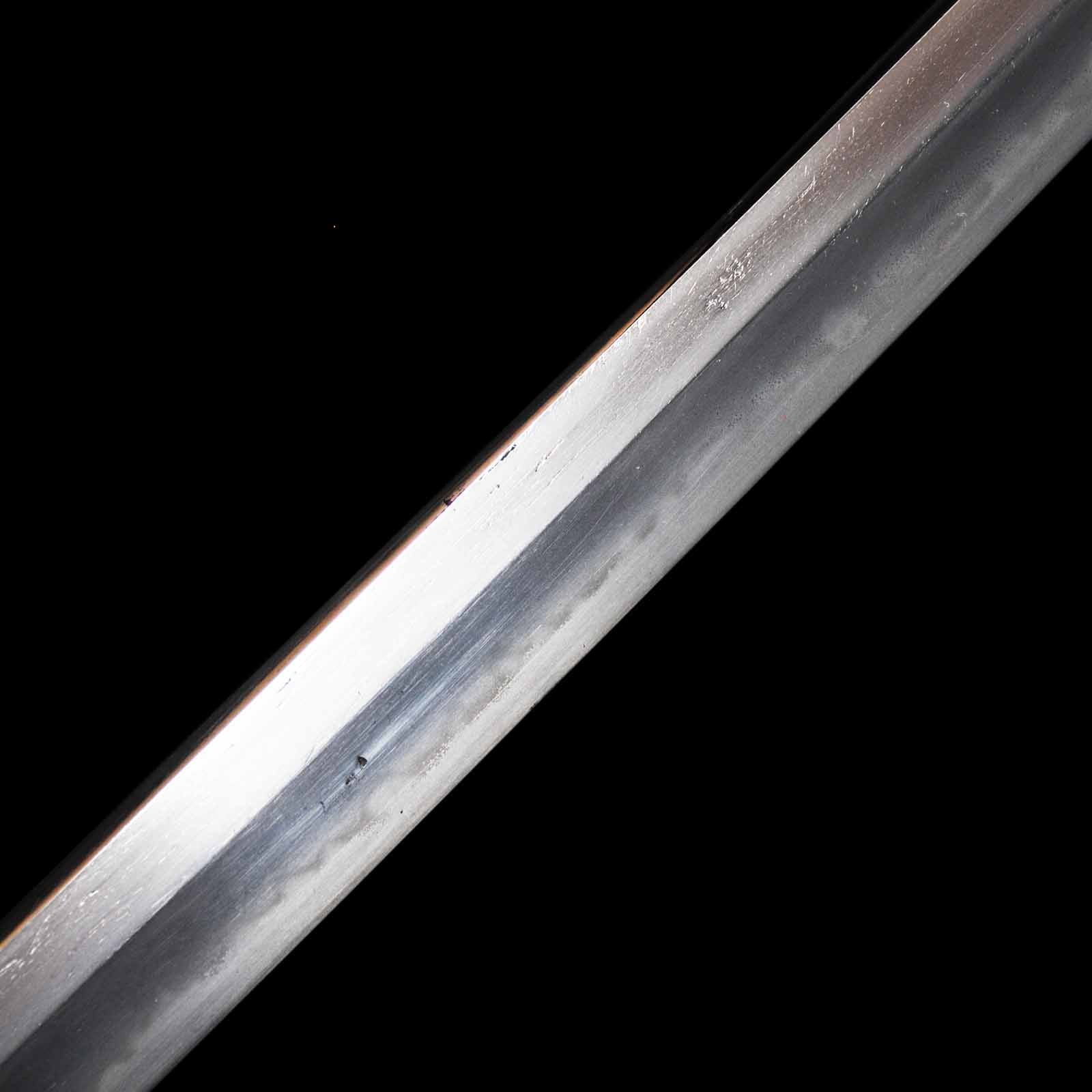
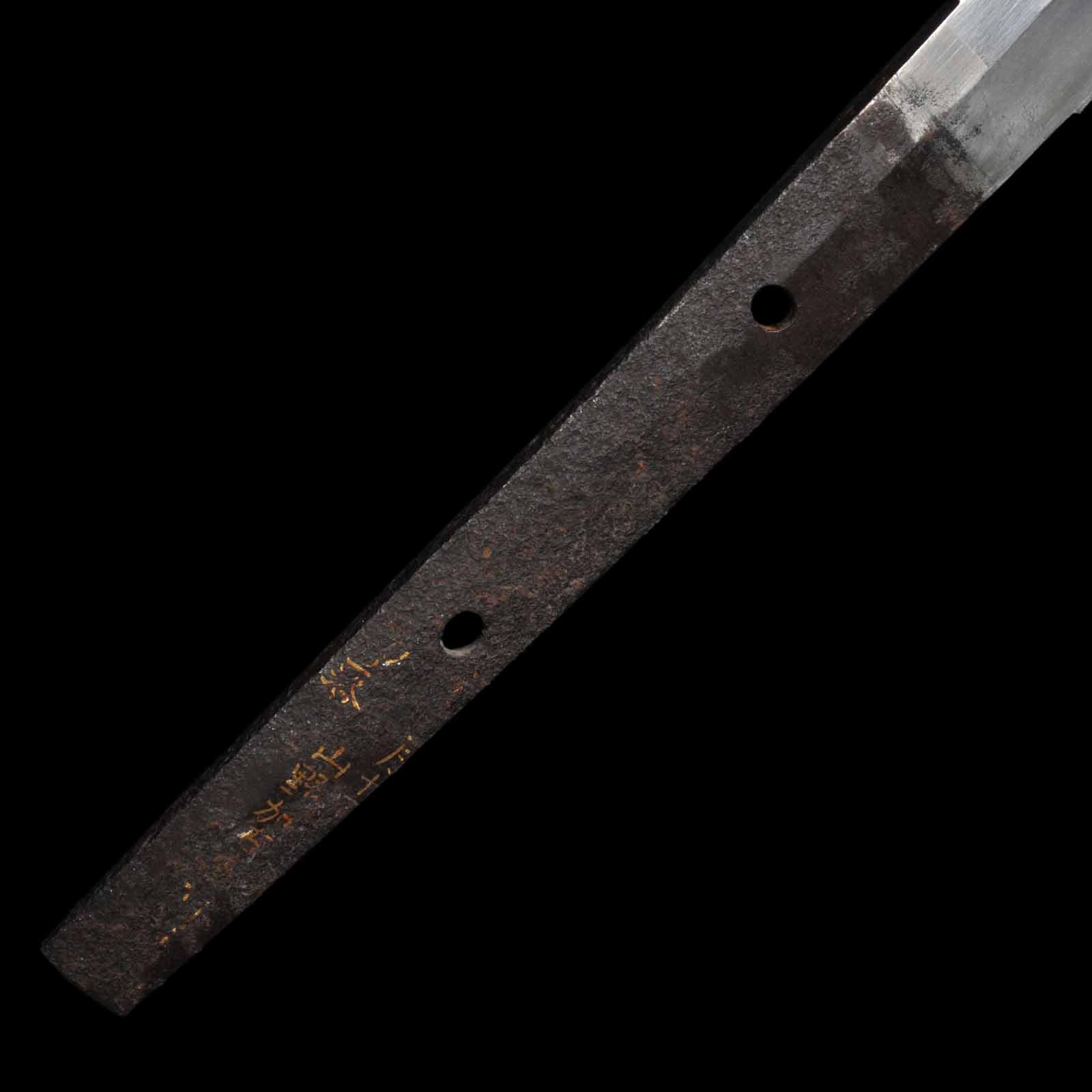
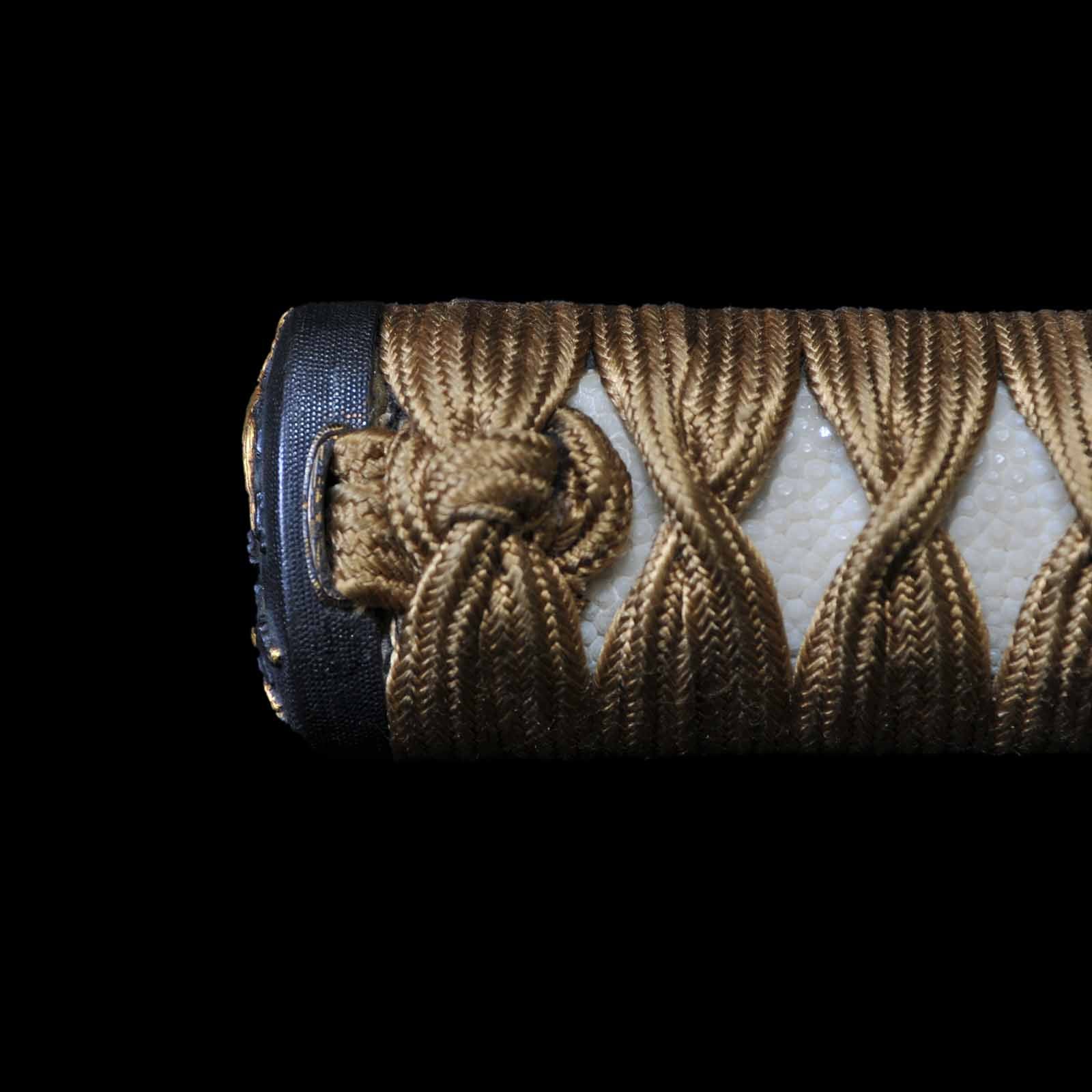
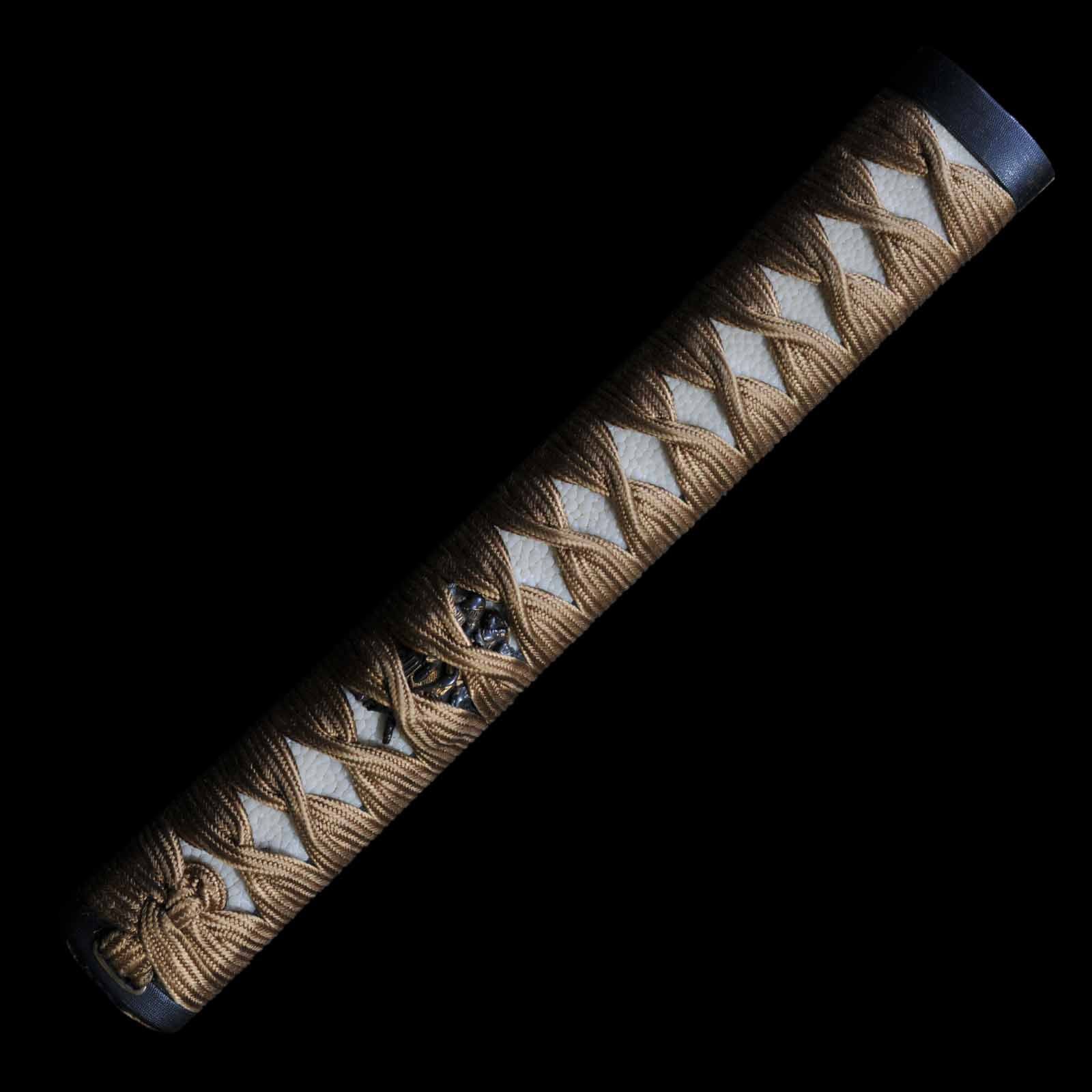
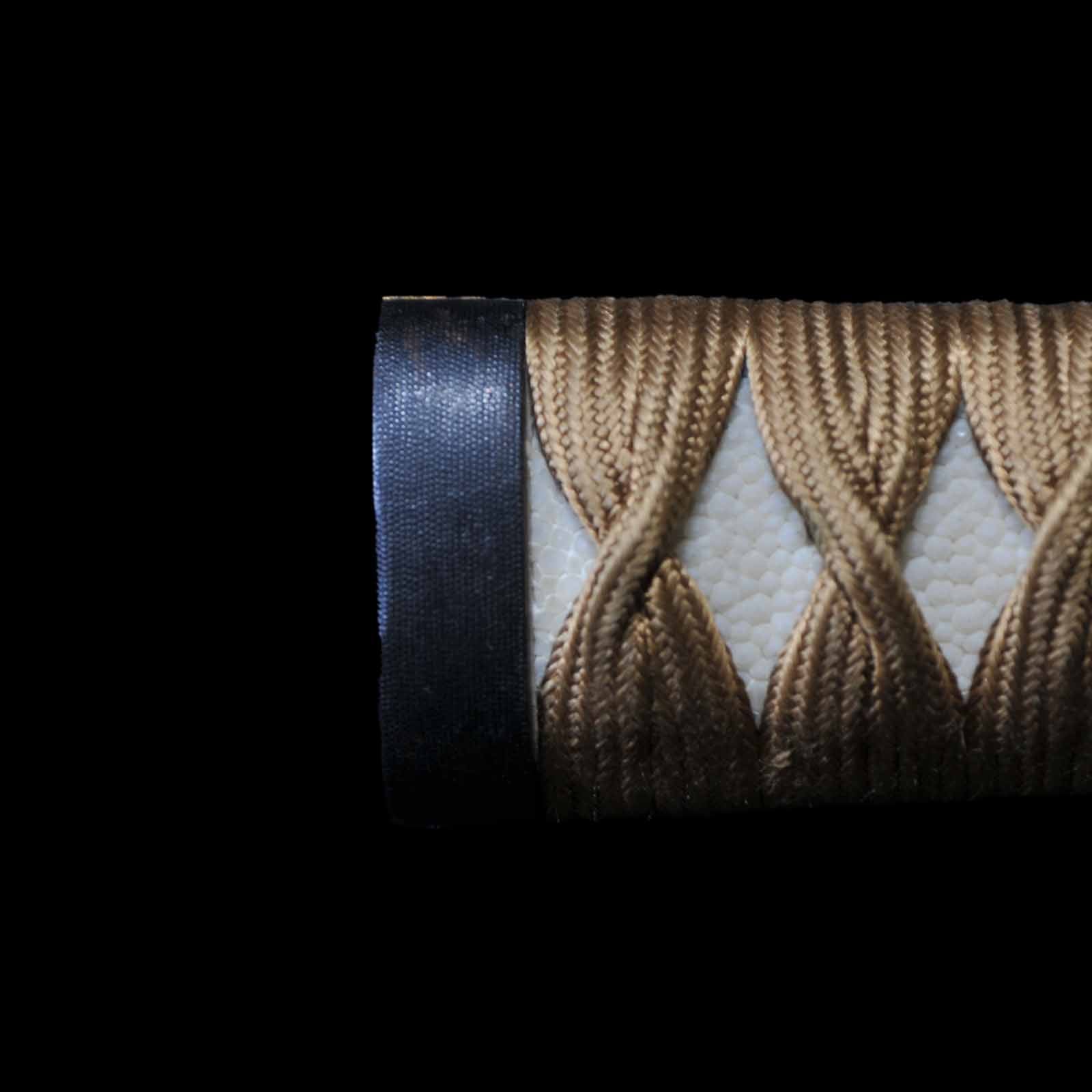
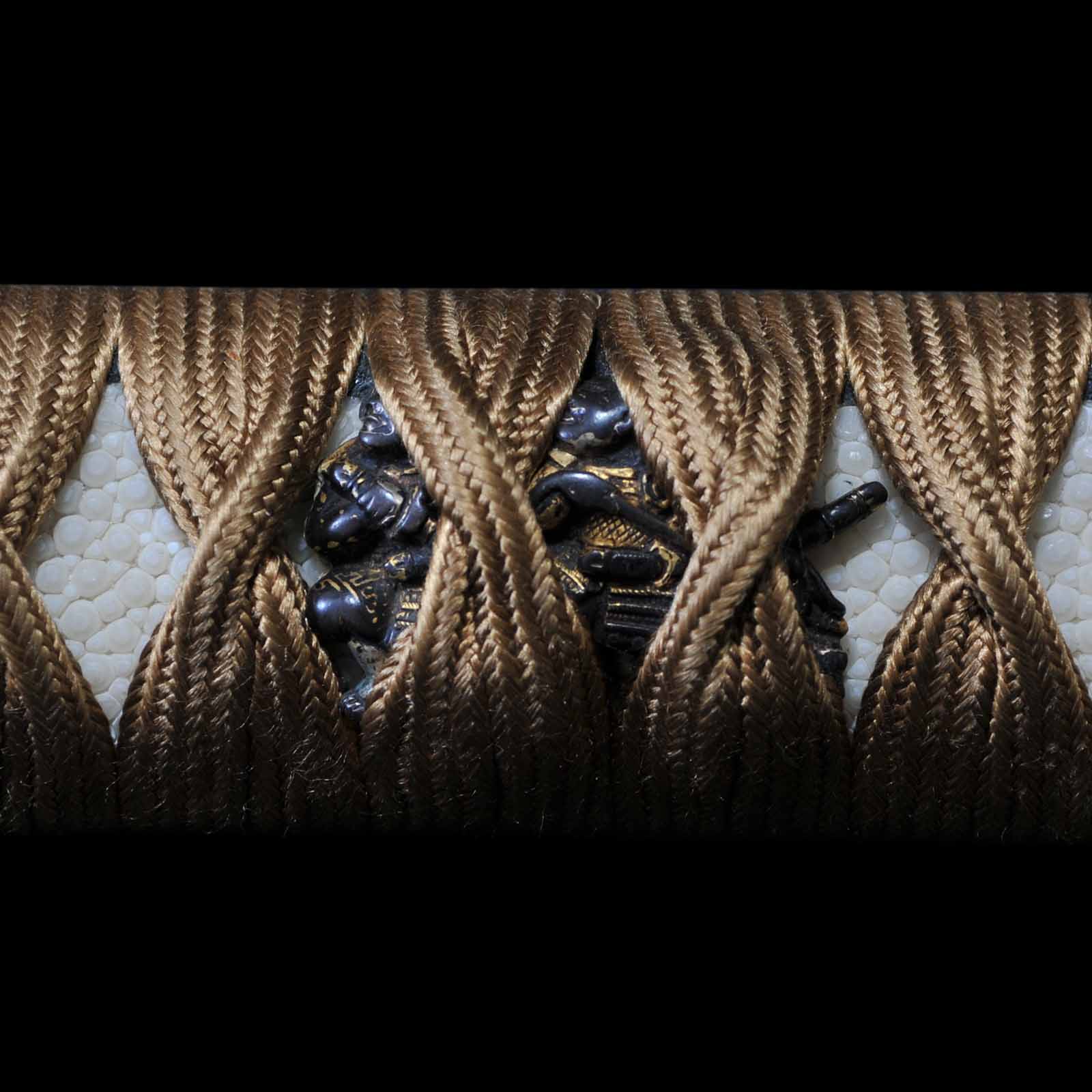
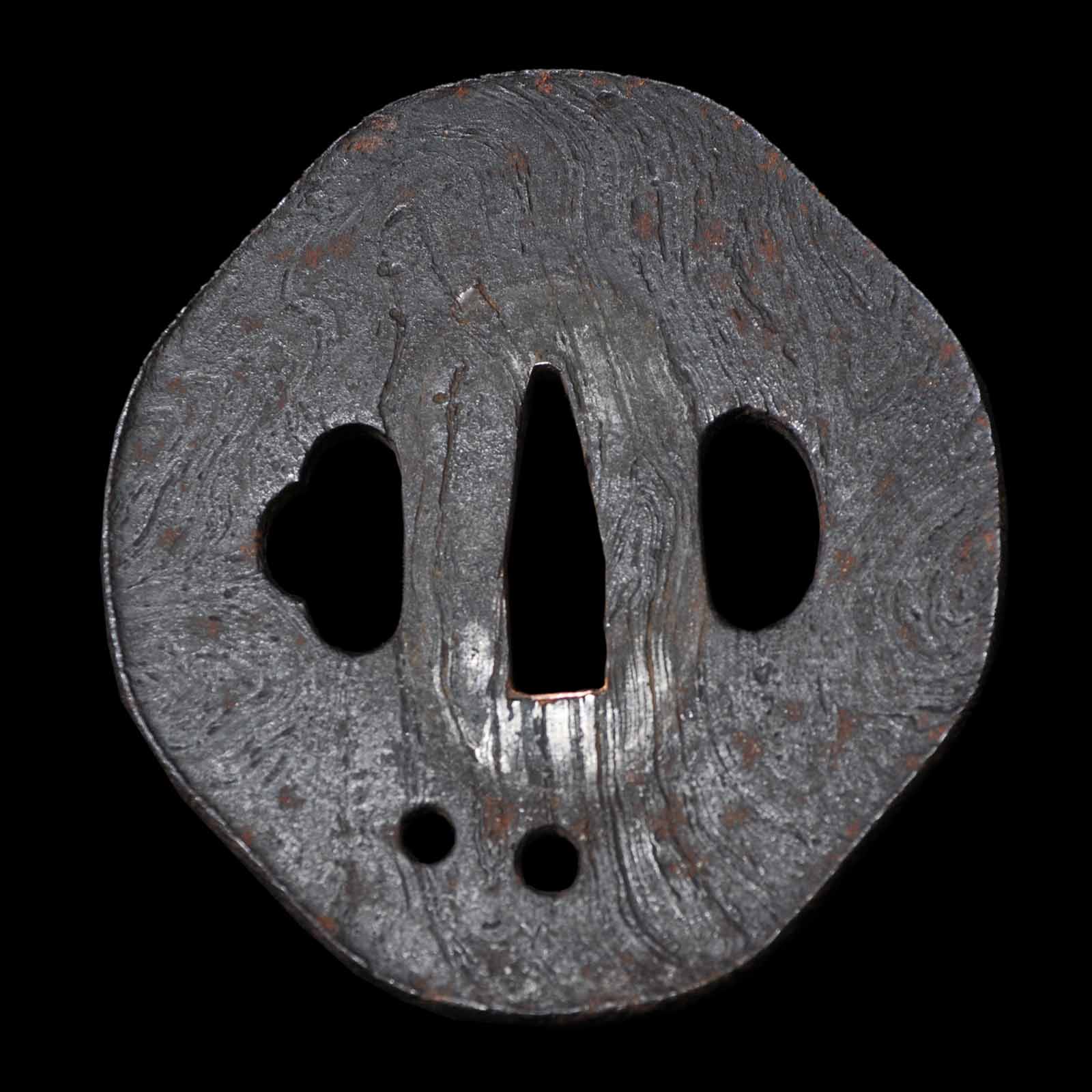
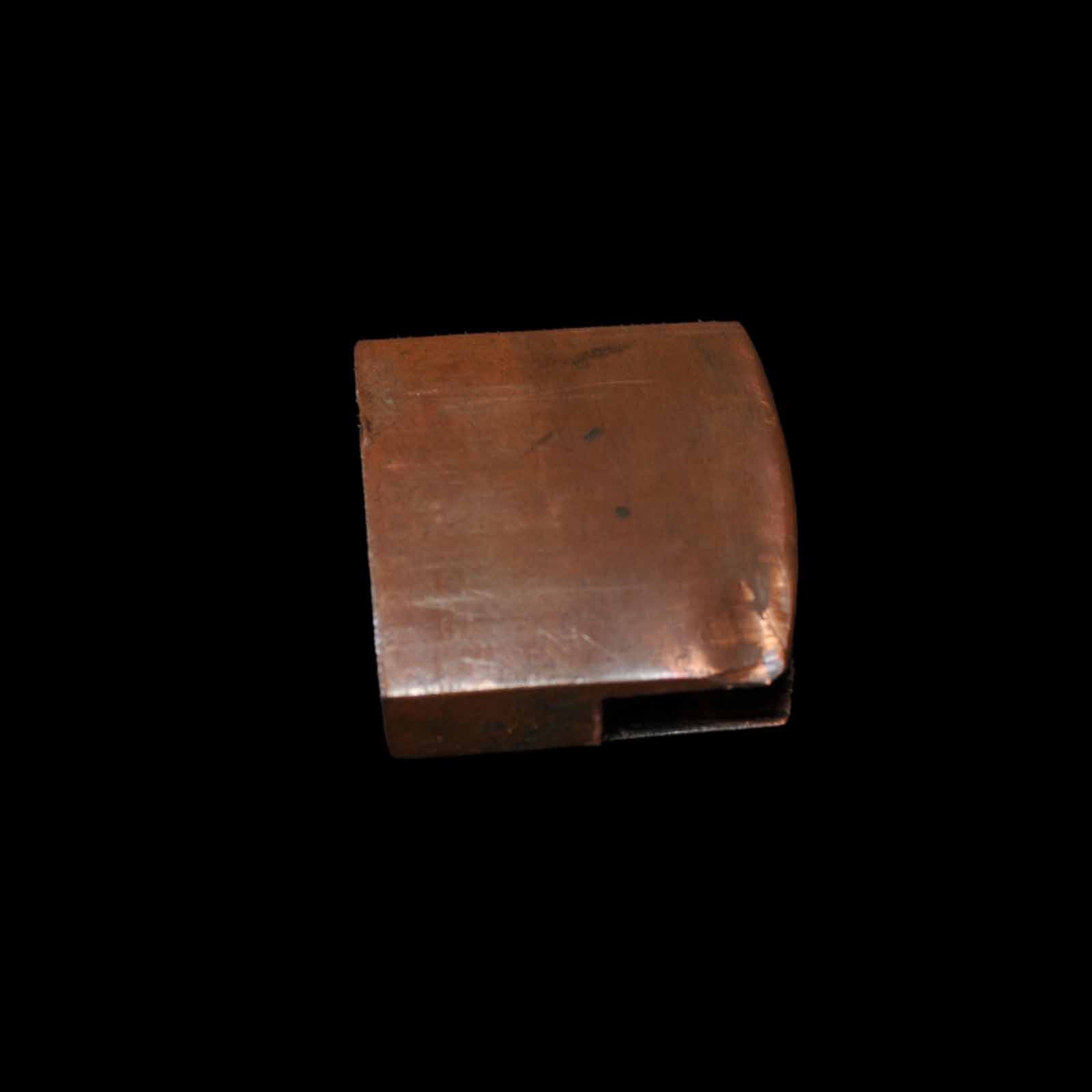
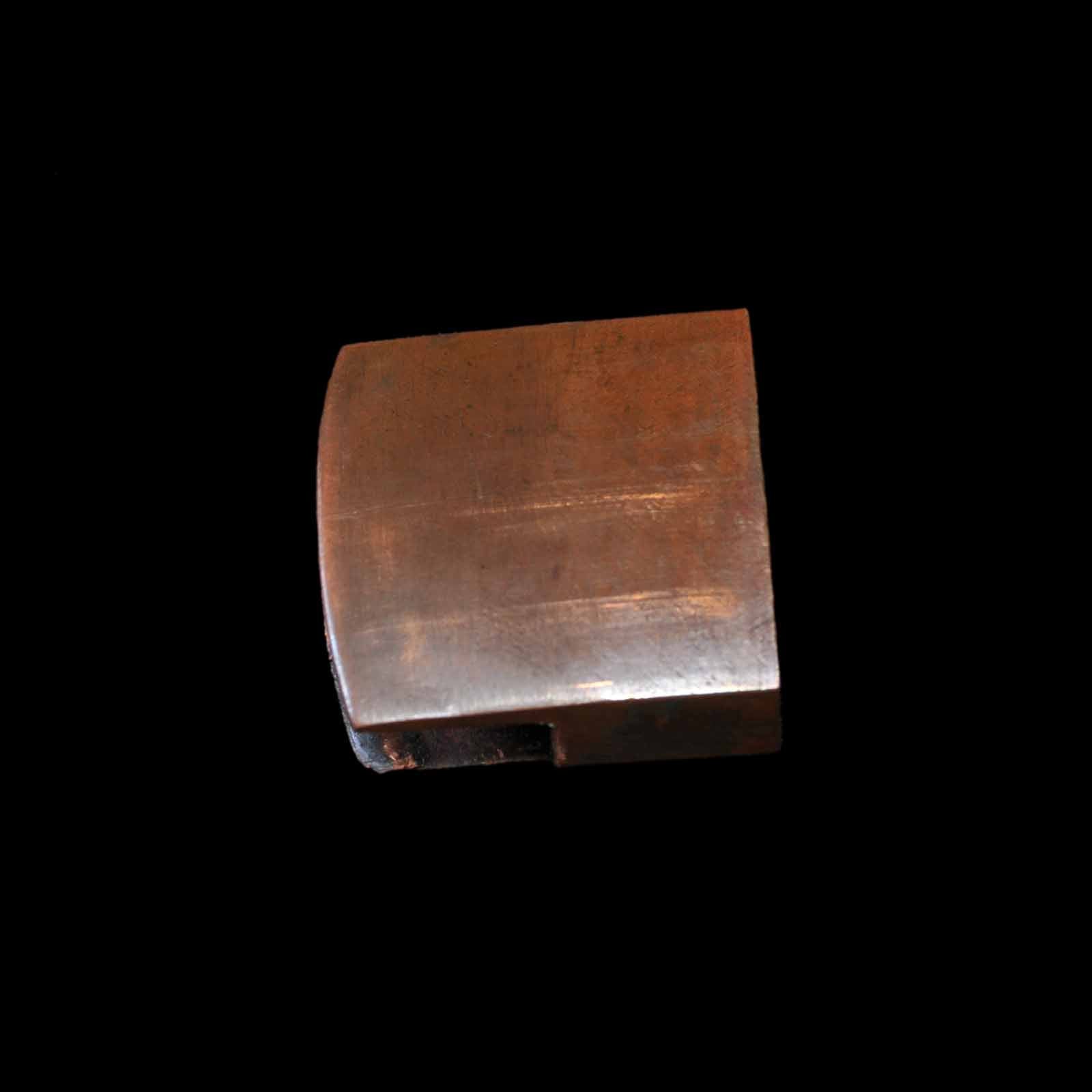
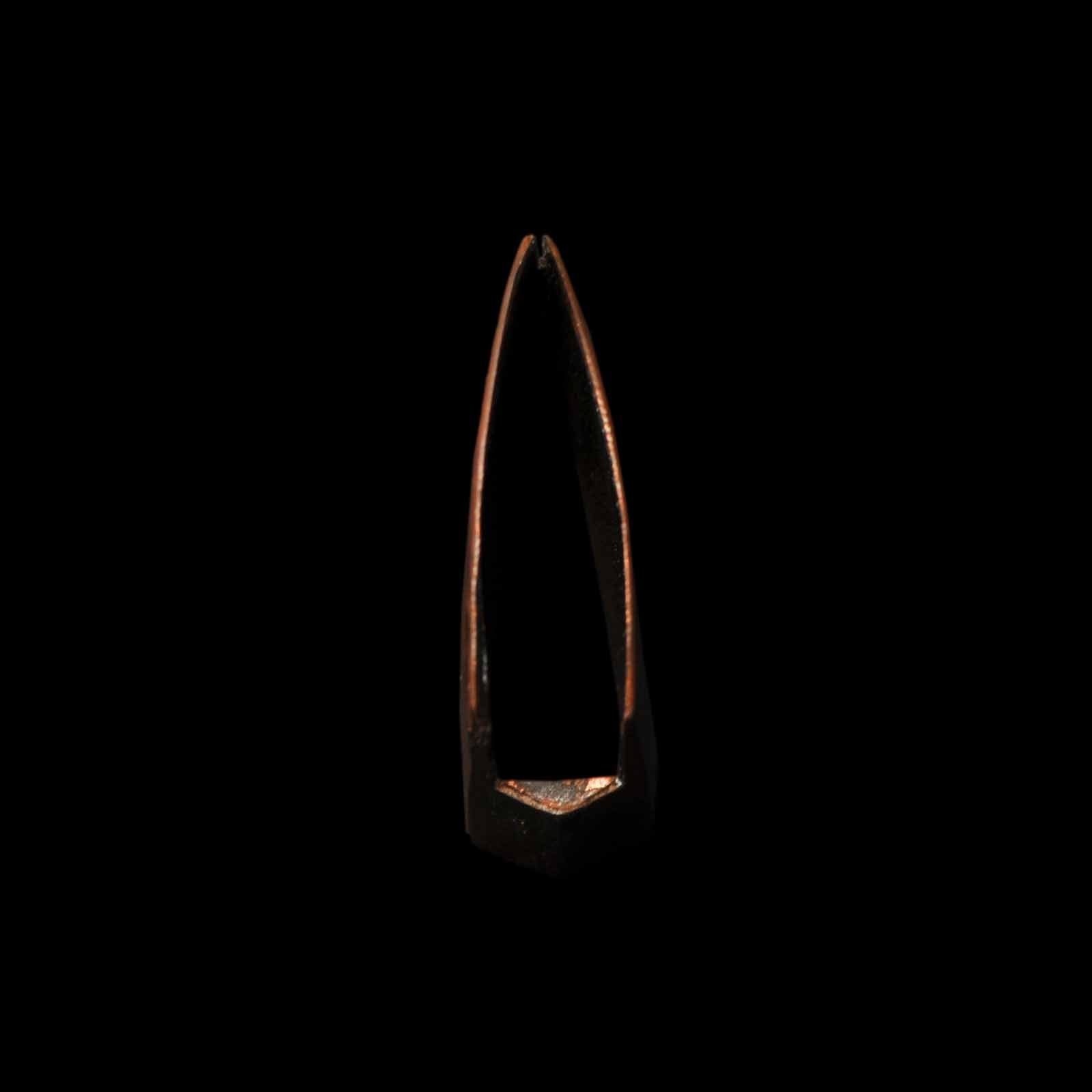
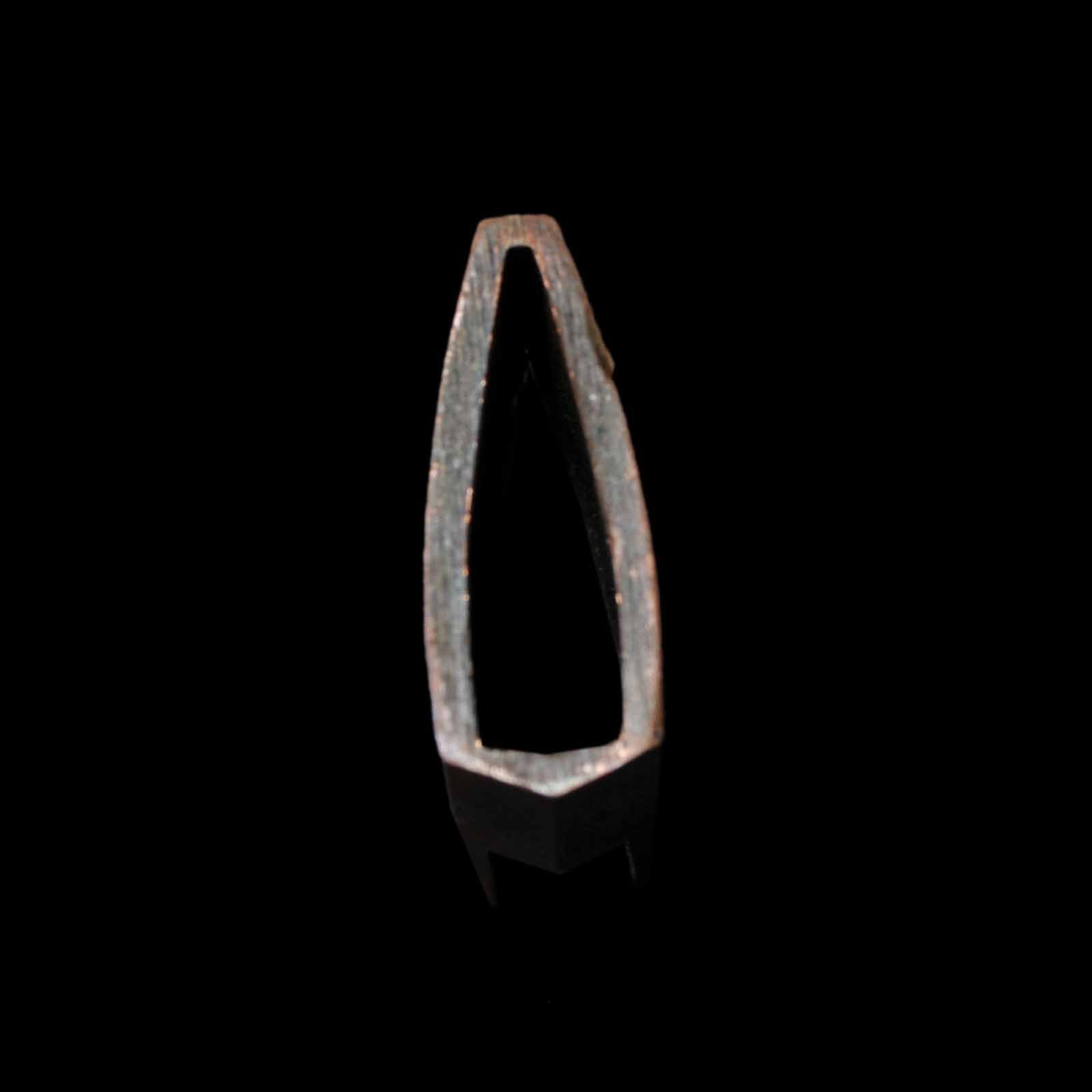
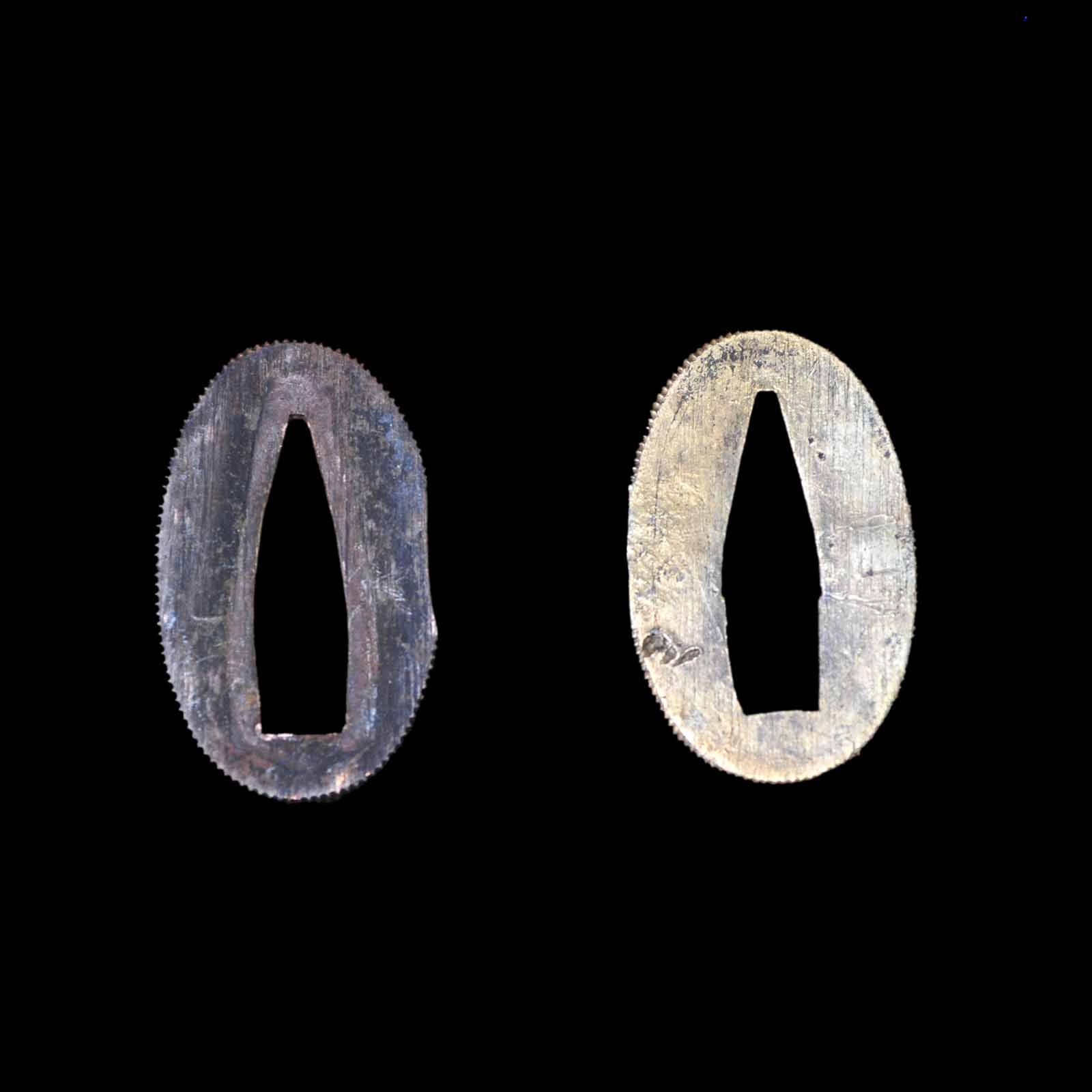
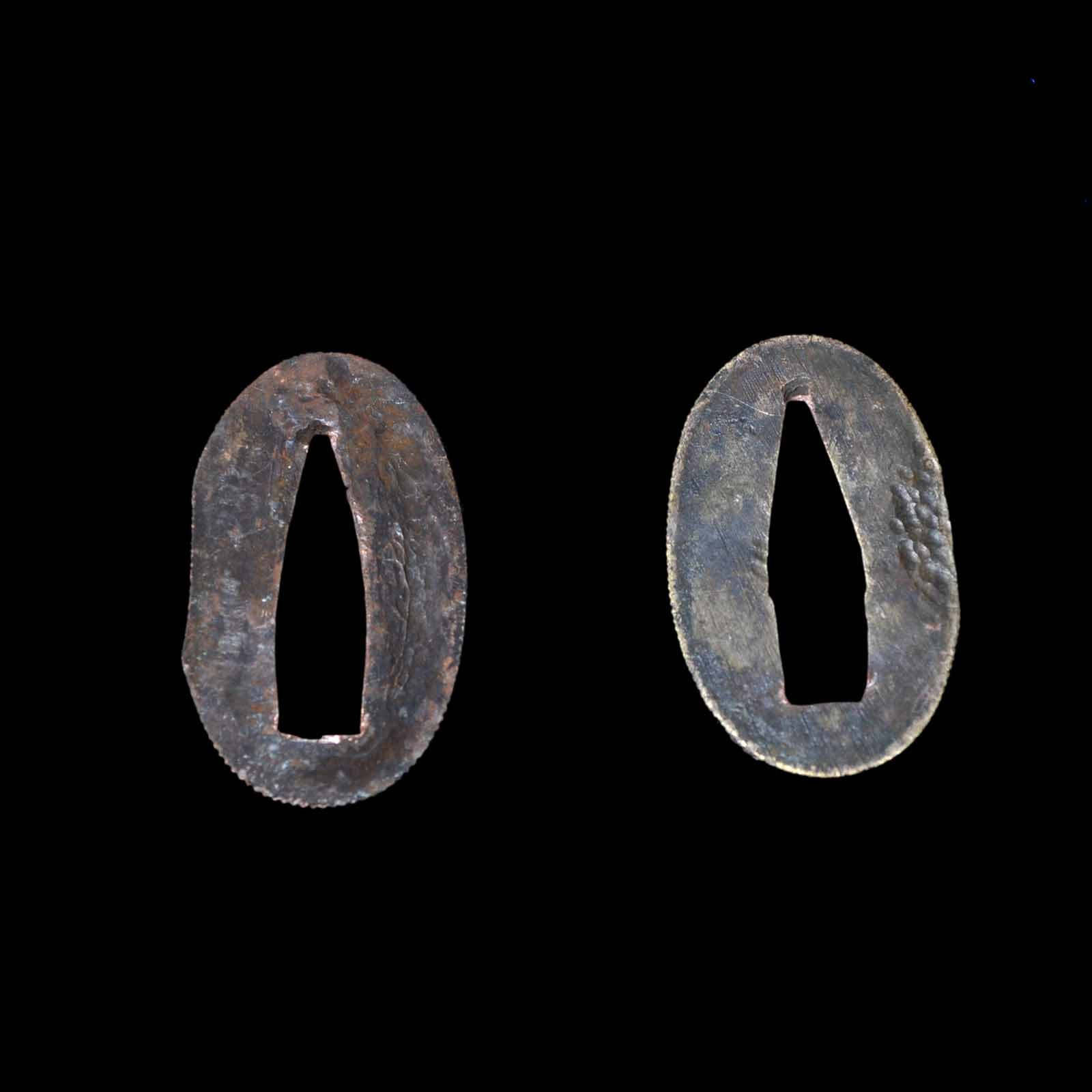
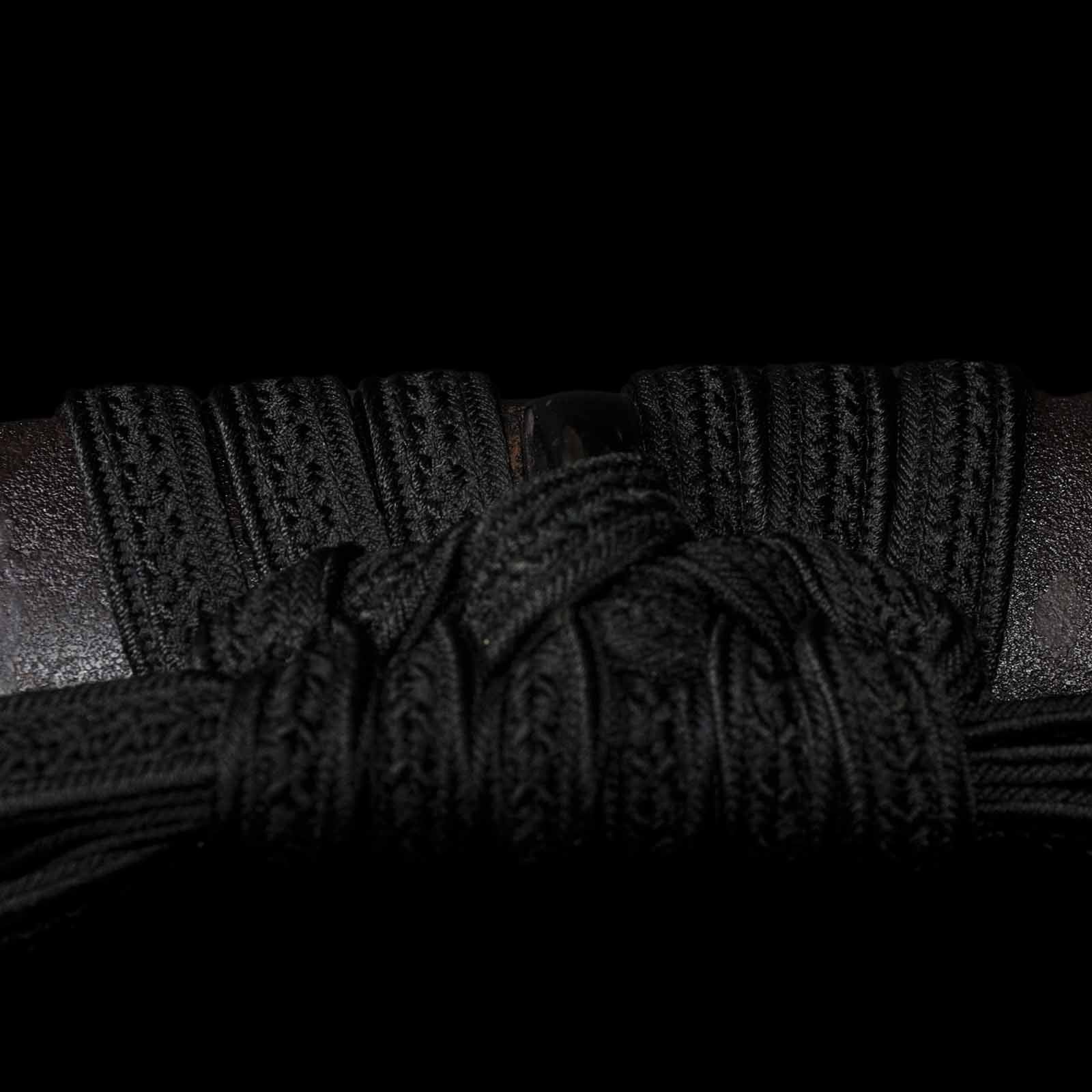
Echizen · around 1688-1704
The Edo period (1615 to 1868)
Edo was the sword’s age of connoisseurship: the Hon’ami appraisers, the shogunal register of famous blades of 1719, and a thriving literature turned the sword into an object of study even as it ceased to be drawn in war.
Certifies a genuine blade worth preserving: a signature confirmed correct, or, if unsigned, an era, province, and school that the NBTHK can reliably identify.
The NBTHK (Nihon Bijutsu Tōken Hozon Kyōkai, the Society for the Preservation of Japanese Art Swords) is a public-interest incorporated foundation founded in 1948 and supervised by Japan’s Agency for Cultural Affairs (Bunkachō); it is based at the Japanese Sword Museum in Tokyo. Its expert panels physically examine each submitted work (shinsa) and issue a certificate (kanteishō) ranking it by artistic and historical merit. NBTHK papers are the most widely recognized standard of authentication for Japanese swords and fittings.
NBTHK official siteAs a general rule, returns/exchanges are not accepted on Japanese sword orders unless damaged upon delivery. Other items: returns/exchanges accepted within 7 days of delivery. Cancellation for personal reasons incurs a 30% restocking fee (70% refunded). Return shipping must be prepaid and insured by the buyer; shipping/handling fees are non-refundable. Contact katana@tozando.co.jp to initiate a return.