A spectacular gendai dai sho by Horii Tanetada in Bizen tradition.
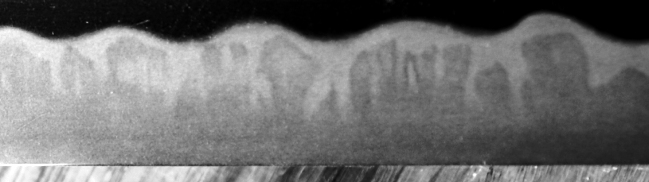
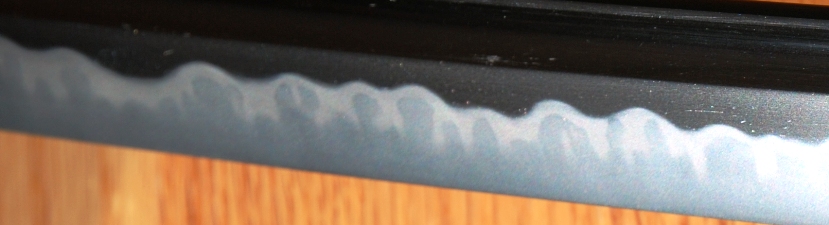
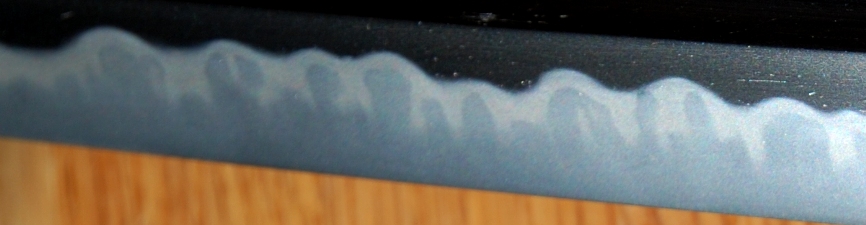
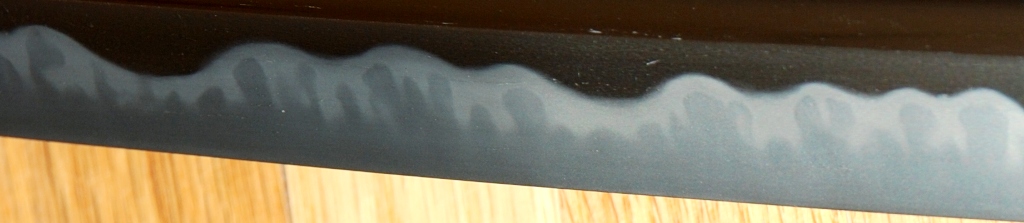
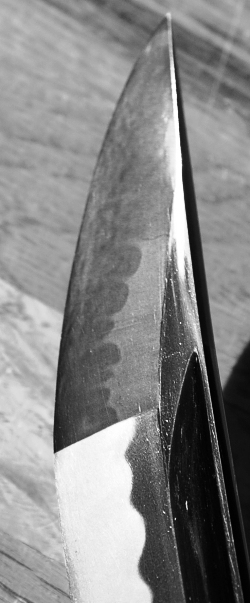
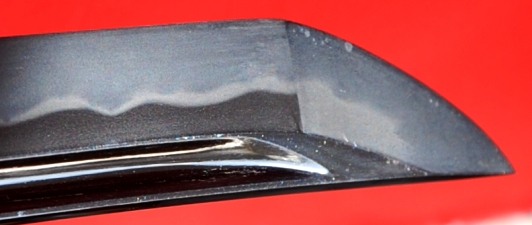
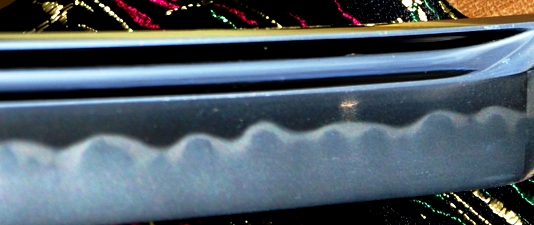
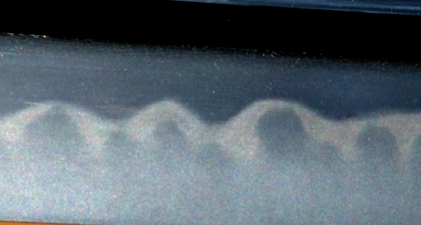
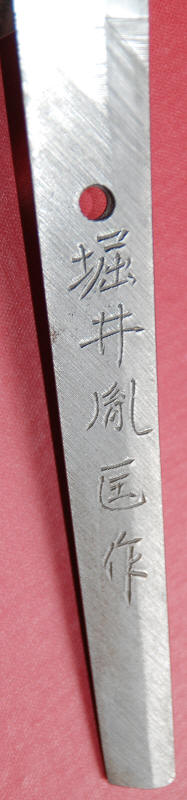
The katana signed Horii Tanetada saku, dated, Heisei go nen nana gatsu kichi jitsu (an auspicious day in July 1993) Funatsukasa (boat captain). Shinogizukure, toriizori, iroi mune, okissaki. Made in the style of Nambokucho. Hawatare: 2 shaku 8 sun 1 bu 5 rin (85.3 cm / 33.58"). Motohaba: 3.49 cm. Sakihaba: 2.73m. Kasane: 7.2 mm. O-choji midare, juka (bag shape) choji, kawazuki (tadpole) choji, saka choji, tobiyaki, nioi deki, deep ashi iri, bright habuchi, nado. Boshi choji midare with a long kaeri. Tight itame hada.
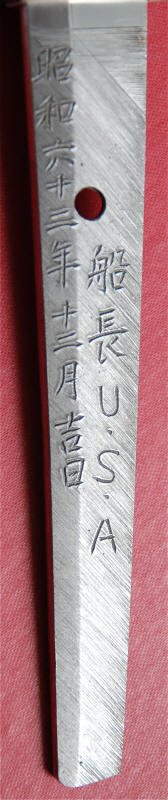
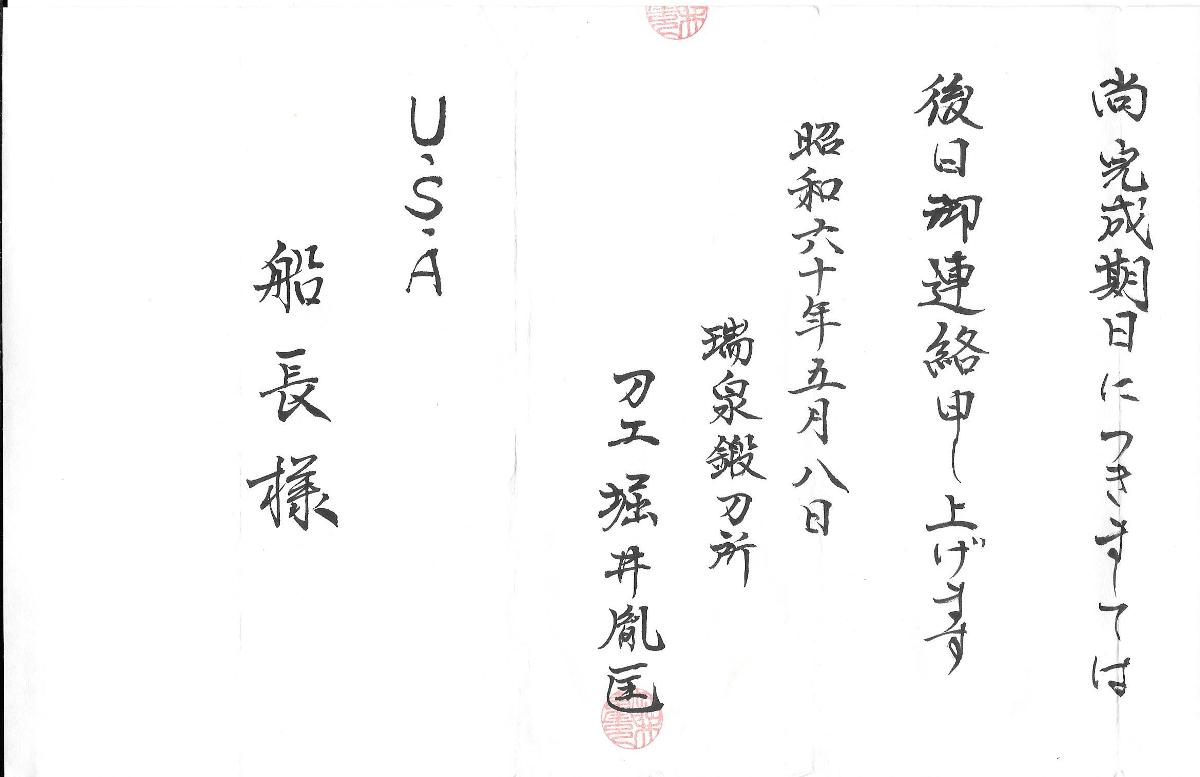
The wakizahi is signed Horii Tanetada saku and dated Showa roku ni nen ju ni gatsu Kichi jitsu (an auspicious day in December 1987) Funatsukasa (boat captain) USA. Shinogizukure, toriizori, iroi mune. Hawatare: 1 shaku 9 sun 0 bu 7 rin (57.8 cm / 22.75"). Motohaba: 2.88 cm. Sakihaba: 2.14m. Kasane: 6.9 mm. Nioi deki, gunome choji midare, juka choji, deep ashi iri, wide soft habuchi, nado.
Horii Tanetada was the son of Horii Tanetsugu, the second son of Horii Toshihide. He was born on March 30, Showa 29 (1954). He graduated from the Muroran Industrial Arts High School in Showa 47 (1972) and thereafter entered the Nihon Seiko Muroran factory where he apprenticed under his uncle Nobuhide and father Tanetsugu. In Showa 54 (1979) he received his sword maker’s license from the Ministry of Education. He became the 4th generation Horii to head the forge at the Nihon Seiko Muroran factory.
A thank you to Chris Bowen for his help in this listing.
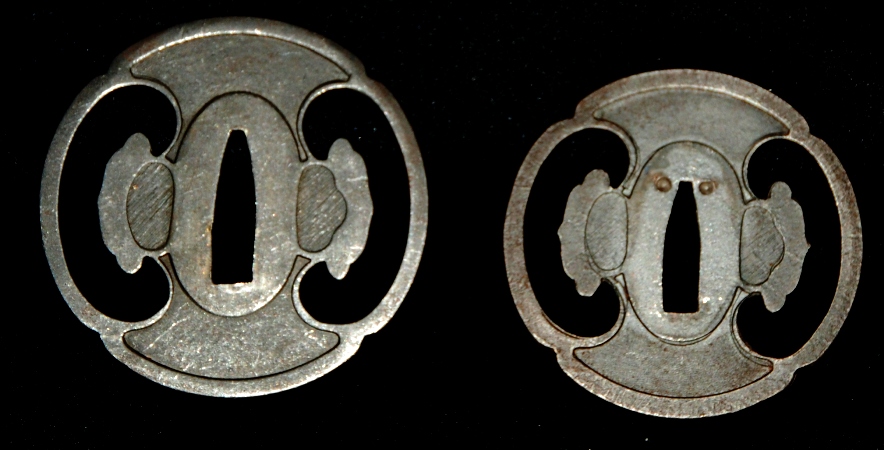
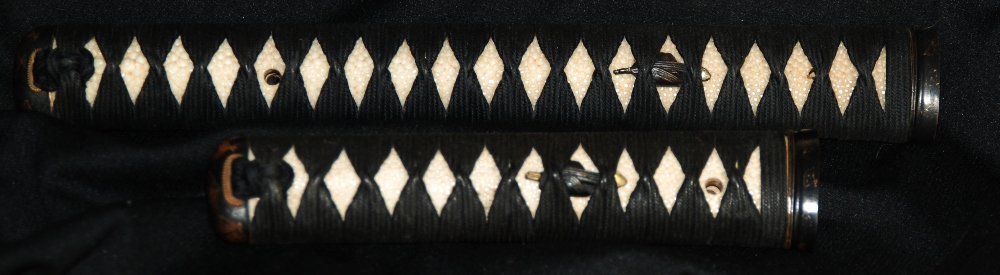
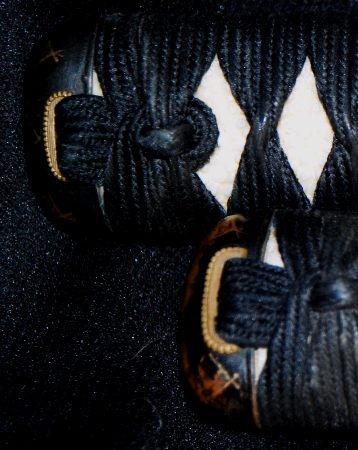
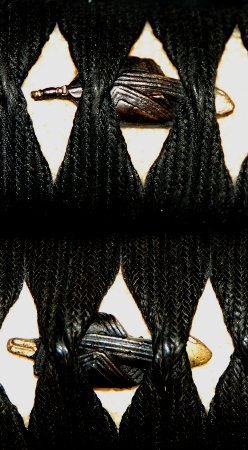
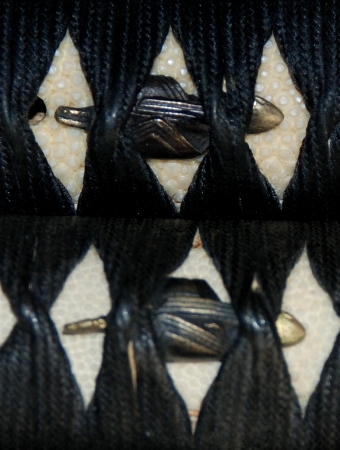
The koshirae is modern, Dai-sho iron tsuba, black tsuka maki, feather fan menuki, waisted fuchi, honzogan kashira. Black lacquered saya, horn kurikata and kojiri.
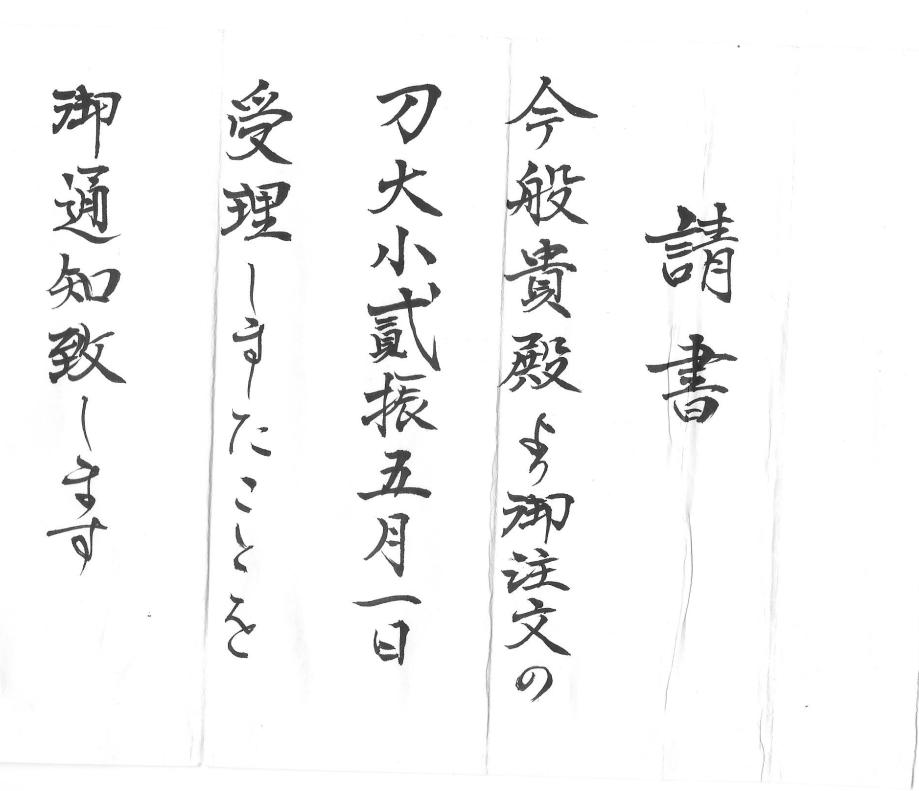
Certificate
DAI
SHO
Heisei Go Nen Nana Gatsu Kichijitsu.
TOSOGU
Modern Tosogu




 NihontoWatch