 NihontoWatchNihontoWatch
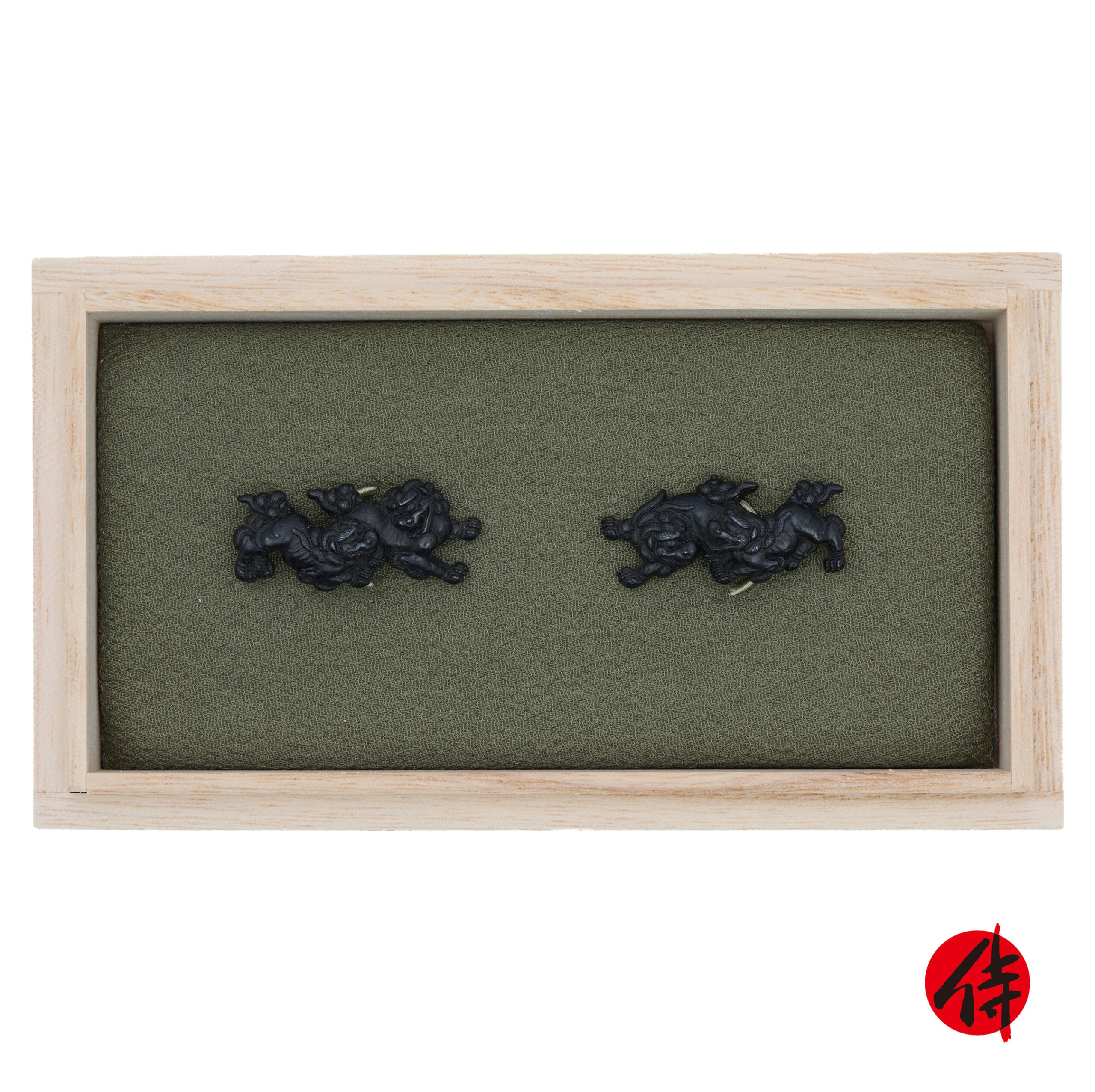
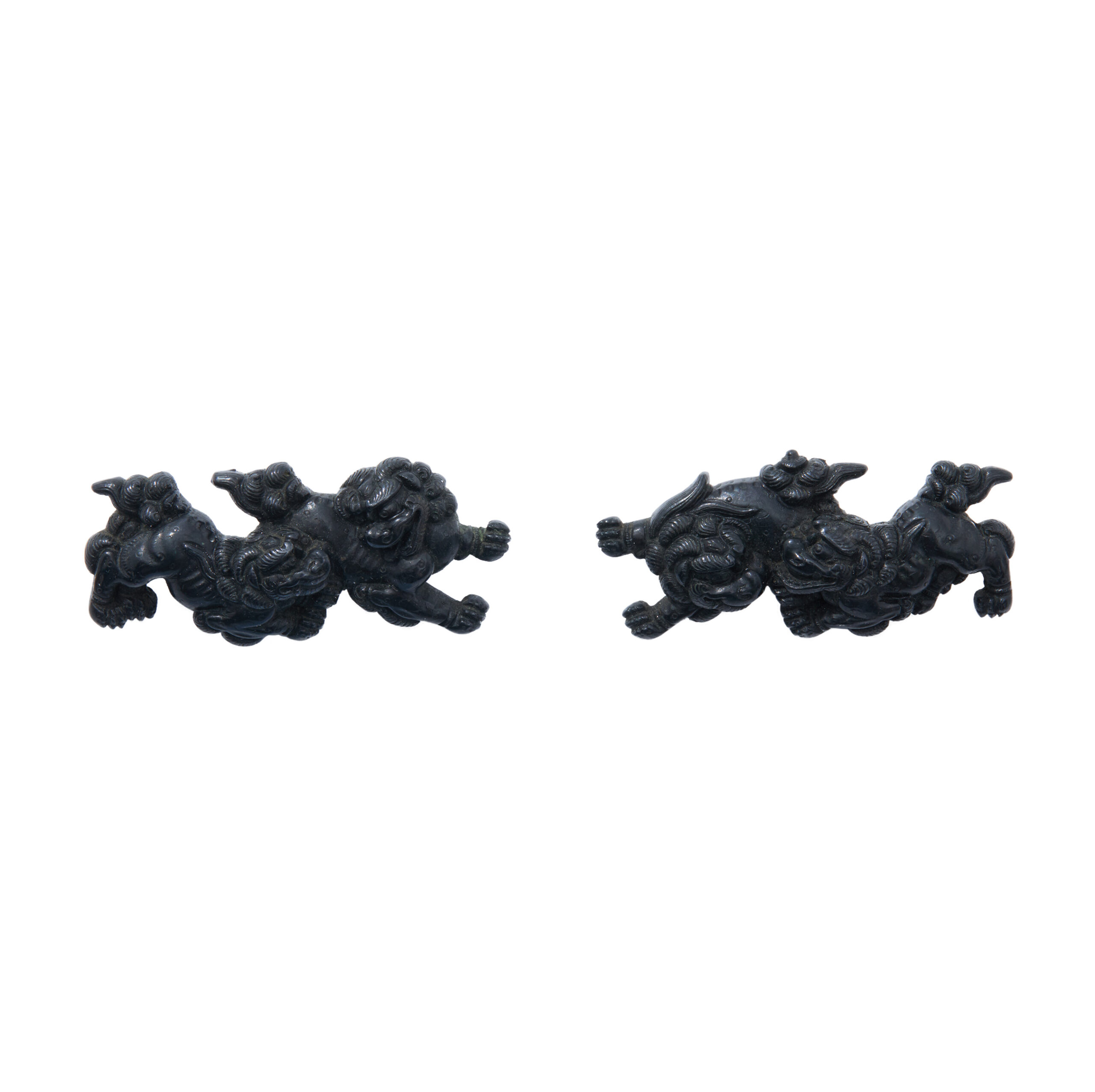
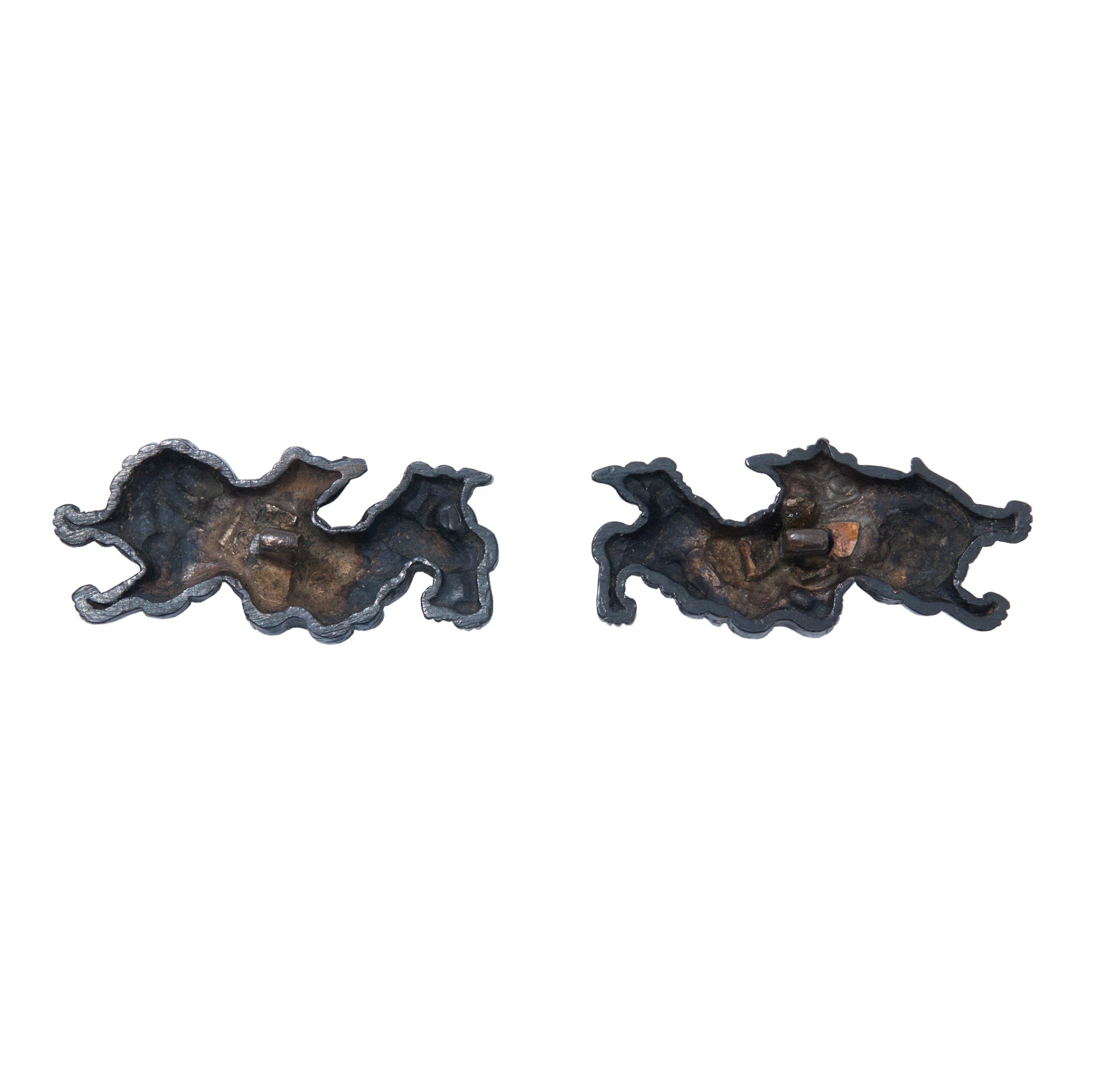
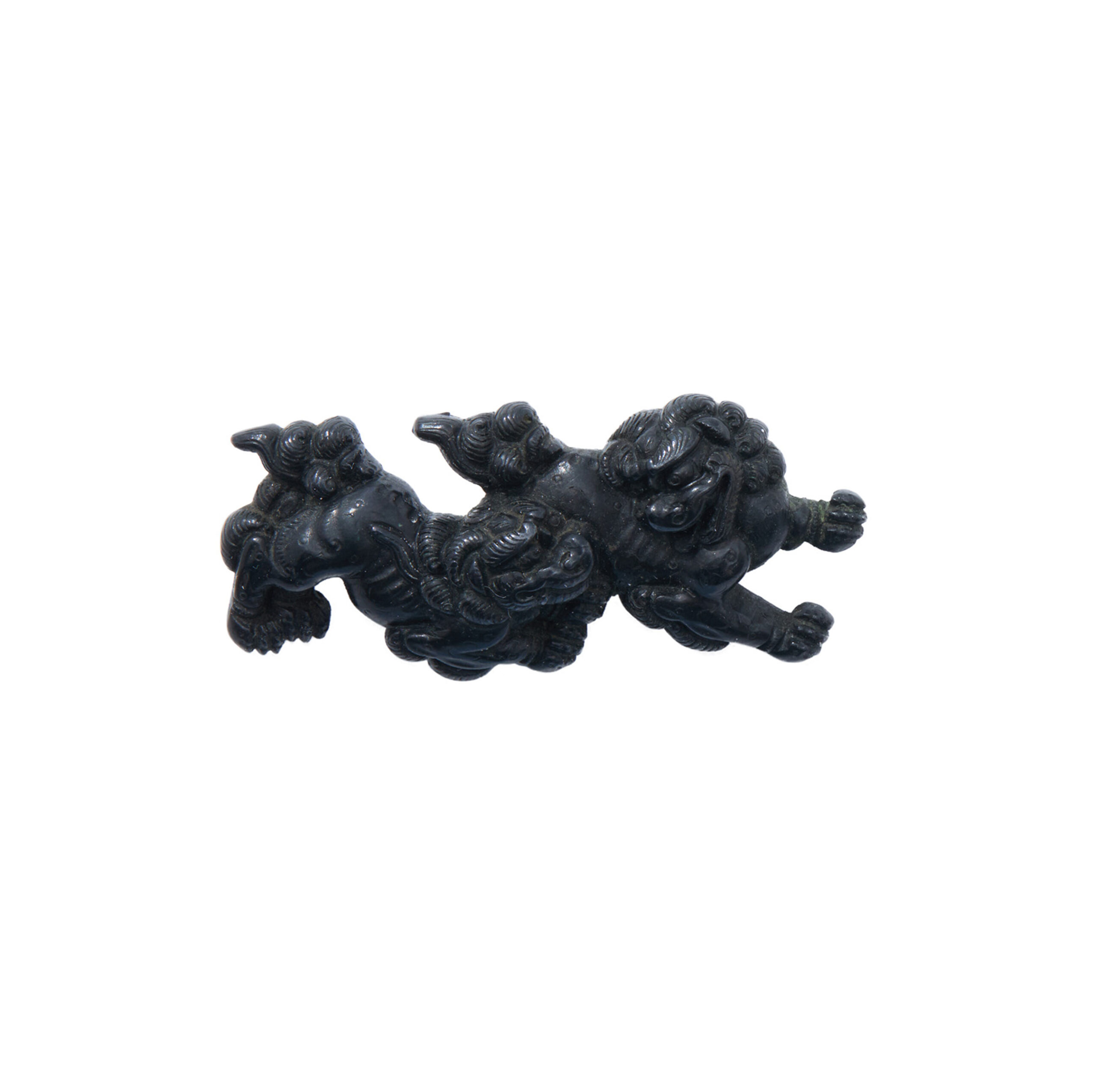
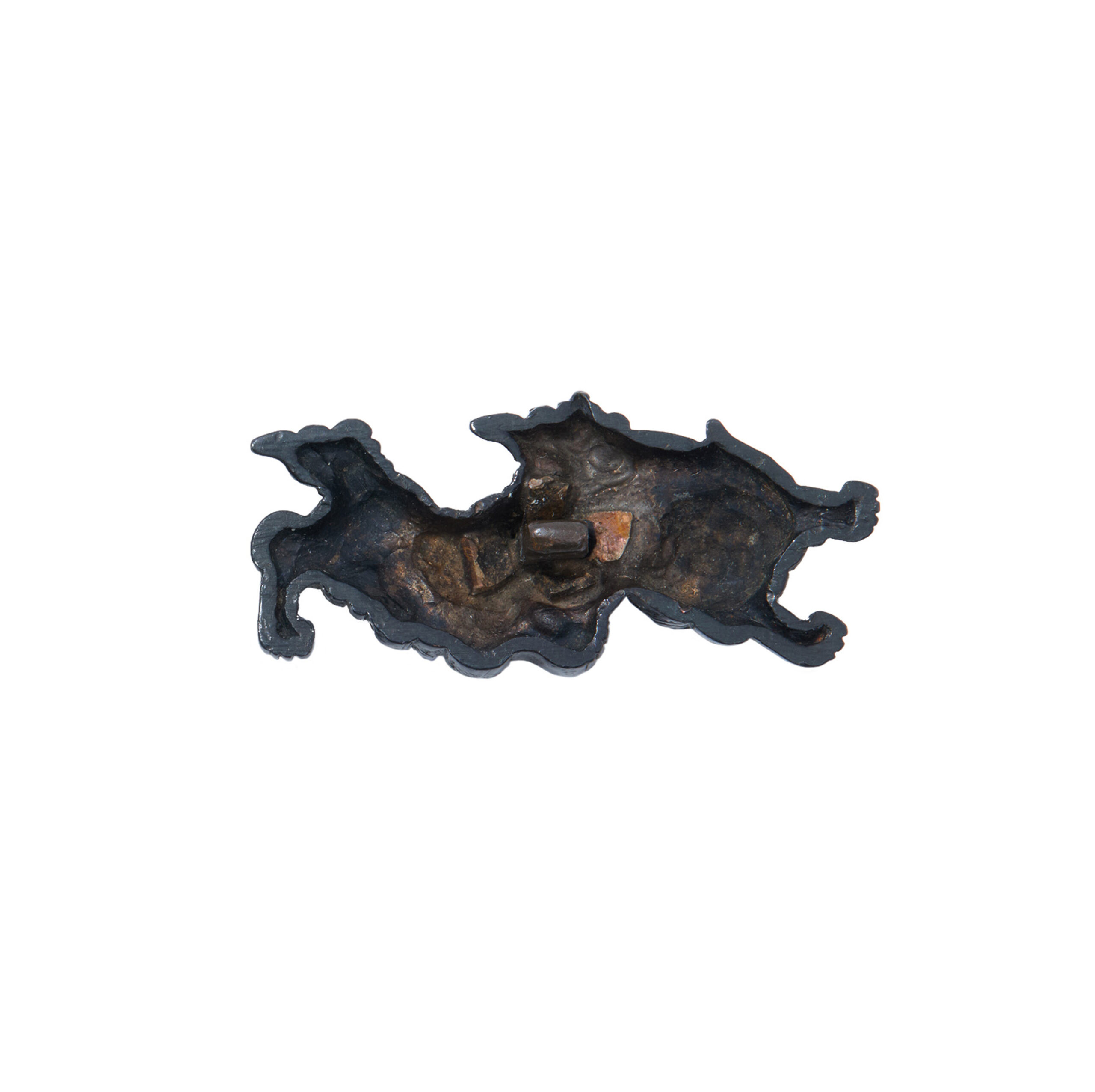
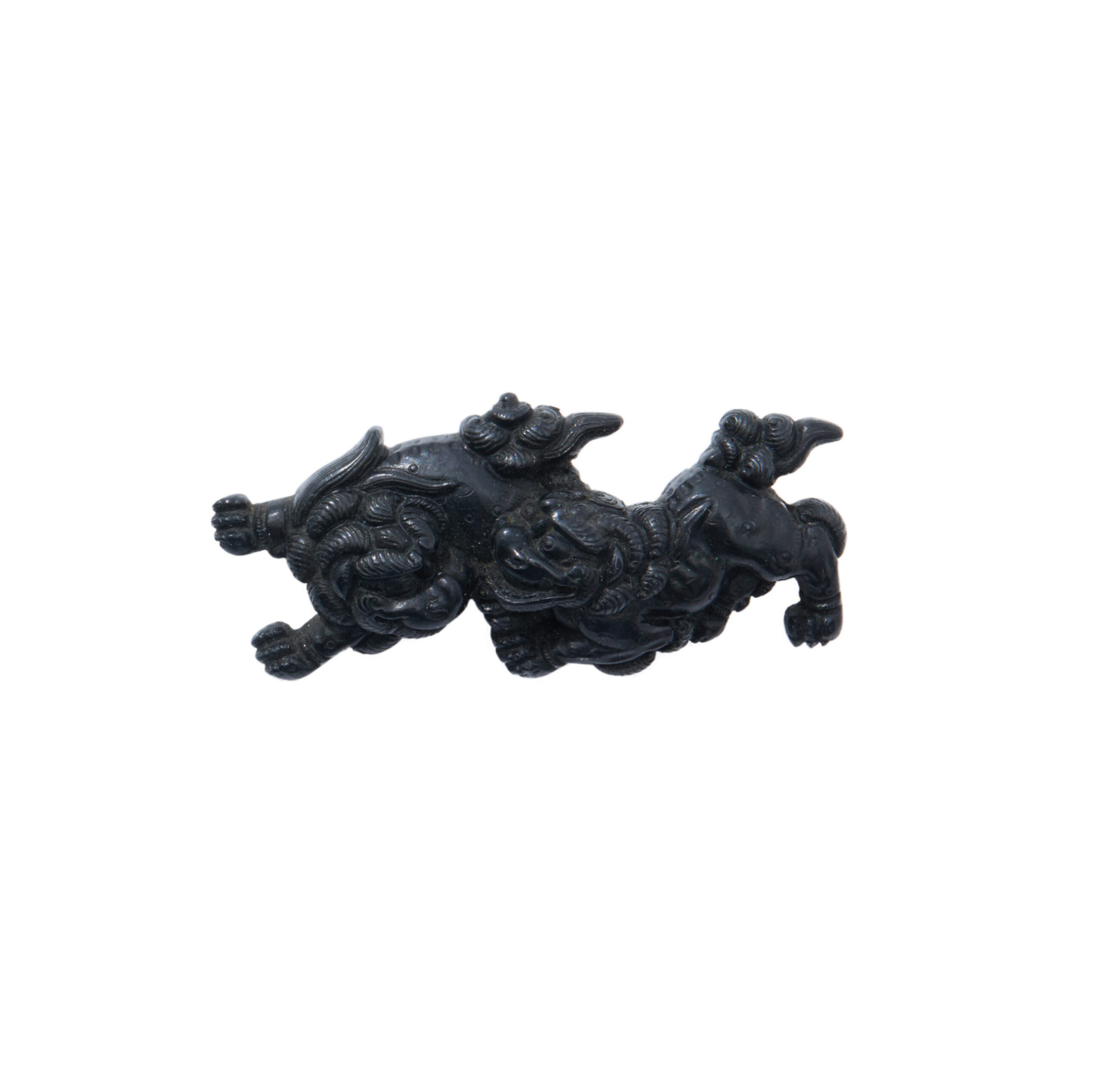
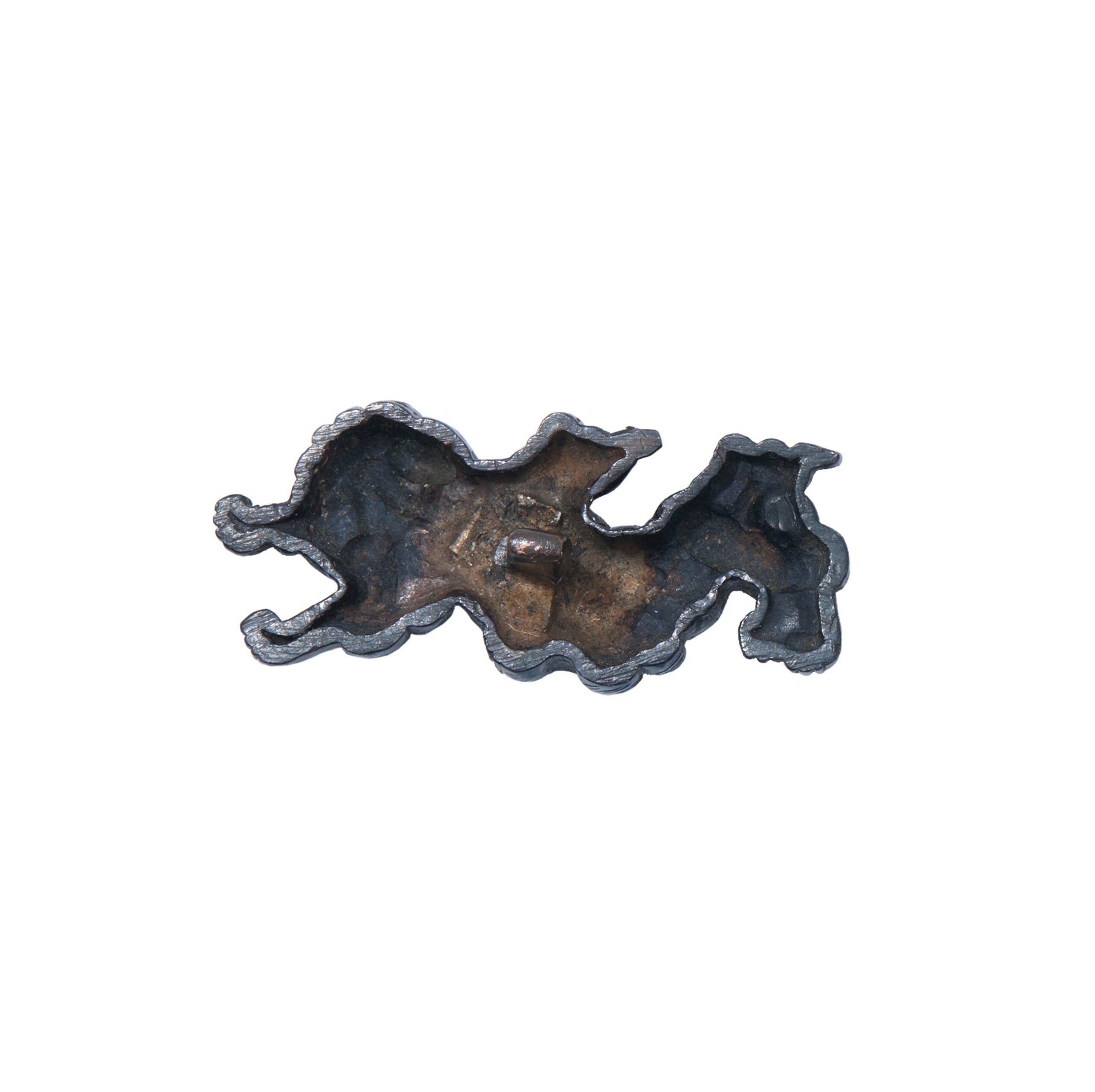
The motif of this Menuki is the Karajishi (唐獅子). You would see the figure of two running Karajishis on each Menuki. Each of them is very vibrant and lively. The carving is also meticulous; Karajishis’ fangs and toes and the characteristic curly hair patterns are clearly carved. The Shishi (獅子) means a lion in Japanese, and the Karajishi is a lion brought from the continent to Japan in the Toh period (唐, Tang dynasty, 618-907). The Karajishi typically has curly hair for its head, neck, body, and tail, as you see in this work. In Buddhism, the Karajishi is regarded as a symbol of wisdom, and the Monju Bosatu (文殊菩薩, Manjushri Bodhisattva) rides lions. According to a theory, the Karajishi originates from the Komainu (狛犬, stone guardian dogs that exorcize evil spirits). A view says that the Karajishi motif has been primarily used as an amulet to protect people and sacred places from evil spirits.
NihontoWatchOffered by Samurai Museum

Edo
Unsigned
We could not find an authenticity certificate on the seller’s listing. Japanese swords and fittings are normally papered by the NBTHK (or the NTHK). Without one, the attribution is the seller’s own assessment and has not been independently verified — treat it with caution and ask the dealer about certification before buying.
Returns/exchanges limited to defects caused by shipping (except willful misconduct or gross negligence by the company); customers must contact within 72 hours of receiving the product.
¥60,000