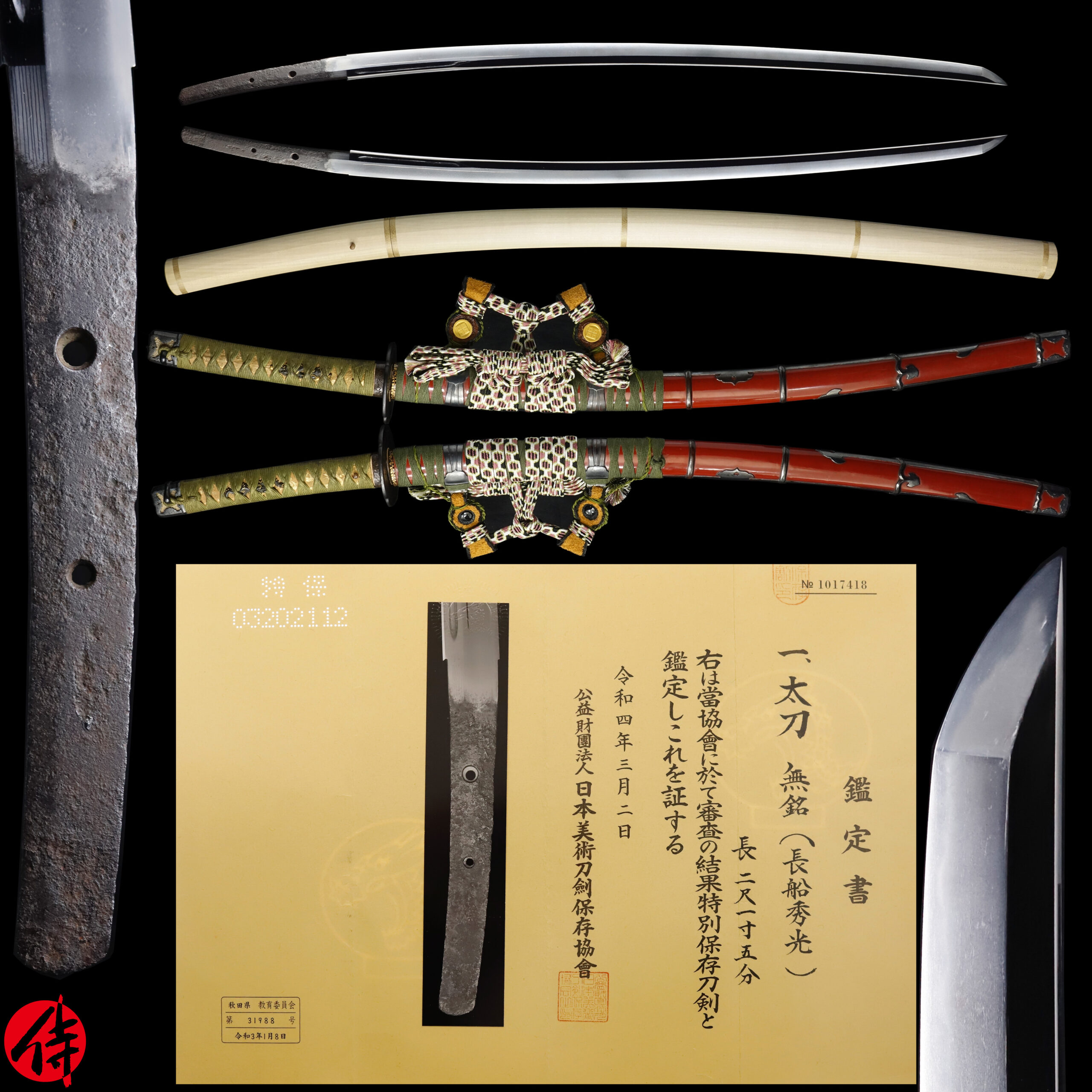
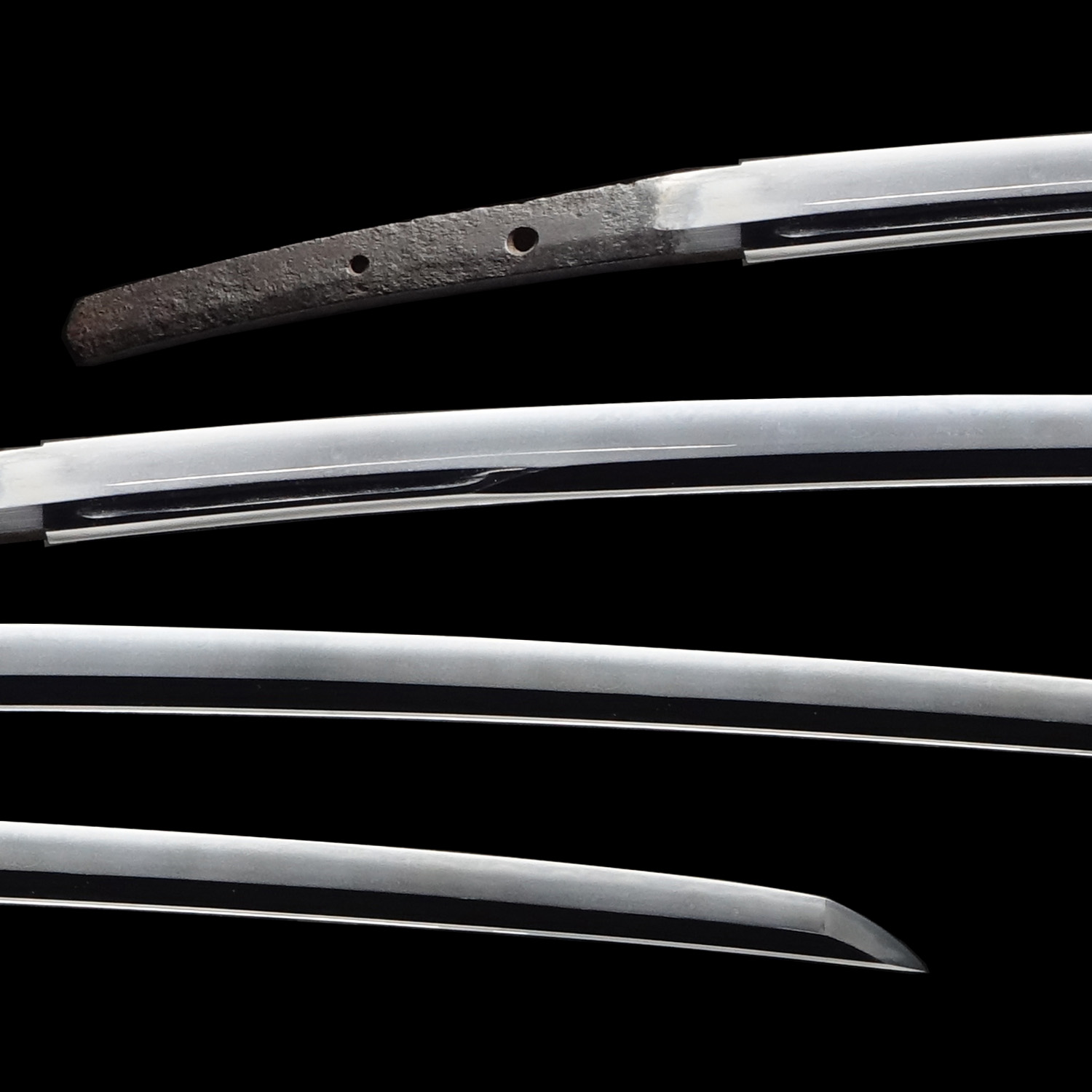
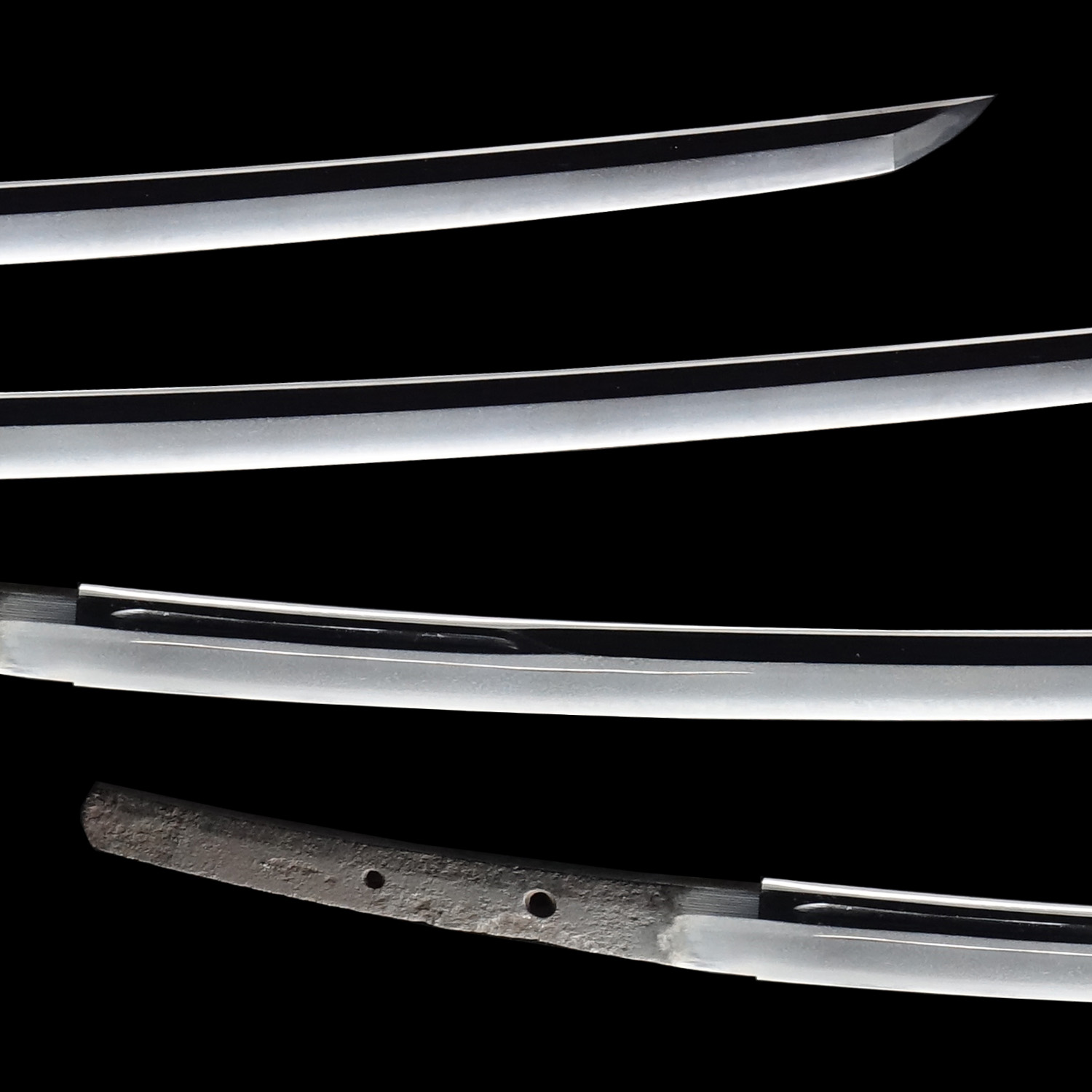
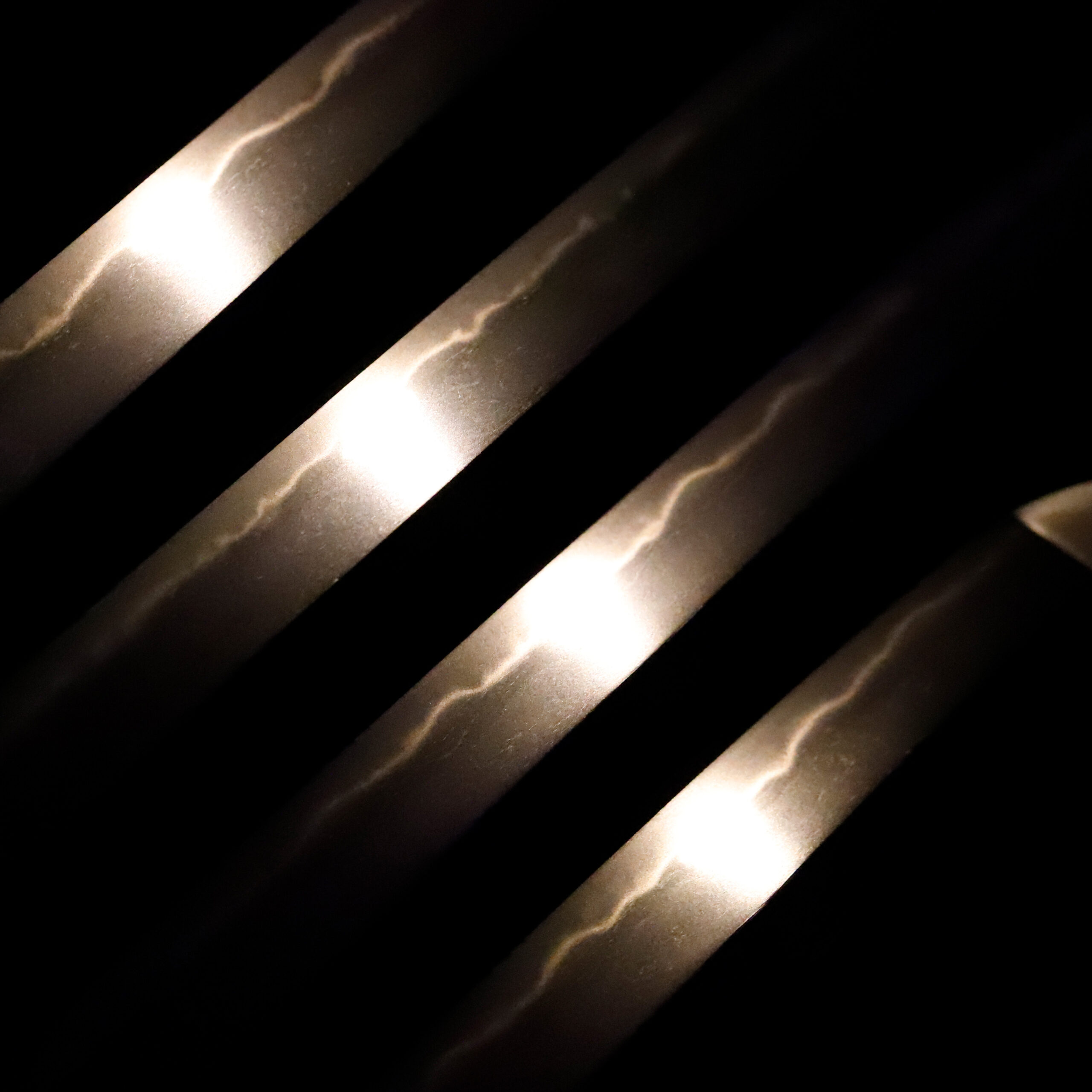
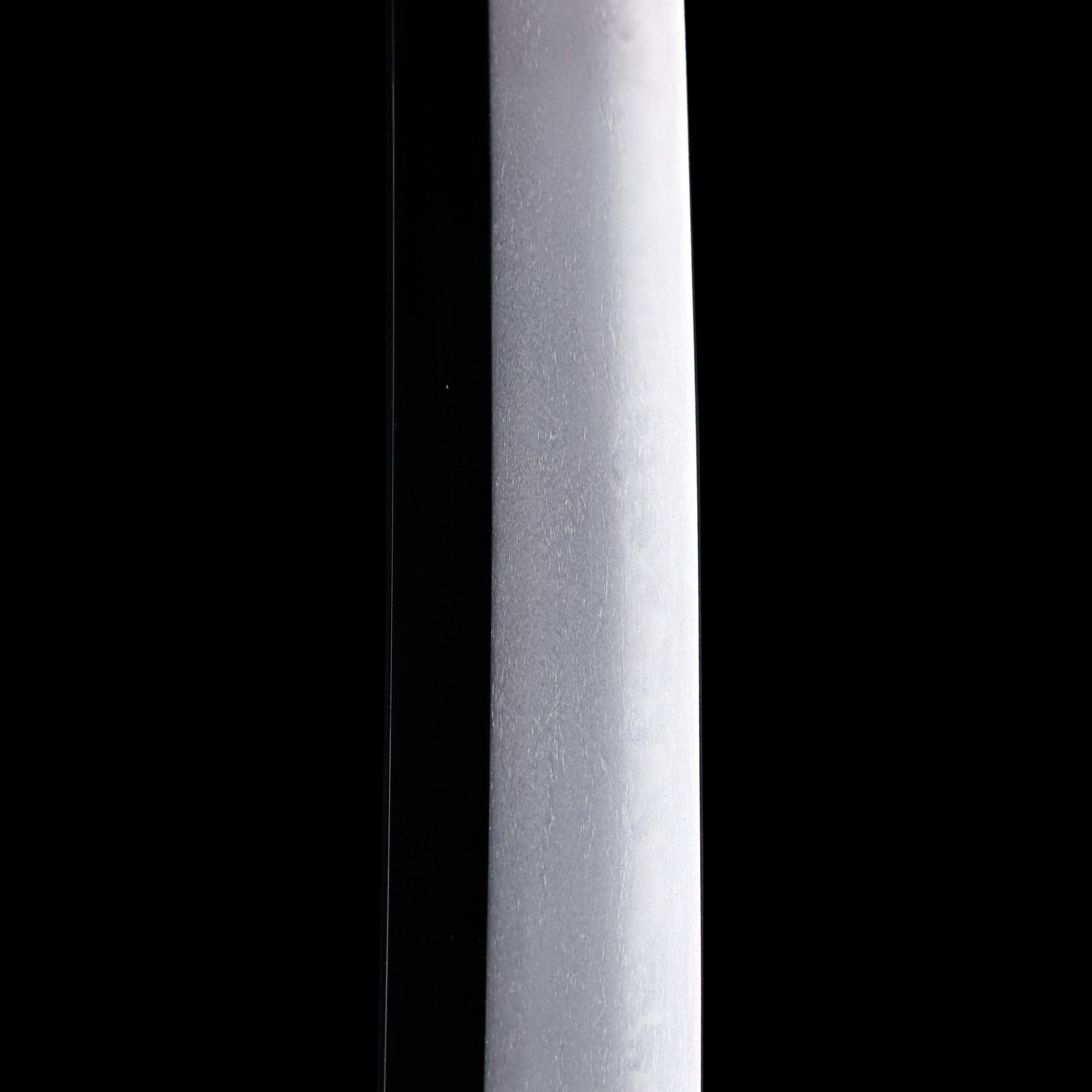
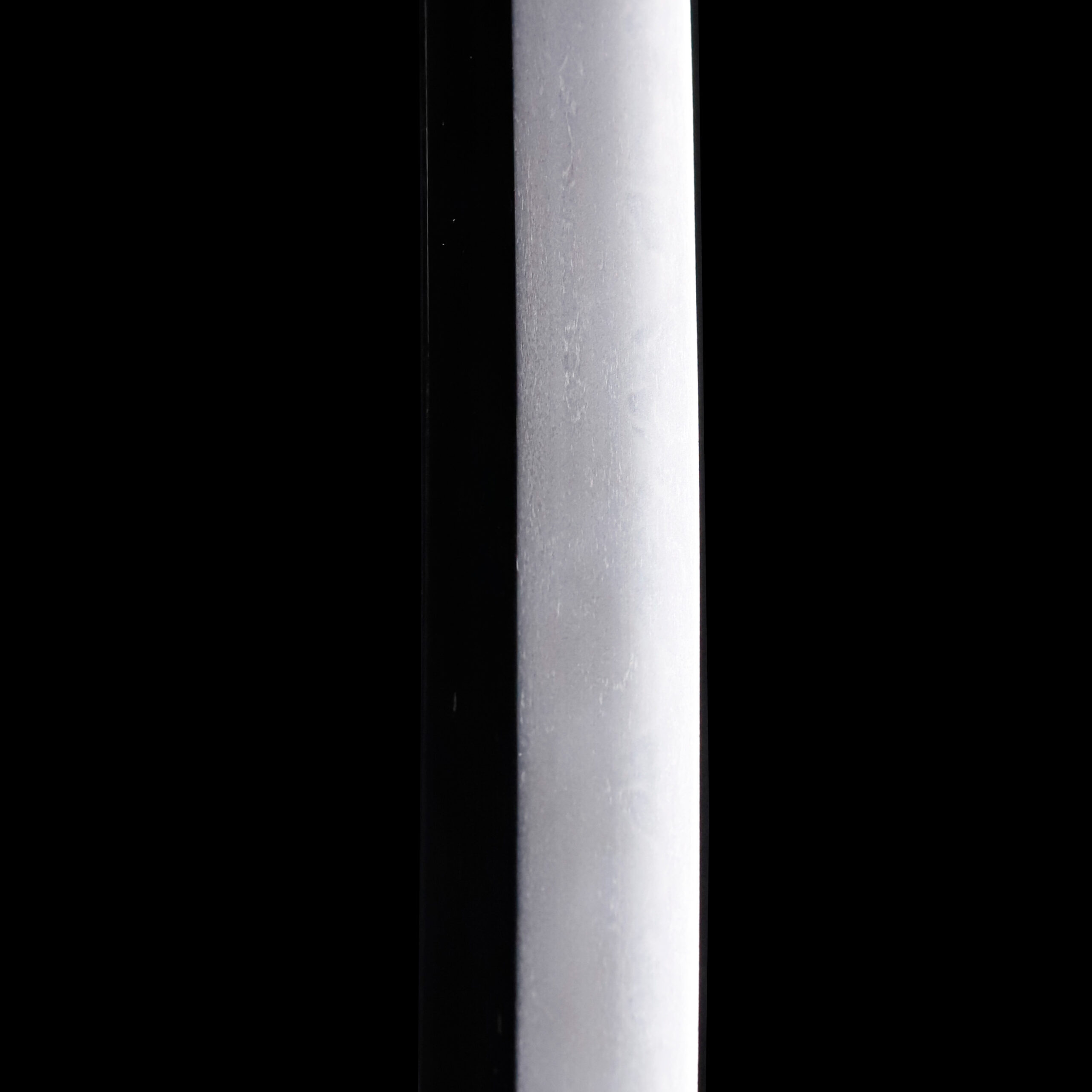
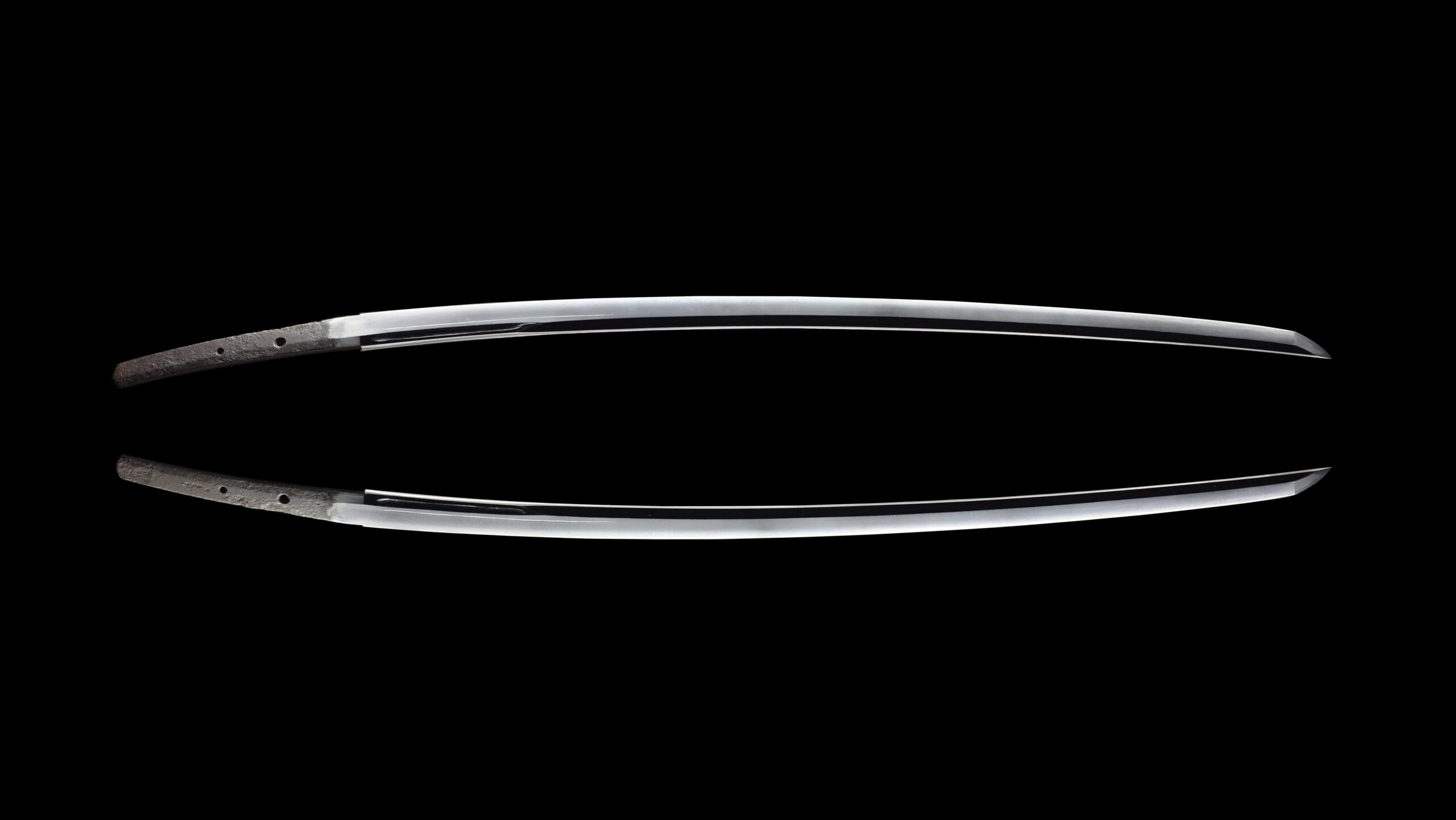
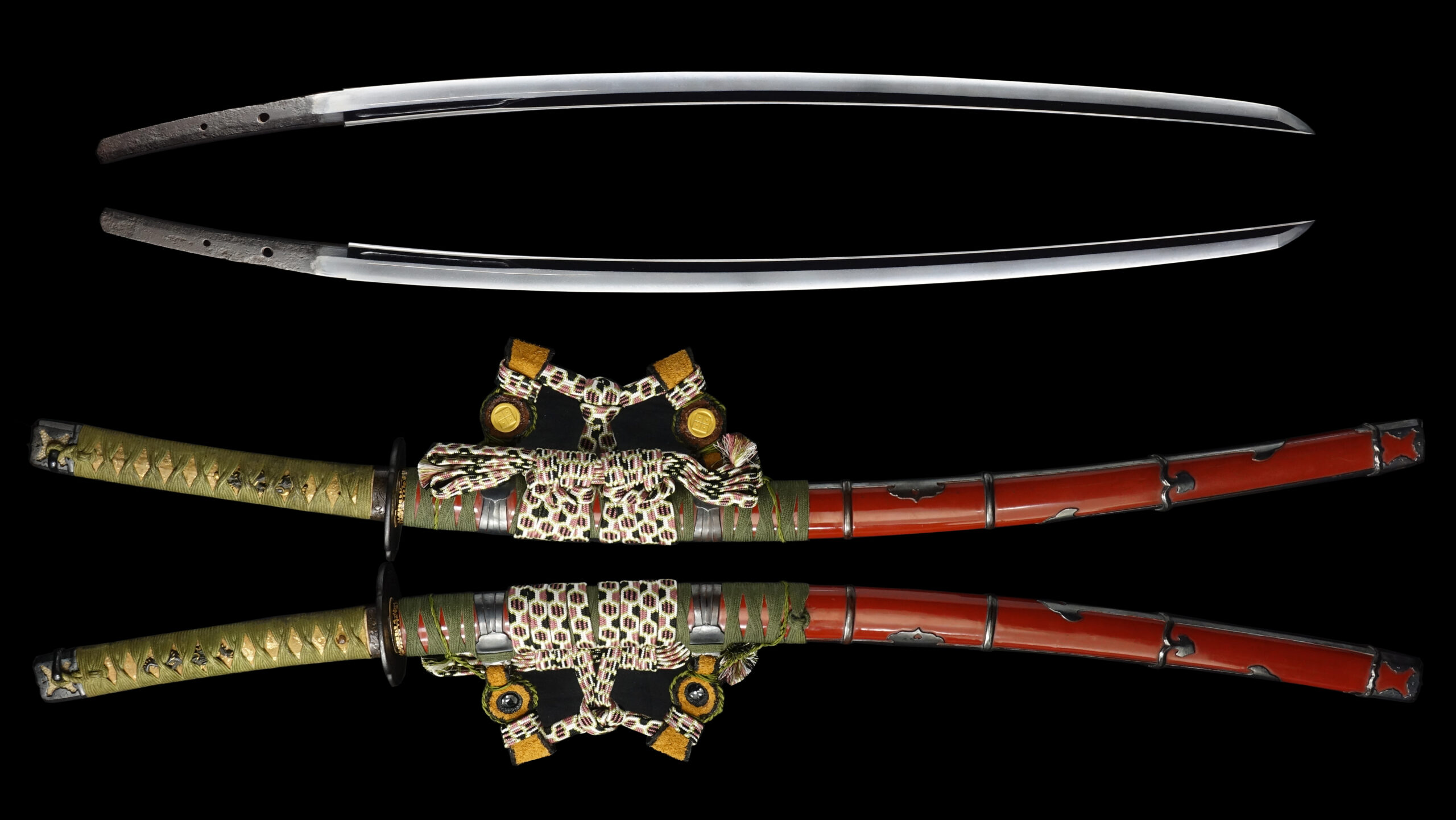
Sixty years of war between two courts drove blades long and broad, and Osafune met the demand: Kanemitsu and Chōgi led forges serving the provincial warriors who did the fighting, while Sōshū influence arrived with the armies to create Sōden-Bizen.
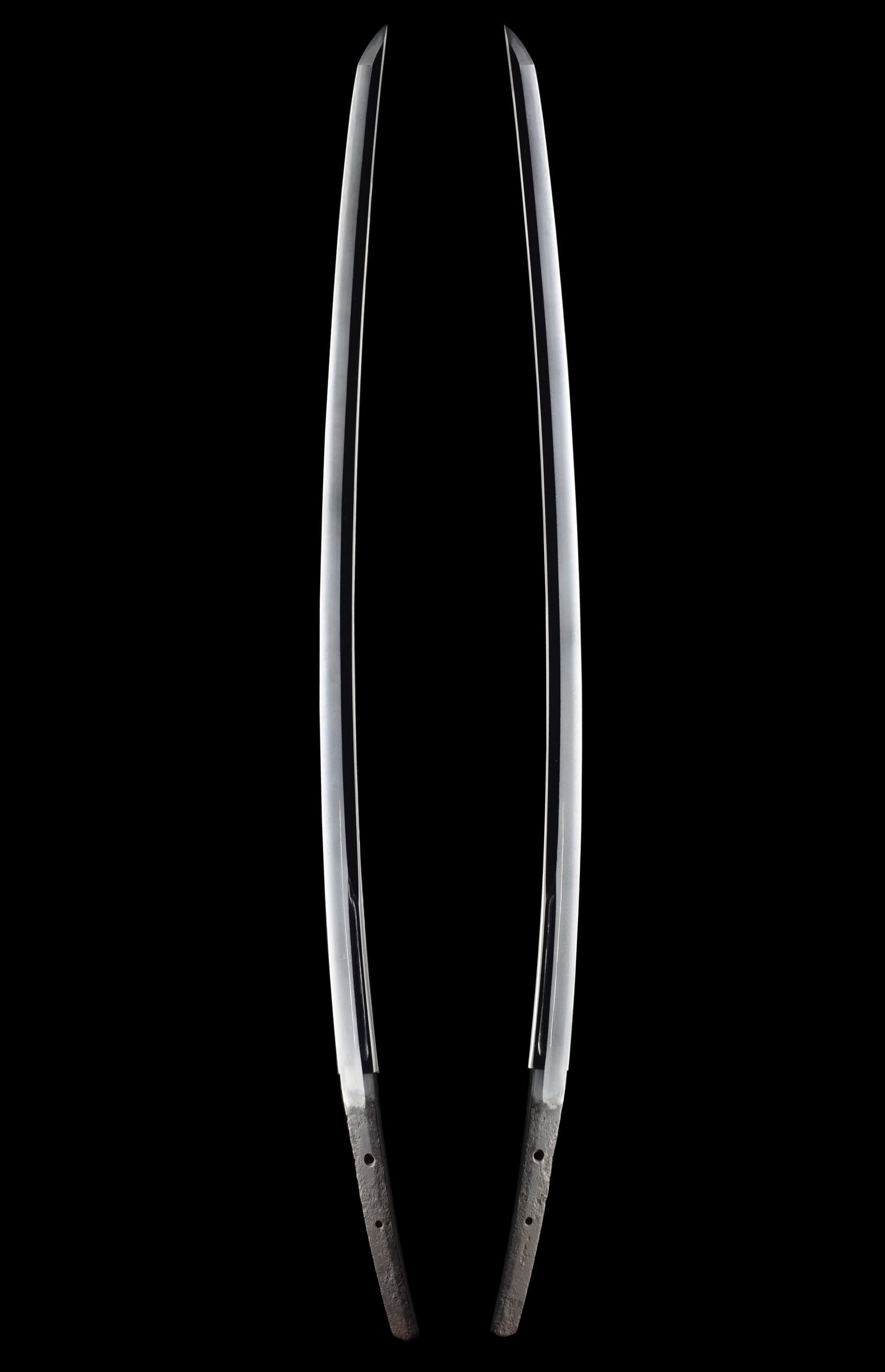
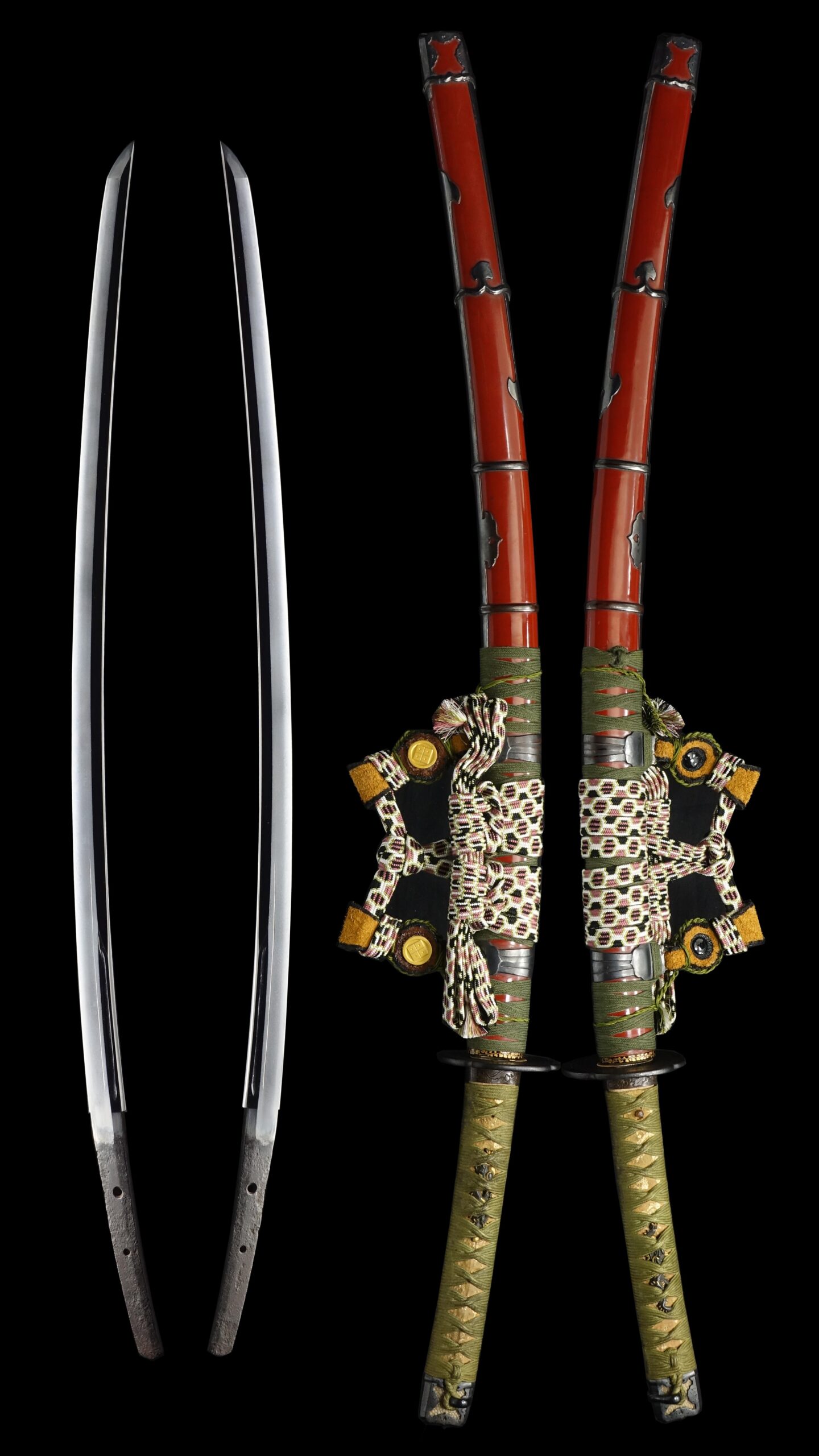
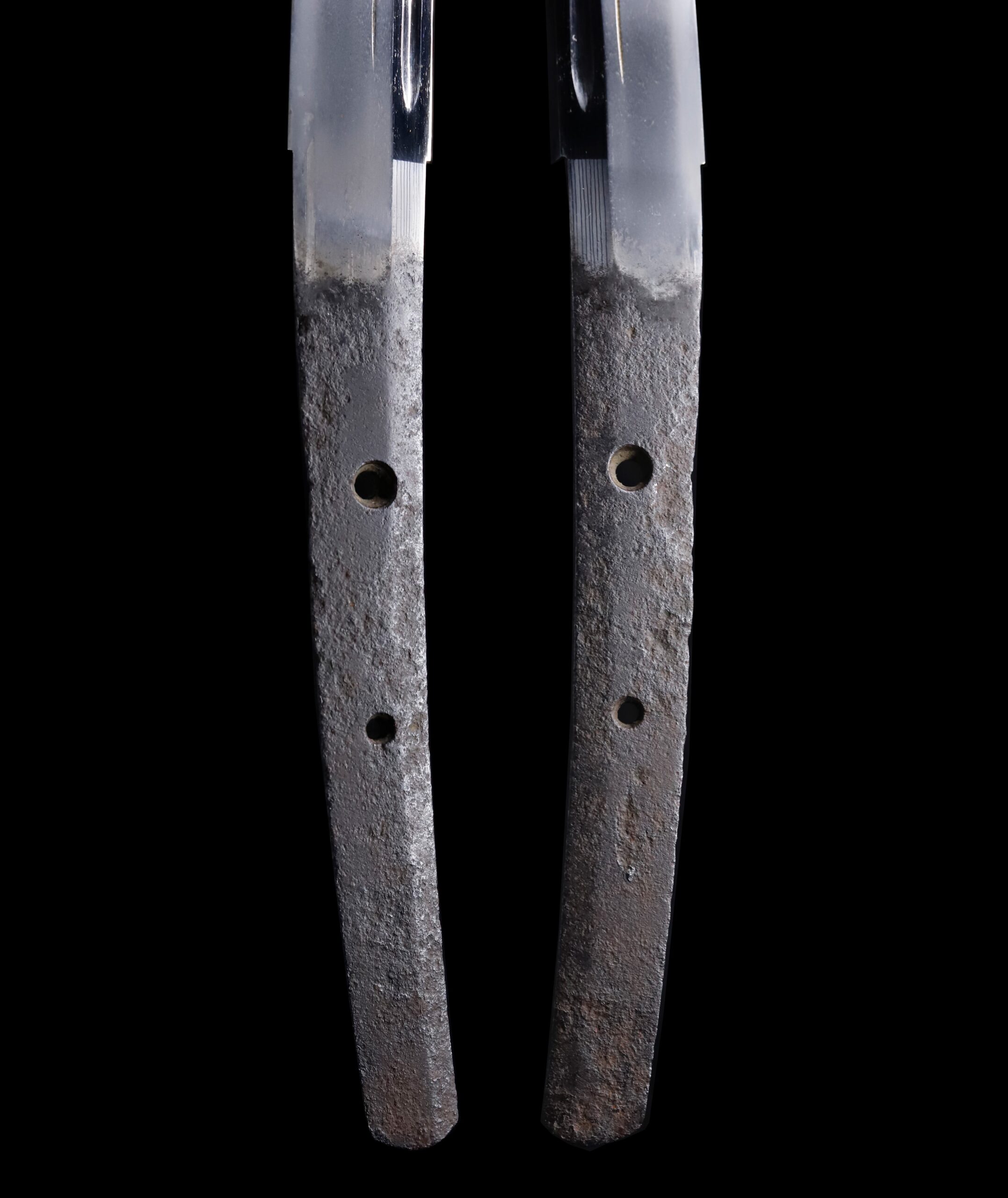
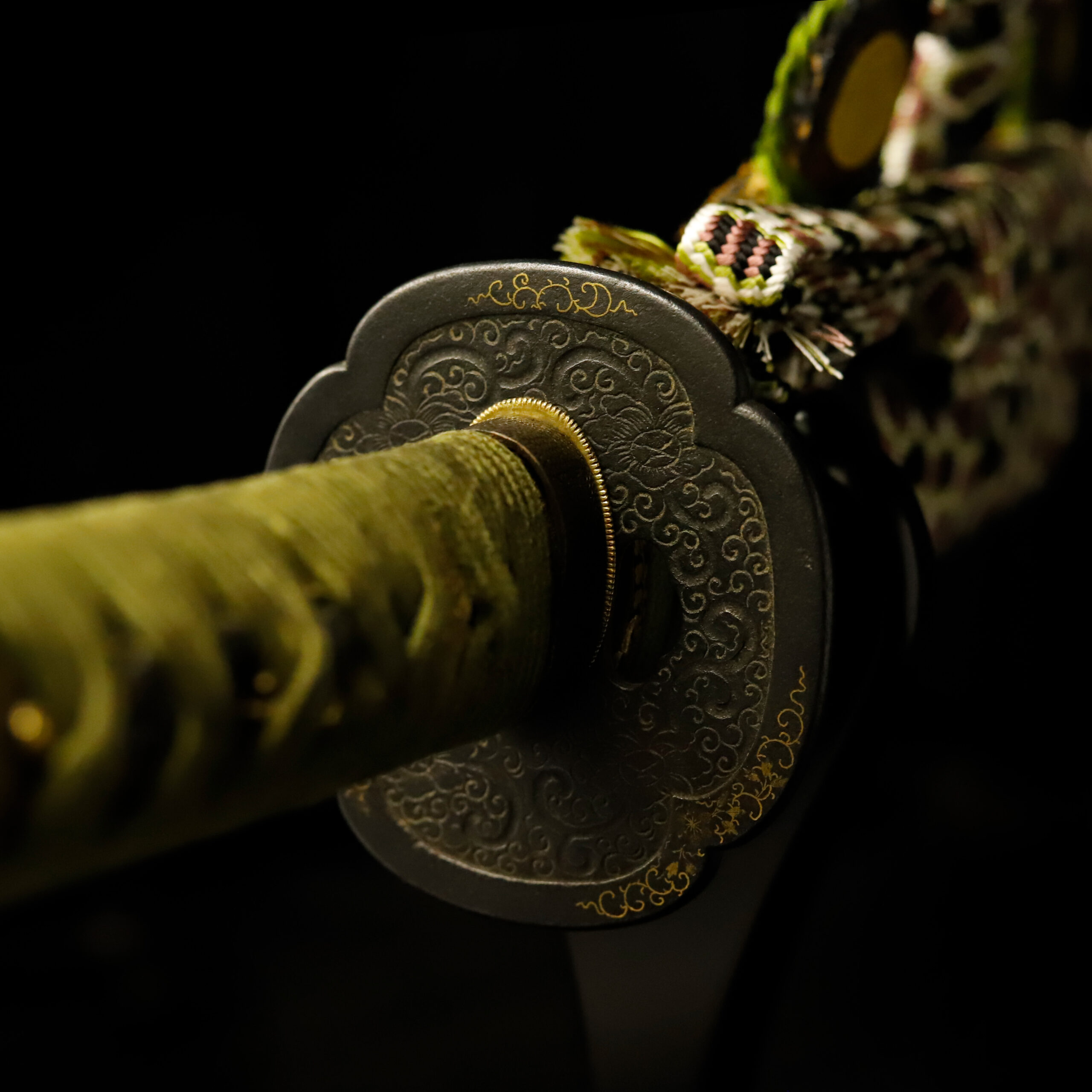
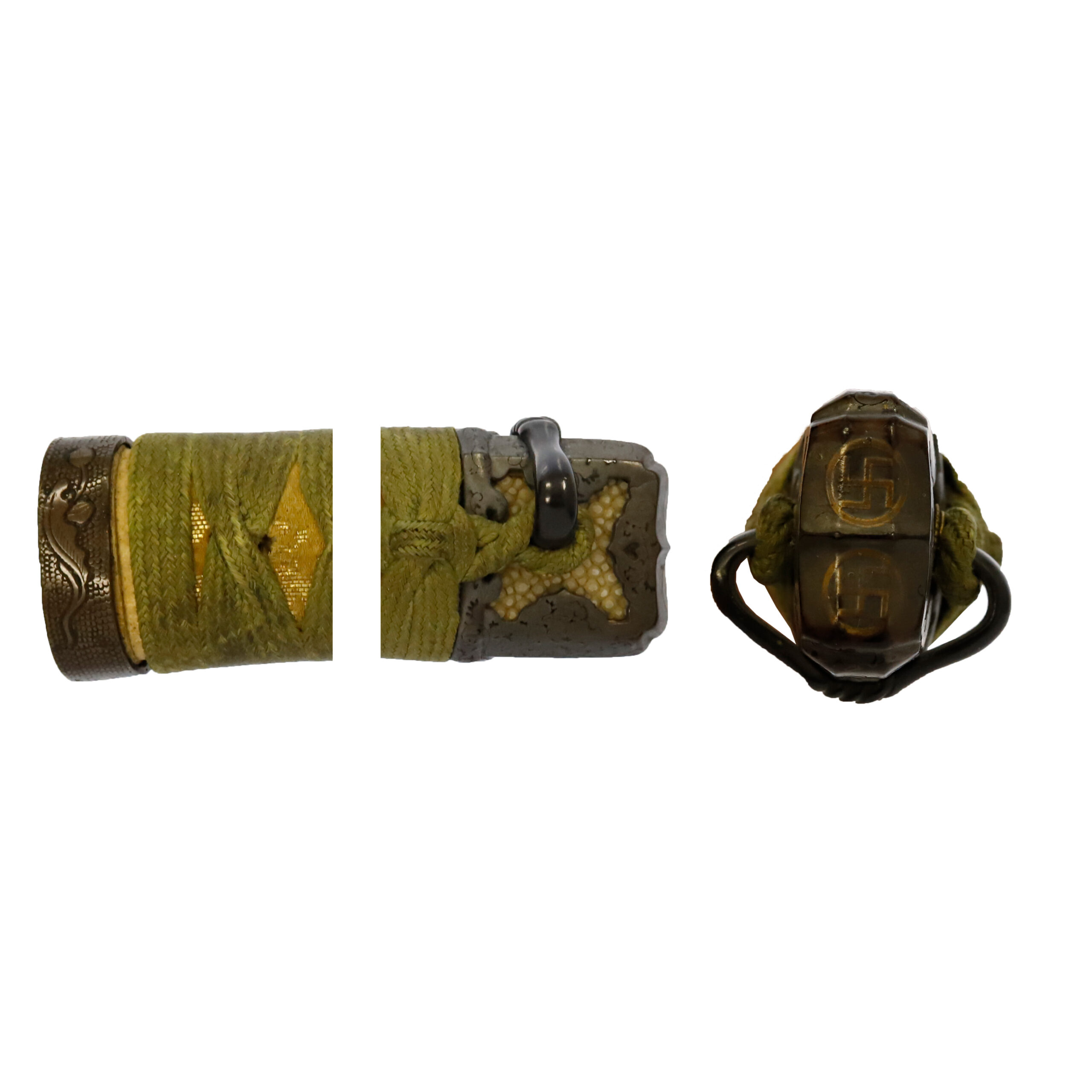
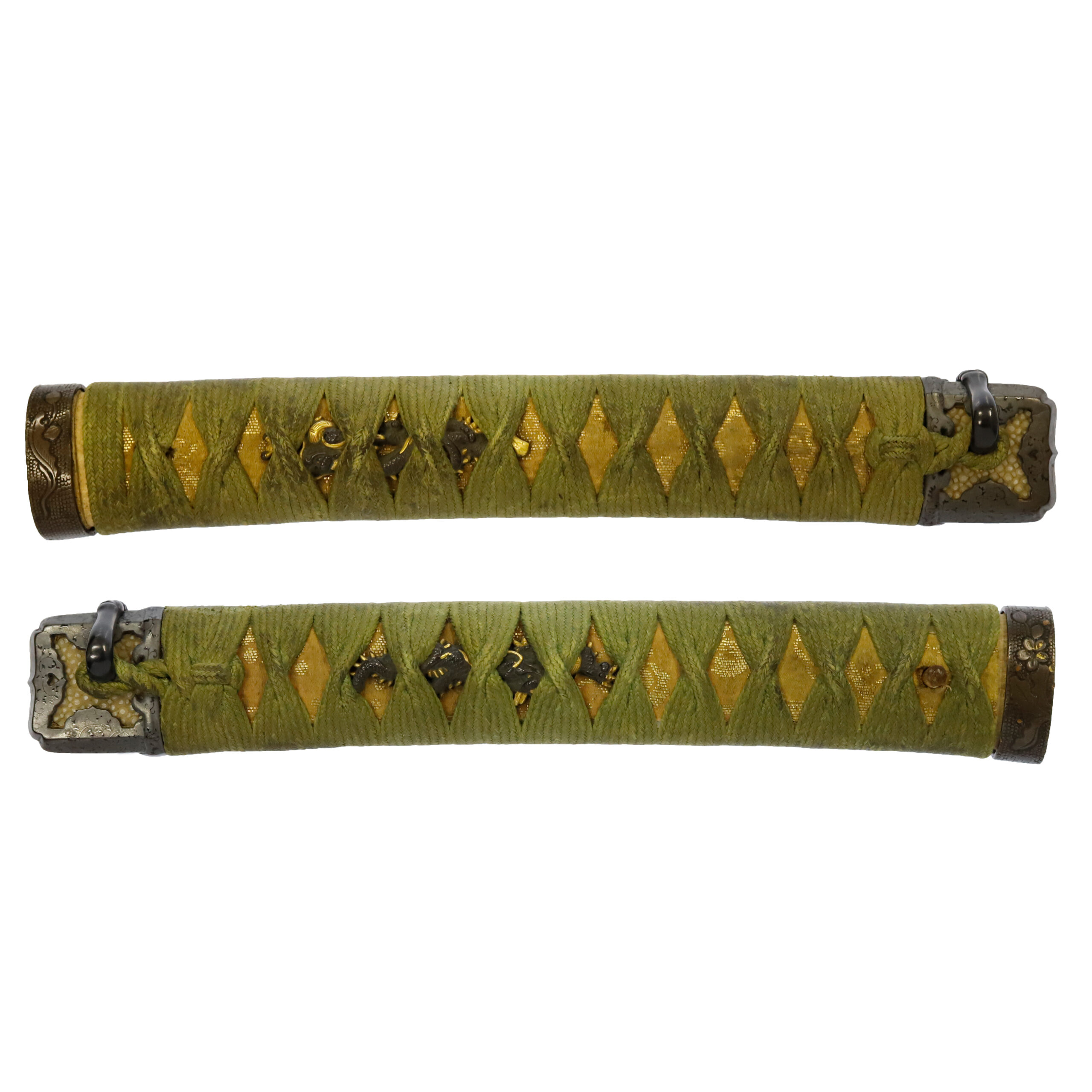
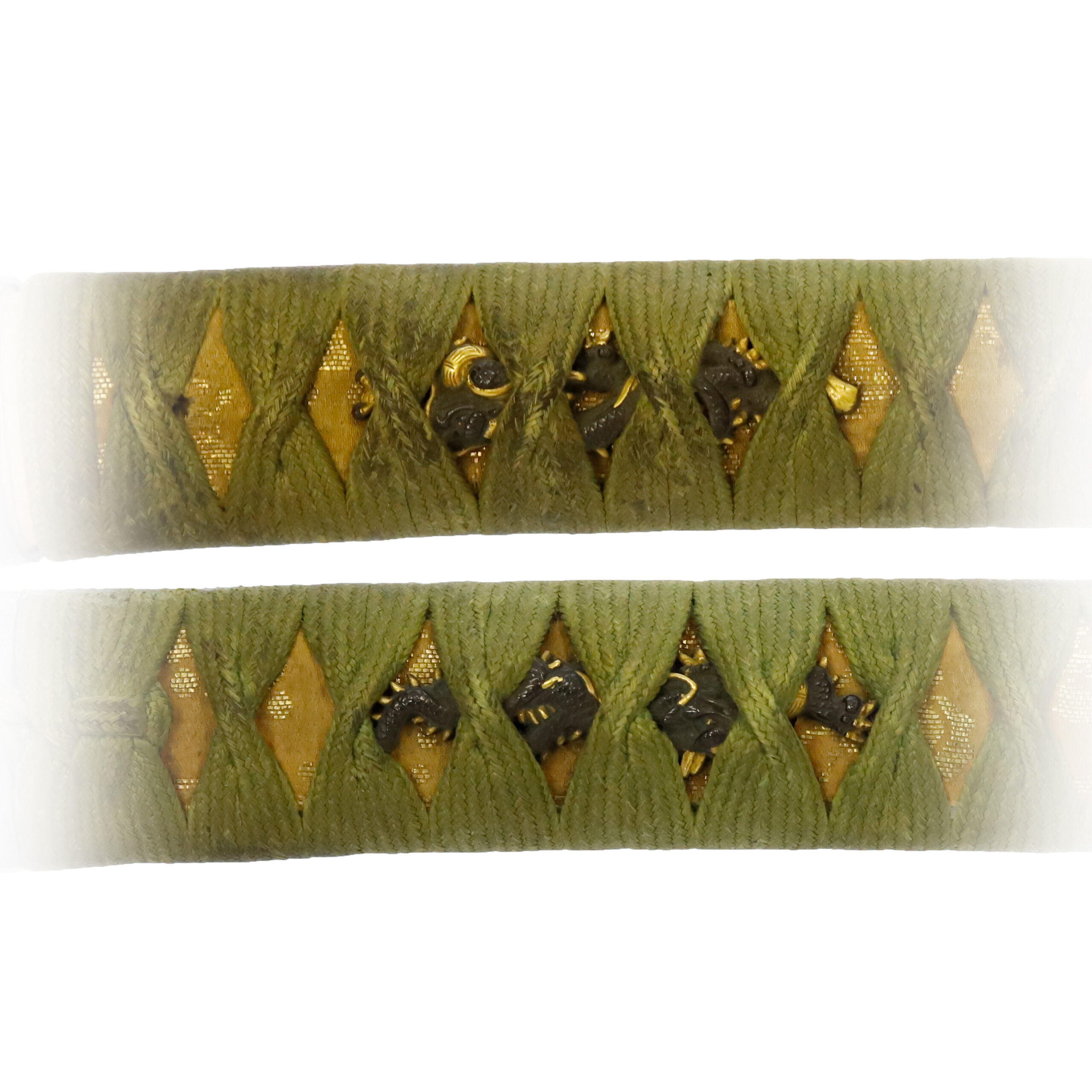
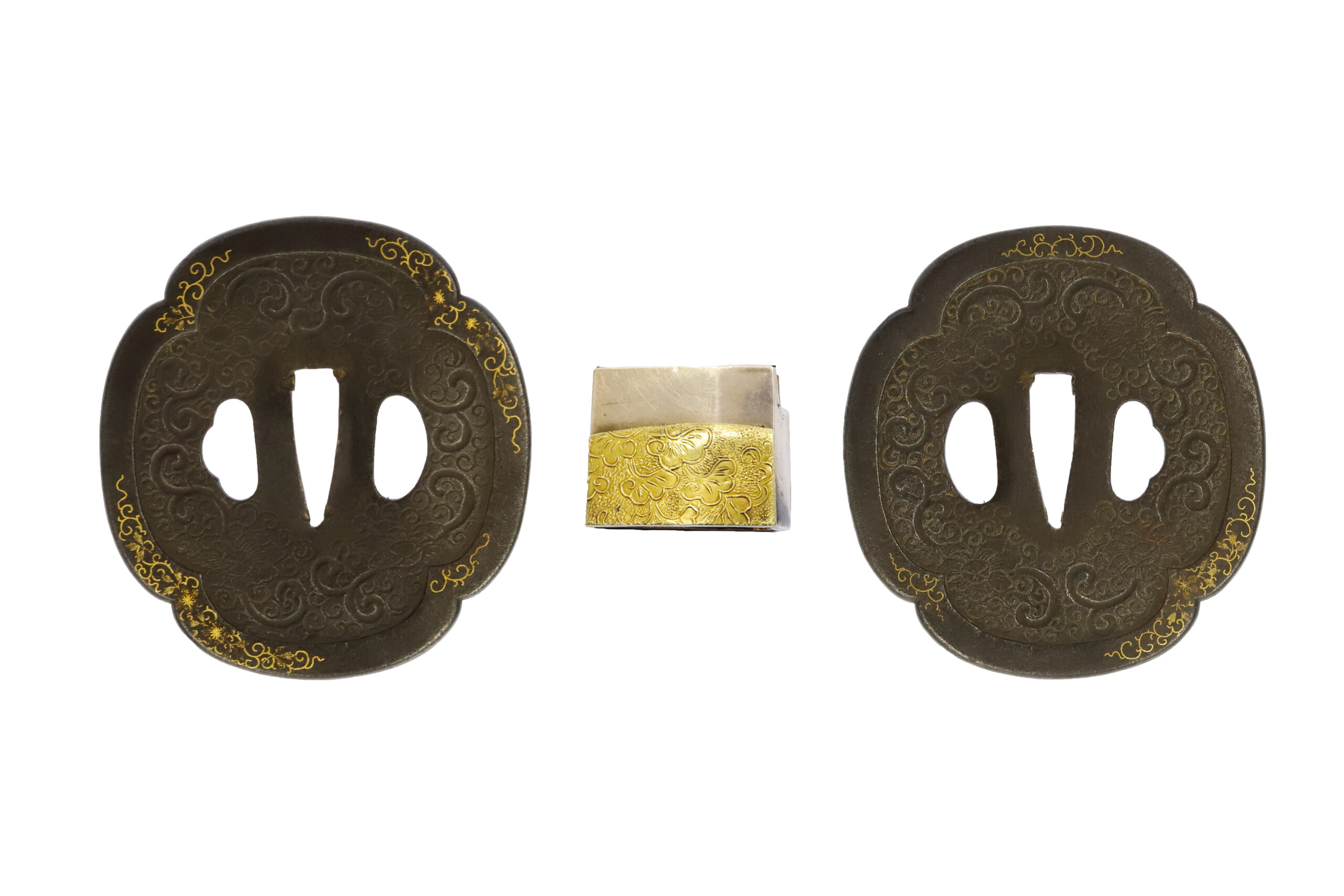
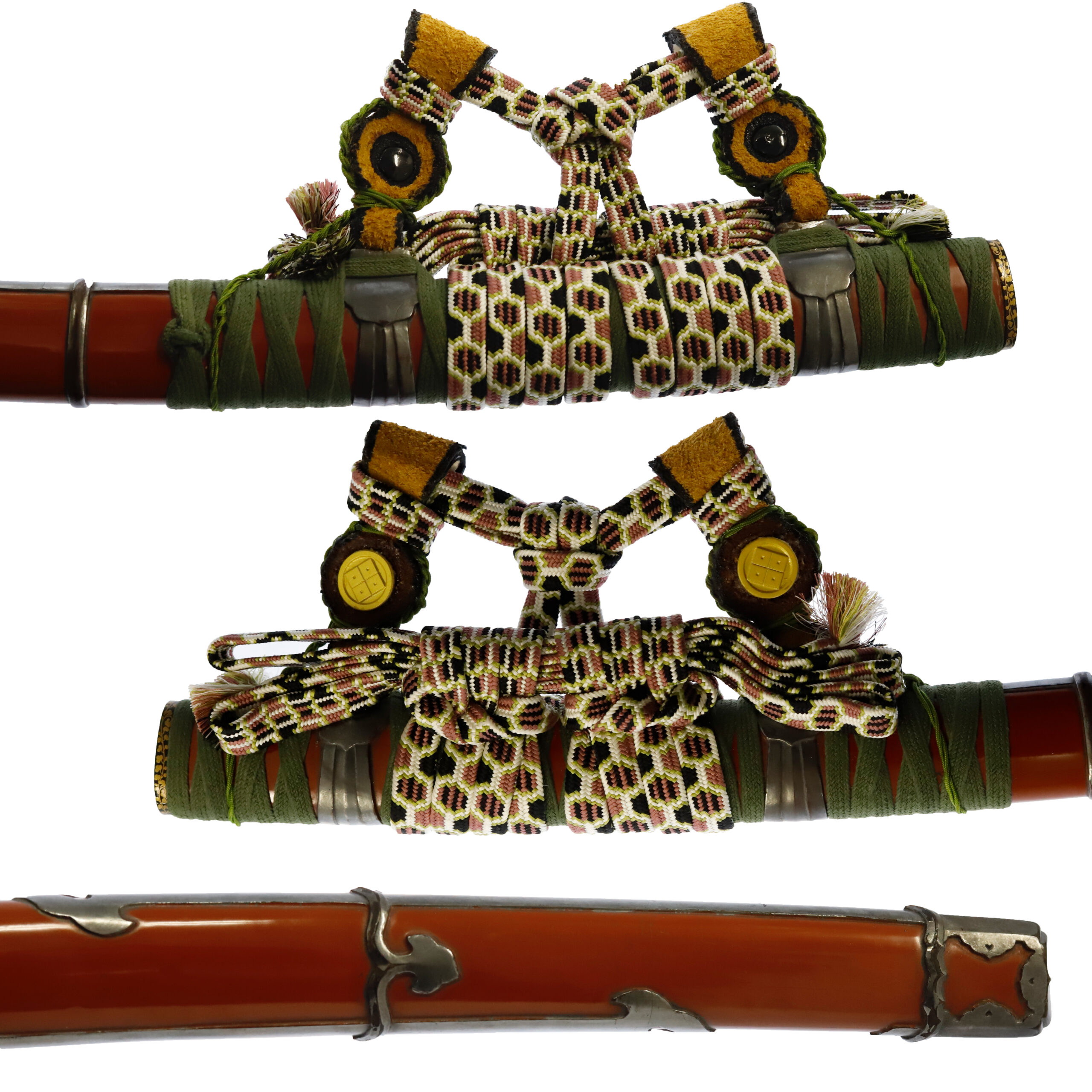
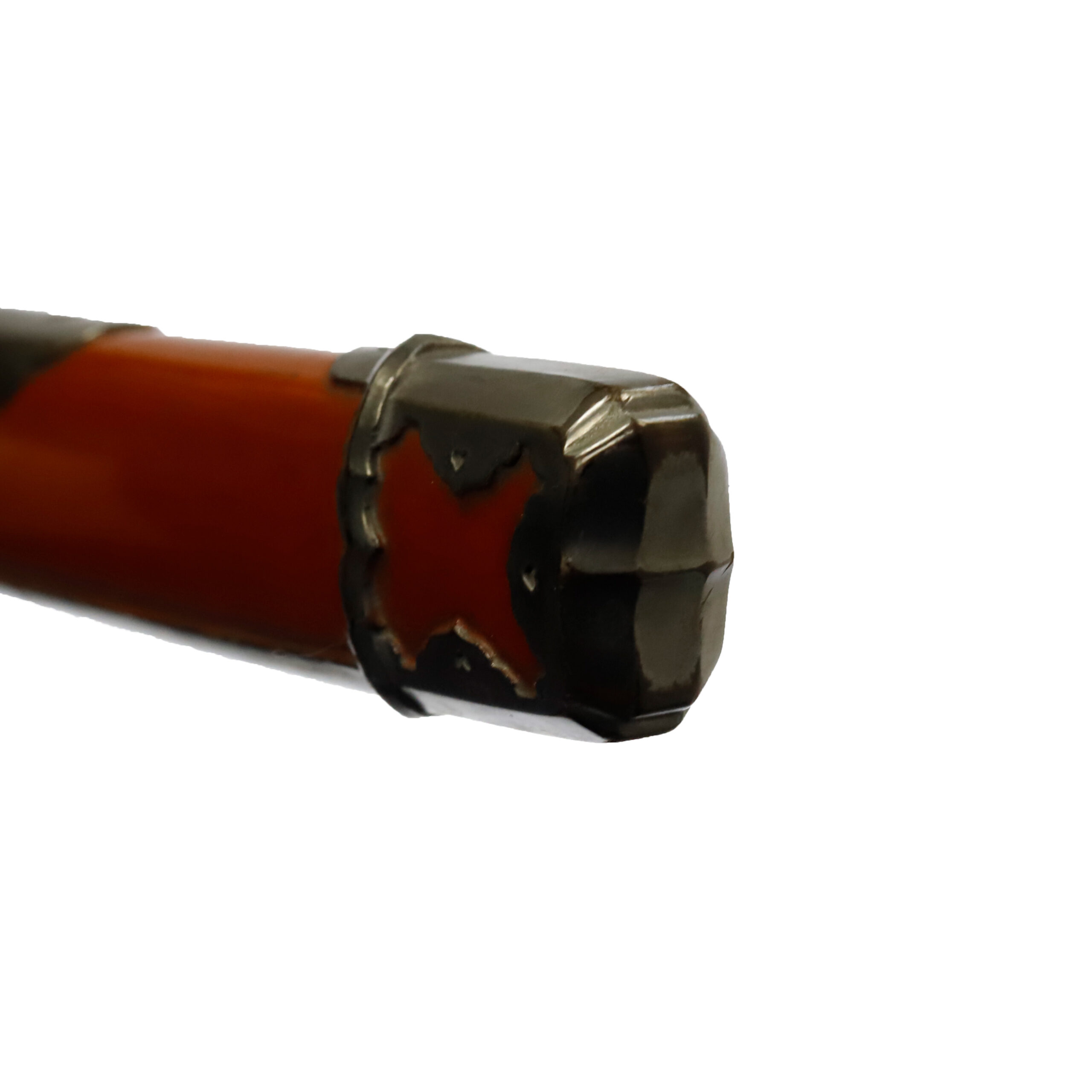
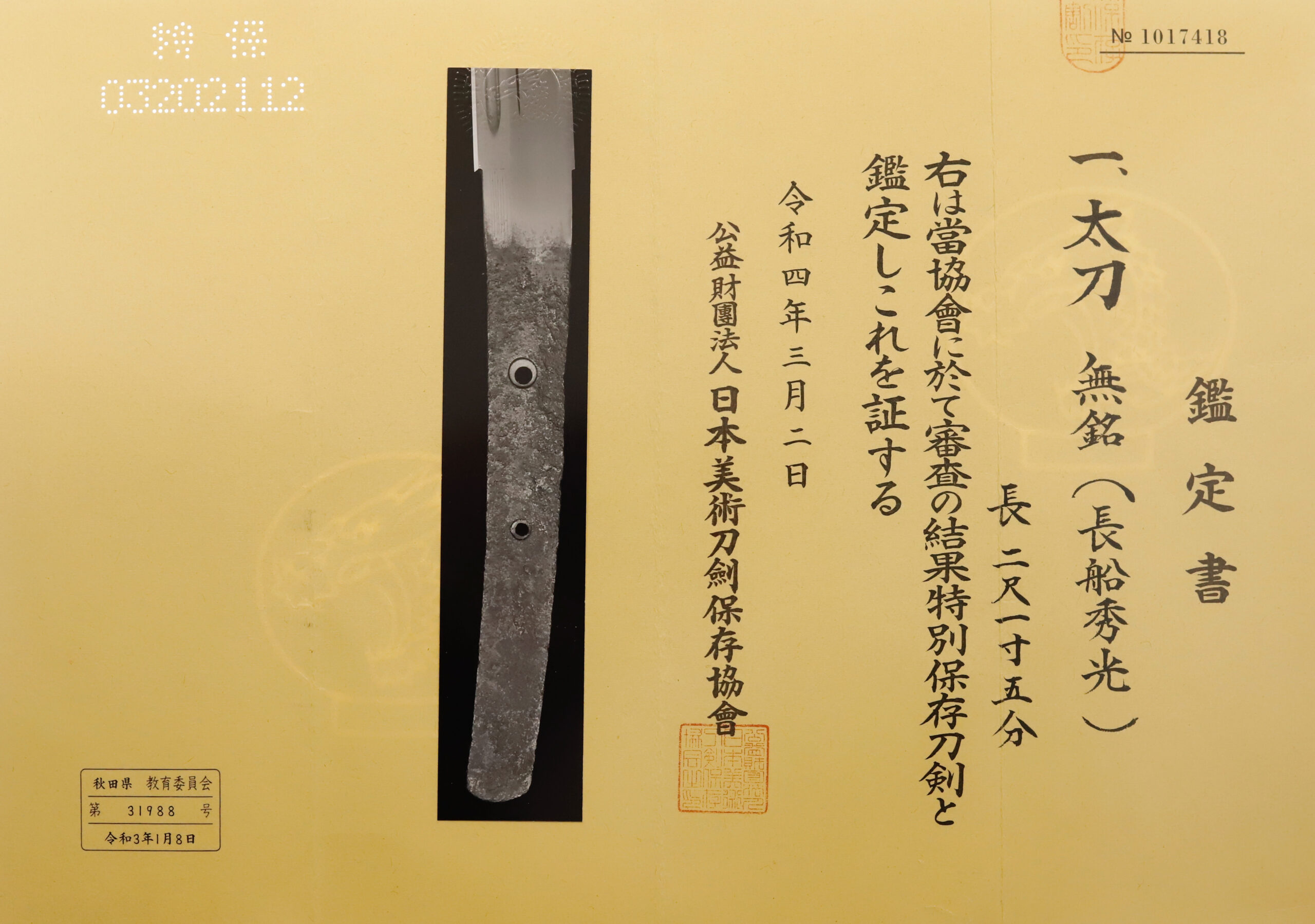
Summary This blade is attributed to Osafune Hidemitsu (長船秀光), whose maker’s name lasted four generations. The first-gen was active during the Kenmu era (1334-1336: Early Nanbokucho era). The second-fourth of generations were active during 1368-1394 (mid-Nanbokucho-early Muromachi period). We believe the attribution was given to the first-gen Hidemitsu. Hidemitsu resided in Bizen province (Today’s Okayama prefecture). Hidemitsu was categorized as a Kozori swordsmith. Kozori is a group of swordsmiths who belonged to Osafune school in Bizen during the Nanbokucho Period but wasn’t part of major branches such as Kanemitsu school. Other famous swordsmiths seen as Kozori are Morimitsu, Yasumitsu, and Norimitsu. The History of Bizen Osafune School It is said that Osafune school was founded by Mitsutada (光忠), who was active during the mid-Kamakura period. Bizen Osafune school was the biggest one of all other schools in Bizen province, and they received many orders from feudal lords or renowned Samurai. They were called Osafunemono and beloved by Samurai warriors. Among the swordsmiths who belonged to this school, Nagamitsu, Sanenaga, and Kagemitsu are known as Osafune Sansaku, the three renowned Osafune swordsmiths. There are also four other prominent swordsmiths who were from Bizen Osafune school. They are called Osafune Shiten-no, the four masters of Osafune school. Their names are Nagamitsu, Kanemitsu, Nagayoshi, and Motoshige. BIZEN is located near the Chugoku Mountains, where iron sands, one of the essential materials for making Japanese swords, were abundant. Furthermore, BIZEN swordsmiths had close access to Yoshi River, where they could find water and charcoal. This geological location contributed to the swordsmiths forging high-quality refined blades. We presume BIZEN was quite active in sword-forging from ancient times. It is said that BIZEN DEN was created by groups of swordsmiths there during the late Heian era (Late 12th century ). These ancient swordsmiths in Bizen province are called Ko-Bizen (Old Bizen) swordsmiths. By inheriting the sword forging techniques from Ko-Bizen swordsmiths, the Bizen Osafune school flourished from the mid-Kamakura period. Tachi Koshirae Based on its characteristic, this blade was categorized as a Tachi blade. It is also stored in Tachi(太刀) Koshirae. Tachi was mainly used by an armored Samurai with one hand on horseback from the Heian period (794-1185 A.D.) until the early Muromachi period. TACHI was suspended loosely on the left waist with its edge facing the ground so that you could draw it faster to cut down soldiers on the ground. Because of its gorgeous looking, having a Tachi-style sword mounting became a social status among Samurai. Saijo Owazamono According to the book (Kaihou Kenjyaku) published by Yamada Asaemon in the late Edo period, a blade forged by Hidemitsu was ranked as Saijo Owazamono(The utmost sharpness). Asaemon was hired by the Edo government as an expert on Tameshigiri or testing cutting. And in this book, he judged how sharp Japanese swords forged by prestigious swordsmiths were. It is appraised as a Tokubetsu Hozon Token(特別保存刀剣) issued by NBTHK(Nihon Bijutsu Touken Hozon Kyokai:日本美術刀剣保存協会). Fuchi-Kashira In the Tachi Koshirae (太刀拵), these sword mountings are called the Kabutogane (冑金/兜金) and the Fuchi Kanamono (縁金物). The Kabutogane is a metal fitting attached to a handle’s end. It corresponds to the Kashira (頭) part of the Fuchi Kashira (縁頭). It seems the Karakusa (唐草, arabesque) pattern decorates it. About this design, we explain in the following description of the Tsuba. And the Fuchi Kanamono (縁金物) is also a metal fitting attached to the handle but on the opposite side of the Kabutogane. It corresponds to the Fuchi (縁) part of the Fuchi Kashira. There are designs of flowers and leaves on it. In addition, a Sarute/Sarude (猿手) is attached to this Kabutogane. The user of a sword passed the Udenukio (腕貫緒, a cord wrapped around the wrist to prevent a sword from falling out of the hand, mainly used when riding a horse) through this ring. Now, please look at the end of the Kabutogane; you would find family crests. Two identical family crests are placed side by side, and this crest is called the Hachisuka-Manji Mon (蜂須賀卍文) or the Maru-ni Manji Mon (丸に卍文). The Manji motif itself is one of the patterns brought to Japan with the introduction of Buddhism. A theory says it is initially related to Hinduism. This design represents luck and has been used as an emblem of temples. Here is the story about the Samurai who used this crest. Hachisuka Koroku (蜂須賀 小六, his real name is Masakatsu) was one of Toyotomi Hideyoshi’s oldest vassals. The Hachisuka family was a feudal lord based in the Hachisuka District in Owari Province (尾張, today’s western part of Aichi prefecture). Koroku also temporally served under famous Samurai such as Saito Dozan (斉藤道三, 1494-1556)or Oda Nobutaka (織田信長, 1534-1582). In any case, Koroku decided on Hideyoshi as the lord of his life. And he remained loyal to Hideyoshi until his death. Many other Samurai families used the Manji pattern for their family crests; it shows how popular this design was among Samurai warriors. Tsuka and Menuki The dragon is the motif of this Menuki. We could see its characteristic shape from the gaps of the Tsukamaki thread. Golden paint is applied to some parts and makes an ornamental look to this work. If you focus on one of these dragons, you will find that it brings a ball-shaped object in its hand. It is the Nyoi Houju (如意宝珠, Cintāmaṇi); a fantasy jewel that fulfills any desire and gives out treasure, clothes, food, and drinks. Moreover, it heals illness and suffering, removes evils, purifies muddy water, and prevents disasters. It is said this magical item is taken from the brain of the dragon king. Initially, the dragon was an imaginary creature found in ancient foreign traditions or myths. Furthermore, it is regarded as a symbol of auspicious signs. Its body is likened to nine animals: antlers are deer, the head is a camel, eyes are demons, the neck is a snake, the belly is the Mizuchi (蛟, a mythical animal in Japan that looks like a snake and has a horn and four legs), scales are fish, claws are falcons, palms are tigers, and ears are cows. It was thought that the dragon would reign at the top of all animals because of its odd-looking appearance. The dragon design is often seen in sword mountings. It shows lots of Samurai cherished this dignified beast motif. Tsuba and Habaki Yotsu-Mokkou-shaped Tsuba that has Kozuka and Kougai holes. Its Mimi (耳, edge) part is thickly raised. This technique gives this work a gorgeous appearance and creates a sturdy structure. About the design, the principal motif is the Karakusa pattern, and we could also see flower designs. We estimate these flowers are peonies. Peony represents happiness, wealth, nobleness, and gorgeousness. This flower pattern has been treated as a good-omen motif; people regarded it as a rich harvest sign. The Karakusa pattern is a design in which stems and leaves of vines are twined and make curves. Since ivy has a strong vitality and grows up without interruption, people regarded this design as a symbol of prosperity and longevity. Vine is called the Tsuru (蔓) in Japanese and has another pronunciation; Man. There is a word 万 (it is also read Man), which means ten thousand. In the Karakusa pattern, leaves and vines are connected like Obi (帯, belt). The word “帯” can also be read as “Tai.” Due to its pronunciation, the term “代 (Tai)” is associated. From this word-association game, an idiom 万代 is associated, meaning a thousand generations. In other words, we could imagine that people used this design wishing prosperity and longevity for their clans for a long time. Saya If you focus on the decorative thread that coils the scabbard, you will find a Taikogane (太鼓金). It is a circle-shaped metal fitting that is attached to the middle of the Taikogawa (太鼓革). The Taikogawa is made from leather and has a role in fixing the Tachio (太刀緒, Sageo for the Tachi Koshirae). The motif of this Taikogane’s design is a family crest. This crest is called the Maru-ni Hira Yotsume Mon (丸に平四ツ目紋). It is categorized as the Meyui Mon (目結紋), and it has another name Kanoko Shibori (鹿子絞り) and Koukechi (纐纈). It is said this design was used for many arms; we imagine it was one of the familiar motifs to Samurai warriors. Authentication Paper They authenticated the blade on Mar 2nd in the 4th year of Reiwa (2022). They appraised it as Tokubetsu Hozon Touken, the blade especially worth preserving for Japanese society.
Kozori School古曽利派
Offered by Samurai Museum
This piece has sold
20 on the market
Get an email when new Kozori School work hits the market.


Bizen-den · Bizen
20 pieces on the market now
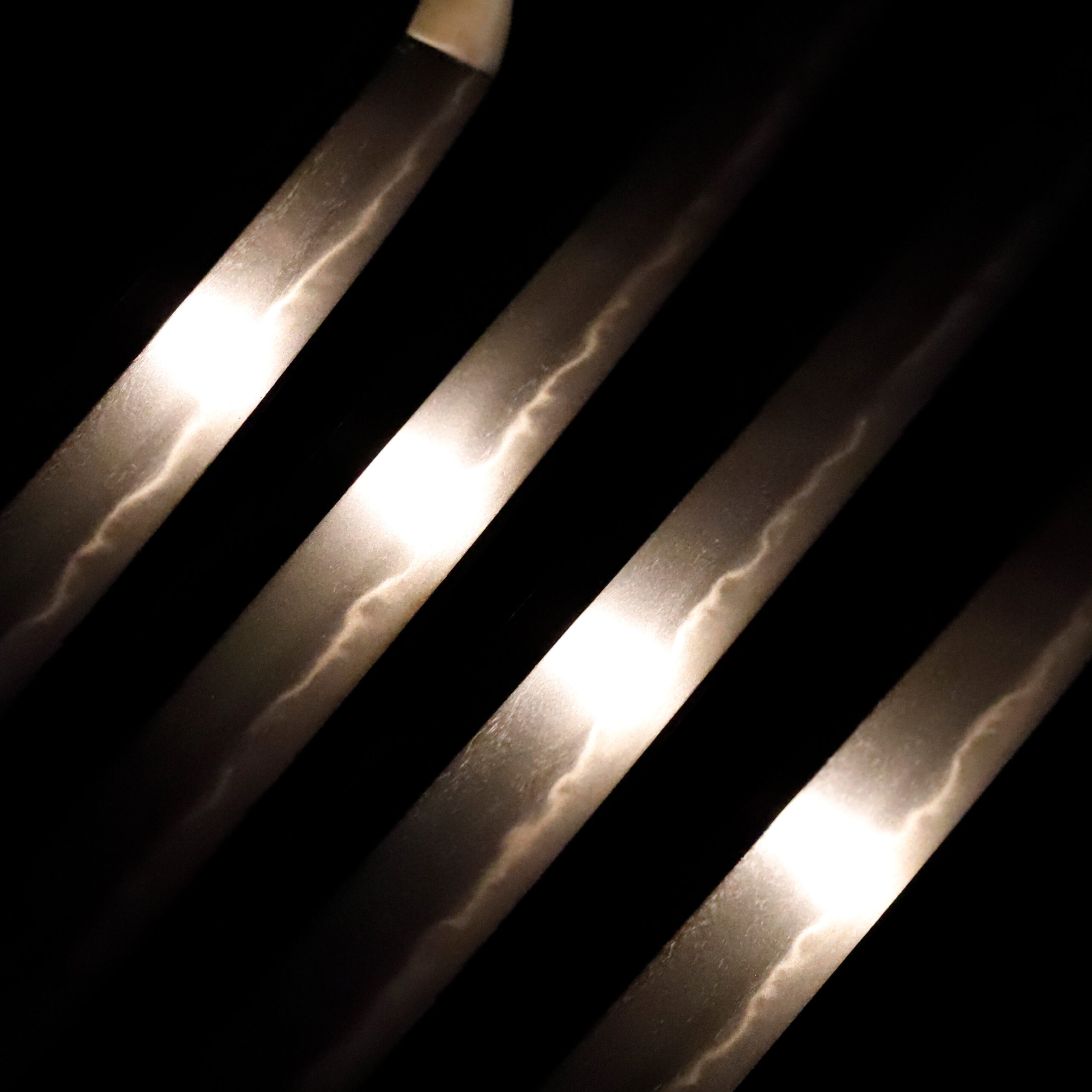
The Kozori (小反り) form a loose body of Bizen smiths who worked at and around Osafune in the closing decades of the Nanbokucho period and on into early Muromachi, and the NBTHK defines them less by descent than by exclusion: they are the late-Osafune hands who fall outside the specific lineages of Kanemitsu, Chogi, Motoshige and the Omiya group, gathered under one name as a convenience. The reading of the name itself has been explained in several ways, and the published sources are candid that it resists a clean definition; the prevailing sense is the ko-sori, the slight or shallow reverse-curvature of the blades, the shape running to a deep koshizori with marked funbari and a small point in the older pieces and growing heavy in the kasane toward Oei. The body has no single founder. Smiths such as Moromitsu (師光), recorded as the father of the Oei master Morimitsu, anchor the group through dated tachi; Iesuke and Iemori carry Hatakeda blood; Nariie descends from Kagehide; Morisuke, Shigeyoshi, Tsunehiro, Hidemitsu, Motomasa and others fill out the periphery, several of whose lines run several generations and whose precise generation-by-generation reading the institution leaves to further study. Across these hands runs a shared vocabulary, and the recurring word for it is scale. The jigane is the constant: an itame mixed with mokume and nagare, the grain standing a little (hada-tachi), fine ji-nie attaching, dark chikei-toned and at times jifu-like passages crossing the steel, and over it the midare-utsuri (sometimes a bo-utsuri or straight sugu-utsuri) that places the group squarely in the Bizen-den. The temper is nioi-based with ko-nie, built on a shallow ko-notare into which the smiths set ko-gunome running connected and threaded, pointed togariba, angular squared elements, open-waisted koshi-biraki gunome and modest choji, the whole kept small and crowded (kozumu), with ko-ashi and yo entering and fine sunagashi and kinsuji playing through. The boshi answers in midare-komi, pointing or settling to a ko-maru with hakikake.
Within the shared idiom each hand has its tell: Moromitsu tempers the most subdued, low-lying midare; Nariie's gunome crowds where Kanemitsu's opens; Hidemitsu and Hidemitsu of the Koreha branch lean to a reverse-slanting saka-gakari and saka-ashi near the Aoe manner, and turn now and then to a quiet chu-suguha; Tsunehiro favours a kataochi-like gunome; Iesuke and Iemori, working into Oei, open the valleys toward the early-Muromachi pattern. A collector seeks Kozori for legibility rather than flourish. Many of the best survivors are ubu, signed and dated tachi, and that dated file (Joji, Oan, Eiwa, Shitoku, Eitoku, Meitoku into Oei) gives the late history of Osafune a year-by-year spine, prized as reference material for the period; the names also map a province pulled between the Northern and Southern courts, Morisuke's Joji dates reading as Northern Court alignment. To kantei the group is to read it against its neighbours: the small, crowded, nioi-toned midare and the standing itame with kawarigane chikei separate it from the bolder, more uniform gunome of the Kanemitsu mainline of the Nanbokucho height, while the open koshi-biraki valleys and the heavier, sakizori late sugata point forward to and distinguish it from the more decorative Oei-Bizen of Morimitsu and Yasumitsu (a threshold several Kozori blades, in NBTHK phrasing, already anticipate). Among the members the institution ranks Moromitsu and Nariie high (Nariie held equal to the Kanemitsu pupil Masamitsu), Iesuke beside the leading Oei names, and Hidemitsu the leading hand of the Koreha branch. Provenance, though thinly recorded for some, reaches real houses: blades descend through the Kuroda, Kaga Maeda, Shonai Sakai and Hojo families, with examples in the Hayashibara Museum and the national museums, and the occasional Imperial line. A signed, dated Kozori blade comes to hand only from time to time, a quiet, datable window onto Osafune as it closed its Nanbokucho age. Learn more →
| Smith | Era | Designated |
|---|---|---|
| Hidemitsu秀光 | 1375-1392 | 19 |
| Iesuke家助 | 1394-1428 | 11 |
| Nariie成家 | 1352-1362 | 21 |
| Iemori家守 | 1377-1406 | 15 |
| Morisuke守助 | 1354-1384 | 7 |
Bizen in the Nanbokuchō period
Sixty years of war between two courts drove blades long and broad, and Osafune met the demand: Kanemitsu and Chōgi led forges serving the provincial warriors who did the fighting, while Sōshū influence arrived with the armies to create Sōden-Bizen.
A Hozon-certified blade judged to show notably superior workmanship and a better state of preservation. The bar is higher: re-tempered blades and most unsigned Muromachi/Edo works are excluded.
The NBTHK (Nihon Bijutsu Tōken Hozon Kyōkai, the Society for the Preservation of Japanese Art Swords) is a public-interest incorporated foundation founded in 1948 and supervised by Japan’s Agency for Cultural Affairs (Bunkachō); it is based at the Japanese Sword Museum in Tokyo. Its expert panels physically examine each submitted work (shinsa) and issue a certificate (kanteishō) ranking it by artistic and historical merit. NBTHK papers are the most widely recognized standard of authentication for Japanese swords and fittings.
NBTHK official siteReturns/exchanges limited to defects caused by shipping (except willful misconduct or gross negligence by the company); customers must contact within 72 hours of receiving the product.