The twentieth century nearly killed the craft twice: wartime distortion, then the occupation ban. The NBTHK’s founding in 1948 and licensed forging from 1953 rebuilt the sword as an art, crowned by Living National Treasures and the mukansa rank.
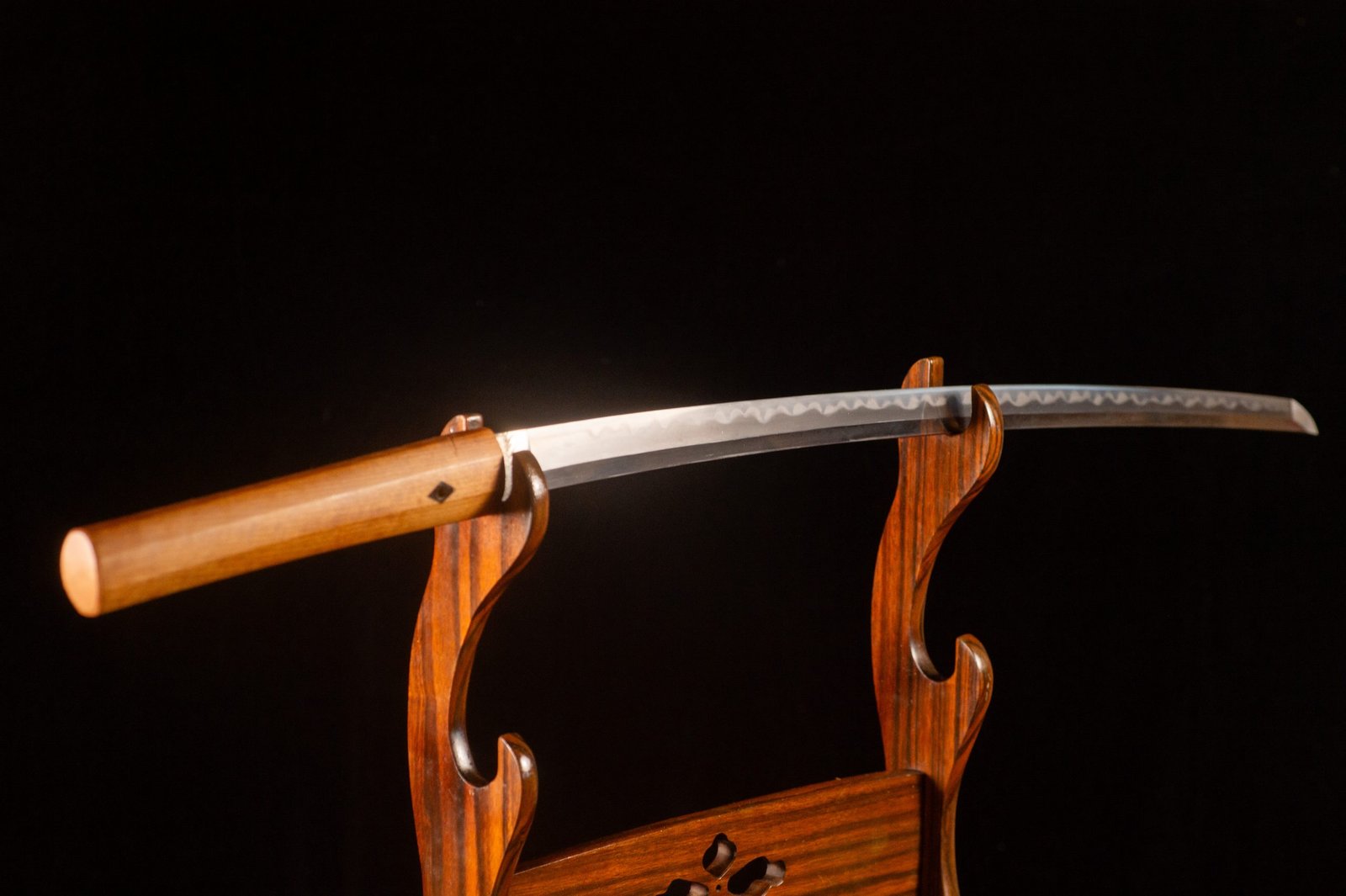
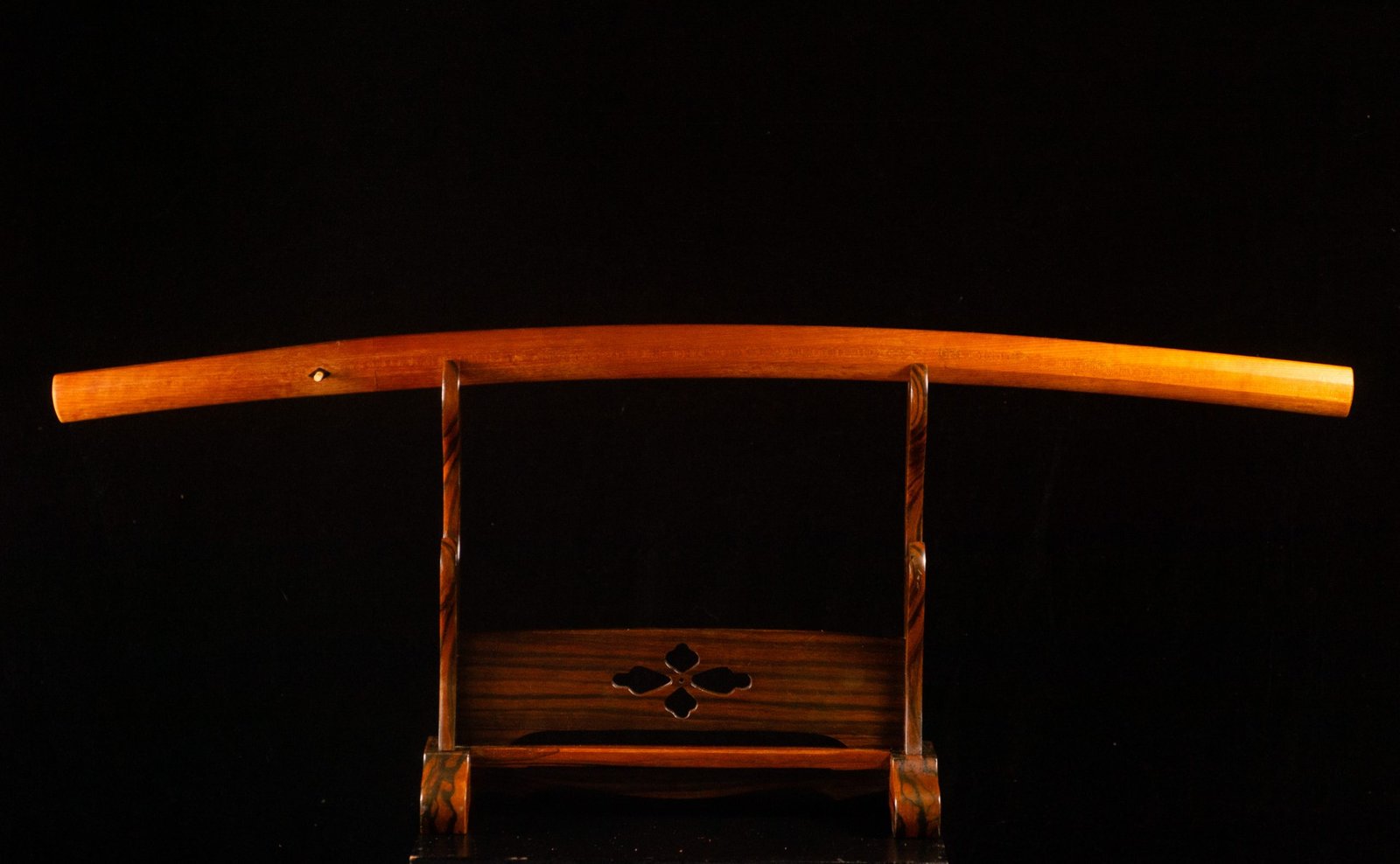
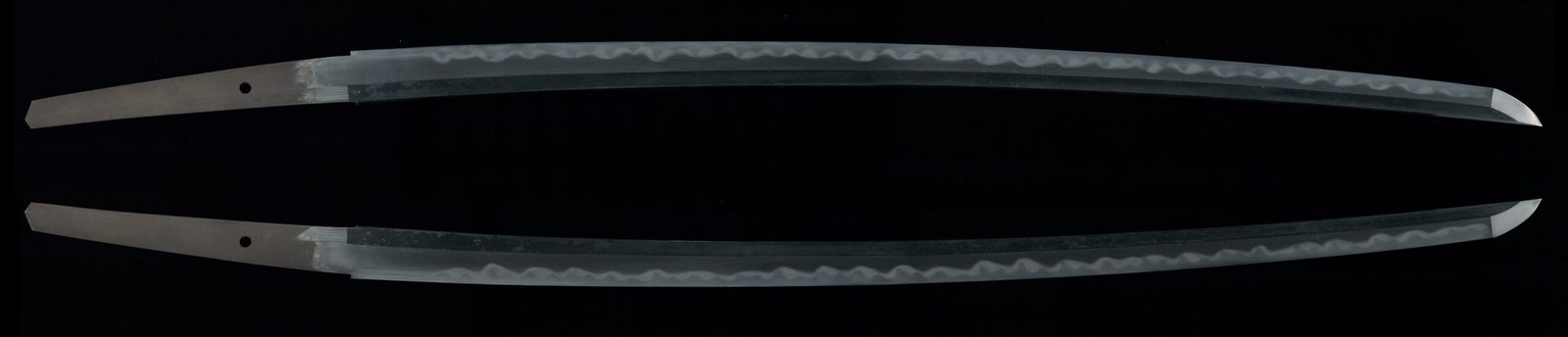
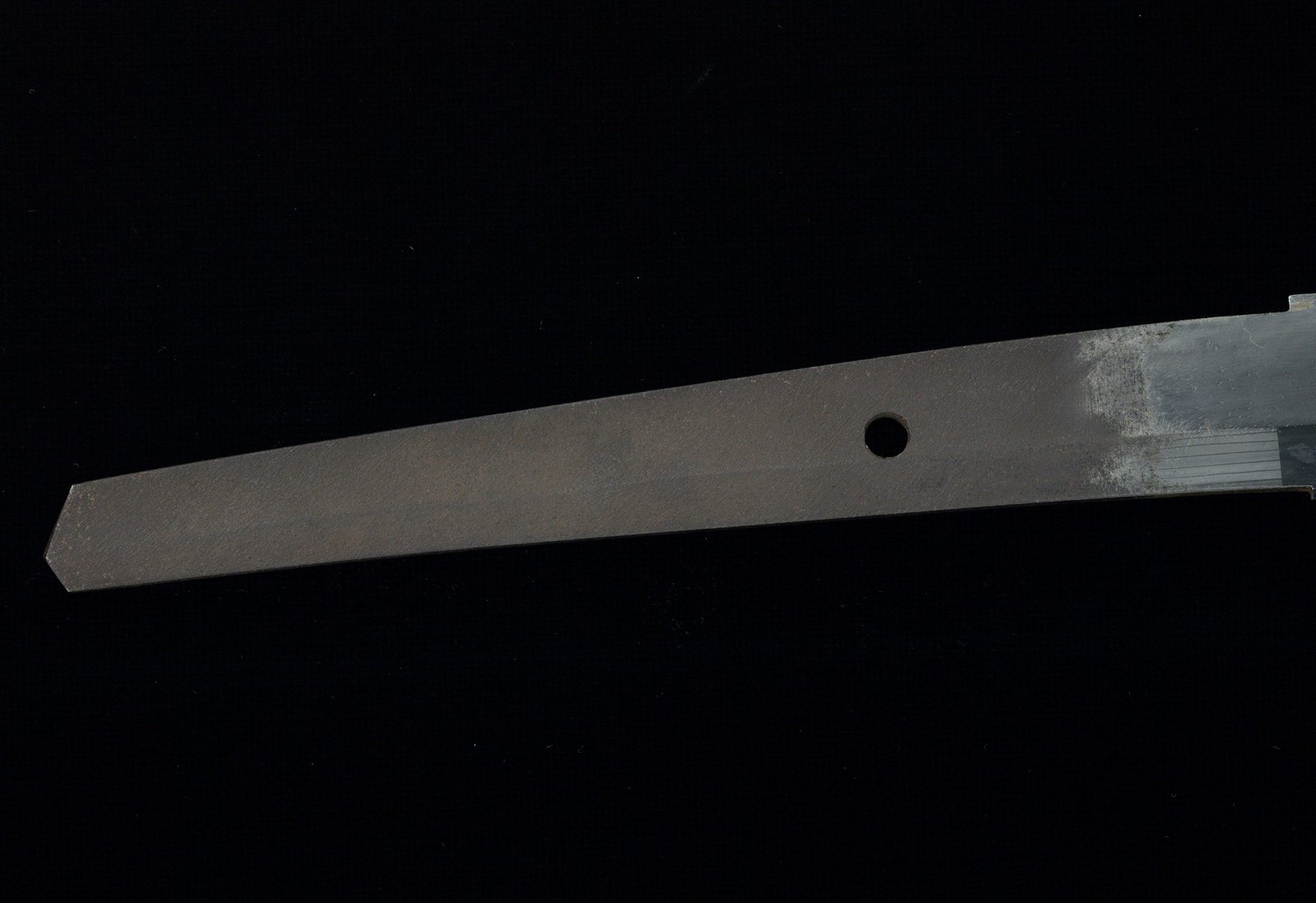
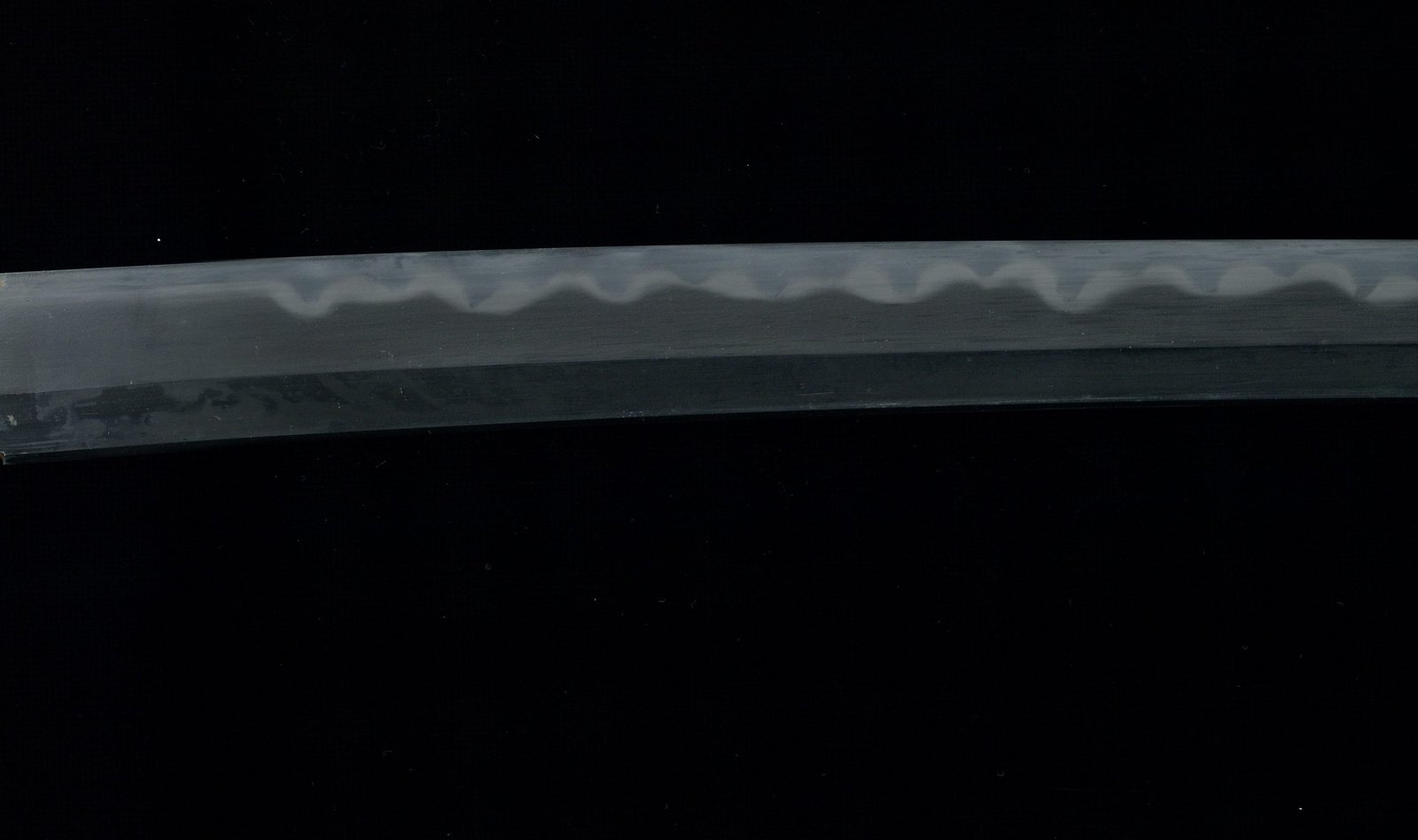
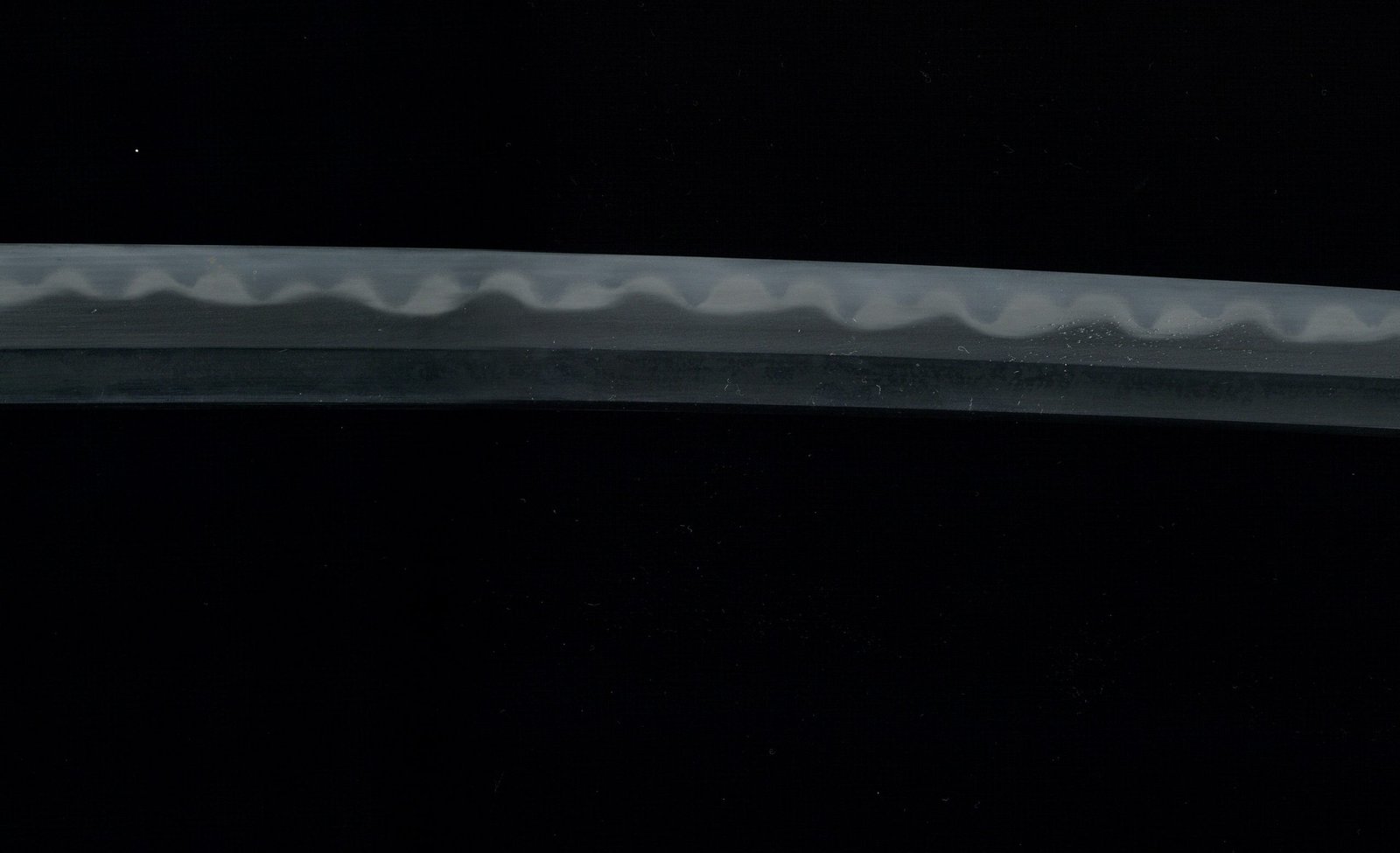
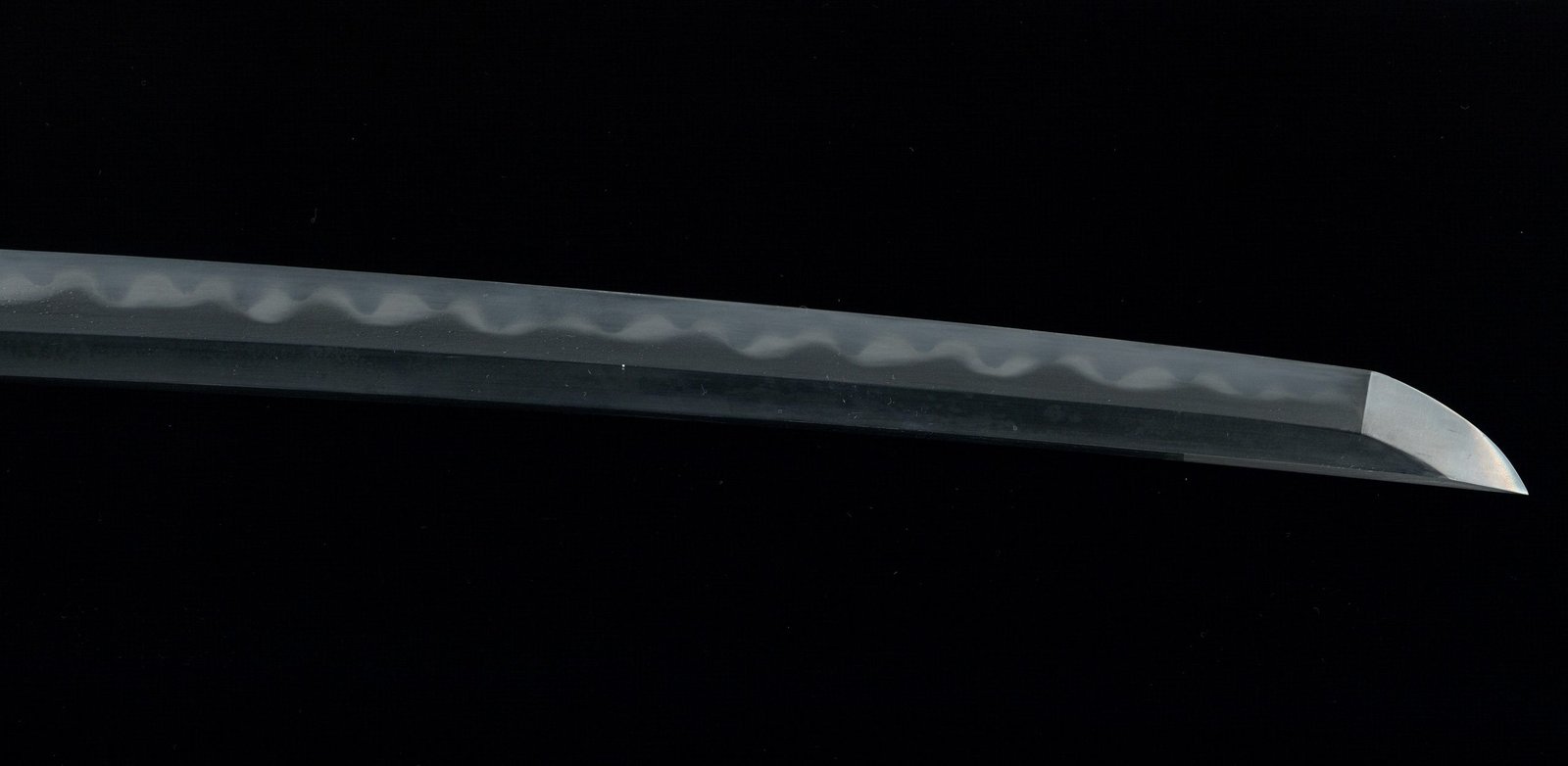
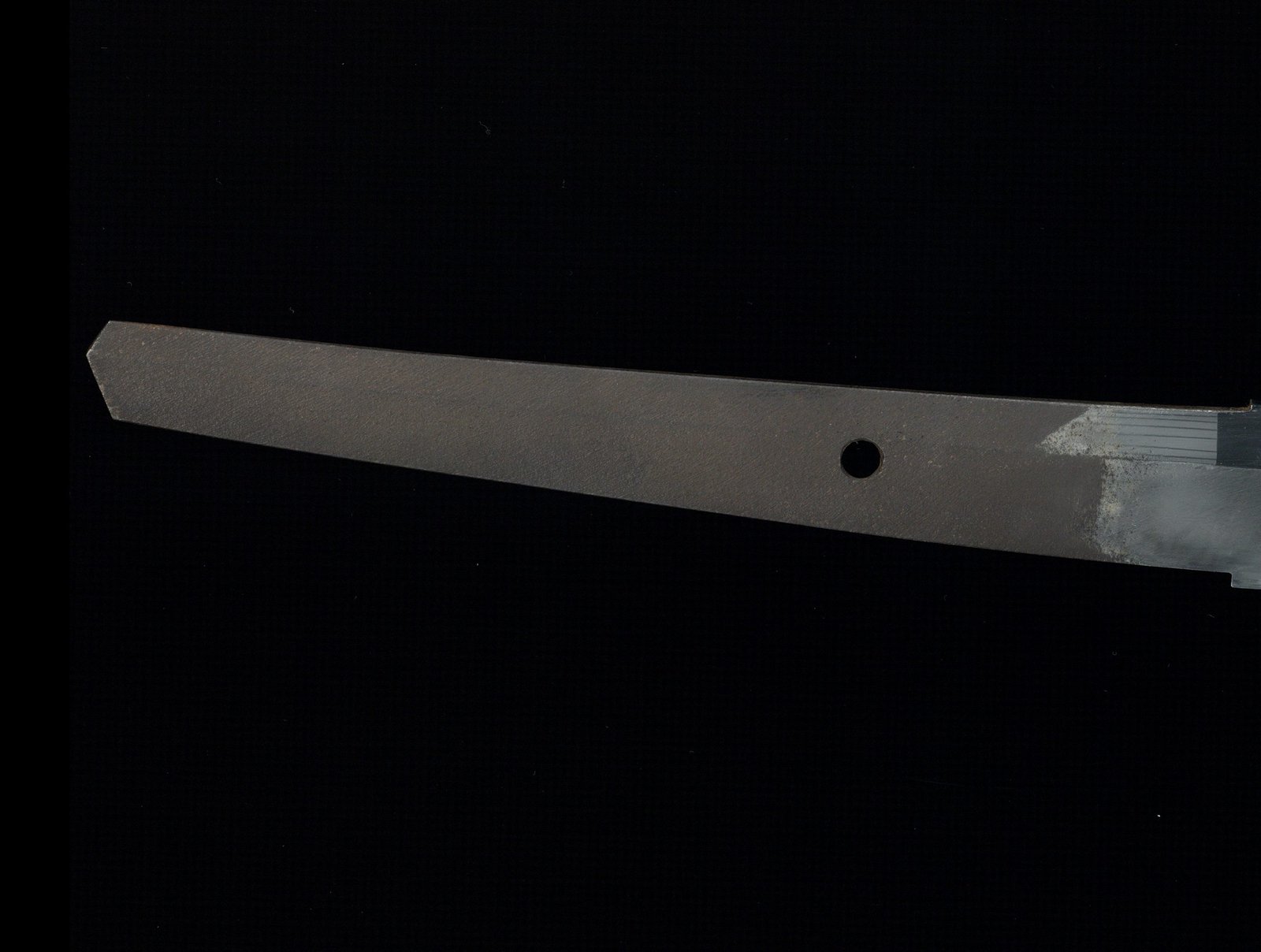
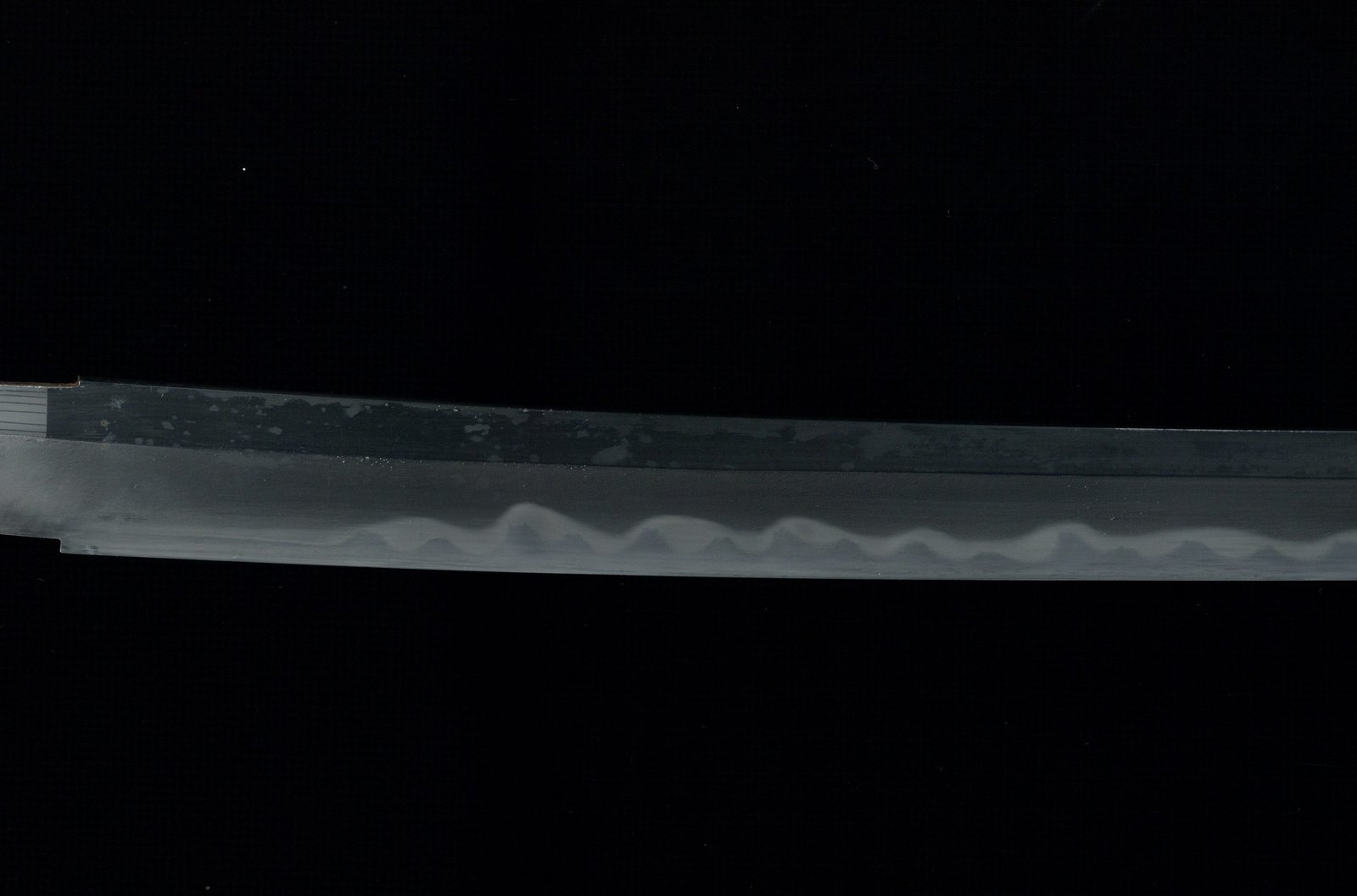
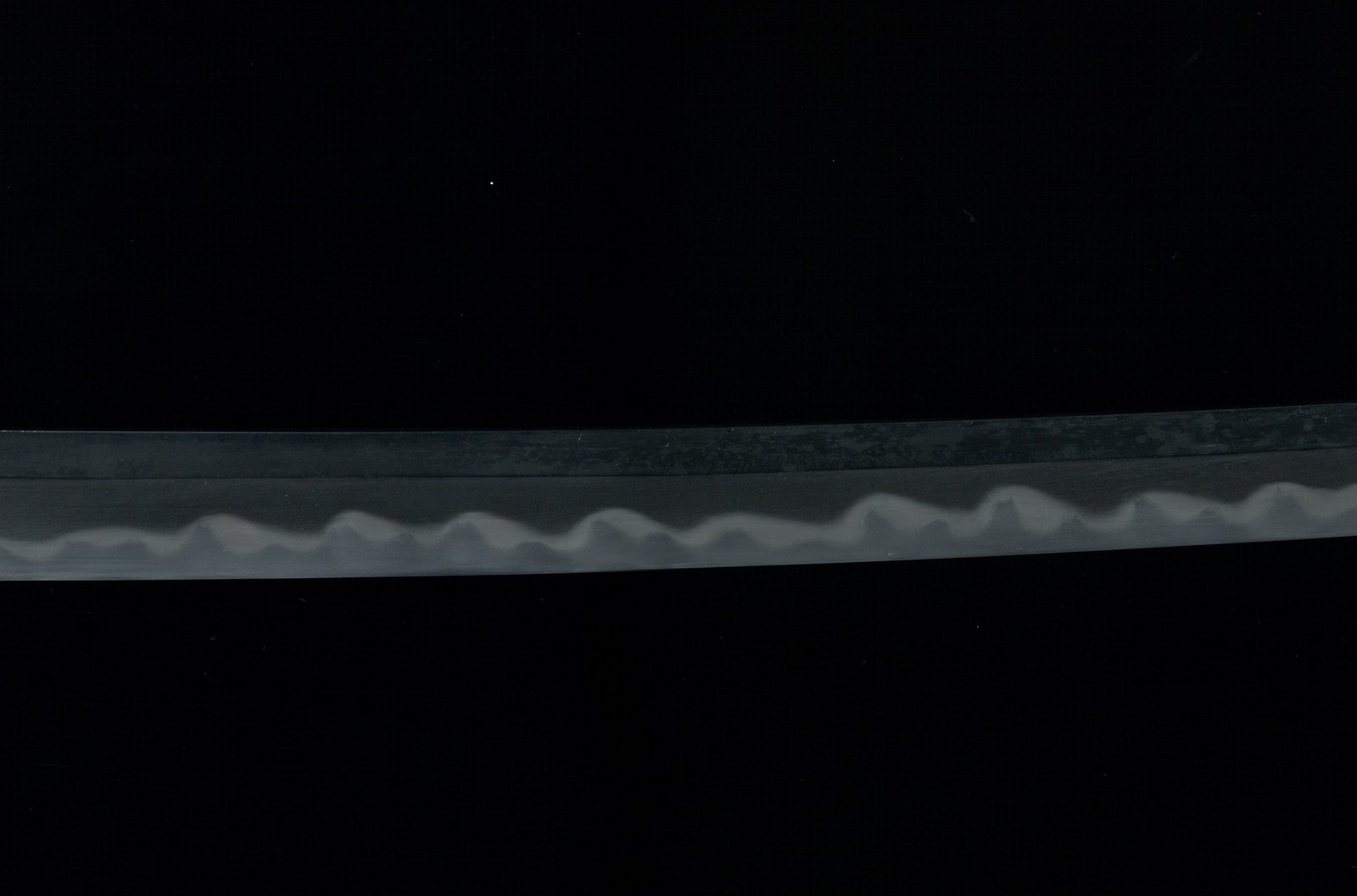
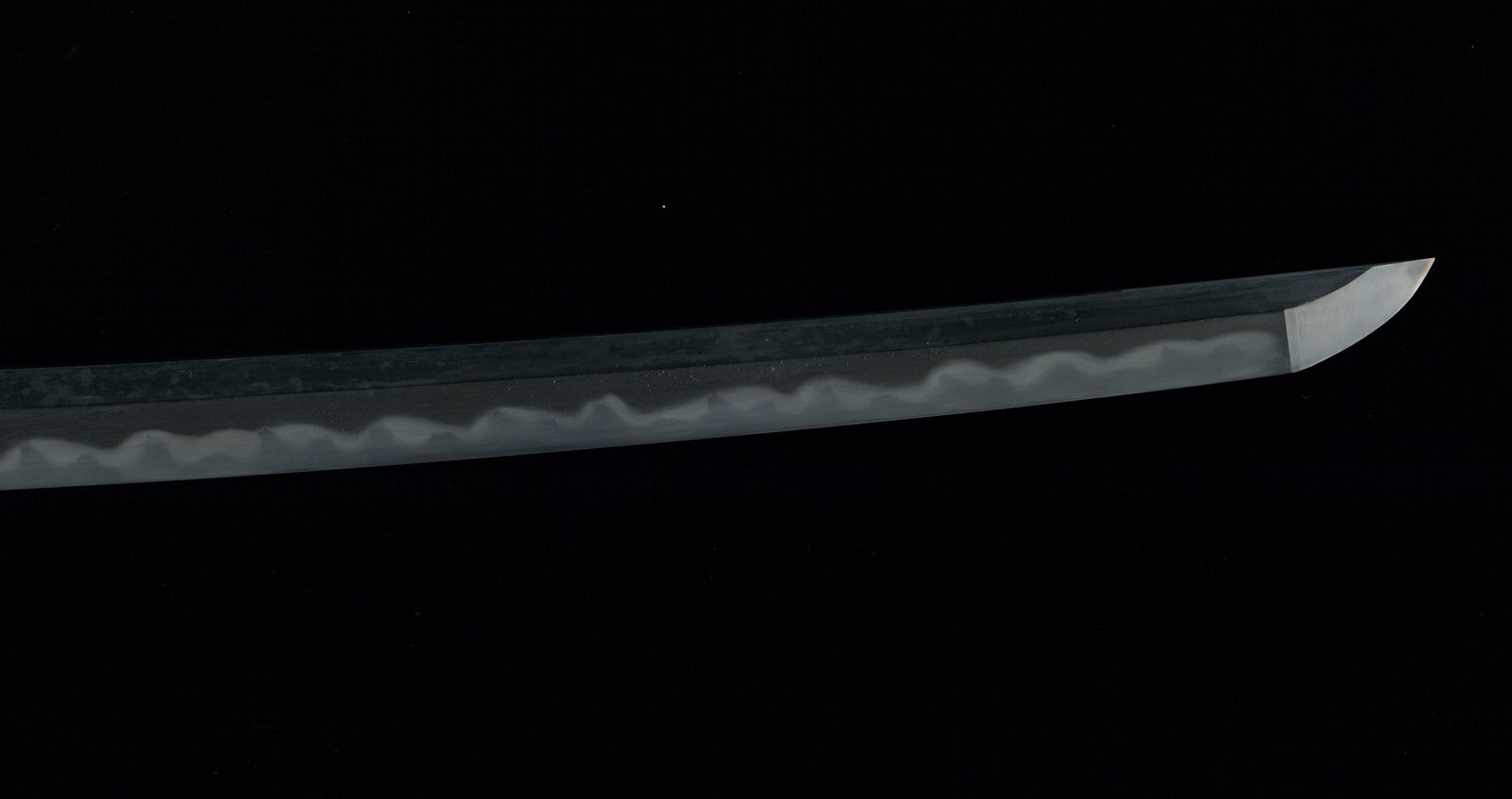
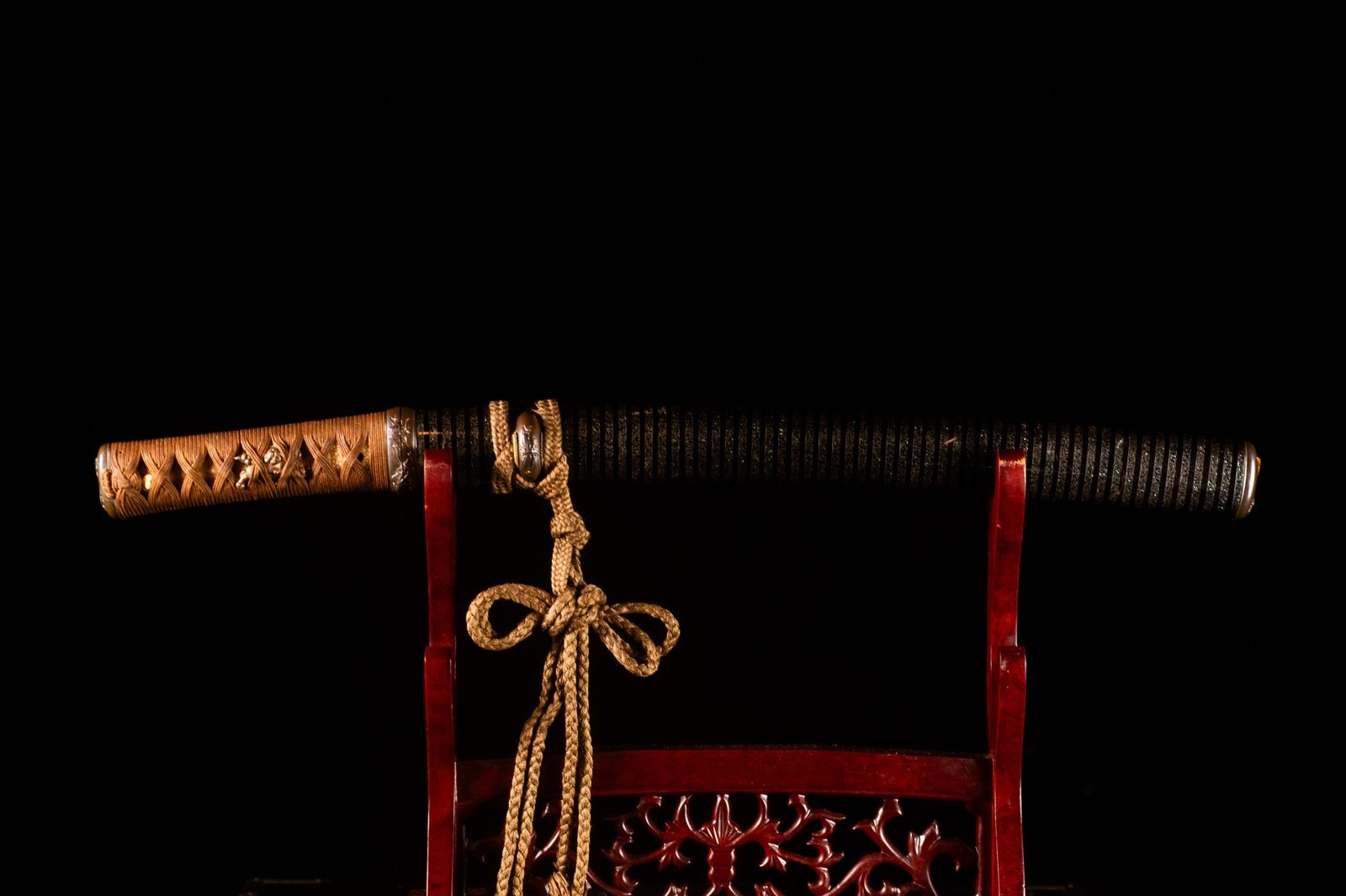
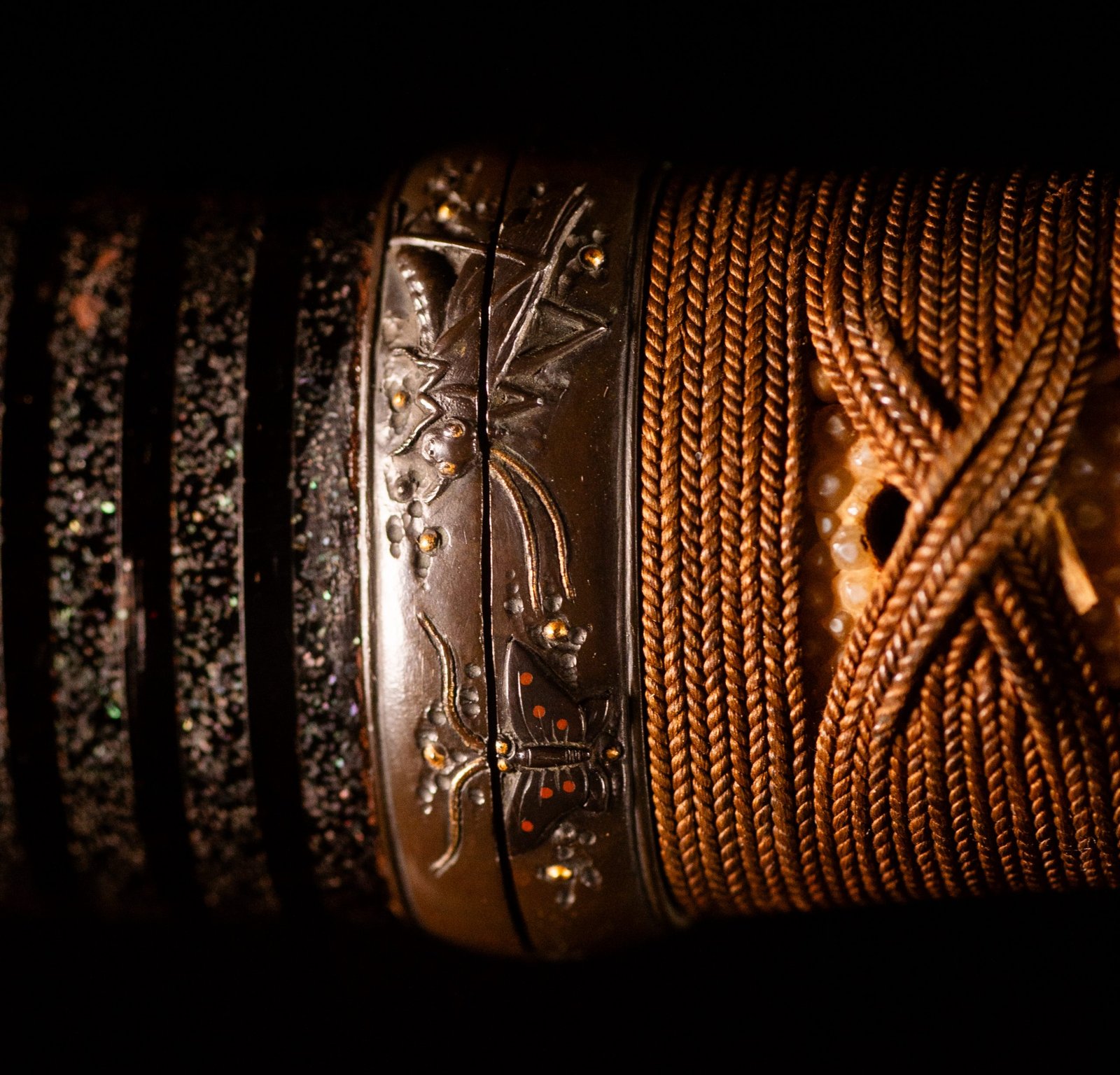
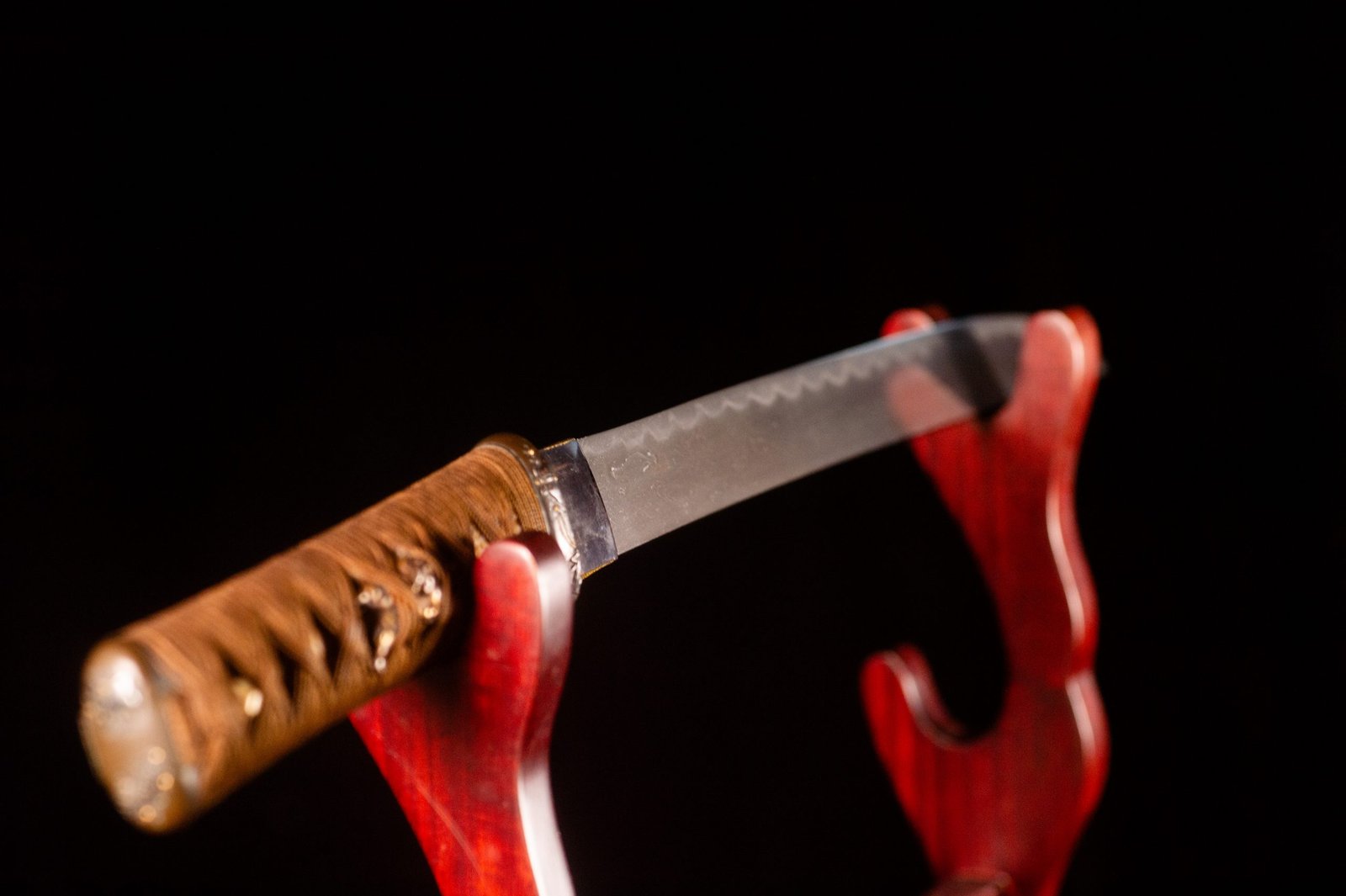
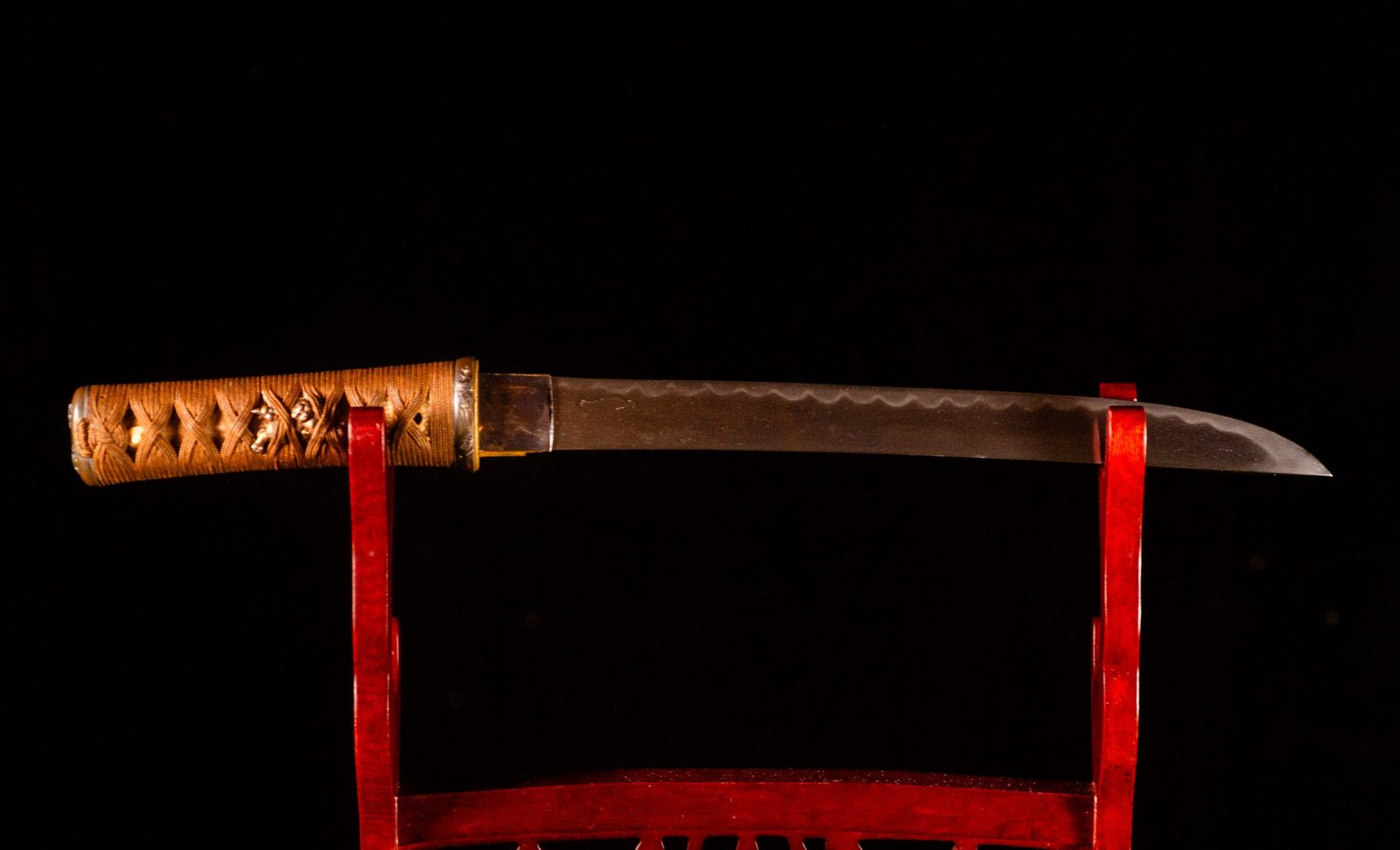
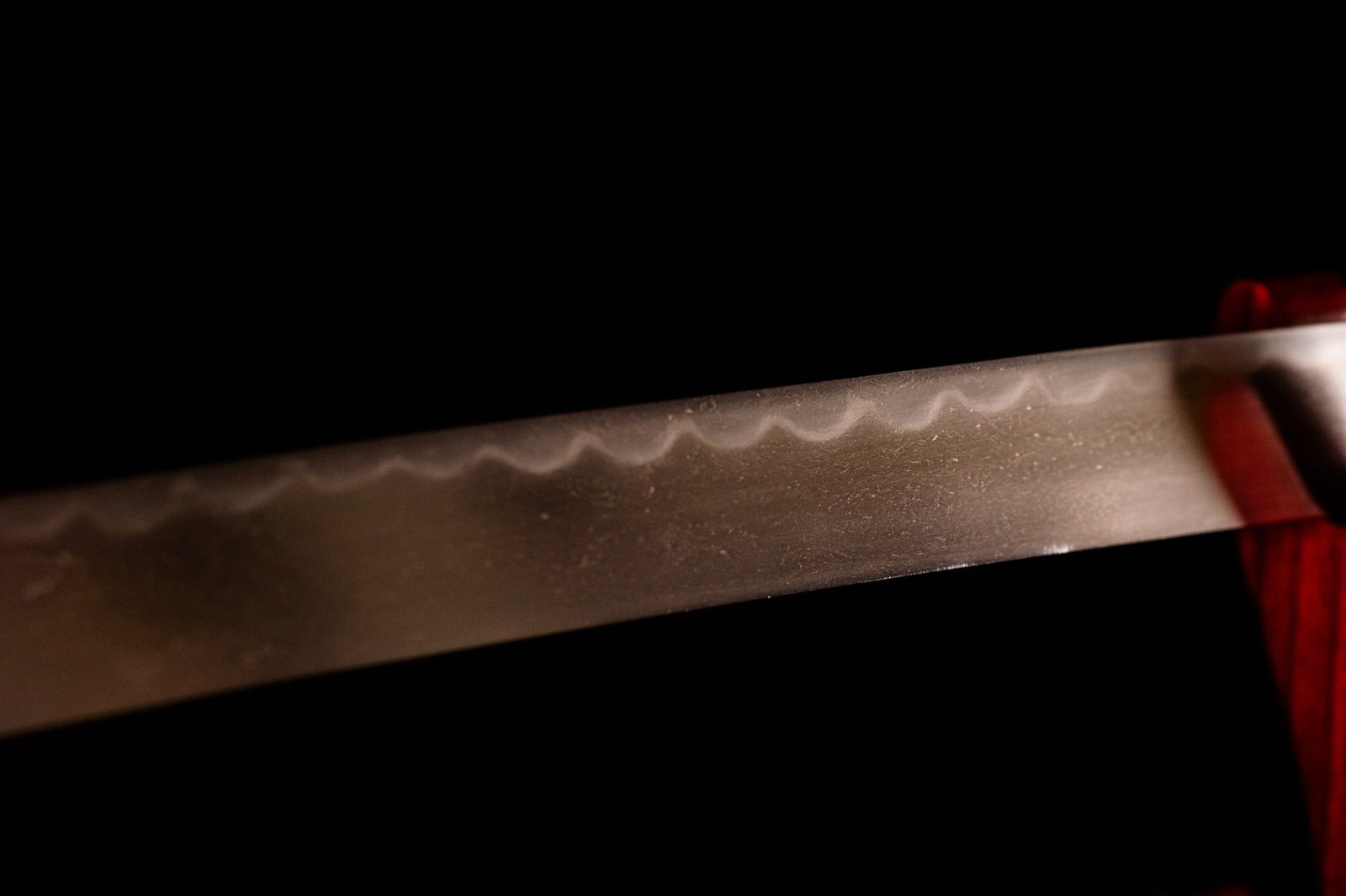
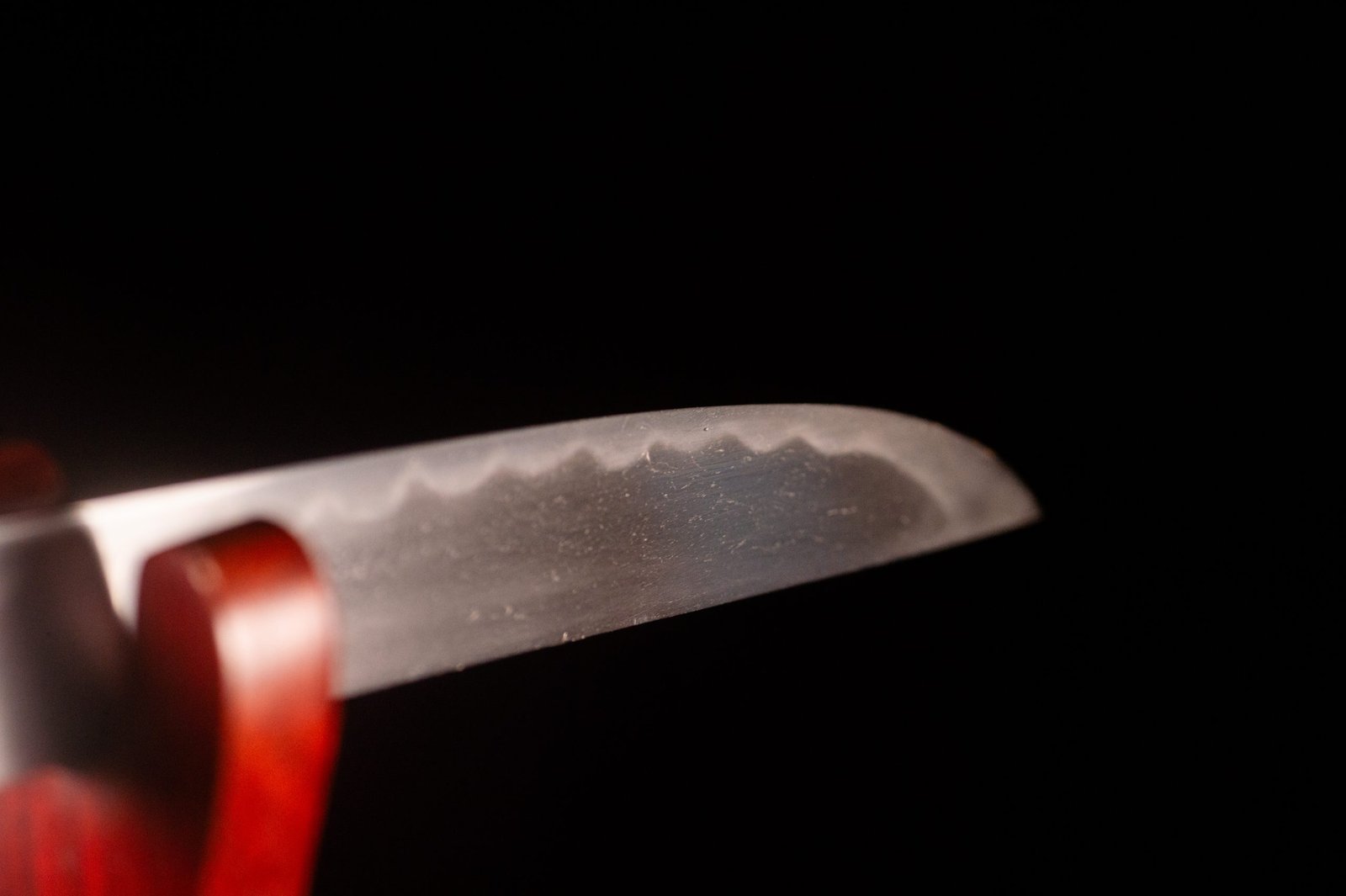
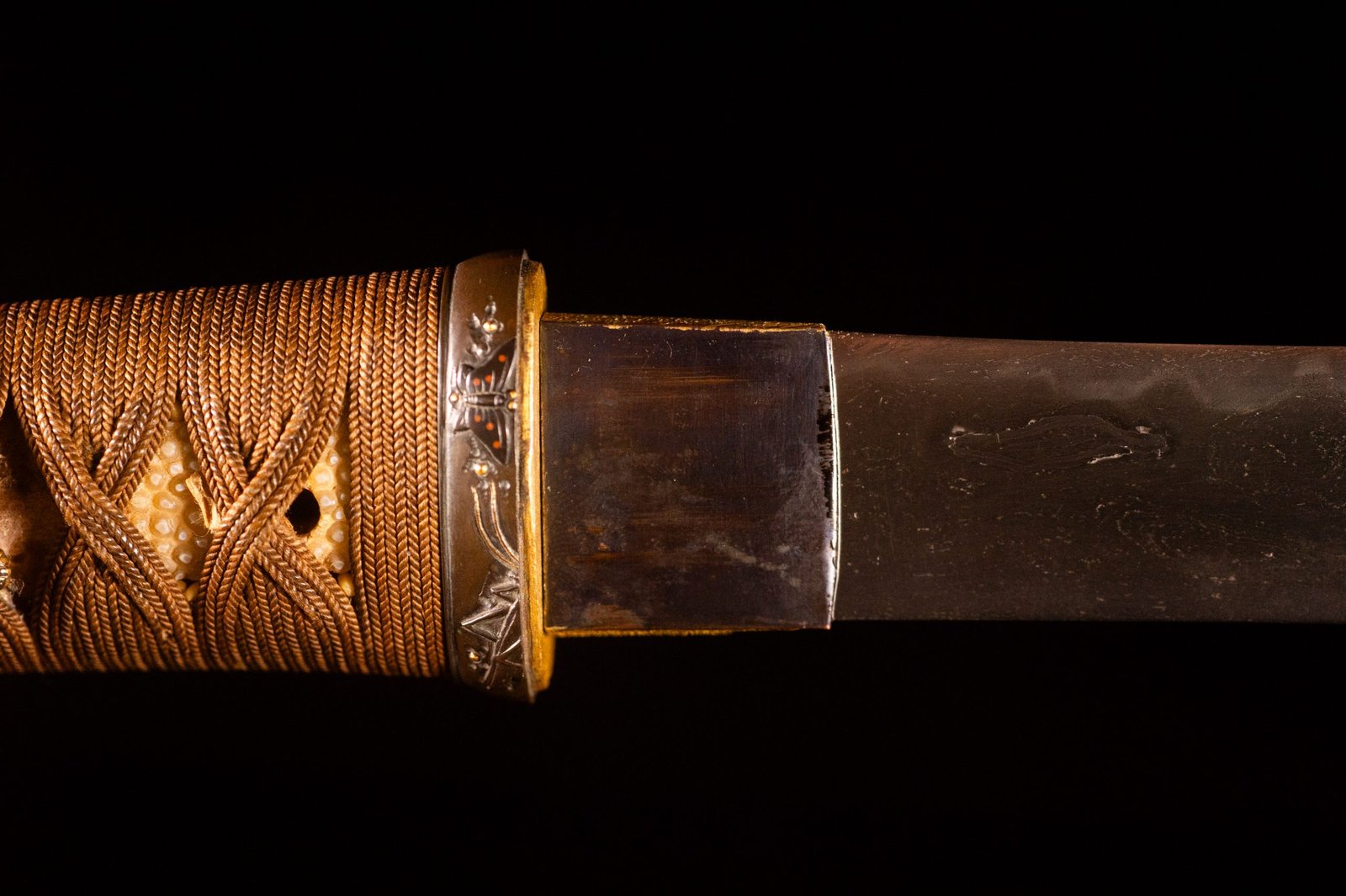
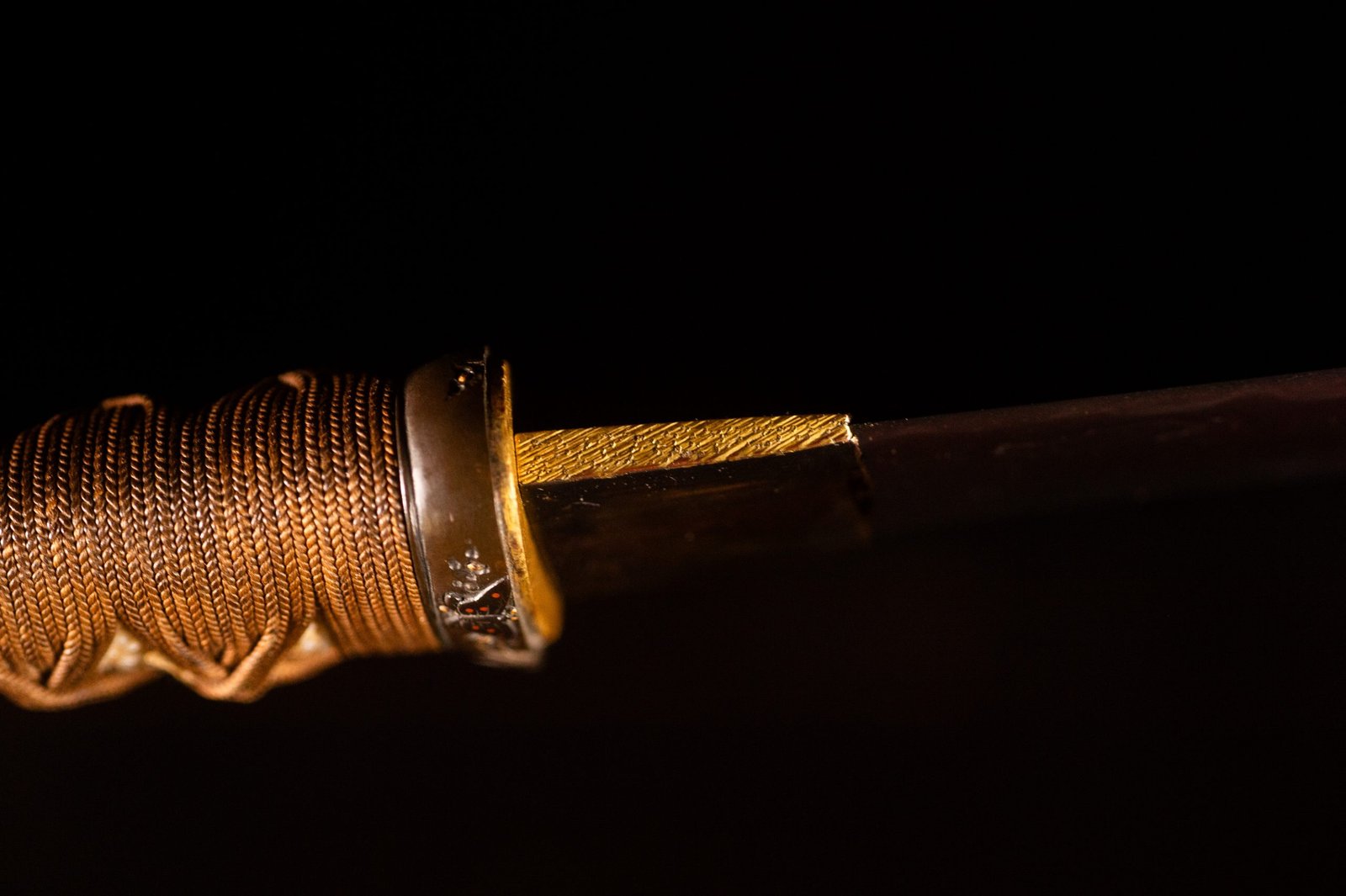
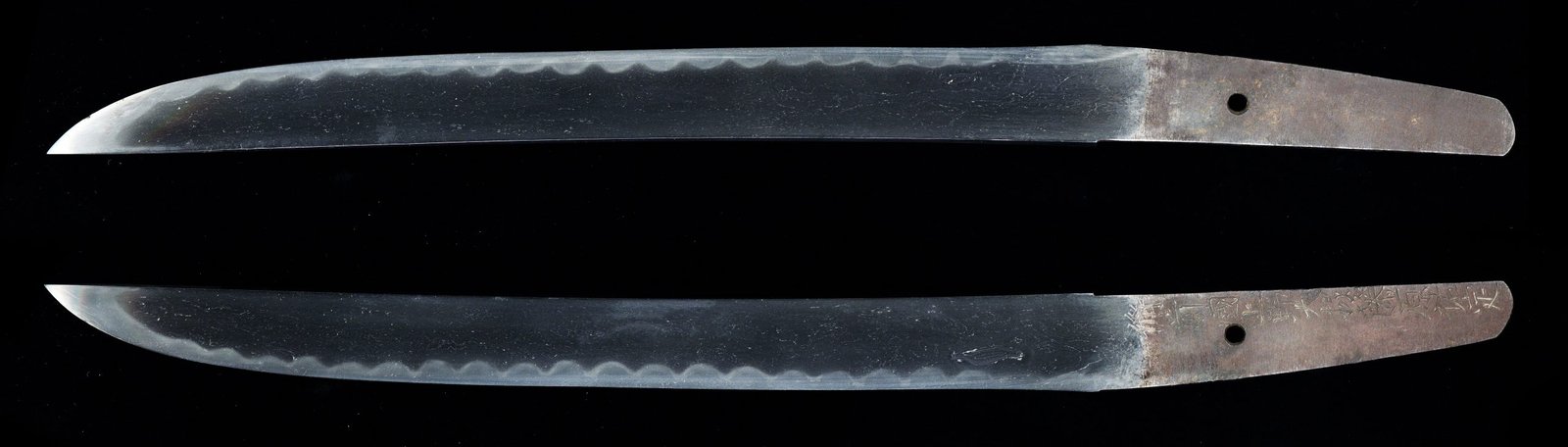
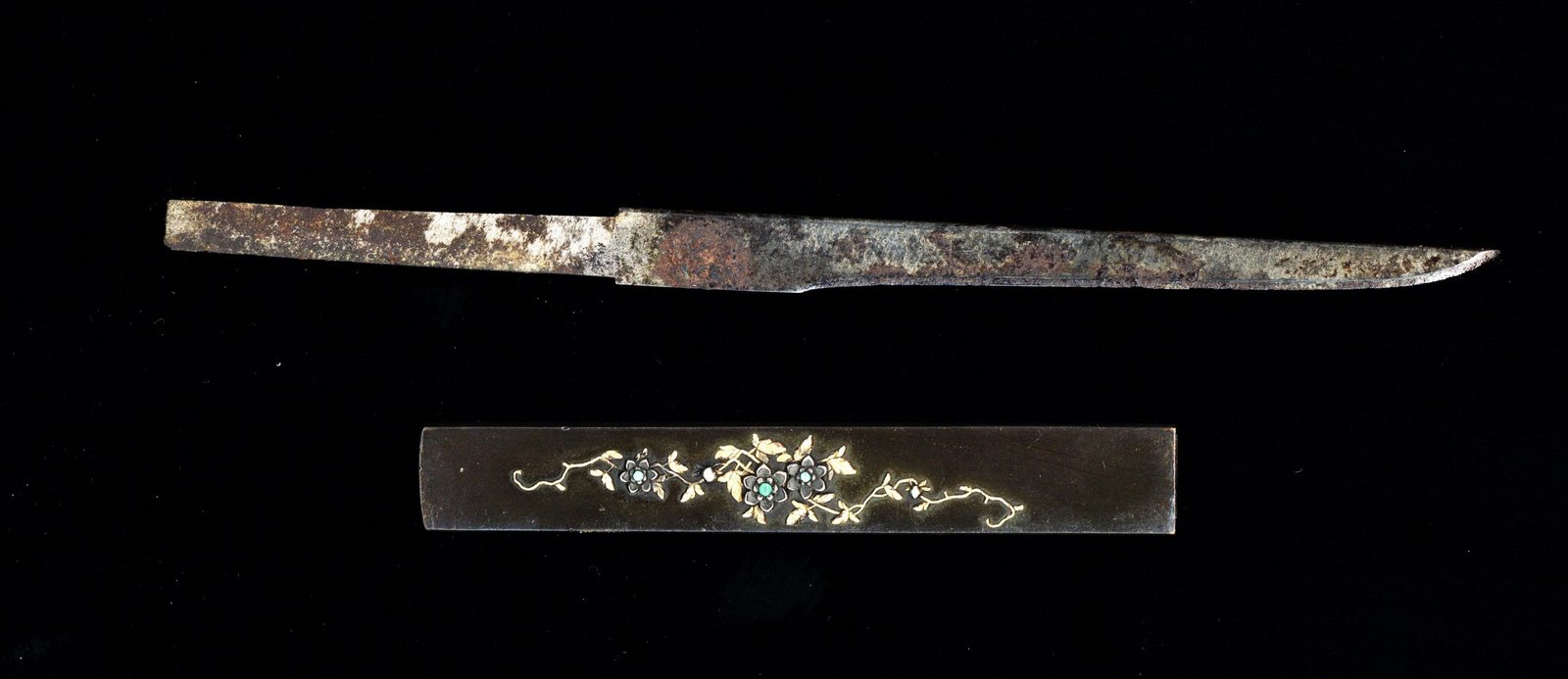
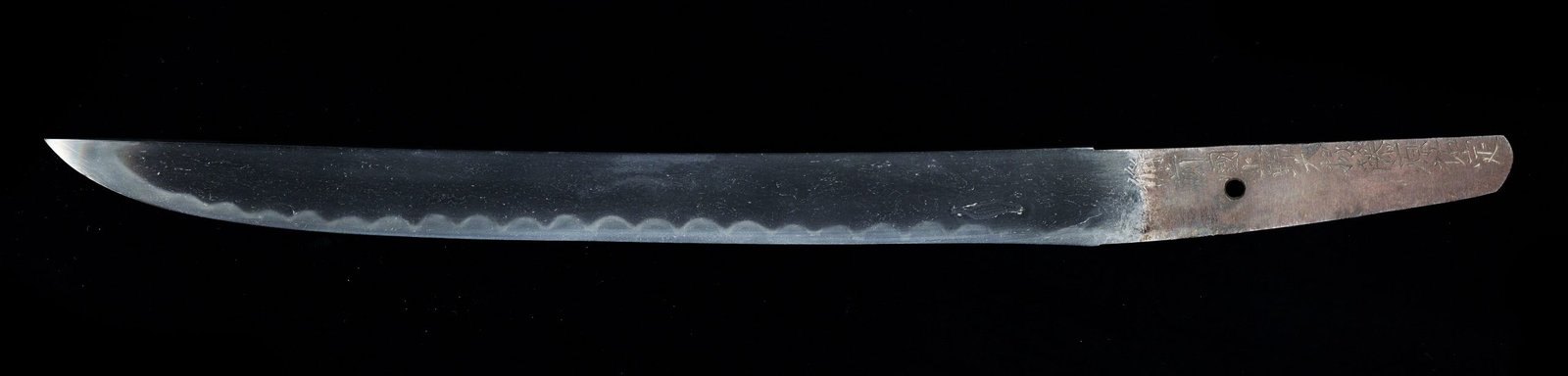
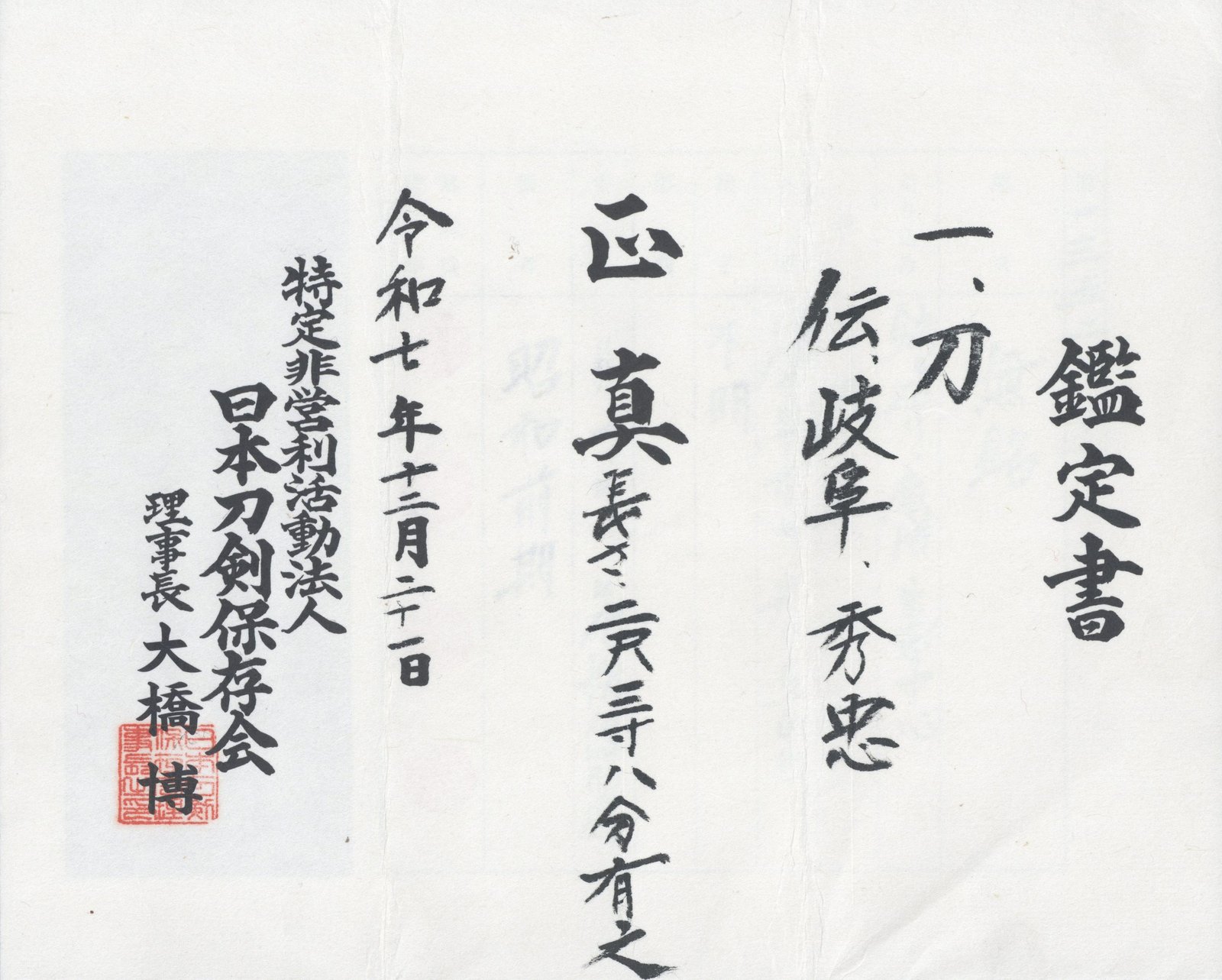
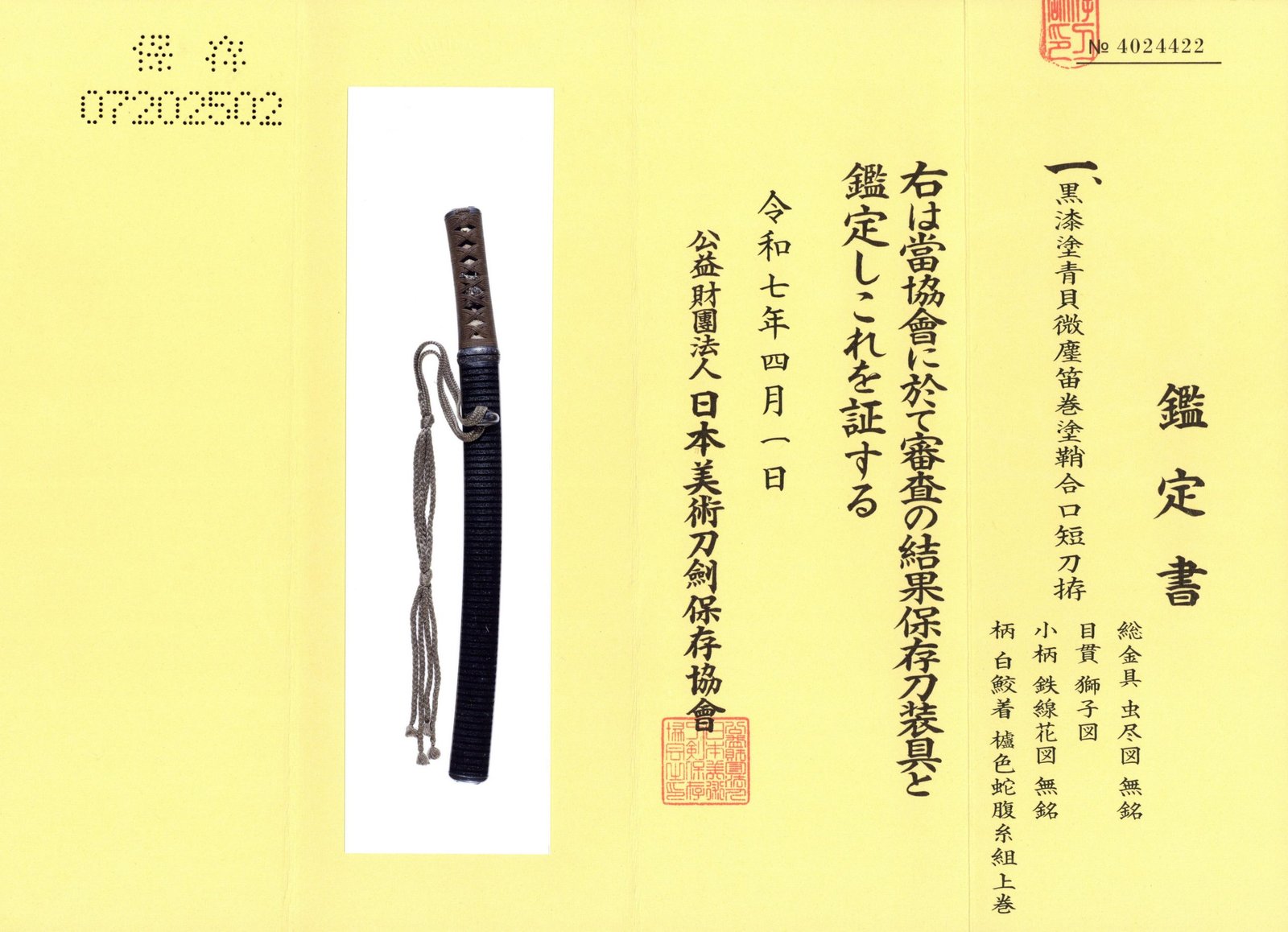
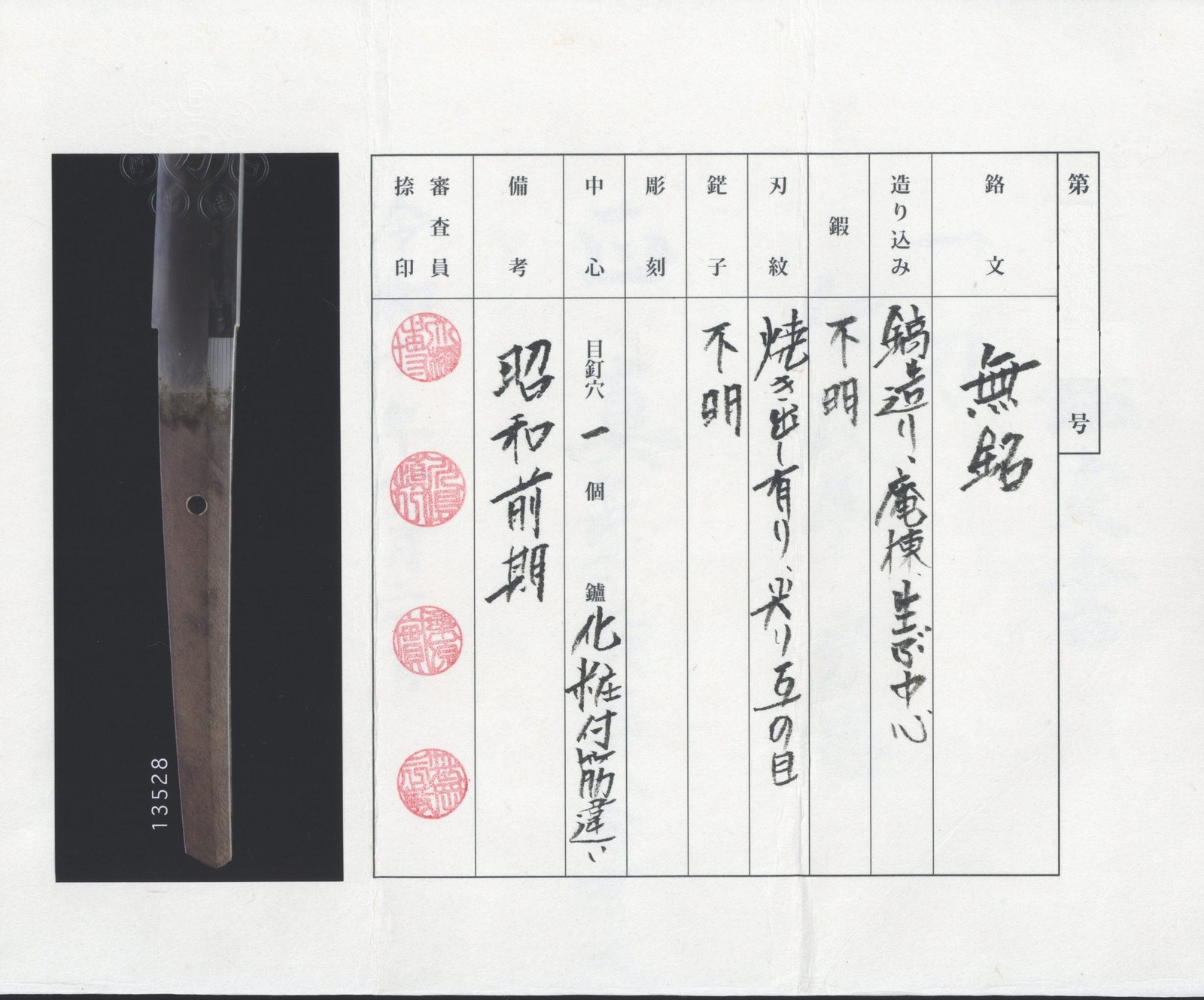
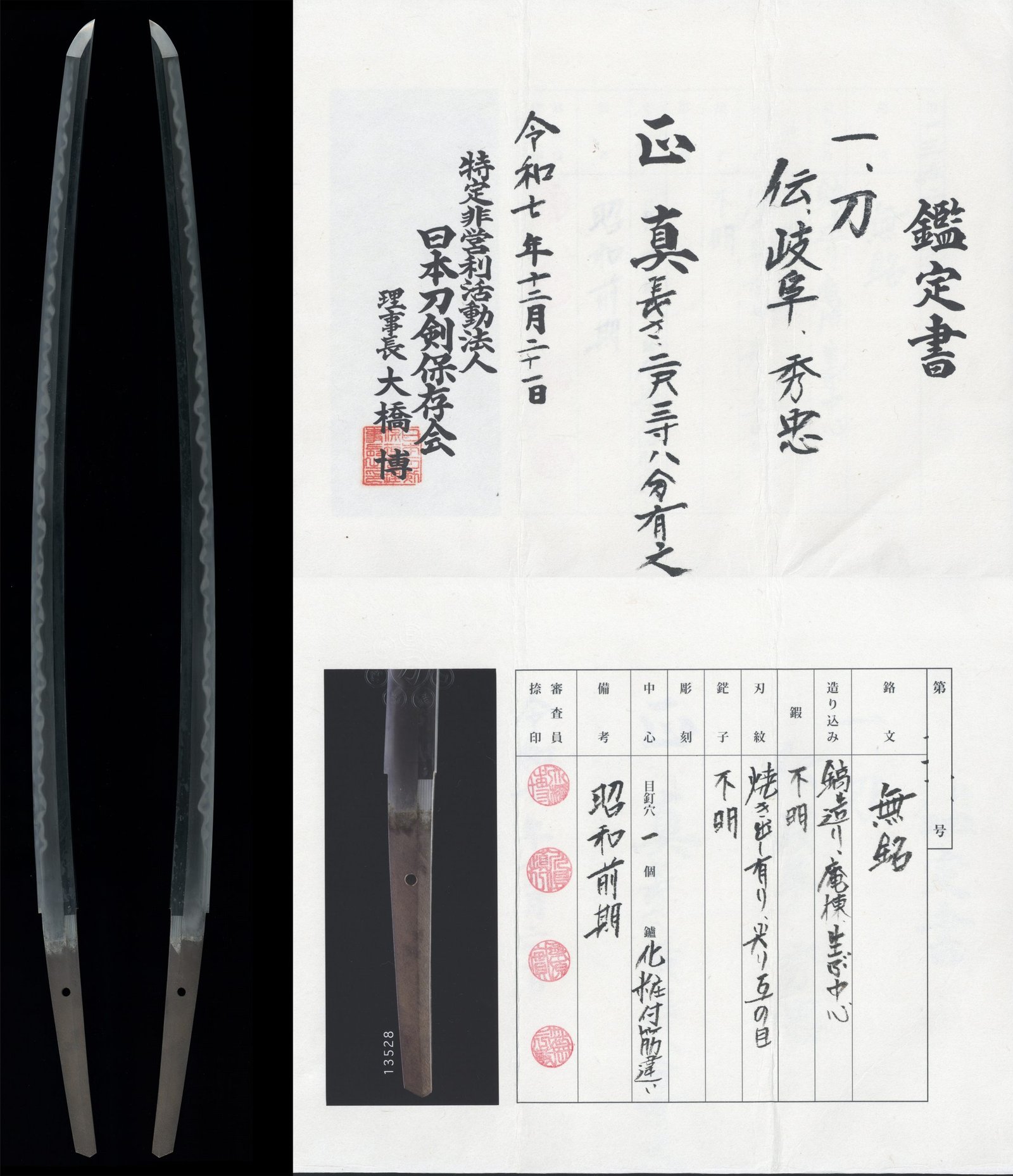
Comes with kimono or cotton bag. Comes with certificate of supein Nihonto. Comes with copy of Tokosusho. Comes with NTHK Kanteisho Certificate. Documentation Documentation 鑑定書 (Kanteisho / Appraisal certificate) “Appraisal certificate.” “One sword (katana).” “Den / attribution: ‘Hasō’ (波草), Hidetada (秀忠).” (transcribed exactly as written) “Genuine. Length: 2 shaku 3 sun 8 bu (有之 = ‘recorded as such’).” “Non-profit organization: Nihon Tōken Hozon-kai (日本刀剣保存会).” “Chairman: Ōhashi Hiroshi (大橋博).” (with seal) Text (as shown): Mei: mumei (unsigned). Construction: forged; iori-mune; ubu nakago. Hamon: yakidashi present, togari-gunome. Nakago: kesho-yasurime sujikai. Mekugi-ana: one. Torokusho / Registration Text (as shown): “Firearms and swords registration certificate.” Type: katana. Mekugi-ana: 1. Mei (omote): mumei. Smith, attribution, and context The blade is registered as mumei. The kanteisho additionally records an attribution to the mastersmith: Hasō Hidetada (秀忠). Overall, it reads as practical sugata, ubu tang per the dossier, and a hamon featuring yakidashi and a strongly defined togari-gunome rhythm. Technical description of the blade (hamon → jihada → nakago → geometry/condition) The hamon is clearly visible as togari-gunome (repeating pointed peaks) with yakidashi at the machi, matching the technical sheet. Fine activity (nie/nioi, sunagashi, etc.). The nakago is mumei, with one mekugi-ana, and is documented as ubu (生ぶ中心). The sheet specifies 化粧付筋違い (kesho-yasurime sujikai), a formal, presentational filing pattern. Regarding geometry, based on documentation and visual reading: shinogi-zukuri katana with iori-mune, nagasa 72.0 cm and sori 1.8 cm. The kissaki shows a clear yokote in the full-length shots, consistent with a chū-kissaki proportion. Mounting (shirasaya) The sword is housed in a light-wood shirasaya (storage mounting). For a blade of this profile, shirasaya is not a mere accessory: it is the correct solution for long-term preservation, stable storage, and a sober, collector-grade presentation. Spec sheet Field Data Type Katana (刀) Mei 無銘 (mumei) Nagasa 72.0 cm (Torokusho) / 二尺三寸八分 ≈ 72.12 cm (Kanteisho) Sori 1.8 cm Mekugi-ana 1 Construction 鍛造り・庵棟・生ぶ中心 Hamon 焼き出し有り・尖り互の目 Period (per dossier) 昭和前期 Attribution on kanteisho 伝波草 秀忠
Offered by Supein Nihonto


Mino · around 1926-1989
1 piece on the market now
Shōwa to the present: destruction and revival
The twentieth century nearly killed the craft twice: wartime distortion, then the occupation ban. The NBTHK’s founding in 1948 and licensed forging from 1953 rebuilt the sword as an art, crowned by Living National Treasures and the mukansa rank.
Certifies a genuine blade worth preserving: a signature confirmed correct, or, if unsigned, an era, province, and school that the NBTHK can reliably identify.
The NBTHK (Nihon Bijutsu Tōken Hozon Kyōkai, the Society for the Preservation of Japanese Art Swords) is a public-interest incorporated foundation founded in 1948 and supervised by Japan’s Agency for Cultural Affairs (Bunkachō); it is based at the Japanese Sword Museum in Tokyo. Its expert panels physically examine each submitted work (shinsa) and issue a certificate (kanteishō) ranking it by artistic and historical merit. NBTHK papers are the most widely recognized standard of authentication for Japanese swords and fittings.
NBTHK official site14-day return if items arrive damaged or in unexpected condition; customer bears return shipping + insurance; items returned in original condition with all accessories; antique armour non-returnable; only regular priced items refundable; shipping costs non-refundable.
€3,200