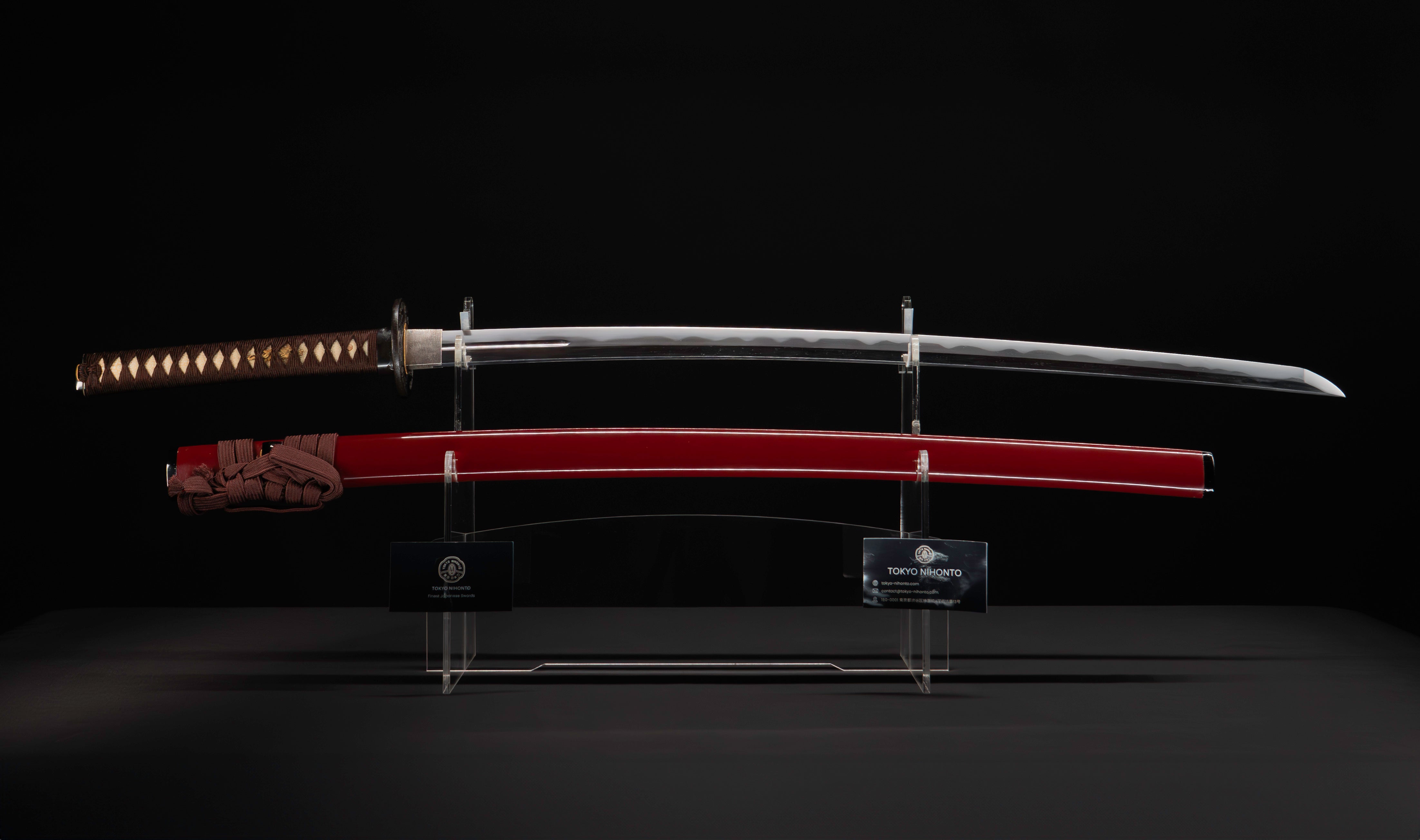
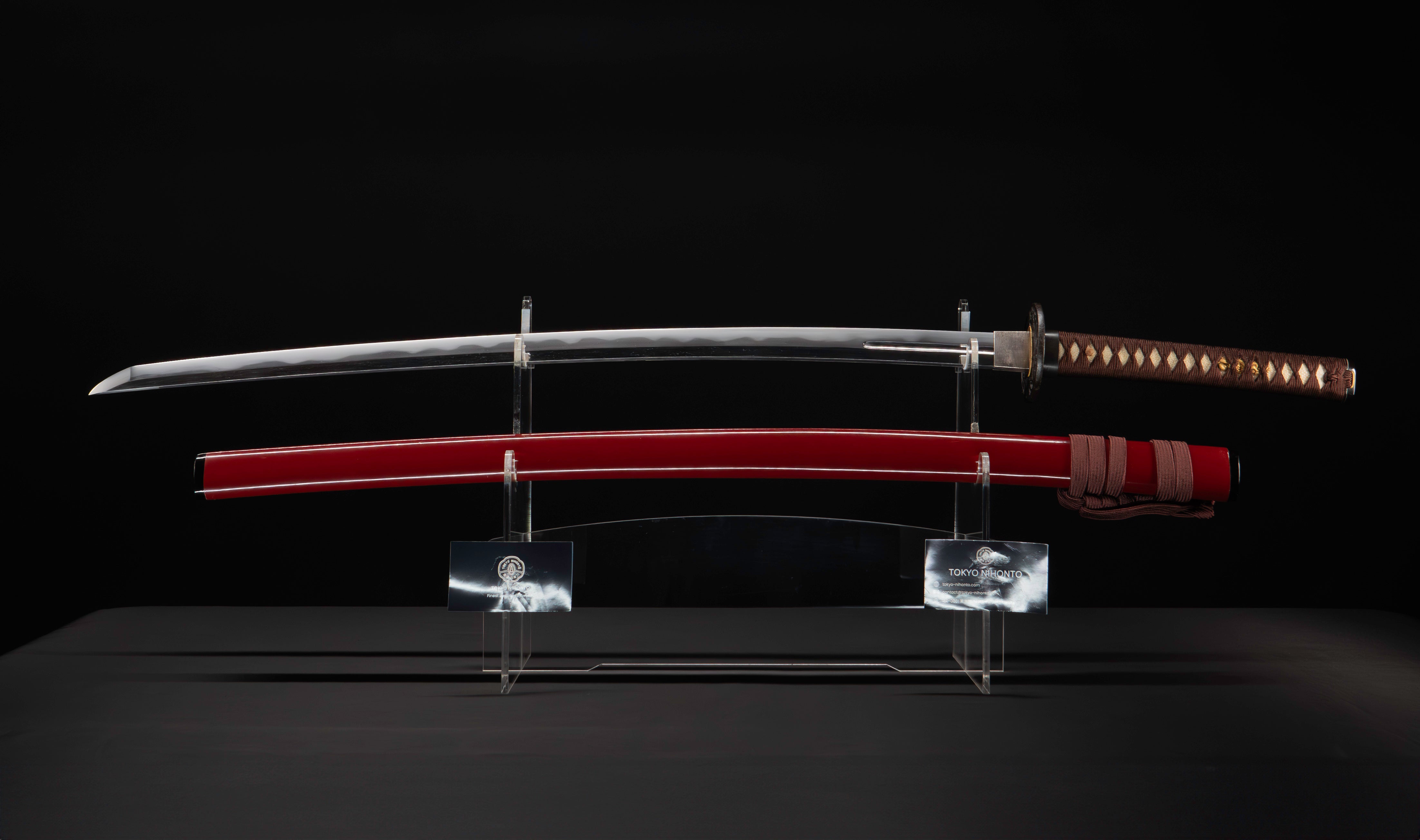
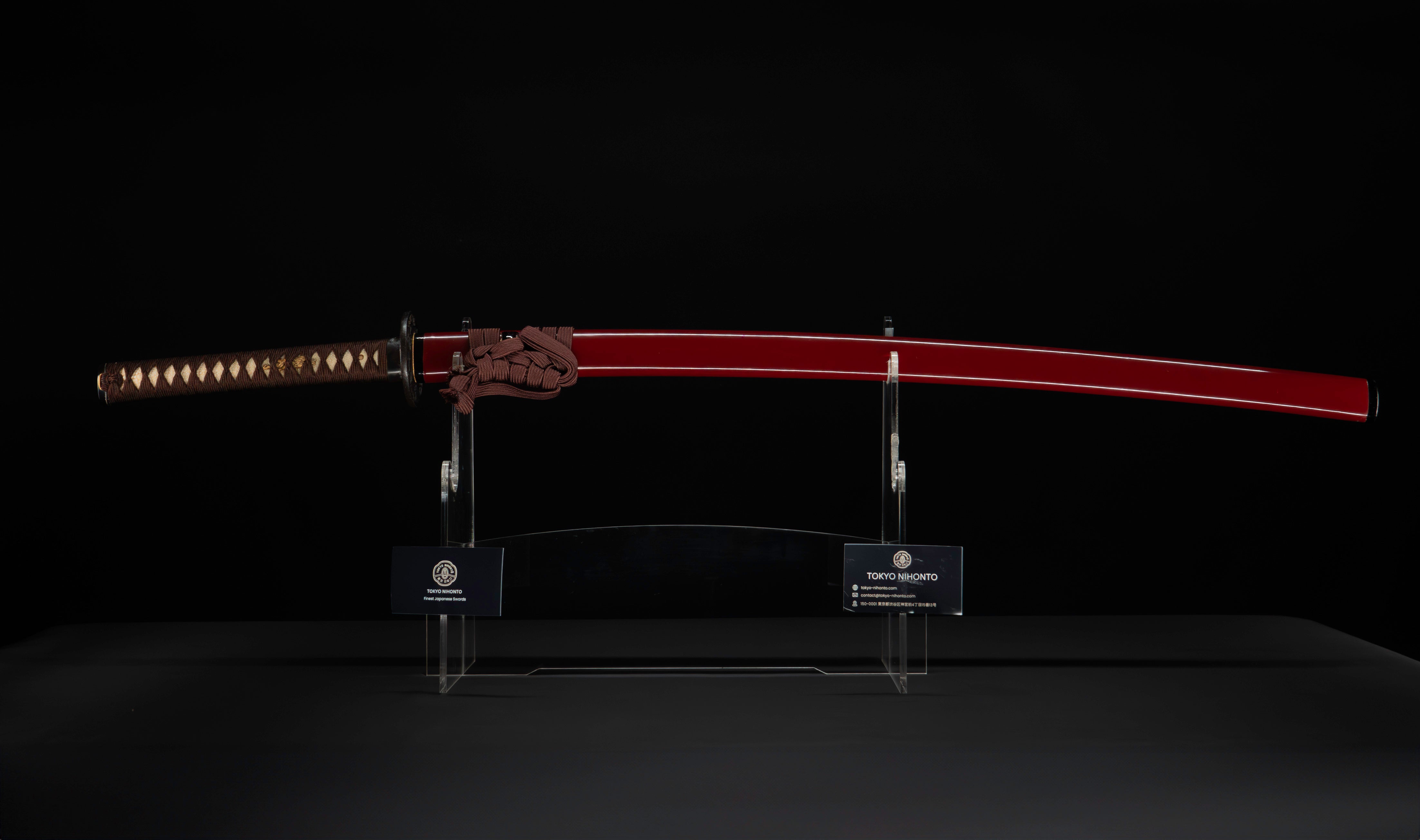
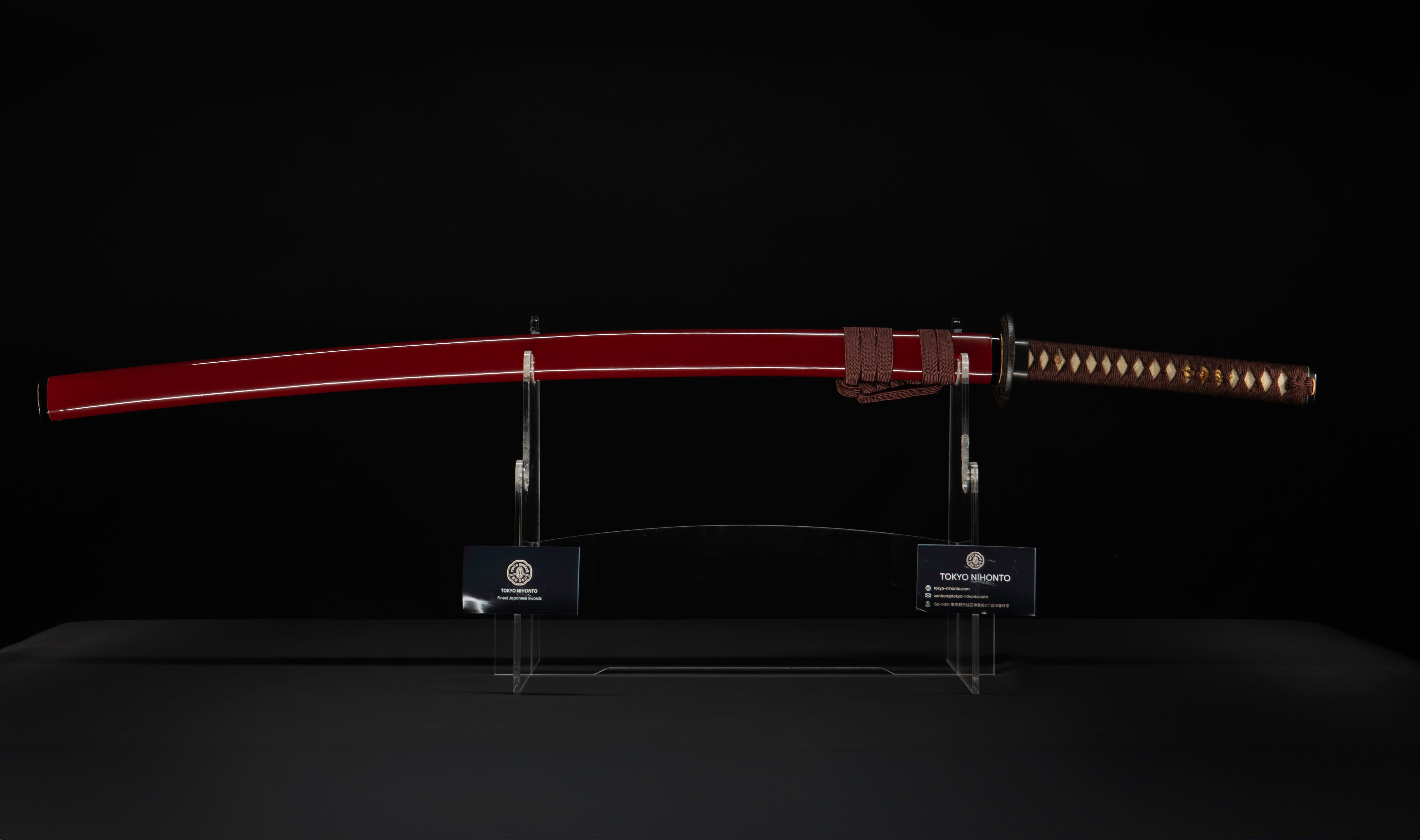
A full-length unsigned katana of 70.4 cm, dated to the Edo period by the Japanese dealer who handled it. It has no shinsa paper and we claim no smith or school for it. The blade is registered in Japan and comes in a striking red lacquer koshirae.
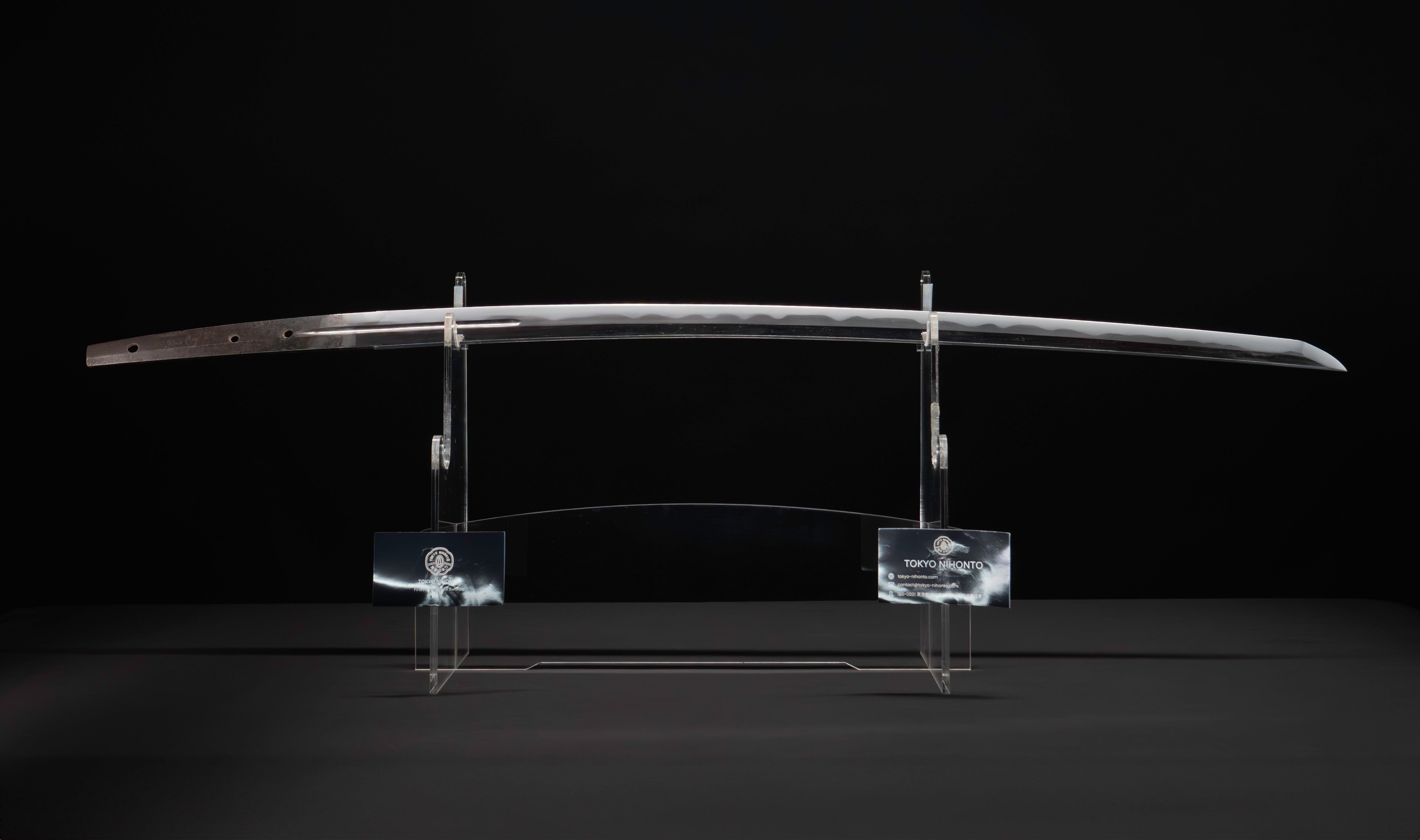
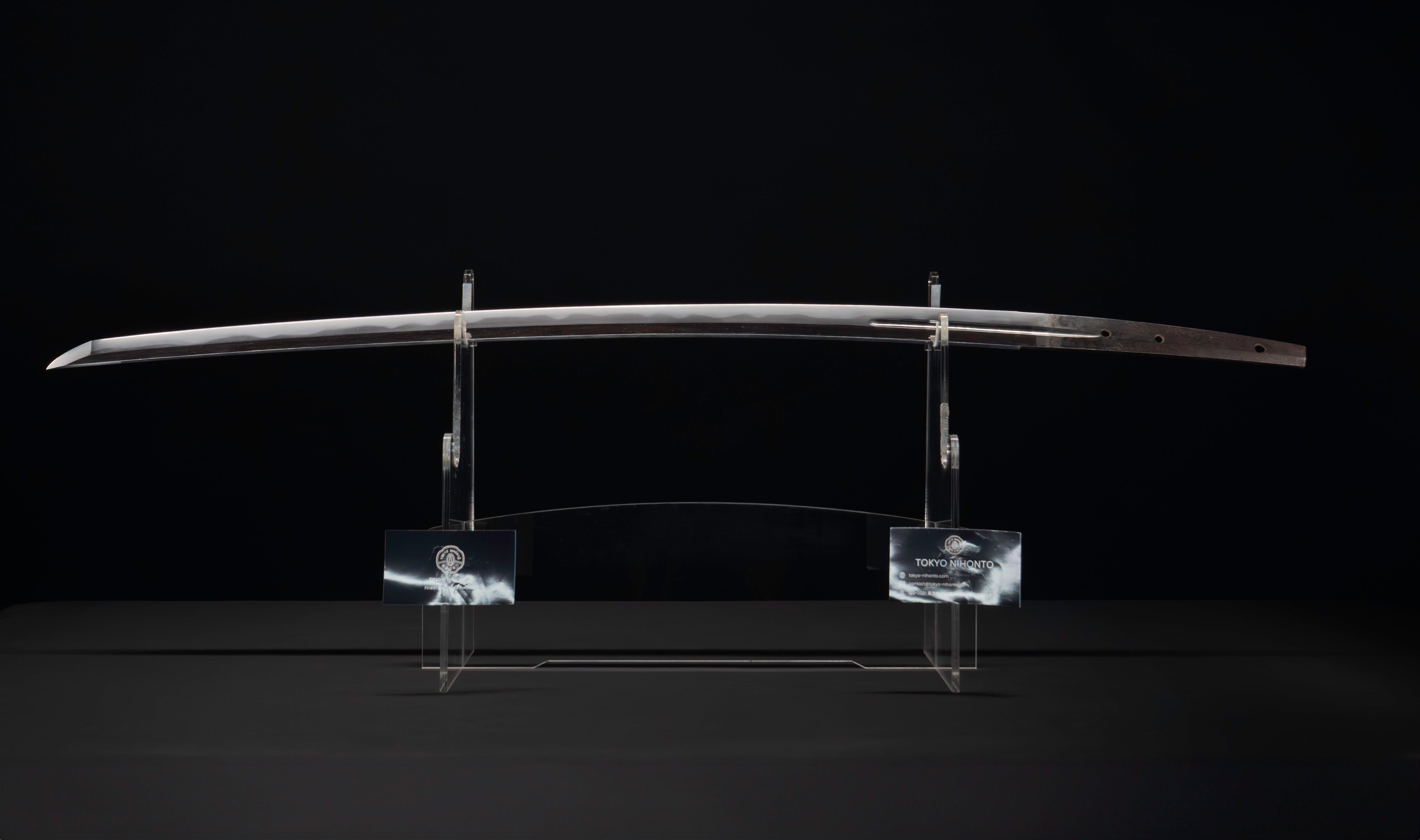
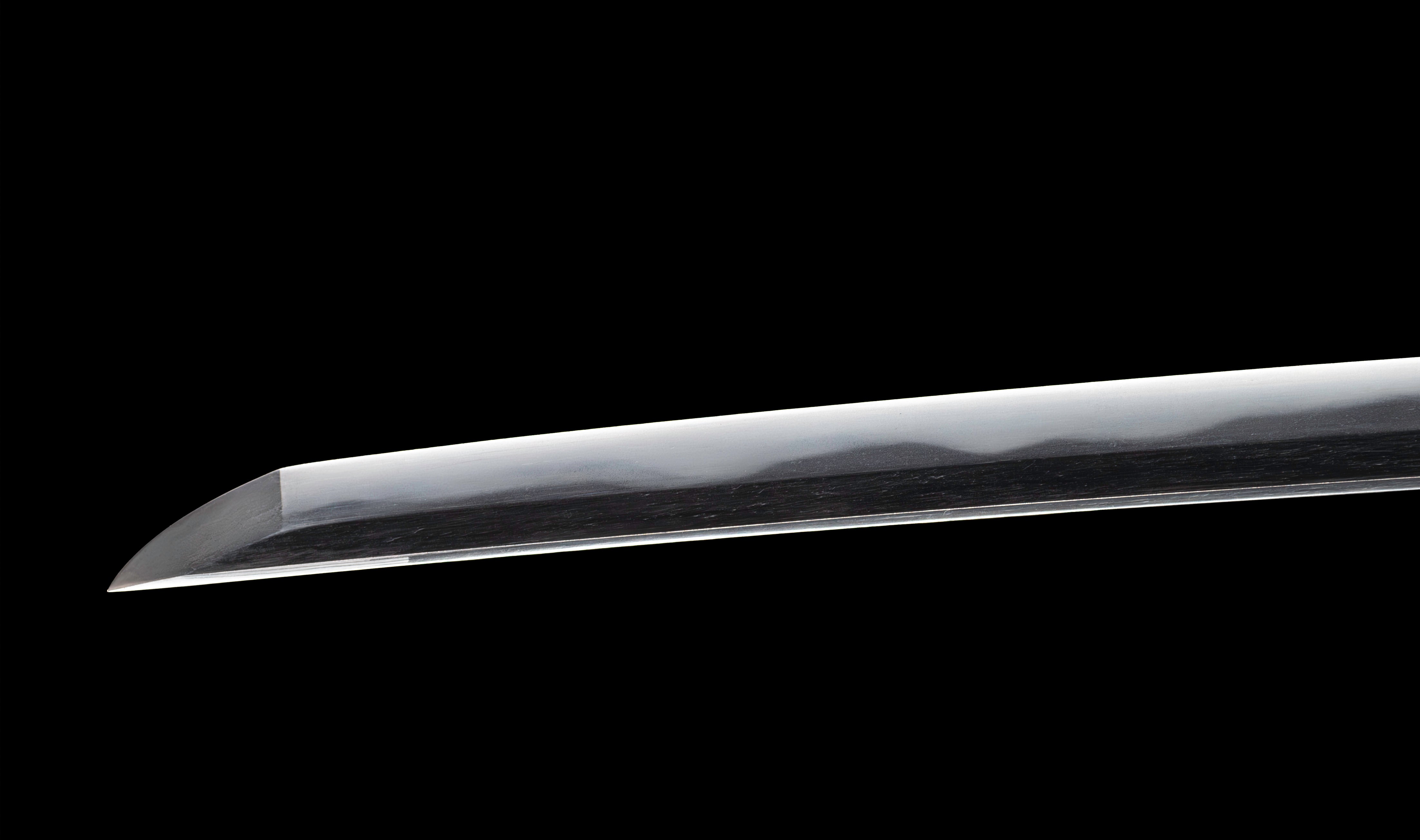
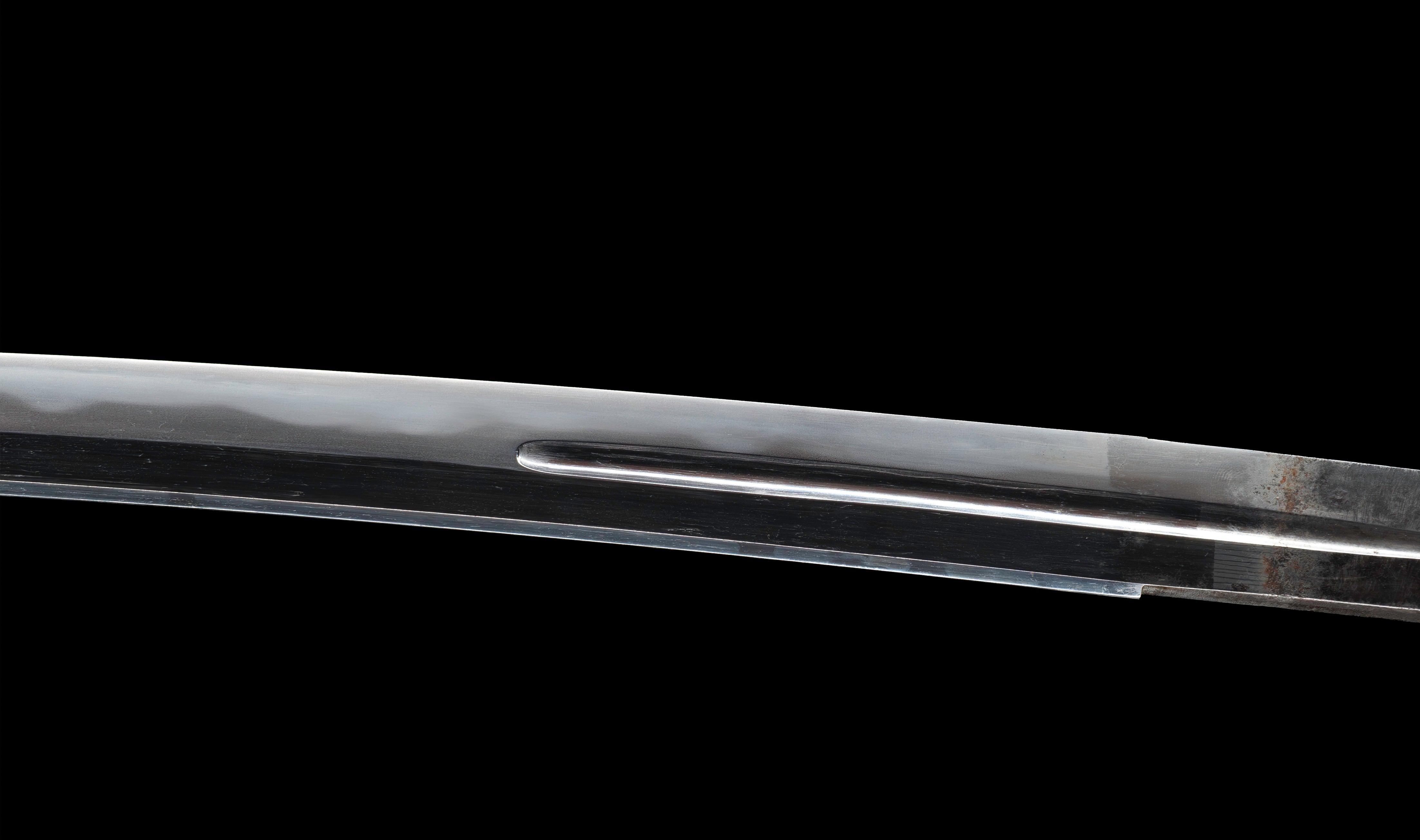
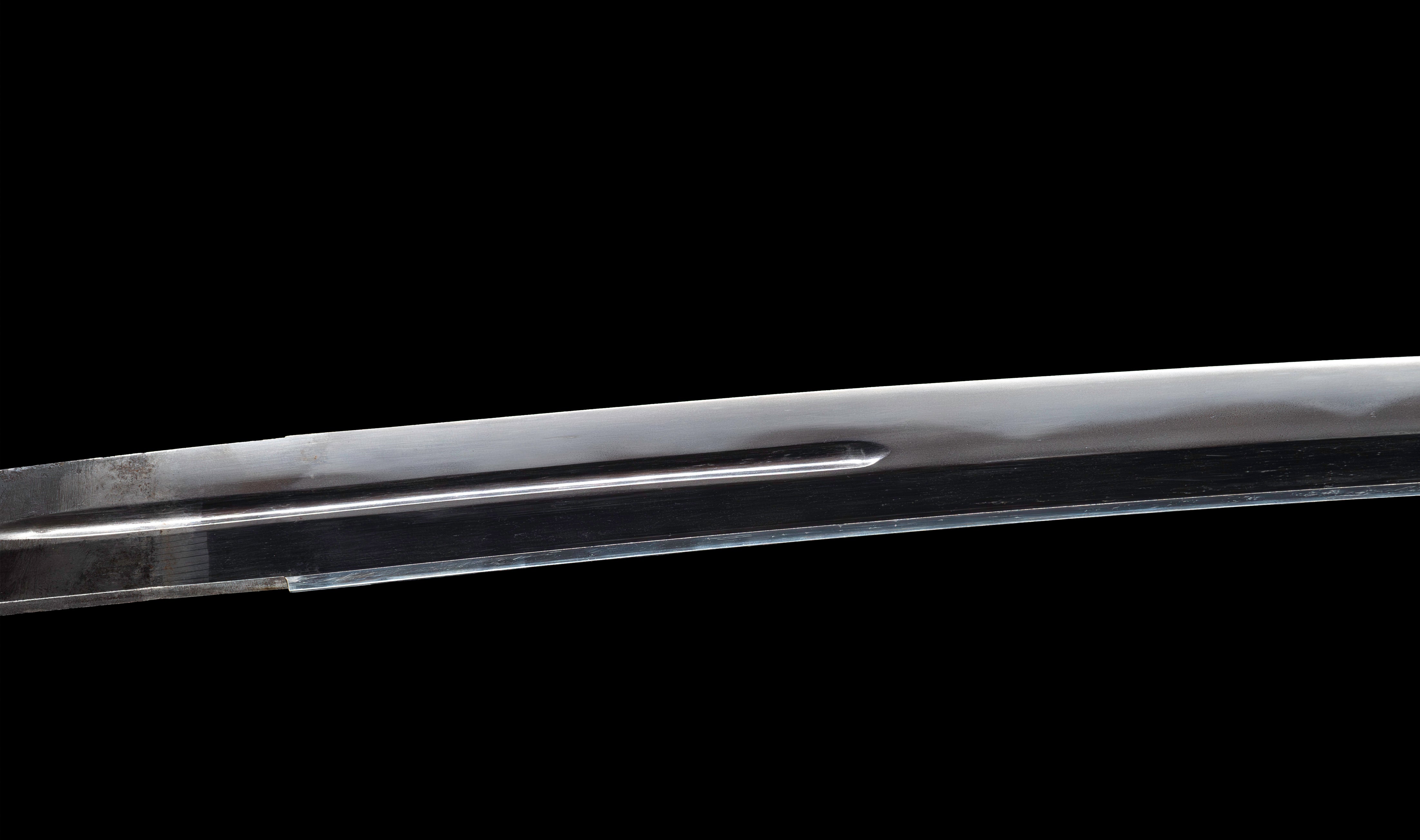
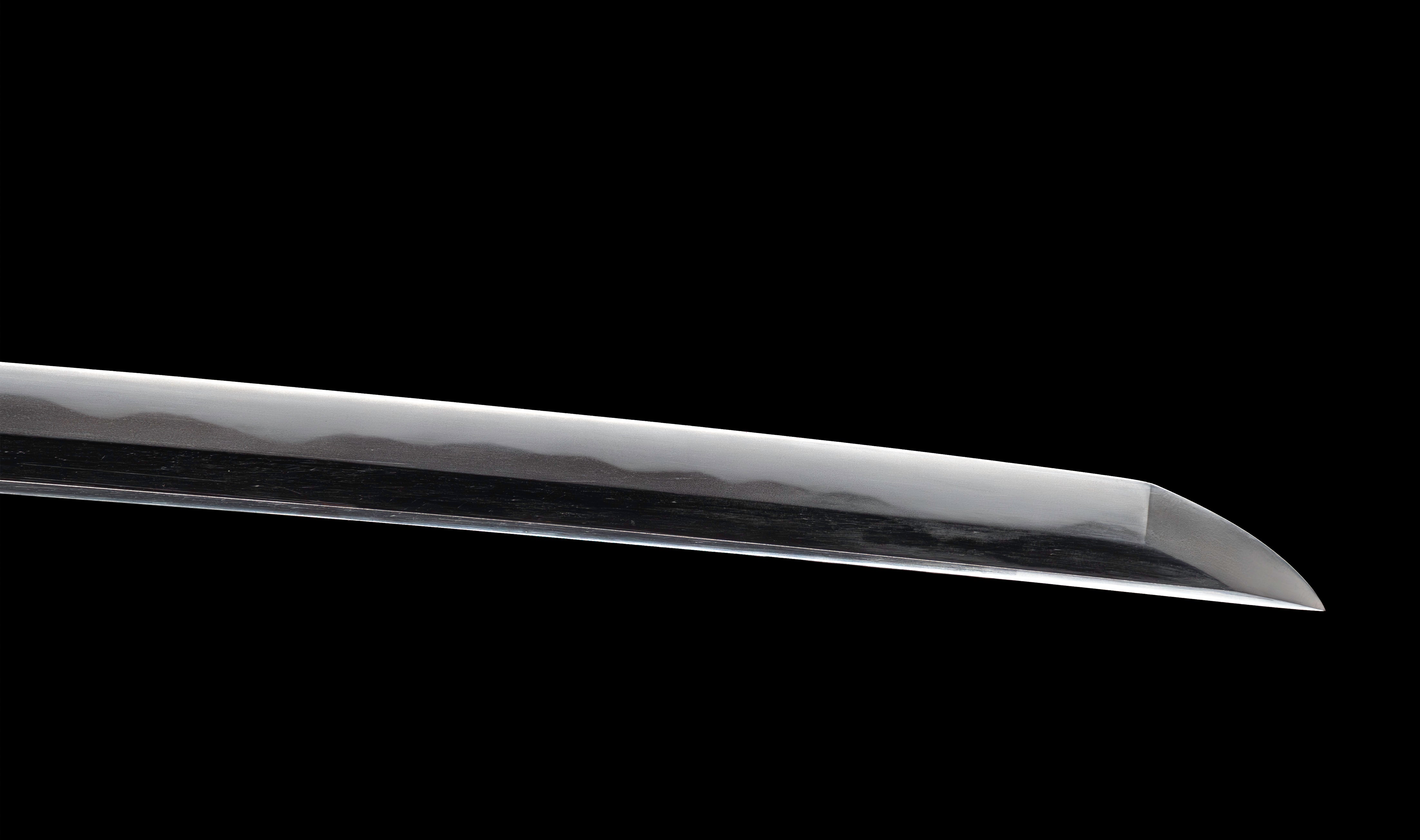
The shape is a shinogi-zukuri katana with an iori-mune and a chū-kissaki, with a moderate curvature of 1.6 cm. A bo-hi (groove) is cut on both sides and runs down into the tang. At 70.4 cm, it is a long blade with real presence in the hand, and the groove keeps it lighter than its length suggests.
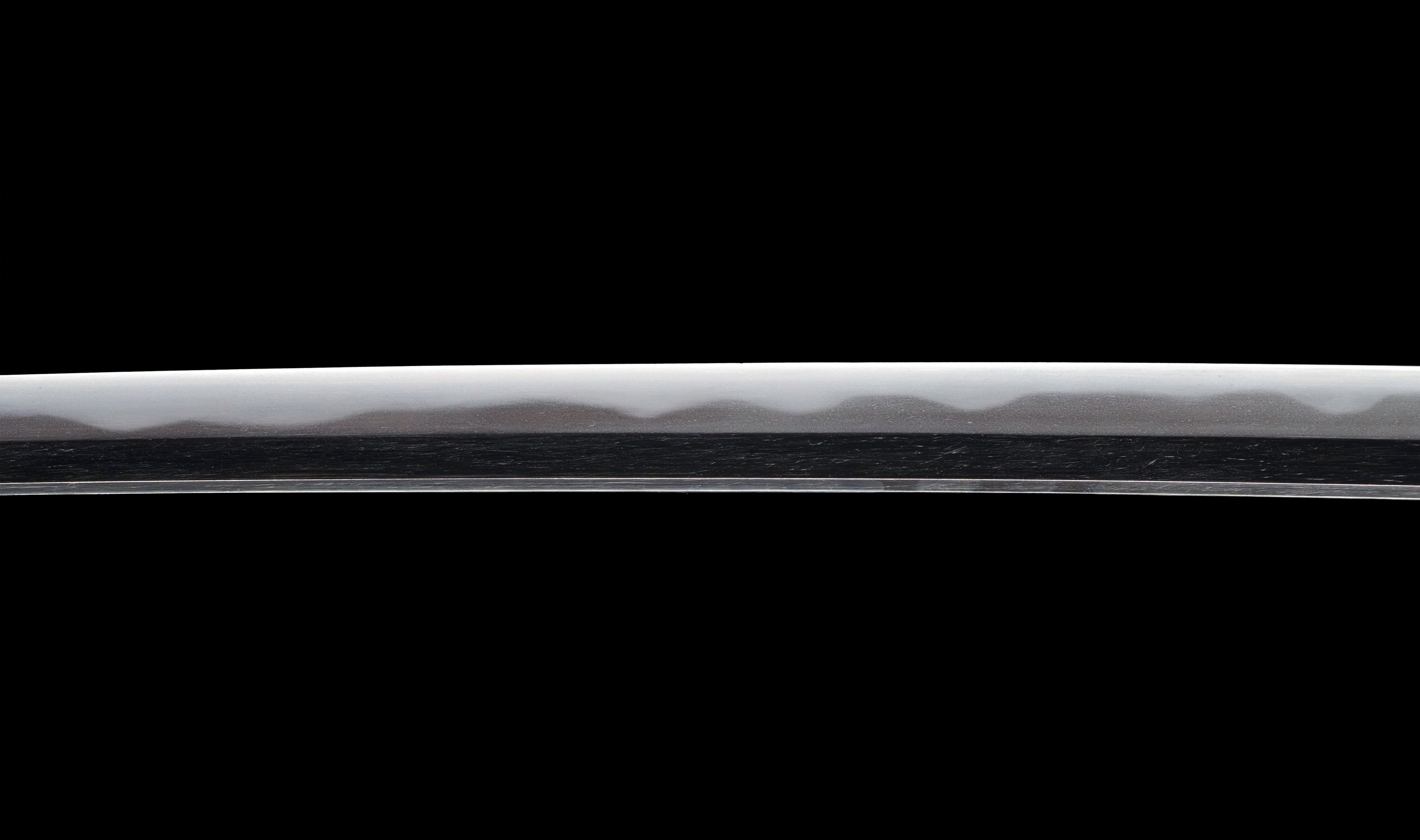
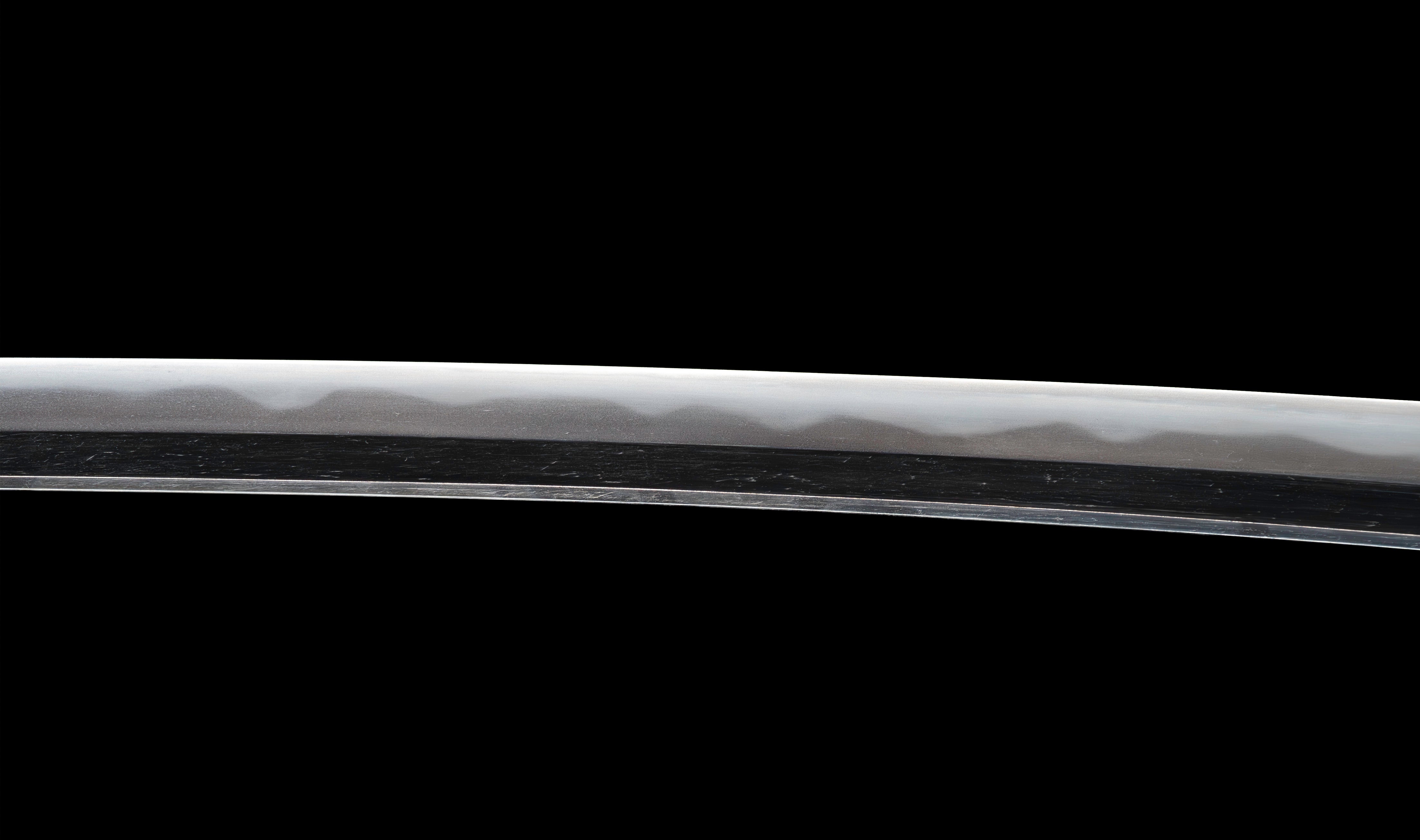
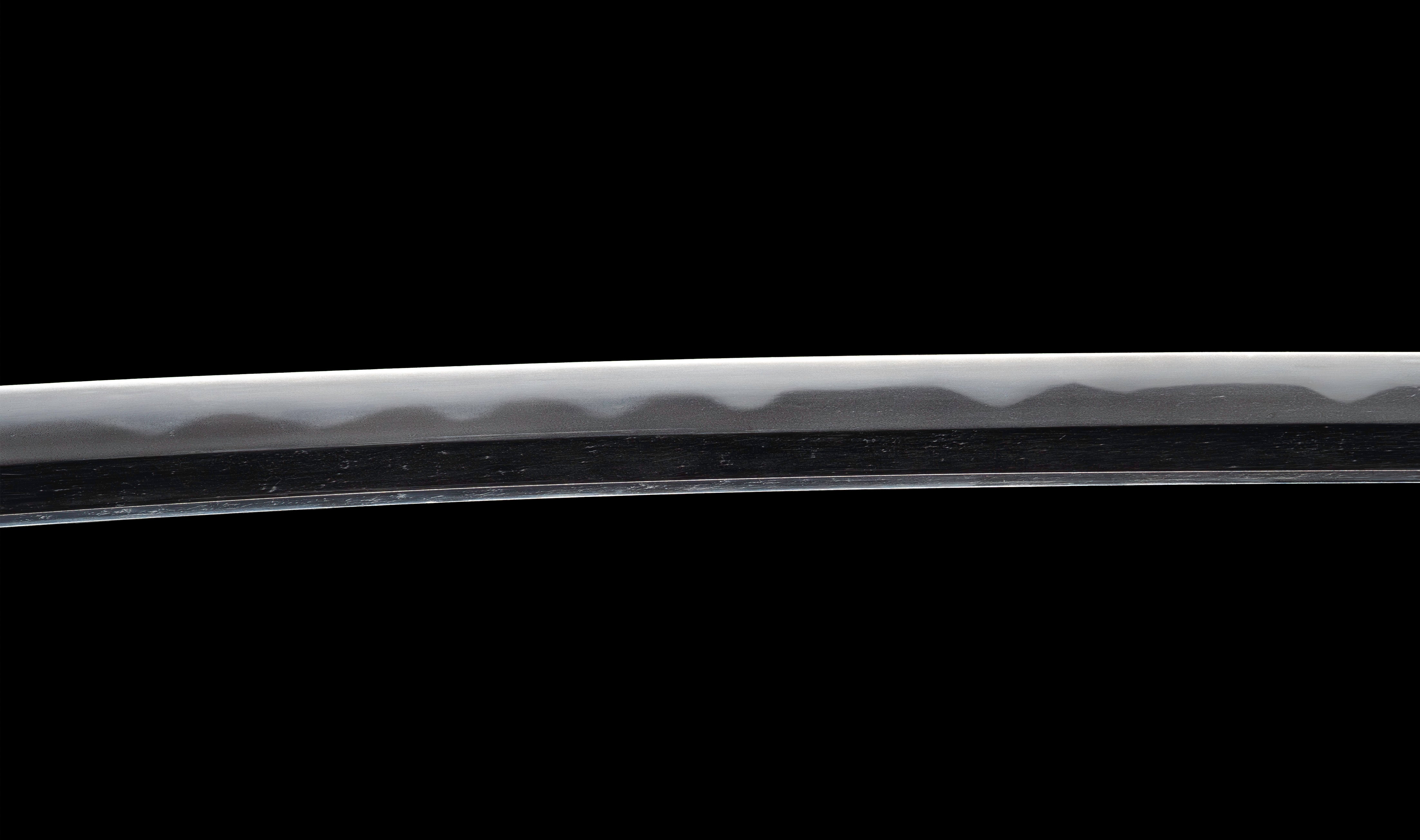
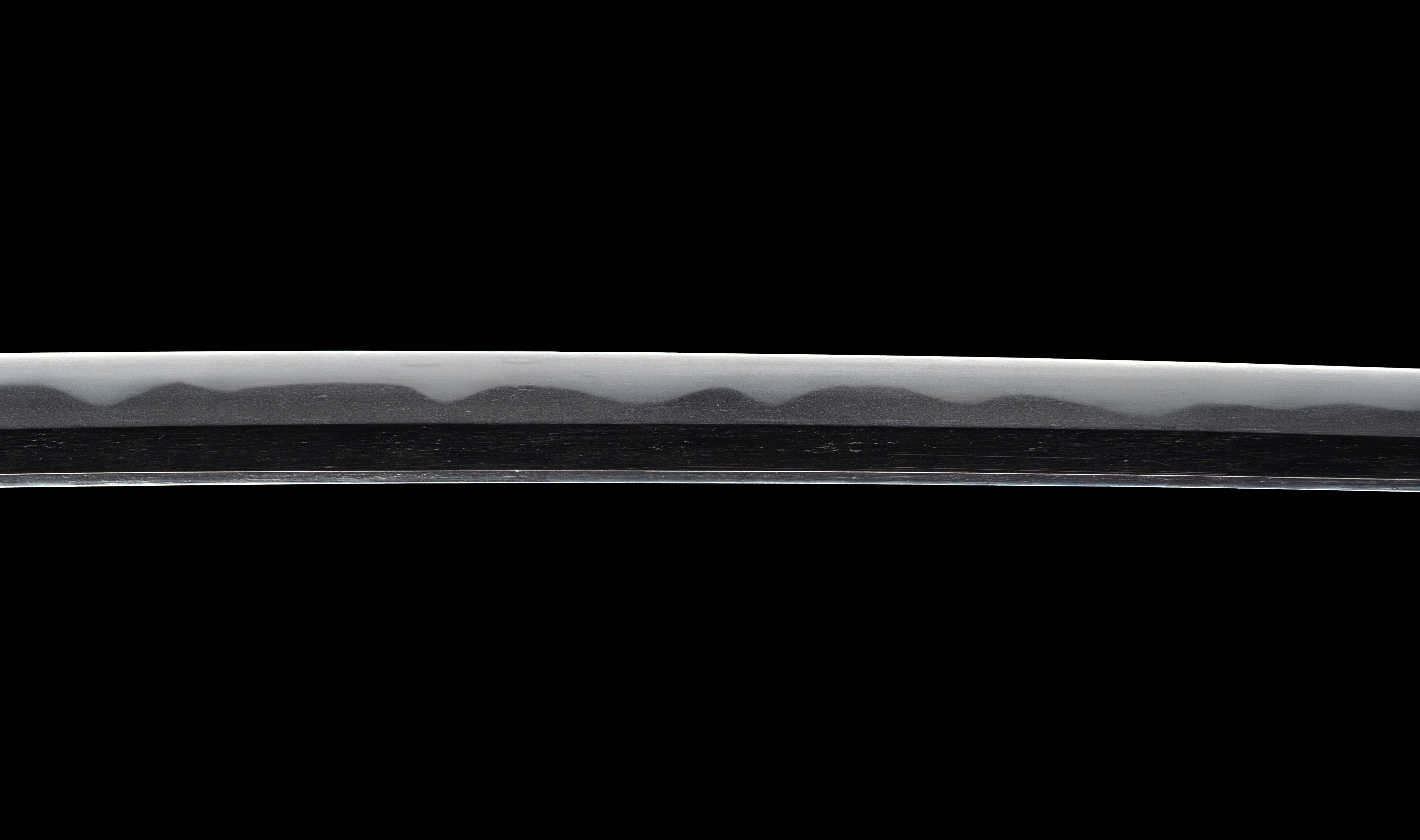
The hamon is the highlight. It is a broad notare mixed with rounded gunome, rising and falling in wide, regular waves along the whole length of the blade. It is formed in nioi, with a bright, tight nioiguchi that stands out cleanly against the steel, and the current polish shows it very clearly.
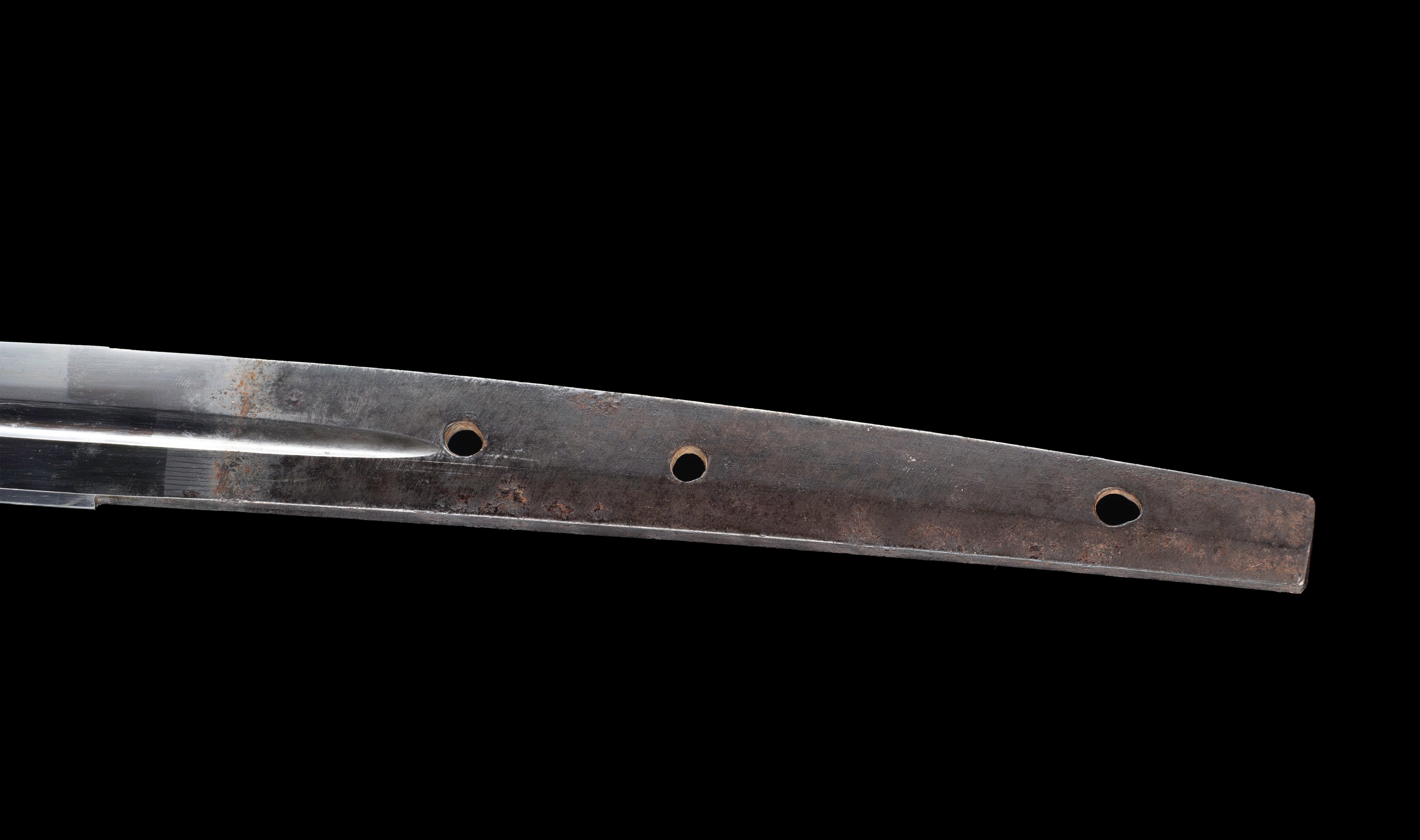
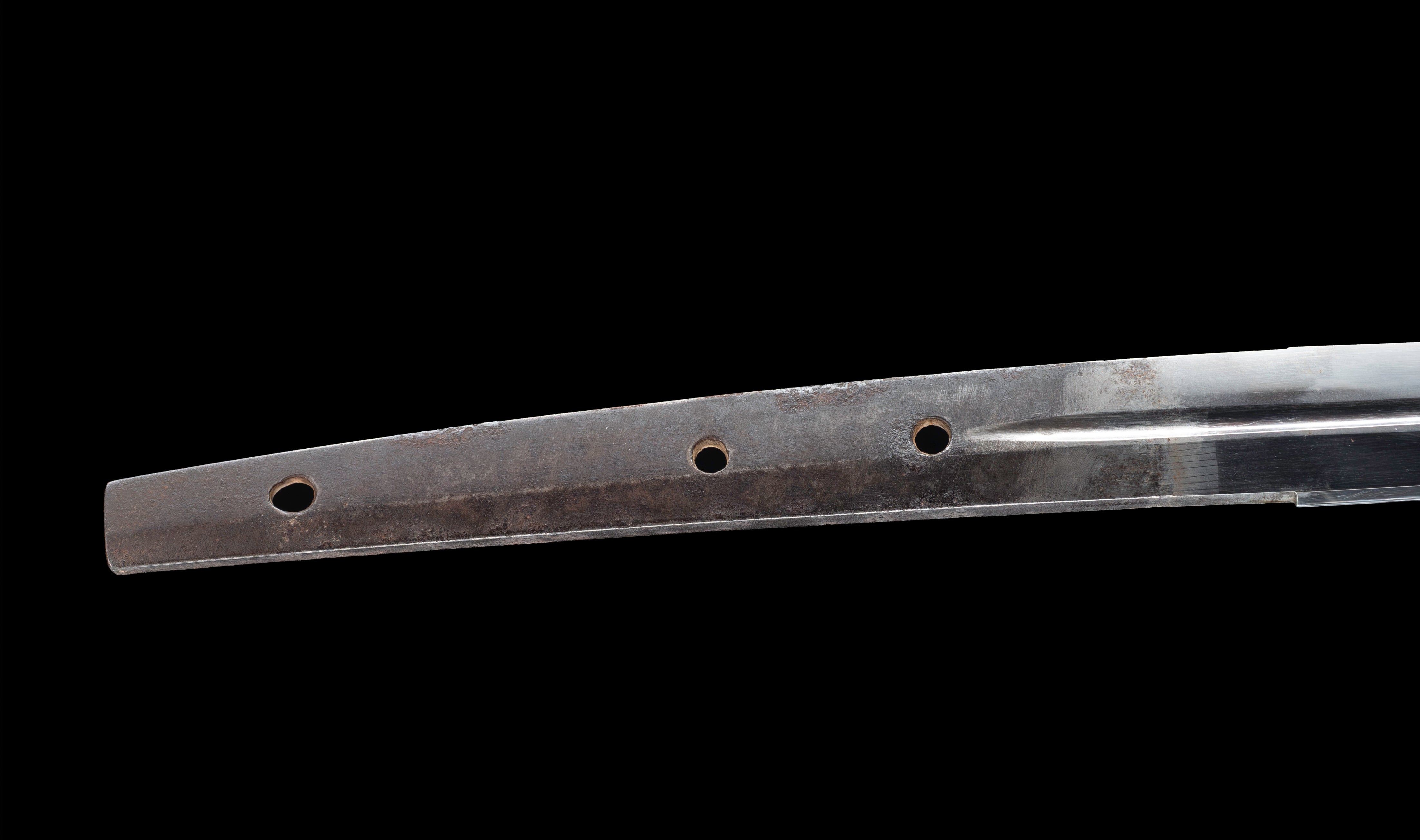
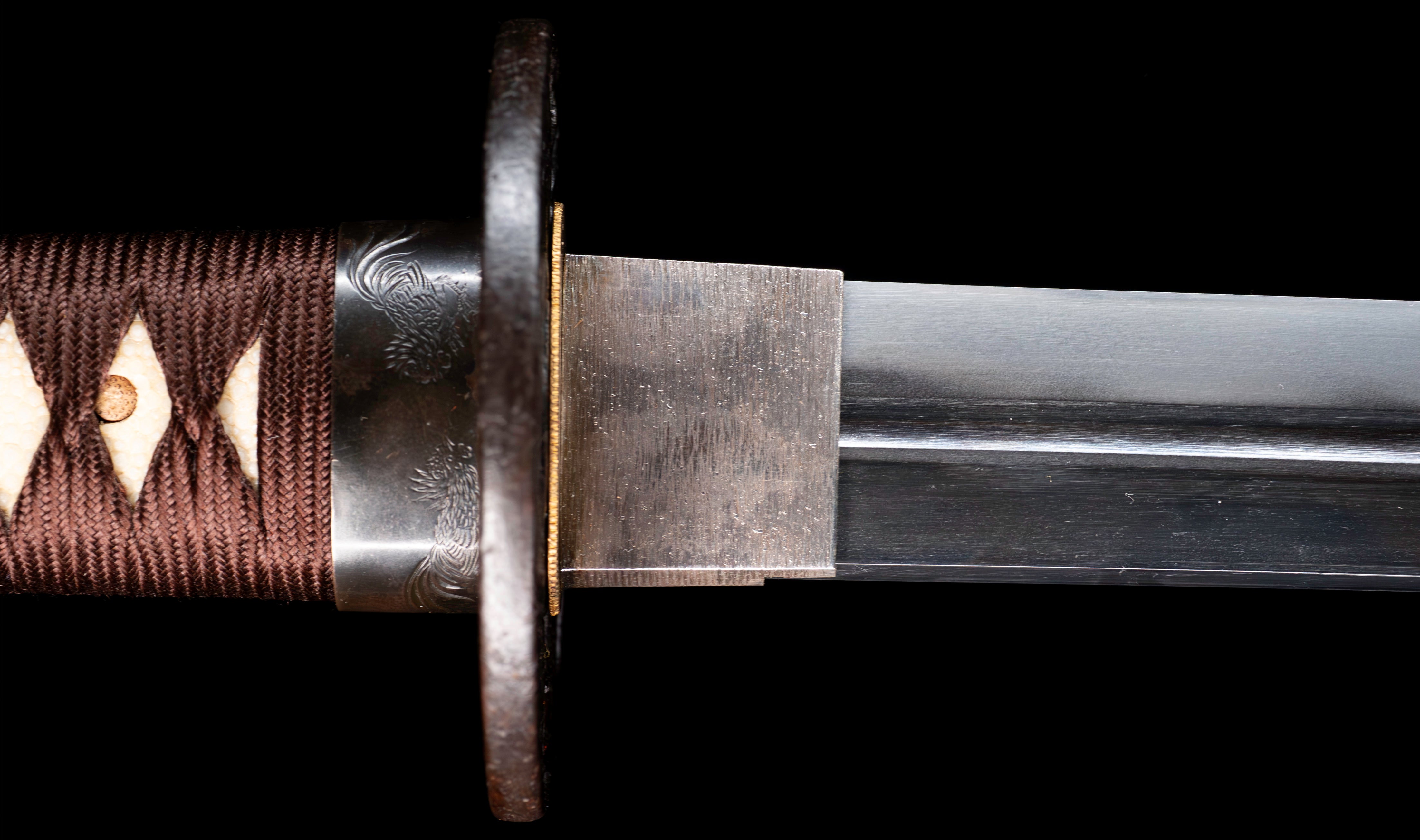
The steel is tight and fine-grained. The tang has been shortened: it ends in a straight-cut tip and carries three mekugi-ana, and the groove now continues past the first hole, showing that the original tang began further down. Shortening was the usual way to adapt a sword to a new owner or a new fashion, and many fine blades were altered this way. The tang has a dark, even patina.
Koshirae Details
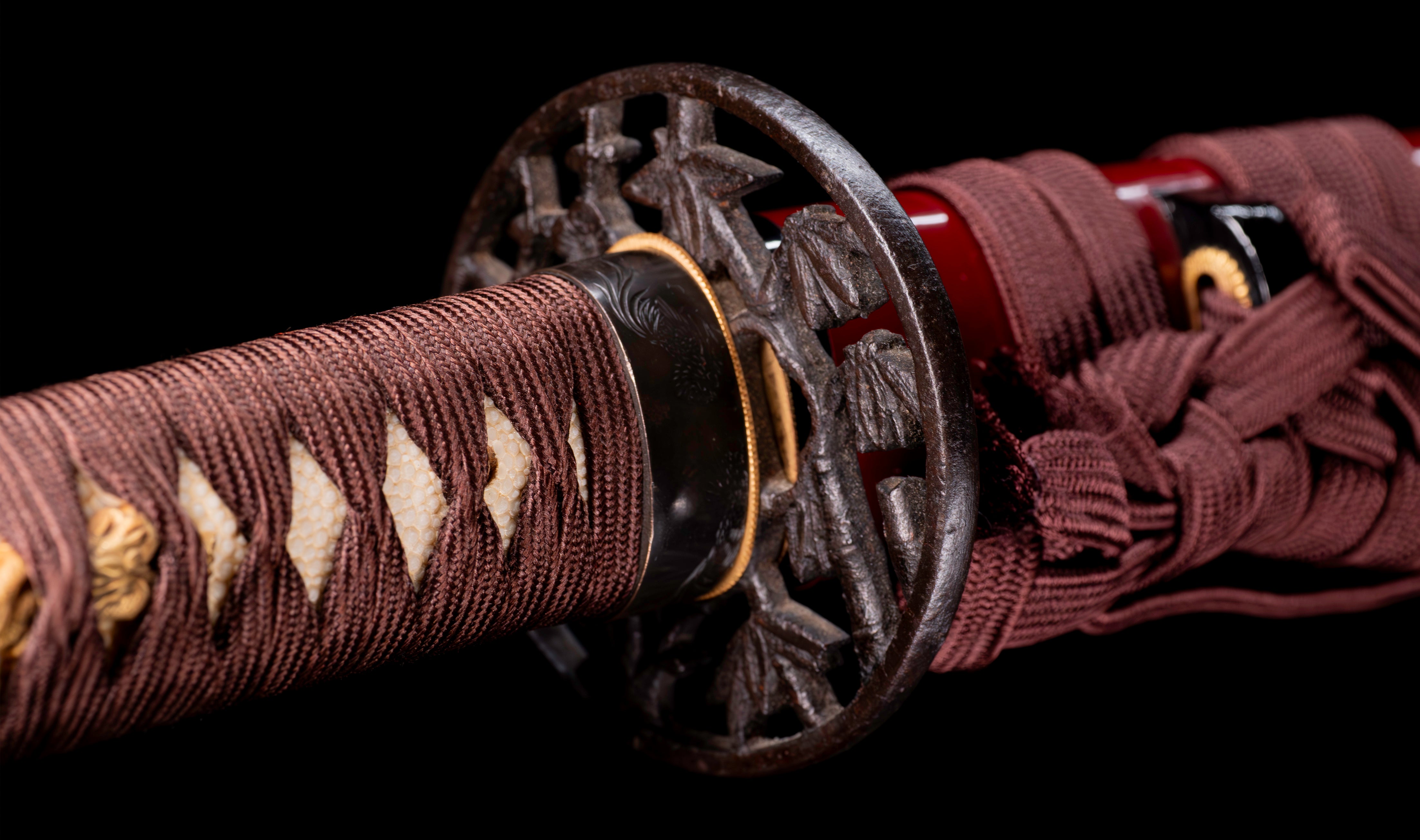
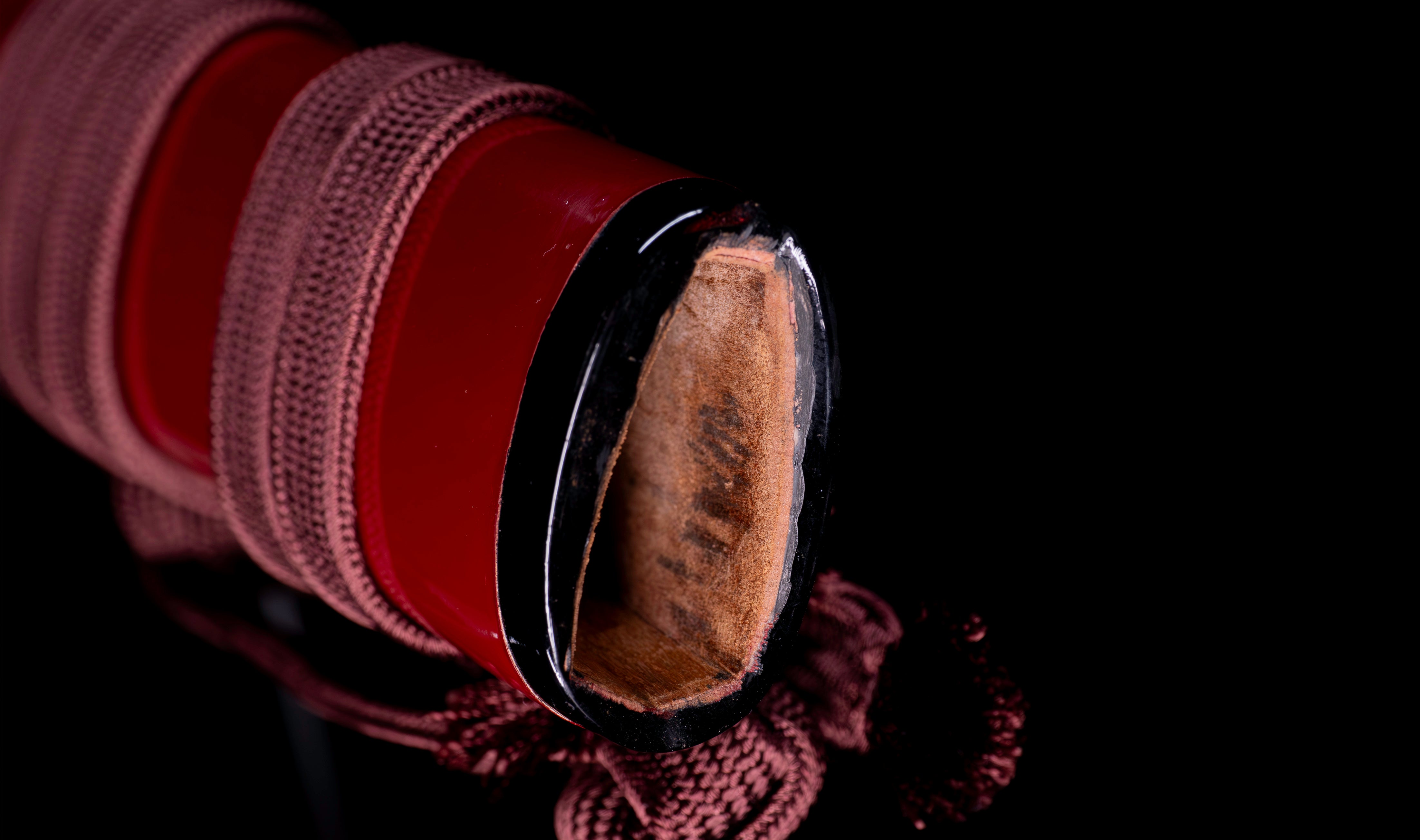
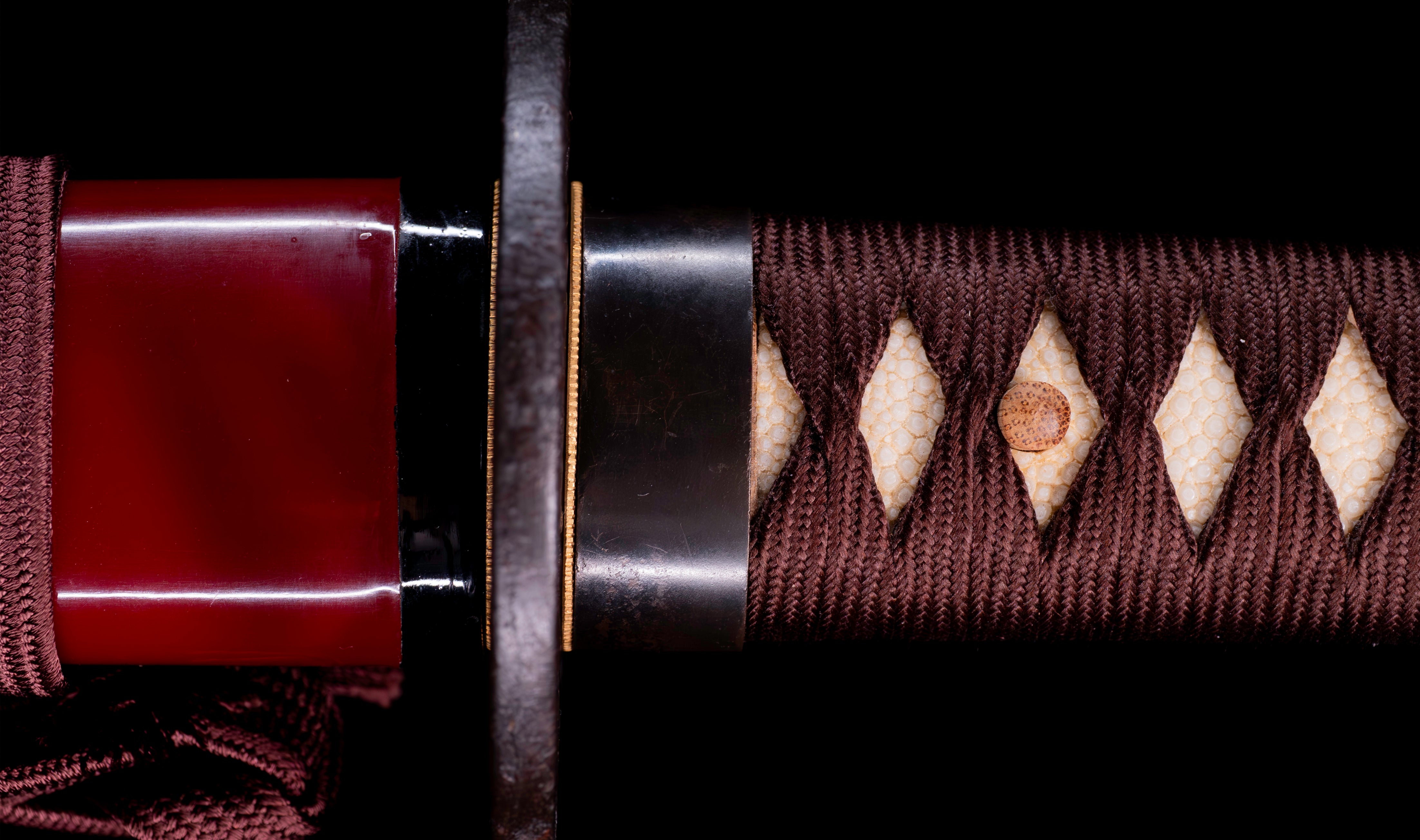
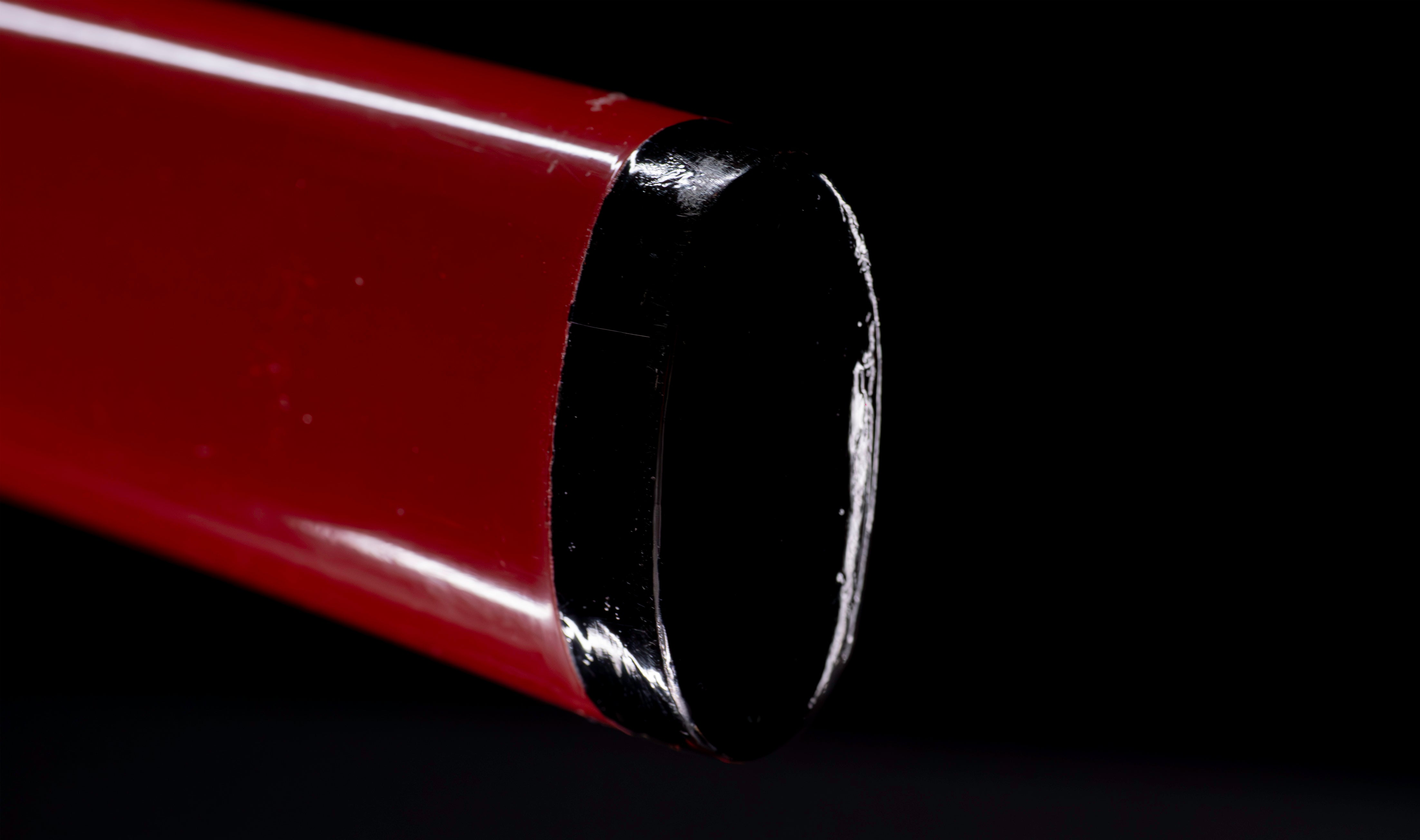
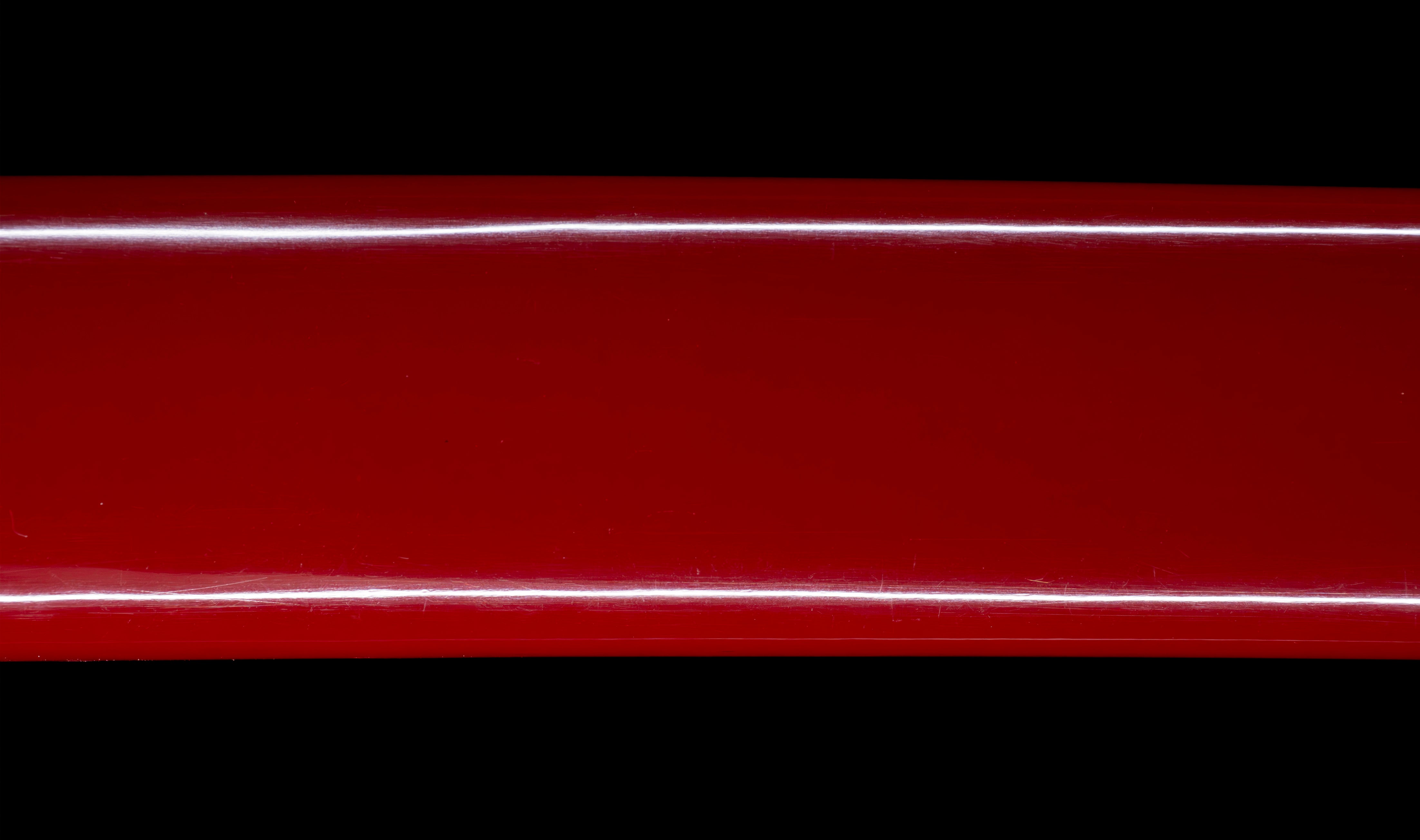
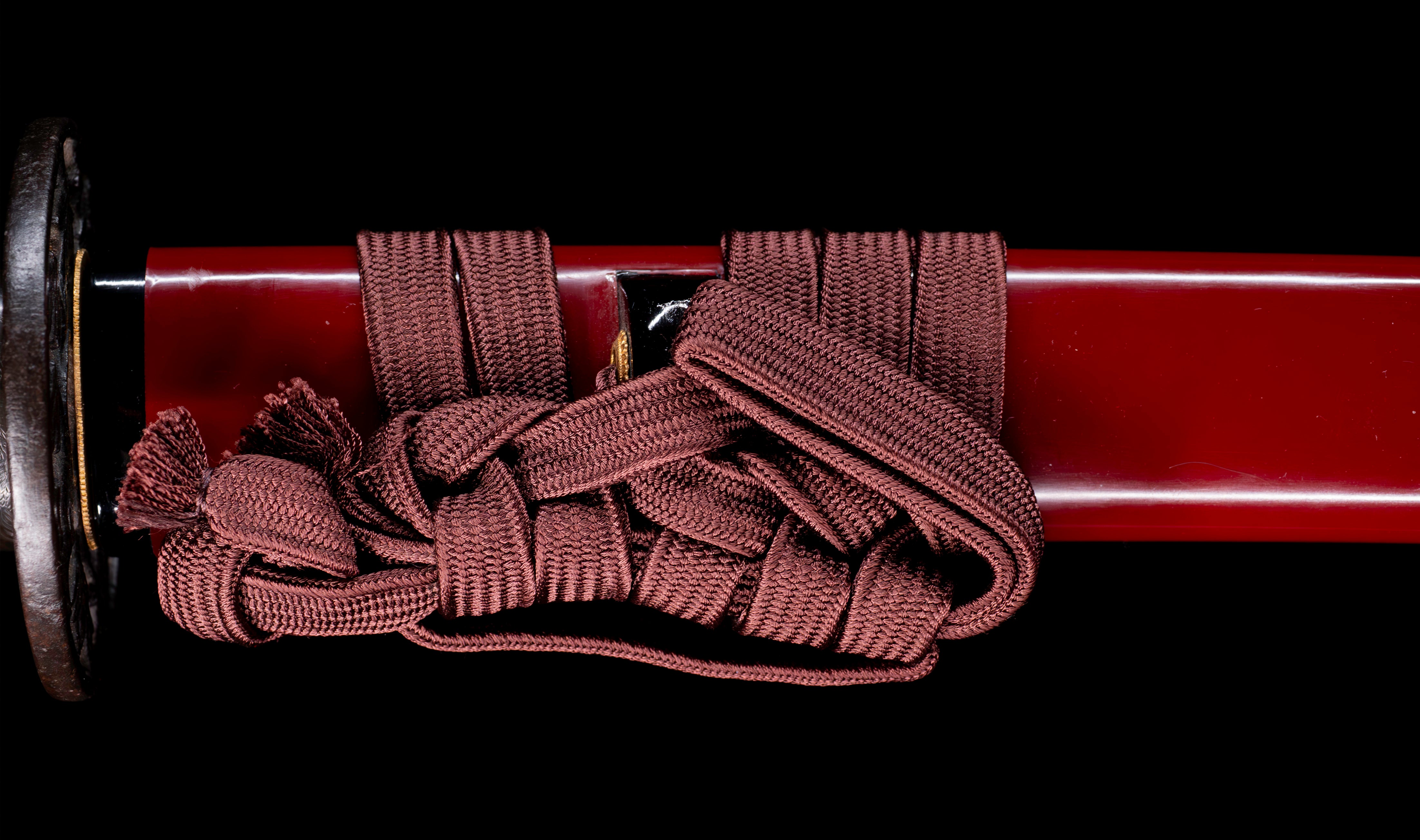
The saya sets the tone: a deep, glossy red lacquer, with black horn fittings and a brown silk sageo matching the wrap of the handle.
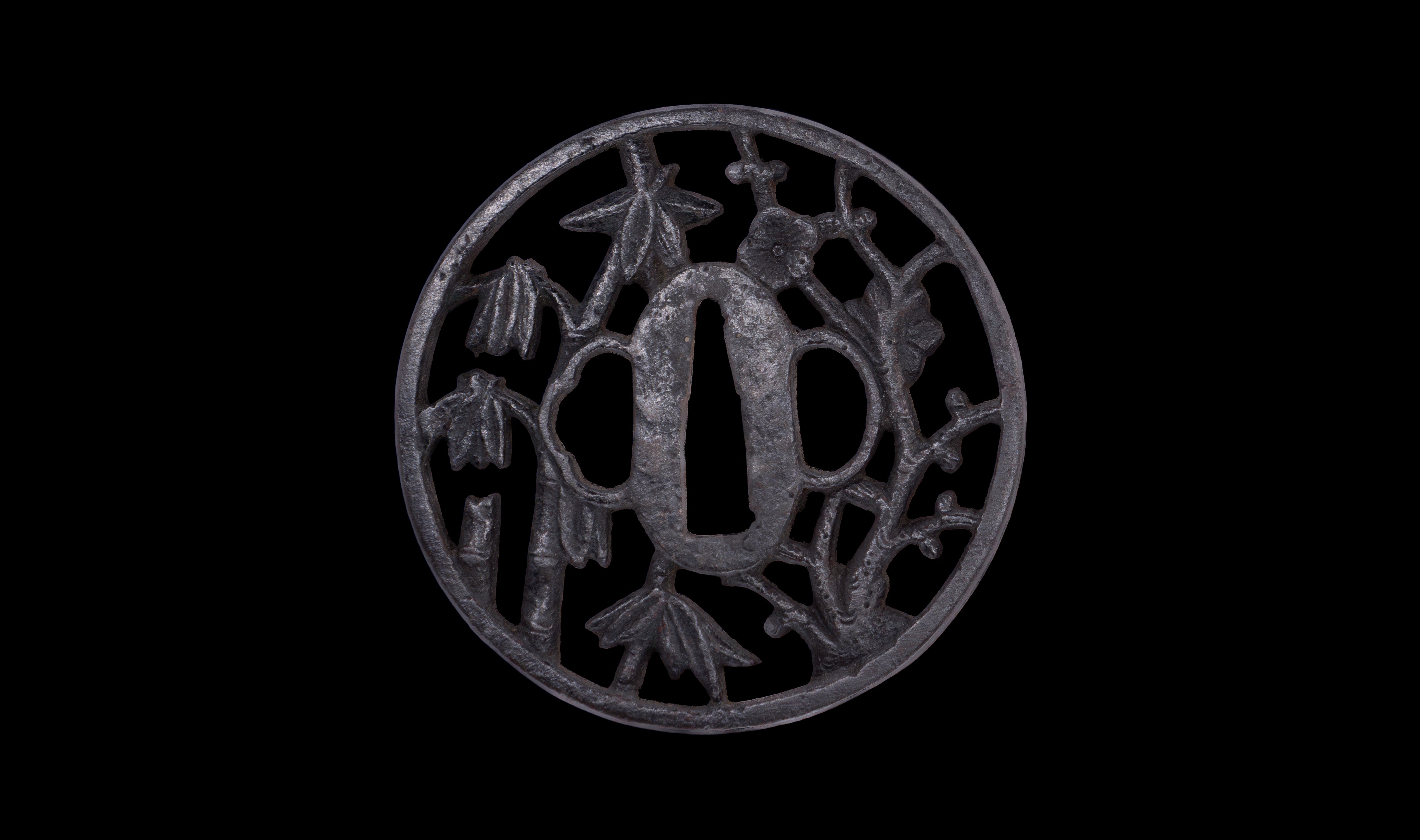
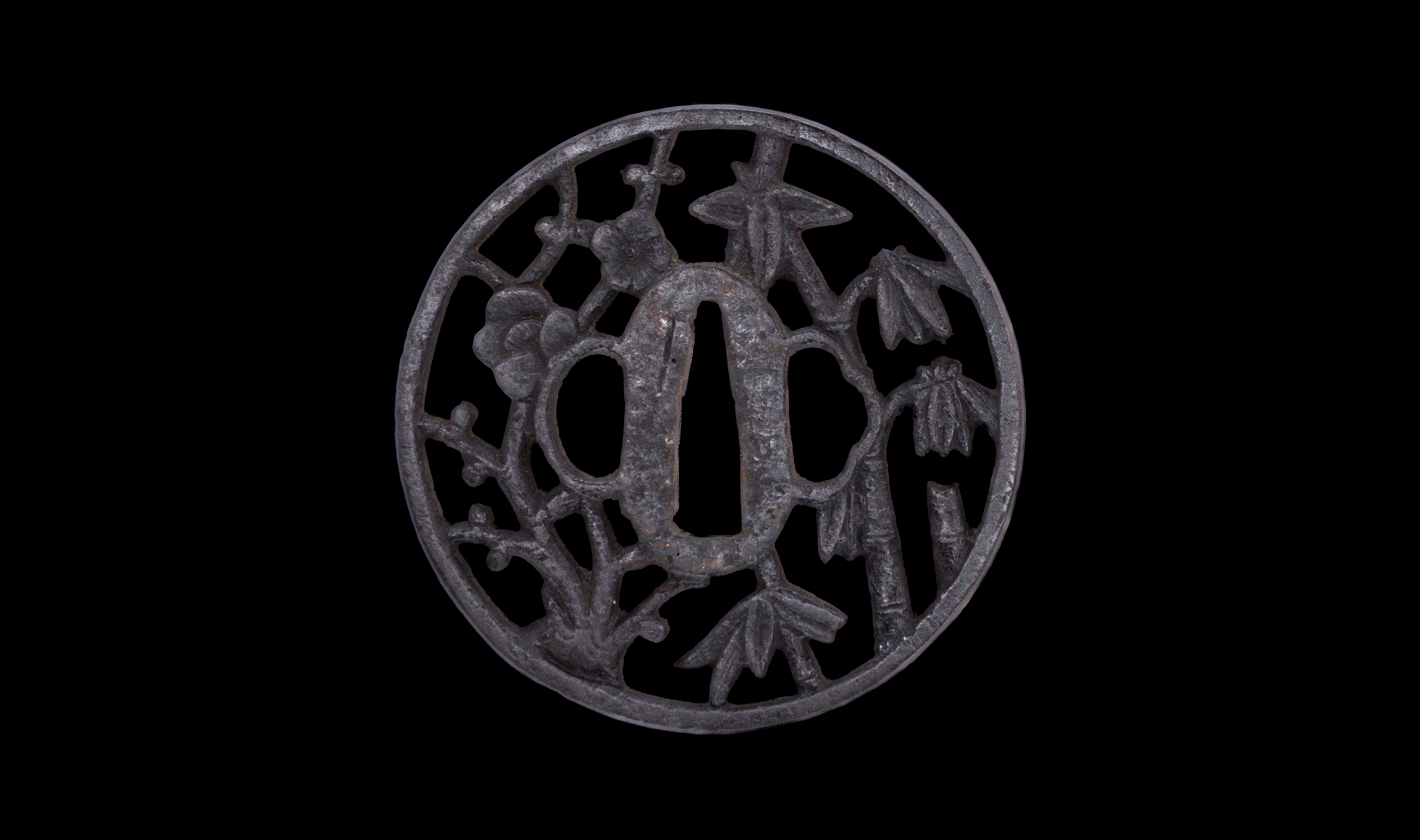
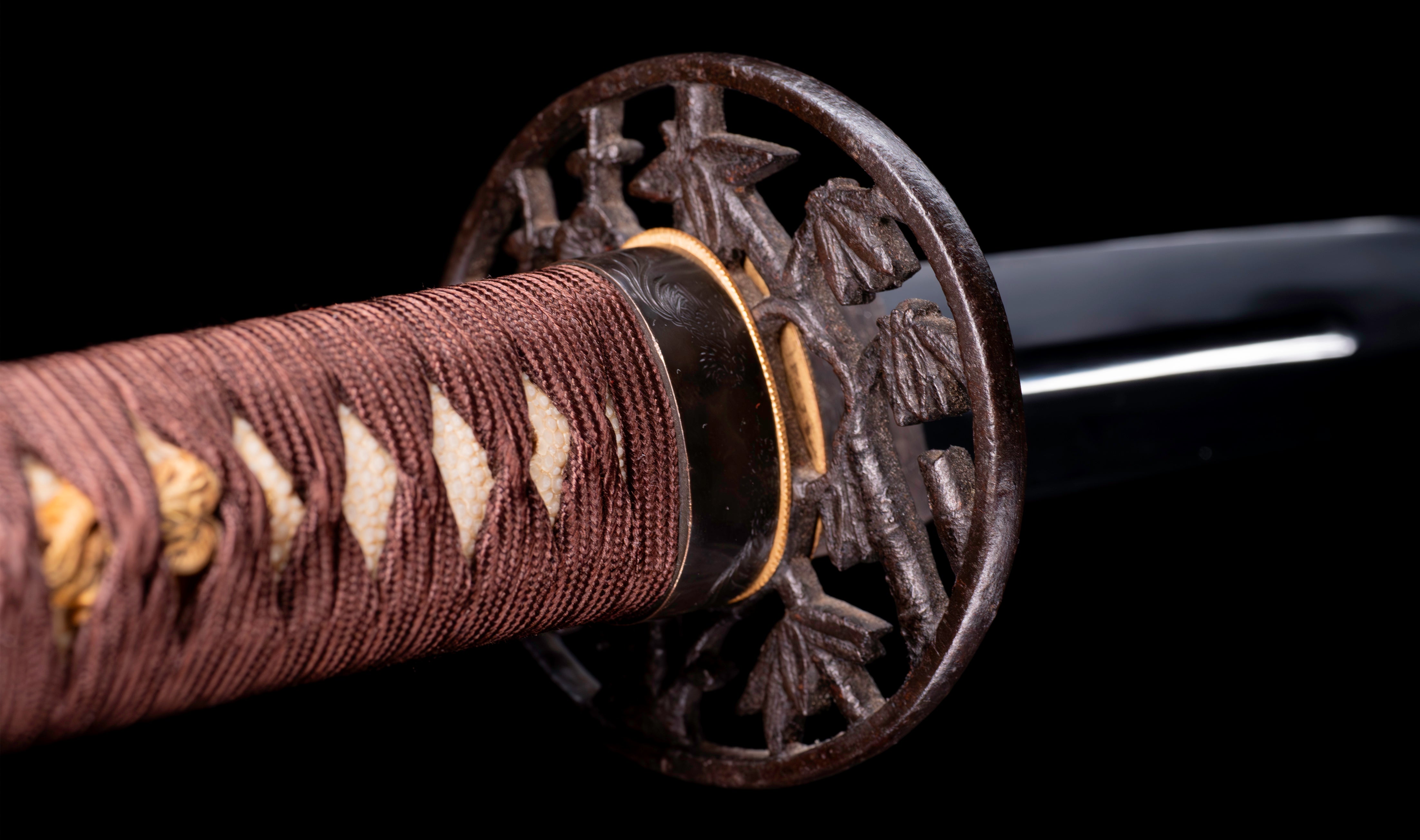
The tsuba is a round iron plate cut in openwork (sukashi): bamboo stems and leaves on one half, a flowering plum branch on the other, held inside a thin round rim. Bamboo and plum are two of the "Three Friends of Winter", plants that stay green or bloom in the cold, and a favourite theme for guards. The same design reads on both faces.
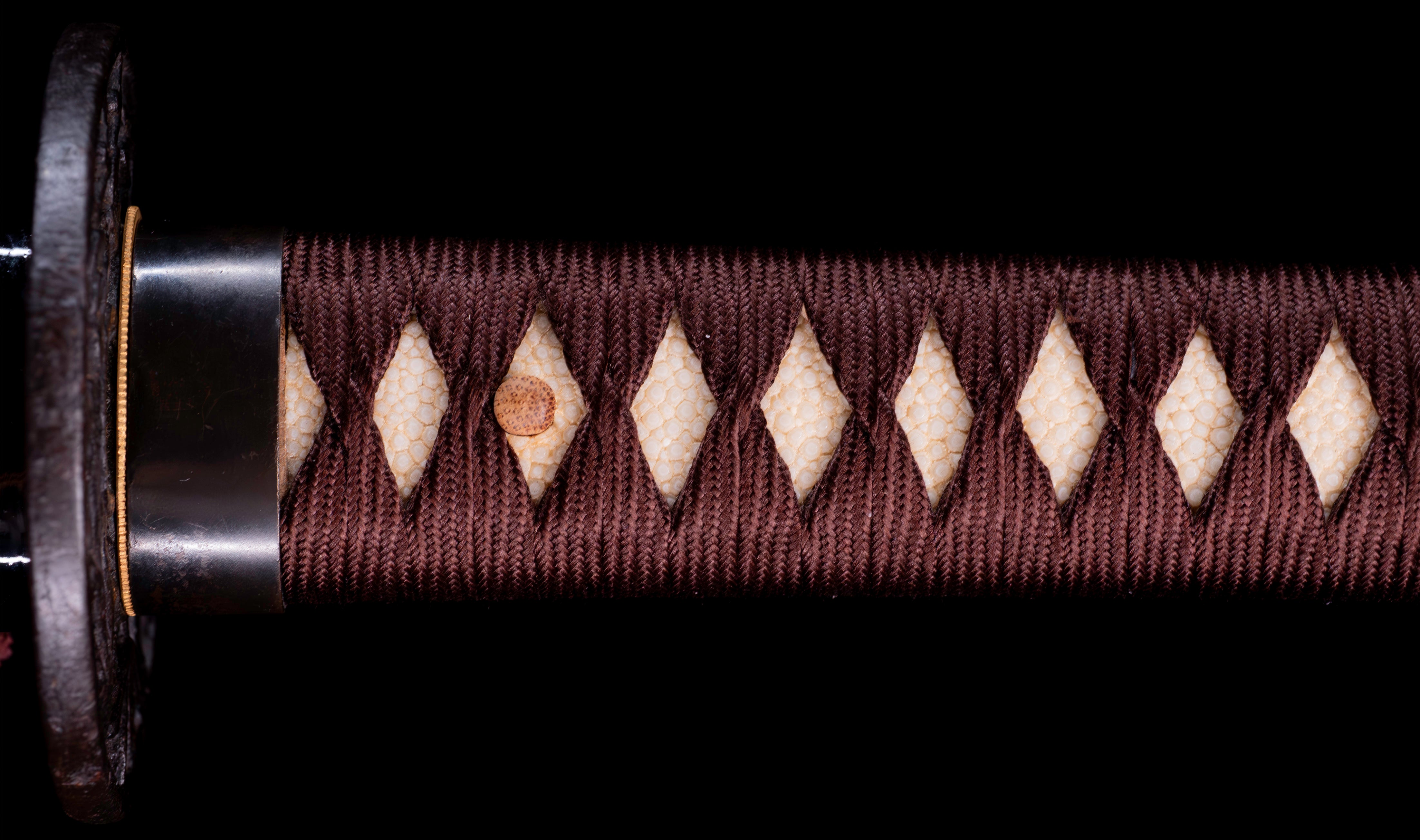
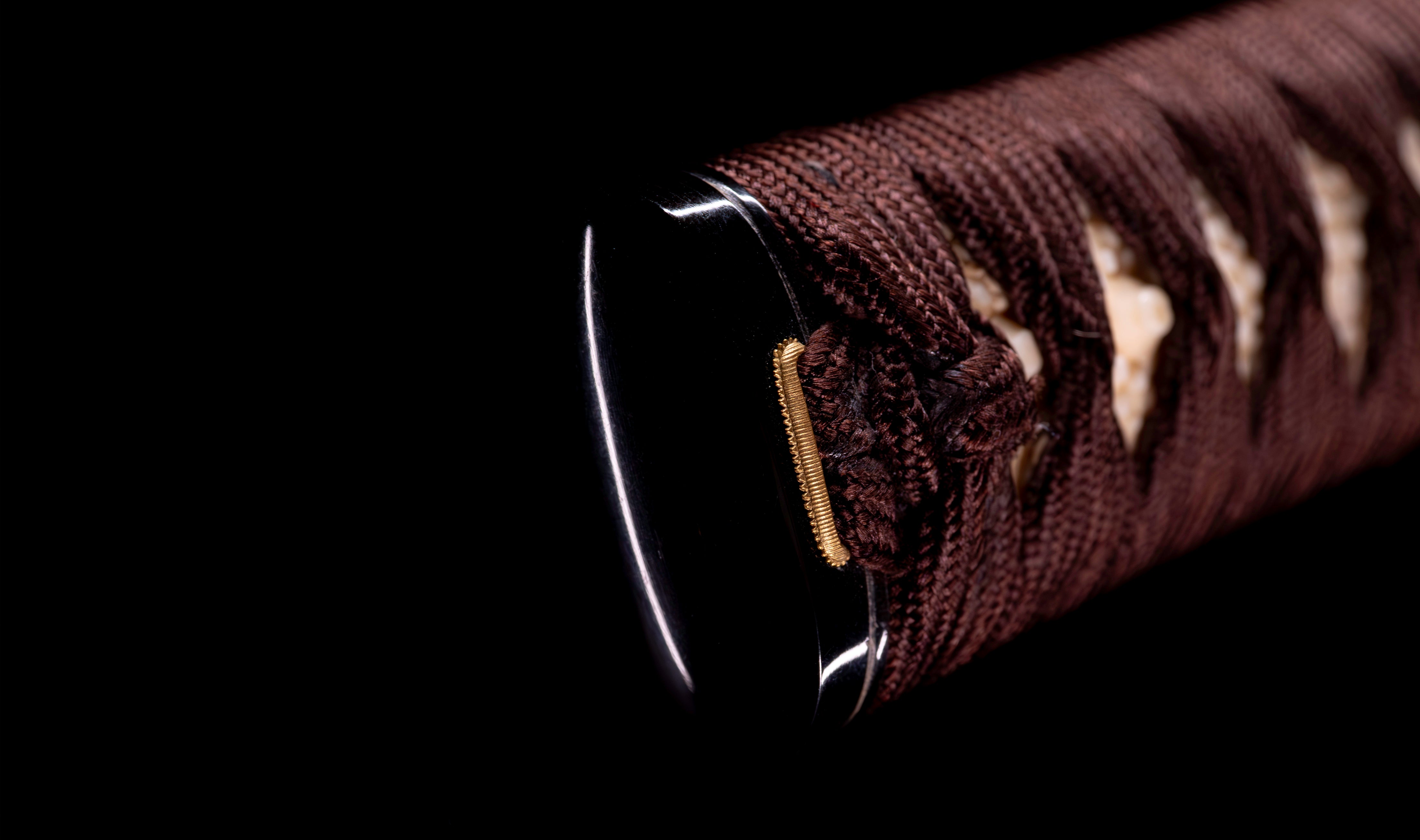
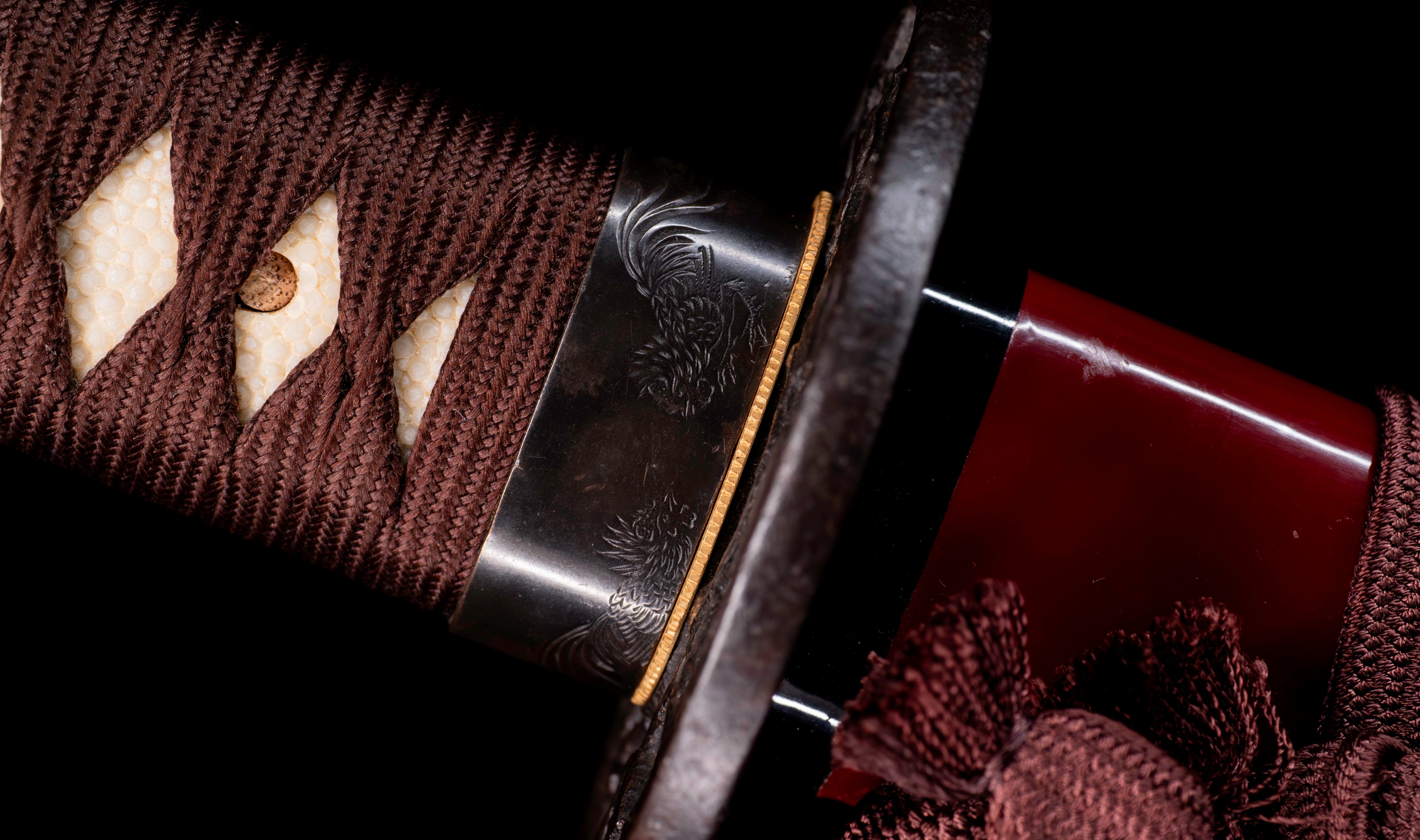
The fuchi is in polished black metal, engraved in fine line (kebori) with two roosters, their combs, feathers and arched tails cut in detail. The kashira is plain black horn with a small gilt fitting for the wrap.
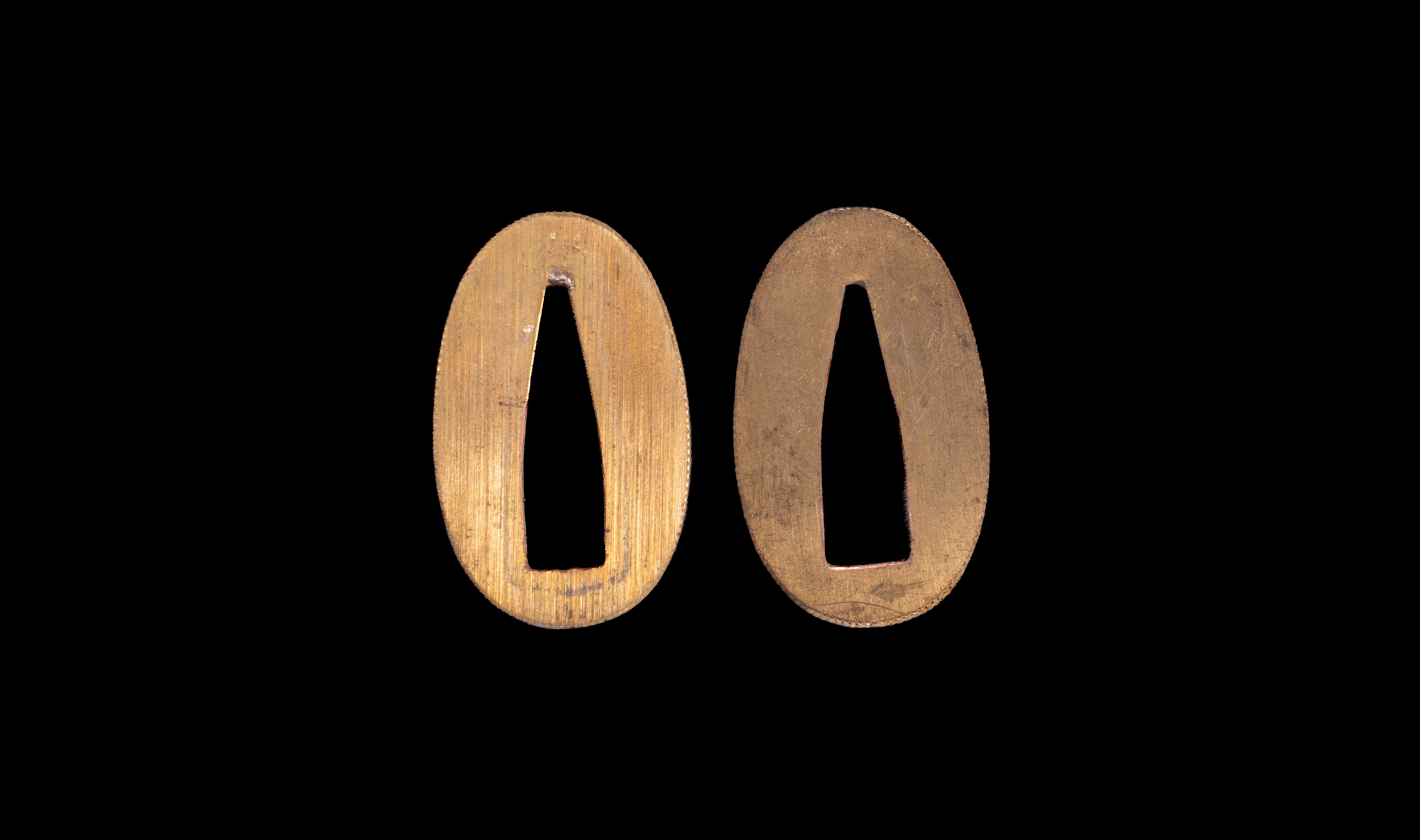
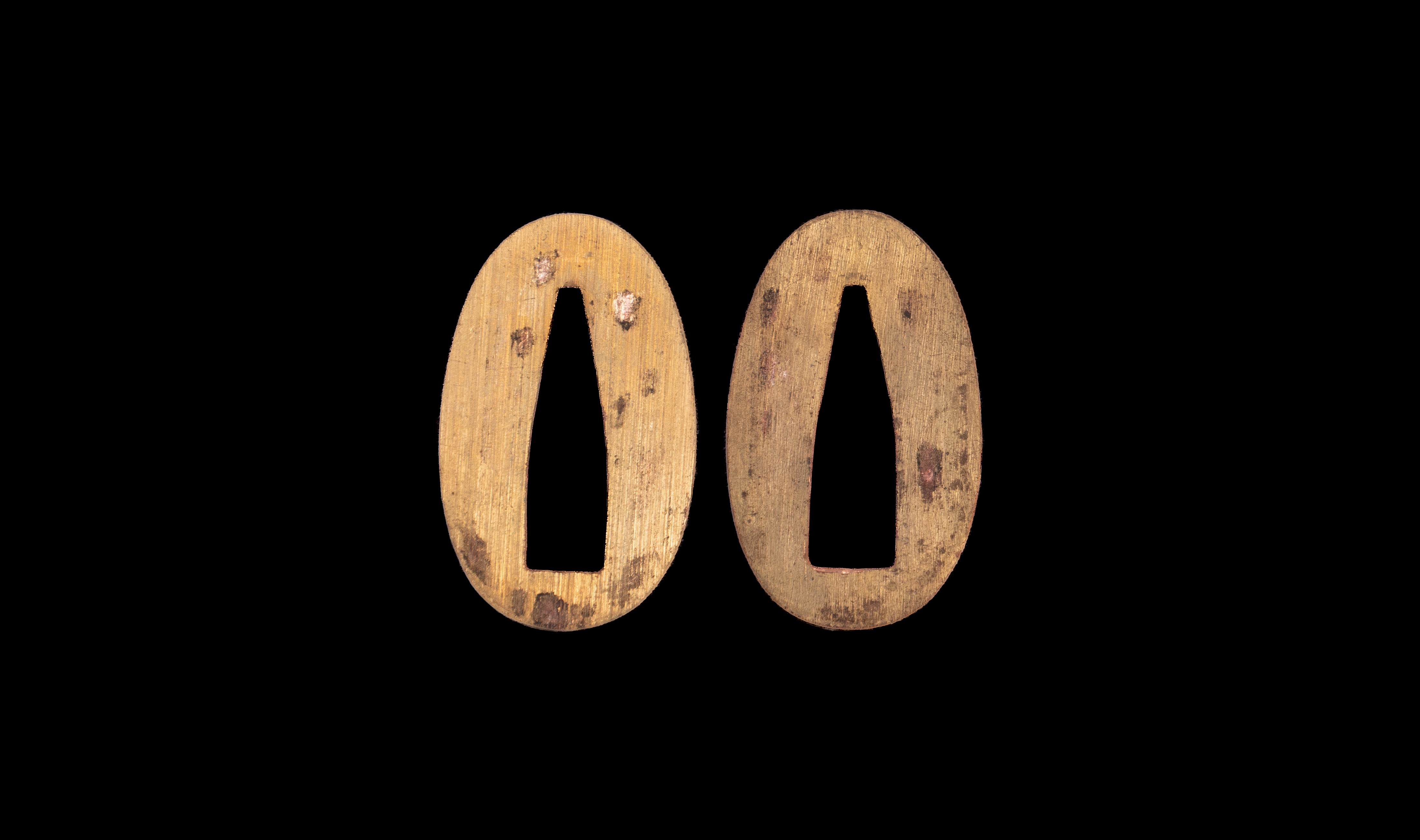
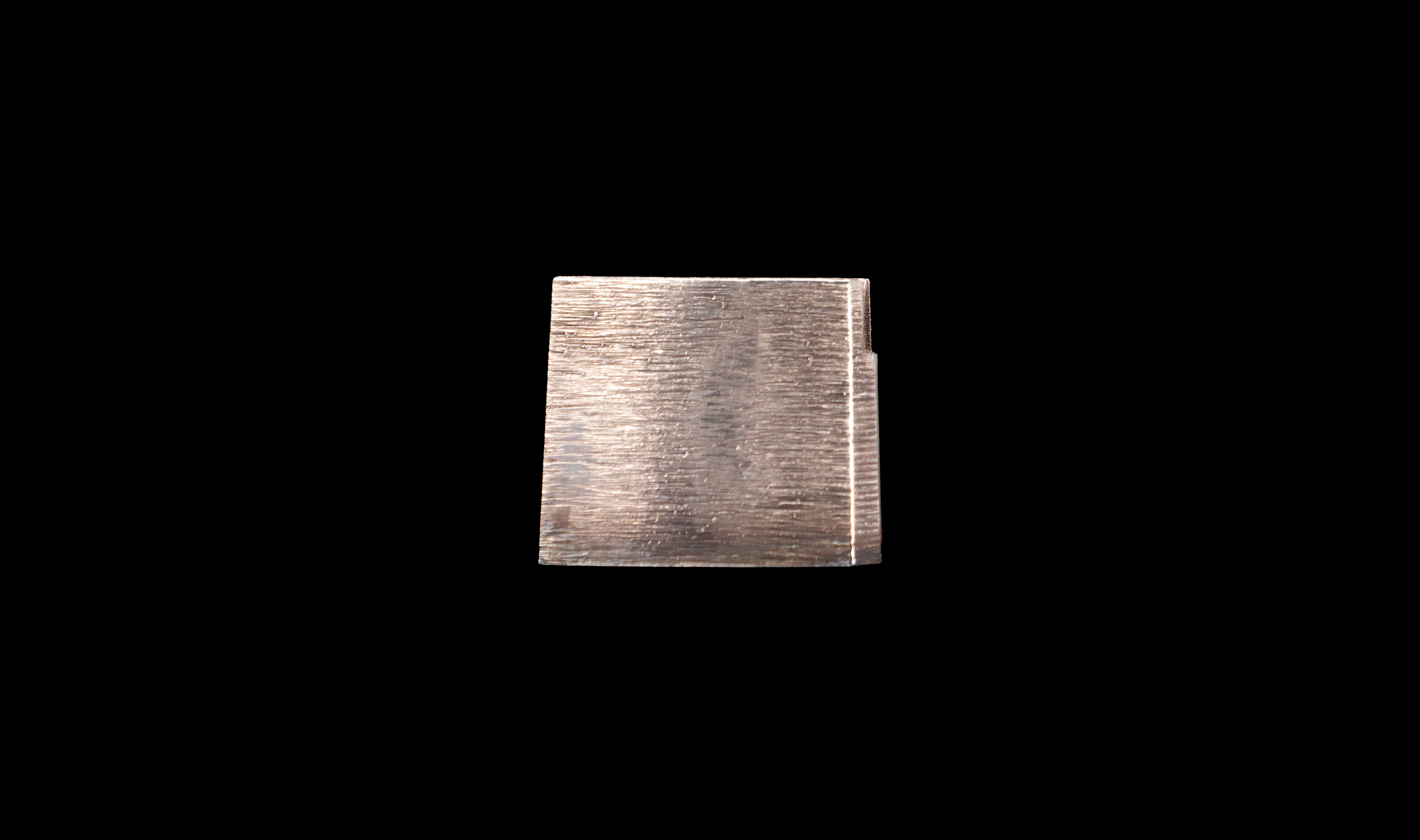
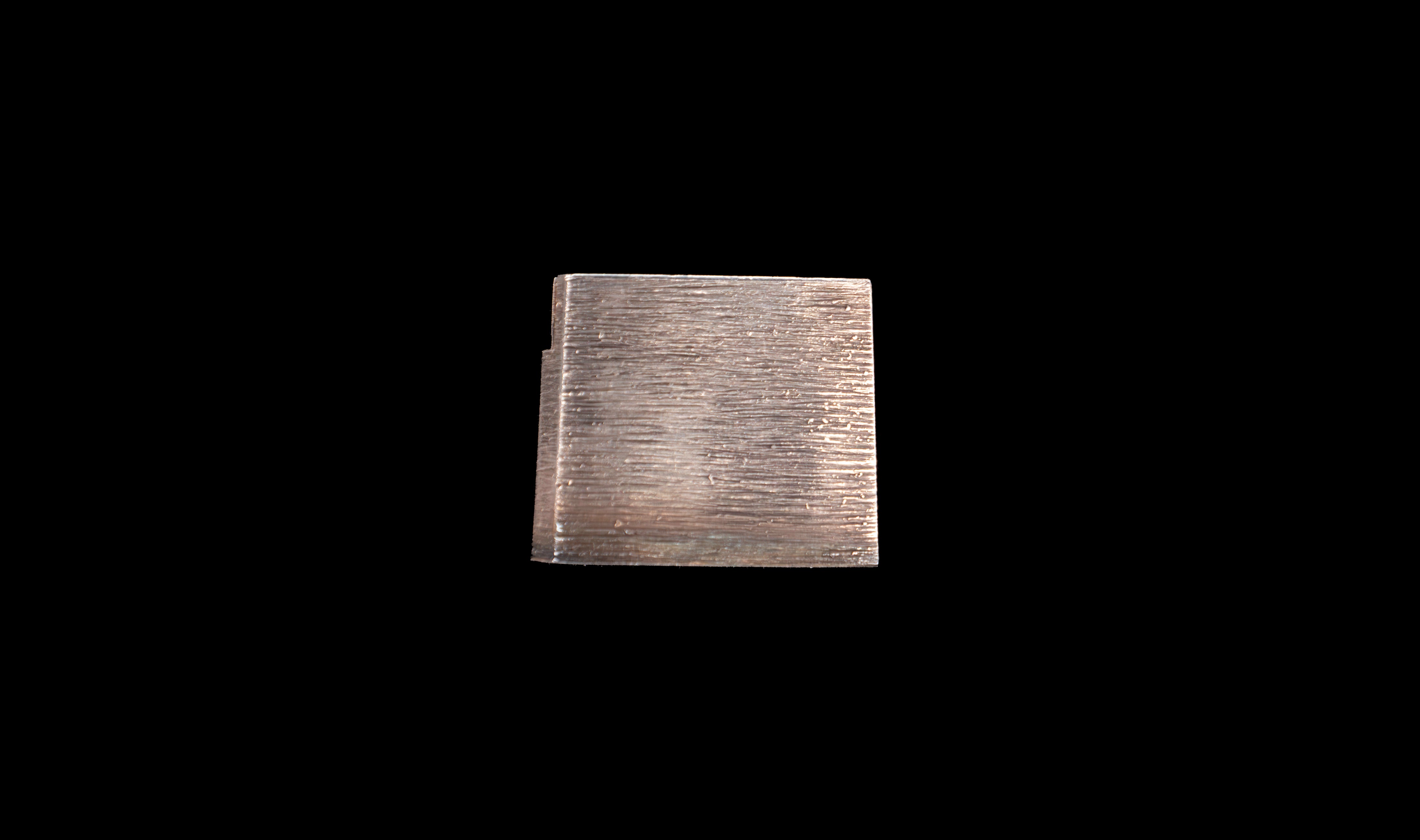
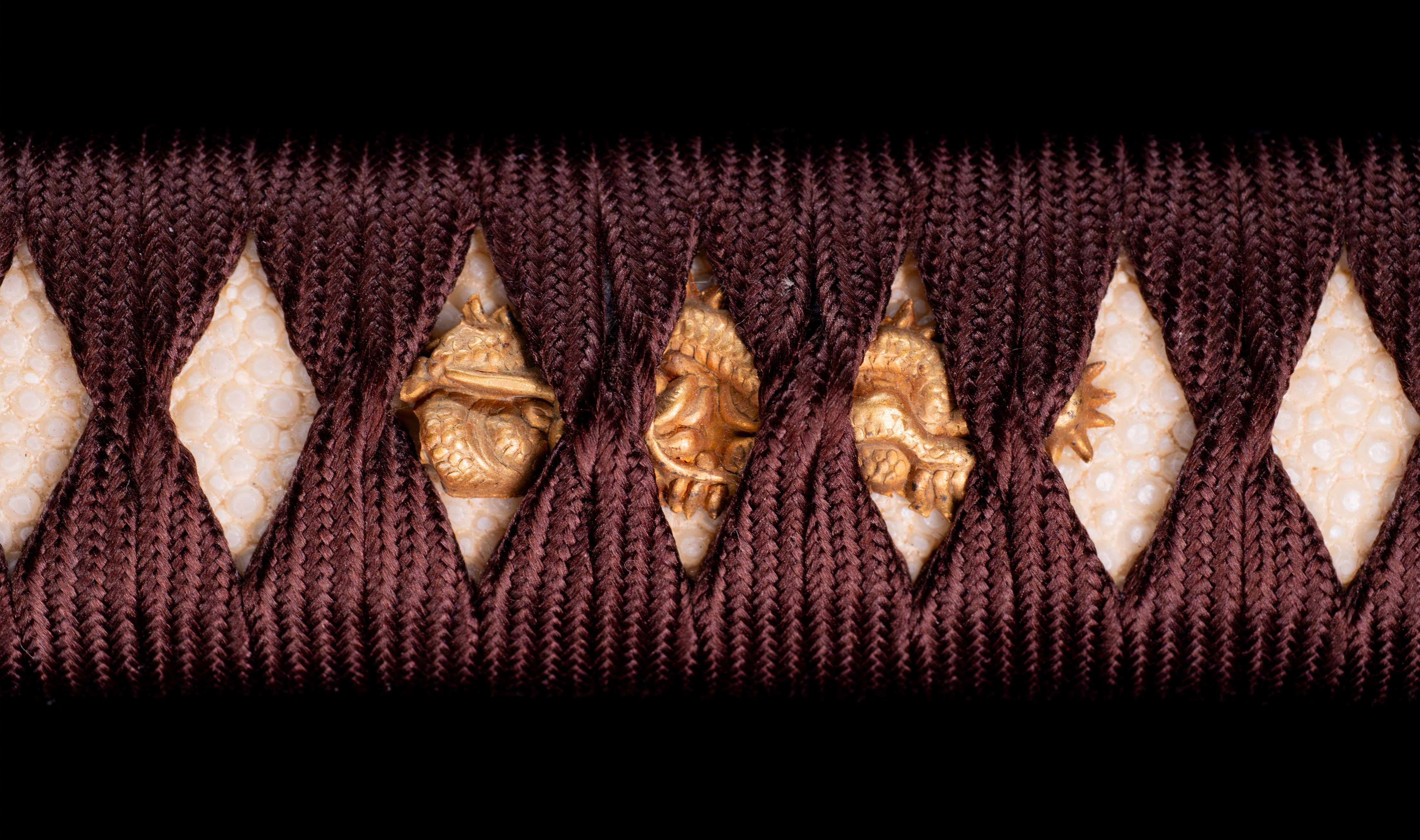
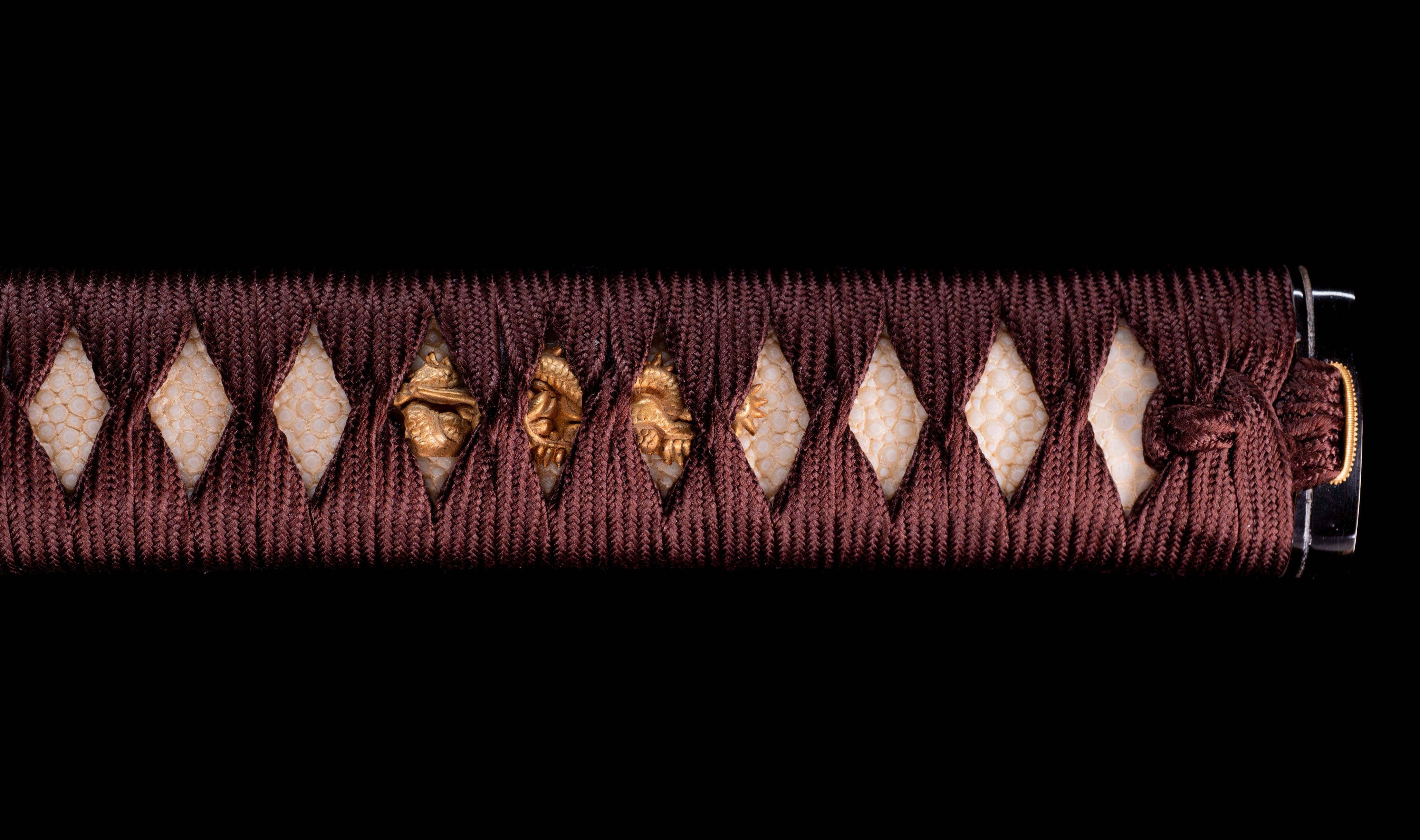
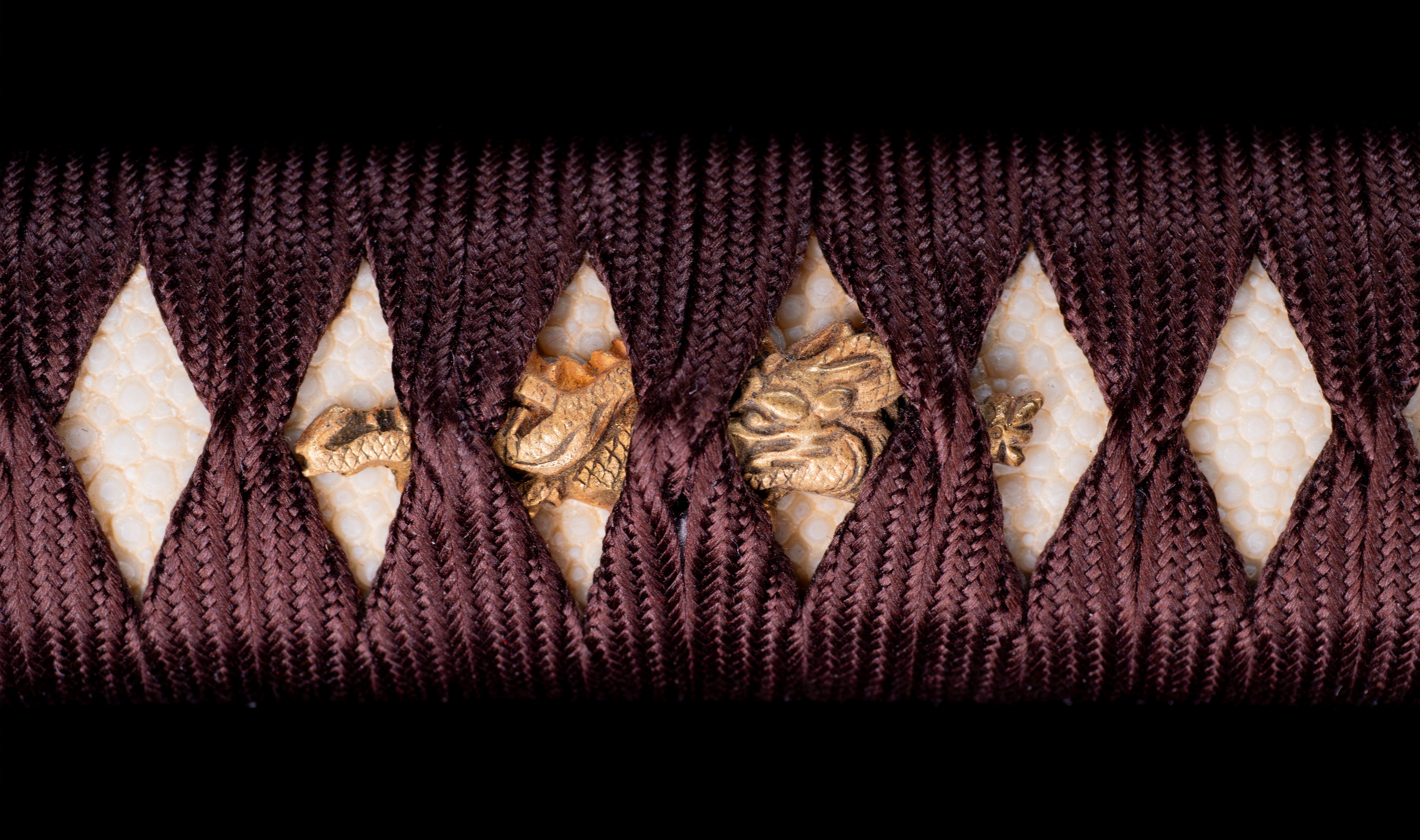
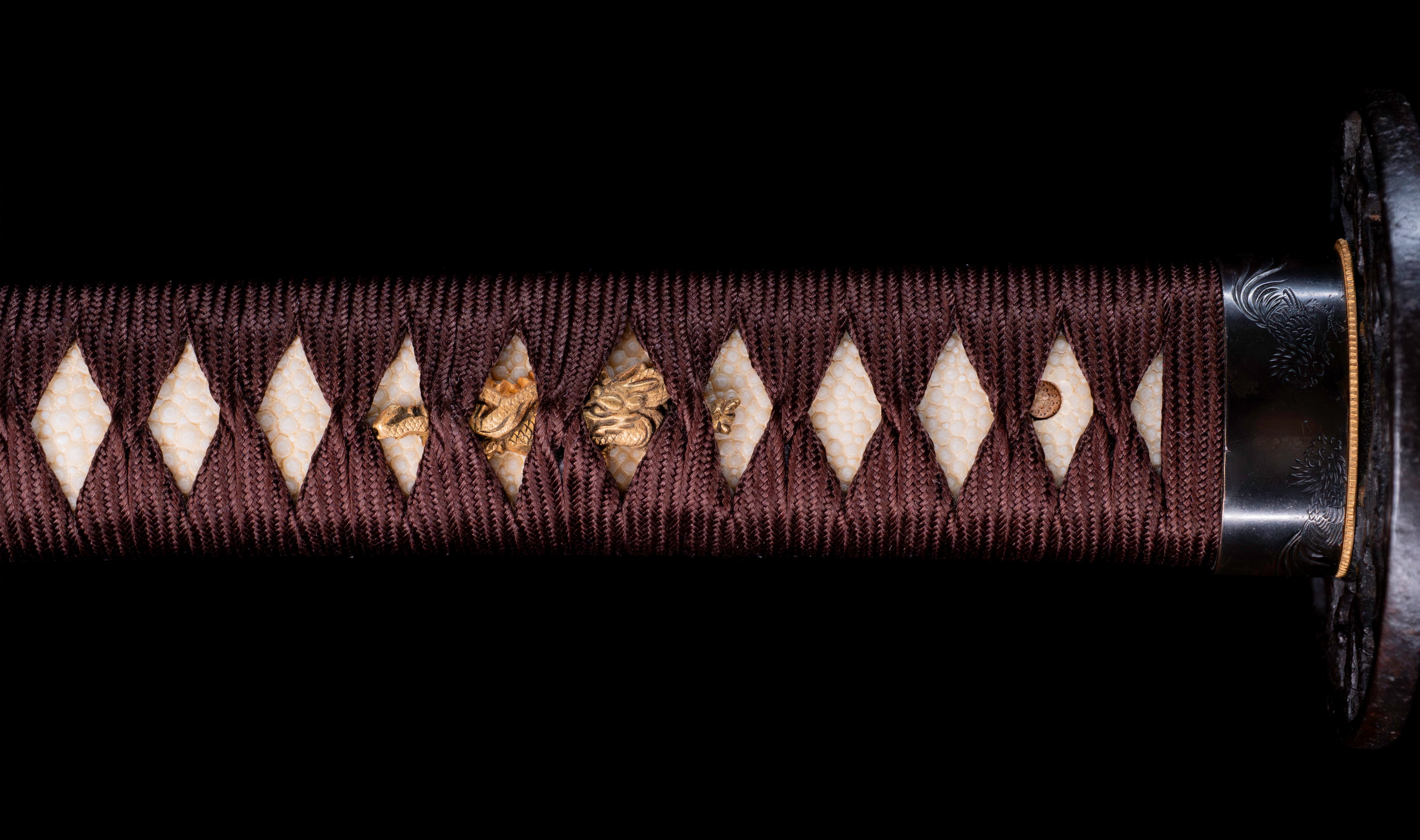
The tsuka is wrapped in brown silk hineri-maki over white same, the wrap clean and tight. Through the diamonds of the wrap you can see the menuki: gilt dragons, with scaled bodies, horned heads and clawed feet, very bright against the brown silk. The habaki is single-piece and silver-toned, with fine file marks, and the two seppa are gilt.
Reading an Unsigned Edo Blade
This sword carries no signature and no certificate, so we do not name a smith or a school. The Edo-period date comes from the Japanese dealer who sold it, and the blade fits it: a shallow curvature, a chū-kissaki, tight steel and a clean, regular nioi temper are all common features of Edo-period swords.
The broad notare mixed with rounded gunome is a family of hamon used by many Edo workshops, so on its own it does not point to one smith. A blade like this, healthy, long and in good polish, is a reasonable candidate for NBTHK shinsa, where the society would give its own opinion on period and school. Until then, we sell it for what can be seen: the sword itself.
The Edo Period Katana
The Edo period (1603–1868) was a long peace under the Tokugawa shoguns. Swordsmiths gathered in the castle towns and in the great cities of Edo, Osaka and Kyoto, and worked for samurai who wore the katana every day as the badge of their rank. Swords of this period, called shintō ("new swords"), are known for their tight, well-forged steel and for bright, carefully made hamon, of which the wide notare and gunome patterns are classic examples.
What is offered here is an unsigned Edo-period katana of 70.4 cm with a broad notare-gunome hamon and bo-hi on both sides, registered in Japan, complete in a red lacquer koshirae with an iron bamboo-and-plum sukashi tsuba, an engraved rooster fuchi and gilt dragon menuki.


 NihontoWatch