
















The twentieth century nearly killed the craft twice: wartime distortion, then the occupation ban. The NBTHK’s founding in 1948 and licensed forging from 1953 rebuilt the sword as an art, crowned by Living National Treasures and the mukansa rank.
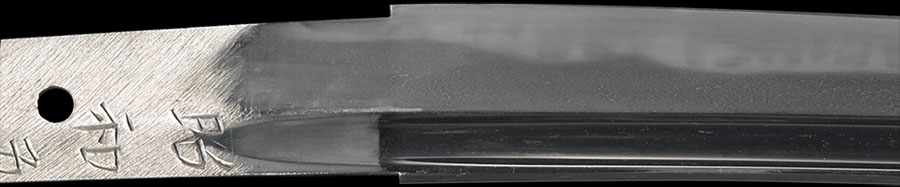
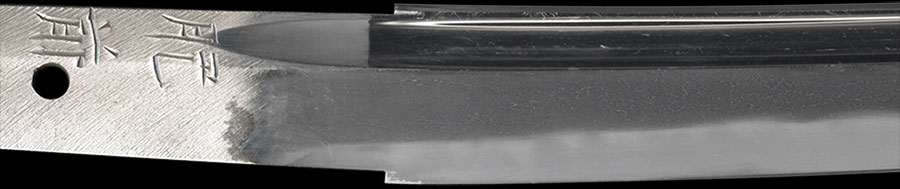
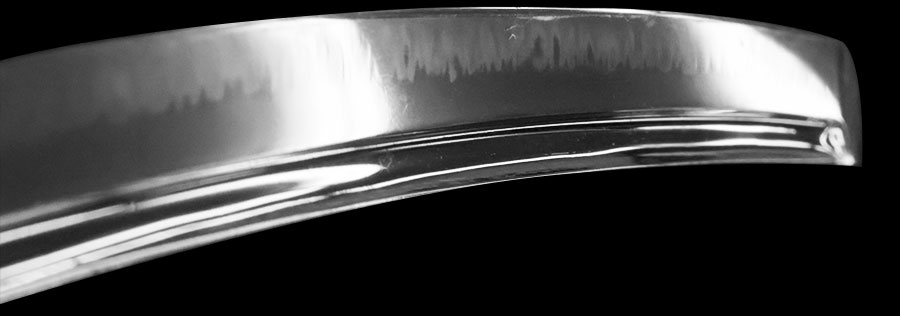
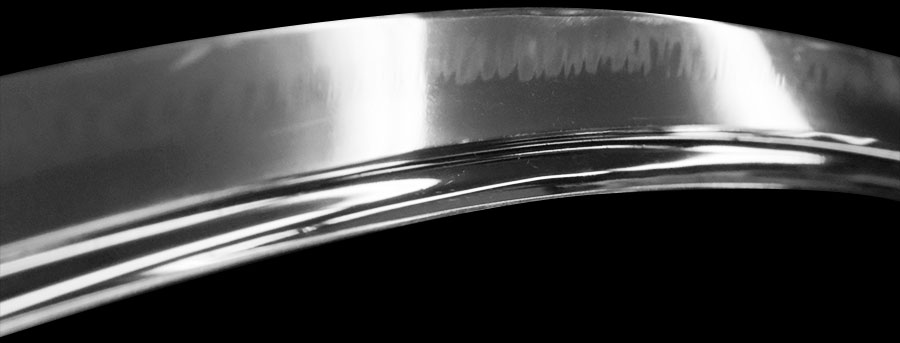
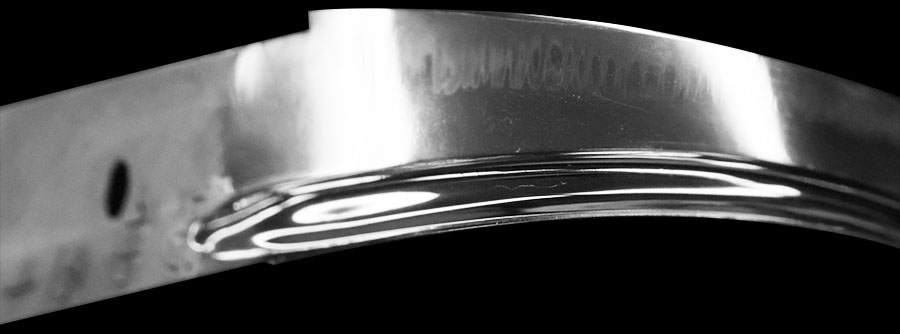
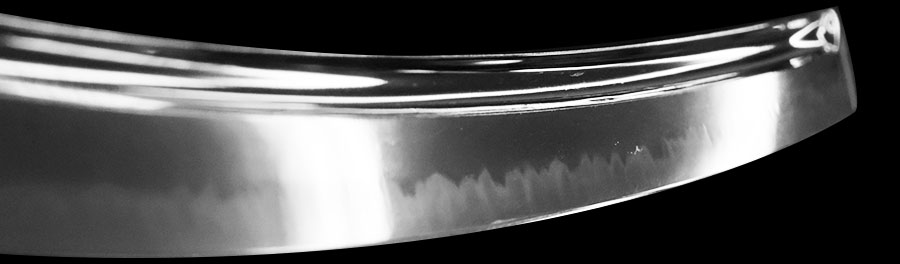
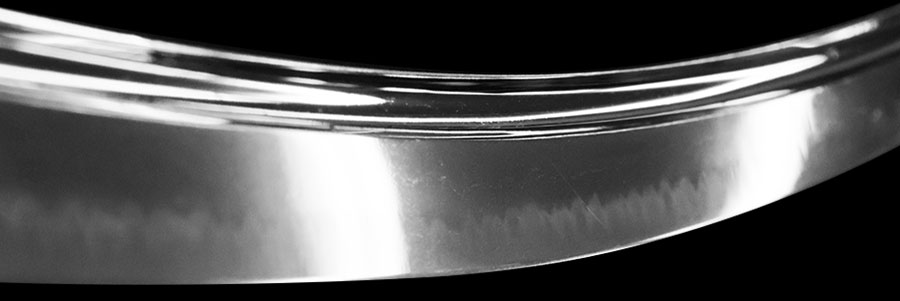
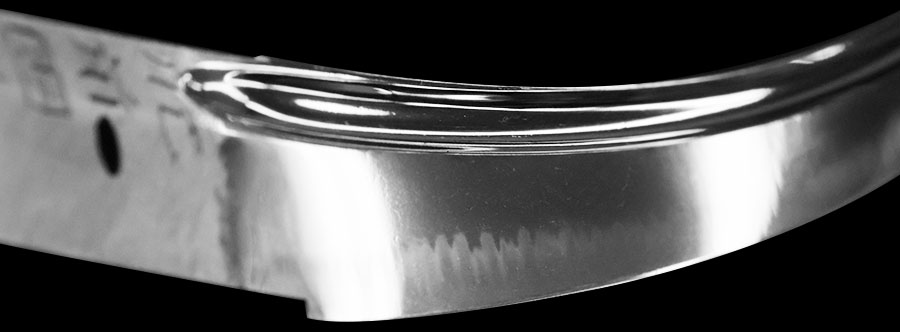
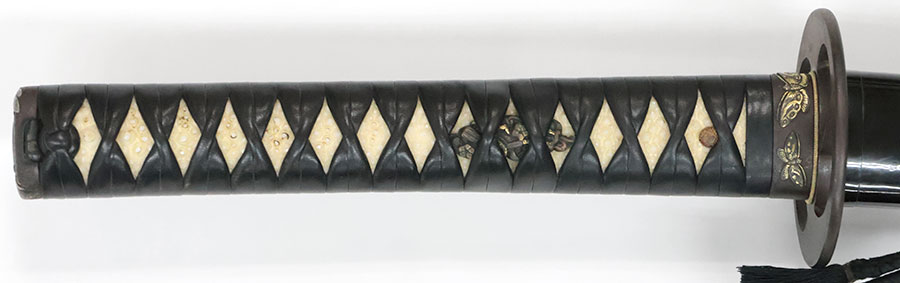
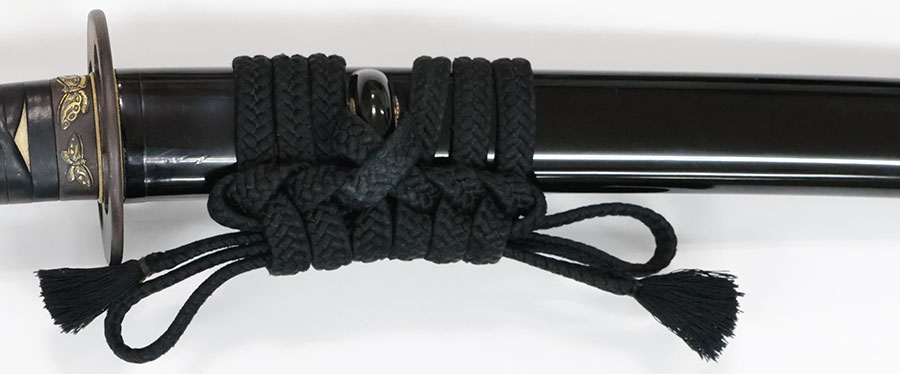
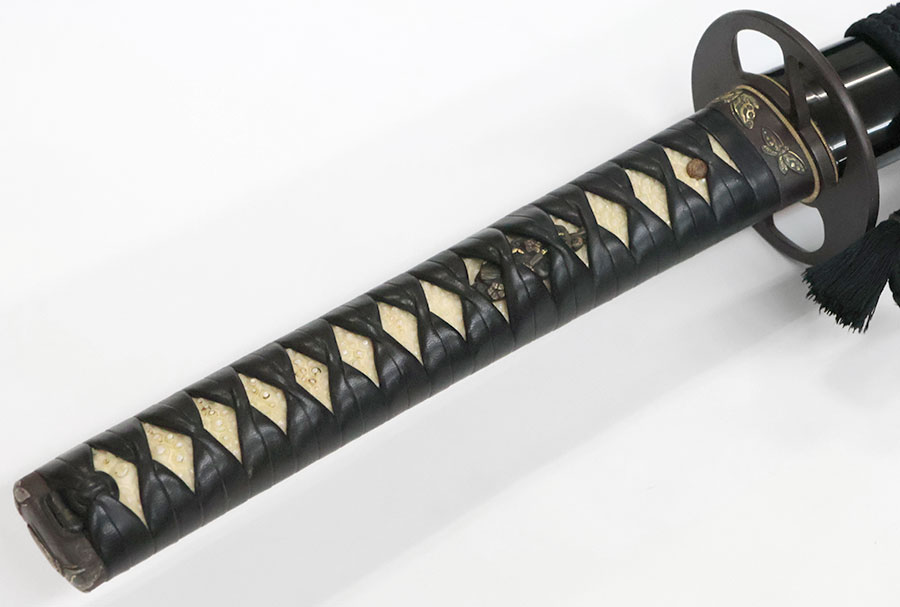
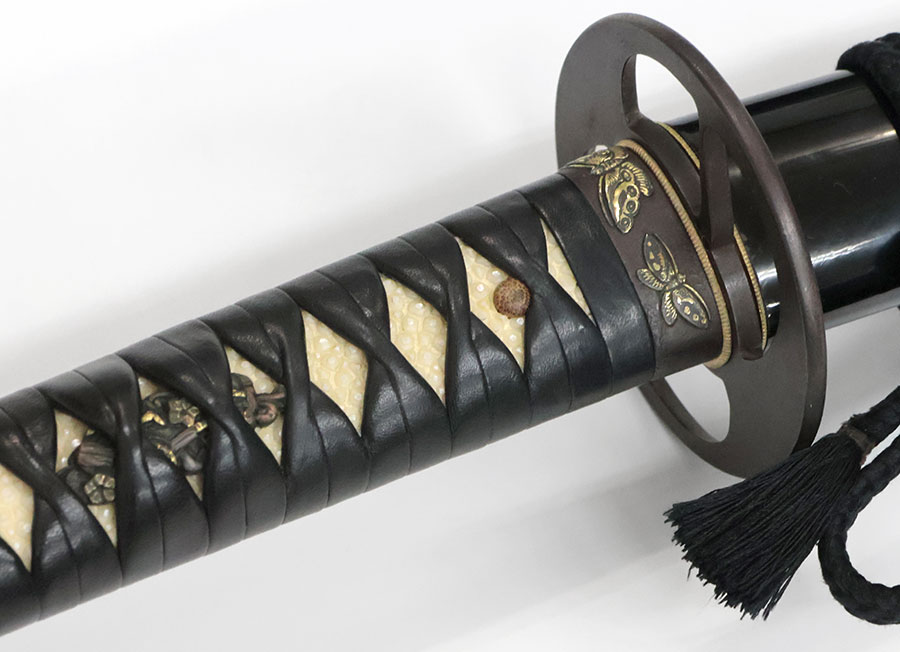
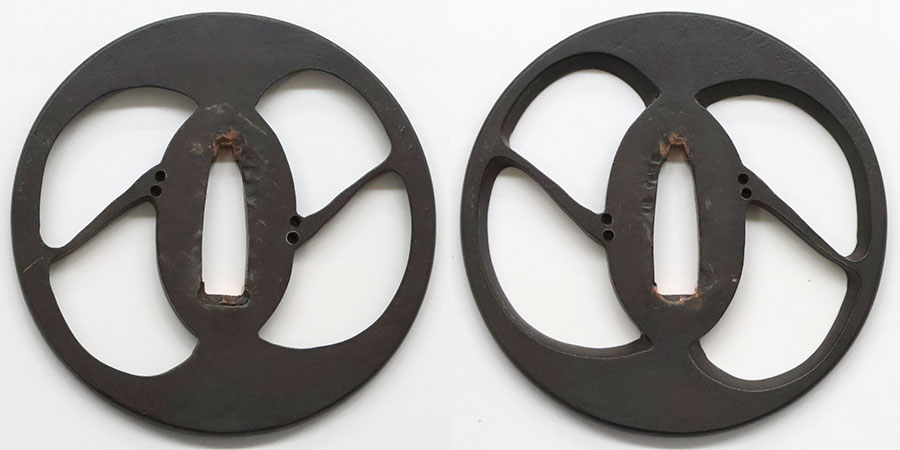
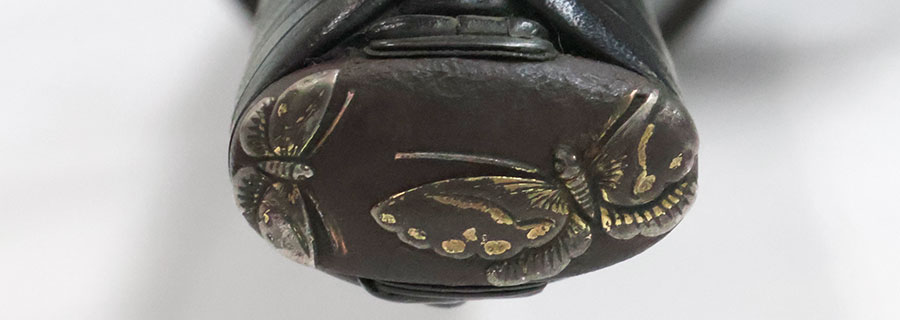
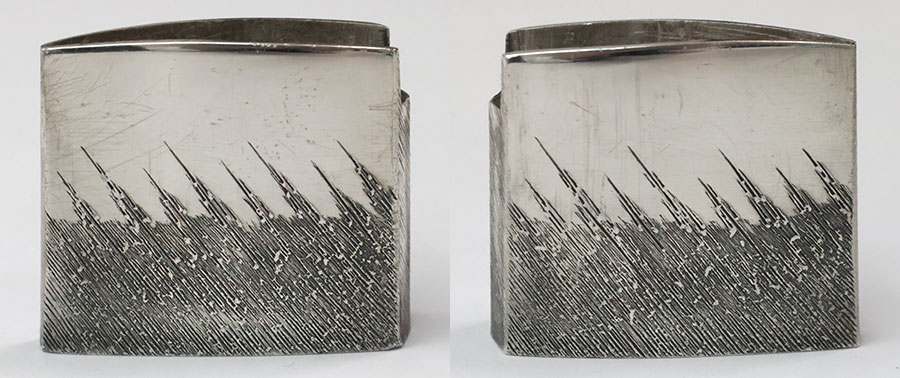
It has appeared, it has appeared: a katana with a tachi mei by the smith Hizen no Kuni Kanemoto, who copied the famous Harima no Daijo Fujiwara Tadakuni, the pride of Saga Prefecture. The smith Hizen no Kuni Kanemoto, real name Motomura Kanesaku, was born in Meiji 40 and was selected as an honored Rikugun Jumei Tosho. He is a master smith who received the Rikugun Gunto Gijutsu Shoreikai Sosai Sho. This sword is a copy of Harima no Daijo Fujiwara Tadakuni, the nephew of Hizen no Kuni Tadayoshi. The sugata of this sword shows a good Hizen-to sugata with sori and a difference between the moto-mihaba and saki-mihaba; the jigane is a finely packed ko-itame hada with jinie, and the horimono is a skillfully carved bo-hi. The hamon is his specialty gunome-midare, and within the ha, he has magnificently fired the gunome where the inside of the ha is rounded like the eye of a horsefly, which is the greatest characteristic of Harima no Daijo Fujiwara Tadakuni. Since ancient times, this kind of ha has been called abu-no-me choji and is particularly famous in the sword world as the greatest characteristic of Harima no Daijo Fujiwara Tadakuni. The modern koshirae with a leather-wrapped tsuka adds even more flair to this tachi mei sword by Hizen no Kuni Kanemoto. This time, an old collector told me, "I have grown old, so please pass this copy of Harima no Daijo Fujiwara Tadakuni, the pride of Saga Prefecture, to someone who will cherish it at a low price," and since I have taken it on consignment, I am offering it at a special bargain price; please enjoy it.
Kanemoto兼元
Offered by Nipponto
3 on the market


As written by the shop
Machine translation from the shop's Japanese · may contain errors ·
Hizen · around 1926-1989
3 pieces on the market now
Shōwa to the present: destruction and revival
The twentieth century nearly killed the craft twice: wartime distortion, then the occupation ban. The NBTHK’s founding in 1948 and licensed forging from 1953 rebuilt the sword as an art, crowned by Living National Treasures and the mukansa rank.
We could not find an authenticity certificate on the seller’s listing. Japanese swords and fittings are normally papered by the NBTHK (or the NTHK). Without one, the attribution is the seller’s own assessment and has not been independently verified — treat it with caution and ask the dealer about certification before buying.
For returns due to customer circumstances, the cost is the customer's responsibility. For returns due to our mis-shipment or a defective item, we bear the cost.
¥550,000