Muromachi turned sword making into an industry: the uchigatana rose with massed infantry warfare, Osafune and Seki produced bundle swords beside custom orders, and the Ming trade carried Japanese blades abroad by the tens of thousands.
 NihontoWatchNihontoWatch
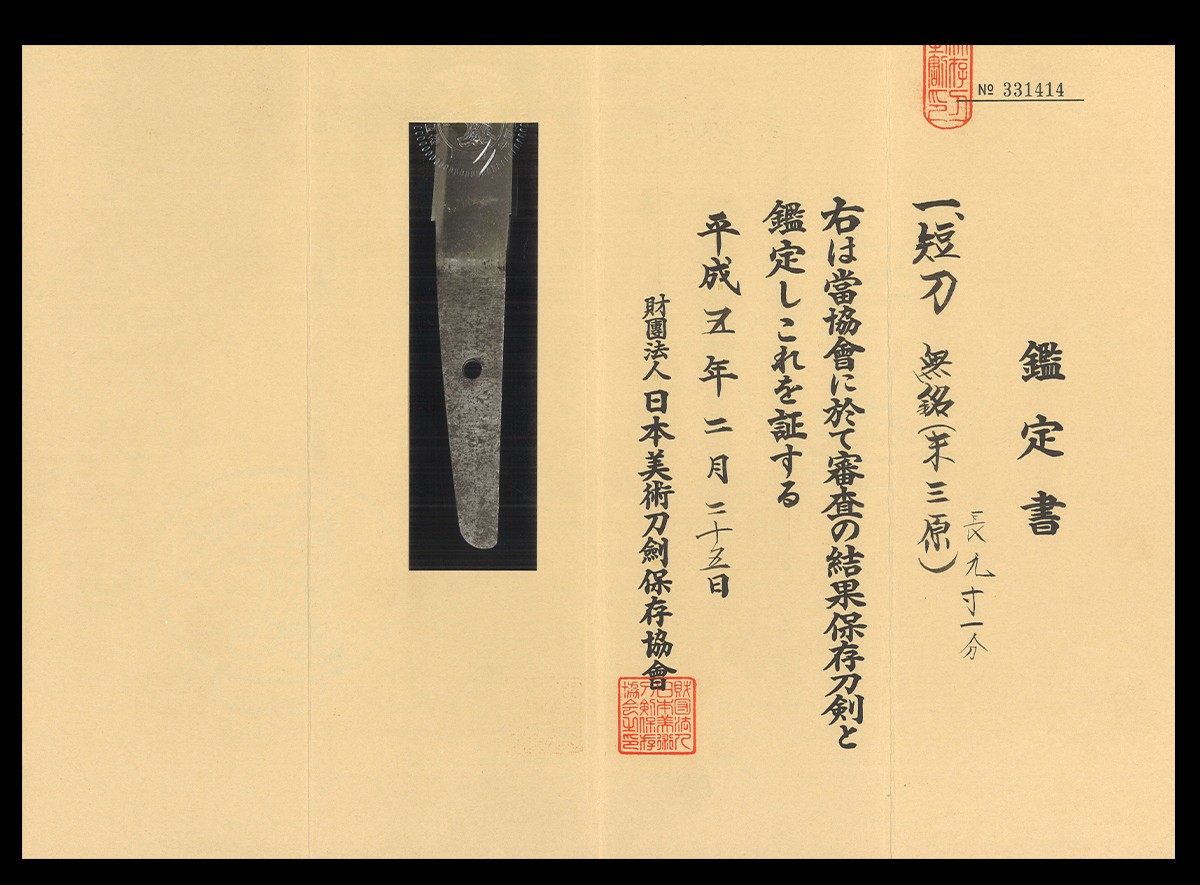
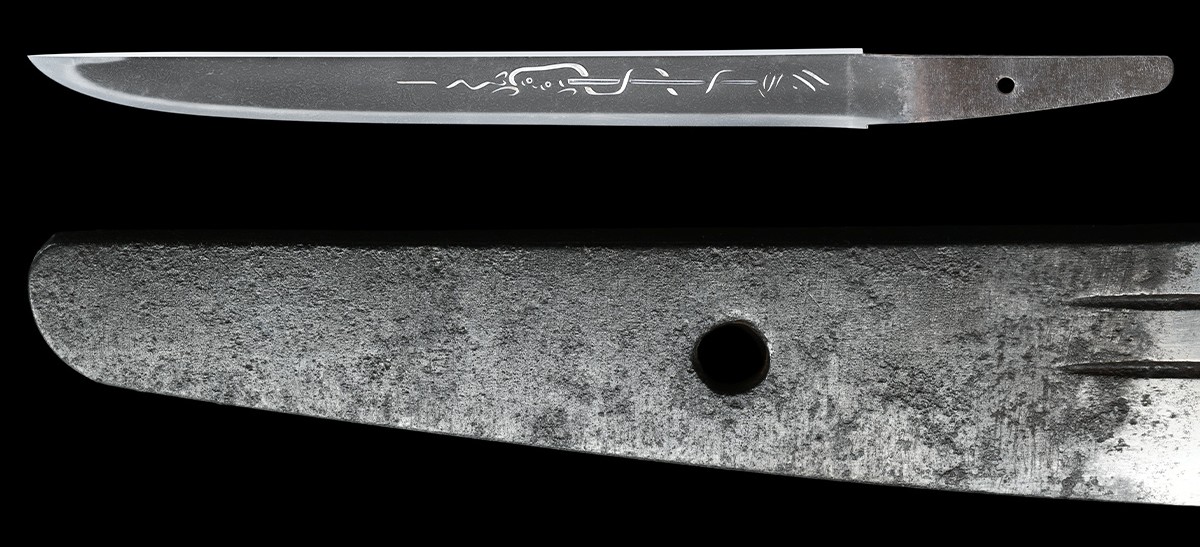
The Bingo Province Mihara school is said to have been founded by Masaie around the Showa era (1312–) in the late Kamakura period, with a group of swordsmiths continuing in an unbroken line until the Muromachi period. The style of this school shows a prominent Yamato-den influence, with a high shinogi and wide shinogi-ji, while the kitae is itame-hada mixed with masame, appearing hadatachi with nagare-hada and exhibiting a shirake-gokoro. The hamon is based on suguha mixed with ko-midare, featuring ko-ashi and activities such as sunagashi. Generally, works from the late Kamakura period to the Nanbokucho period are called "Ko-Mihara," those from the early to mid-Muromachi period are called "Mihara," and those from later periods are called "Sue-Mihara." This sword is a tanto in hira-zukuri sugata with a nagasa of slightly less than 9 sun 1 bun. A so-no-kurikara is carved on the sashi-omote, and a koshi-hi is carved through on the sashi-ura. The kitae is itame-hada mixed with mokume, with nagare-gokoro in places, covered in ji-nie, and the hada is clearly visible throughout. The hamon is a suguha tempered with a dominant nioi-guchi, mixed with some hotsure-gokoro, featuring ko-nie and a bright, clear nioi-guchi. The boshi continues as sugu, returning with a maru tip. The nakago is ubu with kiri-yasurime. This item is an ubu mumei tanto attributed to the Sue-Mihara. It is a high-quality yuto with a well-kneaded kitae-hada of itame mixed with mokume and a suguha temper, where the carvings on both sides tighten the appearance of the toshin and demonstrate elegance. Shirasaya, gold-plated ichiju-habaki, Hozon Token Kanteisho.
Offered by World Seiyudo

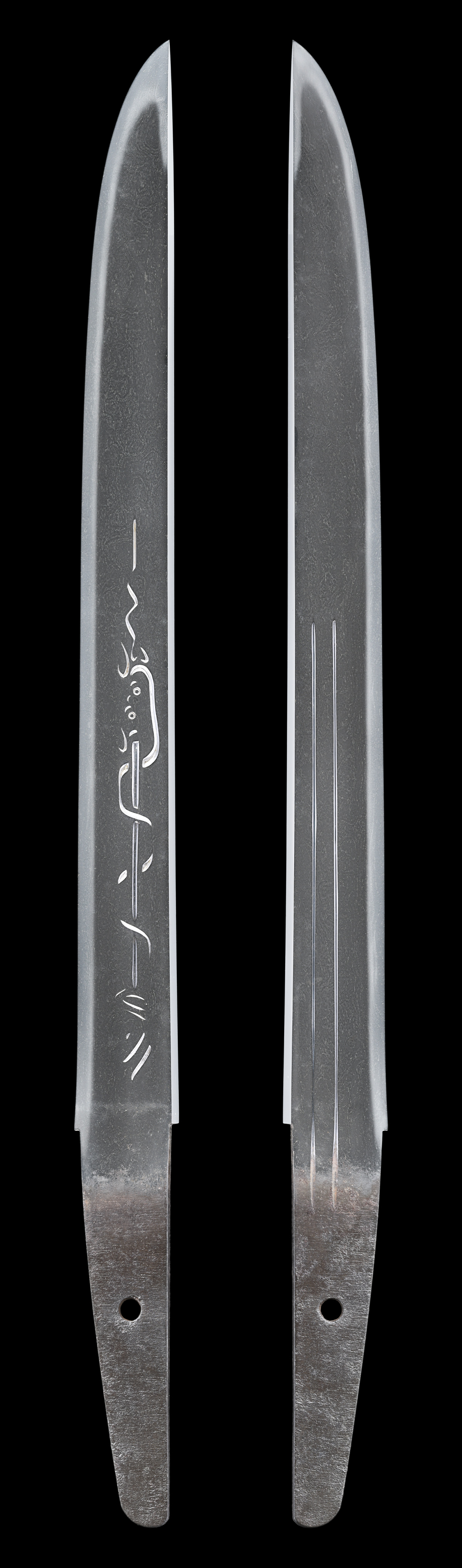
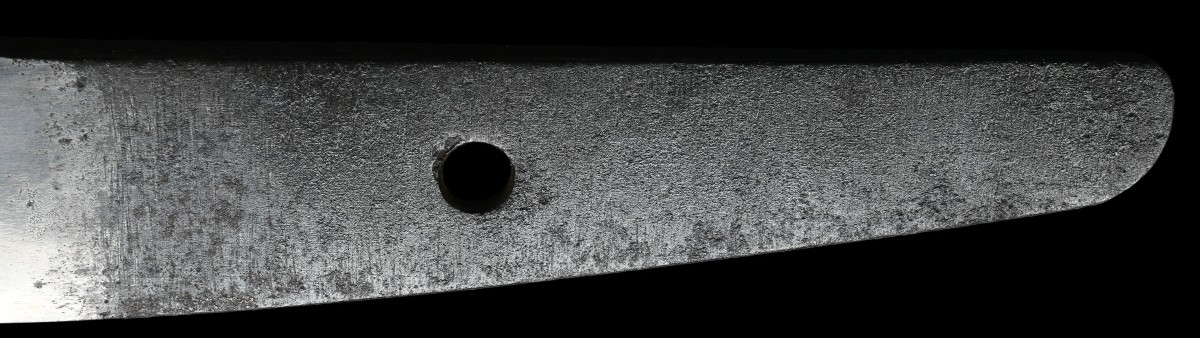
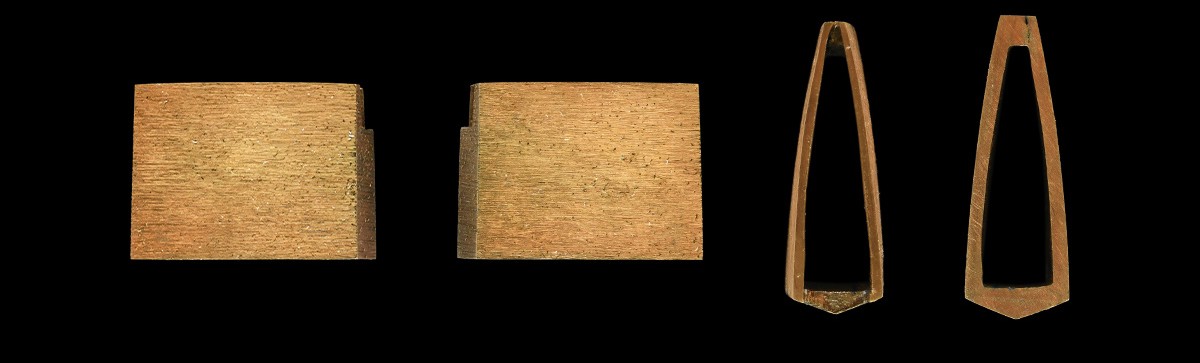
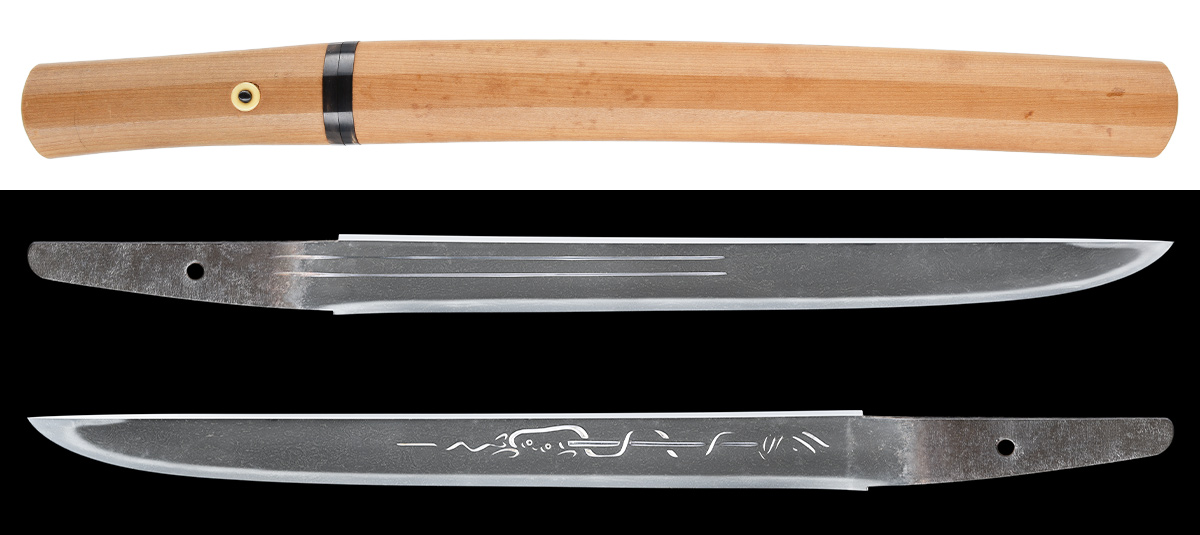
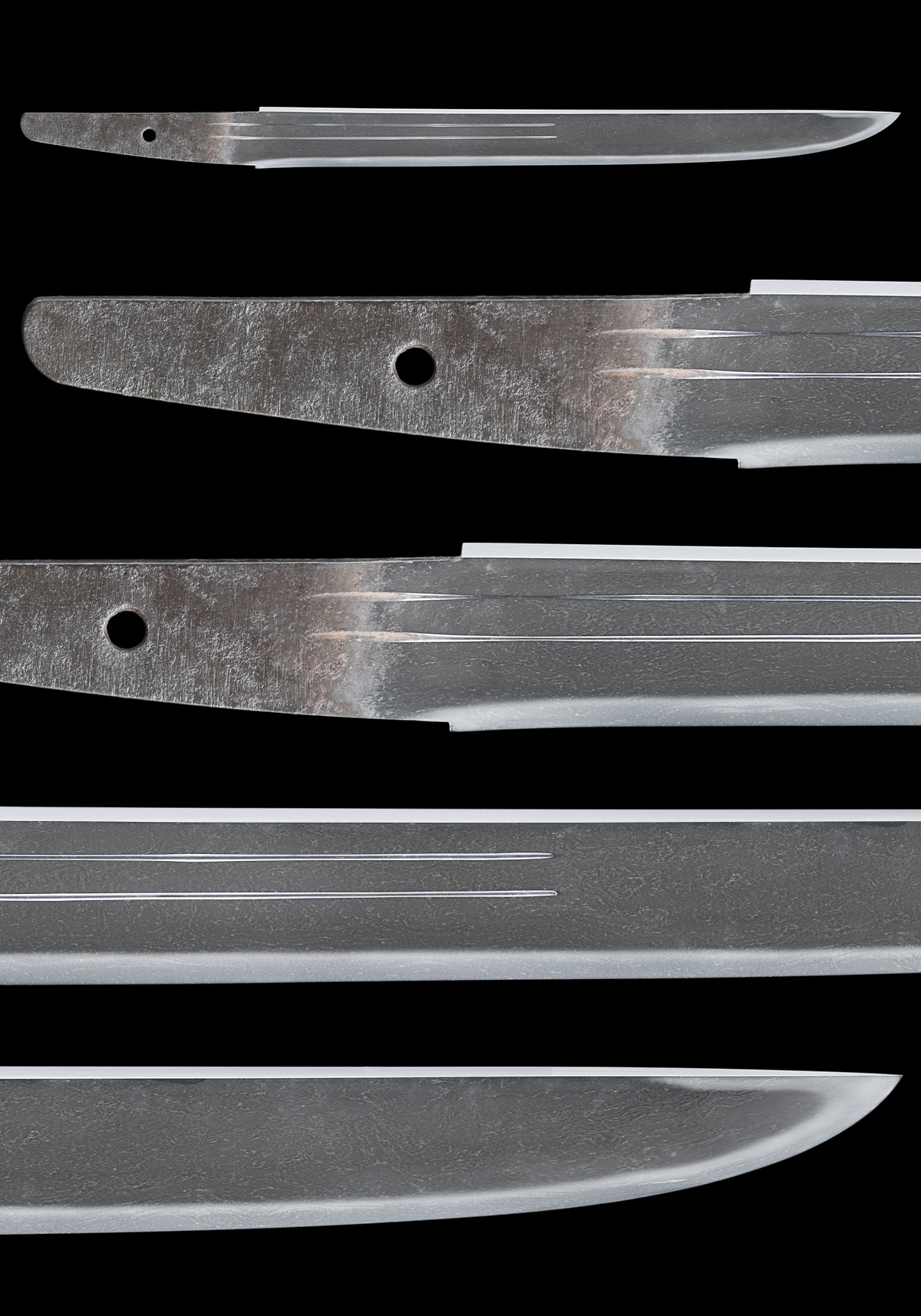
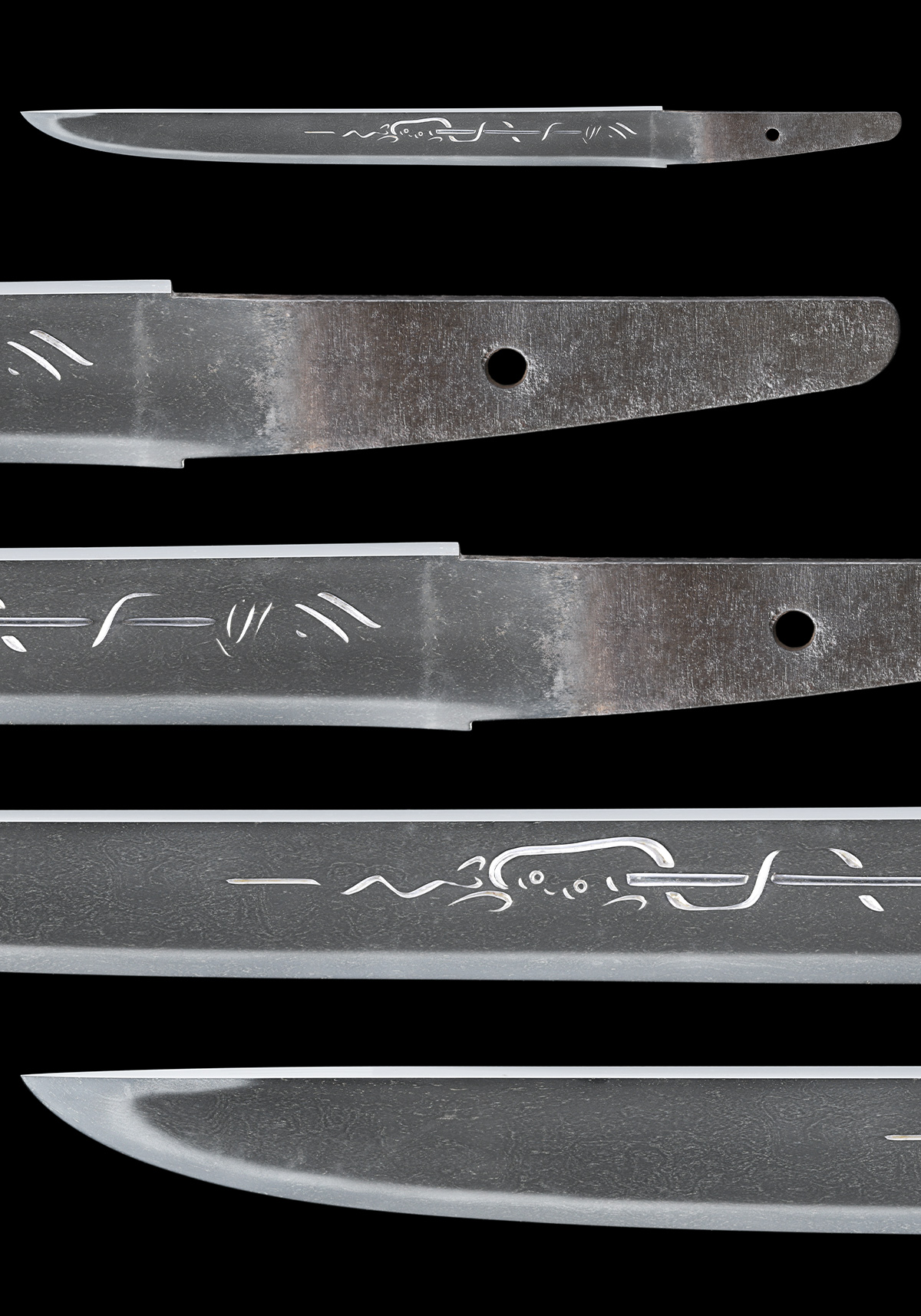
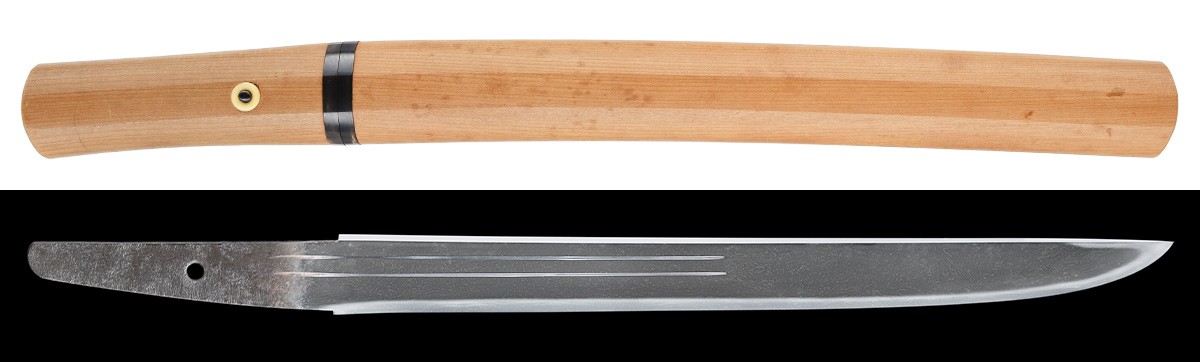
Machine translation from the shop's Japanese · may contain errors ·
The Muromachi period (1392 to 1573)
Muromachi turned sword making into an industry: the uchigatana rose with massed infantry warfare, Osafune and Seki produced bundle swords beside custom orders, and the Ming trade carried Japanese blades abroad by the tens of thousands.
Certifies a genuine blade worth preserving: a signature confirmed correct, or, if unsigned, an era, province, and school that the NBTHK can reliably identify.
The NBTHK (Nihon Bijutsu Tōken Hozon Kyōkai, the Society for the Preservation of Japanese Art Swords) is a public-interest incorporated foundation founded in 1948 and supervised by Japan’s Agency for Cultural Affairs (Bunkachō); it is based at the Japanese Sword Museum in Tokyo. Its expert panels physically examine each submitted work (shinsa) and issue a certificate (kanteishō) ranking it by artistic and historical merit. NBTHK papers are the most widely recognized standard of authentication for Japanese swords and fittings.
NBTHK official siteNo cooling-off period or returns; refund only if the purchased sword is proven fake, capped at purchase price (excludes commission sales, accessories, auction items).
¥550,000