Modern sword Higonokuni ju Akamatsutaro Kaneteru saku with Shirosaya.
With a motohaba of 35.4mm and a kissaki length of 125mm, this is a magnificent Kiyomaro-utsushi with a grand sugata, featuring a sudareba-like gunome-midare with vigorous kinsuji activity.
The smith, Akamatsu Taro Kaneteru, is a swordsmith with an established reputation for Kiyomaro-utsushi and a unique jigane created through his own iron smelting.
A high-grade sashikomi polish has been applied, and the condition is excellent. It is a rare masterpiece that faithfully reproduces the style of Kiyomaro.
This magnificent Kiyomaro-style sword features a powerful sugata with a motohaba of 35.4 mm and an exceptionally long kissaki measuring 125 mm. Its gunome-midare hamon displays vigorous kinsuji activity, forming a striking sudareba-like pattern.
The swordsmith, Akamatsu Taro Kaneteru, is renowned for his Kiyomaro reproductions and distinctive jigane made from his own traditionally smelted tamahagane.
The blade is finished in a high-grade sashikomi polish and remains in excellent condition. A rare masterpiece that faithfully captures Kiyomaro’s distinctive style.
[Sugata]
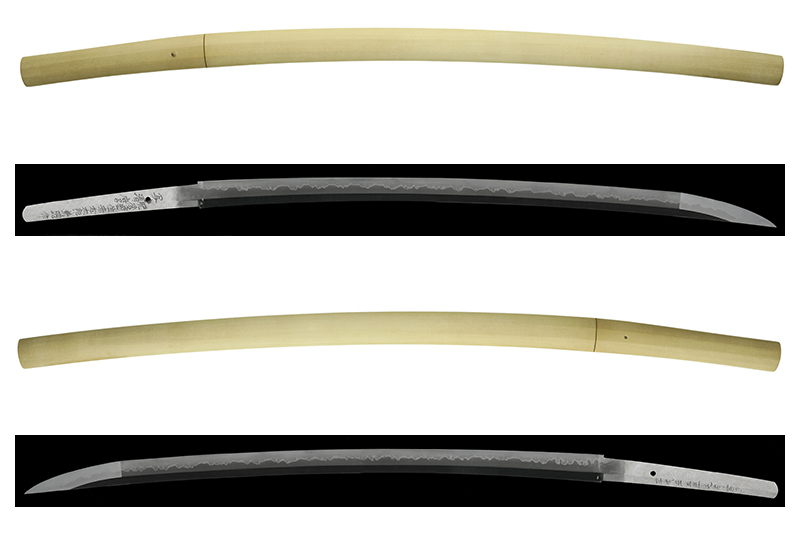
Shinogi-zukuri, iori-mune, wide mihaba and thick, torii-zori, o-kissaki. The nakago is ubu with sujikai yasurime, and the nakago-jiri is kuri-jiri.
Shinogi-zukuri with an iori-mune, wide mihaba, thick kasane, torii-zori, and an o-kissaki. The nakago is ubu, with sujikai yasurime and a kuri-jiri tip.
[Jigane]
The jigane is an itame-hada that becomes nagare-masame near the habuchi; it is a well-kneaded, well-tightened jigane with a darkish tone and thick ji-nie.
The jitetsu is a well-forged, tightly packed, dark-toned itame-hada that flows into masame near the hamon, with abundant ji-nie.
[Hamon]
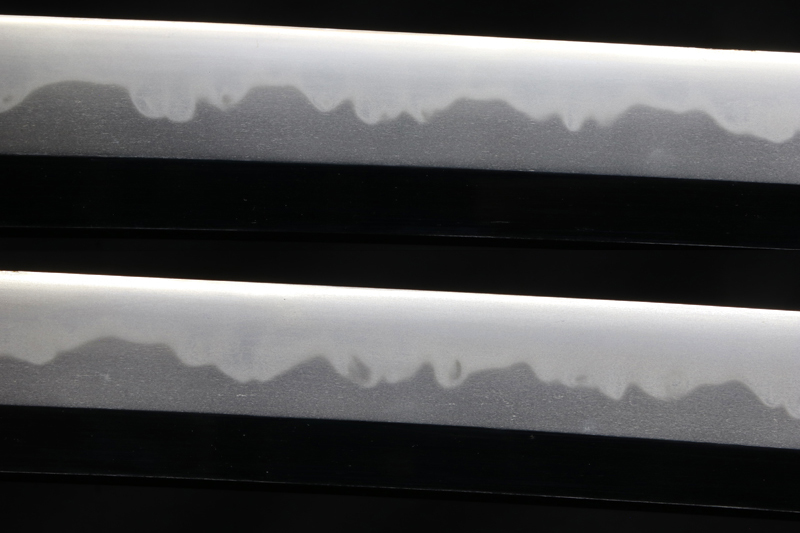
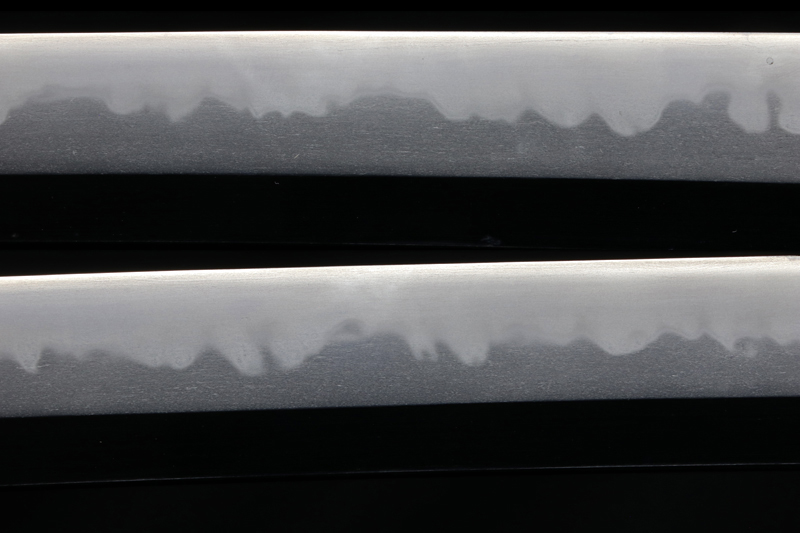
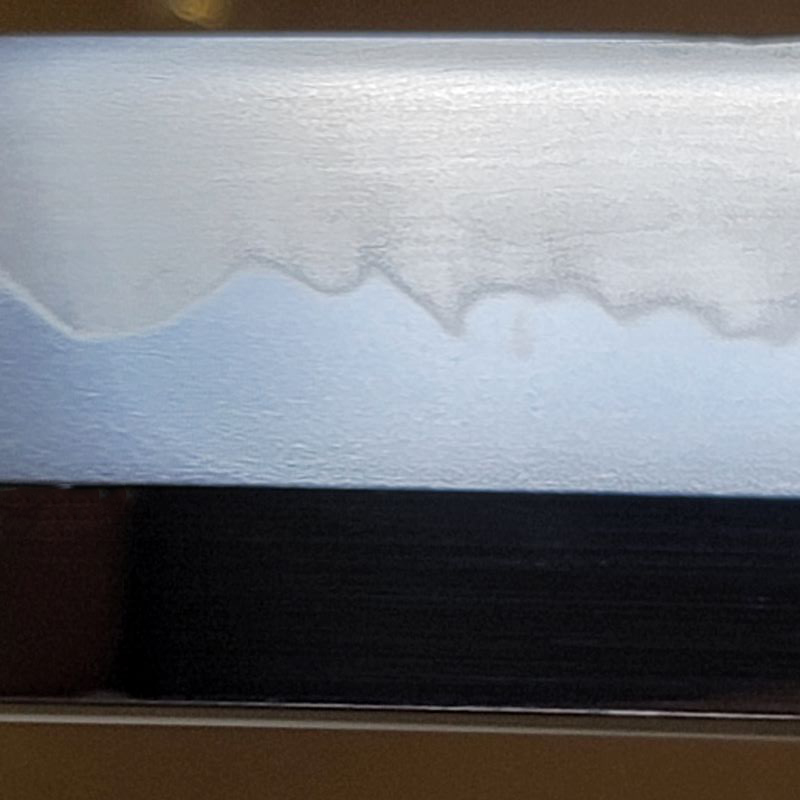
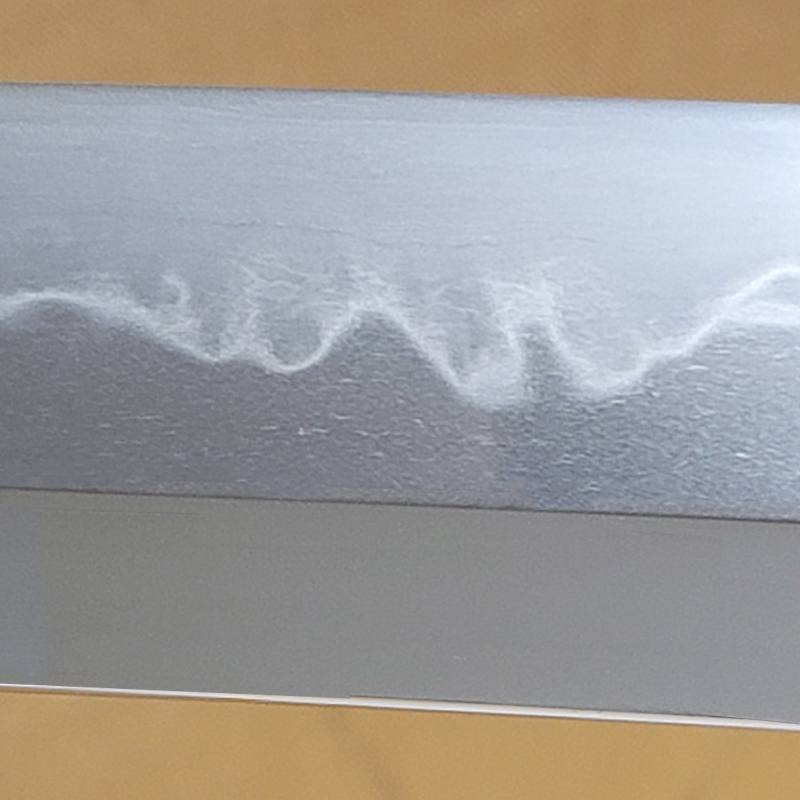
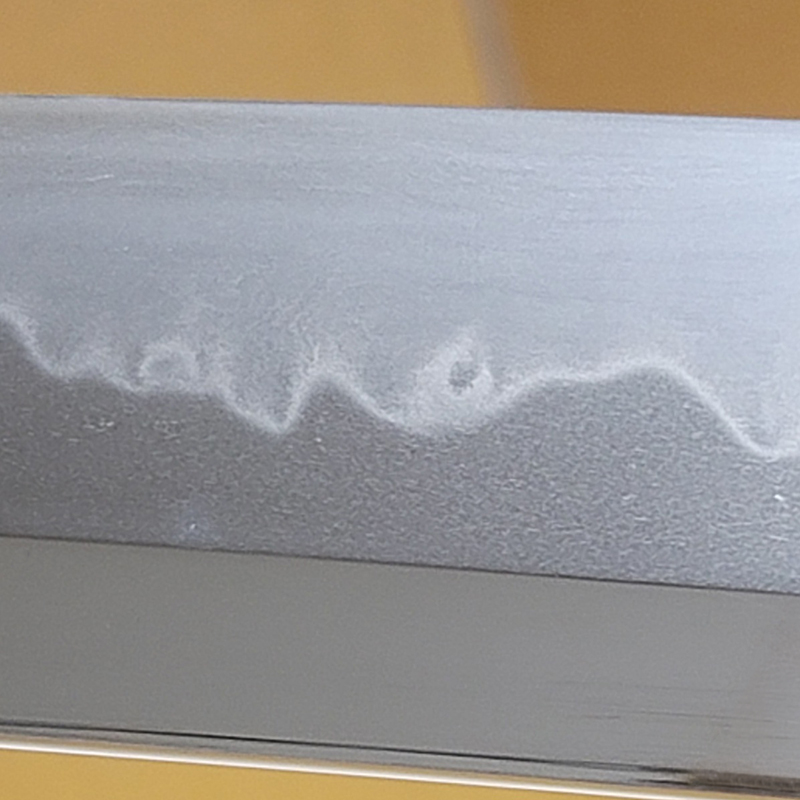
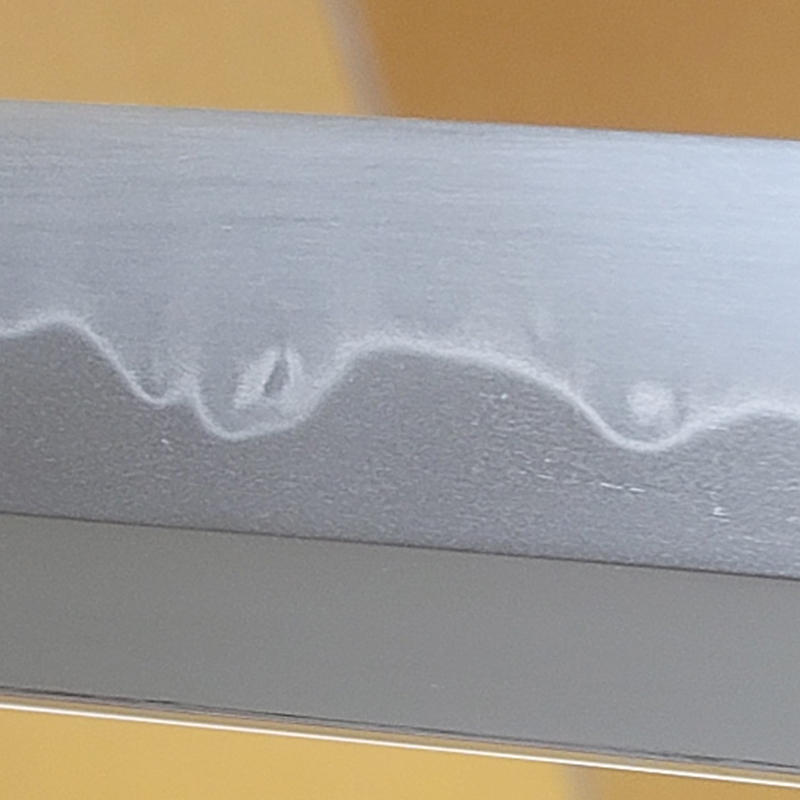
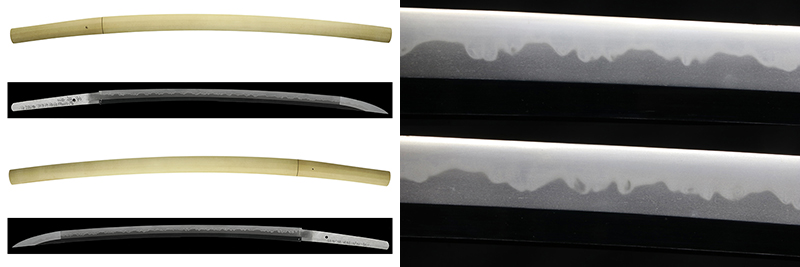
The hamon is gunome-midare with frequent ashi and sunagashi; yo enters the ha and kinsuji works actively to become sudareba. The boshi is midarekomi returning in ko-maru.
The hamon is gunome-midare with abundant ashi, sunagashi, and yo, featuring vigorous kinsuji activity that forms a sudareba-like pattern. The boshi is midarekomi, turning back in ko-maru.
[Tokucho]
Akamatsu Taro Kaneteru, real name Kimura Kanehiro. He is the second younger brother of the swordsmith Kimura Kanetsugu; his younger brother is Kaneyasu, and his nephews are Kimura Kanemitsu and Kimura Kaneyuki. The Akamatsu Taro school includes many swordsmiths such as Kaneyasu and Kaneteru, led by Kanetsugu, and all of them produce swords bearing the mei "Akamatsu Taro". They have a particular reputation for Kiyomaro-utsushi, and because they use tamahagane from their own iron smelting, they are characterized by a unique jigane different from general modern swords that use tamahagane from the Nittoho.
This work is a particularly excellent blade even among the Kiyomaro-utsushi that the Akamatsu Taro school specializes in. With a grand sugata featuring a motohaba of 35.4mm and a kissaki length of 125mm, it has a gunome-midare with vigorous kinsuji activity that presents a sudareba-like appearance. The polish is a high-grade sashikomi polish, and the condition of the blade is also excellent.
Among the Kiyomaro-utsushi of the Akamatsu Taro school, there are few works that reproduce Kiyomaro's style so faithfully, making this a very precious blade.
Akamatsu Taro Kaneteru, whose real name is Kimura Kanehiro, is the second younger brother of swordsmith Kimura Kanetsugu. His younger brother is Kaneyasu, and his nephews are Kimura Kanemitsu and Kimura Kaneyuki.
The Akamatsu Taro school consists of numerous swordsmiths, including Kanetsugu, Kaneyasu, and Kaneteru, all of whom use the name “Akamatsu Taro” in their signatures. The school is particularly renowned for its reproductions of Kiyomaro’s swords. Since they produce their own tamahagane through traditional iron smelting, their swords exhibit a distinctive jigane that differs somewhat from modern swords made using tamahagane supplied by the NBTHK.
This sword is an exceptional example of the Kiyomaro-style reproductions for which the Akamatsu Taro school is famous. It features a magnificent and powerful sugata, with a motohaba of 35.4 mm and an exceptionally long kissaki measuring 125 mm. The hamon is a gunome-midare with vigorous kinsuji activity, forming a sudareba-like pattern. The blade has been finished in a high-grade sashikomi polish and remains in excellent condition.
Even among the Akamatsu Taro school’s Kiyomaro reproductions, few examples capture Kiyomaro’s distinctive style as faithfully as this sword, making it an exceptionally rare and valuable piece.
[Koshirae]
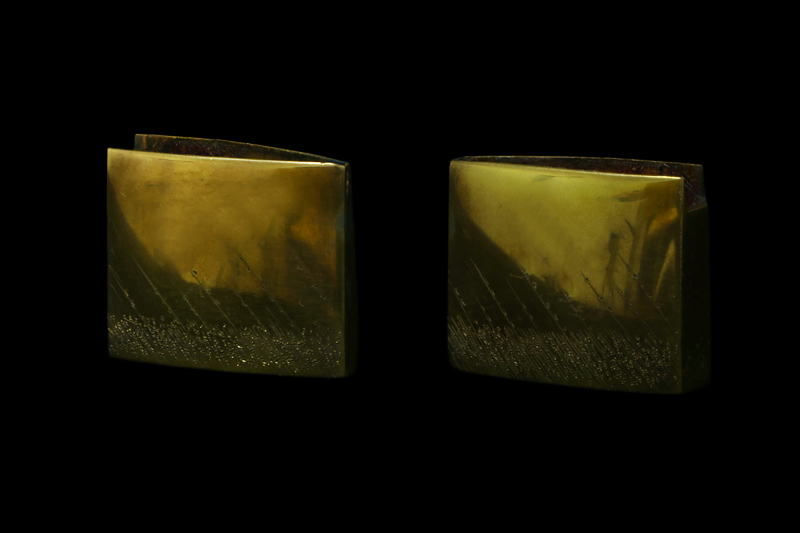
Habaki: Su-akagane-ji, gold-plated single koshi-yujo.
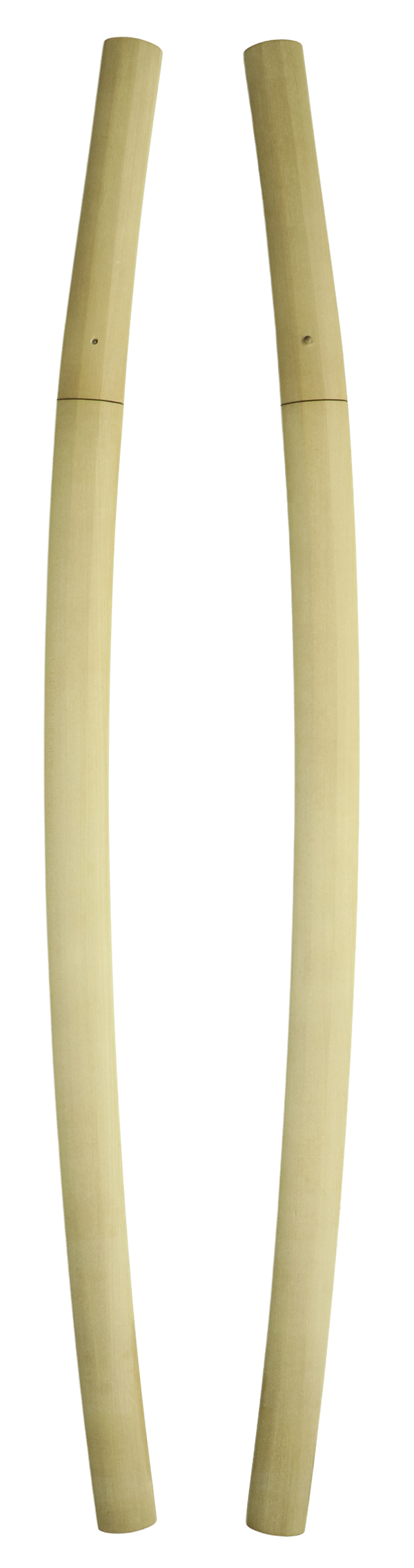
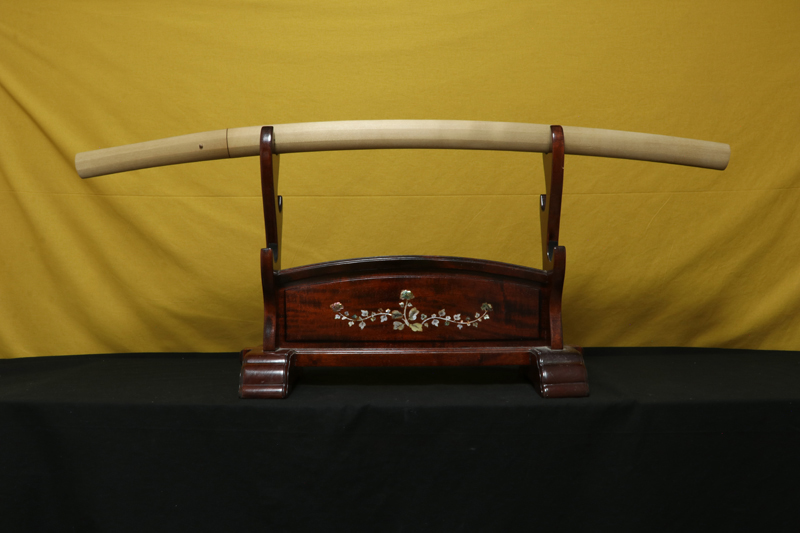
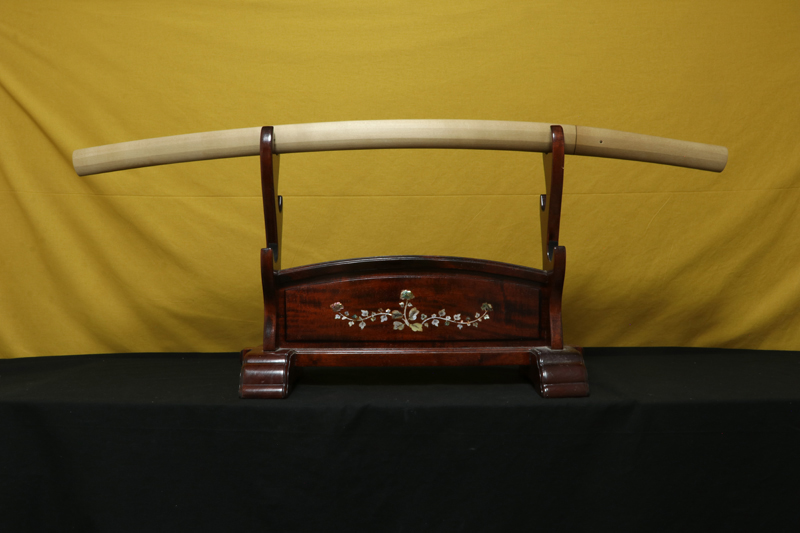
Saya: Shirosaya.
[Condition of blade]
Polish: Excellent.
Flaws: There are no flaws that would constitute a defect.
Machine translation from the shop's Japanese · may contain errors ·
Modern sword Higonokuni ju Akamatsutaro Kaneteru saku with Shirosaya.
With a motohaba of 35.4mm and a kissaki length of 125mm, this is a magnificent Kiyomaro-utsushi with a grand sugata, featuring a sudareba-like gunome-midare with vigorous kinsuji activity.
The smith, Akamatsu Taro Kaneteru, is a swordsmith with an established reputation for Kiyomaro-utsushi and a unique jigane created through his own iron smelting.
A high-grade sashikomi polish has been applied, and the condition is excellent. It is a rare masterpiece that faithfully reproduces the style of Kiyomaro.
This magnificent Kiyomaro-style sword features a powerful sugata with a motohaba of 35.4 mm and an exceptionally long kissaki measuring 125 mm. Its gunome-midare hamon displays vigorous kinsuji activity, forming a striking sudareba-like pattern.
The swordsmith, Akamatsu Taro Kaneteru, is renowned for his Kiyomaro reproductions and distinctive jigane made from his own traditionally smelted tamahagane.
The blade is finished in a high-grade sashikomi polish and remains in excellent condition. A rare masterpiece that faithfully captures Kiyomaro’s distinctive style.
[Sugata]
Shinogi-zukuri, iori-mune, wide mihaba and thick, torii-zori, o-kissaki. The nakago is ubu with sujikai yasurime, and the nakago-jiri is kuri-jiri.
Shinogi-zukuri with an iori-mune, wide mihaba, thick kasane, torii-zori, and an o-kissaki. The nakago is ubu, with sujikai yasurime and a kuri-jiri tip.
[Jigane]
The jigane is an itame-hada that becomes nagare-masame near the habuchi; it is a well-kneaded, well-tightened jigane with a darkish tone and thick ji-nie.
The jitetsu is a well-forged, tightly packed, dark-toned itame-hada that flows into masame near the hamon, with abundant ji-nie.
[Hamon]
The hamon is gunome-midare with frequent ashi and sunagashi; yo enters the ha and kinsuji works actively to become sudareba. The boshi is midarekomi returning in ko-maru.
The hamon is gunome-midare with abundant ashi, sunagashi, and yo, featuring vigorous kinsuji activity that forms a sudareba-like pattern. The boshi is midarekomi, turning back in ko-maru.
[Tokucho]
Akamatsu Taro Kaneteru, real name Kimura Kanehiro. He is the second younger brother of the swordsmith Kimura Kanetsugu; his younger brother is Kaneyasu, and his nephews are Kimura Kanemitsu and Kimura Kaneyuki. The Akamatsu Taro school includes many swordsmiths such as Kaneyasu and Kaneteru, led by Kanetsugu, and all of them produce swords bearing the mei "Akamatsu Taro". They have a particular reputation for Kiyomaro-utsushi, and because they use tamahagane from their own iron smelting, they are characterized by a unique jigane different from general modern swords that use tamahagane from the Nittoho.
This work is a particularly excellent blade even among the Kiyomaro-utsushi that the Akamatsu Taro school specializes in. With a grand sugata featuring a motohaba of 35.4mm and a kissaki length of 125mm, it has a gunome-midare with vigorous kinsuji activity that presents a sudareba-like appearance. The polish is a high-grade sashikomi polish, and the condition of the blade is also excellent.
Among the Kiyomaro-utsushi of the Akamatsu Taro school, there are few works that reproduce Kiyomaro's style so faithfully, making this a very precious blade.
Akamatsu Taro Kaneteru, whose real name is Kimura Kanehiro, is the second younger brother of swordsmith Kimura Kanetsugu. His younger brother is Kaneyasu, and his nephews are Kimura Kanemitsu and Kimura Kaneyuki.
The Akamatsu Taro school consists of numerous swordsmiths, including Kanetsugu, Kaneyasu, and Kaneteru, all of whom use the name “Akamatsu Taro” in their signatures. The school is particularly renowned for its reproductions of Kiyomaro’s swords. Since they produce their own tamahagane through traditional iron smelting, their swords exhibit a distinctive jigane that differs somewhat from modern swords made using tamahagane supplied by the NBTHK.
This sword is an exceptional example of the Kiyomaro-style reproductions for which the Akamatsu Taro school is famous. It features a magnificent and powerful sugata, with a motohaba of 35.4 mm and an exceptionally long kissaki measuring 125 mm. The hamon is a gunome-midare with vigorous kinsuji activity, forming a sudareba-like pattern. The blade has been finished in a high-grade sashikomi polish and remains in excellent condition.
Even among the Akamatsu Taro school’s Kiyomaro reproductions, few examples capture Kiyomaro’s distinctive style as faithfully as this sword, making it an exceptionally rare and valuable piece.
[Koshirae]
Habaki: Su-akagane-ji, gold-plated single koshi-yujo.
Saya: Shirosaya.
[Condition of blade]
Polish: Excellent.
Flaws: There are no flaws that would constitute a defect.
The twentieth century nearly killed the craft twice: wartime distortion, then the occupation ban. The NBTHK’s founding in 1948 and licensed forging from 1953 rebuilt the sword as an art, crowned by Living National Treasures and the mukansa rank.
We could not find an authenticity certificate on the seller’s listing. Japanese swords and fittings are normally papered by the NBTHK (or the NTHK). Without one, the attribution is the seller’s own assessment and has not been independently verified — treat it with caution and ask the dealer about certification before buying.
Within 3 days of the item's arrival, we offer a refund or an exchange. Return shipping and the bank transfer fee for the refund are at the customer's expense.


 NihontoWatch