Two courts, sixty years of war, and the most dramatic silhouettes in the sword’s history: broad blades, extended points, true ōdachi later cut down into the majestic katana collectors prize. The Sōshū manner was the style of the age.
 NihontoWatchNihontoWatch
The title of the Chikuzen old smith lineage Kongo-byoe is derived from Homan Kongo, the title of the Kamado Shrine at the foot of Mount Homan near Dazaifu. They specialized in works with a soft-feeling itame hada mixed with masame hada and a narrow suguha, and the school used the character Mori as a lineage name, including Moritaka, Moritsugu, Morimasa, and Morikiyo. Most surviving works are from the Muromachi period, and smiths from earlier than this are called Ko-Kongo-byoe. There is a tanto by Kongo-byoe-no-jo Minamoto Moritaka with a Shohei era date (23rd Juyo Token), but zaimei works are extremely rare.
NihontoWatchOffered by Choshuya

We couldn’t find current papers for this piece. Ask the dealer whether it has been, or can be, submitted to shinsa. — Hoshi

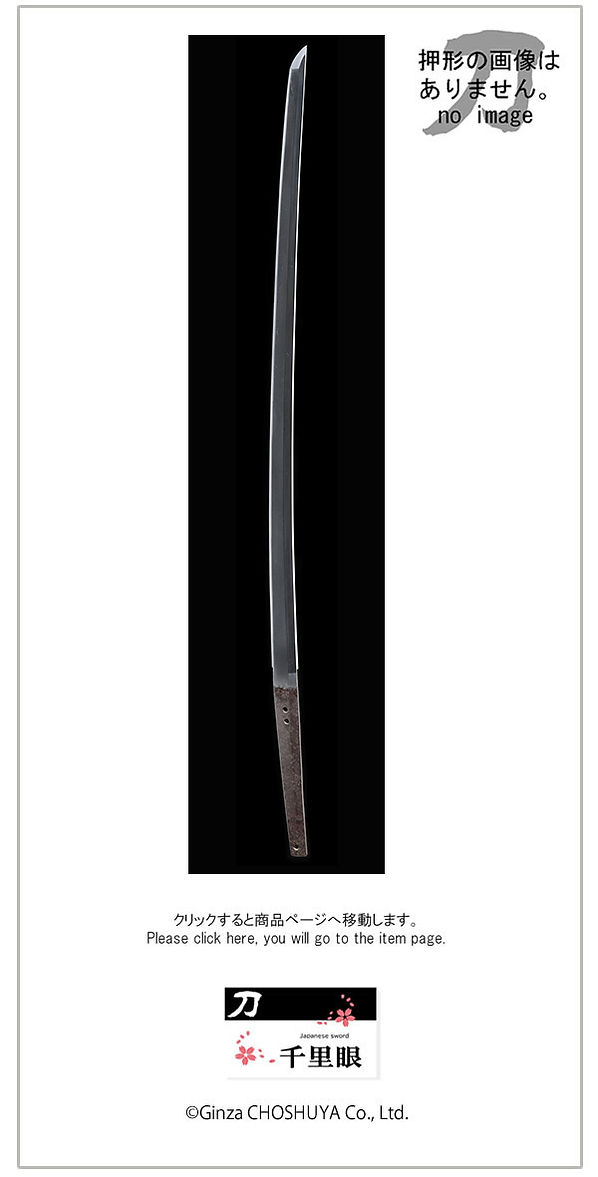
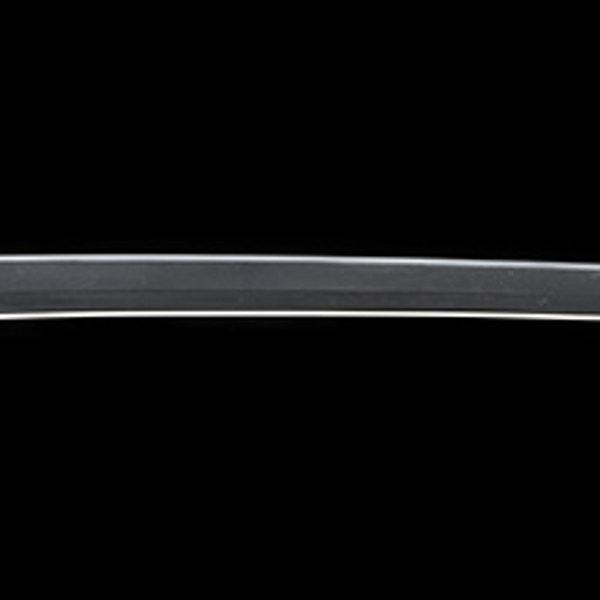
As written by the shop
Machine translation from the shop's Japanese · may contain errors ·
Wakimono · Chikuzen
In Chikuzen Province during the Nanbokuchō period two groups worked side by side: the Samonji lineage and the Kongōbyōe lineage, the latter the early phase to which these blades are attributed. The setsumei anchor the school through one named smith, Sadamori (貞盛), known from a tantō signed "Chikushū Reizei Sadamori, Shōhei 25, first month, day,"[[c:1]] whose work is read as the reference point for the group. Through Sadamori the records frame Kongōbyōe by its Yamato kishitsu, a Yamato temperament carried in both ji and ha, and place these katana from the end of the Kamakura period through the Nanbokuchō era. One blade is described directly as a Kyūshū production, its forging carrying the "Kanamono flavor" (kanami) the records treat as distinctive of Kyūshū work. Across the three katana a consistent vocabulary recurs. The forging is large itame and ō-itame mixed with itame, with prominent mokume and ō-mokume, the grain standing out and tending toward hada-dachi; near the edge a slight nagare-hada enters and becomes masame. The jigane is repeatedly read as inclining to a dark, blackish tone, with ji-nie adhering and chikei entering.
The hamon is a narrow suguha or hoso-suguha, faintly tinged with shallow notare and mixed with small gunome, carried in a tight-tending nioiguchi (shimari-gokoro) to which ko-nie adheres well; along the habuchi there is hotsure, with uchi-noke, kinsuji, and sunagashi, and the nioiguchi can take on a subdued (shizumi) feeling. The bōshi runs sugu with ko-maru or ō-maru, somewhat hakikake. To recognize Ko-Kongōbyōe is to read this pairing: a standing, dark-toned Kyūshū jigane against a narrow, tightly gathered suguha. For kantei the records weight the joining of ji and ha: the blackish, grain-standing forging filled with fine chikei set against a narrow suguha whose nioiguchi feels tight, with modest sunagashi and kinsuji spanning ji and ha read as scenery rather than as flourish. The named anchor is Sadamori's dated Shōhei 25 tantō, an Important Art Object; one of these katana carries provenance to Ishikura Yasuke of Osaka. The setsumei note that no signed Kongōbyōe works run earlier than the Muromachi period, so these ō-suriage mumei katana are judged as the lineage's earlier reach, placed late Kamakura into Nanbokuchō. The records read them as superior works (yūhin) of plain, forceful bearing definitively attributable to Ko-Kongōbyōe. Learn more →
The Nanbokuchō period (1333 to 1392)
Two courts, sixty years of war, and the most dramatic silhouettes in the sword’s history: broad blades, extended points, true ōdachi later cut down into the majestic katana collectors prize. The Sōshū manner was the style of the age.
We could not find an authenticity certificate on the seller’s listing. Japanese swords and fittings are normally papered by the NBTHK (or the NTHK). Without one, the attribution is the seller’s own assessment and has not been independently verified — treat it with caution and ask the dealer about certification before buying.
If, due to our fault, the item differs significantly from its proper condition, the item may be returned. Cooling-off is within one week of the item's arrival.
¥900,000