Modern sword Hizen kuni Kanemoto Yasunori saku with Koshirae
本作は、陸軍受命刀匠として活躍し、伊勢神宮御宝刀の製作も拝命した名工・兼元と、その子・保則による親子合作刀です。
よく詰んだ杢目肌に直刃調の互の目を焼いた優品で、古研ぎながら刀身の状態は概ね良好です。
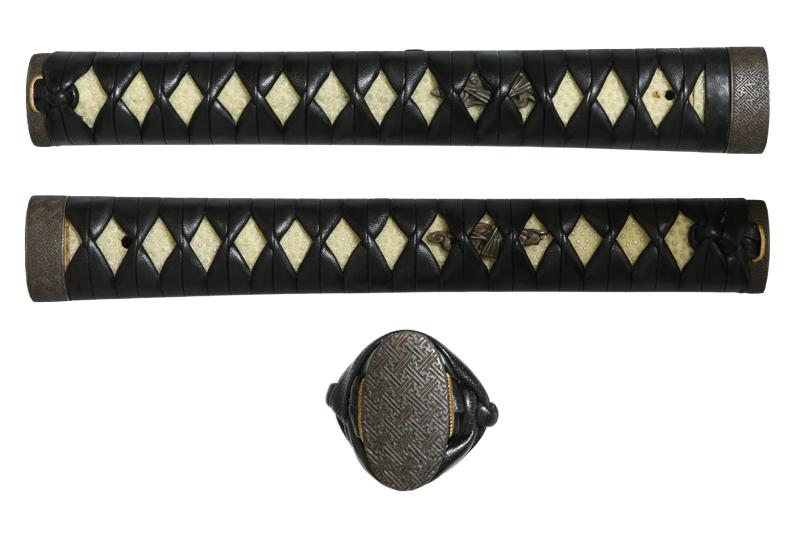
柄は黒牛革表で巻き替え済み。鞘塗りには難がありますが、割れはなく、ご希望により有償で塗り替えも承ります。
This sword is a collaborative work by the distinguished swordsmith Kanemoto, who served as an Army-Commissioned Swordsmith and was commissioned to forge sacred swords for Ise Grand Shrine, and his son, Yasunori.
It features a tightly forged mokume-hada and a gunome hamon with a predominantly suguha pattern. Despite its old polish, the blade remains in generally good condition.
The tsuka has been rewrapped in black cowhide leather with the grain side facing outward. Although the saya’s lacquer finish is imperfect, it has no cracks. Professional relacquering is available at an additional cost.
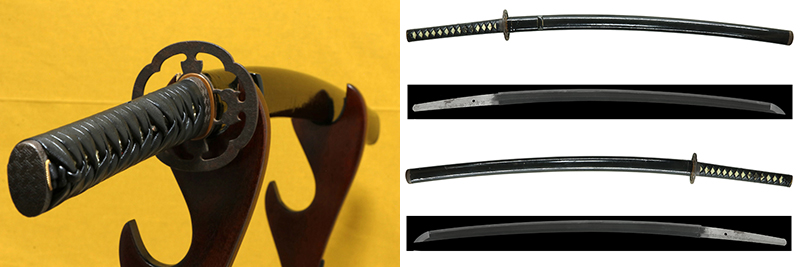
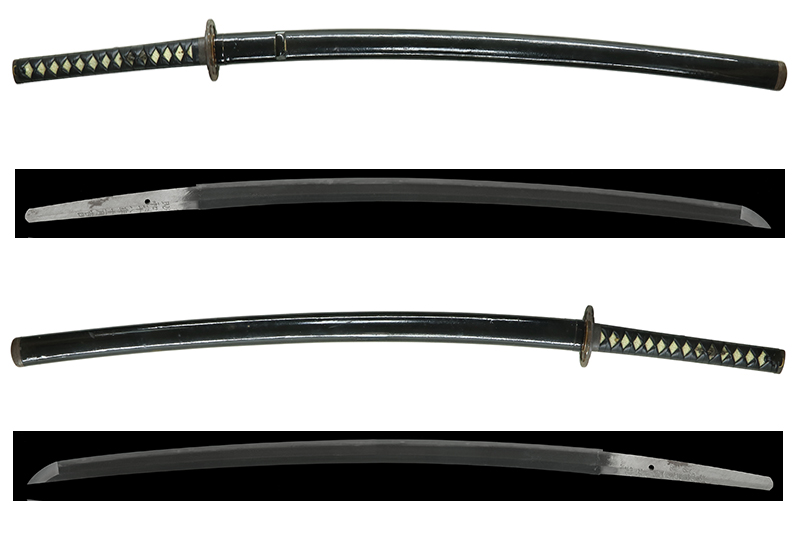
「刀姿 sword figure」
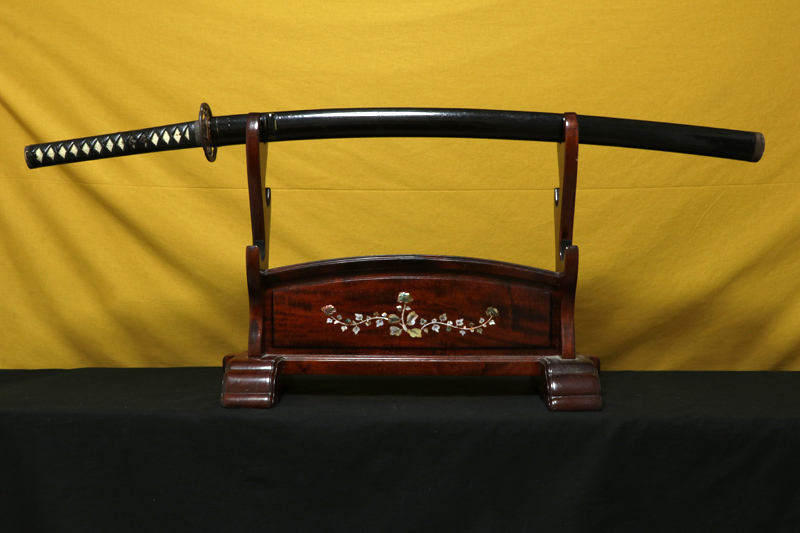
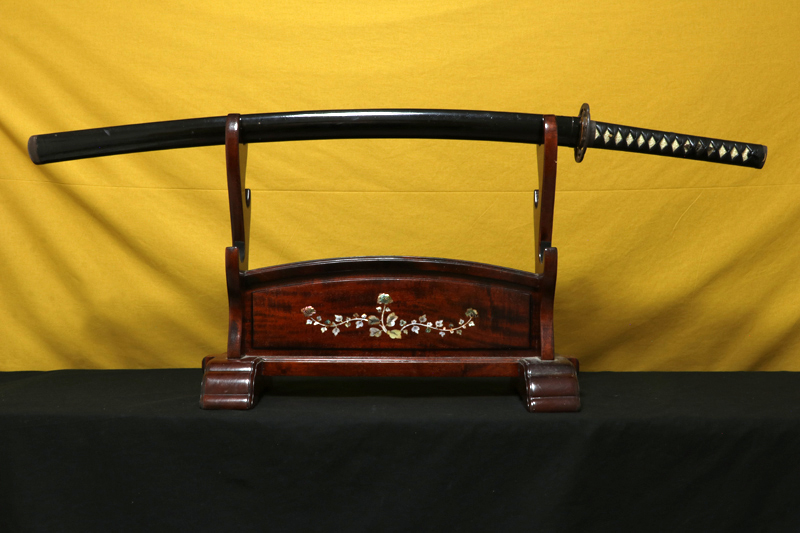
鎬造り庵棟、身幅重尋常、鳥居反り中鋒。茎は生で筋違い鑢がかかり、茎尻は栗尻。
Shinogi-zukuri with an iori-mune. The blade has standard mihaba and kasane, with a graceful torii-zori and a chū-kissaki. The nakago is ubu with sujikai yasurime, terminating in a kurijiri.
「地鉄 jigane」
地鉄は杢目肌が良く詰み地沸付く。
The jigane consists of a finely compacted mokume-hada, richly covered with ji-nie.
「刃紋 hamon」
刃文は直刃風の互の目がや湾れ足入り刃縁小沸付く、刃中は葉が入る。釯子は直ぐに入り小丸に返る。
The hamon is a gently undulating gunome with a suguha-like appearance, featuring well-defined ashi. Fine ko-nie lines the habuchi, while yō are present within the temper line. The bōshi enters in sugu and turns back in a komaru.
「特徴 detailed」
肥前國保則、本名・元村保広。佐賀県佐賀市在住の刀匠で、父・本村兼元に師事し、新作刀展では多数の入選歴があります。
父の肥前国兼元、本名・元村兼作は、佐賀県佐賀市長瀬町に住した刀匠です。昭和14年(1939年)に陸軍受命刀匠を拝命し、昭和18年(1943年)の陸軍軍刀展で会長賞、翌19年(1944年)には総裁賞を受賞。同年、陸軍兵器行政本部嘱託の軍刀鍛錬技術指導員に任命されました。
戦後も作刀を続け、昭和27年(1952年)には伊勢神宮御宝刀の製作を拝命。昭和42年から43年にかけて新作名刀展に入選し、昭和45年(1970年)には再び伊勢神宮御宝刀の製作を拝命するなど、戦前・戦後を通じて活躍した名工です。
本作は、兼元・保則親子による合作刀です。 よく詰んだ杢目肌の地鉄に、直刃調の互の目を焼いた、出来の優れた一振りです。
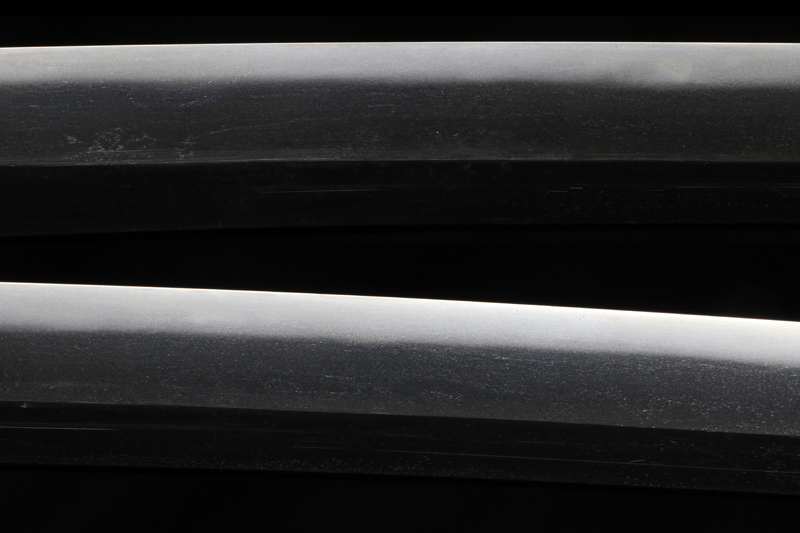
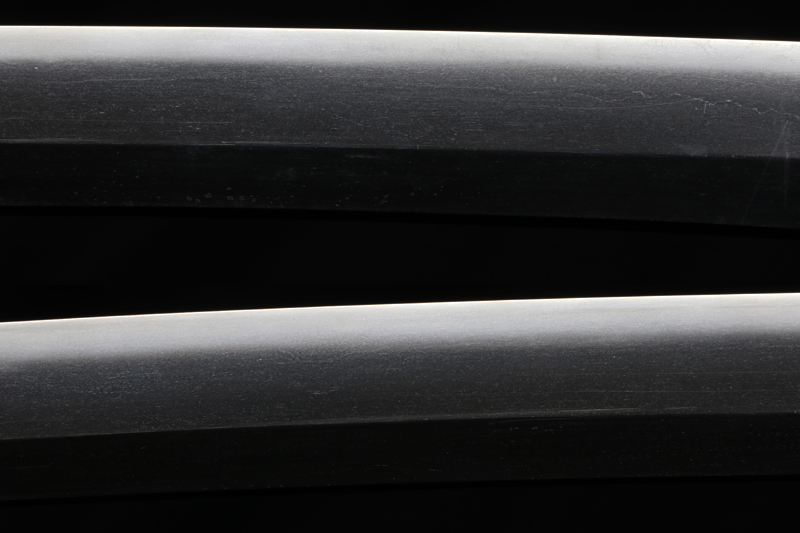
刀身は古研ぎのため、ヒケや汚れが見られますが、鍛え割れなどの目立つ欠点はなく、概ね良好な状態です。
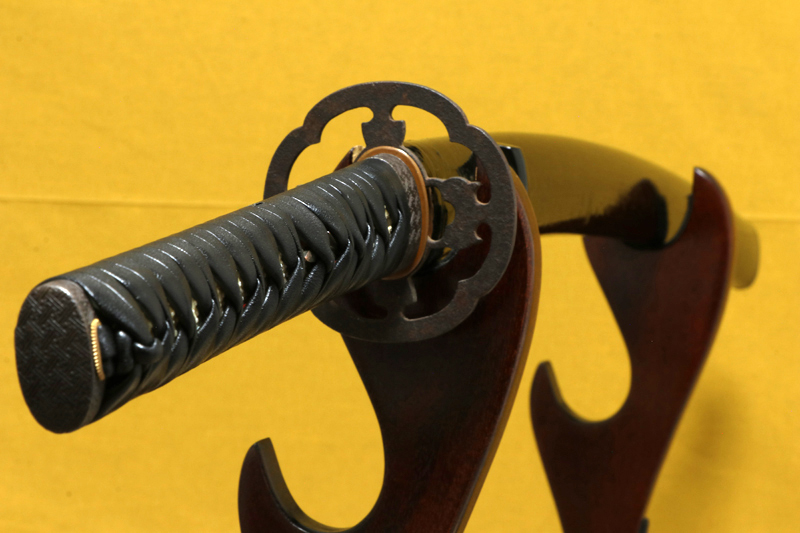
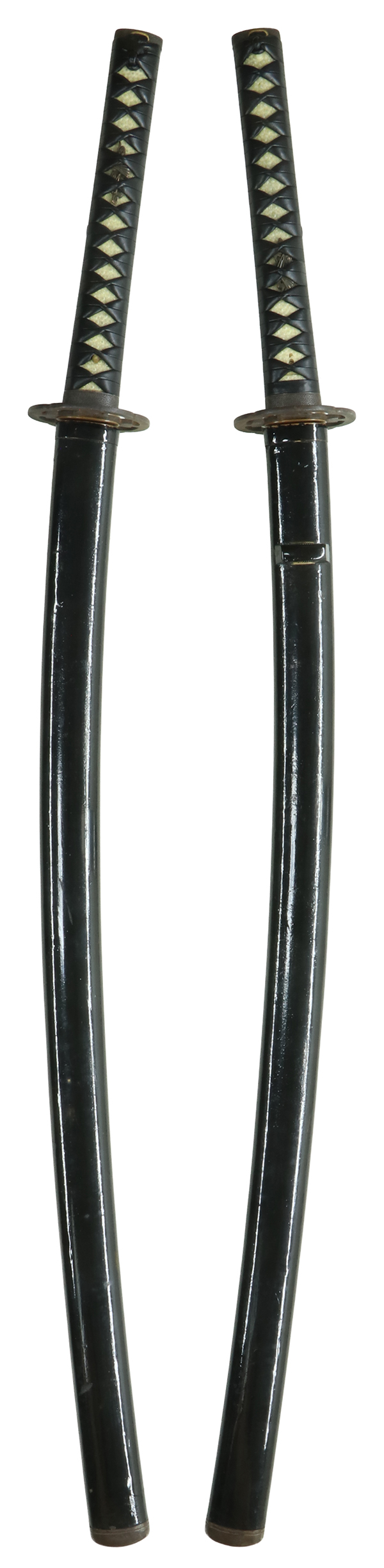
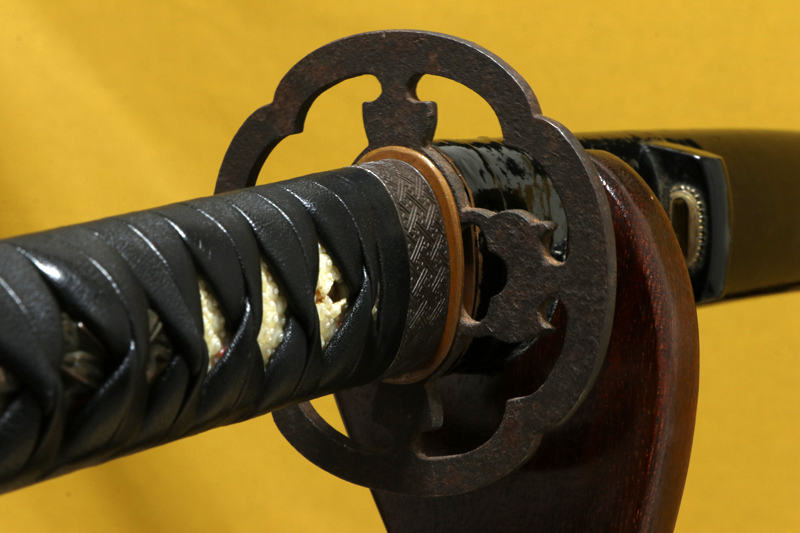
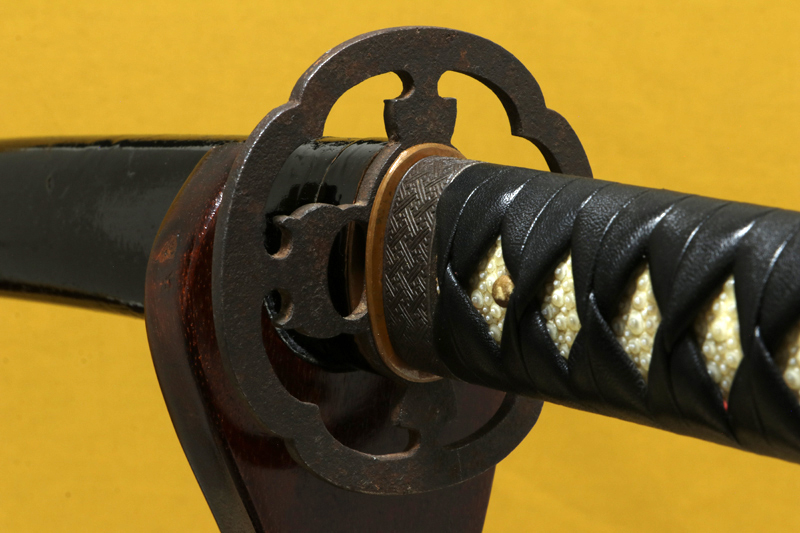
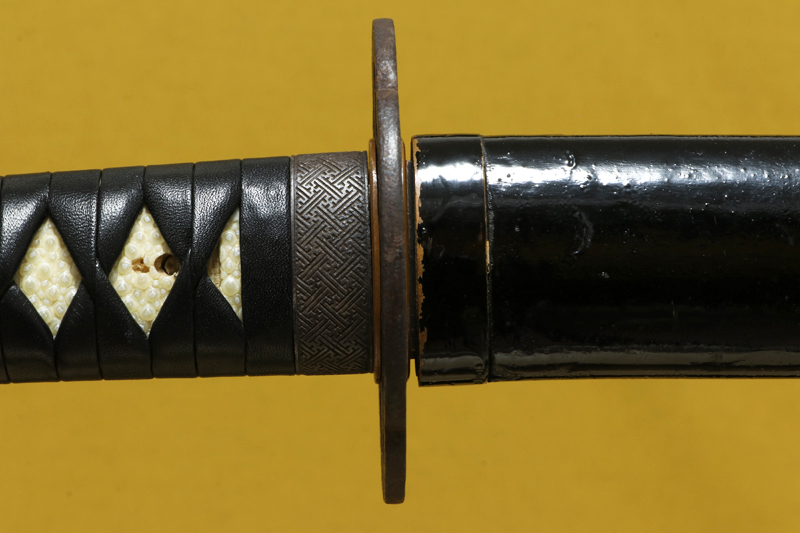
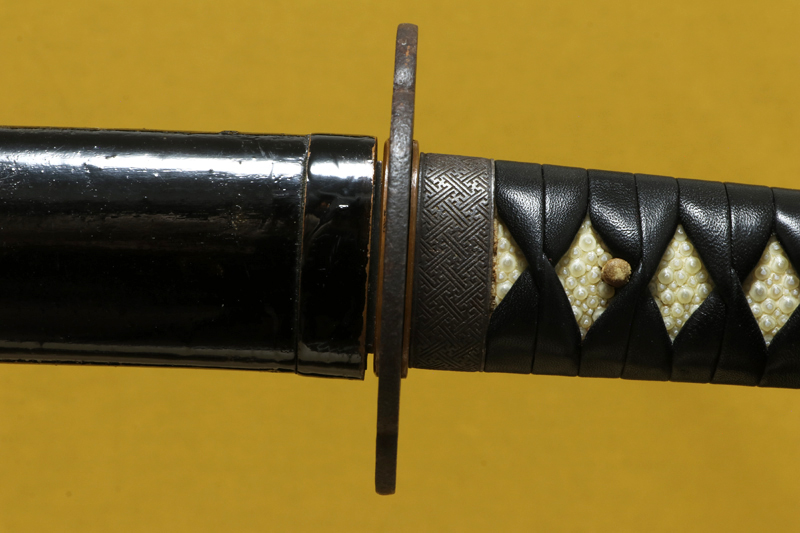
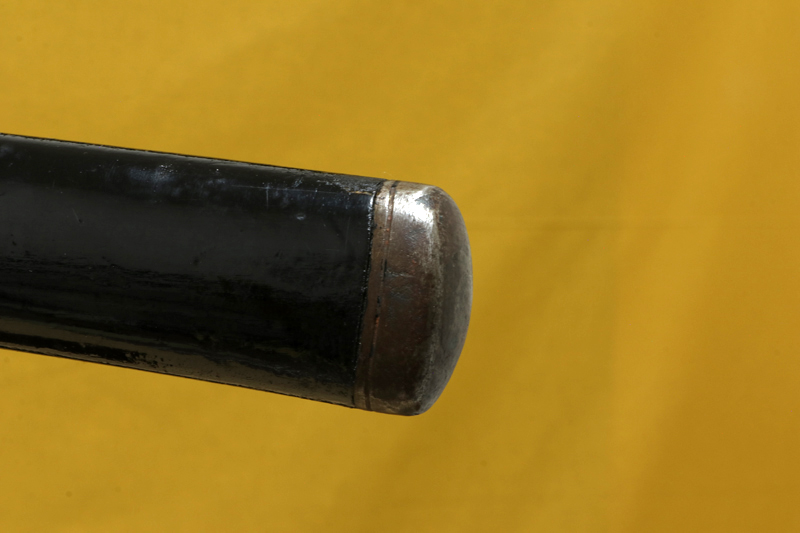
拵は、柄糸を黒の牛革表に巻き替えています。鞘の鯉口は銅金具で補強されており、割れなどの損傷はありません。ただし、鞘塗りは素人が刷毛塗りしたような仕上がりで、外観にやや難があります。ご希望の場合は、有償にて鞘の塗り替えも承ります。
ご購入後、直ぐに試斬で使えます。
Hizen no Kuni Yasunori, whose real name was Motomura Yasuhiro, was a swordsmith based in Saga City, Saga Prefecture. He studied swordmaking under his father, Motomura Kanemoto, and had numerous works accepted at the Shinsakuto Exhibitions.
His father, Hizen no Kuni Kanemoto (Motomura Kanesaku), was a swordsmith who lived in Nagase-machi, Saga City. In 1939, he was appointed an Army-Commissioned Swordsmith. He received the Chairman’s Award at the Army Sword Exhibition in 1943 and the President’s Award at the same exhibition in 1944. That same year, he was appointed a technical instructor in military sword forging under the Army Ordnance Administration Headquarters.
After the war, he continued his swordmaking career. In 1952, he was commissioned to forge a sacred sword for Ise Grand Shrine. His works were accepted at the Shinsakuto Exhibitions in 1967 and 1968, and in 1970, he was once again commissioned to forge a sacred sword for Ise Grand Shrine. He was a distinguished swordsmith who remained active both before and after World War II.
This sword is a collaborative work by father and son, Kanemoto and Yasunori. It features a beautifully tight mokume-hada and a gunome hamon with a predominantly suguha pattern, demonstrating excellent craftsmanship.
The blade is in an old polish and shows some surface scratches and stains. However, there are no significant flaws such as forging cracks, and its overall condition is generally good.
The koshirae has been refurbished with a newly rewrapped tsuka using black cowhide leather with the grain side facing outward. The koiguchi (scabbard mouth) is reinforced with copper fittings, and the saya has no cracks or structural damage. However, the lacquer finish appears to have been applied by an amateur using a brush and is somewhat uneven in appearance. If desired, we can arrange to have the saya professionally relacquered at an additional cost.
The sword is ready for immediate use in tameshigiri upon purchase.
「拵 Koshirae」
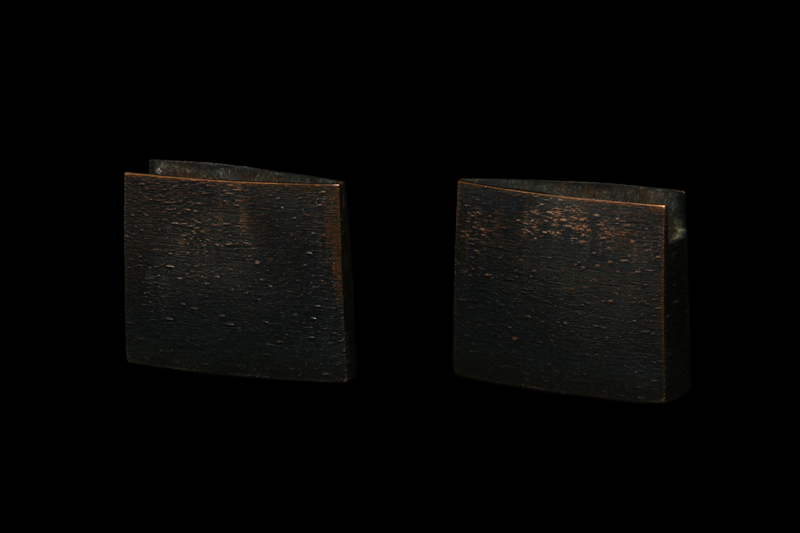
ハバキ(habaki) :素銅地色揚げ一重の縦鑢。
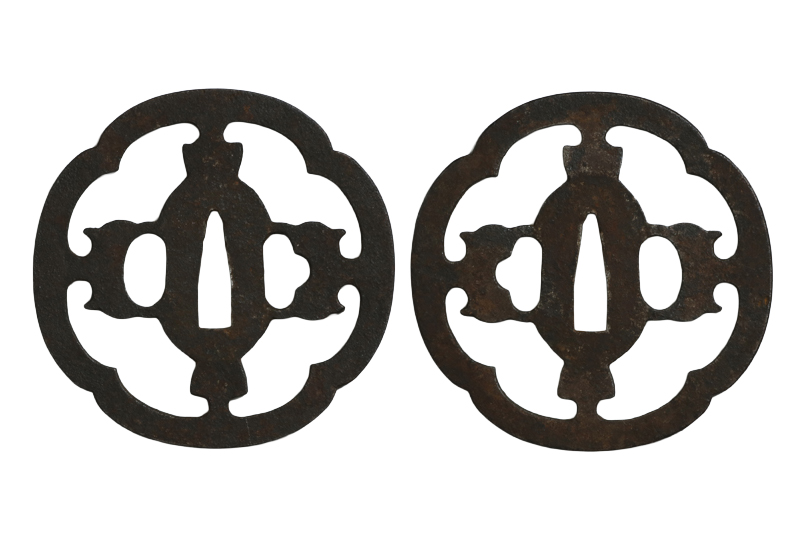
鍔(tsuba) :鉄地木瓜型雲版透かし。
縁頭(futikasira):鉄地源氏香の図銀象嵌。
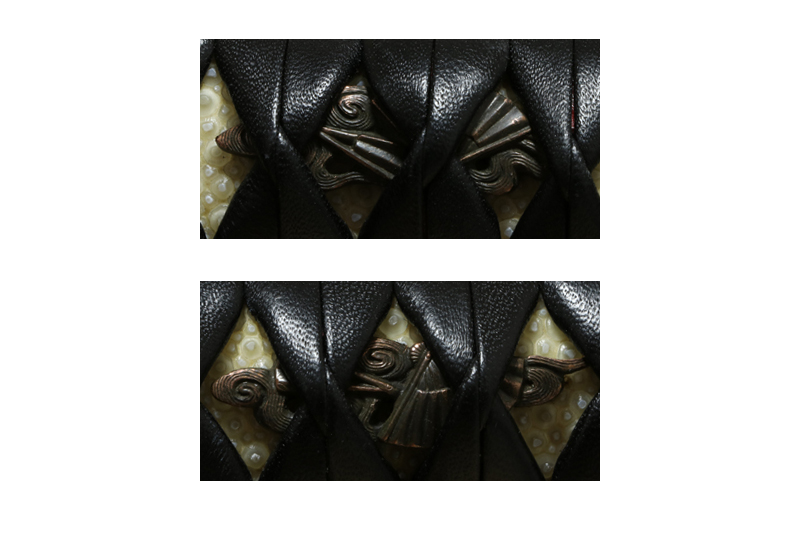
目貫(menuki) :赤銅地扇の図。
柄(tsuka) :鮫は親粒が付く。柄巻きは牛表革黒の諸捻り巻き(新品)。
鞘(saya) :黒塗り。
「刀剣の状態 condition of blade」
研:古研ぎのためヒケや汚れが見られますが、地刃は良く見えます。
傷:欠点に成るような傷は有りません。
(Translation unavailable)


 NihontoWatch