

The twentieth century nearly killed the craft twice: wartime distortion, then the occupation ban. The NBTHK’s founding in 1948 and licensed forging from 1953 rebuilt the sword as an art, crowned by Living National Treasures and the mukansa rank.
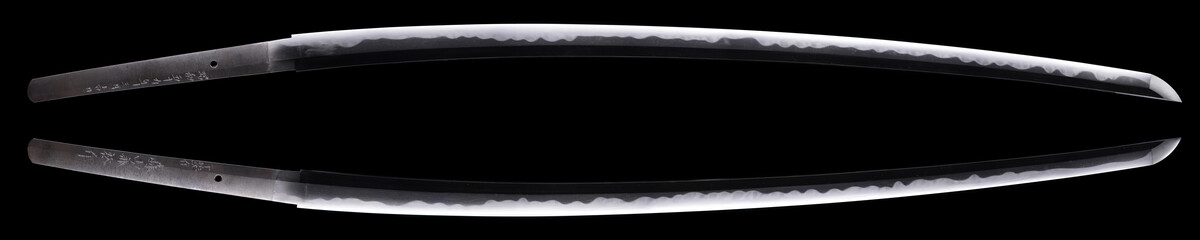
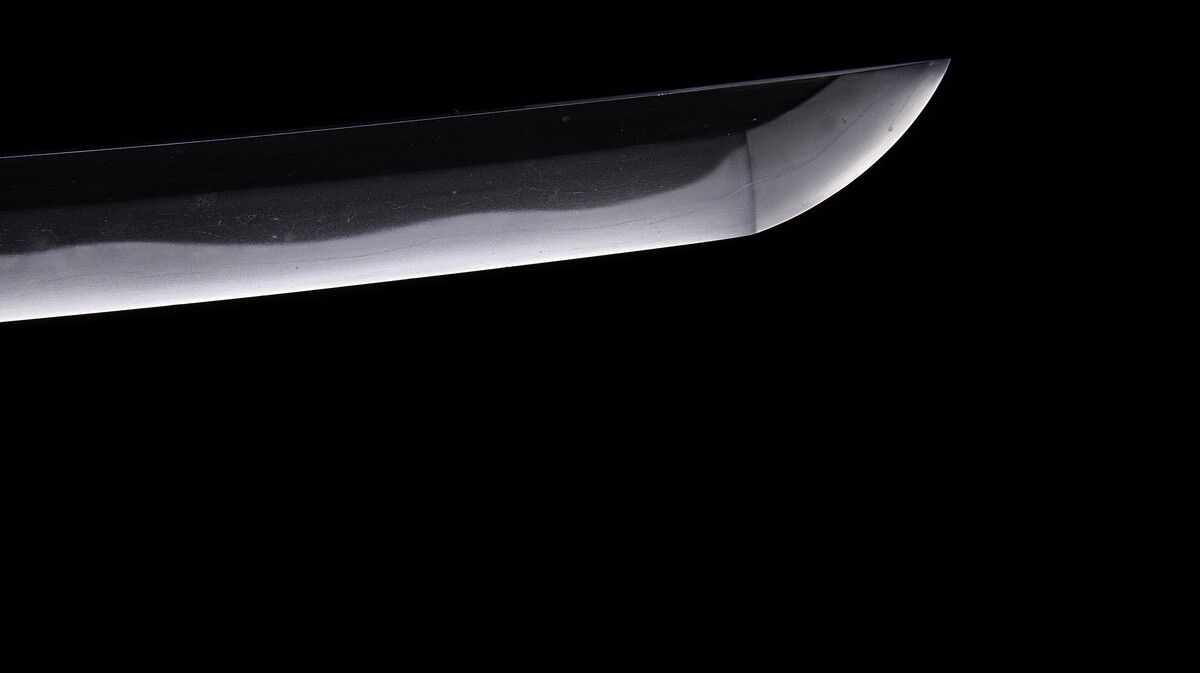
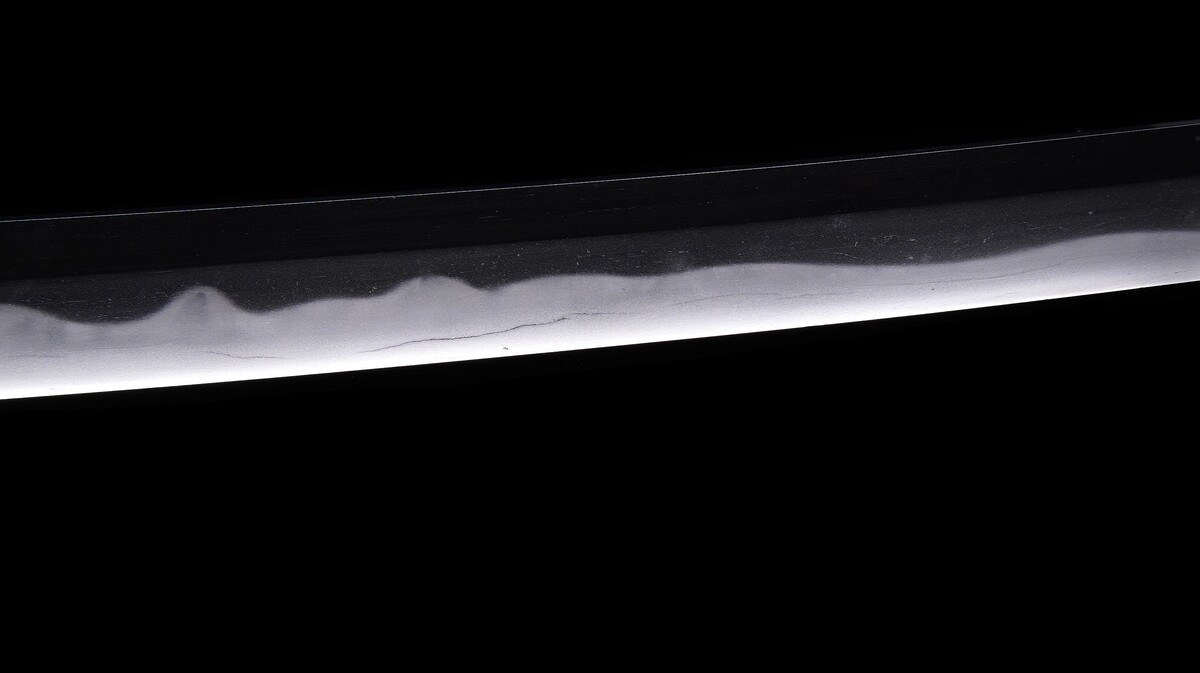
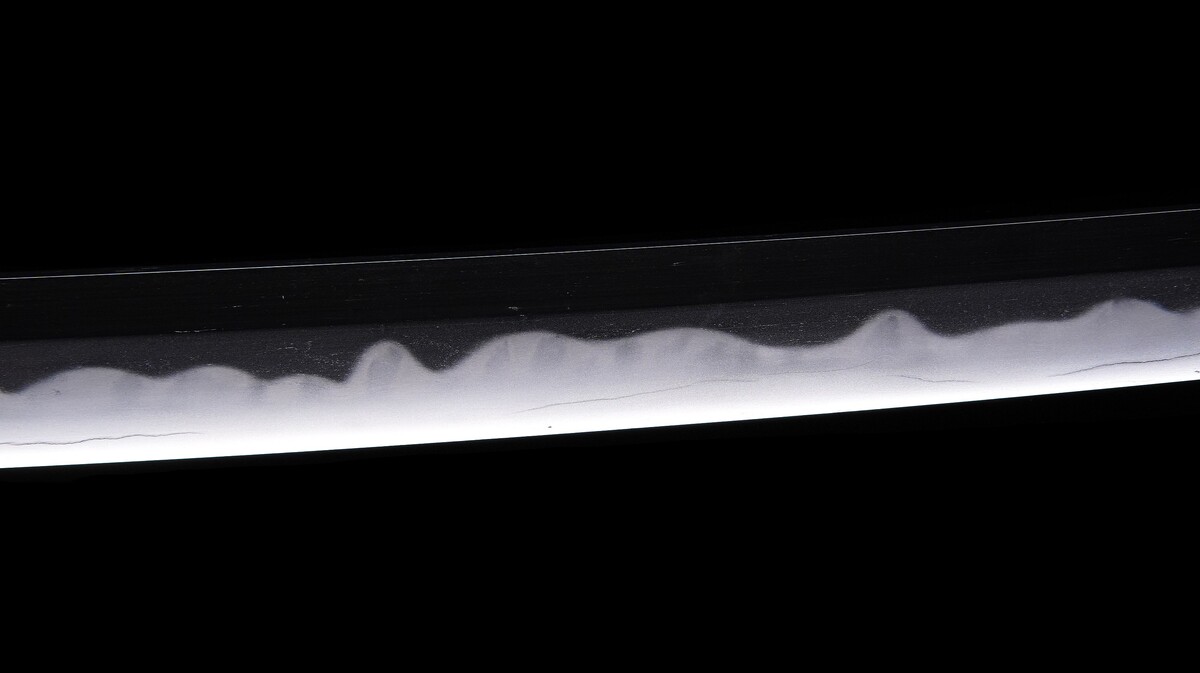
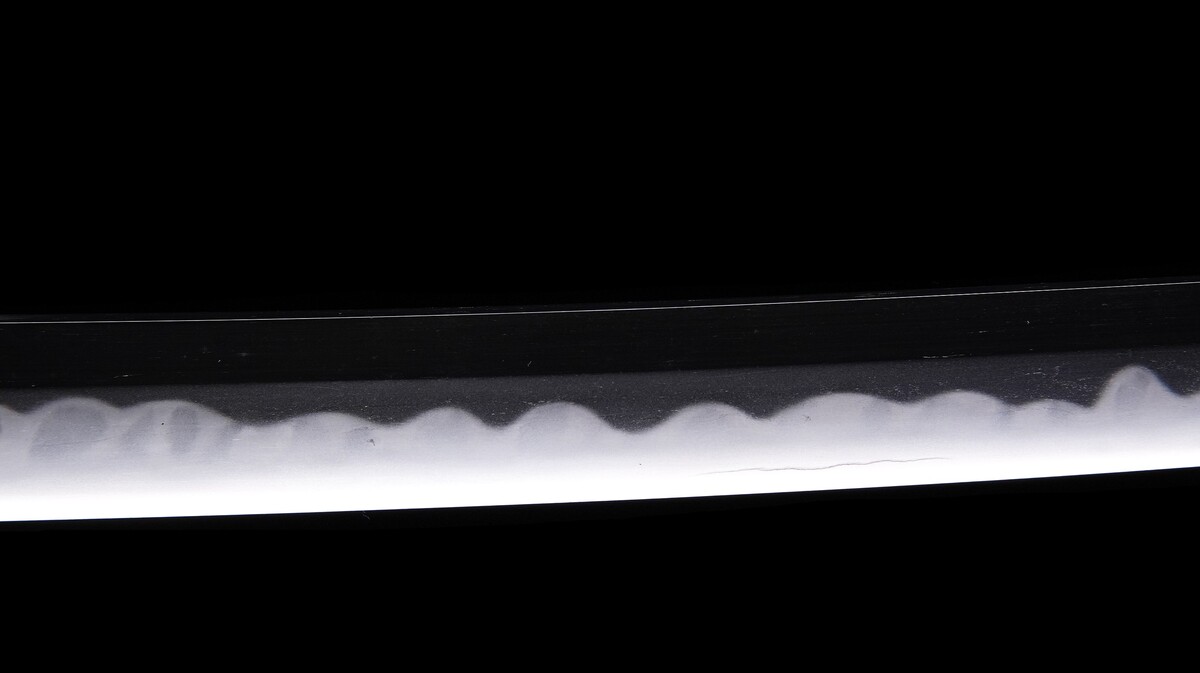
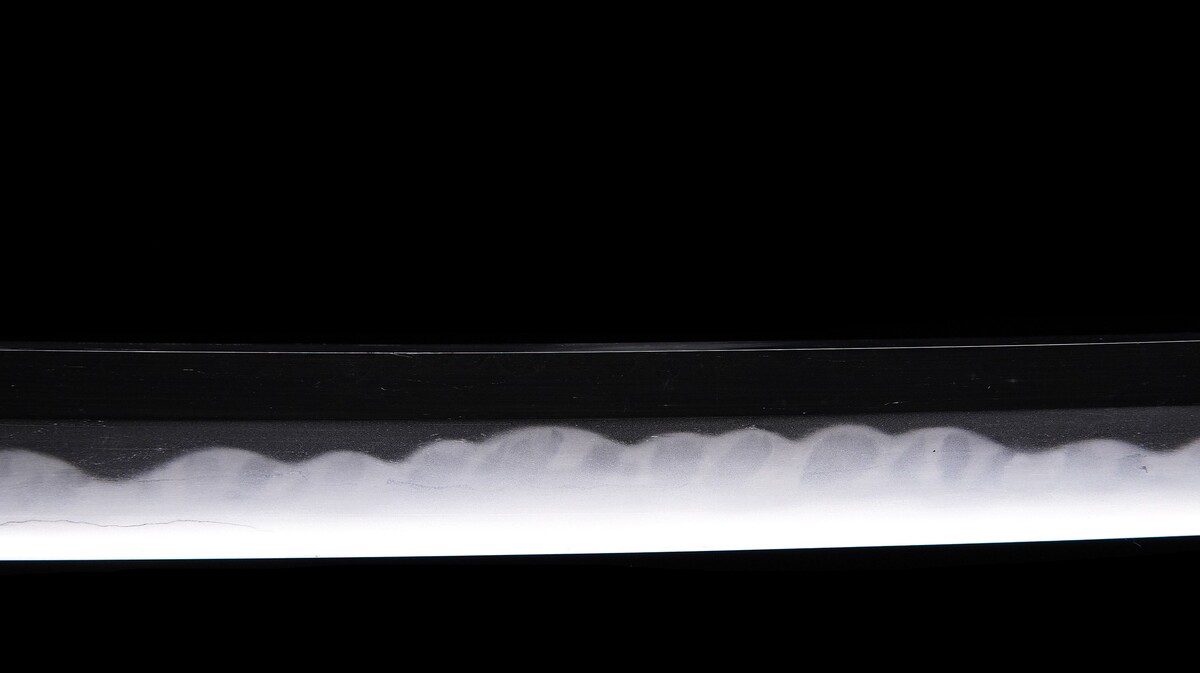
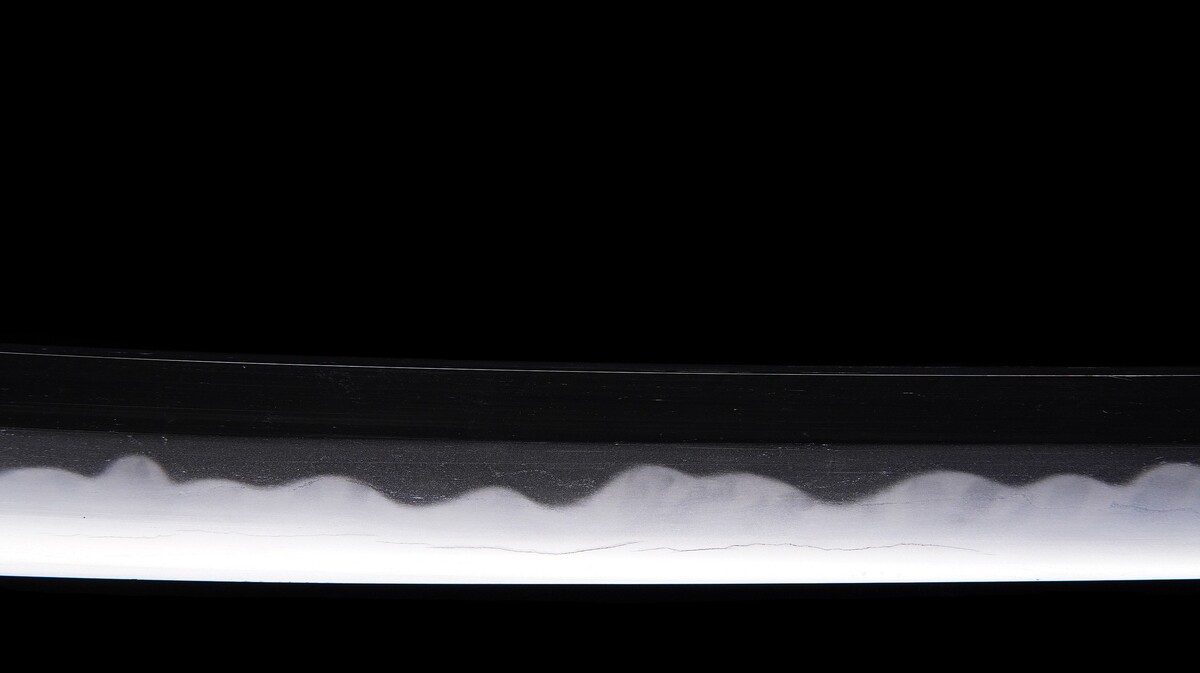
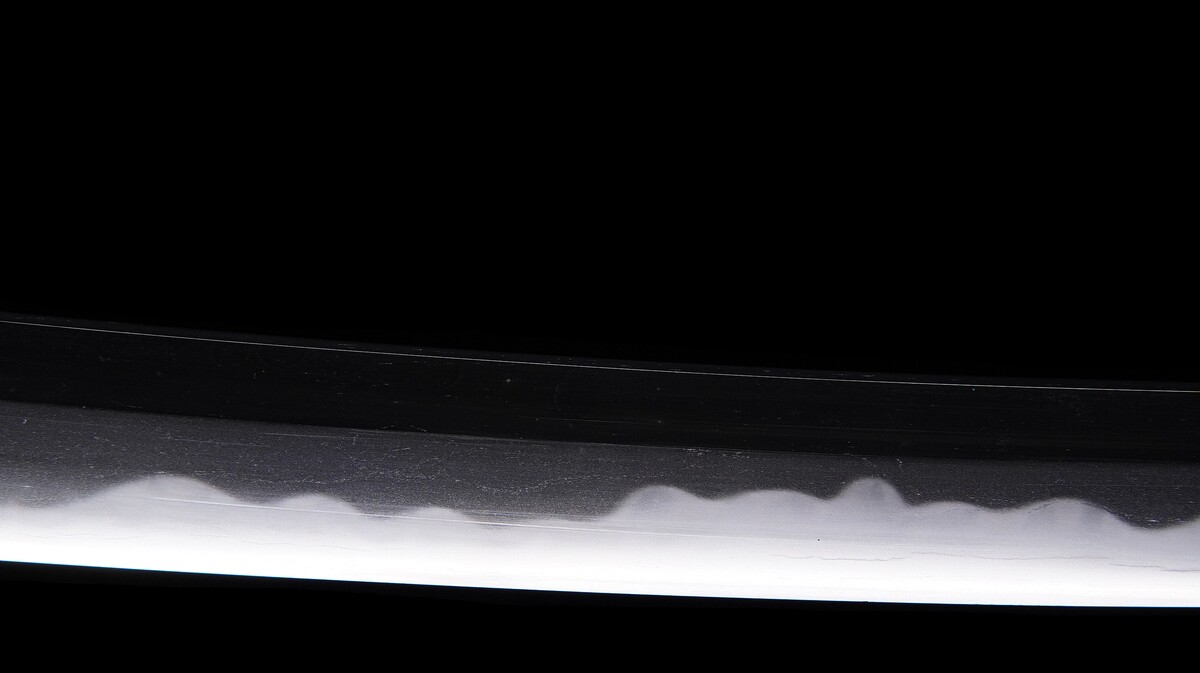
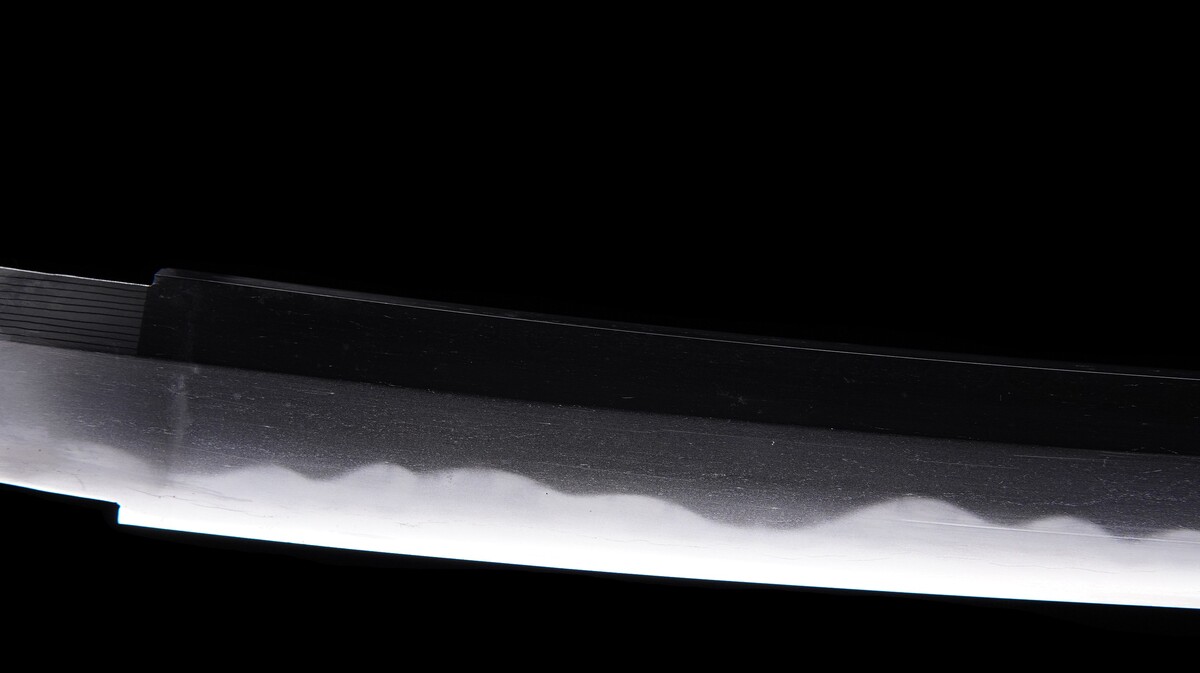
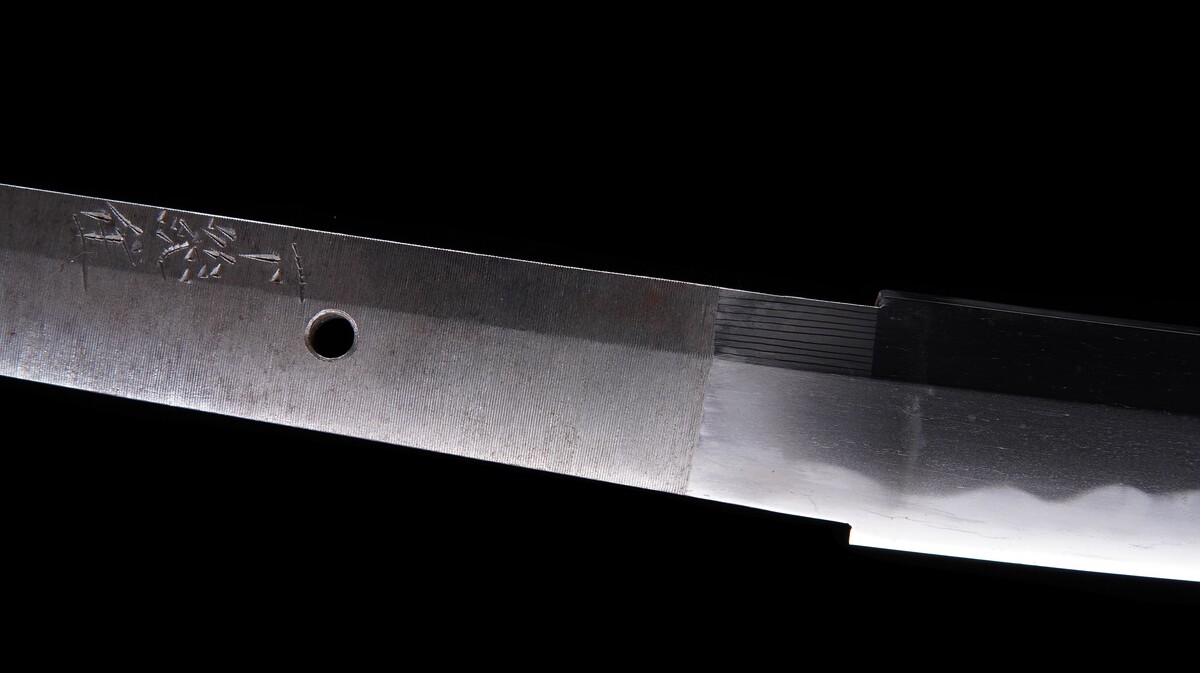
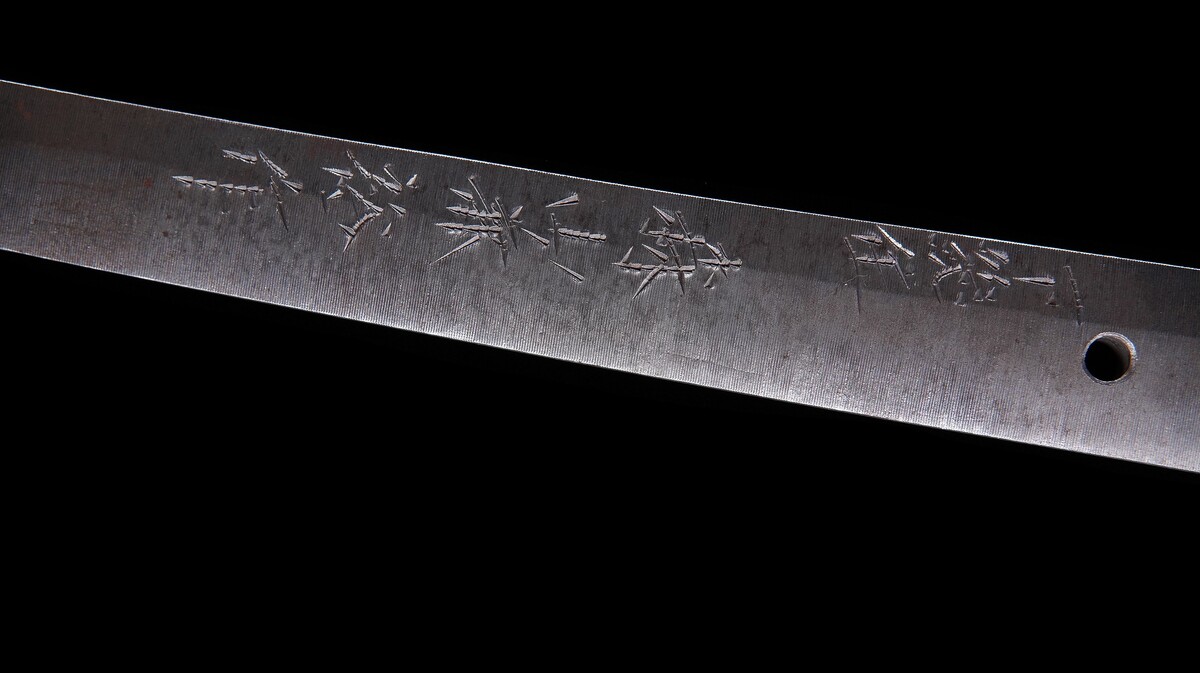
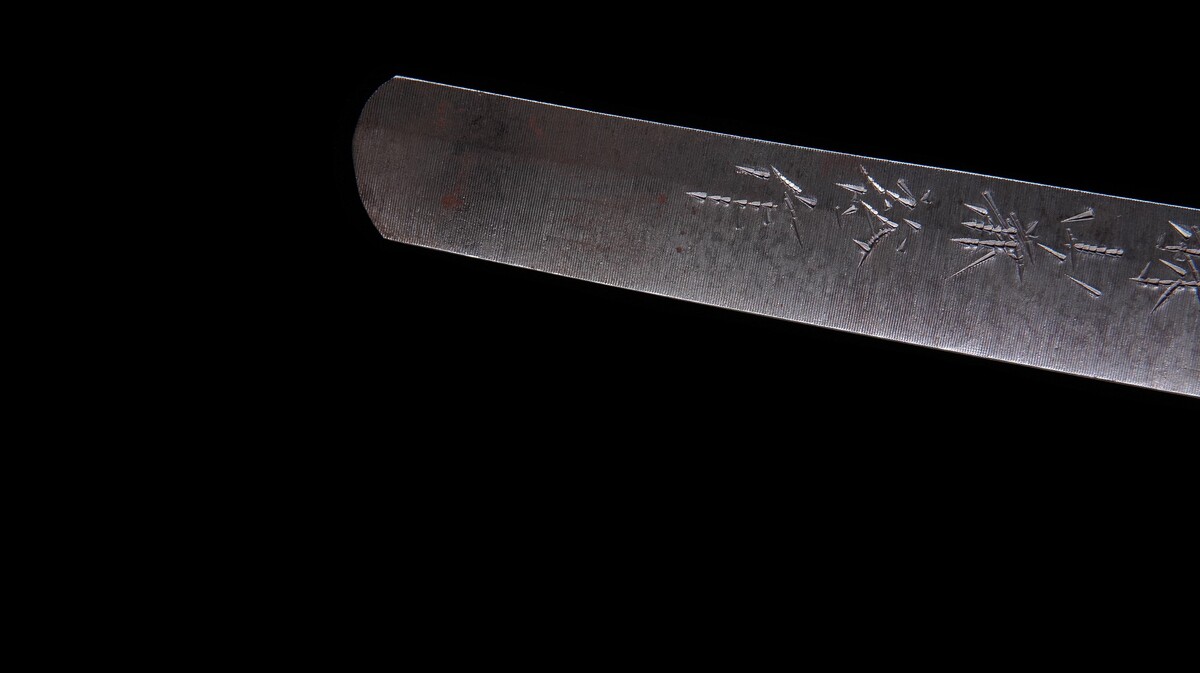
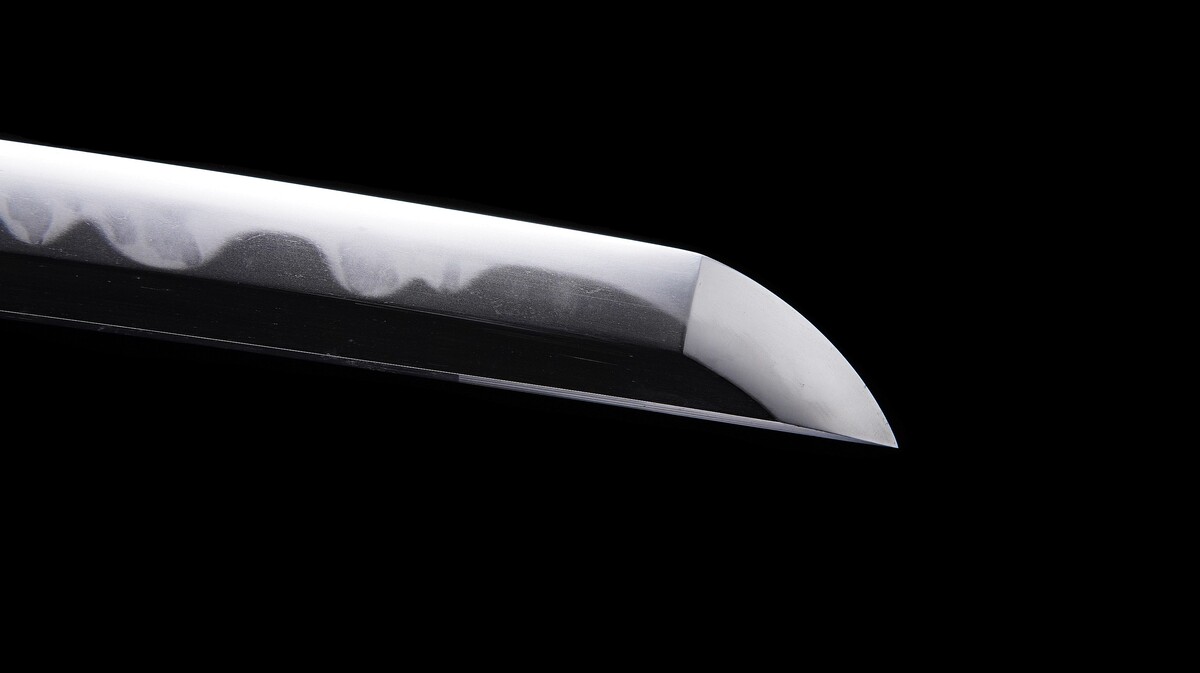
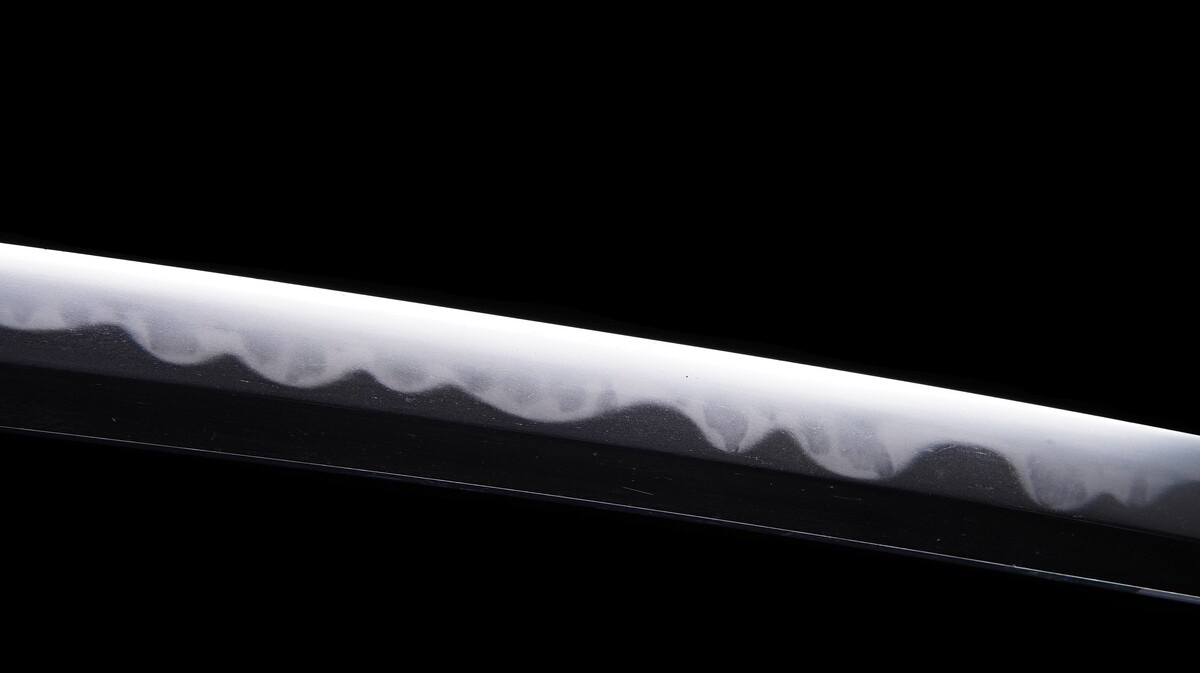
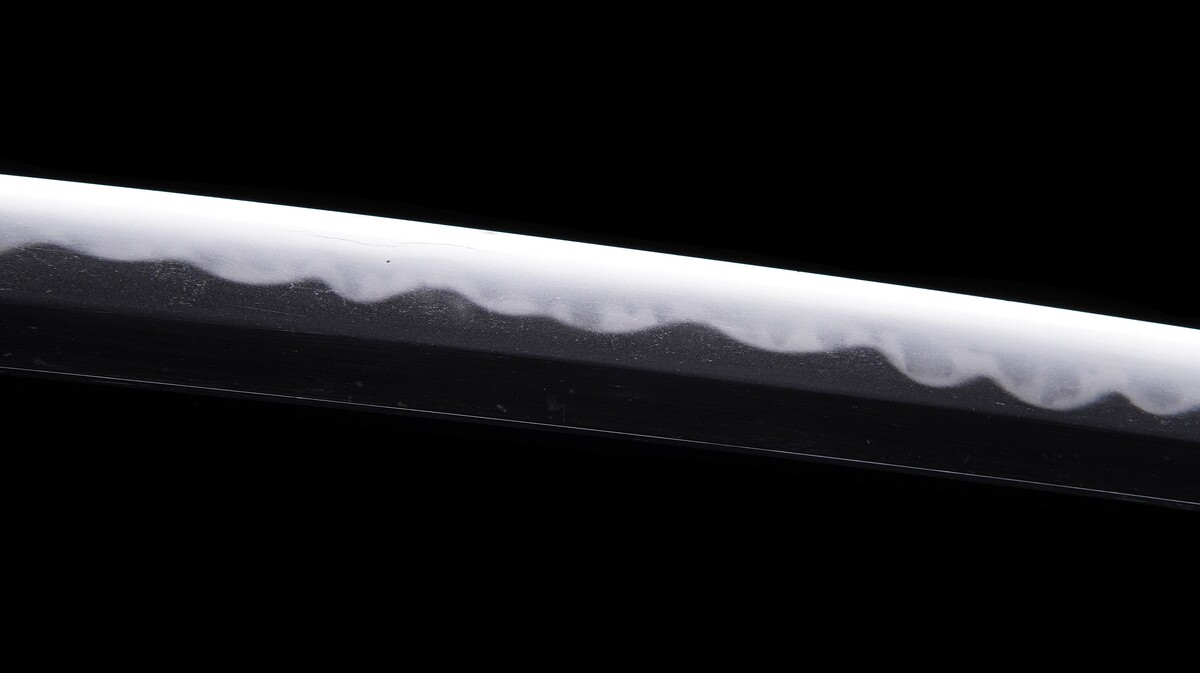
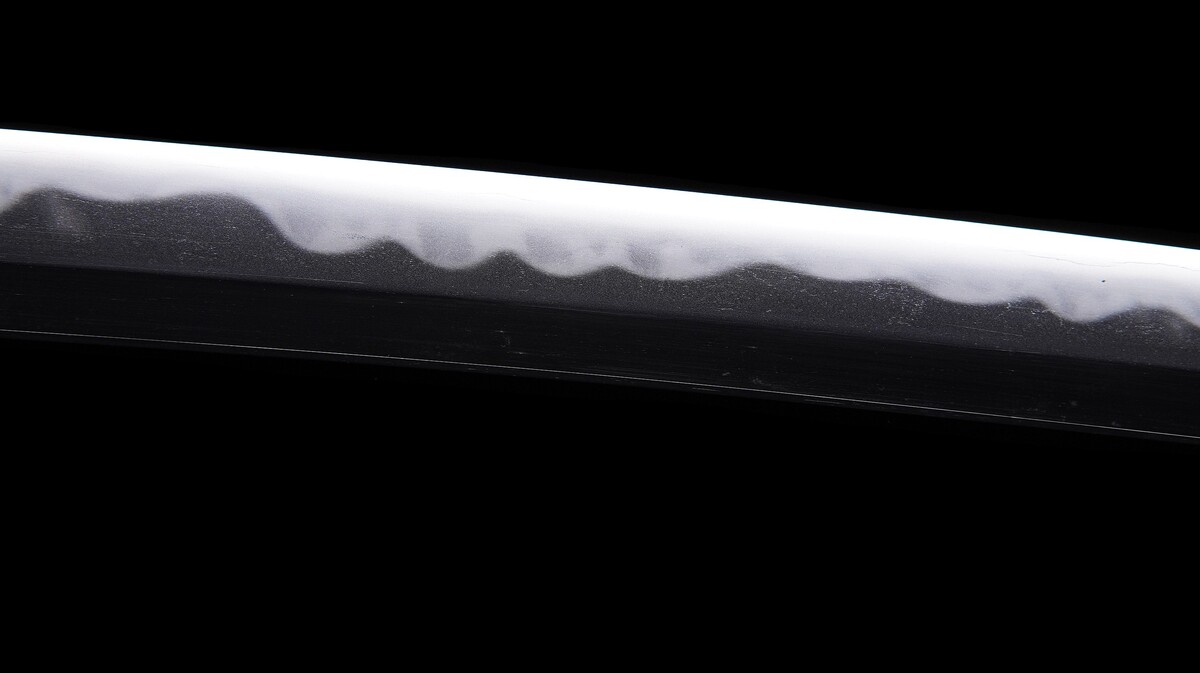
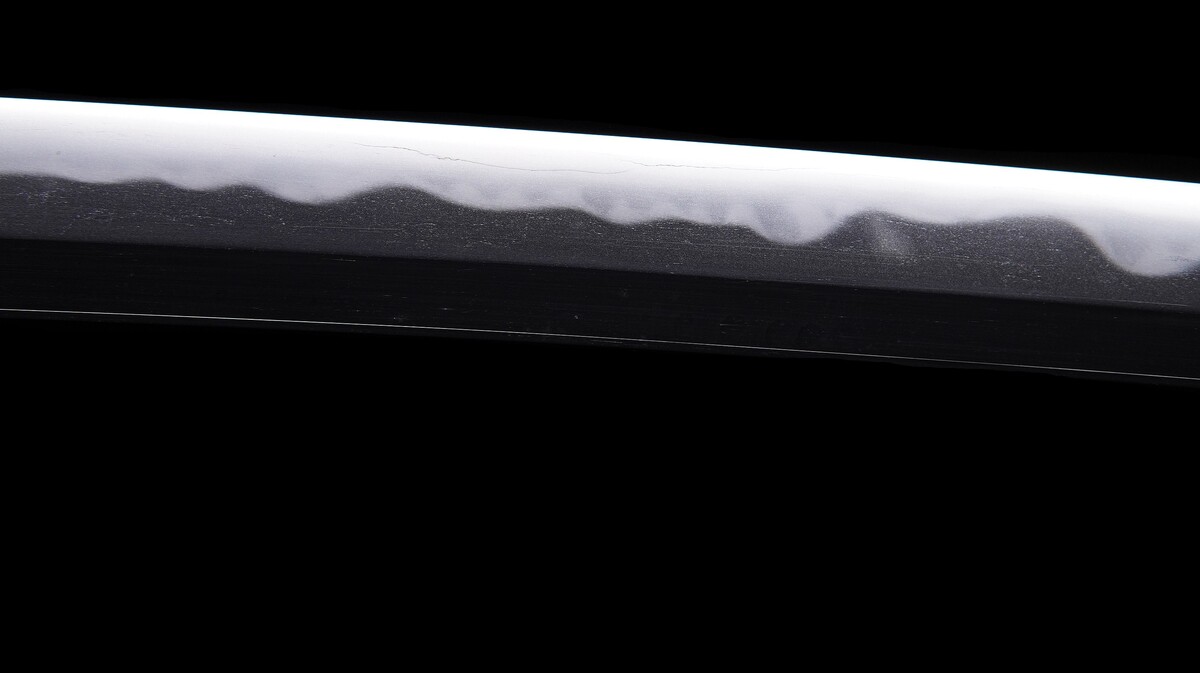
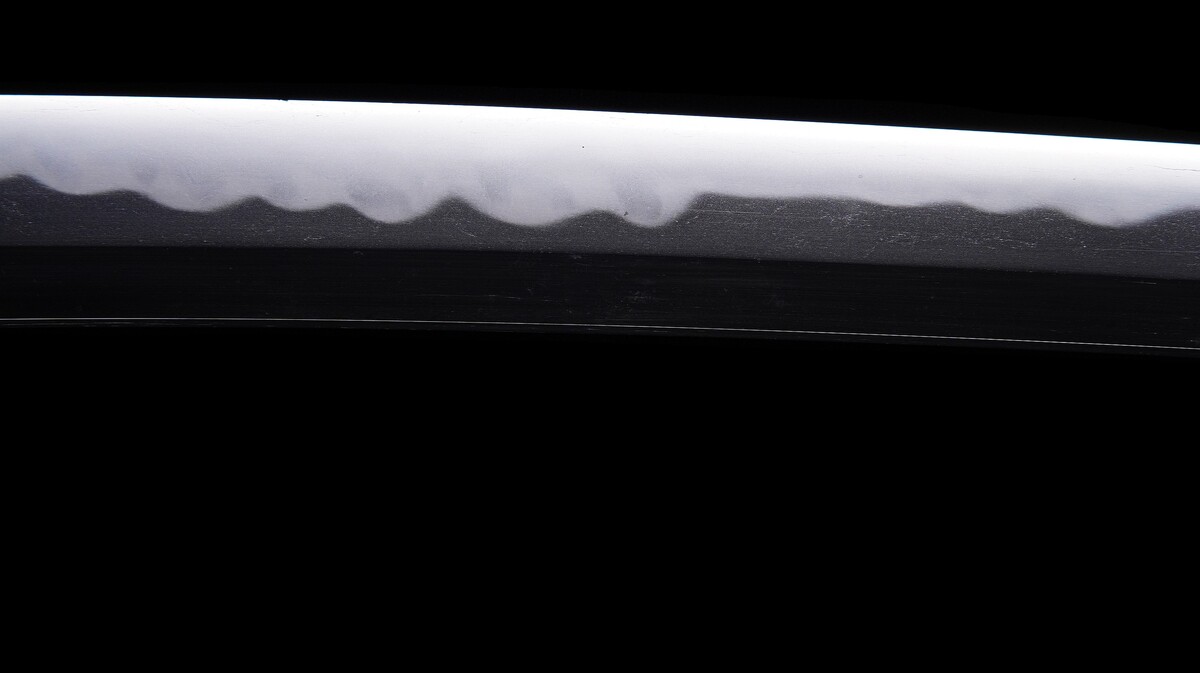
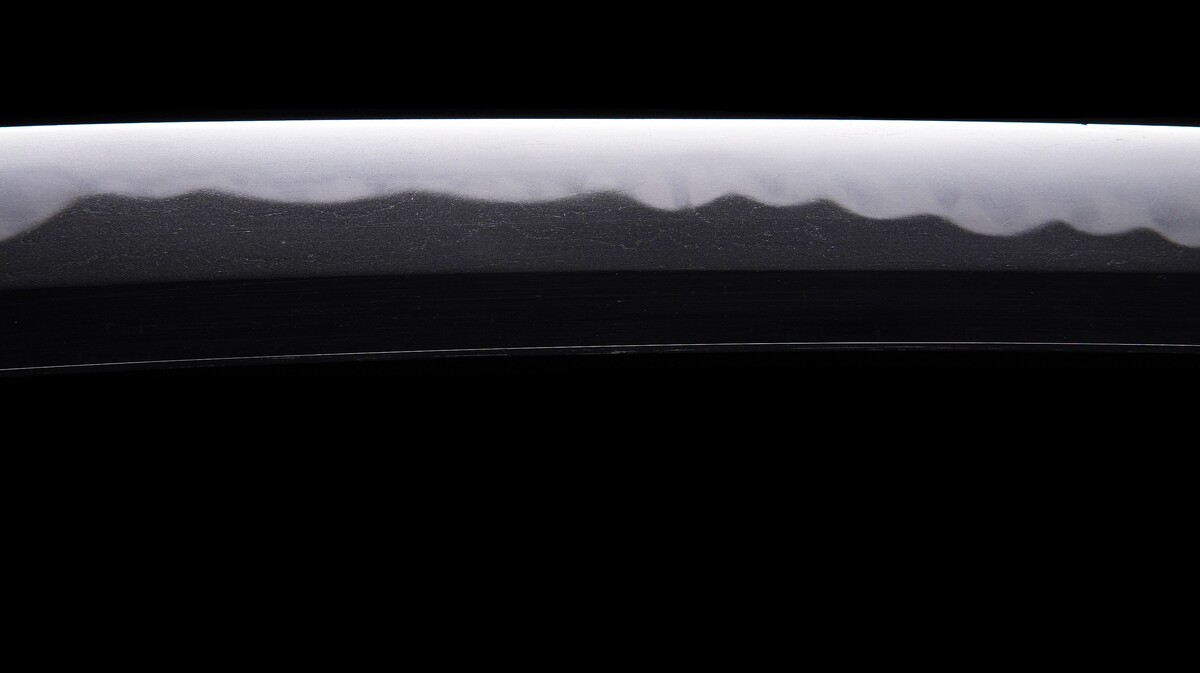
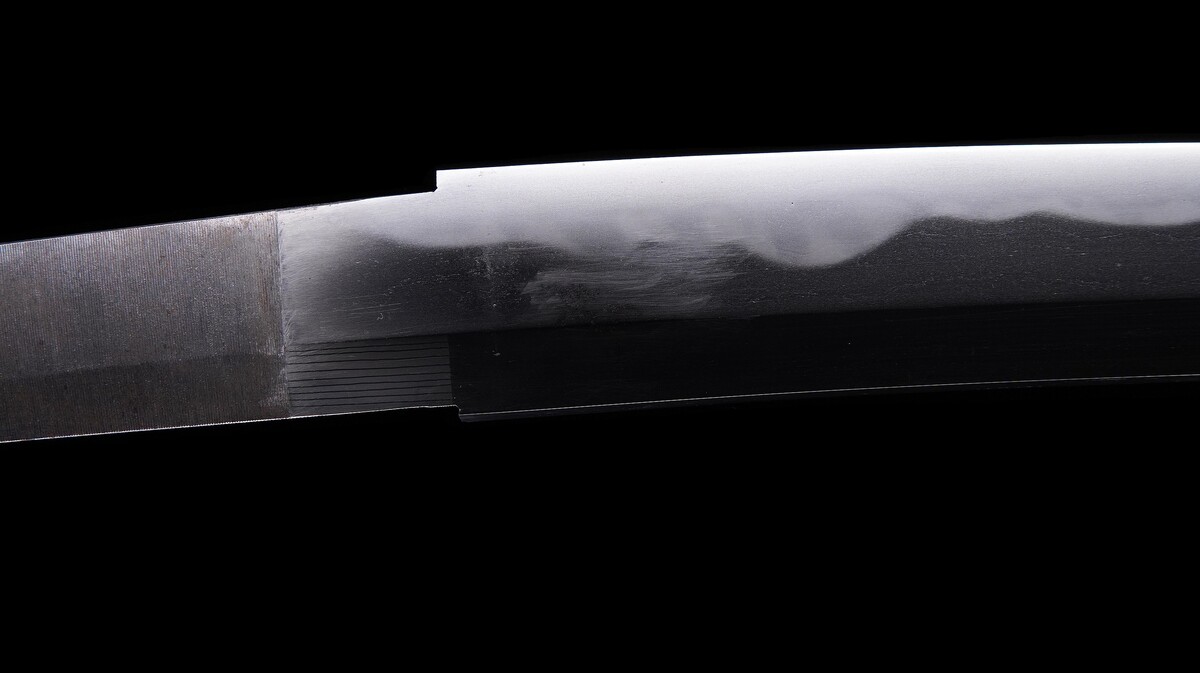
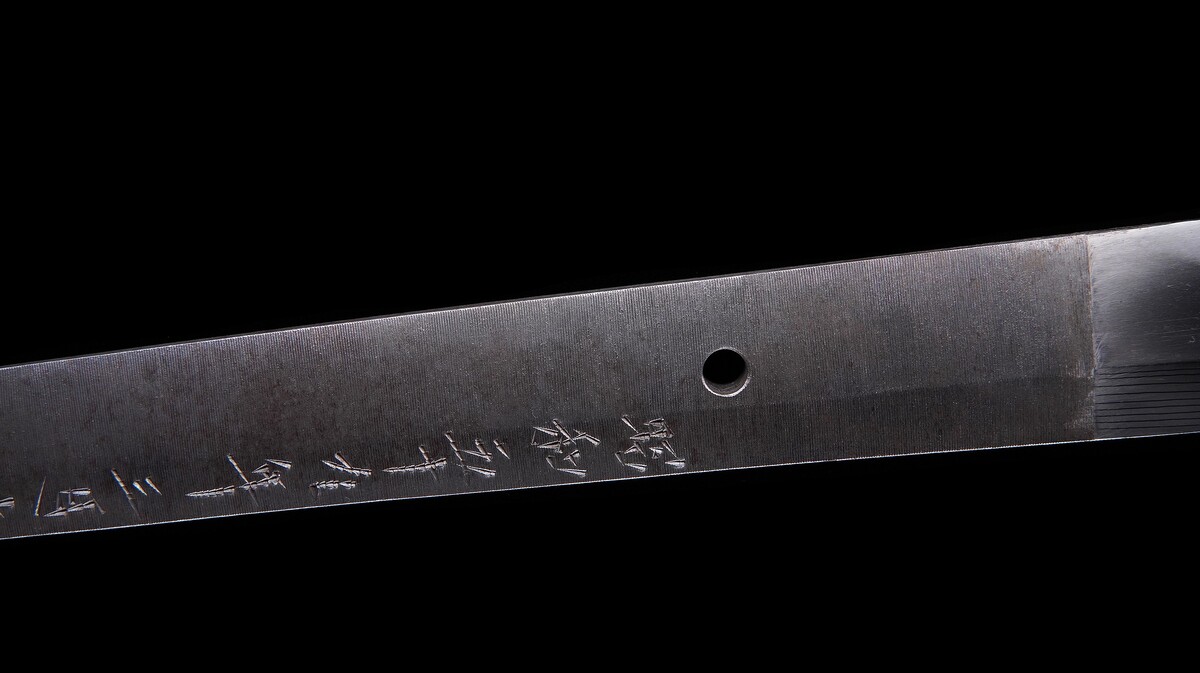
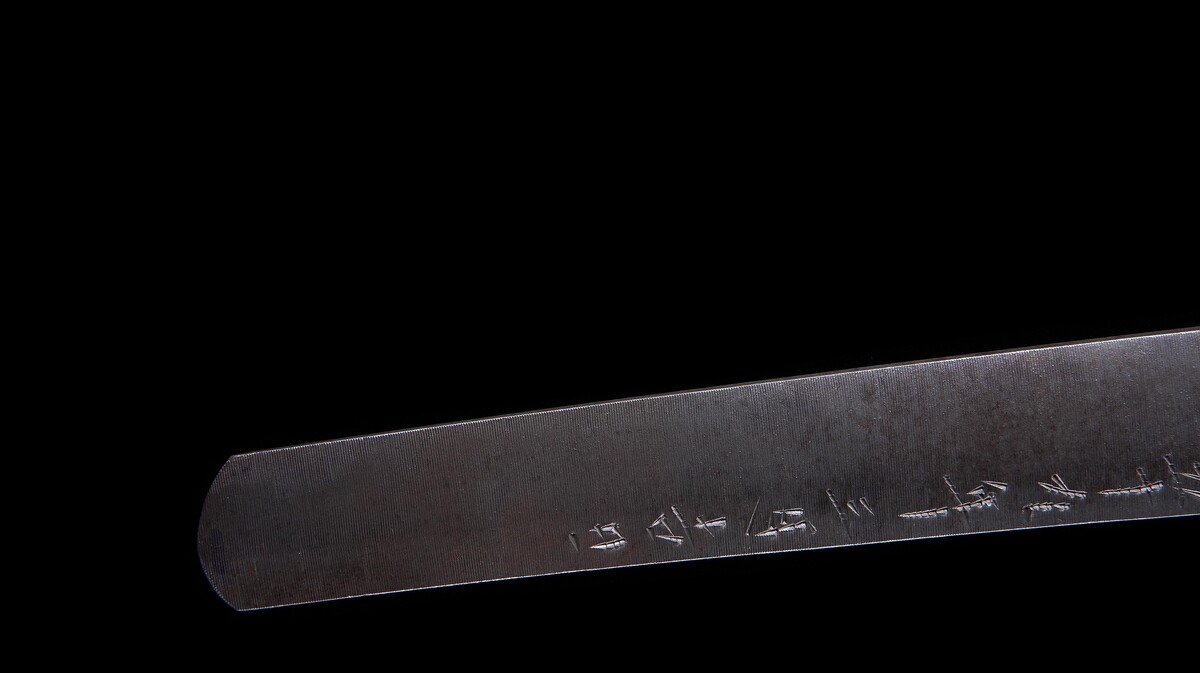
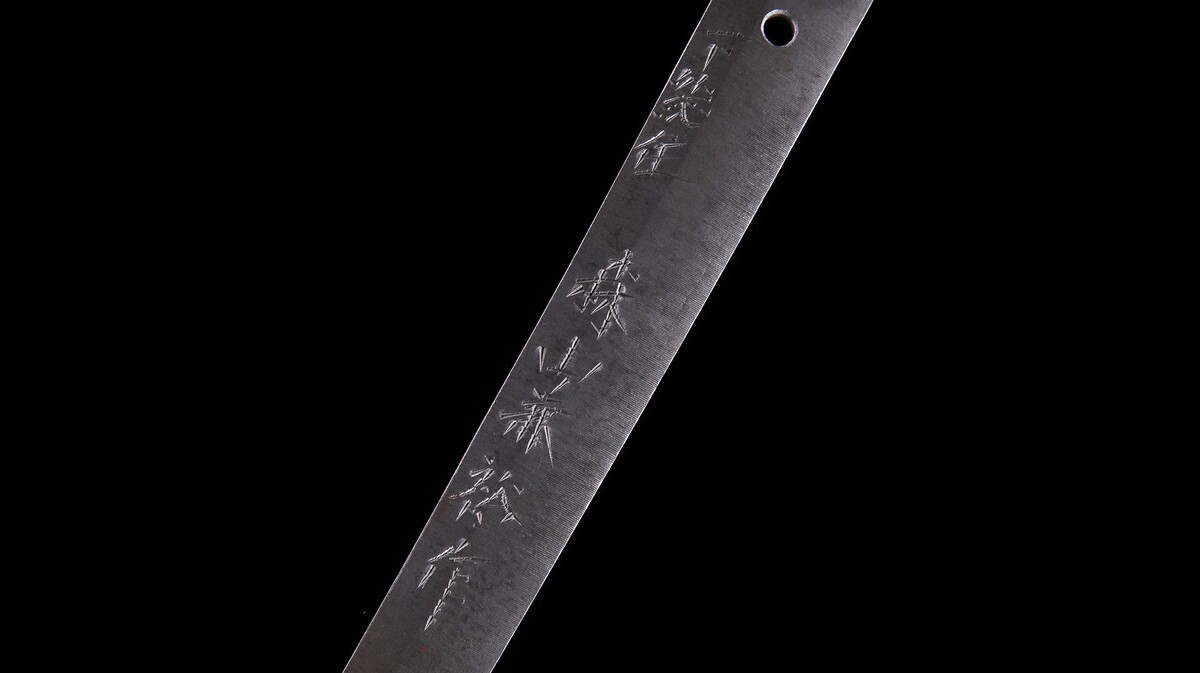
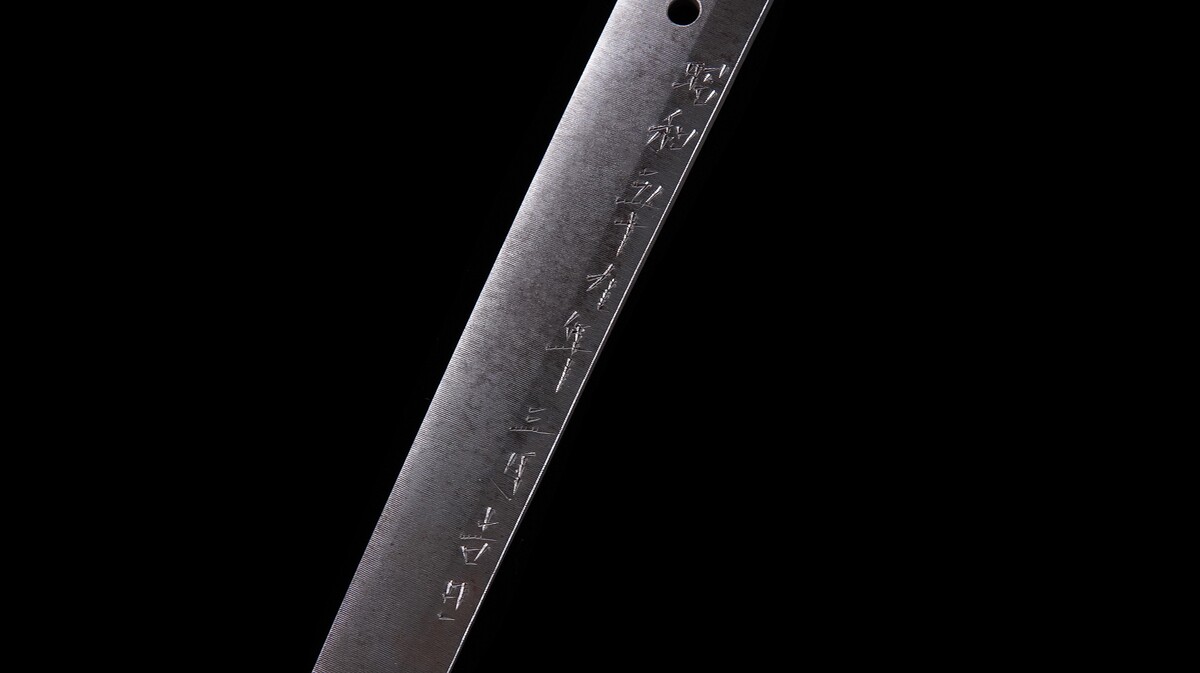
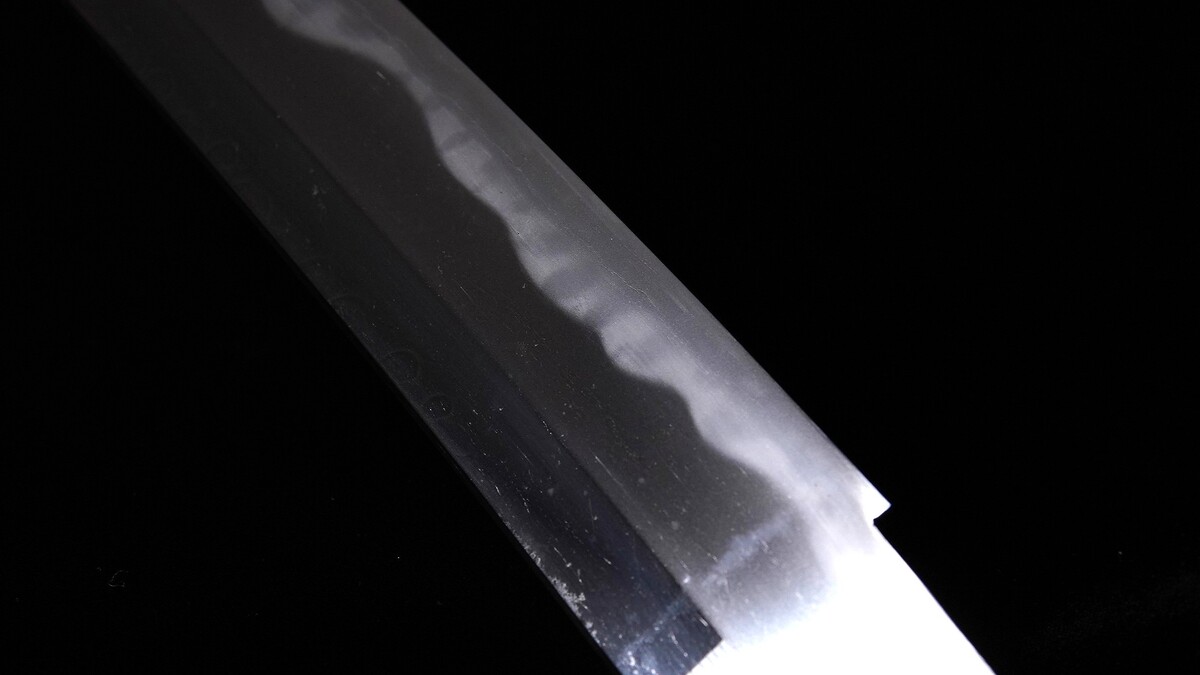
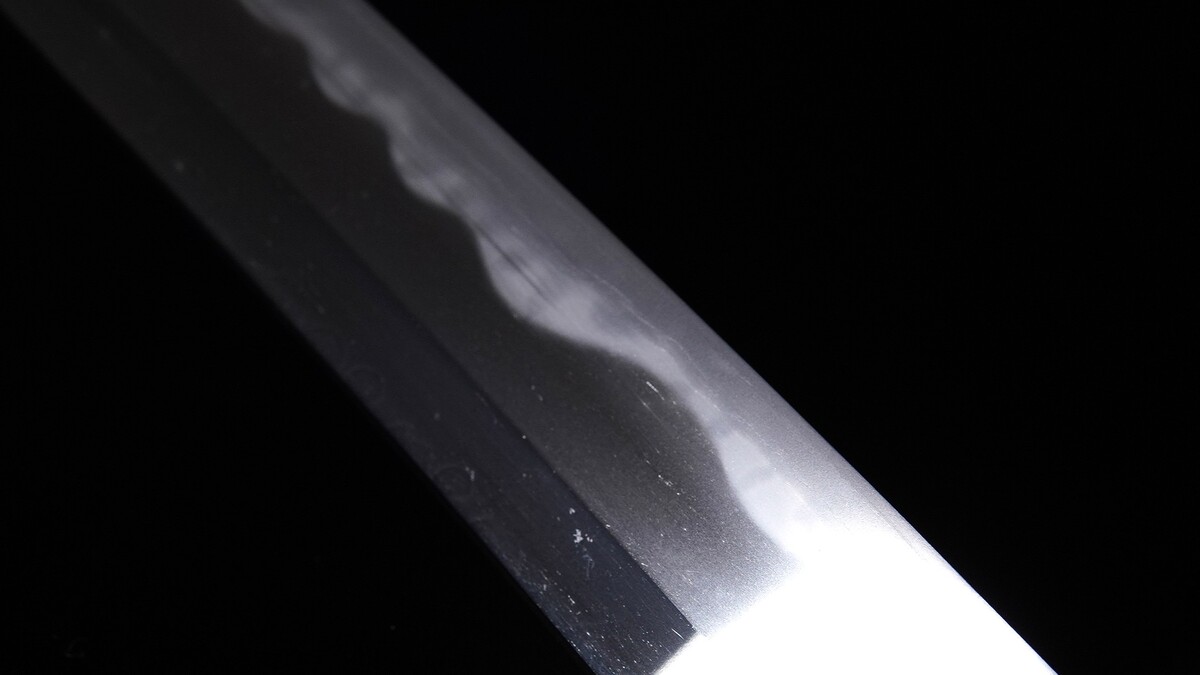
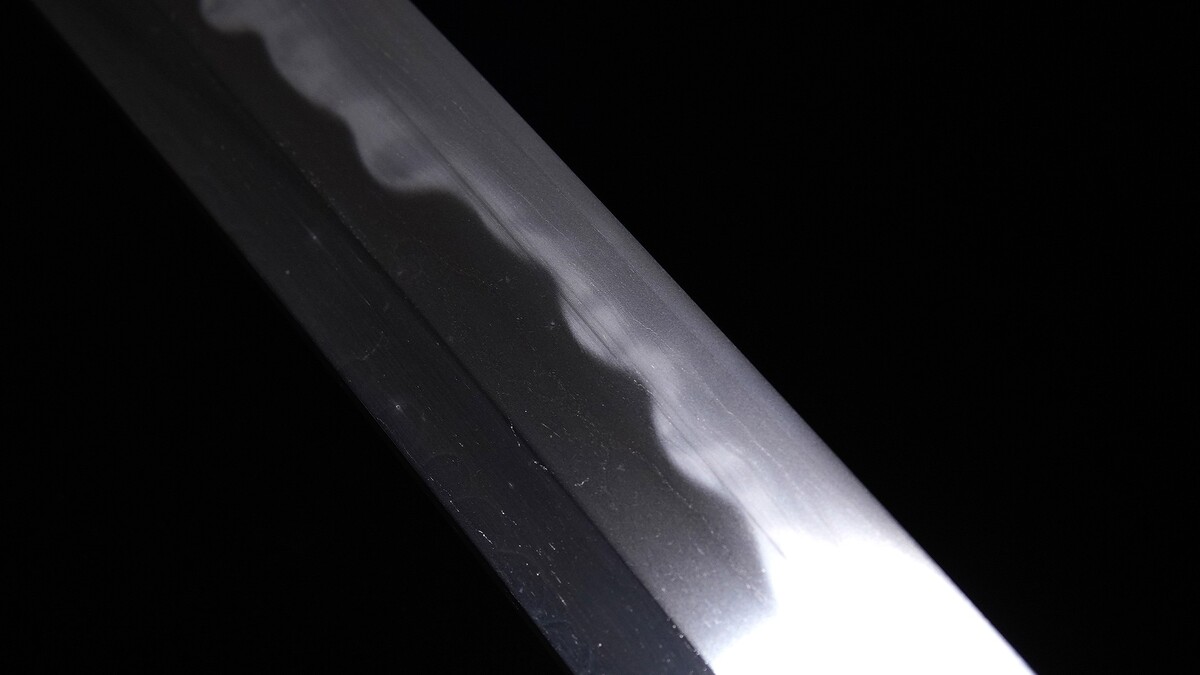
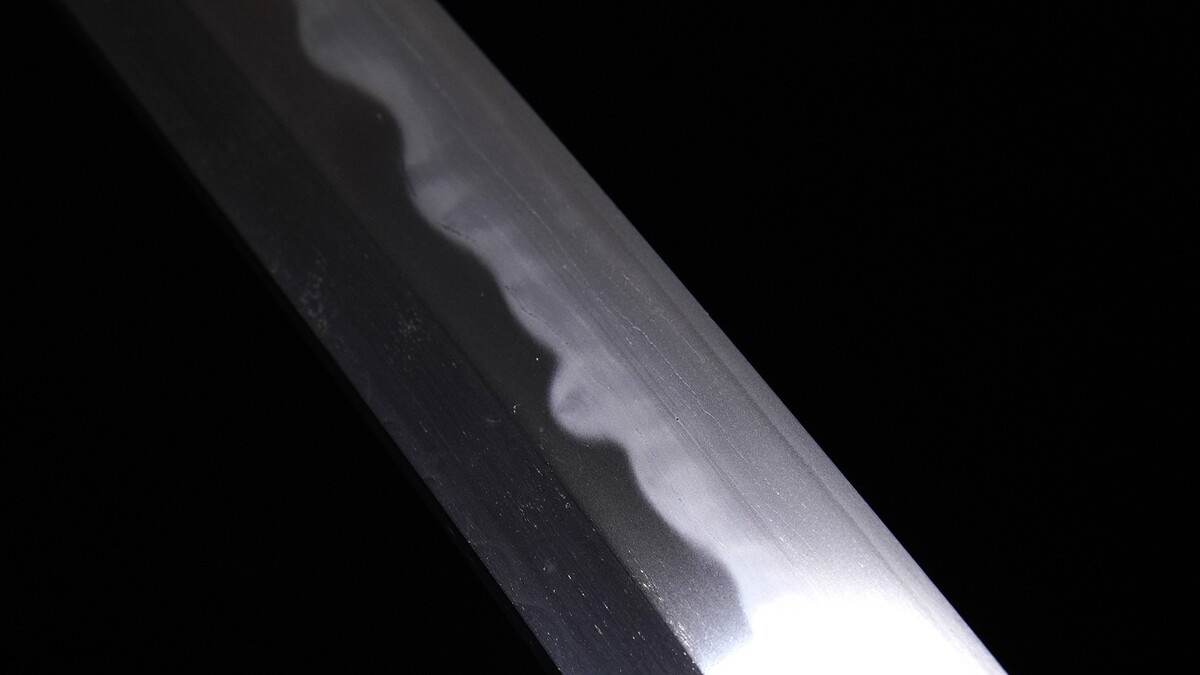
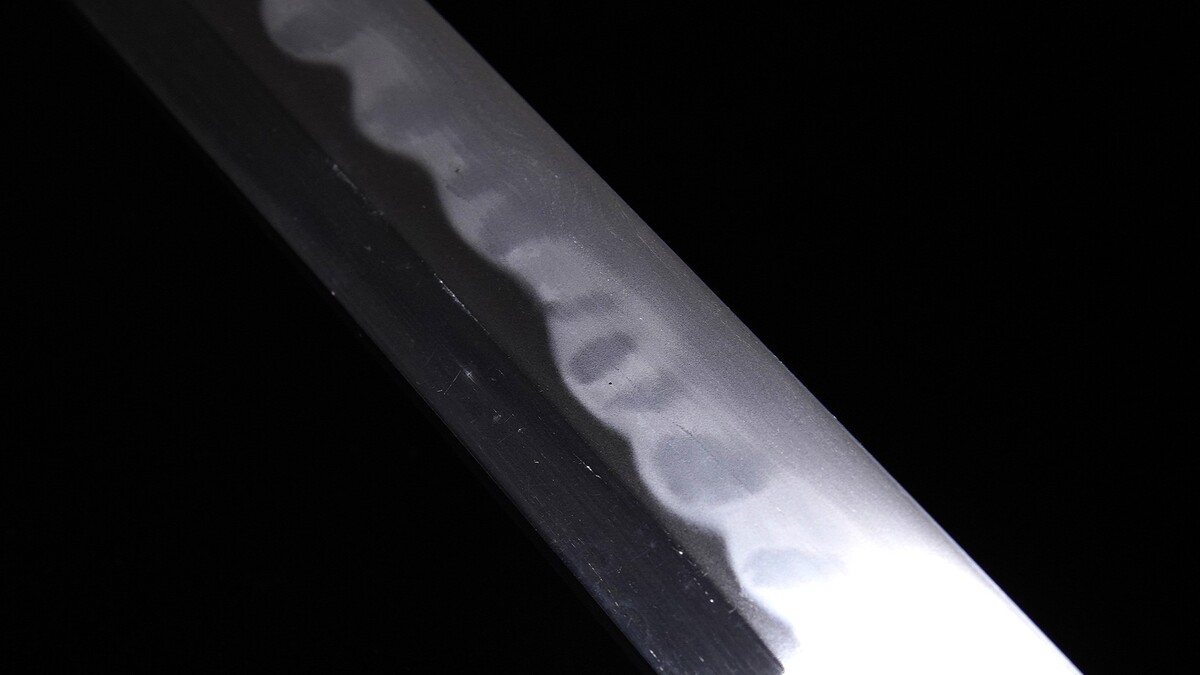
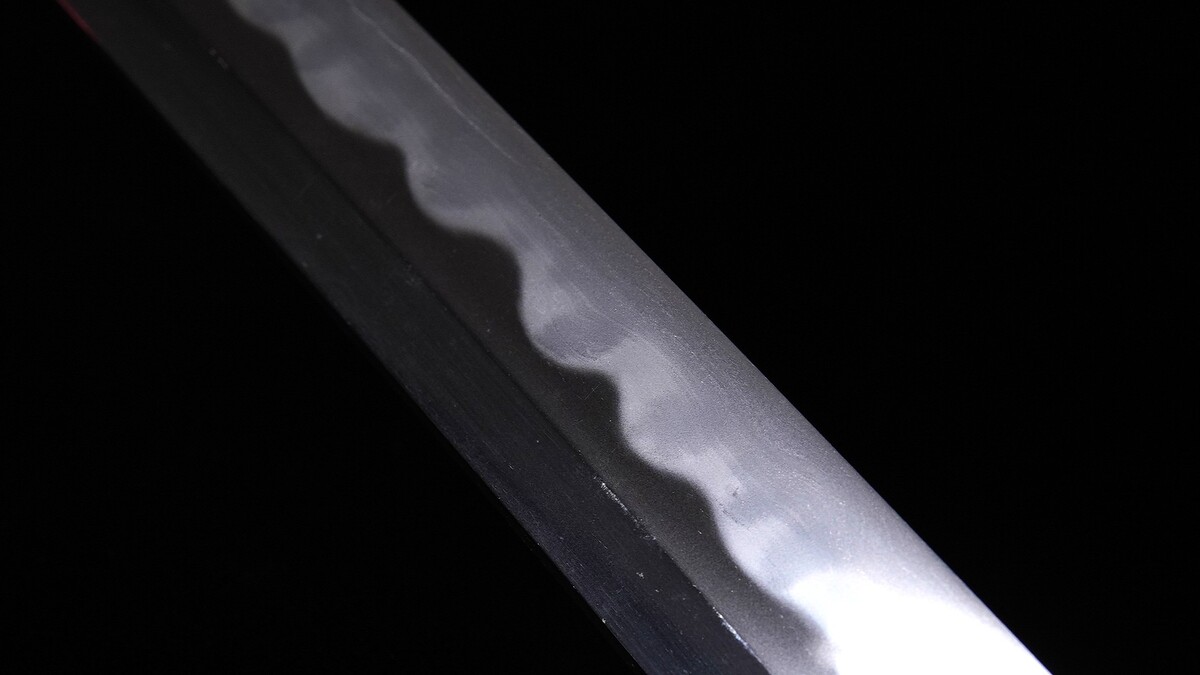
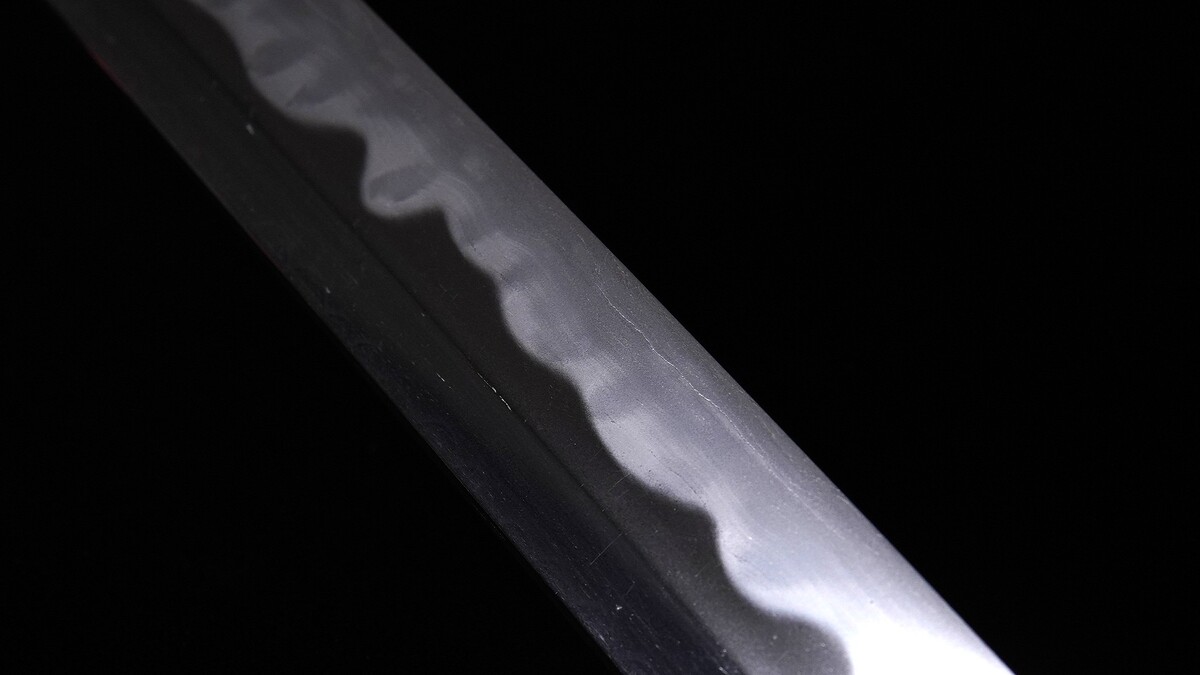
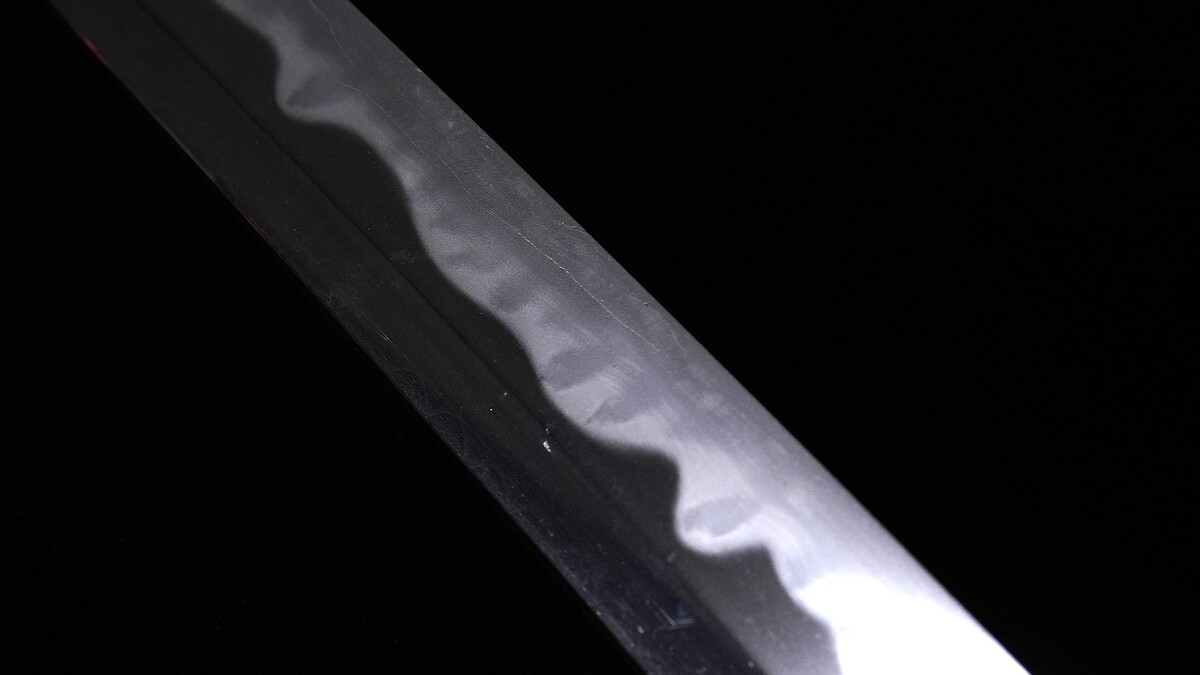
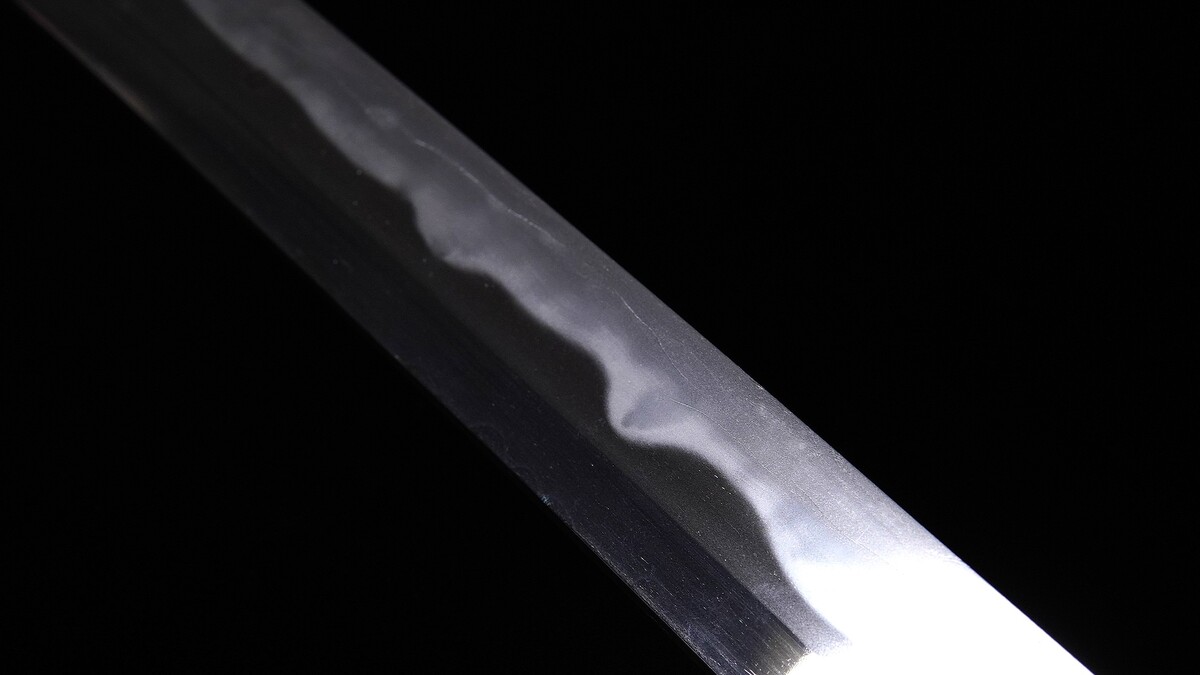
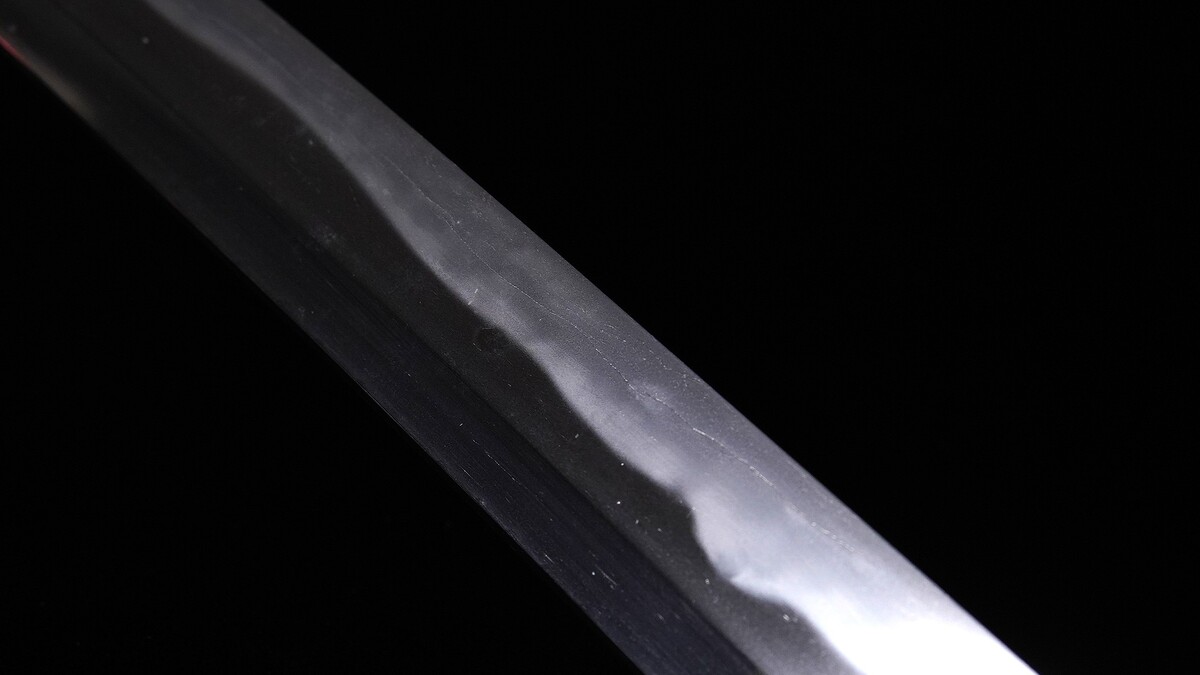
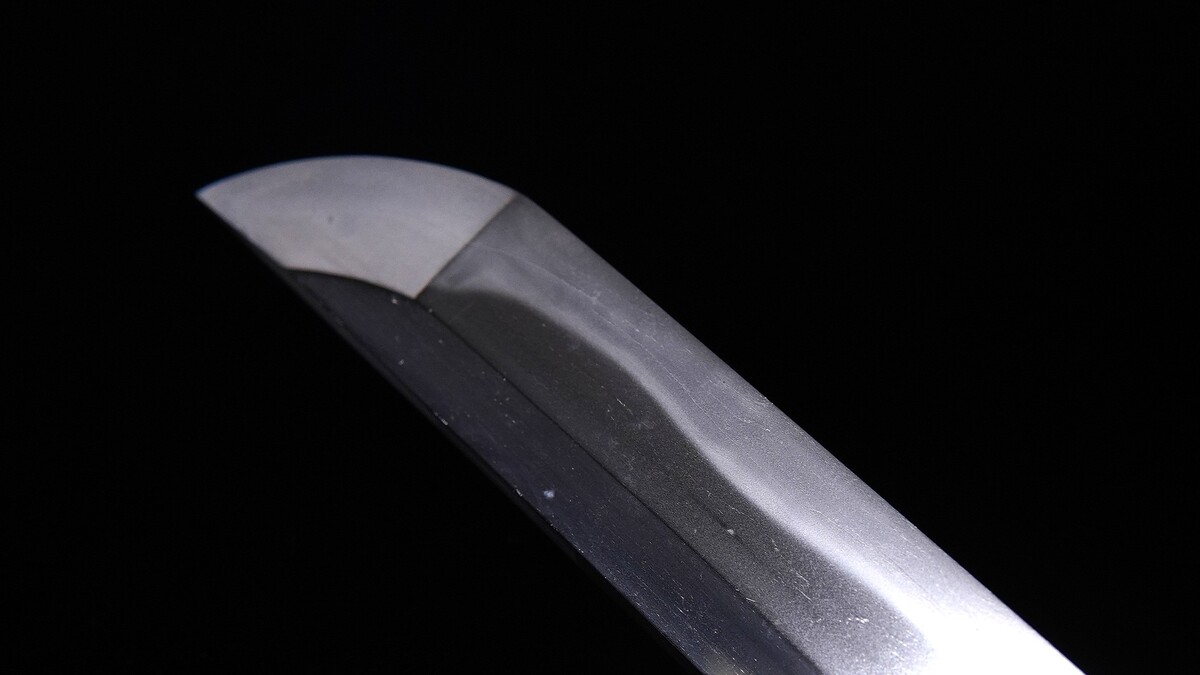
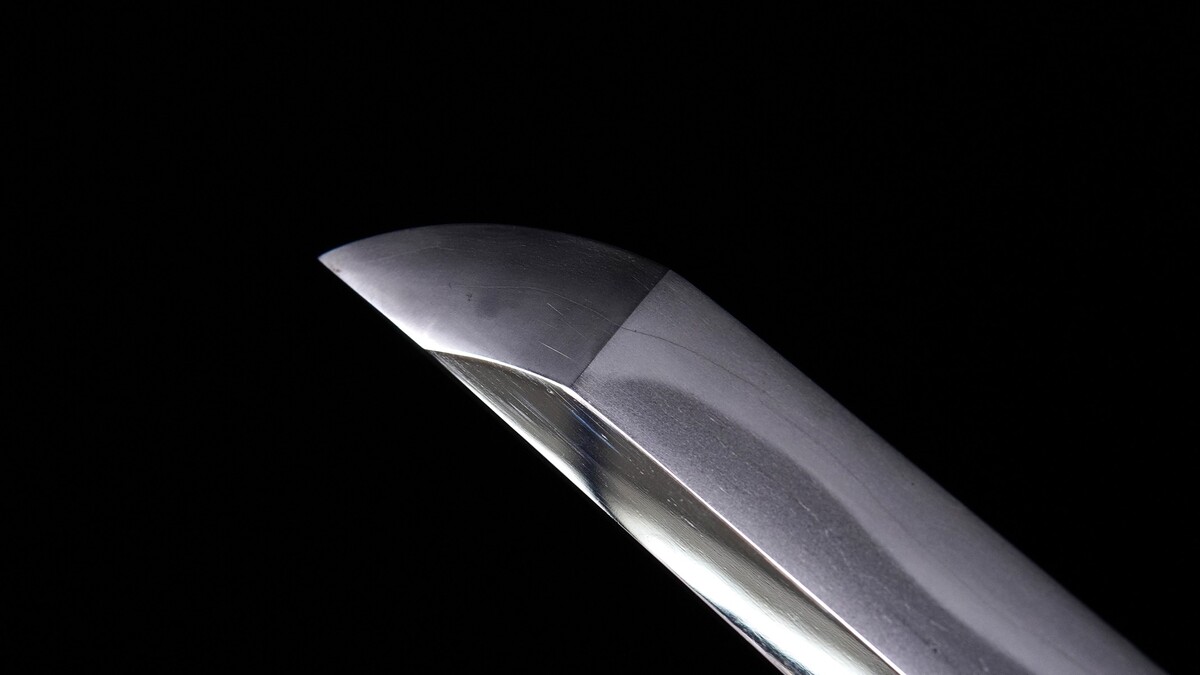
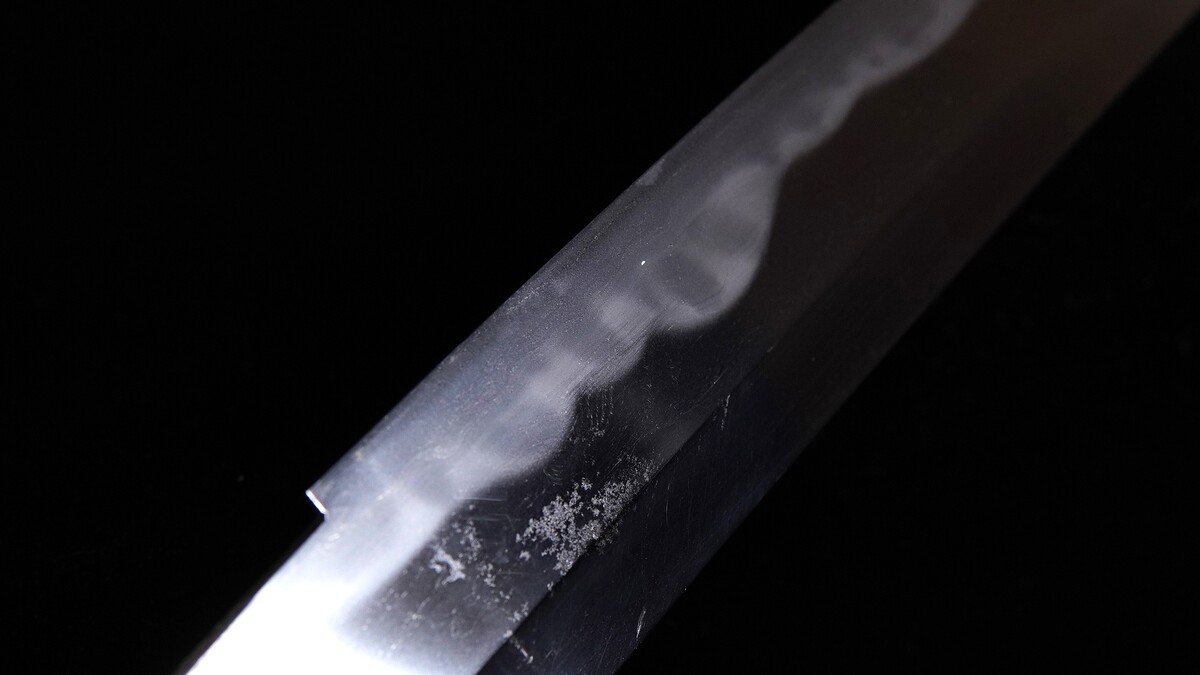
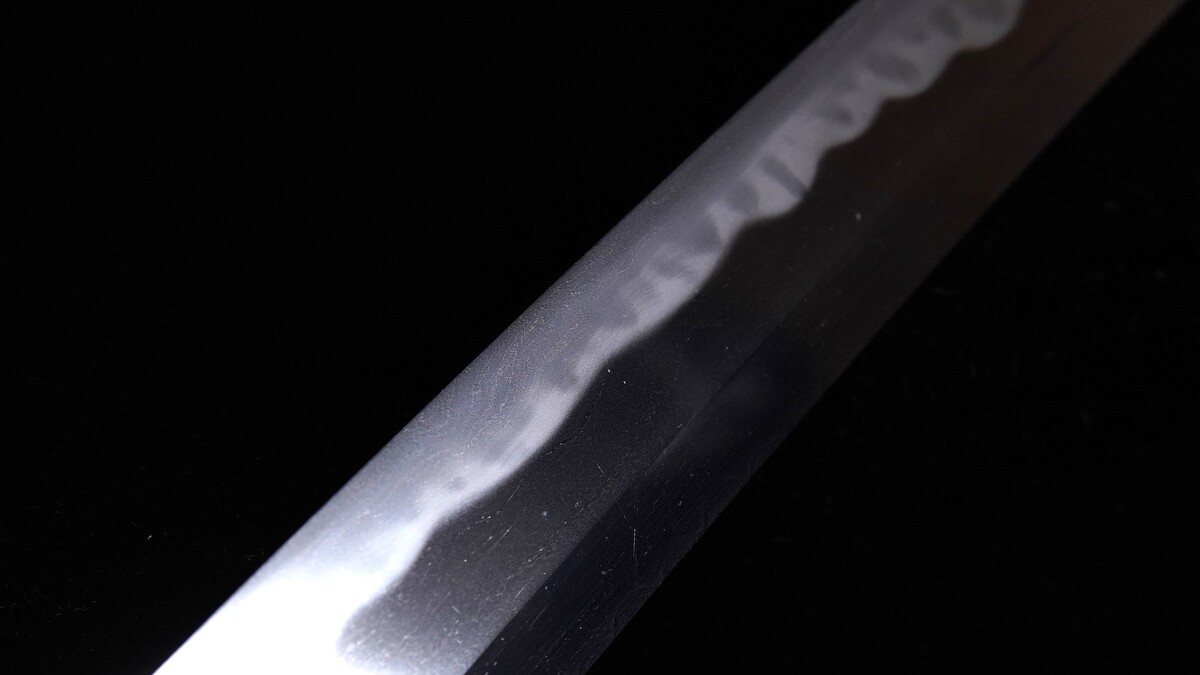
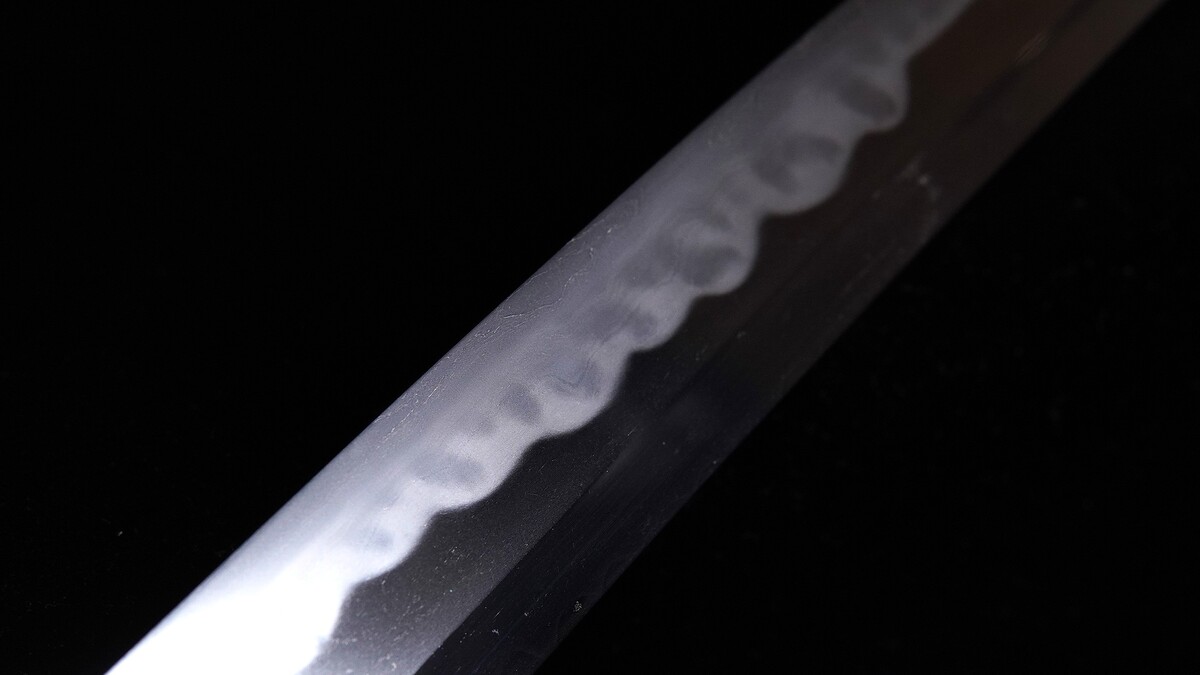
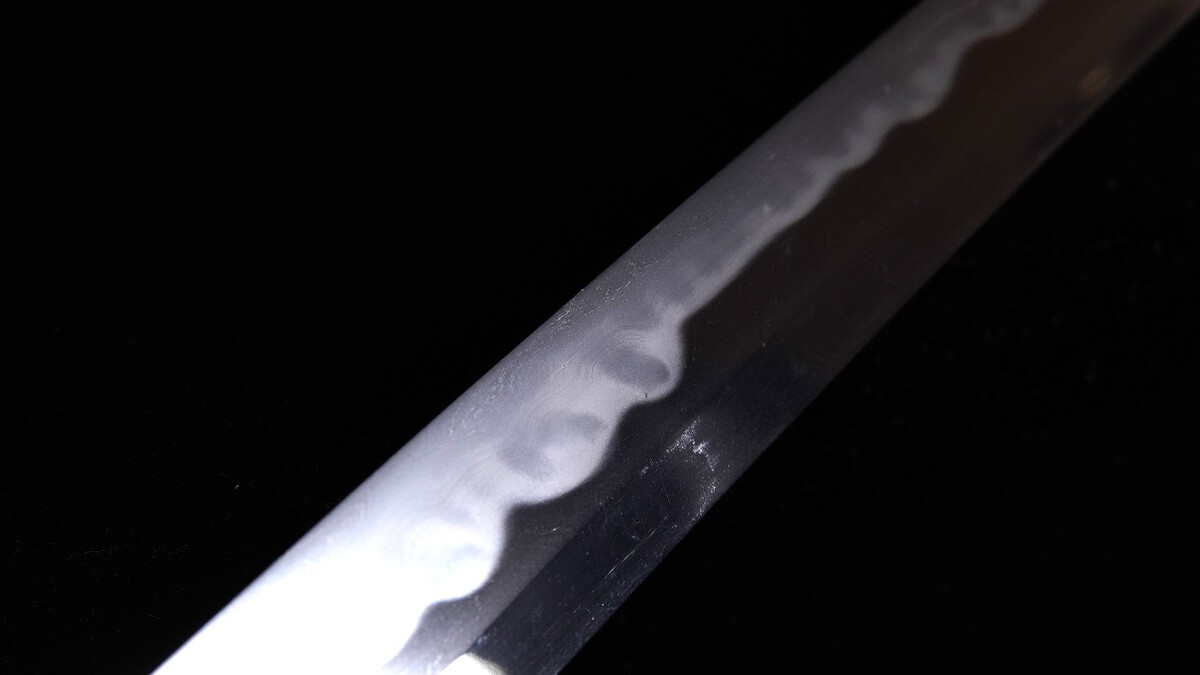
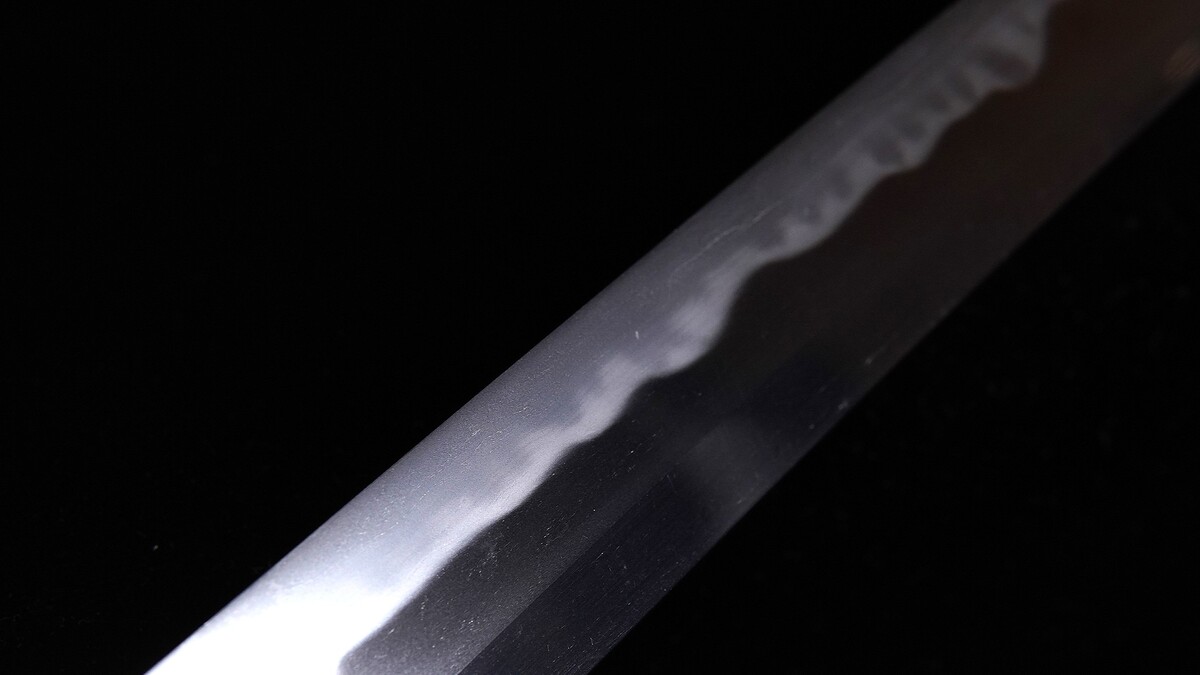
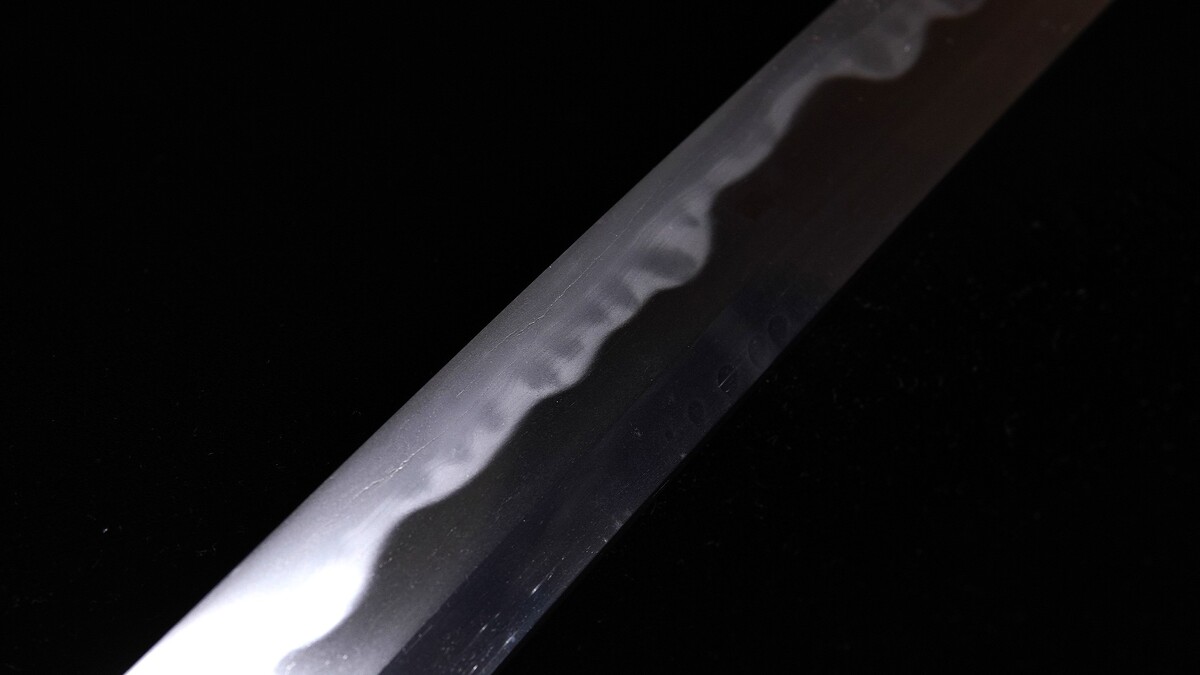
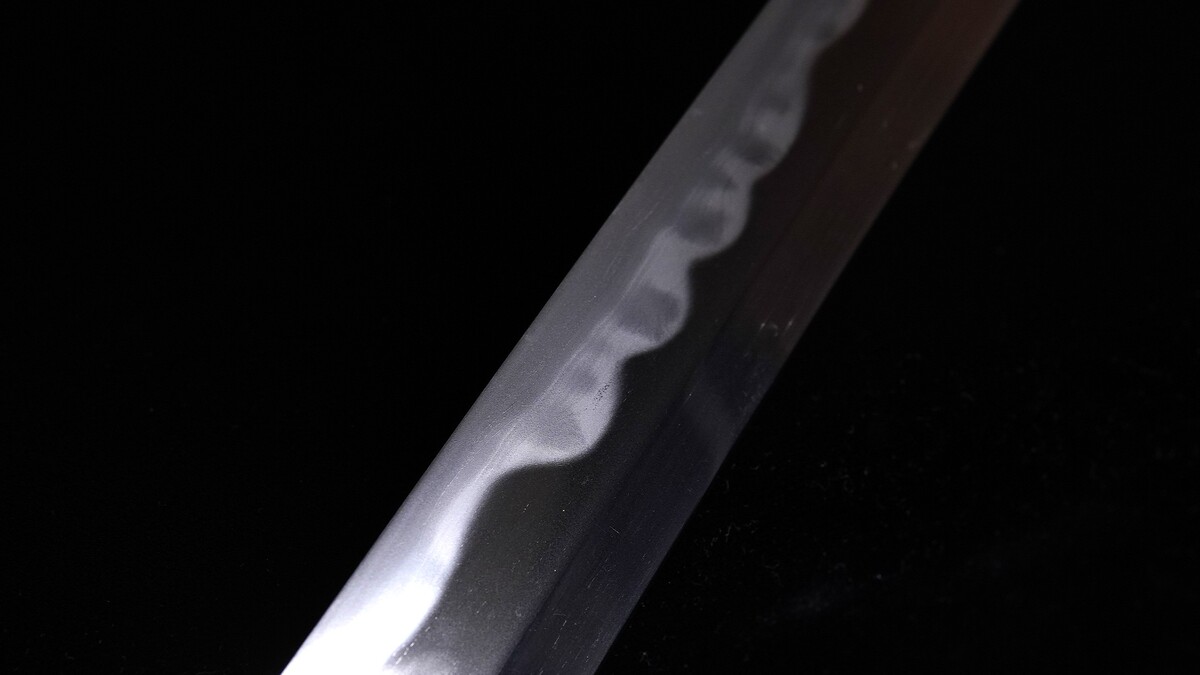
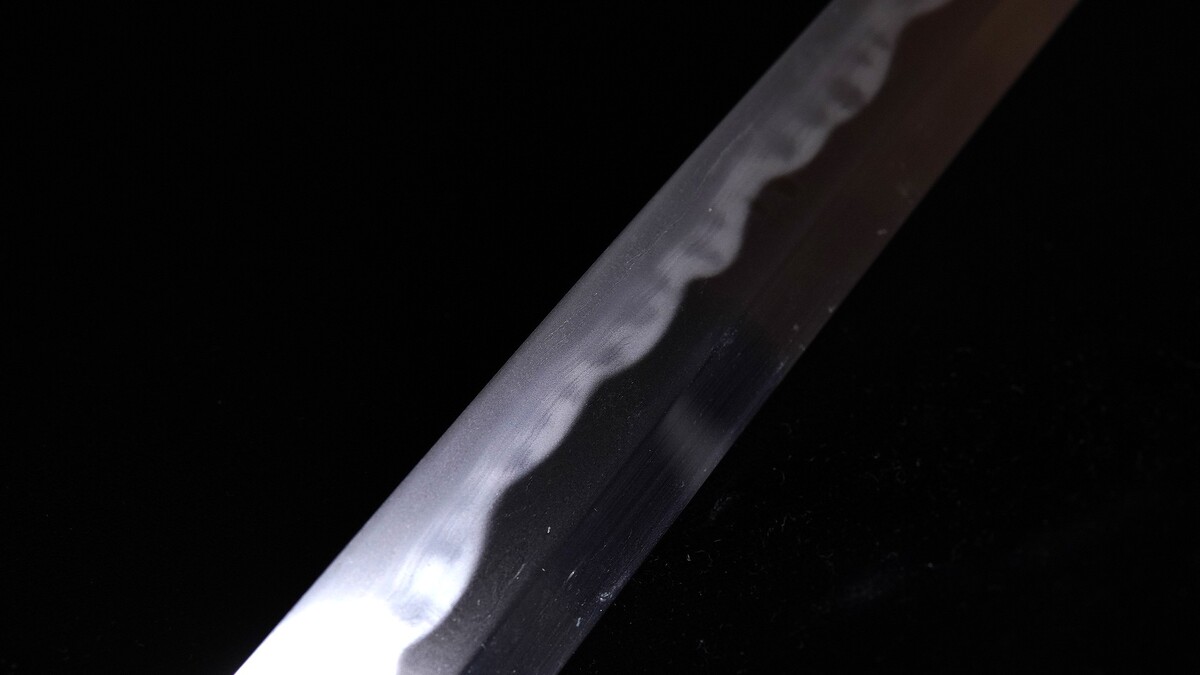
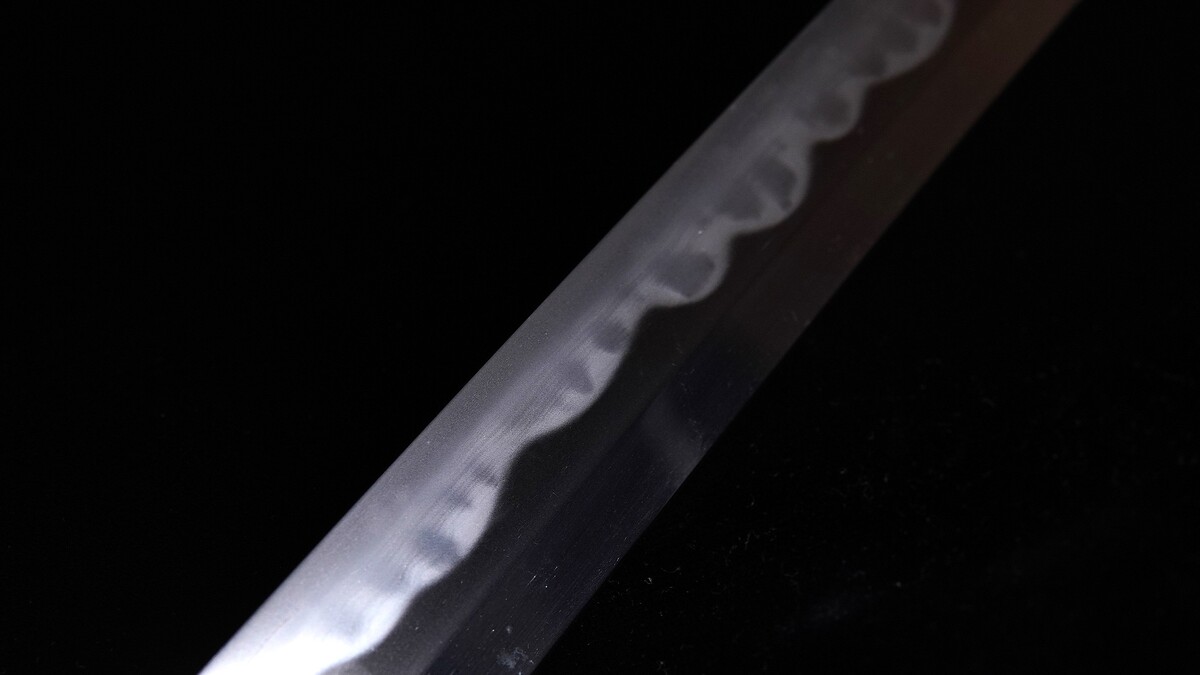
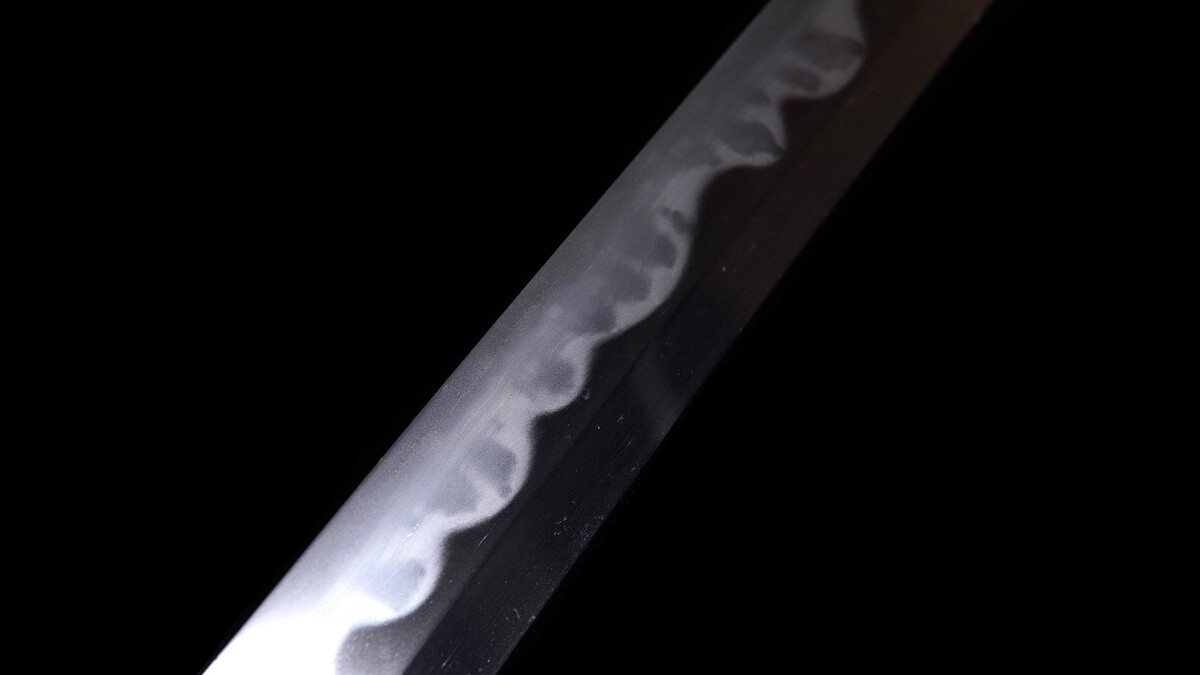
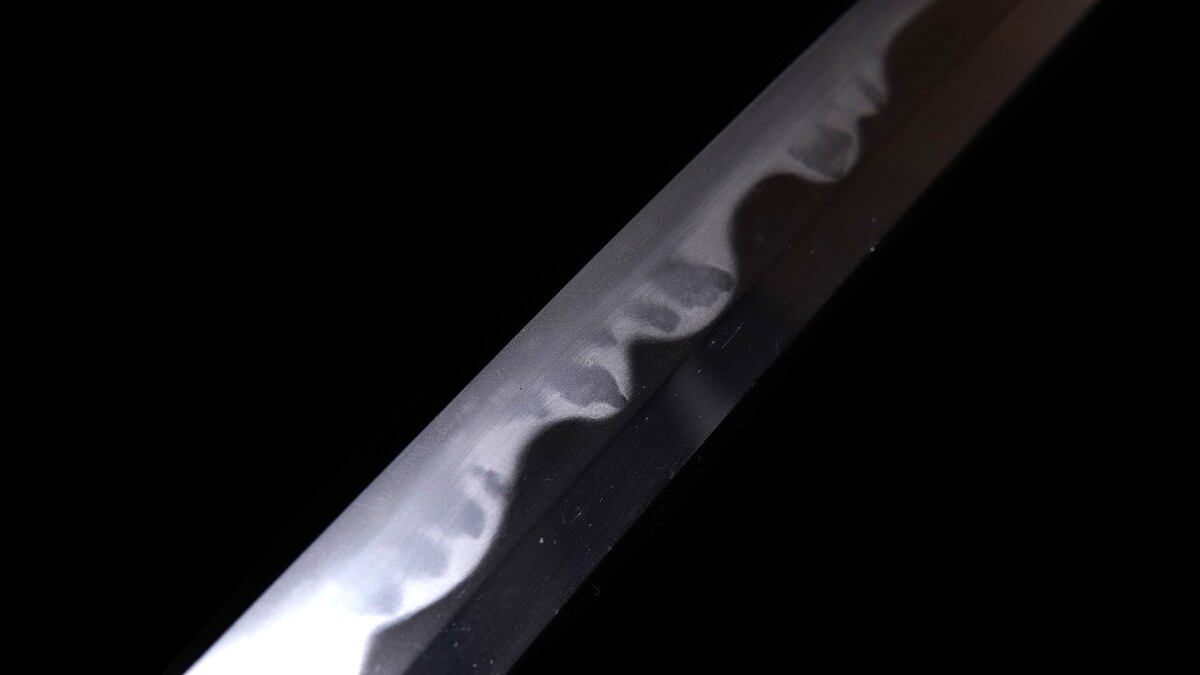
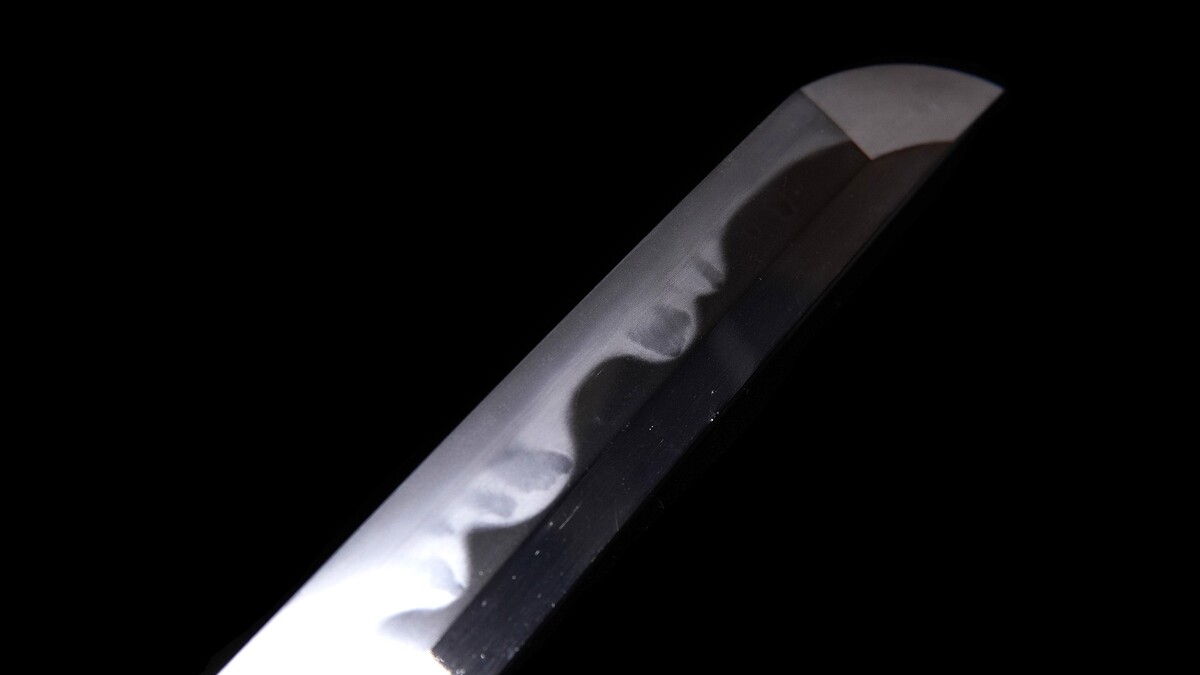
Moriyama Kanehiro was a swordsmith from Higashikatsushika-gun, Chiba Prefecture, whose real name was Moriyama Kiichi. He studied swordmaking under his father, Moriyama Kaneshige, who was a Rikugun Jumei Tosho, and after the war, both father and son accumulated numerous awards. This sword is a signed tachi. The hamon is a gorgeous midare consisting of gunome, choji, notare, and mixed with tobiyaki. The kitae is itame. The boshi is midare-komi and becomes yakizume-style. While it might be a slight exaggeration to call it a Kanemitsu-utsushi, it appears to be a work created with an awareness of Nanbokucho period Bizen tachi, particularly Soden Bizen. A shirasaya is included. The habaki is solid silver with a refined, understated tone. It is in an old polish with some scattered slight hike, light rust, and a very slight hamakure near the middle of the toshin. There is a kitae-ware near the ha. On the haki-ura, above the habaki-moto, there is light rust and a mark that looks like a scratch. We can undertake the polishing of that specific area at a special price after purchase, so please inquire if you wish. A full polish will be quoted separately. Please confirm the details of the above in the photographs.
Offered by Katana Yamadaiya


As written by the shop
Machine translation from the shop's Japanese · may contain errors ·
Shimousa · around 1945-1989
1 piece on the market now
Shōwa to the present: destruction and revival
The twentieth century nearly killed the craft twice: wartime distortion, then the occupation ban. The NBTHK’s founding in 1948 and licensed forging from 1953 rebuilt the sword as an art, crowned by Living National Treasures and the mukansa rank.
We could not find an authenticity certificate on the seller’s listing. Japanese swords and fittings are normally papered by the NBTHK (or the NTHK). Without one, the attribution is the seller’s own assessment and has not been independently verified — treat it with caution and ask the dealer about certification before buying.
¥400,000