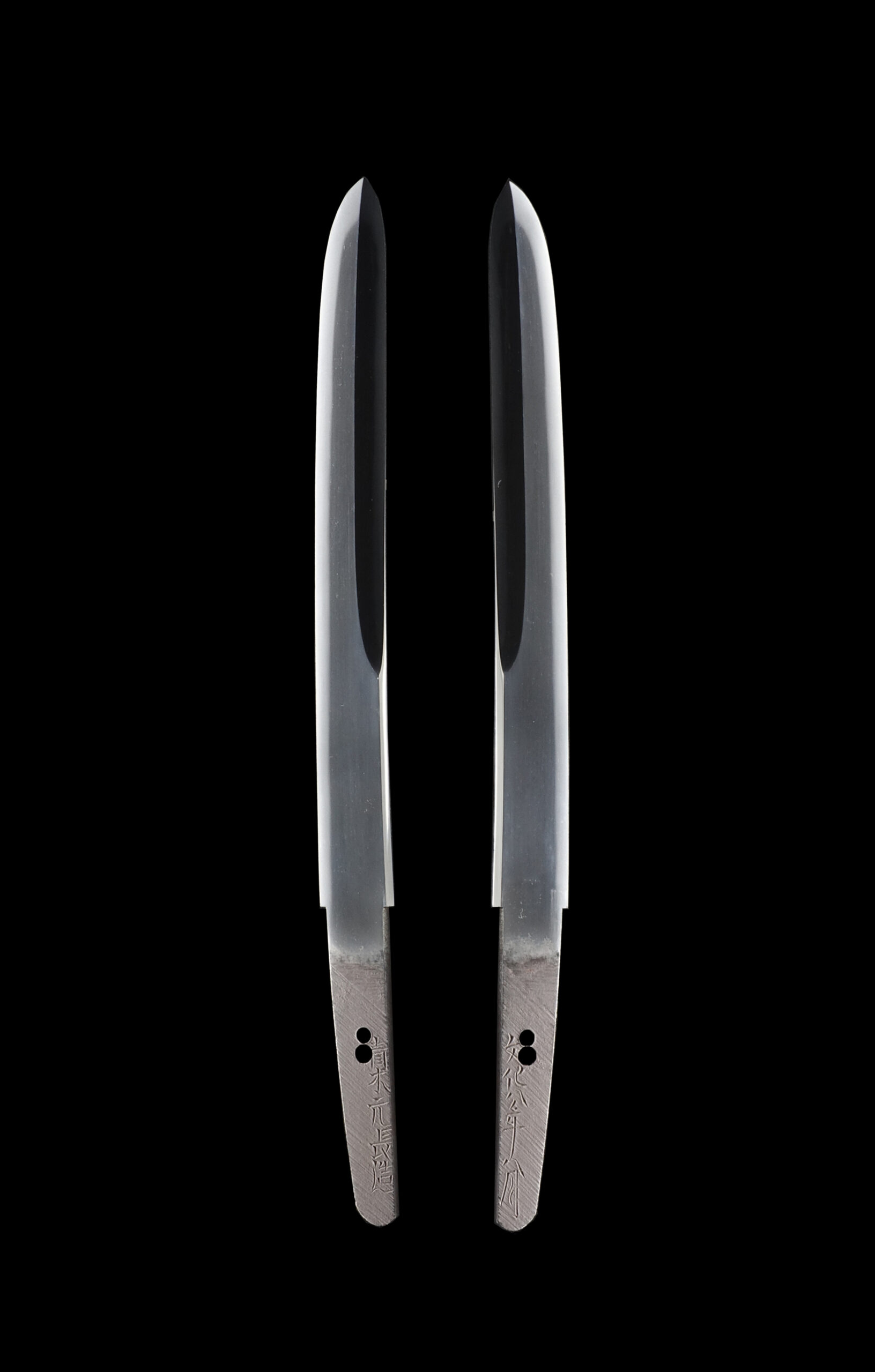
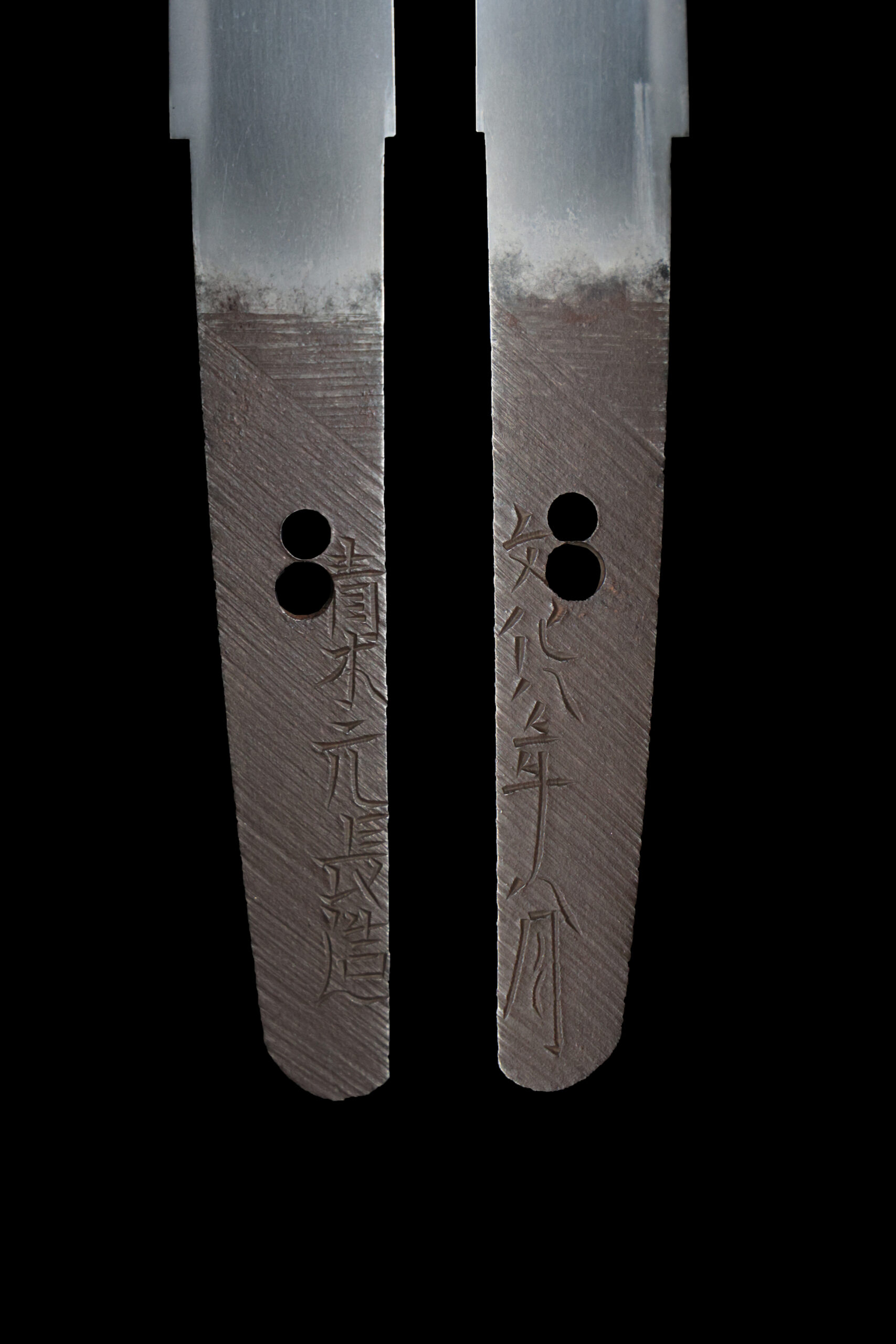
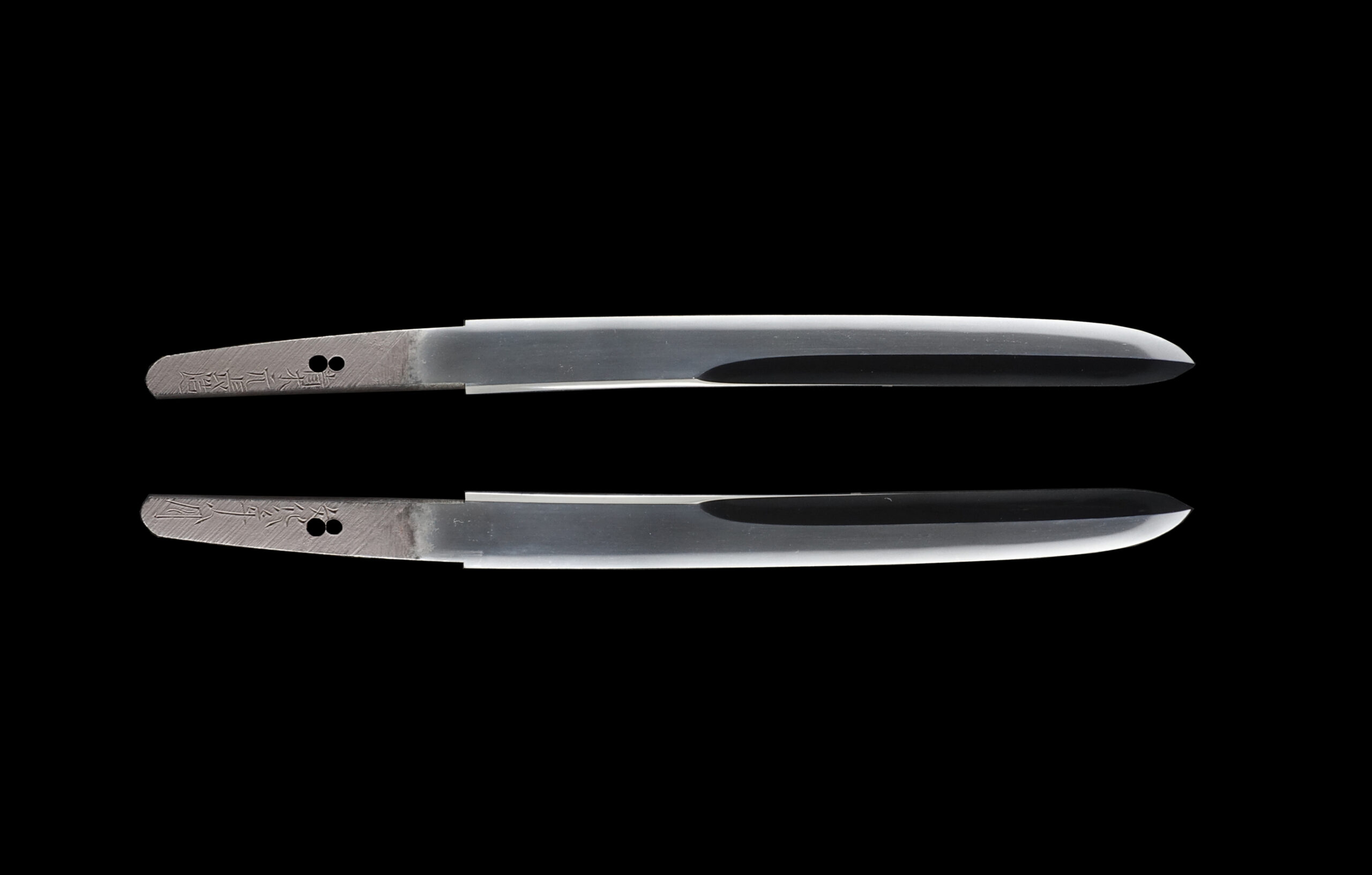
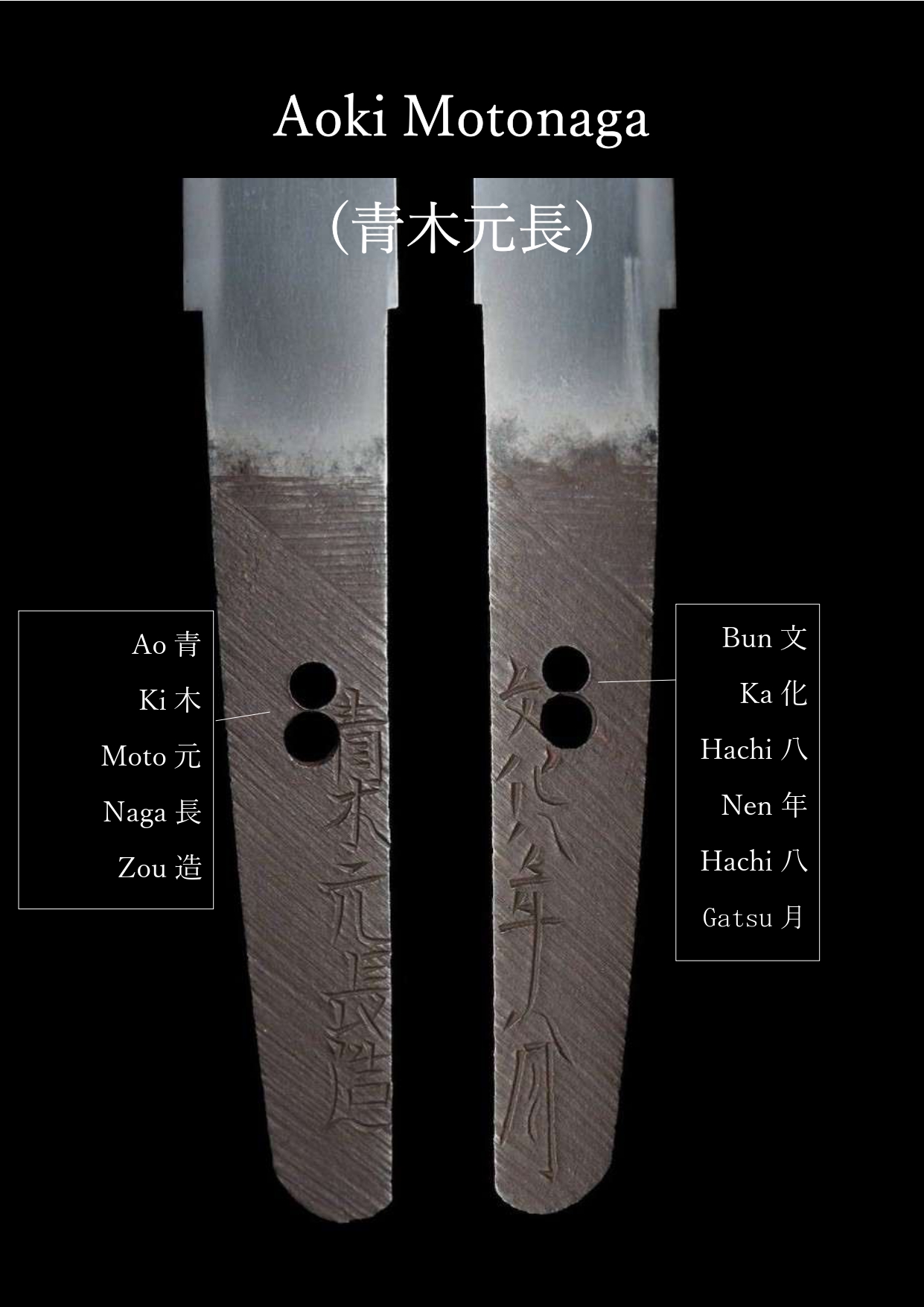
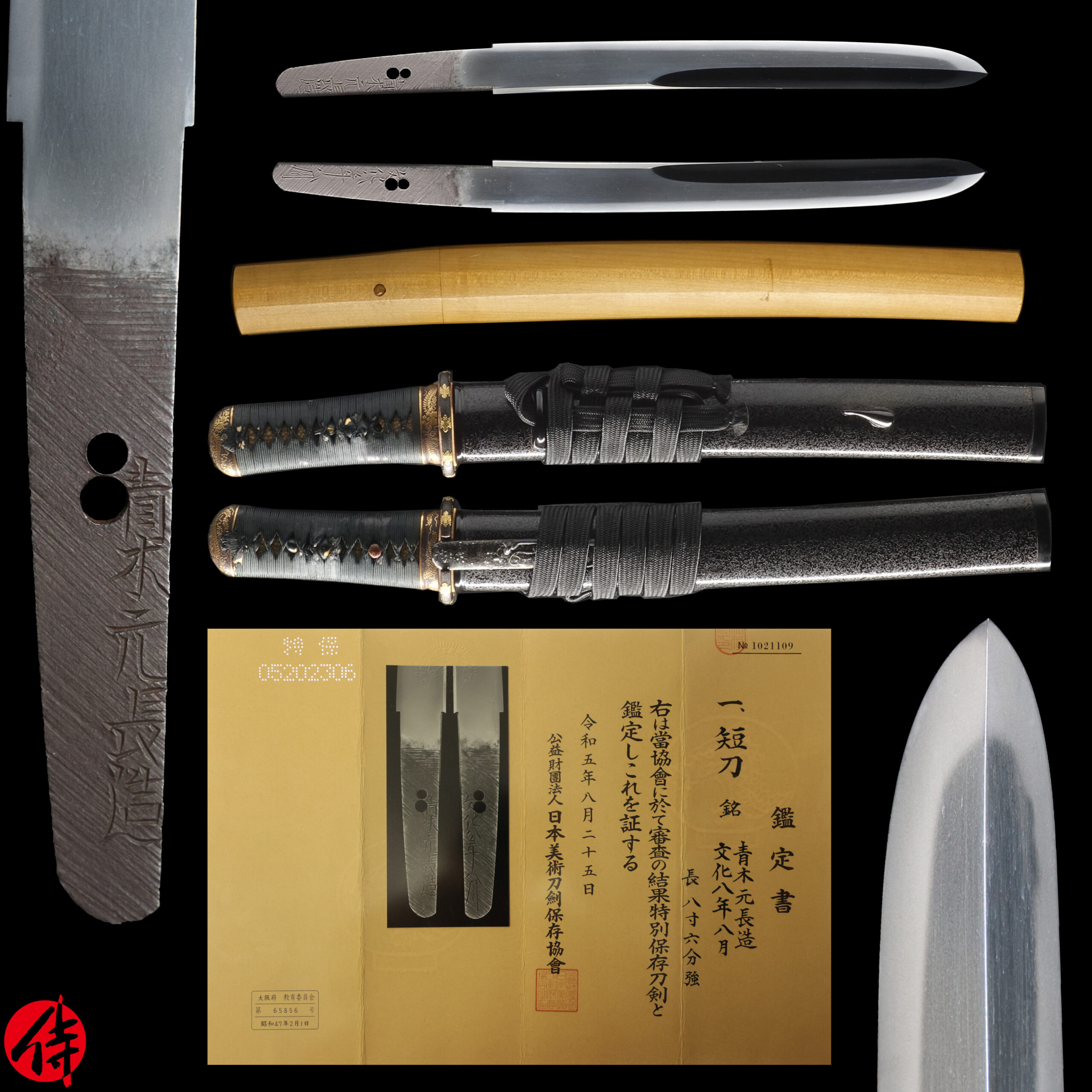
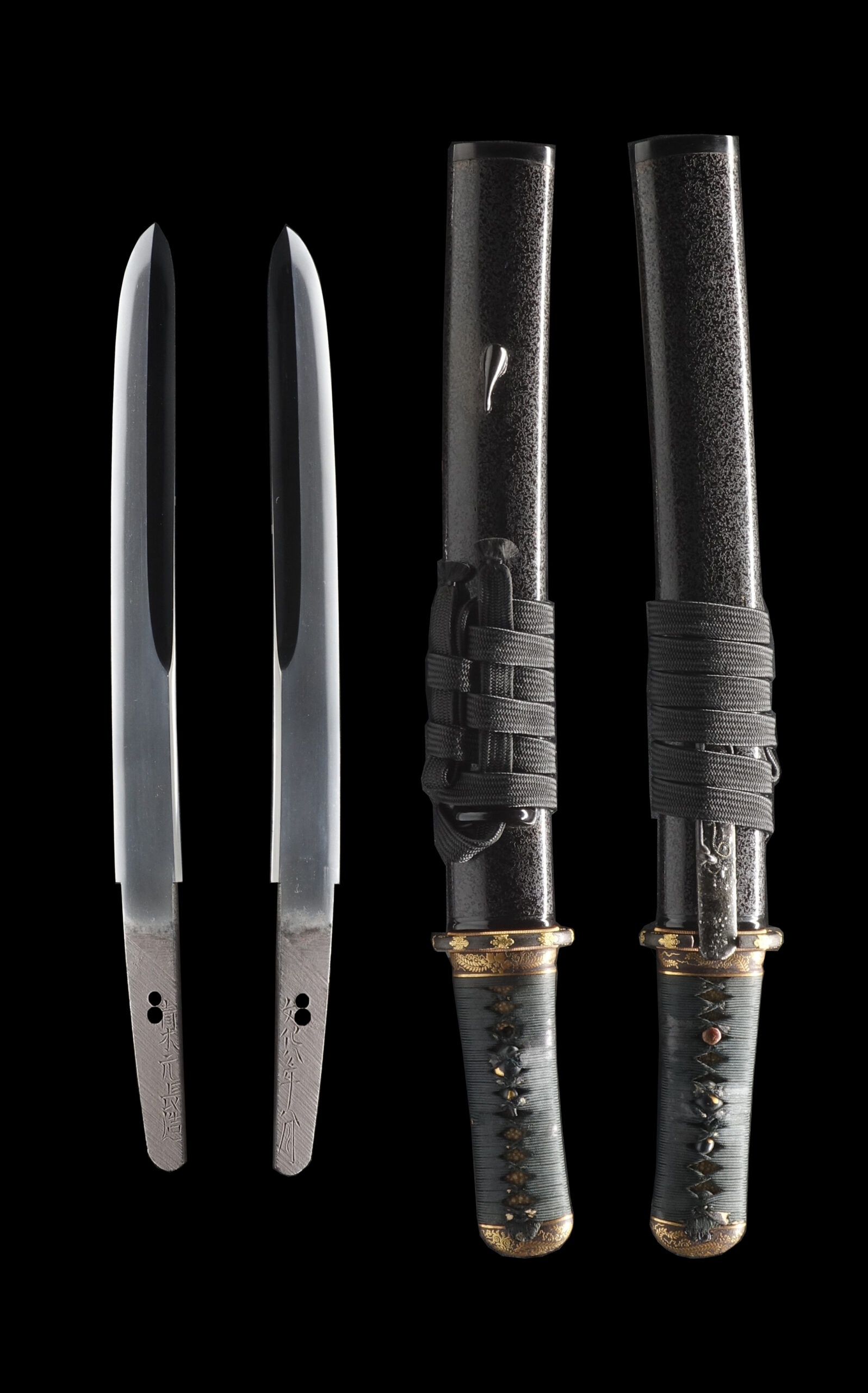
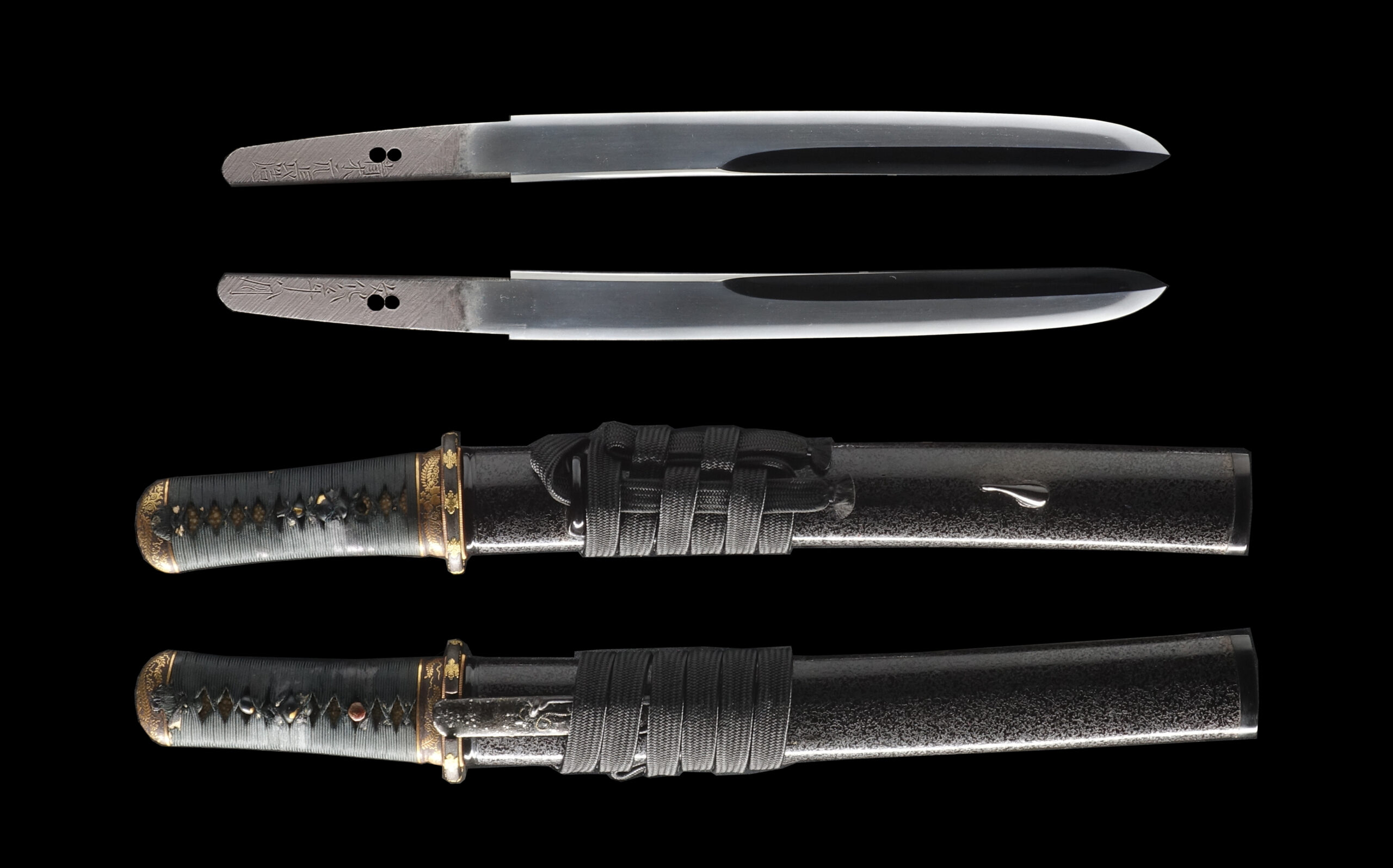
This blade was signed by Aoki Motonaga (青木元長) during the 8th year of the Bunka era of the late Edo period (1811). He learned sword-forging techniques from various masters, including the 6th-gen Nobutaka in Owari province (Today’s Aichi prefecture), Ozaki Suketaka in Settsu province (Today’s Osaka prefecture), Oku Motohira in Satsuma province (today’s Satsuma province). We assume he must have aspired to learn highly skilled craftsmanship from these masters.
His birthname was Kiheibei, and he first signed Nobunao (信直) after becoming an apprentice of the 6th-gen Nobutaka (六代信高) during the Bunka era (1804-1818). We believe Motonaga was allowed to use one Kanji letter of his master’s name, Nobu (信), after being acknowledged by Nobutaka. After finishing his apprenticeship and gaining fame in Owari province, he moved to Osaka to learn sword-forging techniques from Ozaki Suketaka (尾崎助隆), who was famous for creating Toranba, a particular wavy tempering line. He was eager to master more intricate craftsmanship after staying in Osaka. In the third year of the Kyowa era (1803), he moved to Satsuma province and served Oku Motohira (奥元平), one of the most famous swordsmiths in the region back then. During his stay in the Satsuma province, he changed his name from Nobunao to Motonaga (元長). On this occasion, he also received a Moto (元) letter from his master. He learned various techniques from prestigious makers, and eventually, he settled near Nagoya castle in Aichi prefecture.
Moroha (Structure)
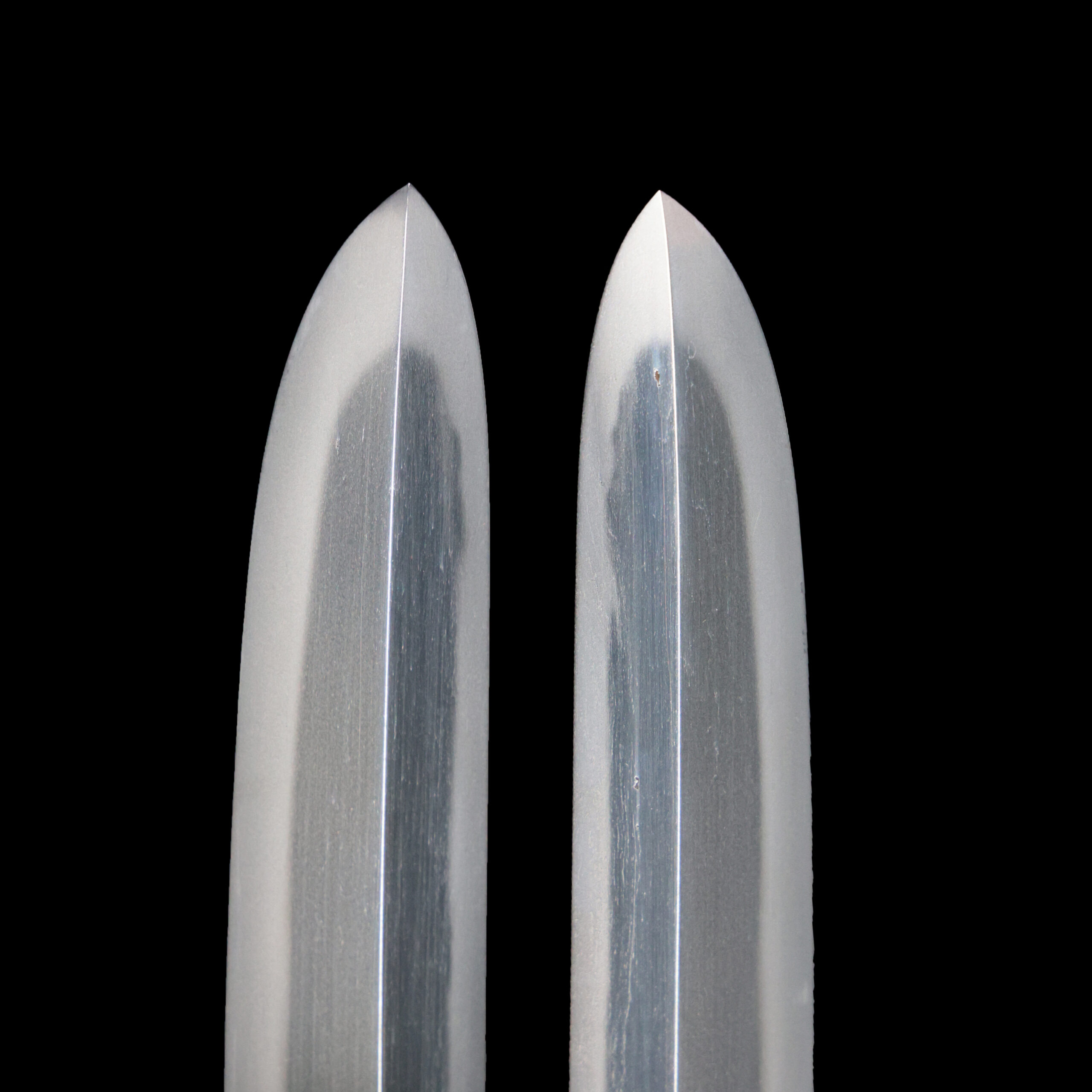
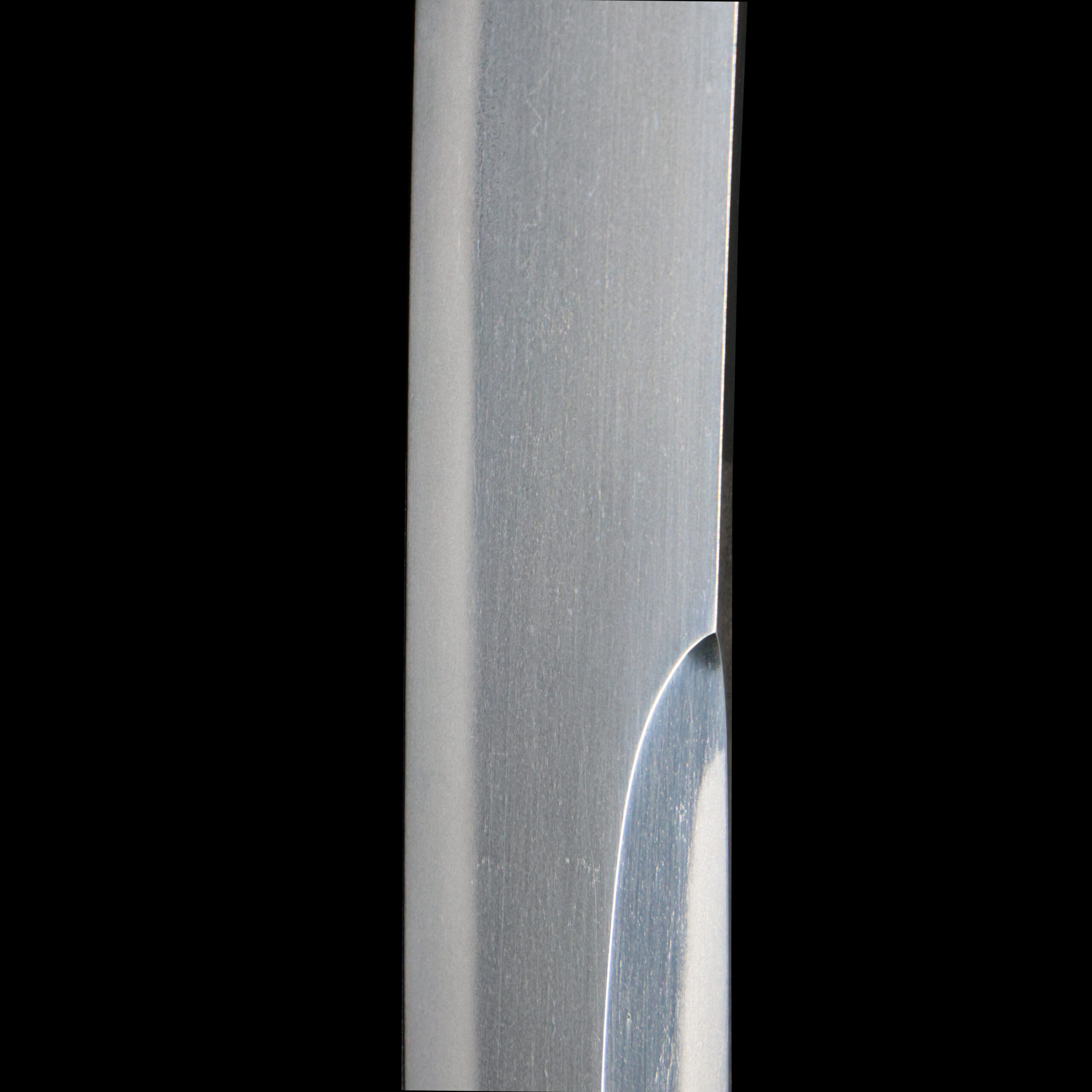
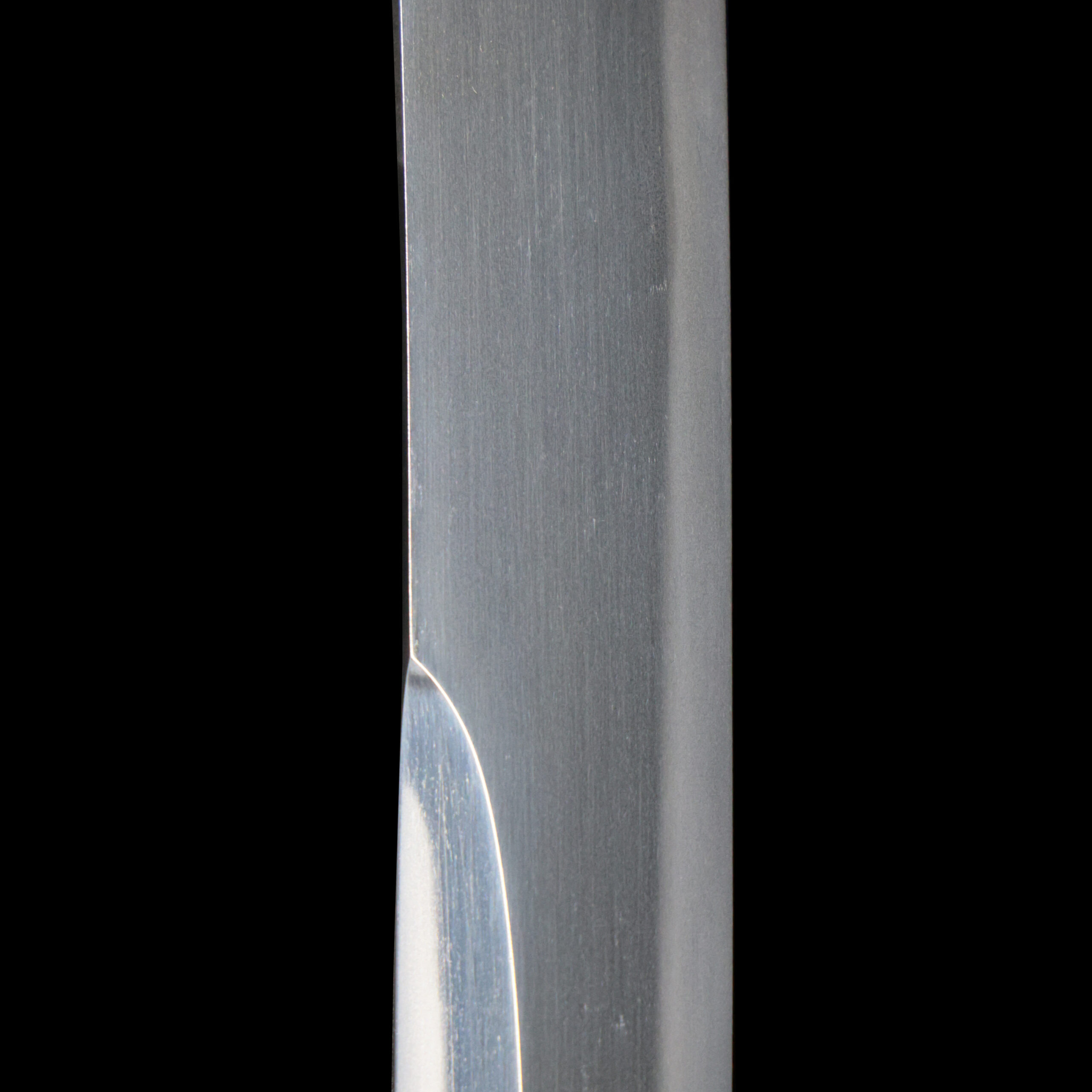
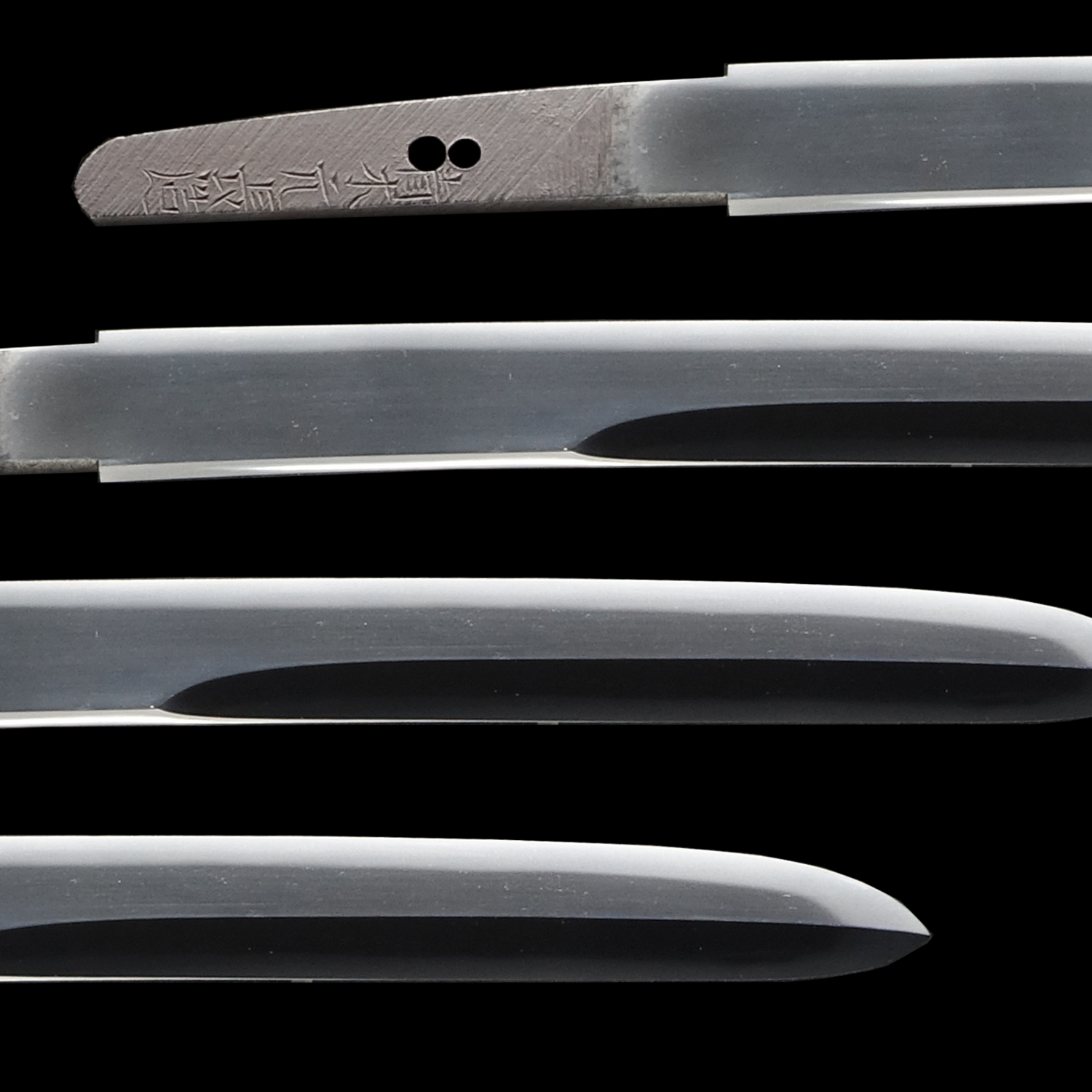
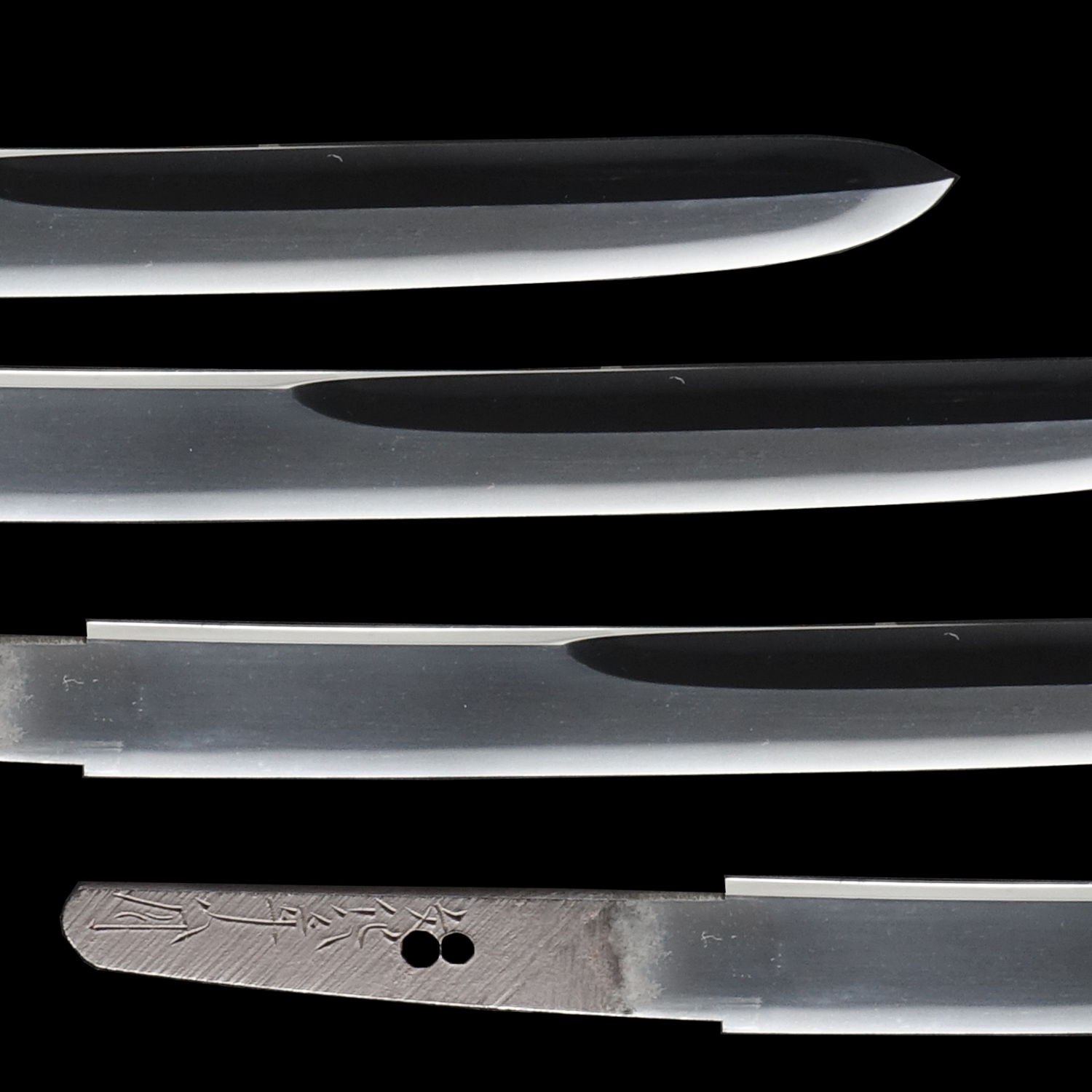
This blade is forged in the moroha-zukuri (諸刃造) style, a rare construction featuring cutting edges on both sides of the blade, separated by the shinogi ridge. Unlike the symmetrical, double-edged tsurugi, a moroha-zukuri blade retains the distinctive form and structure of a Japanese sword while incorporating a second cutting edge, giving it a particularly powerful and unusual appearance.
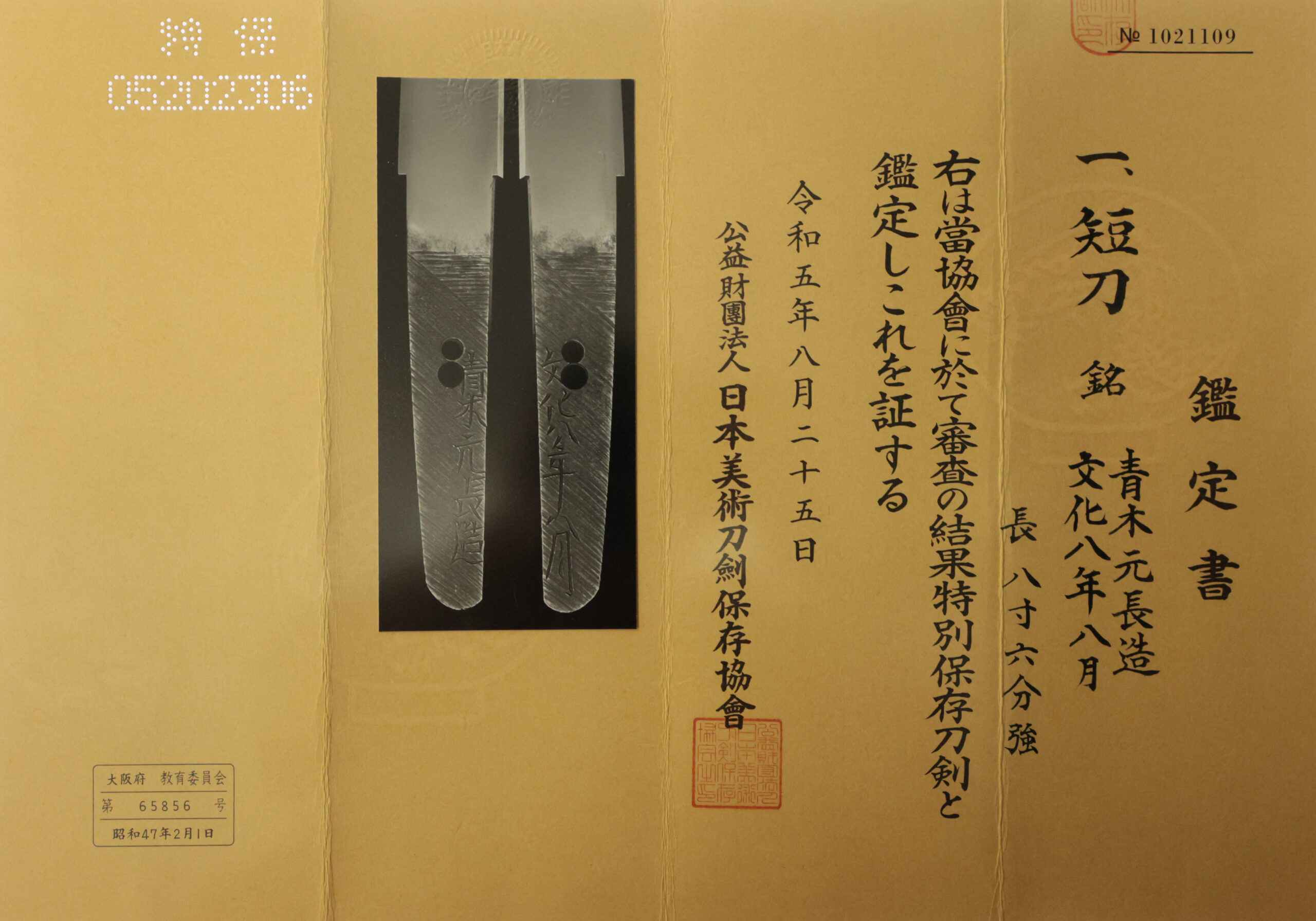
This blade is appraised as a Tokubetsu Hozon Token (特別保存刀剣) issued by NBTHK (Nihon Bijutsu Touken Hozon Kyokai:日本美術刀剣保存協会).
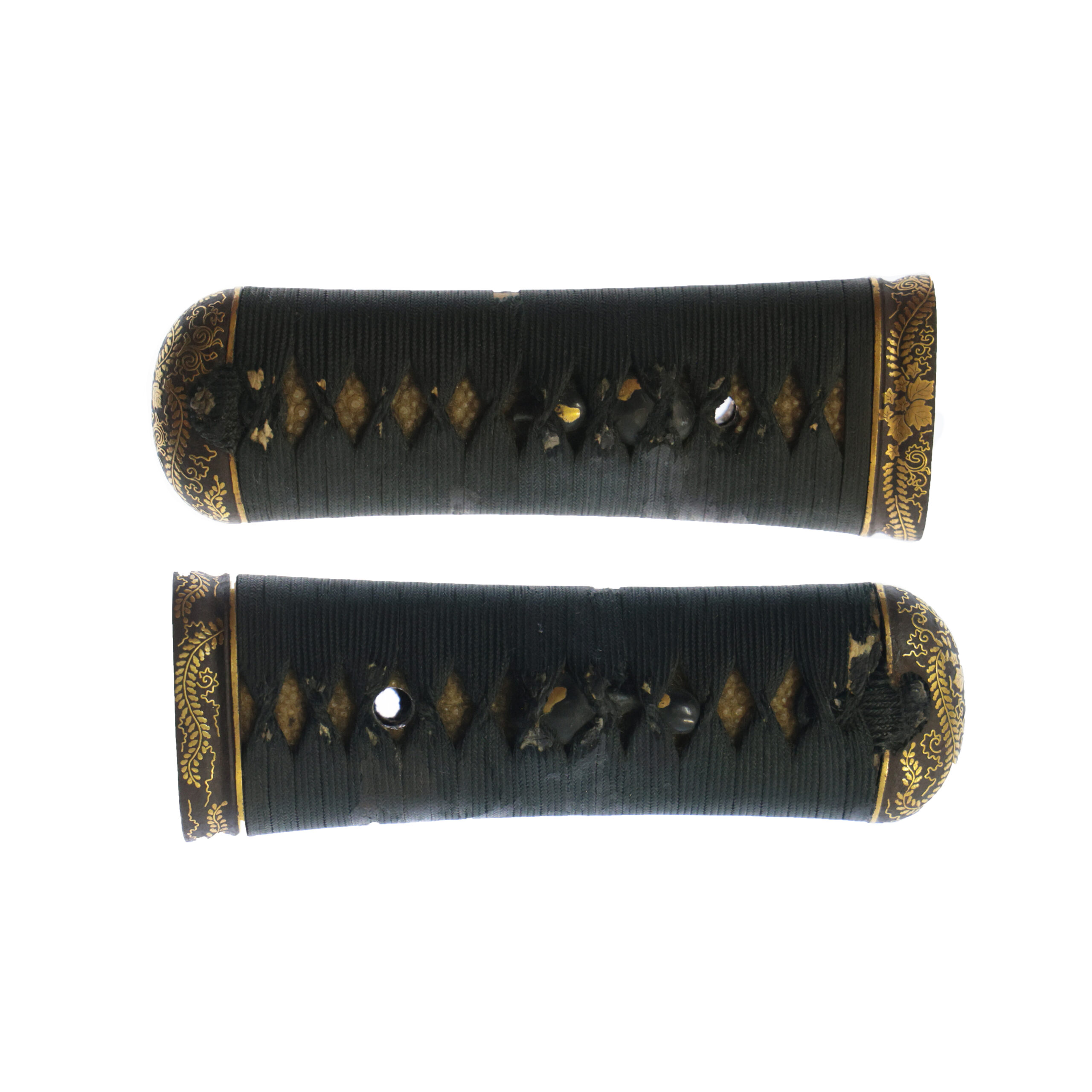
Fuchi-Kashira
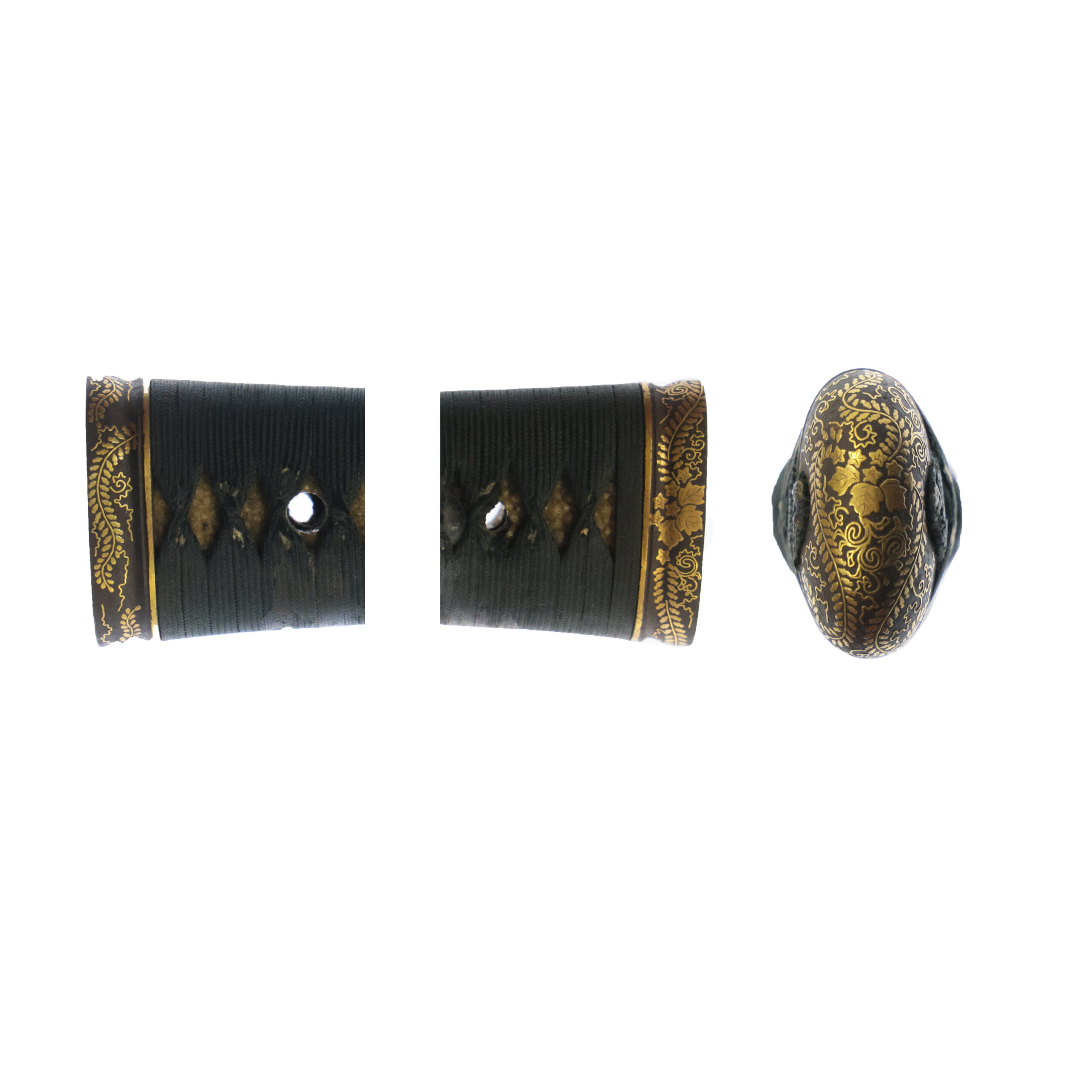
Kikyou Karakusa (桔梗唐草) is engraved on this Fuchi-Kashira. Karakusa (唐草, arabesque) is a design in which vine stems, and leaves are twined and make curves. Since ivy has a strong vitality and grows without interruption, people regarded this design as a symbol of prosperity and longevity.
Kikyou is a small star-shaped flower. It is said its root has medicinal efficacy. The Kikyou pattern has often been used as a motif of Tanka (短歌, a kind of traditional Japanese poem) and pictures since the Heian period (794-1185). Its name was initially “Kichikou,” and it changed to “Kikyou” with time. It is said this flower was used for fortune-telling in the old days. This action is called Kikkyou-wo Uranau (吉凶を占う) in Japanese. The word Kikkyou (吉凶, good or bad omen) was associated with this flower’s name. “Kichikou” was compared to the word “Kichi Kou (吉更),” which means further good fortune. That is why this flower pattern is treated as a good omen design.
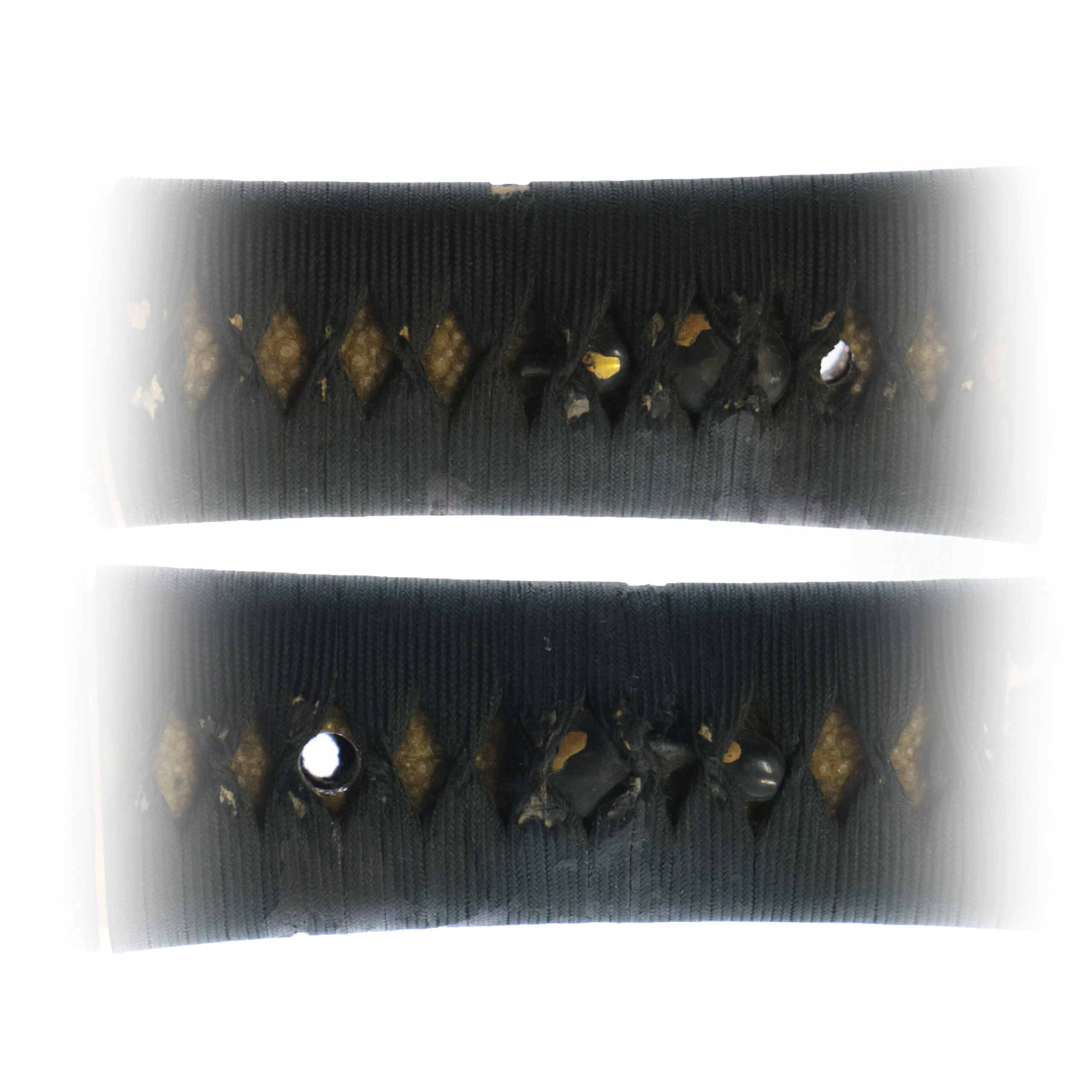
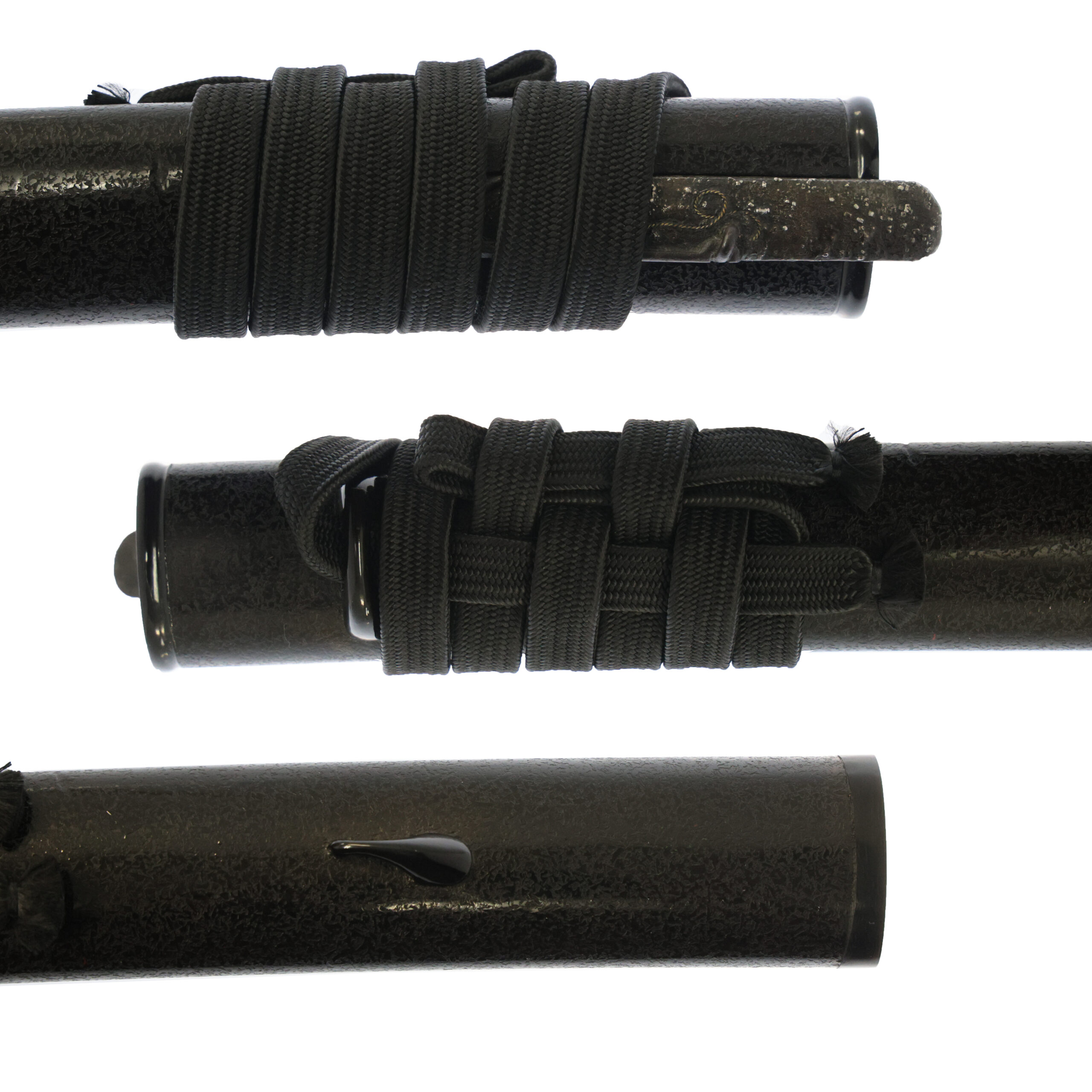
Tsuka and Menuki
The design of this menuki depicts hyōtan (瓢箪, gourd).
In Japan, the hyōtan—a dried and hollowed gourd—has long been used as a container for liquids such as water or sake. Beyond its practical use, it is also considered an auspicious symbol. Because of its many seeds, it is associated with fertility and the prosperity of descendants. In folk belief, the hyōtan was also thought to ward off evil and misfortune, and in samurai culture it sometimes appeared as a personal emblem or charm for good luck in battle.
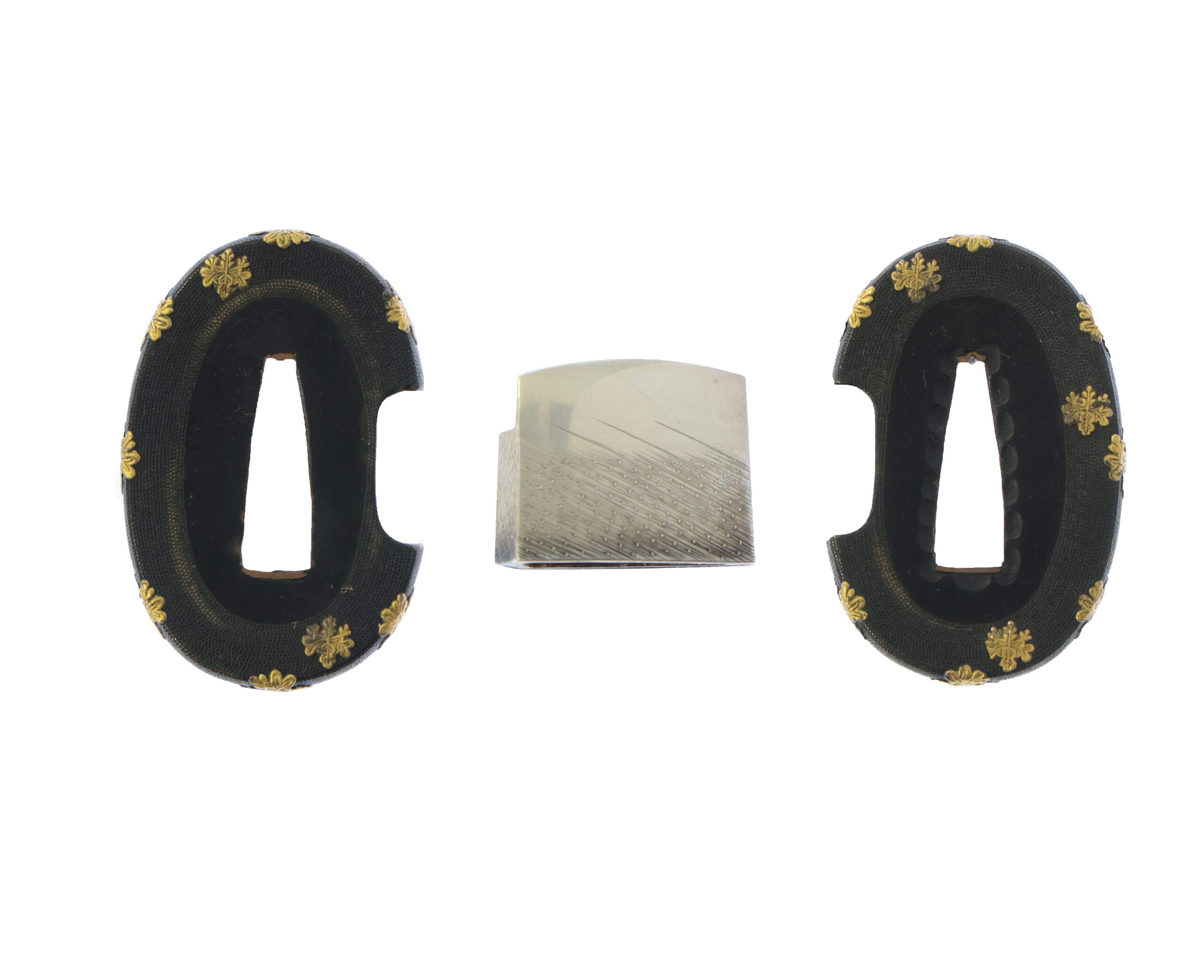
Tsuba and Habaki
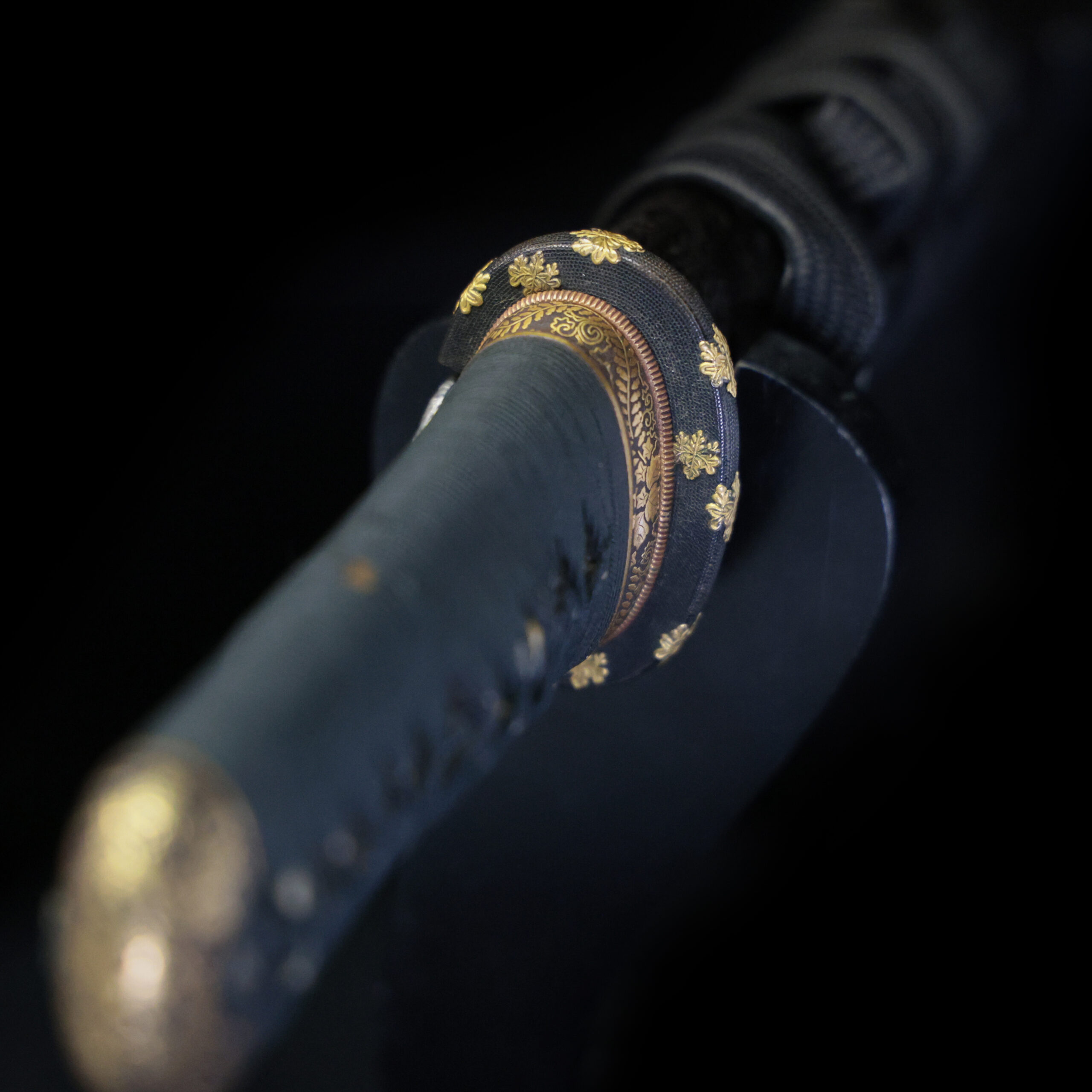
This Tsuba features a Gosan-no-Kiri (五三の桐, paulownia) for the motifs.
The Kiri design typically depicts three upright inflorescences and three leaves. The number of flowers on each stalk indicates rank or status. The Gosan-no-Kiri variant—with five and three flowers—is especially well-known and historically significant. It has long been associated with imperial authority and was eventually adopted as the crest of the Japanese government. The Karakusa pattern, with its flowing vine tendrils and leaves, symbolizes longevity and prosperity due to the plant’s vigorous and uninterrupted growth. Together, these motifs convey dignity, continuity, and abundance.
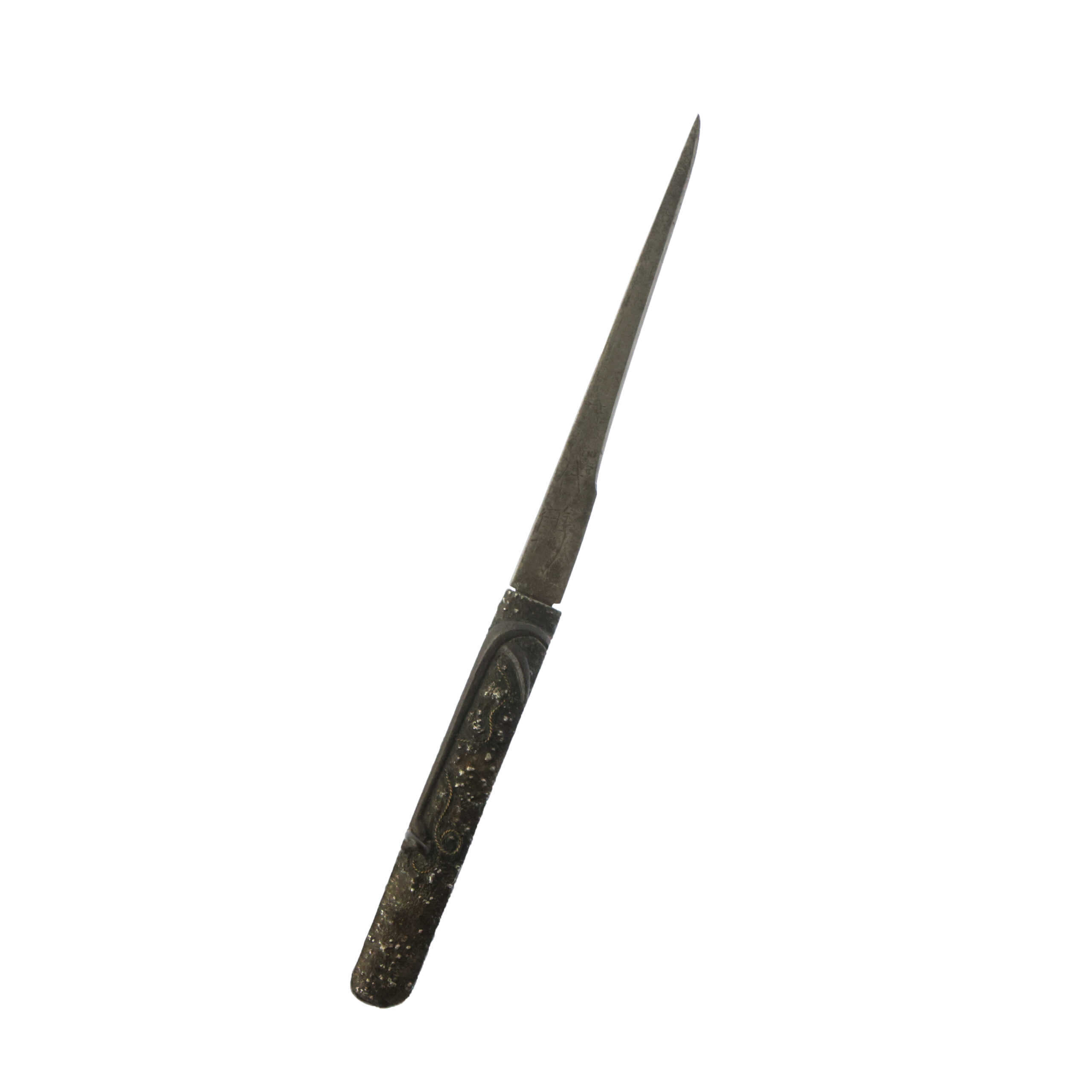
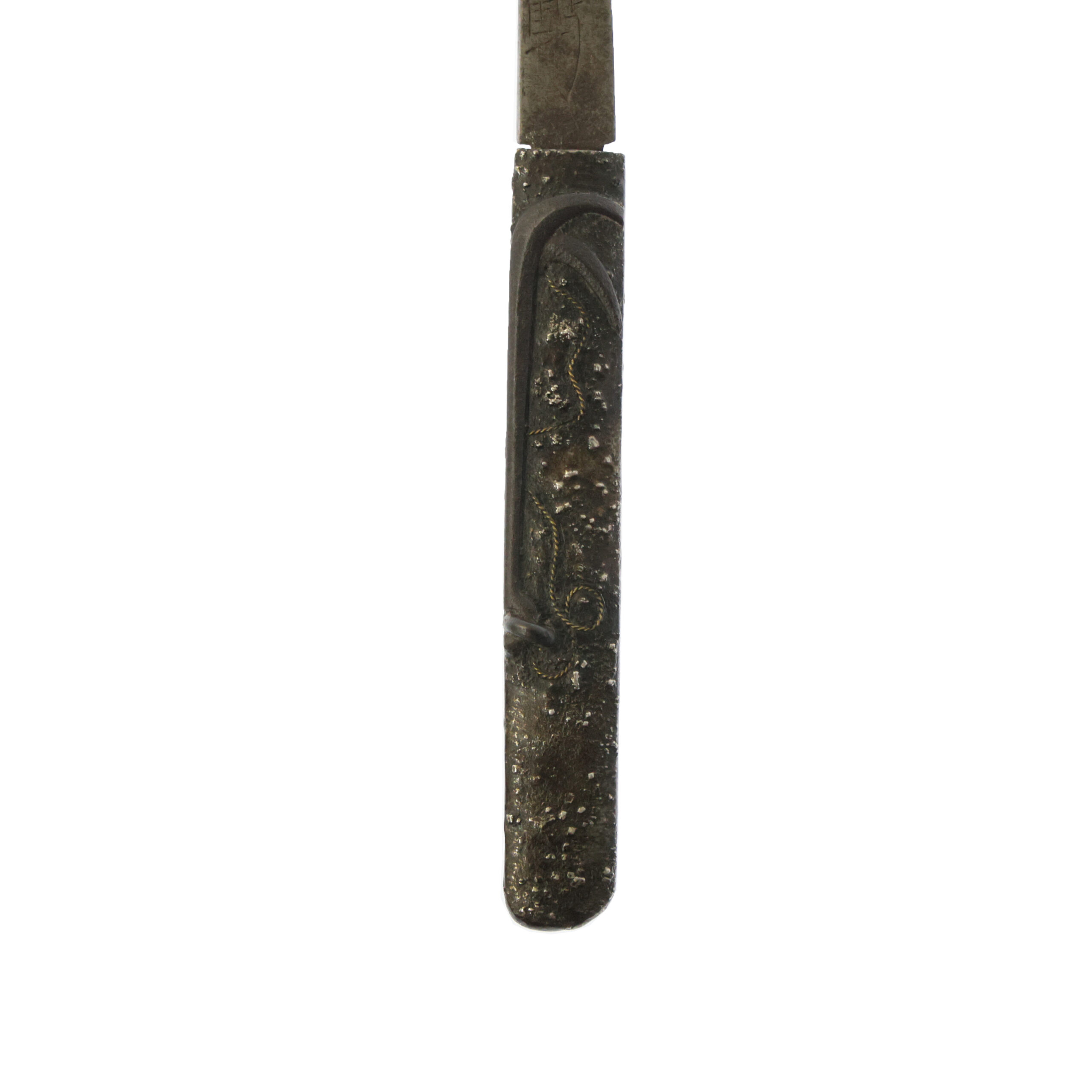
Kozuka
This kozuka features a motif of an anchor with rope, inspired by the traditional Japanese family crest called Ikari-mon. Anchors, once made of wood or stone and later iron, symbolize stability and protection. The character for “anchor” (錨) resembles a cat’s claw, reflecting how anchors hook onto the seafloor. These crests became popular during the Meiji period (1868-1912), especially in coastal regions like Hyogo and Ehime, where maritime life was central.
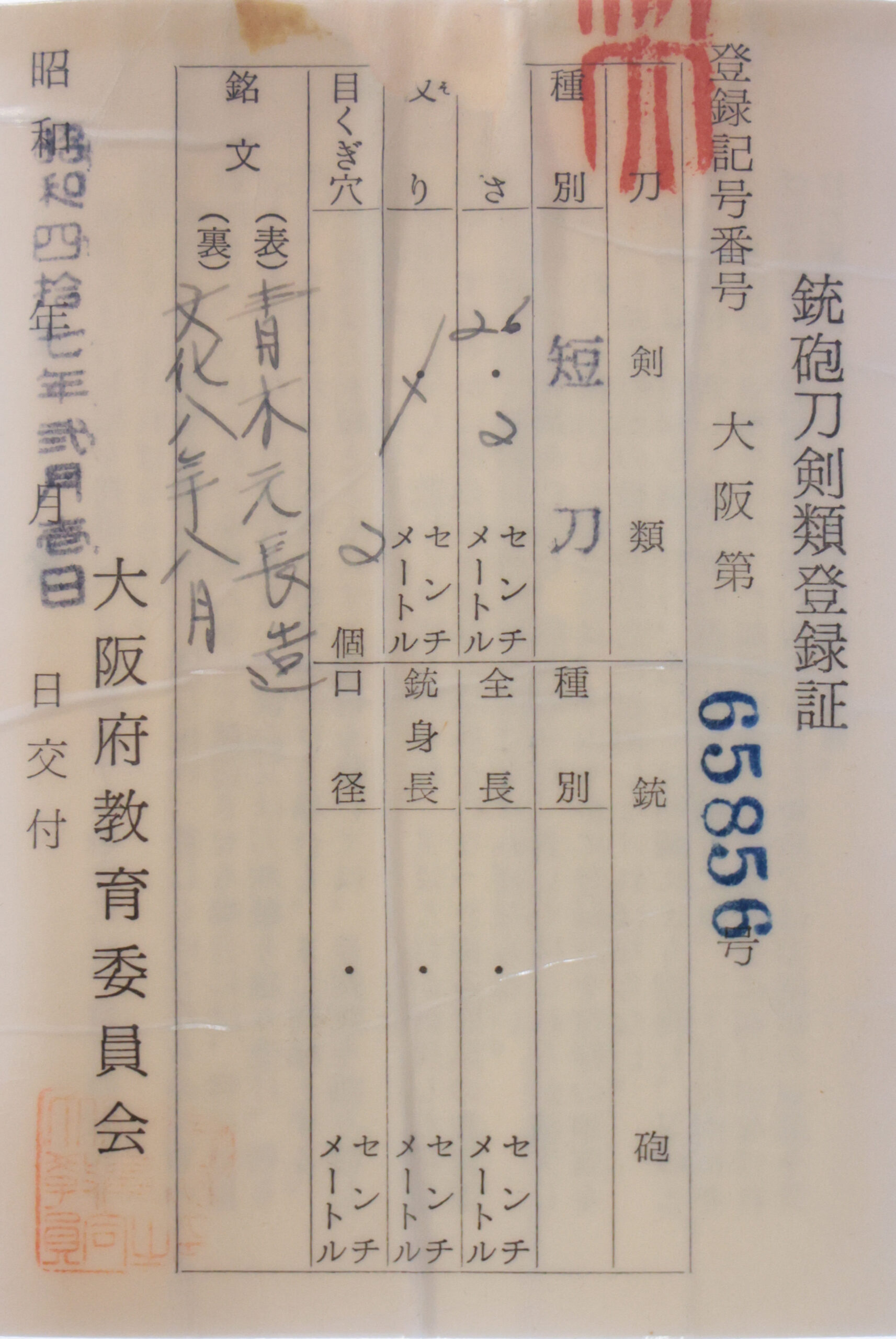
Authentication Paper
They authenticated the blade on August 25th in the 5th year of Reiwa (2023). They appraised it as Tokubetsu Hozon Touken, the blade especially worth preserving for Japanese society.



 NihontoWatch