 NihontoWatchNihontoWatch
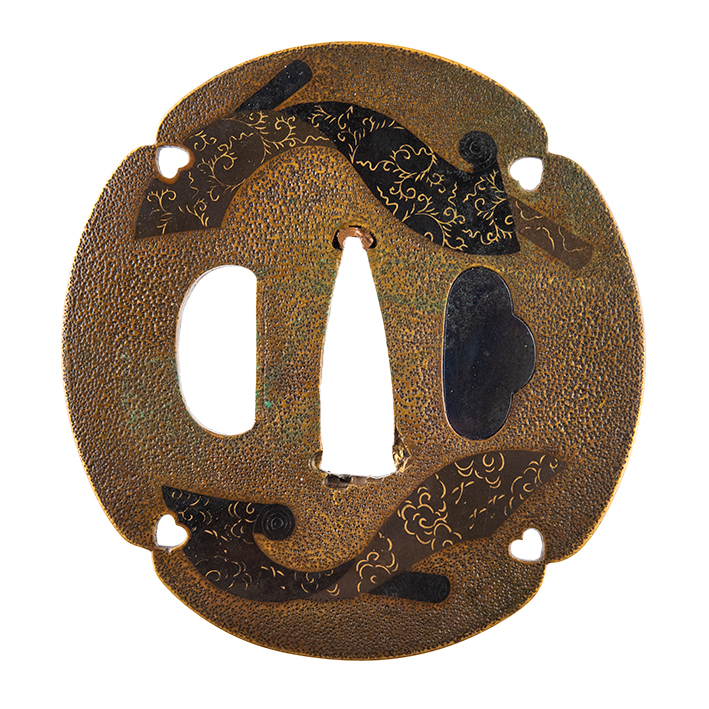
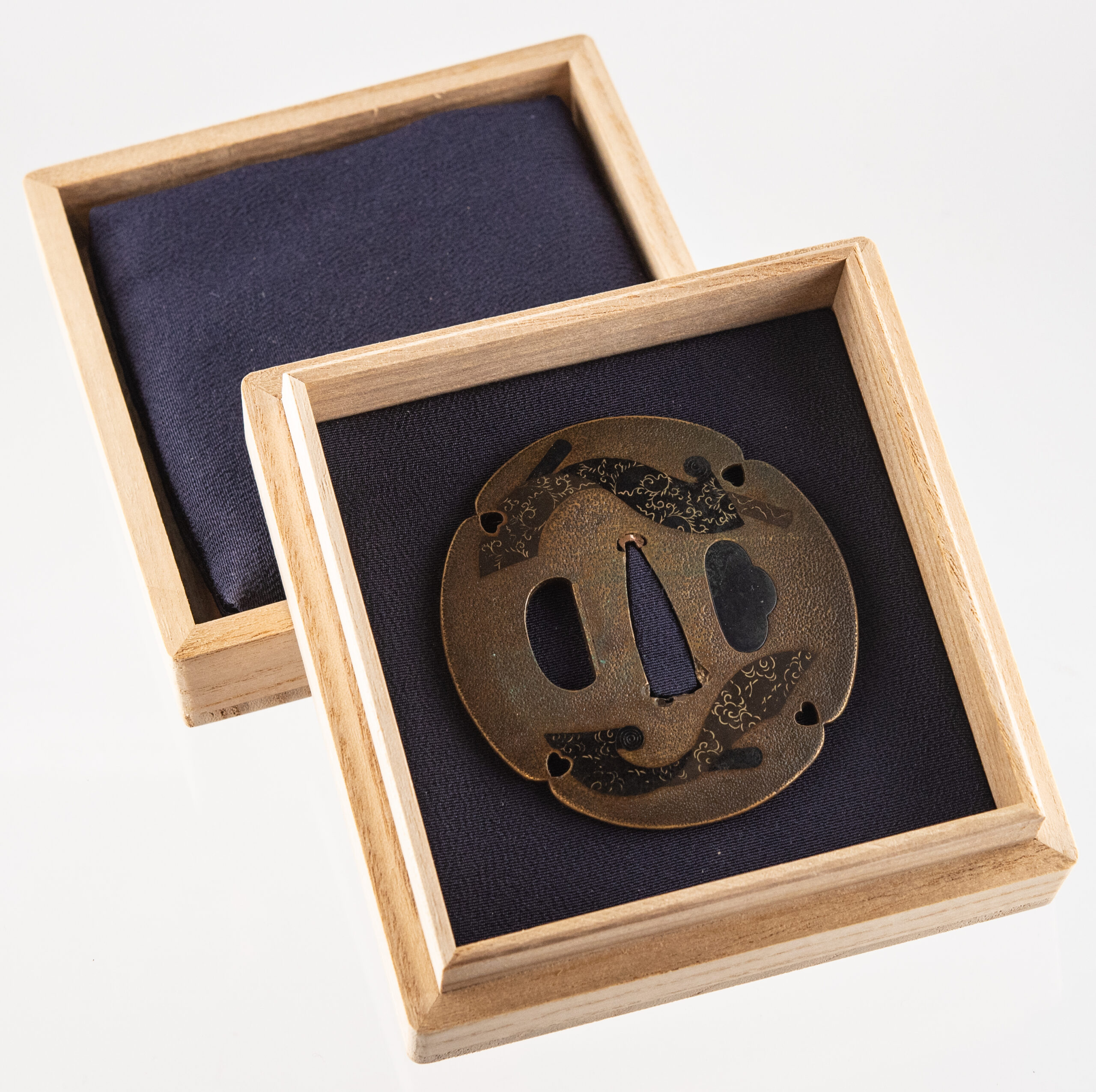
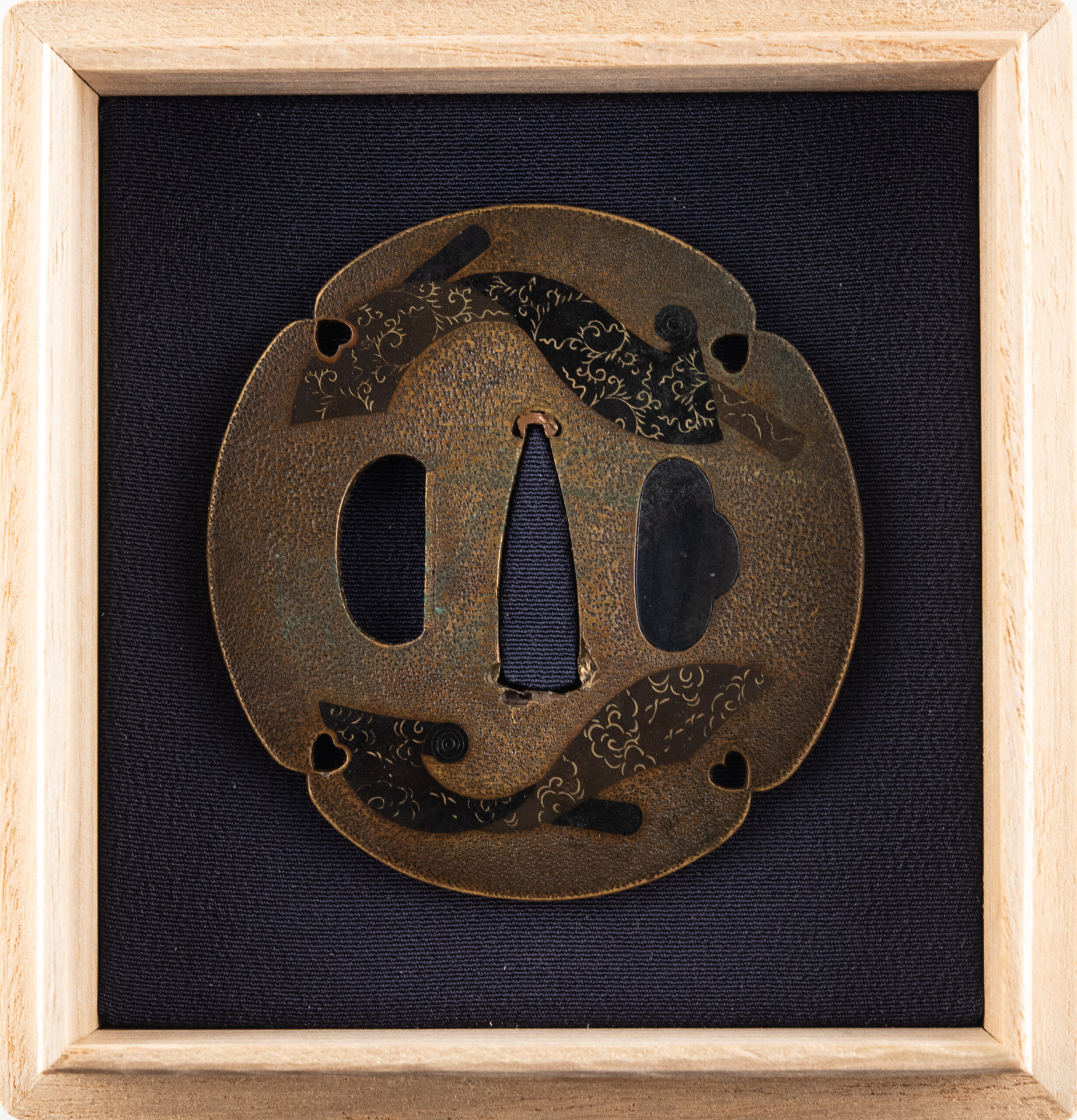
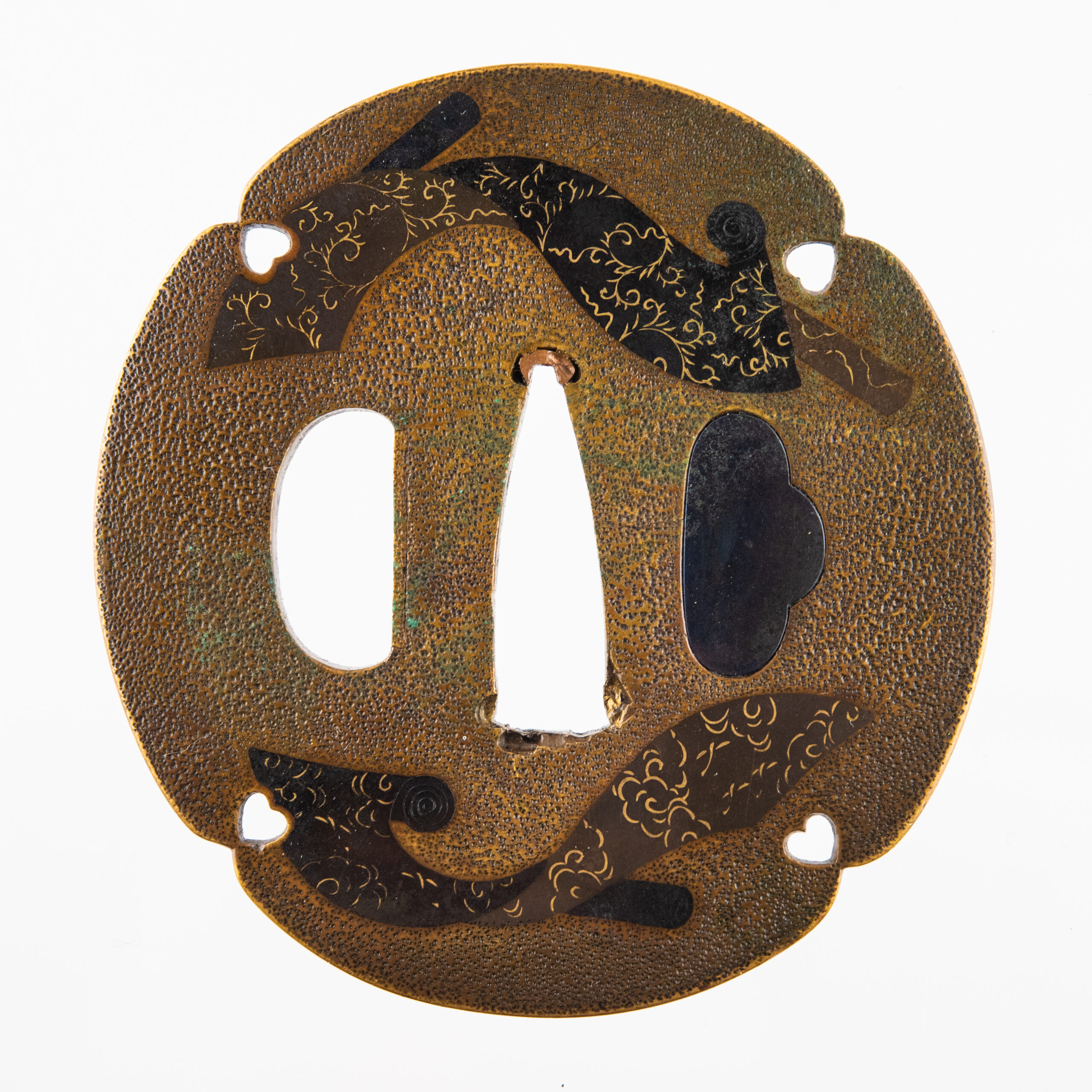
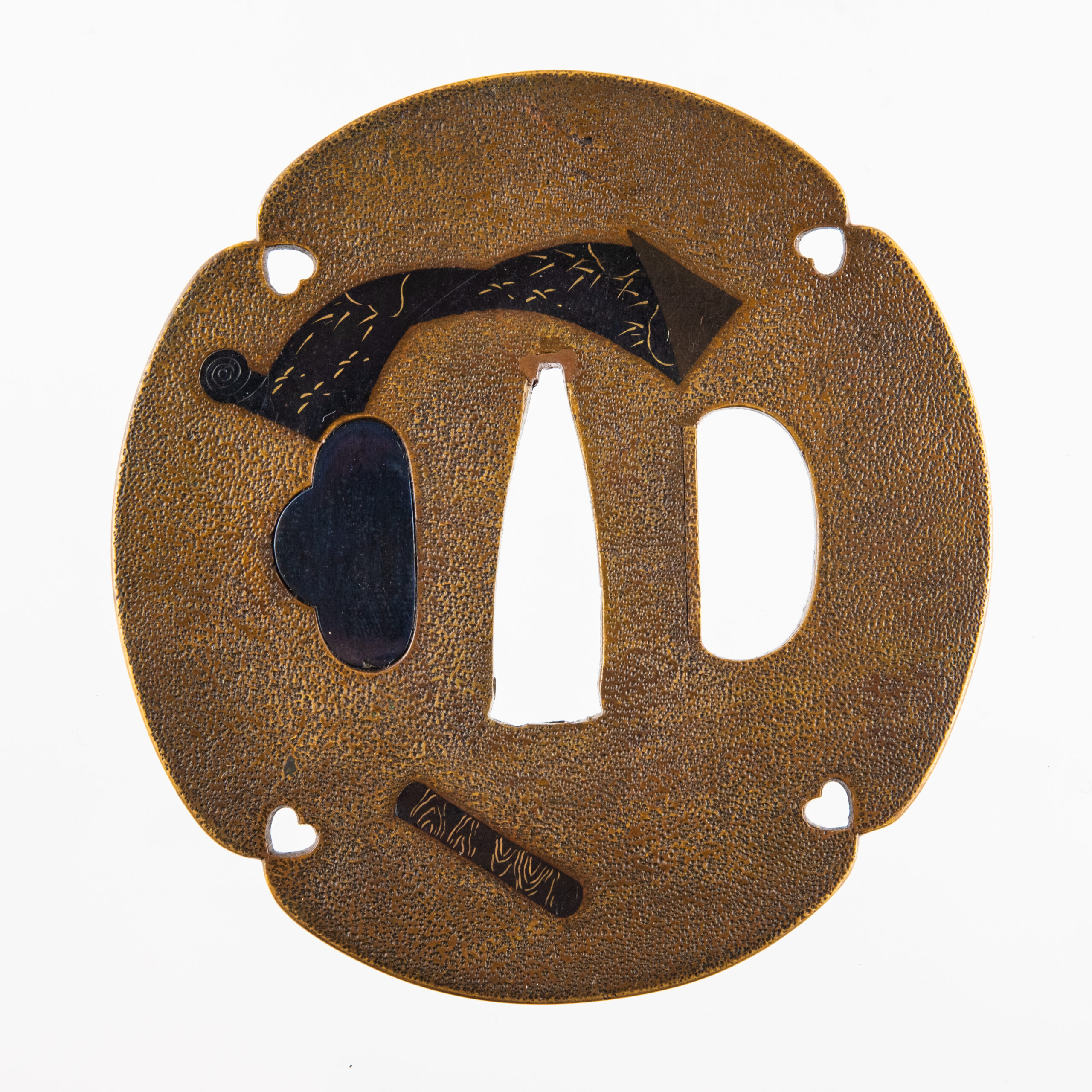
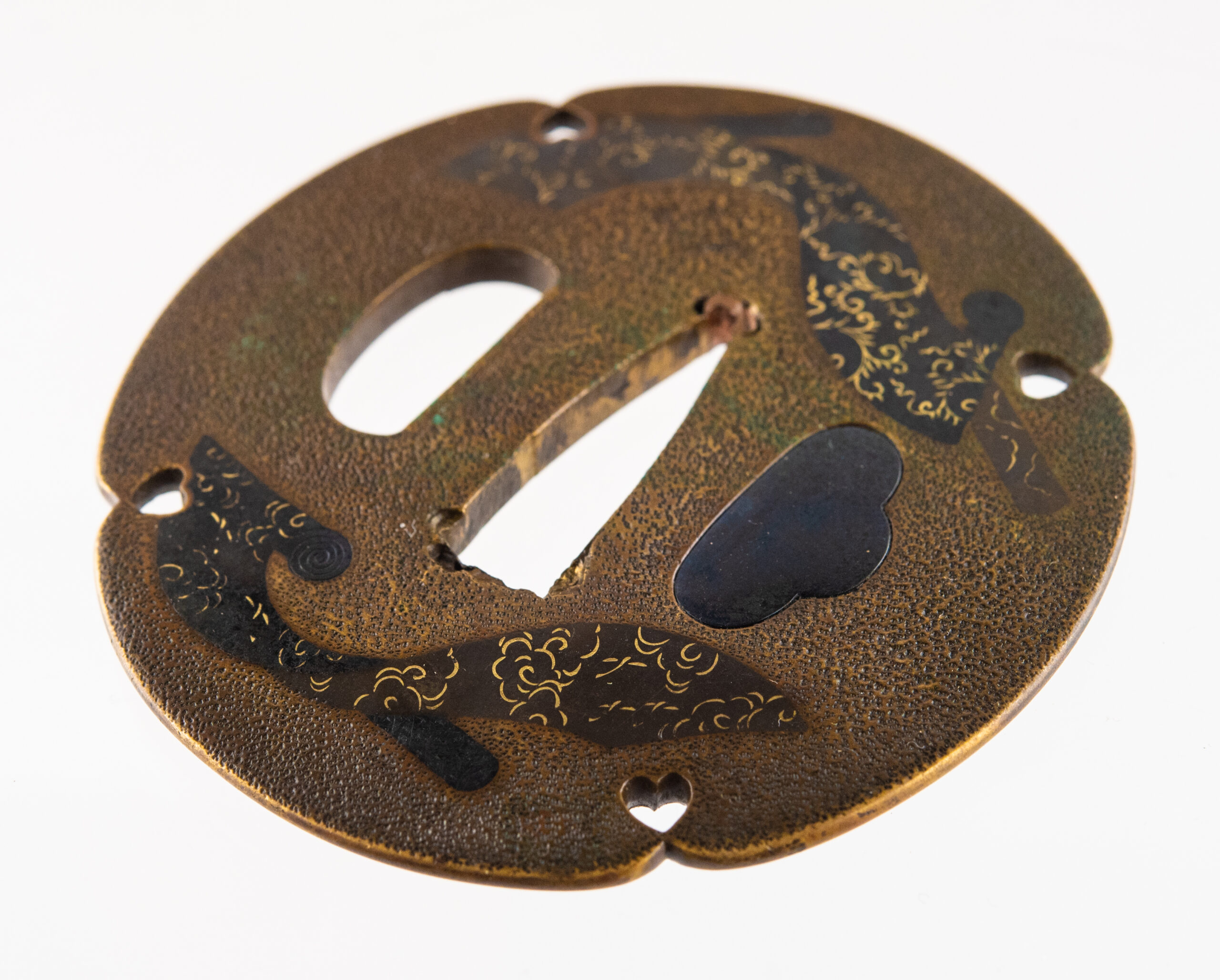
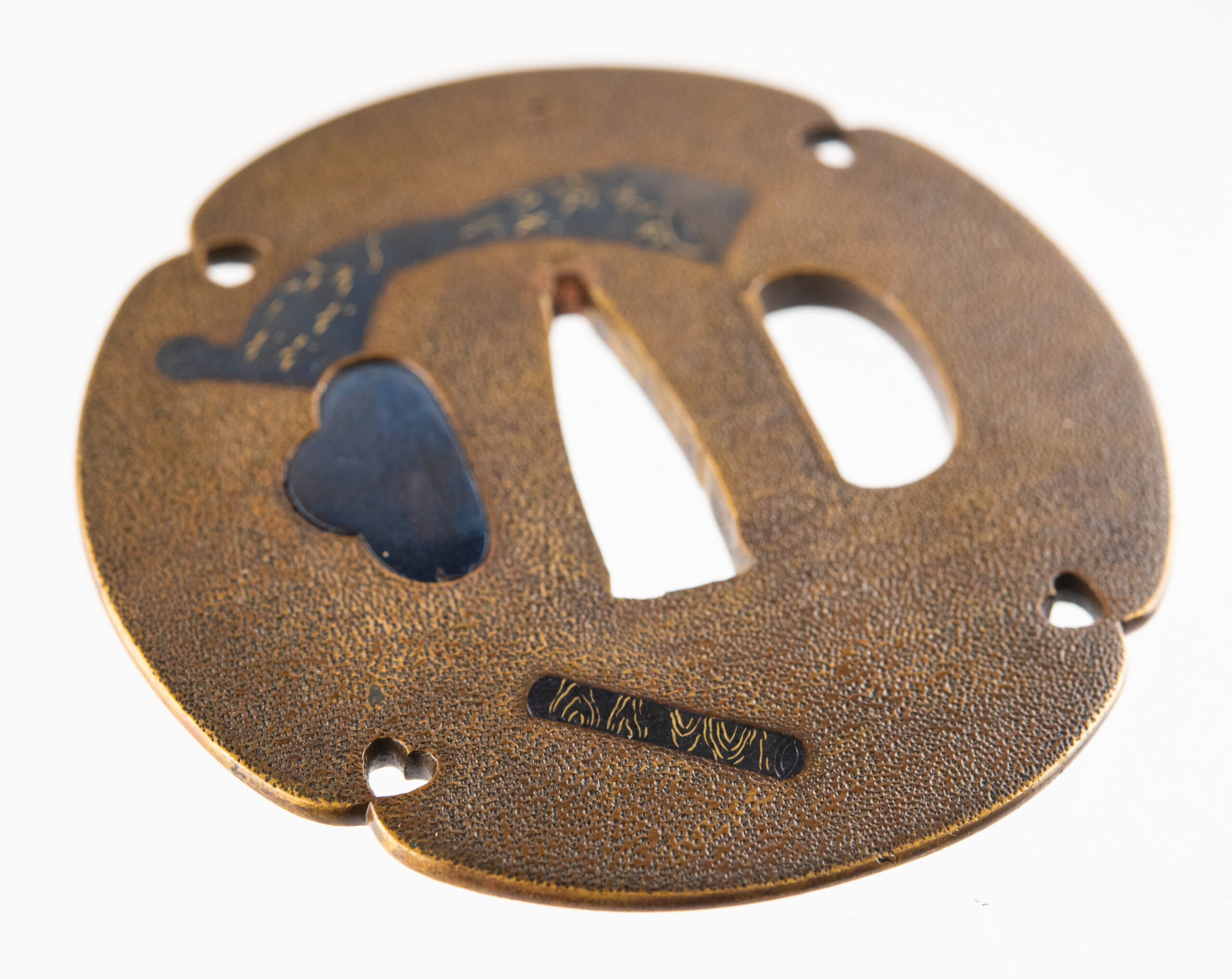
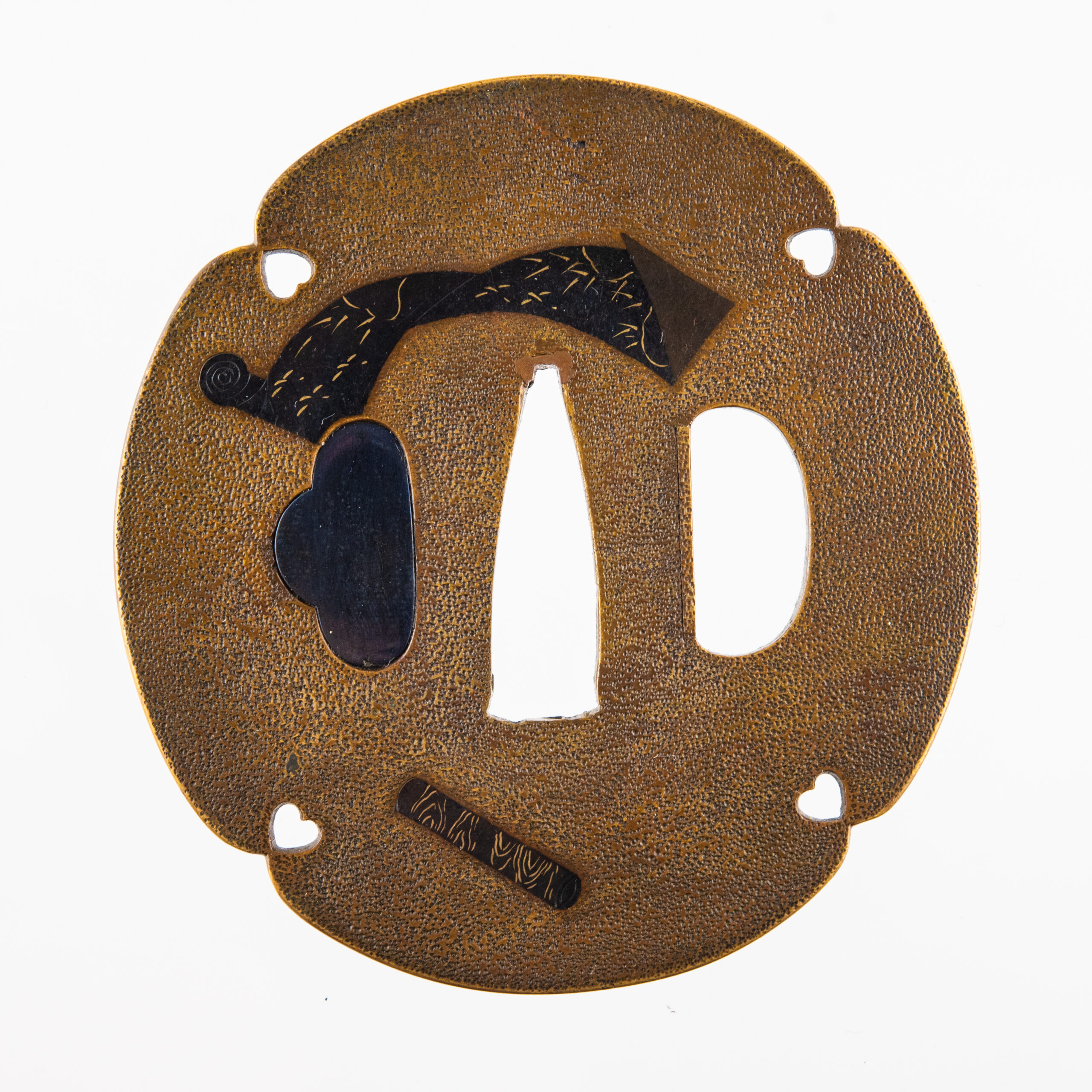
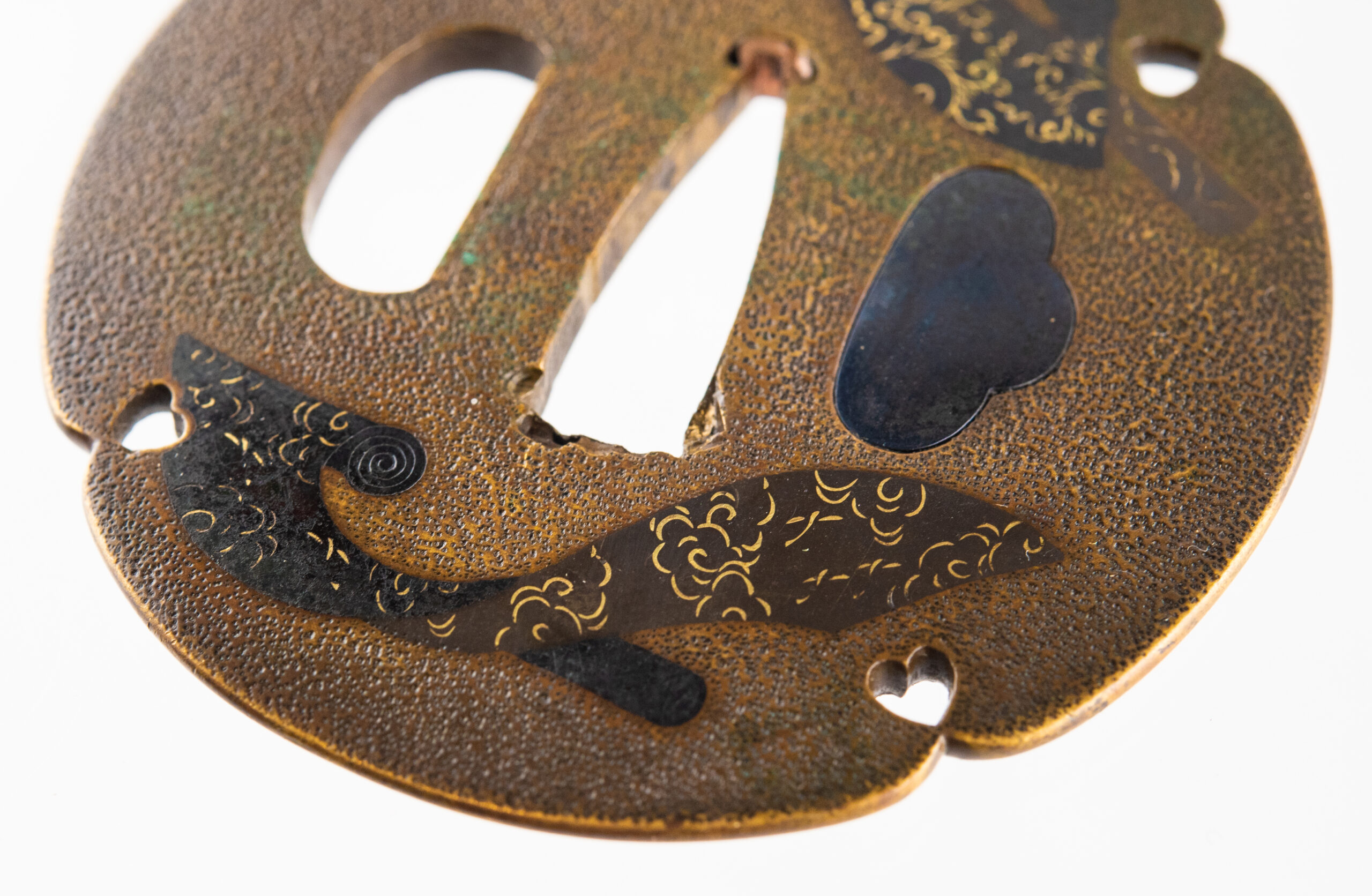
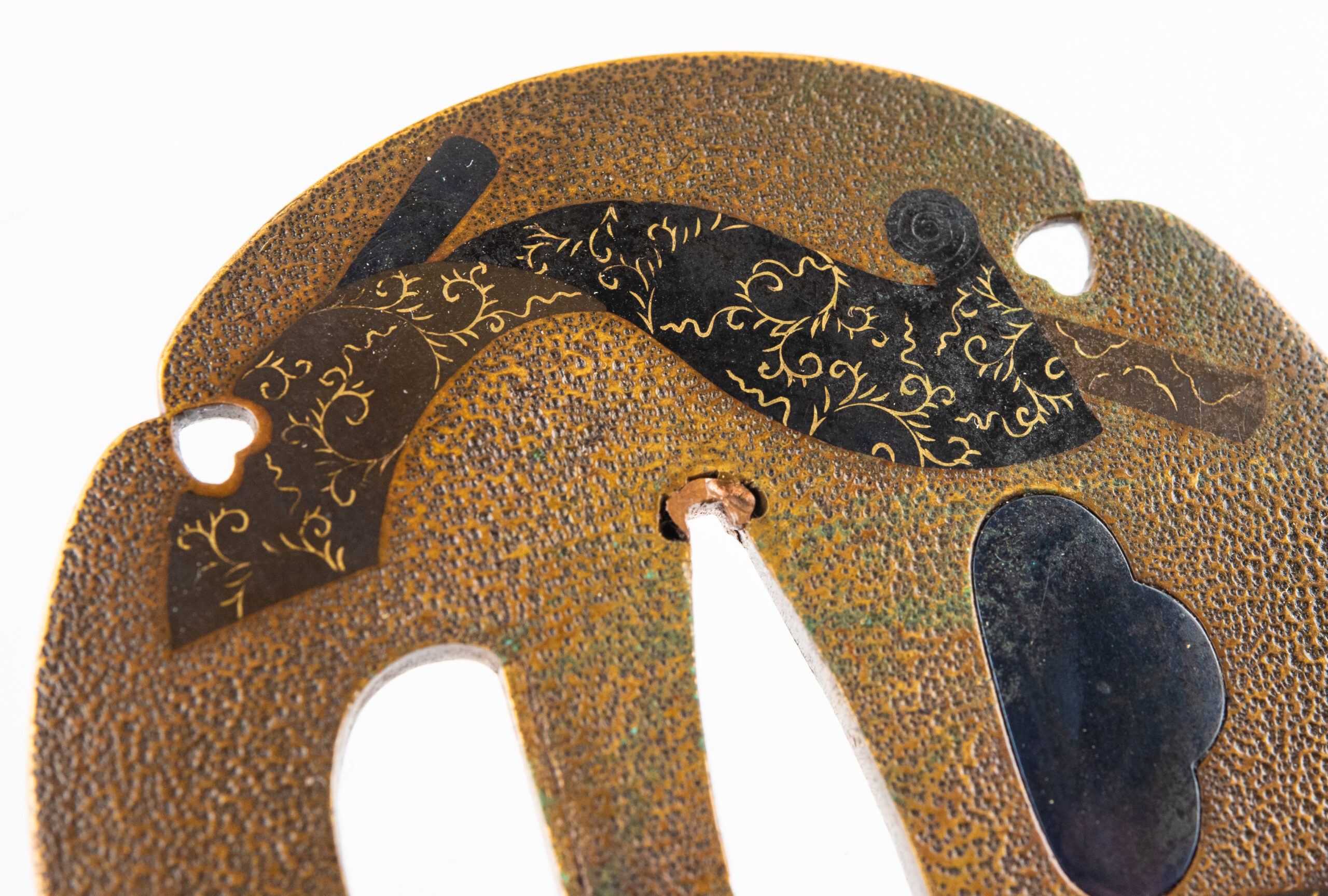
This unusual tsuba probably dates from the middle Edo period and can most plausibly be associated with the Umetada tradition. Certain aspects of its workmanship also resemble Kaga zogan, however, so an attribution to an unusual Kaga work cannot be entirely excluded. Workmanship and Design The plate is made of sentoku and has developed a deep dark greenish-brown patina. Its outline appears almost circular at first glance, but it is essentially mokkogata. Small indentations at the upper left, upper right, lower right and lower left articulate the four lobes. Small inome-like forms accent these recesses and give the outline a character reminiscent of older tachi tsuba. Dense tsuchime covers the entire sentoku surface. The numerous small rounded hammer marks create a subtly rough texture and give the plate a lively, hand-worked appearance. The cross-section has a lens-like profile. It measures 4 mm at the seppa-dai and gradually thins toward the rim, where it measures approximately 1.8 mm. Both sides show rolled textiles, possibly rolls of patterned silk or brocade. The visible front faces of the rolls are rendered in shakudo, while their reverse sides are sentoku. This restrained change of alloy creates a subtle color contrast against the dark patinated ground. Extremely fine gold decoration forms the patterns on the textiles. The gold appears within very shallow engraved or recessed lines. The appearance reflects a gilding process in which gold applied by keshikomi zogan remained in the recessed design after the surrounding surface was finished. Attribution The sentoku plate, tsuchime surface, alloy contrasts and treatment of the gold decoration point most strongly toward the Umetada tradition of the middle Edo period. At the same time, the materials and decorative approach show notable similarities to Kaga zogan work. The piece may therefore represent an unusual Kaga zogan tsuba, although Umetada remains the more plausible attribution. Details Comes with a custom made kiri box This unusual tsuba is thought to probably be a work of the middle Edo period, and Umetada-kei is cited as the most plausible attribution. However, because similarities with Kaga zogan are also seen in a portion of its workmanship, the possibility of it being an unusual work from Kaga cannot be entirely denied. Workmanship and Design The jigan is sentoku, and it exhibits a beautiful koshoku of deep, dark greenish-brown. The outer shape appears almost circular at first glance, but it is basically mokkogata. By providing small indentations in four places—upper left, upper right, lower right, and lower left—the four projections of the mokkogata are expressed. Furthermore, small inome-style shapes are added to these indentations, resulting in a tasteful outline reminiscent of old-style tachi tsuba. Dense tsuchime is applied to the entire surface of the sentoku ground. Innumerable small, rounded hammer marks create a slightly coarse texture, giving the ground a lively expression unique to hand-work. The cross-section exhibits a lens shape. It is 4 mm thick at the seppa-dai, gradually becomes thinner toward the mimi, and is approximately 1.8 mm at the mimi-giwa. On the omote and ura, rolled textiles are expressed. It is thought to represent patterned silk textiles or rolls of brocade. Shakudo is used for the parts visible as the front side of the rolls, and sentoku is used for the back side. Through this restrained use of different metals, a delicate contrast of colors is born against the dark, koshoku-toned ground. The patterns of the textiles are expressed by extremely precise gold decoration. The gold is applied within very shallowly carved or recessed lines. From its appearance, it is thought that a technique was used in which gold applied by keshikomi zogan remains in the recessed pattern parts even after the surrounding surface is finished. Attribution Synthesizing the sentoku ground, the surface to which tsuchime was applied, the contrast of colors by different metals, and the gold decoration technique, it seems most plausible to view it as a work of the Umetada-kei from the middle Edo period. On the other hand, characteristics common to examples of Kaga zogan work are also recognized in the choice of materials and decorative expression. For that reason, the possibility that this work is an unusual Kaga zogan work can be considered, but at the present time, attribution to Umetada-kei is considered more influential.
Offered by Tsuba Info

We couldn’t find current papers for this piece. Ask the dealer whether it has been, or can be, submitted to shinsa. — Hoshi
45 on the market

Machine translation from the shop's Japanese · may contain errors ·
Shinto · Kyoto
45 pieces on the market now
The Umetada school is one of the most distinguished metalworking lineages of the Momoyama period, rooted in Nishijin, Kyoto, and claiming descent from the legendary Sanjo Munechika. The house served the Ashikaga shogunal family over successive generations, establishing deep foundations in the full range of sword-related arts -- swordmaking, blade carving (toshin-bori), the production of steel and fittings, the shortening of blades, the insertion of inlaid signature attributions (zogan-mei), and the making of mountings. " Myoju taught both Hizen Tadayoshi and Higo no Kami Teruhiro, and accepted commissions from the Toyotomi and Tokugawa houses as well as many daimyo families. An earlier stratum of production, appraised as Ko-Umetada, dates from the close of the Muromachi period and demonstrates that the group's technical foundations were firmly established before Myoju's maturity. The near-contemporary Mitsutada, though absent from formal genealogies, is conjectured to have been of senior standing within the circle; his works, executed on brass with an archaic dekoboko-ji ground, display "an even more classically archaic elegance" than Myoju's. Shigeyoshi, active from the Kan'ei through Genroku eras, carried the tradition forward into the mid-Edo period. The Umetada school's collective technical identity divides into two principal modes: iron works and soft-metal (irogane) works. In the iron mode, Myoju expressed geometric patterns -- sayagata, raimon, kasumi-kaminari-mon, and rinzu-mon -- by means of gold nunome-zogan, complemented by celebrated openwork including wheel and double-tomoe sukashi tsuba.
The nejikaeshi-mimi (twisted turned-back rim) and gold rim inlay are techniques "at which he particularly excelled," while the iron itself is invariably "carefully selected" and displays excellent quality. In the irogane mode -- employing shakudo, suaka, brass, and other alloys as ground material -- the school developed a distinctive form of hira-zogan (flat inlay) that retains only slight relief, deploying colored metals in novel combinations. " Ground textures including hammered tsuchime-ji, polished migaki-ji, and file-finished surfaces are deployed with meticulous care to heighten the pictorial effect. Mitsutada's work on brass with its uneven, raised-and-recessed ground and enrichment through gold and silver nunome-zogan represents a more archaic variant of this aesthetic. Shigeyoshi synthesized the inherited hira-zogan tradition with textile-derived designs of linked shippo, karakusa arabesque, and sayagata patterns -- reflecting his Nishijin milieu, the heart of Kyoto's silk-weaving district -- while deploying suemon-zogan, sukidashi-bori, and kin-iroe across shakudo grounds in both polished and stone-textured finishes. The Umetada school's historical significance is singular: the pictorial manner of design, the hira-zogan technique, and the use of non-iron metals as the ground material "all find their earliest beginning with Myoju" -- he stands as the originator of an entire aesthetic vocabulary in kinko. The NBTHK consistently describes Myoju's work as possessing "the vitality that preserves the very momentum of brushwork," with a "strong connection with Hon'ami Koetsu and Tawaraya Sotatsu" that places him among the foremost artistic figures of the Momoyama age. " Solid-gold tsuba, frequently melted down during periods of upheaval, are recognized as extremely rare survivals of exceptional documentary and artistic value. Learn more →
| Smith | Era | Designated |
|---|---|---|
| Myoju明寿 | 1590-1631 | 45 |
| Muneyoshi宗吉 | 1596-1615 | 4 |
| Naritsugu就次 | — | 0 |
| Umetada Mitsushige光重 | 1700-1750 | 0 |
| Kaji’emon加治右衛門 | — | 0 |
We could not find an authenticity certificate on the seller’s listing. Japanese swords and fittings are normally papered by the NBTHK (or the NTHK). Without one, the attribution is the seller’s own assessment and has not been independently verified — treat it with caution and ask the dealer about certification before buying.
All sales are final and no refund will be issued. Individual refund conditions may be offered on request. For items with third-party certificates (e.g. NBTHK), a return is offered if the certificate is proven falsified and claimed within one year after shipment.
¥120,000