NihontoWatch MonNihontoWatchBETA
MarketEncyclopedia
NihontoWatch Mon

NihontoWatchBETA

Market
Encyclopedia
Overview·Kantei·Dated Works·Designations·Provenance·Blade Forms·Signatures·Lineage·School
OverviewKanteiDated WorksDesignationsProvenanceBlade FormsSignaturesLineageSchool
  1. Schools
  2. Osafune
  3. Sue-Bizen
  4. Munemitsu

Osafune Munemitsu

宗光

Jūyō
Vol. 64, No. 95 · Wakizashi

Osafune Munemitsu

宗光

16 ranked works

ProvinceBizenEraBunmei (1469–1487)PeriodMuromachiSchoolOsafuneTraditionBizen-denFujishiroJo-jo sakuToko Taikan700(top 17%)TypeSwordsmithCodeMUN201
1Jūyō Bunkazai
1Jūyō Bijutsuhin
2Gyobutsu
12Jūyō Tōken

Overview

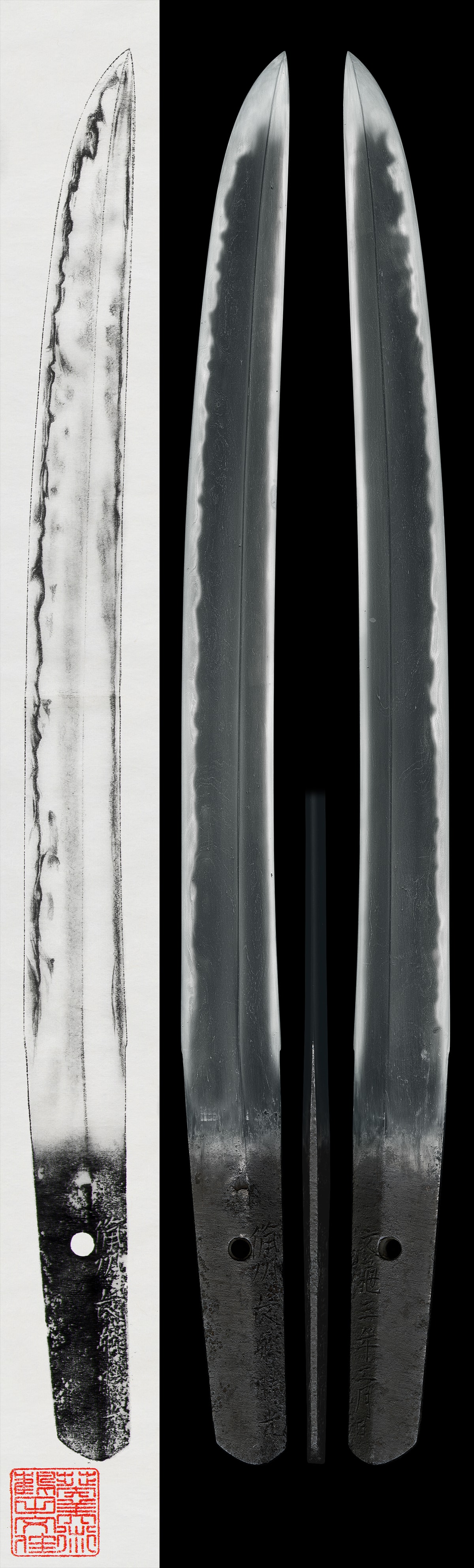
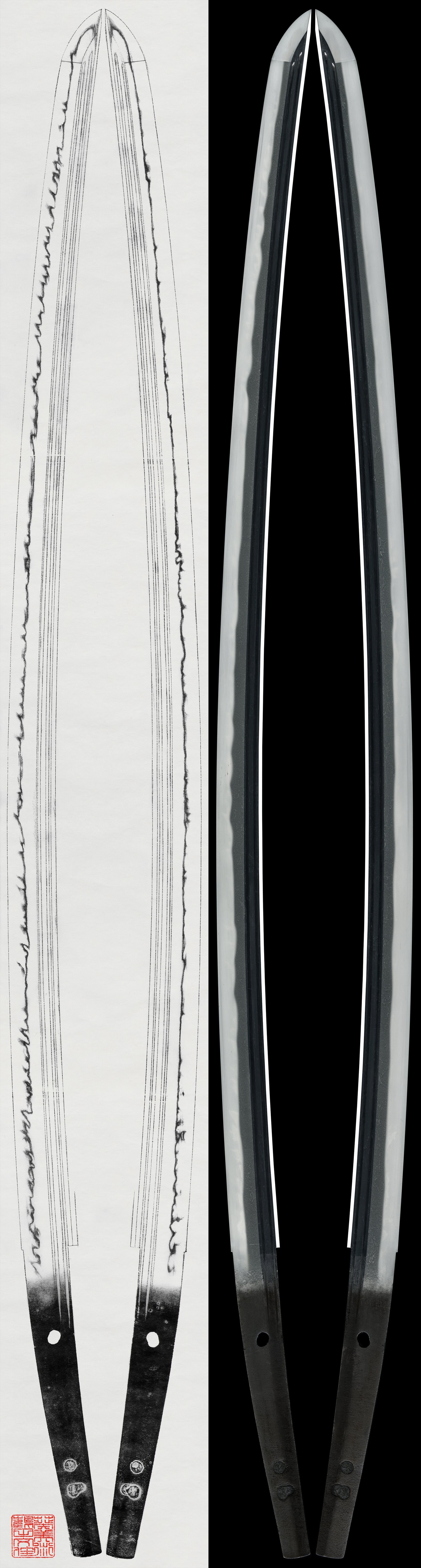
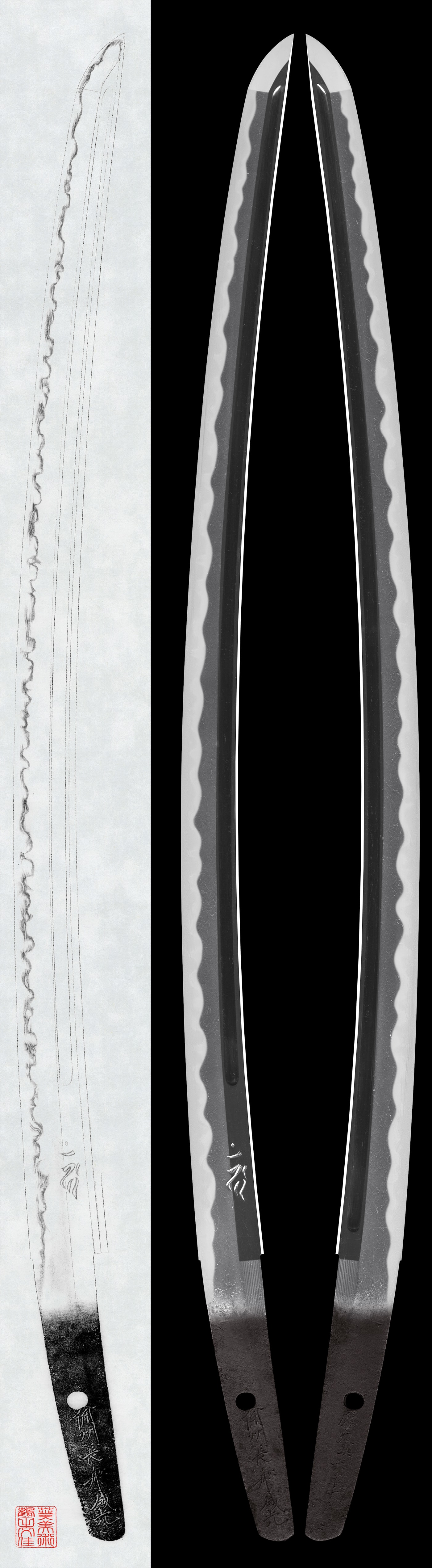
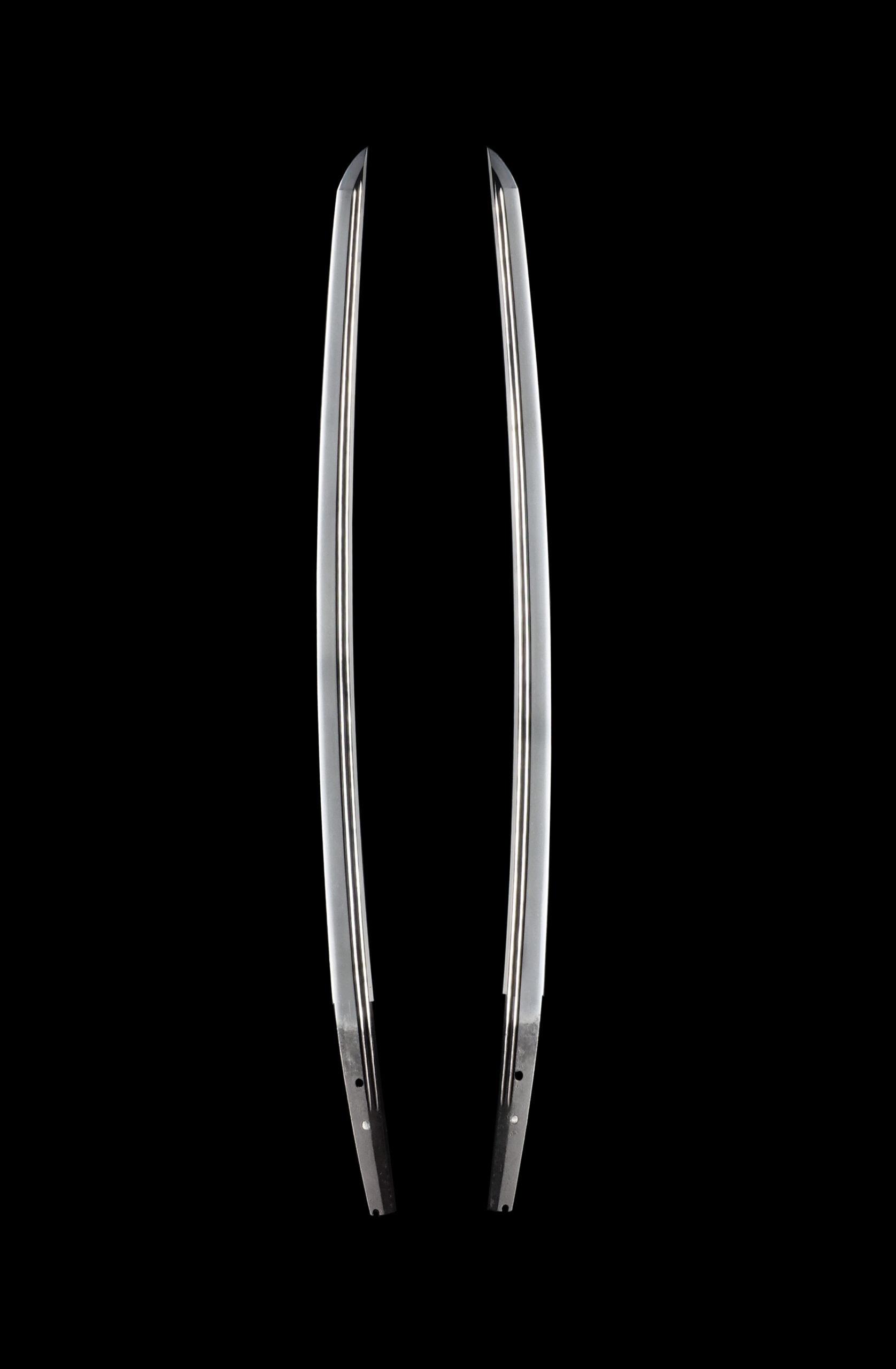
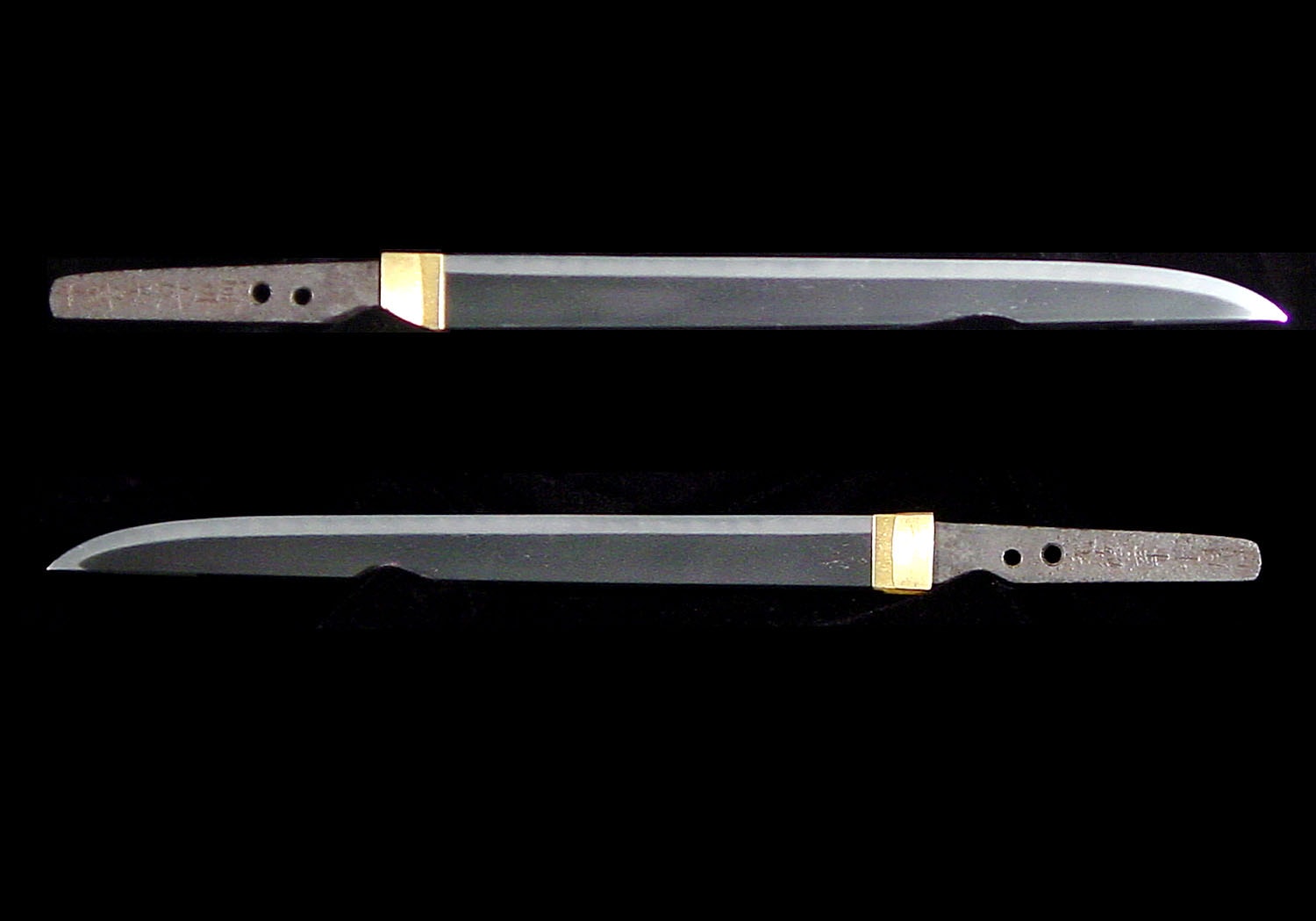
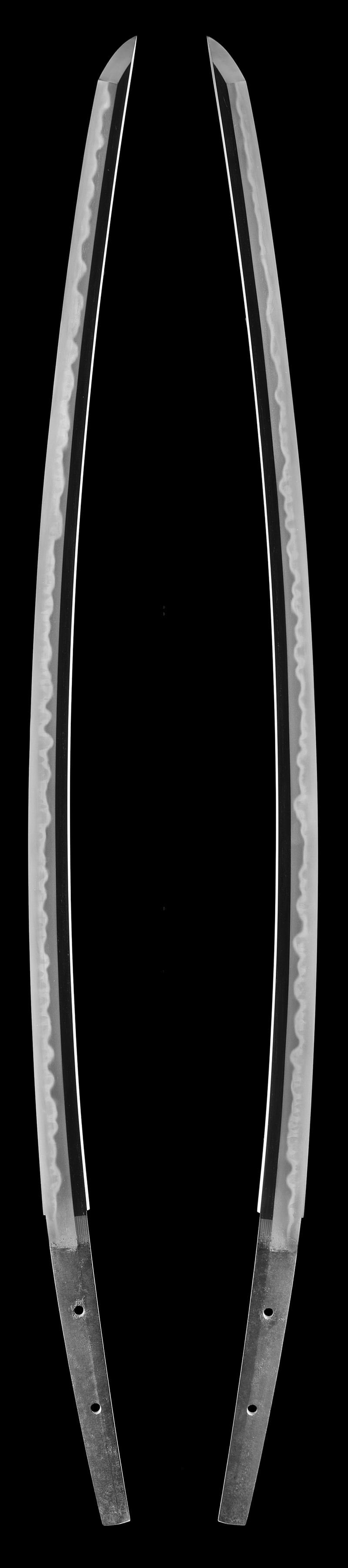
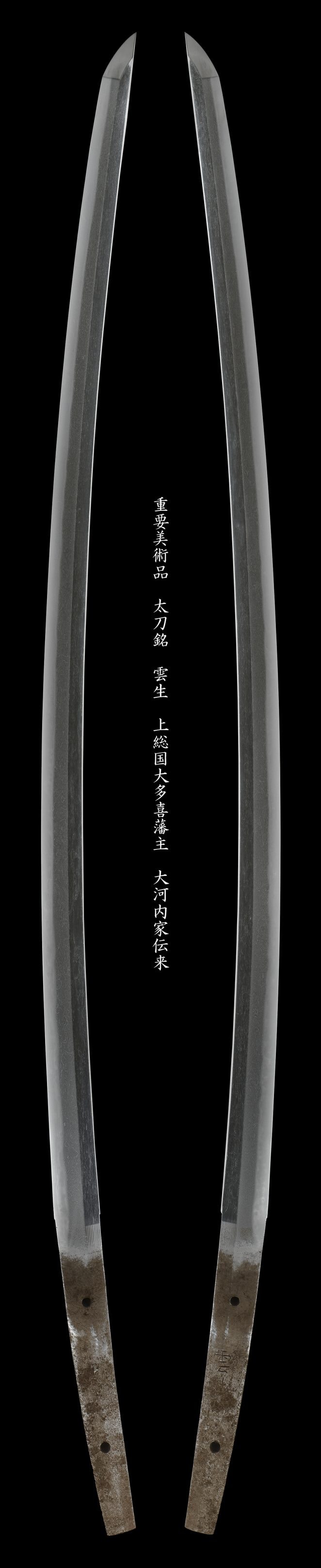
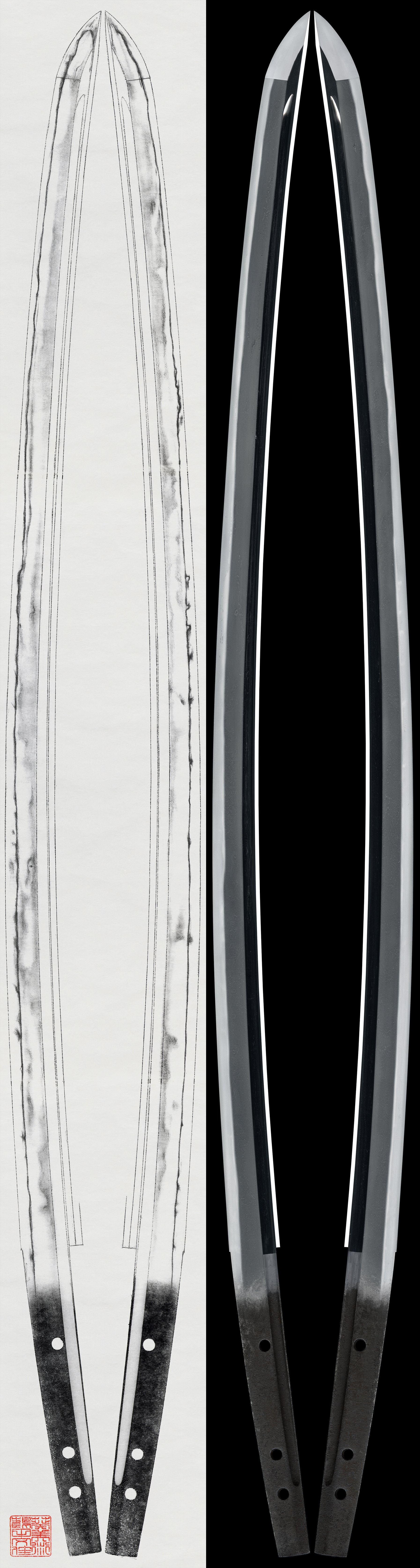
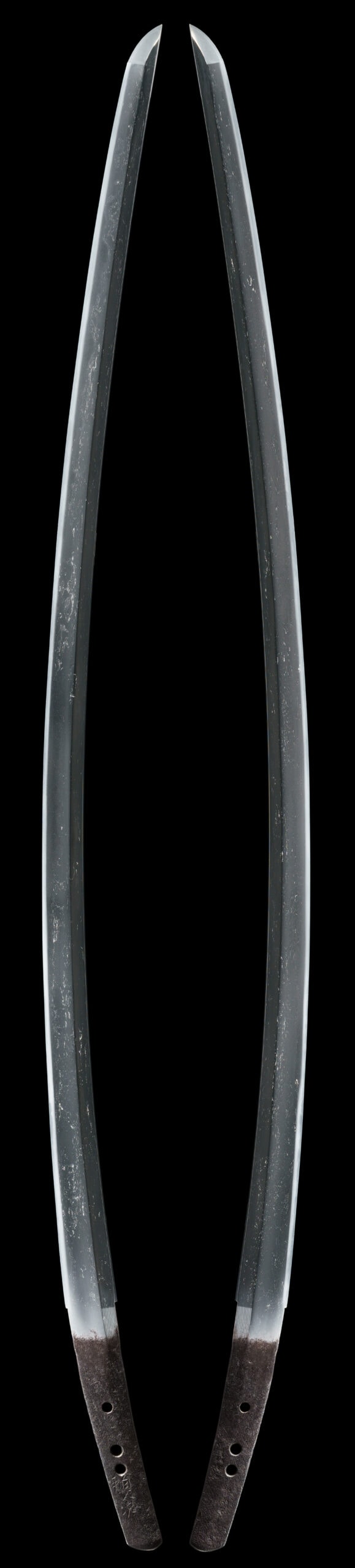
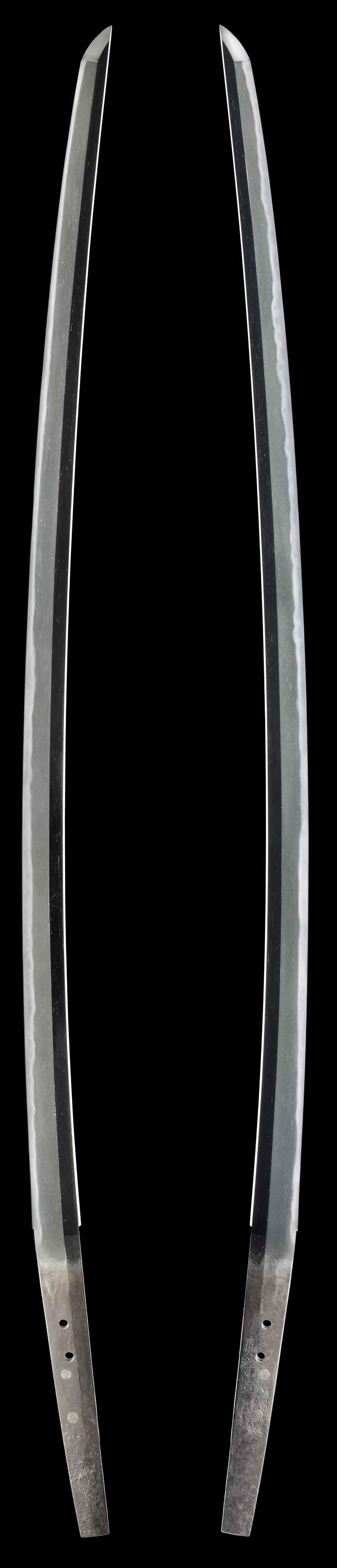
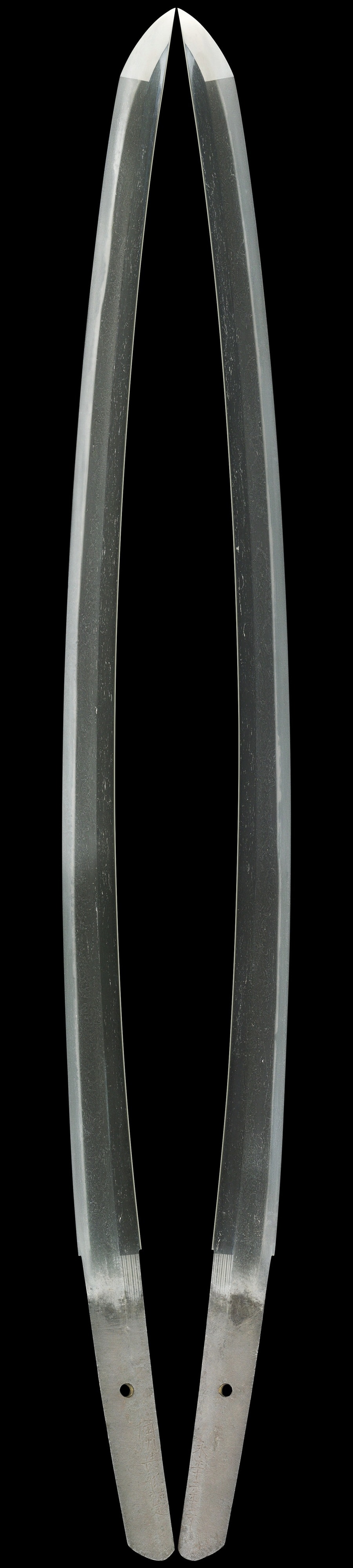
On a dated Chokyo 2, the eighth month of 1488, Sakyo no Munemitsu signed a thick- of withered , forged a closely packed with and bright , and over it set a that runs straight, mixes a little , breaks here and there into along the and carries , the bright. The published sources call it a masterpiece among his works, 「同作中の傑作と称して過言でない」. The blade states his case plainly. He was the second son of Rokurozaemon no Jo Sukemitsu and the younger brother of Ukyo no Katsumitsu, one of the representative names of the late- forges collectively called , and where his school was famous for a high, flamboyant temper he was famous for its opposite. The published record fixes him as an accomplished maker of the quiet line, and it is on that quiet line, not on the school's noise, that his hand is recognized.

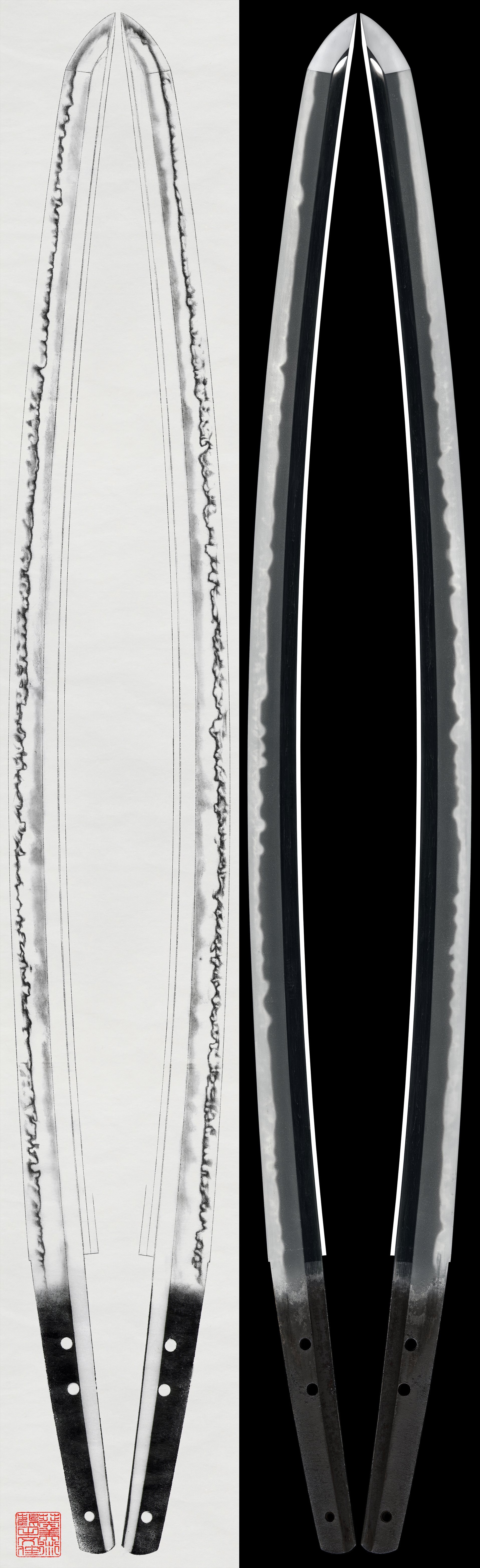
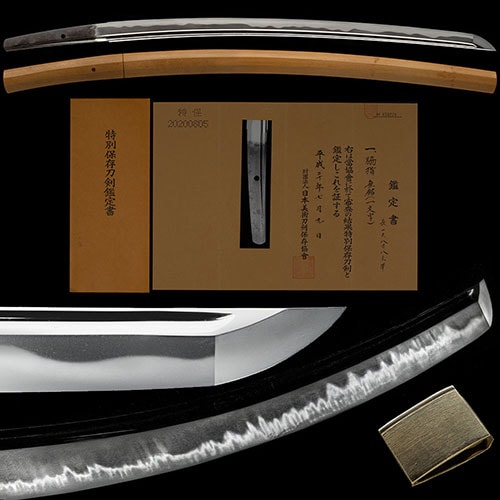
That individuality the published sources state in so many words: beyond the compound typical of , Munemitsu holds an established reputation as a superior maker of , 「直刃の上手として定評がある」. His characteristic blade is the standard late- katate-uchi , not greatly extended in length, with and a short, compact tang made for one-handed quick draw, over which he tempers a bright by turns slender, medium and broad. The dated Eisho of 1505 shows the manner at its surest, a broad into which is mixed, and working actively through it, adhering and rising, both and bright and clear. Set beside his brother the difference is one of scale and temperament rather than tradition. Comparing him with Katsumitsu, the published record observes that his pattern is of smaller-scale design, a manner frequently seen in Munemitsu's work, 「刃文が小模様で宗光によくみる作風を示している」, where Katsumitsu pushed the open-waisted into a louder, -rich flourish.

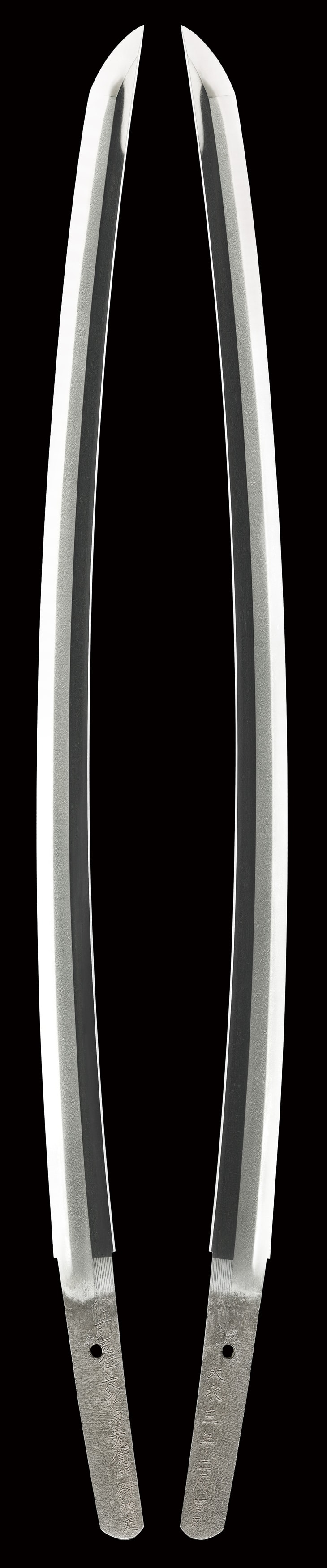
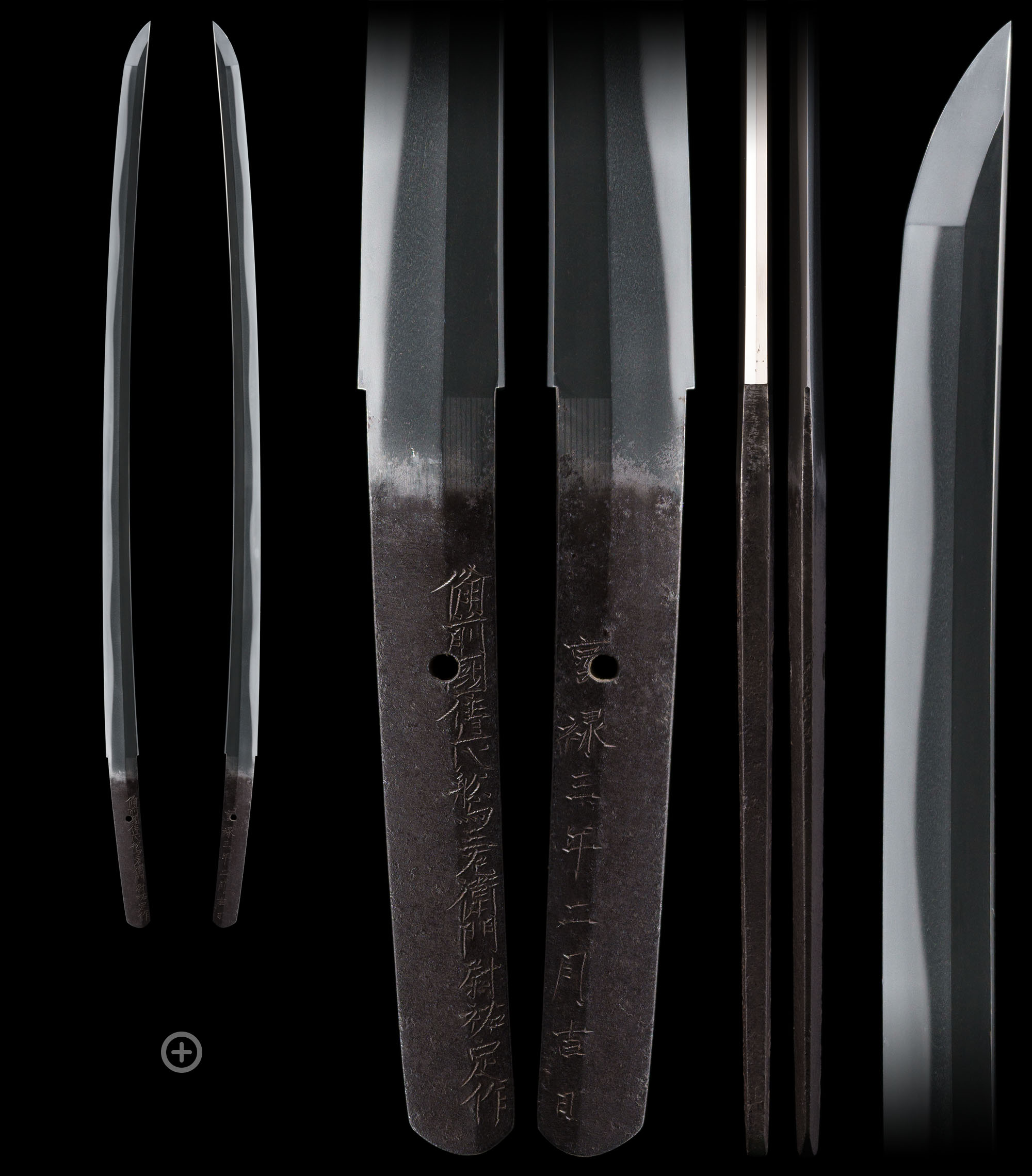
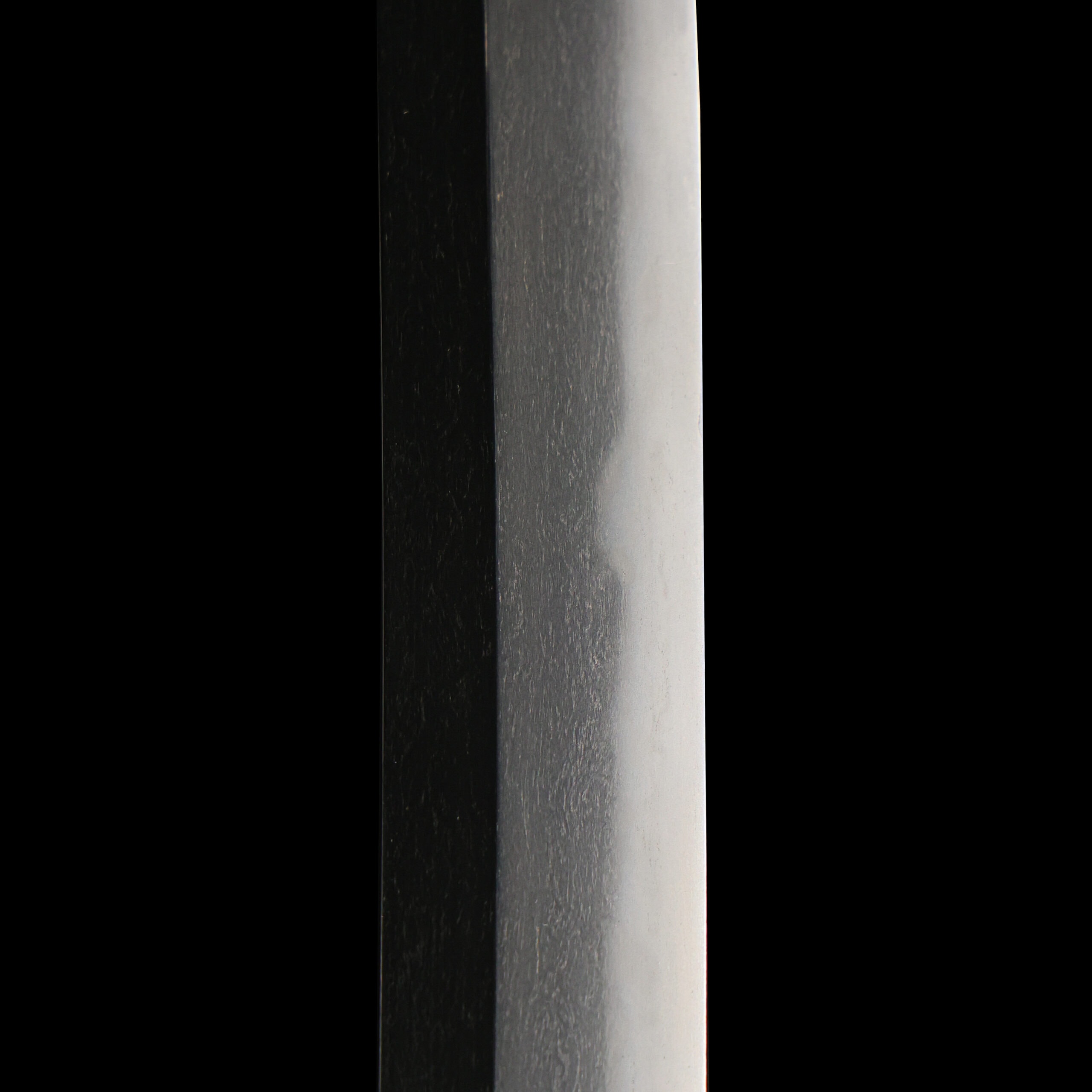
His is a tightly forged , the grain compact and refined, fine adhering and entering, and across it stands a , on the more archaic pieces a straight instead. It is this reflection over the packed steel that lends his its older flavour, and on the dated Bunmei of 1479 the published record notes the well-ordered , the standing and the slender with a tight as giving the blade an archaic air at first glance. On both faces he cuts the devotional carvings that mark work, a formal , seed-syllables, a plain , a four-pronged vajra and lotus pedestal, and shrine names such as and ; the published sources read these as the hand of collaborating specialist carvers and as a sign of the period and lineage rather than of any one smith. The runs straight to a small or large round on the blades, and turns where the temper grows busy.

Munemitsu was not confined to the quiet line, and the published record is careful to say so: examples exist of the compound , even if his is rated higher. In that register, best seen on the broad-bodied of the later Eisho years, he works over a with dense fine and a standing , the temper wide, the line an open-waisted mixed with , -, and a - manner, and entering, small scattered through it, and running, the bright and clear. The conspicuous within the the published sources place most often in Katsumitsu among smiths and next most often in Munemitsu, 「互の目の中に丁子刃が目立つ」, so that even at his most flamboyant the still reads him as the smaller-scaled of the two brothers. A separate strand of his record is documentary rather than stylistic. Because his career was long and because joint signatures survive both with his elder brother and with his nephew Jirozaemon no Jo Katsumitsu, the published record holds that the name Munemitsu likely ran into a second generation, the Eisho works belonging to the second, while granting that a firm boundary between the two is difficult to draw.

A large part of his surviving output is collaboration with the Katsumitsu line, prized under the joint name . These joint and are typical katate-uchi pieces, the a with and fine , the temper by turns a calm lightly mixed with and the school's open-waisted compound line, the and shrine carvings on both faces. Two of them are forged away from , on campaign at Kojima in in the Bunmei years, the inscription naming the place; one joint of 1486 is held to be of high documentary value beyond the quality of its work. The traditions the published sources record place the brothers at the Omi encampment in 1488 by command of the shogun Ashikaga Yoshihisa, setting up temporary forges across and , and fighting under Akamatsu Masanori. He stands as the technical peer of his fellow late- names Yosozaemon no Jo Sukesada and Gorozaemon no Jo Kiyomitsu, distinguished among them by his command of the straight temper; his bright over a refined and his clear set him apart without recourse to his brother's flourish.

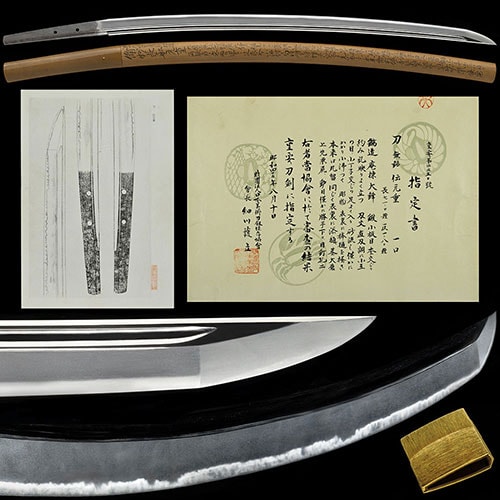
Munemitsu sits among the better-documented of the smiths, and his designated record reflects it. A co-signed with Katsumitsu and forged at Kojima in in 1486 is a Bijutsuhin, recorded across the standard reference literature, and a joint Katsumitsu and Munemitsu stands as an Important Cultural Property. He has no National Treasure and no , but twelve of his blades have passed , and a of his is preserved in the Imperial collection. The accompanying han-dachi of one Eisho 6 , a variant-lacquer mounting with the -ni-hiki-take-suzume crest of its house, descends in the Sendai Date family and was itself designated for its quality. Provenance of recorded whereabouts is thin but distinguished, running to the Imperial Family, the Date house and the prewar owner Shudo Sei of Fukuoka. For a private collector the designated blades outside museums and old houses are the realistic encounter, the dated joint pieces especially valued for the light they throw on the late genealogy; signed and dated Munemitsu survive in fair number for a name, yet a sound example with a clear date comes to market only from time to time, a documented joint blade rarer still.

Kantei

one Sue-Bizen Osafune hand whose recognized essence is the bright suguha, set against the school's flamboyant gunome: the prime suguha / hiro-suguha register over a ko-itame with midare-utsuri; the orthogonal open-waisted fukushiki-gunome with choji; and the documentary gassaku register with the Katsumitsu generations that frames the two-generation question

Munemitsu, titled Sakyo-no-, is one of the representative names of the late- forges called . The published sources give him a clear genealogy: second son of Rokurozaemon-no-jo Sukemitsu and younger brother of Ukyo-no- Katsumitsu, with whom he forged jointly so often that the joint name became a thing collectors prized. What the sources single out as his individuality is not the flamboyant temper of the mainstream but its opposite: among all the smiths of his day he holds an established reputation as a superior maker of , and they note that beside his brother his pattern is of smaller-scale design. His characteristic hand is a well-packed ground with fine , and a standing forth, over which he sets a bright, clear , or , and working through it, the tight and bright. He commands the school's flamboyant register too, the open-waisted compound (-) with , and a broad temper, but it is read as the secondary manner. He works the standard late- katate-uchi with and a short tang, and a few , and cuts the devotional carvings of , , and shrine names on both faces. His record carries a documentary weight unusual for a smith: the dated joint blades with the two Katsumitsu generations, and the Bunmei pieces forged on campaign at Kojima in , are read as primary material for reconstructing the late genealogy and for the question of whether the name Munemitsu ran to a second generation.

Diagnostic discriminators

38% of his works · 3.8× vs Katsumitsu (gunome-dominant, more flamboyant)

31% of his works · 2.0× vs the school at large (utsuri increasingly faint by Sue-Bizen)

Observation by phase

The bright suguha (his recognized essence)

the suguha register is the manner the sources tie to his name when distinguishing him from Katsumitsu (直刃の上手として定評がある), the chu-suguha and hiro-suguha pieces carrying the kantei

The published sources name Munemitsu, against the flamboyant grain of his school, as a smith with an established reputation as a superior maker of , and it is the pieces they call his typical and best work. The shape is the canonical late- katate-uchi : not greatly extended in length, added, the tang short, made for one-handed quick draw; among the a thick-, strongly of withered . The ground is a closely forged with fine , entering, in which a or, on the more archaic pieces, a stands forth, and the steel is clear. Over it he sets a bright, clear , by turns slender, medium () and broad (), into which and small are mixed; and enter, adheres, the tight and bright, with and . The runs straight to a small round or turns back somewhat deep. The dated Eisho is read by the sources as displaying his typical style, both and bright and clear; the Chokyo , with its refined and bright , they call a masterpiece among his works.

Sugata 姿
Jigane 地鉄
Hamon 刃文
Bōshi 帽子

The Sue-Bizen flamboyant register: open-waisted fukushiki-gunome

this register correlates with the wide-bodied wakizashi of the late Eisho years, where the broad fukushiki-gunome is most fully developed

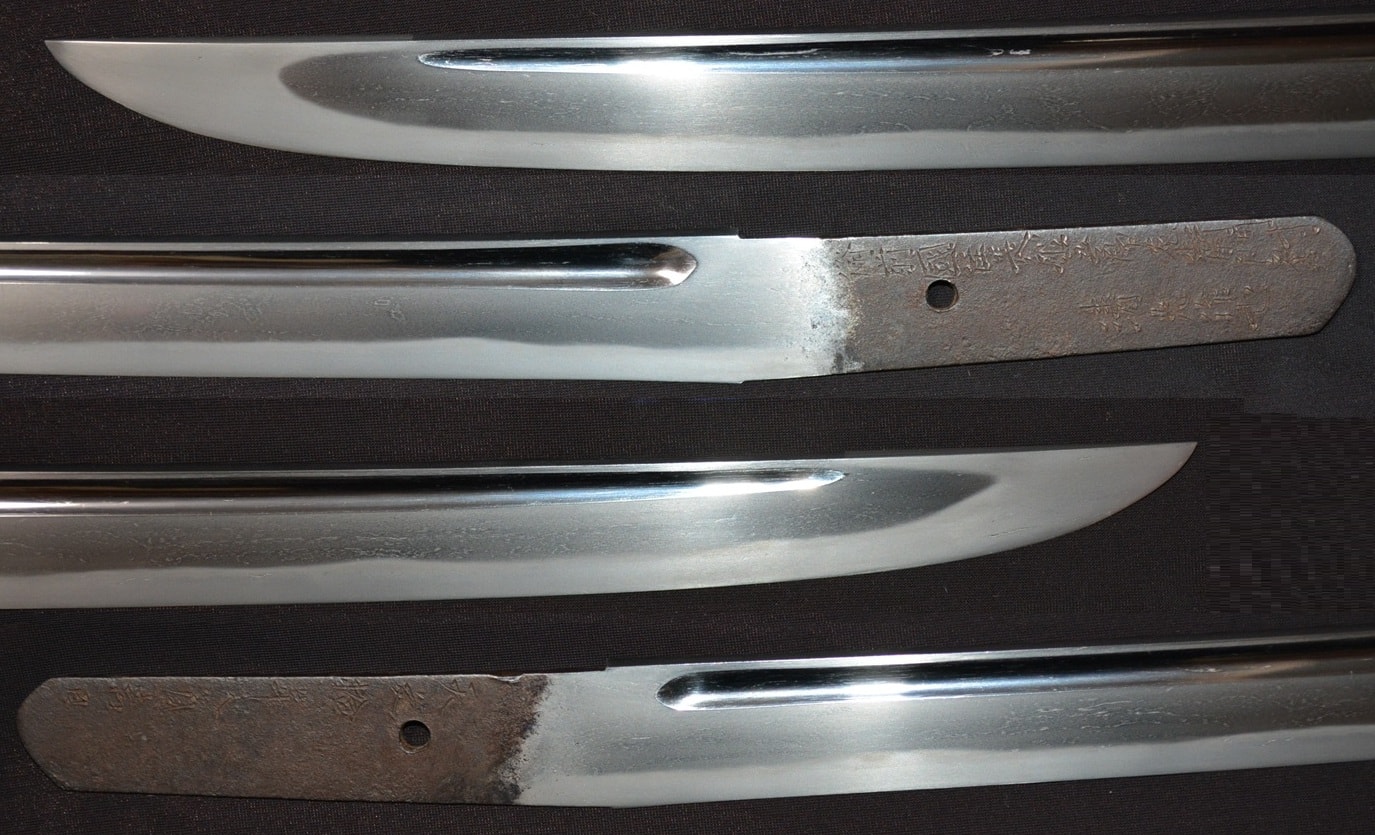
The published sources record that examples exist of the -characteristic compound , even though they rate his higher. Here he works in the school manner: over a tightly forged with dense, fine , and a standing forth, he sets a broad temper of open-waisted mixed with , , -, and a --like pattern, the wide with conspicuous undulations, and entering, small interspersed here and there, and running, the bright and clear. The runs to a small round with a long turnback, a little below. The carvings on both faces, a formal , , a four-pronged vajra and a lotus pedestal, are read as the work of collaborating specialists and as a clear sign of the manner. Even in this flamboyant register the sources still observe, comparing him with Katsumitsu, that his pattern is of smaller-scale design, the manner frequently seen in Munemitsu's work.

Jigane 地鉄
Hamon 刃文
Bōshi 帽子

The Munekatsu collaborations and the two-generation question

A large part of Munemitsu's surviving record is joint work with the Katsumitsu line, prized under the joint name . He signs with his elder brother Ukyo-no- Katsumitsu, and later with his nephew Jirozaemon-no-jo Katsumitsu. The joint blades are typical katate-uchi and in a ground with and fine , the temper by turns a calm with a slight admixture of and the school's open-waisted compound , the , and shrine-name carvings cut on both faces. Two of these are forged away from , on campaign at Kojima in in the Bunmei years, and the inscriptions note the place. Because his production span is long and because joint works exist with the later Jirozaemon-no-jo Katsumitsu, the published sources hold that the name Munemitsu likely ran into a second generation, the Eisho pieces belonging to the second, though they add that a firm boundary between the first and second generations is difficult to draw. The dated joint signatures are read as exceptionally valuable documentary material, urging a reexamination of the genealogy.

Jigane 地鉄
Hamon 刃文
Scholarship

The published sources record that, beyond the Sue-Bizen-typical compound gunome, Munemitsu holds an established reputation as a superior maker of suguha, and that compared with Katsumitsu his pattern is of smaller-scale design, a manner frequently seen in his work. They note that the conspicuous choji within the gunome is a feature most common in Katsumitsu among Sue-Bizen smiths and next most common in Munemitsu. They name him the second son of Rokurozaemon-no-jo Sukemitsu and the younger brother of Ukyo-no-suke Katsumitsu, and record traditions that he forged at the Omi encampment by command of Shogun Ashikaga Yoshihisa together with his brother, set up temporary forges across Bizen and Bitchu, and fought under Akamatsu Masanori.

Because Munemitsu's production span is long and because joint works exist with Jirozaemon-no-jo Katsumitsu, the son of his elder brother, the published sources hold it likely that the name continued into a second generation, the Eisho pieces belonging to the second, while adding that a firm chronological boundary between the first and second generations is difficult to draw. On one Eisho 2 katana a nine-character incantation is cut beneath the signature, with a single character Katsu (勝) below it, which the sources read either as Katsumitsu signing with the 光 omitted, indicating a joint work, or simply as the word victory, a point they leave undecided.

Dated Works

Years he was demonstrably active, proven by signed-and-dated blades

Active period
1478–1509Editorial estimate: 1469–1509
9 of 13 designated works carry a date
14701510
  1. 1478
    文明十年Juyo session 14, item 174
  2. 1479
    文明十一年Juyo session 13, item 116
  3. 1484
    文明十六年Juyo session 26, item 216
  4. 1488
    長享二年Juyo session 37, item 125
  5. 1501
    文亀元年Juyo session 20, item 217
  6. 1503
    文亀三年Juyo session 15, item 145
  7. 1505
    永正二年Juyo session 39, item 88
  8. 1508
    永正五年Juyo session 54, item 61
  9. 1509
    永正六年Juyo session 22, item 220

Designations

Kokuhō—
Jūyō Bunkazai1
Jūyō Bijutsuhin1
Gyobutsu2
Tokubetsu Jūyō—
Jūyō Tōken12

Elite Standing

0.09 across 16 designated works

Top 19% among smiths

Provenance

4 documented provenances across certified works by Munemitsu

Provenance Standing

3 works held in elite collections across 4 documented provenances

Top 20% among smiths

Raw score: 2.09 / 10

Blade Forms

Distribution across 16 ranked works

Signatures

Signature types across 16 ranked works

Currently Available

Lineage

Munemitsu
Students (4)
  1. 1.Tadamitsu忠光25designated
  2. 2.Katsumitsu勝光3 for sale9designated
  3. 3.Katsumitsu勝光3 for sale2designated
  4. 4.Munemitsu宗光1designated

Osafune School

Other artisans of the Osafune school

  1. 1.Mitsutada光忠61designated
  2. 2.Nagamitsu長光2 for sale253designated
  3. 3.Kagemitsu景光2 for sale146designated
  4. 4.Kanemitsu兼光4 for sale237designated
  5. 5.Sanenaga眞長1 for sale64designated
  6. 6.Chikakage近景4 for sale86designated
  7. 7.Tomomitsu倫光1 for sale64designated
  8. 8.Kagemasa景政2 for sale22designated
  9. 9.Masamitsu政光4 for sale84designated
  10. 10.Motomitsu基光3 for sale41designated
  11. 11.Kagehide景秀23designated
  12. 12.Yoshimitsu義光35designated

Munemitsu

Munemitsu(宗光) was a Japanese swordsmith of the Osafune school in Bizen province, active during the Bunmei (1469-1487) period.

The work follows the Bizen-den tradition.

Designated works by Munemitsu include 1 Jūyō Bunkazai (Important Cultural Property), 12 Jūyō.