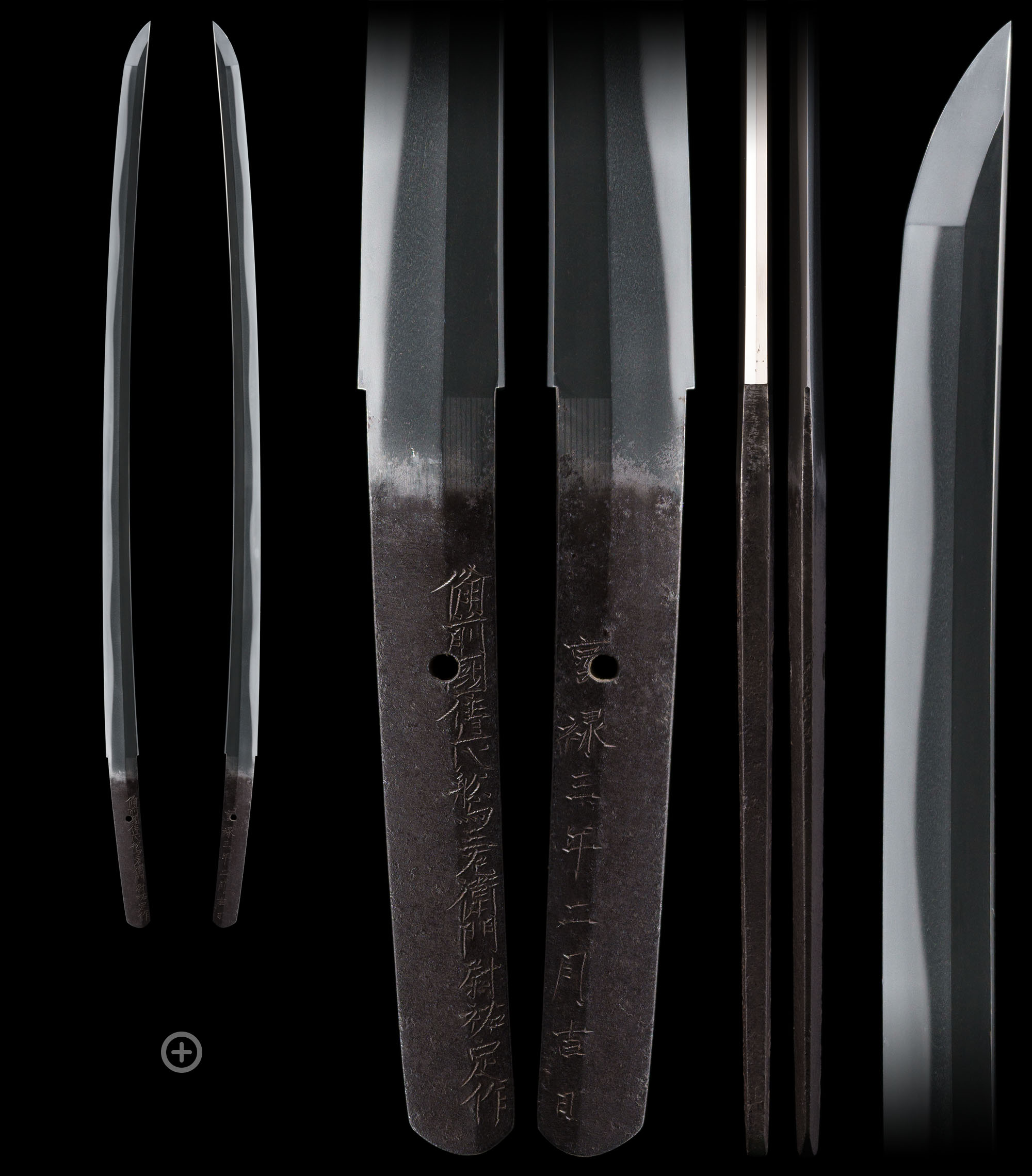
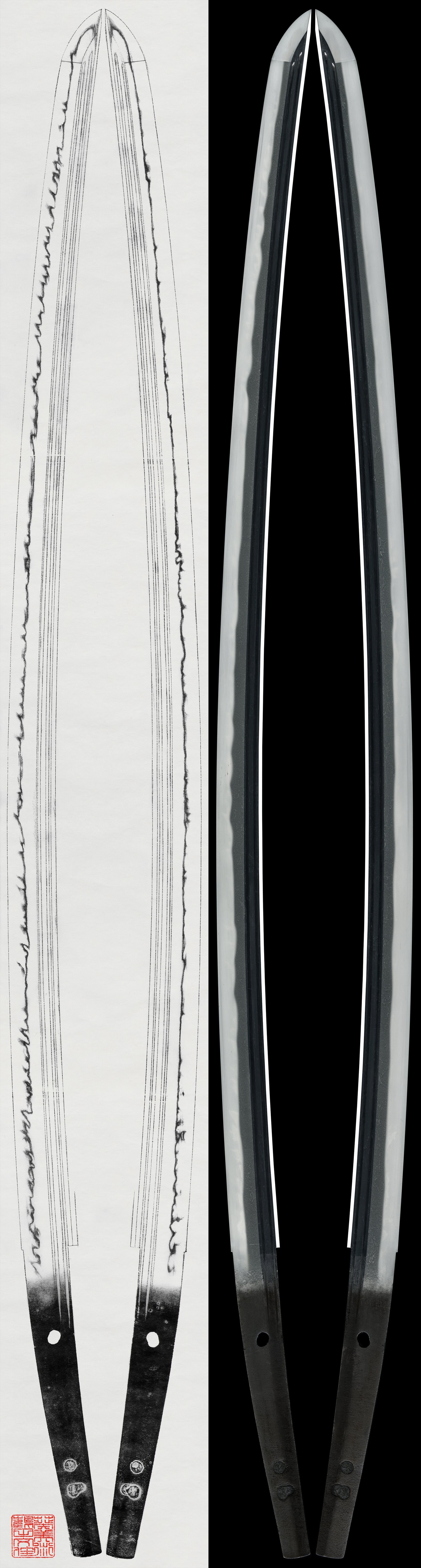
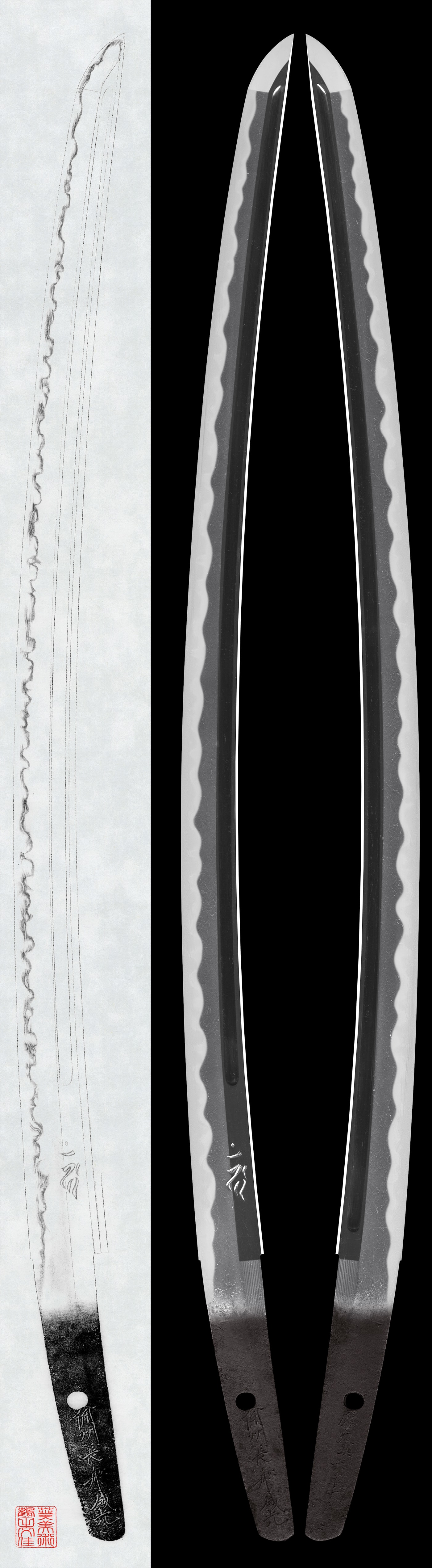
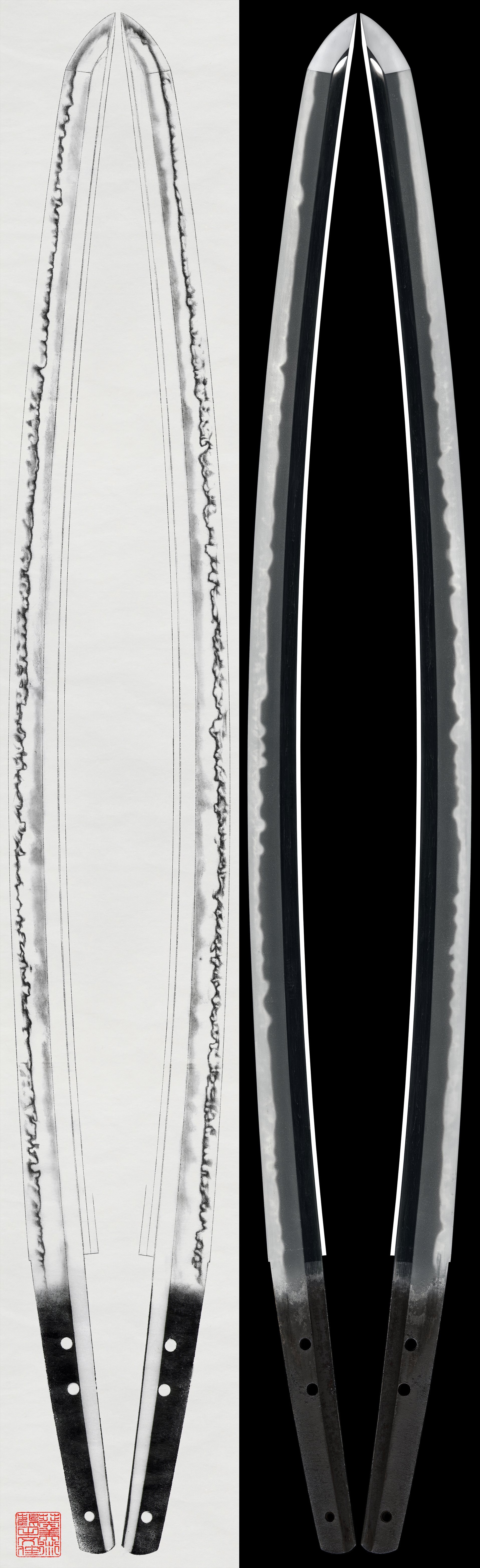
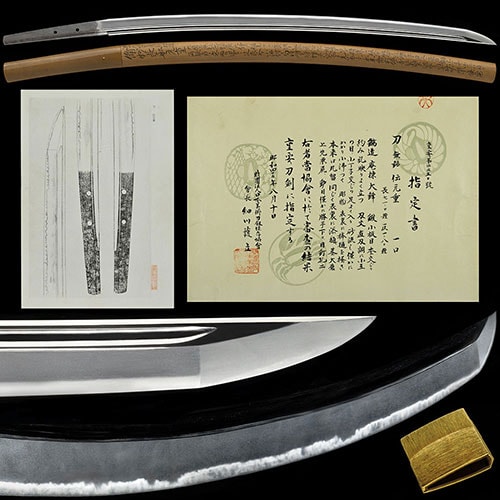
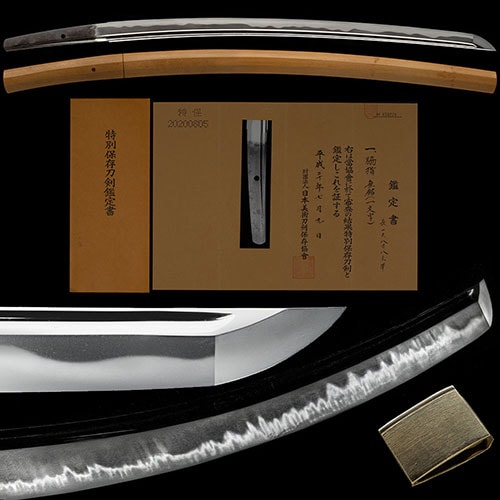
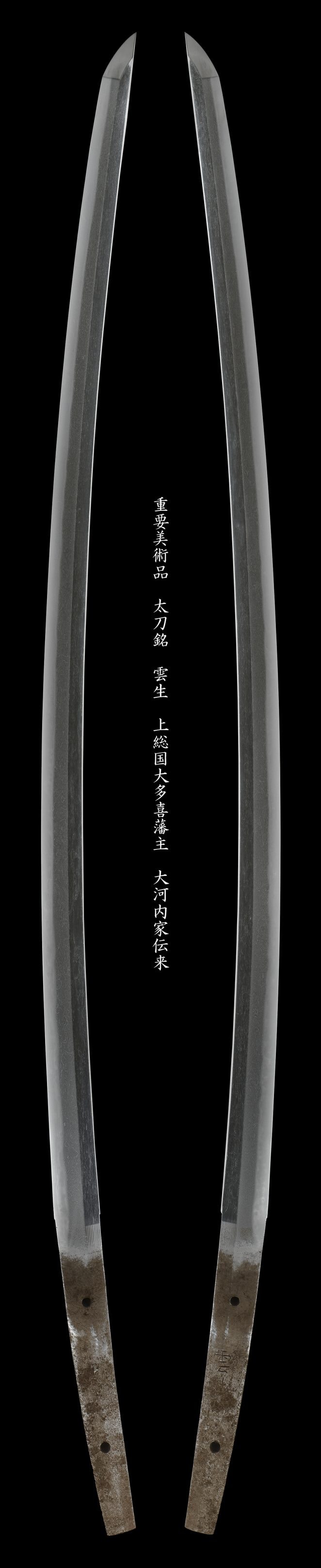
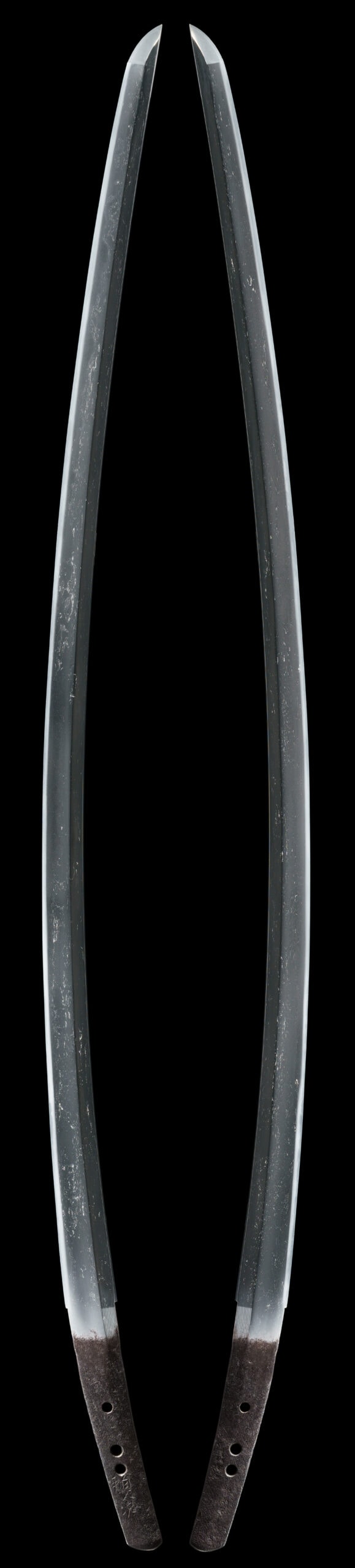
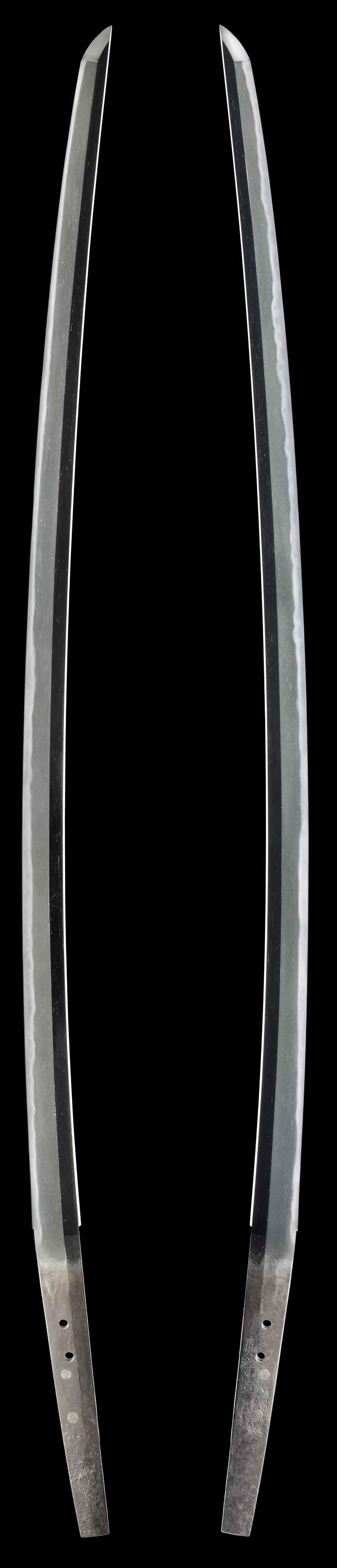
Katsumitsu is one of the representative smiths among the makers of the late period, belonging to the lineage commonly designated . Multiple generations of smiths signed the name Katsumitsu during the Meio era, among them a smith titled Ukyo no , his son Jirozaemon no Jo, and a Hikobei no Jo. Jirozaemon no Jo Katsumitsu is transmitted as the son of Ukyo no Katsumitsu and the father of Shuri no Katsumitsu and Jirobyoe no Jo Harumitsu. Works by the Katsumitsu line span from at least Meio 2 (1493) through Meio 9 (1500), and signature references record many smiths of this name adding a zokumyo to their inscriptions; those bearing no byname are most often attributed to Jirozaemon no Jo.
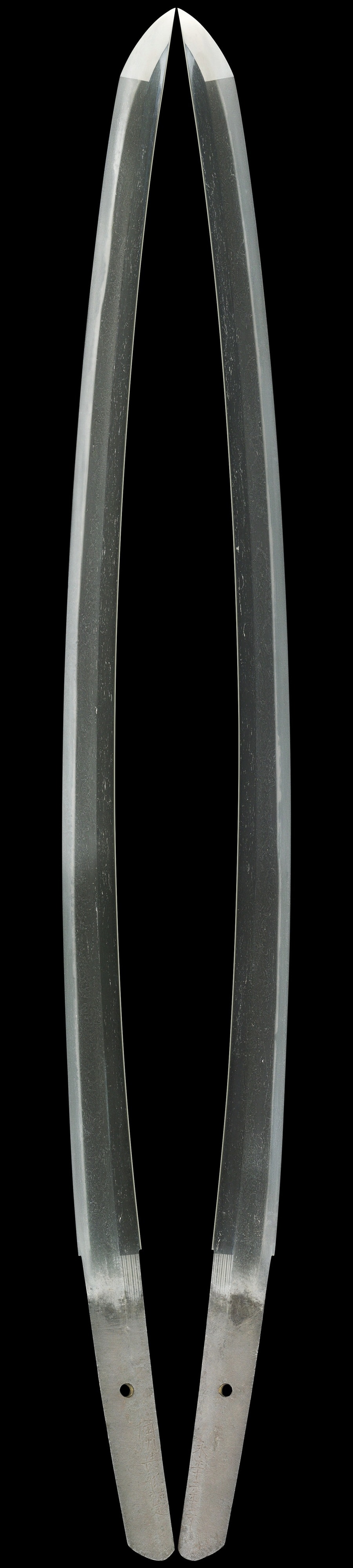
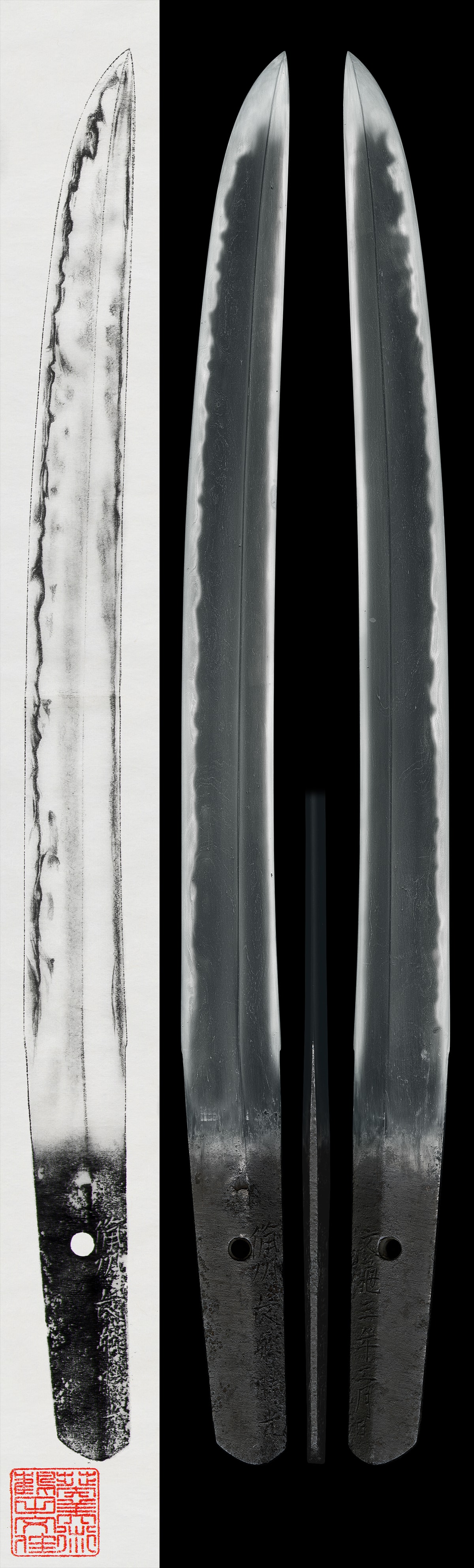
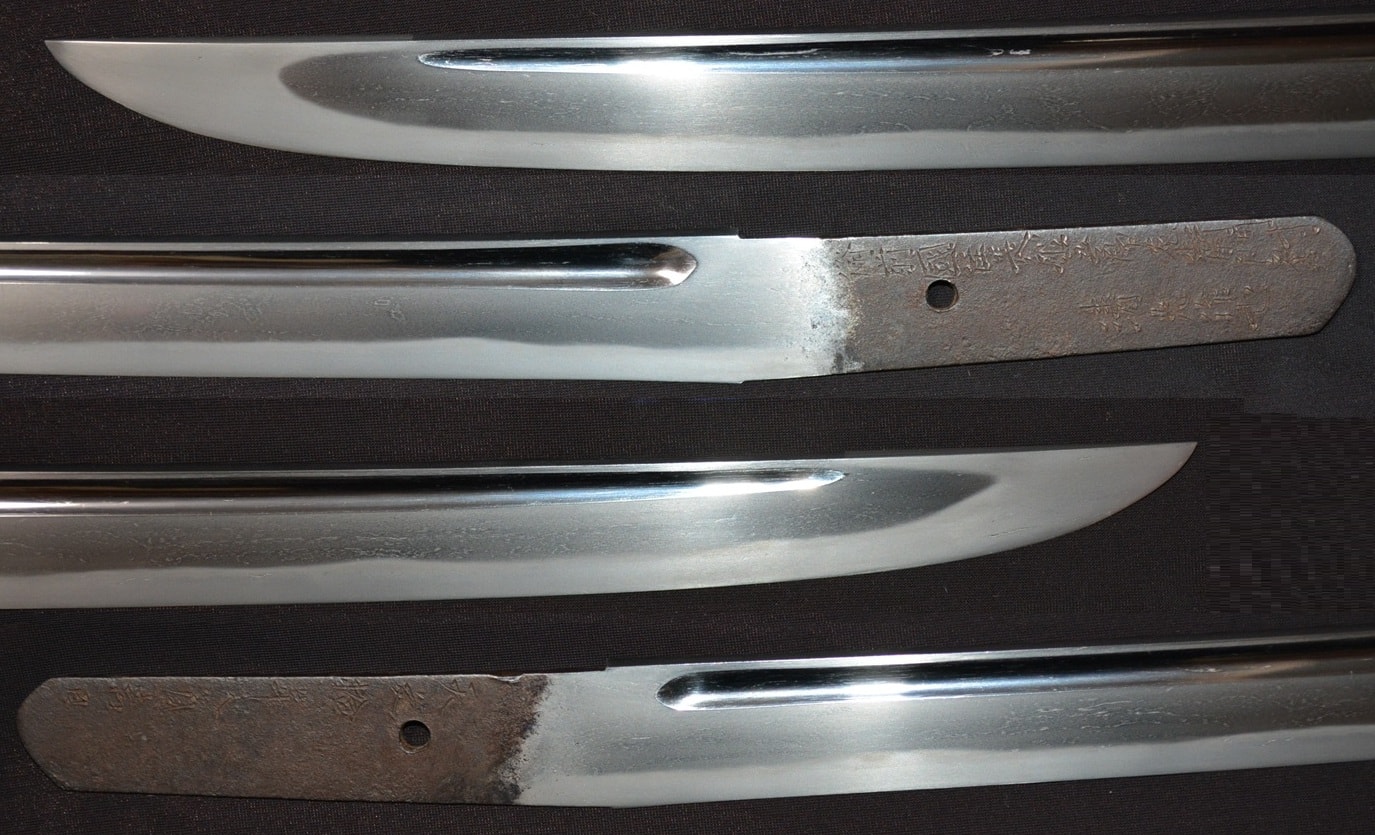
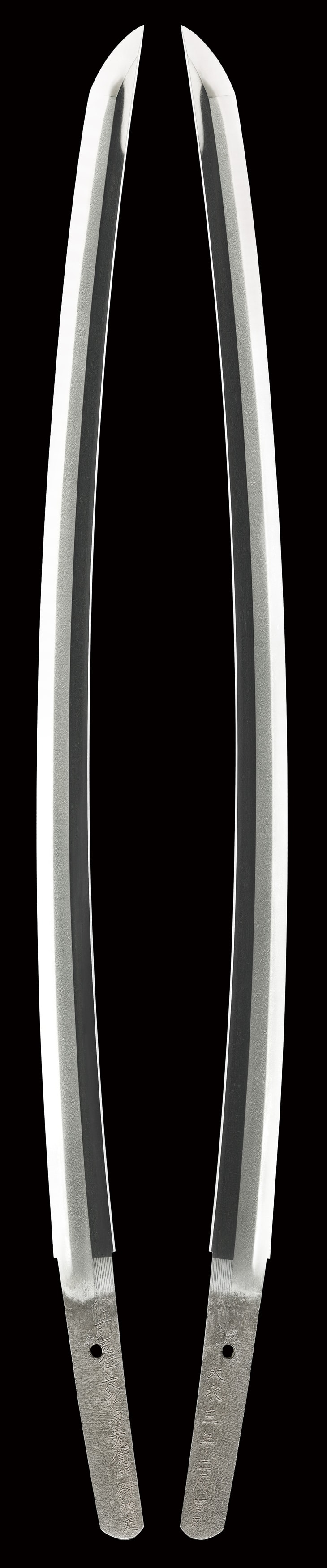
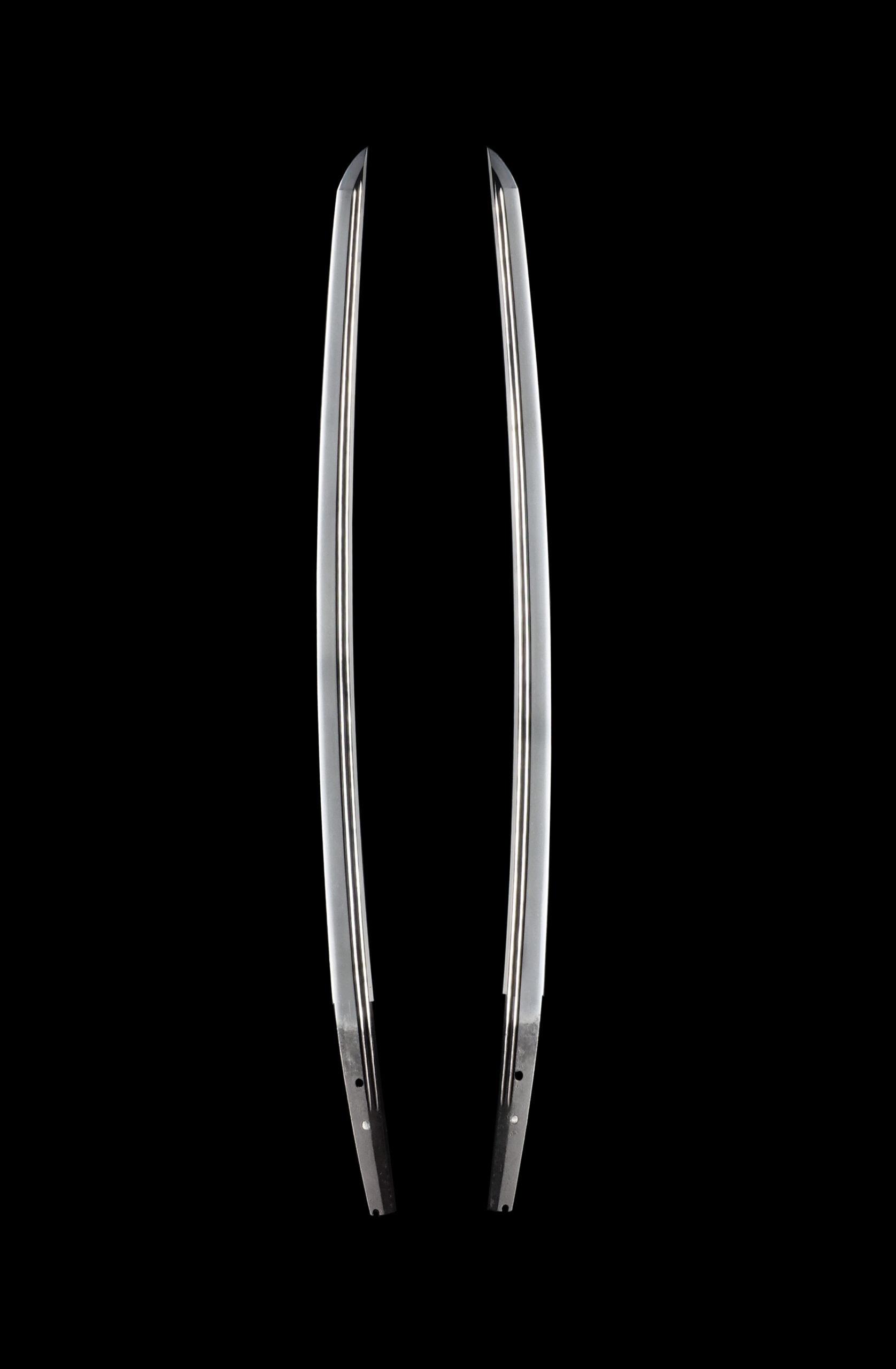
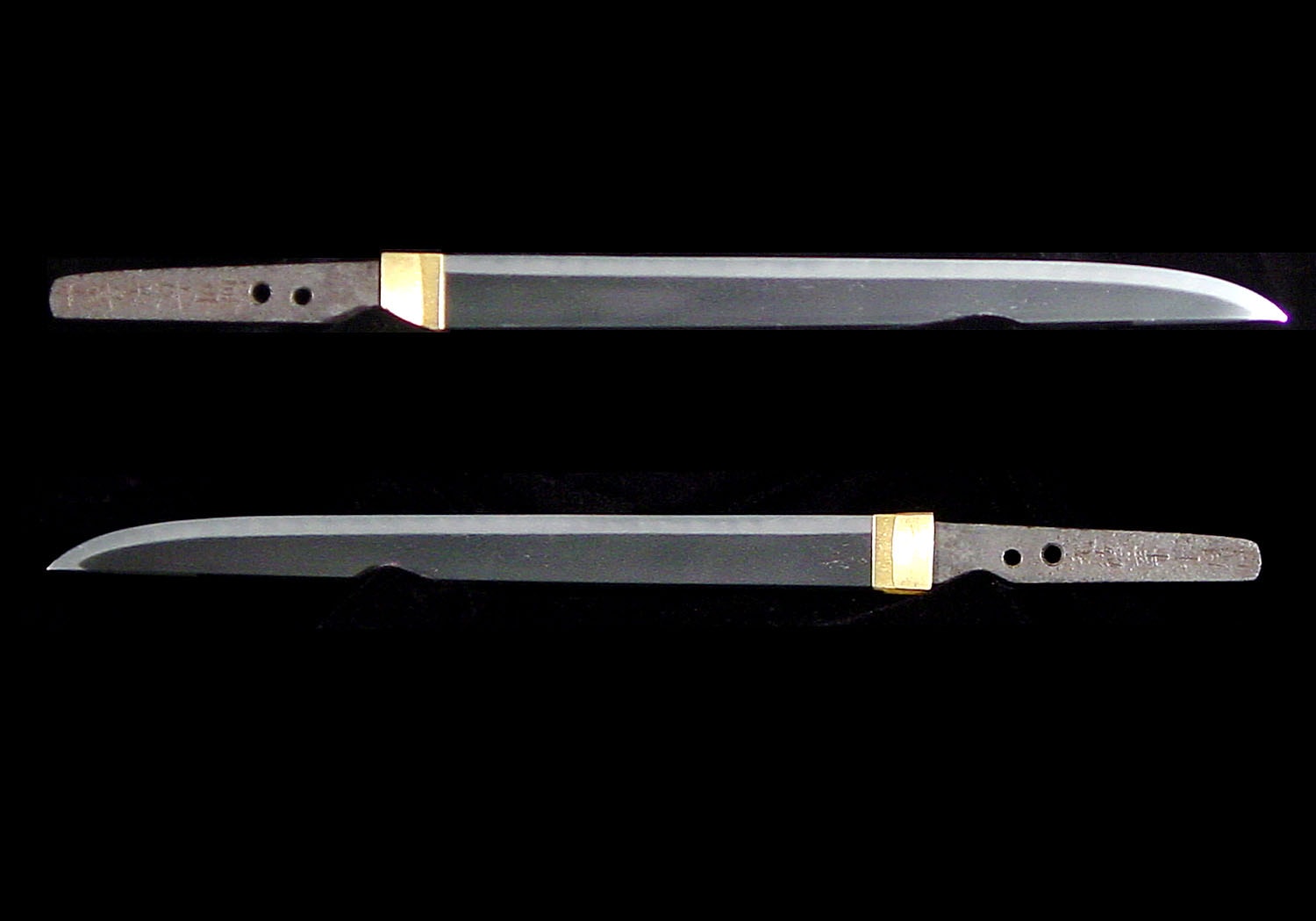
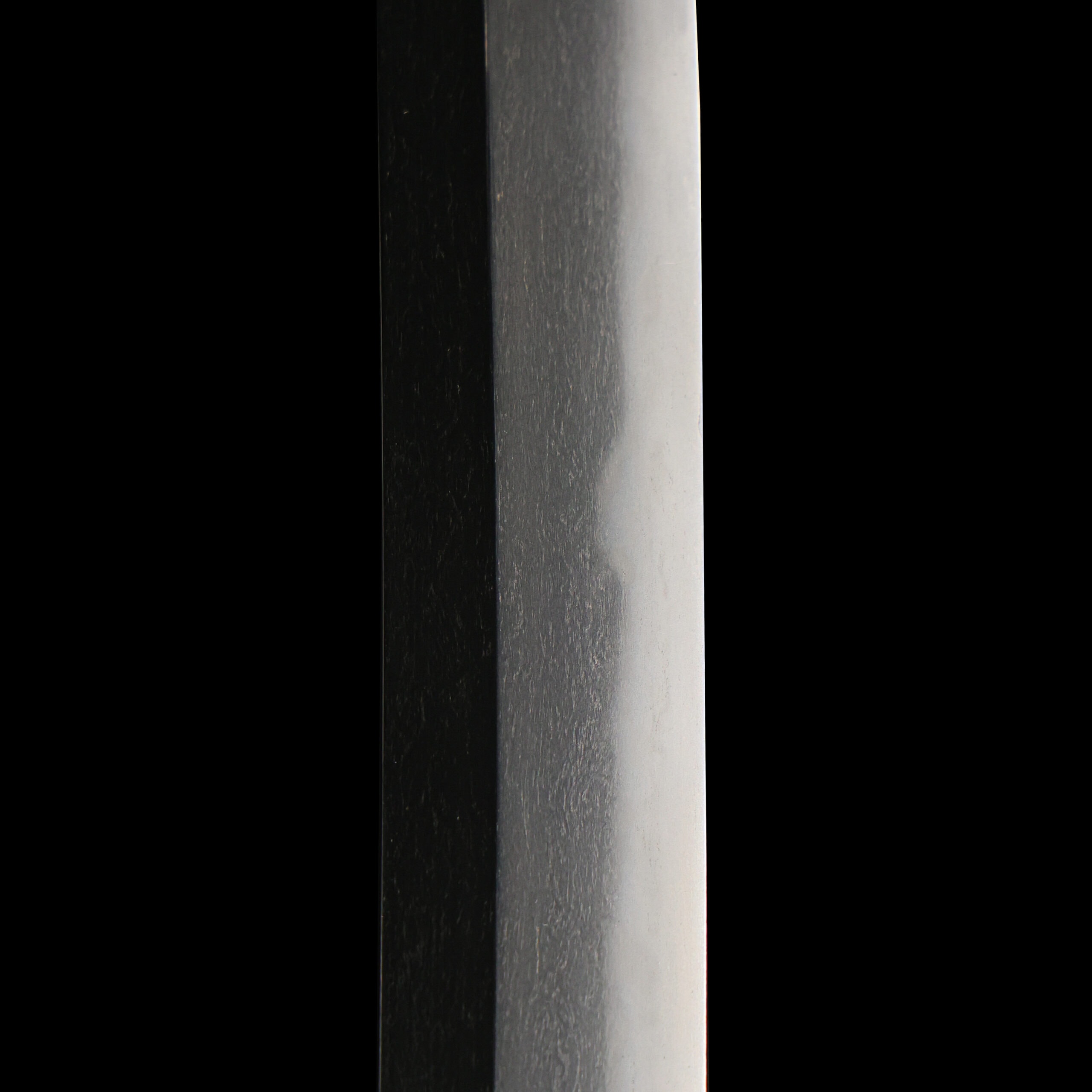
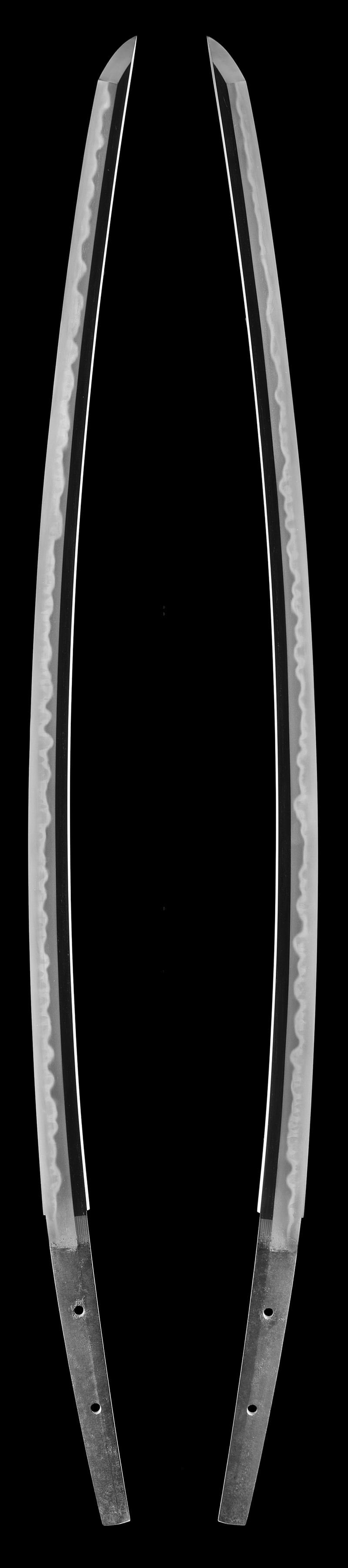
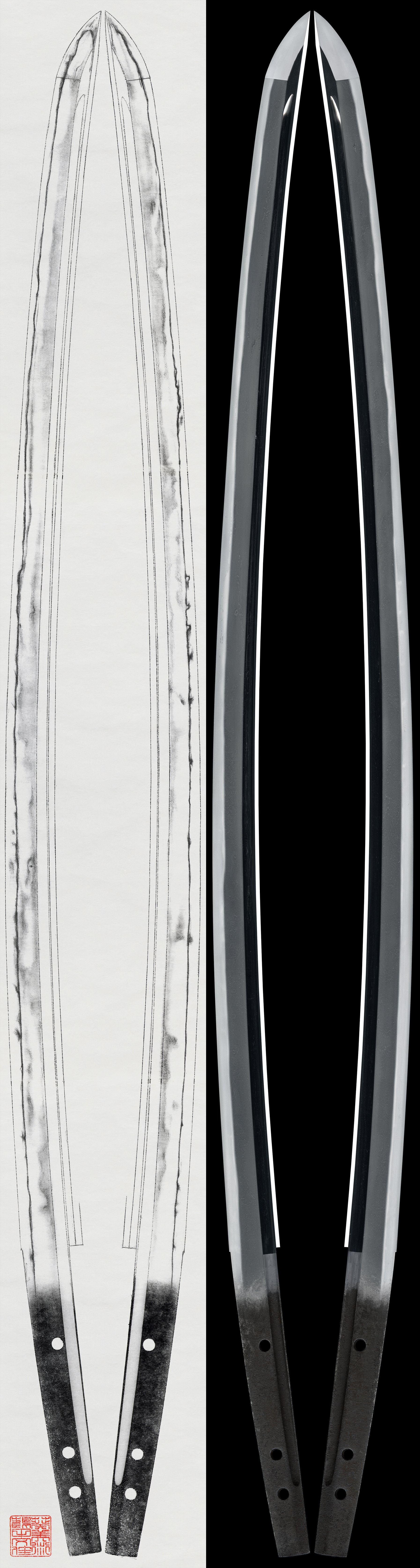
The forging of Katsumitsu's works characteristically shows tightly knit with very fine and conspicuous , though pieces of robust construction may exhibit with a flowing tendency and thickly applied with . The is typically a mixed of , elements, , angular forms, and , with and entering well, fine and , and a bright and clear . Compared with other smiths, Katsumitsu is especially adept at achieving a more florid and brilliant workmanship by mixing abundant within the , developing a lively temper in which is relatively prominent. The typically runs in turning back in with a long . His range encompasses not only the compact form with characteristic of late production, but also , yoroi-doshi of stout construction, and bearing elaborate including , , , and -no-.
Katsumitsu's work is recognized as not merely representative of his lineage but as a model example of workmanship. The consistently notes that both and are bright and clear, revealing an outstanding level of workmanship, and that his blades fully embody the principal points of interest of the Katsumitsu line. His carvings are praised as powerful and splendid, well demonstrating the distinguishing characteristics of work. The finest examples are described as excellent pieces suffused with robust power and resolute strength, together with splendor, combining many points of appreciation. His signatures, including joint-authorship inscriptions with Sadamitsu and dedicatory inscriptions such as "Kamo Daimyojin," possess high documentary value, making his oeuvre an important source for research into the tradition and the lineages that supported it.