NihontoWatch MonNihontoWatch
MarketEncyclopediaKantei
NihontoWatch MonNihontoWatch
Market
Encyclopedia
Kantei
Overview·Historical importance·Designations·Kantei·Dated Works·Lineage·School
OverviewHistorical importanceDesignationsKanteiDated WorksLineageSchool
  1. Schools
  2. Osafune
  3. Sue-Bizen
  4. Arimitsu

Osafune Arimitsu

在光

Jūyō
Vol. 52, No. 75 · Katana

Osafune Arimitsu

在光

4 ranked works

Major smith
ProvinceBizenEraEisho (1504–1521)PeriodMuromachiSchoolOsafuneTraditionBizen-denGeneration2ndTeacherArimitsuToko Taikan450(top 31%)TypeSwordsmithCodeARI301
4Jūyō Tōken

Overview

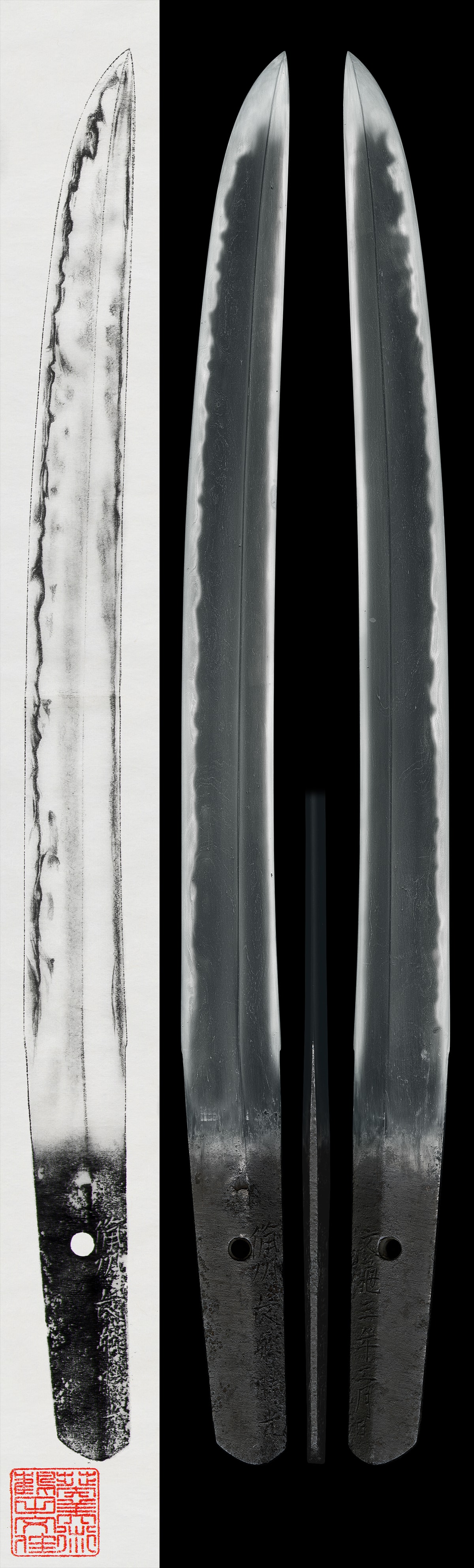
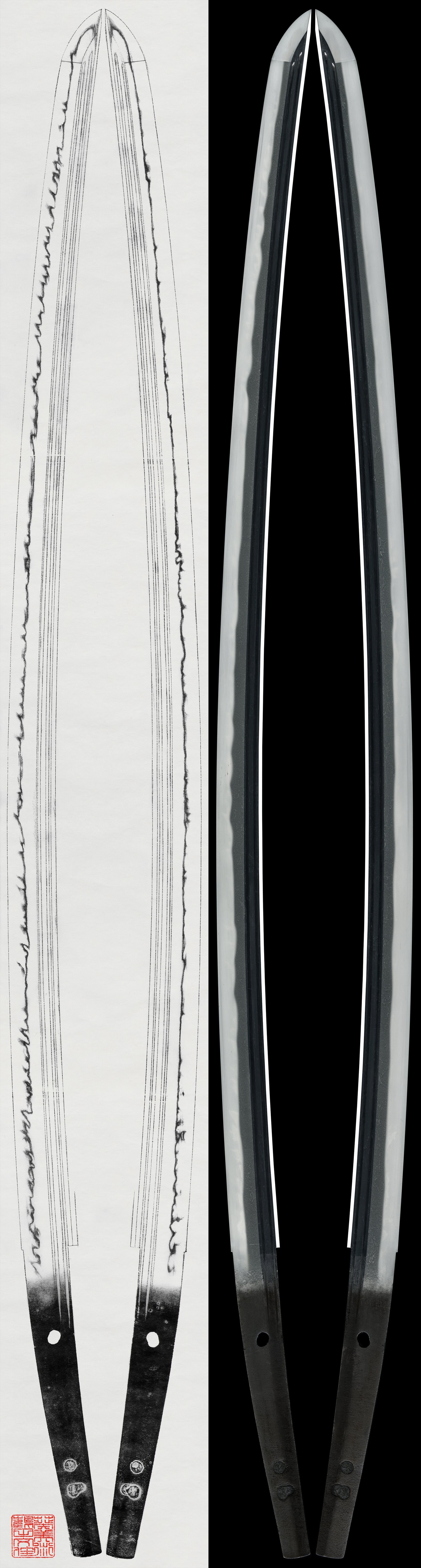
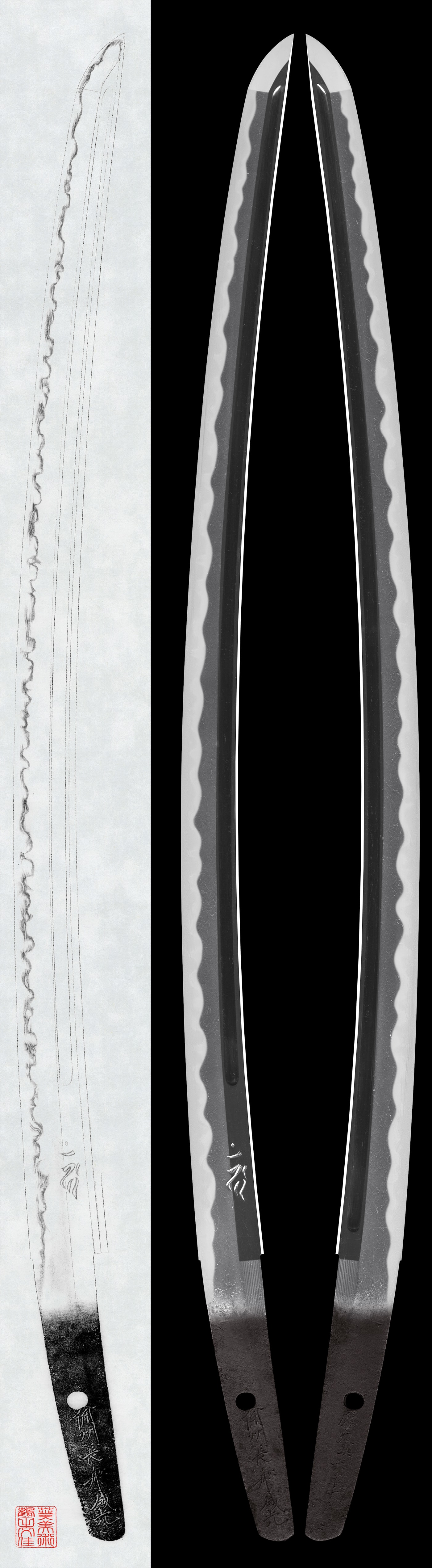
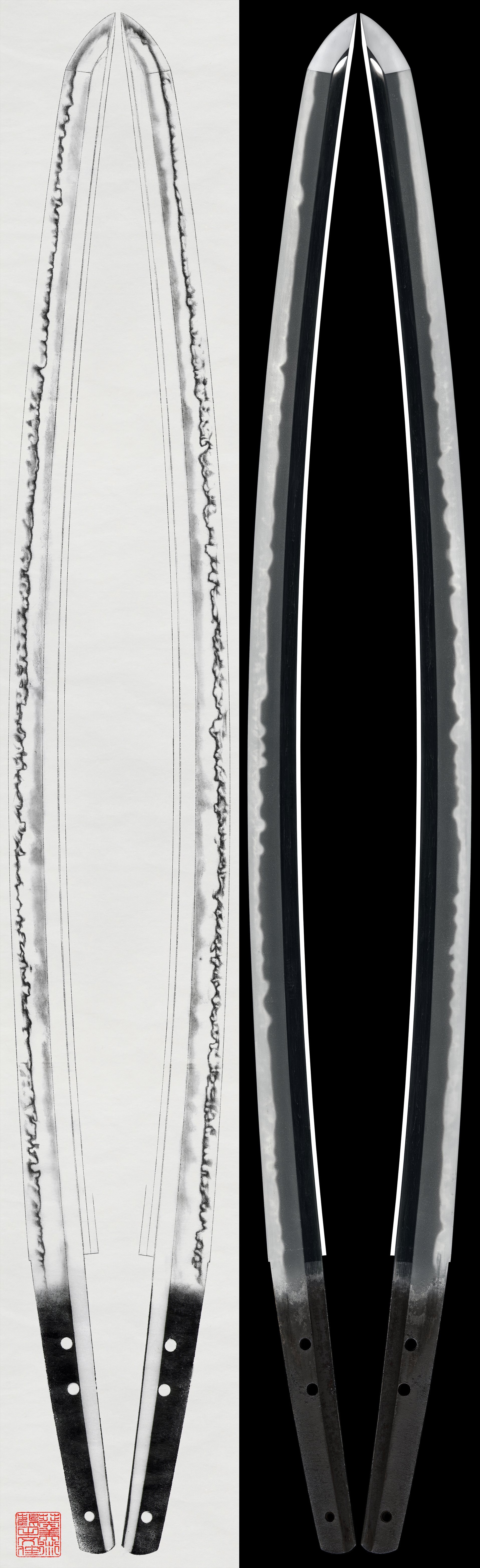
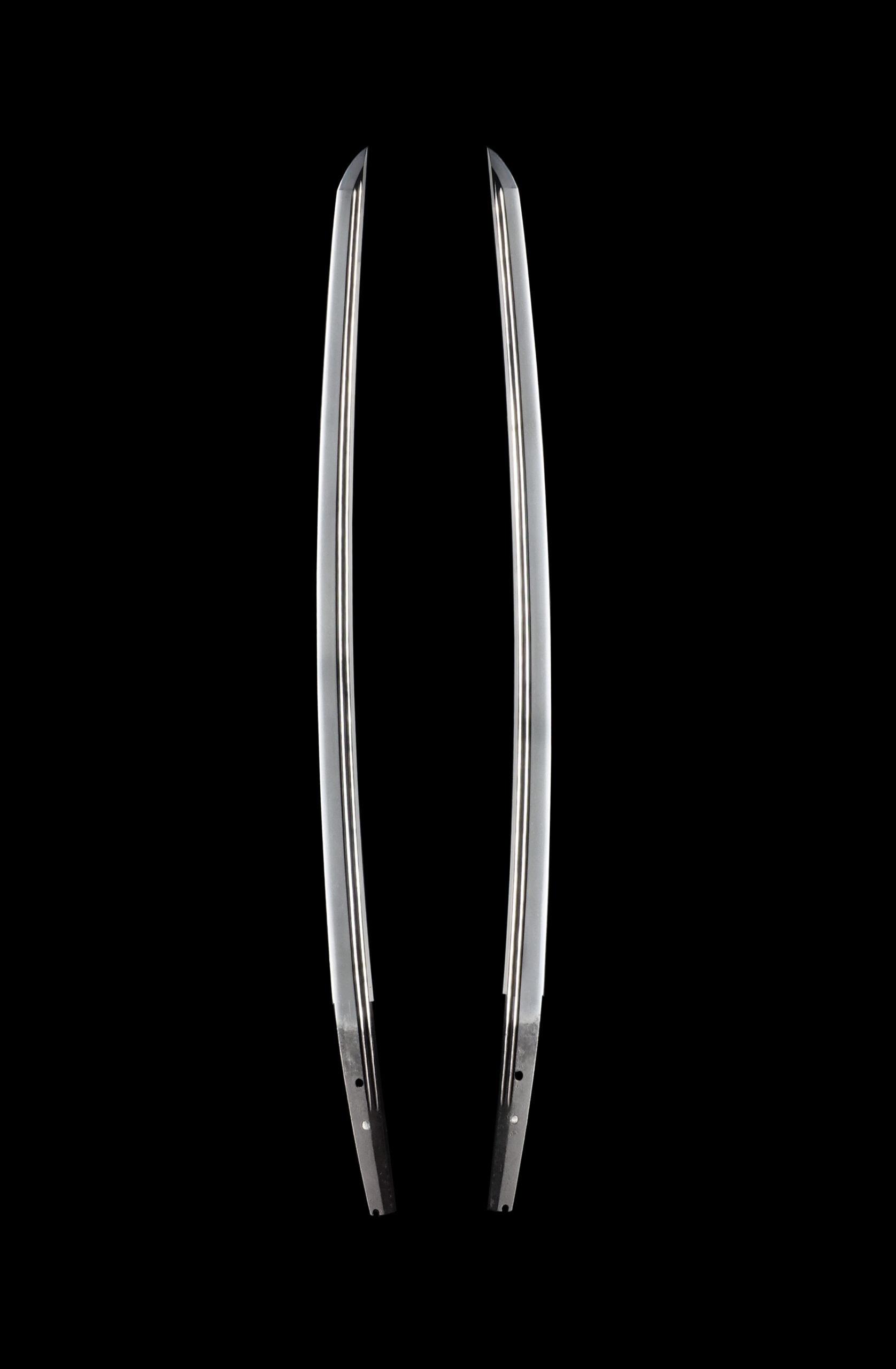
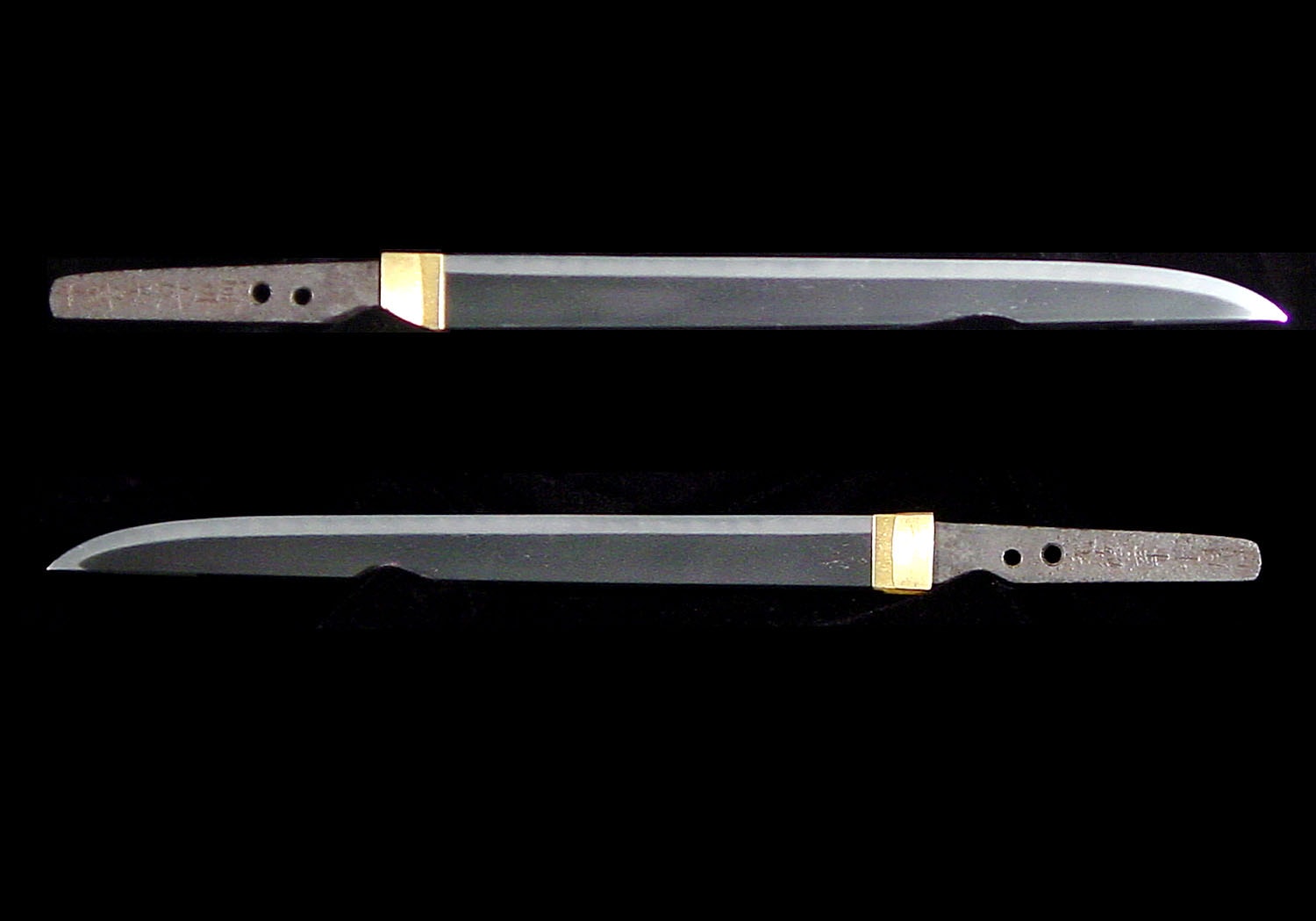
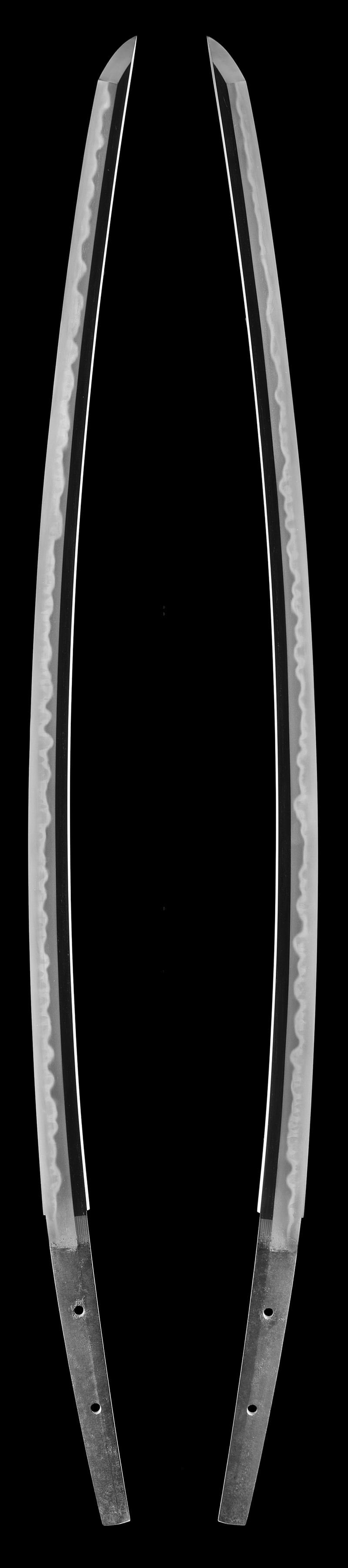
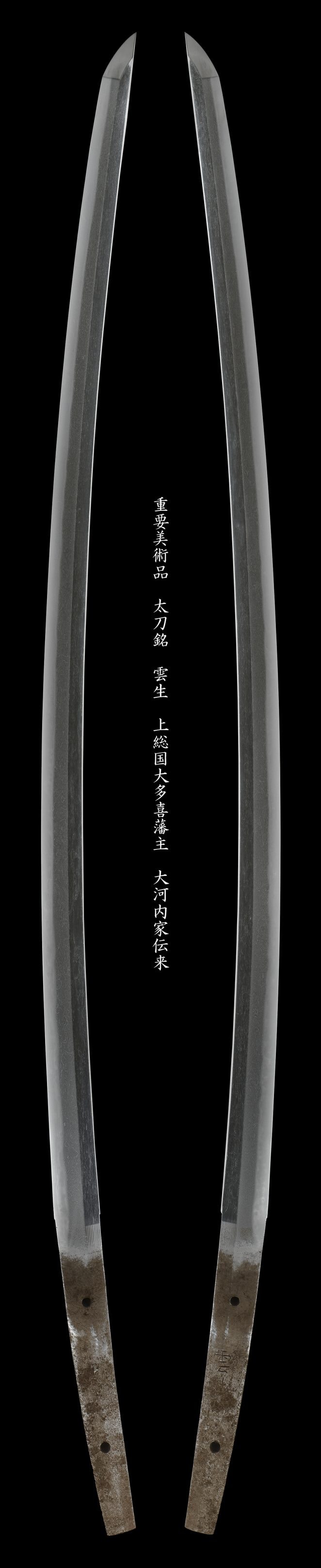
Arimitsu, whose name is read Zaikō, is one of the group of smiths of , and his four designated carry dates running from Eishō 3 (1506) through Eishō 9 and Eishō 17 to Daiei 6 (1526), at the height of the late period. The reference compendia enumerate six smiths who signed with this name. Among them the representative hand is the Arimitsu who received the court title Izumo no Kami in Eishō 1 (1504), the year, the published sources note, in which Izumi no Kami Kaneyuki of Seki in received his own title; and they add that among the smiths whose names carry the character mitsu, examples bearing such a conferred title are 「受領名のある光の作品は頗る少ない」, exceedingly few. He works in the great of the sixteenth century, the workshop that carried the name forward alongside the Katsumitsu and Sukesada lines, and the published commentary holds that his work 「応永備前の作風を継承」, inherits the style of Ōei-period , the manner of Morimitsu, Yasumitsu and Moromitsu before him.

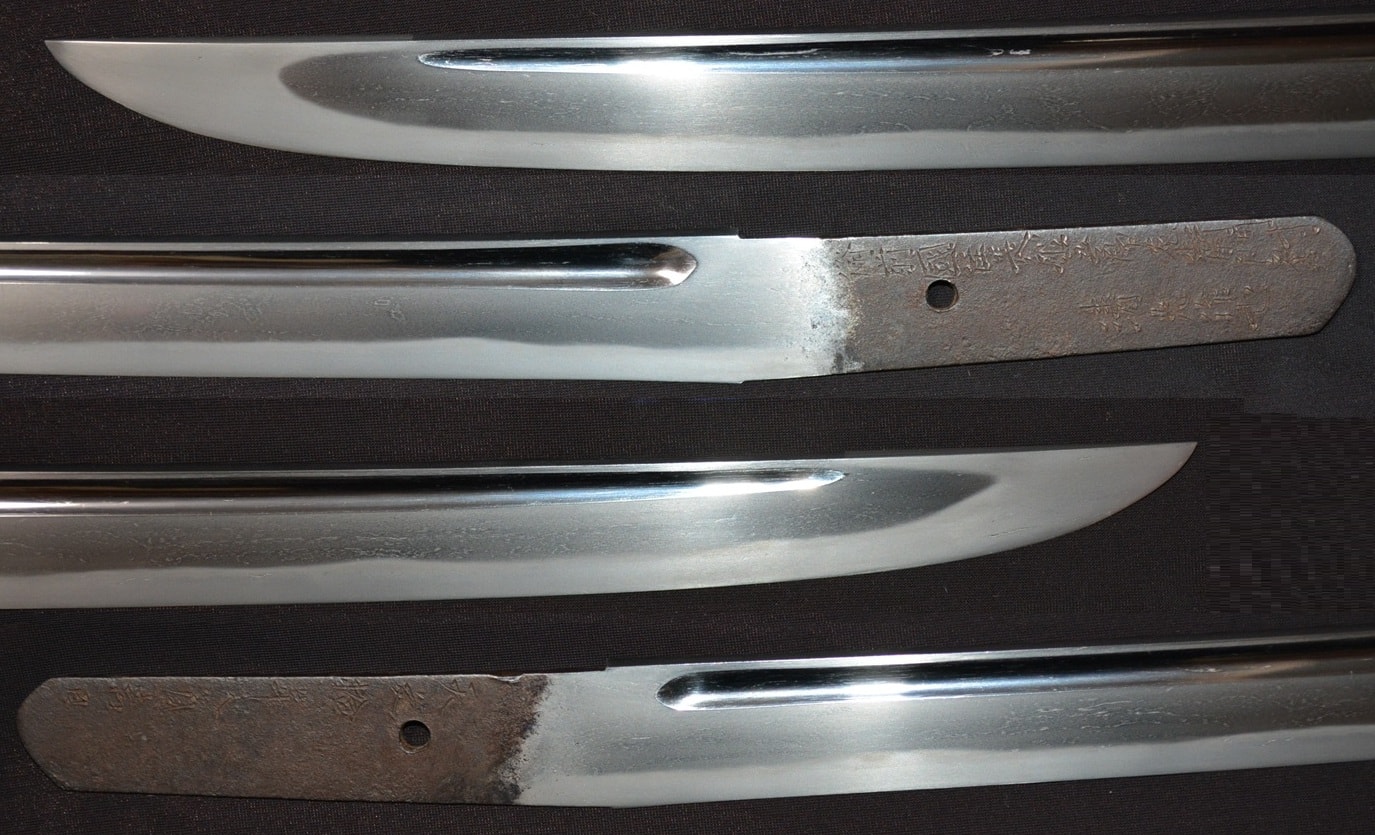
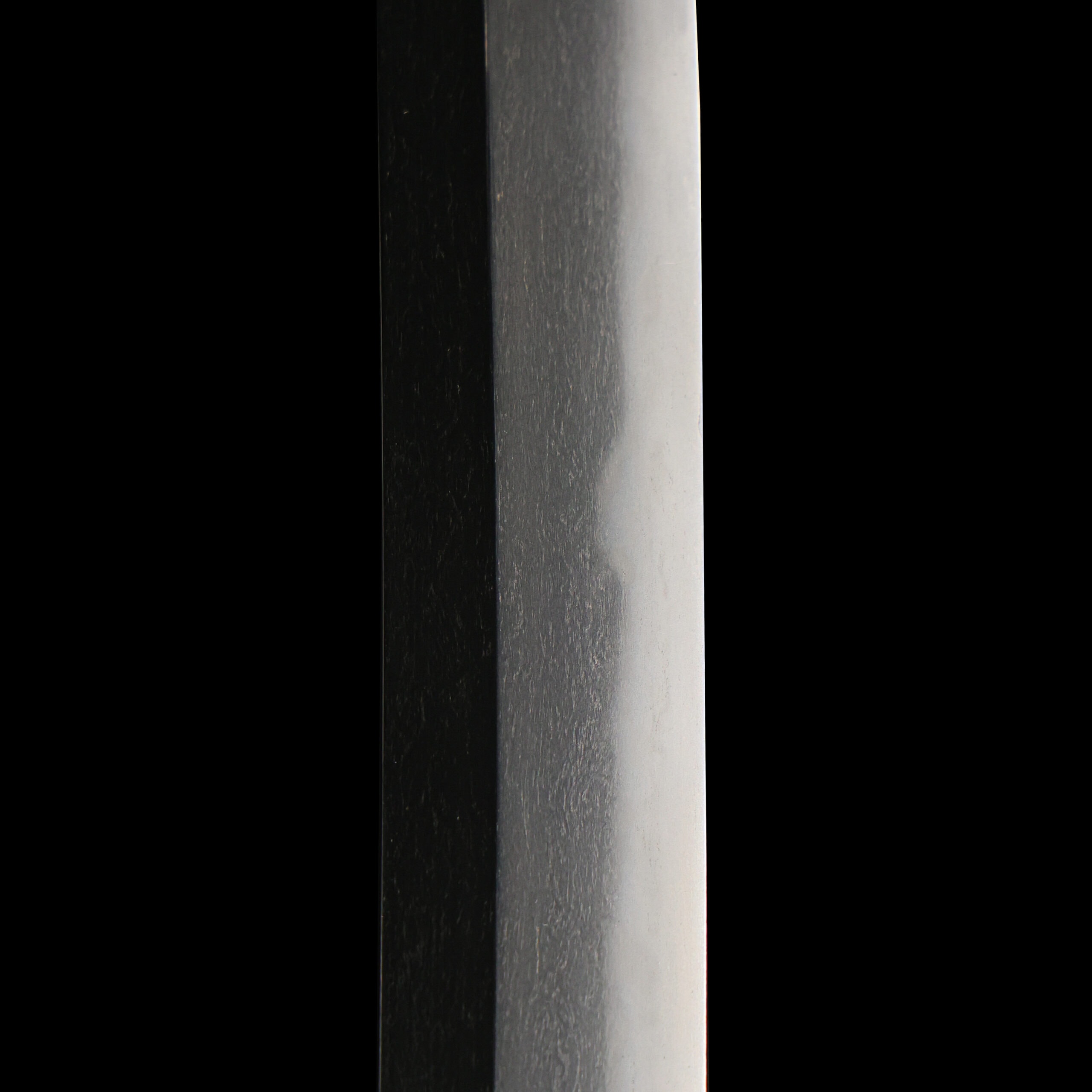
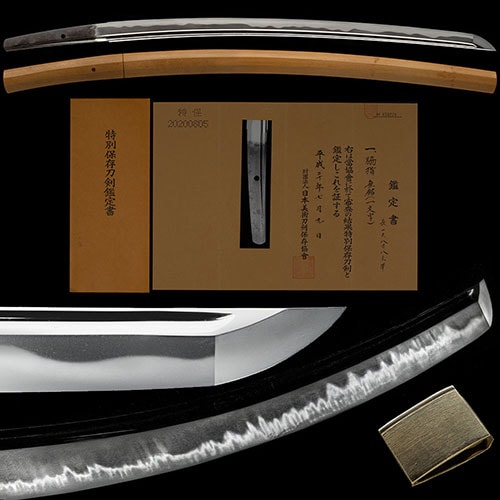
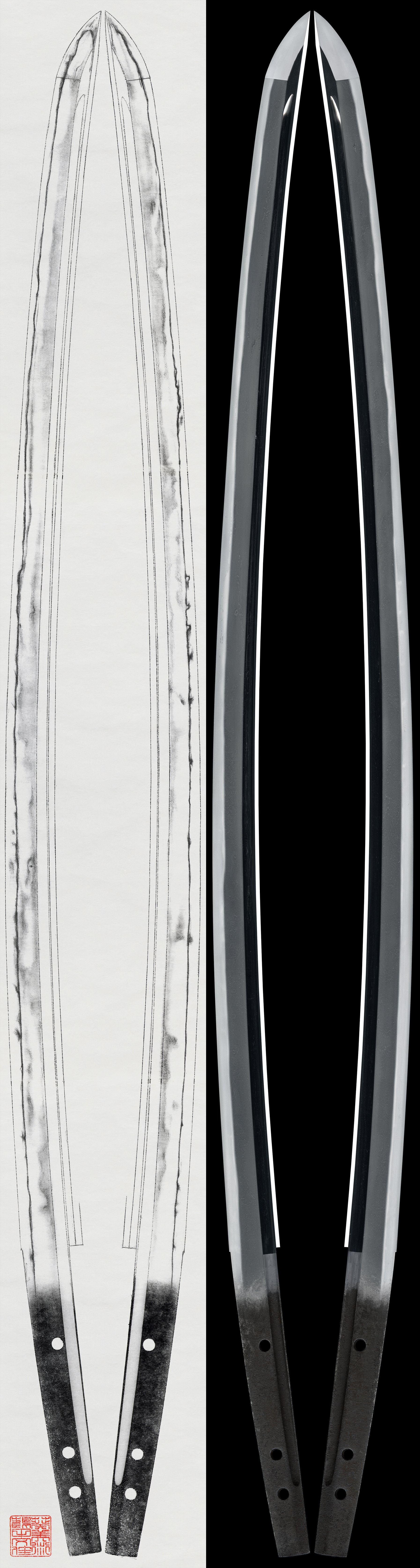
What most distinguishes his hand is a that opens at the hips, the , and it is the base on which every one of his blades is read, whether the published sources write it , or no biraita. Into that line he sets , conspicuous enough that the judges single out one as a piece which, within the tradition, 「末備前の中でも丁子の目立った作風を示しており、出来がよい」, displays a style in which the is especially prominent and the workmanship good. With the run , pointed and angular forms, and in place after place the temper doubles upon itself into a compound, , a busy and varied edge rather than a calm one. and enter it well, the is dominant and accompanied by small , and fine runs through, with partial and, on the boldest piece, and small breaking out above the line. The follows the irregular temper up, entering in and turning back with a pointed tendency or in a , at times with .

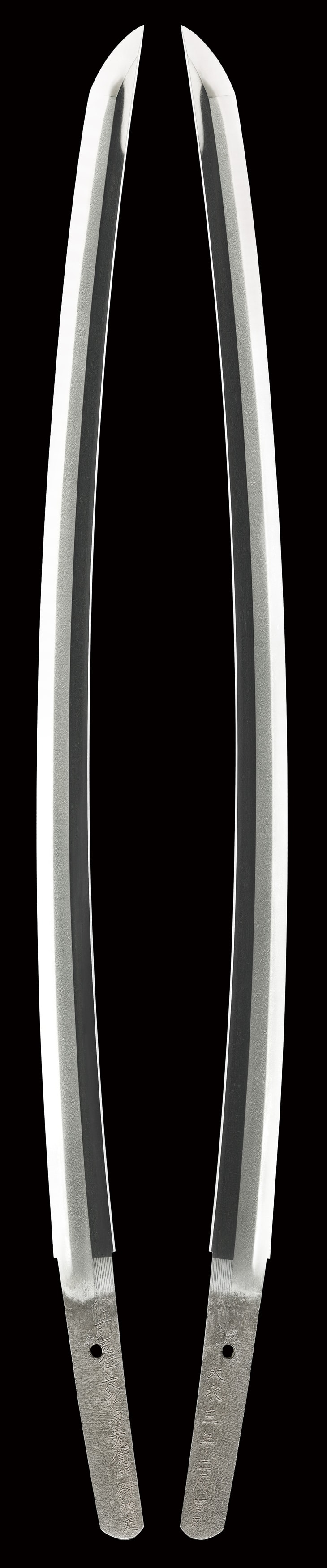
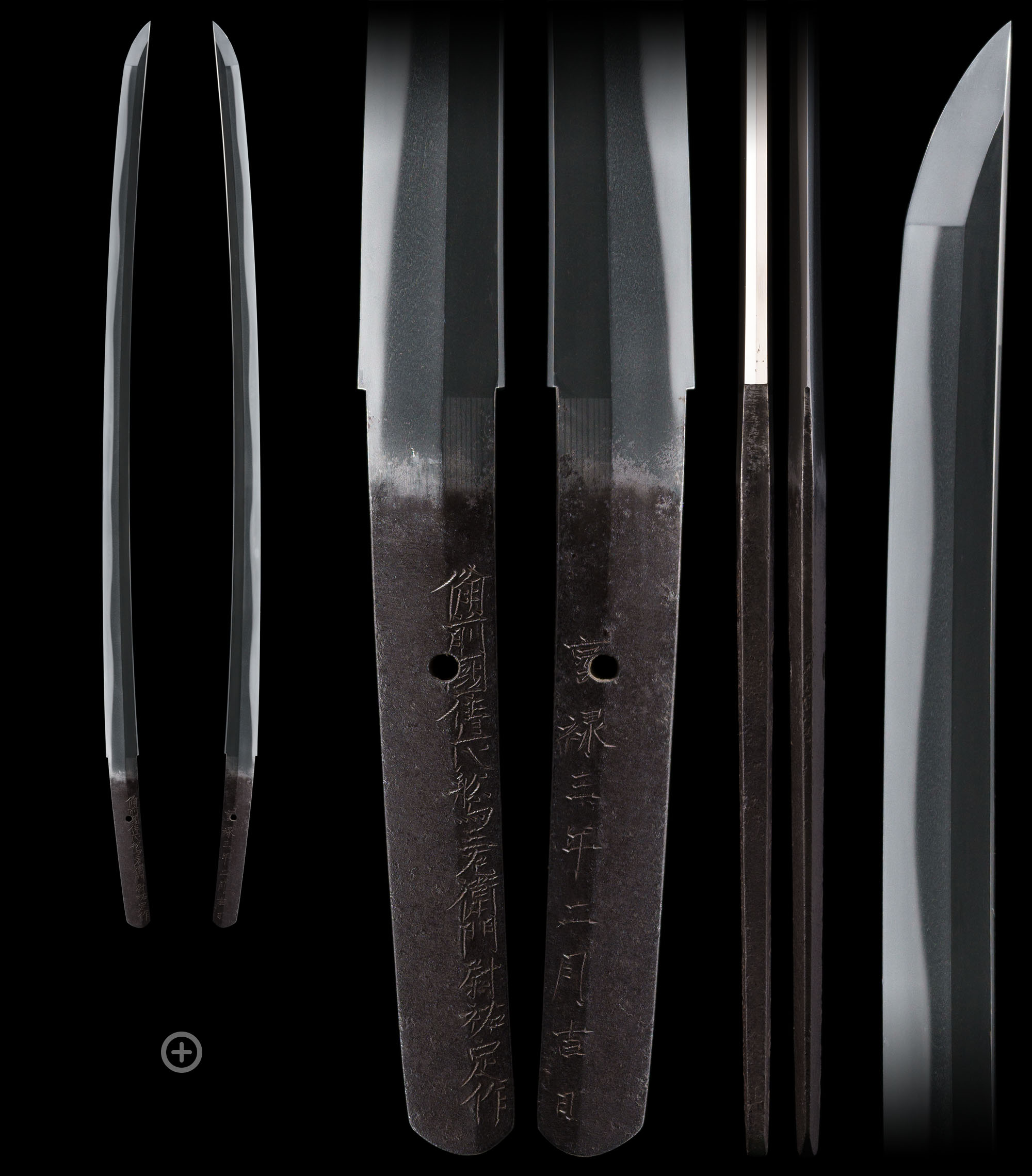
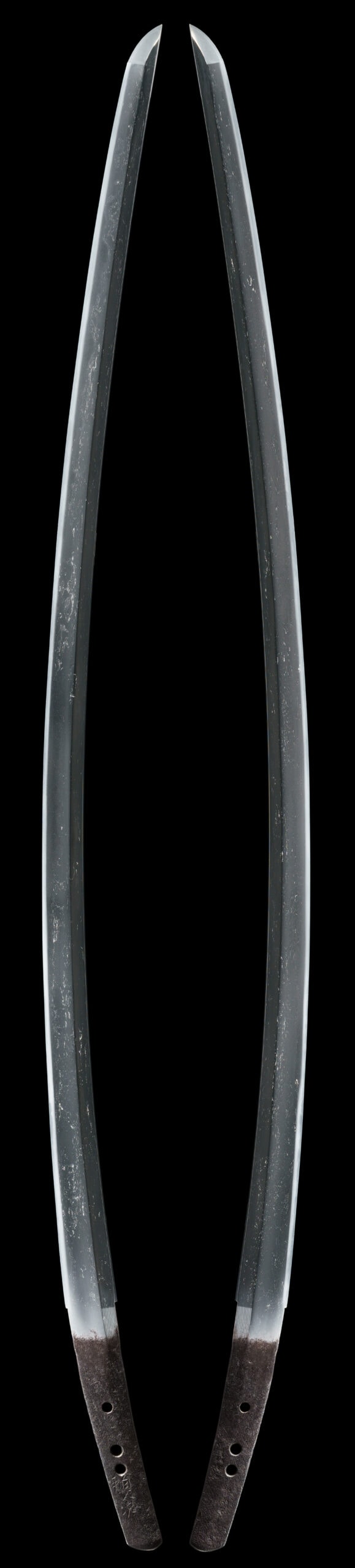
The beneath that edge is the quiet evidence of his descent. It is a , tightly forged and mixed with , on which fine gathers in a fine mist and delicate enter; on the broadest, most worked the grain stands a little and flows toward the edge, while on the most refined it stays close and still. Across all of it an stands, faint on three of the blades and, on the Eishō 9 , a clear rising vividly in the , the speckled reflection by which old steel announces itself even at this late date. The shape is the late- , what the published sources call 「典型的な室町時代末期の打刀様式」, the typical form of the period's end: with an iori or , often wide in body with a thick and , a deep with added and a , the proportions compact and the short. A is carved, sometimes terminated in a , and on the Eishō 9 piece the lower portion of both faces is incised with divine titles, on one side, a method the commentary notes as not uncommon among works.

The whole of his attested record is signed, four long signatures carved in bold, large characters, each blade dated, and this is the documentary value the judges return to. By their dates the four accord with Izumo no Kami Arimitsu, and one is praised expressly for its date inscription as precious reference material. Yet the record is not closed. On the Eishō 17 the published sources observe that, while the date fits Izumo no Kami Arimitsu, the signed characters depart from his usual relaxed and individual hand, showing instead a practiced and fluent handling of the chisel reminiscent of the signatures of Jirōzaemon-no-jō Katsumitsu and Yosōzaemon-no-jō Sukesada; and on a second piece they note that the signed characters differ in certain points, so that whether it is by the man is, in their words, 「今後の研究に俟つべき」, a matter to await further research. The name thus sits among the unresolved questions of , where many fine hands signed within a few workshops and a single signature cannot always be carried back to one man.

Within that crowded late his own tells set him apart. The judges do not lead with a borrowed comparison but with his own typical work, 「在光一流の出来口」, the characteristic workmanship of the Zaikō line: the with its and compound over a tight with vivid , the features by which an unsigned blade would be steered toward him. The published sources count him among the smiths of notably superior ability, 「秀抜な技倆を示す刀工」, and where comparison arises it is to the contemporaries of his own workshop, Katsumitsu and Sukesada, smiths of the generation and place rather than distant traditions. His chiselled signatures, divine carvings and dated, compact shape together place him squarely in the world of early-sixteenth-century , a maker carrying the Ōei manner into the age of the mass-produced blade while keeping the careful, individual register of a named master.

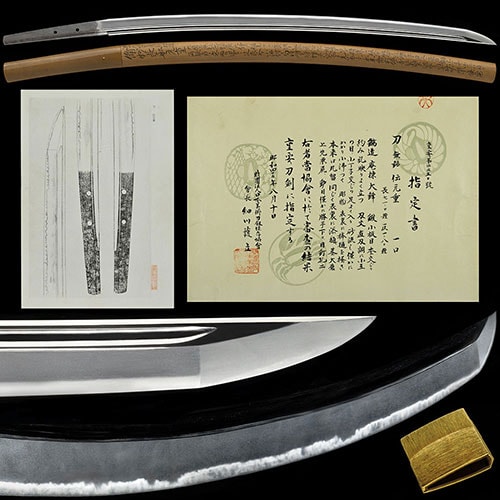
For the collector Arimitsu is a quiet and uncommon name rather than a celebrated one. He has no National Treasures and no Important Cultural Properties; his record stands instead at the rank, four blades in all, and the published sources stress more than once that extant works by him are comparatively few, calling the best of them careful and accomplished pieces that, 「その技術の高さを遺憾無く示す」, fully demonstrate his high level of technique. None of his recorded blades carries a documented provenance of named owners, and no current holding institution is set down in the record, so the honest account is that his work survives in private hands of largely unrecorded whereabouts, surfacing only seldom. A signed and dated Zaikō katana, papered at and inheriting the Ōei- , is the kind of late blade a patient collector may meet from time to time rather than readily, and one met is worth study as much for the documentary weight of its date and signature as for the -laden temper that the workshop's connoisseurs prized.

Historical importance

Where Arimitsu stands among comparable artisans: across all of nihontō, and within tradition, era, and period. The tiers (Foremost · Leading · Major · Notable) weigh official designations from the NBTHK and Japan's Agency for Cultural Affairs, together with historical honors of lasting repute such as the Sansaku and Meibutsu-chō.

随一
Foremost
屈指
Leading
有数
Major
著名
Notable

Select a lens to see how it's measured.

Designations

Kokuhō—
Jūyō Bunkazai—
Jūyō Bijutsuhin—
Gyobutsu—
Tokubetsu Jūyō—
Jūyō Tōken4

Elite Standing

Kantei

Dated Works

Currently Available

Lineage

TeacherArimitsu
Arimitsu
Students (2)
  1. 1.Arimitsu在光4designated
  2. 2.Arimitsu在光1designated

Osafune School

Other artisans of the Osafune school

  1. 1.Mitsutada光忠60designated
  2. 2.Nagamitsu長光3 for sale244designated
  3. 3.Kagemitsu景光3 for sale143designated
  4. 4.Kanemitsu兼光3 for sale231designated
  5. 5.Sanenaga眞長2 for sale64designated
  6. 6.Chikakage近景4 for sale86designated
  7. 7.Tomomitsu倫光1 for sale61designated
  8. 8.Kagemasa景政2 for sale22designated
  9. 9.Masamitsu政光2 for sale84designated
  10. 10.Motomitsu基光1 for sale38designated
  11. 11.Kagehide景秀23designated
  12. 12.Yoshimitsu義光35designated

More Sue-Bizen works

View all →
Touken Matsumoto
Tokuho
Katana - Tokuho - by Sukesada School - Bishu Osafune SukesadaKatana - Tokuho - by Sukesada School - Bishu Osafune Sukesada

Katana

BySukesada School
¥650,000
Touken Matsumoto
Hozon
Wakizashi - Hozon - by Sukesada School - Bishu Osafune Sukesada, Eisho Juninen NigatsujitsuWakizashi - Hozon - by Sukesada School - Bishu Osafune Sukesada, Eisho Juninen Nigatsujitsu

Wakizashi

BySukesada School
¥650,000
Aoi Art
Hozon
Tanto - Hozon - by Katsumitsu - Bishu Osafune Katsumitsu - Dated February, Bunki 3Tanto - Hozon - by Katsumitsu - Bishu Osafune Katsumitsu - Dated February, Bunki 3

Tantō

ByKatsumitsu
Starting Bid¥800,000
Winners Auction
Tokuho
Tanto - Tokuho - by Kiyomitsu School - Gorozaemonjo KiyomitsuTanto - Tokuho - by Kiyomitsu School - Gorozaemonjo Kiyomitsu

Tantō

ByKiyomitsu School
Starting Bid¥950,000
Samurai Nippon
Jūyō
Katana - Jūyō - by Sukesada - Bizen Osafune Yosazaemonnojo SukesadaKatana - Jūyō - by Sukesada - Bizen Osafune Yosazaemonnojo Sukesada

Katana

BySukesada
Ask
Token-Net
Tokuho
Katana - Tokuho - by Sukesada - Bizen Osafune Sosaemonjo SukesadaKatana - Tokuho - by Sukesada - Bizen Osafune Sosaemonjo Sukesada

Katana

BySukesada
¥1,650,000
Giheiya
Hozon
Katana - Hozon - by Sukesada School - Bizen Kuni Ju Osafune Sukesada with KoshiraeKatana - Hozon - by Sukesada School - Bizen Kuni Ju Osafune Sukesada with Koshirae

Katana

BySukesada School
¥750,000
Asahi Token
Jūyō
Katana - Jūyō - by Sukesada - Bizen no Kuni ju Osafune Yosozaemonjo Sukesada saku, Kyoroku San-nen Ni-gatsu KichijitsuKatana - Jūyō - by Sukesada - Bizen no Kuni ju Osafune Yosozaemonjo Sukesada saku, Kyoroku San-nen Ni-gatsu Kichijitsu

Katana

BySukesada
Ask

More from the Osafune school

View all →
Aoi Art
Jūyō
Katana - Jūyō - by Osafune Shigezane - Mumei (Attributed to Shigezane) - 27th NBTHK Juyo TokenKatana - Jūyō - by Osafune Shigezane - Mumei (Attributed to Shigezane) - 27th NBTHK Juyo Token

Katana

ByOsafune Shigezane
Starting Bid¥4,600,000
Aoi Art
Tokuho
Wakizashi - Tokuho - by Oei-Bizen Morimitsu - Bishū Osafune Morimitsu, dated Ōei 26 (1419) - NBTHK Tokubetsu Hozon TokenWakizashi - Tokuho - by Oei-Bizen Morimitsu - Bishū Osafune Morimitsu, dated Ōei 26 (1419) - NBTHK Tokubetsu Hozon Token

Wakizashi

ByOei-Bizen Morimitsu
Starting Bid¥1,500,000
Aoi Art
Jūyō Bijutsuhin
Daisho - Jubi - by Osafune Nagamitsu - Dai Sho: Katana (Important Art Object): Mumei (Attributed to Nagamitsu) / Wakizashi: Mumei (Attributed to Sekishu Naotsuna)Daisho - Jubi - by Osafune Nagamitsu - Dai Sho: Katana (Important Art Object): Mumei (Attributed to Nagamitsu) / Wakizashi: Mumei (Attributed to Sekishu Naotsuna)

Daishō

ByOsafune Nagamitsu
Ask
Eirakudo
Jūyō
Katana - Jūyō - by Motoshige - Motoshige - Juyo TokenKatana - Jūyō - by Motoshige - Motoshige - Juyo Token

Katana

ByMotoshige
¥6,000,000
Samurai Museum
Tokuho
Wakizashi - Tokuho - by Osafune Kagemitsu - Antique Japanese Sword Wakizashi Attributed to Den Osafune Kagemitsu NBTHK Tokubetsu Hozon CertificateWakizashi - Tokuho - by Osafune Kagemitsu - Antique Japanese Sword Wakizashi Attributed to Den Osafune Kagemitsu NBTHK Tokubetsu Hozon Certificate

Wakizashi

ByOsafune Kagemitsu
¥3,200,000
Nihonto.com
Jūyō
Tanto - Jūyō - by Osafune Kagemitsu - Juyo Tanto by Bizen KagemitsuTanto - Jūyō - by Osafune Kagemitsu - Juyo Tanto by Bizen Kagemitsu

Tantō

ByOsafune Kagemitsu
¥89,500
Samurai Museum
Katana - by Osafune Kanemitsu - Attributed to Den Osafune Kanemitsu - NTHK Yushu Saku Kanteisho CertificateKatana - by Osafune Kanemitsu - Attributed to Den Osafune Kanemitsu - NTHK Yushu Saku Kanteisho Certificate

Katana

ByOsafune Kanemitsu
¥4,300,000
Goushuya
Tokujū
Tachi - Tokuju - by Oei-Bizen Morimitsu - Morimitsu - Tokubetsu Juyo TokenTachi - Tokuju - by Oei-Bizen Morimitsu - Morimitsu - Tokubetsu Juyo Token

Tachi

ByOei-Bizen Morimitsu
Ask

More from the Bizen tradition

View all →
Hyozaemon
Tokuho
Tokuho - by Fukuoka Ichimonji Yoshifusa - Naginata Naoshi Wakizashi by Fukuoka Ichimonji Yoshifusa, a Master of IchimonjiTokuho - by Fukuoka Ichimonji Yoshifusa - Naginata Naoshi Wakizashi by Fukuoka Ichimonji Yoshifusa, a Master of Ichimonji

Naginata Naoshi Wakizashi by Fukuoka Ichimonji Yoshifusa, a Master of Ichimonji

ByFukuoka Ichimonji Yoshifusa
Ask
Eirakudo
Tokuho
Katana - Tokuho - by Katayama Ichimonji School - Katayama Ichimonji - Tokubetsu Hozon TokenKatana - Tokuho - by Katayama Ichimonji School - Katayama Ichimonji - Tokubetsu Hozon Token

Katana

ByKatayama Ichimonji School
¥4,500,000
Eirakudo
Tokuho
Wakizashi - Tokuho - by Ichimonji School - Fukuoka Ichimonji Wakizashi Tokubetsu Hozon TokenWakizashi - Tokuho - by Ichimonji School - Fukuoka Ichimonji Wakizashi Tokubetsu Hozon Token

Wakizashi

ByIchimonji School
¥3,500,000
Tsuruginoya
Jūyō
Katana - Jūyō - by Fukuoka Ichimonji School - Mumei Fukuoka IchimonjiKatana - Jūyō - by Fukuoka Ichimonji School - Mumei Fukuoka Ichimonji

Katana

ByFukuoka Ichimonji School
Ask
Goushuya
Jūyō Bijutsuhin
Tachi - Jubi - by Ukai Unsho - Kumoio - From the collection of the Okouchi family, lord of Otaki Domain, Kazusa ProvinceTachi - Jubi - by Ukai Unsho - Kumoio - From the collection of the Okouchi family, lord of Otaki Domain, Kazusa Province

Tachi

ByUkai Unsho
Ask
Aoi Art
Jūyō
Katana - Jūyō - by Aoe School - Mumei (Aoe school)Katana - Jūyō - by Aoe School - Mumei (Aoe school)

Katana

ByAoe School
¥3,200,000
Hyozaemon
Tokuho
Tachi - Tokuho - by Ko-Aoe Yoritsugu - Ko-Aoe YoritsuguTachi - Tokuho - by Ko-Aoe Yoritsugu - Ko-Aoe Yoritsugu

Tachi

ByKo-Aoe Yoritsugu
¥5,800,000
Tsuruginoya
Jūyō
Tachi - Jūyō - by Hatakeda Sanemori - Hatakeda Sanemori - Formerly owned by General Sadao ArakiTachi - Jūyō - by Hatakeda Sanemori - Hatakeda Sanemori - Formerly owned by General Sadao Araki

Tachi

ByHatakeda Sanemori
¥14,500,000

Arimitsu

Arimitsu(在光) was a Japanese swordsmith of the Osafune school in Bizen province, active during the Eisho (1504-1521) period.

The work follows the Bizen-den tradition.

Designated works by Arimitsu include 4 Jūyō.