Weight of blade only: 707g
It has appeared, it has appeared—from an old estate, a precious katana passed down through generations by Koretsugu, the founder of the Fukuoka Ishido school during the Shinto period, signed Chikuzen no Kuni Fukuoka-ju Hanza Hyoe-no-jo Koretsugu. Ishido Koretsugu was the son of Toshihide, said to be the 15th generation descendant of Bizen no Kuni Fukuoka Ichimonji Norimune. At the recommendation of the Lord of the Kuroda Clan in the first year of Meireki (1655, 371 years ago), he went up to Edo and became a pupil of the Shogunate’s retained smith Musashi Daijo Korekazu, where he was initiated into the secret traditions of the Bizen-den. Returning home three years later, he was employed by the Chikuzen Kuroda family and received generous treatment equivalent to a Gokenin (with a stipend of 100 koku). He passed away in the first year of Tenwa (1681) at the age of 53. His birth year was the 5th year of Kan'ei (1628, 398 years ago).
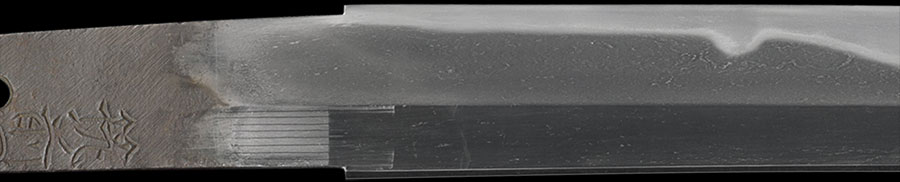
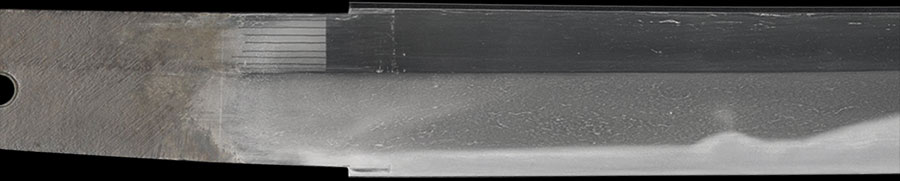
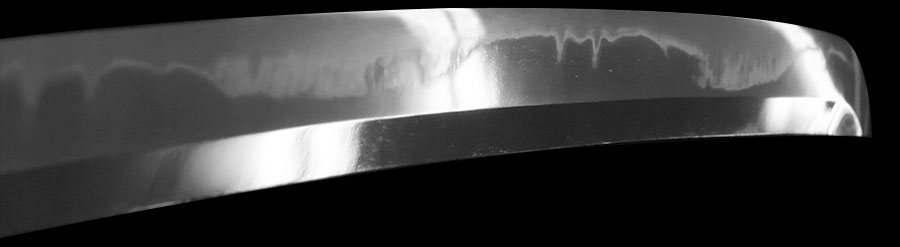
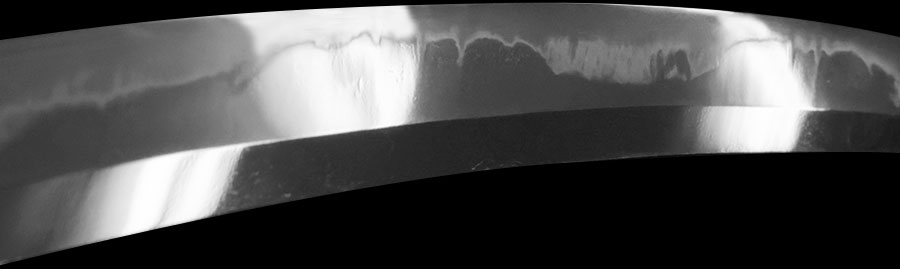
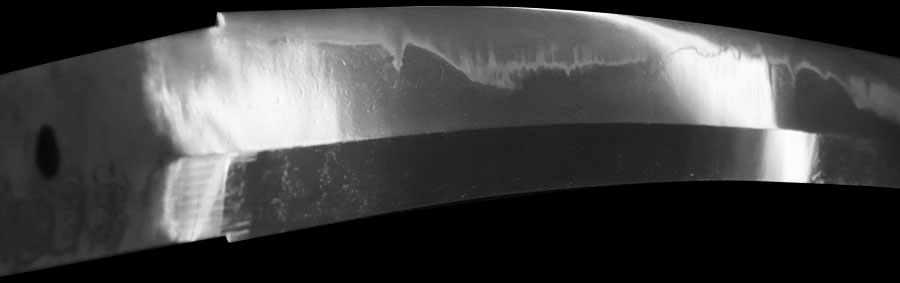
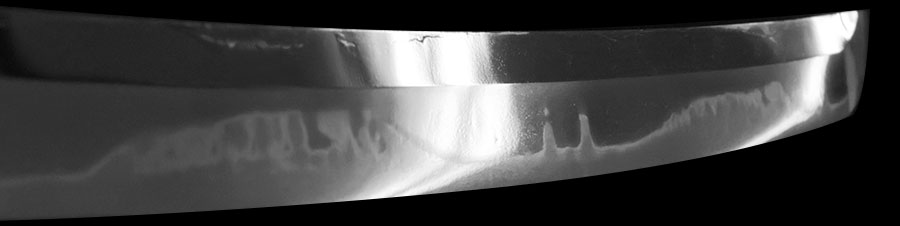
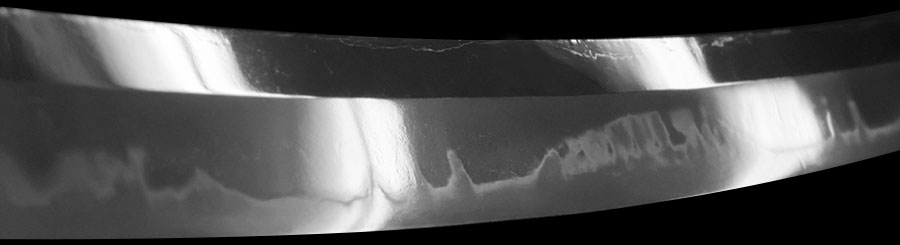
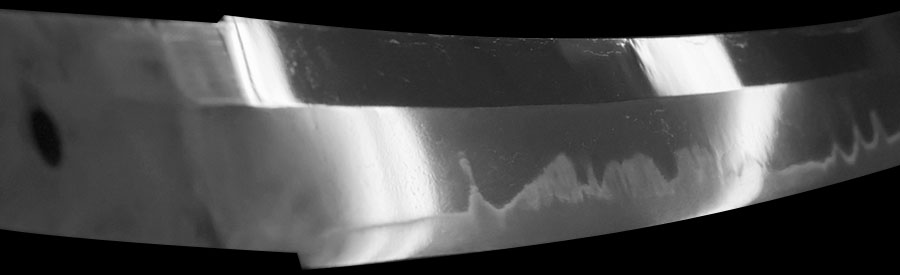
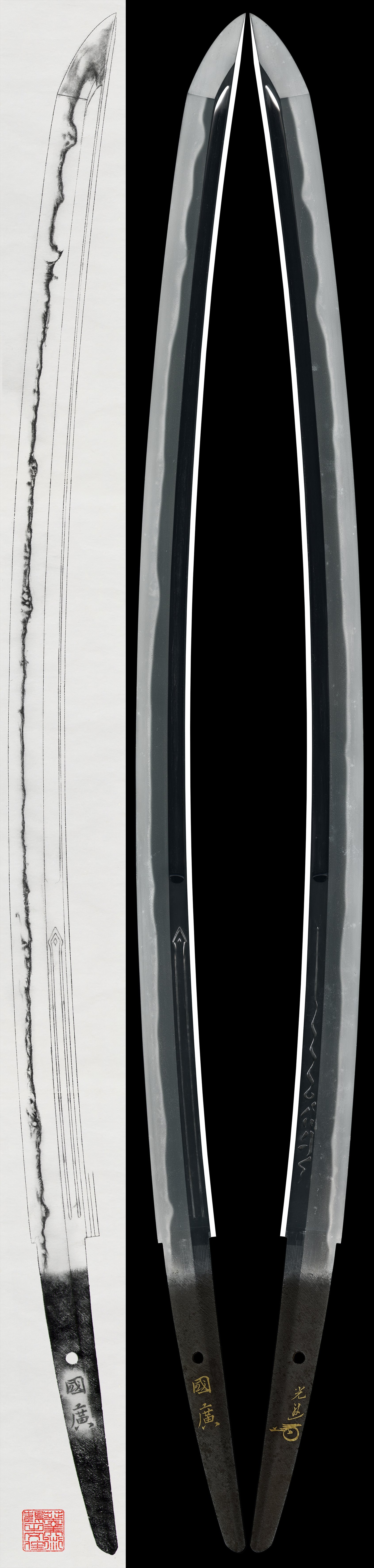
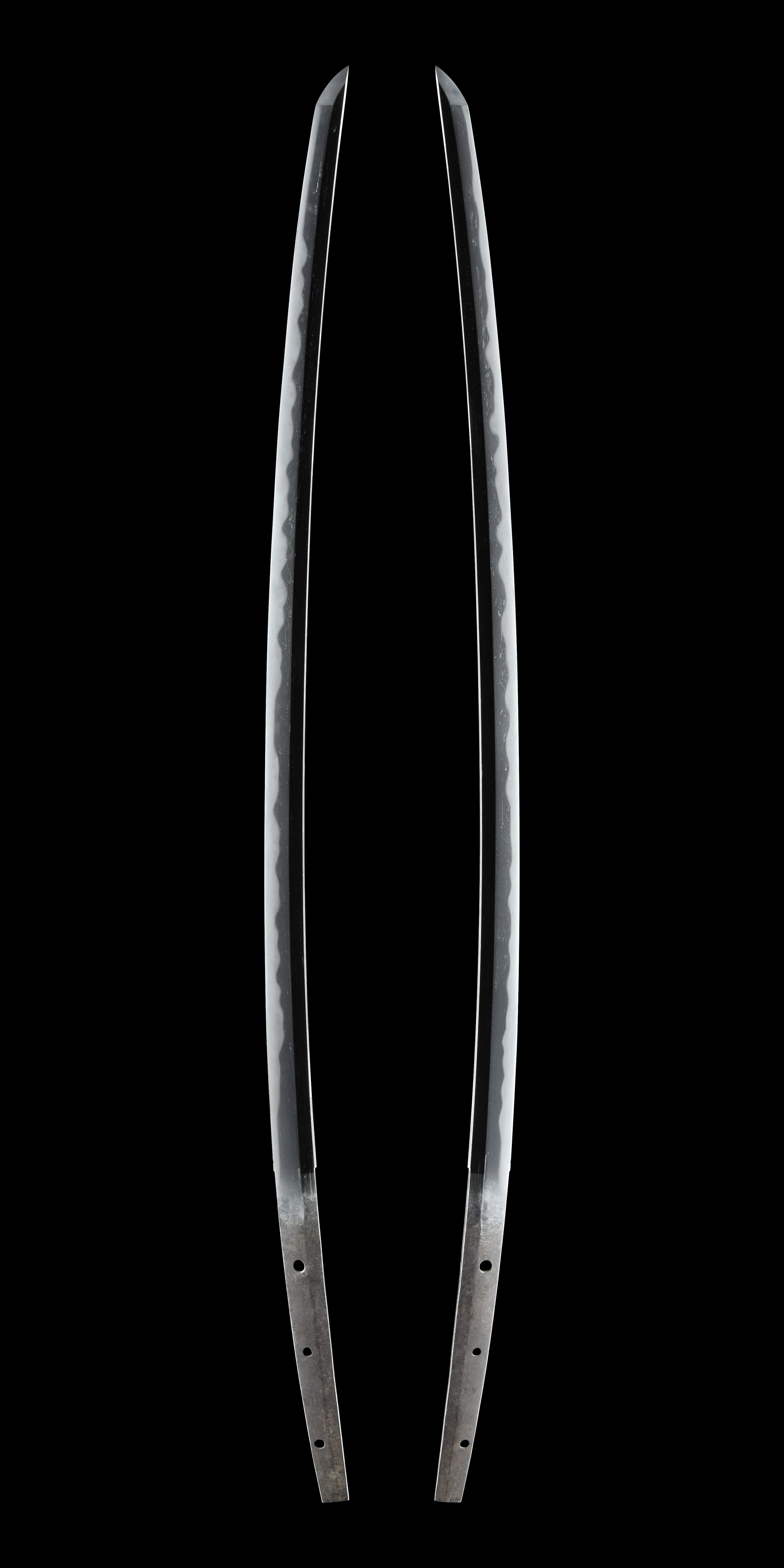
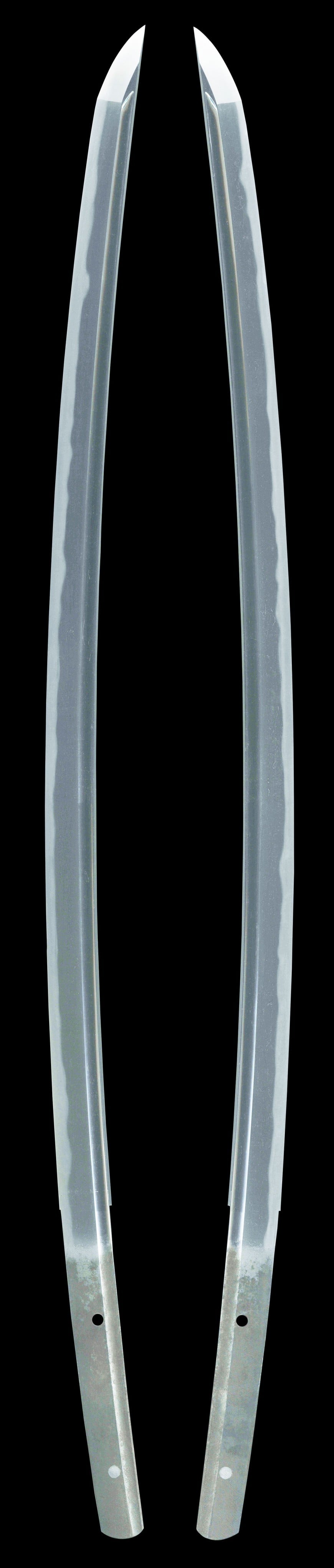
This katana exhibits a gokai (magnificent) and excellent sugata typical of the Kanbun Shinto period, with a wide moto-mihaba and a noticeable difference from the saki-mihaba, and a shallow sori. The jigane is a finely packed ko-itame hada, with masame hada appearing on the shinogi-ji. From the moto, a white mizukage-style utsuri appears, and a faint, pale utsuri is also visible on the ji. The hamon is in nioi-deki with intertwined nie, starting with a sugu-cho yakidashi at the moto, followed by ko-gunome, o-gunome, sakasa-choji style blades, and sequences of ko-gunome. It features frequent gunome-ashi within the o-gunome, continuing with chu-gunome and ko-gunome, and further o-gunome and ko-gunome. The boshi is hakikake at the tip.
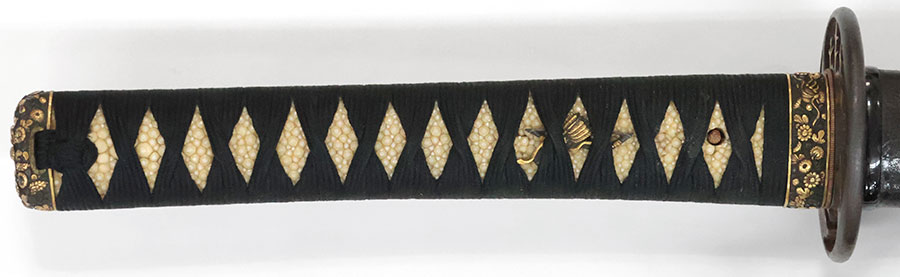
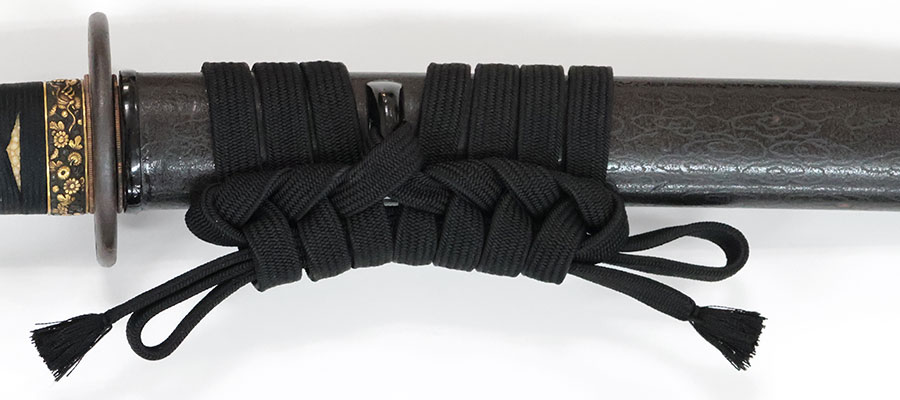
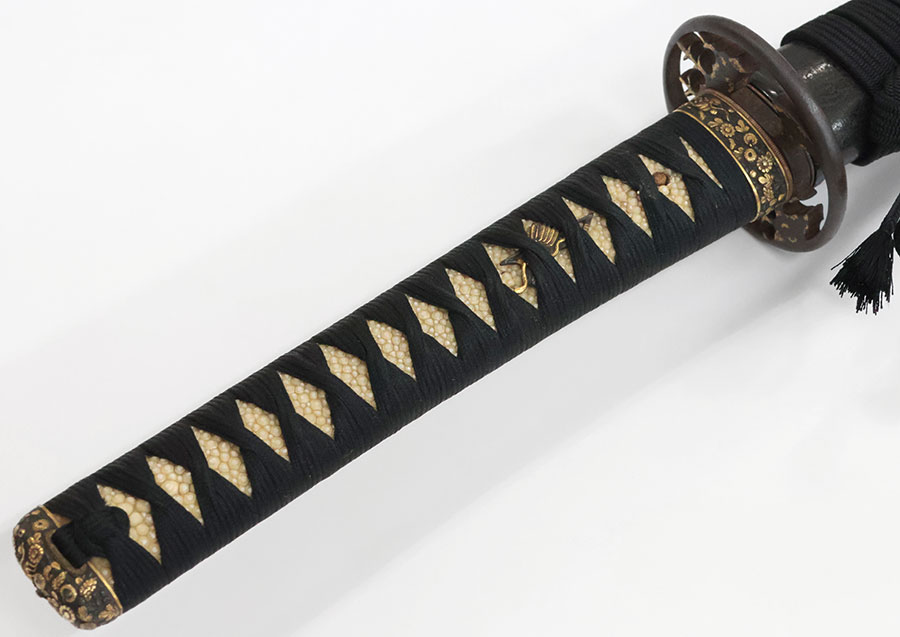
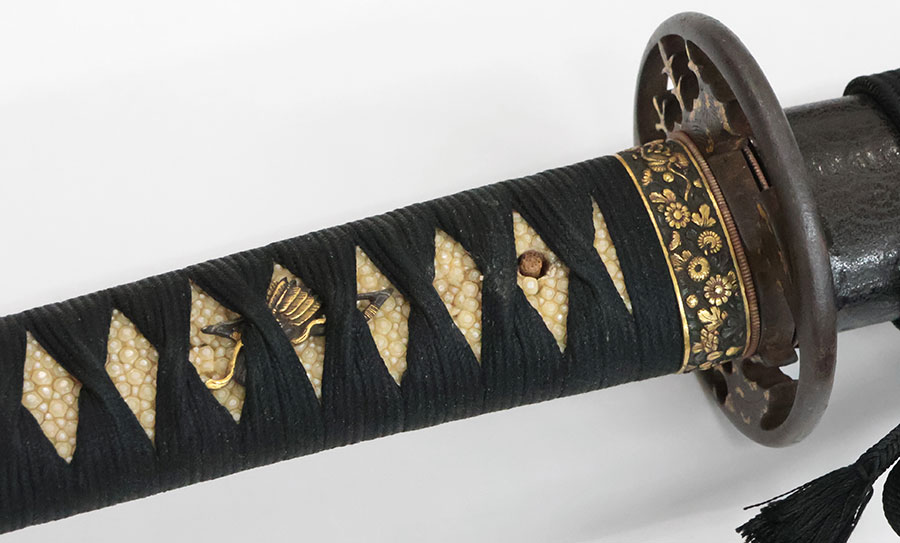
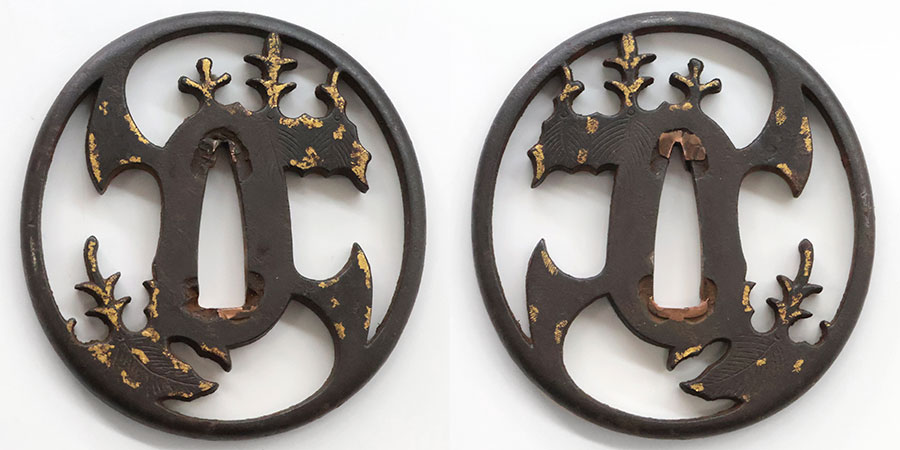
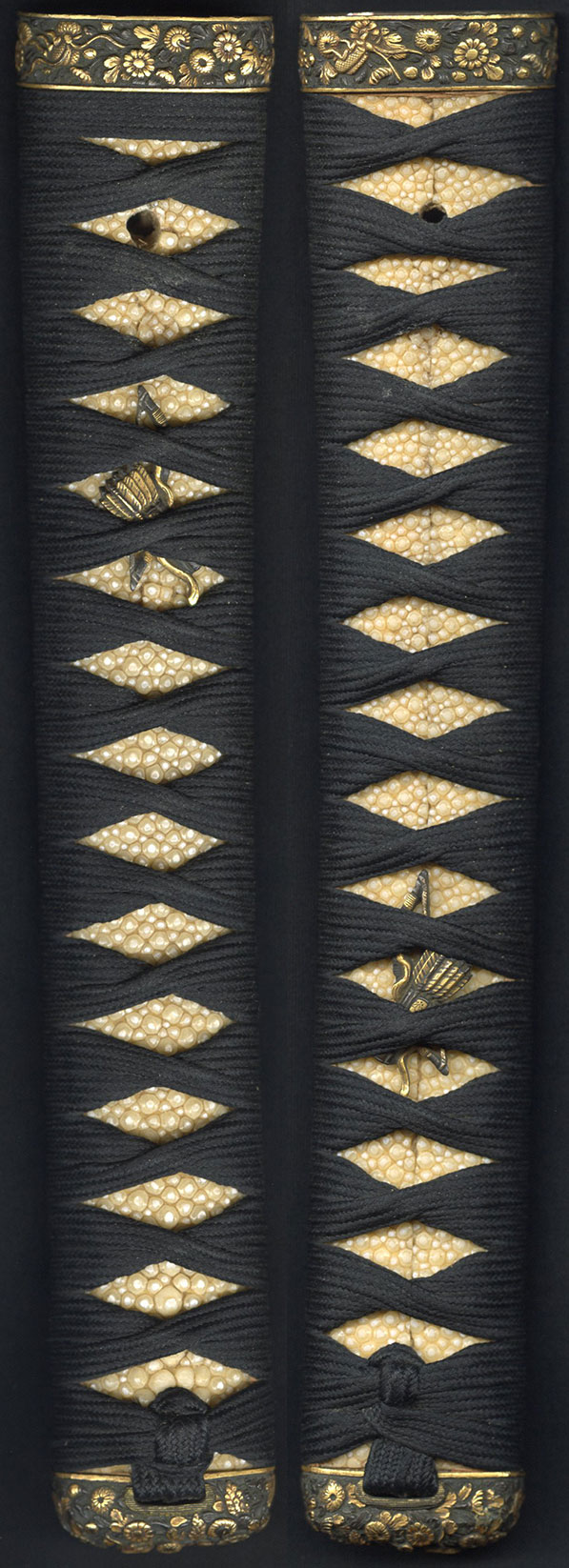
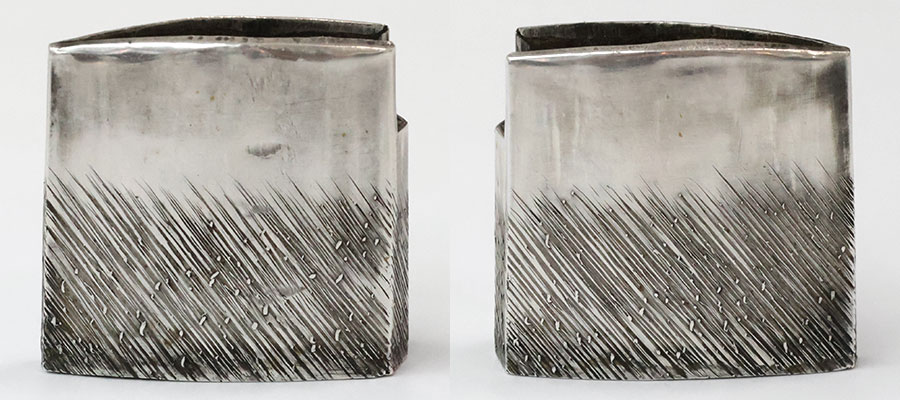
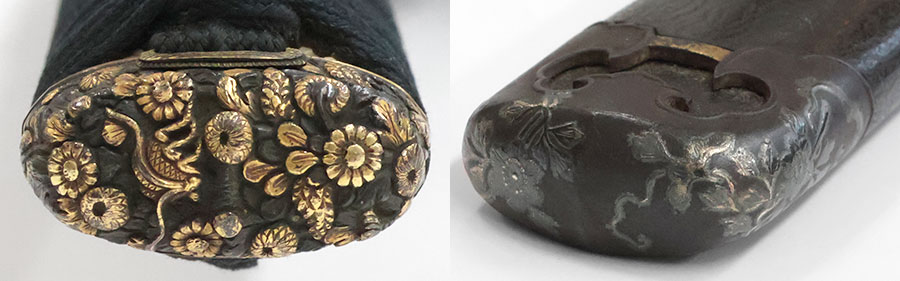
The koshirae is also from the Edo period; however, due to age, there is a slight gap in the tsuka. Nevertheless, the presence of the koshirae adds a wonderful splendor to this Koretsugu blade. This time, we have received this Koretsugu katana, which has been passed down through an old family for generations, with the request: "We have grown old, so please pass this on at a low price to someone who will cherish it." Therefore, we are offering it at a special, ultra-low price. The name of Koretsugu has been famous since ancient times, but it is said that during the Edo period, many were suriage and made mumei to be reattributed as Bizen masterpieces. This is the first time we have seen a precious katana by the Chikuzen Kuroda Clan smith Koretsugu; please do enjoy it.
Weight of blade only: 707g
It has appeared, it has appeared—from an old estate, a precious katana passed down through generations by Koretsugu, the founder of the Fukuoka Ishido school during the Shinto period, signed Chikuzen no Kuni Fukuoka-ju Hanza Hyoe-no-jo Koretsugu. Ishido Koretsugu was the son of Toshihide, said to be the 15th generation descendant of Bizen no Kuni Fukuoka Ichimonji Norimune. At the recommendation of the Lord of the Kuroda Clan in the first year of Meireki (1655, 371 years ago), he went up to Edo and became a pupil of the Shogunate’s retained smith Musashi Daijo Korekazu, where he was initiated into the secret traditions of the Bizen-den. Returning home three years later, he was employed by the Chikuzen Kuroda family and received generous treatment equivalent to a Gokenin (with a stipend of 100 koku). He passed away in the first year of Tenwa (1681) at the age of 53. His birth year was the 5th year of Kan'ei (1628, 398 years ago).
This katana exhibits a gokai (magnificent) and excellent sugata typical of the Kanbun Shinto period, with a wide moto-mihaba and a noticeable difference from the saki-mihaba, and a shallow sori. The jigane is a finely packed ko-itame hada, with masame hada appearing on the shinogi-ji. From the moto, a white mizukage-style utsuri appears, and a faint, pale utsuri is also visible on the ji. The hamon is in nioi-deki with intertwined nie, starting with a sugu-cho yakidashi at the moto, followed by ko-gunome, o-gunome, sakasa-choji style blades, and sequences of ko-gunome. It features frequent gunome-ashi within the o-gunome, continuing with chu-gunome and ko-gunome, and further o-gunome and ko-gunome. The boshi is hakikake at the tip.
The koshirae is also from the Edo period; however, due to age, there is a slight gap in the tsuka. Nevertheless, the presence of the koshirae adds a wonderful splendor to this Koretsugu blade. This time, we have received this Koretsugu katana, which has been passed down through an old family for generations, with the request: "We have grown old, so please pass this on at a low price to someone who will cherish it." Therefore, we are offering it at a special, ultra-low price. The name of Koretsugu has been famous since ancient times, but it is said that during the Edo period, many were suriage and made mumei to be reattributed as Bizen masterpieces. This is the first time we have seen a precious katana by the Chikuzen Kuroda Clan smith Koretsugu; please do enjoy it.
Historical context
The Edo period (1615 to 1868)
›
For two and a half centuries of peace the sword was the warrior’s legal badge rather than his weapon. Each great city developed its own manner, Edo’s tested strength against Ōsaka’s polished brilliance, until demand thinned in the era’s last decades.
We could not find an authenticity certificate on the seller’s listing. Japanese swords and fittings are normally papered by the NBTHK (or the NTHK). Without one, the attribution is the seller’s own assessment and has not been independently verified — treat it with caution and ask the dealer about certification before buying.
For returns due to customer circumstances, the cost is the customer's responsibility. For returns due to our mis-shipment or a defective item, we bear the cost.
Weight of blade only: 707g
It has appeared, it has appeared—from an old estate, a precious katana passed down through generations by Koretsugu, the founder of the Fukuoka Ishido school during the Shinto period, signed Chikuzen no Kuni Fukuoka-ju Hanza Hyoe-no-jo Koretsugu. Ishido Koretsugu was the son of Toshihide, said to be the 15th generation descendant of Bizen no Kuni Fukuoka Ichimonji Norimune. At the recommendation of the Lord of the Kuroda Clan in the first year of Meireki (1655, 371 years ago), he went up to Edo and became a pupil of the Shogunate’s retained smith Musashi Daijo Korekazu, where he was initiated into the secret traditions of the Bizen-den. Returning home three years later, he was employed by the Chikuzen Kuroda family and received generous treatment equivalent to a Gokenin (with a stipend of 100 koku). He passed away in the first year of Tenwa (1681) at the age of 53. His birth year was the 5th year of Kan'ei (1628, 398 years ago).
This katana exhibits a gokai (magnificent) and excellent sugata typical of the Kanbun Shinto period, with a wide moto-mihaba and a noticeable difference from the saki-mihaba, and a shallow sori. The jigane is a finely packed ko-itame hada, with masame hada appearing on the shinogi-ji. From the moto, a white mizukage-style utsuri appears, and a faint, pale utsuri is also visible on the ji. The hamon is in nioi-deki with intertwined nie, starting with a sugu-cho yakidashi at the moto, followed by ko-gunome, o-gunome, sakasa-choji style blades, and sequences of ko-gunome. It features frequent gunome-ashi within the o-gunome, continuing with chu-gunome and ko-gunome, and further o-gunome and ko-gunome. The boshi is hakikake at the tip.
The koshirae is also from the Edo period; however, due to age, there is a slight gap in the tsuka. Nevertheless, the presence of the koshirae adds a wonderful splendor to this Koretsugu blade. This time, we have received this Koretsugu katana, which has been passed down through an old family for generations, with the request: "We have grown old, so please pass this on at a low price to someone who will cherish it." Therefore, we are offering it at a special, ultra-low price. The name of Koretsugu has been famous since ancient times, but it is said that during the Edo period, many were suriage and made mumei to be reattributed as Bizen masterpieces. This is the first time we have seen a precious katana by the Chikuzen Kuroda Clan smith Koretsugu; please do enjoy it.
Weight of blade only: 707g
It has appeared, it has appeared—from an old estate, a precious katana passed down through generations by Koretsugu, the founder of the Fukuoka Ishido school during the Shinto period, signed Chikuzen no Kuni Fukuoka-ju Hanza Hyoe-no-jo Koretsugu. Ishido Koretsugu was the son of Toshihide, said to be the 15th generation descendant of Bizen no Kuni Fukuoka Ichimonji Norimune. At the recommendation of the Lord of the Kuroda Clan in the first year of Meireki (1655, 371 years ago), he went up to Edo and became a pupil of the Shogunate’s retained smith Musashi Daijo Korekazu, where he was initiated into the secret traditions of the Bizen-den. Returning home three years later, he was employed by the Chikuzen Kuroda family and received generous treatment equivalent to a Gokenin (with a stipend of 100 koku). He passed away in the first year of Tenwa (1681) at the age of 53. His birth year was the 5th year of Kan'ei (1628, 398 years ago).
This katana exhibits a gokai (magnificent) and excellent sugata typical of the Kanbun Shinto period, with a wide moto-mihaba and a noticeable difference from the saki-mihaba, and a shallow sori. The jigane is a finely packed ko-itame hada, with masame hada appearing on the shinogi-ji. From the moto, a white mizukage-style utsuri appears, and a faint, pale utsuri is also visible on the ji. The hamon is in nioi-deki with intertwined nie, starting with a sugu-cho yakidashi at the moto, followed by ko-gunome, o-gunome, sakasa-choji style blades, and sequences of ko-gunome. It features frequent gunome-ashi within the o-gunome, continuing with chu-gunome and ko-gunome, and further o-gunome and ko-gunome. The boshi is hakikake at the tip.
The koshirae is also from the Edo period; however, due to age, there is a slight gap in the tsuka. Nevertheless, the presence of the koshirae adds a wonderful splendor to this Koretsugu blade. This time, we have received this Koretsugu katana, which has been passed down through an old family for generations, with the request: "We have grown old, so please pass this on at a low price to someone who will cherish it." Therefore, we are offering it at a special, ultra-low price. The name of Koretsugu has been famous since ancient times, but it is said that during the Edo period, many were suriage and made mumei to be reattributed as Bizen masterpieces. This is the first time we have seen a precious katana by the Chikuzen Kuroda Clan smith Koretsugu; please do enjoy it.
Historical context
The Edo period (1615 to 1868)
›
For two and a half centuries of peace the sword was the warrior’s legal badge rather than his weapon. Each great city developed its own manner, Edo’s tested strength against Ōsaka’s polished brilliance, until demand thinned in the era’s last decades.
We could not find an authenticity certificate on the seller’s listing. Japanese swords and fittings are normally papered by the NBTHK (or the NTHK). Without one, the attribution is the seller’s own assessment and has not been independently verified — treat it with caution and ask the dealer about certification before buying.
For returns due to customer circumstances, the cost is the customer's responsibility. For returns due to our mis-shipment or a defective item, we bear the cost.