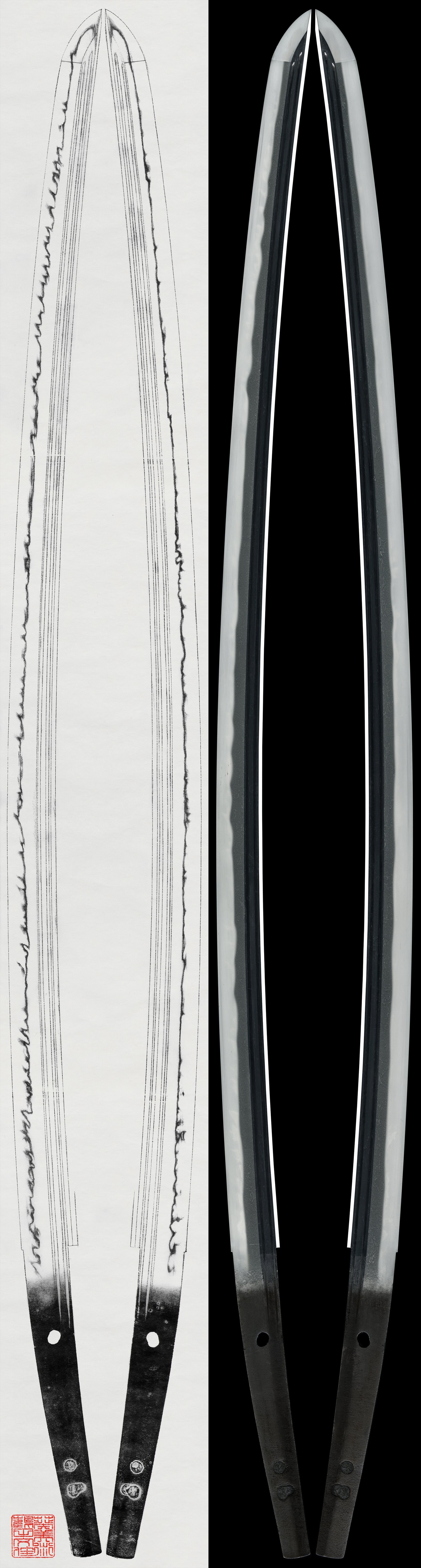
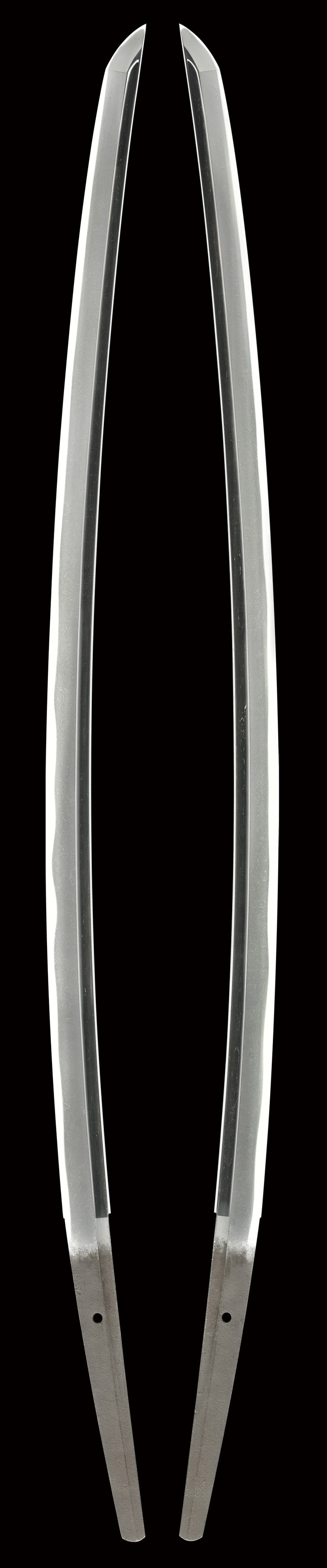
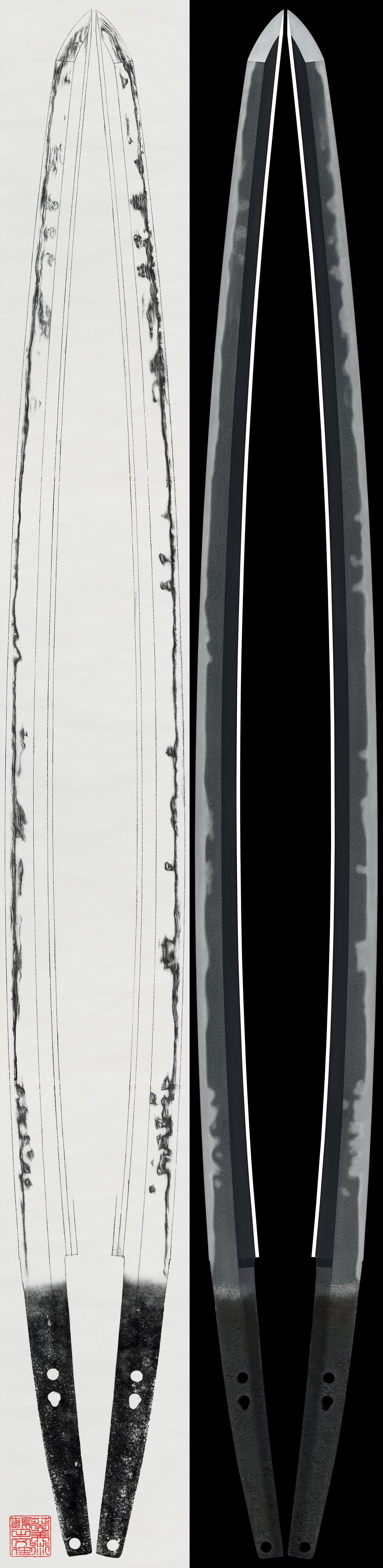
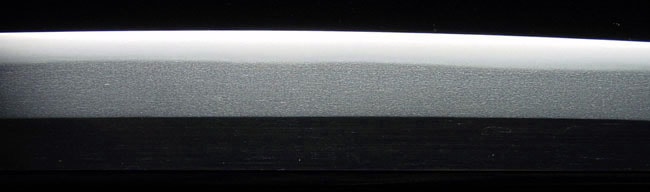
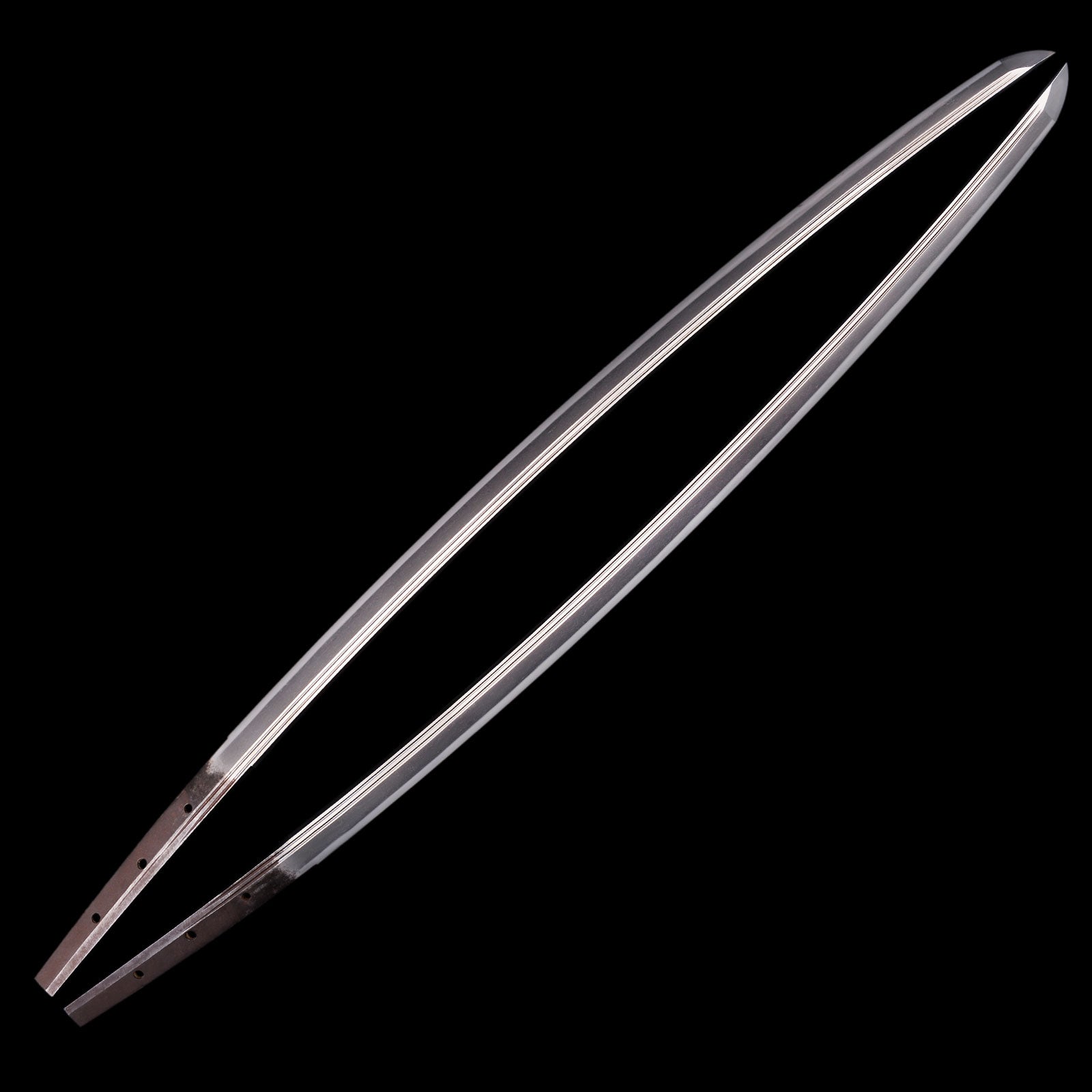
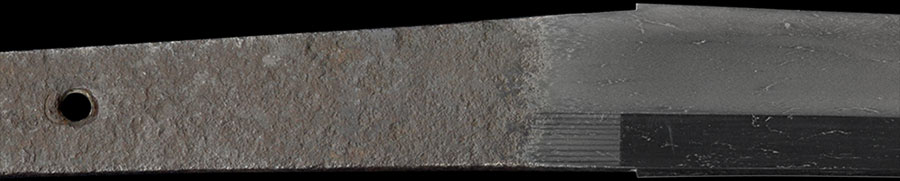
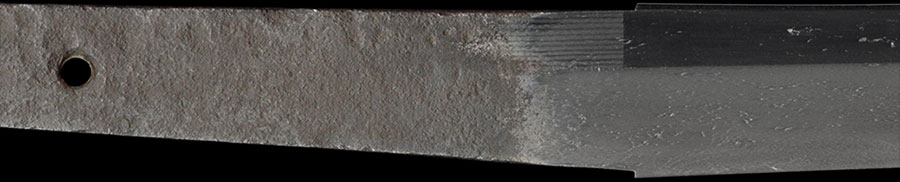
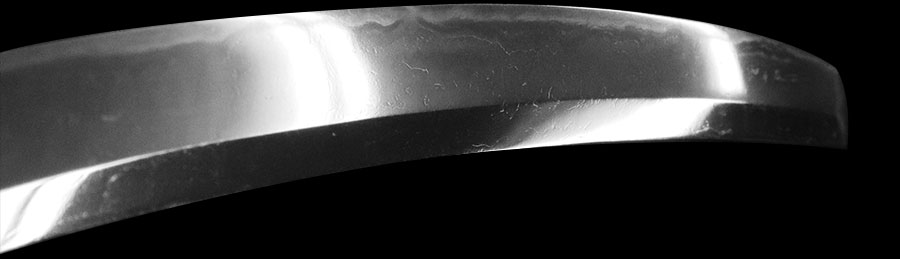
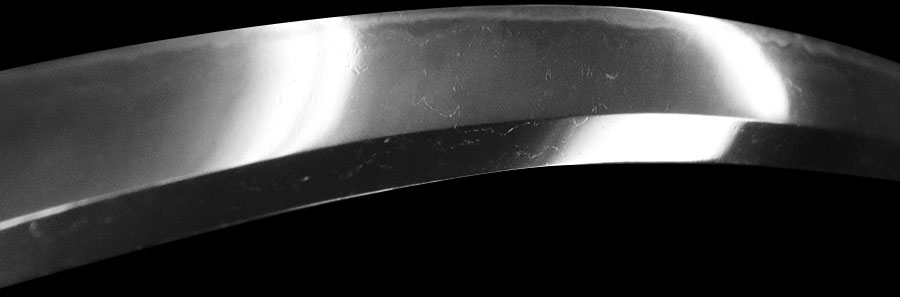
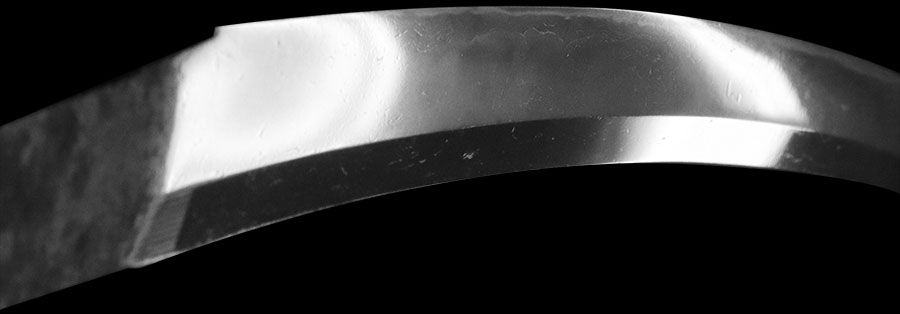
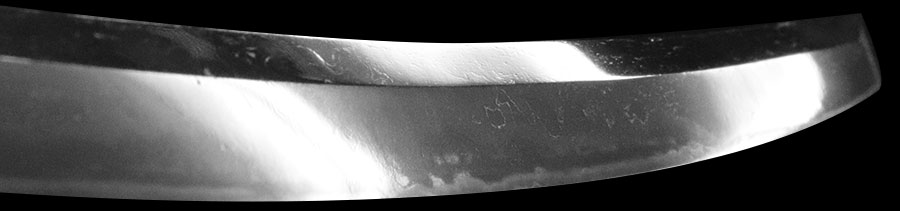
It has arrived, it has arrived—a wonderfully precious piece. Alongside the Shimazu family of Satsuma, Kyushu, the Naminohira smiths are a lineage of swordsmiths that continued uninterrupted from the Heian period to the end of the Edo period. They are an ancient, ancient school of smiths ranking alongside Yasutsuna of Hoki and Tomonari of Ko-Bizen, who are considered the founders of the Japanese sword. The term "Ko-Naminohira Tachi" refers to works dating from the Heian period through the mid-Kamakura period. This Ko-Naminohira Tachi is a magnificent ubu mumei Tachi from the Kencho era of the Kamakura period (circa 1249, 775 years ago). The sugata exhibits a strong funbari at the moto, a high koshi-zori, a wide moto-mihaba with a significant difference from the saki-mihaba, and a deep sori with a ko-kissaki, embodying the classic Tachi sugata of the Kamakura period. The jigane is itame-hada mixed with masame, well-tightened with fine ji-nie, and the ji displays midare-utsuri, presenting a wonderfully archaic and atmospheric metal. The hamon is a hoso-suguba with ko-nie and a deep nioi, executed with great skill. Because Naminohira swords were active in the many battles of the Shimazu family, their consumption was extreme; the combat of Shimazu Yoshihiro at the Battle of Sekigahara is particularly famous. Isolated on the Sekigahara battlefield, Shimazu Yoshihiro’s army had to choose between fighting the massive Eastern Army to the death, retreating toward Omi (Shiga Prefecture) in the rear, or breaking through the front toward Ogaki (Gifu Prefecture). Yoshihiro chose for the Shimazu army to charge as a single unit directly toward Tokugawa Ieyasu’s main force. He employed the tactic known to the world as "Sutegamari" as they pushed forward. "Sutegamari" involves leaving small squads behind as the main body retreats, forcing them to fight until they die. In other words, it is a delaying tactic using sacrificial pawns. When one squad was annihilated, another squad would fight to the death. By repeating this delay of the enemy army over and over, it was a fierce struggle to allow the General to escape safely. After the Battle of Sekigahara, while the Mori family had their kokudaka reduced, Tokugawa Ieyasu, having witnessed the terrifying fighting spirit of Shimazu Yoshihiro, was unable to reduce the Shimazu family's kokudaka. Many famous swords of Ko-Naminohira have been designated as Juyo Bunkazai or Juyo Bijutsuhin since ancient times; however, due to the fierce combat of the Shimazu army, extant works are remarkably few, making this Tachi wonderfully precious. On this occasion, an elderly connoisseur (sukisha) has entrusted this to us, saying that as he has grown old, he wishes for this Juyo Bunkazai-class ubu mumei Kamakura period Ko-Naminohira Tachi to be passed on to a successor at a low price. Therefore, we are offering it at a special bargain price. Please truly enjoy it.
 NihontoWatch













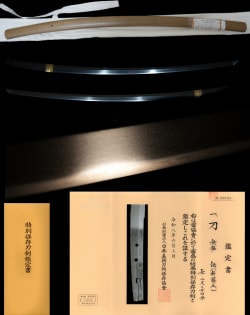
We could not find an authenticity certificate on the seller’s listing. Japanese swords and fittings are normally papered by the NBTHK (or the NTHK). Without one, the attribution is the seller’s own assessment and has not been independently verified — treat it with caution and ask the dealer about certification before buying.
For returns due to customer circumstances, the cost is the customer's responsibility. For returns due to our mis-shipment or a defective item, we bear the cost.
It has arrived, it has arrived—a wonderfully precious piece. Alongside the Shimazu family of Satsuma, Kyushu, the Naminohira smiths are a lineage of swordsmiths that continued uninterrupted from the Heian period to the end of the Edo period. They are an ancient, ancient school of smiths ranking alongside Yasutsuna of Hoki and Tomonari of Ko-Bizen, who are considered the founders of the Japanese sword. The term "Ko-Naminohira Tachi" refers to works dating from the Heian period through the mid-Kamakura period. This Ko-Naminohira Tachi is a magnificent ubu mumei Tachi from the Kencho era of the Kamakura period (circa 1249, 775 years ago). The sugata exhibits a strong funbari at the moto, a high koshi-zori, a wide moto-mihaba with a significant difference from the saki-mihaba, and a deep sori with a ko-kissaki, embodying the classic Tachi sugata of the Kamakura period. The jigane is itame-hada mixed with masame, well-tightened with fine ji-nie, and the ji displays midare-utsuri, presenting a wonderfully archaic and atmospheric metal. The hamon is a hoso-suguba with ko-nie and a deep nioi, executed with great skill. Because Naminohira swords were active in the many battles of the Shimazu family, their consumption was extreme; the combat of Shimazu Yoshihiro at the Battle of Sekigahara is particularly famous. Isolated on the Sekigahara battlefield, Shimazu Yoshihiro’s army had to choose between fighting the massive Eastern Army to the death, retreating toward Omi (Shiga Prefecture) in the rear, or breaking through the front toward Ogaki (Gifu Prefecture). Yoshihiro chose for the Shimazu army to charge as a single unit directly toward Tokugawa Ieyasu’s main force. He employed the tactic known to the world as "Sutegamari" as they pushed forward. "Sutegamari" involves leaving small squads behind as the main body retreats, forcing them to fight until they die. In other words, it is a delaying tactic using sacrificial pawns. When one squad was annihilated, another squad would fight to the death. By repeating this delay of the enemy army over and over, it was a fierce struggle to allow the General to escape safely. After the Battle of Sekigahara, while the Mori family had their kokudaka reduced, Tokugawa Ieyasu, having witnessed the terrifying fighting spirit of Shimazu Yoshihiro, was unable to reduce the Shimazu family's kokudaka. Many famous swords of Ko-Naminohira have been designated as Juyo Bunkazai or Juyo Bijutsuhin since ancient times; however, due to the fierce combat of the Shimazu army, extant works are remarkably few, making this Tachi wonderfully precious. On this occasion, an elderly connoisseur (sukisha) has entrusted this to us, saying that as he has grown old, he wishes for this Juyo Bunkazai-class ubu mumei Kamakura period Ko-Naminohira Tachi to be passed on to a successor at a low price. Therefore, we are offering it at a special bargain price. Please truly enjoy it.
NihontoWatchWe could not find an authenticity certificate on the seller’s listing. Japanese swords and fittings are normally papered by the NBTHK (or the NTHK). Without one, the attribution is the seller’s own assessment and has not been independently verified — treat it with caution and ask the dealer about certification before buying.
For returns due to customer circumstances, the cost is the customer's responsibility. For returns due to our mis-shipment or a defective item, we bear the cost.