NihontoWatch MonNihontoWatch
Market
Encyclopedia
Kantei
NihontoWatch MonNihontoWatch
Market
Encyclopedia
Kantei

Description

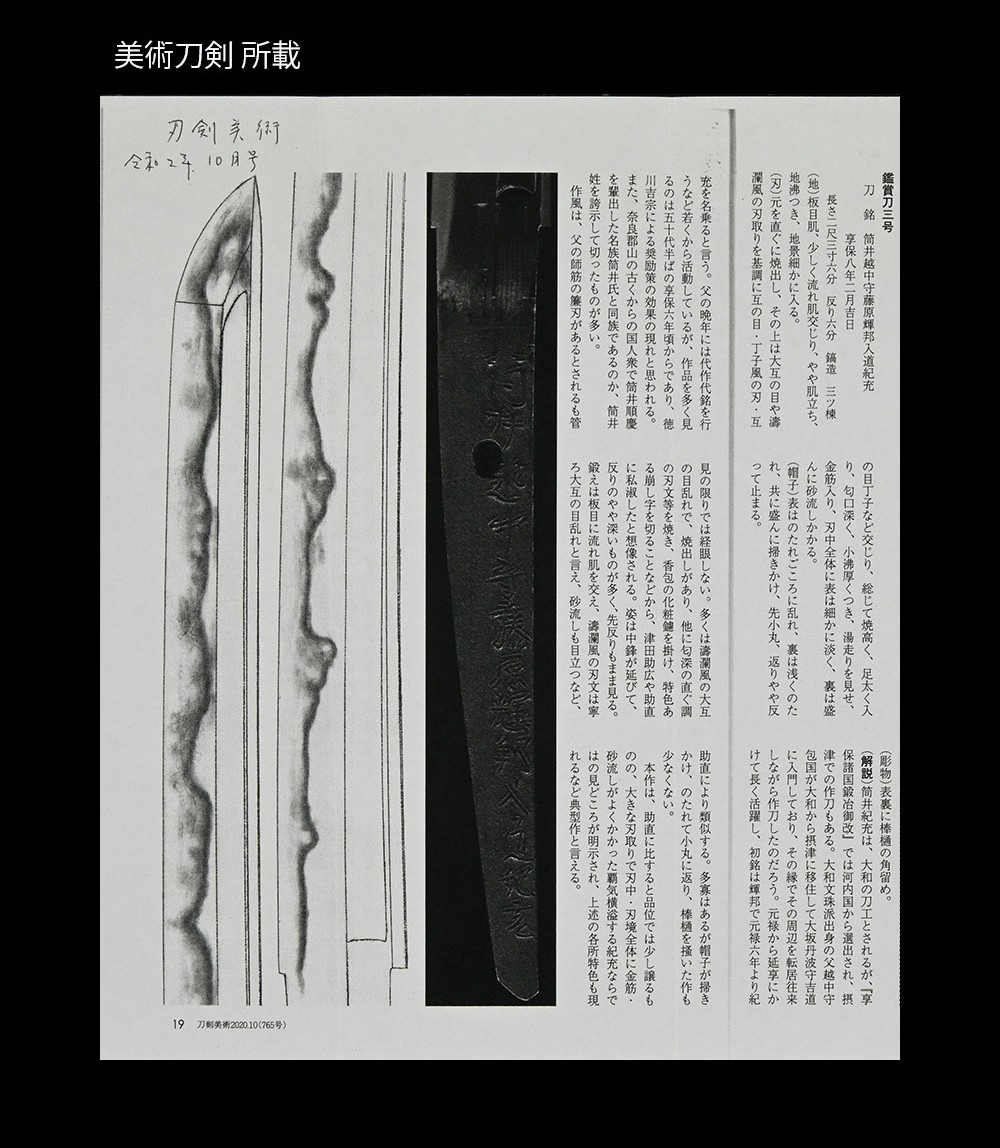
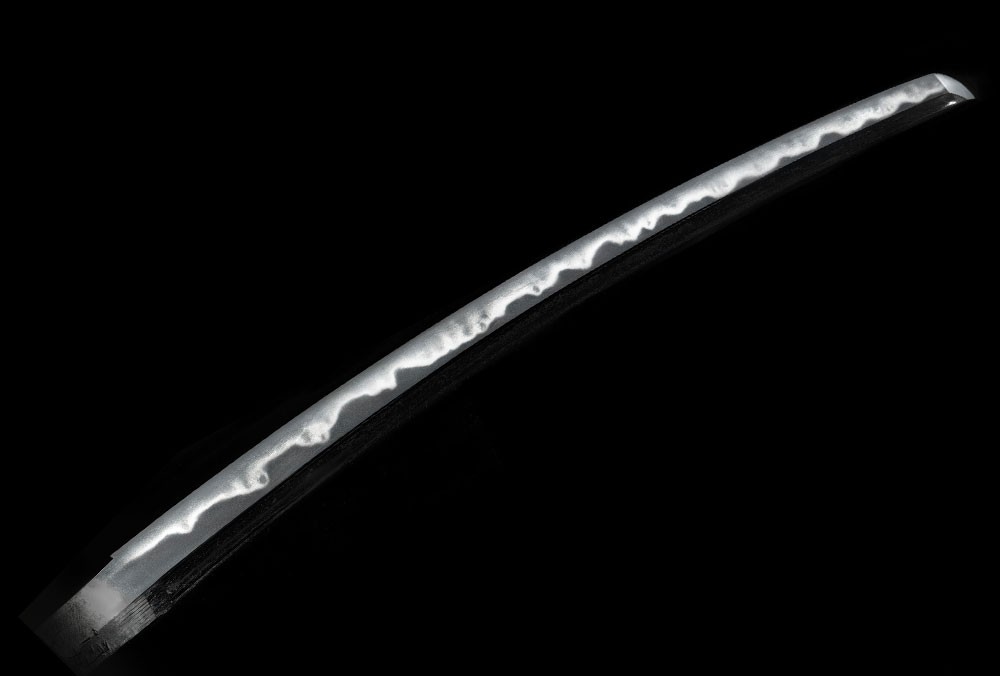
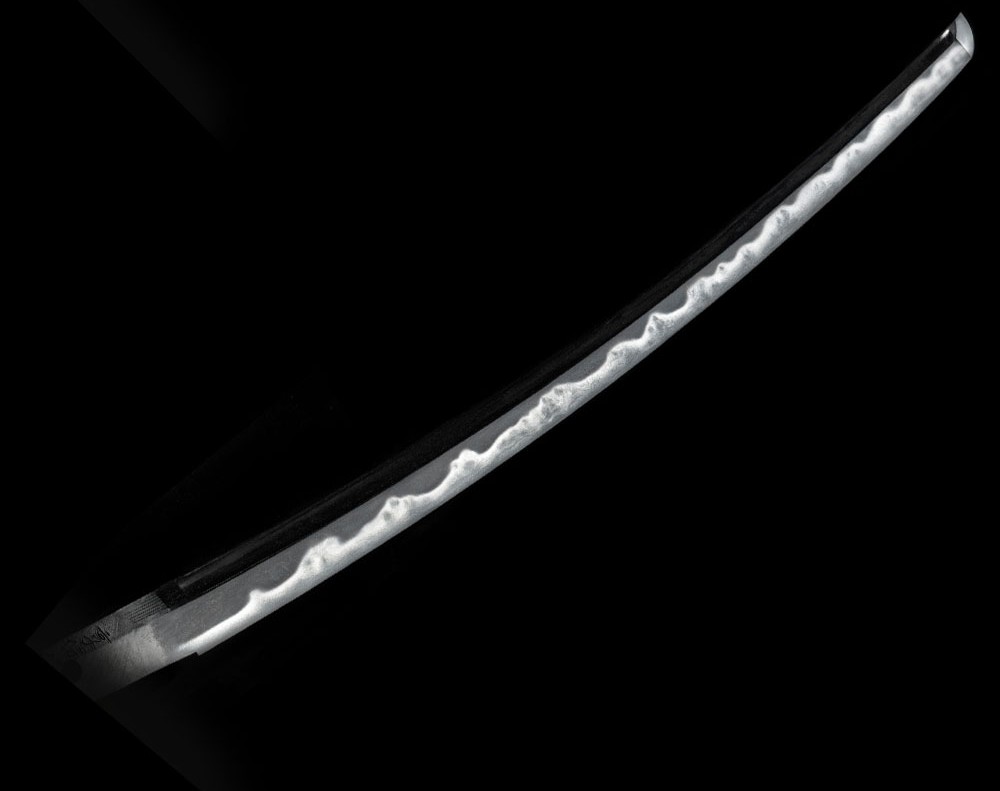
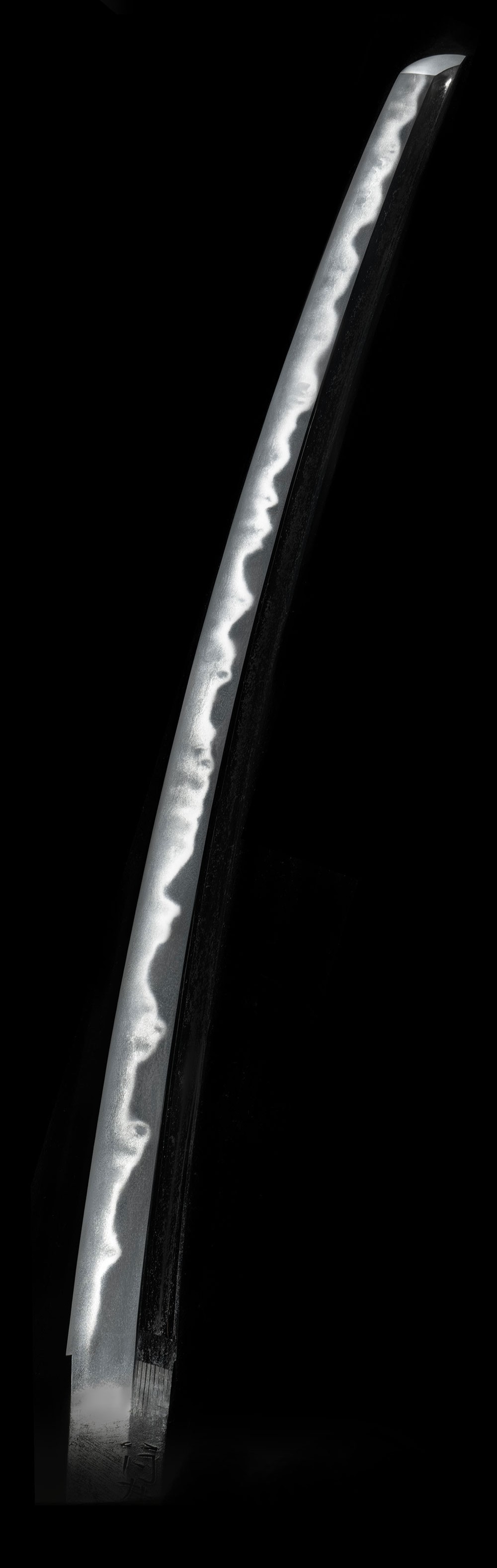
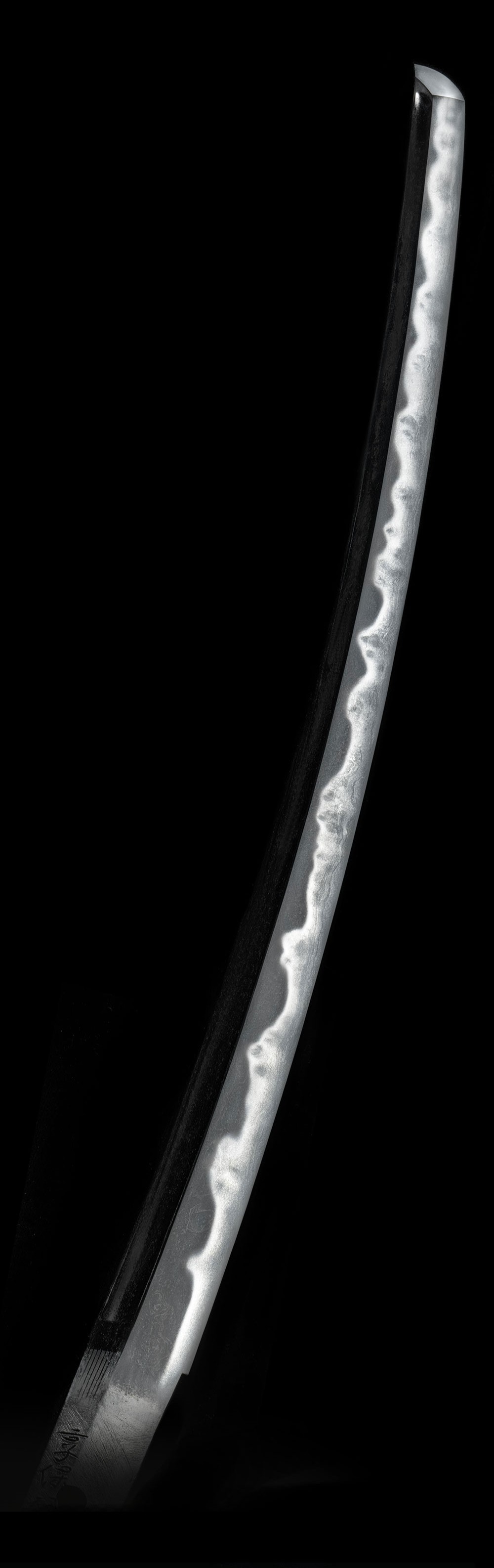
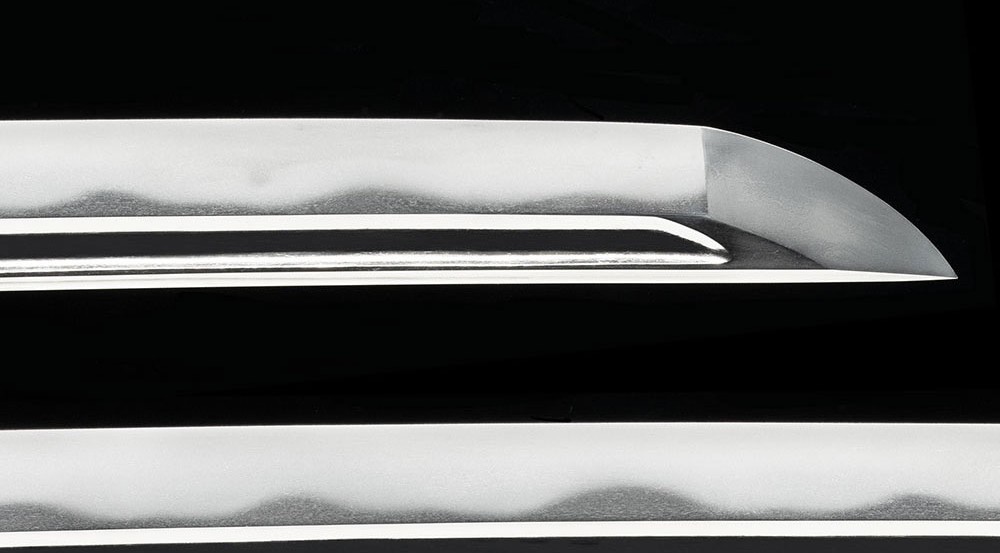
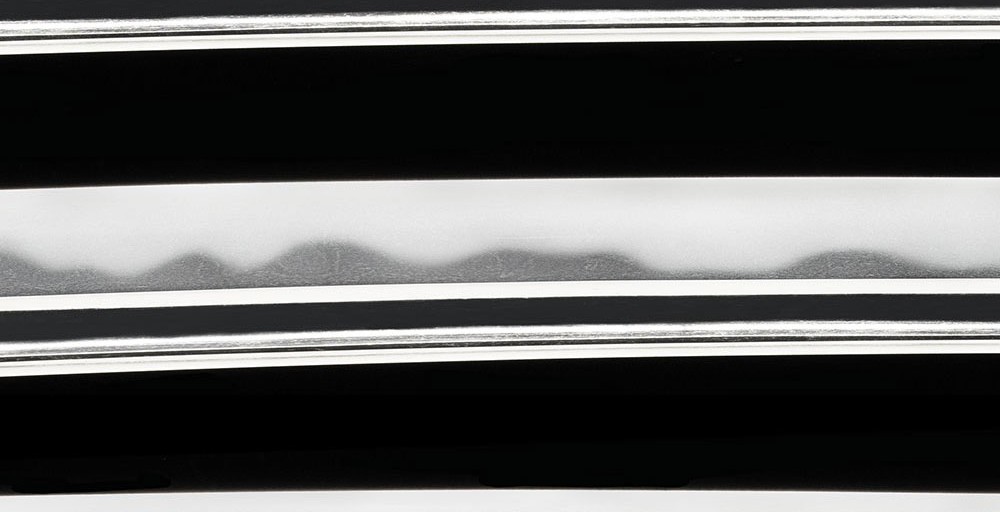
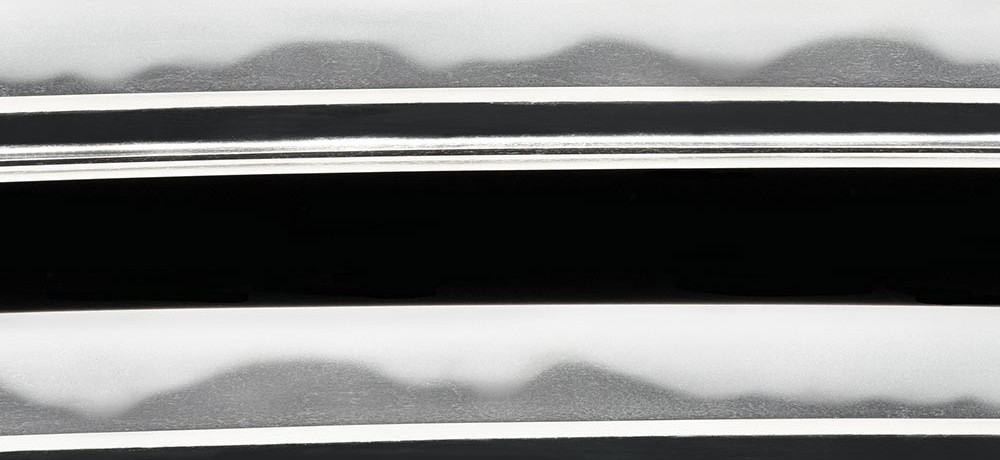
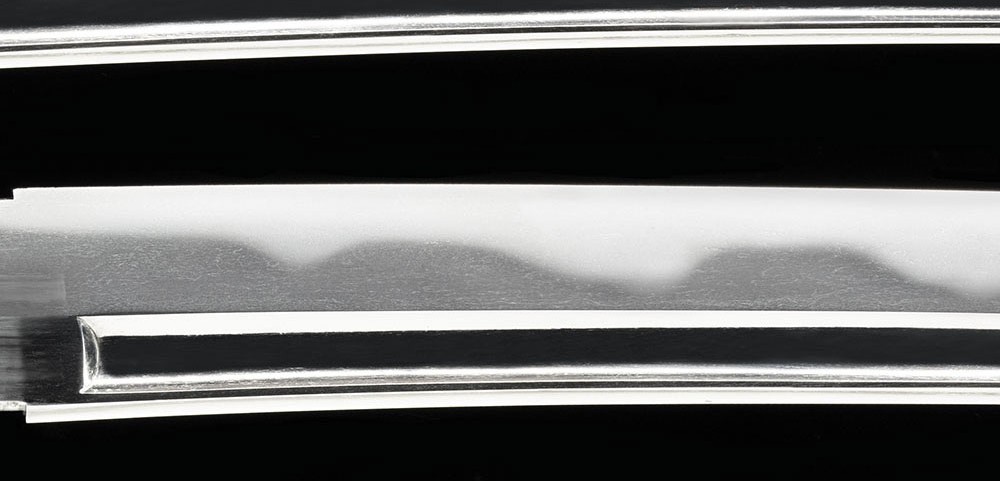
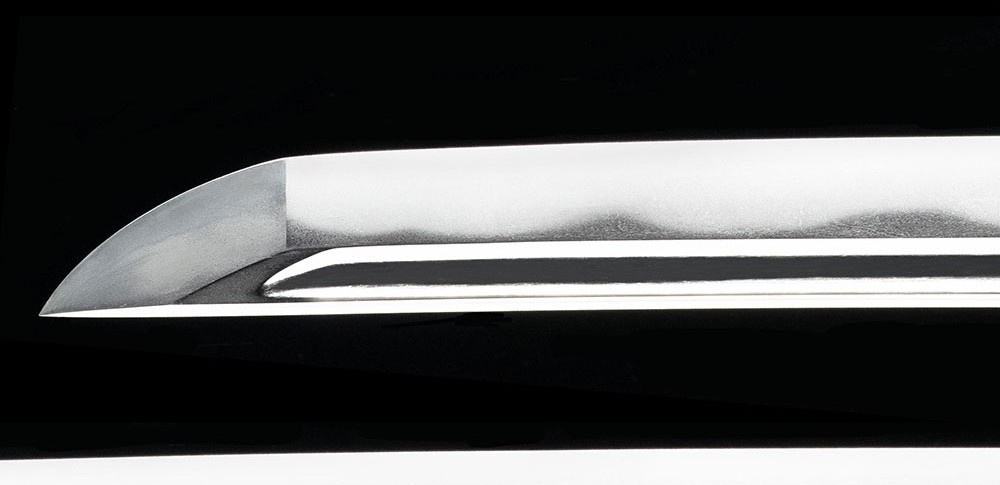
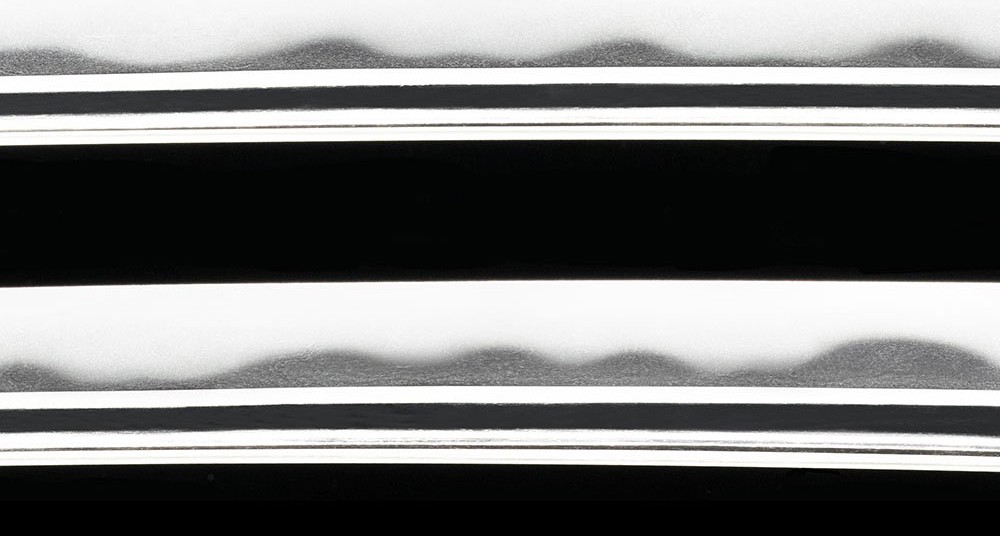
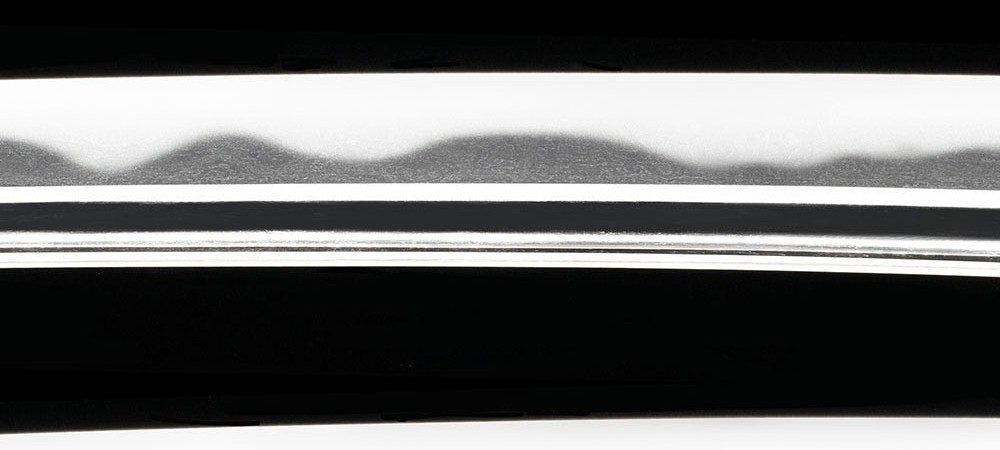
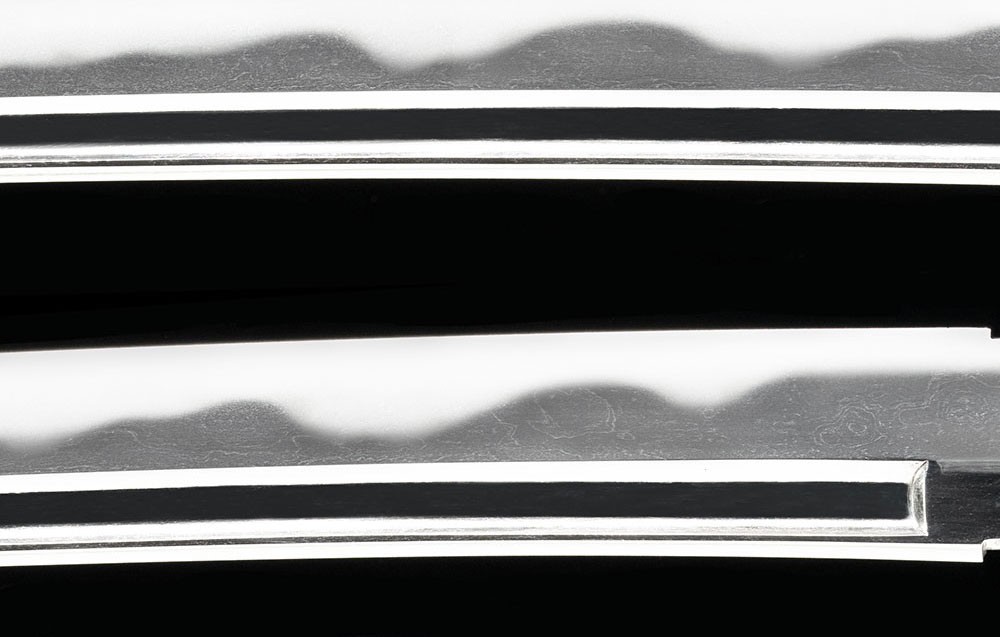
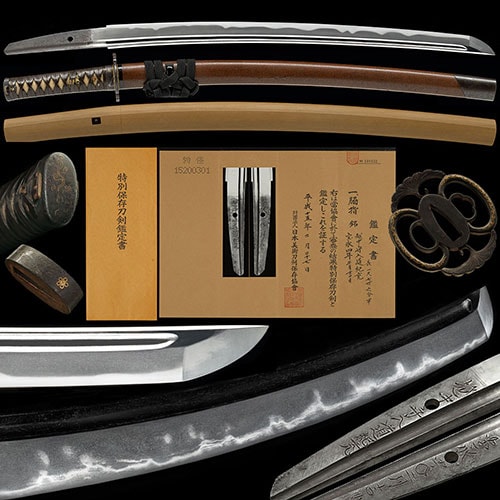
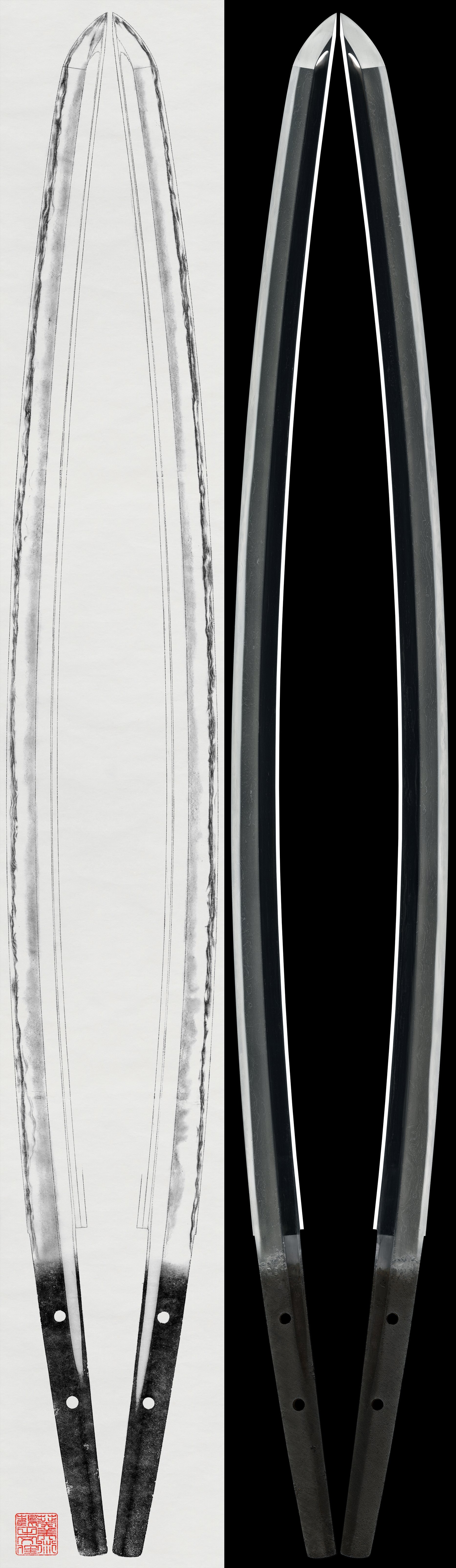
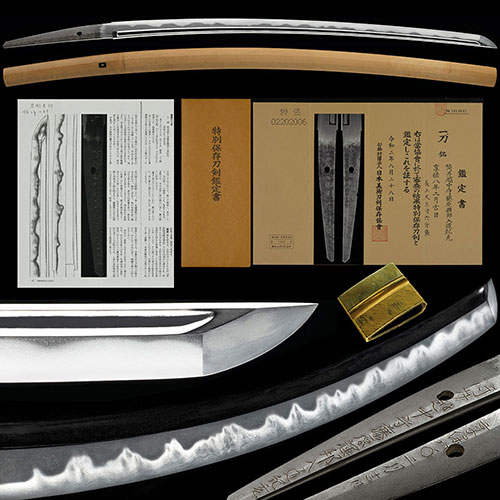
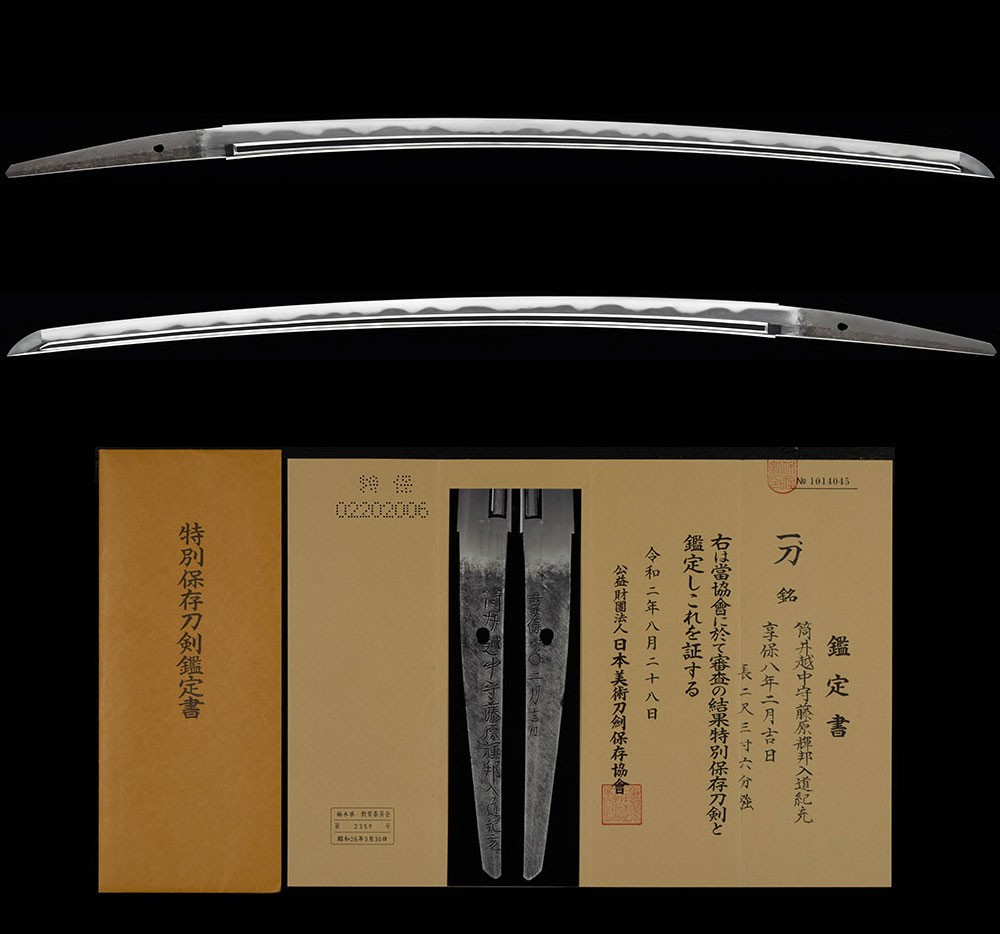
This katana is a masterpiece by Tsutsui Norimitsu, born in Kanbun 6 (1666) and active during the middle Edo period. It features a deep nioi, toran-midare hamon with kinsuji and sunagashi, characteristic of the Yamato Monju school and influenced by Tsuda Echizennokami Sukehiro. The blade is accompanied by an NBTHK Tokubetsu Hozon certificate.

NihontoWatch MonNihontoWatch
MarketEncyclopediaKantei
Swords›Yamato-den›Tsutsui›Norimitsu›Katana: Tsutsui Ecchunokami Fujiwara Terukuni Nyudo Norimitsu - Tokubetsu Hozon Token
katanaTokubetsu Hozon
Tsutsui Norimitsu

Katana: Tsutsui Ecchunokami Fujiwara Terukuni Nyudo Norimitsu - Tokubetsu Hozon Token

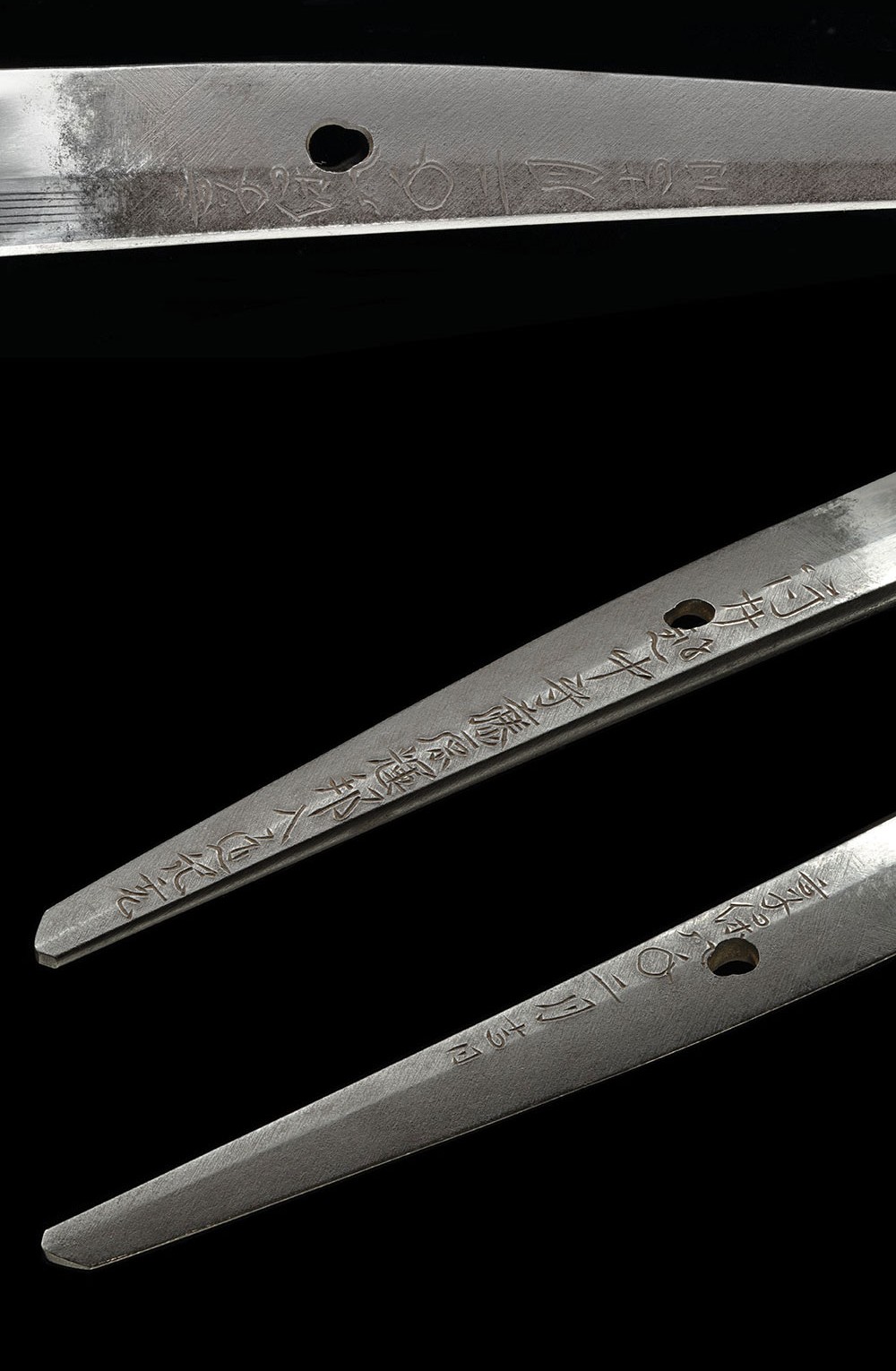
mei · Yamato Monju · Enpo (1673-1681) · nagasa 71.6cm · sori 1.8cm

¥2,000,000
Visit seller website →
Tsutsui Norimitsu (紀充) · Yamato Monju · Enpo (1673-1681)2 works for sale →
Katana
Could you name the smith from the blade alone? Today’s kantei →
Tsutsui Norimitsu — 1 of 19
Tsutsui Norimitsu — 2 of 19
Tsutsui Norimitsu — 3 of 19
Tsutsui Norimitsu — 4 of 19
Tsutsui Norimitsu — 5 of 19
Tsutsui Norimitsu — 6 of 19
Tsutsui Norimitsu — 7 of 19
Tsutsui Norimitsu — 8 of 19
Tsutsui Norimitsu — 9 of 19
Tsutsui Norimitsu — 10 of 19
Tsutsui Norimitsu — 11 of 19
Tsutsui Norimitsu — 12 of 19
Tsutsui Norimitsu — 13 of 19
Tsutsui Norimitsu — 14 of 19
Tsutsui Norimitsu — 15 of 19
Tsutsui Norimitsu — 16 of 19
Tsutsui Norimitsu — 17 of 19
Tsutsui Norimitsu — 18 of 19
Tsutsui Norimitsu — 19 of 19
1 / 19
1 / 19
Tsutsui Norimitsu — 1 of 19Tsutsui Norimitsu — 2 of 19Tsutsui Norimitsu — 3 of 19Tsutsui Norimitsu — 4 of 19Tsutsui Norimitsu — 5 of 19Tsutsui Norimitsu — 6 of 19Tsutsui Norimitsu — 7 of 19Tsutsui Norimitsu — 8 of 19Tsutsui Norimitsu — 9 of 19Tsutsui Norimitsu — 10 of 19Tsutsui Norimitsu — 11 of 19Tsutsui Norimitsu — 12 of 19Tsutsui Norimitsu — 13 of 19Tsutsui Norimitsu — 14 of 19Tsutsui Norimitsu — 15 of 19Tsutsui Norimitsu — 16 of 19Tsutsui Norimitsu — 17 of 19Tsutsui Norimitsu — 18 of 19Tsutsui Norimitsu — 19 of 19
Tsutsui Norimitsu (紀充) · Yamato Monju · Enpo (1673-1681)2 works for sale →
Katana
Could you name the smith from the blade alone? Today’s kantei →
Measurements & details
Smith
Tsutsui Norimitsu
Type
Katana
School
Tsutsui
Period
Around 1673–1713(Enpo)
Province
Etchu
Signature
Signed(100% of this smith's designated works are signed)
Measurements
Nagasa 71.6cmSori 1.8cmMotohaba 3.2cmSakihaba 2.2cmKasane 0.67cmWeight 654g
Description

This katana is a masterpiece by Tsutsui Norimitsu, born in Kanbun 6 (1666) and active during the middle Edo period. It features a deep nioi, toran-midare hamon with kinsuji and sunagashi, characteristic of the Yamato Monju school and influenced by Tsuda Echizennokami Sukehiro. The blade is accompanied by an NBTHK Tokubetsu Hozon certificate.

About the maker

Norimitsu

紀充

Yamato-den · Yamato · around 1673-1713

2 pieces on the market now

›

Historical importance

Where Norimitsu stands among comparable artisans: across all of nihontō, and within tradition, era, and period. The tiers (Foremost · Leading · Major · Notable) weigh official designations from the NBTHK and Japan's Agency for Cultural Affairs, together with historical honors of lasting repute such as the Sansaku and Meibutsu-chō.

随一
Foremost
屈指
Leading
有数
Major
著名
Notable

Select a lens to see how it's measured.

Designation record
1 designated works
Jūyō
1
2 works by Norimitsu on the market→
Norimitsu — full profileYamato-den school

Dated Works

Years he was demonstrably active, proven by signed-and-dated blades

Active period
1713Editorial estimate: 1673–1713
1 of 1 designated works carry a date

Study this maker →

About the school

Tsutsui

筒井

Yamato-den · Yamato

3 pieces on the market now

›

The blades gathered here belong to a single Edo-period line rather than an old Yamato workshop. Their maker signs 紀充, a name read in the registers as Kijū, Kishū, Kimitsugu, and Norimitsu, and he is recorded as Tsutsui Etchū-no-Kami Nyūdō. The setsumei place him as the son of Etchū-no-Kami Kanekuni, who in turn studied under the first-generation Tanba-no-Kami Yoshimichi of Ōsaka; one entry instead names his father as Tsutsui Echizen-no-Kami Kunisada, the same Ōsaka Shintō milieu. He first used the name Terukuni (輝邦) and, from about Genroku 6 (1693), signed 紀充, with dated work running across Shōtoku 3 (1713) and the Kyōhō years 5, 9, 11, and 16 (1720 to 1731). One Kyōhō 16 katana carries a place inscription reading Washū Kōriyama, recording that he worked at Kōriyama in Yamato province; a second generation signing the same characters is also attested. His hand follows the Tsuda-style tōran-ba of the Ōsaka tradition. Across the group the hamon is a large gunome-midare in tōran form, the wave crests broad and regular, with tobiyaki mixed in, ashi entering, and sunagashi running frequently through a deep nioi with ko-nie; kinsuji surface on the stronger blades. The kitae is itame or tightly forged ko-itame, repeatedly noted as tending to nagare or masame-gakari toward the edge, with ji-nie adhering. Bōshi vary between a sugu ko-maru return and a deep ō-maru turning back in midare.

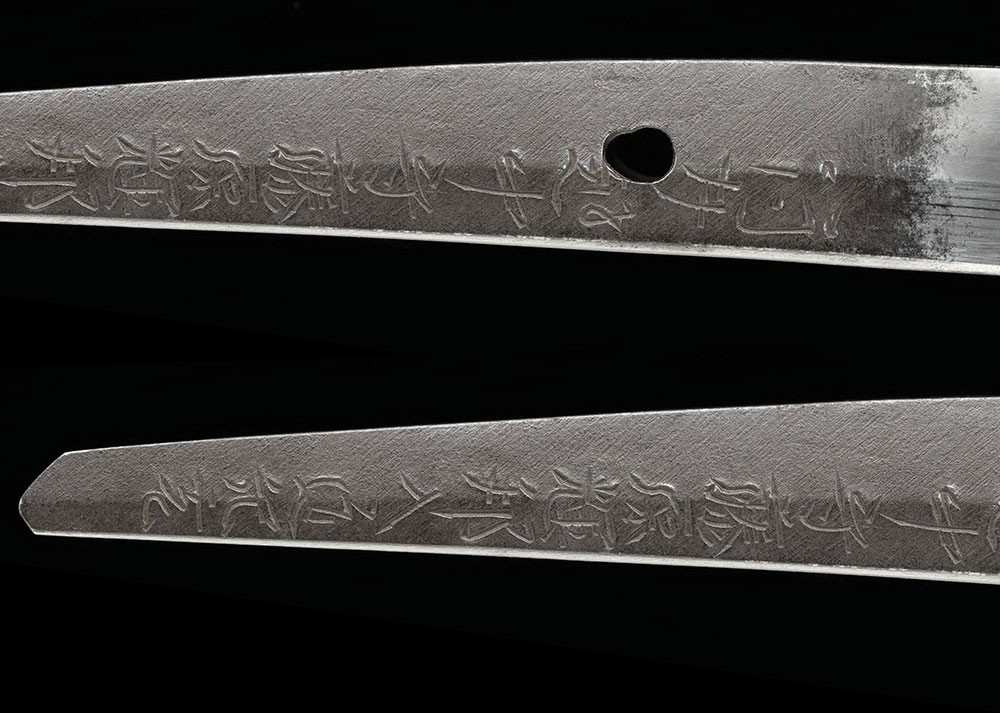
The sugata is shinogi-zukuri, iori-mune, with shallow sori or sakizori and a chū-kissaki; nakago are ubu with keshō sujikai file marks, the long cursive mei cut on the omote and the date and place set on the ura. The registers also caution that the steel does not reach that of Sukehiro or Sukenao, the masame tendency being the clearest tell of this hand against its Ōsaka models. For kantei the combination is specific: a broad tōran gunome with frequent sunagashi over an itame ground that flows to masame near the ha, signed by Tsutsui Etchū-no-Kami in a long cursive inscription. Sudare-ba work and tantō are recorded as rare; katana are the norm. Named pieces sit in the Imperial collection, including a Kyōhō 11 katana held by the Imperial Household Agency, and the dated and place-marked inscriptions are singled out as carrying particular value for study. The setsumei thus document an Ōsaka-trained Shintō smith who later settled at Kōriyama in Yamato, and the corpus is best read on those terms. NOTE: The setsumei do NOT match the "Tsutsui / Yamato-den" label. They describe an Edo-period (Shōtoku through Kyōhō, 1713 to 1731) Ōsaka-tradition tōran smith line (紀充, son of Kanekuni, in the Tanba-no-Kami Yoshimichi / Tsuda lineage) who worked at Kōriyama in Yamato province; the "Yamato" connection is geographic residence, not the Yamato-den tradition or the 1100 to 1400 era given in the identity file. Learn more →

2 recorded smiths5 designated works
Leading smiths
SmithEraDesignated
Kiju紀充1688-17204
Norimitsu紀充1673-17131
Explore the Tsutsui school →

Historical context

The Edo period (1615 to 1868)

›

For two and a half centuries of peace the sword was the warrior’s legal badge rather than his weapon. Each great city developed its own manner, Edo’s tested strength against Ōsaka’s polished brilliance, until demand thinned in the era’s last decades.

The Edo period (1615 to 1868) →

NBTHK Certificate
Tokubetsu Hozon Tōken特別保存刀剣
Sword Especially Worthy of Preservation
›

A Hozon-certified blade judged to show notably superior workmanship and a better state of preservation. The bar is higher: re-tempered blades and most unsigned Muromachi/Edo works are excluded.

About the NBTHK›

The NBTHK (Nihon Bijutsu Tōken Hozon Kyōkai, the Society for the Preservation of Japanese Art Swords) is a public-interest incorporated foundation founded in 1948 and supervised by Japan’s Agency for Cultural Affairs (Bunkachō); it is based at the Japanese Sword Museum in Tokyo. Its expert panels physically examine each submitted work (shinsa) and issue a certificate (kanteishō) ranking it by artistic and historical merit. NBTHK papers are the most widely recognized standard of authentication for Japanese swords and fittings.

NBTHK official site→
Seller
E
Eirakudo
🇯🇵Ships from Japan
›
✓Verified dealereirakudo.shop
Settles in JPY
✓Ships worldwide✓English supportWire transferCredit card
Return policy

Returns/exchanges/cancellations not accepted after shipment except for significant defects; if defective, return/exchange possible within 3 days of arrival (return shipping paid by customer).

View all of Eirakudo’s listings→View this item on the dealer’s site→

More works by Tsutsui Norimitsu

View all →
Nipponto
Wakizashi - by Tsutsui Norimitsu - Wakizashi by Tsutsui Ecchunokami Terukuni Nyudo NorimitsuWakizashi - by Tsutsui Norimitsu - Wakizashi by Tsutsui Ecchunokami Terukuni Nyudo Norimitsu

Wakizashi

ByTsutsui Norimitsu
¥460,000

More from the Tsutsui school

View all →
Eirakudo
Tokuho
Wakizashi - Tokuho - by Tsutsui School - Kiju Wakizashi Tokubetsu Hozon TokenWakizashi - Tokuho - by Tsutsui School - Kiju Wakizashi Tokubetsu Hozon Token

Wakizashi

ByTsutsui School
¥900,000

More from the Yamato tradition

View all →
Aoi Art
Tokuho
Katana - Tokuho - by Shikkake School - Mumei (Attributed to Den Shikkake)Katana - Tokuho - by Shikkake School - Mumei (Attributed to Den Shikkake)

Katana

ByShikkake School
Starting Bid¥850,000
Aoi Art
Jūyō
Katana - Jūyō - by Taima School - Mumei (Taima)Katana - Jūyō - by Taima School - Mumei (Taima)

Katana

ByTaima School
¥4,500,000
Goushuya
Tokujū
Katana - Tokuju - by Satsuma Yasuyo - Tokubetsu Juyo Token (One-Leaf Aoi Mon) Shume no Kami Ichihei Fujiwara Ason Yasuyo, Made in Satsushu Kirei-gun on an Auspicious Day in March, Kyoho 12Katana - Tokuju - by Satsuma Yasuyo - Tokubetsu Juyo Token (One-Leaf Aoi Mon) Shume no Kami Ichihei Fujiwara Ason Yasuyo, Made in Satsushu Kirei-gun on an Auspicious Day in March, Kyoho 12

Katana

BySatsuma Yasuyo
Ask
Touken Komachi
Tokuho
Katana - Tokuho - by Senjuin School - Mumei (attributed to Senju-in) with Shirasaya and KoshiraeKatana - Tokuho - by Senjuin School - Mumei (attributed to Senju-in) with Shirasaya and Koshirae

Katana

BySenjuin School
¥1,250,000
Sanmei
Tokuho
Tachi - Tokuho - by Senjuin School - Unsigned SenjuinTachi - Tokuho - by Senjuin School - Unsigned Senjuin

Tachi

BySenjuin School
¥1,250,000
Touken Komachi
Tokuho
Katana - Tokuho - by Tegai Kanenaga - Katana in ShirasayaKatana - Tokuho - by Tegai Kanenaga - Katana in Shirasaya

Katana

ByTegai Kanenaga
¥3,000,000
Eirakudo
Tokuho
Katana - Tokuho - by Shikkake School - Shikkake - Tokubetsu Hozon TokenKatana - Tokuho - by Shikkake School - Shikkake - Tokubetsu Hozon Token

Katana

ByShikkake School
¥950,000
Eirakudo
Jūyō
Katana - Jūyō - by Senjuin School - Senjuin - Juyo TokenKatana - Jūyō - by Senjuin School - Senjuin - Juyo Token

Katana

BySenjuin School
¥3,500,000

Swords

  • Katana
  • Wakizashi
  • Tantō
  • Tachi
  • Naginata
  • Yari
  • Japanese Swords
  • Samurai Swords

Fittings

  • Tsuba
  • Fuchi-Kashira
  • Kozuka
  • Menuki
  • Sword Guards (Tsuba)

Armor

  • Kabuto
  • Samurai Armor
  • All Samurai Armor

By Certification

  • Tokujū
  • Jūyō
  • Tokuho
  • Hozon

Resources

  • Dealer Directory
  • Artist Directory
  • The Daily Kantei
  • Glossary
  • Browse All
Nihontowatch© 2026
TermsPrivacyCookiesAbout

¥2,000,000

View on Eirakudo

Description

This katana is a masterpiece by Tsutsui Norimitsu, born in Kanbun 6 (1666) and active during the middle Edo period. It features a deep nioi, toran-midare hamon with kinsuji and sunagashi, characteristic of the Yamato Monju school and influenced by Tsuda Echizennokami Sukehiro. The blade is accompanied by an NBTHK Tokubetsu Hozon certificate.

NihontoWatch MonNihontoWatch
MarketEncyclopediaKantei
Swords›Yamato-den›Tsutsui›Norimitsu›Katana: Tsutsui Ecchunokami Fujiwara Terukuni Nyudo Norimitsu - Tokubetsu Hozon Token
katanaTokubetsu Hozon
Tsutsui Norimitsu

Katana: Tsutsui Ecchunokami Fujiwara Terukuni Nyudo Norimitsu - Tokubetsu Hozon Token

mei · Yamato Monju · Enpo (1673-1681) · nagasa 71.6cm · sori 1.8cm

¥2,000,000
Visit seller website →
Tsutsui Norimitsu (紀充) · Yamato Monju · Enpo (1673-1681)2 works for sale →
Katana
Could you name the smith from the blade alone? Today’s kantei →
Tsutsui Norimitsu — 1 of 19
Tsutsui Norimitsu — 2 of 19
Tsutsui Norimitsu — 3 of 19
Tsutsui Norimitsu — 4 of 19
Tsutsui Norimitsu — 5 of 19
Tsutsui Norimitsu — 6 of 19
Tsutsui Norimitsu — 7 of 19
Tsutsui Norimitsu — 8 of 19
Tsutsui Norimitsu — 9 of 19
Tsutsui Norimitsu — 10 of 19
Tsutsui Norimitsu — 11 of 19
Tsutsui Norimitsu — 12 of 19
Tsutsui Norimitsu — 13 of 19
Tsutsui Norimitsu — 14 of 19
Tsutsui Norimitsu — 15 of 19
Tsutsui Norimitsu — 16 of 19
Tsutsui Norimitsu — 17 of 19
Tsutsui Norimitsu — 18 of 19
Tsutsui Norimitsu — 19 of 19
1 / 19
1 / 19
Tsutsui Norimitsu — 1 of 19Tsutsui Norimitsu — 2 of 19Tsutsui Norimitsu — 3 of 19Tsutsui Norimitsu — 4 of 19Tsutsui Norimitsu — 5 of 19Tsutsui Norimitsu — 6 of 19Tsutsui Norimitsu — 7 of 19Tsutsui Norimitsu — 8 of 19Tsutsui Norimitsu — 9 of 19Tsutsui Norimitsu — 10 of 19Tsutsui Norimitsu — 11 of 19Tsutsui Norimitsu — 12 of 19Tsutsui Norimitsu — 13 of 19Tsutsui Norimitsu — 14 of 19Tsutsui Norimitsu — 15 of 19Tsutsui Norimitsu — 16 of 19Tsutsui Norimitsu — 17 of 19Tsutsui Norimitsu — 18 of 19Tsutsui Norimitsu — 19 of 19
Tsutsui Norimitsu (紀充) · Yamato Monju · Enpo (1673-1681)2 works for sale →
Katana
Could you name the smith from the blade alone? Today’s kantei →
Measurements & details
Smith
Tsutsui Norimitsu
Type
Katana
School
Tsutsui
Period
Around 1673–1713(Enpo)
Province
Etchu
Signature
Signed(100% of this smith's designated works are signed)
Measurements
Nagasa 71.6cmSori 1.8cmMotohaba 3.2cmSakihaba 2.2cmKasane 0.67cmWeight 654g
Description

This katana is a masterpiece by Tsutsui Norimitsu, born in Kanbun 6 (1666) and active during the middle Edo period. It features a deep nioi, toran-midare hamon with kinsuji and sunagashi, characteristic of the Yamato Monju school and influenced by Tsuda Echizennokami Sukehiro. The blade is accompanied by an NBTHK Tokubetsu Hozon certificate.

About the maker

Norimitsu

紀充

Yamato-den · Yamato · around 1673-1713

2 pieces on the market now

›

Historical importance

Where Norimitsu stands among comparable artisans: across all of nihontō, and within tradition, era, and period. The tiers (Foremost · Leading · Major · Notable) weigh official designations from the NBTHK and Japan's Agency for Cultural Affairs, together with historical honors of lasting repute such as the Sansaku and Meibutsu-chō.

随一
Foremost
屈指
Leading
有数
Major
著名
Notable

Select a lens to see how it's measured.

Designation record
1 designated works
Jūyō
1
2 works by Norimitsu on the market→
Norimitsu — full profileYamato-den school

Dated Works

Years he was demonstrably active, proven by signed-and-dated blades

Active period
1713Editorial estimate: 1673–1713
1 of 1 designated works carry a date

Study this maker →

About the school

Tsutsui

筒井

Yamato-den · Yamato

3 pieces on the market now

›

The blades gathered here belong to a single Edo-period line rather than an old Yamato workshop. Their maker signs 紀充, a name read in the registers as Kijū, Kishū, Kimitsugu, and Norimitsu, and he is recorded as Tsutsui Etchū-no-Kami Nyūdō. The setsumei place him as the son of Etchū-no-Kami Kanekuni, who in turn studied under the first-generation Tanba-no-Kami Yoshimichi of Ōsaka; one entry instead names his father as Tsutsui Echizen-no-Kami Kunisada, the same Ōsaka Shintō milieu. He first used the name Terukuni (輝邦) and, from about Genroku 6 (1693), signed 紀充, with dated work running across Shōtoku 3 (1713) and the Kyōhō years 5, 9, 11, and 16 (1720 to 1731). One Kyōhō 16 katana carries a place inscription reading Washū Kōriyama, recording that he worked at Kōriyama in Yamato province; a second generation signing the same characters is also attested. His hand follows the Tsuda-style tōran-ba of the Ōsaka tradition. Across the group the hamon is a large gunome-midare in tōran form, the wave crests broad and regular, with tobiyaki mixed in, ashi entering, and sunagashi running frequently through a deep nioi with ko-nie; kinsuji surface on the stronger blades. The kitae is itame or tightly forged ko-itame, repeatedly noted as tending to nagare or masame-gakari toward the edge, with ji-nie adhering. Bōshi vary between a sugu ko-maru return and a deep ō-maru turning back in midare.

The sugata is shinogi-zukuri, iori-mune, with shallow sori or sakizori and a chū-kissaki; nakago are ubu with keshō sujikai file marks, the long cursive mei cut on the omote and the date and place set on the ura. The registers also caution that the steel does not reach that of Sukehiro or Sukenao, the masame tendency being the clearest tell of this hand against its Ōsaka models. For kantei the combination is specific: a broad tōran gunome with frequent sunagashi over an itame ground that flows to masame near the ha, signed by Tsutsui Etchū-no-Kami in a long cursive inscription. Sudare-ba work and tantō are recorded as rare; katana are the norm. Named pieces sit in the Imperial collection, including a Kyōhō 11 katana held by the Imperial Household Agency, and the dated and place-marked inscriptions are singled out as carrying particular value for study. The setsumei thus document an Ōsaka-trained Shintō smith who later settled at Kōriyama in Yamato, and the corpus is best read on those terms. NOTE: The setsumei do NOT match the "Tsutsui / Yamato-den" label. They describe an Edo-period (Shōtoku through Kyōhō, 1713 to 1731) Ōsaka-tradition tōran smith line (紀充, son of Kanekuni, in the Tanba-no-Kami Yoshimichi / Tsuda lineage) who worked at Kōriyama in Yamato province; the "Yamato" connection is geographic residence, not the Yamato-den tradition or the 1100 to 1400 era given in the identity file. Learn more →
2 recorded smiths5 designated works
Leading smiths
SmithEraDesignated
Kiju紀充1688-17204
Norimitsu紀充1673-17131
Explore the Tsutsui school →

Historical context

The Edo period (1615 to 1868)

›

For two and a half centuries of peace the sword was the warrior’s legal badge rather than his weapon. Each great city developed its own manner, Edo’s tested strength against Ōsaka’s polished brilliance, until demand thinned in the era’s last decades.

The Edo period (1615 to 1868) →

NBTHK Certificate
Tokubetsu Hozon Tōken特別保存刀剣
Sword Especially Worthy of Preservation
›

A Hozon-certified blade judged to show notably superior workmanship and a better state of preservation. The bar is higher: re-tempered blades and most unsigned Muromachi/Edo works are excluded.

About the NBTHK›

The NBTHK (Nihon Bijutsu Tōken Hozon Kyōkai, the Society for the Preservation of Japanese Art Swords) is a public-interest incorporated foundation founded in 1948 and supervised by Japan’s Agency for Cultural Affairs (Bunkachō); it is based at the Japanese Sword Museum in Tokyo. Its expert panels physically examine each submitted work (shinsa) and issue a certificate (kanteishō) ranking it by artistic and historical merit. NBTHK papers are the most widely recognized standard of authentication for Japanese swords and fittings.

NBTHK official site→
Seller
E
Eirakudo
🇯🇵Ships from Japan
›
✓Verified dealereirakudo.shop
Settles in JPY
✓Ships worldwide✓English supportWire transferCredit card
Return policy

Returns/exchanges/cancellations not accepted after shipment except for significant defects; if defective, return/exchange possible within 3 days of arrival (return shipping paid by customer).

View all of Eirakudo’s listings→View this item on the dealer’s site→

More works by Tsutsui Norimitsu

View all →
Nipponto
Wakizashi - by Tsutsui Norimitsu - Wakizashi by Tsutsui Ecchunokami Terukuni Nyudo NorimitsuWakizashi - by Tsutsui Norimitsu - Wakizashi by Tsutsui Ecchunokami Terukuni Nyudo Norimitsu

Wakizashi

ByTsutsui Norimitsu
¥460,000

More from the Tsutsui school

View all →
Eirakudo
Tokuho
Wakizashi - Tokuho - by Tsutsui School - Kiju Wakizashi Tokubetsu Hozon TokenWakizashi - Tokuho - by Tsutsui School - Kiju Wakizashi Tokubetsu Hozon Token

Wakizashi

ByTsutsui School
¥900,000

More from the Yamato tradition

View all →
Aoi Art
Tokuho
Katana - Tokuho - by Shikkake School - Mumei (Attributed to Den Shikkake)Katana - Tokuho - by Shikkake School - Mumei (Attributed to Den Shikkake)

Katana

ByShikkake School
Starting Bid¥850,000
Aoi Art
Jūyō
Katana - Jūyō - by Taima School - Mumei (Taima)Katana - Jūyō - by Taima School - Mumei (Taima)

Katana

ByTaima School
¥4,500,000
Goushuya
Tokujū
Katana - Tokuju - by Satsuma Yasuyo - Tokubetsu Juyo Token (One-Leaf Aoi Mon) Shume no Kami Ichihei Fujiwara Ason Yasuyo, Made in Satsushu Kirei-gun on an Auspicious Day in March, Kyoho 12Katana - Tokuju - by Satsuma Yasuyo - Tokubetsu Juyo Token (One-Leaf Aoi Mon) Shume no Kami Ichihei Fujiwara Ason Yasuyo, Made in Satsushu Kirei-gun on an Auspicious Day in March, Kyoho 12

Katana

BySatsuma Yasuyo
Ask
Touken Komachi
Tokuho
Katana - Tokuho - by Senjuin School - Mumei (attributed to Senju-in) with Shirasaya and KoshiraeKatana - Tokuho - by Senjuin School - Mumei (attributed to Senju-in) with Shirasaya and Koshirae

Katana

BySenjuin School
¥1,250,000
Sanmei
Tokuho
Tachi - Tokuho - by Senjuin School - Unsigned SenjuinTachi - Tokuho - by Senjuin School - Unsigned Senjuin

Tachi

BySenjuin School
¥1,250,000
Touken Komachi
Tokuho
Katana - Tokuho - by Tegai Kanenaga - Katana in ShirasayaKatana - Tokuho - by Tegai Kanenaga - Katana in Shirasaya

Katana

ByTegai Kanenaga
¥3,000,000
Eirakudo
Tokuho
Katana - Tokuho - by Shikkake School - Shikkake - Tokubetsu Hozon TokenKatana - Tokuho - by Shikkake School - Shikkake - Tokubetsu Hozon Token

Katana

ByShikkake School
¥950,000
Eirakudo
Jūyō
Katana - Jūyō - by Senjuin School - Senjuin - Juyo TokenKatana - Jūyō - by Senjuin School - Senjuin - Juyo Token

Katana

BySenjuin School
¥3,500,000

Swords

  • Katana
  • Wakizashi
  • Tantō
  • Tachi
  • Naginata
  • Yari
  • Japanese Swords
  • Samurai Swords

Fittings

  • Tsuba
  • Fuchi-Kashira
  • Kozuka
  • Menuki
  • Sword Guards (Tsuba)

Armor

  • Kabuto
  • Samurai Armor
  • All Samurai Armor

By Certification

  • Tokujū
  • Jūyō
  • Tokuho
  • Hozon

Resources

  • Dealer Directory
  • Artist Directory
  • The Daily Kantei
  • Glossary
  • Browse All
Nihontowatch© 2026
TermsPrivacyCookiesAbout

¥2,000,000

View on Eirakudo
NihontoWatch MonNihontoWatch
Market
Encyclopedia
Kantei
NihontoWatch MonNihontoWatch
Market
Encyclopedia
Kantei