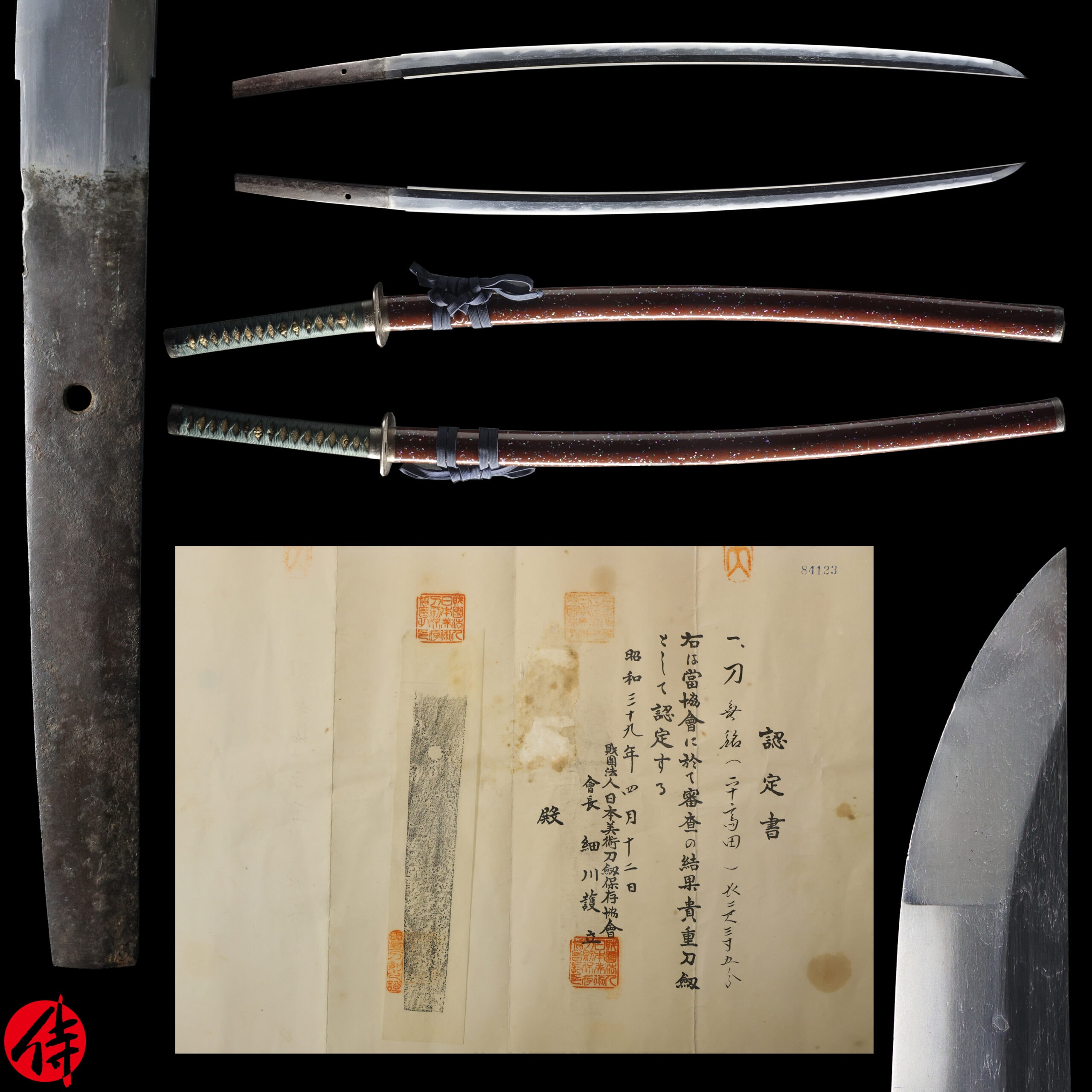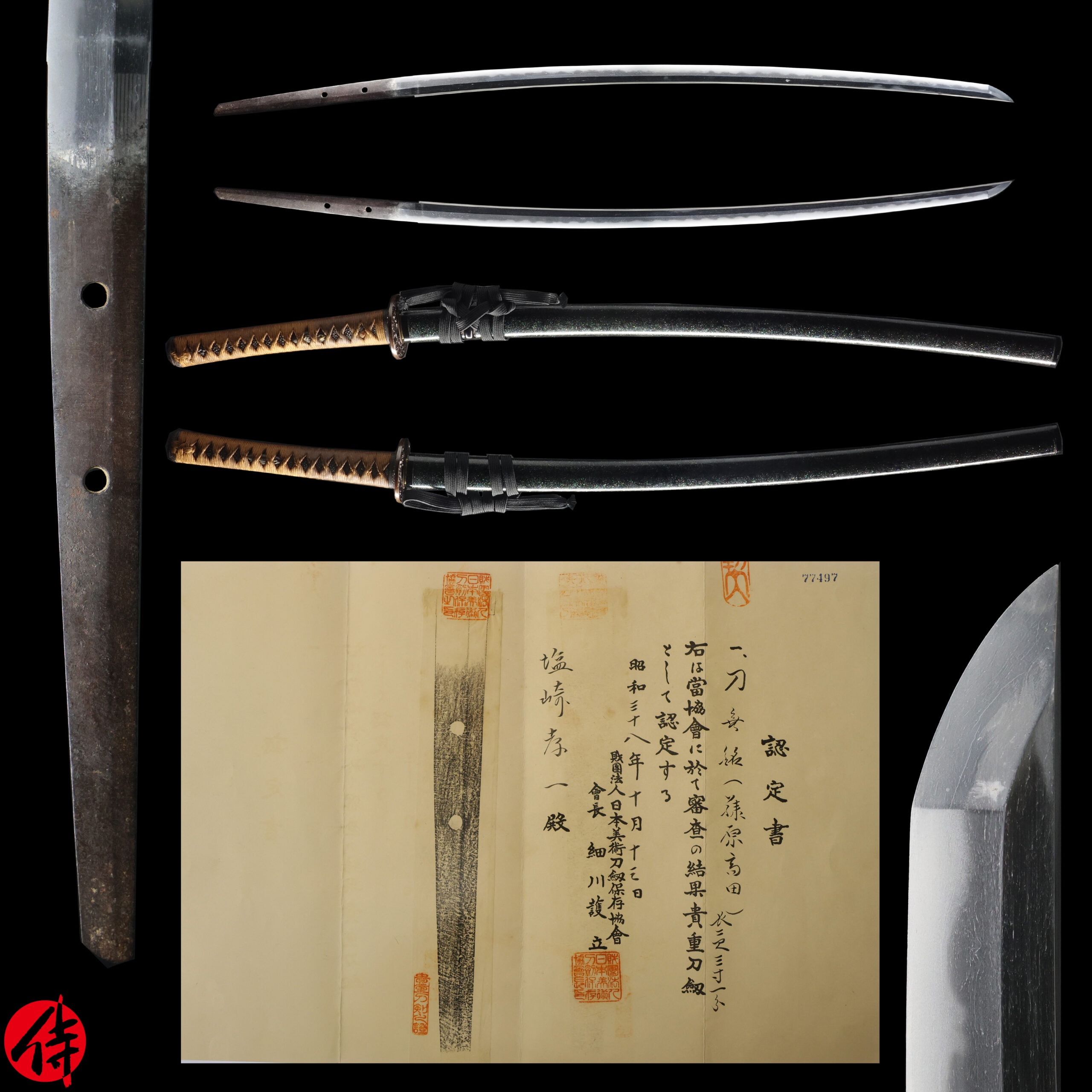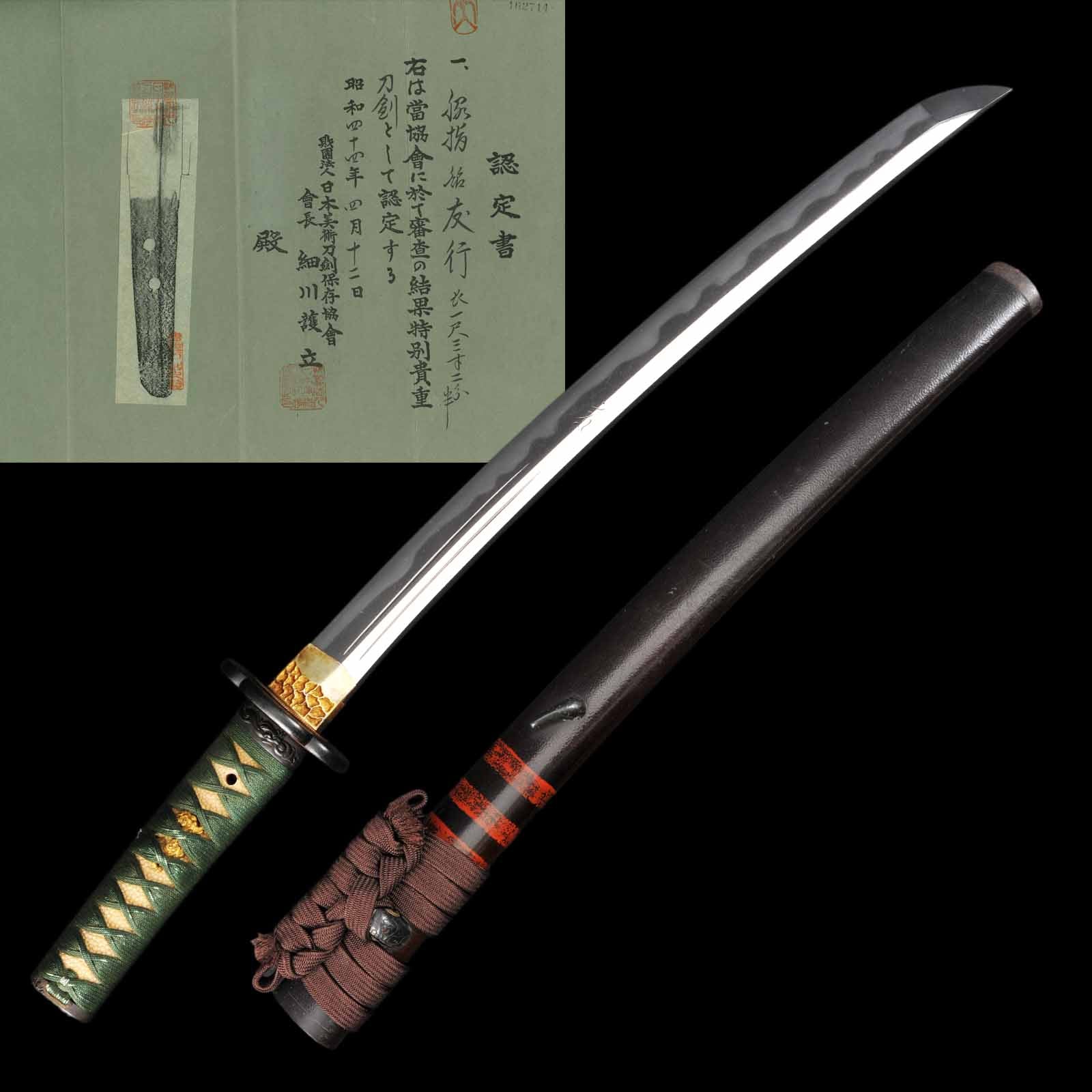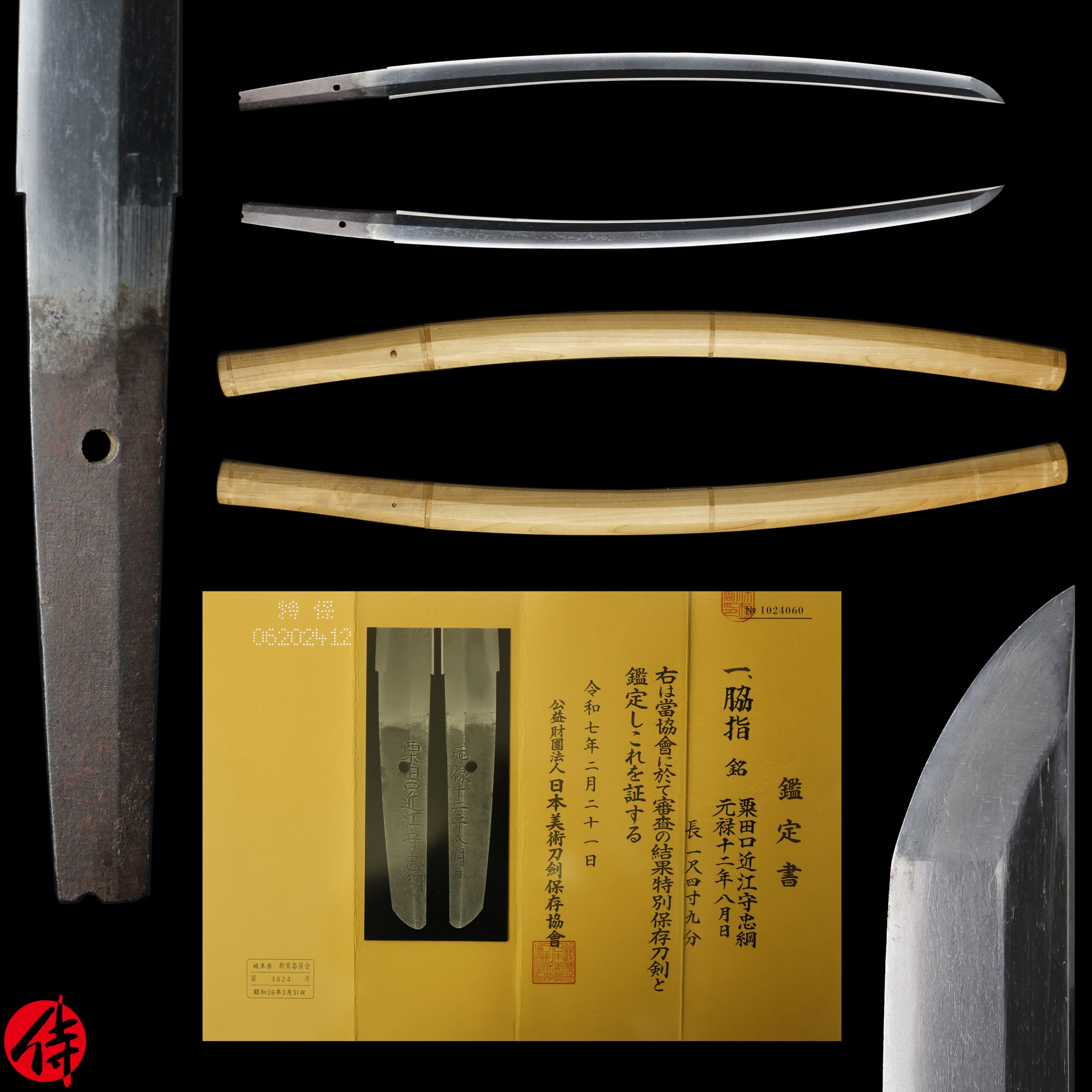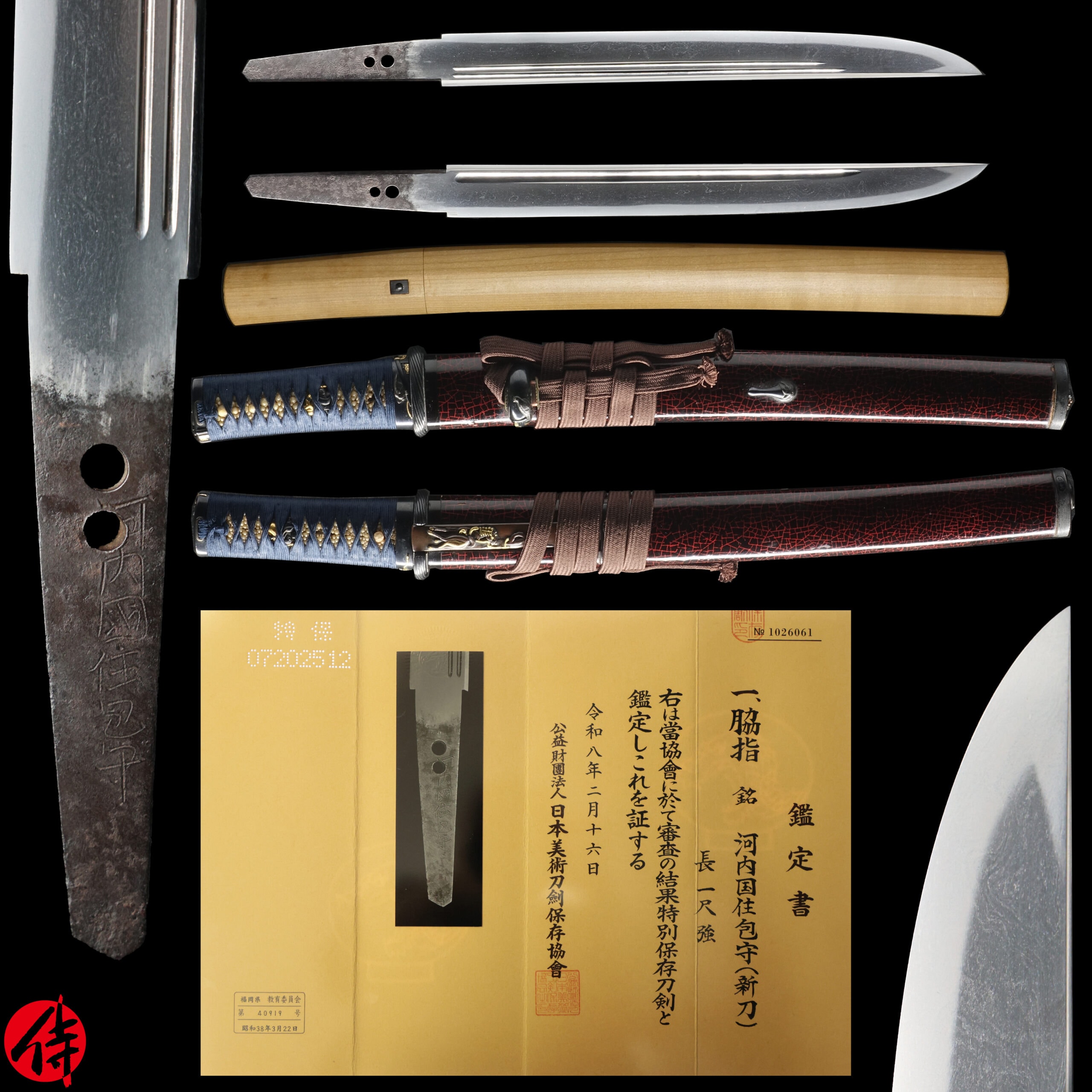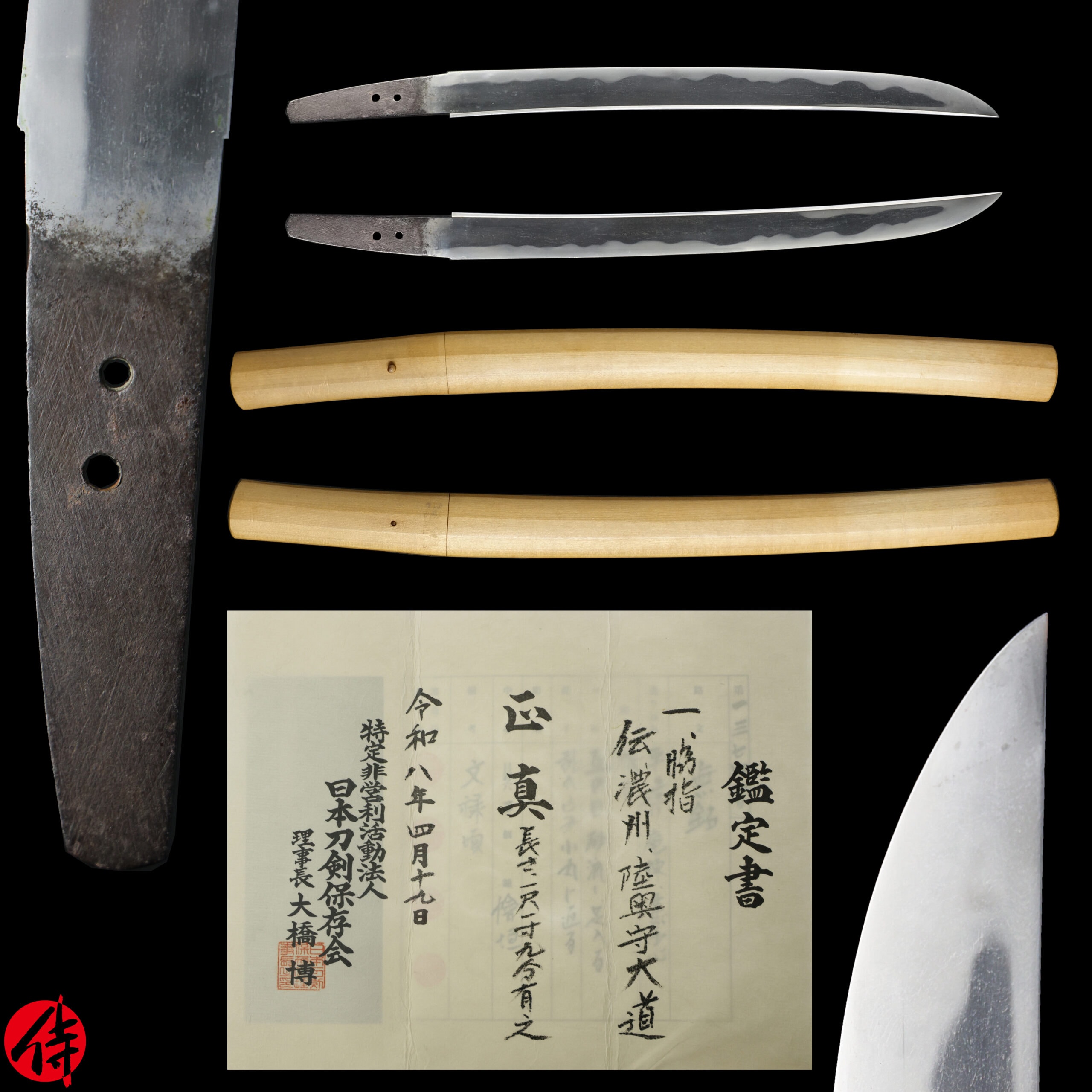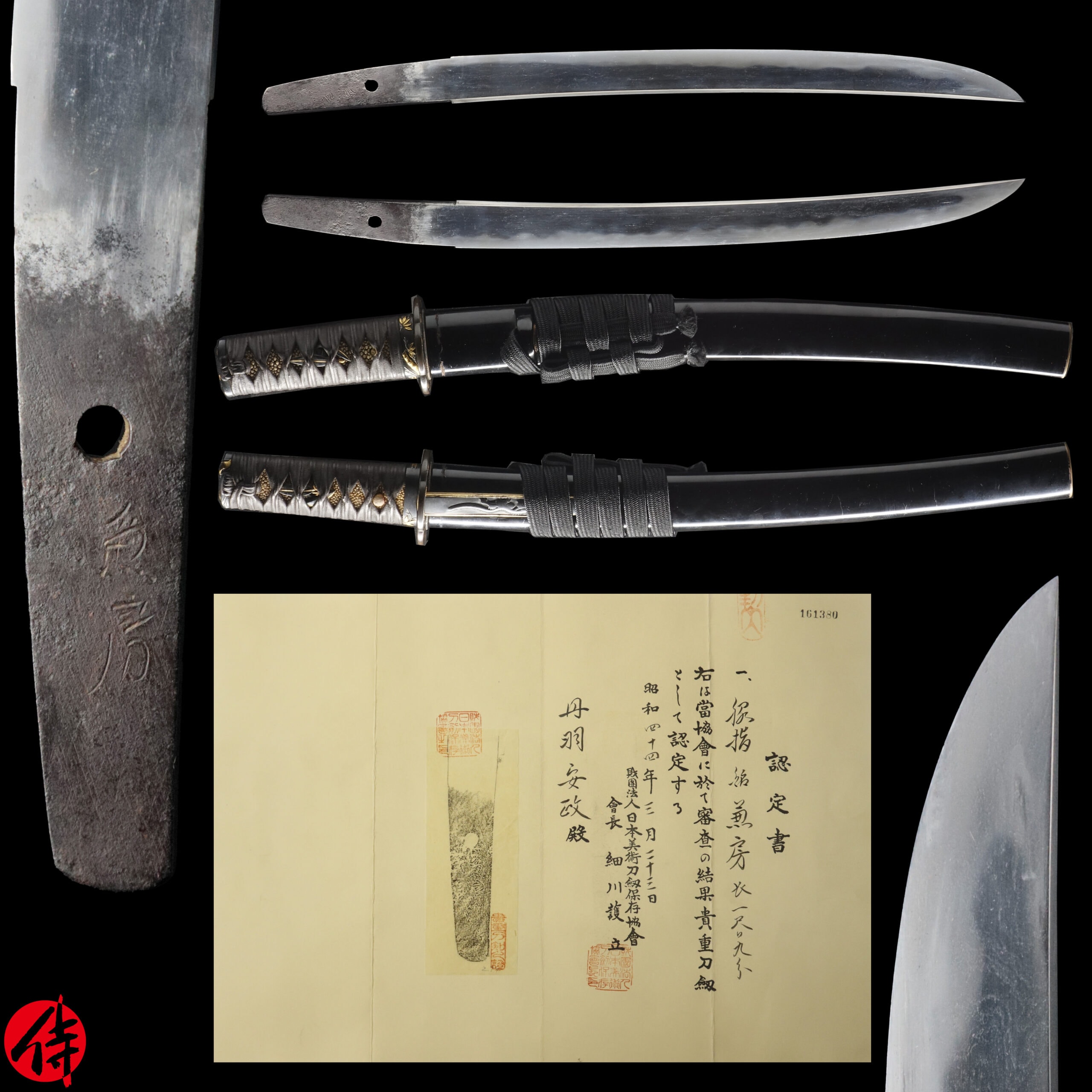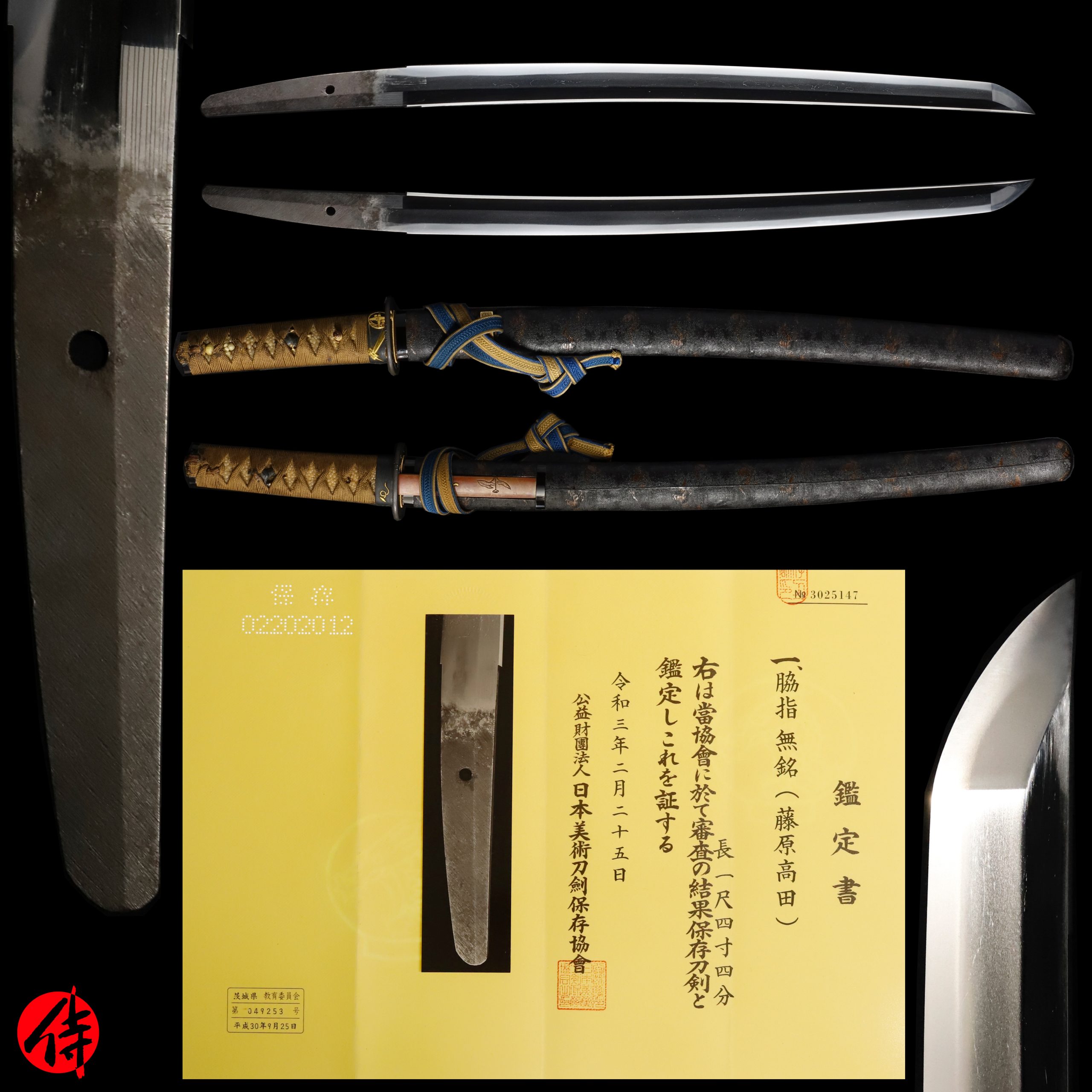
Antique Japanese Sword Wakizashi Attributed to Fujiwara Takada NBTHK Hozon Certificate
SOLD
Tracked across 81 dealers worldwide · price history · sold archive
Specifications
44 cm
0.7 cm
About the school
Takada School高田派
In Bungo Province on Kyushu, the early Kamakura masters Sadahide and Yukihira appeared and then, for a span, distinguished makers ceased; the *setsumei* repeatedly mark this gap before the line that became the Takada school took hold. The school was founded in the Nanbokuchō period by **Tomoyuki**, who arose at Takada Manor (*Takada-shō*) and signed in the long form "Hōshū Takada-shō Fujiwara Tomoyuki," with dated work surviving from the Shōhei (1349) and Jōji eras into the 1360s. Beside him the registers place **Tokiyuki**, said to be his son or disciple, and **Masayuki**, thought to belong to a separate line, whose Kentoku 2 (1371) *tantō* carries Southern Court dating and a *Kurikara* relief following the example of Yukihira. From these Nanbokuchō roots the lineage ran continuously through Muromachi and on into the *shintō* era. The naming itself tracks the periods: Nanbokuchō smiths prefixed *Fujiwara*; from Muromachi they signed *Taira* and shared the characters 盛・守・鎮・統, so the group is broadly called Taira-Takada (Heike or Hira-Takada); late in the line they returned to *Fujiwara*, and that stream, carried into the Edo period, is distinguished as Fujiwara-Takada. Named Muromachi hands in the *setsumei* include **Taira Naomori** (a ken dated Ōnin 3, 1469), **Taira Nagamori**, **Takada Tatemori** (Meiō 10, 1501), **Taira Shizunori**, and **Fujiwara Shinkiyo**. Across the blades a consistent vocabulary recurs. The *jihada* is *itame* mixed with *mokume*, frequently tending toward standing grain (*hada-dachi*) and, in the early work, drifting toward *masame* or *nagare*; *ji-nie* and *chikei* appear, the steel often carries a darkish *kanagu* tone with patches of *jifu*, and a whitish *shirake-utsuri* (sometimes a faint *midare-utsuri*) stands out conspicuously. The temper runs from *suguha* and *chū-suguha* mixed with *ko-gunome* up to *gunome-midare*, with *nie* adhering and *ashi* and *yō* entering; *kinsuji* and *sunagashi* run through, and in fuller-tempered work *tobiyaki*, *muneyaki* and *hitatsura* develop (as in Nagamori's Eishō *wakizashi*). Founder-period Tomoyuki work is recognized by angular *gunome* spaced at wide intervals, an overall subdued (*shizumi*) impression, strong *shirake* with *jifu*, and a manner the *setsumei* liken to Sue-Sa and the Samonji group; the school as a whole shows Bizen-leaning *utsuri*, Yamato-tinged *masame* and *nagare*, and at its summit, in Shizunori, work judged to take Rai Kuniyuki as its model. Branch and period read off the signature prefix and the shape: deep curvature with an arched, upturned profile through mid-Muromachi, then broader blades with shallower *sori* and an extended *chū-kissaki* in the later phase. A recurrent kantei point is the hard "leaf-like" *yō* within the *ha*, often described as "as if pricked by the tip of a needle." Among the smiths the *setsumei* single out **Nagamori** as the most accomplished of the Heike-Takada, a *suguha* specialist with notably good *jigane* and skilled *horimono*, his name carried across several generations and dated freely in the Eishō and Daiei eras; one of his blades was bestowed by Shimazu Tsugutoyo of Kagoshima on the retainer Honda Chikaaki, and **Tatemori** is rated near him. The line reached into early *shintō* through **Kunifusa**, a disciple of Shizumasa of Takada who moved to Uwajima in Iyo, served Date Hidemune, and worked in a Horikawa manner. Provenance runs through the descriptions: Masayuki's *tantō* was transmitted in the Shōnai Sakai family with a Hon'ami Kōchū *origami* of Kyōhō 6 and recorded in the *Kōzan oshigata* and *Umetada Meikan*, and Nagamori's *tachi* survives with a *maki-e* and *raden* scabbard. The cutting-oriented robustness of the work, weighty in hand with thick *kasane* and a sturdy build, reflects the taste of an age of warfare, and these blades served as practical arms across Kyushu. The *setsumei* are candid that Takada has drawn a generally low evaluation in the field, and several of the registered pieces are framed expressly as answering that judgment, restoring the standing of a long lineage on the strength of its best surviving work.