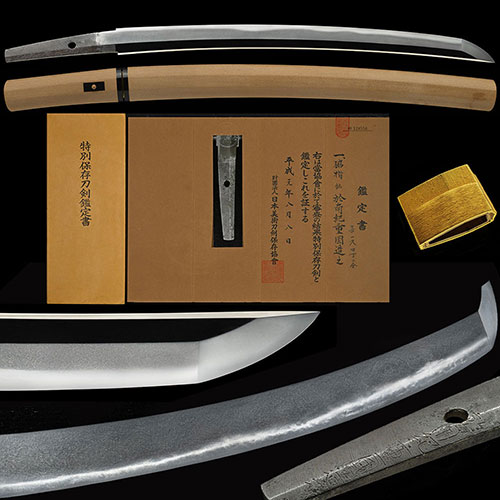
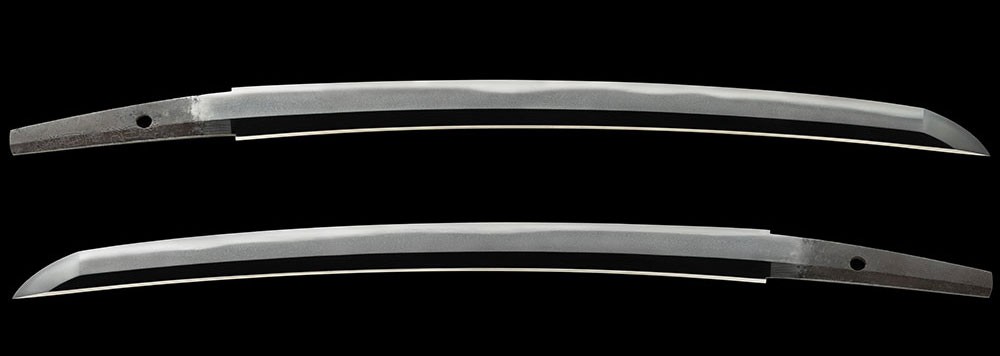
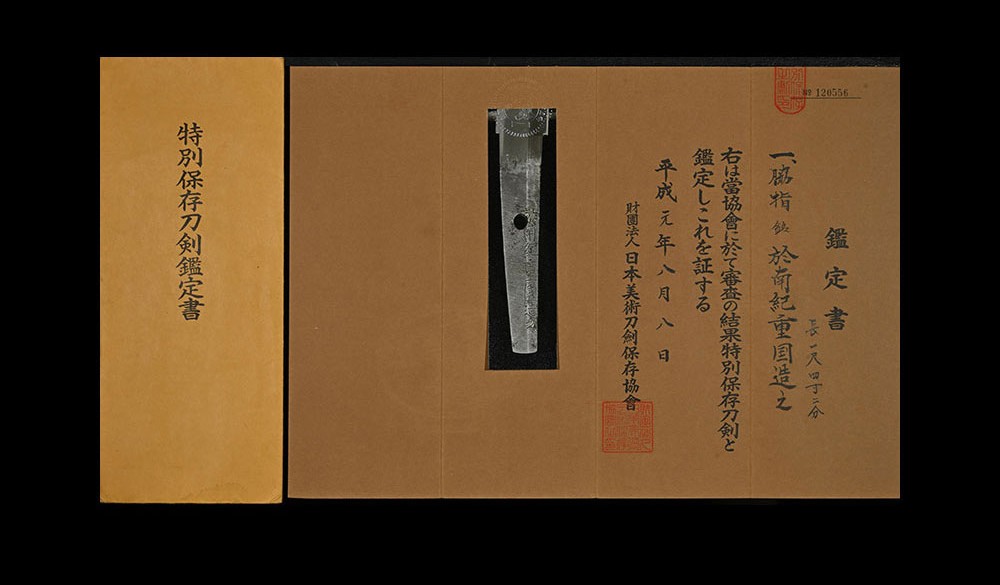
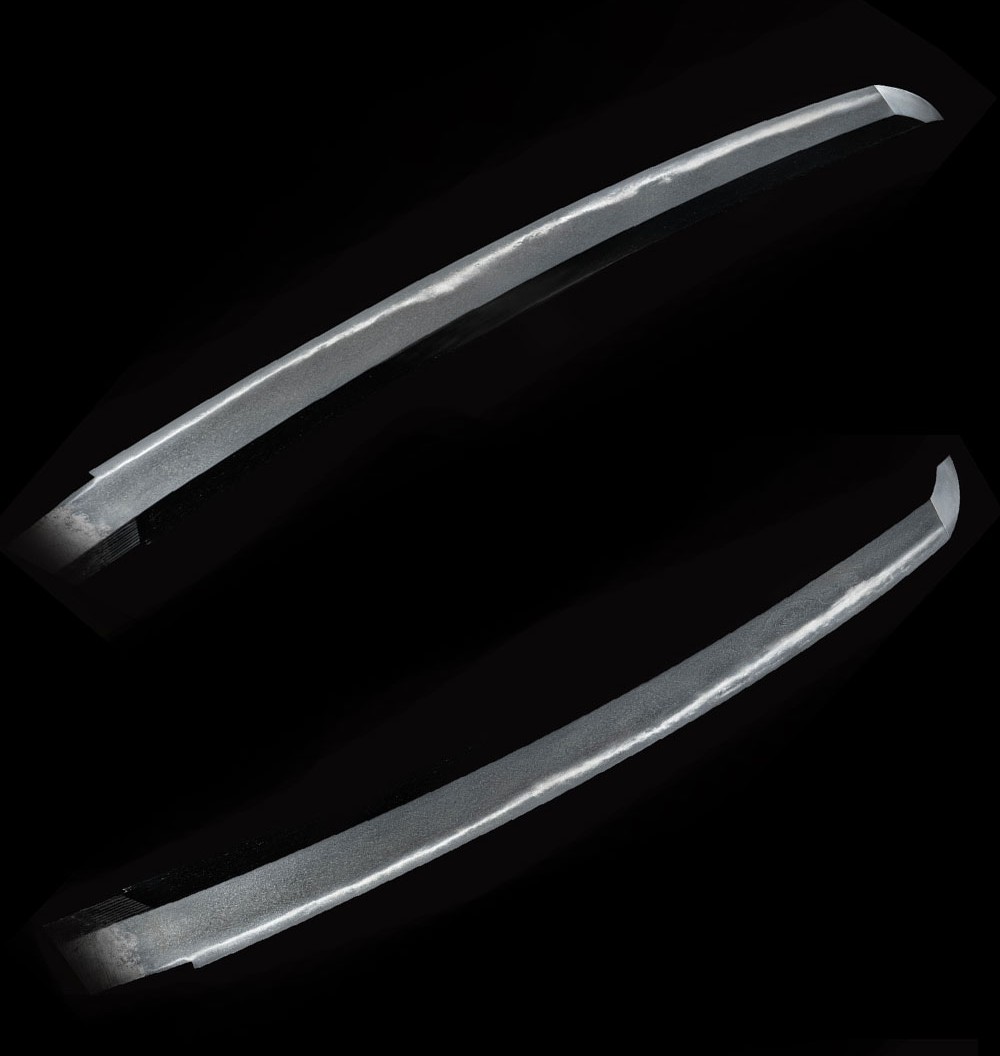
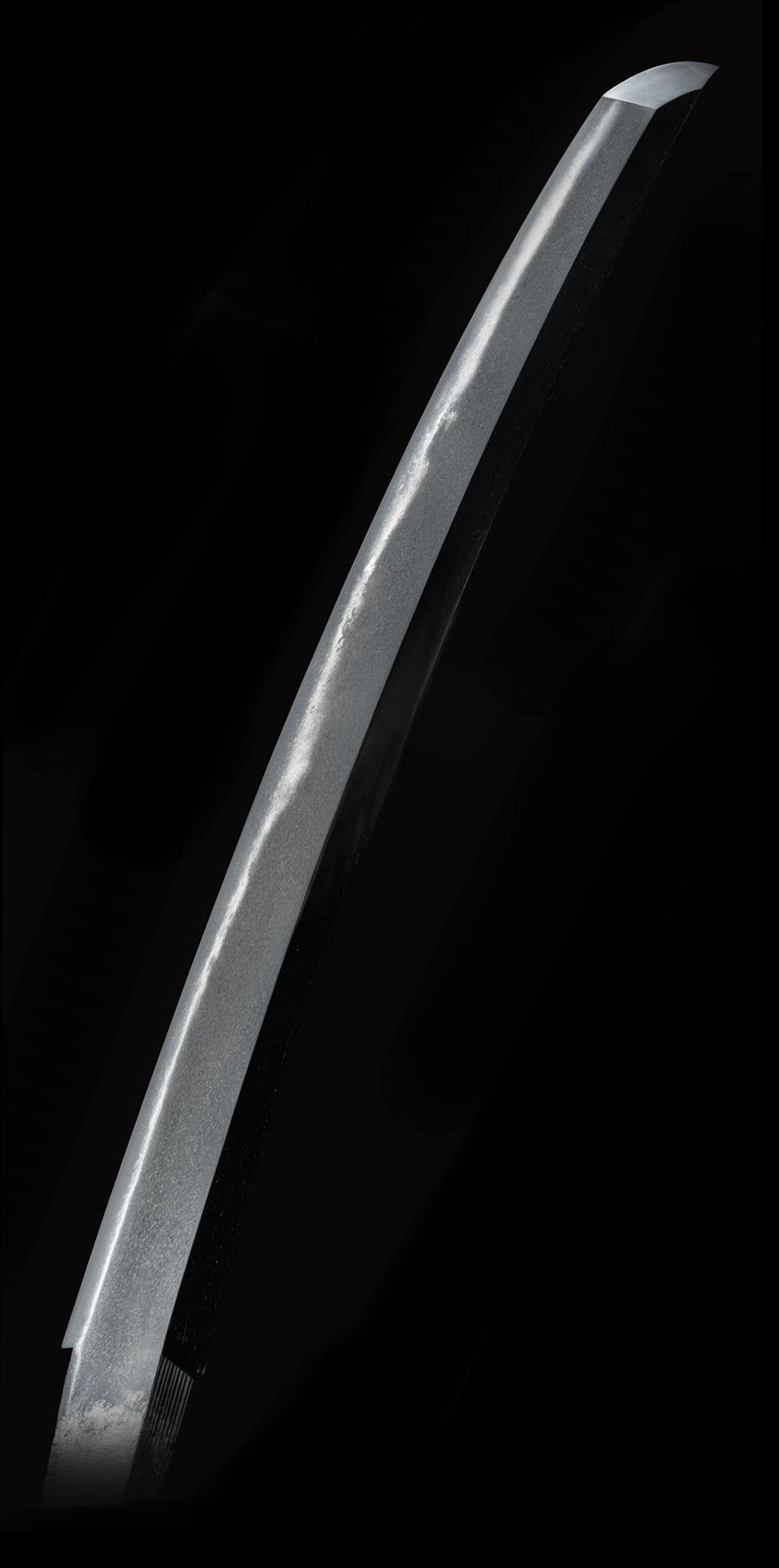
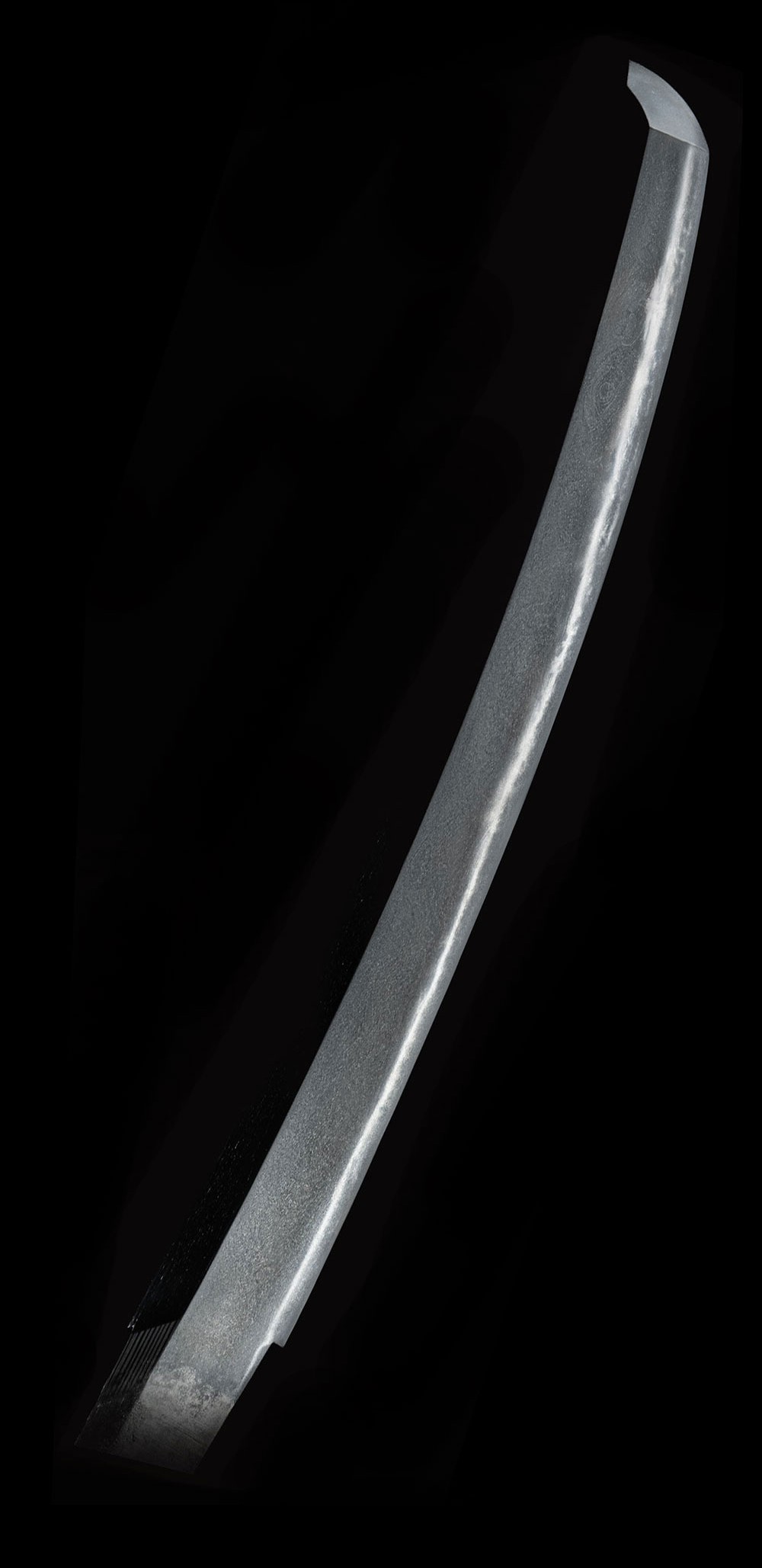
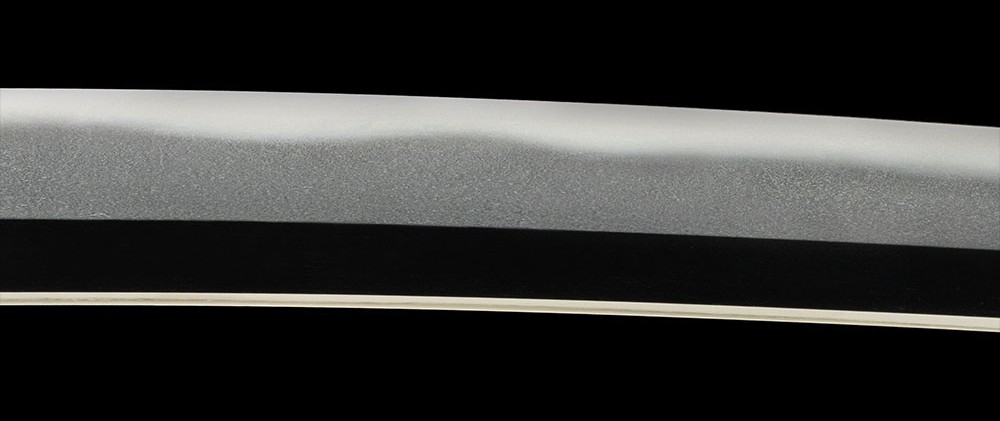
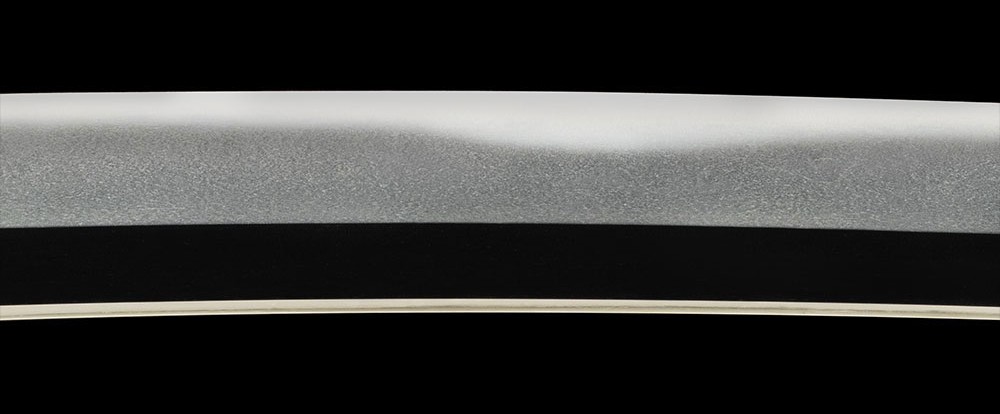
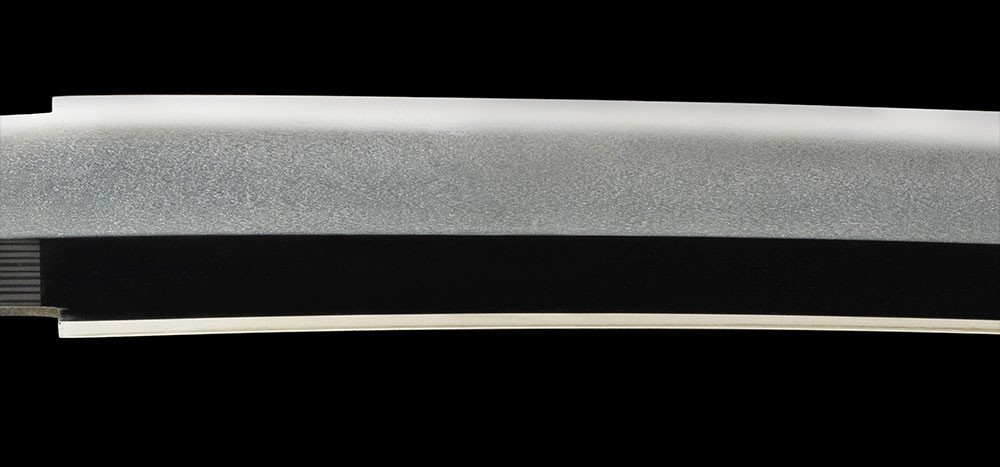
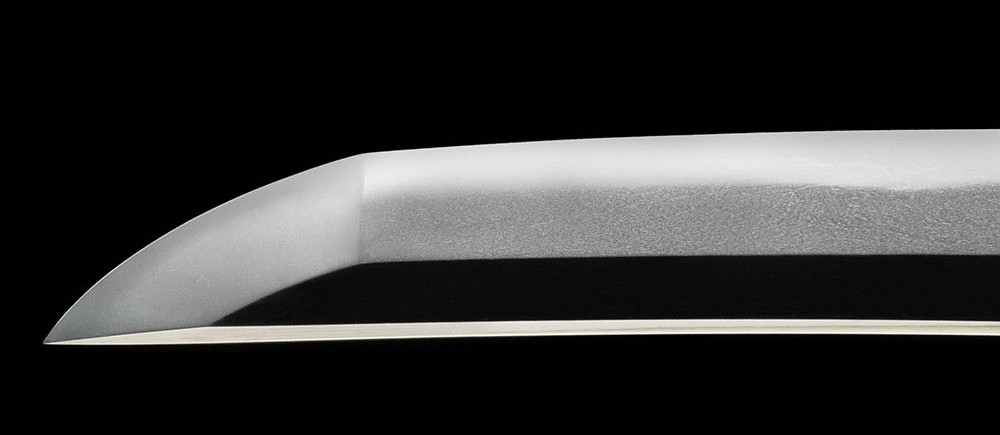
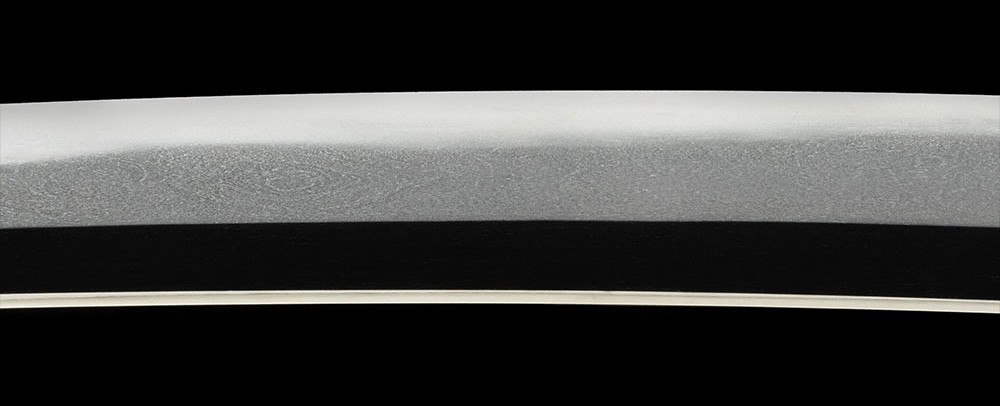
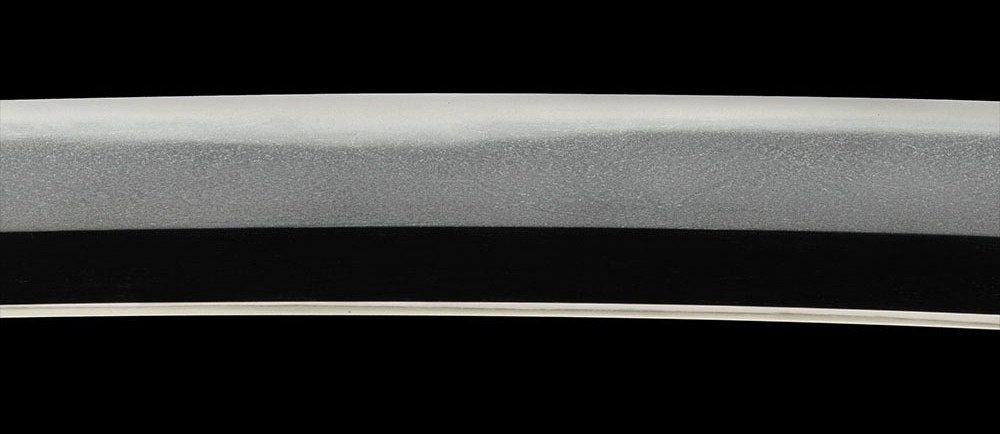
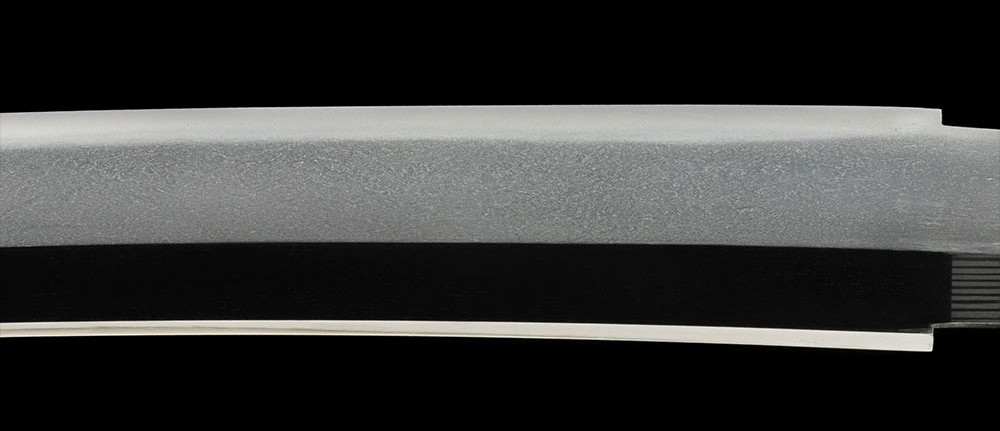
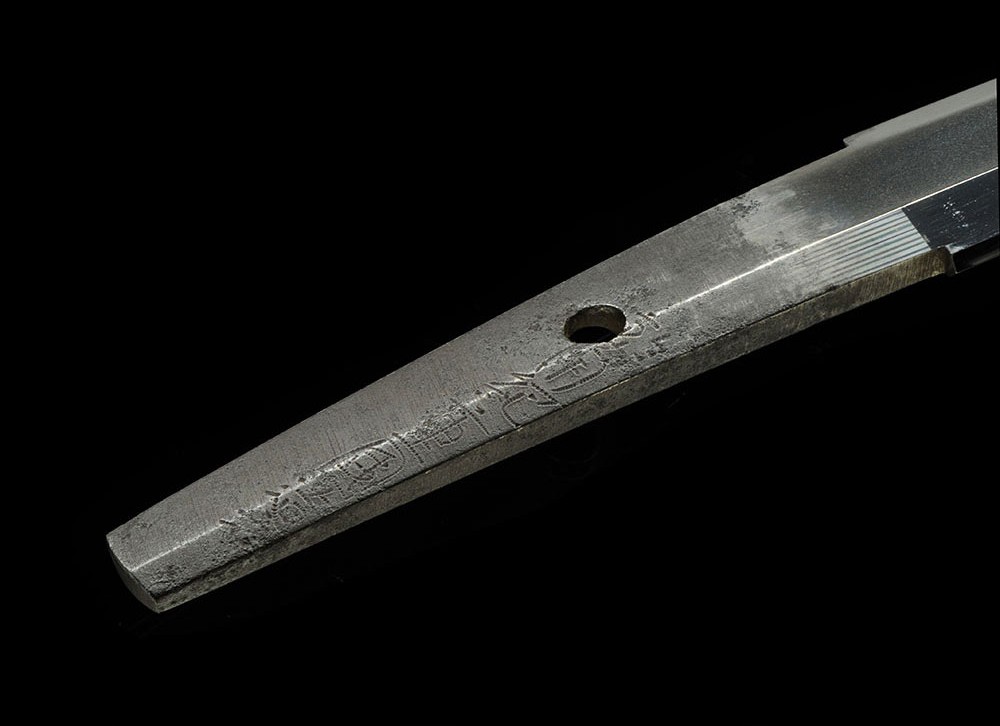
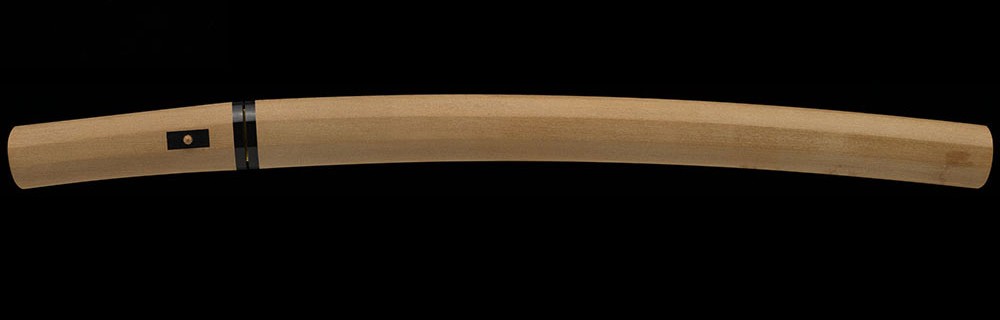
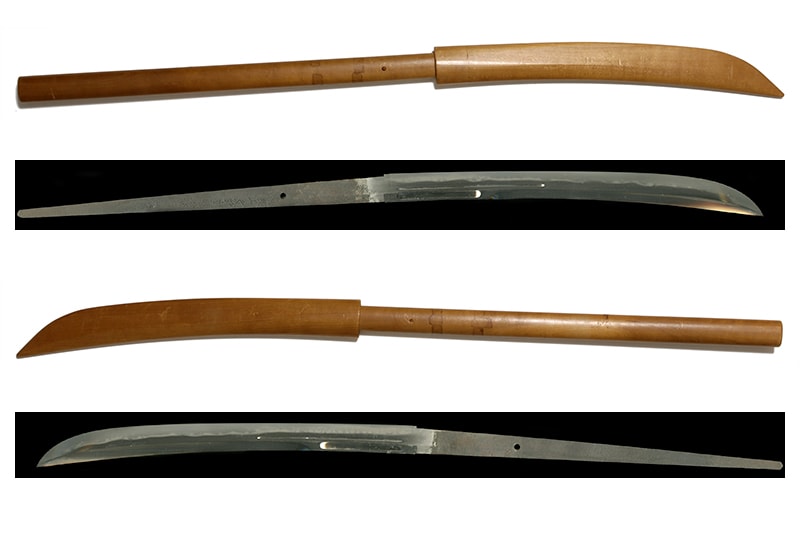
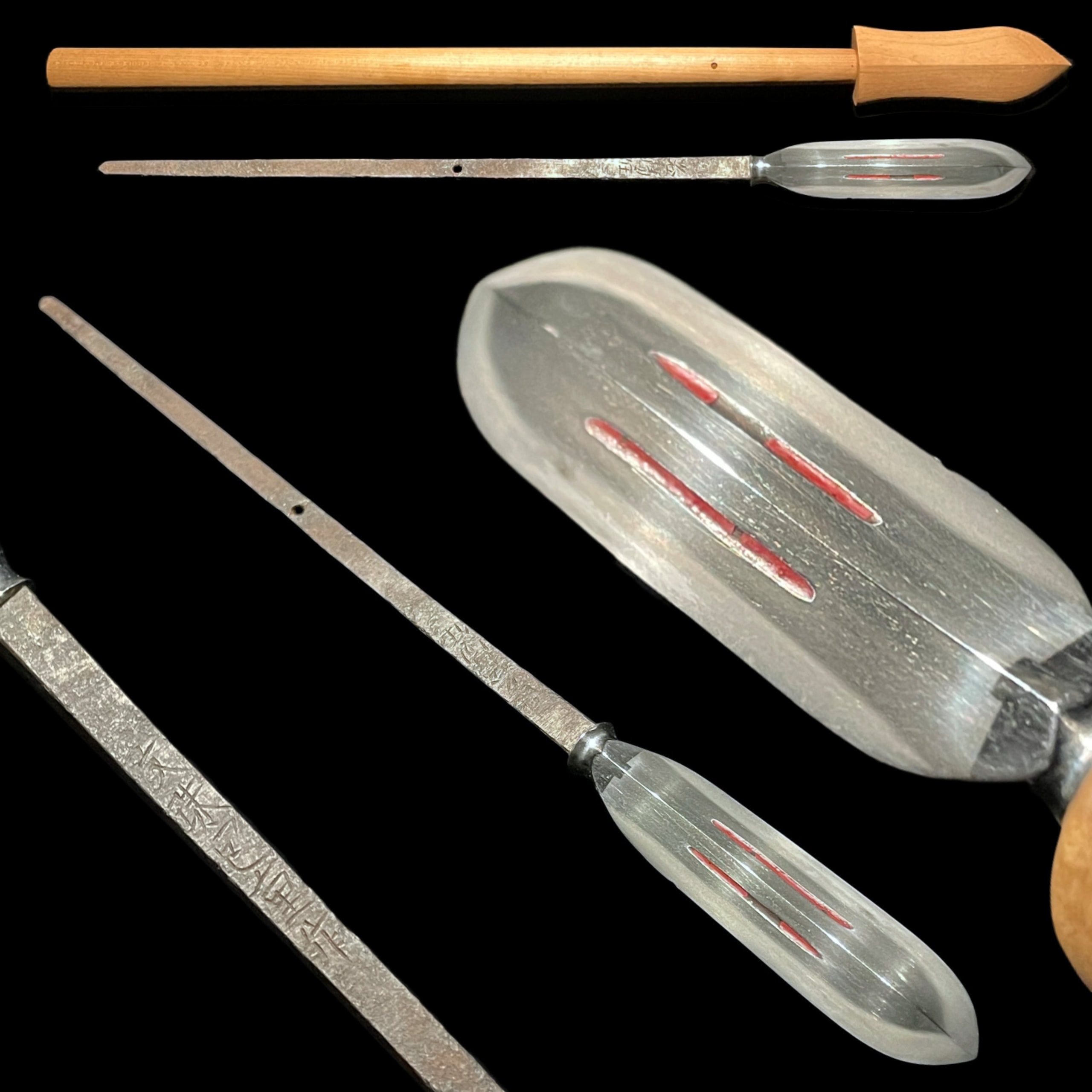
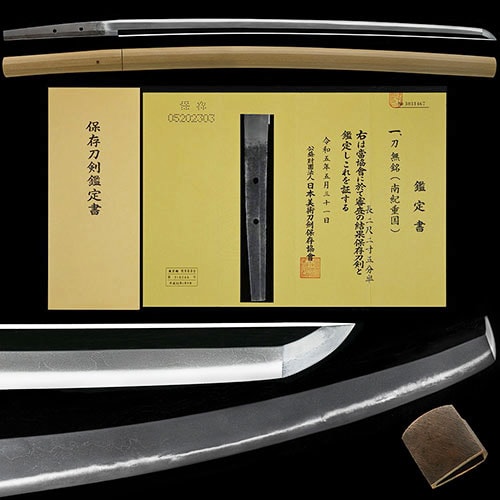
The setsumei of the Monju (文珠) line all gather around a single figure: Shigekuni (重国), the smith better known by the appellation Nanki Shigekuni (南紀重国). The records describe him as originally of Yamato Province and a late offshoot of the Tegai group (Tegai-ha)[[c:1]], whose common name was Kurōsaburō. During the Keichō era (1596 to 1615) he entered the service of Tokugawa Ieyasu and forged at Sunpu, in present-day Shizuoka; then in Genna 5 (1619), when Ieyasu's tenth son Tokugawa Yorinobu was transferred to Kii Wakayama, Shigekuni accompanied him and settled at the foot of Mt. Meikō (also read Myōkō). The mei themselves carry the school name: one wakizashi is signed "Kishū Meikōzan Monju Kurōsaburō Shigekuni,"[[c:2]][[c:3]] fixing the Monju appellation to this Kii workshop. The corpus belongs almost wholly to the Momoyama and early Edo (shintō) period, with dated works ranging across Genna 7 and 8 (1621 to 1622). One Gyōbutsu entry raises the question of a smith named Kunimune, a close relative who remained at Sunpu, and a later setsumei speaks of a "second generation onward," so the records permit a Monju succession without resolving its members. A shared technical vocabulary runs through every blade, and the setsumei consistently divide Shigekuni's hand into two modes. The forging is a flowing itame-hada, mixed with mokume and inclined to masame and nagare, tending to stand (hada-dachi), with thick ji-nie and frequent chikei over a bright, clear steel.
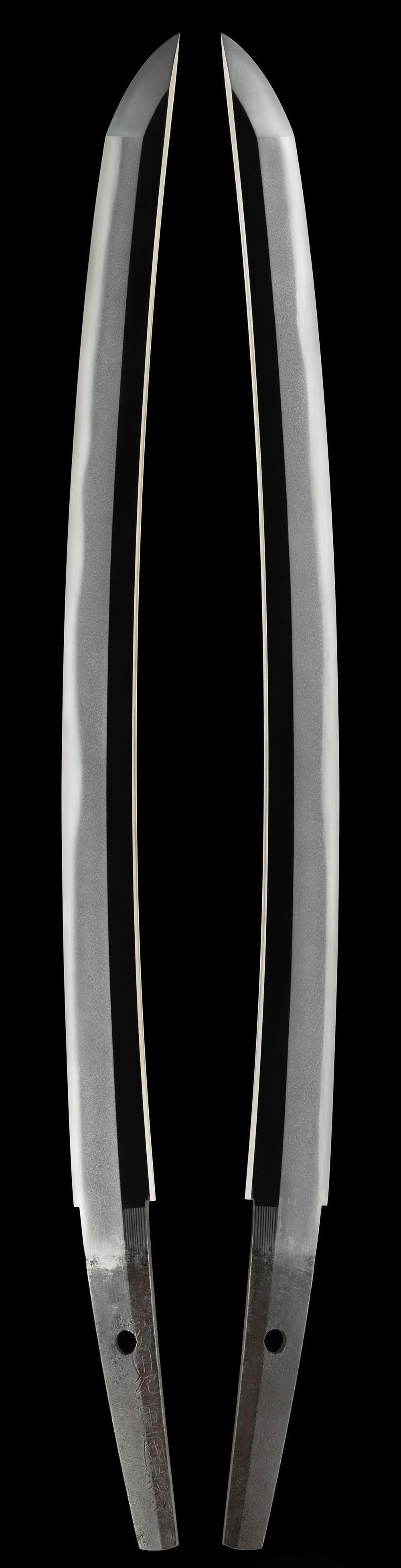
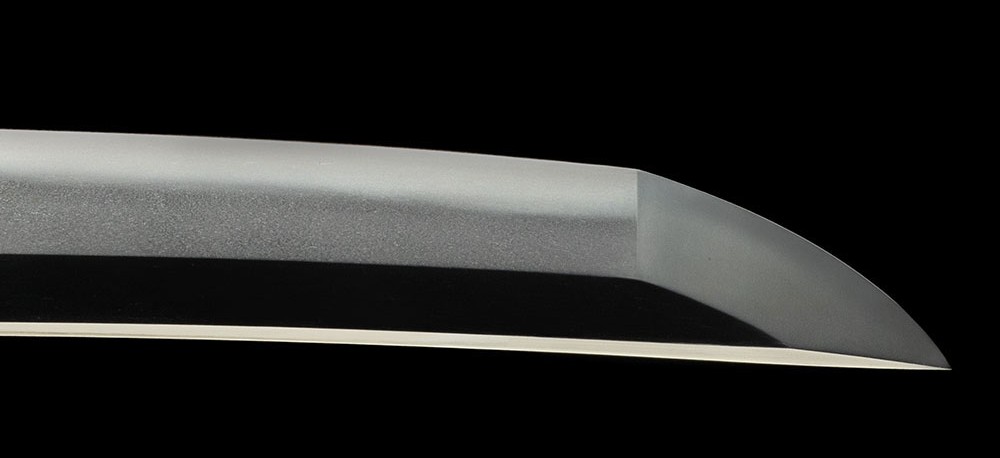
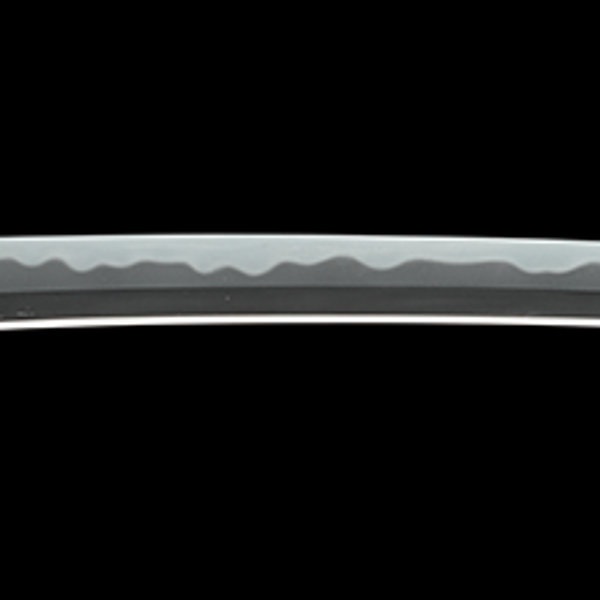
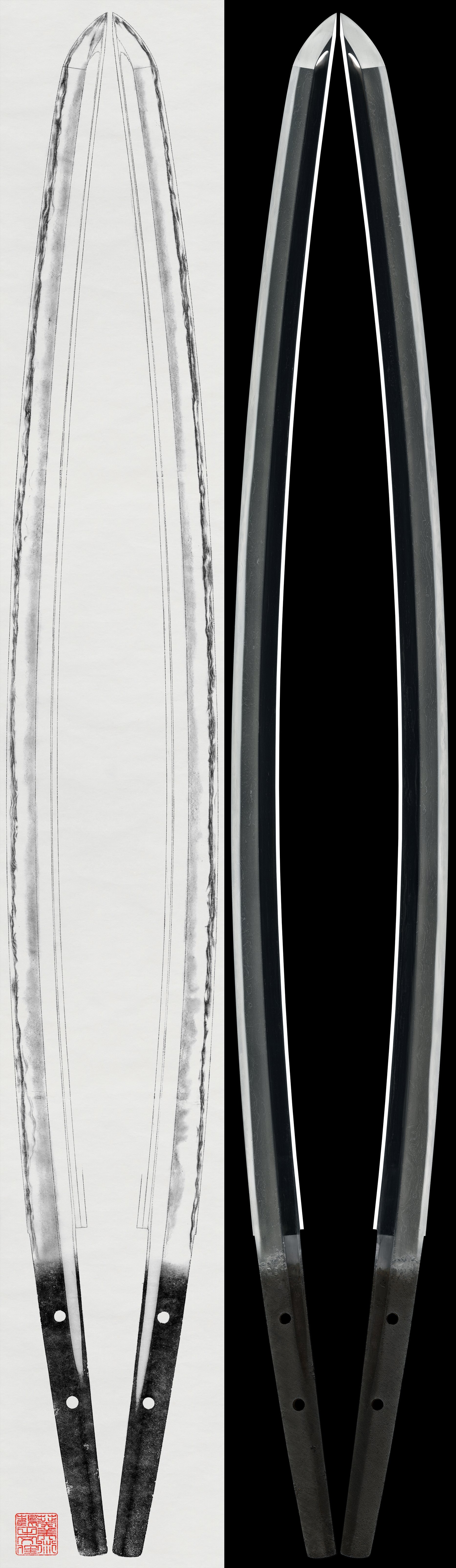
In the Sōshū-den mode the temper is a midareba of ko-notare mixed with gunome, angular and yahazu-like elements, deep nioi, strong nie that breaks down into nie-kuzure, and conspicuous kinsuji and sunagashi; the records read this manner as a private study of the high Sagami masters, naming Gō Yoshihiro above all, with Masamune and Sadamune also invoked. In the Yamato-den mode the temper is a suguha, at times shallow notare, carrying hotsure, kuichigai-ba, and nijūba along the habuchi, which the setsumei tie directly to the Tegai inheritance and the manner of Kanenaga. The bōshi across both modes turns yakizume or ko-maru with vigorous hakikake; hira-zukuri and shōbu-zukuri wakizashi show pronounced sakizori, often carved with bonji, suken, and naginata-hi. The records present these as two facets of one hand rather than competing lineages. For kantei, the setsumei name several recurring markers: the bright, clear quality of both ji and ha held up as Shigekuni's hallmark, the pronounced sakizori of his hira- and shōbu-zukuri wakizashi, kinsuji that coil into a whirlpool configuration within the temper, and the large original mekugi-ana met among Kii-domain works. One Sōshū-den katana is judged close in character to Batetsu (馬徹) and treated as a likely model for that smith, raising its documentary weight; another work's "Monju-style" midare is said to anticipate the hadori tendencies of the second generation. The blades carry firm provenance: a wakizashi made to the command of Matsudaira Shima no Kami Shigenari, a piece commissioned by the domain elder Kageyama Tosa-no-kami Munenobu, and a sword inscribed for Yorinobu's retainer Tsuzuki Tōichi, alongside a katana held in the Imperial collection. The setsumei note that nearly all of Shigekuni's Sōshū-den blades survive suriage, so the ubu examples gathered here are repeatedly singled out as research material. Across the records the Monju name stands as the Kii continuation of a Yamato root, carried into the shintō age in the service of the Kii Tokugawa house. Learn more →