The twentieth century nearly killed the craft twice: wartime distortion, then the occupation ban. The NBTHK’s founding in 1948 and licensed forging from 1953 rebuilt the sword as an art, crowned by Living National Treasures and the mukansa rank.
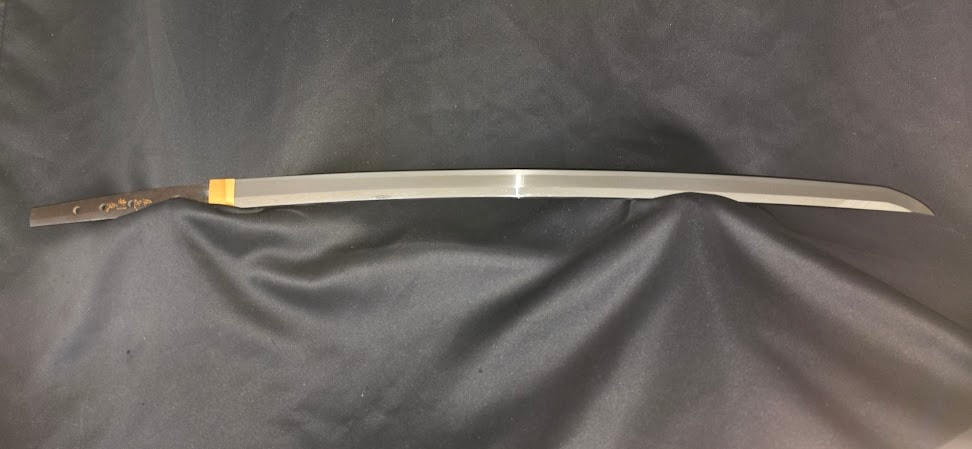
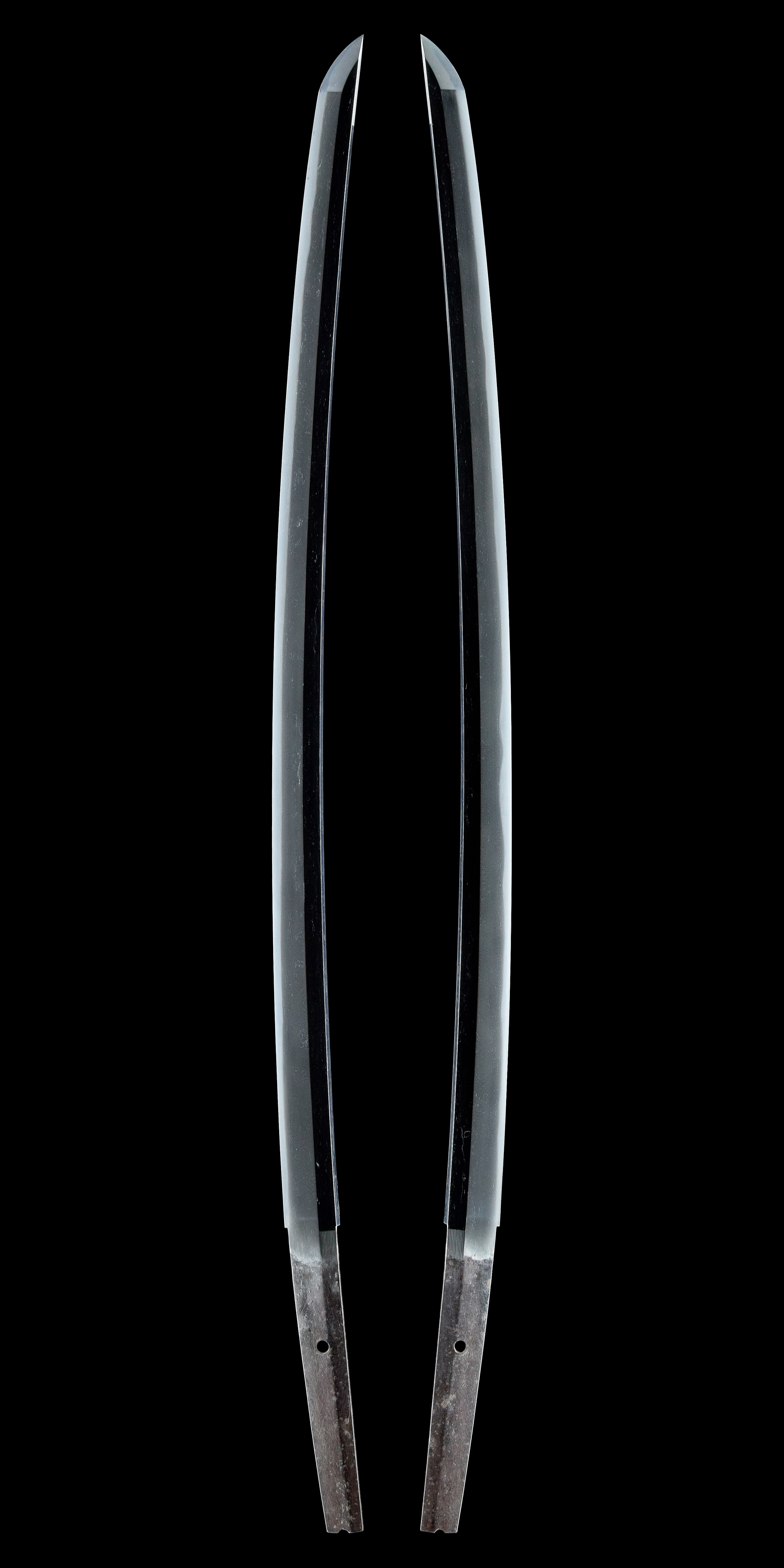
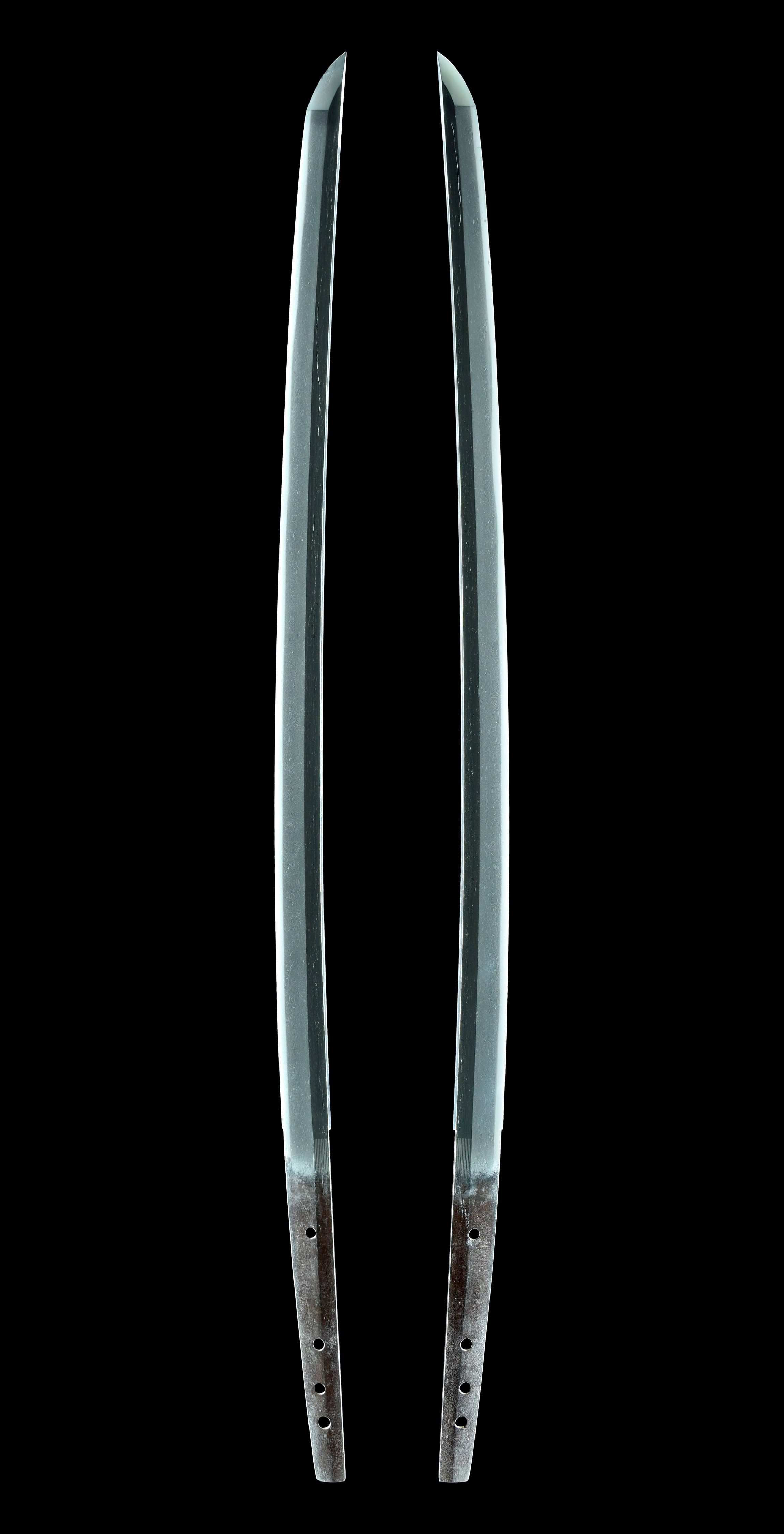
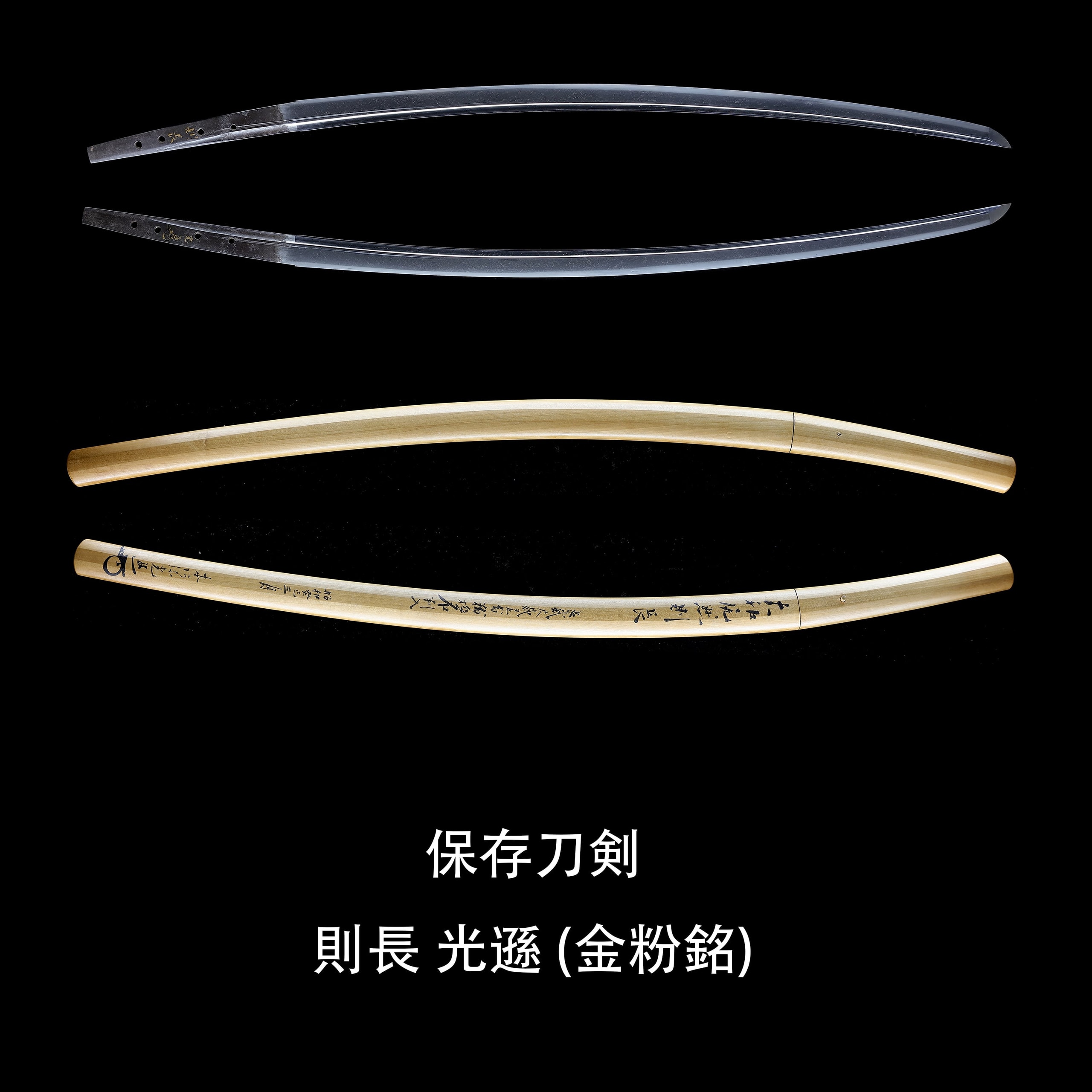
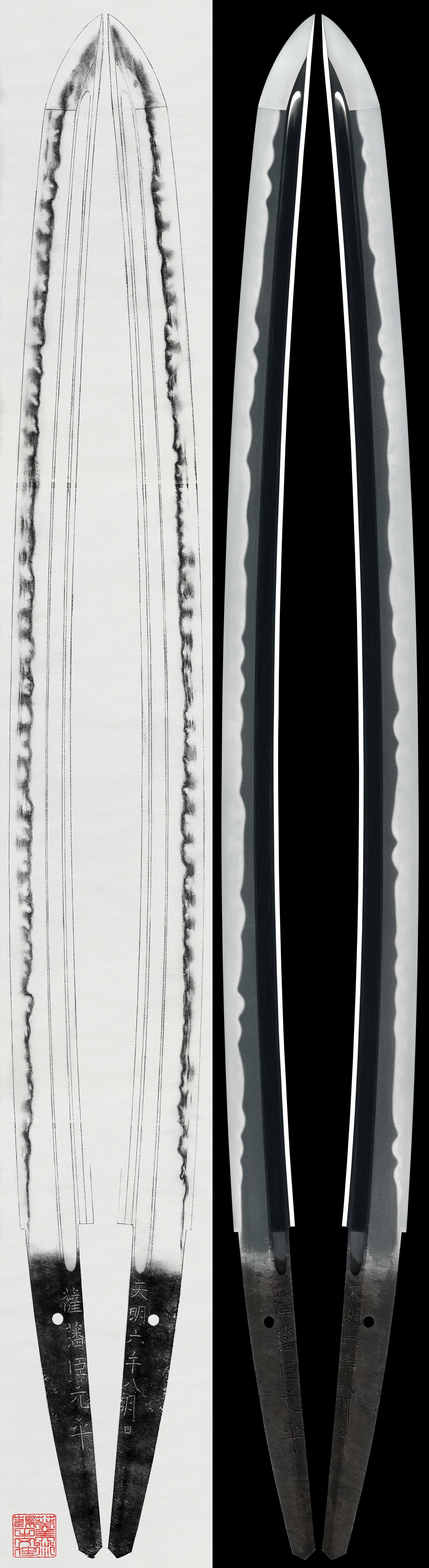
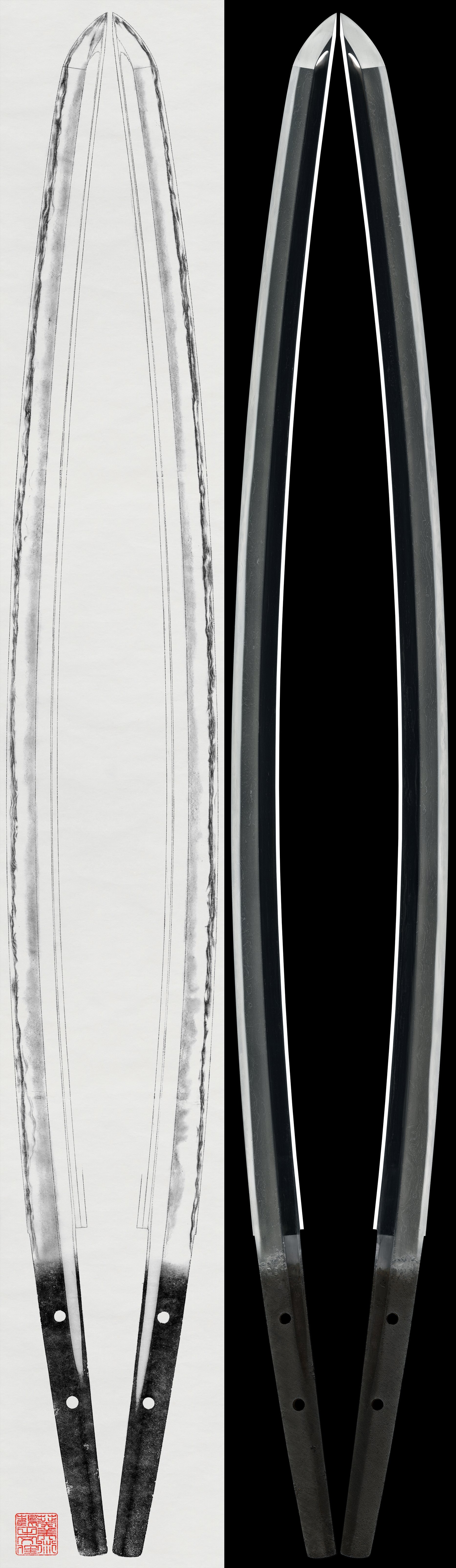
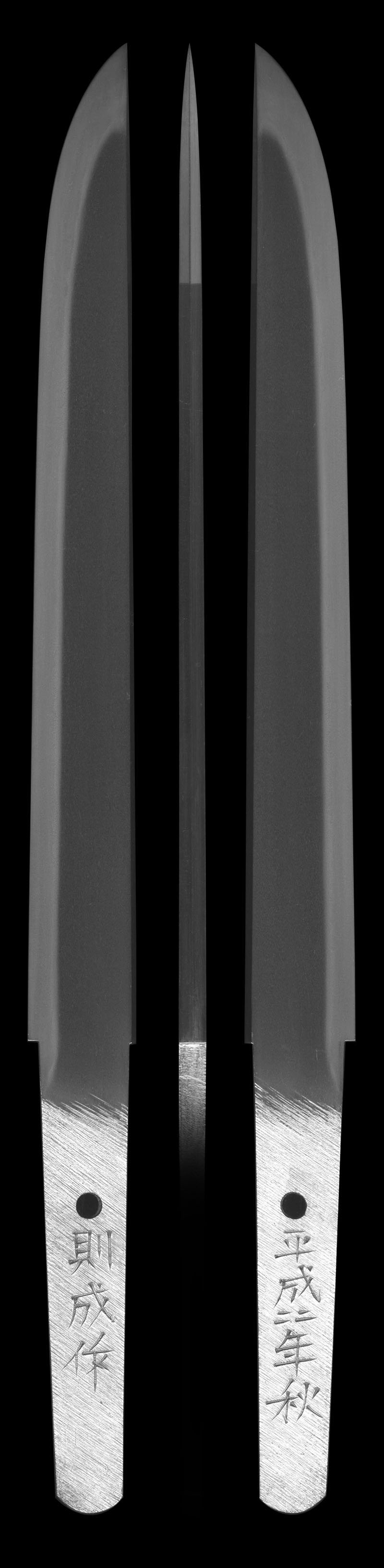
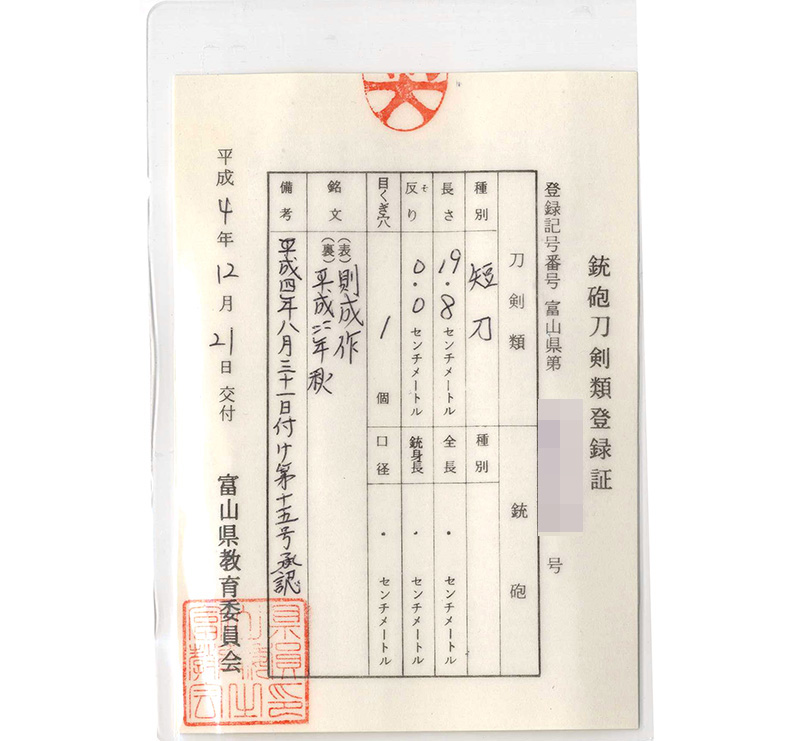
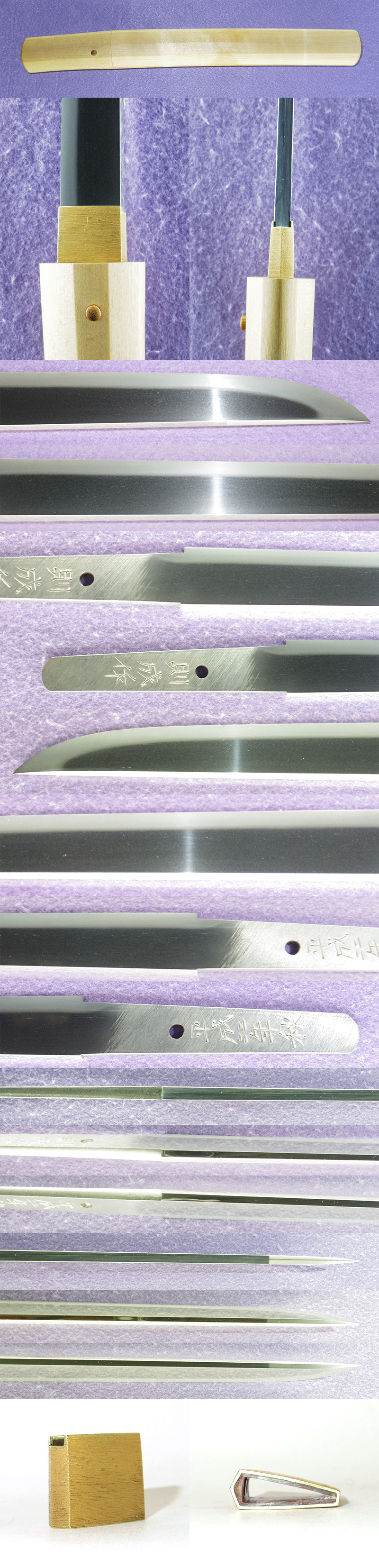
This is a tanto made by Norishige, a disciple of Miyairi Yukihira, who was designated a Living National Treasure. The blade was forged in Toyama in Heisei 4 (1992). It comes with a shirasaya and is currently available for purchase.
 NihontoWatch
mei · Gendaito · nagasa 19.8cm
Yamato-den · Yamato · around 1312-1317
Tōken Taikan top 17%
1 piece on the market now
Yamato-den · Yamato
16 pieces on the market now
The Shikkake school (尻懸派) stands among the five great Yamato traditions (Yamato goha) that flourished in the shadow of Nara's powerful temples during the late Kamakura period. While traditionally attributed to Norihiro as founder, Norinaga (則長) is regarded as the de facto progenitor, documented through extant tantō bearing inscriptions of his age: forty-eight in Bunpō 3 (1319) and sixty-nine in Ryakuō 3 (1340). These datings place his birth in Bun'ei 9 (1272), establishing him as a contemporary of the school's early development. Works attributed to later generations extend into the Muromachi period, indicating successive transmission of the name across multiple generations. Given the concentration of sōhei (warrior monks) in Yamato Province, it is natural that Shikkake smiths produced numerous naginata, with more surviving examples attributed to this school than any other Yamato tradition. Shikkake workmanship shares the fundamental Yamato vocabulary: construction with high shinogi and conspicuously wide shinogi-ji; forging in itame that characteristically flows, often incorporating mokume and nagare-hada with areas trending toward masame near the edge; and steel exhibiting thickly adhering ji-nie with frequent, stout chikei and occasional nie-utsuri. The tempering centers on suguha-based patterns, yet the school's signature lies in its treatment of the hamon: while maintaining the suguha foundation, Shikkake smiths tempered small gunome in connected succession (ko-gunome-tsure), creating a gently undulating effect. Along the habuchi appear characteristic Yamato activities—hotsure, nijūba, kuichigai-ba, uchi-noke, and yubashiri—with well-adhering ko-nie producing a bright, clear nioiguchi interwoven with kinsuji and sunagashi.
The bōshi typically runs straight with vigorous hakikake, often tending toward yakizume or taking on a flame-like (kaen) character at the point. While some examples execute pure suguha patterns, the intermixing of running ko-gunome within the ha remains the critical diagnostic feature distinguishing Shikkake from other Yamato schools[[c:1]], particularly Taima, with which it shares close affinities. The school's legacy endures through works of exceptional quality and preservation. Surviving naginata of grand scale—some exceeding 2 shaku 7 sun—demonstrate Nanbokuchō-period construction with characteristic shallow flaring and deep curvature, often transmitted in rare ubu-nakago condition. Shortened katana attributed to the school display vigorous forging in which flowing grain and chikei interweave, producing steel of remarkable clarity (saeru), while the tempering exhibits thickly adhering, strongly luminous nie creating bright visual effects. The consistent appearance of well-refined jigane with dense ko-itame and abundant ji-nie, paired with distinctive tempering patterns that balance fundamental suguha with running ko-gunome, establishes Shikkake as a school whose characteristic features remain unmistakable across centuries of production. Works attributed to this tradition regularly survive in kenzen (sound and well-preserved) condition, testimony to both original forging quality and careful transmission through successive generations. Learn more →
| Smith | Era | Designated |
|---|---|---|
| Norinaga則長 | 1317-1319 | 45 |
| Norisada則貞 | 1428-1429 | 0 |
| Norinari則成 | 1312-1317 | 0 |
| Nagamitsu長光 | 1233-1234 | 0 |
| Norihiro則弘 | 1288-1312 | 0 |
Shōwa to the present: destruction and revival
The twentieth century nearly killed the craft twice: wartime distortion, then the occupation ban. The NBTHK’s founding in 1948 and licensed forging from 1953 rebuilt the sword as an art, crowned by Living National Treasures and the mukansa rank.
We could not find an authenticity certificate on the seller’s listing. Japanese swords and fittings are normally papered by the NBTHK (or the NTHK). Without one, the attribution is the seller’s own assessment and has not been independently verified — treat it with caution and ask the dealer about certification before buying.
Cooling-off (returns or exchanges) is accepted within 3 days of the item's arrival. Return shipping and refund transfer fees are the customer's responsibility. Fees other than the item price (transfer fees, credit card fees, etc.) cannot be refunded. Returns and refunds are not available for overseas destinations.
¥180,000
This is a tanto made by Norishige, a disciple of Miyairi Yukihira, who was designated a Living National Treasure. The blade was forged in Toyama in Heisei 4 (1992). It comes with a shirasaya and is currently available for purchase.
NihontoWatchmei · Gendaito · nagasa 19.8cm
Yamato-den · Yamato · around 1312-1317
Tōken Taikan top 17%
1 piece on the market now
Yamato-den · Yamato
16 pieces on the market now
The Shikkake school (尻懸派) stands among the five great Yamato traditions (Yamato goha) that flourished in the shadow of Nara's powerful temples during the late Kamakura period. While traditionally attributed to Norihiro as founder, Norinaga (則長) is regarded as the de facto progenitor, documented through extant tantō bearing inscriptions of his age: forty-eight in Bunpō 3 (1319) and sixty-nine in Ryakuō 3 (1340). These datings place his birth in Bun'ei 9 (1272), establishing him as a contemporary of the school's early development. Works attributed to later generations extend into the Muromachi period, indicating successive transmission of the name across multiple generations. Given the concentration of sōhei (warrior monks) in Yamato Province, it is natural that Shikkake smiths produced numerous naginata, with more surviving examples attributed to this school than any other Yamato tradition. Shikkake workmanship shares the fundamental Yamato vocabulary: construction with high shinogi and conspicuously wide shinogi-ji; forging in itame that characteristically flows, often incorporating mokume and nagare-hada with areas trending toward masame near the edge; and steel exhibiting thickly adhering ji-nie with frequent, stout chikei and occasional nie-utsuri. The tempering centers on suguha-based patterns, yet the school's signature lies in its treatment of the hamon: while maintaining the suguha foundation, Shikkake smiths tempered small gunome in connected succession (ko-gunome-tsure), creating a gently undulating effect. Along the habuchi appear characteristic Yamato activities—hotsure, nijūba, kuichigai-ba, uchi-noke, and yubashiri—with well-adhering ko-nie producing a bright, clear nioiguchi interwoven with kinsuji and sunagashi.
The bōshi typically runs straight with vigorous hakikake, often tending toward yakizume or taking on a flame-like (kaen) character at the point. While some examples execute pure suguha patterns, the intermixing of running ko-gunome within the ha remains the critical diagnostic feature distinguishing Shikkake from other Yamato schools[[c:1]], particularly Taima, with which it shares close affinities. The school's legacy endures through works of exceptional quality and preservation. Surviving naginata of grand scale—some exceeding 2 shaku 7 sun—demonstrate Nanbokuchō-period construction with characteristic shallow flaring and deep curvature, often transmitted in rare ubu-nakago condition. Shortened katana attributed to the school display vigorous forging in which flowing grain and chikei interweave, producing steel of remarkable clarity (saeru), while the tempering exhibits thickly adhering, strongly luminous nie creating bright visual effects. The consistent appearance of well-refined jigane with dense ko-itame and abundant ji-nie, paired with distinctive tempering patterns that balance fundamental suguha with running ko-gunome, establishes Shikkake as a school whose characteristic features remain unmistakable across centuries of production. Works attributed to this tradition regularly survive in kenzen (sound and well-preserved) condition, testimony to both original forging quality and careful transmission through successive generations. Learn more →
| Smith | Era | Designated |
|---|---|---|
| Norinaga則長 | 1317-1319 | 45 |
| Norisada則貞 | 1428-1429 | 0 |
| Norinari則成 | 1312-1317 | 0 |
| Nagamitsu長光 | 1233-1234 | 0 |
| Norihiro則弘 | 1288-1312 | 0 |
Shōwa to the present: destruction and revival
The twentieth century nearly killed the craft twice: wartime distortion, then the occupation ban. The NBTHK’s founding in 1948 and licensed forging from 1953 rebuilt the sword as an art, crowned by Living National Treasures and the mukansa rank.
We could not find an authenticity certificate on the seller’s listing. Japanese swords and fittings are normally papered by the NBTHK (or the NTHK). Without one, the attribution is the seller’s own assessment and has not been independently verified — treat it with caution and ask the dealer about certification before buying.
Cooling-off (returns or exchanges) is accepted within 3 days of the item's arrival. Return shipping and refund transfer fees are the customer's responsibility. Fees other than the item price (transfer fees, credit card fees, etc.) cannot be refunded. Returns and refunds are not available for overseas destinations.
¥180,000