Muromachi turned sword making into an industry: the uchigatana rose with massed infantry warfare, Osafune and Seki produced bundle swords beside custom orders, and the Ming trade carried Japanese blades abroad by the tens of thousands.
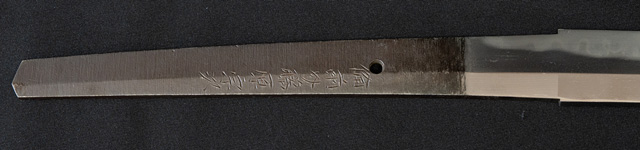
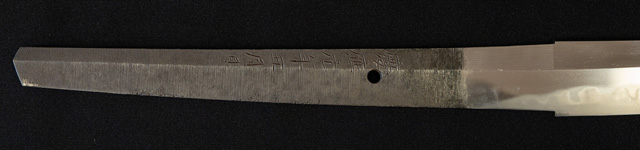
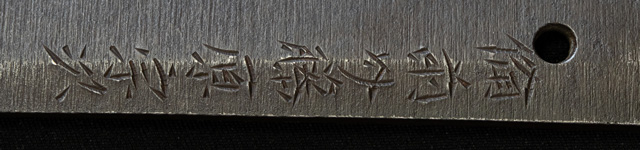
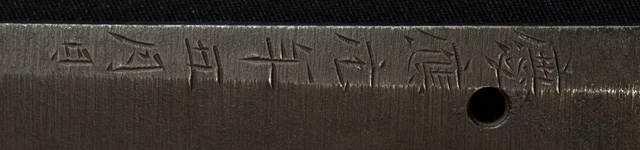
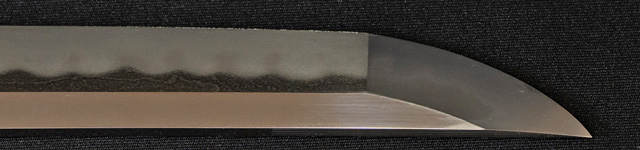
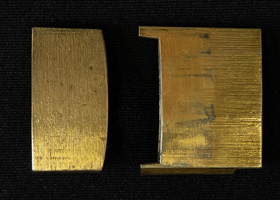
Tokubetsu Hozon Katana: Bizennosuke Fujiwara MUNETSUGU Keio Gannen Gogatsu Hi (A day in May, 1865) Product Number 31-2387 Katana Bizennosuke Fujiwara MUNETSUGU Province / Period Edo, Bakumatsu In Shirasaya Nagasa 70.9cm (2 shaku 3 sun 4 bu) Sori 1.2cm (4 bu) Motohaba 3.21cm Sakihaba 2.57cm Motokasane 7.3mm Sakikasane 5.5mm Toshin Juyo Bare blade 890g Nakago Ubu Mekugi-ana 1 Hamon Choji-ba Price 2,700,000 Yen (Tax included) This is Koyama Munetsugu, who was known as the "Yotsuya Masamune." The jigane is a tight ko-moku-hada, and the hamon features gunome with deep valleys and fist-like choji-midare irregular patterns in nioi-deki with a high yakiba; a work of excellent quality.
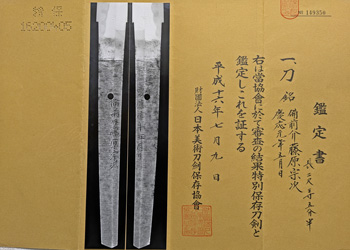
Certificate reading — 銘 備前介藤原宗次 慶応元年五月日
 NihontoWatch
signed · Meio (1492-1501) · nagasa 70.9cm · sori 1.2cm





Bizen · around 1492-1501
Tōken Taikan top 60%
6 pieces on the market now
Where Munetsugu stands among comparable artisans: across all of nihontō, and within tradition, era, and period. The tiers (Foremost · Leading · Major · Notable) weigh official designations from the NBTHK and Japan's Agency for Cultural Affairs, together with historical honors of lasting repute such as the Sansaku and Meibutsu-chō.
Select a lens to see how it's measured.
The Muromachi period (1392 to 1573)
Muromachi turned sword making into an industry: the uchigatana rose with massed infantry warfare, Osafune and Seki produced bundle swords beside custom orders, and the Ming trade carried Japanese blades abroad by the tens of thousands.
A Hozon-certified blade judged to show notably superior workmanship and a better state of preservation. The bar is higher: re-tempered blades and most unsigned Muromachi/Edo works are excluded.
The NBTHK (Nihon Bijutsu Tōken Hozon Kyōkai, the Society for the Preservation of Japanese Art Swords) is a public-interest incorporated foundation founded in 1948 and supervised by Japan’s Agency for Cultural Affairs (Bunkachō); it is based at the Japanese Sword Museum in Tokyo. Its expert panels physically examine each submitted work (shinsa) and issue a certificate (kanteishō) ranking it by artistic and historical merit. NBTHK papers are the most widely recognized standard of authentication for Japanese swords and fittings.
NBTHK official sitePlease request cooling-off within 8 days of the item's arrival. Items that have been altered cannot be handled. Return shipping is the customer's responsibility. If the destination is overseas, returns and refunds are not available.
¥2,700,000
Tokubetsu Hozon Katana: Bizennosuke Fujiwara MUNETSUGU Keio Gannen Gogatsu Hi (A day in May, 1865) Product Number 31-2387 Katana Bizennosuke Fujiwara MUNETSUGU Province / Period Edo, Bakumatsu In Shirasaya Nagasa 70.9cm (2 shaku 3 sun 4 bu) Sori 1.2cm (4 bu) Motohaba 3.21cm Sakihaba 2.57cm Motokasane 7.3mm Sakikasane 5.5mm Toshin Juyo Bare blade 890g Nakago Ubu Mekugi-ana 1 Hamon Choji-ba Price 2,700,000 Yen (Tax included) This is Koyama Munetsugu, who was known as the "Yotsuya Masamune." The jigane is a tight ko-moku-hada, and the hamon features gunome with deep valleys and fist-like choji-midare irregular patterns in nioi-deki with a high yakiba; a work of excellent quality.
Certificate reading — 銘 備前介藤原宗次 慶応元年五月日
NihontoWatchsigned · Meio (1492-1501) · nagasa 70.9cm · sori 1.2cm
Bizen · around 1492-1501
Tōken Taikan top 60%
6 pieces on the market now
Where Munetsugu stands among comparable artisans: across all of nihontō, and within tradition, era, and period. The tiers (Foremost · Leading · Major · Notable) weigh official designations from the NBTHK and Japan's Agency for Cultural Affairs, together with historical honors of lasting repute such as the Sansaku and Meibutsu-chō.
Select a lens to see how it's measured.
The Muromachi period (1392 to 1573)
Muromachi turned sword making into an industry: the uchigatana rose with massed infantry warfare, Osafune and Seki produced bundle swords beside custom orders, and the Ming trade carried Japanese blades abroad by the tens of thousands.
A Hozon-certified blade judged to show notably superior workmanship and a better state of preservation. The bar is higher: re-tempered blades and most unsigned Muromachi/Edo works are excluded.
The NBTHK (Nihon Bijutsu Tōken Hozon Kyōkai, the Society for the Preservation of Japanese Art Swords) is a public-interest incorporated foundation founded in 1948 and supervised by Japan’s Agency for Cultural Affairs (Bunkachō); it is based at the Japanese Sword Museum in Tokyo. Its expert panels physically examine each submitted work (shinsa) and issue a certificate (kanteishō) ranking it by artistic and historical merit. NBTHK papers are the most widely recognized standard of authentication for Japanese swords and fittings.
NBTHK official sitePlease request cooling-off within 8 days of the item's arrival. Items that have been altered cannot be handled. Return shipping is the customer's responsibility. If the destination is overseas, returns and refunds are not available.
¥2,700,000



